Posted in Jamie Dedes, Poems/Poetry

THE LIFE AND POEMS OF MARY MacRAE

Mary MacRae (1942 – 2009), English poet

[Mary MacRae] wrote and published poetry the last ten years of her life, after ill-health forced her to take early retirement from teaching. She taught for fifteen years at the James Allen Girls School (JAGS), DulwichLondon. Her commitment to writing led to her deep involvement with the first years of the Poetry School under Mimi Khalvati, studying with Mimi and Myra Schneider, whose advanced poetry workshop she attended for eight years. In these groups her exceptional talent was quickly recognised, leading to publication in many magazines and anthologies. MORE [Second Light Live]

Elder

by

Mary MacRae

This poem is  excerpted from Mary MacRae’s book, Inside the Brightness of Red.

Reprinted here with permission. All rights are reserved by the publisher, Second Light Network.

·

A breathing space:

the house expands around me,

·

unfolds elastic lungs

drowsing me back

·

to other times and rooms

where I’ve sat alone

writing, as I do now,

when syncope –

·

one two three one two –

breaks in;

·

birdcall’s stained

the half-glazed door with colour,

·

enamelled the elder tree

whose ebony drops

·

hang in rich clusters

on shining scarlet stalks

·

while with one swift stab

the fresh-as-paint

·

starlings get to the heart

of the matter

of matter

·

in a gulp of flesh

and clotted juice that leaves me

·

gasping for words transparent

as glass, as air.

♥ ♥ ♥ ♥

My profound gratitude to poet Myra Schneider for the introduction to a new-to-me poet, Mary MacRae, and to poet Dilys Wood of The Second Light Network (England) and editor of ARTEMIS Poetry for granting this interview. J. D.

JAMIE: Clearly, and as has been stated by others, Mary was profoundly inspired by art, nature (particularly flowers and gardens), and love. What can you tell us about her life and interests that would account for that?

DILYS: Mary writes tender and accurate poems about wild nature, creatures and landscape, drawing on her stays in a cottage on an untamed part of the coast in Kent, England and visits to her daughter living in remote West Wales. In her London home, it’s easy to guess from her poems about garden birds and flowers how much time she spent at the window. She almost always sees nature in flux, changing moment by moment, unpredictable, mysterious, a spiritual inspiration. One of her great strengths as a poet is catching movement.

Many of Mary’s poems focus on love between close family members. This may relate to a difficult relationship with her own father, which she sought to understand, and the relationships which compensated (with mother, sister, husband Lachlan, daughter and grandchild). A back problem prevented her from holding her baby daughter and she often refers in her poems to young children. She clearly has a yearning towards them.

JAMIE: She wrote poetry apparently only at the end of her life and for ten years. What were her creative outlets before that? How did she come to poetry?

DILYS: Mary was a dedicated teacher of English Literature and language in a leading girls’ secondary school. She was also deeply interested in music and painting (these are strongly reflected in her poetry). Though she had written as a young woman she followed the pattern of many women creative artists in becoming absorbed into her home life and her paid work, only turning to writing when her illness released her from the daily grind of intensive teaching. The remarkable, rapid development of her poetry shows how strong her latent powers really were.

JAMIE: Was writing poetry a part of her healing process when she was diagnosed with cancer? If so, how did it help her?

DILYS: I’m confident that Mary’s diagnosis with cancer enabled her to change her life-style and from then on concentrate on her poetry, urged by the sense that she might be short of time. There is no evidence that Mary wrote therapeutically to come to terms with her cancer. In fact she only ever addressed her illness in relation to the possible unkindness of fate in cutting her off from beloved people and life itself. The poems written in the last 2-3 years of her life give the impression that her dedication to writing, with the spiritual experiences which accompanied it, enabled her to bear terrible distress. She records this distress, using imaginative and metaphorical approaches to focus it, and these poems make heart-wrenching reading.

JAMIE: Can you tell us about her process? When did she write? Where? For how long?

DILYS: I have the impression that Mary’s life revolved around three things, people she loved, gathering experiences that would feed her poetry (travel, listening to music, visiting galleries) and very hard work in direct furtherance of her writing (extensive reading, attending workshops with other inspirational poets, writing, revising and submitting her poems to criticism from critics she respected). She used notebooks to make a full, accurate record of those experiences – landscapes, human encounters, thoughts – that would feed her work. There is an extract from one such entry in the section about keeping a journal in the resource bookWriting Your Self, Transforming Personal Material by Myra Schneider and John Killick. This book also includes a contribution in the chapter on spirituality which reveals much about Mary’s attitudes to life, nature and also her writing process.

JAMIE: Do you have any advice from her for other poets and aspiring poets?

DILYS: Mary was a dedicated writer, entirely sincere in her commitment to poetry as opposed to ‘career’ as a poet. She was always ready to enjoy and praise the widest range of subject-matter, approaches and styles from other poets, providing she thought they were ‘busting a gut’ to get their poems right, and not indulging in the trendy or superficial, which she despised (whether from well-knowns or unknowns). She put much emphasis on wide-reading of both past and contemporary poets and she herself had absorbed a huge amount of other poets’ work, always quoting fully and accurately. She liked using another’s work as a starting pont for her own (the Glose) and particularly admired the work in strict form (includingSonnetVillanelle and Ghazal), which began to be more acceptable from the mid-1990s (eg from such poets as Marilyn Hacker and Mimi Khalvati).

JAMIE: Are any other collections of her poetry planned? If so, when might we look forward to them?

DILYS: When putting together ‘Inside the Brightness of Red’, Myra Schneider and I went through the whole of Mary’s unpublished work and selected all those poems we felt were both complete and would have satisfied her high standards. What remains unpublished would be mainly fragments and early versions of poems she did more work on. There will not, as far as we know, be a further book, but Mary did achieve her aim of being a significant lyric poet, whose work is very attractive, polished and, above all (as she would have wished) deeply moving and consolatory.

The Second Light Network aims to promote women’s poetry and to help women poets, especially but not only older women, poets develop their work. It runs weekends of workshops and readings in London usually twice a year, a residential extended workshop with readings and discussions at least once every eighteen months and occasionally other events. It is nationwide (England). Dilys is the main editor of ARTEMIS Poetry, a major poetry magazine for women produced by Second Light twice a year.  It includes a lot of reviews and some articles as well as poetry by Second Light members who receive it free as part of their subscription. An e-newsletter is sent out every few weeks. A few anthologies of poetry have been published by the network but now this magazine developes books under special circumstances only – such as Mary’s collections.

Thanks to Second Light Web Administrator, poet Ann Stewart, for the following: The books (Inside the Brightness of Red and As Birds Do) can be bought: via order form and cheque in post: http://www.secondlightlive.co.uk/books.shtml or here online: http://www.poetrypf.co.uk/shop.php (typing  ‘ Mary MacRae collection ’ in the filter box will reduce the list to just those two books).

Posted in Jamie Dedes, Poems/Poetry

SILENCE AT NOON

Deep in the sun-searched growth the dragon-fly

Hangs like a blue thread loosened from the sky ~

So this wing’d hour is dropt to us from above.

Dante Gabriel Rossetti, Silent Noon

SILENCE AT NOON

by

Jamie Dedes

The days are filled with noise and moods

but silence lies here at noon

like stillness between heartbeats

and the Ever speaks

through dragonflies breathing vineyards

and a million bees humming the same tune

Caravans of monks and nuns

leave messages in dead languages

and encrypted ritual

as they walk their pathways across bridges

known for their span and silver beauty

Like a revered teacher’s stupa

or a gothic Cathedral

those bridges spin toward heaven

stop short

and trip to the other side

Nothing changes

The same whispered stories

fill your rattling lungs with grief

The only truth is in the silence at noon

doing duty as shawl, shield, and salvation

·

© 2012, poem, Jamie Dedes, All rights reserved

Photograph ~ Arcana Dea, Public Domain Pictures.net

Posted in Guest Writer

SARAH’S RULES …

Recently, while sorting through boxes, Sarah found an old journal with guidelines written long ago for her daughter. These guidelines (rules!) are well-considered and a valued contribution to the work we are collecting on Into the Bardo. We’ve taken them to heart and are pleased to have Sarah’s permission to share them with our valued readers and contributing writers. J.D.

SARAH’S RULES TO LIVE BY

by

Sarah Deen

  1. Take care of your body! You only have one. It’s important to keep it healthy.
  2. Always be actively involved in your own medical care and in the medical care for your family. Never let the doctor have the final decisions that are yours to make.
  3. Take care of yourself and your family FIRST. Never let your work interfere with your family.
  4. Never be intimate with someone you don’t care about. Remember that sex involves responsibility to the other person.
  5. Don’t be wasteful. Waste is wrong. Don’t waste time, money, or resources.
  6. Don’t spend time with people who are unhealthy or destructive. Get away from people who pollute their environment.
  7. Trust yourself. Don’t let others tell you not to follow your own path.
  8. Love and accept yourself for who you are – as you are.
  9. ENJOY LIFE! BE HAPPY!

© 2012, list, Sarah Deen, All rights reserved

Photo credit ~ Flower and bud of a yellow chamomile by Alvesgaspar via Wikipedia licensed under Creative Commons Attribution-Share Alike 3.0 unported

SARA DEEN ~ is a mother, grandmother, and artist living in the San Francisco Bay Area. She is a personal friend of ours and much admired for her spirit, humor, and wonderful home cooking.

When Sarah’s daughter was relatively young, Sarah was diagnosed with aortic stenosis. She underwent replacement surgery, but her doctors didn’t offer her much hope. It was during that time that Sarah wrote these guidelines to leave behind.  Fortunately for all of us, Sarah’s doctors were wrong and she survived. We are grateful.
·
Posted in Essay, Guest Writer

A WORLD OF DIFFERENCE

Early Azaleas

I am pleased to welcome my friend Michael Watson, a shaman and gifted healer to Into the Bardo.   He and I go back many years as friends, colleagues, and fellow therapists in Vermont. It is so nice to see that our minds continue to follow similar tracks.  Shared here with gratitude, Rob.

A World of Difference:

ON SEEING AND BEING SEEN

by

Michael Watson (Dreaming the World)

The cold returned this past week, and many trees and flowers seem to have taken a deep breath and halted their rush into Spring. Were the maple sugaring season ongoing, these would have been perfect sugaring days and the sugar houses would be boiling madly. (The warmth of a couple of weeks ago stopped the sugar season short.) Now, there is an air of expectancy in the natural world, a quickening and watchfulness, for we are in April, and returning warmth and renewing rains become daily more likely.

The seasonal round brings comfort and a sense of belonging. Maple sugaring gear is cleaned and put away. A few people have made it into their gardens, preparing for the warm season to come. Neighbors, yard and garden tools in hand,  wave to one another. “This sure is weird weather, ain’t it,” echoes down the block. A few daffodils have burst into bloom in south-facing flower gardens, some making their way indoors to adorn tables.  Throughout the neighborhood there is shared business and meaning.

Last week, in class, I showed the Bill Moyers interview with Bill T. JonesStill Here. The video, from 1994, follows the MacArthur Award winning choreographer as he morns the loss of his mate, faces mortality via an AIDS diagnosis, and creates his groundbreaking dance, Still/Here. The video addresses many topics our culture still finds difficult, and does so with refreshing directness: death, terminal illness, homosexuality, loss, and race, among others.

The real focus of the film is difference, a too-hot-to-handle concern in many cultures. Difference is a form of social glue, allowing us to identify ourselves in opposition to the other. It is also the source of creativity, innovation, and adventure, as well as some of our most threatening taboos. The tensions between these functions are played out daily in our cultures, our personal relationships, and our inner worlds. For many people around the world, accepting new technologies, no matter how socially disruptive, has become easier than accepting differences among human beings.

Of course, issues of difference demand attention in the therapy setting. Whether we sit with couples struggling with disagreements about how to manage daily life, young women critical of their body image, or youth and adults who carry labels of major mental illness and wrestle with unique experiences of the world, the underlying concerns are those of difference and acceptability. Always the questions held deep inside include, “Am I loveable as I am?” and “Am I safe?” These are not simple questions.

A walk in the forest offers the opportunity to see difference. No two plants of the same species are identical.  Life history and microecology play an enormous role in the development of each individual. From the point of view of the forest, each is perfect. Only through the gaze of other organisms do individual plants acquire differentiated value. When humans are involved, value is most likely culturally ascribed. Persons of diverse cultures may well read the worth of an individual plant differently from one another, as may individuals of separate species.

Ideally, psychotherapy offers persons the opportunity to challenge internalized or culturally enacted views of  difference in relationship to her or his life. In the process, it may place any number of subversive, liberatory tools at the disposal of those seeking help. Such therapy seeks to provide a space for the successful re-authoring of those stories that isolate and demean on the basis of rubrics of difference. In order to do so, patients are encouraged to challenge the authority of many voices, within and without. Yet, no one can successfully create a rewarding life alone; we each need others to witness and affirm our acts of courage and self authoring.  The therapist is a necessary, yet usually insufficient witness.

Would you share with us your healing stories of seeing, and of being seen by others?

Michael Watson ~ has been blogging (Dreaming the World) since September of 2009. He is a shamanic practitioner, psychotherapist, educator, and artist of First Nations* (Mixed Eastern Woodlands, Cherokee, and Lakota Sioux) and European (British Isles) descent. He lives and works in Burlington, Vermont.

Michael’s teachers and his teachers teachers were shamans. His work is influenced by both the traditions of the First Nations* and contemporary Western traditions. It reflects a strong sense of “connection to the forces and processes of Nature.”  The greater objective of his work is to “support others in developing intimate, transformative relationships with both Self, and the natural world.”

* First Nations – the indigineous peoples of the North America. 

Posted in General Interest, Teachers

WALK THE EARTH

“If we perceived Life with reverence, we would stand in awe at the experience of physical Life and walk the Earth in a very deep sense of gratitude.”

Gary Zukav

Thoughts from the Seat of the Soul

Photo credit ~ Peter Griffin, Public Domain Pictures.net

Posted in General Interest, Teachers

VEN. BHIKKHU BODHI, on the Buddha’s birthday an update on Buddhist Global Relief

BGR logo

VESAK 2012
Remembering the Buddha and his teachings
with joy, gratitude, and generosity
[I’m sorry that I could not share this letter with you in a more timely fashion. The Buddha’s birthday was on May 6 this year. Nonetheless, the message is an important one. We are committed to supporting this effort and hope to engage your support as well. Thank you for reading …. J.D.]
Dear Friend,
Buddha statue
The most important holiday in the Buddhist calendar, Vesak, is just around the corner. Starting on the full moon day of May, the month of Vesak celebrates the birth, enlightenment, and passing away of the Buddha. It is a day – and a month – not only for joy and gratitude but also for recollection: for remembering the Buddha’s teachings and making a more earnest effort to practice them.
The first step of Buddhist practice is giving, and the most basic gift is the gift of food. The importance of food can be gauged from the Buddha’s own life story. In the Middle Length Discourses, he tells us that before his enlightenment, he undertook long fasts that reduced his body to a tent of bones. When he saw that the true path to awakening requires deep meditation, he also realized: “It isn’t easy to meditate with an emaciated body.
Boy and girl in Haiti
Let me eat sustaining food such as rice and porridge.” It was only after he regained his strength that he could reach his goal.
Not only is it hard to meditate with an emaciated body, but when one is malnourished it’s hard to do anything – except wait intently for the next meal. Yet close to a billion people around the world endure this fate. It’s to give such people a fresh chance at life that BGR came into being, and this purpose has inspired our work through the years.
We don’t just give handouts. Rather, we seek to make people productive and self-sufficient. We do so in diverse ways: by supporting the education of poor children, especially girls; by creating right livelihood opportunities for women; and by supporting ecologically sustainable small-scale agriculture. In just four years, we’ve already sponsored fifty projects around the world, in Asia, Africa, Haiti, and the U.S. Some of our recent projects include:
  • introducing sustainable agriculture techniques to farmers in Cambodia and Vietnam, thus increasing the productivity and profitability of their rice yield
  • providing seeds and agricultural tools to 150 impoverished families in Cambodia so they can grow cash crops and establish home vegetable gardens
Intensive Rice Cultivation
  • supplying hot, nutritious meals to hungry children in Port-au-Prince, Haiti, through a community-based food program called Lamanjay
  • supporting the education of 200 children in India, mostly girls of the Dalit community, formerly known as “untouchables”
  • training farmers in Kenya and Malawi in ecologically sustainable agriculture
  • teaching breastfeeding practices in the Diffa region of Niger, which profoundly improve survival rates of infants
  • funding the construction of a community garden and orchard in South Africa, in a region stricken by HIV and AIDS
  • providing funds for a greenhouse to grow produce for the poor in the Maryland-Pennsylvania region of the U.S.
White House meeting of Dharmic Religions
Today BGR plays a major role in representing Buddhism on the stage of global giving. In fact, in late April we participated in a historical conference at the White House that brought representatives of the “Dharmic religions” into contact with government agencies in a common commitment to humanitarian service.
We hope to continue our mission long into the future, both in the U.S. and abroad. However, we can’t fulfill our goals without help from friends like you who share our ideals and resonate with our values. Your donations are the key to everything we do: to combating malnutrition, educating poor children, and helping those who cannot help themselves. And because we’re an all-volunteer organization, we use the funds we receive prudently, with care and discretion, to ensure that 85-90% of every dollar goes directly to finance projects.
So, remembering the great compassion the Buddha extended to us, let us extend compassion to others. This Vesak season please bring forth a heart of generosity and support the work of BGR. When you give, you become part of our mission, our partner in giving a helping hand to those who need help. And you experience the joy of knowing that you are truly making a positive difference in this world, a difference that’s transforming lives.
Childen in India
May all blessings be with you and your family, on Vesak and beyond.
Bhikkhu Bodhi's signature
Ven. Bhikkhu Bodhi
Founder and Chairperson
Buddhist Global Relief is a 501(c)(3) organization. Gifts are deductible to the full extent allowable under IRS regulations. You can either donate online via PayPal on the BGR web site or send a check to:
Buddhist Global Relief
PO Box 1611
Sparta, New Jersey 07871 USA
If your company has a Matching Gift Program, please enclose the necessary forms as well.
Posted in Guest Writer, Poems/Poetry

THREE YEARS TODAY

THREE YEARS TODAY

by

Renee Espriu (Renee Just Turtle Flight)

three years today not
tomorrow giving rise to
yesterdays filled with
sorrow and trepidation

angst beating against
us like rain drops to
pelt out songs of dismay
pain like no other

causing us to walk in
our own shadows trying
to keep the pain at
bay until another
day and still the rain

came down to wrap us
secure in the fashion
meant for bringing forth
life and love with
emotional passion

we wept in silence an
effort to be brave
standing fierce against
the onslaught of a
disease rending

you mute most days
covered in blankets
against the inner chill
freezing your blood
a prisoner your will

three years today not
tomorrow giving rise to
yesterdays filled with
sorrow and trepidation

we are unbelieving now
the sun doth shine an
unbridled warmth we
walk among the living
cautious to walk forth

secure in our hesitation
did it really ever
happen that cancer
took our lives now we
took them back again

© May 05, 2012 Renee Espriu

This is dedicated to a woman who, when diagnosed with Stage III Breast Cancer, took her faith and belief that all would be well and fought to overcome and now three years later is cancer free. Her faith and fierce determination carried her through.

Copyright 2012, Renee Espru, All rights reserved

RENEE ESPRU ~ is a creative prose writer and poet. She began delighting us with her work at Renee Just Turtle Flight in March 2011. The work she shares with us there includes short stories. Renee is a daughter, mother, grandmother, and seeker of spiritual peace and soul-filled freedom. She’s studied at the graduate level and has attended seminary. She describes her belief system as eclectic, encompassing many faiths. She believes “Nature is the basis of everything that is and everything that is is also a part of Nature.” 

Posted in Jamie Dedes, Teachers

HONORING THE ULTIMATE MOTHER: Falling back in love with Mother …

THICH NHAT HANH (IN BROWN) AT HUE CITY AIRPORT, VIETNAM (2007)

“The situation the Earth is in today has been created by unmindful production and unmindful consumption. We consme to forget our worries and our anxieties. Tranquilizing ourselves with over-consumption is not the way.”  Thich Nhat Hanh, 2010, Tricycle Magazine

The Guardian UK posted an article in February that was written by Jo Confino and in which the dear Zen teacher, Thich Nhat Hahn, discusses his views on current environmental challenges and the need for a spiritual revolution to address them. I hope you will link through and read the article today or watch the interview video below in honor of our ultimate Mother, Earth. In Metta on Mothers Day, J.D.

“Zen master Thich Nhat Hanh has been practising meditation and mindfulness for 70 years and radiates an extraordinary sense of calm and peace. This is a man who on a fundamental level walks his talk, and whom Buddhists revere as a Bodhisattva; seeking the highest level of being in order to help others.

Ever since being caught up in the horrors of the Vietnam war, the 86-year-old monk has committed his life to reconciling conflict and in 1967 Martin Luther King nominated him for the Nobel Peace Prize, saying “his ideas for peace, if applied, would build a monument to ecumenism, to world brotherhood, to humanity.”

So it seems only natural that in recent years he has turned his attention towards not only addressing peoples’ disharmonious relationships with each other, but also with the planet on which all our lives depend.” MORE

And here is the video of the interview:

Photo credit ~ courtesy of Lu’u Ly via Wikipedia and generously released into the public domain.

Video ~ uploaded to YouTube by  .

Posted in General Interest, Jamie Dedes

WHILE I WAS GONE …

“And it occurred to me that there is no such thing as blogging. There is no such thing as a blogger. Blogging is just writing — writing using a particularly efficient type of publishing technology.” Simon Dumenco, writer/blogger with Advertising Age

BACK TO THE BLOG

by

Jamie Dedes

Well, I’m back and with me my partners, Ann and Rob, and all of the wonderful writers and poets who have contributed and will continue to contribute to the richness of this blog. (Thank you!) Short story: I’ve been “occupying” or at least boycotting my former Internet Service Provider for poor customer service and for billing for services not rendered. This isn’t done in the spirit of meanness or revenge, but in the search for honesty and ethic and justice, though I will go to war if need be to get the billing corrected.  Meanwhile, after much research, I found new provider that has – according to online reviews and polling of friends – a better ethic and more reliability. One can only hope …

Most immediately, I plan to catch-up with our readers. I look forward to finding out what I missed in your blogs – your lives, your wisdom and joy, your art – over the past month. There is always the richness of spiritual practice, family, friends, books, music, and shows. Still, a vacuum was created during the month I was off-line. For your concerned email notes and for your comments here: thank you!

I have many fine submissions to organize for publication. Some require work before they can be published. I’m not sure how fast they’ll go up, but you won’t be disappointed when they do. Stay tuned …

 See you in the Blogosphere!

and, from all of us to each of you, thank you for reading and commenting here.

Jamie

Posted in Uncategorized

TAKING TIME OUT . . .

TO

SMELL

THE

FLOWERS

Back soon!

Photo credit ~ 2012, Jamie Dedes

Posted in Jamie Dedes, Poems/Poetry

TRAFFICKING IN DREAMS.

Oh love and summer,  you are in the dreams and in me…Leaves of Grass by Walt Whitman

·

TRAFFICKING IN DREAMS

by

Jamie Dedes

·

Sitting on the worn stone steps of summer

on salty Brooklyn nights in Dyker Heights

with our senior year pending like a threat.

Jamming sessions.

Sharing hugs.

Sipping cokes.

I sang you, my first song. You played me,

honeyed melodies in B on a new guitar.

·

Stan on his Irish frame*. Jim on horn.

Your sassy sister chorine** sprinkling

silver star-dust. We trafficked in dreams.

But faith betrayed, a rusted rudder;

your future a rose-bright moon

falling sadly into a turquoise sea.

·

You’d drive me home at dawn

in your dad’s blue Nova, into a

violet sunrise, deep purple maples

standing guard by mom’s place.

Now gone, you and the old roost.

·

No more of your music. No old friends.

Just meandering the strangest streets

mumbling something off-key, strumming

the memory of you, a new guitar, and

the summer we trafficked in dreams.

·

© 2010-2012 poem, Jamie Dedes, all rights reserved

Photo credit ~ Petr Kratochvil, Public Domain Pictures.net

* a bodhrán drum.

** 1920s American term for a chorus girl.

Posted in Guest Writer, Poems/Poetry

SHRED THE SOCIAL SAFETY NETS

shred the social safety nets

by

Marilynn Mair (Celebrating a Year)

Into the Bardo Contributing Writer 

shred the social safety nets
we cannot afford fairness
this is as good as it gets

for the future don’t make bets
poverty powerlessness
shred the social safety nets

any lingering regrets
are pointless though it’s a mess
this is as good as it gets

what ill mechanism lets
governments pleading blameless
shred the social safety nets

as the rich hide their assets
pretending with false distress
this is as good as it gets

and our silence aids abets
while willful lies egregious
shred the social safety nets

is this as good as it gets

© 2012 photograph and poem, Maryilynn Mair All rights reserved

Marilynn Mair – author, world renown mandolinist, and blogger – wrote this beautiful sympathetic villanelle in response to Charles W. Elliot’s piece HERE, “Mindful Steps to the End of Hunger.”

Posted in Essay, Jamie Dedes, Writing

THE HAPPY HOBBYIST: Personal Blogging Explored

PERSONAL BLOGGING HAPPINESS

by

Jamie Dedes

THE GREAT JOY OF THE BLOGGING HOBBY: IT COMBINES CREATIVITY WITH SOCIAL NETWORKING AND SELF-EDUCATION. The operative word in that statement is “joy.” I should know. I enjoy blogging so much that I have five personal blogs and one collaborative blog (this one), and they are all for fun, not money. (Ads are WordPress ads, not mine or ours.)

As I write this, WordPress.com alone hosts 72,467,611 sites with over 351 million people viewing more than 2.5 billion pages each month. WordPress.com users produce about 500,000 new posts and 400,000 new comments on an average day. While not all of these are personal (hobbyist) blogs, it’s probably safe to guess that most are.  [Those stats found HERE.]

UNDER THE MICROSCOPE

professional view:

the study that inspired this post

Hobbyist Bloggers Are Us:  Personal blogging is a mostly American phenomenon, but it’s a recreational pastime that is gaining participation across the globe.

Cumulatively we are such a big chunk of humanity producing so much work and using computers for so many hours that we are the subject of disdain and admiration, debates and studies. One study by Computers in Human Behavior published in Science Direct is: Who Blogs? Personality Predictors of Bloggers*.

Using five measures of the NEO Personality Inventory, two sociological studies of American bloggers determined that individual differences based on the Big Five factors [neuroticism, extraversion, agreeableness, openness to experience, and conscientiousness] can predict who among us is likely to blog. It may not surprise you to learn that “openness to new experience” is a trait those of us who gravitate to blogging are likely to have. It might dismay you to learn that “high in neuroticism” is also one of our traits.

NONPROFESSIONAL OPINION

this would be me: I beg to differ

My best nonprofessional (I’m not a social scientist) and totally biased opinion about who blogs and why: My perception is that it is an outlet for the creative impulse, sharing information, and networking with people who have the same interests. This is an admittedly narrow view: My focus is writers and poets, amateur and professional. I don’t generally read mommy blogs or web journals or other such.

As an inveterate reader of blogs, bloggers seem to be as rich with family and friends and spiritual support as any other group with which I’m involved, but they are often solitary when it comes to an interest in poetry, reading, photography or art and so on. Even when they live in a densely populated area, there may be no access to poetry groups, writers’ groups, or book clubs. Blogs then become a meeting place for these shared interests. While we could share our poems, essays, or fiction with family and friends, this sharing may not be well-received and anyway – why?  The idea of constantly pulling out our poems or other creative efforts to show at every gathering doesn’t necessarily appeal. It feels rather like the creative version of multilevel marketing wherein you display whatever you’re selling, corner your best friends, and impose on them to buy.

It is also clear that some bloggers are using their blogs to practice their English skills, hone their writing skills, and get feedback on their work. For writers (amateur or professional) there is no better discipline than forcing oneself to produce consistently and on schedule.  Blogging provides a good structure for this. It is also an excellent place to test our more creative experiments.

VALUE ADDED

whole world living

Bloggers often engage in whole-world living. With a growing international base, what an education to visit the sites of people around the world who are just regular folks – like neighbors – and not personalities, politicians, or commercial interests. The perspective from the ground is refreshing, informative, and sometimes inspiring. There are heroes everywhere.

HONOR AMONG BLOGGERS

to paraphrase John Locke, access is not license

Just my opinion ~ Personal pride and honor as well as respect for the original creative works of others – often born of long hard hours – dictates courtesy when reblogging or otherwise introducing a work: acknowledgement, link backs, by lines, and copyrights protections are always in order regardless of circumstance.

I am proud of our blogging community where, except in very rare cases, you will find refined moral compass, personal dignity, and the rights and concerns of others are respected. Professionalism (used here in the sense of competence and conduct, not occupation) is always in order for personal bloggers like us as well as the pro-bloggers.

BALANCE

Close you computer and go for a stroll:

advice for writers from Garrison Keillor

BLOG ON – HAPPY BLOGGERS!

* Guadagno, R. E. et al., Who blogs? Personality predictors of blogging, Computers in Human Behavior (2007), doi:10.1016/j.chb.2007.09.001

·

Illustration courtesy of morgueFile.

Video uploaded to YouTube by .

Posted in General Interest

OUR DISPOSTIONS …

Martha Washington (American, 1731-1802)

The first First Lady of the United States

Wife of George Washington, first president of the United States

I’ve learned from experience 

that the greater part of our happiness or misery

depends on our dispositions

and not on our circumstances.


Photograph ~ via Wikipedia and in the U.S. Public Domain.

Sincere thanks to gratefulness.org for sharing this quote with us. J.D.

Posted in Art, Buddhism, Spiritual Practice

BRIGHTEN THE PATH

IF YOU LIGHT A LAMP

FOR SOMEONE,

IT WILL BRIGHTEN

YOUR OWN PATH.

The Buddha

·

Photo credit ~ Thai Buddha, large stone, 15th – 17th Century courtesy of the curator of The Buddha Gallery.

Posted in Essay, Guest Writer, Spiritual Practice

KAREN ARMSTRONG – A CHARTER FOR COMPASSION GROWS

KAREN ARMSTRONG (b. 1944), British Author, Commentator, Academic

Charter for Compassion

“Karen Armstrong is a former Catholic nun who left the convent to study literature, becoming one of the most provocative and original thinkers on the role of religion in the modern world, and a leading international authority on faiths, religious fundamentalism and monotheism.

Her poignant and captivating talks have sparked worldwide debate and healthy discussion. Her bestselling books, including Twelve Steps to a Compassionate Life and A History of God, examine the differences and the profound similarities between Christianity, Islam, and Judaism, and their impact on world events.

In 2008, she was awarded the TED Prize in recognition and support of her call for a council of religious and spiritual leaders to draw up a “Charter for Compassion” that applies shared moral priorities to foster greater global understanding based on the principles of justice and respect. The project has grown to a considerable international following, and a network of Compassionate Cities is emerging that endorse the Charter and find ways to implement it practically, realistically and creatively.

As a speaker and writer, she asserts that all major religions embrace the core principle of compassion and the Golden Rule, and also emphasizes that many of today’s religions bear similar strains of fundamentalism borne of frustration with contemporary life and current events.”     ( –  Official Biography of Karen Armstrong.)

KAREN ARMSTRONG – A CHARTER FOR COMPASSION GROWS

by

Amy Nora Doyle (souldipper)

Contribution Writer, Into the Bardo

On our tiny island, a group recently finished its study of Karen’s book,“Twelve Steps to A Compassionate Life”.  The same group seized an opportunity, on March 22, to share a live video of Ms. Armstrong accepting a prestigious award from the Simon  Fraser University in Vancouver.  In recognition of her exceptional work with Compassion, Vancouver dedicated 12 days in which to dialogue about compassion, in a variety of ways, throughout the city.

The Charter for Compassion begins:

“The principle of compassion lies at the heart of all religious, ethical and spiritual traditions, calling us always to treat all others as we wish to be treated ourselves. Compassion impels us to work tirelessly to alleviate the suffering of our fellow creatures, to dethrone ourselves from the centre of our world and put another there, and to honour the inviolable sanctity of every single human being, treating everybody, without exception, with absolute justice, equity and respect.”

(The complete Charter is available here.)

.

Karen Armstrong – Simon Fraser University – March 22, 2012

.

Those of us who watched Ms. Armstrong’s acceptance of the SFU award, discussed, at its completion, how we envisioned enhancing compassion in our community.   Though time may provide a more profound conclusion, most of us agreed that Compassion is an inner condition through which each of us may filter our actions and exchanges throughout the community.  In support of this commitment, the local book club, one of 500 worldwide, will again offer a study of Karen’s 12 steps to compassion.

Our group may have been influenced by the Rev. Alisdair Smith, Deacon and Business Chaplain for Christ Church Cathedral in Vancouver.  As he introduced Karen, he shared a phenomenal story about a dear friend – a woman who suffers from severe bouts of depression.  She gave Alisdair permission to share her story with us.

In my words:

The depression became severe enough that the woman knew she had to go to the hospital.  With all the courage, will and determination she could muster, she called an ambulance.

A male attendant rode quietly beside her in the back of the ambulance.  As the vehicle wound its way through traffic, the man remained silent, but dutifully attended to any concern for comfort or safety.

After some time, he turned to face her.  He held her hand and looked into her eyes.  He said, “We are almost at the hospital. I want to tell you that while I have been in your presence, I have discerned that you are a very creative, kind  and intelligent woman.

Therefore, when we arrive, I will step out of this ambulance and wait for you to take my hand so you may step down on your own.  We will walk together to Emergency and you will hold your head high with the dignity that is yours to claim.  There is no reason or need to be or feel embarrassed.

Are you willing?”

The woman did exactly as he suggested.  Her life was transformed.

Though she is still plagued with depression, it only takes a moment to reflect on this incredible act of compassion, performed by a stranger, that dispelled and diminished the degree of debilitating power that depression would otherwise demand.

I watched Karen Armstrong’s Ted Talk in 2008.  I became a member of the Charter for Compassion in 2009.  I committed to being a compassionate person.

Big deal, I thought.  That’s not doing much for the Charter.

I found out it is.

Especially if we each do our best with every opportunity that inevitably comes our way.

I keep forgetting about the hummingbird and the forest fire.

© 2012, essay – Amy Nora Doyle, All rights reserved

© photos ~ courtesy of A Charter for Compassion, all rights reserved, used here under fair use

♥ ♥ ♥ ♥

If you have the time for this 22 minute video, you might find it gratifying to hear Ms. Armstrong’s TED award acceptance. J.D.

Posted in Buddhism, General Interest, Guest Writer

MINDFUL STEPS TO THE END OF HUNGER

Charles W. Elliot

By Charles W. Elliot

Posted here with the permission of Buddhist Global Relief

 The simplest act of eating a piece of fruit is inevitably embedded in a complex web of systems: economic, agricultural, financial, and environmental. In attending mindfully to this act, we can discern myriad interdependent phenomena: the beginningless origins of its seeds, the earth from which the fruit grew, the laboring hands that brought the food to our table. The same mindfulness will show how our own lives depend upon the efforts of others, the essential kindness of countless strangers. And in recalling this kindness, we should be ready to take steps to repay it. One such way is to carefully consider the needs of others, and where we find that basic human needs remain unmet because of injustice, we should be motivated to act.

The Universal Declaration on the Eradication of Hunger and Malnutrition states that “society today already possesses sufficient resources, organisational ability and technology and hence the competence to [eradicate hunger].” While food supplies are abundant, access to that food is not. In 2010, 925 million people suffered from chronic hunger, representing one in seven of a global population approaching 7 billion.

Access to adequate food, as indispensable to basic human survival, is a matter of social justice. One of the earliest pronouncements of global governance on fundamental human rights was the U.N. General Assembly’s simple declaration: “Everyone has the right to a standard of living adequate for the health and well-being of himself and of his family, including food[.]” (Universal Declaration of Human Rights, Article 25, paragraph 1, 1948.) If food has been recognized as a human right since the end of World War II, and if society has the resources and competence to end hunger, we should ask ourselves: why are so many millions still hungry?

Of course, there is no single answer to that question. Like all other phenomena, the persistence and spread of human hunger is a complex dependent-arising involving many interwoven causes.  Two disturbing factors are financial speculation, which drove commodity prices sky-high in 2007-2008, and the increasing diversion of crops from food production to biofuel production. Thus, the portion of U.S. corn grown to produce corn-based ethanol rose from 15% in 2006 to an estimated 40% in 2011. Other factors include catastrophic weather conditions such as droughts and floods, and global climate change, which has an adverse impact on water supplies and land, especially in the developing world. At the same time, urban sprawl reduces available farmland, while the urban middle class consumes more meat and processed food, which in turn demands more land, water, and energy.

While resources for food dwindle, governmental policies, particularly in the West, have become increasingly hostile to the poor. The shredding of social safety nets puts at risk an ever-larger number of people who need help in the face of poor economic conditions. Last year, about 25% of the House of Representatives voted to eliminate foreign food aid. Such policies appeal to the notion that the world is a zero-sum game, that any help we offer another family will mean that we get less and that we cannot afford fairness. Here in the U.S. help for the poor is in jeopardy. In my home state of Pennsylvania, food stamp use has risen 50% from 1.2 million people in 2008 to 1.8 million today. Despite the increasing need driven by the Great Recession, the current governor proposes to disqualify anyone with assets of more than $5,500—for example, a bank account or a second car—from food stamp eligibility. As a result, it is estimated that 4,023 Pennsylvania households will lose their food stamp benefits on May 1 of this year.

Battling institutional and entrenched social injustice helps alleviate hunger because poverty is at the root of hunger, and the root cause of poverty is powerlessness: the “powerlessness of those who lack resources such as land and water to grow food, jobs to earn money to buy food, an adequate food safety net and food reserves, and adequate nutrition.” (The Downward Spiral of Hunger: Causes & Solutions)

There are many small steps we can take to end hunger, but we must be prepared to respond to the call of conscience to help others and to restore social justice.  A key step is to rebuild and enhance small-scale local food systems and turn away from globally concentrated control of food production and distribution. Ultimately, we should reject the domination of agriculture by large corporate agribusiness, and confront corporate attempts to control the very seeds of life with their patented genetically-modified “single generation” seeds.

At the neighborhood scale here in the U.S., community food gardens are springing up even in major cities like New York City and Detroit. Food waste and post-harvest losses could be remedied to make more food available to those in need. Greater investment in small-scale agriculture in rural areas and urban agriculture in the cities would empower the poor and hungry.

At Buddhist Global Relief, we are taking our own small steps. For example, we provide village-scale training in intensified rice cultivation to rural farmers in Cambodia and Vietnam, helping to build their capacity and confidence in applying sustainable agriculture techniques. These techniques dramatically boost yields without expensive external inputs. BGR funds tools and seeds to impoverished families in Cambodia to grow cash crops and home vegetable gardens. Following each harvest, each family then gives the same amount of seed they received to another local family, thus establishing a community of mutual support. BGR helps train villagers in Kenya and Malawi in small-scale agricultural techniques that nurture healthy soil fertility, produce high yields, conserve resources, and meet the basic need of people to independently feed themselves.

Such small steps, taken collectively by Buddhist Global Relief and countless others, are helping to empower the poor, reduce poverty, and alleviate the suffering of hunger. Neither the complexity of the manifold causes of hunger nor the daunting statistics of global poverty should deter us from acting out of compassion and generosity. In the Buddhist tradition, the embodiment of compassion, AvalokiteshvaraGuanyin Kwannon, is often depicted not just with a thousand eyes to gaze upon the suffering in the world, but with a thousand hands to aid those who suffer. Of course, not even a thousand arms are enough to help the billion people who suffer from hunger. But if we recognize each motivated human heart as the eyes and hands of Avalokiteshvara, each of us acting in our own way, in our own communities, might yet help to end hunger in our generation.

Charles W. Ellliott, a member of the Board of Directors of Buddhist Global Relief, is  a lawyer practicing environmental, land use, and human rights law.

© 2012, photo and essay, Buddhist Global Relief, All rights reserved

Posted in Jamie Dedes, Poems/Poetry

A MEMORIAL FOR OUR FRIEND …

“We’re all just walking each other home.” Ram Dass

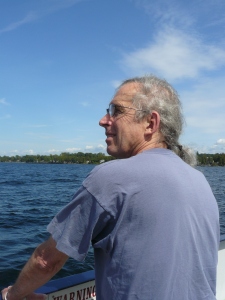
For Trekker …

Ann, Rob, and I attend his memorial today.

·

WALKING HOME

by

Jamie Dedes

·

his leathered skin a shroud, crinkled

furrowed from his wild mind and dry

explorations under our California sun

where he wondered with his students

·

and friends, the outdoorsmen stand

by him as he rests dying by an oak

table, a jelly glass, childhood fave

sits with his preferred gin, taking it

·

by the spoonful from the kind hand of

a hospice nurse until he rests, sleeps

then walks on, in the doleful blue of

of our tears: a soft fairwell dear friend

·

© 2012 poem, Jamie Dedes All rights reserved

Photo credit ~ Vera Kratochvil, Public Domain Pictures.net