Posted in Essay, Fiction, Uncategorized, Victoria C Slotto, Writers' Fourth Wednesday, Writing

WRITERS’ FOURTH WEDNESDAY: Character Development in Fiction

Photo Credit: Pinterest

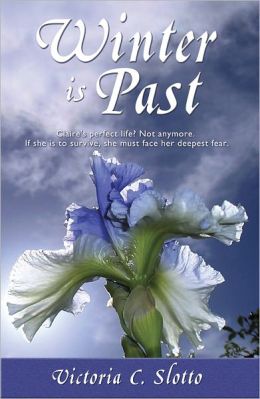
A while back, I attended a writer’s conference session about character development. The speaker suggested using astrological signs as a means to create believable, consistent characters. My knowledge of astrology is scant, but I tried to apply it to the characters in my first novel, Winter is Past. The results weren’t what I’d hoped for.

When I worked in the area of nursing education, human resources and spirituality, I had the opportunity to delve into Myers-Briggs…a personality evaluation tool that assesses behavior based on four areas of response: Introversion versus extraversion, Intuitive versus sensate, Thinking versus Feeling and Perceptive versus Judgmental. The latter may not be so self-explanatory but I use the example of my parents: my dad would be ready to go somewhere 20 minutes ahead of time, while my mother would change her mind a few more times about what she wanted to wear. Think: structured versus easy-going.

I returned to my draft manuscript, and applied the Myers-Briggs, using this tool to help me re-create the major characters with the result of more consistent, believable players. For my second novel The Sin of His Father, I wrote out character profiles before I even began to write, again using the Myers-Briggs. It has made it so much easier.

Photo Credit: vivalamanosphere.com

There is an old book called Please Understand Me that explains all the possible profile combinations and how they play out in real life. If you can find it, it’s been a godsend.

I’m addicted to The Learning Company‘s Great Courses, university level programs presented by the highest quality professors. One of the courses, The Art of Reading is taught by Professor Timothy Spurgin of Lawrence University. The lectures are well-organized, clearly presented and as applicable to writers as to readers.

An important point from the lecture on characters addresses developing round characters. The concept of a round character, as opposed to a flat one, was presented by E. M. Forster in his book, Aspects of the Novel. Simply put, a round character is one who will capture the reader’s interest because of his unpredictability, his complexity and the changes he undergoes during the course of the story. And this is key: “The test of a round character is whether it is capable of surprising in a convincing way.” (Forster)

While a protagonist needs to draw the sympathy of the reader, he should have some character flaws. Inversely, your antagonist should have something that makes him, if not attractive, at least capable of being understood. Just like us–no one is all good or all bad.

As you write, reflect upon your own reaction to the key characters in your manuscript. Are you able to identify with them to some degree? Are there things that, if you were that person, you might be ashamed of or want to change? Are there events or reactions which are surprising without being totally out-of-character (unconvincing)? Is your character someone you would want to know, or avoid?

One thing I find helpful when writing fiction is to base my characters on a composite of people I know or with whom I have been acquainted. You can even take someone who is in the public eye. I try not to use one person because I would never want anyone to say to me, “That’s me, isn’t it?” My mother once thought a character was her because I set a scene in a room in her house! And this secondary character was not, initially, a nice person.

I hope this brief reflection on characters will be helpful to those of you who have an interest in writing fiction. In a future post, I’ll share a character development worksheet that I prepared for  a character in novel #2 to give you something to hang your words on!

We’d like to invite you to share a brief paragraph or poem of your own presenting a character you’ve created or known somewhere along the road. There are two ways you can do it:

  • Preferably, post your description on your own blog or website, then copy and paste the direct URL into the Mr. Linky, which is included at below at the end of this post.  He will also ask you to include your name or another identifier.
  • If you prefer, add your character sketch to the comments section.
  • It’s nice, though not required to read others and leave a like or comment. I will visit all of them.

Happy writing; enjoy the process!

– Victoria

EDITOR’S NOTE: Mr. Linky is below Victoria’s bio ~
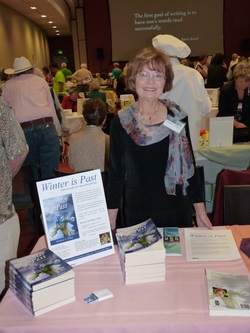
Victoria at the Palm Springs Writer's Expo March 2012
Victoria at the Palm Springs Writer’s Expo March 2012

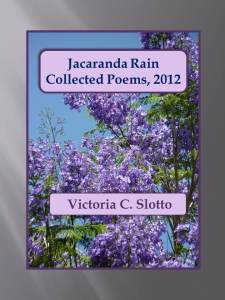
jr-cover-2VICTORIA C. SLOTTO (Victoria C. Slotto, Author: Fiction, Poetry and Writing Prompts) ~  is an accomplished writer and poet. Winter is Past, published by Lucky Bat Books in 2012is Victoria’s first novel.  A second novel is in process.  Jacaranda Rain — Collected poems, 2012 is available on Amazon, as is the hot-off-the-press nonfiction, Beating the Odds: Support for Persons with Early Stage Dementia. Victoria’s poetry collection and non-fiction book are free to Amazon Prime Members.  Link HERE for Victoria’s Amazon page.
Posted in Spiritual Practice, Victoria C Slotto

The Web of Illusion

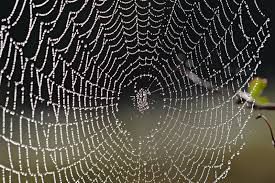
Photo: wikipedia commons

For the Summer Solstice—the longest day of the year, the first day of summer–I  turned my meditation corner around, facing my chair looking out the window instead of looking at the eerie but beautiful reflections of the leaves of our ornamental pear tree fluttering on the blank wall of my room. While the images were hypnotic, I couldn’t help but think of Plato in his cave and the thought haunted me that this was illusory beauty.

Photo Credit: Sara Loverling

Looking directly at the trees, deep into our yard and yards beyond our own allowed me to see the play of light and shadow, and only a slight flutter of leaves. For the moment, stillness was able to come in…until illusion reappeared in the form of a bird that land on our roof and projected its shadow onto the side of our neighbor’s house. The shadow appeared long and skinny, almost like a sand piper or a heron, but since we don’t have either of those birds here in Reno, I realized I was once again facing illusion.

As I age, I’m aware of the imperative to dispel the illusions I’ve so carefully fashioned to carry me through life. A few months ago, I began digging through old journals, over forty of them—reviewing life, tearing up pages, letting go of secrets, negative emotions, anger and hurt, unfulfilled dreams, dusting off the mysterious web of illusion and, yes, celebrating growth, insight and success.

Photo: themanagementninja.com

It’s interesting to see how the same old issues that cropped up back in 1988 are no different than those of today. I had to chuckle at my observations on then-Cardinal Ratzinger’s (Benedict XVI) ultraconservative stance that I found alienating to so many. If I’d only known.

And then there was/is my need to control—my perfectionism. I complained that I was only getting 6 hours of sleep because, when I awakened, I thought of how much I had to do and couldn’t go back to sleep. The morning  of the Super-moon I was up at 4 AM (couldn’t find it) and, of course, stayed awake thinking of how much I wanted to get done that day. It’s like that most every day.

And thus: illusion. Here I am—approaching the end of another decade of my life, still believing that so much, everything, depends on me. In another ten years, if I’m still playing this wonderful game of life, will it still be the same?

A few questions to reflect upon: What are your illusions? What purpose do they serve? Is it time to do something about them? You can comment if you like, but my intent is just to get you thinking.

Have a blessed day.

(Reblogged from Victoria C. Slotto, Author)

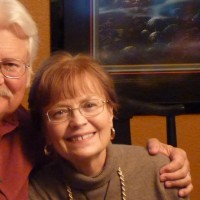
Victoria and Dave Slotto

2940013445222_p0_v1_s260x420VICTORIA C. SLOTTO (Victoria C. Slotto, Author: Fiction, Poetry and Writing Prompts) ~  a Contributing Writer to Into the Bardo ,attributes her writing influences to her spirituality, her dealings with grief and loss, and nature. Having spent twenty-eight years as a nun, Victoria left the convent but continued to work as a nurse in the fields of death and dying, Victoria has seen and experienced much. A result of Victoria’s life experience is the ability to connect with readers on an intimate level. She resides in Reno, Nevada, with her husband and two dogs and spends several months of the year in Palm Desert, California.

Winter is Past is her first novel. It was published in 2012 by Lucky Bat Books. She has a second novel in process and also a poetry chapbook. Victoria is also an accomplished blogger and poet who has assumed a leadership role in d’Verse Poet’s Pub. You can read more ofher fine poetry HERE.

Posted in Essay, Spiritual Practice, Victoria C Slotto

Keeping Sabbath

The Paradise

Last Sunday, I chose to practice Sabbath—a tradition that was a strong factor in my growing up years, but that waned with my work as a nurse…patients need care every day of the week. Most of us know and understand the concept of a day of rest, but our frenetic lifestyles tend to get in the way.

Sabbath crisscrosses most cultural, spiritual, religious and secular societies, even pre-dating biblical times. The Babylonian Enuma Elish prescribed a day of repose. In the Genesis creation story, God rested after his six days of work and, I suppose it worked out well so that he added it to those tablets of stone he handed on to his people through Moses. Wicca, Islam. Buddhism, Cherokee teaching and others all caution humans to take a break, chill out, and rest.
Wisdom, it seems to me, embraces our need for refreshment, for replenishment of body, mind spirit and emotion, for regeneration and reflection.

For many of us, well, for me anyway, the need to be in control seems to take hold and it becomes oh-so-hard to let go of time, accept idleness and non-productivity and, perhaps, the feeling of uselessness. I suspect that there is a trust issue here. Can I really believe that God will take care of things in my absence? Can I believe that the work of creation on this particular day will go on without my amazing intervention?

So, what kind of things did I, Ms-Doing-Not-Being do?

• Meditation—a bit longer than my ordinary routine.
• Journaling. And in the process really waking up to what was happening around me. I wrote of all the wonderful sensory experiences that the pristine late-spring day offered—the finches song, the brilliant orange of the male oriole at our feeder, the spicy scent of new-born flowers and the basil in the vegetable garden. I noticed the play of light and shadow in the now-expansive boughs of the ash tree we planted almost twenty years ago and watched the hummingbirds fly back and forth sipping nectar from both flowers and feeders. I felt the gentle kiss of the breeze and delighted in my dogs’ warm bodies flanking me on either side. I listened to David busy chopping spices in the kitchen.

Photo Credit: D. Slotto

• Spa Stuff. I pampered myself with a Pomegranate/Cranberry exfoliating scrub courtesy of Burt’s Bees, did a manicure/pedicure and, well, thought about taking a nap. I thanked my body for its almost-seven decades of service and praised the many scars that it bears, a reminder of the life-threatening illness I have survived, for now.
• Creativity. Maybe some consider engaging in the creative process to be work. For moi, I allowed the muse to come out and play, more by way of brainstorming than actualizing any project. Sabbath time allows ideas to gestate and gives clarity as to where to take them.
• And, yes, a final confession. I did laundry. So, it wasn’t a perfect Sabbath, but for this woman who tends towards OCD, that’s probably not a bad thing. Besides, we needed clean clothes!

Photo Credit: Bergen Linen

That night I slept well, but will I be able to repeat the experience? My history tells me that this is not something that comes easily to me. I am aware that Sabbath doesn’t have to always be on Saturday or Sunday, or even occupy an entire twenty-four hours. How would life be different if, each day, I remember to tuck in an hour or even minutes for the divine repose, sit back and let go?

– Victoria C. Slotto

© 2013, essay, Victoria C. Slotto, All rights reserved

Victoria and Dave Slotto

2940013445222_p0_v1_s260x420VICTORIA C. SLOTTO (Victoria C. Slotto, Author: Fiction, Poetry and Writing Prompts) ~  a Contributing Writer to Into the Bardo ,attributes her writing influences to her spirituality, her dealings with grief and loss, and nature. Having spent twenty-eight years as a nun, Victoria left the convent but continued to work as a nurse in the fields of death and dying, Victoria has seen and experienced much. A result of Victoria’s life experience is the ability to connect with readers on an intimate level. She resides in Reno, Nevada, with her husband and two dogs and spends several months of the year in Palm Desert, California.

Winter is Past is her first novel. It was published in 2012 by Lucky Bat Books. She has a second novel in process and also a poetry chapbook. Victoria is also an accomplished blogger and poet who has assumed a leadership role in d’Verse Poet’s Pub. You can read more ofher fine poetry HERE.