Werewolves—The Hounds of Hate

One wonders if a group of people who have a fetish-obsession with alpha males overpowering beta males are really werewolves (werwolf, in German, a fort, a plan, an insurgency, ever a human?) rather than human beings. Perhaps they are devolved to pack animals easily confused by a gilded chair and spotlight glare. They seem to have failed to realize that the beta males fight over hierarchy, the lone alpha in each pack standing aloof and indifferent to their struggle.


by Michael Dickel

The followers packed in the hall raise their hands in a familiar, evil salute.

The one in front mentions alpha males, before saluting his leader’s election.

In their poorly learned algebra: Power equals everything; morality, ethics, community equal nothing. They worship the square root of negative 3. No one, not even I, know what that means.

Some reject all leaders other than themselves. Even the one elected remains insufficiently aggrieved and enraged to take the reins. Wild horses run through them, disordering their imaginations with fantasies of powerful stallions. The stallions laugh at their inadequacies.

werewolfnazis-2
Werewolf Nazis-2
Digital art
Werewolf image src
NAZI salute src

It begins with wordsthe werewolf singing the song of cancer cells—unlimited growth, spreading out, destroying all else, leaving nothing but toxic waste behind. When he howls “greatness,” he sings to spread deadly cancer in our midst. Unchecked growth. We must resist the cancer, gather our antibodies, strengthen our collective body of love and wisdom.

Whiteflies invade the green leaves and suck the plant dry. They excrete a honeydew of hate. They believe that they grew the plant. They want to be in charge of the plant, even as they kill it.

The werewolves will make Wolfland great again.

Afraid and weak, these werewolves bark, bite, howl, yip. If they didn’t run in packs, they would be nothing. That is why the alpha obsession raised to the power of fetish. They use terms from pornography. They are pornography.

What is pornography? Is it human? Am I / pornography / human?

The hounds of hate have been unleashed to the sound of trumpets. They turn against learning and research. The rich and powerful control them by remote signal. The rich and the powerful laugh and laugh. The hounds fight over the scraps. They get trumped.

Then the hounds turn on the rest of us, licking their sagging, blood-spattered jowls.


If you haven’t already, place your mouse cursor over the links and wait. You will see an excerpt pop up from that linked page. The excerpt inter-plays with this text. I’m not sure how / if this works in mobile platforms.


werewolfnazis-header

I ain’t no millionaire’s son

I grew up through the 1960s, when resistance was to the draft, the war in Vietnam, and capitalism. While the fronts may have changed, the war of resistance against greed-driven government and the military-industrial complex (now the military-industrial-technological-communication complex?) continues on. Here are a few old protest songs from those times and others, for your resistance sound-track of today.

Michael Dickel

Have suggestions to add to this soundtrack? Leave links in the comments!

Creedence Clearwater Revival—Fortunate Son (the title for this article comes from the lyrics)

Richie Havens—Handsome Johnny

Peter, Paul, and Mary—Blowing in the Wind (Bob Dylan)

John Lennon—Imagine

Bob Dylan and Joan Baez—Singing together at the 1963 March on Washington

Joan Baez leading the crowd singing We Shall Overcome at the 1963 March on Washington

Woody Guthrie—This Land is Your Land (listen to all of the verses)

The Freedom Singers—Woke Up This Morning

Lakota—To Walk the Red Road

Seal—A Change is Gonna Come

Bob Marley—One Love

Tracy Chapman—Talking About a Revolution

Tracy Chapman—Bang Bang Bang

Bob Dylan—With God on Our Side

And, because it is so needed to counter the pussy-grabber-in-chief…

Women’s Honoring Song

“Anagehya- women of all the Nations – you are the strength, you are the force, you are the healing of the Nations.”

Pete Seeger—Which Side Are You On? (Union song)

Keep the music playing, keep the resistance strong, sing out, sing loud!

See “Democracy is Coming to the USA” and “Silence ii—Sound of Silence” in this issue for more music related to the Resist! theme! For more songs of protest, including more contemporary songs, try this YouTube list of Protest Songs curated by Amnesty International, UK. Missing Peace Art Space curates the Peace Museum YouTube Channel.

HAVE SUGGESTIONS TO ADD TO THIS SOUNDTRACK? LEAVE LINKS IN THE COMMENTS!

I leave you with an anthem from my high school, anti-war days, a song from Woodstock.

The Jefferson Airplane—Volunteers!

Democracy Is Coming To the U.S.A.

While Leonard Cohen’s work is hardly “protest music” of the sort we might associate with the 1960s, his powerful poetry in song at times evokes a sense of resistance for me. Here, perhaps an obvious example—Democracy.

Another song that for me foreshadows our current state of affairs is First We Take Manhattan

These will be some of the background music for me in the coming years, much as they have been since they came out. However, now, with a renewed sense of urgency.

Michael Dickel

See “I ain’t no millionaire’s son” and “Silence ii—Sound of Silence” in this issue for more music related to the Resist! theme.

ONE WOBBLIE’S LIFE … Joe Hill, labor activist and songwriter

Joe Hill (1879-1915), born Joel Emmanuel Hägglund, Swedish-American labor activist, song writer, and member of the Industrial Workers of the World (the "Wobblies")
Joe Hill (1879-1915), born Joel Emmanuel Hägglund, Swedish-American labor activist, song writer, and member of the Industrial Workers of the World (the “Wobblies”)

Joe_Hill_yours_for_the_OBU_signature

14102547_1594148474212895_5858254350681929101_n

Hill wrote "The Rebel Girl," which was inspired by Elizabeth Gurley Flynn , founder of the American Civil Liberties Union
Hill wrote “The Rebel Girl,” which was inspired by Elizabeth Gurley Flynn , founder of the American Civil Liberties Union

Music—the sister art to poetry—is always an engaging subject and labor rights and history are—or should be—of serious interest for those of us in the 99%. Hence what a delight to learn that HamiltonSeen, a Canadian film production company, is in the process of exploring the life, work and relevance of Swedish-American labor activist and songwriter, Joe Hill.  In this interview, Zena Hagerty, producer and musician, explains…

JAMIE: How did the project Who Was Joe Hill get started?

ZENA: After finishing our film Harperman: A Dissident Serenade (releasing online in September), we felt  strongly about showcasing the strength that music has in protest and in political movements. There is a power in voices that rise together. Joe Hill was an early American musical hero who brought about real change in the Union Movement and who died under terrible and strange circumstances in front of a firing squad.

JAMIE: How many shows and what kind of content? Why should people be interested and how is Joe Hill’s life and work relevant to our times?

ZENA: We’re going to be creating twelve episodes that explore who Joe was, what shines forward to today from his life, his music, and his legacy, and we’re going to take a hard look at whether many of the same battles for freedom that were being fought in his time are still being fought today. The plan is to speak to the musicians who carry forward his spirit and use their thoughts and words to draw a picture of now through the lens of Joe Hill.

JAMIE: What do you hope to accomplish?

ZENA: Our mission (yes, it’s that important) with every film or series is to shed illumination from a new perspective on a topic that points to the very heart of who we are as human beings. Now, that sounds intense, but what it really means is that in our work we seek to find the emotional core, to enable viewers to connect to the importance of the subject matter.

JAMIE: When is the release scheduled?

ZENA: Our release schedule is very dependent on budget at this point, with a goal of series’ completion by second quarter of 2017. It should be sold for television by that point. We’d love to see it as a weekly series over three months with an online or Netflix release to follow.

If you are reading this post from email and want to view this trailer, you’ll probably have to link through to the site to do so.

HamiltonSeen:
13654276_10153802715988367_831849348003444984_n
Producer Zena Hagerty
has a long history of community engagement and involvement in the arts scenes of Hamilton and San Francisco and seeks to further strengthen the human spirit with her work. Zena has broad experience in media, including recording albums, performing her own music, radio broadcasting, graphic design, and many others. As director of Sublimatus as a band, an art gallery, and an entity that inspires the creative spirit within all, Zena honed a skillset that includes the ability to drive and complete large projects with expansive intentions.

Director Cody Lanktree is most inspired by dialogue created by the connection between time, beauty, and our personal truths. In the six years since HamiltonSeen’s inception, Cody has guided the company from small commercial production to white-boxing partnerships with major marketing firms, and finally to the creation of documentaries focused on community and social issues. His vision is one that will not stop at less than fundamentally changing and challenging perspectives and the world.

Jessica Sovie is a journalism student at Mohawk College and intern with HamiltonSeen. As the project lead for The Soapbox, Jessica provides direction, insight, camera operation, and editing skills that are creating a platform for the voice of the public. She is a purebred eccentric, supporter of music and of the arts, and aims to be a champion of the underdog and underrepresented through the use and continuous growth of her skill set.

Photo credits: Joe Hill’s photograph,”The Rebel Girl,” Joe Hill’s signature and death certificate are in public domain; Zena Hagerty’s photograph is hers and under copyright.

“The Push” or how the eleventh largest city in Canada is pushing back

thepushcityhall-joeycolemanLast fall, at the Hamilton Film Festival, we [HamiltonSeen] debuted a film about our city hall, journalism, the abuse of a journalist, and free speech, called The Push. Raise the Hammer described it as a “far-ranging examination of Hamilton’s toxic political culture.” The headline in The Spectator read, “New film raises bothersome questions about city hall culture.” The debut of the film was an important goal for us. We were proud to raise issues of vital concern to our community. It was some time, however, after we completed The Push before we actually debuted it. We kept setting it aside.

We found the release of two films (the other was Soapbox) in August 2016 (particularly The Push and the hubbub surrounding it) hugely stressful, so we set the film aside for a bit.

When the death threats came, we set the film aside for a bit.

The making of a film that only a few hundred people had seen was interfering with our ability to work with community organizations in Hamilton and to volunteer our time and skills as we often do, so we set the film aside for a bit.

We realized having made the film was messing with a bunch of jobs we’d normally have gotten, so we set the film aside for a bit.

We discovered that just being in the film could mess with people’s working lives and that even eight months later there were weird machinations of vengeance happening that needed time and space to sort out, so we set the film aside for a bit.

A year had gone by.

Then we realized that people who had never seen the film and should not have power over it were dictating what we did with it. So, we decided at last to release it.

We like to look at making The Push as a good case study of two things: the importance of independent journalism and how screwed up things are within City Hall in Hamilton.

This has never been a film about any particular councillor. Our intention in releasing it isn’t rooted in re-raising an issue from the past. We believed that people who hadn’t seen the film had a mistaken impression about it and our intentions.

Looking at how our city, nation, and world function, it strikes us that any in-depth analysis of the machinations of those in power illuminates the same basic issues. The film is an example of such,  not at all created to attack so much as reveal.

It’s a film about how institutions don’t keep up and about how much those enmeshed in the political processes avoid transparency and accountability. It’s an important look into how things still function in Hamilton.

Ultimately, we made this film so that we could understand why one of our local journalists felt the need to leave the city after what seemed a straightforward incident that should have resolved itself. In producing the documentary, we discovered that our local bureaucracy is more of a mess than we ever imagined.

The Push is a civic offering.

A moment with journalist, Joey Coleman. (If you are reading this feature from an email subscription, you will have to link through directly to the Zine to view the two short videos included here.)

Trailer:

© words and illustration, Zena Hagerty and Cody Lanktree, all rights reserved
Originally published in Raise the Hammer and published here with the permission of the authors.

In Defense of Activist Poetry

51pv4fg0wpl-_sx329_bo1204203200_By now, those who pay attention to poetry and in particular the poetries of witness and activist poetries, know well that it follows from a long tradition. Yet others, especially cultural and political conservatives, argue “protest” poetry or “political” poetry both do not constitute “Literature,” and that such poetry cannot help but be time-bound little more than contemporaneous commentary. I have been told that some of my poetry is “journalistic,” and that I am caught in a “fashionable” trend from the mid-1950s that has no literary roots beyond, possibly, the Beats. Such arguments simply are nonsense.

unknownCarolyn Forché’s volumes Poetry of Witness: The Tradition in English 1500–2001 and Against Forgetting: Twentieth-Century Poetry of Witness demonstrate, with excellent examples, a long history of social and political engagement in English poetry. In fact, one might claim just the opposite of the (usually disguised political) claims that the tradition began in the middle of the 20th C. could be made, that solipsistic confessional poetry that is more autobiography than engaged in the world emerges from that time, in counter-balance to a history of poetry engaged in the outside world.

For this post, I provide two examples of poets from the first half of the 20th Century who engaged in the world.

*****

The first, two poems come from the well-known poet William Butler Yeats: Easter, 1916, written in response to a political protest forcefully broken up by the British, who executed 16 of the protesters. The poem, written in September 1916 and published in 1928, ends with a powerful commentary on the protest, the execution-martyrdom that resulted, and, prophetically, the continuation of the Irish struggle: “A terrible beauty is born.”

Easter, 1916

I have met them at close of day
Coming with vivid faces
From counter or desk among grey
Eighteenth-century houses.
I have passed with a nod of the head
Or polite meaningless words,
Or have lingered awhile and said
Polite meaningless words,
And thought before I had done
Of a mocking tale or a gibe
To please a companion
Around the fire at the club,
Being certain that they and I
But lived where motley is worn:
All changed, changed utterly:
A terrible beauty is born.

That woman’s days were spent
In ignorant good-will,
Her nights in argument
Until her voice grew shrill.
What voice more sweet than hers
When, young and beautiful,
She rode to harriers?
This man had kept a school
And rode our wingèd horse;
This other his helper and friend
Was coming into his force;
He might have won fame in the end,
So sensitive his nature seemed,
So daring and sweet his thought.
This other man I had dreamed
A drunken, vainglorious lout.
He had done most bitter wrong
To some who are near my heart,
Yet I number him in the song;
He, too, has resigned his part
In the casual comedy;
He, too, has been changed in his turn,
Transformed utterly:
A terrible beauty is born.

Hearts with one purpose alone
Through summer and winter seem
Enchanted to a stone
To trouble the living stream.
The horse that comes from the road,
The rider, the birds that range
From cloud to tumbling cloud,
Minute by minute they change;
A shadow of cloud on the stream
Changes minute by minute;
A horse-hoof slides on the brim,
And a horse plashes within it;
The long-legged moor-hens dive,
And hens to moor-cocks call;
Minute by minute they live:
The stone’s in the midst of all.

Too long a sacrifice
Can make a stone of the heart.
O when may it suffice?
That is Heaven’s part, our part
To murmur name upon name,
As a mother names her child
When sleep at last has come
On limbs that had run wild.
What is it but nightfall?
No, no, not night but death;
Was it needless death after all?
For England may keep faith
For all that is done and said.
We know their dream; enough
To know they dreamed and are dead;
And what if excess of love
Bewildered them till they died?
I write it out in a verse—
MacDonagh and MacBride
And Connolly and Pearse
Now and in time to be,
Wherever green is worn,
Are changed, changed utterly:
A terrible beauty is born.

– William Butler Yeats

Yeats’ poem, Nineteen Hundred and Nineteen, comments powerfully and bitterly on violence, war, oppression, and the loss of our own humanity in modern times. The poem, in six parts, has a history of difficult critical reception—critics had a hard time reconciling it with others of Yeats’ works. However, since the later part of the 20th Century, his poem has had a more thoughtful reading by the critics, possibly giving weight to saying he was “ahead of his time.”

Nineteen Hundred and Nineteen

I.
Many ingenious lovely things are gone
That seemed sheer miracle to the multitude,
protected from the circle of the moon
That pitches common things about. There stood
Amid the ornamental bronze and stone
An ancient image made of olive wood —
And gone are Phidias’ famous ivories
And all the golden grasshoppers and bees.

We too had many pretty toys when young:
A law indifferent to blame or praise,
To bribe or threat; habits that made old wrong
Melt down, as it were wax in the sun’s rays;
Public opinion ripening for so long
We thought it would outlive all future days.
O what fine thought we had because we thought
That the worst rogues and rascals had died out.

All teeth were drawn, all ancient tricks unlearned,
And a great army but a showy thing;
What matter that no cannon had been turned
Into a ploughshare? Parliament and king
Thought that unless a little powder burned
The trumpeters might burst with trumpeting
And yet it lack all glory; and perchance
The guardsmen’s drowsy chargers would not prance.

Now days are dragon-ridden, the nightmare
Rides upon sleep: a drunken soldiery
Can leave the mother, murdered at her door,
To crawl in her own blood, and go scot-free;
The night can sweat with terror as before
We pieced our thoughts into philosophy,
And planned to bring the world under a rule,
Who are but weasels fighting in a hole.

He who can read the signs nor sink unmanned
Into the half-deceit of some intoxicant
From shallow wits; who knows no work can stand,
Whether health, wealth or peace of mind were spent
On master-work of intellect or hand,
No honour leave its mighty monument,
Has but one comfort left: all triumph would
But break upon his ghostly solitude.

But is there any comfort to be found?
Man is in love and loves what vanishes,
What more is there to say? That country round
None dared admit, if Such a thought were his,
Incendiary or bigot could be found
To burn that stump on the Acropolis,
Or break in bits the famous ivories
Or traffic in the grasshoppers or bees.

II.
When Loie Fuller’s Chinese dancers enwound
A shining web, a floating ribbon of cloth,
It seemed that a dragon of air
Had fallen among dancers, had whirled them round
Or hurried them off on its own furious path;
So the platonic Year
Whirls out new right and wrong,
Whirls in the old instead;
All men are dancers and their tread
Goes to the barbarous clangour of a gong.

III
Some moralist or mythological poet
Compares the solitary soul to a swan;
I am satisfied with that,
Satisfied if a troubled mirror show it,
Before that brief gleam of its life be gone,
An image of its state;
The wings half spread for flight,
The breast thrust out in pride
Whether to play, or to ride
Those winds that clamour of approaching night.

A man in his own secret meditation
Is lost amid the labyrinth that he has made
In art or politics;
Some Platonist affirms that in the station
Where we should cast off body and trade
The ancient habit sticks,
And that if our works could
But vanish with our breath
That were a lucky death,
For triumph can but mar our solitude.

The swan has leaped into the desolate heaven:
That image can bring wildness, bring a rage
To end all things, to end
What my laborious life imagined, even
The half-imagined, the half-written page;
O but we dreamed to mend
Whatever mischief seemed
To afflict mankind, but now
That winds of winter blow
Learn that we were crack-pated when we dreamed.

IV.
We, who seven years ago
Talked of honour and of truth,
Shriek with pleasure if we show
The weasel’s twist, the weasel’s tooth.

V.
Come let us mock at the great
That had such burdens on the mind
And toiled so hard and late
To leave some monument behind,
Nor thought of the levelling wind.

Come let us mock at the wise;
With all those calendars whereon
They fixed old aching eyes,
They never saw how seasons run,
And now but gape at the sun.

Come let us mock at the good
That fancied goodness might be gay,
And sick of solitude
Might proclaim a holiday:
Wind shrieked — and where are they?

Mock mockers after that
That would not lift a hand maybe
To help good, wise or great
To bar that foul storm out, for we
Traffic in mockery.

VI.
Violence upon the roads: violence of horses;
Some few have handsome riders, are garlanded
On delicate sensitive ear or tossing mane,
But wearied running round and round in their courses
All break and vanish, and evil gathers head:
Herodias’ daughters have returned again,
A sudden blast of dusty wind and after
Thunder of feet, tumult of images,
Their purpose in the labyrinth of the wind;
And should some crazy hand dare touch a daughter
All turn with amorous cries, or angry cries,
According to the wind, for all are blind.
But now wind drops, dust settles; thereupon
There lurches past, his great eyes without thought
Under the shadow of stupid straw-pale locks,
That insolent fiend Robert Artisson
To whom the love-lorn Lady Kyteler brought
Bronzed peacock feathers, red combs of her cocks.

– William Butler Yeats

If you are viewing this from an email subscription, you’ll likely have to link through to this site to view the video here of Yeats reading Nineteen Hundred and Nineteen.

*****

unknown-1For the second example, I move to a lesser-known writer. John Cornford, the great-grandson of Charles Darwin, died during the Spanish Civil War under “uncertain circumstances at Lopera, near Córdoba in 1936.” We have no idea how much he might have contributed to poetry, had he survived. However, his poems written during the Spanish Civil War did survive, and were published posthumously. Born in 1915 in Cambridge, England, he was a committed communist. “Though his life was tragically brief, he documented his experiences of the conflict through poetry, letters to family and his lover, and political and critical prose which spoke out against the fascist regime and its ideologies.”

Sandra Mendez, a niece of John Cornford who also holds the copyright to his work, created a song from his poem “To Margot Heinemann.” The YouTube below is her performing that song.

If you are viewing this from an email subscription, you’ll likely have to link through to this site to view the video here of Yeats reading Nineteen Hundred and Nineteen.

These are just two of many examples that could be drawn from the long history of English letters. Engaged poetry, poetry of witness, activist poetry, political poetry—all comprise an important aspect, perhaps the most important aspect, of what we call “Poetry.”

– Michael Dickel

Select Resources and Links
Burt, Stephen. The Weasel’s Tooth: On W. B. Yeats. The Nation.
Dickel, Michael. Curator / Editor. Poet Activists: Poets Speak Out. The Woven Tale Press.
Rumens, Carol. Poem of the Week: Poem by John Cornford. The Guardian.

THE POET AS WITNESS, an interview by Jamie Dedes with Michael Dickel

© 2016, essay, Michael Dickel, All rights reserved

Originally published as Activist Poetry—a longer view in Michael Dickel’s blog, Fragmentarily/ Meta-Phor(e) /Play

Silence i —Warm Blanket of Silence

It was September in 1998 when I last visited this text, but I began writing it in 1988—an unlikely time for warm humid air in Minneapolis where I lived. Still, brought up by storm, bereft of beaches, warm ocean-born air covered me in that north-central city, the nearest seacoast thousands of miles away; I could smell that salt breeze left over from and carried here by hurricane Gilbert and his aftermath.And this is what I wrote in 1988 and revised (somewhat) 1998. Now, in 2016, I pulled it out, dusted it off, made some additional revisions and edits (including cutting about 15 pages out at the end) for the International Day for the Elimination of Violence Against Women. I read the version of the following at Verses Against Violence 3, organized by Rachel Stomel in Jerusalem, on 24 November, 2016. I have made some edits to the version I read and added a bit more, to more clearly state my position at the end. Both the edits and what I added arose from the discussion after the reading in November.

When you read this, the bombs may be falling still, or falling again; or a temporary lull may have been ordered, or a ceasefire may be in effect. This peace-around the corner, while children, invalids, and old people are blown into mass graves, has been the latest, most visible testimony to the power now handled by a few men—which begins to seem like the power of nature, to bring famine, plague, or cyclone and take it away again at will.

“The bombings, for example, if they have anything to teach us, must be understood in the light of something closer to home, both more private and painful, and more general and endemic, than institutions, class, racial oppression, the hubris of the Pentagon, or the ruthlessness of a right-wing administration: the bombings are so wholly sadistic, gratuitous and demonic that they can finally be seen, if we care to see them, for what they are: acts of concrete sexual violence, an expression of the congruence of violence and sex in the masculine psyche.”

—Adrienne Rich, “Vietnam and Sexual Violence,” a column for APR, first published in 1973

“…it’s time for men to start having programs about rape. It won’t stop until men learn that the victims aren’t responsible.”

—Irene Greene, director of the U of Minnesota Sexual Violence Program
in an interview with Doug Grow.]


The Warm Blanket of Silence

It is a comforting warm atmosphere, and that it should bear with it the responsibility for the death of hundreds and the devastation of fragile third world economies, responsibility for the spawning of floods and tornadoes, dumfounds me at this distance. The air around me is a comfortable blanket, secure and cozy, cuddling me into gentle submission, into ignoring the terrible violence that spawned it, that delivered it to my doorstep along with the bananas and the coffee and the economic well-being that are part of my privileged existence. How do I set my comfort aside and grapple with the need for others’ relief, for a fair-weather change? So easy to retreat, to retreat to the warm blanket, to snuggle against the supposed truth: I am not the perpetrator of those violent deeds. For I am not a violent man, myself.

So it is with the storm, the raging blast of destruction and domination that is U.S. foreign policy, especially in the what we once called the “Third World,” now (in 2016) also the Middle East. That storm accounts for the cozy climate of the privileged in the U.S. (and I own that I was, while living there, and still am, as an ex-pat, one of those privileged). Thousands of deaths, devastation of economies, the spawning of the floods of war and the tornadoes of insurrection and destabilization all account for the stolen ocean breezes. And if I feel as helpless against the hurricane of foreign policy as I do against Gilbert, that same comfortable blanket beckons me: I am not the perpetrator of these violent deeds. For I myself am not a violent man.

If not perpetrator, then collaborator, if not in the destruction wrought by the storm, then in the destructive forces let loose when men beat women, when parents beat children, when men beat other men, when men rape women, when men use violence, oppression and sexual power to coerce those around them into submission. And if it seems that I have leapt hugely into an abyss from foreign policy to domestic, personal, and sexual violence (are these different?), then it is because I am looking for the beginnings of our national imperialism in the place it seems to me things begin: at home. If acts of violence in foreign affairs are not acts of sexual violence, as Adrienne Rich suggests they are, and I by no means believe that they are not, then the same indifference and silence towards the raping, beating, and emotional violence that plagues our own sisters, mothers, lovers, colleagues, brothers, and ourselves allows for our silence and indifference about how our nation conducts its foreign affairs. We may not perpetrate the violence, but we collaborate with it when we remain silent: Even if we are not, ourselves, violent men.

Collaborate? With silence. Silence is collaboration, the great hushed whisper that approves by not calling out, by not naming the violence of person against person, by looking the other way. Too long men have ignored the violence, or viewed it as the victim’s problem, or, when forced to acknowledge the truth, tried to suppress the violence in patriarchal fashion with laws, jails, and punishments (more often than not punishment for other suppressed members of society more than for those in power), rather than treating the roots, looking to the core of the matter.

“Such inhumanity will not cease, I believe, until men, in groups of men, say “no more.” Until the Jaycees, Rotary, American Legion, male sports groups, and the like begin to discuss rape in their meetings and begin to give a loud prohibition to sexual abuse of women rape will not stop.”

—Ted Bowman
quoting himself from a letter to the editor
of the Minneapolis Star and Tribune, December 30, 1983.

Part of the problem is that many men do not see wife and child beating as a men’s issue. Here I generalize, for some activist men indeed do (singer, songwriter, activist Geoff Morgan, for instance, or witness quotes above), and no sweeping statements should be made about men, women, or any group of people. Traditionally, however, men do not seem to have dealt with this issue except as an issue of the victim—a woman’s or child’s issue, or if a men’s issue, a men’s issue based on their own victimization, as in child abuse. Rarely have men confronted the issue as an issue of their own suppression of others, or of their own fears or inability to be whole. An issue of their own rage and explosiveness. We often ignore the fact that we can be violent men.

I know I have viewed this as a “women’s issue,” I know my friends have, I know that some of the concerned men I met with in Minneapolis have all ignored men’s responsibility, to greater and lesser extent, while wanting to acknowledge our “sensitivity.” In failing to acknowledge our potential for violence, we continue the oppression. It is when we deny our own anger, often at ourselves or other men, that we become most likely to blow up with rage at others, also.

But, I am not a violent man. And I do not beat or rape women. Why should I consider this my problem?

Because men are the most common perpetrators of this violence, and men ought to consider solutions that will stop other men from violating other human beings. (I speak hear of male abusers because I wish to arouse men to action to stop sanctioning this abuse with our silence—what I say may apply to women abusers as well.)

We should stop being silent and start taking responsibility, stop saying that this only effects the victims and recognize the effects throughout society and culture, stop subscribing to the patriarchal code of silence that allows the male, even requires the male, to dominate and control those around him, and start working with each other to end family and personal violence. If we want accusations like Rich’s to be untrue, (that violence and sexuality are one for men), we have to speak out and say that it is untrue for us and unacceptable in those around us. We have to act according to these words. We must disentangle them in our own psyches and lives and acts. We must, as men, face our own violence, turn our own sexuality from oppression to eroticism (not to be mistaken for pornography) and spirituality (not to be mistaken for patriarchal indoctrination), from desire for self-gratification to tenderness for the Other.

(skipping about 15 pages to coda at end of original essay)

The first step for any change in attitudes we have and perpetuate about gender, sexuality, and violence begins in the mirror. I must face up to my own capacity for abuse, my own tendency to authoritarianism: my own reluctance to feel, to trust, to be vulnerable, to love (and be loved). I must face myself in my worst aspect to create my best. If this has been, up to now, a social commentary and proposal, it is now a call to all men, and to myself, to begin the act of change within each of us. I ask no one to give up manhood. On the contrary, I ask each man reading this to embrace his own manhood, and to recognise that this manhood is not the violent, competitive, truncated beast that is so often reflected in our culture and our self-images.

I am not a storm, unleashed by nature, not a furious distemper whipping and whirling through the world. I am not corrosion, destruction, death and war. I am not powerless in the face of my actions, hopeless or helpless. Although I could be all of those things. I am not Hurricane Gilbert run amuck, nor Gilbert merely placated, worn down by feminism, politics, my mother, my lover, or my therapist. I am a man choosing to change that which I can. I have missed opportunities in the past, and these missed opportunities are scars that run deep into my psyche: I watched one man die violently where I might have made a difference had I not been silent. I experienced the sudden death of my father with an incomplete relationship because the silence between us—despite all of our words—had grown too big, was broached too late. I have attacked myself, despised myself at times, and lashed out at others.

I may be hunter, and warrior, which means I have the capacity for destructive and abusive violence, and also the capacity for sustaining power and strength. I am also lover and parent, which some may take to mean that I could control and possess a (male or female) vessel in an attempt to fill my needs, but for me means that I can form a tender, erotic, spiritual, and emotional alliance which truly satisfies. I am human, which means I have the power to repress and deny the reality of my emotions, and also that I have the power to experience, survive, and grow in the world by knowing my deepest feelings. I am parent, which means that I can continue the cycle of destruction and violence that I have inherited, and also that I can be open to growth and change. I live in the world, which means that I can strive for dominion, and also that I can strive to form a spiritual community not only with my fellow humans (male and female), but with nature itself. Change begins at home, the choices are mine.

If I do not wish to suffocate under a warm blanket of storm blown silence, I will have to own the destruction that the silence protects. If I own the destruction, I take responsibility for the violence, and then I can change. If I change, I empower myself. I can complete myself. I can choose life, spirit, love, nature. I am not, by inheritance from my father or otherwise, beast; but human being by inheritance of my mother and my father, together. And I will try to be.

“While I have yearned for leadership from persons and groups more influential than I, I also know that the burden of responsibility lies on my shoulders. Consciousness-raising doesn’t cut it! It is time to talk with my sons, brothers, and male friends and yours also. Will you join me in speaking to your male acquaintances? Can we make a difference? I think so! Let’s do it!”

Ted Bowman 1988

(This is as far as the reading went.)

I have brought this essay back for what I imagine are, to the readers of The BeZine, obvious reasons—an unrepentant “pussy-grabber” has just been elected to the office of President of the United States. As a man, I renew my decades-long commitment to stand against such violence and abuse, to resist the “locker-room” excuses and all violence, but most certainly violence against women and children. One thing I take heart in, though, is that what I have witnessed at the Verses against Violence reading this year and in the past—people speaking out, women (mostly) and men resisting the violence embedded in our society and breaking silence. The outcry about the orange-man’s grabbing statement, while it did not stop him being elected, was loud and clear. In 1988, I suspect his comments would not have been a subject in the media. I suspect, but who can know for sure, that the media of that time would have shrugged their shoulders and themselves said, “locker-room talk.” In 1998… possibly not much better. Things are not where they should be, they are not where I want them to be, but at least there was a shout of “NO!”

So, let’s shake the blanket of silence off of our shoulders. Let’s do what we must, do what we can. Let’s not accept in complacency what this presidency likely will bring.

—Michael Dickel (Meta/Phor(e)/Play)

Silence ii—Sound of Silence

Shortly after the assassination of Martin Luther King, Jr., in April, 1968, the high school I would begin the next year held a memorial. Somehow I had heard about it and wanted to attend. My mother was reluctant to let me go, and, after my father convinced her that I was old enough to make my own decision in the matter, she warned me not to sign anything, especially petitions.

She would continue to warn me about signing “anything” until long after I moved out of the home—invoking McCarthyism and the black lists as a reason not to leave a record. It was odd to me that she worried so, as, in fact, she and I had participated in civil disobedience to help protect a tract of native prairie—however, that particular act occurred under cover and with no witnesses, not publicly.

Our disobedience had been to take out surveyor stakes and toss them away, covering up as best we could where they had been. A park authority was seeking an injunction against a builder in order to prevent destruction of a rare native prairie area that was hidden behind some woods. The builder, knowing only that the authority wanted a hearing to preserve a unique natural resource, had bulldozed into the woods and sent surveyors in, hoping to spoil the natural resource just before the hearing. My mother and I went in during the evening and tore out the stakes, resisting their acts, mainly to distract them from going further into the woods and hitting the prairie behind it.

The builders only saw a grassy field, of course. They thought the woods were the resource. They didn’t realize that the tall prairie grass was nearly six-feet tall. The park authority prevailed and the building stopped. The state bought the land from the builder at market price, and the area is now part of a midwestern forest preserve.

However, despite my mother’s willingness to resist—to act to preserve a unique ecological area against destruction—she recalled the McCarthy era and what it cost people. She was afraid, and no doubt the rash of assassinations in the middle of the 1960s gave her pause and reason to worry for her junior-high school aged son. She did not want to leave a record, or, more importantly, for me to have some official record of protesting anything. I suppose some of this was going through my head as I walked to the high school, although not entirely consciously and probably not as sympathetically back then.

I recall a spring rain falling, lightly, as I made my way in the dark. I remember the lonely circles from corner streetlights along the way. And, perhaps in response, in my teen-angst I identified with the words of and started singing The Sound of Silence, Paul Simon’s song that I knew from the Simon and Garfunkel album, Sounds of Silence, the first full-length album I bought growing up. For me, this song still embodies both the need to resist and the need to speak out in silence—

Fools you do not know,
silence like a cancer grows…”

After the lines offering to teach and reach those fools (which some have criticized as “self-important,” so suitable to 13 y.o. hubris), comes these lines—

And the people bowed and prayed
to the neon god they made…”

Perhaps, now, in 2016, we have a neon-orange idol some people have made and cast up onto the altar of the White House. For whatever reason, this song has come back to haunt me in recent weeks. This time, I also find the teaching and reaching lines to be preaching and breaching some sense of communion with others, who are, after all, reduced to “fools” by the persona in the song.

However, oddly, I find comfort from the neon sign’s answering “warning” at the end of the song—

The words of the prophets
are written on the subway walls,
and tenement halls,
and whispered in the sound of silence.”

Now, I must not fall into the mistake of silence. I must speak up and speak out. I must not fear the witch hunts, rather, I/we need to resist them and to stop them. And I/we must see that justice and peace prevail. I/we must listen to the sound of silence, read the writing on the walls and halls, and catch the all-important whispers of those too afraid to speak loudly, who have the most to lose. I/we must resist silence—not by “talking without speaking,” but by listening and hearing, singing the songs written from the silence, and reaching out. Then maybe we will learn (not teach) from our fellow humans.

—Michael Dickel

The Sound of Silence

Hello darkness, my old friend
I’ve come to talk with you again
Because a vision softly creeping
Left its seeds while I was sleeping
And the vision that was planted in my brain
Still remains
Within the sound of silence

In restless dreams I walked alone
Narrow streets of cobblestone
‘Neath the halo of a streetlamp
I turned my collar to the cold and damp
When my eyes were stabbed by the flash of a neon light
That split the night
And touched the sound of silence

And in the naked light I saw
Ten thousand people, maybe more
People talking without speaking
People hearing without listening
People writing songs that voices never share
No one dare
Disturb the sound of silence

“Fools” said I, “You do not know
Silence like a cancer grows
Hear my words that I might teach you
Take my arms that I might reach you”
But my words like silent raindrops fell
And echoed in the wells of silence

And the people bowed and prayed
To the neon god they made
And the sign flashed out its warning
In the words that it was forming
And the sign said “The words of the prophets
Are written on the subway walls
And tenement halls
And whispered in the sounds of silence”

—Paul Simon

Disturbed — The Sound of Silence (a contemporary version)

See “Democracy is Coming to the USA” and “I ain’t no millionaire’s son” in this issue for more music related to the Resist! theme!

WRITER’S BLOCK: doubt, fear and heartbreak . . .

img_2030 For good or ill, I seem always to have something to say.  In retrospect I may find I didn’t say it well, it wasn’t worth saying, or I didn’t really know what I was talking about.  Is it a gift or a curse? I don’t know. I just know that even in despair, I never have writer’s block. Having said that, I don’t blame or judge those who do. Especially right now. The world’s gone mad.

In reaction some of my friends are writing up a storm—almost literally. Others are so overwhelmed with emotion—fear, anger, hopelessness—that they can’t work. It wouldn’t matter if their jobs weren’t creative. They just can’t work.  No romance about it. No calling it “writer’s block.”  We should call it—in this case—what it really is: heartbreak. 

Normally, I would say block comes from trying to write and edit at the same time. That doesn’t work. Or, I’d ask “Are you self-conscious? Are you afraid of being judged, of revealing yourself, of just not being good enough?”  Write about those feelings then. Write just for yourself. Dabbler or journaler, amateur or professional, one of the best ways to get to the root of a problem is to put it down on paper, to explore the feelings, fears and trepidation.

Or, I’d wonder: Is it a matter of perfectionism? That can be a steel wall.

“You know, the whole thing about perfectionism. The perfectionism is very dangerous. Because of course if your fidelity to perfectionism is too high, you never do anything. Because doing anything results in…it’s actually kind of tragic because you sacrifice how gorgeous and perfect it is in your head for what it really is. And there were a couple of years where I really struggled with that.”  —David Foster Wallace

These days though, I’m feeling sad too…and insecure…and this may be one of those times when I should still my pen and hold my tongue, but I find I have to ask myself what can we do when we feel that our hearts are breaking? See a therapist? That might not be a bad idea, especially if the feeling goes on and on and we can’t pull ourselves out from under. Or, we could just sit with the sadness.

Periods of heartbreak and disappointment often turn out to be a sort of liminal time…a transitional stage…Most of us have experienced this in our creative lives: when events are overwhelming and our inner lives seem the most sterile but turn out to be silently rich in process and promise and demand of us patience as our becoming works itself out.  During such periods, when our inner lives are dark, maybe we need to simply live in the darkness, not try to avoid it or suppress it.

For creative people—for everyone perhaps—these times can be valuable; in the sense of our becoming, a gestational period, a personal advent waiting for the birth of a truer self. Difficult as these times are, as creatives, as citizens, perhaps they are simply times to pause until the pieces come together and our intuitive sight clears. Don’t be surprised if you wake up one day to find your creative spirit is a phoenix rising from the ashes of despair, no longer haunted and ready to take on the insanity. History, personal and shared, shows us that – however trite it sounds – out of the darkness comes light. We may have a long haul ahead of us. It might not be tomorrow or the day after, but the light will come. Hold fast. We can’t afford to believe otherwise.

© 2016, words and photograph, Jamie Dedes, all rights reserved

THE WORDPLAY SHOP: books, tools and supplies for poets, writers and readers

The Nature of the Beast

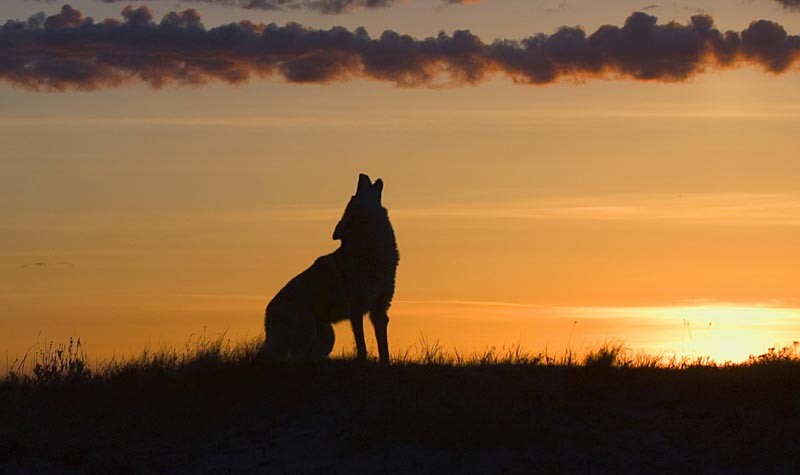
coyote-howling-800x475

My stepfather thought he’d make a man of me by shipping me West one summer to work on his ranch in Southwest Colorado. He told me I needed to learn the way of the world, the natural order of things in which Man, or least my stepfather, sat at the top of the mountain.

And so I was sent to help Waini Muatagoci, who the other ranch hands called Luke Two Moon, which is what his Ute name translated to. Two Moon was from the Weeminuche Band of the Southern Ute tribe who once ruled this part of the Four Corners before the whites “subdued” them and, in turn showed them the way up that mountain my stepfather talked about. Just nowhere near the top.

Yog’yuvitc, brother coyote, he’s been here since before my people arrived in the before times, young Ben. Coyotes would take deer and elk and the calves of kutc-um, the buffalo. But it wasn’t until the white ranchers came that coyote has been hunted like this, just to be rid of him on the ranches,” Two Moon said as we rode the trap line set out to take down the coyotes that had been killing calves of my stepfather’s prized Herefords during the calving season.

“I guess Hal’s barbed wire fence is only good at keeping the cattle in and not the coyotes out,” I said, half-joking. Hal was my stepfather, Harold King.

“No. Mr. King thought he could scare them off the ranch by making big noises. Coyote ran away, laughed at him and then came back for more calves. He sent us on hunts, but there are more of them than there are of us and this is a big spread. So now we set traps and kill coyote without even seeing him. It’s a dirty and cowardly thing,” Two Moon said.

Up ahead we saw a thin gray form lying on the ground. It was my first view of a coyote and later I wished it was my last.

The animal’s bloody leg was in a hole, its mouth open as if in a silent scream of protest and it’s eyes were open in defiance, fear…maybe even accusation. I couldn’t look at its face long enough to tell.

“So now you see Mr. King’s ‘enemy,’ this scrawny thing lying here in a pile of skin, fur and bones. Help me get him out of the hole so I can reset the trap, young Ben,” Two Moon said.

I put on my gloves, pulled down my hat and jumped off my buckskin and tried to put aside my disgust. I understood the problem of the coyotes coming through the wire and taking calves, but I wished there was better way to keep them under control besides killing them in such an inhumane manner.

“This is just wrong,” I said.

“As far as the ranch goes, you’re wrong, young Ben. But you’re also so very right.”

In the next hour we found four more dead coyotes, their legs caught in traps set in holes and hidden from them, save for the bait that drew them to their abrupt capture and slow, agonizing deaths.

“As long as there are so many cattle here, breeding and calving so often, there will be coyote hunting and taking the babies,” Two Moon said. “It is as it has always been. Mr King is just providing many more opportunities for coyote to prove his rightful place in our Mother Nature’s order.”

At the next trap in the line, which sat at the top of little rise near the southern boundary fence of Hal’s spread, we didn’t find a coyote carcass. No, what we found was even more grotesque than the twisted form of a now-dead animal once wild with pain and fear.

Two Moon asked me to check on the trap set and bait, so I jumped off my buckskin and carefully reached into the hole. Two Moon must have thought I got bitten or the trap snapped and my hand barely escaped its vicious jaws, but he’d be wrong on both counts.

I looked at my glove and showed the blood to Two Moon.

“You all right, boy? Trap catch you?”

“No. Come on down and take a look in here,” I said.

Two Moon’s feet hit the ground in a silent puff of dust and he walked to the hole, kneeled next to me, peered into it and withdrew the bloody trap. In its jaws was the severed leg of a coyote. Actually the lower leg that had been gnawed off by the trapped coyote. Two Moon’s face took on an expression both resigned and disgusted.

“You’ll see this happen from time to time, young Ben, when brother coyote will not wait to die on the Man’s terms. He would rather die free, no matter the cost in pain and suffering. My people were the same way., fighting the whites, even though we knew we were whipped, all the way ’til 1923, when Chief Posey took on the Mormons one more time up in Blanding. They killed him,” Two Moon said matter-of-factly as he opened the trap and let the grotesque talisman of a perverted sense of freedom fall to the ground.

“May I have that, Two Moon?” I asked.

The old Ute shrugged and said, “Why not? It’s not doing coyote any good now and the dead ones on the pack-horse don’t need it, either.”

He reset this trap just as he had the previous ones and the seven more in which we found coyotes of both genders and all ages until we came to the end of the trap line.

“If Hal wants me to check the line tomorrow, do you think I should check the sets on the way back to the house, Two Moon? Just so’s I can remember their location and order?” I said.

“Ya know, that’s probably not a bad idea, young Ben. I’ll leave you to it while I bring these back to the big house for burning,” Two Moon said. “I think your idea’s a right good one.”

As Two Moon road back to the big house he sang, in what I assumed was Ute, a tune that swayed in the wind behind him.

I tripped every trap on the way back. I knew the calving season was still months away and I’d be back East by then. No more coyotes would die like that while I played cowboy. They’d have to find another way to control the coyotes.

My real Dad had been a conscientious objector and Draft protester back in ’67-‘68. Yet he went on to win a Silver Star in Vietnam as a life-saving medic and came back to protest the war and racism and whatever other injustice he saw in American society right up until he died in ’86.

Hal wanted me to be a man by his definition, if not in his image. I’d already decided to be the man Dad would want me to be.

As I tripped the last trap, I heard a coyote howl in the distance, saw it in silhouette against the moon as both rose over the ridge south of the big house. I yip-yip-yeowed right back at it and it echoed my call. I’m sure it had no idea what I was doing, but liked to think it understood my eastern accented message we were in solidarity against the Man.

I hope…no, I know Dad would be proud of me.

First draft of a story I wrote based on the theme of “resistance.” I’m not one to write political protests or satire, and I’m pretty sure I’ve buried my take on the subject much too deeply beneath the allegory of keeping el coyote from ruining the ranch. But, I don’t have the answers when one beast wants in, while the other will do anything to keep him out.

© 2017 Joseph Hesch

natural killers

we are sufficient for any genocide.we
do it

global

& all the lying

rush forgotten

here

things are thinner

where i

fall

through air / through water

i bring

memory                           in fragments

a turn of skin.are
times
it stops

& i can scatter
vacant seeds
in the wind

© 2017 Reuben Woolley

the uncertaintly of bright maps

looking for ways

to see this

is gold

a word

hanging

just here in
time.it doesn’t

shine

in dark
chance

so easy a
loss.i’ll walk
in straight
footprints

tight

laces &

keep my eyes well
open.it’s not
a game
a hide

go seek

let me

string them all together

give names unordered

© Reuben Woolley

shade talking

timely
the ghosts in this
real world

can you hear

whispers
silent.the future days

coming

quickly like
kings
with useless
gifts

are no

defence system / no
last red line

bleeding

their honour over
blank iris

those distant fields
in back gardens

our arms
in rickety sheds

© Reuben Woolley

venus of coventry

st george
in the front
window.this
is my
white house

& red

across a toy
globe.is what
we own.picture

this

a palette
a broken artist

there are people
who think in colour

very separate

they do not paint the changes

© Reuben Woolley

barely anywhere in time

they take a future

desire spinning

on dead

wheels

this is
control

where a bird still

waits

for old eyes.we search
the effluent for flesh

i forgot

this dry

water when

they hung you up

the one-eyed
defender

singing shanties
in seas of dust

© Reuben Woolley

darker applications

not always                      the words
have any meaning.they
fill the slots as long
as all the numbers
are not counted

they just                          complete
the hours / the days
go on
& die.they have
their mobile connections

the touch of a voice

i watch your screened
conversation                    ticking.your

simple
pictures

hanging
now

this glass is made of ice
a cold
intonation.cut
deep i do not bleed

© Reuben Woolley

Deconstruction

I’ll take your hyper-inflated
phallus, ego-distended balloon,
id-fueled hot-air engine
that fills super-ego daydreams
to dizzying-heights of power—
and throw your craven, carved
wind on the fire of this year’s
revolution. Such a useless
log, poorly fit for fuel, and
barely at that, must burn
to ash before this dawn

comes, must rise in smoke
signals to call poets and
painters from themselves.
Then you can raise your
indistinguishable flags,
try to wave the smoke
from your eyes. We
will not be deceived—
we know who feeds
this all-consuming blaze.
And we will have

already come for you.
As you crawl out of your
wrecked ship of state,
we come for you.
As your cracked currency
drops from you, we come
for you. As you fall,
we come for you.
We come, not as you
imagine. With arms open,
we welcome you back to humanity.

—Michael Dickel

Deconstruction-1-WEB.jpg

So Thirsty —poem

I am almost back perhaps. The long summer ordeal
of stress, rockets, war, death, killing has moved off
into Syria and Iraq and left us barren for a moment.
A bit of rain falling today hints at winter being
wet. We need water. We always need water. So thirsty.

The brown hills will green again, and the dry beds
recently run with blood water will wash thoroughly
so flowers may wave their red-yellow-white-purple
cacophony of emotions in winter’s permissive grace.
We need the water. We always need water. So thirsty.

Since between last-summer’s war and the next,
whenever it might fall upon us, this brief moment
flickers—a satellite-pretense of being a star gliding
across black night—a mere reflection of sunlight.
We want water, we always need more water. So thirsty.

The desert will preserve these battles, mummify
the narratives, and wait as scorpions and seeds wait.
And to this I return. Almost. Maybe. Turned back
from the sea and step-by-step making my way to sweet
water. Always water. Like the night sky, I am so thirsty.

—Michael Dickel

warsurrounds-web
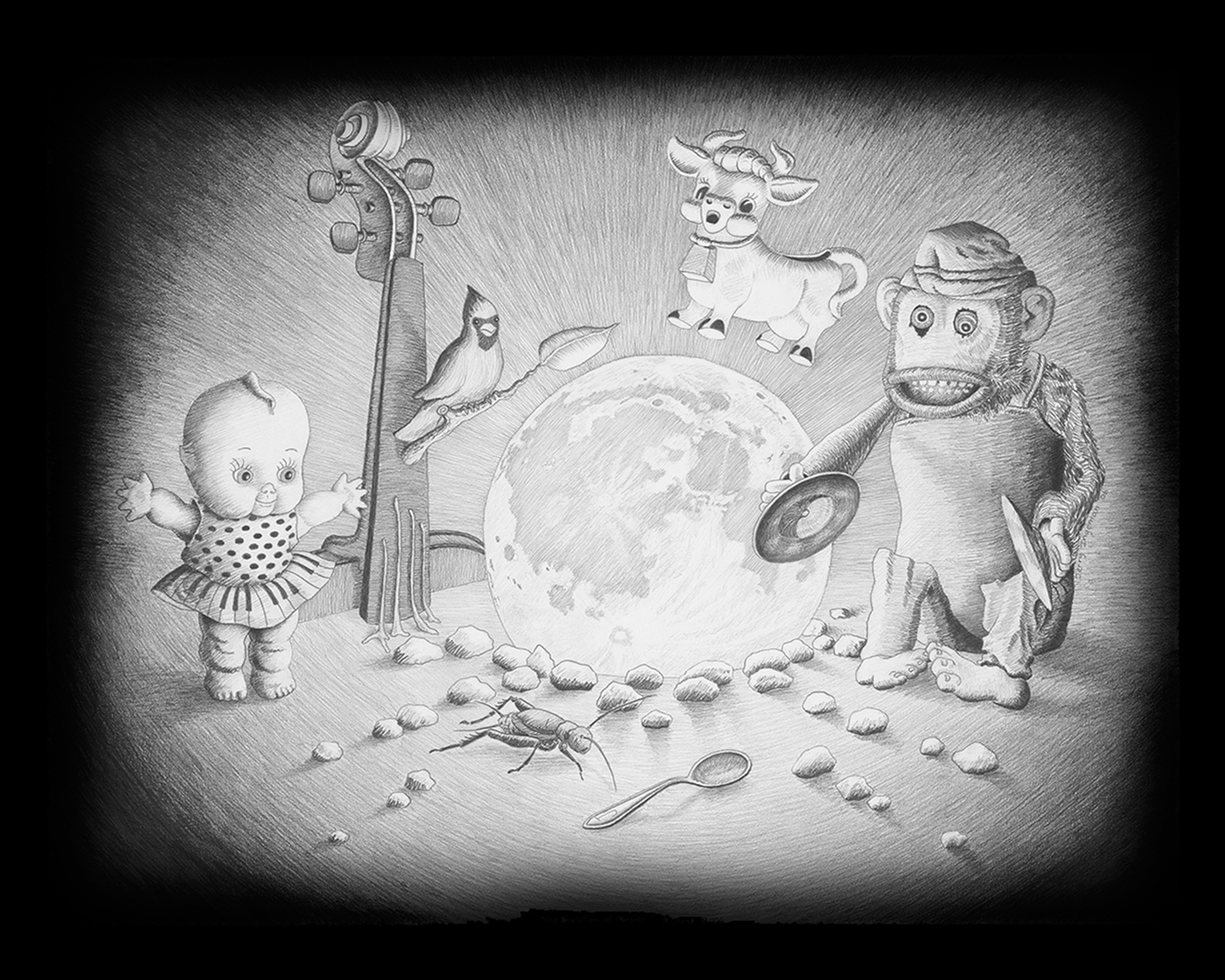
The Evolution of Music by Jerry Ingeman

This poem will be read at Baltimore’s Writers Resist event (Jan 15 2017) by Maryland poet Laura Shovan, author of  The Last Fifth Grade of Emerson Elementary, a novel in poem form. Michael wrote this poem a while after the 2014 Hamas-Israel War—other poems, from the war, appear in his book War Surrounds Us.