
holding proud at unjustified margins
on steps of blue and turgid hungers
lips moving in softly whispered oratory
heartbeat drums a frightened tattoo
© 2017, Jamie Dedes
holding proud at unjustified margins
on steps of blue and turgid hungers
lips moving in softly whispered oratory
heartbeat drums a frightened tattoo
© 2017, Jamie Dedes

mom stressed
as she sat
with her 10-key
urgently
conscientiously
feeding it numbers
for a business
in Redhook
a commercial building
in old red brick
her calculations spun
Monday through Friday
dripping white paper
in ribbons
pooling on the floor
with all her adds
all her minuses
she accounted
in grey lead
on lined green paper
A/R and A/P
payroll
chart of accounts
bank reconciliations
consolidated financials
transactions
neatly ticked and tied
to ledgers and subledgers
hand formulated
amounting to
zilch
zip
squat
zero
nothing
gone
forgotten
except
for the echo of her sighs
© 2015, poem and photograph, Jamie Dedes, All rights reserved
An old cowboy went a riding on one dark and windy day … Riders in the Sky: a Cowboy Legend (1948), Stan Jones (1914-1963), American actor and songwriter
When he was twelve, Stan Jones heard a tale from an old cowboy. It was the inspiration for Ghost Riders. This version by Johnny Cash and Willie Nelson sounds to my fancy a bit like something of the Old West (1865-1895), not that I would really know.
I was born and educated in the Eastern U.S. about half-a-century after the Old West died. One day, I landed in the Western U.S., California, and stayed. Like most Americans of my time, I was reared on accounts (fiction and nonfiction) of the romanticized and reprehensible wild wild West. After having been fed on everything from Bret Harte’s short stories to cowboy songs and poetry to cowboy shows and movies, I was anxious upon arrival in California to explore the places that were legendary like San Francisco, Sacramento and Stockton.

For me part of the mystique of the Old American West and its music, poetry and culture was that so many of the famous and infamous characters were actually not all that long dead when I was born. Buffalo Bill Cody died in 1917. Annie Oakley died in 1926, just ten years before my sister was born. Bat Masterson (lawman, marshal, buffalo hunter, gambler, and army scout) had retired from one of the most violent and lawless eras in the West to work as an East Coast sports editor and writer at my hometown paper, The New York Morning Telegraph (now defunct). He held that job in 1914, the year my mom was born. He died in 1921, after several more of her siblings came into this world. Although I very much doubt that my grandfather read about sports, it’s not unlikely that my mom’s older brother, Daher, read Masterson’s columns.
Ghost Riders was one of those songs that made me feel connected to the colorful characters of the Wild West who’d so recently tread this earth. It also made me feel connected to the wider world. It’s probable that the story that inspired Stan Jones was some version of the almost universal tale of “the hunt,” which predates Christianity in Europe and arrived in the States with settlers from Europe, perhaps especially Germany and the Scandinavian countries. It’s a lyrical version of a lost soul caught in a never-ending hunt lead by a devil, shape shifter or psychopomp. Think of Gabriel Hounds or Woden’s Hunt. The German folklorist Jacob Grimm wrote about the hunt.
© 2017, Jamie Dedes
Ghost Riders in the Sky
An old cowboy went riding out one dark and windy day
Upon a ridge he rested as he went along his way
When all at once a mighty herd of red eyed cows he saw
A-plowing through the ragged sky and up the cloudy draw
Their brands were still on fire and their hooves were made of steel
Their horns were black and shiny and their hot breath he could feel
A bolt of fear went through him as they thundered through the sky
For he saw the Riders coming hard and he heard their mournful cry
Yippie yi Ohhhhh
Yippie yi yaaaaay
Ghost Riders in the sky
Their faces gaunt, their eyes were blurred, their shirts all soaked with sweat
He’s riding hard to catch that herd, but he ain’t caught ’em yet
‘Cause they’ve got to ride forever on that range up in the sky
On horses snorting fire
As they ride on hear their cry
As the riders loped on by him he heard one call his name
If you want to save your soul from Hell a-riding on our range
Then cowboy change your ways today or with us you will ride
Trying to catch the Devil’s herd, across these endless skies
Yippie yi Ohhhhh
Yippie yi Yaaaaay
Ghost Riders in the sky
Ghost Riders in the sky
Ghost Riders in the sky
– Stan Jones

“And Caesar’s spirit, raging for revenge,
With Atë by his side come hot from hell,
Shall in these confines with a monarch’s voice
Cry “Havoc!” and let slip the dogs of war,
That this foul deed shall smell above the earth
With carrion men, groaning for burial.”
Julius Caesar Act 3, scene 1
we have need of gods
an ancient irony
like blood that needs heat
to sweat out the mysteries
to rage in revenge
to reconcile sacrifice
to repel condemnation
to simmer our gratitude
for the many wonders
as misunderstood
as all the horrors
relieve us we pray
in our righteous moments
from the sins of others
their guns, their bombs
their swords of hate
lives and livelihoods cut short
in genocides renamed –
semantics play large
in wars of loathing and
vile justifications
relieve us we pray
from children killing children
from executions in the street
from brothers killing brothers
from sisters unleashed
like the dogs of war
like a belly full of cancer
like an aorta bursting
our gods cry ‘Havoc!’
in traps set by rulers
by teachers at schools
and in places of worship
by parents at dinner table
our legs immobilized
like wolves ensnared, we chew off our feet
attempts at freedom cripple and break us
and everywhere
mouthing lies
groaning in denial
bowing to gutter rats
scraping to vultures
the false gods of our making

let us now praise the peace
after Pablo Neruda
let us sit
without movement, without words
harmless
not trampling the ant
or butchering the steer
neither selling nor buying
no birthing, no dying
fisherfolk transfixed above the wave
carpenters silent by the bench
. . . . . poet
lay down your pen
let every hand be still ~
slow the racing heart,
the speed-demon thrills
stop!
no movement, no words
now, let us praise the peace
© 2015, Jamie Dedes
Keeping Quiet
Now we will count to twelve
and we will all keep still
for once on the face of the earth,
let’s not speak in any language;
let’s stop for a second,
and not move our arms so much.
It would be an exotic moment
without rush, without engines;
we would all be together
in a sudden strangeness.
Fishermen in the cold sea
would not harm whales
and the man gathering salt
would not look at his hurt hands.
Those who prepare green wars,
wars with gas, wars with fire,
victories with no survivors,
would put on clean clothes
and walk about with their brothers
in the shade, doing nothing.
What I want should not be confused
with total inactivity.
Life is what it is about…
If we were not so single-minded
about keeping our lives moving,
and for once could do nothing,
perhaps a huge silence
might interrupt this sadness
of never understanding ourselves
and of threatening ourselves with
death.
Now I’ll count up to twelve
and you keep quiet and I will go.
Extravagaria : A Bilingual Edition
by Pablo Neruda (Author), Alastair Reid (Translator)
Noonday Press; Bilingual edition (January 2001)
ISBN: 0374512388

1.
it must be painful for them to write, those poets in tough-times and hard places
where blood and tears and poverty contaminate the air, stain the sidewalks, and consume the people
the blood must be soul-sick and rusted and tasting of acid, not salt,
and the poems meant to heal the writer and stroke the cheeks of the wounded,
to dry their eyes and gently kiss their gray heads
to poem in such places must be like walking shoeless on glass shards
perhaps the most sacred thing in the dream-time meadow of poets’ desire is Light ~
can you awaken to meet the Divine on the battlefield, in the camps, in government housing or in the ghettos?
if so, you are a saint, not simply an artist
2.
in my small world, my civilized world, people fall asleep reading or after making love or playing in the yard with their children
if they wander, it is through books or planned travel
there are luxuries
there is food
there is cleanliness and paper on which to write
no bombs are dropping to scorch and scar the Earth
there is a certain dignity
3.
in San Francisco we walk along the beach at night, near the Cliff House
we walk to the sound of the waves, the song of the Earth chanting its joys
our feet are bare and relish the comfort of cool sand
the air is clear and cold and easy to breathe, tasting of salt and smelling of sea life ~
here is a pristine moment of peace
i want to bequeath this peace to you, to everyone,
as though it were a cherished heirloom
it is really a birthright
i want to plunge into the waters and gather the ocean in my cupped hands, to offer it to you as sacramental wine
i want to form seaweed into garlands for all of us to wear, to hang over our hearts, a symbol of affection
i want to collect pine cones from the trees that congregate along the coast and feed them to the children to remind them to cherish this Earth and all its creatures, themselves included, and to say …
do not make war in your heart or upon your mother’s body
© 2016, poem, Jamie Dedes, All rights reserved; Photo credit ~ BrokenInaglory via Wikipedia under Creative Commons Attribution-ShareAlike 3.0 Unported

Lives built on pigeon dreams
structured by Madison Avenue
calculated by Wall Street
beribboned by Hollywood
We take them: these manufactured dreams,
one-size-fits-all, straight off the rack . . .
And damn cheap too!
Mad, cannibal pigeon dreams
turn good minds and whole hearts into mince
We pray to false economies,
seek deliverance from Cheap Jack
We buy one, get one free –
And fetch and fetish youth eternal
from face-lifts, Botox™, and boob-jobs –
Exit here:
drugs, alcohol
sex-a-PEAL
en-ter-TAIN-ment.
Get a house, a car, a jewel –
Be the first on your block.
Buy now. Pay later.
Filling the empty with nothing more,
something less . . .
and warehousing our souls, they
gather dust in public storage . . .
the first month free.
Poems unwritten. Songs unsung.
Chumped. Stumped. Petrified.
A gullible human Pigeon Pie,
neatly boxed
and wrapped to go.
© 2017, poem, Jamie Dedes, All rights reserved; Photo credit – Lars Konzack, Public Domain Pictures.net.
“Indeed, that was an apt and true reply which was given to Alexander the Great by a pirate who had been seized. For when that king had asked the man what he meant by keeping hostile possession of the sea, he answered with bold pride, “What do you mean by seizing the whole earth; because I do it with a petty ship, I am called a robber, while you who does it with a great fleet are styled emperor”. City of God, St. Augustine
In another lifetime, my day job involved working with “special populations.” Initially I taught Welfare-to-Work and Career Development and over time moved on to work collaboratively within our community as a planning unit supervisor, designing and delivering programs that served refugees, at-risk youth, foster youth, and ex-offenders. Such programs are meant to assist in assimilation of refugees and in the transition from foster youth programs or incarceration to integration into the mainstream population.
These programs involved a range of services – General Education Diploma, English as a Second Language, vocational training, case management, mental health counseling and support groups. Because early in my career my work included training, I had first hand contact with clients, including at one point going into prisons to do some preliminary work toward successful transitions and lower recidivism rates. Later, writing grant applications and assisting in the development of Requests for Proposals required hosting focus groups with stake-holders, which included our prospective clients.
This experience was quite enlightening for a kid who was raised and educated in convent schools. I was equally appalled and inspired: appalled by the ways in which our culture and government and even well-meant social programs can entrap and inspired by the depth of faith and courage I witnessed in people who had crushing barriers to successful and sustainable employment and integration. Many of these barriers were artificially created by ill-informed perspectives and biases and sometimes cruelty on the part of the general population and by lawmakers.
“Every pair of eyes facing you has probably experienced something you could not endure.” Lucille Clifton
There were certainly a lot of clients who clearly had exercised poor judgement or simply (often devastatingly) had no idea of the impact their actions had on the lives of others; but, there were those many whose incarceration was born of poverty, lack of education and opportunity, lack of parental guidance and presence, racism, learning disabilities and mental illness. Among other things, the great lesson – and the great disappointment – of that period in my life was that the U.S. justice system was rife with injustice. That was true all those years ago and never more so than it is now.
Today, one of the great travesties is the move from publicly run prisons to corporate management and exploitation. You will often see prison management companies advertise the provision of education, training and other services meant to make the general public believe they act with good conscience. If you review stockholder materials, however, it is blatantly obvious that recidivism rates are a selling point. Privately managed prisons have a vested financial interest in high prison populations and a high percentage of returns to prison. Hence, the way prisoners are treated IS CRIMINAL. All things considered, this is a modern-day example of the view St. Augustine’s pirate held: “I do it with a petty ship, I am called a robber, while you who does it with a great fleet are styled emperor.”
© 2017, Jamie Dedes
The video below provides an overview of the corporate prison complex.
If you are viewing this from an email subscription, you’ll likely have to link through to the site to watch the video.

.
each
lively soul
worlds contained
a galaxy of one
our gases, our dust
our gravitational pull
our weak wills
our strong compulsions
our stark shadowlands
our gaudy stars
dancing toward infinity
© 2015 poem, Jamie Dedes (The Poet by Day), All rights reserved
 blues
blues
the helpless, hopeless, remorse-filled blues
when you’ve seen the doctor and she’s seen you
when Time runs out and Eternity beckons
blues
the darkest hues with shivering slivers of
pewter muting to gray, muting to black,
muting to light fractures in a surface
permeable and permissible, heavenly Light
or, so “they” tell me …
But lost in that Universe of Light
will “I’ still be?
will “you” still be?
answer me that
What is the character of this Light?
Matter or myth?
Ah then…
after all, pondering on
I find I really don’t care
I’ll poem my blues and poem my light
until all that’s left of me is
what I leave behind…
and you?
Will you leave your unwritten
blue poem hanging in the air to be
sensed by the few who can?
Or, will you, like slaves of old,
paint yourself blue and boiling tears
dance round the fire’s edge and rebirth
your broken blue soul into wholeness?
This poem is written out of memory. Nothing untoward is pending … except, of course, for the fact of a world gone mad and who knows what’s next with that …
© 2017, Jamie Dedes (The Poet by Day), All rights reserved

BARUCH, THE BAKER
Your heart is smarter, my Baruch,
then your head,
which is smart indeed –
and your hands and gnarly fingers
are smarter still.
They fashion bread from
cream-colored flours,
silky to the touch.
Kneading the dough
patiently, patiently
letting it rise
while I sleep –
safe, in my bed.
Up at six a.m. we walk sleepily
down a lavender-gray street,
an apricot sun peeking at us
and, rising higher in the sky,
it seemingly follows us to you.
Cheer-filled arrival with greetings
and smiles from dear Baruch and
warm sugar smells, yeasty scents
and the sight of golden loaves,
some voluptuous rounds and
others, sturdy rectangulars.
You have baked cinnamon rolls,
a child’s delight, pies and
sticky buns too…and cookies!
“We’ll take a French bread” my Mom says
pointing to a crispy brown baguette.
“And a raisin bread.”
She adds …
“We’ll need that sliced.”
I watch your hands flit gracefully
like butterflies in a green valley
stopping here and then there
to pull fragrant loaves from display
and slicing them, neatly packaging,
then reaching down over the counter
you hand me a little bag of rugelach.
As I look up, reaching for your gift
I stop breathing, arrested by
a wisp of blue on your forearm.
I am studious, a reader, dear Baruch,
I know what that tattoo means …
Looking down, with a whisper I choke
“Thank you, Baruch!”
swallowing that lump of sadness,
trying not to show my tears.
What right have I to tears?
But then you, dear Baruch, come
bounding round the counter
with warm hugs and soft tissues,
as though I was the one hurt.
From that day forever more,
I saw you only in long sleeves.
At lunchtime, I demanded –
“Mom, tell me about Baruch.”
And she does.
I am pensive over our meal,
canned marinara and slices of
of your baguette.
Dear Baruch, with each salty bite
I eat your tears and
the blood of your daughter.
Nights she stares at me from that
sepia photo by your register.
Baruch, did she, like me, assume
a grown-up life
of school and jobs,
marriage and children?
And you! You must have assumed
the tender comfort of
her love in your old age.
Do you hold the vision of her
young and happy in your
brave, kindly old heart?
Does your ear still play back
her childish laughter,
the sound of her voice
begging for a story?
Do your warm brown eyes still hold
her smile in remembrance?
When you see little girls like me,
does your anguish grow?
Dear Baruch, our dear Baruch –
how will you set your child free
from that faraway land and
cold, unmarked mass grave?
© 2008, poem, Jamie Dedes, All rights reserved; photograph of a holocaust survivor displaying his arm tattoo courtesy of
SOME MOTHERS HEARTS HAVE STOPPED
Some mothers’ children stare unseeing
No sweet, wet baby kisses from blistered lips,
. . . . songs unsung
No wedding portraits to dust and treasure
No graduations or trips to the sea
. . . . just their bodies to bury
crushed
beaten
stilled
by the engine of nihilism
Limbs cracked and broken, bellies torn
Faces purpled, hearts stopped
Hearts stopped …
. . . . hearts stopped
Some mothers’ hearts have stopped

© 2015, poem, Jamie Dedes, All rights reserved; photograph of some mothers’ children killed in the Syrian Civil War, Ghouta massacre/uploaded by Bkwillwm to Wikipedia under CC BY 3.0 license (I believe it may be a screen shot from a news video)

THE DOVES HAVE FLOWN
what must it be like for you in your part of the world?
there is only silence, i don’t know your name, i know only
that the fire of Life makes us one in this, the human journey,
trudging through mud, by land and by sea, reaching for the sun
like entering a ritual river without a blessing or a prayer
on the street where you lived, your friends are all gone
the houses are crushed and the doves have flown
there is only silence, no children playing, no laughter
here and there a light remains to speak to us of loneliness,
yet our eyes meet in secret, our hearts open on the fringe,
one breath and the wind blows, one tear and the seas rise,
your grief drips from my eyes and i tremble with your fear
© poem, 2016, Jamie Dedes, All rights reserved; Mindanao Bleeding-heart at London Zoo, England courtesy of Drew Avery under CC BY-SA 2.0 license

To the Frog at the Door
if you kiss a frog, so I’ve been told,
there’s a chance he’ll turn into a prince,
a frog prince, which means you have
you absolutely have to love him
and i’ve loved a few frogs, at least
i think i have, they never became princes
nor did their love morph me into a princess,
i’m still a cranky old crow, we are what we are
loving frogs and crows isn’t transformative
….why should it be?
one woman’s frog is another woman’s prince
…….as for this old crow
………….she loves flying solo
…….not that you asked
© 2013, poem, Jamie Dedes (The Poet by Day), All right reserved; The Frog Prince by Walter Crane (1845-1915), U.S. Public Domain

We flew along the freeway yesterday under
a cold coastal expanse of cerulean ceiling.
It reminded me of you and how we dusted
the vaults of our minds to rid them of fear
and the old lexicons of grief and guilt, the
whalebone girdles of unfounded faith and
common conventions, saccharine and sticky.
I thought of that one sea-green day we spent
under just such a sky in a land far away and
how we changed your name then, reframed
your story to tell of hope and not despair.
You sketched flowers blossoming in the dust
of a spring that promised but never delivered.
Now we don’t speak of men but of cats with
their custom of keeping heart and claws intact.
We tell ourselves stories in rhythms that resound
in deep sleep. Soon now the ancient calls to
feral festivals will still and the time’s arrived when
our only play is in the margins, fate hanging
from our skeletons like Spanish moss on old oak.
It pleases me that life’s passage spins into poemed reliquary and
a memory of the pink peau de soie I wore to your prom that June.
© Jamie Dedes
does it bloom, this horror,
from my nonEuropean roots
from the scent of cinnamon in my blood?
the brown and yellow tinges of my skin?
or is it just your old soul and mine and
this intuition we share on the ground
of one another’s battles, witness the fuming
anger feeding disenchantment in the street
and the acquisitive tendencies of the elite,
cowardly saber-rattling, cut off from authority,
from that innate expressively honest power
of our erotic selves, our instinctive selves,
the non-rational knowing that embodies
strength, nothing weak or pornographic
in its expression, a profound antithesis
to the pornography of war and hate that,
in the end, is about impotence, about the
emboli of narrow minds, grasping oligarchs
fomenting tribal dissents for their own ends
or dropping bombs like a child bangs pots –
to overwhelm the fear of thunder, a game
of chicken, of the hawk-hawk play toward
a mutually assured destruction, just a
matter of time . . .
as we stand the ground of one another’s
battles where peace would be revolutionary and
the unholy alliance of wealth and fear-mongering
might burn itself out, find its way into justice,
but here we are, once again, in thrall to the
sociopaths that have us bloodied and bound ~
their eyes are the aged face of clockwork orange,
numb to the obscenities of maim and murder …
where is the will of the cup to overcome
the sword? time for the temple whores to
sleep with insanity and take the war out of it
© Jamie Dedes
 For good or ill, I seem always to have something to say. In retrospect I may find I didn’t say it well, it wasn’t worth saying, or I didn’t really know what I was talking about. Is it a gift or a curse? I don’t know. I just know that even in despair, I never have writer’s block. Having said that, I don’t blame or judge those who do. Especially right now. The world’s gone mad.
In reaction some of my friends are writing up a storm—almost literally. Others are so overwhelmed with emotion—fear, anger, hopelessness—that they can’t work. It wouldn’t matter if their jobs weren’t creative. They just can’t work. No romance about it. No calling it “writer’s block.” We should call it—in this case—what it really is: heartbreak.
Normally, I would say block comes from trying to write and edit at the same time. That doesn’t work. Or, I’d ask “Are you self-conscious? Are you afraid of being judged, of revealing yourself, of just not being good enough?” Write about those feelings then. Write just for yourself. Dabbler or journaler, amateur or professional, one of the best ways to get to the root of a problem is to put it down on paper, to explore the feelings, fears and trepidation.
Or, I’d wonder: Is it a matter of perfectionism? That can be a steel wall.
“You know, the whole thing about perfectionism. The perfectionism is very dangerous. Because of course if your fidelity to perfectionism is too high, you never do anything. Because doing anything results in…it’s actually kind of tragic because you sacrifice how gorgeous and perfect it is in your head for what it really is. And there were a couple of years where I really struggled with that.” —David Foster Wallace
These days though, I’m feeling sad too…and insecure…and this may be one of those times when I should still my pen and hold my tongue, but I find I have to ask myself what can we do when we feel that our hearts are breaking? See a therapist? That might not be a bad idea, especially if the feeling goes on and on and we can’t pull ourselves out from under. Or, we could just sit with the sadness.
Periods of heartbreak and disappointment often turn out to be a sort of liminal time…a transitional stage…Most of us have experienced this in our creative lives: when events are overwhelming and our inner lives seem the most sterile but turn out to be silently rich in process and promise and demand of us patience as our becoming works itself out. During such periods, when our inner lives are dark, maybe we need to simply live in the darkness, not try to avoid it or suppress it.
For creative people—for everyone perhaps—these times can be valuable; in the sense of our becoming, a gestational period, a personal advent waiting for the birth of a truer self. Difficult as these times are, as creatives, as citizens, perhaps they are simply times to pause until the pieces come together and our intuitive sight clears. Don’t be surprised if you wake up one day to find your creative spirit is a phoenix rising from the ashes of despair, no longer haunted and ready to take on the insanity. History, personal and shared, shows us that – however trite it sounds – out of the darkness comes light. We may have a long haul ahead of us. It might not be tomorrow or the day after, but the light will come. Hold fast. We can’t afford to believe otherwise.
© 2016, words and photograph, Jamie Dedes, all rights reserved
THE WORDPLAY SHOP: books, tools and supplies for poets, writers and readers
 i’ll have none of that, you see
none of the exclusivity of clubs
with their business of foundations,
divisions and the self-satisfied
whole-hearted embrace of conceits,
moth-eaten and self-righteous,
the mythopoeic and parabolic
spelled by men into stone and dogma,
the collision of sacred language with
parochialism and that left-over tribalism
exploding into disdain and violence . . .
how is it that vision ends and lunacy begins?
lead me instead to that inchoate space,
between saint and sanctity, soul and spirit
bequeath me into the great yawning
where my mother thrives as Khoas unquelled
where my father shines dressed in anarchy and
my sister sips tears from the wan cheeks of sages,
. . . . . let us begin again
© Jamie Dedes

if only i knew
what the artist knows
about the great perfection
in imperfection
i would sip grace slowly
at the ragged edges of the creek
kiss the pitted
face of the moon
befriend the sea
though it can be a danger
embrace the thunder of a waterfall
as if its strains were a symphony
prostrate myself atop the rank dregs on the forest floor,
worshiping them as compost for fertile seeds
and the breeding ground for a million small lives
if i knew what the artist knows,
then i wouldn’t be afraid to die,
to leave everyone
i would be sure that some part of me
would remain present
and that one day you would join me
as the wind howling on its journey
or the bright moment of a flowering desert
if i knew what the artist knows,
i would surely respond soul and body
to the echo of the Ineffable in rough earthy things
i would not fear decay or work left undone
i would travel like the river through its rugged, irregular channels
comfortable with this life; imperfect, impermanent, and incomplete
– Jamie Dedes
© 2013, poem, Jamie Dedes, All rights reserved; Photo credit ~ from Pictures section of OpenHistory under Creative Commons Attribution-Share Alike 3.o Unported license
Poems clutter the landscape of my mind with bite-sized portions easily committed to memory, ready to be pulled out in a moment of need or want. In the art of healing and living hugely, poetry is warp and weft.
Whether I am writing poetry or reading it, poetry gifts to me those blessed eureka moments, the moments when I understand myself or another, can put a name to the demons, or simply realize that I am not alone in my joy or sorrow. Think of W. H. Auden’s Funeral Blues and the simple line, “Pack up the moon and dismantle the sun.” I am getting older, approaching elderly, and though I am always making new friends, I’m of an age where I lose a friend or two each year, sometimes more. Bereft at the loss of someone precious and shocked that the earth hasn’t stood still, I think of this line and know that in this circumstance, everyone feels what I do . . .
. . . and all it takes is one disappointment in love to relate to Mad Girl’s Love Song by Silvia Plath, “I dreamed that you bewitched me into bed/And sung me moon-struck, kissed me quite insane./(I think I made you up inside my head.)
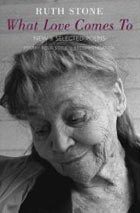
Of the many poets I dearly love, I particularly appreciate Ruth Stone for her quality of giving things their true names and for the practicalities embedded in her poems. “Dear children,/You must try to say/Something when you are in need./Don’t confuse hunger with greed;/And don’t wait until you are dead.”
Ruth Stone was an American poet and poetry teacher born into an impoverished family at Roanoke, Virginia in 1915. She lived most of her life in rural Vermont, attended the University of Illinois at Urbana-Champaign, won many awards for her poetry and was a finalist for the Pulitzer Prize for her last collection, What Love Comes To: New & Selected Poems (2008). She was wry, bold, conversational, edgy, philosophical and used the language and imagery of the natural sciences to good effect. Her second husband, the poet Walter Stone, committed suicide leaving her with three young children and an experience that indelibly etched itself on her life, heart and poetry. She once remarked that she spent the rest of her life writing to him and those poems were no doubt healing poems for her.
Not Expecting an Answer
This tedious letter to you,
what is one Life to another?
We walk around inside our bags,
sucking it in, spewing it out.
Then the insects, swarms heavier
than all the animals of the world.
Then the flycatchers on the clothesline,
like seiners leaning from Flemish boats
when the seas were roiled with herring.
This long letter in my mind,
calligraphy, feathery asparagus.
When Ruth Stone won the Whiting Writers’ Award, she got plumbing for her house. When she received the Walter Cerf Award for Lifetime Achievement in the Arts at the National Book Awards, she said “I’ve been writing poetry or whatever it is since I was five or six years old, and I couldn’t stop, I never could stop. I don’t know why I did it.… It was like a stream that went along beside me, you know, my life went along here . . . and all along the time this stream was going along. And I really didn’t know what it was saying. It just talked to me, and I wrote it down. So I can’t even take much credit for it.”
Ruth Stone died in 2011 leaving behind thirteen collections of literary dim sum. This poem, which gave its name to a collection that I just purchased, is a new favorite.
In the Next Galaxy
Things will be different.
No one will lose their sight,
their hearing, their gallbladder.
It will be all Catskills with brand
new wrap-around verandas.
The idea of Hitler will not
have vibrated yet.
While back here,
they are still cleaning out
pockets of wrinkled
Nazis hiding in Argentina.
But in the next galaxy,
certain planets will have true
blue skies and drinking water.
In the scant two-minute video that follows, the writer Elizabeth Gilbert (Eat, Pray, Love) shares the revealing story of her meeting with Ruth Stone.
Resources:
Ruth Stone, Amazon Page
Poems of Ruth Stone, World Poetry Database
Ruth Stone Obituary, New York Times
On Ruth Stone by Sharon Olds
© 2013, essay, Jamie Dedes, All rights reserve – This piece originally published in October 2013 on Plum Tree Books website
 The BeZine

