Their Compassion Has Legs

“All you need is a sense that there is no such thing as ‘no’ and everything is possible.” Moira Kelly

This shining face, this sweet spirit with reason to be bitter and yet he is not. He is a hero and pure inspiration. When Naomi Baltuck (Writing Between the Lines/Life from a Writer’s POV) posted this video on Facebook, I was as touched as anyone would be. I had to wonder though about his mom. What kind of hero is she, I thought, remembering the heroes of my childhood: Josephine Baker and my spiritual mother, Pearl Buck. Each of these women grew their families in unique – and extraordinarily unselfish – ways.

“All my life, I have maintained that the people of the world can learn to live together in peace if they are not brought up in prejudice.”  Josephine Baker (1906-1975)

Josephine_Baker_1950Josephine Baker was born in America but became a French citizen. She was a dancer, singer, actress and civil-rights activist.  As a child living in St. Louis, Missouri, she suffered from discrimination, abandonment, and poverty.  As an adult she had one miscarriage. She adopted twelve children, two girls and ten boys. They were from diverse races and cultures because, in addition to caring for them, she wanted to show that people can get along despite their different backgrounds. In the early ’80s two of her sons went into business together. They started Chez Josephine, which is on Theatre Row (42nd Street) in Manhattan. They dedicated the restaurant to their adoptive mom’s memory and decorated it with her memorabilia.

“. . .  the test of a civilization is the way that it cares for its helpless members.” Pearl Buck (1892-1973)
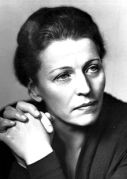
220px-Pearl_Buck_(Nobel)Pearl Buck was an American novelist, writer, humanitarian and the first woman to be awarded the Noble Prize in Literature (1938).  She grew up in China and spent most of her life there until 1934. She had a deep affection for and knowledge of the countries of the East, not just China. She suffered through the Nanking Incident when the National Revolutionary Army captured Nanking (now Nanjing) in 1927.  Many Westerners were killed, their homes destroyed, and their property stolen.  Her only biological child, Carol, had phenylketonuria (PKU), which causes mental retardation and seizures.  Pearl Buck adopted seven children. At a time when mixed-race children were considered unadoptable, Pearl Buck founded Welcome House, Inc., the first international, interracial adoption agency. Welcome House has placed some five thousand children since it was established 1949.

“The greatest act of kindness changes generations. Wherever there is the greatest evil, the greatest good can be achieved.” Moira Kelly (b. 1964)

emmanuel-kellyThis brings us to a contemporary hero: the mother of Emanuel Kelly, the young man in the video. Moira Kelly is an Australian humanitarian whose work has garnered her many awards and acknowledgements.  When she was eight years old, after seeing a movie about Blessed Teresa of Calcutta (now Kolkata), Moira committed herself to working with disadvantaged children.  She is the legal guardian of twins from Bangladesh, Trisha and Krishna. They are surgically separated but originally cranially conjoined twins.  Moira Kelly also adopted the Iraqi-born Emmanuel and his brother Ahmet, both born with underdeveloped limbs. Among her efforts is Children First Foundation, formed to provide transportation and healthcare for children with urgent needs in developing countries.

These women are mothers in the best senses of that word. Their ideals are real and they stand by them. They have saved children from abandonment and loneliness, from poverty and hopelessness and, in some cases, from early death. They are goddess mothers and true heroes.

© 2013, essay, Jamie Dedes, All rights reserved, Originally published on The Bardo Group blog
Video uploaded to YouTube by DrReaps
Photographs of Josephine Baker and Pearl Buck are in the U.S. Public Domain.
I don’t know the provenance or copyright holder of the photograph of Moira Kelly and her sons. If it is yours, let me know and I’ll credit you or take it down as you wish.

How Skinny Girls Survive


The decade of our destiny remains in memory like a petrified forest of events caught between less notable times. In 1960 I still had four-and-a-half years left to endure at St. Ann’s by the Sea; that is, when I wasn’t enduring my frayed mother or the charity of some kind but put-upon relative or family friend.

I was quiet and introverted back then. Excess baggage best take care not to make noise, intrude, interrupt, argue. Poor little Vinchenza St. Claire. That’s what they would say of me. They’d be surprised to see me now, all grown-up, grown old, and sometimes caustic as hell … And it’s Vinnie, if you please. Not Vinchenza. But I see I’m getting ahead of myself. I tend to do that.

So the Christmas holiday over, the new year begun, and the sun rising and setting on schedule, I packed my suitcase and violin, kissed my much relieved mother good-bye, and took the subway to Ridgeville and from there the Ridgeville Rail to Lincoln Green and St. Ann’s.

The return-to-school adrenalin rush after the winter holiday was nothing like it was after summer vacations. Still, there was that excitement: a new year birthed of all the new years before it, a thing rich with predecessors and heavy with promise. I was in the middle of writing my first novel, a weighty story filled with all the melodrama a twelve-year-old could wrest from a yearning heart. Given my age and mindset, it was predictably autobiographical and appropriately titled – I thought – How Skinny Girls Survive.

The skinny girls referred to were Fanny and me; only Fanny didn’t arrive back at school until we were a month into the winter semester. I missed her. I worried about her. I had no idea of the complications that delayed her return: the death of her mother and the whispered suspicion that it wasn’t from natural causes.

© 2012, story, Jamie Dedes, All rights reserved

Photo credit ~ Petr Kratochvil, Public Domain Pictures.net

Winter Is Here, I Know


No illusions, no illusions, no lies, no softened truth
no tears, no bargains, though sun shines and birds sing,
Winter is here, I know.

Winter is too  smart to invite either love or lechery,
and those men,  husbands or lovers, long for someone
not as inclined to ponder – as one man complained –
while I watched the grass die, the leaves dry, the earth harden,
a cool wind blowing across the bodies that house our souls.
Annoying them with that question …
“Why?”

Once Spring danced like wild flowers in the wind,
held dew and promise and smiled like a well-fed child.
It had never heard the word defeat and didn’t know hate or anger.
Spring liked to play, and romp, and sing and
hung on a tree to ripen, her question
“Why?”

Summer took itself seriously,
was wide-eyed with longing, sizzling in the sun.
It wore a red dress and
the champagne happiness of a husband and baby
Summer was as brave as youth is bold,
a silver bell that rings and rings and never stops.
So much and more than enough . .
and yet – a tremulous
“Why?”

Autumn gently smiled, like Da Vinci’s lady, and danced old dances,
reminisced Begin the Beguine, stepping lightly on brown leaves.
It was lined with gold and muted silks, remembered is manners,
nodded wisely, spoke sagaciously , and was a might too profound.
Haughty. . . it just knew it knew
“Why?”

Oh! But Winter…
Winter is content, sees itself in Time displaced and learned
laughter has meaning as fleshy bonds and boundaries dissolve.
A bit stiff, cold, and slow now, slowing to honor the sacred,
to say “i love you,” to say “it was good,” to say “thank you.”
Sun rise, sun set, and once dormant trees burst forth with green,
sanguine and serene, just a habit now that question
“Why?”

– Jamie Dedes

(c) 2010, poem, Jamie Dedes, All rights reserved; Photograph courtesy of John Witherspoon, Public Domain Pictures.net.

The Republic of Innocence

no mendacity in the natural world ~ just an
untamed grace in the meditative industry of ants,
in the peaceable company of small creatures
going about the business of food finding
and mating and homemaking in the loam of
this province, the republic of innocence

here is the soul-filling beauty of sun rising over
jacaranda as she paints her joy on a blue dawn;
robin with her russet-hued breast hunts for worms,
her instinctive motherhood proud of babies
 in
the spar and scrap of nest life . . .  it is in this
the uncivil cosmos – that the gentle breezes

dance with us on our mud-caked travels along
ripening pathways through meadow and brush;
as the flaxen sun shifts from rise to fall,
our hearts beat with their ribbons of ruby life,
pulsing with ebbs and flows of love and fear ~
soon – we know –  clouds will gray with the

inevitable dark and shivered moon will show
her craggy depths, sooty with doubt and danger,
our earthiness projecting its own shadows;
still we trust nature’s homilies, content in this
province where we’re left to be ourselves, left to
write our own wildness on the mirror of time

How near to good is what is wild.” Henry David Thoreau

– Jamie Dedes

© 2013, poem, Jamie Dedes, All rights reserved

Writing Your Self, Transforming Personal Material

We wrote the book because we believe that personal writing is very potent both for the writer and the reader, because some of the greatest literature is rooted in personal material. Myra Schneider in an interview HERE.

The subtitle of this book about personal writing is “transforming personal material.”  I think it is implicitly also about personal transformation. It always seems to me that writing and reading about life is a healing activity, a way to live hugely, and a way to empower ourselves and others. If we can do it well enough to engage others, whether our purpose is to leave a record behind for family, to set the record straight, or simply to share and entertain, the experience is rewarding.

Writing Your Self is the most comprehensive book of its type that I’ve yet to read, and I’ve read many. It is organized in two parts:

  • Part I: Here the focus is on life experiences, the exploration of those human experiences that are universal. These include childhood, self-conceptions, relationships, displacement, physical and mental illness and disability, and abuse.
  • Part II: Here the focus is on writing techniques, recognizing material that is unfinished, working on refinements, and developing work projects.

Writing Your Self is rich with examples from known and unknown writers including the authors. By example as well as explanation the authors reinforce what we all intuitively understand to be true: that telling stories preserves identity and clarifies the human condition. It helps us understand what it means to be human. The experience of working through the book was something like a rite of passage.

I very much can see the use of this book by individuals training themselves and by teachers of adult learners who wish to write memoir, poetry, fiction, or creative non-fiction. It would be useful in hospital therapeutic writing programs or in writing programs for active seniors.

Memories, both recent and distant, tell us who we are and so play a crucial role in our experience of life…

You may have memories which you want to plunge into or you may have material like a diary or letters which summon them up. There are other ways though of triggering memories. We offer a series of suggestions. Chapter 13, Accessing memories, secret letters, monologues and dialogues, visualizations.

I think Chapter 13 alone is worth the price of admission. I work a lot off of childhood memories and even the event that happened two minutes ago comes back to me with a dreamlike quality when I sit to write. I have not thought of the things I do naturally as triggers, but indeed they are. It was quite interesting to see these natural aids laid-out and organized on the page to read: objects and place as starting points, physical sensation as triggers, people in memory, and predominant feelings. The section on secret letters – that is, letters that you write someone and never send – was particularly interesting. I’ve only done this twice in my life, but I know some folks who do it all the time. I’m sure it is a common practice and would make a fine jumping-off point for some. The authors go on to monologues and dialogues – now everyone does that in their heads – and visualization. Hey, if you can see it, you can write it.

I’m an experienced writer and I enjoyed the book and the exercises and learned a few new things, got a few new ideas. If you are inexperienced or stuck midway in a transition from one form of writing to another, you’ll benefit from the exercises, ideas, and instruction in Writing Your Self: Transforming Personal Experience. This one’s a definite thumbs-up.

Myra Schneider  is a British poet, a poetry and writing tutor, and author of the acclaimed book: Writing My Way Through Cancer. Your can visit her HERE.

John Killick was a teacher for 30 years, in further, adult and prison education, but has written all his life. His work includes both prose works and poetry. You can visit him HERE.

– Jamie Dedes

Nine Gates: Entering the Mind of Poetry

Jane Hirshfield is a Zen Buddhist and her practice informs her work with spiritual insight and delicate nuance. She has said:

“It is my hope that the experience of that practice underlies and informs [my poetry] as a whole. My feeling is that the paths of poetry and of meditation are closely linked – one is an attentiveness and awareness that exists in language, the other an attentiveness and awareness that exists in silence, but each is a way to attempt to penetrate experience thoroughly, to its core.” [The Poetry Foundation]

Nine Gates: Entering the Mind of Poetry (September 1998) is a series of nine essays that were written by Jane  over a ten-year period and published or presented at poetry events.

*****

Gates are a means of exit and entrance, providing connection between the inner and the outer. The premise of Hirshfield’s book is that the art of poetry is the gate by which we are offered “mysterious informing.” Nine Gates is at once a primer for the reader and a manual for the writer. This is a book that is reverent of art, artist, and life. All is sacred ground.

The book begins at the beginning – the root of poetry – Concentration.

“By concentration, I mean a particular state of awareness: penetrating, unified, and focused, yet also permeable and open.”

As she says, this is Huxley’s “doors to perception” and James Joyce’s “epiphany.” It is what I would call sacred space, and this focus, this concentration, “however laborious, becomes a labor of love.” In this chapter, I particularly appreciated the short discussion of voice: writers whose ear is turned to both the inner and outer have found their voice and thus are able to put their ”unique and recognizable stamp” upon their work.

The book closes with “Writing and the Threshold Life” and a discussion of the space into which a writer withdraws, liminal space. The writer, she tells us, becomes like the monk giving-up identity and assumptions.

“The person [in liminal state] leaves behind his or her identity and dwells in the threshold state of ambiguity, openness, and indeterminacy.”

This is all rather like the person going through a ritual transitions. Only after transition to this liminal space, neither here nor there, is community wholeheartedly embraced. To see clearly and to embrace the whole without judgment, one has to be free of the standard cannon and the received wisdom. The idea being that the creative life is one that gives up the ordinary conventions, which is the price of freedom.

Encased between the two portals of concentration and the threshold life are discussions of originality, translation (what we learn from the poetry and linguistic traditions of others), “word leaves” (images), indirection (the mind of the poet circles the poem), inward and outward looking, the shadow side of poetry (between the realms of heaven and hell), and poetry as a “vessel of remembrance.”

The book’s range is broad, using poets and their wisdom from ancient times to modern and from East to West. The essays are at once a delicate lace and a sturdy practical homespun. All is approached with respect, clarity, and intelligence. Each chapter is a gentle nudge toward more authenticity, greater truth, deeper spirituality. In her introduction, Jane Hirshfield says that because the essays were written at different times some themes and quotes are repeated and removing the repetitions proved impossible. I felt the repetitions served to reinforce. I was grateful for them. If I have any difficulty with this book, it was the conflict between not wanting to put it down and wanting to put it down to start writing in the spirit of entering the mind of poetry. A definite thumbs-up on this one.

An award-winning author and poet, Jane Hirshfield has published seven collections of poetry in addition to Nine Gates: Entering the Mind of Poetry, a collection of essays. Her most recent book of poetry The Beauty: Poems is scheduled for release in March 17, 2015 by Knopf Doubleday Publishing Group. In collaboration with Mariko Aratoni, Hirshfield edited and translated four volumes of poetry by women of ancient Japan.

– Jamie Dedes

© 2014, review, Jamie Dedes, All rights reserved

she leaps from the cleavage of time

she’s present
returned to bite through the umbilical of tradition,
to flick her tongue
and cut loose the animus of our parents,
like a panther she roams the earth, she is Eve wild in the night,
freeing minds from hard shells
and hearts from the confines of their cages,
she’s entwined in the woodlands of our psyches
and offers her silken locks to the sacred forests of our souls ~
naked but for her righteousness,
she stands in primal light,
in the untrammeled river of dreams
the yin to balance yang
the cup of peace to uncross the swords of war ~
through the eons she’s been waiting for her time
her quiet numinosity hiding in the phenomenal world,
in the cyclical renewal of mother earth,
whispering to us as the silver intuition of grandmother moon
she, omen of peace birthed out of the dark,
she is the revisioning of the Divine,
nonjudgement forms her backbone
her love is unconditional
even as tradition tries to block her return,
her power leaps from the cleavage of time

)0(

– Jamie Dedes

Original water color by Gretchen Del Rio

©2013, poem, Jamie Dedes, All rights reserved; illustration, Gretchen Del Rio, All rights reserve

Illustration ~ this lovely watercolor painting by Gretchen Del Rio with its girl-tree, panther and other spirit animals seemed the perfect illustration for my poem on the spiritual return of the feminine. The real back-story on the painting is just as interesting. Gretchen says, “I painted this for a 14 year old Navaho girl. It is for her protection and her power. She sees auras and is very disturbed by this. She is just amazing. Beauty beyond any words. You can see into the soul of the universe when you look at her eyes. She has no idea. I loved her the moment I saw her. My blessings for her well being are woven into the art.” Such a charming piece. I posted it full-size so that everyone can enjoy the detail. Bravo, Gretchen, and thank you. J.D.