Two Subjects (and one important thing to remember)

While traveling in Argentina, we visited La Recoleta Cemetery in Buenos Aires.   Since 1822, nearly 5,000 mausoleums have been constructed  in the highest fashion of the times, from Baroque and Neo-Gothic to Art Deco and Art Nouveau.   La Recoleta is a city for the dead, with elegant marble tombs neatly laid out in blocks over fourteen acres.

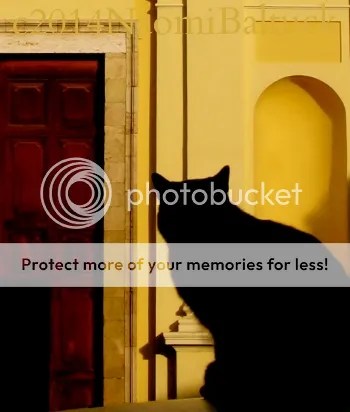
Some are maintained, for love or pride.  Others, like the poet Shelley’s statue of Ozymandias, have fallen into disrepair, covered with spider webs and graffiti, littered with broken glass and faded plastic flowers.  Feral cats stare warily from their marble perches and skulk away sideways if approached.

We saw the grave of Eva Peron, and other statesmen, poets, generals, and presidents.

More interesting to me was the final resting place for a mother and her infant.  They were not famous, but clearly they were loved.  Did she and the child die in childbirth or perhaps swept away by an epidemic?  In any case, a grieving husband and father was left behind to erect this memorial.   Was he able to pick up the pieces of his broken life to find happiness again?

Wherever we go, we will find reminders of all the stories in this world that will never be told.  When I photographed this memorial, I could be certain of only two things.  Both mother and child were subject to an early and tragic demise.  And, as seen by the lush green fern sprouting from the dust collecting in the cracks in the stone, life goes on.

All images and words copyright Naomi Baltuck

Out In the World

Forgive my absence from the blogosphere, friends.  I have been out in the world.

Of all the stories of our recent travels that come to mind, one stands out.  In Sighosora, Romania…

…we stayed in the Old Town.

In the passage to the courtyard we found a nest, with two baby birds huddled nearby.

There had been a fierce windstorm the previous night that had blown the nest from its nook in the wall, our Romanian host told us when delivering the key to our flat.  My husband Thom replaced the nest, but when he tried to return the birds to the nest….

…he discovered two of their legs were tightly bound together by a long blond hair–nesting material gone terribly wrong.

We had a knife, our tiny blunt-nosed travel scissors, and a larger pair of scissors scrounged from the kitchen.  Thom and our son Eli hoped to separate the birds with a quick snip.  But the hair had been there for a long time, the legs were swollen around it, and every effort set the birds fluttering in a panic, which we feared would cause further damage.  Our host wished us good luck, and left for work.

We felt helpless.  We were there for only one night.  To whom could we hand off these birds? We could return them to the nest and let nature take its course–a slow and painful death by starvation, if not infection.  Or should we put them out of their misery?  The only other possible solution was harsh.  If we did nothing, both birds would surely die.  By amputating one leg, one bird would likely die, but the other might have a fighting chance.  One delicate leg was unresponsive to the touch, probably already broken.  Eli braced himself and severed the mangled leg, cutting through the hair.  Immediately both birds were free and fluttered off.

The one-legged bird landed on the ground nearby.

The stronger one fluttered all the way to the far side of the courtyard.

We heard a cackling overhead.  Even without the family resemblance, we recognized an anxious mother, calling to her babies from the rooftop.  We felt a glimmer of hope–their mother might yet take them back under her wing!

But our presence made her nervous, so we watched from inside, then left to explore the area.

By suppertime, the stronger bird had flown up to a perch in the courtyard…

…high enough to be safe from hungry cats.

The other remained quietly earthbound, suffering in silence.  We wondered what the morning would bring.

The next day, the stronger of the two was gone, as was its mother.  The injured bird remained, probably abandoned as a lost cause by its family.  We checked back only moments later to discover the one-legged bird was now gone as well, without a trace.  In a laundry room off the courtyard were two domestic workers.  Could they have removed the bird like a piece of litter?  Or perhaps a crow had carried it off to feed to its babies.

Out in the world, we often catch glimpses of a story, or a life.  Sometimes they are as sweet as a single drop of honey.

Others are stories of sorrow and want.

Too many will be lived out in the shadows in quiet desperation.

As with the baby birds, sometimes we are helpless to help, sometimes we can offer only a bandaid, and most times we will never know how the story ends.

What makes the difference between a happy ending and a tragedy?  Is it survival of the fittest?  An accident of birth?  An ill wind, perhaps.  But sometimes it falls into our power to make a difference.  When that happens, even for one tiny being, it can make all the difference in the world.

All images and words copyright 2015 Naomi Baltuck.

The Seeds of Creativity

When my daughter Bea was a little girl, she found a seed in a seedless Satsuma, and was inspired to plant it in a paper cup.  Our little Satsuma tree has lived on our kitchen windowsill for years now, a reminder that unexpected marvels can come from a single seed.  Creativity is a seed that grows ideas.

It helps us to see beauty in the ordinary.

Or, upon reflection, to take the ordinary and transform it.

Sometimes inspiration comes to us in a flood.


Sometimes in a flash.

Or even in hindsight.

More often,  it comes in disguise.

Or as a creative response to something we feel passionate about.

Perhaps we are inspired by another artist…as in Bea’s sculpture, The Ice Scream.

I love working with a creative team…

Sometimes it’s a process.

…but the end result is worth it.

However it comes to you, wherever you find your inspiration, you are never too young…


Or too old….


To fly with it!

May all your ideas and inspirations be fruitful!

Copyright 2012 words and photographs, Naomi Baltuck.

Mine (yours, ours)

My child…my world…

My wish is for her to grow up in a world where people are judged for who they are, and not by the color of their skin, not for who they love, who they worship, by their gender, or the size of their bank account.  My wish is for this world to become our world, where ‘live and let live’ is only the starting point, and where my children, your children, all children become ‘ours’ to educate, to heal, to care for so they are prepared and able to help make our world a better place.

And because it’s the right thing to do.

 That is my wish.

All words and images c2012 Naomi Baltuck

The Inside Story

When my daughter Bea was studying at the Yiddish Book Center in Massachusetts, I went to  visit her.  We zipped down the turnpike to Old Sturbridge Village.

The village is a living museum including 59 restored buildings, a working farm and water-powered mills.  There were craftsmen…

…artisans…

…tradesmen…

 …and re-enactors.

We were invited to look through a window in time…

We saw village life as it was lived between the 1790s and the 1830s.

I enjoyed the opportunity to see the old buildings from the inside out.

 Everywhere we went there were whispers, hinting at the inside story.

Upon reflection, one thing was clear…


Just as we do today,  those people worked hard…

…fell in love…or not…

…cherished their children…

…and valued their friends.

Some things never change.

All images and words copyright Naomi Baltuck

To See the World


“To see a World in a Grain of Sand
And a Heaven in a Wild Flower…”

       –William Blake, Auguries of Innocence


…or in one click of a camera.

One picture is worth a thousand words.  Some pictures lay out the facts, like a road map.

But others have all the elements of a great novel, crammed into one quick snap.

Danger…

Mystery…

Character…

 Adventure…

Desperation…

Romance…

Greater purpose…

For me, the best stories raise questions as well as give answers.


They present universal dilemmas, and show us how people learn to cope with trauma or loss.

A disaster becomes a compelling tragedy, although the victims lived two thousand years ago, if we can relate to their suffering.  And who can’t?

We like to tie up our stories in neatly arranged ribbons and give them happy endings.  Who doesn’t love a happy ending?

But that’s not always possible.  Perhaps the best stories–and photographs–just remind us of what it is to be human.

All words and images copyright Naomi Baltuck.

Survival Stories

While exploring Etruscan tombs in Tuscany, my sister Constance and I stumbled upon the ancient hilltop town of Pitigliano.


We saw many other lovely towns…

…and picturesque villages.

But I loved this place like nowhere else in Italy.  Its story was the key to my heart.  Pitigliano had provided a rare refuge for Jews driven from Spain during the Inquisition. After the Pope and the Medicis forced Pitigliano’s Jews into the ghetto in 1600, they still accounted for twenty percent of the population.  After the war and the Holocaust, a small handful returned to care for the synagogue and to tell the story.

How small?” I asked a local. She shrugged. “Maybe five.”

The Jewish bakery was closed for the Sabbath, and the synagogue was closed because there weren’t enough Jews for a minyan.

But a shop sold matzoh and a confection called Sfratto, the Italian word for eviction.  Sfratto has a filling of honey, walnuts, and oranges, baked into a smooth-crusted loaf shaped like a police baton.   It was invented by the Jews of Pitigliano to commemorate their eviction from their homes and into the ghetto by officers using sticks to beat on their doors.  Four hundred years later, they’re still telling the story, and we’re still eating it up.

In a narrow alley across from the synagogue, I shivered to hear the haunting strains of a lone Klezmer violin drifting down from a second story window.  At first I thought it was a recording, until the music trailed off.  It had to have been played by human, or perhaps ghostly hands.

Nearby was a doorstep decked with flowers as colorful as the town’s history.  Two cats curled up in a big flowerpot, one cat a black and white mix, the other all black, but I was an English major, and I saw them as symbols of the concrete world of black and white, living in harmony with the fluid world of shadow and story.  The scene was framed by dark medieval walls backlit by the sunny valley, while the valley was alive with vineyards and olive trees…

…yet riddled with ancient tombs.


The paradox seemed to capture the essence of Pitigliano, and of all Italy.  But before I could capture it on film, the cats bolted, and I lost the moment.  Or so I thought.  That night in our apartment in Orvieto, Constance painted…

…while I wrote about Pitigliano.  I loved it for its unique history, for providing refuge when so few others would, for its tiny but stalwart population of Jews determined to protect a precious legacy, for the stories and ghosts that linger in every back alley.

Then Constance showed me her painting.  Alive with color, it conjured the fragrance of honey and walnut, the haunting strains of a lone violin. And there were my cats, just as I remembered them, a perfect balance of black and white, and shadow.

It was reassuring.  In arts or in letters, by word of mouth, or in the guise of a Jewish confection, so long as there is someone left to tell it and someone willing to listen, the story will survive.

All words and images copyright Naomi Baltuck

Back Down to Earth

There is freedom in cutting loose one’s bonds to float high above the rest of the world.

To be quiet, and alone in one’s thoughts.

It is a space and place that I do sometimes share.

Just when I find myself adjusting to the elevation…

…and the solitude…

Just when I start feeling too comfortable, too removed…

…I feel a tug on the heartstrings that brings me back down to earth.

Sometimes it’s as simple as discovering on my front walk a baby bird that needs to be returned to its nest.

More often it is my own baby birds, coming home to roost.

Even just for a little while.

All words and images c2014 Naomi Baltuck.


“Not everything that can be counted counts!” … on the importance of the Liberal Arts

It is the supreme art of the teacher to awaken joy in creative expression and knowledge.

“If you want your children to be intelligent, read them fairy tales. If you want them to be more intelligent, read them more fairy tales.”

As an enormous lover of fairy tales and a believer in Tolkien’s proposition that they are not written “for children,” I was, of course, instantly gladdened by these words, but also peeved by the broken chain of proper attribution. After diligent digging through various archives, I found the earliest reference to this in an out-of-print volume published by the Montana State Library for Book Week in November of 1958*. The entry, a second-hand account at best, reads:

In the current New Mexico Library Bulletin, Elizabeth Margulis tells a story of a woman who was a personal friend of the late dean of scientists, Dr. Albert Einstein. Motivated partly by her admiration for him, she held hopes that her son might become a scientist. One day she asked Dr. Einstein’s advice about the kind of reading that would best prepare the child for this career. To her surprise, the scientist recommended ‘Fairy tales and more fairy tales.’ The mother protested that she was really serious about this and she wanted a serious answer; but Dr. Einstein persisted, adding that creative imagination is the essential element in the intellectual equipment of the true scientist, and that fairy tales are the childhood stimulus to this quality.

Folklorist and literary scholar Jack Zipes further transforms Einstein’s alleged aphorism in into a charming short fable in the introduction to his 1979 book Breaking the Magic Spell: Radical Theories of Folk and Fairy Tales:

Once upon a time the famous physicist Albert Einstein was confronted by an overly concerned woman who sought advice on how to raise her small son to become a successful scientist. In particular she wanted to know what kinds of books she should read to her son.

“Fairy Tales,” Einstein responded without hesitation.

“Fine, but what else should I read to him after that?” the mother asked.

“More fairy tales,” Einstein stated.

“And after that?”

“Even more fairy tales,” replied the great scientist, and he waved his pipe like a wizard pronouncing a happy end to a long adventure.

While we might never know the full, accurate details for Einstein’s fairy-tale adage, embedded in it is something the celebrated physicist felt very strongly about: the importance of the liberal arts and humanities in education. The preface to Dear Professor Einstein: Albert Einstein’s Letters to and from Children (public library | IndieBound) — the same impossibly endearing volume that gave us his encouraging advice to a little girl who wanted to be a scientist and his answer to child who asked whether scientists pray — features the following autobiographical reflection by Einstein:

This school with its liberal spirit and teachers with a simple earnestness that did not rely on any external authority, made an unforgettable impression on me. In comparing it with six years schooling at an authoritarian German Gymnasium, I was made acutely aware how far superior an education that stresses independent action and personal responsibility is to one that relies on drill, external authority and ambition.

Read more at http://www.brainyquote.com/quotes/authors/a/albert_einstein.html#HE4c4qh3ReEtrspY.99

Not everything that can be counted counts, and not everything that counts can be counted.

Albert Einstein

Read more at http://www.brainyquote.com/quotes/authors/a/albert_einstein_3.html#PkWGhHDI1zyjDe5Q.99


– Naomi Baltuck

© 2015, words and photographs, Naomi Baltuck, All rights reserved

The Flight of the Sparrow

Last summer I saw a baby Stellar Jay perched on my arbor, resting after trying out its wings. I looked away for an instant; when I looked back, it was gone.

It reminded me of something The Venerable Bede once said.  Bede was an Anglo-Saxon monk born in 672A.D.

In  The Ecclesiastical History of the English People he compares a person’s life to the flight of a sparrow.  Imagine sitting in a mead-hall at supper by the light of a blazing fire, while outside a winter storm rages.

A sparrow flies in one door of the hall, into the light, then darts out out another door, back into the cold dark night.  “So our lives appear for a short space,” said Bede, “but of what went before, or what is to follow, we are utterly ignorant.”

People have many different thoughts, feelings, beliefs and explanations as to what or if anything comes before…

…or after the sparrow’s flight.

Sooner or later each of us will fly out into the night.

That seems to be the only thing everyone can agree upon.

I don’t need to know all the answers before I fly back out.

I am right here, right now, basking in the warm and beautiful light of life.

Whatever happens outside the mead-hall won’t change the way I live my life here and now.

I have work I am passionate about…

..family I love and good friends to play with.

I care about issues in the wider world…

…and in my own little sphere.

I hope I can make some small difference…as a writer, a storyteller, a parent, a friend…

…and to leave even just a little nightlight shining…

…when my flight is done.
nullAll words and images copyright Naomi Baltuck

Depth Perception: 70th Anniversary of the Liberation of Auschwitz

Last Tuesday we went downtown to attend a concert at Benaroya Hall, commemorating the 70th Anniversary of the Liberation of Auschwitz.

null

The performance was called Art From Ashes, and was produced by Music of Remembrance.

I had mixed feelings about going.

It was a wet cold day in Seattle.

The city seemed dirty.

…And sad.

It would be heartbreaking to listen to works by Jewish composers whose lives and legacies were cut short at the death camps of Auschwitz and Dachau.

But the music proved more poignant than heartbreaking.

These doomed artists plumbed the depths of their despair, gleaned beauty from their cruel twisted world, and imbued their swan songs with love and longing.

Each note, each word a parting glance, a declaration of love, a prayer…

“…Tearfully stolen from the distant west, a gentle pink ray on the thin twigs, settling its quiet kiss on tiny leaves..”

As Jake Heggie wrote in his song Farewell, Auschwitz, they cast off their striped clothes and held their shaved heads high.  “The song of freedom upon our lips will never, never die.”

Ashamed and bewildered by the depths of depravity to which humankind has too often sunk, I also felt a fierce pride for its passion and courage and tenacious love of life that can raise art from the ashes.

Copyright 2015 Naomi Baltuck

Drive-by Shooting in Detroit


I was born in The Motor City.   I graduated from U of M, and headed West to seek my fortune. I’ve lived in Seattle for over thirty years.  It was love at first sight, it’s the home of my heart, and where my children were born…


…but I still feel unexpected tugs on my Midwestern roots.

Detroit is where my parents and grandparents are buried.

In French ‘Detroit’ means ‘channel or strait connecting two bodies of water.’  That would be the Detroit River that connects Lake Erie and Lake Huron.

That would also be my Aunt Loena,  who connects me to my mother–through memories, blood ties, and love.  Last spring I returned to the river that spawned me.

My Aunt Loena and sister Lee are always ready for a visit.

We did a drive-by shooting of the old neighborhood…with a camera.  We took shots of the little house I grew up in.

Many other houses were already pretty well shot.

Across from  Newton School, a woman kept cranky geese in her yard, but the geese were long gone, and so was the house.


My high school was for sale.  It was named for Thomas M. Cooley ( 1824-1898), a local boy done good.  He started out with a small law business and ended up on the Michigan Supreme Court.  In The Cooley Doctrine, he wrote “local government is a matter of absolute right; and the state cannot…take it away.”  Cooley must be spinning in his grave since Michigan’s Republican Governor Rick Snyder gave himself the power to take over cities, remove locally elected officials, install puppet governments, and destroy labor unions.  Not in Russia.  Not in North Korea.  This is happening in the United States of America.

Yes, there are financial woes: the economy and tax base of the area were dependent upon the auto industry.  Highland Park, a town engulfed by Detroit, fought to stay independent despite the bigger city’s efforts to incorporate it.  Ford closed its Highland Park factory in the 1950s and Chrysler pulled out in 1993.  The population, once over 45,000, has decreased to 11,000.  Now it’s ‘The Detroit of Detroit’, so poor Detroit doesn’t even want it anymore. My grandparents’ Highland Park house was gone.  So was the school across the street.


If not for this sign, I wouldn’t have known Highland Park still existed.

But there must be better ways than total dictatorship to save the city.  We went to Belle Isle, an island park in the Detroit River, halfway between Canada and the United States.  It became a city park in 1904, and in 2014 it became a state park to avoid operation costs to the city.

 There used to be an elephant house, a bandstand, and a boathouse.  I learned to canoe in its waterways.

Honey Buckets are probably cheaper to maintain than the elegant brick restrooms…

…a compromise so the park might be used and enjoyed.

There was still beauty.

And history.

The Belle Isle Aquarium was built in 1904.  As kids we watched the electric eel touch an underwater wire in its tank to light up electric light bulbs.  It was the longest continually operating aquarium until 2005 when, after 101 years, it closed its doors due to lack of funding.

But in 2012 the aquarium was reopened–Saturdays only–and is run completely by volunteers from the Belle Isle Conservancy.  Admission free.


Next door is the Whitcomb Conservatory.

My folks used to turn seven kids loose in there; we played Tarzan, and our Johnny Weissmuller jungle calls bounced off that glass ceiling.

At the Detroit Institute of Art we found culture, art, and history.

 photo 14ceae3b-e762-40d1-b045-89c23581fdc4_zps21d717ba.jpg

As kids we loved the shiny suits of armor in the great hall.

As adults, we admired the Diego Rivera mural, a powerful statement about Detroit Industries.  In 1932 it was scandalous that workers with black, white, and brown skin were depicted working side by side. Members of religious communities thought it blasphemous, and called for it to be destroyed.   But Edsel Ford, who paid the bill, said he thought Rivera captured the Spirit of Detroit.

“Watson and the Shark,” my favorite painting from childhood visits to the museum, told a true story.  Copley portrayed a multiracial crew rescuing their shipmate from a shark.  Painted in 1777, a time of revolution against tyranny, artists began to depict common people as heroes. At least in Michigan, where the sharks are still circling, it is still a relevant message.


I was saddened to read so many hateful bigoted comments when researching this sculpture honoring Detroit boxer Joe Lewis.

In Detroit there was and is despair and poverty, racism and anger.

But I also saw positive action, innovative ideas for bringing life and art back into the city.  Are you a writer?  Want a free house?   Check out Write-a-House.  This organization buys abandoned houses, renovates them, and gives them to artists willing to come live in them, practice their art, enrich their community.  There are pea patches growing where, on my last visit, I saw burned out houses.

L-O-O-K.

The Spirit of Detroit is still strong.

In its past, present, and its future…

…I saw soul.

And hope.


Sweetness.

Pride.

I saw the future in a city park, where kids were playing.

 At the conservatory I saw cactus blooming in the desert, a public park taken over by volunteers who made it available to the public.

I saw open hearts.

In the most unexpected places.

 Detroit still has plenty of room to grow, room for hope.

Please watch this two minute video for another look at Detroit. 

 All words and images copyright Naomi Baltuck

Turning Night Into Day

There was once a wise old rabbi who asked his students, “How can you know the exact moment when night ends and day begins?”

“I think I know,” said one of his pupils.  “Is it when, from a great distance, you can tell a dog from a sheep?”

“No,” said the rabbi.

“I know,” said another.  “It must be when, from a distance, you can tell a date palm from a fig tree.”

“No,” said the rabbi.

His students looked at each other and then at the rabbi.  “We don’t know,” they said.  “Please tell us.”

And the rabbi replied, “It is when you look into the face of any person from any nation…

…man…

…or woman…

…Jew or gentile…

…and see your brother…

…or your sister.”

”And that is the blessed moment,” said the rabbi,  “when the dawn is come.”

c2014 NaomiBaltuck

Special Delivery

Yesterday a package arrived from Australia.  My sister was moving and there was no place in her new home for our mother’s silver tea set–the one Mom kept on her buffet in her little house in Detroit.  My sister could’ve easily packed it off to a thrift store or sold it at a garage sale. Instead she kindly chose to pay postage to send it all the way to America to reunite the silver service with mom’s old buffet, which now lives in the dining room of my home in Seattle.

Three days ago I put my son on a plane to Turkey, where he will teach English for the next three years.  I can fret, or be proud of him for having the courage to make such a momentous move.

His sister Bea was scheduled to come home from her program in Lithuania two days after Eli’s departure. Unfortunately they would miss each other, but Eli turned it into an opportunity.  In the wee hours of the night before he left, we hauled a little surprise for Bea up from the basement.  Eli hoped she’d like it even better than the last surprise he left her.

It was the perfect way to present Bea with motion-activated cooing tribble slippers she hadn’t even known she needed.

Still, it lacked a certain ‘Je ne sais crois.’

Actually, Eli knew exactly what it needed.

…And then he added the finishing touch.

Packing done, boarding pass printed, and still enough time to play one last game of Pandemic and save the world before our trip to the airport!

On the way we brainstormed how and when to visit, just as I used to do with my mom before each parting. And nowadays we can even Skype in the meantime.

My mom taught her kids to look for the bright spots. She could find ’em where you wouldn’t have thought there was one.

After Mom’s first chemo session, my sister Constance and I suggested going home to rest. Mom said, “The doctor says it won’t hit me until tonight. We’re going to Sanders Ice Cream Parlor. If I have to get sick, I’m going to throw up ice cream.”


Bea arrived two days after Eli left.  His parting gift was appreciated (up to a point). Now it resides in his room, scaring the heck out of me and making me laugh every time I go in there to open the blinds.

Bea, unpacking the heirloom tea set, said, “We’re going to have a MONSTER Tea Party!” There was another unexpected gift from Auntie Down Under–an uber-protective full-body swimsuit. Bea ran to try it on. Like Clark Kent bursting from a phone booth in Superman duds, out of Bea’s room flew Doing-Things-That-Aren’t-Fun-But-Are-Good-For-You-Girl.

Doing-Things-That-Aren’t-Fun-But-Are-Good-For-You-Girl (aka The UV Protector) threw Fashion Sense to the wind, and bravely faced the sun and its evil rays–in public.

All our lives we’ve heard,”You gotta break an egg if you want an omelet.” We jump willingly into the fray, enduring, for instance, the red eye flight for the trip to Europe.

My mom used to say, “When you’re holding your baby in your arms, you forget the pain.” Then Mom’s sister lost her baby. So what if there’s no baby to hold? My Aunt Loena would say you have to find others to hold and love, which she did. But some challenges you cannot go around, hire out, or wiggle free from.  It’s the stuff no one else can do for you, even if they wanted to.  It’s the bend in the river of life where there is no turning back and no standing still. Moving forward is all you can do, and your only choice is about how you do that, whether you are five years old or ninety-five, whether it’s getting a tetanus shot or chemotherapy, whether you are saying goodbye for now or forever.

I know and love–and I’m sure you do too–some very dear people who are facing some of life’s most daunting challenges and have been taxed in ways most people can only imagine.  Yet they are getting up and going to work each day and taking their kids to school and playing Werewolves with them at the end of the day with stents in their chest.  Or telling stories to bring joy to their audiences while undergoing months of chemo, and celebrating the last treatment by traveling the great cities Europe.  Or writing Haiku with one hand while learning how to walk again after a stroke. Or surviving cancer to reinvent themselves, leaving a bad marriage and developing a highly successful career as an artist. Or after a hip replacement, beating the odds from sheer determination to progress from wheelchair to walker to cane to standing on their own two feet while receiving radiation for a spot on the lung.

Who ARE these people? They are not the Supermen and Wonder Women of the world; they are the Clark Kents and Diana Princes, who through sheer strength of will and spirit quietly forge on through fire and ice. They are the real superheroes, delivering the right stuff. Their legacies are not the silver tea sets, but the stories they give us to hold in our hearts.

All words and images copyright Naomi Baltuck.

Virgins No More

In 1493 Christopher Columbus visited the chain of islands that he named after St. Ursula and the 11, 000 virgins.

My sister Lee, my friend Kathy, and I were all Virgin Island virgins, having never before set foot upon them.

Until last week.

We flew into St Thomas and took the car ferry over to the island of St. John.

St. John is a US territory, with nearly two thirds of its land set aside as a National Park and wildlife sanctuary.  It was a short drive from our hotel on Cruz Bay…

…to the pristine beaches of the U.S. National Park.

Big blue land crabs made their homes in the muddy floors of the mangrove swamps…

…while tiny red crabs in the tens of thousands sounded like rain on the forest floor when they skittered into hiding.

Pelicans could be seen fishing on every beach.

Iguanas frequented both beaches…

…and grassy areas.

And so many birds!  Dark hummingbirds, yellow songbirds, cranes, egrets, and many others.

Everywhere we saw ruins of a troubled past, where slaves once worked the sugar plantations dotting the island.

Who sat on the tiled veranda of this mansion sipping coffee and enjoying the ocean breeze within sight of the mill, where slaves were forced to stir boiling kettles of sugar syrup in unbearable heat?

At the Annaberg Planation, this windmill processed sugar cane.

It is a relic of a cruel past.

By 1733 slaves outnumbered Europeans 5 to 1.  Harsh laws condoning torture, amputation, and murder were enacted to keep slaves under control, but instead prompted a bloody rebellion.  Slaves rose up and held the island for six months before the French Militia helped the Danes crush the revolt.  Rather than return to slavery, hundreds threw themselves off rugged cliffs into the sea below.

In 1848, when again faced with uprisings, the governor of St. John declared an end to slavery on St. John.

This statue of a slave, sugar cane knife in hand, blowing a conch shell to sound the call to freedom, celebrates hard-won liberty.

Today 78 percent of the population is descended from African slaves.

The Virgin Islands are brimming with color, whether it be in nature’s sphere…

…or made so by human hand.

 It is a place filled with joyful music…

…and lively spirits.

They know how to live down there.

They work hard.

And play hard.

 And take nothing for granted.

All words and images 2014 Naomi Baltuck, unless otherwise stated.

It’s Never Too Late

At our house we celebrate Christmas and Hanukkah, and we also give a nod toward the Solstice.  This year we planned to observe the Solstice with a bonfire, and burn twenty years’ accumulation of tax receipts in our firepit, but it never stopped raining long enough to light a match.

Eli and I told Christmas and Hanukkah stories at the Renton History Museum.  One cannot properly tell stories without feeling the spirit within.  So we were primed for both holidays.

Afterwards we went to Farmer Brown’s Tree Farm to cut our own Christmas tree.

Then we went home to light the menorah.

 We had company this year, long lost cousins of my father, the son of Jewish immigrants from the Ukraine.  June Aptekar Allen Smith and her husband Haskell traveled to Seattle from Texas to celebrate their first Hanukkah ever.

They played dreidel and sang the blessings for the first time, just as June’s ancestors had done for nearly two thousand years.

At 88 and 89, they are still fascinated by the world around them, by history, travel, current events, and the stories of strangers they meet in their every day life.  We reconnected with June and her daughter ten years ago, at an Aptekar family reunion in Tucson.  They introduced us to June’s niece Nancy and her husband Ian, who happened to live right here in Seattle, and who we now love like, well… family.

During this visit, we compared notes and stories about our Aptekar roots, taking into account June and Haskell’s meticulous research, papers and letters from my mother’s attic, my Grandma Rose’s recently rediscovered autobiography among them.  Cousin Bryan drove up from Portland to represent yet another branch on the Aptekar family tree.  We pieced all our snatches and snippets and scraps of information into a more comprehensive family history, from before the pogrom of Odessa in 1905 to my great grandparents’ subsequent immigration through Ellis Island, and on to Detroit.

In 1905, the Aptekar family huddled in the cold and the dark, listening to the screams of horses and the crash of breaking glass.  They lived on the Great Boulevard, where Cossacks charged down the street, burning the businesses and homes of Odessa Jews, killing 800 Jewish men, women and children, and causing 2, 500 casualties.  Trapped inside without food or fuel for the fire, the Aptekar family huddled in their winter coats, and broke through ice in the water pail to drink.  With tears streaming down his cheeks, my great grandfather Jacob Aptekar chipped tiny pieces of sugar from the sugar cone to feed to his hungry children, promising them he would find food for them soon.  And promising himself he would take his family away from that hateful place forever.  Jacob’s hair turned white overnight, and my Grandma Rose’s little sister Clara died in her arms.

Victims of 1905 pogrom in Odessa

Over the next two generations, time, geography, estrangement, and self-imposed exile tugged at the threads of the Aptekar family tapestry.  More than a hundred years later, the descendants of Jacob’s children, Reuben, Rose, and David, gathered around one table for latkes, applesauce, and Hanukkah sushi.

Broken threads can be repaired and rewoven…


…and it is never too late for a happy ending.

All words c2012 Naomi Baltuck.

Embracing the ‘M’ Word

On our recent trip to Mexico, we had a Mayan guide, Murux.

I was worn out with the extreme heat and sun, after walking around Chichen Itza, a huge complex of Mayan ruins.

In between visits to Mayan ruins, Murux took us to Cenote Sagrado Azul.  A cenote is a sinkhole or cave providing access to the extensive system of underground and underwater caves beneath the Yucatan Peninsula.  Of the estimated 30, 000 cenotes, a few are open to the public for swimming.  Murux says the Mayans regarded them as sacred entrances to the Underworld.  I was a little skeptical when I saw this sign.


I mentioned once that I only swim in the warm waters off the Hawaiian Islands.  I don’t like being cold.  Nor do I like public showers, public pools, or making public appearances in my swimsuit.  But my husband Thom gave me a gentle nudge (with a sharp stick), and somehow I found myself suited up, reluctantly stepping into the open outdoor shower outside the entrance to Cenote Sagrado Azul.  Dripping wet, I walked past the security guard through the archway, and looked down from the rim into the cenote.  In that instant, I was transported from the oppressive heat of a dusty dry world into another world entirely.  With its hanging vines, watery echoes, and tiny streams dripping down stone walls into a jade pool, it was like a scene from a Tarzan or an Indiana Jones movie.

I descended slippery stone steps through a tunnel into the actual cave, along with a swarm of tourists who had just arrived by bus.

We all stepped into an underground chamber, open to the sky, with sunlight filtering down through the vines.

Stairs hugged the wall, leading up to a ledge where swimmers took turns making flying leaps into the water.  No fear of hitting the bottom—this was the entrance to the Underworld, and it was bottomless.

Thom marched into line and took the plunge.  I’d already embraced my familiar and comfortable role as photographer and journalist, and I clung to it like a life raft.  I did touch my toe to the water, and it was cold.  I didn’t want to leave my camera hanging unguarded on a post.  And there were all those velvety black catfish-like creatures swimming around in there…

Like a mahout with a stubborn elephant,Thom backed me down the first couple rungs of a small wooden ladder.  I was in up to my waist before I balked.  A woman, already in the water, said something in Spanish, and she started to peel my fingers away from the ladder.  I was shocked at this breach of personal space, and held on even tighter.  The woman laughed, and slapped at my hands.  It was clear that she wasn’t going to go away, and she wasn’t going to give up.  Some part of me really wanted to let go, and I knew I would probably regret it if I did not take that plunge.  I released my grip, and splashed backwards into the cool clear water.


The word ‘magic,’ is overused.  But the ‘M’ word is the only one I can think of to describe that moment, that magic, that Mexico, that me.  I surfaced, the woman smiled, and melted into the crowd, like an angel who had come down to earth, completed her mission, and moved on.   The tour bus must’ve recalled its passengers, because when I swam out to the center of the pool and looked back, I felt like the only person in a world where time did not exist.  It was like learning to breathe again.  It was a baptism.  It was letting go of the heat, the shyness, the fear.  It was a little like falling in love.

I am now a believer.  And not only in spirit guides.  I now know it’s possible to step through the entrance to the Underworld, and exist in that sacred place where kings and princesses bathe and are renewed.

All words and images c2013 Naomi Baltuck


Tiny Miracles

Forgive me, blogger, it has been a month since my last post.

My only excuse is that I was out in the world.  All the stories I’ve seen and heard and lived have been patiently but eagerly contained, just waiting to be told.


In Poland and Lithuania, where we were traveling, World War II still casts a long shadow over the land.  That is a long, hard, sad story.


But little stories are everywhere, and more often than not, you will find stories within stories.  In fact, they will find you.

In Vilnius, even the walls contained stories.  We started to notice things, like faded Hebrew lettering on an old wall…

…Or a Star of David scratched in stone seventy years ago.

We learned that our apartment was in the Vilnius Ghetto, where more than 42,000 Vilnius Jews were imprisoned before they were murdered.

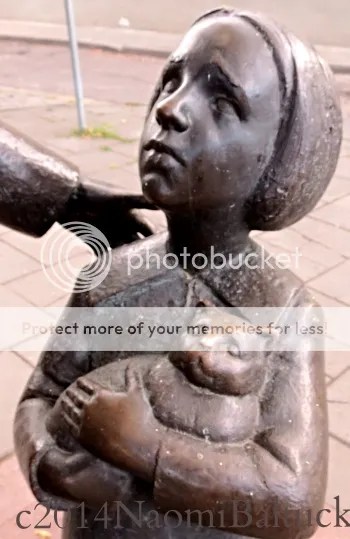
Near our place was a statue in memory of Dr. Tsemakh Shabad, a Jewish doctor in Vilnius.  A lovely young Lithuanian named Yrita gave us the inside story.

 The good doctor was loved by all, especially the children, and not only because he believed most childhood illnesses could be cured with a warm glass of milk and a bit of chocolate.

When a mother brought her little girl to him, that was what he prescribed.  They had no money for chocolate, so for a week he had the little girl come by every morning to take her medicine– a glass of warm milk and some chocolate.  Sure enough, she soon felt better.

When the little girl’s kitten fell ill, she knew just what to do.

She took her kitten to the doctor and asked him to cure it.

The doctor told her that in this case, they would forego the chocolate, and stick with the warm milk.  I’m glad to tell you the kitten recovered as well.

Though Dr. Shabad died in 1935, the children of Vilnius still visit him.  When they do, they rub the kitten’s nose and make a wish, certain it will come true.


 Yrita told us that for little wishes, you rub the kitten’s nose.  For very big wishes, you might need to rub the doctor’s nose.

 Sometimes wishes don’t come true, not even the little ones, and not all stories have a happy ending.

Sometimes the best we can do is to search for a little light in the darkness.  Sometimes you will find it in the most unexpected places.

Tiny miracles can be found everywhere– even in a bit of chocolate, especially when served with a cup of kindness.

 – Naomi Baltuck (Writing Between the Lines: Life from the Writer’s POV)

© 2014, words and images, Naomi Baltuck, All rights reserved