train wreck

They, closet Pythagoreans, say music is all:
Music in the sheen of jagged metal,
In the sanguine iridescence of broken glass,
In the sudden jolt that causes teeth to bite tongue bloody,
Splintered bone and blood-streaks, blood-spots
writing the staffs, the clefs, the notes, of rending rails.
But where will it end?
Where will this shattered body,
vaulting through space
trailing tattered limbs like a comet’s tail
Come to rest?

— James R. Cowles

haiku for my wife

(For Diane, who understands already)

Within me storm on
Sea of Galilee; I speak
You and there is calm.

— James R. Cowles

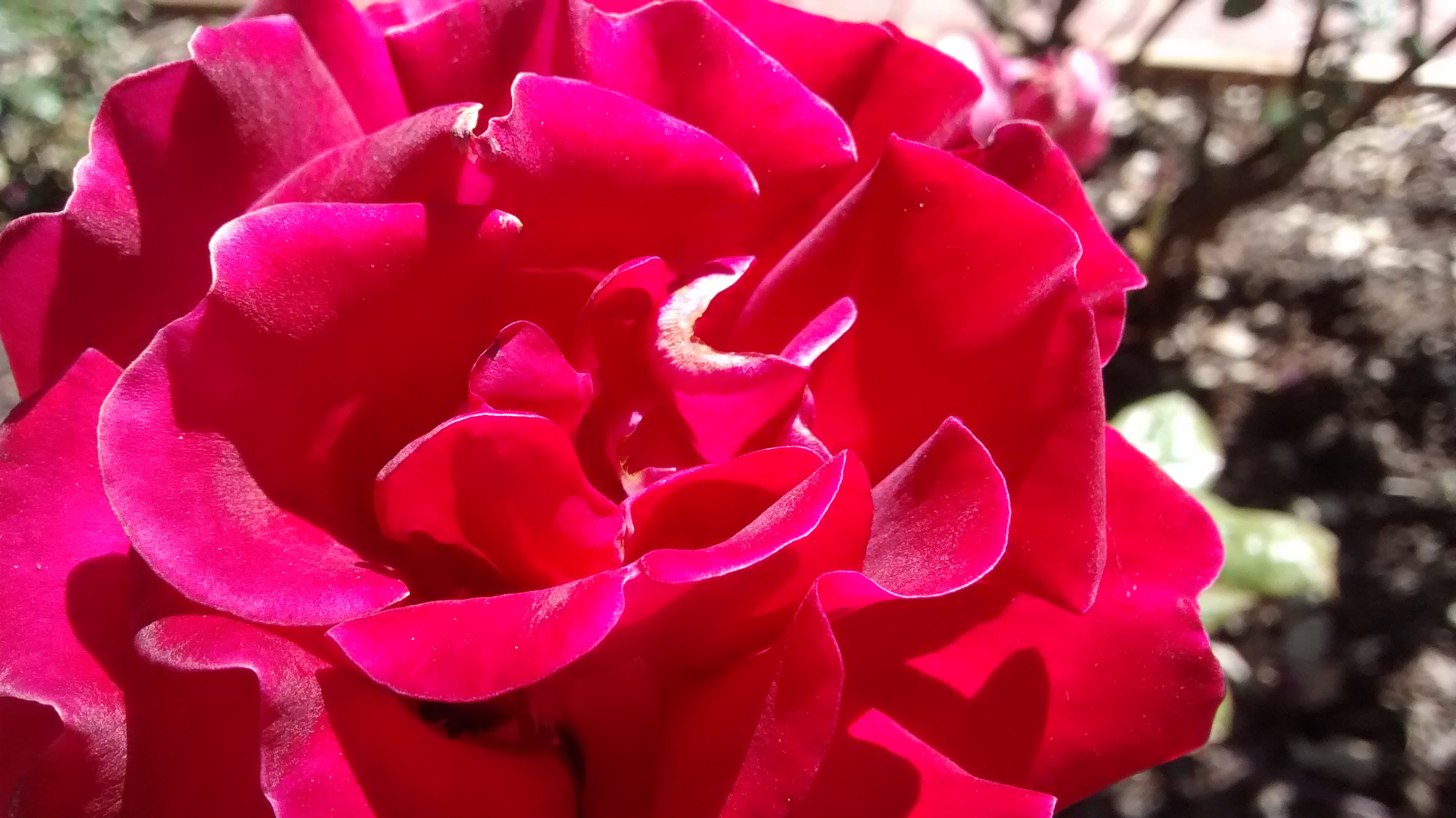
Rose-Tending

IMG_20140525_103219903(For Saffron, who will understand)

I guess I look ridiculous to the neighbors as they pass by,
Lying on the ground, staring up at the sky,
My head underneath a tangle of rose-tree branches –
“Canes” as true rose aficionados technically call
These black, stark, angular arthritic knuckles that
One must only ever touch with thick canvas gloves,
Lest a thorn – whose name is “Legion”, for they are many here –
Pierce tender flesh, draw blood, draw curse, and spoil
One’s romantic meditations on rose-hood, substituting
Instead an insidious intuition of hidden harm,
Of treacherous mendacity masquerading as sweetness, as softness.

But I guess my neighbors, or anyway, those who took a second
Glance, would understand, would understand when they saw
The gloves, the old straw hat, the gardening shears – though the posture would still mystify.
They would understand that, also, were they to join me here on the ground,
Which they would be welcome to do, were any not averse to such loss of dignity.
They would understand that, while seeing thorns is easy from a more
Dignified position, that the seeing of rosebuds is best done from a position
Lower down, closer to the earth, preferably upside down, a form of self-humiliation,
Like St. Peter crucified in Rome.

So here I lie.

Clouds drift by, cotton tufts caught in the brutal lattice of cane and thorn,
Sky fractured into azure plates by crooked black boundaries swept by wind.
Eyes drift from cane to cane, eclipsing sun, finally alighting on a single rosebud,
The first of an early spring, unexpected, dew-drop catching sunfire in a
Glissando of color … well worth waiting for; well worth a little lumbar pain
Heralding youth as well as age. Oh, the thorns are still there, observable
From any angle. Never fear.

But rosebuds are best seen from below, from a less exalted, less dignified
Vantage that invites the baptism of dew on forehead, of light in eye.

– James Cowels

© 2011, poem, James Cowels, All rights reserved; 2015, photograph, Jamie Dedes, All rights reserved

Blessed Are They Who Mourn

In the northwest corner of Iraq,
in a Kurdish stronghold, toppled,
in a drafty hovel,
a child, alone, whimpers.
for his parents
who will not return.

In a small country on the African continent,
in an isolated region near the coast,
in the ruins of a burnt-out shack,
a mother wails.
Her child, her lover are dead
bled out by a virus.

In a remote village of Ukraine,
in an unsettled township,
in a frigid home,
an old man shivers.
His world is shattered,
he wonders what comes next.

In a not-far part of my city,
in a homeless settlement by the river,
in a flimsy tent made of old blankets,
a family waits,
dreams of a recent past
before they lost their jobs.

In a southwest suburb of here,
in the warmth of a mansion,
in a world not known to us,
a childless couple grieves
the death of the dog they loved
for seventeen years.

In a corner of my heart,
in the waking hours of morn,
in the silence of my room,
these losses loom.
How can I comfort
so much loss?

Victoria C. Slotto

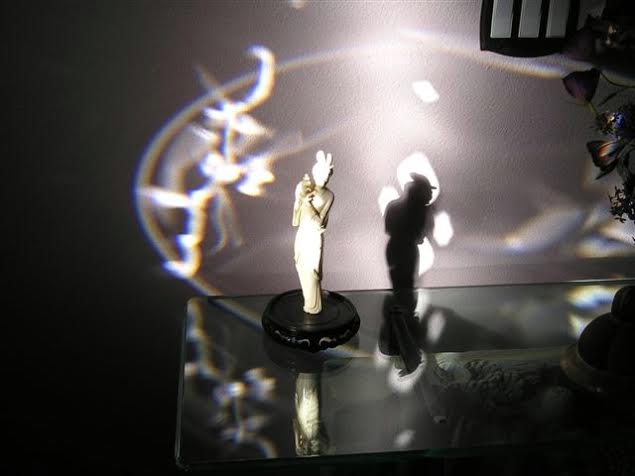
Quan Yin

unnamed

merciful goddess
such compassionate goodness
(womanly essence)

embodies your soul
melds eastern and western world
cherry blossoms rain

– Victoria C. Slotto

© 2015, poem, Victoria C. Slotto, All rights reserve; photograph, David Slotto, All rights reserved

Warrior In a Place of Ghosts

b2ba34a662dd199f2a63457422a47fa8

Plenty Horses

The fickle winds swirled me around, like I was
a snowflake dashing among the bullets
and over the frozen dead at Wounded Knee.
I, who could read the spirit of The People
and also read the books of the Wasi’chu.
I, who was shunned as neither Brulé nor white.
I, a ghost in the land of the Ghost Dance.

After I shot the yellow leg leader
of the Šahíyena scouts who hunted and
drove us to that place where the winter winds
tossed away our life and lives like dried leaves,
I once again became one of The People,
not a murderer as the Whites said.
I was a warrior, only now one in a place of ghosts.

On December 29, 1890, a detachment of the U.S. Army’s 7th Cavalry Regiment entered a camp of about 350 Miniconjou and Hunkpapa Lakota people at Wounded Knee Creek to disarm them before returning them to the Pine Ridge Reservation. But then a shot rang out, and some 300 Lakota men, women and children were gunned down. The Wounded Knee Massacre is viewed as the end point of the so-called “Indian Wars” between Native and European American people.

But a week later, a young Brulé man named Plenty Horses, recently returned to the Rosebud Reservation from the Carlisle Indian School in Pennsylvania, shunned by his people for being like a White and by the Whites for being Indian, shot and killed Lt. Edward W. Casey, commandant of the 8th Cavalry’s Cheyenne Scouts. By doing so, he hoped to regain standing among his people as a warrior.

Charged with murder, Plenty Horses was eventually acquitted based upon his need to be regarded as an enemy combatant in order to provide a validation of the Army’s massacre at Wounded Knee. It was indeed, a time and place buffeted by winds of hatred, confusion and tragedy. I hoped to somehow express that “world turned upside down” state of Plenty Horses’ unique situation on the anniversary of the Wounded Knee Massacre with this piece.

– Joseph Hesch

© 2015, poem, Joseph Hesch, All rights reserved; photograph of Plenty Horses (1890) by  John C.H. Grabill, from the Grabill Library of Congress, LC-DIG ppmsc 02524, public domain

“The Lamb” (aka “devotion”)

lovers-hands-6781279603436enlu

From the coldest snow
To the warmest sun you go
And I go with you.

From blossom of spring
To golden leaves of autumn
I bathe in your light.

From the beginning
To the ending of the world
I am ever yours.

– John Anstie

(Read the author’s commentary on this poem)

© 2010, poem, John Anstie, All rights reserved; illustration “Lovers Hand” by Talia Felix, Public Domain Pictures.net

And I Love Her Still

1024px-Stipula_fountain_pen

I found a note from one remembered love,
It’s one she’d written many years ago.
She’d washed her fountain pen and had to see
if it would write just like it used to do!

It flowed so beautifully, this conversation
partly with herself; partly me.
Contented, she announced the startling news
that it had started raining; and the cat
had just come in to sit upon her knee;
and then a line, ’twas almost incidental,
as if she didn’t need to let me know,
still moist from her sweet, honeyed pen,
I saw her words say how she loved me so.

My yearning heart took flight and lodged itself
somewhere between her lips and finger tips,
my stomach glowed with love’s eternal warmth
that only comes from passion so consumed.

Her letter’s affirmation spans the years
with warm remembered grace that dries my tears.
Her words were sown like seeds on fertile earth
and bore the fruits of love in painful birth.

No greater confirmation could reveal
that I am blessed with how I know I feel…

that, undeniably, I love her still.

[Poetics Notes: This poem is written in, what is for me, an anchor of poetic story telling… Blank Verse. This was championed by William Shakespeare in all of his plays, but apparently was also used, in some way by Greek and Latin poets.

By definition, Shakespearean blank verse is written with five metrical ‘feet’ (that is units of two syllables) or pentameter, it is mostly, in this poem at any rate, ‘Iambic’, which is to say with stress on the second part of each metrical foot. Occasionally, in order to maintain the sense, from the words available to me to achieve the desired effect, emotion or expression, the meter changes to ‘trochaic’ pentameter and occasionally with the odd syllable missing, or silent – as in the line “partly with herself; partly me.”, where the semicolon provides a pause, which replaces the unstressed first part of the foot, linking to the second, stressed first syllable of the word “partly..”; the beginning of this same line has a missing unstressed syllable, which is effectively replaced by the last syllable of the word “conversation” at the end of the previous line. The effectiveness of this deviation from the scheme, of course, depends on how the line is read, but I think it works well!

Whilst it still has regular poetic rhythm and balance, using this form is a wonderful way for a poet to retain the feel of story telling prose, by not having a regular rhyme scheme. The exception I make for this poem, however, again following the Bard’s tendency for their use, is that I used three rhyming couplets in iambic pentameter in the concluding lines of the piece and one at the end of the second stanza. The poem finishes with a single title line.]

– John Anstie

© 2013, all words,  John Anstie, All rights reserved; photograph “Power of Words” by Antonio Litterio under CC BY-SA 3.0 license

Winter Is Here, I Know


No illusions, no illusions, no lies, no softened truth
no tears, no bargains, though sun shines and birds sing,
Winter is here, I know.

Winter is too  smart to invite either love or lechery,
and those men,  husbands or lovers, long for someone
not as inclined to ponder – as one man complained –
while I watched the grass die, the leaves dry, the earth harden,
a cool wind blowing across the bodies that house our souls.
Annoying them with that question …
“Why?”

Once Spring danced like wild flowers in the wind,
held dew and promise and smiled like a well-fed child.
It had never heard the word defeat and didn’t know hate or anger.
Spring liked to play, and romp, and sing and
hung on a tree to ripen, her question
“Why?”

Summer took itself seriously,
was wide-eyed with longing, sizzling in the sun.
It wore a red dress and
the champagne happiness of a husband and baby
Summer was as brave as youth is bold,
a silver bell that rings and rings and never stops.
So much and more than enough . .
and yet – a tremulous
“Why?”

Autumn gently smiled, like Da Vinci’s lady, and danced old dances,
reminisced Begin the Beguine, stepping lightly on brown leaves.
It was lined with gold and muted silks, remembered is manners,
nodded wisely, spoke sagaciously , and was a might too profound.
Haughty. . . it just knew it knew
“Why?”

Oh! But Winter…
Winter is content, sees itself in Time displaced and learned
laughter has meaning as fleshy bonds and boundaries dissolve.
A bit stiff, cold, and slow now, slowing to honor the sacred,
to say “i love you,” to say “it was good,” to say “thank you.”
Sun rise, sun set, and once dormant trees burst forth with green,
sanguine and serene, just a habit now that question
“Why?”

– Jamie Dedes

(c) 2010, poem, Jamie Dedes, All rights reserved; Photograph courtesy of John Witherspoon, Public Domain Pictures.net.

The Republic of Innocence

no mendacity in the natural world ~ just an
untamed grace in the meditative industry of ants,
in the peaceable company of small creatures
going about the business of food finding
and mating and homemaking in the loam of
this province, the republic of innocence

here is the soul-filling beauty of sun rising over
jacaranda as she paints her joy on a blue dawn;
robin with her russet-hued breast hunts for worms,
her instinctive motherhood proud of babies
 in
the spar and scrap of nest life . . .  it is in this
the uncivil cosmos – that the gentle breezes

dance with us on our mud-caked travels along
ripening pathways through meadow and brush;
as the flaxen sun shifts from rise to fall,
our hearts beat with their ribbons of ruby life,
pulsing with ebbs and flows of love and fear ~
soon – we know –  clouds will gray with the

inevitable dark and shivered moon will show
her craggy depths, sooty with doubt and danger,
our earthiness projecting its own shadows;
still we trust nature’s homilies, content in this
province where we’re left to be ourselves, left to
write our own wildness on the mirror of time

How near to good is what is wild.” Henry David Thoreau

– Jamie Dedes

© 2013, poem, Jamie Dedes, All rights reserved

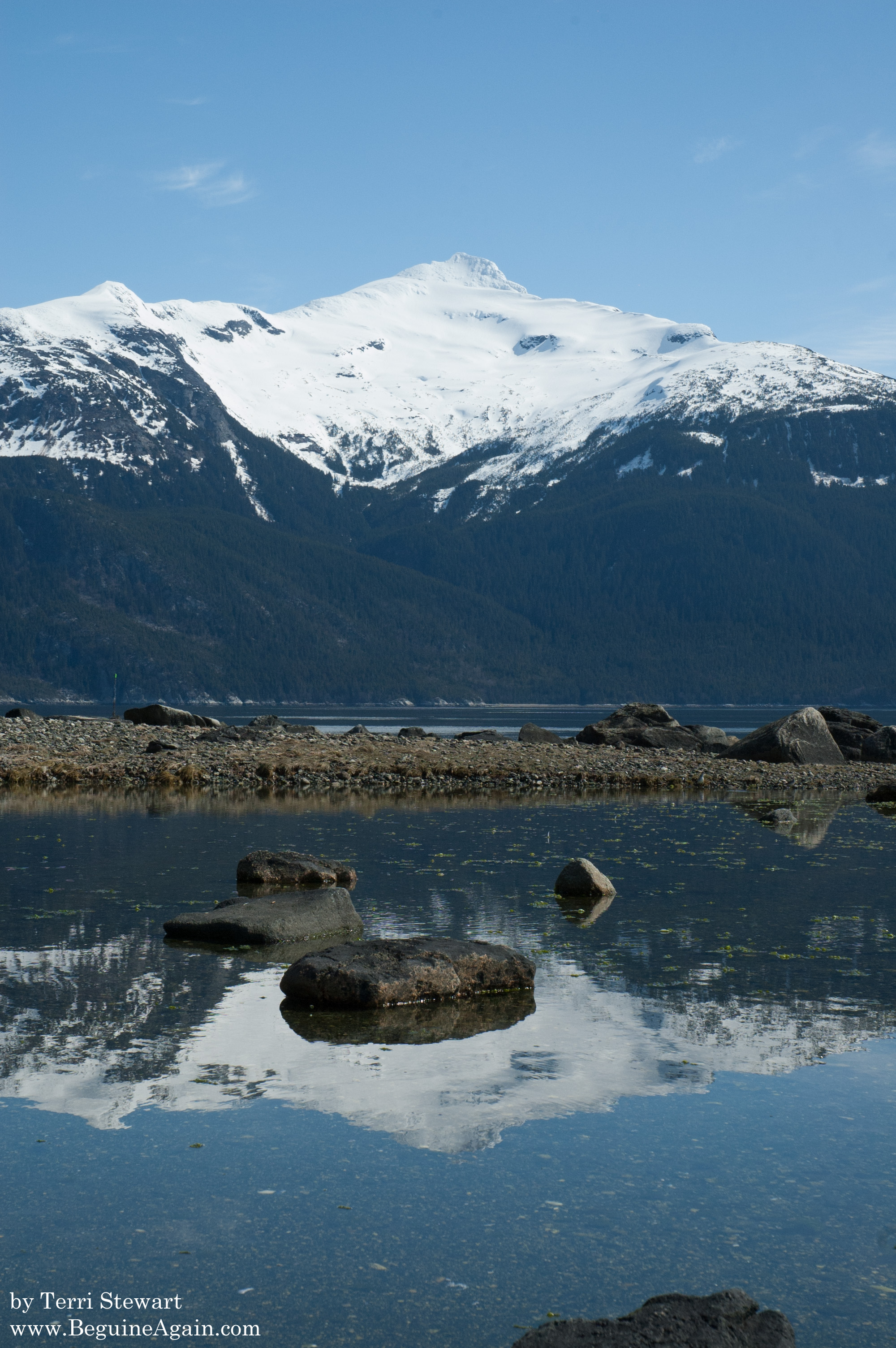
Slowly We Go

slowly we go

into the wilderness

naked and unarmed

wilderness

by Terri Stewart

Terri is the Online Canoness at http://www.BeguineAgain.com

Preparation

Preparation

Too sleepy to pray

The little bird now waits in his nest

To sing the coming day,

Bathed and washed in the light,

Anointed with the ointment

Of a hundred thousand loving rays

That were once but one,

Making home of the earth

With colors that are not of the world—

Never speaking, only singing

With wings outstretched to the sun.

– Frank Watson

Florida Sunset With Pelican

© 2014, Frank Watson, All rights reserved

The Leaves Still Fall

I remember days when I awakened
thinking nothing much changed
in my world except these whiskers,
the calendar and clock,
once I closed my eyes in hope
of escaping what had.
One night I cast aside my covers,
with old Mollie’s assistance,
and walked into the autumn air.
Out in our lonely space, she asked
me to open my eyes to the night,
turn my head just so, and listen to
the earth turn, see it roll beneath
those curtains drawn across the firmament.
A tap on my shoulder affirmed her lesson.
The leaves still fall even while we sleep.

– Joseph Hetch

© 2014, poem, Joseph Hetch, All rights reserved

You Just Missed It

Speeding north on I-87 any
early autumn afternoon,
you could feel the thip thip thip
of the tar strips tickling
your tires and toes,
if you really paid attention.
But you were more concerned
with what you left behind in that mirror
and with that tossing of red light
rosary beads surrounding you.
The trees to your left and right flash
like a natural zoetrope, animating
an unnoticed world as you pass.

You don’t see the geese lighting
with a sun splash on the Mohawk.
You could never imagine the little girl
sitting alone in that shabby house
you just passed hoping her mom
gets home from work by 10:30.
If you looked to your right,
you might have seen those puppies
that escaped their yard, bumbling
and yipping through the brush
heading for the same roadside that
browsing deer on the opposite side
consider crossing to after sundown.
You just missed it because you wondered
if pizza or chicken waited home for you.

– Joseph Hetch

Finding Silence

Dictionaries define the word in negative terms:
muteness, reticence, taciturnity, noiselessness.
The second volume of The Shorter Oxford English
does include quiet in its weighty considerations

but fails to recognize that at the heart of it
is presence, not absence. I think I already knew
when I was a child running through the wildness
of the moors that silence was a dimension of sound

for there it was fed by curlew cries, by the wind
rushing over untidy cotton grass and clumps
of marsh marigolds gleaming from bogs, by the great
grey ships honking far below on the Firth of Clyde.

Silence isn’t a plant to be cultivated in a solitary house
perched on a hill, not the cave single-minded seekers
hunt out so that they can contemplate meanings
away from the hurly-burly of the over-peopled world

with its cash machines and quarrels, ceaseless phones,
splashes of laughter. Silence is that small place
we come upon, the patch we clear to be with our selves
in shop, train, lane, doctor’s waiting room – anywhere.

– Myra Schneider

© 2014, poem, Myra Schneider from The Door to Colour, recently released by Enitharmon Books

Beneath the Surface

Look up and see the sun,
brilliant and refracted
as only winter can
shatter
d~a~y~t~i~m~e.
The chill surrounds you,
urging you to doze
like the trout,
suspended in three dimensions
to drift aimlessly
around that calm wash.
But you can’t.
You must stalk and capture
those
bubbles
you see
against the sky,
each their own
SUN,
providing light and life
in the cold below the cold.
That’s where life exists
as it does above,
just slower and without escape
unless someone breaks
the white glaring firmament
to reach
for
your
hand,
if they know what goes on
there
beneath the surface.

– Joseph Hesch

she leaps from the cleavage of time

she’s present
returned to bite through the umbilical of tradition,
to flick her tongue
and cut loose the animus of our parents,
like a panther she roams the earth, she is Eve wild in the night,
freeing minds from hard shells
and hearts from the confines of their cages,
she’s entwined in the woodlands of our psyches
and offers her silken locks to the sacred forests of our souls ~
naked but for her righteousness,
she stands in primal light,
in the untrammeled river of dreams
the yin to balance yang
the cup of peace to uncross the swords of war ~
through the eons she’s been waiting for her time
her quiet numinosity hiding in the phenomenal world,
in the cyclical renewal of mother earth,
whispering to us as the silver intuition of grandmother moon
she, omen of peace birthed out of the dark,
she is the revisioning of the Divine,
nonjudgement forms her backbone
her love is unconditional
even as tradition tries to block her return,
her power leaps from the cleavage of time

)0(

– Jamie Dedes

Original water color by Gretchen Del Rio

©2013, poem, Jamie Dedes, All rights reserved; illustration, Gretchen Del Rio, All rights reserve

Illustration ~ this lovely watercolor painting by Gretchen Del Rio with its girl-tree, panther and other spirit animals seemed the perfect illustration for my poem on the spiritual return of the feminine. The real back-story on the painting is just as interesting. Gretchen says, “I painted this for a 14 year old Navaho girl. It is for her protection and her power. She sees auras and is very disturbed by this. She is just amazing. Beauty beyond any words. You can see into the soul of the universe when you look at her eyes. She has no idea. I loved her the moment I saw her. My blessings for her well being are woven into the art.” Such a charming piece. I posted it full-size so that everyone can enjoy the detail. Bravo, Gretchen, and thank you. J.D.

From Imen With Love

1426548_493414027428304_360525756_nOriginally published on Plum Tree Books Facebook Page
.
From Damascus to Istanbul: a child’s memories of a city . . . 
.
Dear Yasmin,
.
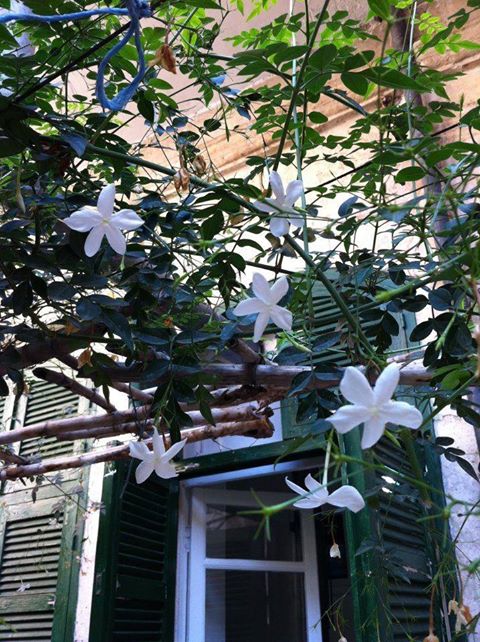
This morning, I saw the first jasmine flowers on our balcony.  They reminded me of you. That’s why I decided to write this letter.
.
We live in Istanbul now. I have new friends and I am learning Turkish. My parents never changed their habits. My father still smokes his hookah while he reads and my mother plants flowers everywhere to feel like our old house in Damascus.
.
Wasn’t it Mahmoud Darwish* who wrote once “Jasmine is a message of longing from nobody to nobody”? They named you after it. Everyone loves the way jasmine clutters like snowflakes at the sides of the road, falling everywhere and scattering scent to greet everyone.
.
Every city has its smells. My grandfather told me once that the heart of Jerusalem smells of spices and musk and Jaffa of oranges and the sea. He said smells are nostalgia and memory and the person can never forget them. Damascus alleys and houses smell of jasmine and rose water. It seems like an eternity passed since we left months ago, since I woke up to the sound of Feirouz singing and smells of freshly baked bread and my mother’s early morning ritual of making coffee and watering the garden.
.
The day we left, she put her gentle hands on my shoulders and gazed at me. Her hazel eyes were full of tears and she said: “Habibi, we have to leave. Go pack your things”. War already broke with news of bombed neighborhoods and dying people reached us daily. My parents tried to keep me away from its ugliness, to cocoon me in a world of poetry and flowers, but the war reached our little world and destroyed it.
.
The war brought death and fear. Houses were ruined. Most people fled. I always ask my mother about you. She said that you left with your family to go Jordan and that you would write to me soon.
.
When we arrived in Istanbul I was angry and my mother silent. We packed what we could take with us; some clothes and family albums, some poetry books my father used to read, a silver ornate dagger that belonged to my grandfather. I took a picture of us together, feeding pigeons in the square of the Umayyad mosque.
.
Istanbul is not so strange, Yasmine, they have bread sellers in the streets, big Bazaars and very old houses of wood, and a long bridge I can see from the window of my auntie’s house. The Adan comes from different places. There are pigeons in squares too. It is a big busy sleepless city. I love my auntie’s studio. It is full of paintings and its windows are always open to let light through. Stillm I felt lonely at the beginning because children did not understand me.
.
I miss Damascus, the clean cats of our neighborhood and my school friends; I miss our trips to Quassioun and watching people dancing dabkah at weddings. I am still waiting for your letter, but now I will send you mine with the first flowers.
.
Didn’t you always love when I told you stories?
.
Firas
.
Mahmoud Darwish ~ Regarded as the national poet of Palestine, he focused on the universal experiences of loss, exile, and identity.
.
Translations:
-Yasmin: a female Arabic name “jasmine”
-Firas: a male Arabic name “perspicacity”
-Feirouz: a very famous Lebanese singer
-Adan: prayer call
-Habibi: “my darling” in Arabic
-Dabkah: a Middle Eastern dance
-Quassioun: a mountain in Damascus
 .
 ©2013, letter and photograph, Imen Benyoub, All rights reserved
.