Peace is more
than the absence of war
though that would be a start.
But the dissolving of boundaries
constructed by humans
to cordon off one from the other
must follow
so there is no need
to shout across the divide
in our different languages.

Only then can we whisper
and hug our way to peace.

What we have now
still tastes like war
to me.
First published in Brave and Reckless, January 11 2022
It needs strength to break new ground
when it’s as hard and solid as
silence.
Or
so I thought.

It needs strength to breakthrough,
to smash the mould of war
and peace.
Or so I thought.

But just suppose,
the ground gives up its power,
the gun refuses to fire
and they allow the flowers
to break,
bright
delicate
blooming
flourishing fragile.

Ready to open up
through the self shattered soil,
melting the frozen silence
to make a space
in the barrel
of the gun
an opening
for a warmth,
that will shatter
the ice,
heal the wounds,
stop the war.

I think so.
First published in Otherwise Engaged, December 2022
When a violent psycho with overwhelming power
meets a deluded showman with a hero complex
it’s looking bleak for those caught in between.
Those displaced from their homes,
displaced from their lives,
those losing their lives.
those losing the life
they expected to live,
more and more of them,
a stream without end
as the show goes on.
First published in Transformative Power of Art Journal, War and Peace, Summer 2022
…lives in north Wales. Her work is influenced by issues of social justice and events, places and people she has known or imagined. She is especially interested in exploring the boundaries of dream, fantasy and reality. She has been nominated for a Pushcart Prize, Best of the Net and a Rhysling Award.
At the Erasmus Foundation, the Spiritual Teaching and Healing Centre based in Laxfield, Suffolk, Great Britain, which I discovered while living in England and continue to attend through zoom meetings, we once had a lecture called “P. E. A. C. E.” offered to us by a Spirit whom we know as Catherine, from Home, through our medium.
This lecture, among others published in the book New Horizons, by Ruscora Publishing, explains that humans search everywhere for peace while they actually have it inside themselves, in their own spiritual mind.
In her talk, Catherine takes the letters of the word “PEACE” and she suggests: “Should we apply something to each of them? Should we say that -p- stands for patience, -e- for endeavour, -a- for acceptance, -c- for concern and -e- for the absolute ecstasy which fills the being when all of these have been achieved?” And she then develops each within her talk.
Now, today, according to what I witness around me, I can see that acceptance is a very difficult step to achieve, especially with the multiple crises we are now facing with wars, earthquakes registered with incredible tremors, drought affecting more and more countries due to global warming causing famines in more and more areas across the world; economic difficulties with runaway inflation; and the development of illnesses with the emergence of new viruses. Life on Earth is incredibly difficult indeed.
While watching recent events on TV, seeing people suffering through war, earthquakes and tornadoes, often destroying people, their homes and their towns, a question occurred to me “Is the unbearable acceptable? How can one find acceptance living with such disasters?” Of course, the first reaction is emotional; still we can witness some being very resilient while many blame God among those who have lost dear ones, as well as their living environment and livelihood.
I am not sure of all the reasons why people blame God, but perhaps if they have followed the precepts of their religion well, attending the church they might belong to, or their mosque, or their synagogue, or whatever, doing well their prayers, perhaps they believe that nothing too bad should happen to them? And when a big difficulty or test arises in life, they are but lost, perhaps having not got the spiritual knowledge that could help them understand the meaning or purpose of a difficult time in life? Perhaps having been told that punishment is for sinners, or whatever name is used, they then ask “Lord, what have I done to cause you to send me such hardship?” and they might blame Him because they do not believe that they deserve this, and do not understand why God allows such tragedies to occur on Earth. Now, thinking of it, we can wonder if perhaps some of the tragedies that take place at present on Earth could be rather due to Mankind’s behaviour, which does not respect the Natural Law in so many fields?
Now, in the light of our spiritual teachings, at the Erasmus Foundation, we know firstly that this Earth is a University of life, a place where we, as a Spirit, come to learn and go through experiences -and some of them can be very, very painful- to help the process of our spiritual evolution. We have been told, and I agree by experience, that pain is a spiritual elevator and is necessary to help us change and develop spiritually. Very, very difficult, yes, but there lies the reason why we come here, because those painful experiences, sometimes seen with the eyes of Earth as unbearable, we cannot go through them at Home, our true Home, where Spirits live, which is a peacefully ordered place.
So, a Spirit at Home needing to evolve in that way goes to the special place where Spirits go when they want to live a life on Earth for the reason of their evolution, and there they are shown by an older Spirit some Tapestries of life, they are as blueprints. And, very important to note, the Spirit chooses the Tapestry they want to live. They can see on this predestined frame of life the main events of that life, the birth and parents living in a particular country with a particular social background; the tests are already there as well and the Spirit knows, at that time, if it suits them according to their strength and their desire or need to evolve. A life that is too easy would not be worth living and, knowing well their abilities, a Spirit would not choose a life that is too difficult either; so they choose the life that is just matching with them at that time.
Now, at the time of birth, when the Spirit enters that little baby’s body who breathes for the first time, all that is forgotten, the spiritual memory is enclosed in the physical shape as a closed memory box in the mind.
In this light, perhaps people could come to understand that the difficulties and tests they are living are firstly not a punishment put on them and they could get rid of any feeling of guilt, they could then start to feel better about themselves, and see the trials rather as spiritual elevators that they have chosen themselves when they signed for that Tapestry of life. Yes, it is not easy to accept at first sight and it takes time to get to that point, a very long hard time seen with Earthly eyes, but deep inside we know this to be true because it is the Natural Law and we are completely part of that Law even if our brains have become so physically developed whereas our minds are sometimes so well enclosed and almost forgotten. Also, pain does not last forever, we have times of happiness and joy, for the Tapestries offered to us by the Great Mind have balance in their frame.
Now, for those who return Home, it is the end of their Tapestry, they die of the Earth, be it of illness, accident, murder, battle, violence, natural events or even suicide, it is their key to return Home. This too was predestined on the Tapestry they chose before coming to the Earth. Therefore, if on the one hand they have accepted their own death as a means to return Home and on the other hand we know that the “Homecoming” is a very happy event for a Spirit returning Home, should we not try to accept it too? Yes, this as well might be difficult and take some time and endeavour, but is not time here to be well used?
Spirit tells us, when a tragedy occurs on Earth bringing great sadness, that it is understandable when people feel anger, which is human. I am sure that the Great Mind and Spirit have great concern for us, they know that all this is part of the process of growing, and then with time, meaning patience, with positive efforts, meaning endeavour, perhaps people can one day find acceptance and concern leading to PEACE; and when people are at peace with themselves they can be at peace with others.
Also, something important to mention here is that Mankind has some freedoms of choice on their tapestries, not all is predestined, and when people of the Earth might understand they have got a responsibility and accept their responsibility for many things done that were and are still perhaps in error and against the Natural Law, they could then start to put things in the correct way and put them right as they should be, and this is something that we are told will happen, a good reason to have faith in men’s and women’s abilities to adapt and turn to the right direction.
At present, Mankind is going through the storms of the end of this 5th civilisation, a particularly difficult time to live on Earth, an experience that will be ours forever, for eternity, offering us here great opportunities to evolve and perhaps prompting us to search for Peace in the right place; and that is inside us.
…met The Erasmus Foundation in 1986, a spiritual teaching and healing centre in the UK, whose courses she continues to follow from France. She has had a number of articles published in their magazine. She also takes part in the podcasts they regularly put on line and she continues to write wishing to share the spiritual knowledge gained from this Foundation.
I’d just gotten off the bus and was hobbling more than usual when the boy came out of the trees, pointed a knife at me, and said, “Give me your money, old man.”
It was nighttime on a dark stretch of sidewalk, so I didn’t have a good look, but I guessed he was sixteen or so. There was enough light to see his hand shaking and his troubled eyes dancing. The knife was a small, simple one that folded open, but it was enough. Snow had begun falling lightly. I handed him my wallet.
He nodded once, stuck it in the pouch of his sweatshirt, and started back towards the trees.
“Hey,” I said. “You forgot something.”
He turned around and looked up and down the empty street. He said, “What?”
“Well, if you’re stealing my wallet, you must be in a bad way. Why don’t you take my coat, too?”
Our breath came in short clouds. His hands were inside of the sweatshirt’s pouch. I assumed the knife was in there, too. “I don’t need your damn coat,” he said, but it came out more like a hoarse whisper.
I nodded. “Well, if you want it, it’s yours.”
He shook his head. He made a sort of snort that I supposed he intended to sound dismissive, but it looked like his bottom lip was trembling.
“I was just heading to get some dinner,” I said. “You’re welcome to come along if you want.”
He said nothing. I started up the sidewalk with my limp. After a moment, I heard his footsteps following mine a few paces behind.
The familiar bells jingled on the door when I entered the diner on the corner, and the boy came in behind me before it had closed. The owner looked up from his stool behind the cash register and said, “Evening, Ernie.”
“Glenn,” I said.
I gave him a little wave and took a center booth. The boy slid in slowly across the table from me. I dared a quick glance his way. He had long, dark eyelashes, a forehead of acne, and the end of a tattoo on his right wrist beyond the sleeve of his sweatshirt. Edith, the waitress, appeared next to us with a decanter in one hand and silverware, napkins, and coffee mugs in the other. “Hey, Ernie.” She smiled as she set the table. “Cold out there.”
I nodded, and she filled my mug. She looked at the boy, who said nothing. She filled his, too and went away. He watched her go.
A busboy came through the swinging kitchen doors carrying a plastic tub. He paused at our table and clapped me on the shoulder, grinning. “Hi there, captain,” he said. “No pie tonight. Sorry.” He went off to clear the table next to ours. We were the only customers. It was so warm inside that condensation had formed around the edges of the windows.
The boy looked across at me, “So you know everybody in this place?”
“Pretty much.”
He gave his little snort, then asked, “There menus or something?” His voice was higher and gentler than it had been on the street.
“Don’t need one,” I said.
Edith came out of the kitchen with a tray and set bowls of soup in front of each of us and a basket of cracker packets in between.
I shook my head. She looked him over and smiled some more.
“Well,” she said. “I’d just assumed.” She went back through the kitchen’s swinging doors.
I watched the boy stir his soup until he asked, “This like minestrone?”
I shrugged, “Something with vegetables, it seems. Usually is.”
I watched him take a sip and lick his lips. He was thin, almost waifish. I opened a package of crackers and crumbled them into my soup.
“My grandpa used to do that,” he said.
I nodded, “Must be an old guy thing.”
He made what appeared to be the beginning of a smile, then turned back quickly to his soup. We ate in silence while Glenn tabulated receipts on his stool and the snow fell outside. A southbound train, the last of the night and a long freight, went by a few blocks away.
As we were finishing, a man in an apron and culinary cap appeared in the little window between the counter and kitchen and called, “Thanks for dropping off my watch this morning, Ernie.” He lifted his wrist to show the watch. “Works great now.”
I gave him a thumbs-up, and he laughed, then disappeared. When I looked over, the boy was studying me. “You fix watches?”
“Used to.”
“You fixed his.”
I nodded.
“For free?”
“Yep.”
“Why?”
“Wanted to, I guess,” I paused. “Because I could.”
He shook his head, gave another of those snorts. Edith came back out of the kitchen and over to our table. She put a check upside down under my mug and took our bowls away. The boy and I looked down at the check and then at each other. “So,” I said. “You have my wallet. Guess you’re going to have to pay.” I waited a few seconds, then added, “Unless you want to give it back.”
He held my gaze for a moment and then looked outside. There wasn’t much traffic. The snow had stopped falling. He tilted his head my way, reached down, and pushed the wallet across to me. I nodded and put some money under the check. There were three twenty-dollar bills left in the wallet. I took those out and set them next to boy’s untouched mug before replacing it in my pocket.
He looked at the money, then at me. Perhaps a half-dozen seconds passed before he said, “Thanks.”
“Doesn’t come free. It’s in exchange for something.”
He gave another one of his snorts, shook his head, and looked outside again. The condensation had spread towards the center of the window, so there wasn’t much to see. But he looked out of it for a while. Finally, without turning from the window, he took the knife out of his sweatshirt and pushed it over to me. It had been closed shut. I put it in the same pocket as my wallet.
I said, “Son, anytime you need a meal, you come here. I’ll make arrangements with Glenn before I leave.”
The boy still didn’t look my way, but I could see his shoulders shaking a little. He wiped his nose with the back of his hand. Then he made another snort, shook his head again, picked up the money I’d given him, and slid out of the booth. He left quickly, the doors jingling behind him. I saw Glenn glance up after him from his stool.
I didn’t see the boy pass the front of the diner, so he must have gone in a different direction. Somewhere in the cold night. Somewhere I’d never understand. Somewhere I hoped things would change for him.
Edith came back to the table with the decanter and refilled my mug. After she left, I put my hands over it to feel the steam. From the kitchen, I heard the busboy’s animated voice followed by an explosion of laughter, and then a radio was turned on. Channels were changed until one was settled upon that was playing old standards.
The song was a ballad I recognized from my youth, but like so many other things, I couldn’t remember the singer’s name. I thought of all the mistakes I’d made back then, but there were too many of those to recall as well.
…has over 295 short stories in a variety of literary magazines and anthologies such as december, Briar Cliff Review, and Zone 3. He won writing contests at Terrain.org and The Examined Life Journal. A nominee for both Best Small Fictions and Best of the Net anthologies, I have also received five Pushcart nominations. My first short story collection, Something Like Hope & Other Stories, was published by Wising Up Press in 2020, and a second collection, Uncommon & Other Stories, was recently released by the same press.
We entered Pyzzz (pronounced like “pies”), a Putnam, CT, pizza restaurant. Wearing suit and tie, I accompanied George Washington dressed in his military uniform—epaulets, tri-corner hat, powdered wig, boots, and sword. After ordering, we waited for dinner. We cut a memorable duo, Washington tall and regal and I a bespectacled school principal, described in a high school senior’s college essay as “a small balding man, a cross between Woody Allen and Gandhi.”
Eyes drawn to Carl Closs, customers asked: “How are you General Washington?” “Why are you in Putnam?” “Do you like Pyzzz’s pizza?” Closs replied, “Yes, this is my first pizza; I must tell Martha about it.” Amused by this fuss over Closs, I knew our first president never ate pizza; Italian immigrants brought it to America in the 19th century. Nonetheless, Washington’s 21st century incarnation enjoyed his meal. Responding to further customer scrutiny, he said, “Tonight, I speak at Woodstock Middle School. Please consider attending.” A seasoned character portrayer, Carl appeared to step effortlessly into Washington’s shoes, easily managing to reinforce the good reputation of the Father of Our Country.
What does it mean to step into another’s shoes? Is it appropriate to try? Having myself frequently attempted to step into a great man’s sandals through portraying Mohandas Gandhi (1869-1948), a sideline I cultivated for students, teachers, churches, and social change groups, I harbor a genuine interest in these questions. Each time I step into my leather sandals, an Indian pair, the kind worn by Gandhi, I sense a kinship with him, a duty to be like him. My portrayal feels natural, hardly make-believe.
Sporting a loincloth (dhoti) and shaved head, I begin to sense an internal transformation. Next, I put on wire-rim glasses, labeled “Gandhi/John Lennon” in the catalogue of frames my optician consulted when I told him I needed spectacles like Gandhi’s. Once properly adorned, I am transported still closer to the brown-colored Indian I both admire and portray. I sense an interpersonal process, analogous to the physical principle of osmosis, seemingly diffusing Gandhi’s spirit and worldview throughout me. A Gandhi scholar who observed me in my role as Mahatma answering tough questions in my Gandhi voice, all the while wearing a dhoti in front of an adult audience at Brown University, said I “nailed” the impersonation. He told another witness to my performance, “Had I not known my history so well, I would’ve thought I was standing in the room with him.”
Author as Gandhi
Clad skimpily as I exchange my horn-rim glasses for a pair with old-fashioned bendable wire temples behind the ears, I imagine Lennon’s and Gandhi’s faces, their eyes peering through circular lenses. I flash to a second similarity between these men—both shared a proclivity to bed down publicly with women to effect social change. In 1969, Lennon married Yoko Ono. They capitalized on the public’s engrossment with their marriage, together protesting war. Turning their honeymoon into a spectacle, they held a “bed-in,” inviting the press to their hotels in Amsterdam and Montreal, where Lennon and Ono lounged in bed beneath signs promoting peace and chatted with journalists about the futility of war.
Twenty-five years earlier, celibate Gandhi conducted a controversial, exploitative, and perverse experiment to confirm his ability to resist sexual arousal. His wife deceased, he slept naked beside teenage girls sixty years younger to prove he had achieved brahmacharya, celibate self-control, a precondition, he believed, to his perfecting devotion to nonviolence and effective management of the independence movement. Despite India’s patriarchal culture, some followers and family denounced this practice. Nevertheless, he continued these experiments until his death.
Gandhi’s bizarre behavior aside, I nonetheless find myself transformed when I squint through wire-rims and don other accoutrements that make me look like him. Channeling his virtuousness, his irksome eccentricities slide to the back of my mind; I become Gandhi, now able to embrace Lennon’s lyrics with Gandhian assuredness: “You may say I’m a dreamer / but I’m not the only one / I hope someday you’ll join us /And the world will live as one.” Imagine!
My portrayal presents a conundrum though, one with which white folks in America now grapple. American Caucasians, advantaged because of skin color, risk further demeaning people of color if they portray them. Recent revelations of white politicians wearing blackface have crystallized this question: In a white-dominant society, who possesses the moral authority to portray a brown or black person? I now ask: Can I justify my practice of portraying Gandhi?
These queries complicate my thinking, especially in light of the forty-year-old brouhaha regarding the legitimacy of ethnically unqualified actors portraying Gandhi. Criticism of filmmaker Richard Attenborough’s choice of Ben Kingsley to play Gandhi in the Oscar-winning film bearing the same name emerged in 1982. A light brown Englishman, Kingsley grew up in England, his father a Kenyan-born man of Indian descent and mother a white English actress. Critics assailed Attenborough for failing to cast an Indian from the subcontinent in the role.
Putting aside the issue of whites portraying people of color, Nathaniel Philbrick points to another, perhaps more fundamental, problem with attempts to portray people in history. Having met Dean Malissa, an official George Washington interpreter at Mount Vernon, Philbrick quotes Malissa: “The great frustration of my profession is that while I can study contemporary reports, consult everything that’s been written about the man, I can never truly inhabit his world, walk in his shoes, share his beliefs. It’s a humbling flaw.”[1]
Malissa’s admission should make every character interpreter wary of the enterprise, including me. Never having set foot in India, much less Gandhi’s India, I can never inhabit his world. My portrayal of Gandhi depends on books and reports about him, his own writings, and newsreels displaying his body language and manner of speech.
Gandhi and Me
Gandhi succumbed to an assassin’s bullet in 1948, but his work continues. Captivated by his life and philosophy, Rabindranath Tagore dubbed him Mahatma, an honorific meaning “Great Soul.” His magnetism still attracts disciples. Modern admirers oft apply his methods in human rights struggles—noncooperation, fasting, prayer, civil disobedience, and boycotts.
Would that I knew Gandhi directly, not just through biographies, his extensive writing, and Sir Richard Attenborough’s monumental 3½-hour Gandhi. I showed that film more than twenty times to students. They found Gandhi’s pioneering leadership of a nonviolent campaign against British colonialism astounding. He fused truth-seeking, integrity, and love into a nonviolent force—an amalgam for which he coined the term Satyagraha, soul force—a means to bend people’s hearts toward justice. His method induced devotees to exchange silent acceptance of colonial rule for militant, principled, nonviolent opposition. Of nonviolence, Gandhi said that it “is the supreme virtue of the brave,” adding, “Cowardice is wholly inconsistent with nonviolence…”[2] He taught this radical resistance by example and through tireless writing; his writings exceed ninety volumes. And among Indian historians, his successful challenge of British occupation earned him the epithet, “Father of Our Nation.”
To portray Gandhi invites self-reflection. Commenting on his evolution into effective change agent and revered holy man, he said, “I have not the shadow of a doubt that any man or woman can achieve what I have, if he or she would make the same effort and cultivate the same hope and faith.”[3]I agree. Therein the rub: Why don’t more of us make the same effort? Feeling instinctively comfortable adopting Gandhi’s persona, I am compelled to ask: Why have I failed to make the same full-throated effort to which he alludes? His leadership, a singular human achievement, makes him an aspirational model. How then do I understand his impact on me?
When I agreed to portray Gandhi, I had no idea if I could manage the role. Sally Rogers, a friend of mine teaching music in Pomfret Community School, a K-8 public school in eastern Connecticut, convinced me to try. A folk singer averaging some 150 gigs a year, sometimes performing on nationally broadcast A Prairie Home Companion, Sally, along with her husband, adopted two infant girls, one in 1989, the other three years later, both from India. To raise their kids without resorting to extensive daycare and babysitting, Sally retooled, becoming a music teacher in Pomfret where my wife and I live. In 1995, Sally approached me at the Vanilla Bean Café. She said, “Paul, I’m organizing a Cultural Awareness Week at my school, India this year’s theme. You know lots about Gandhi, would you talk about him to our middle-schoolers?”
After acknowledging how flattered to be asked, I replied, “No, I think I would bore middle-schoolers.” After inspecting my face and skinny body, Sally said, “Paul, you look like Gandhi, why don’t you become him?” Her invitation enticing, I agreed, despite my whiteness, to “become Gandhi,” fancying myself an actor, although having little reason to think so.
With only a few weeks to prepare, I grew anxious. Possessing little aptitude for memorizing theatrical lines, I determined a straight-out portrayal of Gandhi dependent on remembered lines only invited instant failure. Instead, I decided to become Gandhi, to connect with students by answering their questions about me, the Mahatma. I requested ninety minutes, although warned it likely too long for a hundred middle schoolers to endure. I insisted, imagining a protracted conversation without delivery of prepared lines. I intended a two-way street, the students and I thinking together and interacting.
Asking the teachers to prepare their students for my appearance, rather Gandhi’s visit, I recommended students read a Newsweek article identifying key details of Gandhi’s life. The middle-schoolers now familiar with highlights from Gandhi’s career covered in Newsweek, I anticipated three student questions: How did you feel on your march to the sea? Do you think it okay to break the law? How can people be nonviolent when others are hurting them?
Three film clips from Attenborough’s blockbuster dovetailed with these expected questions: (1) the Salt March of 1930, (2) Gandhi in court in 1922 pleading guilty to a charge of sedition after committing civil disobedience, and (3) Gandhi’s followers at the Dharasana Salt Works accepting police brutality without retaliating. If a student asked a question relating to any of these issues, I would reply in my Indian accent, “Well, I’m glad you asked. I have film footage that may help you understand.” These brief clips prompted many more student questions.
While I have committed civil disobedience myself, taught courses on nonviolence and social change, and served as a nonviolence trainer, I observe a chasm separating Gandhi’s life from mine. That alone throws into question the legitimacy of impersonating him. Portraying Gandhi arouses feelings of hypocrisy, believing I lead a life morally pale compared to his.
My first-time portraying Gandhi, I noticed, upon showing the film clip of him in the courtroom, middle-schoolers feverishly looking at me then returning to the screen, necks bending between the two, eyes incredulous, as if thinking, “He’s the real deal.” I must admit that I’m an uncanny Gandhi double, white skin aside, when fully attired, chest bare and head shaved to peach-fuzz length, a haircut that reliably invites my wife’s displeasure: “Paul, you could wear a bald cap.” I blurt back, “But I take seriously my portrayal of Gandhi, feeling most liberated to portray him without a latex cap.” With head shaved, I look like him, at least “a dead ringer for Ben Kingsley’s Gandhi” as a friend reported after watching Attenborough’s movie.
Gandhi’s spiritual practices enabled him to conquer selfishness, the allure of ego; I have not achieved such liberation. I judge myself as closer to the “Great Impostor” than “Great Soul.” Gandhi’s guidebook, the Bhagavad-Gita, taught selfless compassion, a preachment identical with essential elements in Jesus’ teachings.” One passage expounds:
They are forever free who renounce all selfish desires and break away from the ego-cage of “I,” “me,” and “mine” to be united with the Lord. This is the supreme state. Attain to this, and pass from death to immortality.[4]
“Attain to this,” such attainment arguably the central accomplishment of his life, allowed Gandhi to approach his death fearlessly, to make decisions during the Indian independence campaign without concern for damage to his popularity or threats to his life. Having escaped the “ego-cage of “I,” “me,” and “mine,” he, like Jesus, allowed love to trump expediency, and release from that cage also liberated him to risk death.
More than once he called off an advertised protest of colossal proportions, opposing many movement-organizing insiders and an angry public’s desire for doing “something” immediately. When calling off an action, he recognized cancellation risked subverting his leadership and defusing the movement. In 1922, Gandhi elected to call off the India-wide noncooperation movement that challenged the 1921 legislation known as the Rowlatt Act, a law permitting the British occupiers to imprison for two years anyone in India “suspected” of violent acts or the threat of violent acts. This draconian legislation gave India’s British rulers power to interfere with all revolutionary activities.
Advent of the Chauri Chaura riots, however, led Gandhi to sense the movement slipping from its nonviolent moorings. Despite the Rowlatt Act—Britain’s effort to destroy the Indian thrust for independence—Gandhi prevailed, undeterred by fellow activists critical of him calling off the nationwide noncooperation. Almost single-handedly, by suspending the resistance and fasting for three weeks, he quieted rioting mobs. Still, the British sent him to prison for six years.
Author portraying the Mahatma
Ethically and spiritually exceptional, Gandhi entreats us to imitate him, but any honest attempt to be like him requires a radical departure from the life most of us lead. Like Gandhi, I believe that anyone could achieve what he has, if willing “to make the same effort and cultivate the same hope and faith.”[5]Whenever I portray Gandhi, I sense that fissure separating his self-discipline from my anemic resolve to incorporate intensive spiritual exercise into my schedule. His success issued directly from disciplined contemplative practices. Leaving such diffidence aside, when I portray Gandhi, my white privilege notwithstanding, I am indeed more than a fragile, shadow incarnation of him; I sense something more robust, allowing me to portray him with ease and conviction, as if he animates my physical-spiritual self. What is this sensation?
Becoming a Gandhi Portrayer
Gunned down in 1948, Gandhi died two years before my birth. Occasionally, I wonder if reincarnation can be partial, just enough “soul substance” moving from his body to the next, in this case mine, depositing a touch of “Gandhiness.” Resisting the “psychobabbling” temptation to consider “partial reincarnation” to explain the ease with which I don the dhoti, I resort to my upbringing, believing Gandhi’s adult life comports with church teachings I absorbed from the pastor of the Dutch Reformed church on Staten Island to which my parents belonged between my first and fourteenth birthdays. Our minister encouraged his parishioners to oppose racism, engage in activities to address poverty, and view such efforts as consistent with Jesus’ teachings. I learned to consider Jesus a revolutionary God-Man who battled injustice, a model to emulate.
As a youngster, I grew fond of the idea of becoming a minister. Hospitalized for nine months of my first year of life, having undergone five major surgeries, I returned home expected to die. My parents later suggested to me that I owed a debt to the medical community, God, or both. Encouraged to think of becoming a physician or minister, I never felt drawn to medicine, but ministry appealed to me. In high school I developed theological interests, and at college I took enough courses in religion to major in it, though settling on philosophy.
Coming of age during an era of movements against racial injustice, the war in Vietnam, and gender inequality, I sensed the emergence of the 1960s as a distinctive decade, one of radical social change. I embraced it. Graduating from college in 1972, I began a teaching career in a Quaker secondary school west of Philadelphia. I taught religion. My education in human rights, religion, nonviolence, and anti-war themes intensified. I decided to apply to theological school, imagining a career in urban ministry, but in 1974 I turned down acceptance at a seminary in favor of teaching religion at a Quaker high school in Rhode Island.
Upon arriving in Providence, already an admirer of Gandhi, I soon joined a local nonviolence study group and assumed the clerkship of a New England-wide peace committee, an arm of the American Friends Service Committee. A teaching colleague introduced me to Gandhi, Attenborough’s epic film. Showing it to my students, I endeavored to deepen my knowledge of the Mahatma. I understood the similarity between the moral teachings of Jesus and Gandhi. A Hindu, Gandhi had an artist’s representation of Jesus on his ashram wall. Gandhi said that the teaching of nonviolence in Jesus’ “Sermon on the Mount” went straight to his heart: “It is that sermon which has endeared Jesus to me.”[6] And Martin Luther King, Jr., a Christian clergyman since 1948, went to India in 1959 to study Gandhian nonviolence.
Years later when Sally Rogers asked me to become Gandhi, it seemed like a natural fit. I never considered the audacity of a white man portraying a brown man. I knew a lot about his life, and Gandhi’s thoughts and actions aligned with my own thinking about social change. Indeed, my frequent involvement in nonviolent actions, such as my trip to war-torn Nicaragua in 1983, sponsored by Witness for Peace, were inspired by Gandhian principles, King’s work on behalf of civil rights, and Buddhist protests against the war in Vietnam. These activities prepared me to interact comfortably in the role of Gandhi before a variety of audiences.
Admiring and Chiding
Gandhi’s risk-taking and challenges to human rights violations exceed those of average folk. And unlike Jesus or the Buddha who lived in the ancient world, Gandhi rode in automobiles and used a telephone; students consider him accessible, belonging to an era they grasp. His civil disobedience teases them to interrogate the necessity to obey the law. His simple living contrasts with models of material success to which they aspire. His readiness to hazard personal injury, one upshot of his devotion to nonviolence, upsets students who claim a right to self-defense. Gandhi’s story, peppered with dilemmas and lifestyle choices to investigate, never fails to stimulate discussion and self-critiquing as students personalize Gandhi’s behavior, both admiring and chiding the man, and asking themselves: “Could I, should I, or would I behave like him?”
Roleplaying Gandhi jostles my thinking, too, arousing ethical self-assessment; it also spawns personal fatigue grounded in the folly of interpreting a human life as one of flawless sainthood. To view the Mahatma as moral paragon flattens his admirers’ self-images, as they inescapably fare poorly in comparison. Yet when portraying Gandhi, I am no outsider. I contact an interior excitement at the core of my being. Denied the opportunity to portray him, I would consider a profound personal deprivation, and yet that is not the entire story.
Twenty-eight years ago, I put on my Indian accent and clothes, then taught a European history class from Gandhi’s standpoint, as I imagined it. In that class sat Shannon, a friend of my daughter. After class, an amusing incident unfolded. Shannon left my room to walk across campus. My daughter, who also attended the school, saw her and yelled, “Have you seen my father today?” Shannon shot back about the bare-legged, bare-chested Gandhi look-alike she had just observed, “I have seen more of your father today than I ever care to see again.” While sometimes jealous of this cynosure, I too can say the same about Gandhi: I’ve witnessed enough.
On Gandhi’s seventieth birthday, Albert Einstein speculated, “Generations to come, it may well be, will scarce believe that such a man as this one ever in flesh and blood walked upon this Earth.”[7] Yes, his life sets a dizzying standard of virtue to emulate, a directional signal bidding us to take a morally right turn. While grateful for that signal calling us to turn toward him—embracing such integrity, spirituality, and effort—that signal also depletes me. To become Gandhi-like requires a radical turnaround whether attempted bit by bit or abruptly, a personal evolution or revolution I sadly spurn while still admiring the man I love to portray.
As a Gandhi portrayer, I know the impossibility of presenting a truly accurate interpretation of him. Nor can Carl Closs or Dean Malissa muster an authentic depiction of George Washington. This realization throws into question whether it is excusable to attempt to step into a great soul’s footwear with an eye toward producing a scrupulous portrayal, unable, as we are, to empathize adequately with anyone’s inner world, much less that of a highly evolved spiritual or political icon. If genuine empathy exists, it is perhaps best reserved for identification with another’s setbacks or suffering, such empathy more likely achievable by average folk.
And if admiration, different from empathy, nonetheless serves a function—to motivate and lure us to copy—I recognize that such copies or imitations are intrinsically unoriginal. Originals possess authenticity. If admiration calls us to copy our objects of affection, it also engenders an existential dilemma: to copy may demand abandoning authenticity, but resisting such imitation denies admiration’s allure and benefits.
Like other emotions, admiration calls us to action. It offers inducement to imitate, providing opportunities to experiment with the characteristics of the one whom we admire. Also, admiration is a tool to diagnose authenticity as well as phoniness. Sometimes it leads an admirer to adopt a few features of the idolized target while rejecting others. To portray the Mahatma, I daresay play at being him, offers me the opportunity to sift through my own inclinations, talents, and values and to explore the existential questions that surface in adolescence and resurface throughout life: To whom or what do I owe my highest loyalty? Do I have a purpose? What is worth laboring to achieve? If viewed as a tool for self-understanding, admiration frees us from experiencing as absolute the claims on our allegiance made by the Buddha, Jesus, or Gandhi. People we admire challenge us to determine priorities and commitments while simultaneously serving as a steppingstone to contacting and courting our true selves. And admiration invites me to ponder if it foolish or unseemly for a privileged white man to portray Gandhi.
I Am Not Brown
A few years ago, an Indian American student who learned that I portrayed Gandhi asked me to participate in an awards ceremony sponsored by the India Association of Rhode Island. Deserving students who entered the association’s Mahatma Gandhi Essay Competition were to receive acknowledgment for their award-winning essays. While dressed like Gandhi in a white dhoti and shawl, I was asked to say a few words at the RI State House using my Gandhi voice and accent, and then present one of the awards to a student. I found the event uncomfortable. First, I was portraying an Indian in front of a largely Indian audience. Second, there was little time to build rapport with those in attendance. Third, I was more prop than actor. Everyone was cordial, but my awkwardness led me to reassess the advisability of performing as Gandhi.
After the event, I asked myself this question: Does a white American who portrays Gandhi contribute to perpetuating our history of racism? My answer is YES. As a privileged white American male, I represent a race, gender, and dominant culture that demeans, batters, and subjugates people of color. Donning a dhoti and adding an Indian accent to impersonate the Mahatma ignores the power and arrogance of privilege to colonize a portion of humanity, a privilege that constructs a bubble around whiteness. Faking brown skin is presumptuous. Although portraying Gandhi has been good for me, leading to increased self-understanding, it no longer seems appropriate; it never was. Since George Floyd’s murder, now more enlightened about how white power pervades our society, I will no longer step into Gandhi’s sandals, attempting to approximate his viewpoint. Instead, lamentably, I will leave that to future portrayers, people of color stung by white domination, individuals perhaps better suited to interpret the life of the Great Soul, even if exacting portrayals will, necessarily, remain elusive.
…is an educator, activist, and character portrayer, who portrayed Gandhi for school and adult audiences. He also plays clarinet in an activist street band. Paul has published in Persephone, Kappan, History Matters, Kestrel, Star 82 Review, Friends Journal, The Decadent Review, Still Point Arts Quarterly, and elsewhere. Previously, he edited The Leader, a national magazine for social studies supervisors. Paul lives in Pomfret, Connecticut.
[1] Nathaniel Philbrick, Travels with George (New York: Viking, 2021), p. 283.
[2] Mohandas K. Gandhi, Gandhi on Non-violence: Selected texts from Mohandas K. Gandhi’s Non-violence in Peace and War, ed. Thomas Merton (New York: New Direction Publishing Corporation, 1964), p. 36.
[3] Eknath Easwaran, Gandhi the Man (Tomales, CA: Nilgiri Press, 1997), p. 145.
[4]The Bhagavad Gita, trans. By Eknath Easwaran (New York: Vintage Spiritual Classics, 2000), p. 16.
Waging Peace in Bosnia and in the Souls of Her Far-flung People
In 1992, a deadly spark of Serbian nationalism ignited a wildfire of war that raced across the former Socialist Federal Republics of Yugoslavia, destroying everything in its path. During these wars of aggression, in Bosnia and Herzegovina, more than one hundred thousand people were killed and two million others displaced. The campaign of ethnic cleansing, primarily against Bosnian Muslims (Bosniaks), is often described as the worst genocide since World War II. The carnage ended only after NATO’s intervention in 1995.[i]
And now, some thirty years later, Putin’s war on the people of Ukraine, with daily tidings of death and destruction, are eerily reminiscent of these other wars.
How, then, can I begin to explain why Bosnia’s war continues to hold me in its embrace? Equally important, why am I compelled to take part in Bosnia’s struggle to “wage peace?” Perhaps the answer lies in the fact that I am Jewish, my Ashkenazi ancestry tied to centuries of anti-Semitism, Europe’s shifting political and geographic boundaries. The same sort of bloodshed and “othering” Bosniaks were subjected to. Perhaps the answer also lies in echoes of Genocide denial, revisionist history that threatens Bosnia’s fragile peace—today now more than ever.[ii] For me, Putin’s war in Ukraine is equally horrific, but perhaps it is still too fresh, too painful to process.
So, today I channel my grief for the six million Jews who perished in the Holocaust and I channel my grief for the Bosnians who perished just fifty years later. I channel my grief and—if I am being completely honest—my anger and despair—by collecting and holding the stories of the Bosnian diaspora. These stories are provided by those who survived, those who remained throughout the war, and those who saw no other choice but to leave their homeland behind forever.[iii]
Siege of Sarajevo
This work began more than fifteen years ago with research for my novel, Nermina’s Chance. The narrative opens at the outset of the siege of Sarajevo.[iv] Over the course of 1,425 days—the longest siege in modern history—11,541 people, including 1,601 children, lost their lives.[v]
As an author, I got to know my protagonist intimately. Over the many years of writing Nermina’s story, I learned about her fears and motivations. I grew to love her. At the start of the war, Nermina was a second-year medical student. She lived in Sarajevo with her parents, both doctors, and her older brother, a financial analyst. Like many others in this Socialist society, the family identified as “secular” Muslims. And like many others, the war stripped Nermina of everything she’d ever known or loved. Ultimately, though, a well of resilience enabled her to re-create the family she had lost.
Other Stories
In the months before and after publication of Nermina’s Chance, I’ve also fallen deeply in love with the tandem project of collecting stories of women who have much in common with Nermina. Their losses are immeasurable and yet many of these women have transcended their collective tragedy to flourish. Others are still held captive to the pain of their past. Still others straddle both realms, carrying the trauma of their forbearers in their bones and in their blood. Vildana Kurtović is among these women.
Generations of Maternal Grief
In April, 1992, along with her mother, aunt, and one-year-old cousin, Vildana boarded the last commercial flight out of Sarajevo. They landed in Belgrade, then traveled by train to Germany. Vildana’s father, a physician, remained in Sarajevo throughout the siege, where he ministered to the city’s wounded and dying. One day, he was shot; a sniper’s bullet pierced the window of the family’s apartment and lodged just a couple of inches beneath his heart. Long periods elapsed between his communications, and it would be more than two years before Vildana’s father was reunited with their family in Germany. In the summer of 1995, the Kurtović family made their way to Royal Oak, Michigan, where Vildana’s uncles had arrived as refugees a couple of years before. Still, the family was divided by war. Like open wounds, gaping holes remained where loved ones should have been.
Today, Vildana lives and works in Vienna. She is, by all accounts, a successful and confident young woman. Still, when we first met by video call, Vildana described the “second-hand guilt” that stalks her. She recounted a story that winds through four generations of women in her family. It is unlikely this grief and guilt will end with her.
When Vildana’s family fled Sarajevo in 1992, her maternal grandmother Šefika stayed behind in the city, certain—like so many others—the war would be over in a couple of weeks. But Vildana’s great-grandmother, Derviša, lived in Nevesinje, a small town close to Mostar, now part of Republika Srpska.[vi] With good reason, Šefika feared her mother, then in her late seventies, was in grave danger.
Reflecting on her American childhood in Michigan, Vildana describes occasional “candid moments” when her mother, Edina, would let down her guard, allowing some of her pain to slip out. “My mother spent much of her adulthood surviving, learning new languages, and attempting to find her way.” As a young adult, Vildana learned the source of her mother’s pervasive sadness. During the early stages of the war, the family tried to convince Derviša to leave Nevesinje but she’d insisted “an old woman” like herself posed no threat to the Serbs. “One day, my great-grandmother simply disappeared,” Vildana says.
Mass Graves
Mass graves were a hallmark of the Serbs’ war of aggression.[vii] According to the Bosnian Missing Persons Institute, the memorial ossuary in Nevesinje contains the remains of seventy-two unidentified victims; the morgue of Sutina Cemetery in Mostar contains the unidentified remains of 126 others. In 1998 after learning of these discoveries, Vildana’s mother returned to Nevesinje. Perhaps Derviša was among these brutalized victims of war? Her efforts failed.
A decade later, Edina began to share a bit more of her sorrow with her daughter; the tendrils of grief and guilt clung tighter still. Just after graduating Michigan State University, and working in Manhattan, Vildana decided to try again where her mother had failed. “I reached out to the Red Cross because I’d learned from family in Mostar that the organization was helping Bosniak families identify the remains of loved ones, many preserved in mass graves filled by Serbs.”
In her letter to the Red Cross, Vildana painfully repeated the story her mother had shared with her. She submitted her request, received a case number, and followed up with phone calls. “Years went by and the Red Cross could not track her down. Even after my family submitted DNA samples, she was never found or traced back to any remains from the numerous mass graves—at least not yet,” she says.
The only closure Vildana’s family ever found was delivered by a local man who had remained in Herzegovina throughout the war. “My family went back to Nevesinje after the war, except not as locals any longer, but as visitors to a city overtaken by the Serbs,” says Vildana. “Our homes were not destroyed, but eerily filled with new people—with their own traditions—going about as if this was completely normal.”
The story of Derviša’s last days and hours is painful to fathom. “A man in the town told my family that my great-grandmother, along with other Muslim residents, were rounded up and buried alive in a pit of human excrement. Others were corralled in select homes, then set on fire by the Serbs and burned alive.” This gruesome account was the last Vildana’s family would know of their matriarch.
Peace Comes in Many Forms
None of the people who perished in Nevesinje were buried with dignity. None of their family members will ever find solace. None of the images described here will fade. Here, though, is my offering and prayer for peace. For Derviša Husović and the three generations of Bosniak women that followed her; for all of the other victims yet to be recovered, and the families who mourn them, We remember. In this way, we wage peace among and within those who have suffered the worst atrocities of war.
…has been nominated for The Pushcart Prize, Best Small Fictions, and The Millions. Her writing has appeared in Bellevue Literary Review, Pembroke Magazine, and Split Rock Review, among others. Dina earned an MFA from the University of North Carolina Wilmington, where she served as managing editor for the literary journal Chautauqua. Her trauma-informed writing and teaching gives voice to survivors of war, displacement, and sexual violence. Dina’s recent novel, Nermina’s Chance, opens in1992 Bosnia.
[vi] The 1995 Dayton Accords [The General Framework Agreement for Peace in Bosnia and Herzegovina] designated two separate entities for the country: Federation of Bosnia and Herzegovina and Republika Srpska (RS) under a rotating tripartite presidency. OSCE
From Chapter 24 of a memoir manuscript,working title: Woven Voices a Witness to Terror
Leaden skies and rain had settled in for the past week, curtailing small planes and drenching the trail, the only route in and out of Centro Uno. Two nights of concussive bombing on the east facing slopes of the Sierra Madres just outside of Centro Uno made me nervous and Pamela terrified.
I didn’t know what to expect next after the reports of the Guerrillas at La Resurrección. We heard from a campesino getting seeds at the garden that the killing of the captain was in response to a massacre in Ixcán Chiquita. Pamela, pale and shaking, told us, “We’re going to have to leave tomorrow! I can’t stay here. I’m going to die.” I thought that she was being overly dramatic, but by the next day, I, too, realized that we were in serious danger, not just of bombs but of blood poisoning. Rubber boots and the humidity conspired to result in Ernesto and I coming down with what was called granos, a severe case of jungle rot. There was no immediate cure for it in the village. In fact, in Segundo Centro, a mother had used a remedio called Aldrin to cure her child’s granos. Aldrin is one of the world’s most toxic pesticides. Fear of the granos infection had pushed her to try this toxin on her little boy when she felt there was no hope, and it had killed him.
Ernesto had grano first; his small innocuous pimple grew to a four-inch, slightly swollen red patch, but his infection stayed fairly small and wasn’t changing quickly. Mine, on the other hand, had blossomed out of control, my leg, itchy and red, inflated so much that I couldn’t fit my foot and ankle into the neck of my rubber boot.
Ernesto on the Mayalan Trail photograph courtesy of the author
“You need to get that treated,” Pamela insisted.
We set out the next morning right before daybreak on the trail to Mayalan. Ernesto saddled up Lugnut with a pack saddle and strapped on Pamela’s luggage as well as her briefcase with documents on the testing we had done and her analysis of the health of the community. My mochila was strapped to the very top. Lugnut was not a pack animal—in retrospect it would have made more sense to get a good sturdy small mule rather than a horse, but good-hearted Lugnut lumbered along behind us, trying to keep his balance in the deep mud. We were quite the Health Resource Center team, trudging and hobbling, infected and sick.
I was in such pain it was hard to feel anything but a pulsing throb. Every time I slipped and hit a rock or a root, I thought I would scream. I had started the hike with my rubber boot on my good foot and a piece of nylo wrapped around my swollen foot. The cheery yellow piece of plastic stripped off in the third deep muddy root pool as we entered the trail. I blocked out imagining mud crawling with microbes and hookworms as we pushed through the eight-and-a-half-kilometer hike.
Pamela kept repeating, “I am going to die, I need to get out of here now.”
After six-and-a-half hours of fighting the slippery mud and rocks, we finally arrived at the hill above Mayalan. Just focusing on the hike took so much energy that we had stopped worrying about who or what was beyond the tree line. Pamela had never seen the militarization of Mayalan, having only flown into Centro Uno, and shocked, she turned to me, “What is going on?”
Arava on the ground in Mayalan photograph courtesy of the author
Descending into the village from the rocky ridge, an Arava circled in for a landing. We sped up, hopping faster, slipping and sliding over the rocks and slimy roots. My leg and foot had swollen to two to three times larger than normal.
We arrived at the bodega right as the Arava on the pista opened, cracking in half, and Victoriano and another Todo Santero climbed down the metal stairs. I asked the cooperativista in charge, “¿Estamos muy enfermo podemos salir hoy?” He told us that no; the plane was there in Mayalan for at least a night, if not longer. Even though I was sick, there would be no leaving that day. I asked, “Can you please check and see if there is anyone else flying?”
Just then, static from the radio broke our depressed silence, and he said, “Guy ya viene y hay lugar para una persona.” Guy had been at La Resurrección and had heard that someone needed to fly out but only had space for two people. One was a sick child and the other person ended up being Pamela.
Within 30 minutes she was gone.
Lugnut and I started back to Larry’s abandoned house. Alone and unable to do anything but drag my leg, I wondered how I, the clearly dangerously infected volunteer, had been left in Mayalan when Pamela, who was not as sick, left. Who would care for me?
Lines of red were creeping up past my knee onto my thigh. I thought I saw them growing incrementally, twisting like tiny snakes running up from the dark red grano. I staggered and then veered over to the clinica, a small 10 x10 board and batten wooden building with a metal roof and a dispensing window.
Melicio asked me, “¿Ha tomado Penicillin?”
“I’ve never had any antibiotics of any kind,” I responded. He replied, “Aye dios mio hay veces es pelegroso pero vamos a ver.” I remembered that there is a potentially life-threatening reaction that some people have to penicillin. Not much of a choice, I would either lose my leg or die.
The children helped me hop to Larry’s house and un-saddle Lugnut and turn him out. Finally sitting, I lifted my leg and propped it up and then realized I was unable to bend or lower my leg, the pain excruciating. The children enthusiastically brought me dinner from the local comedor. I was not alone.
Maybe it was the penicillin or maybe the infection, but I was plagued by paranoia and weird dreams of being left in the house and not being able to move. In the dark, my foot stood out high above the mattress balanced on the stool. It was eerily light out with the night lights high above the coiled barbed wire line powered by generators that overwhelmed the jungle sounds. It had been so long since I had heard un-natural sounds and saw unnatural light, and it was disorienting, distracting, and menacing.
The next morning, I heard a shout and saw the children running to the house escorting Ernesto, who hobbled, one hand on a hefty branch that he was using as a cane. He too had gotten worse and decided to seek medical help. We were able to fly out the next day on an Arava to Guatemala City.
When we arrived in the city, we found a clinic immediately and a doctor who knew about granos and jungle rot. He looked me in the eye and said, “If you had delayed a day longer, the streptococcus infection and blood poisoning spreading up your leg would rapidly have become gangrenous, and it would have been necessary to amputate your leg.” He suggested that we relocate our work to the capital. “The Ixcán is killing you.”
Despite the doctor’s warnings, I had passed into an unusual place mentally where my own personal safety and health were less important than returning and doing the work. A week later, having soaked it in an anti-bacterial bath all week at the hangar, my leg was partially healed and the swelling greatly reduced.
Horse Rider on Mayalan Trail photograph courtesy of the author
We returned to the base, and I saw the gauntlet: Army regulars with Galils hanging across their chests, muzzles pointing down, checking the passengers looking like they were expecting nothing unusual. The jaunty, almost joking way we had discussed not having anything dangerous with us rapidly dissipated and was replaced with a growing cold that began in my groin and radiated up to my face in stark contrast to the 98 degrees with easily 90% humidity.
As I stepped up and dumped my pack, paperback books fell out and the closest soldier picked up 100 Years of Solitude and fanned it, looking for illicit messages of who knows what…coordinates to a Guerrilla camp? Then, the one they called Jose, grabbed my kit, poking through the small flowered bag with toiletries, one of those with the frosted zippered compartments, and fumbled as he unzipped one by one: toothpaste, toothbrush, pills, dental floss, and several tampons, the kind that doesn’t have a tube, just a string. In his hand with the tail hanging down it looked like a firecracker or maybe a small bomb with a fuse cord.
He jumped back, releasing the safety as he swung the blue-black muzzle of the Galil up to my face. He held up my tampon with the string hanging down and shook it, screaming, “¿Qué es esto? Es una Bomba!”
Reading the terror in his eyes, his shaking hands and the gun moving from across my chest to my head, I froze. This time, I realized that I was one false step away from being killed. Ironically, I hadn’t had my period in months due to malnutrition and disease, and now I was going to die for something that I didn’t even use?
I started to laugh, hysteria within reach. He pushed me to the ground, knocking my glasses off. Time stopped, the thick bladed short grass damp with humidity, drops of water beading up, magnifying the sun and heat, my cheek pressed to the rain-soaked grass. A scent I remember from childhood, my mother’s friend’s backyard, a St. Augustine lawn, the rough, thick blades that I used to do somersaults on.
How to describe the use of something so foreign? Their wives and mothers just used a rag.
The private’s superior heard the terrified yelling, saw the commotion, and strode over. He wrenched the tampon out of the private’s hand and smacked him across the face yelling, “Cayate.”
The private continued yelling, “¡Es una bomba!”
And then I heard a thud as he hit the private on the side of the head with the butt of his gun. “Idioto.”
I saw a hand extended and grasped it. He helped me up and returned the tampon to the flowered kit.
And then in English, he said, “I am so sorry, they know nothing.”
Having studied in the U.S. at the war college, as so many Guatemalan officers had, and speaking fluent English, he clearly knew the function of a tampon. Shaken, I bent down and scooped up my books and the rest of my toiletries and stuffed them into the pack, focusing on the trail head back to Centro Uno.
Just three years later, this officer would participate in the genocide, but not that day.
I wondered out loud, “What will we find in Centro Uno after all of this?”
“Who knows?” Ernesto said.
The atmosphere had changed in the two and a half weeks we were gone; the children ran up to greet us when we made the rocky descent into the village, but their parents looked more somber. The dense green jungle and the rainforest now provided shelter for both the Guerrillas and the Army. The lack of clear site lines and the unknown created a fear that materialized as anger on all sides. Before, the sound of a bird or a capybara bounding through the underbrush would have elicited a shrug or curiosity. Now, as terror of Guerrillas and soldiers seeped in and gradually infected everyone, the commonplace sounds of the jungle created anxiety. With fear so widespread, just leaving the village and going to the milpa daily to work was a concern, but there were no options. The villagers were all unarmed, their only defense, a machete.
The author hiking on Barrias Trail photograph courtesy of the author
…is an architect and principal of Weston Miles Architects. In the 1970’s, after studying horticulture at Cal Poly San Luis Obispo and training in French Intensive Biodynamic organic gardening in Santa Barbara, California, she worked as a volunteer agronomist in the Ixcán jungle in northwestern Guatemala. She was a witness to the end of one of the most progressive land use programs ever established in Guatemala and to the beginning of a genocide. After forty years and psychoanalysis for PTSD, she began to write.
B-52 Security Guard Becomes a Conscientious Objector
December 1969
After my Air Force security guard training is completed, I’m sent to Beale Air Base in the Yuba City-Marysville area near Sacramento, California. I’m put on the flight line as a security guard for B-52s, which look to me like gigantic prehistoric birds of prey. This begins my time of walking in circles on the flight line in the rain and heat, thinking, changing, growing, wondering what the purpose of my life is.
I have a gut feeling that the war is wrong. Although we’re not allowed to take anything other than our guns and military equipment on the line, I smuggle a portable radio and earphones and listen to the lyrics of popular songs instead of just the melodies—songs by Bob Dylan, Crosby, Stills, and Nash, and all the others protesting the war. I’m also reading the underground newspapers that are finding their way on base and contain antiwar, anti-government stories about the My Lai atrocity, the shooting of Richard Bunch at the Presidio, and the hysteria running rampant on American college campuses.
B-52 loading bombs on runway during the Vietnam War Source: Pinterest
All the little irritating items of military brainwashing and propaganda gradually build up inside of me. Things I’ve taken for granted before now make me bristle. The realization that military life isn’t for me takes the form of pointing out the inconsistencies and lies whenever I spot them. I miss haircuts and am constantly reprimanded for my shoddy appearance during inspections. I lose days off and am forced to undergo crowd control practice in case we’re called upon, like the National Guard, to break up a civilian demonstration. I know my sympathies would be with the demonstrators. If the situation ever really comes up, I’ll cast aside my weapons and join the other side.
My order to fight in Southeast Asia comes through. I’m given thirty days leave before having to report first to a base in Texas for a month of intensive war training and later to a base in northern Thailand near the Cambodian border. This happens shortly after Nixon escalates the war into Cambodia, where B-52 bombers are now dropping tons of napalm. The Kent State killings are the final straw. When I leave Beale Air Base for the start of my thirty-day leave, I know I’ll never make it to Texas.
During those thirty days, I do much thinking. I decide not to flee to Canada. I hitchhike back to Beale Air Base, tell the clerks I’ve been in an accident, and am assigned to the transient barracks. For the next three weeks, it’s as if no one else on base is aware that I’m back and not in Texas. I’m content to wait for something to happen, but nothing does.
One day, I run into Terry Yavitz, another security policeman I know from a distance. We’ve rarely spoken to each other before, but when he asks me what I’m doing on base, I’m overjoyed to be noticed by someone. He asks if I want to smoke some pot. Off we go for a drive in his VW van. There I am, stoned for the first time, loving the feeling as we park and watch the most beautiful sunset I’ve ever seen.
I confess everything right there, half expecting him to turn me in to the legal department. Instead, he says that he’s involved in the underground effort against the war and is one of the writers for an antiwar newspaper being printed secretly off base in Yuba City. The paper is called Spaced Sentinel.
In the next few days, I find myself a member of a group of five short-haired hippies stationed at Beale, each of the others in his last few months of military service, each radically opposed to the war, actively involved in writing for Spaced Sentinel, and spreading antiwar propaganda around the base. Two of the members are the base photographers and are also working for the base newspaper. As such, they have access to classified information and use this in some of the stories that appear in the off-base publication.
B-52 taking off, U.S. Air Force photo Source: Medium
We meet every night in the photographers’ barracks room to smoke pot, listen to music, talk about revolution, and discuss my case and what should be done about it. Their room is a veritable den of iniquity with its black lights, strobe lights, and posters of Jimmy Hendrix and Bob Dylan plastered on the walls. In this room, we form a kind of conspiracy.
We spend hours discussing pacifism, Gandhi, and Thoreau. Soon it’s apparent that I have to make a statement because it won’t be long before the base clerks discover I haven’t carried out my order to ship out to Nam. We decide I should go to the base legal department to find out what my rights are and what I need to do to file for conscientious objector status. Although I’m sure I don’t qualify as a religious CO because I dropped out of the Catholic Church when I was twelve years old, my friends tell me a recent Supreme Court ruling established that conscientious objection to war under moral and ethical grounds can also be legally recognized.
The first lawyer I talk to is Jerry Mahoney, who takes an immediate interest in my case. He’s relaxed, confident, friendly, and encouraging. He tells me that he, too, is an antiwar man and spent eight years of school studying to become a lawyer. When he was drafted, he considered going to Canada, but decided he could work better within the system rather than throw away his career and eight years of schooling.
He’s very professional about finding out all the details of when I returned to the base, what I’ve been doing, what I’ve said to the clerks, the security police, and the other lawyer. He accepts my case and says it’s the most important one he’s ever had.
We set the wheels in motion for applying for conscientious objector status. We have meetings every day. He counsels me on how to answer the questions that will be asked at various interviews with officers and chaplains who will judge whether my application and beliefs are sincere. It’s all serious stuff. I feel I’m in over my head intellectually, but Jerry gives me confidence. Most of these interviews go smoothly.
About a month after returning to the base, I’m summoned to appear in my commanding officer’s office. Two other high-ranking officers are present as witnesses. Lieutenant Colonel Arnold is seething but controlled. At first his questions are polite, almost sympathetic, but as I continue to give vague answers in the manner Jerry has counseled me to do, Lieutenant Colonel Arnold becomes increasingly frustrated and begins to leer at me. For the first time in my life, I’m facing the hostility of a man who holds my fate in his hands.
Lieutenant Colonel Arnold’s face turns red. In a fit of controlled rage, he stands over me and bellows, “Airman, if you don’t straighten up and straighten up fast, I’m going to send you to prison for five years. I’ll make an example of you to show what a coward and a communist look like and how they’re treated in this man’s Air Force. I insist you tell me everything. Why have you changed so suddenly? Who are the people that have influenced you? Where do they live? Are you part of some organization? Are you connected with this filthy communist paper spreading propaganda around this base? I demand some answers to these questions and I demand them now!”
B-52 bomber drops a string of bombs on North Vietnam, Air Force photo Source: Medium
I feel like the enemy I am, but I just sit there not saying anything, tears coming to my eyes. Lieutenant Colonel Arnold relaxes a bit, seemingly gaining pleasure from seeing my will weakening already. He decides to give me one more chance. I’m to go back to the barracks, get my thoughts and emotions in order, and return to his office the following morning, at which time I’ll be given the final official order to go to Southeast Asia.
I go straight to Jerry’s office, scared and confused. He reassures me everything will be all right and that the next day it’s imperative that I not say a direct “no,” but continue to give vague responses to the order I’ll be given.
The next day, there are three more witnesses and a secretary to record every word spoken. When given the order, I reply, “I don’t feel I’m mentally or physically capable of killing another human being.”
Lieutenant Colonel Arnold says, “Boy, I’m gonna court-martial you. You’re gonna regret this for the rest of your life. You’re gonna wish you never laid eyes on me, you sniffly little coward.”
The day of the court martial comes: October 6, 1970. The military courtroom is grey and solemn. The sun outside is shining brightly on the parched Sacramento Valley landscape where I’ve spent many days and nights walking around B-52 bombers before finally making my decision. Several faceless men in nondescript military dress take the stand, pointing their accusing fingers at me as I sit next to Jerry at the wooden table facing the military judge. The judge sits in calm repose, weighing the facts of the case as they are presented to him. Meaningless military words fill the courtroom.
“…willful disobedience to a direct, lawful order…”
“The accused was handed his order at 1300 hours on 30 June 1970, but failed to report to…”
“And so, Your Honor, the full sentence of five years at hard labor is requested to make a lasting example to the…”
Jerry puts me on the stand. The prosecuting attorney has no questions. I tell the judge I’ll try my best to get along at the prison rehabilitation program that I’ll be sent to, but I believe the Air Force will fail in attempting to rehabilitate me. My conscience will not allow me to participate in war in any form.
When finished, I rise from the stand. I feel dizzy. The courtroom recesses for the judge to come to a decision. An hour later, he emerges from a dingy room to call me before him. The verdict: not guilty of the original charge of willful disobedience to a direct lawful order, but guilty of a lesser charge of negligent disobedience to a lawful order. In essence, an entire day of deliberation has boiled down to the way I responded to Lieutenant Colonel Arnold’s final order to go to Southeast Asia. I never used the word “no.”
It’s a lesson in the power of language. That single sentence saved perhaps four and a half years of my life. At that moment, however, there is little consolation other than achieving a moral victory. I still have six months of hard labor to do at the 3320th Retraining Group in Denver, Colorado.
B-52 refuels on the way to strike targets in North Vietnam, Air Force photo Source: Medium
A military policeman places handcuffs around my wrists and leads me to a patrol car waiting to take me to the base prison. Jerry follows me to the patrol car.
I force a smile and say, “It could’ve been worse.”
Jerry puts his hand on my shoulder and says, “You were brave on the stand. I’m very proud of you.”
I get into the patrol car. A cloud of dust rises behind the car as it lurches toward the prison. I crane my neck for a final look and see Jerry grow smaller through a brown haze until he’s a tiny speck in the distance.
…was a conscientious objector to the Vietnam War. Court-martialed and served time in a military prison. Wandered the world in his twenties. Longtime Japan resident, where he became a professor emeritus. Author of five books, including his life story The Good Lord Willing and the Creek Don’t Rise: Pentimento Memories of Mom and Me.
A chilly evening in Zurich, Switzerland in the year 1916. It was the home of many ex-patriots amongst all the warring nations: artists from Germany, Austria-Hungary, Russia, Italy and France were represented. Two establishments, two different, but not dissimilar agendas, one common criticism: Künstlerkneipe Voltaire in the backroom of the Holländische Meierei and an unremarkable little Gaststätte, Zum Adler. One for the arts, the other for politics. The one, exceedingly amusing, the other frightfully serious.
Künstlerkneipe Voltaire was founded by the German couple Hugo Ball and Emmy Hennings. It was conceived to be a center for artists, to offer performances on a permanent basis and be run collectively by artists, themselves. The two approached Ephraim Jan, the benefactor of the Holländische Meierei and met in the backroom of the establishment one evening. It was the new year, 1916, and Europe was engulfed in a deathly struggle amongst mortal enemies for dominance on the continent, nay, the entire world. So far went their megalomania. It was a conflict, of which the likes the world had never seen; through advancements, technology had leapfrogged human consciousness. These artists discerned all this and were able to express themselves as a sort of beacon of sanity, in an insane epoch.
“Guten Abend,” Ball greeted.
“Gruessli,” Jan returned.
Ball and Hennings took a seat.
“You know why we are here?” Hennings asked, sounding more like a statement than a question.
“Yes.”
“Since you sponsored the Pantagruel last year, we were wondering if you would support our new idea; to hold permanent events for the artistic community,” Ball continued.
“Yes, that was an interesting affair, Pantagruel.”
“Well, we’d like to create a space for artists on a permanent basis. Therefore, as a start, a genesis if you will, we’d like to have our first meeting here. In February.”
“Mm. Sounds like an interesting idea.
“How many people do you expect?”
“Difficult to say, but we should prepare for a few dozen.”
“The backroom’s available. Why not use it for your event?”
“Great idea! We already have a name and we will be contacting the newspaper about a press release. Now we can include an address.”
“Fine.”
So it was that the inauguration of Künstlerkneipe Voltaire, in the Spiegelgasse 1, took place on a wintery evening in Zurich. It was to be a place for modern art: a haven, if you prefer the term, where the two Modernist schools, Cubism from France and Futurism from Italy were welcome.
“Welcome Ladies and Gentlemen to Künstlerkneipe Voltaire. Tonight, we shall experience our inaugural performances. But if anyone would like to discuss our intentions and/or goals, please come forward,” Ball greeted the audience.
“I think we should discuss a few fundamental things,” Marcel Janco, a Romanian artist, now living in Zurich, spoke up authoritatively.
“Very well. What would you like to say?” Ball then replied.
“First of all, let’s get something straight. We are pacifists. We won’t support this madness, this imperialistic war…”
The crowd erupted in a loud applause. After all, many amongst the audience were refugees from the waring nations.
“Dressed up as national fervor and patriotism,” Janco continued after the applause died down.
“That is why modern art must shake things up,” Tristan Tzara, a Romanian-French writer added.
“These elites act as if everything is so rational, so aesthetic, so reasonable. The only way to attack this bourgeois mindset is to shake it up with ‘irrationality.’ The old mindset is a dead end,” Hennings put forth.
A murmur of concurrence could be heard echoing in the room.
“We need to promote reform. A new mindset of reform. Both the old order, which we see going through all the death throes and the new capitalist order, trying to succeed it. We must put a stop to it. Mass consumerism, robber baron capitalism…,” Hennings continued.
“That may be so; some speak of a third way. You know, between the capitalist order and the Communist one,” a member of the audience suggested.
“We are not politicians. We are artists. Our task is to present our realities and expose the hypocrisy of it all,” Tzara said with a wave of his hand toward the rest of the audience.
“It is for the politicians to act in the name of the people,” he continued.
“Exactly. We need to concentrate on art, and we need to focus on randomness of the universe,” Richard Huelsenbeck, a German psychiatrist attracted to the movement supplemented Tzara’s argument.
“What do you mean?” asked Hennings.
“We need a name for our movement. Let’s take out a dictionary and randomly select our name,” Huelsenbeck continued while supplying a French dictionary from the bookshelf.
“And then what?” someone from the audience inquired.
“We’ll take this letter opener and use it to open up a page, while placing it at an angle so the opener chooses the name.”
“Ok, I’m game,” Ball exclaimed.
The audience muttered a sign of their affirmation.
Huelsenbeck proceeded to take the letter opener and slide it into the book, with the body of the blade only a third of the way immersed. He then opened the book quickly, being careful not to move the blade of the letter opener.
There it was! The letter opener was pointing to a word in the French dictionary, ‘Dada,’ a French colloquial term for a hobby horse a child might play with.
Ball took the limelight and began with a poem: it was what came to be known as a ‘Lautgedicht’ or ‘Sound Poem,’ with nonsensical words. Since the pounding of the drum and the abuse of language in 1914 sent the stirring citizens of the modern world into a mass psychosis called ‘war.’ ‘Art’ must respond was their sentiment, a new ‘Kunstverständnis.’
Afterwards, another artist took the stage and added a new poem in this new genre:
Wwwsh, shwwwsh, shwank, spicy sauce. Hiss, bliss, ssss, the war, a colossal loss? Rrrrroar, bore, tore, a bridge across. Meow-meow, bow-wow, blah-blah, A sound, a syllable, a word, Burrrr, stir, occur, the herald can be heard. Alone.
In the same street in Zurich, the Spiegelgasse, a different group of people met.
Vladimir Ilyich Ulyanov, more famously know as Vladimir Lenin was sitting at a table with his wife and comrade, Nadezhda Krupskaya; lodgers in a small house with all the rest of society’s rejects. Their fellow travelers in fate included people down on their luck, criminals, and prostitutes.
The room included board, and Ilych was happy with his humble surroundings. He didn’t like anything ‘fancy’: not food, not clothing nor surroundings. Krupskaya noticed, their landlady, Frau Prelog, seemed more Viennese than Swiss, for she had acquired her culinary secrets in Vienna, modest as they were. The way the couple liked things.
Ilych was quite content with the company of his fellow lodgers because he found the salt of the Earth more interesting than the average bourgeois or nobleman. He had such contempt for all things of the old order. Nadia was influenced by the work of John Reed’s, ‘Daughter of the Revolution’ about the social plight of prostitutes.
“Ilyich, we must get going. We’re going to miss the beginning of the meeting,” Nadia scolded him.
“You are the keynote speaker, after all,” she said as if he needed reminding.
“Yes, yes. I’ll be ready in just a moment.”
The couple left the house and went around the corner to their local establishment, Zum Adler where meetings with committed revolutionaries of the cause were held. Ilych had been working on a pamphlet which later became a tome on his personal political philosophy of Marxism. This was the first big meeting with the Swiss chapter.
After all the members of the meeting, about forty in total, were ushered into the backroom, the leader of the Swiss workers’ movement, Fritz Platten approached Ilych.
“Gruessli,” Platten greeted Ilych.
“Guten Abend,” Ilych returned.
“We are so happy to welcome you. Please take your seats. I think this is going to be a memorable evening,” Ilych continued.
“We are very interested in hearing what you have to say. My comrades are eager to join you if we can get behind your platform. Most of us have only superficially heard Willi Munzenberg. You know, many of our comrades haven’t really met any of you, emigres.
“Swiss workers, workers of the world, unite. We must stop this imperialist war. I expect a lot of work and support from your movement, for we have all sought refuge here in Switzerland,” Ilych advised.
Ilych took the initiative and began a prepared speech; one he had been working on in the libraries of Zurich.
“Comrades! The European War has been raging for more than a year and a half. Capitalist declarations like the ‘defense of the Fatherland’ and the like are only their deceptions. The war is BETWEEN capitalists, big robber barons, if you may. They strive to find the largest number of peoples to suppress, enslave and exploit. It might sound strange to the Swiss working man, but it is nonetheless a fact in Russia that even some so-called Socialists have joined in with the capitalist robber barons. The same is for the Social Democrats in Germany. They have swallowed all the old order’s lies and support this war of aggression. All the Great Powers have been pursuing a predatory policy. None of the powers have the right to speak of ‘a war in defense of the Fatherland when in fact, they have been plotting to take advantage of weaker nations such as China, Persia, Armenia, and Galicia. It is nothing more than an imperialist, capitalist, predatory war, a war for the oppression of small nations and of the international working class. It is they who are profiting, amounting to billions, squeezing everything out of the appalling suffering of the masses, out of the blood of the proletariat…,” Ilych exclaimed, worked up in a passionate fever.
Ilych continued with his speech for a further three-quarters of an hour. Finally, he came to a crescendo before his summation.
“Rising discontent of the masses, incoming strikes, demonstrations, and protests against this war. This is taking place WORLDWIDE! This is the guarantee that the European War will lead to the proletarian revolution!” Ilych recapitulated.
Nadia couldn’t hear over the grumbling, demonstrating the crowd’s displeasure. She glanced at the group and spotted a lot of frowns and crossed arms in the audience.
“What about the Swiss workers?” a person in the crowd, associated with Platten cried.
“Yeah, that sounds all fine and dandy, but WE are not at war,” another one shouted.
“We came here because we thought you could help us with OUR political battles,” a third person joined in.
“Wait a moment, just one moment. If we don’t internationalize the movement, then nothing will ever get done. We must avoid our parochial interests,” Ilych claimed, responding to the crowd.
“That’s all well and good, but it doesn’t fill the stew pot,” a Swiss member shrieked.
“You don’t know what it’s like with children screaming due to hunger,” another interjected.
“You are just in it for yourselves. You don’t care about the Swiss worker, really,” a third chimed in.
Ilych and Nadia left the meeting, somewhat dismayed, but not dejected. On the contrary, it inspired Ilych to spend much of the time in the libraries of Zurich in order to complete his work.
In the spring, another conference was held, but this time, the Swiss were mostly absent. The more radical views were adopted. Ilych wrote,
”…based on the idea that in order to establish a lasting peace, a capitalist society is unable to provide the conditions for the fulfillment of the proletariat. Therefore, private property must be abolished as well as the national oppression of the proletariat. Hence, the struggle for lasting peace can only be a struggle for the realization of socialism.”
This pamphlet was distributed amongst the waring nations, leading to three German officers and thirty-two soldiers being shot for possessing the revolutionary material in the trenches.
Meanwhile, Ilych and Nadia sat down to another meal at their landlady, Frau Prelog’s place in the Spiegelgasse. They had just read the news about the execution of the German soldiers.
“This proves the German government fears nothing more than the awakened masses,” Nadia said, while putting a hand on Ilych’s shoulder while he quietly and contemplatively ate his soup.
The two movements, one migrated East again while the other, spread North and West. In two years, Ilych and his comrades would take charge of Russia and would sign a peace treaty with the Germans, whom he also met in Switzerland to pre-negotiate the treaty. The new Soviet Union was the first socialist state on planet Earth.
Dada, on the other hand had gone to New York and after 1919, to Berlin, where it found fertile soil to flourish and had its first exhibition in June, 1920. This continued throughout the decade. Until 1933. Then everything changed and the reactionaries to Modernism assumed power, thus forcing most artists to flee and find refuge in other countries.
Just a short 18 months earlier, young men went marching off to war with a song on their lips and a parting glance from young maidens, garnishing them with flowers. This was their traditions which ran full into the modernity of technology; how the dreams of glory turned into a hellish nightmare. For all intents and purposes, the end of the Great War in 1918 marked the true beginning of the 20th century.
At this point in time, however, in 1919, Modernism seemed to have won out; the archaic monarchies of Russia, Germany and Austria had all fallen. Notwithstanding the apparent victory, the vigorous forces of anti-Modernity lay dormant like a leopard waiting for its prey, biding its time patiently until it was ready to pounce again. Earlier in Italy, but eventually also in Germany. In the meantime, it was time for Modernity to celebrate and the following decade reflected this sentiment accordingly.
… was born in Hollywood, CA, graduated as a psychology major from the University of California, Santa Cruz. Received his PhD at the Christian-Albrechts-Universitaet, Kiel Germany in linguistics. He has been a community organizer, musician and Waldorf teacher.
This is a tribute to one of many musical influences of the 1960’s, but perhaps one of, if not the most significant band of that era, The Beatles. It was principally John Lennon and Paul McCartney, who had the most influence on the stories told of their growing from Liverpool lads to becoming the most significant cultural influence on twentieth century pop culture and its youth.
“A Day in The Life”, the final track on their hugely influential 1967 Sgt Peppers’ album, a commentary (mainly John’s) on the mainstream news, even absurd and pointless news, uneventful days and the occasional insertion of innuendo and that massive multi-piano chord and glissando at its end, orchestrated by their influential record producer, composer and arranger, George Martin.
The most obviously anthemic song for peace, “Give Peace a Chance”, was famously a recording of John’s singing with an audience, helping to bring pressure along with the rising swell of demonstrations against the Vietnam war during the 60’s and onwards into the 70’s.
Finally, another classic anthem, “Let It Be”. This was, according to Paul, a lyrical tribute to his Mum, but a lyric and a song that had a far wider meaning and impact on the cultural conscience of the youth of the day, in fact to almost everyone today. Each song in different ways, lyrically and musically huge.
Here they are performed as a trilogy by Paul McCartney…
We are continuing in this issue our ReCollection section, looking back through The BeZine past issues and blog posts in this, our tenth year. This poem comes from The BeZine Volume 1 Issue 5, on March 15, 2015. Our Founding Editor, Jamie Dedes, z”l, wrote this poem in 2008. She took the accompanying photograph in 2005.
Call Out for the Sacred Dream
Photograph by Jamie Dedes, z”l
Writing in a far and broken country, my pen
knows its kinship with the dark forest, asks
direction of its trees, celebrates a quiet amity
over the din of plastic medicine vials, the 40-foot
serpentine specter of a cannula, the hiss and sigh
of an oxygen compressor amid layered silences.
We are named on a long list of regional poets.
The region is the sickroom where the palm and
birch in the courtyard know their meaning and
place. Lend your soul's ear. The trees will speak
and tell you that we are found. We are here,
not lost in those vials but found in the hallowed
company of this dusty Earth on a shared vision quest.
Call it illness. Call it artful ... Strike up the hill. Cry out
for the Sacred Dream, for the purpose of your life and
its confusions. A comforting Infinity breaks through
fierce grievings embraced. The great dream comes
to you. The trees come to you. They speak in God's
tongue, which is - after all - your whispering heart  . . .
Life gives, bequeathing  the key to its wide and
wild Essence. Unlock the door. Listen ... listen!
The voice is  lyrical and trails records in blue ink.
“There is on this earth, what makes life worth living,” Mahmood Darwish (1941-2008), Palestinian poet —an observation as true for people who are occupied by illness or other distress as it is for a people who are living in occupied territory.
We are continuing in this issue our ReCollection section, looking back through The BeZine past issues and blog posts in this, our tenth year. This one comes from The BeZine blog, on November 1, 2018. Terri Stewart remains a part of our team, although inactive as a contributor. We sill consult with her from time to time and value all she contributed to The BeZine in partnership with Jamie Dedes, z”l, our founding editor.
The dude in today’s story needs the reiteration of another dude to understand and hear the woman. There you have it.
A Few Key Characteristics of Implicit Biases from the Kirwan Institute:
Implicit biases are pervasive. Everyone possesses them, even people with avowed commitments to impartiality such as judges.
Implicit and explicit biases are related but distinct mental constructs. They are not mutually exclusive and may even reinforce each other.
The implicit associations we hold do not necessarily align with our declared beliefs or even reflect stances we would explicitly endorse.
We generally tend to hold implicit biases that favor our own ingroup, though research has shown that we can still hold implicit biases against our ingroup.
Implicit biases are malleable. Our brains are incredibly complex, and the implicit associations that we have formed can be gradually unlearned through a variety of debiasing techniques.
Given the events of last week [November 2018] in which implicit bias is seen all over the news (we have seen the news of the 11 Jews gunned down in Pittsburgh [October 27, 2018] and held vigils, but have we seen the news of the 2 black folks gunned down in Kentucky by a white nationalist? And the reticence to label it as a hate crime, although the police are now investigating it as such-after public pressure. And the dude had tried to enter a traditional black church to gun down folks before he settled on the grocery store [October 24, 2018].
And implicit bias affects how these killers were taken in. They are both alive and untouched. And yet we hear the call all the time with regard to people of color who are shot and killed—we must keep the community safe—we had no choice but to kill this man in his own backyard (Stephan Clark) or we had no choice but to kill this cooperating man in his own car (Philando Castile). Surely, if they couldn’t be “taken alive,” then two mass murders…well, you know. They were white. Implicit bias affects how we treat and approach folks. If there is bias in favor of whiteness, they there is a chance of having a kinder, gentler approach taken that allows life to continue on. Anyway, my rant of the day.
Onward to my daily practice that instigated it all!
Judges 13 This is the beginning of the story of Sampson of the tale of the super strong guy who lost his strength when his wife cut all his hair off.
I was so excited by his birth story that I didn’t read through the entire allegory. Because, Bible Geek. Come on!
Anyway, I forgot the bit about his parents not having children and that they entertained a stranger who told them they would have a child anyway. Hmm…who does this sound like? Sarah and Abraham? And later, Elizabeth and Zechariah? Miraculous birth stories abound!
What I had remembered was that Sampson was pledged to be a Nazarite from birth. In Numbers 6, the rules for being a Nazarite for “men and women” is revealed. I even looked in the King James Version…the inclusion of women was not a modern-day inclusion. It was there from the beginning. The basic rules for Nazarites was no cutting of hair, no drinking of alcoholic beverages, no going near dead people, dedicated to God.
What I liked most about this story was the birth story and the messenger of God that came to Manoah and his wife (another unnamed woman in the Bible). The messenger goes to Mrs. Manoah first. Then Manoah, who doesn’t get it and needs clarification, asks for the messenger to come talk to him directly.
Manoah asks the “messenger” to stay so they can have a goat together and the “messenger” says, “No, make a burnt offering to the LORD.” So they do that and when the flames and smoke rises, the “messenger” rises up into the heavens along with the smoke (hence today’s drawing).
Then Manoah declares, “We’ve seen God.” The messenger wasn’t a messenger, it was God.
The leadership challenge may be one of implicit bias. Do we let implicit bias drive our “double checking” of voices (like Mrs. Manoah’s voice) or do we believe them?
Peace,
Rev. Terri Stewart
Note: Terri (a.k.a. Clocked Monk) is a pastor in the United Methodist Church at the Church Council of Greater Seattle’s Youth Chaplaincy Coalition. She is the founder of Beguine Again, focusing on spritual practice and ideals. Terri is a member of the Zine’s core team. Beguine Again is the sister site to The BeZine. / Jamie Dedes, z”l, Managing Editor
We are continuing in this issue our ReCollection section, looking back through The BeZine past issues and blog posts in this, our tenth year. This poem comes from The BeZine Volume 3 Issue 4, on April 15, 2015. The theme of this issue was “Poetry in honor of interNational Poetry Month.” After we went to quarterly publication, we moved that celebration to the blog, where we still publish a wide range of poetry each year.
Time
In the night, in your mind
my desires glowed like stars.
I heard them
restlessly breathing
and dry whispers arose
from your lips,
they gathered the darkness inside me
and tried to return my sleep,
my heart's pulse.

But the desires went on
cutting through the silence
with their revengeful knives.
And in the desert nearby
particles of loneliness
covered the tiny sand beads
without changing the absence of sound
without ending the bittersweet crispiness
of the dusk.

Only time,
seconds, minutes, hours
invisibly settled between us
like golden leaves in an autumn forest,
like fibers of broken rainbows,
like silver feathers falling into a kiss
over your skin.

And that's all there was that night,
shadows and distance,
divine reflections of forgotten togetherness
and time, time that never broke, descended, passed.
And that's all there will be in most nights
that go over the universe you and I share,
leaving only nebulous, black desires.

A raindrop falls
its sound subdues
to the vast land of dreams.
Everything, everyone is asleep—
the seas, the meadows, the sun, the moon,
the eyes of strangers,
everyone but you and me.
I hear you, you hear me
hunting the twilight on those faraway horizons,
again and again…
Words
Words,
beautiful words,
red wine adagio,
letter after letter
even the violins admire you.
You taste of moonlight
when I spell you out.
You are that forever
nocturnal perfume
making the paper blush,
the pen dry out of ink in awe.
In your texture
the sunrise leans
into someone's ocean eyes,
the evening climbs
to every stranger's heart.
You wrap castles in clouds and
piano sounds, you shelter
first love and sorrow.

Words,
clandestine words,
from lips to lips,
from just a simple inspiration
to a perfect poem,
you astound stars and city lights.
And I, the drifting poet without a muse,
bow, embracing you and the world in
every human victory,
every gentle touch,
every waterfall or river
that never fades into the distance and
never lets the shadows to stain your glory.
You describe forests and jungles,
snow and sand footsteps.
You hold the meaning
of the golden skies tonight,
of the thirsty flowers under raindrops,
of the emerald sparkles
in the eyes looking at me right now.

And in the naked solitude
of this complicated universe,
in the intimate secrets of life as it is,
everything begins and ends with you—
words, beautiful words—I love you.
Almost Love
There is no voice inside me,
no voice out in the light of morning.
It has faded into dust
on the dirty sidewalks
torn down by the unstoppable feet of
those who come in and out of my life.
And there is no recollection,
just longing—irresistible, unfamiliar, pendent
for something to nip, like a fierce,
forever demanding raven,
devouring every unprotected heart
in the silence of what was in the past.

And everything I've left behind—
days with blue odor,
nights blooming with circus lights,
cities broken apart after wars
in the name of nonexistent idols,
everything vanishes under the rules of chaos.
As if the end of happiness has come
and carried with it hope too, piece by piece,
till through damaged doors
the wind blows over my empty world
and makes the eyes of oblivion dance.

That's why the sun rises with slow fire
and love is somewhere hidden
in the far—off foggy mountains,
trembling, surrounded by his ghost
and decisions hurtfully unfulfilled.
In the infinite sound of sea waves,
in the blaze of jasmine skies
is that other me who never learned
how to smile, how to endure
the constant moments of weakness.

It's late, in the cobalt night with fever, but I go on,
from memory to memory, not knowing
to which one to hold and survive,
because in his real life I am absent
and fantasies stream only under
the steady flow of faraway mysteries,
bitten by the pain of a possible "almost love".
Life fills its pockets with moonlight and shadows,
his fragrance is gone again, but as I think,
I never got close enough to grasp the right scent.
And of all that there is, there was,
I own only the cruel scars of loneliness
and they are the only one to confirm my existence.
It Happened in Winter
There was nobody in his heart.
I wasn’t invited but I entered anyway.
There was only an unassailable stray desire,
layered on the empty chambers’ floors
and holes in the emotion fibers
turning my skin a whiter shade of pale.

The vessels of lust were all broken.

It was autumn for the red drops of life
drifting unsubstantially, ruby by ruby,
into a tensed scarlet flow.
Reasons fluttered around,
bittersweet excuses and a dead confession.

And I left. Riven. Blue.
A darker shade of blue. Espoused with
lame stories about exorcism and green eyes.

There was nobody in his heart.
Everything was dismantled,
all the walls were down
and nothing left to possess.
I sat there, quiet and shattered,
no door creaked under the still winter.

Silence was cutting through broken mirrors.

It was summer somewhere else.
In a parallel world, unreachable,
where the light and the silk
had the color of champagne,
the wind had the voice of liberty.

And I left. Defeated. Just like an intruder,
who had seen what shouldn’t have seen.
And I never told anyone,

that there was nothing in his heart
and I was simply racing with the glooms of winter.
We are continuing in this issue our ReCollection section, looking back through The BeZine past issues and blog posts in this, our tenth year. This essay comes from The BeZine Volume 2 Issues 2–3, on December 16, 2015. Michael Dickel, the current editor, joined The BeZine with guest contributions in Volume 1 Number 8, and by Number 11 (September 2015), was a Core Team member and helping Jamie Dedes, z”l, our founding editor, put together issues (he wrote the introduction to that issue). This originally appeared with the much longer title: “The Hero’s Journey and the Void Within: Poetics for Change.” The issue was titled “Waging Peace and The Hero’s Journey,” our first Waging Peace issue. (This version is lightly edited.)
Every kind of priority gets noiselessly suppressed. Overnight, everything that is primordial gets glossed over as something that has long been well known. Everything gained by a struggle becomes just something to be manipulated. Every secret loses force.
Confronting my narcissism, working on images of emptiness at the center of myself, I imagine mylar—not the overhead transparency type, but shiny mirror-finish mylar, a huge role of reflecting plastic. The hole at my center renders me invisible to introspection and investigation, unknowable to the world; it decomposes everything; constant annihilation lives there, fear.
I wrap that void with this mylar—that shiny plastic material that appears translucent, almost transparent, until layers of it turn into a poor-quality mirror—wrapping a shapeless mass, giving form to the monstrosity of dissolution and chaos at the center of being: in the beginning, chaos.2
Reflective mylar
These mirror-configured carbon chains reflect to the world around me my imagining of the world around me, as self. What I show of self is a reflection of what I think you want to see.
Know my poetry, then, through the distortions in the mirror, full of conflict twisting into a battle I wage against myself, my fear, my loneliness…seeking an Other and reflecting myself to the Other while seeking to destroy what I abhor in myself in that Other. This battle of monsters within trying to destroy themselves outside (without) me roars in my sleep but does not yet waken me. It is Jacob wrestling with the Messenger.
This is the essence of our narcissistic society: projecting as Other the images we reflect of self in a spiraling failure to cast out the monsters within—a feedback loop of projected anxiety reflecting back fear and terror, thus fueling rage. We limp from the injury, but gain a new name.
Our society swirls around a vortex of fear: fear of annihilation the decaying center of the vortex, the center of the vortex a void called “alone,” the void a presence replayed in empty media image after empty cultural icon after empty social medium after empty political act to convince us to buy, fear, follow—multiple reflections of this void spread out into the swinging arms of Chaos, the milky-way galaxy spiral we call the twenty-first century.
The annihilation, physicists might call it entropy, which we feed in this way and which feeds us and on us, reflects itself in violence, destruction, greed, consumption—feeds on us and corrupts our chances for equilibrium and harmony not based on power differential and surrender—feeding us with crime, war, terrorism, violence, fear and offering its false sense of security as the ultimate venus flytrap honey bait.
Annihilation. Entropy. We fall into the dark pit.
At the center of our culture, the core of society—that other void, the real possibility of total annihilation suppressed yet remaining at the nucleus: nuclear destruction—drives our decomposition, whirls the void round and round.
So, society wraps protective mirrors around this center, fearing that the act of confronting the void leads to destruction. Societies’ mirrors reflect back to us what we think we want to see, reflect back our own anxiety and fear of the void in order to keep us away from its emptiness—consumption and greed for material wealth and power a meaningless illusion.
We must conquer these mirror’s illusions. We no longer connect to earth or heaven when swept into the vortex, because earth—and heaven itself—may instantly burn in nuclear fission. What other force could shred the soul?
We suffered this narcissistic injury together as a culture: a childhood trauma for some of us, a prenatal but post-nascent trauma for most, that keeps us locked into our own self-destruction. The mirror we wrap around this injury provides a surface for, but also covers the form of, the void by coating its nothingness with reflected images of something—but something superficial and unreal, something that is nothing—seductive pulling us toward annihilation even as it seeks to hide and deny that destruction.
Know the void, then, by the distortions in these reflections.
Let our poetry confront the reflections, distortions, projections and thus, face the void. Let our words unwrap the fiber that simulates cultural and personal self. Let us destroy image and language and self, as necessary, in this poetry. This is not nihilism, but faith—faith in a renewal to follow.
I can only fail in this undertaking as I, one. We must move beyond e. e. cummings’ lonely leaf3:
l(a le af fa ll s) one l iness
We must move to we to create change.
I hope that we succeed. We must choose life, not death. We must choose to do what is right, not what quiets our fears. For what there is to know, it is in your mouth, in your heart.4
1 Martin Heidegger, Being and Time, trans. John MacQuarrie and Edward Robinson (New York: Harper and Row, 1962), p.165. 2the earth being unformed and void, with darkness over the surface of the deep… Gen. 1:2 (Biblical quotes from JPS Hebrew-English Tanakh, The Jewish Publication Society, 2005) 3 accessed at: http://poetry-fromthehart.blogspot.co.il/2011/06/ee-cummings-la.html 4It is not in the heavens, that you should say, “Who among us can go up to the heavens and get it for us and impart it to us, that we may observe it?” Neither is it beyond the sea, that you should say, “Who among us can cross to the other side of the sea and get it for us and impart it to us, that we may observe it?” No, the thing is very close to you, in your mouth and in your heart, to observe it. Deut. 30:12–14
We are continuing in this issue our ReCollection section, looking back through The BeZine past issues and blog posts in this, our tenth year. This photo essay comes from The BeZine Volume 1 Issue 4, on February 6, 2015. Naomi Baltuck has been a long-time contributor to The BeZine and remains as a member emirata of our Core Team.
Drive-by Shooting in Detroit
I was born in The Motor City. I graduated from U of M [Michigan—ed.], and headed West to seek my fortune. I’ve lived in Seattle for over thirty years. It was love at first sight, it’s the home of my heart, and where my children were born…
…but I still feel unexpected tugs on my Midwestern roots.
Detroit is where my parents and grandparents are buried.
In French ‘Detroit’ means ‘channel or strait connecting two bodies of water.’ That would be the Detroit River that connects Lake Erie and Lake Huron.
That would also be my Aunt Loena, who connects me to my mother—through memories, blood ties, and love. Last spring I returned to the river that spawned me.
We did a drive-by shooting of the old neighborhood…with a camera [note: not a gun—ed.]. We took shots of the little house I grew up in.
Many other houses were already pretty well shot.
Across from Newton School, a woman kept cranky geese in her yard, but the geese were long gone, and so was the house.
My high school was forsale. It was named for Thomas M. Cooley ( 1824-1898), a local boy done good. He started out with a small law business and ended up on the Michigan Supreme Court. In The Cooley Doctrine, he wrote “local government is a matter of absolute right; and the state cannot…take it away.” Cooley must be spinning in his grave since Michigan’s Republican Governor Rick Snyder gave himself the power to take over cities, remove locally elected officials, install puppet governments, and destroy labor unions. Not in Russia. Not in North Korea. This is happening in the United States of America.
Yes, there are financial woes: the economy and tax base of the area were dependent upon the auto industry. Highland Park, a town engulfed by Detroit, fought to stay independent despite the bigger city’s efforts to incorporate it. Ford closed its Highland Park factory in the 1950s and Chrysler pulled out in 1993. The population, once over 45,000, has decreased to 11,000. Now it’s ‘The Detroit of Detroit’, so poor Detroit doesn’t even want it anymore. My grandparents’ Highland Park house was gone. So was the school across the street.
If not for this sign, I wouldn’t have known Highland Park still existed.
But there must be better ways than total dictatorship to save the city. We went to Belle Isle, an island park in the Detroit River, halfway between Canada and the United States. It became a city park in 1904, and in 2014 it became a state park to avoid operation costs to the city.
There used to be an elephant house, a bandstand, and a boathouse. I learned to canoe in its waterways.
Honey Buckets are probably cheaper to maintain than the elegant brick restrooms…
…a compromise so the park might be used and enjoyed.
There was still beauty.
And history.
The Belle Isle Aquarium was built in 1904. As kids we watched the electric eel touch an underwater wire in its tank to light up electric light bulbs. It was the longest continually operating aquarium until 2005 when, after 101 years, it closed its doors due to lack of funding.
But in 2012 the aquarium was reopened—Saturdays only—and is run completely by volunteers from the Belle Isle Conservancy. Admission free.
Next door is the Whitcomb Conservatory.
My folks used to turn seven kids loose in there; we played Tarzan, and our Johnny Weissmuller jungle calls bounced off that glass ceiling.
At the Detroit Institute of Art we found culture, art, and history.
As kids we loved the shiny suits of armor in the great hall.
As adults, we admired the Diego Rivera mural, a powerful statement about Detroit Industries. In 1932 it was scandalous that workers with black, white, and brown skin were depicted working side by side. Members of religious communities thought it blasphemous, and called for it to be destroyed. But Edsel Ford, who paid the bill, said he thought Rivera captured the Spirit of Detroit.
“Watson and the Shark,” my favorite painting from childhood visits to the museum, told a true story. Copley portrayed a multiracial crew rescuing their shipmate from a shark. Painted in 1777, a time of revolution against tyranny, artists began to depict common people as heroes. At least in Michigan, where the sharks are still circling, it is still a relevant message.
I was saddened to read so many hateful bigoted comments when researching this sculpture honoring Detroit boxer Joe Lewis.
In Detroit there was and is despair and poverty, racism and anger.
But I also saw positive action, innovative ideas for bringing life and art back into the city. Are you a writer? Want a free house? Check out Write-a-House. This organization buys abandoned houses, renovates them, and gives them to artists willing to come live in them, practice their art, enrich their community. There are pea patches growing where, on my last visit, I saw burned out houses.
L-O-O-K.
The Spirit of Detroit is still strong.
In its past, present, and its future…
…I saw soul.
And hope.
Sweetness.
Pride.
I saw the future in a city park, where kids were playing.
At the conservatory I saw cactus blooming in the desert, a public park taken over by volunteers who made it available to the public.
I saw open hearts.
In the most unexpected places.
Detroit still has plenty of room to grow, room for hope.
We are continuing in this issue our ReCollection section, looking back through The BeZine past issues and blog posts in this, our tenth year. This poem comes from The BeZine Volume 3 Issue 4, on October 15, 2016. The theme for the issue this poem originally appeared in was “Rituals for Peace and Healing.” Renée Éspriu was part of the Core Team.
Visualize the Raindrops Falling
i visualize in the warmth of the sun
or in the darkest hours of night

healing is held in the gift of seeing

i see between the wind blown leaves
pause each raindrop as it is falling

everything stops but my breathing

i listen to the silence all around
even in the midst of all the chaos

molecules of life touching gently

i close my eyes for a moment in between
for dreamers will always be dreaming

music notes orchestrate birth and death

i feel the strings of instruments hold me
soft as satin and stronger than webs of silk

healing is found in a moment of peace

i visualize oceans and mountains colliding
creating new life as gentle flowering buds

death can never be the ultimate ending

i see myself walking an ocean shoreline
by the still spray of a wave before it crashes

peace is standing between raindrops as they pause

i see there briefly a place my mind rests
devoid of wars, disease, famine and otherness

healing is held in the gift of seeing

what could be if only for a moment in time
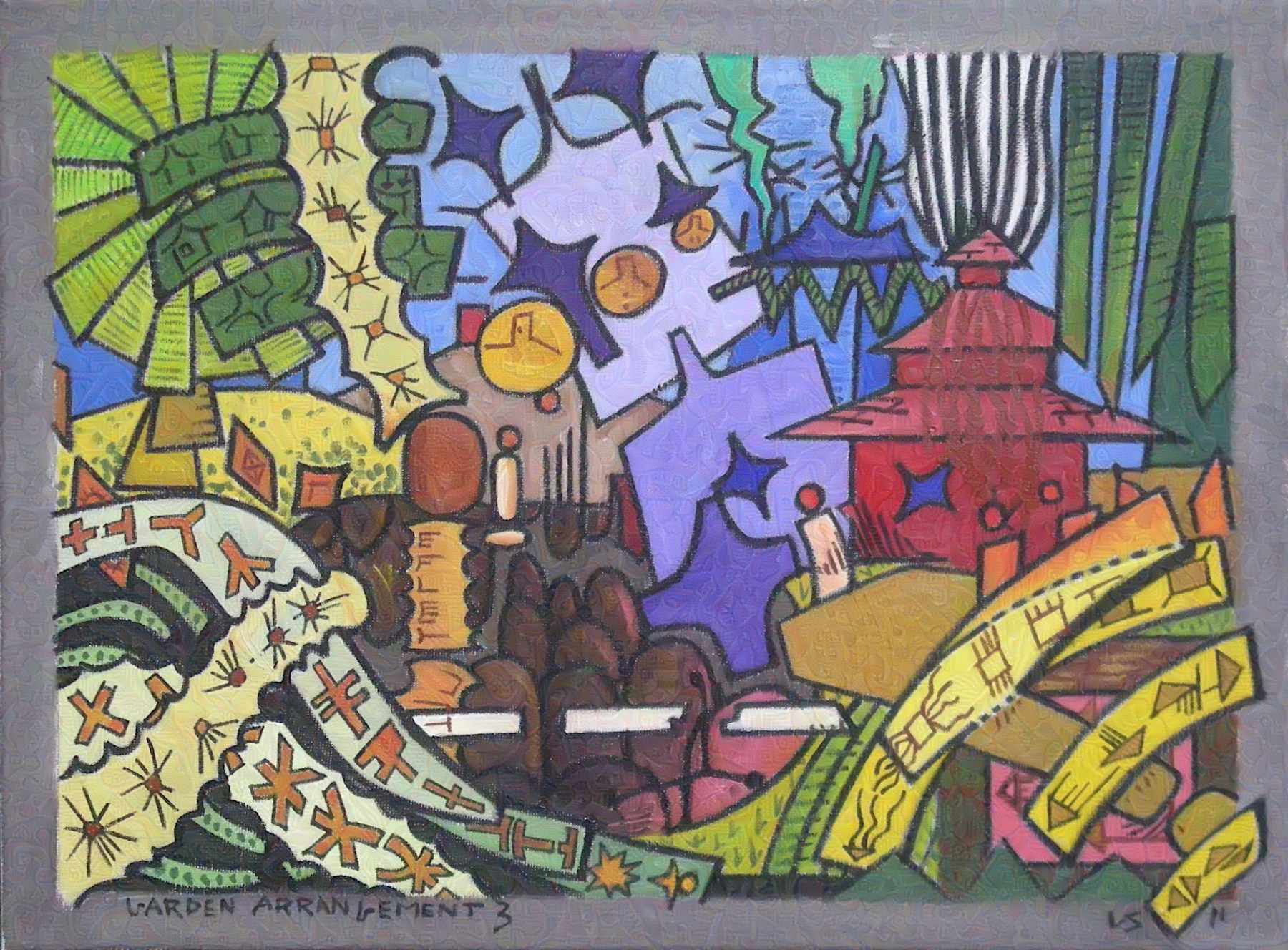
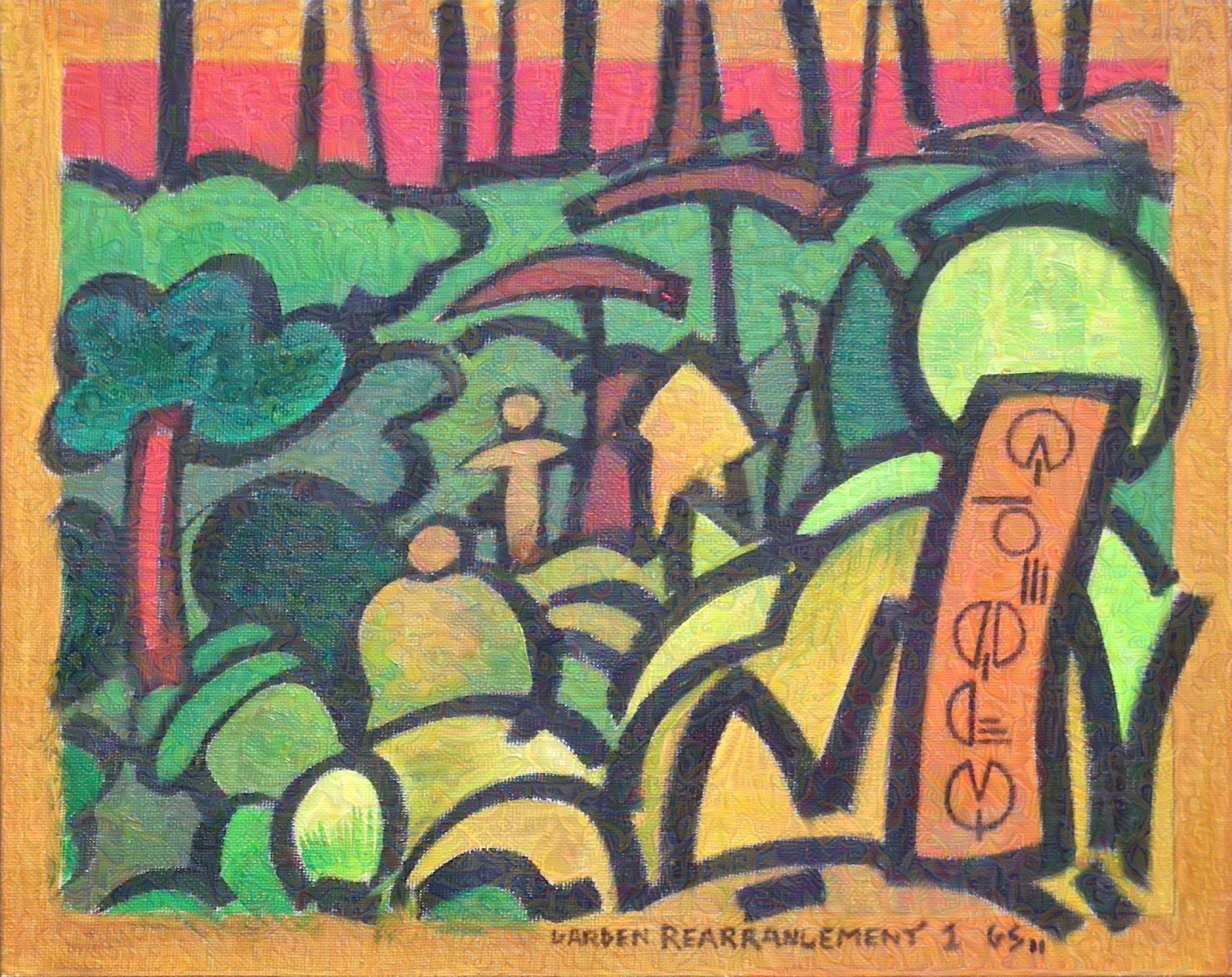



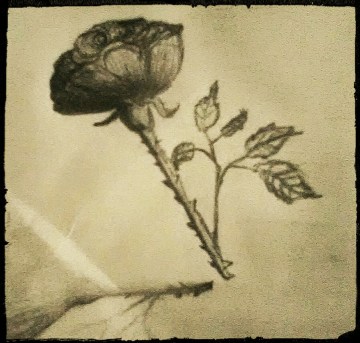





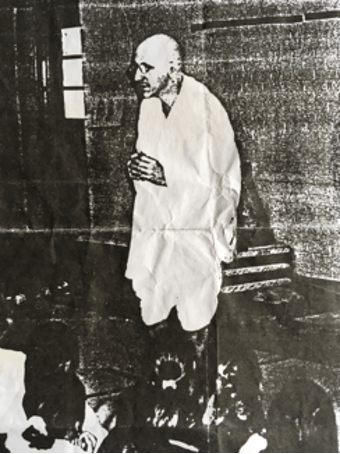
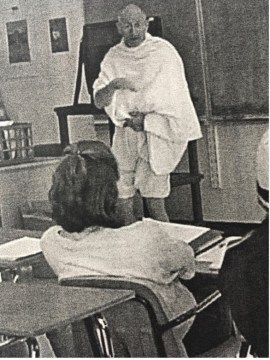



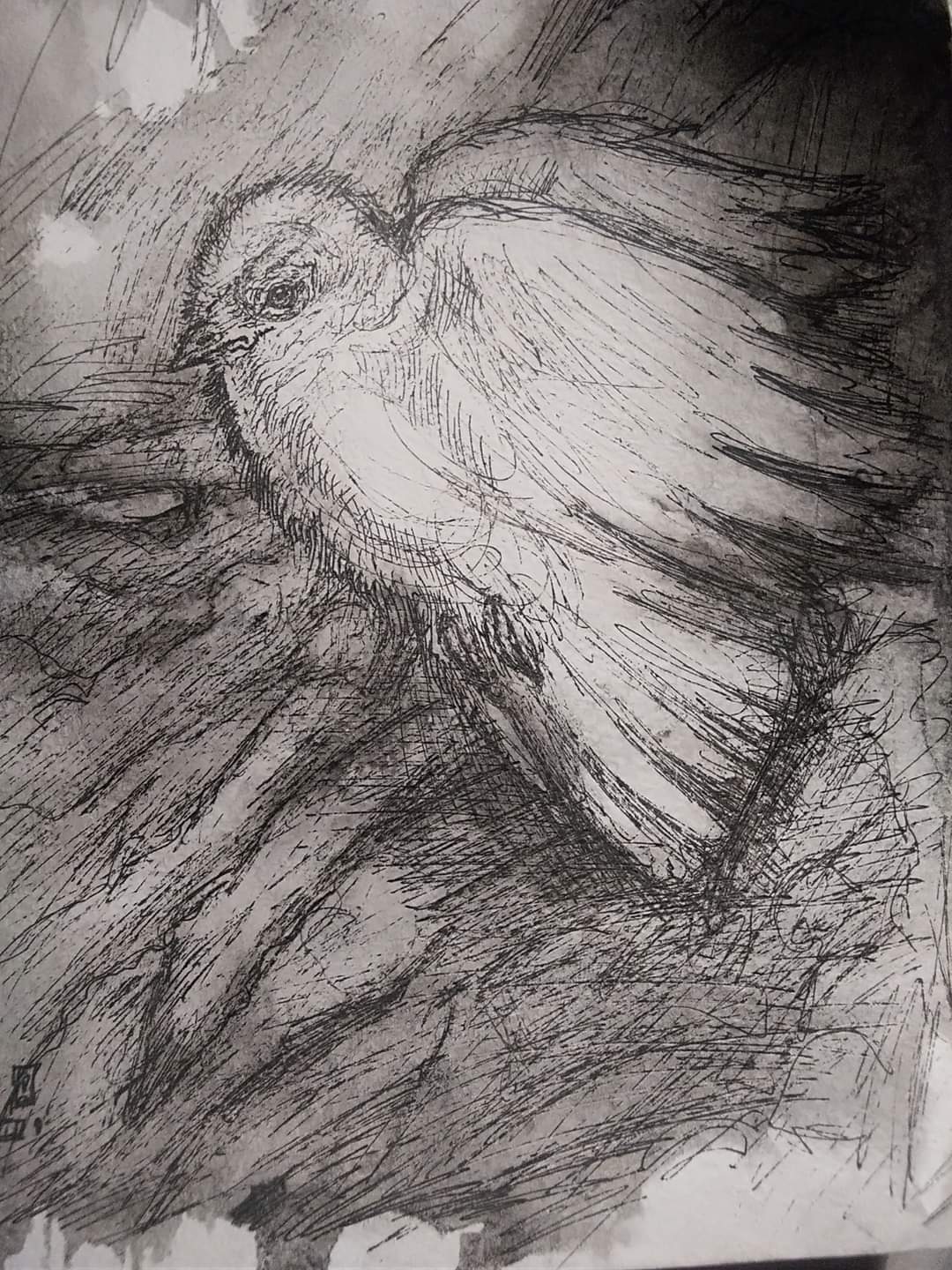

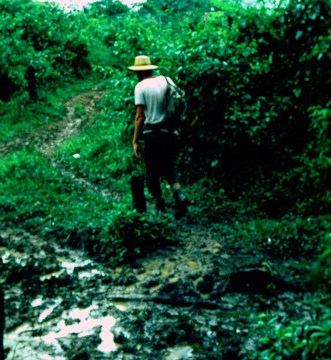
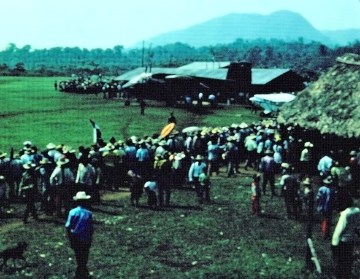
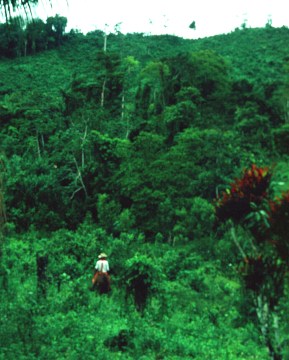
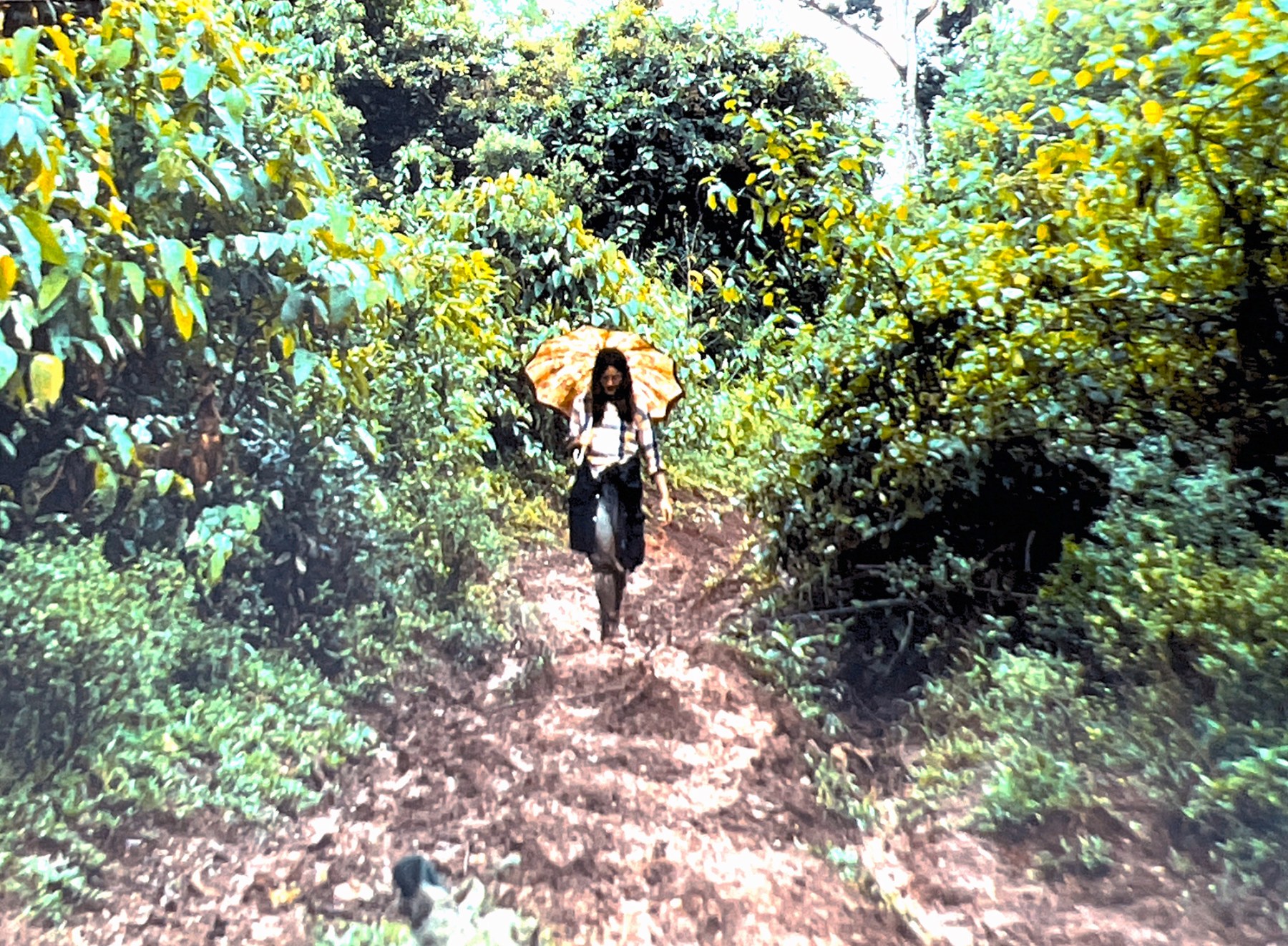


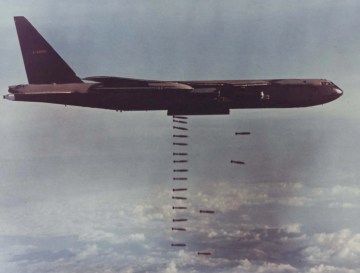



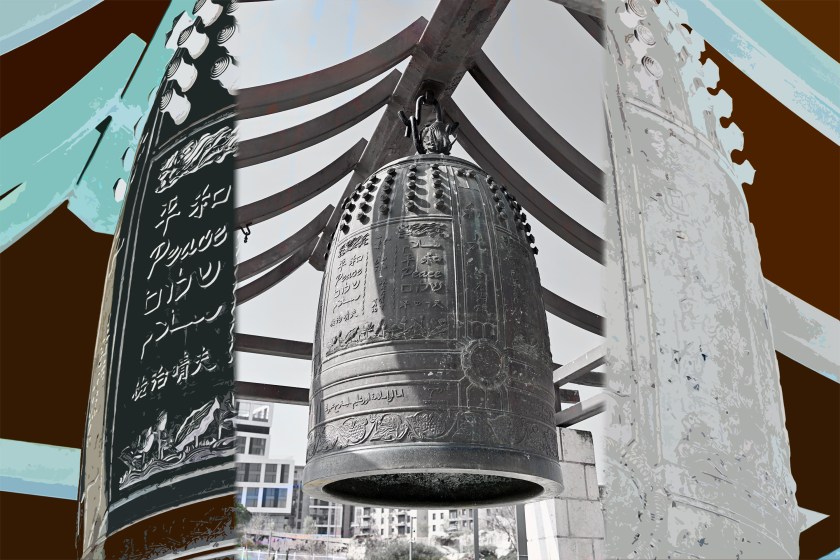

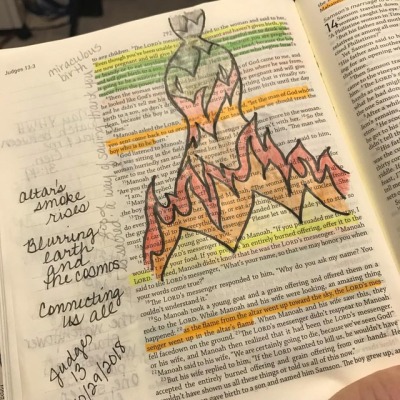


 The BeZine