Posted in Essay, Terri Stewart

Christine de Pizan, Part 3 of 3

This series is an academic article that I wrote on the life of Christine de Pizan, an extraordinary woman of the medieval era. This is part 3. Part 1 is here. Part 2 is here.
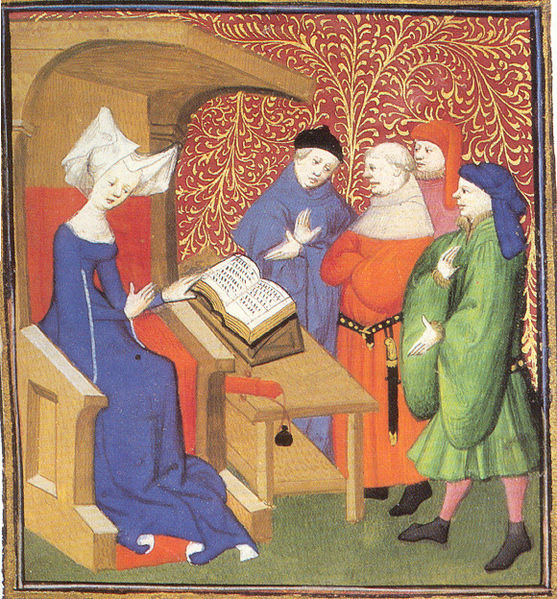
Christine de Pizan lecturing men Image from Wikimedia Commons
Christine de Pizan lecturing men
Image from Wikimedia Commons

In her poems on courtly love, she was able to express her deeply held conviction that “society obliged a woman to pay far too high a price for any momentary pleasure experienced from love outside marriage.”[1] So begins her championship of women aptly captured in “Cupid’s Letter.” During this time of growth for Christine, misogynistic attitudes abounded in the Universities, in court, and in the clergy. Aristotle’s influence held sway over the common understanding of what it was to be female. Every ill of the world was laid at the feet of women. As Christine aptly said in “Cupid’s Letter,”

There are women vilely named,

And often without cause are blamed,

And even those of noble race,

However fair and full of grace.

Lord, what company, what talk—

Women’s honor they freely mock.[2]

“Cupid’s Letter” enjoyed immediate success and was translated into English by Chaucer’s disciple, Thomas Hoccleve.[3] Her work of defending women and removing the tarnish that had been applied to their honor continued in other works including “The Debate of Two Lovers” which showed that true love is joyful, not deceitful or jealous, The Book of the City of Ladies that showed women’s contributions to history through time, The Book of the Three Virtues that sought to inculcate feminine virtues to counteract the misogyny of the time, and concluded with a eulogy poem in honor of Joan of Arc, “Ditie de Jehanne dArc.”

Throughout the time of her writing of poems and books, Christine became embroiled in a literary feud with Jean de Meun who wrote the second half of “The Romance of the Rose.” This became the “first recorded literary quarrel in France.”[4] Christine was inclined to blame the deceit and trickery of the men of her day at the feet of Jean de Meun.[5] “The Romance of the Rose” encouraged men to use whatever means necessary to acquire the woman they wanted in whatever way they wanted.  Jean de Meun belonged to another generation, another social world (not the courtly world of Christine de Pizan), and was primarily a philosopher.[6] He is crude and rude in his references to women and their body parts and advises “opportunism in relations with women, who are seldom virtuous, debauchery being the least of their crimes. The fine clothes of women do not really enhance them, for a dungheap covered with a silken cloth is still a dungheap.”[7] It is with this man and his very popular poem that Christine feels compelled to specifically defend womankind. Interestingly, she counters both in a poetic literary form, written letters, and politically through the official circle of Tignonville and the queen.[8] The chancellor of the University of Paris, Jean Gerson eventually entered the fray, siding with Christine de Pizan.[9]  Eventually, he wrote a treatise against “The Romance of the Rose.”[10] Chancellor Gerson and Christine de Pizan as literary allies were unbeatable and the argument ended (although it was not resolved.)[11] Christine was able to, for the first time, remove the discussion of women “from intellectual circles and [make] it possible for a lay-person, and a woman at that, to take part.”[12] From this point on, she leveraged her fantastic intellect, writing skill, and fame to continue writing about her major concern-“the defense of women against…unjust slander and…hypocrisies of contemporary society.”[13]

Christine de Pizan was a child and woman of privilege. She moved in circles that most people could not enter. She was affected by Petrarch, the University of Bologna, the University of Paris, and by the French Court of Charles V. Typically, a woman of her lifestyle would marry a man, have children, and live on. If her husband died, her task would be to re-marry. Christine did not do this. She educated herself, honed her literary skills and became an unlikely champion of women.

© 2013, post, Terri Stewart, All rights reserved

Terri StewartTERRI STEWART is Into the Bardo’s chaplain, senior content editor, and site co-administrator. You can expect a special post from her each week. She comes from an eclectic background and considers herself to be grounded in contemplation and justice. She is the Director and Founder of the Youth Chaplaincy Coalition that serves youth affected by the justice system. As a recent graduate of Seattle University’s School of Theology and Ministry, she earned her Master’s of Divinity and a Post-Master’s Certificate in Spiritual Direction with honors and is a rare United Methodist student in the Jesuit Honor Society, Alpha Sigma Nu. She is a contributing author to the Abingdon Worship Annual.

Her online presence is “Cloaked Monk.” This speaks to her grounding in contemplative arts (photography, mandala, poetry) and the need to live it out in the world. The cloak is the disguise of normalcy as she advocates for justice and peace. You can find her at www.cloakedmonk.com, www.twitter.com/cloakedmonk, and www.facebook.com/cloakedmonk.  To reach her for conversation, send a note to cloakedmonk@outlook.com.

[1] Willard, Christine de Pizan: Her Life and Works, 61.
[2] Ibid, 62.
[3] Ibid 63-64.
[4] Ibid, 73.
[5] Ibid, 63.
[6] Ibid, 75.
[7] Ibid, 75-76.
[8] Ibid, 77.
[9] Ibid, 80.
[10] Ibid, 84.
[11] Ibid, 86.
[12] Ibid.
[13] Ibid.

Posted in Essay, Terri Stewart

Christine de Pizan, Part 2 of 3

This series is an academic article that I wrote on the life of Christine de Pizan, an extraordinary woman of the medieval era. This is part 2. Part 1 is here.

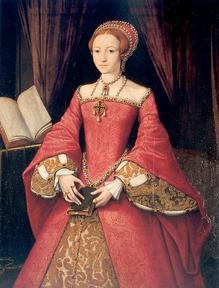
Christine Presenting Her Book to Queen Isabeau, WikiCommons Images

Christine married Etienne de Castel, a son of a court official, in 1380.[1] It was a love match. Then things took a turn for Christine and her family. Charles V died and the crown’s close association with the academic world came to a close.[2] Tommaso became embroiled in a controversial cure that he had prescribed that “went awry.”[3] This caused the de Pizan family’s economic situation to deteriorate. Tommaso died in 1387.[4] Then in 1390, Christine’s husband died in an epidemic.[5] Christine became the head of a family with three children (one would die in childhood), a widowed mother, and a niece that was living with them. Furthermore, when she tried to settle the estate of her husband, she was met with deception, dishonesty, and lawsuits trying to strip her of her property.[6] Adding to her grief, money that had been reserved for her children’s future and invested was stolen.[7]To make matters worse, she became very ill, describing it as succumbing “like Job.”[8]

Given that Christine was now the head of her family, in France away from other relatives, without income, she had to create a way to support her household. Christine was still welcome at court and witnessed the frivolity of the court of Queen Isabeau and Louis of Orleans.[9] Here, poetry was one of the “principal social accomplishments”[10] and Christine turned her hand to poetry that reflected the Parisian social scene in its glory and ugliness. She proceeded to write poetry that reflected that scene, the grief she was still experiencing, and fond reminiscing of the reign of Charles V. Slowly, her poetry began to gather attention in the rarefied air of the court. Her fortunes began to turn when she was able to meet the earl of Salisbury in 1398.[11] They formed a bond based on love of poetry and he took her son into his own home to raise him with his own son. Then, in 1397, through Charles VI’s aunt, Marie de Bourbon, she was able to secure a place for her daughter at the Abbey of Poissy.[12]

Christine started writing poetry as early as 1394, but speaks of her literary career starting in 1399 after several years spent on self-education.[13] She studied ancient history, sciences, and the books of poets.[14] When she started studying the poets, she said to herself, “Child, be consoled, for you have found the thing that is your natural aspiration.”[15] She found her place. However, she did not take her early poetry very seriously. Her early poetry consisted of ballades, rondeaus, and the virelay.[16] These were well respected forms during her day. In addition, she started growing her own library of books by copying books in her own hand.[17] Christine also started writing letters purely for literary purposes.[18] She was becoming skilled at poetry, letter writing, and at common rhetorical devices used among the educated and courtly elite. Leaning on Plato’s view of women, Christine wrote in “The Mutation of Fortune,” that her change in status caused her to “become a man.”[19] It is this educated, courtly-adept woman that became a powerful voice for the fair and honorable treatment of women.

Christine’s poetry began to be known beyond the French court by approximately the year 1400.[20] She claims that it was because she was such a novelty—being a woman poet—that her work spread widely and rapidly.[21] However, it was probably because she wrote from her own point-of-view, a widowed woman. Her early poems used the court and its characters for the basis of her stories. She discovered that she had a particular talent for working with words and fitting them into poetic forms.[22] But her most striking skill was in expressing her own emotions and experience via literary devices.[23] The theme of grief and widowhood arises frequently in her writing.

© 2013, post, Terri Stewart, All rights reserved

Terri StewartTERRI STEWART is Into the Bardo’s  Sunday chaplain, senior content editor, and site co-administrator. She comes from an eclectic background and considers herself to be grounded in contemplation and justice. She is the Director and Founder of the Youth Chaplaincy Coalition that serves youth affected by the justice system. As a recent graduate of Seattle University’s School of Theology and Ministry, she earned her Master’s of Divinity and a Post-Master’s Certificate in Spiritual Direction with honors and is a rare United Methodist student in the Jesuit Honor Society, Alpha Sigma Nu. She is a contributing author to the Abingdon Worship Annual.

Her online presence is “Cloaked Monk.” This speaks to her grounding in contemplative arts (photography, mandala, poetry) and the need to live it out in the world. The cloak is the disguise of normalcy as she advocates for justice and peace. You can find her at www.cloakedmonk.com, www.twitter.com/cloakedmonk, and www.facebook.com/cloakedmonk.  To reach her for conversation, send a note to cloakedmonk@outlook.com.


[1] Willard, Christine de Pizan: Her Life and Works, 34-35.
[2] Ibid.
[3] Ibid, 38.
[4] Ibid, 39.
[5] Ibid.
[6] Ibid.
[7] Ibid, 40.
[8] Ibid.
[9] Ibid, 42.
[10] Ibid.
[11] Ibid.
[12] Ibid, 43.
[13] Ibid, 44.
[14] Ibid.
[15] Ibid.
[16] Ibid.
[17] Ibid, 45.
[18] Ibid.
[19] Ibid, 48.
[20] Ibid, 51.
[21] Ibid.
[22] Ibid, 53.
[23] Ibid.

Posted in Essay, Terri Stewart

Christine de Pizan, Part 1 of 3

This series is an academic article that I wrote on the life of Christine de Pizan, an extraordinary woman of the medieval era.

Christine de Pizan from Wikispaces.com
Christine de Pizan
from Wikispaces.com

During the lifetime of Christine de Pizan (1364-1430),[1] women were not well respected.[2] However, Christine managed to carve out a unique spot for herself among authors of poetry and rhetorical letters. Along her journey, she also became an unlikely champion of women, women’s roles, and the honorable treatment of women. Unlikely champion because Christine came from a privileged, comfortable background and was discouraged from stepping outside of traditional female roles by her mother.[3] I am going to show that Christine’s background peculiarly gave her the gifts to become not only a gifted author, but the unlikely champion of women. Then, a brief exploration of the misogynistic attitudes present during her lifetime that called forth a response and thrust her into the role of France’s first woman of letters.[4]

Christine de Pizan was born in Venice, Italy.[5] At the time she was born, the city was just recovering from two horrific events – an earthquake followed by the first outbreak of the bubonic plague in 1348.[6] It was thought that these events were punishments from God for Venice’s wickedness at warring with its neighbors and with Genoa.[7] Venice was a port city that was among the first cities hit by the plague due to its status as a maritime trader.[8] As the downfall of Venice was seen to be attributable to the movement of the planets and stars (earthquake), astronomy and astrology were respected and revered sciences.[9] The potential for ad4vanced study in these fields is what drew Tommaso da Pizzano to Venice.

Tommaso da Pizzano arrived in Venice in 1357 from Bologna. He had been studying there towards his degree of doctor in medical studies which would have included studying astrology.[10] Bologna had a reputation as an intellectual center of Europe, a book production center, and a center of secular thought.[11] That is the rarified air that Christine de Pizan’s father came from. Here, Tommaso met Christine’s mother, they married and soon had Christine. It is also in Venice that Tommaso became acquainted with Petrarch, one of the most influential poets[12] of his day.[13] Here the thoughts of Bologna-based on Aristotle’s writings-collided with Petrarch’s thoughts that were grounded in Plato.[14] Plato believed that women had a place in society—they had strengths that differed from men, but strengths none-the-less. Aristotle, however, had a much more subservient view of women.

In the Republic, Plato argues that women must be assigned social roles in the ideal state equal to those of men. Only one generation later, Aristotle, in his Politics, returns women to their traditional roles in the home, subserving men. Plato’s position in the Republic is based upon his view that “women and men have the same nature in respect to the guardianship of the state, save insofar as the one is weaker and the other is stronger.” Nature provides no such equality in Aristotle; in the Politics he flatly declares, “as regards the sexes, the male is by nature superior and the female inferior, the male ruler and the female subject.”[15]

I must say that Plato was not perfect on women, but he was more charitable in his views that Aristotle. Women, for Plato, degenerated from perfection while for Aristotle, they were inferior by nature.[16] Christine de Pizan was born into an environment more influenced by Petrarch and Platonic thought than by the University center’s reliance upon Aristotelian thoughts on women.

Tommaso soon re-established his family in Bologna because of the prestige that being at University brought him.[17] However, he was soon invited to join the courts of both Paris and Hungary. He chose Paris.[18] He left his family for two years in Bologna while he established himself at the French court of Charles V. This allowed him to have the prestige of being at court and being near the University of Paris. In December 1368, Charles V “received at the Louvre the newly arrived family of Tommaso, now transformed into Thomas de Pizan.”[19]

In the courts of Charles V, Christine was given quite a lot of freedom. Charles V has a propensity for intellectual interests.  He cultivated contacts with the University of Paris and built an impressive library. He contracted Nicole Oresme to translate the entire works of Aristotle into French.[20] Christine had access to the king’s library and to his personal study.[21] She later recalled the king with fondness saying, “In my youth and childhood, with my parents, I was nourished by his hand.”[22] Christine was enthralled with intellectual pursuits from a young age.[23] Her father encouraged her in her studies (he had very liberal views on the education of women) while her mother was more traditional.[24] Christine managed to walk a line between her two parents—tending to her traditional roles as a female and pursuing intellectual curiosities at every opportunity.

© 2013, post, Terri Stewart, All rights reserved

Terri StewartTERRI STEWART is Into the Bardo’s  Sunday chaplain, senior content editor, and site co-administrator. She comes from an eclectic background and considers herself to be grounded in contemplation and justice. She is the Director and Founder of the Youth Chaplaincy Coalition that serves youth affected by the justice system. As a recent graduate of Seattle University’s School of Theology and Ministry, she earned her Master’s of Divinity and a Post-Master’s Certificate in Spiritual Direction with honors and is a rare United Methodist student in the Jesuit Honor Society, Alpha Sigma Nu. She is a contributing author to the Abingdon Worship Annual.

Her online presence is “Cloaked Monk.” This speaks to her grounding in contemplative arts (photography, mandala, poetry) and the need to live it out in the world. The cloak is the disguise of normalcy as she advocates for justice and peace. You can find her at www.cloakedmonk.com, www.twitter.com/cloakedmonk, and www.facebook.com/cloakedmonk.  To reach her for conversation, send a note to cloakedmonk@outlook.com.

[1] Danuta Bois, “Christine de Pisan,” Distinguished Women of Past and Present, http://www.distinguishedwomen.com/biographies/pisan.html (accessed March 12, 2013).
[2] Charity Cannon Willard, Christine de Pizan: Her Life and Works (NY, Persea Books, 1984), 15.
[3] Willard, Christine de Pizan: Her Life and Works, 33.
[4] Ibid, 15.
[5] Ibid, 16.
[6] Ibid.
[7] Ibid.
[8] Cara Murphy, “The Bubonic Plague and the Impact on Venice,” FluTrackers, http://www.flutrackers.com/forum/showthread.php?t=23196 (accessed March 12, 2013).
[9] Willard, Christine de Pizan: Her Life and Works, 17-18.
[10] Ibid, 17.
[11] Ibid.
[12] Petrarch was an Italian humanist.
[13] Willard, Christine de Pizan: Her Life and Works, 19.
[14] Ibid.
[15] Nicholas D. Smith, “Plato and Aristotle on the Nature of Women,” Journal of the History of Philosophy 21.4 (1983): 467-478. Project MUSE. http://muse.jhu.edu/ (accessed March 13, 2013).
[16] John Wijngaards, “Greek Philosophy on the Inferiority of Women,WomenPriests.org, http://www.womenpriests.org/traditio/infe_gre.asp (accessed March 13, 2013).
[17] Willard, Christine de Pizan: Her Life and Works, 20.
[18] Ibid.
[19] Ibid.
[20] Ibid, 21.
[21] Ibid, 28-29.
[22] Ibid, 23.
[23] Ibid, 33.
[24] Ibid.