Posted in Disability, Essay, Michael Watson

Still Here: Blogging Against Disabilism

Lone-CyprusToday is Blogging Against Disabilism Day. Disabilism is a Gimp term for the ideology and practice of discriminating against people with disabilities. Discriminatory practices of all forms appear to be on the rise in North America. In the U.S., where all programs that protect minorities are under attack, there has been a growing chorus of calls for the dismantling of the Americans With Disabilities Act.
Contrary to much of the Disabilist propaganda, life remains very difficult for most people with disabilities. Much architectural infrastructure remains inaccessible, and the unemployment rate for persons with disabilities is double the rate of the non-disabled. It is likely most people with severe disabilities have given up looking for employment and are thus not counted amongst the unemployed.

The 90’s were, throughout the Western World, a time of disability activism. In the U.S., many of the activists were Polio survivors. At the time, the everyday world was, far much of the disabled community, simply inaccessible. If one used a wheelchair, one simply could not get on a bus! (The playwright and disability theorist, Kaite O’Reilly recently discussed both the disability civil rights movement in the U.K. and the workings of Disabilism in a marvelous lecture. I encourage you to watch.)

Until our civil rights movement, people with disabilities were largely invisible. When I am in a wheelchair in a crowded space, say a museum, I remain invisible, as people literally trip over me. When I am in India, I am a very visible anomaly: a professional person navigating the world on crutches. (An Indian colleague recently told me that disability cannot be discussed at the moment in India. It is too hot a topic.) Most disabled people in India stay home.

Back in the early 90’s Bill T. Jones, the MacArthur Award winning choreographer, created a piece entitled, Still Here.  The dance gives expression to the lived experience of persons with life threatening conditions, including disabilities. It created a furor! In 1997, Bill Moyers interviewed Bill T. Jones about Still Here. It is one of my favorite hours of t.v.. Not long ago I wrote a post about Still Here and its continued resonance for Native people and folks with Disability. The sad thing is that there are a great many people in North America who would like us Gimps and Natives to be gone, or to at least stay home and out of the way.

Beyond the idea of Disability as label or stigma, is Disability as lived experience. I have spent much of the past few months addressing Polio related issues. Working with a Polio knowledgeable therapist has helped me revisit the illness and its aftermath, understand some of the new challenges I, and other Polios, face, and acknowledge some of the losses associated with Polio. The therapist has given me information to read and poked sore areas of my psyche with skill and kindness.

I am deeply appreciative of the resources, kindness, and training she, and other Polio clinicians have showered on me. I am also grateful to all those who helped me understand the ways the trauma of Polio, and the able-bodied gaze, have shaped my thinking and life. At times. I find myself both relieved and filled with sadness and grief; there are so many losses.

There was a time when I was able, a before and after Polio, although that was many decades ago. My therapist likes to remind me that those without disabling conditions are temporarily abled; disability is always possible. Perhaps that possibility keeps many anxious and avoidant of persons who are clearly disabled. One may pass but probably one cannot hide from one’s disability or from the losses it brings to life. Nor can one hide from Disability itself; Disability stalks everyone.

Oddly, I have the sense of Polio as present and immediate, even in a world where it is thought, like winter’s snow, to have melted away almost to extinction. Polio is a virus, a piece of RNA that infects cells, reproduces itself in enormous quantities, and leaves the cells weakened or dead. It can present as little more than a stomach upset, or leave a person paralyzed or dead.Whether we acknowledge it or not, Polio remains an active presence in our world, especially in the lives of survivors and their families.

As I write, a flock of geese flies over, headed north, and the radio news announces a polio outbreak in Afghanistan in which at least 25 persons have been made ill. I have been rereading Anne Finger’s Elegy for A Disease, and the book lies open on the sofa. It is both a personal and a social history of the disease, an illness with a long history of influencing human lives. I have the sense Polio is sitting with me as I write and ponder, an alive, thoughtful presence, vibrant and well in spite of our efforts to eradicate it. Polio doesn’t seem to be going anywhere.

We Gimps are Still Here as well. We, too, are not going anywhere.

– Michael Watson, Ph.D.

IMPORTANT NOTE: In acknowledging of this day, its importance, and of the challenges disability bring to the lives of the disabled and their families, we are opening Mister Linky for you to share links with us and with readers to your own posts on disability or to a post you’ve read that has moved you to a greater understanding. These do not have to be recent posts. As an alternative, please feel free to leave a link in the comments section.

© 2013, essay (includes the one below), Michael Watson, All rights reserved

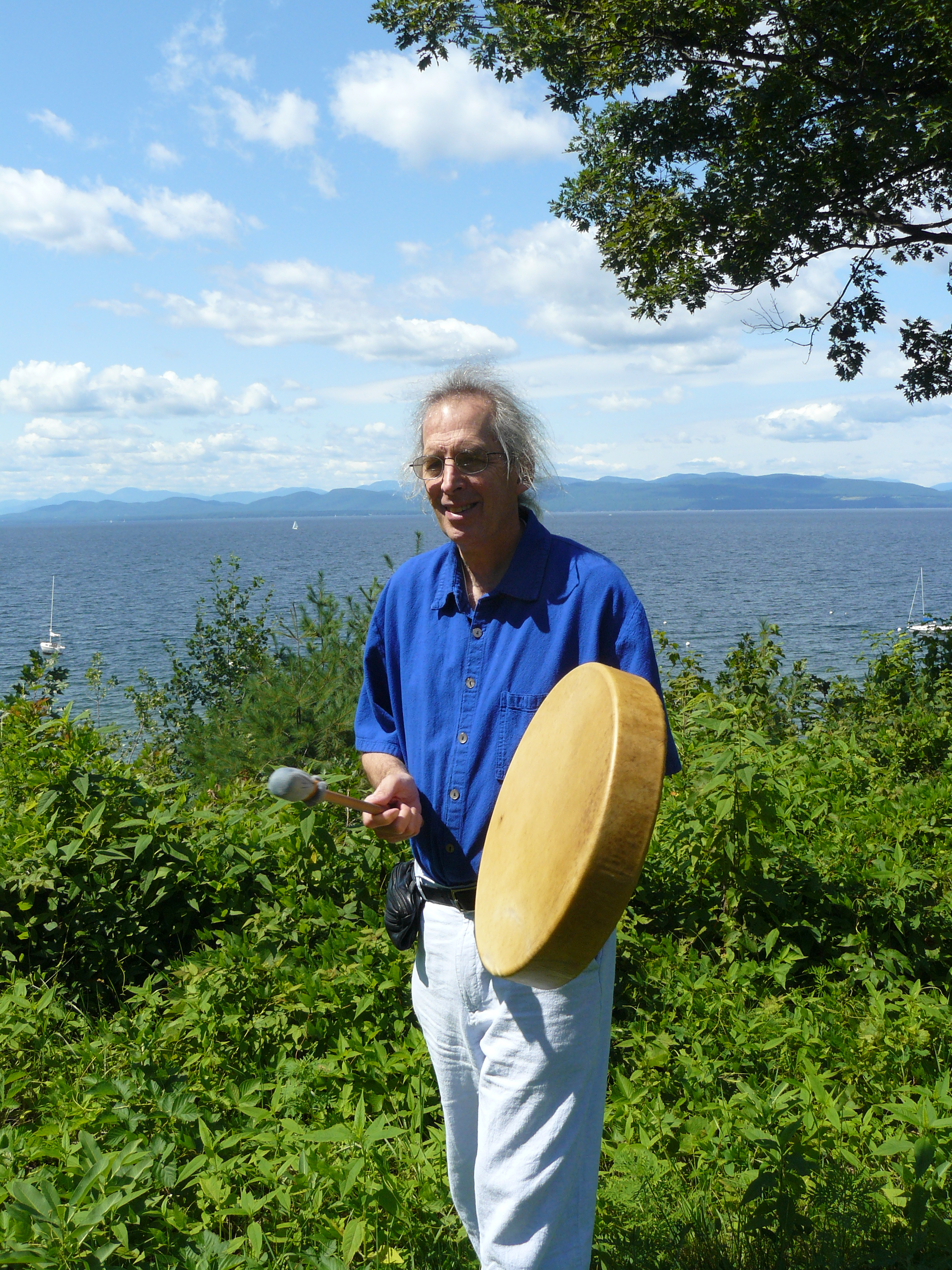
michael drumMICHAEL WATSON, M.A., Ph.D., LCMHC (Dreaming the World) ~ is a contributing editor to Into the Bardo, an essayist and a practitioner of the Shamanic arts, psychotherapist, educator and artist of Native American and European descent. He lives and works in Burlington, Vermont, where he teaches in undergraduate and graduate programs at Burlington College,. He was once Dean of Students there. Recently Michael has been teaching in India and Hong Kong. His experiences are documented on his blog. In childhood he had polio, an event that taught him much about challenge, struggle, isolation, and healing.