Posted in Essay, memoir, Naomi Baltuck

Mom Always Said…

Hope for the best, expect the worst, and try not to be disappointed.   My mother’s life philosophy was actually pretty upbeat for a kid whose family lost everything during The Great Depression, including her father, who died of Brain Fever when she was only eight.  Grandma Rhea supported her children by sewing and taking in wash.  My mom shared a bed with Grandma, so they could rent out her room to make ends meet.  But they didn’t always quite make it.  In the freezing Detroit winters, they nailed blankets over the windows because they couldn’t afford coal to heat the house.

Their only book was the family bible.  But Mom found a copy of Alice in Wonderland in a box of textbooks left by a renter.  She read it cover to cover.  As soon as she finished, she turned back to the first page and started over.  She had discovered her passion and her escape–in books.

Mom was the first in her family to attend college, working her way through by reading to blind students.  A person of quiet, if impractical passions, Mom passed on normal school and secretarial school to study Classical Greek and Latin, French, German, and Russian.  Italian, too, but she said that hardly counted.  “After Latin,” Mom said, “Italian is a snap.”

I remember going home from college to visit one weekend.  There were index cards by Mom’s reading chair, on the kitchen windowsill, on the nightstand by her bed.  They had strange writing on them.

“It’s Greek,” she explained.  “Passages from The Iliad, by Homer.”

“Why?” I asked.

“I’m memorizing it,” she said.

“But why?”

“For fun, dear.  After I’ve memorized The Iliad, I’m going to memorize The Odyssey.”

As a young college grad, she had never shown any interest in men, and was still living at home while working for the War Department.  Grandma planned on having a spinster daughter to keep her company in her old age, unaware that Mom had already promised herself she would move out and find a place of her own by her 25th birthday, if she hadn’t gotten married by then.   Mom just hadn’t met her intellectual equal.  Then Harry Baltuck came along.

He was handsome, funny, brilliant; every woman in the office had her eye on him.  But he had eyes only for Mom.  She was so nervous on their first date that she threw up in his car.  Actually, she threw up every time they went out.  “But he kept coming back,” she said, laughing.

He was intrigued, and not just because she was determined to remain a virgin until her wedding night.  It was a very quick courtship.

His proposal wasn’t exactly story book.  “Well, what if we made it legal?” he asked.

“Would you wear a ring?” she countered.  And the rest is family history.

They traveled many peaks and valleys in their time.  They had seven children and eighteen years together.  She was still young when widowed, and Mom received several proposals from Daddy’s friends and army buddies; some decent and well-intended, others not so much.  But Mom didn’t take anyone up on his offer.  She never remarried, or even dated.  Books, once again, became her passion and her escape.

In 1989, I sat at her bedside as she lay dying of cancer.  It had been a long hard battle.  Mom looked up and caught her breath.  “Harry,” she whispered.

“What did you say, Mom?” I asked.

“Harry!”  She pointed toward the door, but I saw nothing there.

“Mom, do you see someone?”

“It’s Harry,” she said, nodding.  “He’s standing right there.”

Was it the delusion of a dying woman?  Or the love of her life, who had been patiently waiting for twenty-five years to take her home?

Let’s hope for the best.  Just like Mom always said, you have to hope for the best.

All images and words c2012 Naomi Baltuck

NaomiPHOTO1-300ppi51MC3SKEF0L._SY300_NAOMI BALTUCK ~ is a Contributing Editor and Resident Storyteller here at Bardo. She is a world-traveler and an award-winning writer, photographer, and story-teller whose works of fiction and nonfiction are available through Amazon HERE. Naomi presents her wonderful photo-stories – always interesting and rich with meaning and humor – at Writing Between the Lines, Life from the Writer’s POV.

Naomi also conducts workshops such as Peace Porridge (multicultural stories to promote cooperation, goodwill, and peaceful coexistence), Whispers in the Graveyard (a spellbinding array of haunting and mysterious stories), Tandem Tales, Traveling Light Around the World, and others. For more on her programs visit Naomi Baltuck.com

Posted in Essay, Naomi Baltuck

Today (we are all survivors)

We are all survivors, of our personal histories, our family lines, and of the human race.  Since the dawn of time, think of the families ended abruptly by a bullet, a spear, a club, a predator, illness, by accident and even by someone’s own hand.

Today is the anniversary of D-Day, the Normandy invasion in 1944.  It was the day my Uncle Lewis was launched onto the Normandy beaches into a cruel war.  I think it no coincidence that today is also the anniversary of my father’s death in 1965.

The day before he died, while his kids ran and laughed and played in the yard, my father planted a walnut tree—just a stick of a sapling–by the side of the house.  Did he know what he was going to do?  Did he plant that tree as his own memorial?

I hope not, because someone else is living in that little house in Detroit, and my Dad’s walnut tree is long gone, cut down in its prime.  This I know, because I drive past each time I go back to visit my Aunt Loena.   So these words must serve as a memorial to a World War II vet who came home without his little brother and best friend.  That was the sin his mother never forgave him for, the sin he could he never quite forgive himself for either.

My army buddy, Jack Oliver, attended boot camp with Uncle Lewis.  He helped me understand that my father was as much a victim of the war as my uncle.  When the War Department tallies the casualties, it counts the dead, the wounded, the missing in action.  But no one ever takes into account the broken hearts and broken families left by the wayside in the wake of war.  If they did, perhaps they would stop sending our children off to fight and die.

But today is a day a of forgiveness, a day of understanding, a day to be thankful that life goes on.  It is a day of sorrow, but most of all, today is a day to love.

– Naomi Baltuck

© 2012, essay and photographs, Naomi Baltuck, All rights reserved

NaomiPHOTO1-300ppi410xuqmD74L._SY300_NAOMI BALTUCK ~ is a Contributing Editor and Resident Storyteller here at Bardo. She is a world-traveler and an award-winning writer, photographer, and story-teller whose works of fiction and nonfiction are available through Amazon HERE. Naomi presents her wonderful photo-stories – always interesting and rich with meaning and humor – at Writing Between the Lines, Life from the Writer’s POV. She also conducts workshops such as Peace Porridge (multicultural stories to promote cooperation, goodwill, and peaceful coexistence), Whispers in the Graveyard (a spellbinding array of haunting and mysterious stories), Tandem Tales, Traveling Light Around the World, and others. For more on her programs visit Naomi Baltuck.com
Posted in Culture/History, Essay, Naomi Baltuck, Photography/Photographer

Remembering Uncle Lewis, A Memorial Day Story

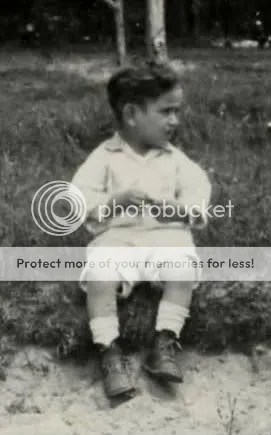
One of my earliest memories is of dinner at Grandma Rose’s house.  Her towels, furniture, and closets smelled of mothballs; she even stored her silverware in mothballs.  Mostly, though, I recall standing on Grandma’s couch to study the framed collage of black and white photographs on her wall.  I recognized my father, but knew the other boy in the pictures only by name, and by heart.

Uncle Lewis was my father’s only sibling, younger than my dad by ten years.  We never met, and Daddy never spoke of him.  But they were best friends.  In one picture Lewis was laughing, having been surprised on the toilet by my father with his camera.  The brothers teased Grandma too.  Lewis would yell, “Harry, stop hitting me!”  Grandma would rush in, and scold my father for picking on his brother.  Undaunted, they’d laugh and repeat, until Grandma caught on.

Soon after the attack on Pearl Harbor, Lewis was drafted into the infantry, a shy studious eighteen year old who had never kissed a girl.  My father joined up as an officer.  He pulled a few strings to get Lewis transferred into the 30th ‘Old Hickory’ Division, so the brothers could cross the Atlantic on the same ship.  Lewis wrote letters and post cards home, often addressed to their dog ‘Peanuts.’

“Hey, Peanuts, tell Pa to eat his spinach!”   From the ship he wrote, “Harry and his buddies sneaked me into their cabin.  They gave me chocolate and let me play with their puppy.  Don’t tell anyone, or we’ll all catch it.  They smuggled the pup on board, and officers shouldn’t fraternize with enlisted men…”

While serving in Africa, Italy, England, France, and Germany, Harry was safely behind the front lines.  But Lewis was sent to Normandy two days after the D-Day invasion.  He fought in the hedgerows of France, and in Holland.  “The Dutch ran into the streets and passed out everything from soup to nuts.  As we marched out of there in the middle of the night, you could hear the clink of cognac, whiskey, and wine bottles in the guys’ jackets, amidst all the cursing and the roar of the Jerrys’ planes overhead.”  

To his parents Lewis wrote, “Dear Ma and Pa, today I saw General Eisenhower drive by.”  Or, “Kronk said the war can’t last.  It just can’t.  And he said it with such an angelic look on his face, I believe him!”

But to my father he wrote, “You should see the bruise from where a bullet passed through my shirt, Brub.  It was a close call.”  Or, “They took Julian away.  It’s so lonely here, Brub.  He’s the reason I wouldn’t take that promotion to sergeant.  We dug in together, took care of each other when things got rough.  I don’t know how bad he’s hurt; I just hope he makes it, and escapes this Hell.  Pray for me, Brub. Pray for me.”

On September 20, 1944, the day before his company attacked the Siegfried Line, Staff Sergeant Lewis Baltuck was killed by the blast of a shell.  Twenty years old, he had hardly begun to live.  He was survived by his parents, his dog Peanuts, and his brother Harry.  He never had the time or the opportunity to fall in love and marry.  He left no children to mourn for him—only the Bronze Star and the bronzed baby booties Grandma kept on her bookshelf until the day she died, more than forty years after her son’s death.

Harry married, had seven children, and built his own little house in Detroit.  But for the rest of his life he suffered acutely from the unspeakable burden of depression and Survivor’s Guilt.  When Grandpa Max died, my father became the sole caretaker of his widowed mother.  There was no one to share that burden with, to joke with or jolly her along.  Worst of all, crazed with grief, Grandma Rose blamed Harry for Lewis’s death.

I envied those kids who grew up with cousins to play with, and uncles who cared about them.  Uncle Lewis would’ve been that kind of uncle, and my father would have been a different man, without that black cloud to live under.  When Daddy died in 1965, we lost our connection to my father’s extended family, and our ties to our paternal cultural heritage were nearly lost as well.  But it does no good to dwell on the past or to speculate on what might have been.

Uncle Lewis was right about one thing.  War is Hell.  The price it exacts is impossible to tally, and can never be repaid.  When a soldier is killed, one heart stops beating, but many more are broken.  The wounds inflicted upon whole families are so deep that the scars can still be felt after generations.

I swear my uncle’s little bronze baby booties will never end up on the bargain shelf at the Salvation Army Thrift Store, like so many others I have seen there.  How sad to think that such precious keepsakes might be tossed into the giveaway because no one remembers or cares about the one whose little feet filled them.

I attended the 60th reunion of the Old Hickory Division in Nashville in search of someone who knew my uncle.  I met only one man who remembered him…“a quiet man who didn’t say much, but when he did speak, he was always worth listening to.”

I tell my children that story, and many other stories about their Great Uncle Lewis.  I am confident he will be cherished and remembered, not just for his tragic death, but for his joyful life.

copyright 2012 Naomi Baltuck

NaomiPHOTO1-300ppiNAOMI BALTUCK ~ is a Contributing Editor and Resident Storyteller here at Bardo. She is a world-traveler and an award-winning writer, photographer, and story-teller whose works of fiction and nonfiction are available through Amazon HERE. Naomi presents her wonderful photo-stories – always interesting and rich with meaning and humor – at Writing Between the Lines, Life from the Writer’s POV. She also conducts workshops such as Peace Porridge (multicultural stories to promote cooperation, goodwill, and peaceful coexistence), Whispers in the Graveyard (a spellbinding array of haunting and mysterious stories), Tandem Tales, Traveling Light Around the World, and others. For more on her programs visit Naomi Baltuck.com