
Posted in Essay, Michael Watson

To Err is Human

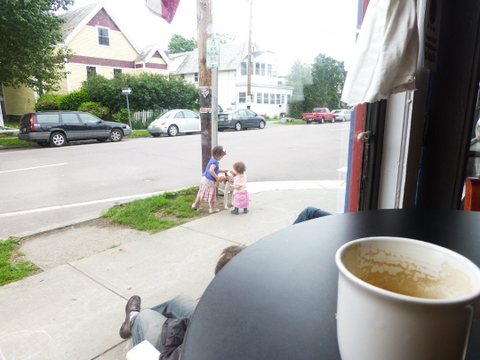
Window ViewThis morning I was driving home from one of our favorite bakeries via a well trodden, quietly residential route, one I have walked and driven for more than thirty years. I was lost in thought and focused on the many speed bumps that inhabit that street. I was thinking that the latte had been suburb, and the new pastry way too sweet and most likely going to suppress my immune system for hours. Suddenly I was aware I had run a stop light; seemingly the light had sprung up overnight in the middle of a block.

The light is long overdue and should aid elementary school students cross the sometimes busy street in route to their school. Yet, motorists are not warned of a new light, and the light itself is partially obscured by overhanging branches. (Often the city puts up warning signs for motorists approaching new stop signs and lights.) The light seems an excellent example of a well conceived project inadequately implemented.

I missed the light, in part, because, as I drove down the empty street  I was thinking about writing a post for this blog. Familiarity with the way, and a downward sighted focus on the speed bumps added to the problem. Yet, ultimately, I was a distracted driver and I drove through a red light. Clearly, my responsibility.

I imagine that most of us are doing our best to be kind and attentive to the needs and demands of life. We imagine we have things under control, forgetting our attention is divided, and the ease with which mistakes occur. How often our attention fails and we miss whatever might be important in the moment. How frequently do we become angry with others for doing the same?

Here is a paradox: maybe we take ourselves too seriously. Perhaps we would be happier were we to substitute humor for anger, playful reconsideration for aggression. Humor and playfulness support our presence in the moment and encourage us to forgive one another and ourselves for our misses.  Yes, driving is crucial business, requiring all our facilities and best judgement. Many other tasks are also decidedly important, demanding seriousness of purpose and focus. Yet, we are going to err. Most of the time a bit of laughter is more supportive of learning than is self criticism. A light heart seems to aid the brain in becoming more skillful.

The fretful side of me wonders what other hazards lurk in the midst of well trodden, usually safe paths. Those voices urge focus and attention, reminding me of the real consequences of grave mistakes. Other voices remind me few mistakes are truly harmful. They encourage breath and play, humor as well as focus. Both points of view are important in a world of hazards. I’m wondering where the balance between them lies. What do you think?

– Michael Watson

© 2013, essay and photographs (includes portrait below), Michael Watson, All rights reserved
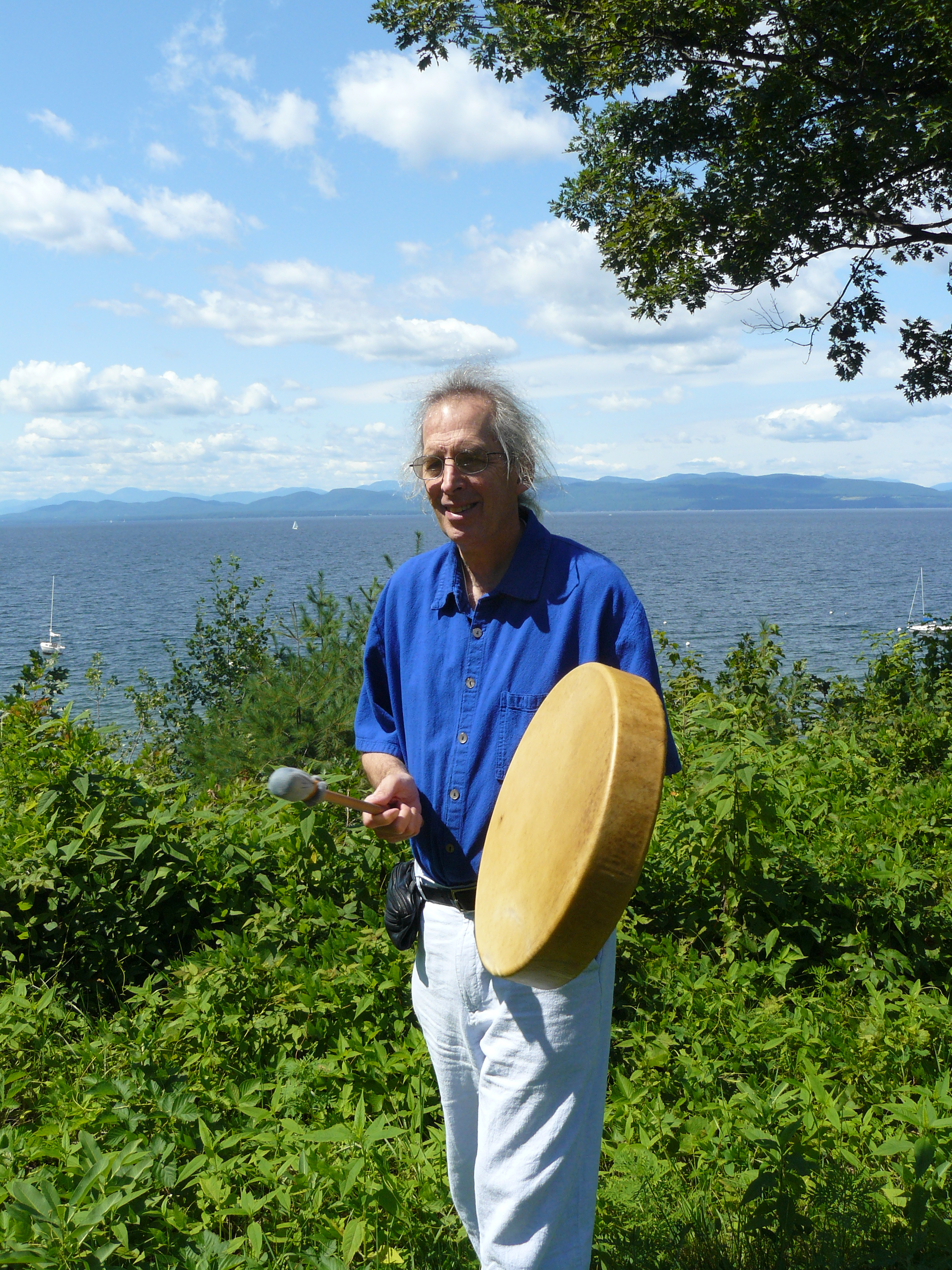
michael drumMICHAEL WATSON, M.A., Ph.D., LCMHC (Dreaming the World) ~ is a contributing editor to Into the Bardo, an essayist and a practitioner of the Shamanic arts, psychotherapist, educator and artist of Native American and European descent. He lives and works in Burlington, Vermont, where he teaches in undergraduate and graduate programs at Burlington College,. He was once Dean of Students there. Recently Michael has been teaching in India and Hong Kong. His experiences are documented on his blog. In childhood he had polio, an event that taught him much about challenge, struggle, isolation, and healing.

Posted in Buddhism, Michael Watson, Shamanism, Spiritual Practice

Spring, Ritual, and the Great Mystery

P1050397When I first began learning the ways of shamanism, more than thirty years ago, my Cherokee teacher used to speak to me about the similarities between Buddhism and Native American thinking. She was particularly fascinated by Tibetan Buddhism, and had traveled to Asia to meet with Tibetan teachers. I was intrigued, but not particularly interested in learning more. I was still trying to sort out my relationship to Native America. Adding Buddhism to the mix was quite simply beyond me.

Recently, I’ve been reading Bringing Zen Home, by Paula Kane Robinson Arai. The book is a marvelous piece of ethnographic writing examining the ways a group of Japanese women use domestic zen practices as healing tools. If one only read the early sections on ritual, the book would be a worthy purchase. Reading Arai’s words reminded me of my first teacher. I imagine she would love the book, especially the author’s focus on gratitude,  joy, kindness, and ritual as sources of connection to All That Is. She would also, I believe, deeply appreciate the discussion of Dogen, and his weaving together of form and formlessness.

This week Nature gave expression to the form/formlessness paradox. A few days ago there were buds on the trees, then in a single day, as if arising from nothing, innumerable umbrels of furled leaf and flower replaced them. The umbrels, in turn, transformed into flowers in full bloom, then immature seeds. Now the trees have largely leafed out; the entire process seemed to occur overnight, a green, fiery, big bang. Engaging Nature’s seasonal changes, we are reminded that the progression of the year is a ritual, encompassing and illuminating the patterns of Self as we unfurl, transform, and perhaps, seek rebirth. Our very lives enact, and reenact, the great patterns of the natural world.

I’ve also been reading Patrisia Gonzales’ Red Medicine: Traditional Indigenous Rites of Birthing and Healing. In this volume Gonzales reminds us that human birth is another expression of the paradox. We know how pregnancy happens, yet the miracle of personhood challenges any simple reductionism. In quite a few Native traditions reincarnation is a given. One just expects those who pass on to be reborn to the family line, often announcing their intent by appearing to their prospective mother in a dream. Life and death are doors through which we pass, nothing more than state changes. Yet we do not know, ultimately, where we come from or whither we go; that remains a Great Mystery, of which we are all, innately, a part.

In their respective books Arai and Gonzales discuss ritual as serving to connect women to the Great Mystery, and in so doing, offering the possibility of an expanded perspective and healing. Their ideas echo those offered me by teachers in Native traditions from both North and South America, although rather than the term, “ritual”, my teachers often utilized “ceremony”.  As a mature practitioner, I encourage those who come to me for healing to create meaningful rituals in their daily lives, to “practice.” I also strongly advocate for ceremony. Like ritual, ceremony seeks to make evident the sacred nature of our lives, to encourage gratitude, and to embody participants in the experience of self as cosmos. When rituals and cerem0ny work, we are transported into an awareness of being part of, and supported by, All That Is. Of the two, perhaps ceremony is more social, often engaging communities in support of those seeking healing.

Reading the work of these thoughtful authors has reminded me of  my first teacher’s wisdom, insight, and clarity. Looking back those many years, I now see her efforts to broaden my perception in a new, more favorable light. I am grateful for her kindness and teachings.

– Michael Watson

© 2013, essay and all photographs include the portrait below, Michael Watson, All rights reserved

michael drumMICHAEL WATSON M.A., Ph.D., LCMHC (Dreaming the World) ~ is a contributing editor to Into the Bardo, an essayist and a practitioner of the Shamanic arts, psychotherapist, educator and artist of Native American and European descent. He lives and works in Burlington, Vermont, where he teaches in undergraduate and graduate programs at Burlington College,. He was once Dean of Students there. Recently Michael has been teaching in India and Hong Kong. His experiences are documented on his blog. In childhood he had polio, an event that taught him much about challenge, struggle, isolation, and healing.

Posted in Essay, Michael Watson

The Past Two Weeks: A View from New England

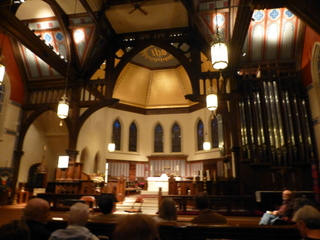
Grace Church, New Bedford, MAThis past weekend we were visiting family in southeastern Massachusetts, and decided to attend a concert by the virtuoso classical guitarist, Eliot Fisk and friends. The concert was staged in the magnificent Grace Episcopal Church in New Bedford. As we listened to music ranging over several centuries, I found my mind wandering far and wide.

Earlier in the day we had received a phone call from a woman who had run the Boston Marathon and now was preparing for another. She was feeling fearful and becoming increasingly hesitant to run. Could she come in and speak to one of us, maybe get some help sorting out her anxiety? We set a time to meet and went on with our day.

The prior couple of weeks had been quite difficult. We have family and adult children living, or going to school, in Boston. On the day of the Boston Marathon I went in to work as usual. Late in the day a client came in and told me his wife had called and said there had been a bombing at the Marathon. We turned on the office computer and looked at the news feed. At that point, there was a fire at the Kennedy Library as well as reports of possible new bomb blasts, and rumors that additional devices had been found. I explained to my client I have family in Boston, picked up the phone, and called home. Everyone was safe and accounted for. I then called my daughter who lives in the Midwest and reassured her we were all safe. Only then did we settle into the routine of our therapy session.

That session was unique in all my years of practice. I spoke about how surprised I was that I called home instead of forcing myself to wait til after the session. He spoke to feeling remorse at being the bearer of bad news. I expressed my gratitude to him for sharing the news and for being generous in allowing me to check on the safety of my family, and for simply being another human presence in a difficult moment. Together we shared our experience of living in a world where people harm one another in the service of ideology.

On Wednesday I got together with a group of old friends. Naturally, the conversation turned to the week’s events. I spoke about imagining I understood some small part of the anger and hopelessness of the two brothers accused of the bombings. I added I thought they were probably doing their best and we could detest their actions and still hold on to the brothers’ humanity. Perhaps we are all doing as we are able, and sharing, ultimately, a common bond and fate. None of this went over well.

Then came Friday, and New England was back in the middle of terror and chaos. We were hosting Bangladeshi friends who were visiting the U.S. for the first time. I was up early, turned on the radio, and was greeted by reports of shootouts and bombs, again in Boston. One of my stepsons posted to Facebook that his street was blocked off, police were everywhere, and the neighborhood was in lockdown. Once again we were on the phone to Boston and the Midwest; our family members were safe, at least for the moment.

When our Bangladeshi friends awoke and came downstairs (they had luxuriated in long, hot showers, so different from the cold showers available to them at home), we explained the situation to them. They spoke to their compassion for our plight, and told us about one day, a few years ago, when Bangladesh had suffered 400 separate blasts. By early afternoon it was apparent the situation in Boston was under relative control, so we drove up to the mountains where our friends met snow for the first time. They proceeded to frolic, build snow people, and have a snowball fight, all in near 80 degree weather. The next day was cold and windy and we built a fire in the wood stove…… Welcome to Vermont in April!

All this came back as I sat in the enormous vaulted church, surrounded by family and and friends, listening to a remarkable concert drawn from the Western canon. A reception P1050301followed the concert, but we went straight home. Although it was late (the concert lasted well over two hours), the Red Sox were still playing, and winning to boot! It was then, sitting in the family kitchen, surrounded by loved ones, drinking late night decaf cappuccinos, that I finally grasped the healing, normalizing power of baseball.

Sunday we drove home via Boston where we visited more family. The world was abloom, and the streets were filled with happy, playful people. Surprisingly we spoke very little about the events of the proceeding two weeks, other than brief recaps of how folks spent their time during the lockdowns, or decided not to attend the Marathon. Rather, we spoke about the tenacity and resilience of the people of Boston. I guess we should not have been surprised at their resiliency, given their decades of loving support of the Red Sox prior to 2004.

– Michael Watson

© 2013, essay and all photographs include the portrait below, Michael Watson, All rights reserved

michael drumMICHAEL WATSON M.A., Ph.D., LCMHC (Dreaming the World) ~ is a contributing editor to Into the Bardo, an essayist and a practitioner of the Shamanic arts, psychotherapist, educator and artist of Native American and European descent. He lives and works in Burlington, Vermont, where he teaches in undergraduate and graduate programs at Burlington College,. He was once Dean of Students there. Recently Michael has been teaching in India and Hong Kong. His experiences are documented on his blog. In childhood he had polio, an event that taught him much about challenge, struggle, isolation, and healing.