Posted in Essay, Jamie Dedes

ELDER POWER: Growing Strong in Broken Places

ELDER POWER:

Growing Strong in Broken Places

by

Jamie Dedes

Authors, like coins, grow dear as they grow old; It is the rust we value, not the gold. – Alexander Pope

Originally published in the now defunct California Woman.

I come to this place of Elder Power through the experience of a chronic, potentially life-threatening illness. Illness is many things. It is a mentor, not chosen, not welcome, but a mentor nonetheless. It is a challenge that often breaks the bonds of affection, the temper of the spine, and the sharpness of the mind. It is a reminder to everyone involved of his or her fragility and mortality. Everyone is touched: family, friends, and colleagues. Everyone is changed and the good or ill of it is largely choice

My family and friends want me to help others by writing from a more clinical perspective, but it seems to me that the clinical lessons are less important than the life lessons. It is the life lessons that give us the strength to keep going, that are the true value to be shared, and that make us elders. To me “elder” implies more than “senior” or “senior citizen,” which I see as demographic terms for people who have reached retirement age. A senior is someone who has merely put in time, while elder is about attitude and state of mind. Elder implies one who has learned a few things along the way.

As a writer, it is the life lessons, not the clinical ones, which inspire and inform my work. I have learned, for example, that all humans are in process and therefore imperfect; and that, no matter what our differences are, the most important things are to remain open to communication and to accept and release our own follies and those of others. I have learned that neither illness nor threat of death preclude joy. I have learned that people who are joyful rarely do harm to themselves or others. I have learned that fear of death has to be directly addressed and then firmly put aside in favor of the business of living. As the saying goes: “It’s not over until it’s over.” Until then, we have responsibilities to others and ourselves. The only real difference between someone who has a life- threatening illness and someone who doesn’t is that the former is no longer in denial.

“If people bring so much courage to this world, “ wrote Hemingway in A Farewell to Arms, “the world has to kill them to break them. The world beaks everyone, and afterward, many are strong at the broken places. But those that will not break, it kills. It kills the very good and the very brave and the very gentle impartially. If you are none of these it will kill you too but there will be no special hurry.”

I am not good, or brave, or particularly gentle. Sometimes I let it all get me down. I descend into fear. I am impatient with process, with taking meds and going for seemingly endless tests and doctors’ appointments. Maybe that’s why I’ve outlived my original expiration date by ten years. My mother used to say, “Only the good die young.” My best quality may be that under my protective shell of intractability, I actually am willing to be broken and reformed. I suppose only time will tell if I have grown “strong at the broken places.”

So, here I stand, after twelve years of battle, at the dawn of a bright new day in a body that is now significantly disabled and quite a bit older. It’s still a good morning and a good body. I recognize I once dealt with a worse handicap than my current disabilities. That handicap is commonly referred to as “youth.” I survived. Maturity on the other hand is a true boon, a gift to savor and enjoy with layers of luxurious nuance I had not anticipated. I do not long for my youth. I love my graying hair. I love my wrinkles and the loose skin on my neck. I love the mild deformity of my feet. These things remind me that I am still here after all. I will not dye my hair, though I have. I will not get chemical injections or cosmetic surgery. I will not use rejuvenating grooming products that have been tested on defenseless animals. I am inspired by civil-rights-era African-Americans who sported Afros, said essentially “this is who we are and what we look like,” and chanted “black is beautiful.” I am graying. I am wrinkled. It’s all lovely and lyrical and makes me smile. It’s about ripeness, not rottenness. It’s honesty: what you see is what you get. Aging is beautiful. With maturity, one finds character refined and perspective broadened, energy expands and compassion flowers. The experience of joy comes more easily.

As survivors, we owe it to those who have gone on, to live in gratitude for this gift of a long life. How ungrateful and what an insult it is to them for us to bemoan our maturity and yearn for our youth as we so often do. What an incredible waste of time and energy such yearning is. Many don’t survive childhood in their impoverished and war-torn areas. Some others don’t survive childhood due to congenital or other diseases. My sister died by her own hand when she was twenty-seven. I have a wonderful, talented, smart friend in her mid-thirties who will pass within three months from this writing. Like you, I have relatives and friends who didn’t make it to fifty, much less sixty or seventy. All things considered, aging is a gift not a curse.

Some of our power comes from our sheer numbers. I read somewhere that we are some six hundred million strong worldwide. In each of our countries, we represent a huge political constituency, a lucrative market, and an enormous fount of energy, experience, and expertise. If that isn’t power in this modern world, what is? What a force for peace we could be. Some of our power comes from consciousness. We are awake now. We have learned how to live in the moment and how to live joyfully, hugely. That alone is a lesson to share. Some of our power comes from more time and focus. Many of us are retired or semi- retired or on disability, or soon will be. Implicit in that is the time to keep abreast of issues in our communities, countries, and our world. We can take the time and make the effort to get accurate information, to analyze carefully, and to share appropriately; that is, in a well considered, non-inflammatory, non-sensational manner. We can act with grit and grace.

Let us show that we are strong in the broken places. Let those of us who have this gift of long life seize on it and ply our elder power. Let’s live with joy, do good, and have fun. Most of all let us be generous with our love. Soon enough, when the time is ripe, our bodies will return to the earth. Our spirits will go wherever spirits go. The river of earthly life will continue to flow. Our children will see us reflected in the eyes of their children. Our grandchildren will strain to hear our voices in rustling leaves and breezes that whisper to them in the night. They will seek us out in moonlight and the warmth of the sun, in the roar of the oceans and the gentle meandering of a lazy brook. They will find us in the good earth and in the good hearts of the lives we’ve touched with concern and compassion.

© 2009  photo and essay, Jamie Dedes All rights reserved
Posted in Essay, Jamie Dedes

TIMES OF WAR, CHANCE FOR PEACE

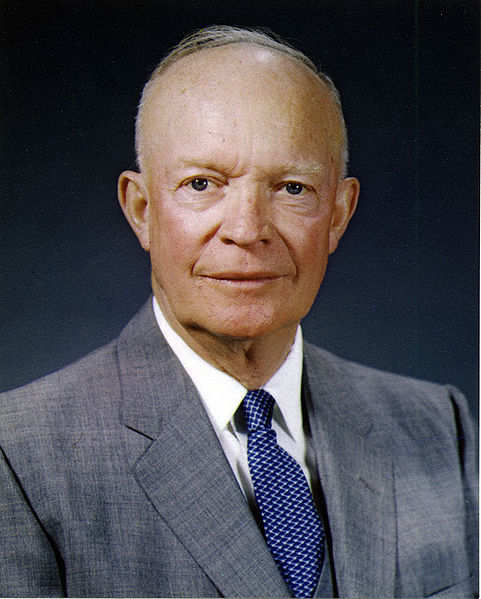
DWIGHT D. EISENHOWER (1890-1969)

34TH PRESIDENT OF THE UNITED STATES

In office 1953 -1961

TIMES OF WAR, CHANCE FOR PEACE

by

Jamie Dedes

“Every gun that is made, every warship launched, every rocket fired, signifies in the final sense a theft from those who hunger and are not fed, those who are cold and not clothed … “ Dwight D. Eisenhower, 34th President of the United States of American (1953-1961)

That quote is from Eisenhower’s speech, A Chance for Peace, delivered in 1953 three months after he took office and on the occasion of the death of Joseph Stalin, Premier of the Soviet Union (1941 to 1953). The “just peace” that the world hoped for in 1945 at the end of World War II had not materialized. While the Korean War was coming to a close, the Cold War-era military conflicts in Indochina (Vietnam, Laos, and Cambodia) were slowly escalating. The United States would have advisory troops in Vietnam in 1954. The armed conflict in that region of the world would continue long past Eisenhower’s administration with U.S. involvement escalating in the 1960s and continuing until the Fall of Saigon in 1975.

Since the end of the Second World War and the Korean War, violent conflict continues unabated with thirteen wars (defined as 1,000 or more deaths per year) currently, including the War in Afghanistan and the Yemeni and Syrian uprisings of 2011. Smaller scale conflicts resulting in fewer than 1,000 deaths per year have been rife and in 2011 include the Sudan-SPLM-N conflict, the Yemeni al-Qaeda crackdown, and the 2011 clashes in Southern Sudan. Genocides didn’t end either. We’ve had eight genocides since the Holocaust of WWII. The number of rebel groups is now over one-hundred, which probably errs on the light side. Conflicts rise from economic and social instability, which could be addressed if we invested in butter, not guns. Even in 1953, Eisenhower pointed out that war isn’t sustainable:

This world in arms is not spending money alone.

It is spending the sweat of its laborers, the genius of its scientists, the hopes of its children.

The cost of one modern heavy bomber is this: a modern brick school in more than 30 cities.

It is two electric power plants, each serving a town of 60,000 population. It is two fine, fully equipped hospitals.

It is some fifty miles of concrete pavement.

We pay for a single fighter plane with a half million bushels of wheat.

We pay for a single destroyer with new homes that could have housed more than 8,000 people.

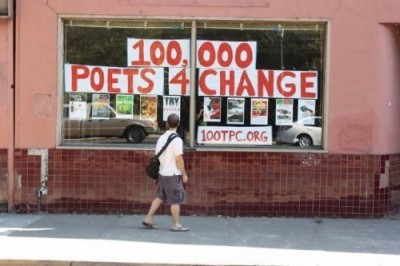
If governments don’t recognize that Earth and her people cannot be sustained by war, many of their citizens do. One modern peaceful protest for a sustainable world is of interest to all of us who read, write, and love both poetry and peace. It is 100 Thousand Poets for Change, which held its first world-wide rally on September 24, 2011 with 700 events in 550 cities representing 95 participating countries united to promote peaceful environmental, social, and political change. Poets, writers, artists, musicians, and photographers the world over demonstrated in solidarity. The next global event is scheduled for September 29, 2012. Throughout the year small, local events are delivered at a various venues. By invitation, 100 Thousand Poets for Change was at the Sharjah (an Arab Emirate) International Book Fair, which ran through November 27.  MujeebJaihoon reports, “From time immemorial, poetry has built better bridges between people than those with bricks and stones. And these bridges do not get old or obsolete…” [Change Is Born in the Womb of Poetry]

In A Chance for Peace Eisenhower pointed out, “No people on earth can be held, as a people, to be an enemy, for all humanity shares the common hunger for peace and fellowship and justice.” We do hunger, individually and collectively. Perhaps our chance for peace starts with you and me. Poem on …

© 2011 essay, Jamie Dedes All rights reserved

The photograph of Eisenhower is in the public domain

Posted in Jamie Dedes

HUG A COW, GIVE A PIG A TUMMY RUB, SNUGGLE WITH A TURKEY

SANCTUARY

by

Jamie Dedes

” ‘SOPHIE is a goat whose taste in books leans toward popular best sellers’, says Solana Mejia-Schnaufer, who reads aloud to her several times a week. ‘I know she likes The Hunger Games because she didn’t try to eat it. That wasn’t true of Animal Liberation.’ ” So begins a November 1 New York Times article that I linked through to this morning through gratefulness.org. The article is about The Gentle Barn, which gives sanctuary to abused and abandoned animals and healing gifts to worn and wounded humans. It is also the story of hope and healing for Solana, a woman previously inclined toward suicide.

A little early day research reveals that The Gentle Barn, founded by Ellie Laks in 1999 who runs it along with her husband, combines the best human values of compassion and stewardship, going beyond sanctuary for animals to provide profound and moving healing experiences for special-needs kids and grown-ups. The children include those in foster care and inner city youth on drugs, on probation, or in gangs. The adults suffer from emotional disorders and/or physical ones.

To read the inspiring stories of the animals and people helped at The Gentle Barn, link to the website HERE and the YouTube channel HERE. The sanctuary is open to the general public on Sundays and the admission is just $5 to help feed the animals. For many reasons, it’s unlikely that I’ll find myself in Southern California; but, if I did, I’d head straight for Santa Clarita and The Gentle Barn and, as Ellie Laks says, I’d “hug a cow, give a pig a tummy rub, and snuggle with a turkey.”

Here is a video about the rescue of a cow and calf. Grab your box of tissues …

© 2011, Jamie Dedes, all rights reserved

Photo credit ~ morgueFile

Video upload to YouTube by   

Posted in Jamie Dedes, Poems/Poetry

DREAMING OF THE SHEIK

I’m the Sheik of Araby,

Your love belongs to me.

At night when you’re asleep

Into your tent I’ll creep.

The Sheik of Araby, lyrics by Harry B. Smith and Francis Wheeler, music by Ted Snyder, written in 1921 in response to the popularity of Rudolph Valentino and the movie The Sheik.

·

DREAMING OF THE SHEIK

by

Jamie Dedes

·

Oh yes, I’d say she’s about seven in that picture

Blue-black hair, curls bursting and tied with string

Hands folded neatly, one little foot turned in

·

With dark doe eyes staring at the waiting world

Long lashed and bright with hope and longing

What future did those clear sparkling eyes behold

·

What music played the strings of that young heart

She must have dreamt of men and marriage,

Well, she would assume love as young people do

·

Some standard dreams maybe, the house with

A white porch and rocker, a picket fence and

A back yard of rich dark earth, flowers and fruit

·

Sweet children would be a part of this fairy-dream

Roses for birthdays, lilies at Easter, and garland in May

Christmas trees and mistletoe and other such …

·

As she watered rubby beets and greens on the fire escape

And helped her mother with chores and siblings

No doubt she dreamed dreams gifted by movies, magazines

·

As she tied her worn boots, getting ready for school,

Smoothing her hand-me-down dress, then running

Down the steps and on through the slums …

·

She must have dreamed then of ocean mists and

Fresh air, streets with trees and well-groomed homes

And well-polished horseless-carriages for transit

·

When she grew old enough did she wait hopeful

On well-worn curbs under jaundiced street lights

A ghetto-bound Diana waiting for her handsome Sheik

·

And he, the Sheik looking for his Sheba, did he find her

Did he take her hand as she stood lovely, innocent

And did he soon leave her only to be followed by another

·

Did each Sheik stay long enough to steal her heart

And riding off take another piece of her, a souvenir

Of yearning and promise, love and gullibility …

·

Is that why she lies here now, eyes grown pale, heart empty

And a silent wail rising from the sacred depths of her being

“The movies and the magazines”, she says, “they lied …”

Then whispered softly: “When Valentino died, women

lined the streets for his funeral cortége and cried  … “

·

Rudolf Valentino as the Sheik and Agnes Ayers as Lady Diana.

“Women are not in love with me but with the picture of me on the screen. I am merely the canvas on which women paint their dreams. ”
Rudolph Valentino – 1923

Video posted to YouTube by tengirlsag

© 2009, 2010, 2011 Jamie Dedes, All rights reserved

Posted in Jamie Dedes, Poems/Poetry

HEARTS UNDER LOCK AND KEY

I wait until I hear a gate latch lift
the turn of key in lock.
I sit amongst toys and unwashed clothes,
I sit and she fingers the beads until you speak
in a voice that no longer seems familiar, only strange.
I turn as our child tugs at the string.
I hear a snap and a sound like falling rain.
The Albatross, Kate BassThe Pasta Maker
·
HEARTS UNDER LOCK AND KEY
·
by
·
Jamie Dedes
·
I really wanted
to speak to you of this:
the love I had wild
and so long ago
that now it’s dry
parched like a river
·
Once it was a love moist
as a green spring rain
delicate as snow
prolific as a poet
I gave you my love
a sweetly tender thing
·
a well-written poem
on twenty-pound linen
You handed love back
wrinkled and torn
and nicotine stained
smelling of whiskey
·
I handed you love
on our white wedding day
when you kept your heart
under lock and key
and your eyes wouldn’t
seek mine at the rail
·
I gave love to you
in the palms of our child
you brushed his sweet face
and flew away to
lose yourself in a
gold land with gold girls
·
Now I too keep my heart
safe under lock and key
and heavy the lock is
closed so tight with rust
and no hope in sight
no hope wanted
·
© 2010, 2011, Jamie Dedes, All rights reserved
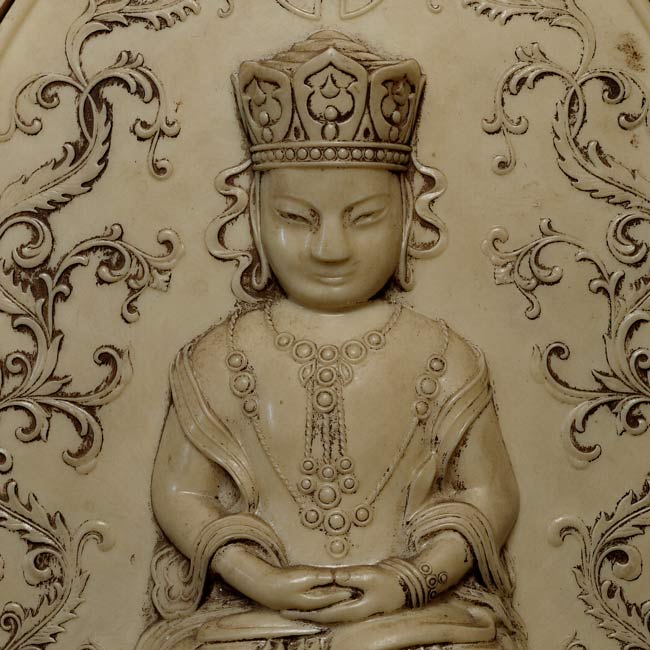
Photo credit ~ © 2010, 2011, All rights reserved, Barb Stone, The List of Buddha Lists


Posted in Film/Documentaries/Reviews, Jamie Dedes

TRADING IN TRASH: garbage collecting, growing up, and multi-nationals in Egypt

Video posted to YouTube by massify.

Documentaries about impoverished communities around the globe — in Latin America, Africa and Asia — feature heart wrenching images of children picking their way through garbage dumps to gather food to eat or material goods to sell. But nothing quite compares to the story of Cairo‘s Zaballeen, a community of Egyptian Coptic Christians who have for generations survived by scouring their city for trash, carting it off to their ‘garbage neighborhood’ and recycling it. MORE [About.com Documentaries]
·
TRADING IN TRASH
documentary review
posted by Jamie Dedes (Musing by Moonlight)
·
The short story: Given the stunning events in Egypt over much of the past year, it seems appropriate to cover this documentary film that illustrates life for one of Egypt’s minority groups. GARBAGE DREAMS follows three teenage boys born into the trash trade and growing up in the world’s largest garbage village, on the outskirts of Cairo. It is home to 60,000 Zaballeen (or Zabbaleen), the Arabic for “garbage people.” Far ahead of any modern “Green” initiatives, the Zaballeen survive by recycling 80% of the garbage they collect.  Face to face with the globalization of their trade, each of the teenage boys is forced to make choices that will impact his future and the survival of his community. Released in 2009, the list of screening venues around the world is HERE.
A Donkey at Moqattam Hill in Cairo
courtesy of Matthias Feilhauer under the Creative Commons Attribution-ShareAlike 3.0 License via Wikipedia.
A Group of Boys at Moqattam Village
courtesy of Ayoung ShinAyoung0131 licensed under the Creative Commons Attribution-ShareAlike 3.0 License via Wikipedia.
·
Expertly weaving personal fears, family tensions and political action, GARBAGE DREAMS records the tremblings of a culture at a crossroads. Jeannette Casoulis, New York Times.
·
Courtesy of Iskander Films, Inc. under the Creative Commons Attribution-Share Alike 3.0 Unported license.

Stunning debut . . . Tech credits are aces. As fascinating as [Iskander’s] anthological revelations are, it’s her lensing that grants her subjects immense dignity (they never appear “other” in their poverty) and her film its curious beauty. Ronnie Scheib, Variety

With a population of 18 million, Cairo, the largest city in the Middle East and Africa, has no sanitation service. For generations, the city’s residents have relied on 60,000 Zaballeen, or “garbage people,” to pick up their trash. The Zaballeen collect over 3,000 tons a day of garbage and bring it back to their “garbage village,” the world’s most effective and successful recycling program.

Paid only a minimal amount by residents for their garbage collection services, the Zaballeen survive by recycling. They have transformed Mokattam, their garbage neighborhood, into a busy recycling and trading enclave. Plastic granulators, cloth-grinders and paper and cardboard compacters hum constantly. While Western cities would boast of a 30% recycling rate, the Zaballeen recycle 80% of all the waste they collect.

The Zaballeen, who mostly belong to Egypt’s minority Coptic Christian community, were originally poor and illiterate farm laborers. Driven out of the rural south due to a lack of work, these disadvantaged farmers saw Cairo’s trash as an economic opportunity. They have created a recycling model that costs the state nothing, recycles so much waste and employs tens of thousands of Cairo’s poorest.

The Zaballeen earn little, but in a country where almost half of the population survives on less than $2 a day, it is a livelihood. Or has been.

In 2005, following the international trend to privatize services, the city of Cairo sold $50 million in annual contracts to three private companies (two from Italy and one from Spain) to pick up Cairo’s garbage. Their giant waste trucks line the streets, but they are contractually obligated to recycle only 20% of what they collect, leaving the rest to rot in giant landfills. As foreign workers came in with waste trucks and began carting garbage to nearby landfills, 60,000 Zaballeen saw their way of life disappearing.

Laila, the teacher at The Recycling School, the garbage village’s local school, sighs with despair, “They don’t see that we are poor people living off of trash. What are we suppose to do now?”

An evocative examination of the clash between tradition and modernism . . . Championed by Oscar winner Al Gore and the spur for a million-dollar donation by the Bill and Melinda Gates Foundation, ‘Garbage’ could ride its sociological importance to Oscar recognition. Andrew Schenker, Village Voice

Two thumbs up on this one. See it if you can …

Video posted to YouTube by garbagedreams.
Related Articles
Posted in Essay, Jamie Dedes

POET ACTIVISTS IN SOLIDARITY


“From time immemorial, poetry has built better bridges between people than those with bricks and stones. And these bridges do not get old or obsolete … ” [Change Is Born in the Womb of Poetry]  MujeebJaihoon


POET ACTIVISTS IN SOLIDARITY

by

Jamie Dedes

After much resistance, I finally joined Facebook under my name HERE and created a page for Into the Bardo HERE. Facebook is yet another something that can consume too much time, but it’s also a gold mine of information and introductions to talented, responsible folks from around the world. Through poet-Friend connections I recently received an invitation to participate in:

100 THOUSAND POETS OF THE WORLD (100 Thousand Poets for Change) – This puts me in mind of Sam Hamill‘s Poets Against the War, when hundreds of poets marched and read outside the White House in protest against the war in Iraq. That was a well-defined effort. In this case the first question that comes to mind is “What kind of change?” 

The first order of change is for poets, writers, artists, anybody, to actually get together to create and perform, educate and demonstrate, simultaneously, with other communities around the world. This will change how we see our local community and the global community. We have all become incredibly alienated in recent years. We hardly know our neighbors down the street let alone our creative allies who live and share our concerns in other countries. We need to feel this kind of global solidarity. I think it will be empowering.  Excerpt from the press release of March 2011 announcing the the first 100 Poets for Change global event that was held on September 24, 2011. The next global event is scheduled for September 29, 2012.

100 Thousand Poets for Change is a unified effort among activist poets, artists, photographers, and musicians working toward a sustainable world through simultaneous events held across the globe, basically consciousness raising and peaceful protest. This September under the umbrella of  100 Thousand Poets for Change, 700 events were held in 550 cities representing 95 participating countries united to promote environmental, social, and political change. That’s pretty amazing and down-right gratifying. 100 Thousand Poets for Change is not getting the press that the Occupy movement is getting, but it is striking by virtue of its size, support, and sustainability.

Bob Holman and Margery Snyder, in an article on About.com said, “the beauty of the concept of 100 Thousand Poets for Change is that it is completely decentralized and completely inclusive.”  All those involved are hoping, through their actions and events, to seize and redirect the political and social dialogue of the day and turn the narrative of civilization towards peace and sustainability.

Throughout the year, there are also small local events. Even as you read here today, the Sharjah International Book Fair is in progress will run  through November 27. 100 Thousand Poets for Change was invited to participate and is actively doing so.

If this effort sounds like something that interests you as a poet and/or citizen of the world, check out the website HERE.

POETS AGAINST THE WAR started in 2003 by Sam Hamill is now defunct, but all the poems have been placed in a university archive. I was honored to find that two of mine are included. Sadly the web domain has been assumed by others for advertising. However, there is a bound collection of some of the original poems, Sam Hamill, Poets Against the War.

Δ

AUDRE LORDE (1934 – 1992)

Caribbean-American poet, writer, activist

trying to make power out of hatred and destruction

trying to heal my dying son with kisses

Power by Audre Lorde, The Collected Poems of Audre Lorde

NOTABLE AND QUOTABLE

“[Poetry begins] that process by which we insure the future because we know so much more than we understand. We must first examine our feelings for questions, because all the rest has been programmed. We have been taught how to understand, and in terms that will insure not creativity, but the status quo. If we are looking for something which is new and something which is vital, we must look first into the chaos within ourselves. That will help us in the directions that we need to go–that’s why our poetry is so essential, is so vital. Now whether poetry has the responsibility to effect social change . . . it doesn’t really matter. As we get in touch with the things that we feel are intolerable, in our lives, they become more and more intolerable. If we just once dealt with how much we hate most of what we do, there would be no holding us back from changing it. This is true with any kind of movement. This is the way in which the philosopher/Queen, the poet-warrior leads.” Audra Lorde in an interview Karla Hammond, American Poetry Review, March-April 1980

©  Jamie Dedes, 2011 All rights reserved

photo credit ~ Audra Lorde (1980) by K. Kendall via Wikipedia and licensed under Creative Commons Attribution 2.0 Generic.

Posted in Essay, Jamie Dedes

CHRISTOPHER HITCHINS: Life, Death, and Deathbed Conversions

CHRISTOPHER HITCHINS (b. 1949)

English-American journalist and author

In the course of a forty-year career, Christopher Hitchins, famous (or notorious, depending on your view) for his atheism has dismayed a lot of believers of one persuasion or another. Last year he was diagnosed with a terminal cancer. Many have wondered if on his deathbed he would become an eleventh-hour convert. Here in an interview with CNN’s Anderson Cooper, Hitchens discusses his thoughts and feelings about life and death. It’s an interesting addition to the on-again off-again discussions on this blog of illness, dying, and death. I found two things particularly striking: 1.) Hitchins willingness to accept culpability for his illness as a result of his chosen life-style, which included cigarettes and alcohol. 2.) Hitchins’ mother committed suicide and Cooper’s brother did. The two men agreed that there’s no closure. Having had a suicide in own family, I find I agree with them.  Jamie Dedes

If you click on the video, it will take you to YouTube where you can view it.

Photo credit ~ Christopher Hitchens by Omaraty009 via Wikipedia under the Creative Commons Attritution-Share Alike 3.0 Unported license.

Video uploaded to YouTube by 

Posted in Jamie Dedes, Poems/Poetry

SOUL’S WINTER

In my coat I sit

At the window sill

Wintering with the snow …

The Dead of Winter by Samuel Menashe in Samuel Menashe: New and Selected Poems

·

MY SOUL’S WINTER

by

Jamie Dedes

soul’s winter with days like secret lights

like eels slithering in the depths of the sea

with vague interests and a fathomless eye

stilled by a gray groping arctic freeze into

thinking of what-fors, whys, then howling

and waking up in spring with the hope of

answers in the hint of fresh green summer

·

© poem, Jamie Dedes, 2011 All rights reserved

Photo credit ~ morgueFile

Posted in Jamie Dedes, Poems/Poetry

BEGGING BOWL

·

The begging bowl is a symbol of receptivity and of acceptance, a parable of the soul.

·

BEGGING BOWL

by

Jamie Dedes

a bell pealing from a tower

a bird singing in the evergreen

the monks at the forest edge

these we are, speaking to the wind

sighing to night’s great indigo sky

holding out our begging bowls

to be filled with bee and bud

the alms of our noon-hours

·

·

Photo credit ~ Vintage Old Monk (China) with begging bowl courtesy of The Buddha Gallery

Poem by Jamie Dedes, copyright 2011, all rights reserved

Posted in Jamie Dedes, Uncategorized

HAPPY DIWALI!

File:Oil lamp on rangoli.jpg

Burning oil lamp on a colourful rangoli designed on Diwali courtesy of Rangoli under the Creative Commons Attribution-Share Alike 2.0 Generic license.

October 26, 2011

Deepavali (also spelled Divali in few countries) or Diwali, popularly known as the festival of lights, is an important five-day festival inHinduismJainism, and Sikhism, occurring between mid-October and mid-November. For Hindus, Diwali is the most important festival of the year and is celebrated in families by performing traditional activities together in their homes. Deepavali is an official holiday in India,NepalSri LankaMyanmarMauritiusGuyanaTrinidad & TobagoSurinameMalaysiaSingapore, and Fiji.

The name Diwali is itself a contraction of the word “Deepavali” (Sanskrit: दीपावली Dīpāvalī), which translates into row of lamps. Diwali involves the lighting of small clay lamps (diyas, or dīpa in Sanskrit: दीप) filled with oil to signify the triumph of good over evil. During Diwali, all the celebrants wear new clothes and share sweets and snacks with family members and friends. Most Indian business communities begin the financial year on the first day of Diwali. MORE

HAPPY DIWALI TO THOSE DEAR FRIENDS WHO ARE CELEBRATING

THEIR FESTIVAL OF LIGHTS, THEIR VICTORIES OF GOOD OVER EVIL.

Posted in Essay, Jamie Dedes

THE MELLOW FRUITFULNESS OF FALL

THE MELLOW FRUITFULNESS OF FALL

by

Jamie Dedes

SEASON of mists and mellow fruitfulness, 
        Close bosom-friend of the maturing sun; 
    Conspiring with him how to load and bless 
        With fruit the vines that round the thatch-eves run…

To Autumn by John Keats (1795-1821), English poet, Romanic Movement

Autumn, transition between sultry summer and tempestuous winter, is a time to honor the dead, count and celebrate the harvest, and give thanks. The diverse peoples of the Northern Hemisphere indulge in family fun, feasting, crafts fairs, parades, and fine arts. Among the earliest celebrations are the Jewish Yom Kippur and Rosh Hashanah, closely followed by Succot, the Feast of the Tabernacles. Originally the feasts were literally in tabernacles (huts). Now venerated around the family table, there’s the typical holiday scramble to assemble and prepare traditional foods: challah bread, gifilte fish or a roasted chicken, and apple cake or oatmeal cookies for dessert.

Harvest Moon, the first full moon before the fall equinox, presents another excuse to party. At communities, like Callaway Gardens in Georgia (U.S.A.), folks watch college football, take horticulture tours, and go cycling.  Falling Leaf Moon is next, when the veil between the worlds of the living and dead is said to be thinnest. Celebrated by Pagans and Wiccans, it’s considered a ripe moment to gather for séance.

On the heals of Falling Leaf Moon is Halloween and all things spine-tingling. Special events at places like Carisbrooke Castle and Pendennis Castle in England – where the gothic and ghostly meet – offer visitors historic tours, spine-tingling walks, and spooky tales. It all harks back to the earlier times that birthed today’s foods, feasts, and falderal.

Dia de Todos los Santos (Day of All Saints) and Dia de los Muertos (Day of the Dead) are honored in Central and South America with customs that represent a melding of cultures, American and European. Feasting is the order of the day: suckling pig and tamales. There’s music and prayers, picnics held at graveyards, and tables decorated with candles, photographs of deceased relatives and friends, and T’ant’a Wawas (bread figurines for the Day of All Saints).

T’ant’a  Wawas

It would seem we humans – no matter the culture – like to celebrate our gratitude by feasting on the wealth of our harvest. In North America the big event of the season is Thanksgiving, a holiday that falls in early October in Canada and late November in the States. Major crops in North America include pumpkin, corn, potatoes, nuts, apples, and wheat, all ingredients for dinners of roasted and stuffed turkey, corn on the cob, mashed potatoes and gravy, and pumpkin or apple pie. Happy kitchen chatter and clatter and the scents of cinnamon, cardamom, and sage fill the air.

Cities everywhere have parades, but the Macy’s Thanksgiving Day Parade in New York has a long history. It started in 1824 when immigrant workers wanted a festival like the ones they enjoyed in Europe. Today the parade is an exciting oversized event with mega-stars from television, Broadway and Hollywood and mega-sized balloons and floats. Forty-four million view it on TV.

Like the trade gatherings of the original peoples (Native Americans), crafters fairs are held at large event centers where crafters sell their handcrafted foods, household items, jewelry, and toys. These visually sensual treats arrive just in time for holiday decorating and gift giving. Often the fairs include musical entertainments, story-telling, and crafts classes as well.

A wealth of entertainment is offered everywhere: but Paris is queen, honoring autumn with theatre, music, dance and the visual arts at the Festival d’Automne à Paris that runs the length of the season, September through December.

Wherever the eye travels this season the décor, natural or inspired by nature, is bright, rich, and rustic. Public and private places are decorated with gourds, spiny ears of wheat, scarecrows, and leaves turned orange, red, and gold. Though autumn’s common denominator is the celebration of abundant crops, that abundance is excelled by the diversity of the dishes, peoples, and landscape across the Northern Hemisphere.

The links on challah bread and T’ant’a Wawas are to recipes

·

© essay, Jamie Dedes, 2011 all rights reserved

basket of apples/photo credit ~ morgueFile

T’ant’a  Wawas/photo credit  ~ The Global Gourmet

Posted in Book/Magazine Reviews, Jamie Dedes

NINE GATES: ENTERING THE MIND OF POETRY

NINE GATES: ENTERING THE MIND OF POETRY

by Jane Hirshfield (b. 1953, American) author and poet

Review by: Jamie Dedes (Musing by Moonlight)


An award-winning author and poet, Jane Hirshfield has published seven collections of poetry in addition to  Nine Gates: Entering the Mind of Poetry, a collection of essays. Her most recent book of poetry is Come, Thief (August 2011). In collaboration with Mariko Aratoni, Hirshfield edited and translated four volumes of poetry by women of ancient Japan.

Ms. Hirshfield is a Zen Buddhist and her practice informs her work with spiritual insight and delicate nuance.  She has said, “It is my hope that the experience of that practice underlies and informs [my poetry] as a whole. My feeling is that the paths of poetry and of meditation are closely linked – one is an attentiveness and awareness that exists in language, the other an attentiveness and awareness that exists in silence, but each is a way to attempt to penetrate experience thoroughly, to its core.” [The Poetry Foundation]

Nine Gates: Entering the Mind of Poetry (September 1998) is a series of nine essays that were written by Jane Hirshfield over a ten-year period and published or presented at poetry events.

*****

Gates are a means of exit and entrance, providing connection between the inner and the outer.  The premise of Hirshfield’s book is that the art of poetry is the gate by which we are offered  “mysterious informing.” Nine Gates is at once a primer for the reader and a manual for the writer. This is a book that is reverent of art, artist, and life. All is sacred ground.

The book begins at the beginning – the root of poetry – concentration.  “By concentration, I mean a particular state of awareness: penetrating, unified, and focused, yet also permeable and open.” As she says, this is Huxley’s “doors to perception” and James Joyce’s “epiphany.”  It is what I would call sacred space, and this focus, this concentration, “however laborious, becomes a labor of love.” In this chapter, I particularly appreciated the short discussion of voice: writers whose ear is turned to both the inner and outer have found their voice and thus are able to put their  ”unique and recognizable stamp” upon their work.

The book closes with “Writing and the Threshold Life” and a discussion of the space into which a writer withdraws, liminal space.  The writer, she tells us, becomes like the monk giving-up identity and assumptions. . “The person [in liminal state] leaves behind his or her identity and dwells in the threshold state of ambiguity, openness, and indeterminacy.” This is all rather like the person going through a ritual transitions. Only after transition to this liminal space, neither here nor there, is community wholeheartedly embraced. To see clearly and to embrace the whole without judgment, one has to be free of the standard cannon and the received wisdom.  The idea being that the creative life is one that gives up the ordinary conventions, which is the price of freedom.

Encased between the two portals of concentration and the threshold life are discussions of originality, translation (what we learn from the poetry and linguistic traditions of others), “word leaves” (images), indirection (the mind of the poet circles the poem), inward and outward looking, the shadow side of poetry (between the realms of heaven and hell), and poetry as a “vessel of remembrance.”

The book’s range is broad, using poets and their wisdom from ancient times to modern and from East to West. The essays are at once a delicate lace and a sturdy practical homespun. All is approached with respect, clarity, and intelligence. Each chapter is a gentle nudge toward more authenticity, greater truth, deeper spirituality. In her introduction, Jane Hirshfield says that because the essays were written at different times some themes and quotes are repeated and removing the repetitions proved impossible. I felt the repetitions served to reinforce. I was grateful for them. If I have any difficulty with this book, it was the conflict between not wanting to put it down and wanting to put it down to start writing in the spirit of entering the mind of poetry. A definite thumbs-up on this one.

·

Essay ~ © 2011, Jamie Dedes, all rights reserved
Cover art ~  © publisher, posted under fair use

·

Posted in Essay, Jamie Dedes

BUDDHIST POETRY IN THE WEST

BUDDHIST POETRY IN THE WEST

by

Jamie Dedes

We often think of the Beats when we think of Buddhist inspired poetry in the West. Actually, the influence of Buddhism in the West began 100 years ago, largely due to the midwifery of Ezra Pound, that American expatriate poet of the Lost Generation, an influential figure in the Modernist Movement in poetry. He played a role in Imagism, his generation’s rejection of flowery Victorian and Georgian poetry in favor of directness and economy. Pound took a year to write of this experience in the Paris Underground, distilling essence much as the Japanese did with their haiku, a poetic form.

The apparition of these faces in the crowd;

Petals on a wet, black bough. Ezra Pound

Where the Lost Generation adopted stylistic elements of Buddhism and struggled with meaninglessness under the pall of World War I, the Beat Generation was anything but lost and went beyond style. In ‘50s atmosphere of paranoia, the Beats found sanity in Buddhism.  In the light of non-duality, no difference between heaven and hell, man or woman, the hierarchies and them vs. us mentality becomes meaningless. The mendicant life recommended by Buddha becomes a haven. Life on the road and the poetry of rebellion become antidotes to 1950s conformity and consumerism in America.

Western interest in Zen and Zen poetry is perhaps a surprise to some but it is also absolutely serious. Alan Watts criticized the Beat Generation poets, calling them dillettantes. He couldn’t say that of today’s Buddhist and Buddhist-influenced poets, not with the likes Leonard Cohen, an ordained monk, and Jane Hirshfield, who received Soto-Zen lay ordination. Buddhist inspired poetry today is characterized by neither hopelessness nor rebellion, rather by the Buddhist spiritual values of non-duality, transience and impermanence, and the practice of present moment and mindfulness. In their hands, reading and writing poetry becomes spiritual practice.

© essay 2011, Jamie Dedes, all rights reserved

Photo credit ~ Beautiful and very uncommon Chinese Celloid Buddha Shrine. Probably late Ching, circa 1900. 8.5″ tall, 6.25″ wide, 4 5/8″ deep. Item 4216 courtesy of curator of The Buddha Gallery.

♥ ♥ ♥ ♥


Poet Jane Hirshfield in an interview about poetry at an event of the Aspen Writers Foundation.

Video uploaded to YouTube by 

Poet Leonard Cohen reading Days of Kindness

Video uploaded to YouTube by 

Posted in Jamie Dedes, Perspectives on Cancer, Uncategorized

PERSPECTIVES ON CANCER #33: Writing Your Self, Transforming Personal Material

WRITING YOUR SELF

Book Review

by

Jamie Dedes

We feel this book review puts a fine close on our series, Perspectives in Cancer. Writing as a healing art, whether as a purely personal exercise or for publication, is powerful. One of the authors of Writing Your Self, Myra Schneider, learned that with her much appreciated work,Writing My Way Though Cancer. That effort informs much of Writing Your Self.

This review was originally published at Musing by Moonlight.

Four of Myra’s poems were published earlier in this series.

We wrote the book because we believe that personal writing is very potent both for the writer and the reader, because some of the greatest literature is rooted in personal material. Myra Schneider in an interview HERE.

The subtitle of this book about writing is “transforming personal material.”  I think it is implicitly also about personal transformation. It always seems to me that writing and reading about life is a healing activity, a way to live hugely, and a way to empower ourselves and others. If we can do it well enough to engage others, whether our purpose is to leave a record behind for family, to set the record straight, or simply to share and entertain, the experience is rewarding. Writing is a powerful healing path.

Writing Your Self is the most comprehensive book of its type that I’ve yet to read, and I’ve read many. It is organized in two parts:

  • Part I: Here the focus is on life experiences, the exploration of those human experiences that are universal. These include childhood, self-conceptions, relationships, displacement, physical and mental illness and disability, and abuse.
  • Part II: Here the focus is on writing techniques, recognizing material that is unfinished, working on refinements, and developing work projects.

Writing Your Self is rich with examples from known and unknown writers including the authors. By example as well as explanation the authors reinforce what we all intuitively understand to be true: that telling stories preserves identity and clarifies the human condition. It helps us understand what it means to be human. The experience of working through the book was something like a rite of passage.

I very much can see the use of this book by individuals training themselves and by teachers of adult learners who wish to write memoir, poetry, fiction, or creative non-fiction. It would be useful in hospital therapeutic writing programs or in writing programs for active seniors.

Memories, both recent and distant, tell us who we are and so play a crucial role in our experience of life…

You may have memories which you want to plunge into or you may have material like a diary or letters which summon them up. There are other ways though of triggering memories. We offer a series of suggestions. Chapter 13, Accessing memories, secret letters, monologues and dialogues, visualizations.

I think Chapter 13 alone is worth the price of admission. I work a lot off of childhood memories and even the event that happened two minutes ago comes back to me with dreamlike qualities when I sit to write. I have not thought of the things I do naturally as triggers, but indeed they are. It was quite interesting to see these natural aids laid-out and organized on the page to read: objects and place as starting points, physical sensation as triggers, people in memory, and predominant feelings. The section on secret letters – that is, letters that you write someone and never send – was particularly interesting. I’ve only done this twice in my life, but I know some folks who do it all the time. I’m sure it is a common practice and would make a fine jumping-off point for some and a satisfactory exercise – complete in itself – for others. The authors go on to monologues and dialogues, which certainly everyone spins in their heads.  They discuss visualization. Hey, if you can see it, you can write it.

I’m an experienced writer and I enjoyed the book and the exercises and learned a few new things, got a few new ideas. If you are inexperienced or stuck midway in a transition from one form of writing to another, you’ll benefit from the exercises, ideas, and instruction in Writing Your Self: Transforming Personal Experience. This one’s a definite thumbs-up.

Myra Schneider  is a British poet, a poetry and writing tutor, and author of the acclaimed book: Writing My Way Through Cancer. Your can visit her HERE.

John Killick was a teacher for 30 years, in further, adult and prison education, but has written all his life. His work includes both prose works and poetry. You can visit him HERE.

© essay, Jamie Dedes, 2011 all rights reserved

Copyrighted cover art, fair use.

♥ ♥ ♥ ♥

Jamie Dedes ~ Jamie is a former freelance feature writer and columnist whose topic specialties were employment, vocational training, and business. She finds the blessing of medical retirement to be more time to indulge in her poetry, creative nonfiction, and fiction. She has two novels in progress, one in final edits, and is pulling together a poetry collection. Her primary playground is Musing by Moonlight. She is the founder and editor/administrator of Into the Bardo. Jamie’s mother was diagnosed with cancer the first time at thirty-six. She went three rounds with breast cancer, one with thyroid cancer, and died at seventy-six of breast and colon cancer.

Posted in Jamie Dedes, Perspectives on Cancer, Poems/Poetry

PERSPECTIVES ON CANCER #29: Nothing

NOTHING

by

Jamie Dedes

·

no buddha, no bodhi tree

no earth upon which to sit

in silent meditation

no suffering, no not suffering

nothing

rest assured

·

© poem, Jamie Dedes, 2011 all right reserved

Photo credit ~ Photo credit ~ A small temple beneath the Bodhi treeBodh Gaya, built in 7th century, after the original built by King Ashoka in 3rd century BCE, ca. 1810, British Library, public domain photograph via Wikipedia

♥ ♥ ♥ ♥

Jamie Dedes ~ is a former freelance feature writer and columnist whose topic specialties were employment, vocational training, and business. She finds the blessing of medical retirement to be more time to indulge in her poetry, creative nonfiction, and fiction. She has two novels in progress, one in final edits, and is pulling together a poetry collection. Her primary playground is Musing by Moonlight. She is the founder and editor/administrator of Into the Bardo. Jamie’s mother was diagnosed with cancer the first time at thirty-six. She went three rounds with breast cancer, one with thyroid cancer, and died at seventy-six of breast and colon cancer.

Posted in Jamie Dedes, Perspectives on Cancer

PERSPECTIVES ON CANCER #23: Steve Jobs “Death is life’s change agent.”

STEVE JOBS (February 24, 1955 – October 5, 2011)

American entrepreneur, inventor, and founder, chairman and CEO of Apple, Inc.

Drawing from some of the most pivotal points in his life, Steve Jobs, chief executive officer and co-founder of Apple Computer and of Pixar Animation Studios, urged graduates to pursue their dreams and see the opportunities in life’s setbacks — including death itself — at the university’s 114th Commencement on June 12, 2005. Stanford University

I am late putting our post up for today and this is not what I had planned to put up for you. It certainly is not something I wished for Mr. Jobs, who died today – much too young at fifty-six – of  a rare pancreatic cancer.  At this Stanford College commencement in 2005, he tells three stories. They are about living fully, while factoring in the reality of death. “Stay foolish,” he says. “Stay hungry.” It is entirely appropriate to our series I think to post this video. It is presented here in gratitude. I am writing this on my AppleMac and have enjoyed using Apple computers for about twenty-years, thanks to the largess of my son. One man’s vision: Apple, Inc. has employed members of my family and provided jobs for countless people in the community in which I live and around the world. Jamie Dedes

The transcript for this speech is HERE for those in areas that cannot access YouTube.

Photo credit ~ Steve Jobs shows off the white iPhone 4 at the 2010 Worldwide Developers Conference courtesy of Matt Yohe, his original work licensed under the Creative Commons Atribution-Share Alike 3.0 Unported license.

Video upload to YouTube by Stanford University and copyrighted by it.

Posted in Essay, Jamie Dedes

THE GIRL EFFECT: An Amazing Multifaceted Global Effort to Fight Poverty

THE GIRL EFFECT:

An Amazing Multifaced Global Effort

by

Jamie Dedes

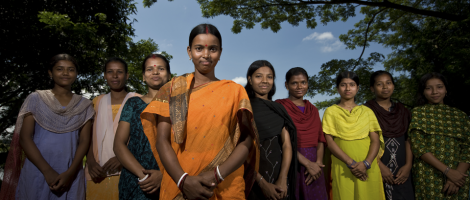
The Prospective on Cancer series will resume tomorrow. Today we break for the October 4 kick-off of The Girl Effect Blogging Campaign. 

Last year when I participated in this blogging event, I focused on the plight of the girls. This year my focus is on the The Girl Effectproject. It is a stunning multifaceted effort that seeks to end poverty through understanding, documenting, and promoting the value, needs, and priorities of girls in developing countries. It forms a untied global collaboration of development partners for research and program design and delivery. It needs our support, not just as bloggers and writers, but also as workers, volunteers, and donors.

This project might sound to some like an effort with a bias, but it is really an effort to improve the social and economic fabric of families and communities by opening educational and economic opportunities to girls aged ten to twenty-four. Efforts are made toward removing barriers to family and economic stability, barriers like early pregnancy, school dropout, and HIV/AIDS. Girls are ultimately the backbone of their families and communities reinvesting ninety percent of what they earn in their families as opposed to boys’ reinvestment of sixty percent.

The studies that the development community have implemented and are sharing among partner agencies provide information we haven’t ever had before on girls in this age group in the developing nations. Their studies conclude with action items for governments and policy makers. Under the banner of The Girl Effect, the global community is united in assessing the cost to individuals, families, communities, and countries when girls live in poverty, are bared from education and proper health care, and suffer abuse.

The Girl Effect seeks support for efforts that address some things those of us in the developed nations take for granted: like being counted.  When a child has no birth certificate and is not counted in any census, she has no identity and there is no way of knowing if programs that are in place are reaching her and helping her.

The Girl Effect partners seek to:

  • acquire funding for programs and to track program outcomes;
  • support, encourage, and provide opportunities for complete primary education and for secondary education;
  • provide health care, wellness programs, and HIV/AIDS prevention programs;
  • organize health-care delivery systems that are effective in reaching this demographic;
  • provide economic empowerment for earning, saving, and building assets;
  • ensure legislation that supports women’s rights;
  • empower girls to advocate for themselves; and,
  • mobilize nations, communities, and families, men and boys, to support the efforts of girls to protect and educate themselves and improve their lives and those of their families.

The programs that are offered by partners include education, legal help, micro-loans, and health care. Donations may be made through Global Giving.

© 2011, Jamie Dedes, all rights reserved. Posting or printing permitted by request only.

Photo credit ~ Girl Effect photo courtesy of Brent Stirton/Getty Images.

Video uploaded to YouTube by .