If you are viewing this poem on the home page, you will need to click with your mouse on the subject line of the post to see the poem laid out properly.
And a man said, Speak to us of Self-Knowledge.
And he answered saying:
Your hearts know in silence the secrets of the days and the nights.
But your ears thirst for the sound of your heart’s knowledge.
You would know in words that which you have always known in thought.
You would touch with your fingers the naked body of your dreams.
And it is well you should.
The hidden well-spring of your soul must needs rise and run murmuring to the sea;
And the treasure of your infinite depths would be revealed to your eyes.
But let there be no scales to weigh your unknown treasure;
And seek not the depths of your knowledge with staff or sounding line.
For self is a sea boundless and measureless.
Say not, “I have found the truth,” but rather, “I have found a truth.”
Say not, “I have found the path of the soul.” Say rather, “I have met the soul walking upon my path.”
For the soul walks upon all paths.
The soul walks not upon a line, neither does it grow like a reed.
The soul unfolds itself, like a lotus of countless petals.
♥ ♥ ♥
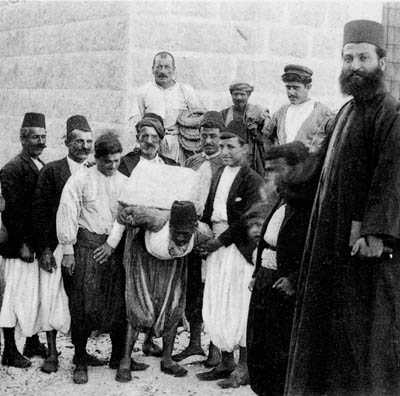
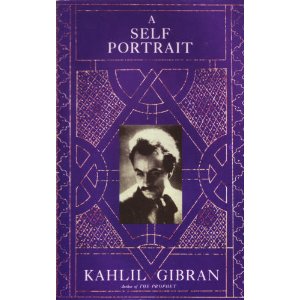
The Lebanese-American artist and poet-philospher, Gibran Khalil Gibran, died on this day in 1931. He was born in 1883. He wrote in the Arabic and in English and was from the northern Lebanon town of Bsharri (the ancient name meaning “the house of Ishtar,” after the goddess Ishtar worshiped by the ancient Phoenicians). Bsharri is in the Kadisha Valley below the famed cedar forests of Lebanon. In modern times Bsharri was enclave for Maronite Christians escaping from the Ottoman Turks. Until the late 19th Century/20th Century, Aramaic* was the language of Bsharri. Its influence is still evident in the verbal inflection of its people.
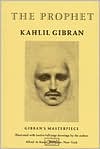
Initially, The Prophet (1923, U.S.), was not well-received by critics, though it met with some success with the public. By the sixties and the counter-culture** it – and all his work – gained greater acceptance and a wider audience. As with other like spirits, Gibran is considered a mystic by some and a charlatan by others. Gibran found wisdom in the transcendent elements of all spiritual traditions he encountered, but was born into a Maronite family.
The Maronites are Eastern Catholics in communion with the Apostolic See (the seat of authority for the Catholic Church based in Rome, Italy), and followers of St. Maron, a Syrian priest of the fifth century. Also from the Aramaic speaking peoples, St Marion was a friend and contemporary of St. John Chrysostom (Turkish) and Anthony the Great (Egyptian) and led a monastic life. Before the rise of the Ottoman Empire and the subsequent Lebanese diaspora, this was the majority population in the Lebanon. 3,500,000 people practice this religion world-wide. In the United States some 200,000 are Maronite.
Maronites building a church on Mt. Lebanon, circa 1920s. Public domain photo via Wikipedia.
Video posted to YouTube by utterboxtv. This is a short documentary of about ten minutes.
Gibran Museum in Lebanon courtesy of Xtcrider via Wikipedia. Public domain photo.
Gibran Memorial at Copley Square in Boston, Massachusetts, U.S.A. via Wikipedia. Public domain photo.
1904 – 1930, written in Boston, New York and Paris, where Gibran studied art under Rodin.
* Aramaic, a Semitic language, was the language of Jesus and the Apostles, the literary language and the vernacular of ancient Asia Minor, Syria, Mesopotamia, and Palestine. The Peshitta texts (Old and New Testaments) were written in Aramaic and some claim they are the original New Testament documents.
**counter-culture – a cultural movement initiated mainly in the U.K. and the U.S. It spread though most of the western world between 1958 and 1974 with its peak after 1964. The counter-culture movement of the ’60s created a cultural divide mainly along age lines with youth forming a subculture questioning the social norms of the day and changing many regarding wars (especially Vietnam), sexuality, religion and spirituality, music, drugs, abortion, women’s rights, racial rights, gay/lesbian rights, free speech, environmentalism, dress codes, and so forth. It started in ’58 in London with an act of civil disobedience when students marched to ban the bomb (i.e. nuclear weapons).
I wrote the first version of this a year ago. I was sitting in a Buddhist center were the children had designed a large mandala in collage to celebrate the Buddha’s birthday, which is April 8. The mandala was filled with pictures and drawings of nature scenes, the Buddha, stupas, and children at play. I was totally engaged by it with its color, movement, and imagination. The children’s mandala came together for me with the Tibetan Buddhist custom of creating mandala of colored sands, which are then blown away to remind us of the impermanence of the material world. This poem is the result. Although it has elements that are consistent with the Buddhist system, I didn’t write it as a Buddhist statement, just an imaginative one.








 The BeZine