Posted in Spiritual Practice, Terri Stewart

Connecting with the Mountain

Here, in the Pacific Northwest, there is a unique descriptor that books have been written about. It is the “none zone.” As in, “What is your religious preference?”

Answer: “None.”

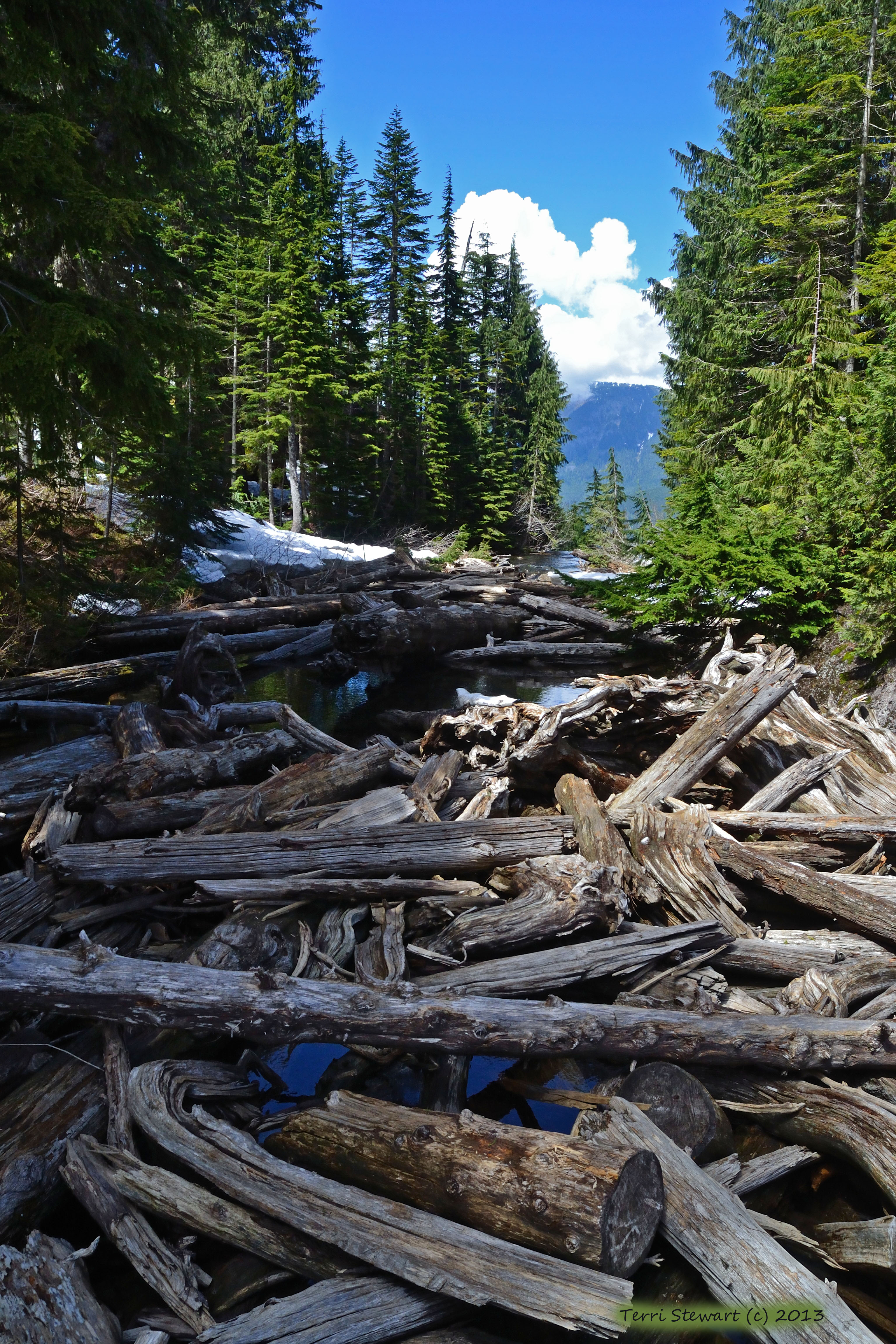
I live here, in the none zone. However, there is a curious thing that happens as soon as the sun comes out. People start going up into the mountains climbing as high and as far as their bodies will let them. Going on a trail, you will never be alone. There are always people traveling with you. I thought, today as I hiked, “This is Pacific Northwest church!” Meaning people are seeking a mystical experience by going up as high as they can and as deep into nature, away from the cities, as they can.

short_semitic_viewLong ago, I mean a really long time ago, about 3,000 BCE or so, the ancient semitic worldview was quite different from our worldview. The world was flat, the mountains held up the dome of heaven, the concept was that the higher you went up the mountain, the closer you got to the divine. A concrete example of this is the many times that Moses went up the mountain in Hebrew scripture. He goes up to speak to God and comes back down to lead the people. I have included a picture depicting the ancient semitic worldview.

The picture doesn’t quite get across the idea that the highest mountain top was considered to be directly underneath the throne of heaven. So if you could get to the tippy top, you could be the closest to the divine.

In many ways, the folks here, although not religious, are seeking an experience of transformation that happens at the top of the mountain.

Seeing the beauty in sparkling water or the dappled shadows of leaves on the trail. Hearing delighted laughter as a child discovers the lake around the corner or standing still while a bird communes with you. Each act of curiosity, amazement, and even perseverance is an act of transformation. And transformation expands your heart, maybe even up to three times (odd reference to the Grinch here-“and his heart grew three times that day”)!

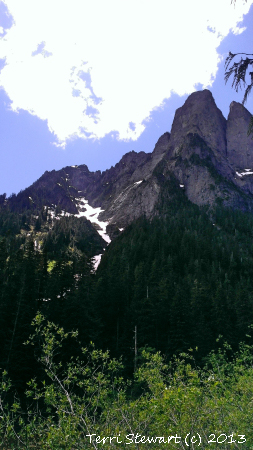
Baring MountainHiking, for me, feeds into my spiritual practice of contemplative walks. Coincidentally, it feeds into the ancient pattern of going to the top of the mountain to experience the divine. It is not only the ancient semitic people that did this! I am reminded particularly of the Blackfeet from Heart Butte, Montana. Their most sacred spot (no photos) is at the top of a mountain. There is a tree and people carry their prayers and offerings to that tree and put them there. It feels sacred. It is the holder of dreams and hopes. Hopefully, that is what our spiritual practices lead us to! A place inside our bodies that can hold dreams and hopes–and great sorrow.

Mountains are both physical and metaphorical. Not all of us can climb up a mountain (I am not going to go all the way to the top of Mt. Rainier!). But we all face challenges. Our challenges can either be transformational or they can get us stuck in the mud. So all of this is really a wind-up to get to the questions!

  • What is your mountain?
  • Can you go up it?
  • Do you need to go around it?
  • Is there a creative, third way to approach the mountain?
  • What spiritual practices will strengthen you for the journey?

And now I’m suddenly remembering a children’s song / chant called, “Goin’ on a Bear Hunt.”

Can’t go over it!

Can’t go under it!

Oh no!

We’re gonna go through it!

What do you have to go through? And how will you go through it?

Shalom and Amen!

~Chaplain Terri

© 2013, post, Terri Stewart, All rights reserved

terriTERRI STEWART is Into the Bardo’s  Sunday chaplain, senior content editor, and site co-administrator. She comes from an eclectic background and considers herself to be grounded in contemplation and justice. She is the Director and Founder of the Youth Chaplaincy Coalition that serves youth affected by the justice system. As a graduate of Seattle University’s School of Theology and Ministry, she earned her Master’s of Divinity and a Post-Master’s Certificate in Spiritual Direction with honors and is a rare United Methodist student in the Jesuit Honor Society, Alpha Sigma Nu. She is a provisional elder in the United Methodist Church and a contributing author to the Abingdon Worship Annual.

Her online presence is “Cloaked Monk.” This speaks to her grounding in contemplative arts and the need to live it out in the world. The cloak is the disguise of normalcy as she advocates for justice and peace. You can find her at www.cloakedmonk.com, www.twitter.com/cloakedmonk, and www.facebook.com/cloakedmonk.  To reach her for conversation, send a note to cloakedmonk@outlook.com


Posted in Essay, Poems/Poetry, Spiritual Practice, story, Terri Stewart

Abandoned, Alone, and Angry

In my faith tradition, Jesus is crucified on the cross. He cries out, “Father, Father, why have you forsaken me?” This is a reference to Psalm 22 which explores emotions of abandonment, anger, and finding hope. I have used this methodology to express the anger and hope that I find for the youth that I work with who are affected by incarceration.

One night when I was working in detention (re: jail for kids), I heard story after story of hopelessness. It came to me that these youth were torn apart by their parents, by the education system, by poverty, by global issues beyond my understanding. One youth was going home the next day. To a crack addicted mother. Why couldn’t he go to his dad? His dad smuggles guns into the country and was a high placed gang member. He was certain he would be dead if he lived with his dad. So to his mom he goes. Where she will offer him drugs and he will become hooked. Again. He said, “I do not have the strength to say no to my mother.”

Another youth, noticably affected with psychological and educational challenges, was from Somalia. He was living with his auntie here. In Somalia, he had seen his parents dragged from their home, his mother raped, and both parents killed in front of him. But instead of investing in mental health centers, we have invested in mental health courts. This young man, clearly with a minimum of PTSD, will be locked up where the focus is on “treatment” (in this setting that means that they admit to crime and say they are sorry) not on therapy.

This makes me so mad! So my heart cries out to all who have let down these children. Let me say it again–children. But in order to do this work, I needed to discover why. The below poem was my journey through the anger to discovering how I can possibly continue to find hope and love in a system that is hopeless and loveless. It is also my way of putting words to the stories that the youth tell. And my own story.

And PS, if you’d like to support my work with these troubled youth, I’d love it!


Psalm
Eli Eli lama sabachthani?

where were you
when the embryo
hatched and was formed
by blood-spattered hyenas
tearing hope from
limb to limb and
laughing gleefully
at the mockery

where were you
when the embryo
fell and love
offered a hit
of a crack pipe
covered in symbols
flashing through
the ghetto offering
escape from the
desolate heat

the hands that
should be reaching
out are cut off at
the wrists bleeding
sanctimonious tripe
in defiance of the call
to love the
least , lost, and lonely
while sentencing each
embryo to death

guilty rings through
the room as we
continue to bleed the
embryo out with
ignorance born of
fear and shame and
the lie of the only way
being my way standing
on the corner shouting
belligerently to
repent or die

revelation rings through
the cosmos as the
embryo marches the
guilty to sheol while
silent tears are birthed
wresting the stumbling
breath of hope into a
silent scream reaching
to the ramparts and
calling forth the final
battle fought with
easter lilies

© 2013, post, Terri Stewart, All rights reserved

© 2009, poem, Terri Stewart, All rights reserved

terriTERRI STEWART is Into the Bardo’s  Sunday chaplain, senior content editor, and site co-administrator. She comes from an eclectic background and considers herself to be grounded in contemplation and justice. She is the Director and Founder of the Youth Chaplaincy Coalition that serves youth affected by the justice system. As a graduate of Seattle University’s School of Theology and Ministry, she earned her Master’s of Divinity and a Post-Master’s Certificate in Spiritual Direction with honors and is a rare United Methodist student in the Jesuit Honor Society, Alpha Sigma Nu. She is a contributing author to the Abingdon Worship Annual.

Her online presence is “Cloaked Monk.” This speaks to her grounding in contemplative arts and the need to live it out in the world. The cloak is the disguise of normalcy as she advocates for justice and peace. You can find her at www.cloakedmonk.com, www.twitter.com/cloakedmonk, and www.facebook.com/cloakedmonk.  To reach her for conversation, send a note to cloakedmonk@outlook.com
Posted in Essay, Spiritual Practice, Victoria C Slotto

Keeping Sabbath

The Paradise

Last Sunday, I chose to practice Sabbath—a tradition that was a strong factor in my growing up years, but that waned with my work as a nurse…patients need care every day of the week. Most of us know and understand the concept of a day of rest, but our frenetic lifestyles tend to get in the way.

Sabbath crisscrosses most cultural, spiritual, religious and secular societies, even pre-dating biblical times. The Babylonian Enuma Elish prescribed a day of repose. In the Genesis creation story, God rested after his six days of work and, I suppose it worked out well so that he added it to those tablets of stone he handed on to his people through Moses. Wicca, Islam. Buddhism, Cherokee teaching and others all caution humans to take a break, chill out, and rest.
Wisdom, it seems to me, embraces our need for refreshment, for replenishment of body, mind spirit and emotion, for regeneration and reflection.

For many of us, well, for me anyway, the need to be in control seems to take hold and it becomes oh-so-hard to let go of time, accept idleness and non-productivity and, perhaps, the feeling of uselessness. I suspect that there is a trust issue here. Can I really believe that God will take care of things in my absence? Can I believe that the work of creation on this particular day will go on without my amazing intervention?

So, what kind of things did I, Ms-Doing-Not-Being do?

• Meditation—a bit longer than my ordinary routine.
• Journaling. And in the process really waking up to what was happening around me. I wrote of all the wonderful sensory experiences that the pristine late-spring day offered—the finches song, the brilliant orange of the male oriole at our feeder, the spicy scent of new-born flowers and the basil in the vegetable garden. I noticed the play of light and shadow in the now-expansive boughs of the ash tree we planted almost twenty years ago and watched the hummingbirds fly back and forth sipping nectar from both flowers and feeders. I felt the gentle kiss of the breeze and delighted in my dogs’ warm bodies flanking me on either side. I listened to David busy chopping spices in the kitchen.

Photo Credit: D. Slotto

• Spa Stuff. I pampered myself with a Pomegranate/Cranberry exfoliating scrub courtesy of Burt’s Bees, did a manicure/pedicure and, well, thought about taking a nap. I thanked my body for its almost-seven decades of service and praised the many scars that it bears, a reminder of the life-threatening illness I have survived, for now.
• Creativity. Maybe some consider engaging in the creative process to be work. For moi, I allowed the muse to come out and play, more by way of brainstorming than actualizing any project. Sabbath time allows ideas to gestate and gives clarity as to where to take them.
• And, yes, a final confession. I did laundry. So, it wasn’t a perfect Sabbath, but for this woman who tends towards OCD, that’s probably not a bad thing. Besides, we needed clean clothes!

Photo Credit: Bergen Linen

That night I slept well, but will I be able to repeat the experience? My history tells me that this is not something that comes easily to me. I am aware that Sabbath doesn’t have to always be on Saturday or Sunday, or even occupy an entire twenty-four hours. How would life be different if, each day, I remember to tuck in an hour or even minutes for the divine repose, sit back and let go?

– Victoria C. Slotto

© 2013, essay, Victoria C. Slotto, All rights reserved

Victoria and Dave Slotto

2940013445222_p0_v1_s260x420VICTORIA C. SLOTTO (Victoria C. Slotto, Author: Fiction, Poetry and Writing Prompts) ~  a Contributing Writer to Into the Bardo ,attributes her writing influences to her spirituality, her dealings with grief and loss, and nature. Having spent twenty-eight years as a nun, Victoria left the convent but continued to work as a nurse in the fields of death and dying, Victoria has seen and experienced much. A result of Victoria’s life experience is the ability to connect with readers on an intimate level. She resides in Reno, Nevada, with her husband and two dogs and spends several months of the year in Palm Desert, California.

Winter is Past is her first novel. It was published in 2012 by Lucky Bat Books. She has a second novel in process and also a poetry chapbook. Victoria is also an accomplished blogger and poet who has assumed a leadership role in d’Verse Poet’s Pub. You can read more ofher fine poetry HERE.


Posted in Photography/Photographer, Poems/Poetry, Spiritual Practice, Terri Stewart

This I Believe

windowOne of the most difficult things that humans do is make meaning from their current situation. In seminary, we were asked to do any assignment called, “This I Believe.” I still treasure the product of that assignment and will share it below. If you’re curious about the origins of the meaning of the word belief in Christian Biblical literature, there is a brief summary here. Regardless, here are a few questions to ponder and be thoughtful about –

  • What is belief?
  • How is belief lived out in your life?
  • Does belief evolve over time?
  • If belief evolves over time, what does that mean?
  • Could your belief be a particular window into the world?
  • Or is your belief the only particular window into the world?

windows

as i look behind
i see a path of aged stone
worn away at the edges
cementing to its neighbor
existing since the
apple flew from the tree

as i look ahead
i see tangles and brambles
and flowers and warmth
and my foot reaches out
as the stone peeks
through the grasses
for a moment
while i hesitantly
test the ground
of all being

as i place my foot
down on the rock
the path is solid and
the tangles and brambles
dissolve into nothing
as the daisies lean towards
the sun gesturing
for me to proceed

as i look up
i see a mansion
welcoming me with
the scent of lavender
and love
calling out like
mama greeting me
after a long summer
away at camp

as i reach the door
i turn the handle
shaking and trembling
with fear and awe
standing at the portal
that leads to
a new place of belonging

as i step forward
realizing this is home
my ragged teddy bear
is waiting for me
on the worn chair
joy glinting off his
button eye

Papa! Mama!
i am home!

“In the garden, child.”

as i look out
i suddenly notice
the windows
each stained to create
a beautiful invitation
of loving encouragement
and lively warmth
leading to the garden

as i run from window
to window i am stunned
by the rainbow of promise
that dances before
my eyes
until i see him
and i am caught
by his image
as love overwhelms me
and my heart dances
and the garden glistens
through the
tears in my eyes

as i peek into the garden
i see Papa waiting for me
and my hand reaches out
to touch the beauty of
him and passes
through the glass
holding me in surprise
while i walk through the
window into the light
enraptured with him

i run to Papa
and leap into His arms
knocking Him back and
He receives me with
a chuckle and twirls
me headily through the
clouds with laughter
born of love and
grace.

Terri Stewart, May, 2009
Post and photo, Terri Stewart, (c) 2013 All Rights Reserved

terriTERRI STEWART is Into the Bardo’s  Sunday chaplain, senior content editor, and site co-administrator. She comes from an eclectic background and considers herself to be grounded in contemplation and justice. She is the Director and Founder of the Youth Chaplaincy Coalition that serves youth affected by the justice system. As a graduate of Seattle University’s School of Theology and Ministry, she earned her Master’s of Divinity and a Post-Master’s Certificate in Spiritual Direction with honors and is a rare United Methodist student in the Jesuit Honor Society, Alpha Sigma Nu. She is a contributing author to the Abingdon Worship Annual.

Her online presence is “Cloaked Monk.” This speaks to her grounding in contemplative arts and the need to live it out in the world. The cloak is the disguise of normalcy as she advocates for justice and peace. You can find her at www.cloakedmonk.com, www.twitter.com/cloakedmonk, and www.facebook.com/cloakedmonk.  To reach her for conversation, send a note to cloakedmonk@outlook.com

Posted in Essay, Nature, Photography/Photographer, Spiritual Practice, story, Story Telling, Photo Story, Terri Stewart

One Foot in Front of the Other

Walking is a spiritual practice that I am predisposed to. After all, photography would not happen unless I walked around! Simply putting one foot in front of the other, time after time, without expectation of arrival at an end point is a contemplative practice. Recently, though, I discovered a new way of viewing walking as a contemplative practice. This practice had an end point and I was completely aware of all the w’s – who, what, when, where, why. I was not letting go and receiving images (well a little). I was literally focused on my feet and putting my feet, one step at a time, on stable ground.

And this is a metaphor. Sometimes, sitting at our desk or listening to our loved ones, can be a practice of just being aware of what is now and putting your best effort towards arriving at the next now. One step at a time.

As you continue reading, consider the questions, “In what area of my life can I start (or continue) putting one foot in front of the other? What new story will be created?

Here is my story.

Monday, I went hiking to Bridal Veil Falls / Lake Serene in the Central Cascade mountains of Washington. It was a spectacular day. (The weather is forecast to be fabulous all week-long in Seattle leading me to believe somebody is playing with our emotions.) I felt confident I could do the +7 mile hike. BUT I forgot to look at the way the path is (smooth vs. rocky) and the grade or “up-ness.”

I started out on the popular path and asked a co-hiker what to expect and she told me it was steep but that it was worth it. And that there were a lot of switchbacks. OK. I can do this! I will just take my time and be careful.

In February of this year, I was going through a diagnosis of Celiac disease. Now most folks just think that this is digestive only. Well, it is not. It causes inflammation in every part of my body. It grew tumors in my ovaries. I had a period for 3 weeks. I was severely anemic. The test didn’t say, “Low,” it said “Alert!” I could not walk up a short hill without being severely out of breath because I had very few mature red blood cells to carry oxygen around. In short, it stank.

And, over the last few years I have had surgery on my left ankle (torn tendon) and my right foot (two! neuromas crowding out my middle toes). I couldn’t walk without pain until, oh, last year after the neuroma surgery. Generally, I count every pain-free step a success. Would my feet hold out? Always a question. And with the ankle surgery, I generally look for nice, solid, flat ground so my ankle will not roll.

Rats! This path is not smooth. Very rocky. Wet sometimes. Muddy sometimes. But mostly rock, rock, rock. Keep my eyes down and make sure my feet land on flat spots! That’s the plan.

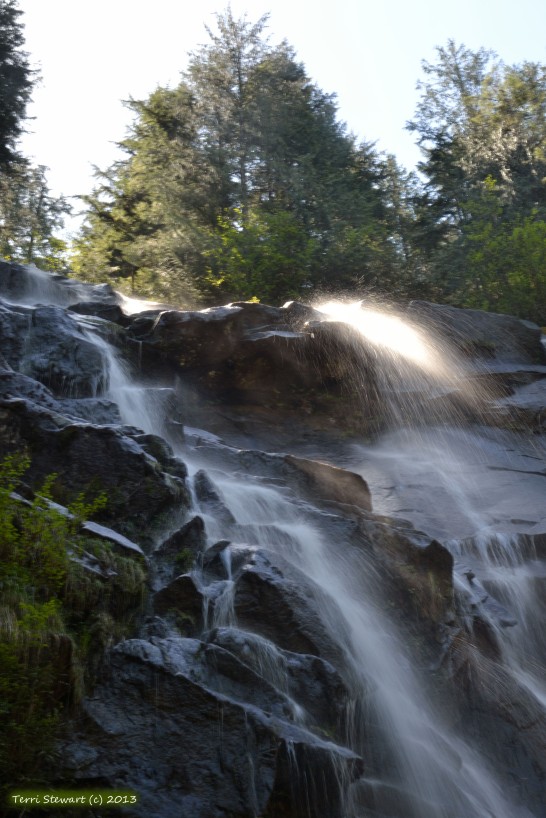
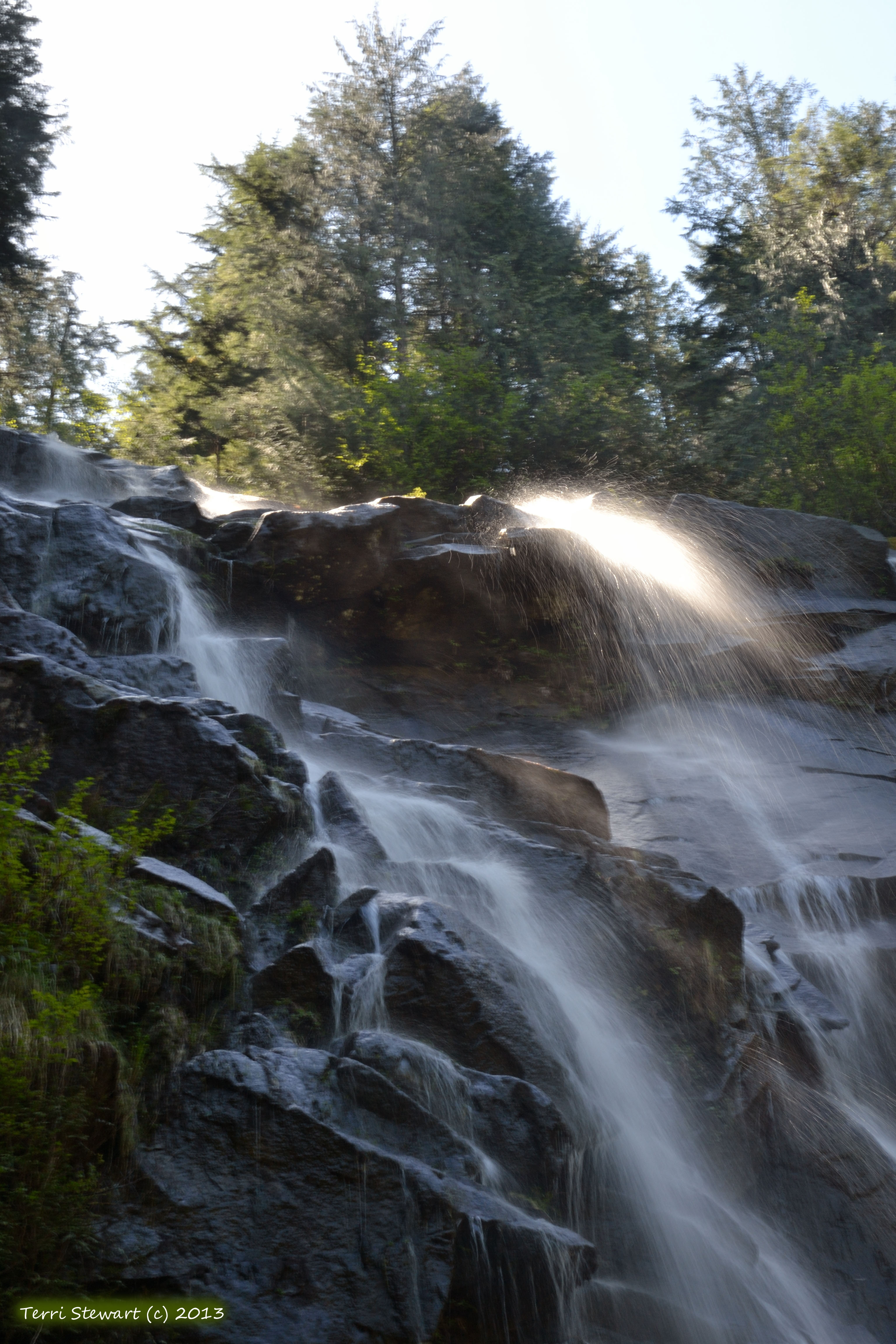
Anyway, I started up the path at my own pace. I got a little less than two miles in and found the below sight. I tried really hard to capture this thing that was happening with the sun and the water! It looked like liquid sunshine was pouring off the top of the waterfall. My eyes received the beautiful image of sunshine being poured down the mountain, could my camera receive it? A little.
Walkabouts__2013-06-03_12-05-17

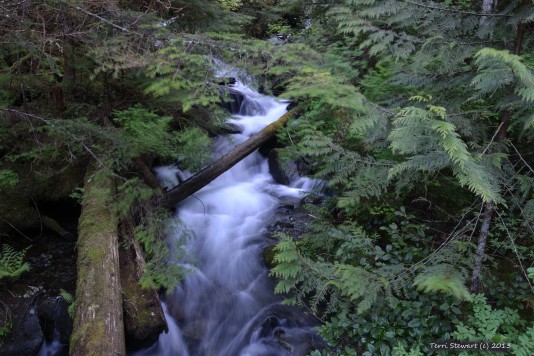
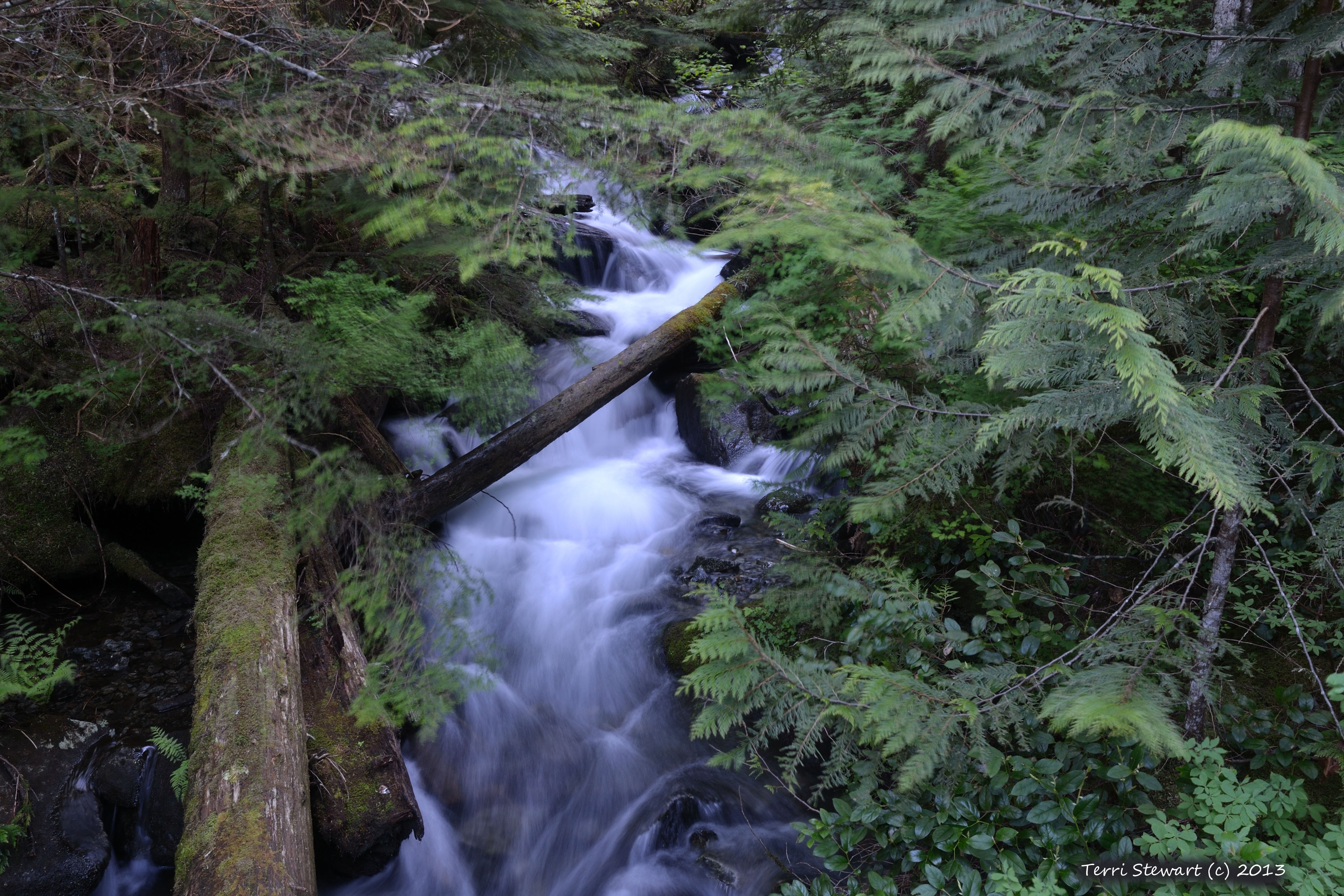
At any rate, it was astounding. And it was the second set of falls I had seen. This mountain is one big slab of granite! (Hence the rocky path) And there is water everywhere. Well, okay, not everywhere, but in a lot of places. It was hard to get a good picture, but earlier, there was a set of falls that were very tall and jagged. But the trees were very overgrown so you could only get glimpses of the splash of light and water. This is the very bottom of that series. I received beautiful images of flowing water.
Walkabouts__2013-06-03_16-17-40

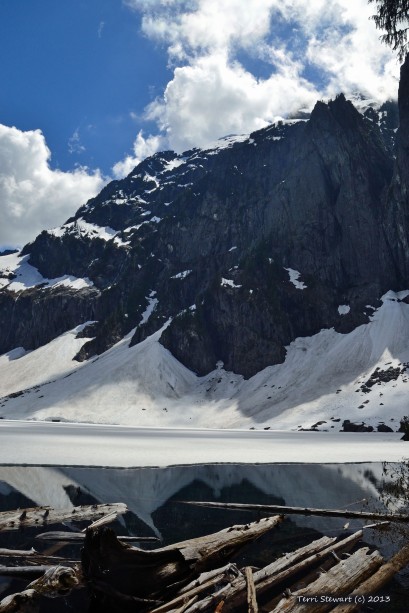
I got past the falls and it was two miles to Lake Serene. I was feeling good so decided my body could do this! I kept on going. And going. Up and up. Picking my way carefully through rocks. Resting when I felt overwhelmed. Then there came a moment when I thought that I was not going to be able to do it. I grounded my feet to the earth and drew on the strength of my God and the strength of the earth. I breathed deeply. This had become a spiritual quest.

I kept on going. But at that moment, I felt like giving up. I soon encountered a woman and her dog. They were resting. (Yay for rest!). I asked her how much further. She said, “When you feel like you have been through the worst possible climb, then it is just a bit more up and a little down and you’re there.”

OK. The worst possible climb. I can surely get to this.

I went up and encountered massive rocky path, with only about a 9″ clearance to skinny through. Surely, this is the worst possible spot.

I kept going and encountered another massive rocky path, with water and slipperiness. Surely, this is the worst possible spot.

Add water and repeat.

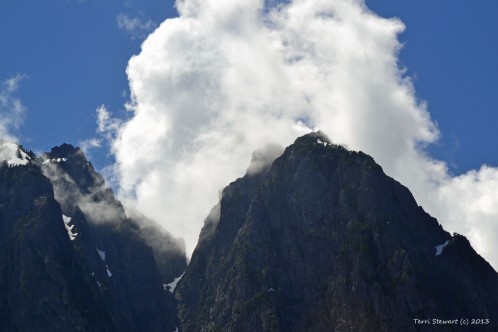
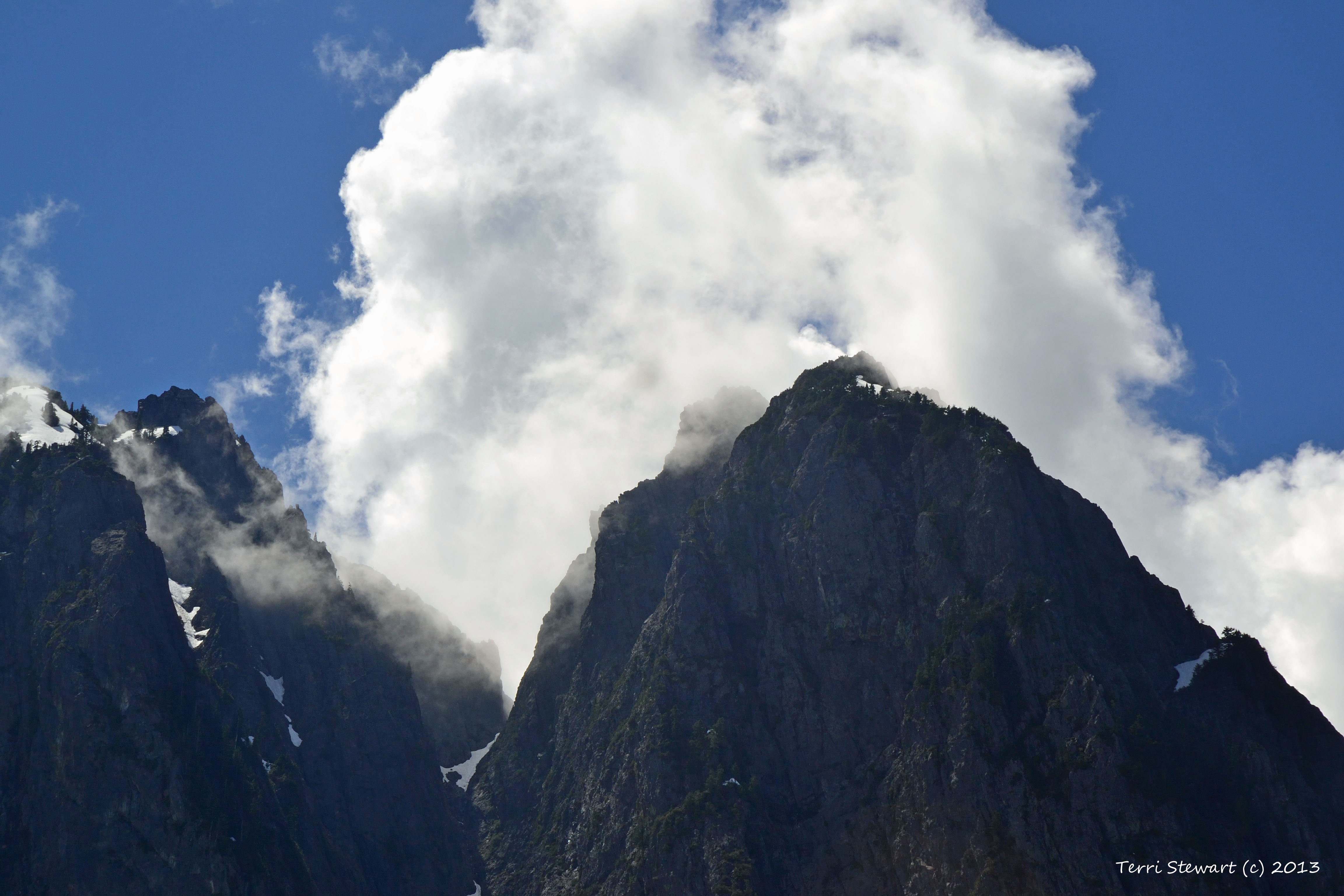
Finally, I broke through the shadows of the forest into a sunny meadowy type area (is it a meadow if it is on the side of a mountain?). I looked up and my breath left my body. It. Was. Amazing. I received the most beautiful blues intermingled with a dark granite mountain and white fluffy clouds rising like steam. I remember the story of Moses going up the mountain to be with his God and going into the cloud. This is a place to connect with spiritual strength. I felt strengthened, encouraged, excited, and alive. A complete contrast to how I felt when I was in the shadows.
Walkabouts__2013-06-03_13-56-59

I was now in the sun, with this incredible sight, having passed through at least 5 stretches of the worst climb ever. And I saw another worst climb ever in front of me. But my spirits were jubilant. I was in the light and had left the darkness. Amen!

I kept on going. There was one more seriously worst climb ahead and then I was there. Lake Serene.
Walkabouts__2013-06-03_14-25-52

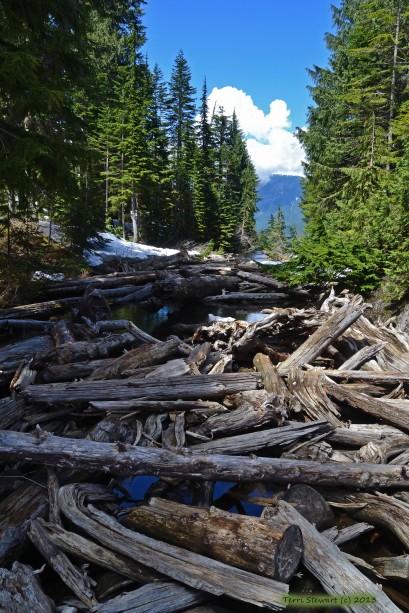
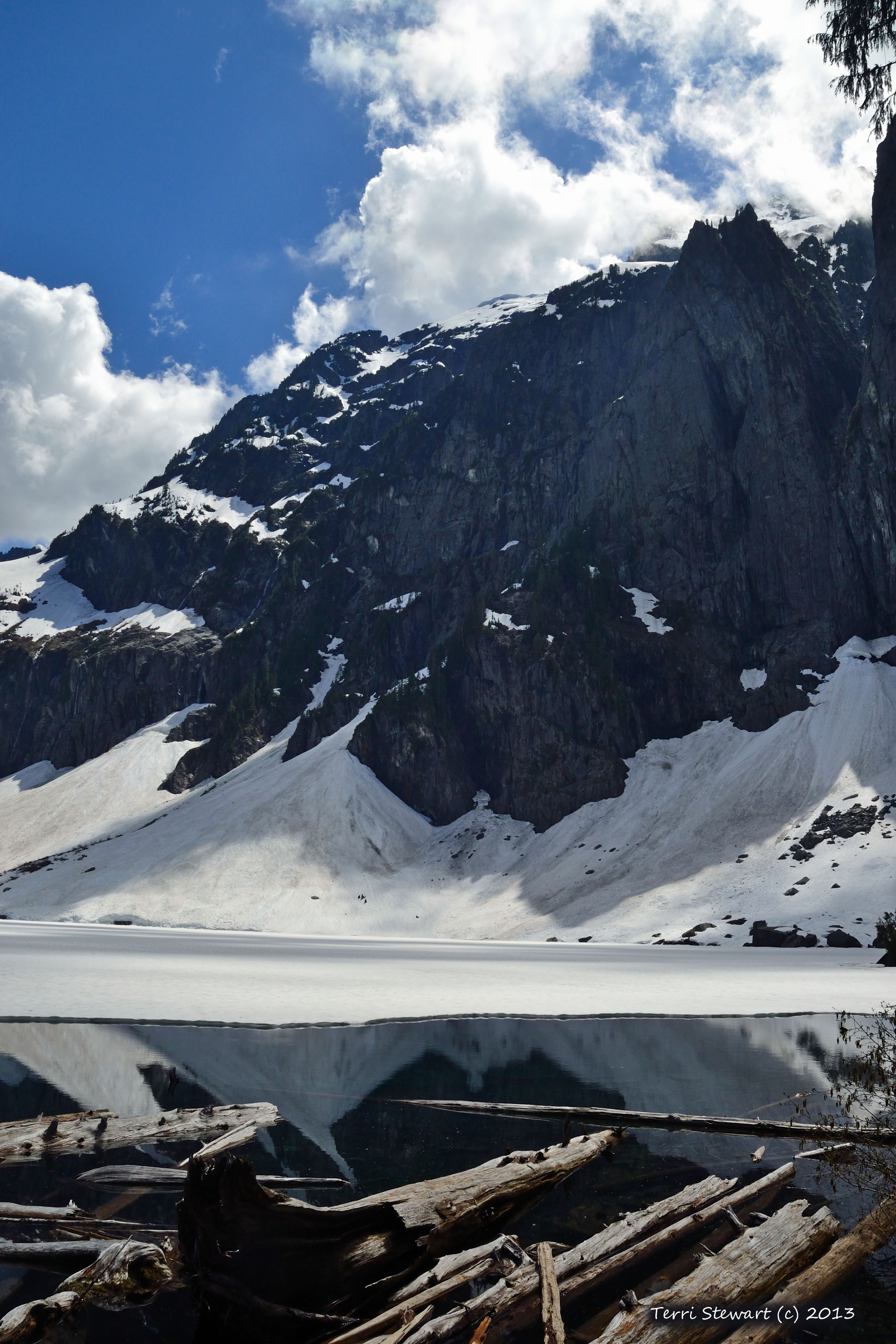
In fact, this lake feeds into the waterfalls pictured earlier. I had climbed all the way around to the other side. Here is what the top of the waterfall looks like from this same point, just facing the other way.
Walkabouts__2013-06-03_14-25-23

I clambered through the snow a bit and sat at the closest point I could get to the top of the waterfall. Ate lunch. Relaxed a moment.

Time to head back down. Surely, down would be easier! It always is. Mostly.

On the way down, I kept my head down looking to keep my feet planted so my ankle will not turn. I almost made it. Darn it. One misstep and a turned ankle. Choice – fall in a way to minimize injury or try to get that wobbly ankle to hold me up. Quick decision – my ankle will not withstand the effort to stay firmly up. Fall it is! Sheesh. I hate rocky, downhill, paths. Now, cuts and bruises, scratches and blood. I would hate to see what I looked like.

I crossed back in front of the amazing waterfall that poured sunshine and the woman I had met earlier was there with her dog! She was resting. Her dog decided to try to clean up the scratches on my legs a bit (ha ha!). We chatted a bit and she moved on. I stayed and tried to get some more photos of the falls and take a rest. Oh, and to use the water to wash my arm which has a pretty serious scratch(es).

But, gosh darn it, I did it! I am still on the path. I can still walk. My body is sustaining me. This is such a big deal, you have no idea. I was misdiagnosed for at least 20 years. To be able to do this is the most awesomely amazing thing ever. My muscles don’t even hurt as much today as they did on days the inflammation from being celiac made them hurt. (That was a bad sentence, sorry.)

I kept going. And I made it back to my car by about 5:00 p.m.

The quest was complete.

I am proud that I had the perseverance to keep on pushing through. My blood tests still say “alert” on the iron portion, but it is improving. My ankles and feet are okay today. My right arm and right shin are pretty banged up, but as long as nobody touches them (!) I will be fine.

The return hike took 2 hours. It took me 4 hours to go up.

Walking or hiking as a spiritual practice, for me, is typically about opening myself up to the images around me. Receiving images that I sometimes share here or on my blog. This time, though, it transformed into something else. Instead of receiving the beauty around me, I had to dig deep to connect to the strength of the earth, strength of my faith, and to the strength in my own body in order to find sustenance for the journey. This is a new kind of spiritual practice for me.  I had thought, Monday night, that I would not be eager to repeat this experience. But I am. Focusing on putting one foot in front of the other in this way gave me a faith in myself that I sometimes lack. Especially in my own body’s ability to sustain me. That is my new story. I trust my body.

Blessed be.

Shalom and Amen.

~Chaplain Terri

Adapted from a post at my blog. Trials on the Trail.

© 2013, post & photos, Terri Stewart, All rights reserved

terriTERRI STEWART is Into the Bardo’s  Sunday chaplain, senior content editor, and site co-administrator. She comes from an eclectic background and considers herself to be grounded in contemplation and justice. She is the Director and Founder of the Youth Chaplaincy Coalition that serves youth affected by the justice system. As a graduate of Seattle University’s School of Theology and Ministry, she earned her Master’s of Divinity and a Post-Master’s Certificate in Spiritual Direction with honors and is a rare United Methodist student in the Jesuit Honor Society, Alpha Sigma Nu. She is a contributing author to the Abingdon Worship Annual.

Her online presence is “Cloaked Monk.” This speaks to her grounding in contemplative arts and the need to live it out in the world. The cloak is the disguise of normalcy as she advocates for justice and peace. You can find her at www.cloakedmonk.com, www.twitter.com/cloakedmonk, and www.facebook.com/cloakedmonk.  To reach her for conversation, send a note to cloakedmonk@outlook.com

Posted in Meditation, Spiritual Practice, Terri Stewart

Meditation on the Shadow

shadow reflection self portraitI have been reflecting on shadow work a lot lately.  The shadow is that part of ourselves that we often keep hidden. It was especially prompted by Naomi’s images and thoughts in her post “Black and White (or not).” The world is shades of gray as our shadows often seem to be.

Physically, our shadows take on the colors of what they are cast on. We stand ‘here,’ the shadow projects ‘there,’ and our shadow is integrated with rock or grass or concrete or sofa–with the barest connection with our embodied self. Sometimes our shadows hang on to us by the barest toe. Sometimes we are connected fully.

The shadow is something darker, hidden, taking on different tones and different shapes than our embodied selves. But ultimately, it is a projection of our own self. What we don’t want to see in ourselves, we push into our shadow.

One of the most valuable lessons I had in seminary was a discussion of the Johari Window. It is really pretty simple! There are four ways to be known in the world (each one pane of a four paned window):

  1. Things we know about ourselves that nobody else knows
  2. Things others know about us that we don’t know
  3. Things we know and others know
  4. Things nobody knows

Our job is to shrink the part of our window that is “things nobody knows.”

γνῶθι σεαυτόν – Know Thyself, on the Temple of Apollo at Delphi

I’d like to offer a meditation on accepting the shadow self. Please only do this if you feel safe.

Find a comfortable place.  If you are sitting, ground your feet restfully, but firmly. If you are laying, sink down towards the earth. Let the earth buoy you and hold you through this exercise.

You may close your eyes if that is comfortable for you or you may keep them open. If your eyes are open, let your gaze fall gently onto a nearby spot—not particularly noticing anything about the spot, but just accepting the spot as your companion.

Let your gaze turn inward. Take an inventory. Do you feel anxious? Excited? Relaxed? Where is the energy stirring? Is your mind whirring? Or is it in your solar plexus? Or lower? What energy are you bringing to your meditation in your body? Greet the energy and invite it into your journey.

Pause and acknowledge the sacredness of joining with your energy. Breathe in. Breathe out.

Continue your inventory. Moving beyond the physical. What are all the great things you see about yourself? Your creativity? Your love? Your compassion? Mercy? Analysis? Quietness? Strength? Acceptance? Meticulousness? Acknowledge these beautiful and wonderful things and give thanks to them. Breathe in. Breathe out. Now, let them go. They will still be with you. Consider them your backbone. Holding you firmly in place, but behind you.

Reconsider your connectedness to the earth. Let her energy support you while sinking in. Reconsider your gifts—the great things about you. Let them provide structure to your body. Breathe in. Breathe out.

Before you, now, is an empty room. Just you and the energy you have brought with you. The energy from your body. The energy from the earth. The support from your gifts. A formidable group.

See the shadow.

How are you connected to the shadow? Fingertip? Toes? Fully? Check in with yourself and stop here if that feels right to you.

What contrasting energy is pulsing in the shadow? Is it a mirror of your own body’s energy? Or is it different? What is the shadow projecting onto you? Does it make you seem tall? Or small? What color does the shadow take on? What is it drawing from its surroundings? Check in with yourself and stop here if that feels right to you.

Open a dialogue with your shadow. Something like, “I see you. I know you are part of me. What do you have to teach me today?”

Listen to your shadow. Breathe in, breathe out. Check in with yourself and stop here if that feels right to you. This will be different for everybody.

If you feel brave, offer your shadow love. Compassion. Acceptance. Acknowledgement. What does that feel like? Check in with your body and see where your energy is stirring. Is your heart chakra pulsing? Or maybe your shadow has some energy swirling? Check in with yourself and stop here if that feels right to you.

Seeing your shadow, connecting, dialoguing, loving—continue to offer love and imagine love emanating towards your shadow from your energy, from the energy of the earth, and from the gifts that you bring that stabilize you. Imagine the love pouring out everywhere as light. Light as soft as a glowing sunset or as strong as a summer’s day. Whatever light is needed. As the light increases, the shadow steps closer and makes one more connection with you. Maybe just a pinky. Check in with yourself and stop here if that feels right to you.

Now, it is time to close the dialogue with the shadow.

Offer your loving kindness to the shadow. Bring your hands together over your heart chakra in a prayer position. Let your inner gaze fall gently on your shadow. Breathe in, breathe out. As you gaze at your shadow, offer Namaste.

Bring the inner light down to an inner, restful darkness. Let your shadow leave your full awareness, knowing you are that much more connected and that you will be back.

Breathe in, breathe out.

Feel your gifts that strengthened you. Thank them for being with you. Bid your gifts Namaste.

Feel the earth that supported you. Thank the earth for providing support. Bid the earth Namaste.

Feel the energy in your body that journeyed with you. Thank yourself for being present. Bring to yourself, Namaste.

Breathe in, breathe out.

Namaste.

Shalom and Amen,

~Terri

© 2013, post & photo, Terri Stewart, All rights reserved

Terri StewartTERRI STEWART is Into the Bardo’s  Sunday chaplain, senior content editor, and site co-administrator. She comes from an eclectic background and considers herself to be grounded in contemplation and justice. She is the Director and Founder of the Youth Chaplaincy Coalition that serves youth affected by the justice system. As a recent graduate of Seattle University’s School of Theology and Ministry, she earned her Master’s of Divinity and a Post-Master’s Certificate in Spiritual Direction with honors and is a rare United Methodist student in the Jesuit Honor Society, Alpha Sigma Nu. She is a contributing author to the Abingdon Worship Annual.

Her online presence is “Cloaked Monk.” This speaks to her grounding in contemplative arts (photography, mandala, poetry) and the need to live it out in the world. The cloak is the disguise of normalcy as she advocates for justice and peace. You can find her at www.cloakedmonk.com, www.twitter.com/cloakedmonk, and www.facebook.com/cloakedmonk.  To reach her for conversation, send a note to cloakedmonk@outlook.com
Posted in Spiritual Practice, story, Terri Stewart

Connecting to Our Story

New Life, New Story
New Life, New Story

Often times, we look back at our lives and we can see the story. But is that story really the heart of the matter? How do we connect to the heart of our story in the present moment? Taking meaning from what is now to illuminate what was then.

At the core of every moment lies the heart of the cosmos, and my heart, and yours.

~Margaret D. McGee, Haiku–the Sacred Art

Today, I’d like to try a technique that Margaret McGee teaches in her book referenced above. She uses it to teach haiku. If you feel comfortable with that, I would definitely encourage you! If you feel there is another creative form calling forth from you, then use that–music, dance, poetry.

You will need up to 20 minutes for this exercise. Review all the steps before you start, unless you’re like me, in which case you just jump in!

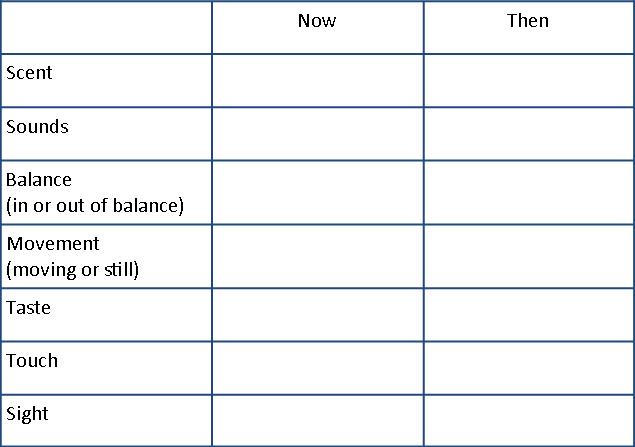
Make a chart something like this (you probably will need extra room under sight!):

table

Now, if it is possible, find a nice place outside to sit comfortably and to take in your surroundings.

Relax, breathe deeply, look around.

  • Now–What do you smell? It’s spring–are there flowers blooming? Can you smell them? Not all smells are serene! It could be something else altogether!
  • Then–Close your eyes. Let go and stroll through your memories. Is there a particular scent from your past (last week? childhood?) that is arising for you?
  • Now–Write down the first thing you see! And keep on filling it in. Our eyes can take in so many things! We can see, arguably, over 100,000 different colors! What words can you create that describes the individuality in what you see?
  • Then–Close your eyes. Let go and stroll through your memories. Is there a particular color or scene from your past that is arising for you?

Continue on in this pattern for each category.

Now, get a fresh sheet of paper or use the back of your grid. Choose a few images from your lists that are resonating with you and with each other. These images may all be from the present moment or they may be from past moments. In particular, if you want to use the present to cast meaning on your past story, search for threads that connect across time.

Go and do! Create your artwork (or soulwork) in haiku, other poetry forms, photography, collage, painting, mandala, essay, etc. Whatever way calls to you. Take time now to make meaning and to add to the depth and meaning of your own story.

table2

For me, what is resonating is the bitterness of coffee, addiction, wind that is too strong. Yikes–what can I do with that?

stormy winds of spring

whistle through my breaking heart–

promises unkept

Aaah, well, this exercise today seems to have brought up some memories. What is clear to me is that our stories are never finished. We can continue to add meaning and to find new meaning and to have alternate meanings! A surplus of meaning.

The full story behind this new story has been started before if you would like to read it.

Shalom,

Chaplain Terri

© 2013, essay, haiku, and photograph, Terri Stewart, all rights reserved

Terri StewartTERRI STEWART is Into the Bardo’s  Sunday Chaplain, Senior Content Editor, and Site Co-administrator. She comes from an eclectic background and considers herself to be grounded in contemplation and justice. She is the Director and Founder of the Youth Chaplaincy Coalition that serves youth affected by the justice system. As a recent graduate of Seattle University’s School of Theology and Ministry, she earned her Master’s of Divinity and a Post-Master’s Certificate in Spiritual Direction with honors and is a rare United Methodist student in the Jesuit Honor Society, Alpha Sigma Nu. She is a contributing author to the Abingdon Worship Annual.
Her online presence is “Cloaked Monk.” This speaks to her grounding in contemplative arts (photography, mandala, poetry) and the need to live it out in the world. The cloak is the disguise of normalcy as she advocates for justice and peace. You can find her at www.cloakedmonk.com, www.twitter.com/cloakedmonk,  and  www.facebook.com/cloakedmonk.  To reach her for conversation, send a note to cloakedmonk@outlook.com.
Posted in Spiritual Practice, story, Terri Stewart

What are you witness to?

tracy-arm-fjord-copy

What are you witness to? What story have you seen? Where has grace moved in your life?

I’ve just returned from vacation. There were so many stories told if I just slowed down and listened or watched. There was the mother holding a young child’s hands as he ran along the pool’s edge; the young man from Indonesia who works day after day with no days off; the staff who rush to the port side of the boat so they can see where we are going or have been, their only contact with a new world from a distance or from behind a camera.

Grace moved in my heart at every encounter with the people and with the striking depth of beauty that we encountered in the natural beauty of Alaska and the surrounding area. Grace moved in my heart when I was able to experience living through the eyes of compassion in this rarefied environment. Love, beauty, and grace coalescing in my rib cage.

I wrote a series of haiku witnessing to the stark beauty in the Tracy Arm Fjord that I offer here along with a photo from that day.  These haiku were primarily inspired by the waters while we were entering into the Tracy Arm Fjord, which were quite different from the waters once we were sitting still.  The arrival waters were deeper, grayer, more choppy and more mysterious.

The photo is from a moment of stillness in waters littered with small icebergs. Click on the photo to see an expanded view. To browse through the unedited photos, you can go to my flickr site.

glacier fed wind

whips across cresting waters

reflecting sun’s glory

frenzied wind

stirring waters to white peaks

be still my soul

shrouded grey waters

revealing iceberg tips

depths hidden

– Terri Stewart

© 2013, essay, haiku, and photograph, Terri Stewart, all rights reserved

Terri StewartTERRI STEWART is Into the Bardo’s  Sunday Chaplain, Senior Content Editor, and Site Co-administrator. She comes from an eclectic background and considers herself to be grounded in contemplation and justice. She is the Director and Founder of the Youth Chaplaincy Coalition that serves youth affected by the justice system. As a recent graduate of Seattle University’s School of Theology and Ministry, she earned her Master’s of Divinity and a Post-Master’s Certificate in Spiritual Direction with honors and is a rare United Methodist student in the Jesuit Honor Society, Alpha Sigma Nu. She is a contributing author to the Abingdon Worship Annual.
Her online presence is “Cloaked Monk.” This speaks to her grounding in contemplative arts (photography, mandala, poetry) and the need to live it out in the world. The cloak is the disguise of normalcy as she advocates for justice and peace. You can find her at www.cloakedmonk.com, www.twitter.com/cloakedmonk,  and  www.facebook.com/cloakedmonk.  To reach her for conversation, send a note to cloakedmonk@outlook.com.
Posted in Photography/Photographer, Poems/Poetry, Rumi, Spiritual Practice, Terri Stewart

Doors

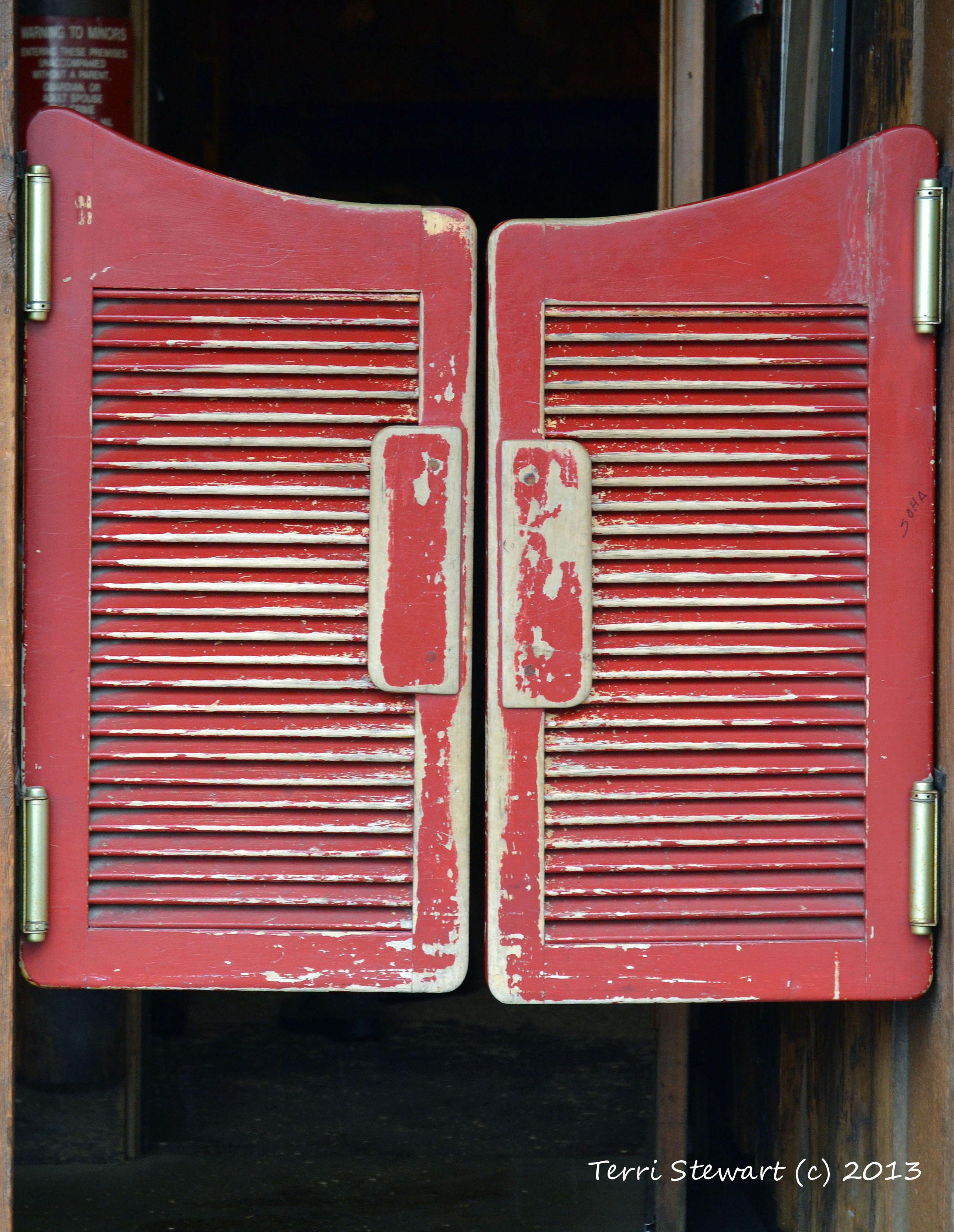
bar_doorsConsider doors. We enter or exit through doors. Sometimes we just look at doors. They lead towards something or away from something.

“As long as you are performing prayer, you are knocking on Allah’s door. And whoever knocks on Allah’s door [constantly], He will open it.” -Ibn Al-Qayyim Al-Jawzi

“The doors we open and close each day decide the lives we live.” -Flora Whittemore

“A man who does not plan long ahead will find trouble right at his door” -Confucius

“Ask, and it will be given to you; seek, and you will find; knock, and it will be opened to you.” Matthew 7:7, Christian Scripture

“In oneself lies the whole world and if you know how to look and learn, the door is there and the key is in your hand. Nobody on earth can give you either the key or the door to open, except yourself.” -Jiddu Krishnamurti

“Knowledge of what is does not open the door directly to what should be.” -Albert Einstein

Lots of thought has been given to doors! Now it is our turn to consider doors. I would like to offer up a lectio divina experience. Lectio divina is an ancient way of “being present
to a text in a heart-centered way.” (Christine Valters Paintner) It is a way of meditating or praying. When we use the lectio divina technique, we see the words we read as living, breathing essence. It becomes an encounter with the sacred. There are four primary movements of lectio (and sorry if this is repeat news!)…

Read (lectio): Read and listen for a word or phrase that creates energy within your body

Reflect (meditatio): Read again and savor the words, delve into them, use your senses to experience them

Respond (oratio): Read again and listen for the invitation coming from the text

Rest (contemplatio): Rest, be still.

Go slowly and be present. I offer you a poem from Rumi.

Lectio:

The bfirehouse_doorreeze at dawn has secrets to tell you.
Don’t go back to sleep.

You must ask for what you really want.
Don’t go back to sleep.

People are going back and forth across the doorsill
where the two worlds touch.

The door is round and open.
Don’t go back to sleep.

From Essential Rumi
by Coleman Barks

Meditatio:

weird_doorThe breeze at dawn has secrets to tell you.
Don’t go back to sleep.

You must ask for what you really want.
Don’t go back to sleep.

People are going back and forth across the doorsill
where the two worlds touch.

The door is round and open.
Don’t go back to sleep.


Oratio:

lots_of_doorsThe breeze at dawn has secrets to tell you.
Don’t go back to sleep.

You must ask for what you really want.
Don’t go back to sleep.

People are going back and forth across the doorsill
where the two worlds touch.

The door is round and open.
Don’t go back to sleep.

Rest:

forboding_door

Shalom and Amen.

~Chaplain Terri

© 2013, post and photos, Terri Stewart, all rights reserved

Terri StewartTERRI STEWART is Into the Bardo’s  Sunday Chaplain, Senior Content Editor, and Site Co-administrator. She comes from an eclectic background and considers herself to be grounded in contemplation and justice. She is the Director and Founder of the Youth Chaplaincy Coalition that serves youth affected by the justice system. As a recent graduate of Seattle University’s School of Theology and Ministry, she earned her Master’s of Divinity and a Post-Master’s Certificate in Spiritual Direction with honors and is a rare United Methodist student in the Jesuit Honor Society, Alpha Sigma Nu. She is a contributing author to the Abingdon Worship Annual.

Her online presence is “Cloaked Monk.” This speaks to her grounding in contemplative arts (photography, mandala, poetry) and the need to live it out in the world. The cloak is the disguise of normalcy as she advocates for justice and peace. You can find her at www.cloakedmonk.com, www.twitter.com/cloakedmonkwww.flickr.com/cloakedmonk and  www.facebook.com/cloakedmonk.  To reach her for conversation, send a note to cloakedmonk@outlook.com.
Posted in Buddhism, Michael Watson, Shamanism, Spiritual Practice

Spring, Ritual, and the Great Mystery

P1050397When I first began learning the ways of shamanism, more than thirty years ago, my Cherokee teacher used to speak to me about the similarities between Buddhism and Native American thinking. She was particularly fascinated by Tibetan Buddhism, and had traveled to Asia to meet with Tibetan teachers. I was intrigued, but not particularly interested in learning more. I was still trying to sort out my relationship to Native America. Adding Buddhism to the mix was quite simply beyond me.

Recently, I’ve been reading Bringing Zen Home, by Paula Kane Robinson Arai. The book is a marvelous piece of ethnographic writing examining the ways a group of Japanese women use domestic zen practices as healing tools. If one only read the early sections on ritual, the book would be a worthy purchase. Reading Arai’s words reminded me of my first teacher. I imagine she would love the book, especially the author’s focus on gratitude,  joy, kindness, and ritual as sources of connection to All That Is. She would also, I believe, deeply appreciate the discussion of Dogen, and his weaving together of form and formlessness.

This week Nature gave expression to the form/formlessness paradox. A few days ago there were buds on the trees, then in a single day, as if arising from nothing, innumerable umbrels of furled leaf and flower replaced them. The umbrels, in turn, transformed into flowers in full bloom, then immature seeds. Now the trees have largely leafed out; the entire process seemed to occur overnight, a green, fiery, big bang. Engaging Nature’s seasonal changes, we are reminded that the progression of the year is a ritual, encompassing and illuminating the patterns of Self as we unfurl, transform, and perhaps, seek rebirth. Our very lives enact, and reenact, the great patterns of the natural world.

I’ve also been reading Patrisia Gonzales’ Red Medicine: Traditional Indigenous Rites of Birthing and Healing. In this volume Gonzales reminds us that human birth is another expression of the paradox. We know how pregnancy happens, yet the miracle of personhood challenges any simple reductionism. In quite a few Native traditions reincarnation is a given. One just expects those who pass on to be reborn to the family line, often announcing their intent by appearing to their prospective mother in a dream. Life and death are doors through which we pass, nothing more than state changes. Yet we do not know, ultimately, where we come from or whither we go; that remains a Great Mystery, of which we are all, innately, a part.

In their respective books Arai and Gonzales discuss ritual as serving to connect women to the Great Mystery, and in so doing, offering the possibility of an expanded perspective and healing. Their ideas echo those offered me by teachers in Native traditions from both North and South America, although rather than the term, “ritual”, my teachers often utilized “ceremony”.  As a mature practitioner, I encourage those who come to me for healing to create meaningful rituals in their daily lives, to “practice.” I also strongly advocate for ceremony. Like ritual, ceremony seeks to make evident the sacred nature of our lives, to encourage gratitude, and to embody participants in the experience of self as cosmos. When rituals and cerem0ny work, we are transported into an awareness of being part of, and supported by, All That Is. Of the two, perhaps ceremony is more social, often engaging communities in support of those seeking healing.

Reading the work of these thoughtful authors has reminded me of  my first teacher’s wisdom, insight, and clarity. Looking back those many years, I now see her efforts to broaden my perception in a new, more favorable light. I am grateful for her kindness and teachings.

– Michael Watson

© 2013, essay and all photographs include the portrait below, Michael Watson, All rights reserved

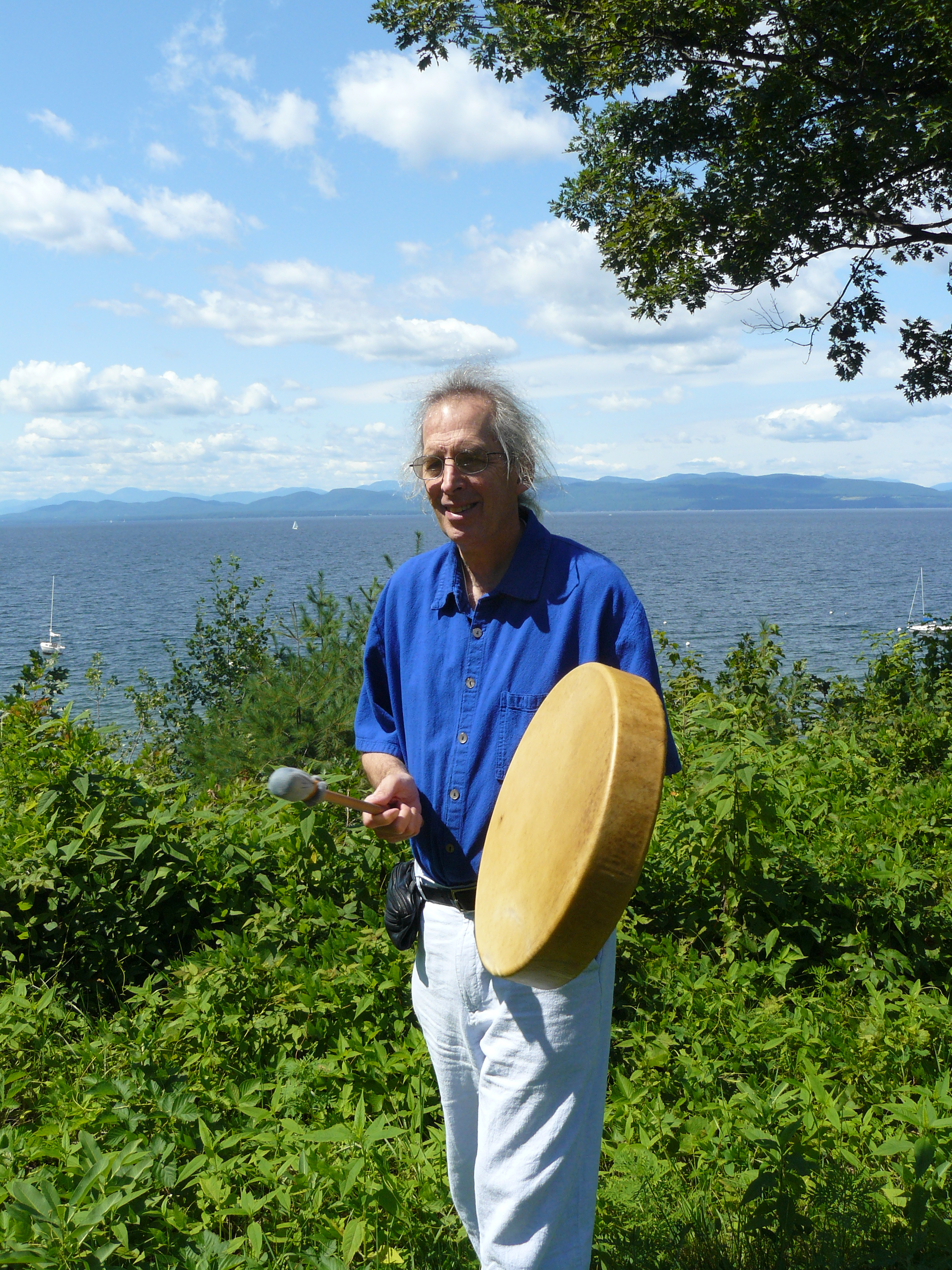
michael drumMICHAEL WATSON M.A., Ph.D., LCMHC (Dreaming the World) ~ is a contributing editor to Into the Bardo, an essayist and a practitioner of the Shamanic arts, psychotherapist, educator and artist of Native American and European descent. He lives and works in Burlington, Vermont, where he teaches in undergraduate and graduate programs at Burlington College,. He was once Dean of Students there. Recently Michael has been teaching in India and Hong Kong. His experiences are documented on his blog. In childhood he had polio, an event that taught him much about challenge, struggle, isolation, and healing.

Posted in Spiritual Practice, story, Terri Stewart

Enter the Story

St. Ignatius of Loyola, Image from WikiMedia Commons

One of the spiritual exercises that St. Ignatius of Loyola recommended was entering the story of scripture using your imagination. Using all your senses, imagine yourself in the story. Today, I am offering this exercise to you.

Below is a story that appeals to me from the Gospel of John. You do not have to be Christian to appreciate the point of this story, I believe. But if you would rather gather another story and do this exercise, I would encourage you to do that!

Sit relaxed, place your feet flat on the ground and read the story. Then close your eyes and reconstruct the scene in your  imagination. What is going on with the men and women in the scene? What do the characters look like? How do the characters react to each other? What are the people saying to one another? What emotions fill their words? As you enter into the scene, sometimes there is the desire to be there. You could place yourself in the scene as one of the characters in the story or as someone brand new.

Early in the morning Jesus came again to the temple. All the people came to him and he sat down and began to teach them. The scribes and the Pharisees brought a woman who had been caught in adultery; and making her stand before all of them, they said to him, “Teacher, this woman was caught in the very act of committing adultery. Now in the law Moses commanded us to stone such women. Now what do you say?” They said this to test him, so that they might have some charge to bring against him. Jesus bent down and wrote with his finger on the ground. When they kept on questioning him, he straightened up and said to them, “Let anyone among you who is without sin be the first to throw a stone at her.” And once again he bent down and wrote on the ground. When they heard it, they went away, one by one, beginning with the elders; and Jesus was left alone with the woman standing before him. Jesus straightened up and said to her, “Woman, where are they? Has no one condemned you?”  She said, “No one, sir.” And Jesus said, “Neither do I condemn you. Go your way, and from now on do not sin again.”

What do you smell? See? Can you feel anything? Can you imagine writing in the dirt? What would you write? Are there smells? Can you hear anything? Is your intuitive sense telling you anything? Where are you in the story? Who are you in the story? What is your story?

Shalom and Amen.

Chaplain Terri

© 2013, post and video, Terri Stewart, All rights reserved

Terri StewartTERRI STEWART is Into the Bardo’s  Sunday Chaplain, Senior Content Editor, and Site Co-administrator. She comes from an eclectic background and considers herself to be grounded in contemplation and justice. She is the Director and Founder of the Youth Chaplaincy Coalition that serves youth affected by the justice system. As a recent graduate of Seattle University’s School of Theology and Ministry, she earned her Master’s of Divinity and a Post-Master’s Certificate in Spiritual Direction with honors and is a rare United Methodist student in the Jesuit Honor Society, Alpha Sigma Nu. She is a contributing author to the Abingdon Worship Annual.
Her online presence is “Cloaked Monk.” This speaks to her grounding in contemplative arts (photography, mandala, poetry) and the need to live it out in the world. The cloak is the disguise of normalcy as she advocates for justice and peace. You can find her at www.cloakedmonk.com, www.twitter.com/cloakedmonk,  and  www.facebook.com/cloakedmonk.  To reach her for conversation, send a note to cloakedmonk@outlook.com.
Posted in Spiritual Practice, Terri Stewart, Uncategorized

Locked Away

locked-away
Locked Away

I read a brief article about potential, gifts, talents, and how we can use those things to actually make a living! Embedded in the exercise that they walked the reader through is a wonderful contemplative exercise. So here we go!

Need:  Paper and writing utensil, timer

Often, as an ice-breaker, when I first meet youth in detention, I ask them to tell me the three best things about themselves. They always come up with one thing. Then most come up with a second thing. The third one is always a struggle. It is often a struggle to recognize the greatness in ourselves…in our own story. We so often lock our gifts away and don’t let other people see the precious gift that we are. We hide our greatness under a bushel, so to speak!

Recently, NBA player, Jason Collins, came out and told the world he was gay. Some would say that is a great act of heroism. I think it is especially interesting that he came out so recently after the Jackie Robinson movie, 42, released. Both are great efforts put forth by African-American men to combat hatred. I also find greatness in the gay youth that shows up to school every day to face bullying or ridicule. One is greatness on a national scale. The other is greatness measured in every day strides.

Now, get comfortable, create a space where your feet are grounded. Put your paper before you and hold your preferred writing utensil(s) in your hand. Hold in your mind a comfortable sense of yourself. Where is your greatness today? Where has it been in the past? What is your yardstick that measures greatness? How will you claim your greatness and let it shine?

Take 5 minutes and write down things that you think are great about yourself! Talents, gifts, actions. Even going back to childhood. Yes, 5 minutes.

Now, take that paper and fold it up. Tuck it away in an accessible location–a purse or a wallet would be great. From now until next Sunday, keep a greatness log! I wonder if we can recognize the greatness in the everyday acts of living. Like yesterday, maybe it was “great” that I gave a homeless man all my change so he could get food. Some days greatness, for me, can be measured by the ability to get out of bed! Perhaps the trick is not to compare your greatness to other people.

Have a great week!

Shalom,

Chaplain Terri
CloakedMonk

© 2013, post and photos, Terri Stewart, All rights reserved

Terri StewartTERRI STEWART is Into the Bardo’s  Sunday chaplain, Senior Content Editor and Site Co-Administrator.  She comes from an eclectic background and considers herself to be grounded in contemplation and justice. She is the Director and Founder of the Youth Chaplaincy Coalition that serves youth affected by the justice system. As a recent graduate of Seattle University’s School of Theology and Ministry, she earned her Master’s of Divinity and a Post-Master’s Certificate in Spiritual Direction with honors and is a rare United Methodist student in the Jesuit Honor Society, Alpha Sigma Nu. She is a contributing author to the Abingdon Worship Annual.
Her online presence is “Cloaked Monk.” This speaks to her grounding in contemplative arts (photography, mandala, poetry) and the need to live it out in the world. The cloak is the disguise of normalcy as she advocates for justice and peace. You can find her at www.cloakedmonk.com, www.twitter.com/cloakedmonk, and www.facebook.com/cloakedmonk.  To reach her for conversation, send a note to cloakedmonk@outlook.com.
Posted in Culture/History, mystic, Naomi Baltuck, Spiritual Practice

The Stairway (to Skellig Michael)

When we traveled to Ireland we visited Skellig Michael, a monastery founded by Christian monks in the 7th century.  Life there was remote and harsh, the weather often severe.   The monks collected rainwater to drink, raised a few animals and imported soil from the mainland nine miles away so they could grow vegetables on that barren little island.

If a monk made a rare crossing to the mainland for supplies, rough weather might strand him there for a week or a month.  To return to his spartan life in a cold stone beehive hut, he would have to climb 700 feet up these winding stairs, bearing whatever supplies he had fetched home.

On our life’s journey most of us earn our bread, raise our families, and pursue our passions.  Sometimes, like water flowing down a hillside, we take the path of least resistance.  What in your life do you care enough about to be willing to make this climb?

– Naomi Baltuck

All words and images (including the portrait below) copyright 2013 Naomi Baltuck,All rights reserved

NaomiPHOTO1-300ppiNAOMI BALTUCK ~ is a Contributing Editor and Resident Storyteller here at Bardo. She is a world-traveler and an award-winning writer, photographer, and story-teller whose works of fiction and nonfiction are available through Amazon HERE. Naomi presents her wonderful photo-stories – always interesting and rich with meaning and humor – at Writing Between the Lines, Life from the Writer’s POV. She also conducts workshops such as Peace Porridge (multicultural stories to promote cooperation, goodwill, and peaceful coexistence), Whispers in the Graveyard (a spellbinding array of haunting and mysterious stories), Tandem Tales, Traveling Light Around the World, and others. For more on her programs visit Naomi Baltuck.com

Posted in Meditation, Spiritual Practice, story, Terri Stewart

Candle Gazing and a Contemplative Tale

Today’s practice is two tales set to a video recording of three candles. I will confess that this was done in my living room and, well, the candles are not as flickery on the video as they were in my living room. I would suggest getting a candle and looking at it instead of the video screen! Or simply closing your eyes and listening.

Candle gazing is a contemplative meditation technique. In this manner, instead of closing your eyes, you let your eyes rest on the flame of a candle. Let your gaze rest softly, neither focusing too hard or letting the candle leave your gaze. Stay with the candle as it dances and let your mind be free.

This video is about 4 1/2 minutes long. There are a couple of brief moments of silence. Stay with the silence and get through to the other side.

The stories are from one of my favorite books, “Peace Tales: World Folktales to Talk About” by Margaret Read MacDonald. This book found us when my kids were in elementary school. (My youngest is graduating this year! Yikes!!)

Sit back. Relax. Get comfortable. Become grounded. Now listen with your heart.


Namaste, salām, shalom.


© 2013, post and video, Terri Stewart, All rights reserved

Terri StewartTERRI STEWART is Into the Bardo’s  Sunday evening chaplain. You can expect a special post from her each week. She comes from an eclectic background and considers herself to be grounded in contemplation and justice. She is the Director and Founder of the Youth Chaplaincy Coalition that serves youth affected by the justice system. As a recent graduate of Seattle University’s School of Theology and Ministry, she earned her Master’s of Divinity and a Post-Master’s Certificate in Spiritual Direction with honors and is a rare United Methodist student in the Jesuit Honor Society, Alpha Sigma Nu. She is a contributing author to the Abingdon Worship Annual.
Her online presence is “Cloaked Monk.” This speaks to her grounding in contemplative arts (photography, mandala, poetry) and the need to live it out in the world. The cloak is the disguise of normalcy as she advocates for justice and peace. You can find her at www.cloakedmonk.com,www.twitter.com/cloakedmonk, and www.facebook.com/cloakedmonk.  To reach her for conversation, send a note to cloakedmonk@outlook.com.
Posted in Photography/Photographer, Spiritual Practice, Terri Stewart

Contemplative Photography: Listen with the Eye of the Heart

Contemplative photography is a practice I try to observe. So often, I end up reserving it for vacation times. However, with the advent of phone cameras and the increased capabilities they have, contemplative photography is at my fingertips every day! I am reading a book on contemplative photography and would like to share some of the thoughts it is stirring in me and the information it has. The book is Eyes of the Heart: Photography as a Christian Contemplative Practice by Christine Valters Paintner. You can find her at Abbey of the Arts.

Contemplative seeing is described by Carmelite William McNamara as a “long loving look at the real.” Let’s think about what each one of these words means.

  • Long – to see, we need to slow down and notice our surroundings, immerse ourselves into the moment
  • Loving – to see clearly, we need to have a compassion filter that sees beauty in all things, the horrible and the joyful
  • Look at the real – to see things as they are, not how we want them to be

Contemplative seeing also requires a journey from the head down into the heart.

In Buddhism, there is a practice of contemplative photography called Miksang. This is Tibetan for “good eye.” Miksang has the goal of looking at the real without judgement or distinctions like “beautiful” or “ugly.” The goal is to see things as they are without attaching value judgments and to appreciate it. This opens up a third space, seeing things in a creative new way. I am reminded of a visit I made to the women’s prison. It was a spectacular Pacific Northwest day. Brilliant blue skies. Inside the prison, walking across the grounds, I looked up and saw the razor wire. At the same time it was incredibly beautiful and incredibly repulsive. That is the tension that the “good eye” brings.

freedom in the penitentiary

robin sitting still
between barbs of sharpened steel
her spirit will soar

In Christianity, this “good eye” is termed the “third eye” by Richard Rohr. He describes it as the moment when “our heart space, our mind space, and our body awareness are all simultaneously open and non-resistant. I like to call it presence. It is experienced as a moment of deep inner connection, and it always pulls you, intensely satisfied, into the naked and undefended now, which can involve both profound joy and profound sadness. At that point, you either want to write poetry, pray, or be utterly silent.”

The monk, Thomas Merton, started practicing contemplative photography and he said, “How the blank side of a frame house can be so completely beautiful I cannot imagine. A completely miraculous achievement of forms.” Perhaps the good eye or the third eye is simply seeing the miracle.

All this is quite a lead up to the offering I have today of a contemplative photograph. I am going to offer an image and then I encourage you to visit one from Thomas Merton he titled “Sky Hook” and described as the “Only known photograph of God.”

After entering the photograph(s), please consider sitting with the feeling that is created when you shift from head seeing to heart seeing. Gaze lightly into the distance without focusing on any one thing. Be present to the real. After you have considered these photographic offerings, perhaps you would consider gazing around you, holding compassion in your heart and seeing something beautiful. If you have your camera, great! If not, consider the magical moment of holding the image in your heart and then releasing it.

Community
Community

Reflection: What, if anything, has changed? How was the journey from head to heart?

Shalom and Amen.

Chaplain Terri

© 2013, post and photographs, Terri Stewart, All rights reserved

Terri Stewart
Terri Stewart

TERRI STEWART is Into the Bardo’s  Sunday evening chaplain. You can expect a special post from her each week. She comes from an eclectic background and considers herself to be grounded in contemplation and justice. She is the Director and Founder of the Youth Chaplaincy Coalition that serves youth affected by the justice system. As a recent graduate of Seattle University’s School of Theology and Ministry, she earned her Master’s of Divinity and a Post-Master’s Certificate in Spiritual Direction with honors and is a rare United Methodist student in the Jesuit Honor Society, Alpha Sigma Nu. She is a contributing author to the Abingdon Worship Annual.
Her online presence is “Cloaked Monk.” This speaks to her grounding in contemplative arts (photography, mandala, poetry) and the need to live it out in the world. The cloak is the disguise of normalcy as she advocates for justice and peace. You can find her at www.cloakedmonk.com,www.twitter.com/cloakedmonk, and www.facebook.com/cloakedmonk.  To reach her for conversation, send a note to cloakedmonk@outlook.com.
Posted in Spiritual Practice

Shift Into Heart with Quick Coherence Techniques

This article is from the folks at shiftyourlife.com-Tracy Latz M.D. and Marion Ross, PhD. Republished with permission.

Our friends at HeartMath have described a wonderful technique to rapidly get into your heart. The Quick Coherence® Technique ( a heart math trademark) helps you create a coherent state, offering access to your heart’s intelligence. It uses the power of your heart to balance thoughts and emotions, helping you to achieve a neutral, poised state for clear thinking. It is a powerful technique that connects you with your energetic heart zone to help you release stress, balance your emotions and feel better fast.

Quick Coherence® will help you find a feeling of ease and inner harmony that will be reflected in your heart rhythms. The heart is a primary generator of rhythm in your body, influencing brain processes that control your nervous system, cognitive function and emotion. More coherent heart rhythms facilitate brain function, allowing you more access to your higher intelligence so you can improve your focus, creativity, intuition and higher-level decision-making. When you’re in heart-rhythm coherence, you perform at your best – what athletes call being in the zone. You feel confident, positive, focused and calm yet energized.

Step 1: Heart Focus.
Focus your attention on the area around your heart, the area in the center of your chest. If you prefer, the first couple of times you try it, place your hand over the center of your chest to help keep your attention in the heart area.

Step 2: Heart Breathing.
Breathe deeply but normally and feel as if your breath is coming in and going out through your heart area. Continue breathing with ease until you find a natural inner rhythm that feels good to you.

Step 3: Heart Feeling.
As you maintain your heart focus and heart breathing, activate a positive feeling. Recall a positive feeling, a time when you felt good inside, and try to re-experience the feeling. One of the easiest ways to generate a positive, heart-based feeling is to remember a special place you’ve been to or the love you feel for a close friend or family member or treasured pet. This is the most important step.

Quick Coherence® is especially useful when you start to feel a draining emotion such as frustration, irritation, anxiety or stress. Using Quick Coherence at the onset of less intense negative emotions can keep them from escalating into something worse. This technique is especially useful after you’ve had an emotional blowup to bring yourself back into balance quickly.

You can do the Quick Coherence® Technique anytime, anywhere and no one will know you’re doing it. In less than a minute, it creates positive changes in your heart rhythms, sending powerful signals to the brain that can improve how you’re feeling. Apply this one-minute technique first thing in the morning, before or during phone calls or meetings, in the middle of a difficult conversation, when you feel overwhelmed or pressed for time, or anytime you simply want to practice increasing your coherence. You can also use Quick Coherence whenever you need more coordination, speed and fluidity in your reactions.

Another technique that we, The Shift Doctors, regularly teach in seminars, to patients and in our books comes from the Buddhist tradition and is called The Loving Benefactor Meditation. The meditation goes as as follows:

(This meditation can also be downloaded at iTunes and is from our 2nd companion CD for our book Shift: 12 Keys to Shift Your Life – for details see meditation page at shiftyourlife.com ). This meditation is great for getting into your heart in about 30 seconds or less.

Find a comfortable, seated position on a chair or cushion and allow your body to settle into position. Close your eyes and begin to focus your attention on your breath, following your cycles of inhalation and exhalation.  Notice the rising and falling sensations in your belly as you breathe in and out and follow this for a few cycles.

Now try to bring to mind a heartfelt sense or visual image of someone whom you believe embodies the qualities of unconditional love and compassion.  This person can be a friend or relative, a religious or historical figure, a spiritual being or just someone who embodies these qualities.  Picture this person as if they were sitting or standing right in front of you.

Look into their eyes and feel the absolute unconditional love and compassion flowing from them towards you.  Now, radiate feelings of love and gratitude back towards this person. Whenever you feel your mind wandering, gently bring your attention back to the image of the loving friend, historical or spiritual image and once again practice radiating love, empathy and compassion towards them.  Feel their love, empathy and compassion radiating back towards you.

You can choose to stay with your Loving Benefactor and feel their love flowing to you and your love flowing to them for up to 20 minutes. You can also have your Loving Benefactor move slowly around your left side and stand behind your left shoulder to be with you as you go about your day. You can still feel them present when you open your eyes! Know that this Loving Benefactor is sending you love every minute of every day.

In addition, The Mountain Meditation can be quite helpful to melt away stress or anxiety. When you are feeling helpless, powerless, inadequate or have angst about meeting a challenge that is facing you in your life, the ‘Mountain Meditation’ can prove to be a transformative experience. If you are ready to feel your inner strength, click on the meditation above, sit back, close your eyes and prepare for a journey (led by ‘The Shift Doctors’) back to vitality and your powerful inner nature. Listen to The Mountain Meditation by clicking here!

Hope these tips and tools are helpful –:)

Loads of Light to all!

Tracy Latz, M.D.and Marion Ross PhD.  (a.k.a. “The Shift Doctors”)

**The Shift Doctors (Tracy Latz, M.D. & Marion Ross, Ph.D.) are available for keynote talks, classes, events or for seminars (1/2 day or up to 2 day) on Energy Medicine personal transformation, team-building, motivation, anger management, intuitive development, or collaboration for private groups, conferences, corporations or corporate events. Contact them at info@shiftyourlife.com or find out more about their books, DVD’s, CD’s and tools for personal transformation at www.shiftyourlife.com.

Posted in Spiritual Practice, Teachers

For the suffering …

IN SOLIDARITY WITH THE PEOPLE OF BOSTON

AND

PEOPLE EVERYWHERE WHO ARE SUFFERING THE EFFECTS OF VIOLENCE

There is a saying in Tibetan, ‘Tragedy should be used as source of strength.” No matter what sort of difficulties, how painful experience is, if we lose our hope, that is our real disaster.’ ” Dalai Lama XIV

2185-1275628803p3wR

Easier said than done, I know.

Photo credit ~ Bobby Makul, Public Domain Pictures.net

Posted in Spiritual Practice, Terri Stewart

Yom Hashoah

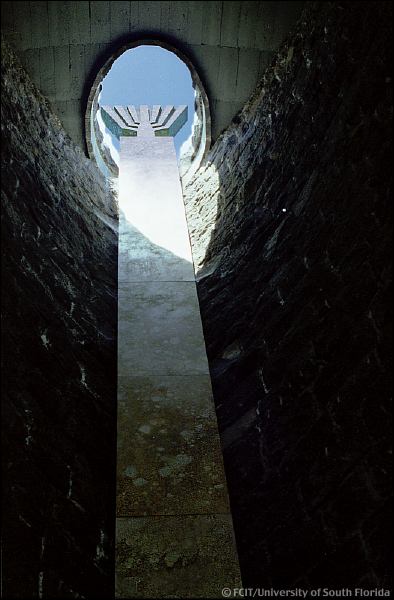
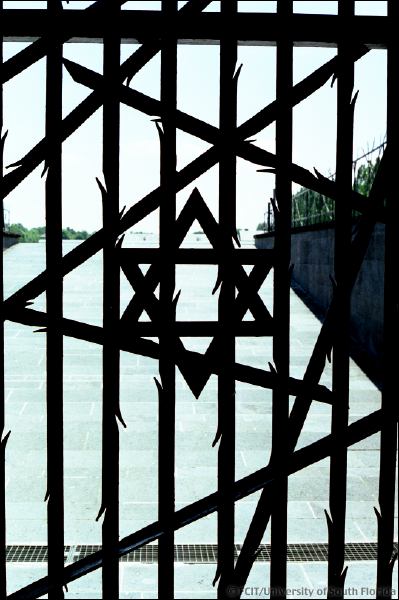
April 7th marked Yom Hashoah, the Holocaust Remembrance of Judaism (and thank you to Dr. Erica Martin for bringing this to my attention).  I have participated in several Yom Hashoah services over the years during my time as Ecumenical Liturgy Graduate Assistant at Seattle University. You will be brought to your knees acknowledging the atrocities that can be (and continue to be) committed in the name of humanity. And then further humbled by the acknowledgment of hope and transcendence that exists in the human spirit. A particular phrase that marks the worship service is, “We will never forget.” Let it be so.

Let us never forget that all it takes for evil to prosper is for good people to be silent.

Let us never forget that we are capable of unspeakable atrocities in the name of nationalism and in patriotism.

Let us never forget that by having a desire to punish at all costs, we create the monsters that haunt us.

Let us never forget that innocents pay the price of our decisions to turn away from caring for one another.

Let us never forget that holocausts continue and that genocide is still experienced.

Let us never forget the evil that haunts humanity.

But,

Let us never forget that a caterpillar is transformed into a butterfly.

Let us never forget that caring for the widow, the orphan, and the stranger among us is a call to compassion at all costs.

Let us never forget that when we offer our neighbor care, we offer our care to the entire world.

Let us never forget that the peacemakers are blessed.

Let us never forget that those who are last among us, will be first.

Let us never forget that love overcomes evil.

And,

Let us never forget that no matter how small the light, it cannot and will not be overcome.

Link to GenocideWatch.org

© 2013, post, Terri Stewart, All rights reserved