In honor of St. Patrick’s Day, a Celtic blessings from Irish poet, John O’Donohue

The Irish poet and writer, John O’Donohue (1956-2008) was as moved by the landscape of the soul as he was by the landscape of his country with its Celtic spirituality. An ordained Catholic priest, he eventually left the priesthood, but he never abandoned the mystical roots of his Christianity. He was a Hegelian philosopher, did doctoral work on Meister Eckhart, was fluent in Irish and German, was an environmental activist, and wrote several best-selling books (both nonfiction and poetry). His most notable work was Anam Cara:A Book of Celtic Wisdom. (Anam Cara meaning soul friend.

HAPPY ST. PATRICK’S DAY

normal_saint_patricks_day_Shamrock_Pipes

– Jamie Dedes

on giving …

on giving

bapa dola
said to his student
always serve
a guest water
and
chapati
first
if they show
gratitude
and
express thanks
then
serve them
wine
and fruit
else
bid them
safe journey

– Charles W. Martin

© 2015, poem and illustration, Charles W. Martin, All rights reserved

Last Cast of the Day

I wonder what would happen if we just
ran into one another someday.
It’s not going to happen, but what if?
Would your chest jump a little,
gassed on adrenalin or maybe bile?
Would you get all prickly around
your ears and face as blood
pushed all the elevator buttons?

Would you turn and cross the street,
like you meant to do that all along,
never looking at me, rather than
present your face to mine in a guarded
“Hi, old friend” moment?
Would we even recognize one another,
after age and life and lies have made like
locusts or glaciers on our my faces?

Would you be okay with an every-five-years
reunion of our class of two? I’d be the one
with the sticker on my chest that said
“Hi, my name is …” since I seldom know
who I am anymore other than old.
I don’t know why I wonder these things
from time to time. Maybe it’s the hopeful,
unworthy masochist in me.

You know, the one who each day
casts lines of memory and imagination
into the dark ocean of time,
never knowing what I’ll haul in.
Today it’s been muddy, writhing
questions and wonders. That’s how it goes
when you fish for words and hope.
There’s always another chance tomorrow.

– Joseph Hesch

© 2015, poem, Joseph Hesch, All rights reserved

Renewed Like an Eagle … spiritual lessons from nature …

Do you remember when your baby teeth fell out? Do you have any memories of being without central incisors, lisping and whistling when you spoke, unable to bite into an apple or an ear of corn? How much do you remember of the physical changes associated with your passage through puberty?

Would you ever choose to re-live those changes? (I imagine in response a loud chorus of ‘Noooo!’ and laughter.)

Why do we find change so awkward and uncomfortable? Why do we imagine a state of perfection achieved and unchanged, and why is that stasis desired? Consider this: change is natural; metamorphoses are observed and documented in every species — birth, maturation, reproduction, aging, death, decay, absorption, and birth. All around us there is a process of movement, going from one thing to another, losing some properties and gaining others. This is Life. It is dynamic; it is not good or bad; it is. Often, however, we decide we like where we are. We want to stay put. It’s familiar. It’s comfortable. But we are, in fact, stuck, and it takes a great deal of energy to stay there, resisting the current of Life all around. We feel drained, exhausted, spent, sapped, worn out. We want to feel the flow of energy again, but in order to do that, we must make a change. Fear holds us back. This is a pivotal point of decision – we must choose Change to choose Life.

The Old Testament talks about having youth renewed like the eagles’, about mounting up with wings as eagles and being borne on the wings of an eagle. Golden eagles populated the Holy Land, and their lifespans were observable to the ancient poets. I have seen bald eagles in the wild on a few occasions now, but not before I was 45 years old. What do I know of an eagle’s life? I did a little research. Southwestern Bald Eagle Management told me “In their five year development to adulthood, bald eagles go through one of the most varied plumage changes of any North American bird. During its first four weeks of life, an eaglet’s fluffy white down changes to a gray wooly down. At about five weeks, brown and black feathers begin to grow. It becomes fully feathered at 10 weeks of age. In its first year, the mostly dark-colored juvenile can often be mistaken as a golden eagle. However, the bald eagle progressively changes until it reaches adult plumage at five years. Notice in the pictures how its dark eye lightens throughout its first four years of life until it becomes yellow. Also, see how its beak changes from gray-black to a vibrant yellow. It is believed that the darker, more mottled plumage of a young eagle serves as camouflage, while the white head and tail announce that it is of breeding age.”

Renewal is for the purpose of maturity. It is not about going back to a juvenile state. It is about soaring with the movement of Life toward the next place of energy. It is not about resuscitation; it is about resurrection. We shall all be changed.

My daughter recommended to me a book titled Being Mortal by Atul Gawande. The author is a medical doctor and a gerontologist. He tackles the real and practical implications of growing old and dying in this culture: nursing homes, DNR orders and advance directives, heroic life-saving surgeries, hospice and what it is to live with meaning and dignity. This book terrified me. I read it in small doses. It made me face denial and delusions head on. It was not a comfortable read, but I would recommend it to anyone. It puts Change in the forefront and invites you to get real. I would not have been able to read it 7 years ago, right after my husband died. I wasn’t ready. The book I read then that helped me to accept change was Pema Chodron’s book When Things Fall Apart (which I recently discovered is a phrase from Yeats’ poem “The Second Coming”).

Where are you in the flow of Life? Where are you stuck? What are you afraid of when you face Change? How have you embraced Maturity? How have you run from it? What images of Peace in harmony with Change are meaningful to you? These may be your symbols of Renewal.  Here are a few of mine (click on the first one to see a slideshow with larger images):

– Priscilla Galasso

© 2015, essay and photographs, Priscilla Galasso, All rights reserved

Overlooking the Obvious

IMG_6220I’m open to your suggestion,
I said to the sky.
And the wind replied with a sigh,
giving me the cold shoulder
and a shivering, withering brush-off.
I’m willing to look at things
in a new light, I told low winter sun.
She blinked behind a wisp,
a sky-borne snow scarf,
ducked behind a gray curtain,
making shadow puppets
of the passing clouds.
C’mon, Nature, fill me
with inspiration,
I whispered to the cardinals,
these pennants adorning
skeleton maples.
An empty mitten oak leaf
scurried across virgin snowpack
to its slushy demise.
And Nature said, “I just did.”

– Joseph Hesch

© 2015, poem, Joseph Hesch, All rights reserved; 2014, photograph, Jamie Dedes, All rights reserved

The Flight of the Sparrow

Last summer I saw a baby Stellar Jay perched on my arbor, resting after trying out its wings. I looked away for an instant; when I looked back, it was gone.

It reminded me of something The Venerable Bede once said.  Bede was an Anglo-Saxon monk born in 672A.D.

In  The Ecclesiastical History of the English People he compares a person’s life to the flight of a sparrow.  Imagine sitting in a mead-hall at supper by the light of a blazing fire, while outside a winter storm rages.

A sparrow flies in one door of the hall, into the light, then darts out out another door, back into the cold dark night.  “So our lives appear for a short space,” said Bede, “but of what went before, or what is to follow, we are utterly ignorant.”

People have many different thoughts, feelings, beliefs and explanations as to what or if anything comes before…

…or after the sparrow’s flight.

Sooner or later each of us will fly out into the night.

That seems to be the only thing everyone can agree upon.

I don’t need to know all the answers before I fly back out.

I am right here, right now, basking in the warm and beautiful light of life.

Whatever happens outside the mead-hall won’t change the way I live my life here and now.

I have work I am passionate about…

..family I love and good friends to play with.

I care about issues in the wider world…

…and in my own little sphere.

I hope I can make some small difference…as a writer, a storyteller, a parent, a friend…

…and to leave even just a little nightlight shining…

…when my flight is done.
nullAll words and images copyright Naomi Baltuck

Orhan Pamuk: The Fear of Being Left Outside, What Literature Needs to Address

Orhan Pamuk (b. 1952), Istanbul Turkey, Novelist
Orhan Pamuk (b. 1952), Istanbul Turkey, Novelist ~ photo courtesy of Mr. Pamuk

“What literature needs most to tell and investigate today are humanity’s basic fears: the fear of being left outside, and the fear of counting for nothing, and the feelings of worthlessness that come with such fears; the collective humiliations, vulnerabilities, slights, grievances, sensitivities, and imagined insults, and the nationalist boasts and inflations that are their next of kin … Whenever I am confronted by such sentiments, and by the irrational, overstated language in which they are usually expressed, I know they touch on a darkness inside me. We have often witnessed peoples, societies and nations outside the Western world–and I can identify with them easily–succumbing to fears that sometimes lead them to commit stupidities, all because of their fears of humiliation and their sensitivities. I also know that in the West–a world with which I can identify with the same ease–nations and peoples taking an excessive pride in their wealth, and in their having brought us the Renaissance, the Enlightenment, and Modernism, have, from time to time, succumbed to a self-satisfaction that is almost as stupid.”

—Orhan Pamuk, Nobel Lecture (translation by Maureen Freely), 2006
.
Michael Watson‘s once said in a post, “. . . we seem to be caught up in the Bardo, spinning endless fantasies derived from fear, greed, and anger” … and we would add “hubris.”  
Priscilla Galasso shared these wise thoughts with us: “These fears and the overcompensation for them seem to be part of the shame spiral. The ego is vulnerable to shame, and manipulating that dynamic is common in our culture. If we were better able to be aware, responsible, but unattached to ego and ‘immune’ to shame, then perhaps these fears and stupidities would fade. Shame is useful for manipulation, but it is detrimental to enlightenment, I think.”
A bit of meat  for us to chew on as poets and writers, artists and musicians, therapists, clerics and bloggers … and simply as humans beings.
.
So what do you thing? Is Orhan Pamuk’s statement fair?

Feast or Famine

feast or famine

with the light
of the new day
he began
his fasting
knowing surely
that the gates
of heaven
had opened
but
wondered if
those of hell
were closed tight
for war
was all around
he could hear
the sounds
of death’s cruel voice
wailing throughout the day
embraced by dry desert winds
while
the songs
and
promises of peace
were
as empty as the plate
before him

© 2015, poem and photograph, Charles W. Martin, All rights reserved

Going Fast

When I was young, fasting meant
PBJ or grilled cheese at lunch,
creamed tuna or fish sticks for dinner
on our meatless Lenten Fridays.
The priests and nuns said God
willed us to change up the menu,
but never explained why, just that
once it was complete we earned our
Easter candy and a week of ham.
Now you tell me you’re forcing
a spiritual, a physical hunger
upon yourself, because you long
for some abstraction, an ideal,
not something tangible like
a Coney Island hotdog
or carne asada burrito.

Maybe if I knew how hunger
would bring about “better,”
I’d understand how this sacrifice
of gustatory satisfaction works.
Will you recognize it on
your tongue when your sacrifice
brings the fabulous prize you seek?
When your fast for a greater good
is finally sated, when the world’s
bêtes noires negated, could you
please tell me one more thing?
Peace, does it taste like
chocolate bunnies?

– Joseph Hesch

© 2015, poem, Joseph Hesch, All rights reserved

Ego, Redunancy, Fasting and Abunance ~ Lessons From Nature

Have you ever had an experience of ego awakening? I have. The first one I remember happened as I was sitting in church on a Sunday morning, listening to a sermon. I was a child of about 7, I think, squirming about in the pew beside my family members. None of them were paying attention to me. They were simply silent. I suddenly became aware that I was there and that it was possible that I could ‘not be there’. I could not be born, for example, or I could be something else. I wondered why I wasn’t a rabbit, but a girl, Priscilla. I wondered why I was aware of being present for this sermon when I had sat through so many others and not been aware at all. I paid attention to the words of the Rector for a time, staring straight at him, but his talk was not as exciting as this simple new awareness. I figured he wasn’t really addressing me. I think it was Spring, the stained glass windows were open a bit, and the sun was shining. I sat facing the windows, away from the pulpit, and in rapt and embryonic ego transcendence.

My ego returned to center stage, though, shortly after that. I was the fourth daughter in this church-going family. I grew up with questions about whether or not I was special, with feelings of redundancy. My sisters were always more intelligent and talented and capable, having the edge of years of experience beyond mine. What did I have to offer that they couldn’t deliver more readily? And what would be my share of the resources available? Could my parents really give their attention and their love to all of us equally? Somehow, these questions kept arising for me, causing anxiety and an eagerness to convince myself that I was unique and uniquely loved. I spent 47 years in the church-going habit, seeking to resolve these questions in community with others looking for a similar comfort.

1965

Let me insert a different image now. David Attenborough on Christmas Island, surrounded by a moving mass of red crabs. It’s nighttime and quite dark. Thousands of females, heavy-laden with eggs, are approaching the tide in order to release their burdens into the surf. The water turns reddish brown as a surge of life heads out to sea. Millions, billions of little babies set adrift. Redundancy and abundance. Life in a beautifully mysterious burst of activity, at a specific time and place, choreographed by some ancient awareness and acceptance. It is awesome – possibly divine. Are those babies unique and uniquely loved? The question seems moot. They ARE. No less. No more. (http://www.arkive.org/christmas-island-red-crab/gecarcoidea-natalis/video-00c.html – this is not David Attenborough, but at least it doesn’t have advertisements.)

We were driving out to the University last week to attend an enrichment class entitled “Understanding the Mysteries of Hibernation” when Steve popped in an audio book CD, The Power of Now. Eckhart Tolle began to describe his pivotal ego experience: For years my life alternated between depression and acute anxiety. One night I woke up in a state of dread and intense fear, more intense than I had ever experienced before. Life seemed meaningless, barren, hostile. It became so unbearable that suddenly the thought came into my mind, “I cannot live with myself any longer.” The thought kept repeating itself several times. Suddenly, I stepped back from the thought, and looked at it, as it were, and I became aware of the strangeness of that thought: “If I cannot live with myself, there must be two of me – the I and the self that I cannot live with.” And the question arose, “Who is the ‘I’ and who is the self that I cannot live with?”

He went on to talk about the False Self that is edified, criticized, and mortified in our Western culture. I nodded in complete recognition. Don’t we call that the Ego? And then…I began to think of that ‘I’, that divinely authentic, fully alive, completely unique and inter-dependent being that each of us is. It was like a flash. My face lit up in excitement as I turned to Steve, “YES! I get it!” The things I had been hearing about enlightenment and no-self in Buddhism finally made sense. It’s not about the abasement of your being, it’s about the shift from False Self to ‘I’.

An hour later, I was listening to a lecture about mammals who suppress their metabolic systems, who turn down the fire of life in order to more effectively harmonize their energy with their changing environment. They go through cycles of torpor and arousal, staying alive (and in some cases, giving birth) without adding any food energy into their system – for 5 to 6 months! This is fascinating! Heart rate, respiratory rate, body temperature, digestion – all of these vital systems depressed by as much as 75%, and still, there is Life. The speaker discussed implications for biomedical research, but I am not as impressed by what humans might do with this knowledge as I am by the beings who live it. They are the authentic ‘I’; they are themselves, in a web of inter-dependence and autonomy, using and conserving their energy in response to what IS, what is available in the environment and what is intrinsic to their survival. Descriptions, terms, charts and statistics become gibberish. Even Science is a False Self. These are “stepping-stones”, as are all words, in Tolle’s estimation, serving to propel us to the next place in the movement of existence.

photo from sciencenews.org

The flow of Life, the flow of energy – what is that about? It’s not about clinging to stepping-stones: food, love, identity, thoughts, dogmas or practices. It’s about finding “the joy in change and movement” (as Steve would say), the dynamic of relating to an abundant, redundant, mysterious and unexpected Universe. It’s about waking up and being conscious of where we are right NOW…..and how beautiful and wonder-filled that place is. That consciousness is the beginning of Peace, an intuitive harmony with life that is unfortunately made dissonant by the noise of Falseness in this culture. What would it be like to give up that False Self more and more? Instead of giving up chocolate or the Internet for 40 days, I’m going to challenge myself to move more into ‘I’ existence. I don’t want to live with my self any longer. And that’s a good thing. 🙂 Namaste, Priscilla

© 2015, essay by Priscilla Galasso, All rights reserved

Bread as the face of God …

there-are-people-in-the-world-so-hungry-that-god-cannot-appear-to-them-except-in-the-form-of-breadHow many times in your life have you been truly hungry? I don’t mean normal hunger that comes from skipping a meal or two, I mean the kind of hunger that causes a literal pain and gnawing in your belly. We may get reminded of global hunger by late night info-mercials with children who look like walking skeletons, or if we interact with homeless people at all, we may see hints of it. You might have been scolded as a child to “finish your food because there are kids starving in Africa!” Some of us may even know people who struggle to put food on the table for their families. But chances are, you’ve never had to deal with the kind of hunger and malnutrition that can kill you.

Lent season is coming up and that leads many to think about fasting. That, in turn, can remind us of hunger, and how many people there are in the world who are always hungry. Lent is also a time when people give up vices, and spend that money that they would have spent on their vice on charity, instead. I think helping out someone who is hungry is an excellent substitute.

Mother-Teresa-Quotes-about-poor-person-dies-of-hunger

Some sobering facts for you:

  • The United Nations Food and Agriculture Organization estimates that nearly 870 million people of the 7.1 billion people in the world, or one in eight, were suffering from chronic undernourishment in 2010-2012. ~ Source
  • The world produces enough food to feed all 7 billion people, but those who go hungry either do not have land to grow food or money to purchase it. ~ Source
  • Nearly 98% of worldwide hunger exists in underdeveloped countries. ~ Source
  • Almost 1 in every 15 children in developing countries dies from hunger. ~ Source

The good news is that overall, world hunger has actually decreased, thanks in large part to awareness campaigns, global government programs and more people pitching in to help. There is still a long, long way to go.

What can you do to help? I’m glad you asked! 🙂

Locally (U.S.):

Supermarket Stakeout

Food Forward

Ideas to help from Bread.Org

Click to give (Greater Good Network)

Globally:

Feed the future

GFSI (Global Food Safety Initiative)

Bread For the World

Practical Action.org

Borgen Project.org

World Food Programme

Action Against Hunger

Here’s a really good video that addresses global hunger, the reasons behind it and what can be done to help:

– Corina Ravenscraft

© 2015, feature article, Corina Ravenscraft, All rights reserved

because love poems are eligies

OLYMPUS DIGITAL CAMERAat the grocery ~
Meeting accidentally in the wine section
you sip me shyly with gentle conversation
and read the label on my selection,
your hand brushes mine, a sensual appeal
It’s for drunken pasta! I explain,
you laugh and say you’d rather drink than eat it
your eyes are Wedgwood blue and hold a wistful smile
you imagine I’m something fine, a vintage port
you’re flushed with the fancied sweetness
I could drink you too, a sturdy Bordeaux
but I no longer deal well with hangovers

© 2012, “Hangover” Jamie Dedes, All rights reserved; Photograph courtesy of morgueFile

Crane_frog4

To the frog at the door

if you kiss a frog, so I’ve been told
there’s a chance he’ll turn into a prince
a frog prince, which means you have
you absolutely have to love him
and i’ve loved a few frogs, at least
i think i have, they never became princes
nor did their love morph me into a princess
i’m still a cranky old crow, we are what we are,
loving frogs and crows isn’t transformative
….why should it be?
one woman’s frog is another woman’s prince

…….as for this old crow

………….she loves flying solo

…….not that you asked

© 2013, “The Frog Prince and the Old Crow” poem, Jamie Dedes, All rights reservedIllustration ~ The Frog Prince by Walter Crane (1845-1915), U.S. Public Domain

Depth Perception: 70th Anniversary of the Liberation of Auschwitz

Last Tuesday we went downtown to attend a concert at Benaroya Hall, commemorating the 70th Anniversary of the Liberation of Auschwitz.

null

The performance was called Art From Ashes, and was produced by Music of Remembrance.

I had mixed feelings about going.

It was a wet cold day in Seattle.

The city seemed dirty.

…And sad.

It would be heartbreaking to listen to works by Jewish composers whose lives and legacies were cut short at the death camps of Auschwitz and Dachau.

But the music proved more poignant than heartbreaking.

These doomed artists plumbed the depths of their despair, gleaned beauty from their cruel twisted world, and imbued their swan songs with love and longing.

Each note, each word a parting glance, a declaration of love, a prayer…

“…Tearfully stolen from the distant west, a gentle pink ray on the thin twigs, settling its quiet kiss on tiny leaves..”

As Jake Heggie wrote in his song Farewell, Auschwitz, they cast off their striped clothes and held their shaved heads high.  “The song of freedom upon our lips will never, never die.”

Ashamed and bewildered by the depths of depravity to which humankind has too often sunk, I also felt a fierce pride for its passion and courage and tenacious love of life that can raise art from the ashes.

Copyright 2015 Naomi Baltuck

a portrait in February …

IMG_3809there’s a portrait in February of percale sheets
and the tempting rondure of warm shoulders
tucked under a pink duvet and late mornings,
coffee in bed, playing your hips like the strings
of a harp, the lively marl of a true love’s honor,
soft, the whiff of spring, the meadow violets
their heart-shaped leaves and felicitous flowers
promise of summer peace in damask gardens
wealth of silver roses, tart lemons, frisky mint
finger tip the faded hillock of hair on your neck
and let go of all that is false and mean for this –
the warmth of our ardor, the trust in our kiss

– Jamie Dedes

© 2015, poem and illustration, Jamie Dedes, All rights reserved

Drive-by Shooting in Detroit


I was born in The Motor City.   I graduated from U of M, and headed West to seek my fortune. I’ve lived in Seattle for over thirty years.  It was love at first sight, it’s the home of my heart, and where my children were born…


…but I still feel unexpected tugs on my Midwestern roots.

Detroit is where my parents and grandparents are buried.

In French ‘Detroit’ means ‘channel or strait connecting two bodies of water.’  That would be the Detroit River that connects Lake Erie and Lake Huron.

That would also be my Aunt Loena,  who connects me to my mother–through memories, blood ties, and love.  Last spring I returned to the river that spawned me.

My Aunt Loena and sister Lee are always ready for a visit.

We did a drive-by shooting of the old neighborhood…with a camera.  We took shots of the little house I grew up in.

Many other houses were already pretty well shot.

Across from  Newton School, a woman kept cranky geese in her yard, but the geese were long gone, and so was the house.


My high school was for sale.  It was named for Thomas M. Cooley ( 1824-1898), a local boy done good.  He started out with a small law business and ended up on the Michigan Supreme Court.  In The Cooley Doctrine, he wrote “local government is a matter of absolute right; and the state cannot…take it away.”  Cooley must be spinning in his grave since Michigan’s Republican Governor Rick Snyder gave himself the power to take over cities, remove locally elected officials, install puppet governments, and destroy labor unions.  Not in Russia.  Not in North Korea.  This is happening in the United States of America.

Yes, there are financial woes: the economy and tax base of the area were dependent upon the auto industry.  Highland Park, a town engulfed by Detroit, fought to stay independent despite the bigger city’s efforts to incorporate it.  Ford closed its Highland Park factory in the 1950s and Chrysler pulled out in 1993.  The population, once over 45,000, has decreased to 11,000.  Now it’s ‘The Detroit of Detroit’, so poor Detroit doesn’t even want it anymore. My grandparents’ Highland Park house was gone.  So was the school across the street.


If not for this sign, I wouldn’t have known Highland Park still existed.

But there must be better ways than total dictatorship to save the city.  We went to Belle Isle, an island park in the Detroit River, halfway between Canada and the United States.  It became a city park in 1904, and in 2014 it became a state park to avoid operation costs to the city.

 There used to be an elephant house, a bandstand, and a boathouse.  I learned to canoe in its waterways.

Honey Buckets are probably cheaper to maintain than the elegant brick restrooms…

…a compromise so the park might be used and enjoyed.

There was still beauty.

And history.

The Belle Isle Aquarium was built in 1904.  As kids we watched the electric eel touch an underwater wire in its tank to light up electric light bulbs.  It was the longest continually operating aquarium until 2005 when, after 101 years, it closed its doors due to lack of funding.

But in 2012 the aquarium was reopened–Saturdays only–and is run completely by volunteers from the Belle Isle Conservancy.  Admission free.


Next door is the Whitcomb Conservatory.

My folks used to turn seven kids loose in there; we played Tarzan, and our Johnny Weissmuller jungle calls bounced off that glass ceiling.

At the Detroit Institute of Art we found culture, art, and history.

 photo 14ceae3b-e762-40d1-b045-89c23581fdc4_zps21d717ba.jpg

As kids we loved the shiny suits of armor in the great hall.

As adults, we admired the Diego Rivera mural, a powerful statement about Detroit Industries.  In 1932 it was scandalous that workers with black, white, and brown skin were depicted working side by side. Members of religious communities thought it blasphemous, and called for it to be destroyed.   But Edsel Ford, who paid the bill, said he thought Rivera captured the Spirit of Detroit.

“Watson and the Shark,” my favorite painting from childhood visits to the museum, told a true story.  Copley portrayed a multiracial crew rescuing their shipmate from a shark.  Painted in 1777, a time of revolution against tyranny, artists began to depict common people as heroes. At least in Michigan, where the sharks are still circling, it is still a relevant message.


I was saddened to read so many hateful bigoted comments when researching this sculpture honoring Detroit boxer Joe Lewis.

In Detroit there was and is despair and poverty, racism and anger.

But I also saw positive action, innovative ideas for bringing life and art back into the city.  Are you a writer?  Want a free house?   Check out Write-a-House.  This organization buys abandoned houses, renovates them, and gives them to artists willing to come live in them, practice their art, enrich their community.  There are pea patches growing where, on my last visit, I saw burned out houses.

L-O-O-K.

The Spirit of Detroit is still strong.

In its past, present, and its future…

…I saw soul.

And hope.


Sweetness.

Pride.

I saw the future in a city park, where kids were playing.

 At the conservatory I saw cactus blooming in the desert, a public park taken over by volunteers who made it available to the public.

I saw open hearts.

In the most unexpected places.

 Detroit still has plenty of room to grow, room for hope.

Please watch this two minute video for another look at Detroit. 

 All words and images copyright Naomi Baltuck

Crunch of Time

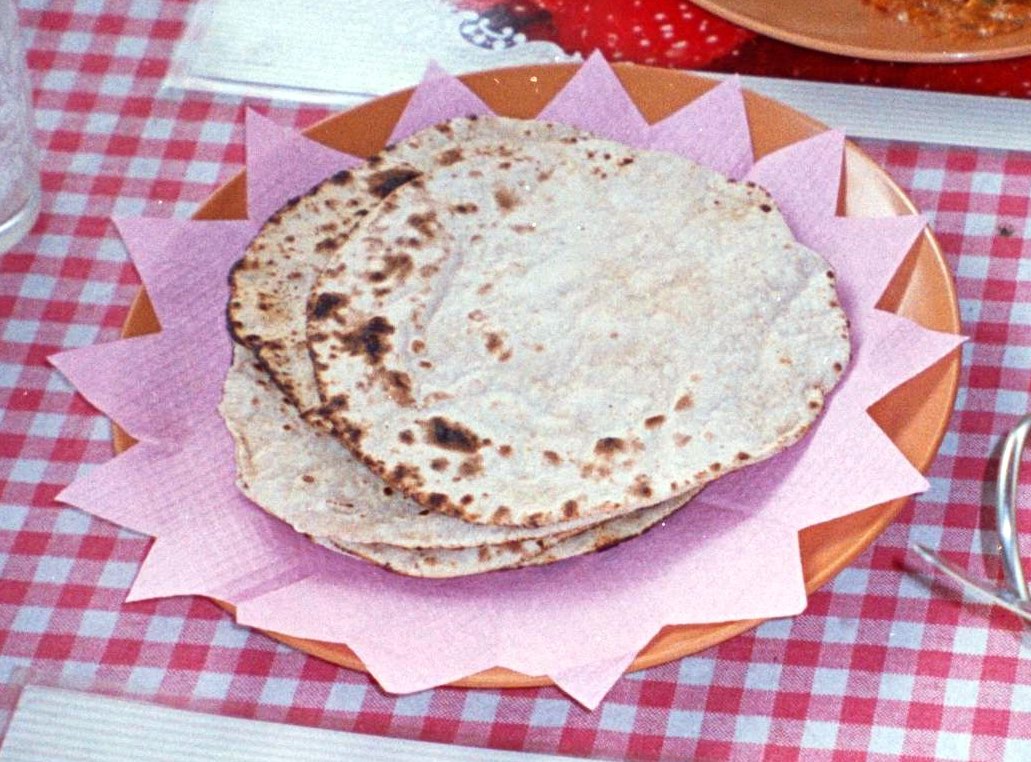
Chapati

There was a long proofing, but
you’d never know from looking
at this unleavened life.
Its Kansas prairie topography
hints at a plainness
in flavor and texture.
But you don’t know
the ingredient list populating
this old family recipe.
I don’t need to know yours either.
That’s because the product’s
more than a list of parts.
The height of your crown,
the crispness of your crust
doesn’t impress me very much.
I want to taste you,
see what seasoning of life
added to your individuality.
There’s pepper and thyme
in this piece of me.
Please forgive
the piss and vinegar.

– Joseph Hesch

© 2015, poem, Joseph Hesch, All rights reserved; photo credit ~  Fotografiert in Udaipur im Oktober 2003) upload to Wikipedia by Christian Köhlar under CC – A-SA 3.0 Unported license

Marus Borg … and gratitude or our teachers

Marus Borg, American New Testiment Scholar, Theologian and Author 1942-2015
Marus Borg, American New Testiment Scholar, Theologian and Author
1942-2015

This last week I heard of the passing of Marcus Borg. I was sadden not just at his passing but because I have learned so much from his writings. I will miss reading his words and having them open up my understanding of Jesus as both human and Divine. Marcus Borg’s writings were instrumental in changing how I came to look at Jesus, the apostles, and the first century Christians. He made me think and doubt what I have always believed to be true and to take that doubt and turn it on its head by searching for answers and being comfortable with finding only more questions.

Because of Marcus Borg I began to read scripture, questioning the standard interpretations, searching for what the words printed in the Bible meant to those they were written to, the first century believers in Jesus. Borg’s books were my first window into the church of the 21st century and why, and how, it is so different from the community of believers in the 1st century. Reading Borg’s books were instrumental in giving me an interest in pursuing a Masters of Divinity degree and looking at the carefully at the path leading to ordination. Yes I will miss this Master of Theology who opened doors and, through his writings, fostered a love of scripture, sacred texts, theology, and history. Whose writing led me on a search for the divine and human Jesus that I wanted in my life.

We do not go through this life alone. There are many people, our mentors, who have walked and are walking with us. Some mentors we know, some mentors we request or go looking for, some we have not known they were mentors but were our companions for a while, showing us us how to live by living their own quiet, faithful lives. Some mentors never know they mentored us at all. Marcus Borg was one of my mentors who never knew he walked with me. I am grateful for his life and his words. I never met him, only read his books, but I felt ‘close’ to this incredible theologian who made Jesus and God accessible to me.

I will never be able to thank him, so, instead I will thank all of my other mentors while I still have time. My parents, my first grade teacher Miss Wooster, they taught me courage and determination. I am grateful for Pastors from childhood to adulthood that listened to my ravings and didn’t belittle me. I am grateful for my current pastor, and friend, Laurie, who has been the most gracious and gentle of mentors as I have grown in my faith. I am grateful for friends who let me be me, inspiring me to be the best friend I could be. I am grateful for my beloved John who has supported me through thick and thin as we have traveled this crazy new journey God has led us both on in the last 15 years.

I am grateful for the love, comfort, and companionship of dogs, cats and birds who have taught me the value of unconditional love. I am grateful for being able to live and work, and play in a world of great beauty, and sorrow. I am grateful for my life as it is and as it will be and I know that whatever life hands me I know I am not alone, there is always someone standing beside me to offer encouragement.

On this Prayerful Tuesday who are you grateful for? Who has walked with you on a difficult path or a path of exploration and great joy? Who walked with you, gave you insights, taught you a lesson of life that you didn’t recognize at the time? We all have people who have brought meaning to our lives, today offer your gratitude, your thanks for your life’s mentors.

Gracious Presence, I am grateful for all who walk, and have walked, with me on my very bumpy life’s journey. I am grateful for your presence as you have been with me always, even though I don’t recognize you. My spirit is grateful for all I have been given, and thankful for all that is yet to come. Amen.

Ruth Jewell, ©January 27, 2015

The Month of Light: Fasting in Islam

IMG_3904Ramadan is the month of light, the month of reflection, blessings, generosity, devotion, change and sacrifice and a pillar of Islam as Prophet Mohammad (PBUH) said: “Islam is built upon five pillars: testifying that there is no God except Allah and that Mohammad is the messenger of Allah, performing prayer, paying the Zakah (charity), making the pilgrimage to the sacred house and fasting the month of Ramadan.

Ramadan is the ninth month of the Islamic calendar.  It is called the sacred month because it is observed worldwide by all Muslims as the month of fasting.  It’s twenty-nine or thirty days based on the visual sightings of the crescent moon.

Fasting in Islam means “to abstain.”  When you fast, you completely abstain from food, drinks, smoking and sexual intercourse from the break of dawn until sunset with an intention. This is not, however, all of it.  Real accomplished fasting is when you abstain from every behavior that is considered bad behavior in general.  It is something we share with Christianity and Judaism but with a lot of difference in details.

Who must fast? In general it is obligatory upon every Muslim, male or female, who is adult, sane, not sick or in a journey (traveling more than eighty kilometers). The exceptions to this are women who are in period or post-natal bleeding days, pregnant women and mothers who are beast-feeding.  These women are expected to make up the fast when they are in a condition to do so.  Those who are terribly sick, need constant medications, and those whose illness may be exacerbated by fasting.

When you fast, you will have two essential meals, sahur ( a pre-dawn meal). The Prophet Mohammad talked a lot about the reward and blessing of this meal, preferably left ’till the last half hour before dawn.  This meal will help you resist during the long hours of fasting during the day.  The second meal is iftar or break-fast, you take it immediately after sunset.

Along with exceptions mentioned above, there are a lot of permissible things a person can do that will not invalidate his or her fasting, like swimming in the sea when it’s too hot, with caution of not swallowing water, taking injections, doing blood tests, using toothpaste and eating or drinking unintentionally when someone forgets.

Fasting is a school of wisdom.  It has great spiritual and moral meaning too long to be listed in a few lines.  Beside its health benefits, it teaches patience and utility. It makes us closer to Allah because we are doing it out of love and seeking spiritual reward. It cleanses the soul from grudge and hatred. It teaches self-control and maturity.  Through fasting we learn to be selfless because we feel the pain of the poor and the hungry.

There is a beautiful sense of solidarity and community in Ramadan when everyone is helping, when mosques are filled, when relatives visit each other, when people forgive and start a new page, when a person vows to be good to others and when people stand in one line to pray.

Fasting can truly change a person’s heart when done with utter sincerity. It fills the heart with satisfaction, happiness and light because you’ll be rewarded double fo revery deed of goodness, every charity, every nice word you say, every verse of the Quran you read. When you realize that Allah gave hose who fast a special door in Heaven because of its holiness and significance.

ramadan-theme-11281531147LXCr-1

Every country celebrates Ramadan differently.  Traditions and customs change. The only thing that connects us all together is that magic that everyone feels during the month. The one I truly love is when the family celebrates the fasting of a child, encouraging him and helping him to understand what fasting truly is.  It is like a recharge for the year, a self-nourishing experience and one of the most exquisite a person can have.

Some sayings about Ramadan: on Prophet Mohammad (PBUH):

“When Ramadan enters, the gates of paradise are opened, the gates of hellfire are closed and all the devils are chained.”

“Every action a son of Adam does shall be multiplied; good action is by ten times its value up to 700 times.  Allah says: with the exception of Fasting, which belongs to me, and I reward it accordingly for, one abandons his desire and food or my sake.”

“Whoever observes fasts during the month of Ramadan out of sincere faith, and hoping to attain Allah’s rewards, then all his past sins will be forgiven.”

– Imen Benyoub

© 2015, essay, Imen Benyoub, All rights reserved; 2015, photographs, Sunrise, Jamie Dedes, All rights reserved; Ramadan theme, Petr Kratochvil, Public Domain Pictures.net