April is International Poetry Month here at The BeZine. Poetry has been an inspiration that has moved me from a very young age and I cannot imagine life without it. I have not been very poetically productive lately, but this is one of my favorite poems that I have written.
It was inspired by a conversation about language and how difficult it can be to communicate, sometimes. Poetry is all about communication, whether it be ideas, thoughts, visual descriptions, and trying to capture emotions or any of the five senses…in part, expressing the human experience of the world.
*********
~ The Will of the Quill ~
Thick as the speed of clotted thoughts,
This language suffices;
A cumbersome tool.
Experience sought (and bought)
The sacrifices
That made wiser men
From ignorant fools.
Words escape.
You. Me.
They cannot be caught,
Yet aren’t quite free,
For every one comes attached to a thought,
And for every action,
It was birthed in naught but
Electrical energy —
Brain waves of….what?
Symbols understood, with meaning,
But none can accurately catch the dreaming,
Teeming shores of what it means to live.
Sensation lingers in the mind’s mouth,
Tasting phrases.
Sifting variations of description,
Through this medium’s sieve.
It still lacks
The richness of the moment’s impact.
In fact,
It’s amazing communication takes place.
Limited as we are,
By our lack
Of (understanding)
The rigidity of moving back
And forth,
Through
Time
and
Space.
Seeking to capture a feeling,
A sight,
To explain human nature —
Thus, stealing it, right?
We take from experience,
And categorize.
We label our labors,
And ceaselessly prize the “Hows“,
And “Whys”,
But Language,
The bridge of the written word…
*sighs*
Though inadequate,
Sometimes succeeds,
And we’re “heard”.
Did I ever thank you, Father Sky, spread far around like an open field piled high with moods and structures, a playground for my soul?
Your face above bids my thoughts expand to climb the heights of an anvil-cloud and teeter on the edge of a dazzling glare or slide down the shafts of the sun,
To swim to the center of your lonely blue where I find no mist to hide me, and lie exposed to the western wind like a mountain braced for sunrise.
Or clad in the shroud of brooding gray, you coax me to musing far removed from the minutiae that chains me to my life.
I search for light and openness to shadow the bonds of earth, exploring the vault of heaven for its meaning and its truth.
Thanks for this cathedral speaking glory through its art, For opening my eyes, admitting Sky into my heart.
In the night, in your mind
my desires glowed like stars.
I heard them
restlessly breathing
and dry whispers arose
from your lips,
they gathered the darkness inside me
and tried to return my sleep,
my heart’s pulse.
But the desires went on
cutting through the silence
with their revengeful knives.
And in the desert nearby
particles of loneliness
covered the tiny sand beads
without changing the absence of sound
without ending the bittersweet crispiness
of the dusk.
Only time,
seconds, minutes, hours
invisibly settled between us
like golden leaves in an autumn forest,
like fibers of broken rainbows,
like silver feathers falling into a kiss
over your skin.
And that’s all there was that night,
shadows and distance,
divine reflections of forgotten togetherness
and time, time that never broke, descended, passed.
And that’s all there will be in most nights
that go over the universe you and I share,
leaving only nebulous, black desires.
A raindrop falls
its sound subdues
to the vast land of dreams.
Everything, everyone is asleep-
the seas, the meadows, the sun, the moon,
the eyes of strangers,
everyone but you and me.
I hear you, you hear me
hunting the twilight on those faraway horizons,
again and again…
*****
WORDS
Words,
beautiful words,
red wine adagio,
letter after letter
even the violins admire you.
You taste of moonlight
when I spell you out.
You are that forever
nocturnal perfume
making the paper blush,
the pen dry out of ink in awe.
In your texture
the sunrise leans
into someone’s ocean eyes,
the evening climbs
to every stranger’s heart.
You wrap castles in clouds and
piano sounds, you shelter
first love and sorrow.
Words,
clandestine words,
from lips to lips,
from just a simple inspiration
to a perfect poem,
you astound stars and city lights.
And I, the drifting poet without a muse,
bow, embracing you and the world in
every human victory,
every gentle touch,
every waterfall or river
that never fades into the distance and
never lets the shadows to stain your glory.
You describe forests and jungles,
snow and sand footsteps.
You hold the meaning
of the golden skies tonight,
of the thirsty flowers under raindrops,
of the emerald sparkles
in the eyes looking at me right now.
And in the naked solitude
of this complicated universe,
in the intimate secrets of life as it is,
everything begins and ends with you-
words, beautiful words- I love you.
*****
ALMOST LOVE
There is no voice inside me,
no voice out in the light of morning.
It has faded into dust
on the dirty sidewalks
torn down by the unstoppable feet of
those who come in and out of my life.
And there is no recollection,
just longing- irresistible, unfamiliar, pendent
for something to nip, like a fierce,
forever demanding raven,
devouring every unprotected heart
in the silence of what was in the past.
And everything I’ve left behind-
days with blue odor,
nights blooming with circus lights,
cities broken apart after wars
in the name of nonexistent idols,
everything vanishes under the rules of chaos.
As if the end of happiness has come
and carried with it hope too, piece by piece,
till through damaged doors
the wind blows over my empty world
and makes the eyes of oblivion dance.
That’s why the sun rises with slow fire
and love is somewhere hidden
in the far- off foggy mountains,
trembling, surrounded by his ghost
and decisions hurtfully unfulfilled.
In the infinite sound of sea waves,
in the blaze of jasmine skies
is that other me who never learned
how to smile, how to endure
the constant moments of weakness.
It’s late, in the cobalt night with fever, but I go on,
from memory to memory, not knowing
to which one to hold and survive,
because in his real life I am absent
and fantasies stream only under
the steady flow of faraway mysteries,
bitten by the pain of a possible “almost love”.
Life fills its pockets with moonlight and shadows,
his fragrance is gone again, but as I think,
I never got close enough to grasp the right scent.
And of all that there is, there was,
I own only the cruel scars of loneliness
and they are the only one to confirm my existence.
*****
IT HAPPENED IN WINTER
There was nobody in his heart.
I wasn’t invited but I entered anyway.
There was only an unassailable stray desire,
layered on the empty chambers’ floors
and holes in the emotion fibers
turning my skin a whiter shade of pale.
The vessels of lust were all broken.
It was autumn for the red drops of life
drifting unsubstantially, ruby by ruby,
into a tensed scarlet flow.
Reasons fluttered around,
bittersweet excuses and a dead confession.
And I left. Riven. Blue.
A darker shade of blue. Espoused with
lame stories about exorcism and green eyes.
There was nobody in his heart.
Everything was dismantled,
all the walls were down
and nothing left to possess.
I sat there, quiet and shattered,
no door creaked under the still winter.
Silence was cutting through broken mirrors.
It was summer somewhere else.
In a parallel world, unreachable,
where the light and the silk
had the color of champagne,
the wind had the voice of liberty.
And I left. Defeated. Just like an intruder,
who had seen what shouldn’t have seen.
And I never told anyone,
that there was nothing in his heart
and I was simply racing with the glooms of winter.
silent, but for the cunning corvidae,
they of persistent caw, whoop and kuk,
they float on soft whimpers of wind
above the quiet fragrant grass
and all the while the pen spins ~
spins on spring when gentle colors
stir the blooming riot of garden
a fabled coalition of migrant birds
arrives to sit a spell, to catch a breath of
white jasmine on a breeze, it speaks the
tongue of aleppo … while pen weaves
a twine of words in the shade of a ginkgo,
siphoning stories from earth’s green waves
and that blue echo of peace called sky
Myra Schneider, Consultant to and regular tutor for Second Light, has judged the poetry competition, frequently on editorial staff of and regular contributor to ARTEMISpoetry and the subject of the full page colour feature on the back cover of Issue 9.
Katherine Gallagher, Committee member, regular tutor for Second Light, has judged the poetry competition and frequently on editorial staff of ARTEMISpoetry.
Wendy French, Committee member, frequent tutor for Second Light, has judged the poetry competition and been co-editor of ARTEMISpoetry.
Kay Syrad, frequent contributor to ARTEMISpoetry and has been co-editor.
Alison Brackenbury, frequent contributor to ARTEMISpoetry and has been co-editor and Poetry Editor, is the subject of the full page colour feature on the back cover of Issue 10.
MJ: The epigraph to Night Watch is from 16th century Spanish mystic St. John of the Cross. Reading your book I was reminded of Gertrude Stein – can you tell me about your influences?
AB: Yes Gertrude was present from the start. The epigraph signals the importance of what the book’s about but is deliberately ambiguous. However St. John of the Cross is not a major influence. I would say more Las Moradas of St. Teresa of Ávila, La Celestina of Fernando de Rojas, XI century Portuguese ‘cantigas’ and Mozárabe poetry, Garcilaso de la Vega and Luis de Góngora.
In the text there are references to: Djuna Barnes, John Donne, Kierkegaard, Rilke, Clarice Lispector, Ingeborg Bachmann. Patti Smith’s music in London accompanied the writing of Night Watch. Paul Celan, Alejandra Pizarnik, Olga Orozco, Julio Cortázar, Sylvia Plath, Anne Carson, Inger Christensen, Ana María Moix, Thomas Bernhard, classical Greek poetry and theatre, Antonioni, Bergman, Alain Resnais, John Cage, J S Bach, among others, are the artists with whom I like to live.
MJ: Do you feel part of a writing or women’s writing community?
AB: I do indeed – a community of women who, through the XXth Century and the beginning of the XXI, are writing to enlarge our knowledge of a world where the Shoah (Holocaust) was possible, and a totalitarian society is still possible today. Women writers keep saying – using their writing as an art – that we, as human beings, must not forget. To this aim, the artist works with ‘one’s guts from one’s head’, as Auden put it.
MJ: Can you tell me something about your friendship with the poet Alejandra Pizarnik and her legacy today?
AB: I met Alejandra Pizarnik when I was 20 years old. It was the first time I’d met anybody else who lived poetry as an activity you could practice all day and night, at the centre of your life. Unfortunately I discovered that you could also lose your life, because you could be very lonely as a young poet in the world, when that world was Argentina in the seventies. When she died, a few of us, her young friends (thanks to Alejandra’s mother) saved her papers (copybooks, files, library, etc) from destruction.
In 1976, when the well known military dictatorship took power in Argentina and I left for Europe (Barcelona first and then Paris), I managed to get all those archives out of Buenos Aires, and years later, with the help of a woman publisher, Esther Tusquets, and a woman writer, Ana María Moix, in Barcelona, and friends of Pizarnik, such as the leading Argentine poet Olga Orozco and the translator Aurora Bernardez, we published her work.
Her poetry is the starting point from which I began to understand the power of language, when language is the construction of a poem as a place ‘where everything is possible’. She wrote that way. She taught me where to find sources to write from and I learned to recognize the language of a poem. I knew I had to start from the point she had reached. Poetical language is a continuum.
Forty years after her death, Alejandra Pizarnik is a major reference point for young Argentinian readers, and I must say – thanks to translators all over the world – Pizarnik’s poetry is also becoming that reference point in other countries.
MJ: Your collection Night Watch works on so many levels – spiritual quest, love story – but also as an examination of how patriarchal language appropriates and ruptures women’s experience. Are you being read within a feminist or queer context in Argentina?
AB: I am afraid I must answer no to your question. Night Watch has not been read within this context in Argentina. Perhaps because the book never circulated properly. In the beginning the reviews were excellent, written by male critics who pointed tangentially to that context but afterwards everybody always praised the writing but not its different levels.
In the early eighties after the military dictatorship and the Malvinas War, feminism sprang up in Argentina, particularly in Buenos Aires, when the country experienced a sort of Spring of Democracy. Feminist and queer organizations began to speak out, to circulate French and American ideas and theories. But very little happened in a concrete political sense. The first law allowing divorce was passed in 1997. A law permitting women to terminate unwanted pregnancies is still a dream. And no Leftwing intellectuals, women or men, will press the present government of Madame Kirshner, a fervent catholic devoted to Male Principles, on this subject.
Women in Argentina are still the victims of a patriarchal and male chauvinist ideology that survives in every political party, every family, the media, education, etcetera; gender violence is prevalent. You may say that’s true in Europe too, but what I observe in Argentina is how many women are punished and killed, raped, doused with gasoline and burnt, by their sexual partners, lovers, friends or husbands.
The first time Night Watch was interpreted in the context of patriarchal domination was when the book was republished in pocket format in Spain in 1998. That was when critics discovered it, and most of them also discovered its varied levels, saw there was a story being told though its details were not explained, because it was not just one more love story. And new readers, women, but also young men, begun to understand the context and the writing, and the necessity not to indulge in explanations or details or anecdotes or historical contexts, or whatever is normal in a narrative- fictional story. The translator Cecilia Rossi, a young reader herself, understood it completely; that’s why I like her English version so much.
MJ: Can you say something about the relationship with European and American poetry given the political situation?
AB: Since the forties English and US poets and writers were translated by our own best writers and translators, like Jorge Luis Borges, Aurora Bernardez, Julio Cortázar, and many more. Virginia Woolf was translated immediately after the publication of her books in London. We read Orlando and Mrs. Dalloway in the thirties. Eliot, Pound, Williams, Auden, Tomlinson, and a long etcetera, were available in Spanish, not via books coming from Spain, but from Buenos Aires and Mexico.
For example, my professor of English Literature at the university was Jorge Luis Borges. The preferences of my generation were much more for English and US poets than French. In the late Sixties and seventies we read French essays on linguistics and psychoanalysis and English and American writers. Djuna Barnes was first translated into Spanish in 1968 – a brilliant version.
We discovered the best writers of the XXth Century thanks to our translators. The same for the cinema: the Neorealismo Italiano, la Nouvelle Vague, Bergman, and so on. When I was 21 years old I discovered John Cage by going to a concert he gave in Buenos Aires. All that expansion and artistic vanguardism was killed by the military in 1976.
Today there’s a new wave of cultural life in Buenos Aires and a few of the big cities. Poets still read new American and European poetry, but mostly the tendency is to read poetry from Latin American countries.
New Argentinian poetry written by women, as far as I can tell, deals with personal experiences, but it’s both emotional and political at a national level. In fact, the only poetry that interests me in Argentina is written by women, like Tamara Kamenszain or Irene Guss, for example. And from the rest of Latin America too, women poets like Gloria Gervitz in Mexico or the late Marosa Di Giorgio from Uruguay.
MJ: What keeps you going?
AB: I continue writing because I need to know and to understand what concerns me – and us – the world we live in, as women. Give a voice to the voices within us, under the surface of the words we use every day, voices that pronounce suffering, loss, the voices of all of us lost in this present society.
Maria Jastrzębska’s third collection At The Library of Memories is forthcoming from Waterloo Press. She co-translated Elsewhere by Iztok Osojnik with Ana Jelnikar (Pighog Press, 2011). Her work is frequently anthologised and features in the British Library project Between Two Worlds: Poetry & Translation. Her drama Dementia Diaries toured nationally.
A daydreaming gentleman; from an original 1912 postcard published in Germany
First you sit down and
look out the window.
Whether a framed bit of glass or
a soft hole in your soul,
doesn’t matter. Then you wait,
looking for the ripples in
the breeze and listening for
the colors of nature,
human and otherwise,
to reveal themselves.
Did I mention you have to
do this with your heart?
Sorry, those are the rules.
I never realized, when I
was a boy, that I was writing
poems when I would stare
at the world and you,
whether you were in front of me
or not. I just forgot
to write down the details of
how the air around you glowed,
how the songs of birds shone
blue and yellow and how it
felt to touch you with my heart
when I wasn’t touching you at all.
Until today.
Lately, my ears are ringing from the sound of too many words, my eyes burn from reading too many words, my mind aches from thinking too many words, and my voice is tired from speaking too many words. In that spirit, today I offer you Rumi:
“Keep silence,” be mute; if you have not yet become the tongue of God, be an ear.
Writing in a far and broken country, my pen
knows its kinship with the dark forest, asks
direction of its trees, celebrates a quiet amity
over the din of plastic medicine vials, the 40-foot
serpentine specter of a cannula, the hiss and sigh
of an oxygen compressor amid layered silences.
We are named on a long list of regional poets.
The region is the sickroom where the palm and
birch in the courtyard know their meaning and
place. Lend your soul’s ear. The trees will speak
and tell you that we are found. We are here,
not lost in those vials but found in the hallowed
company of this dusty Earth on a shared vision quest.
Call it illness. Call it artful … Strike up the hill. Cry out
for the Sacred Dream, for the purpose of your life and
its confusions. A comforting Infinity breaks through
fierce grievings embraced. The great dream comes
to you. The trees come to you. They speak in God’s
tongue, which is – after all – your whispering heart . . .
Life gives, bequeathing the key to its wide and
wild Essence. Unlock the door. Listen … listen!
The voice is lyrical and trails records in blue ink.
“There is on this earth, what makes life worth living.” Mahmood Darwish (1941-2008), Palestinian poet … An observation as true for people who are occupied by illness or other distress as it is for a people who are living in occupied territory.
So many live our lives
groping from one darkness
to the next, praying
for the spark of hope
to light our way,
for we are certain
we’ll never see dawn,
never feel even sunset.
Others live in the sun-bright
moment of now.
They follow illumination
from within to find their way
through the dark times
until the Great Light
they enter.
And there are those of us,
like me, who’ve been through
the dark, the light,
and back again. For me,
the twilight will be enough,
as long as I feel the blind warmth
of your hand guiding me.
The theme for March for The BeZine is “renewal”. I think it’s a wonderful, appropriate subject, since Spring is practically at our doorstep (all the current snow and ice-storms notwithstanding) and our part of the world is waking up from the dark sleep of winter to the return of longer days (and light!). As the buds and bright green things begin to venture forth, it’s as if all of nature is renewing itself for another year.
It can be this way with people, too, you know. We can renew ourselves by shaking off the sluggishness of the winter season and stretching, reaching for the light. In fact, we don’t even have to wait until Spring to do it. Each and every day is a chance for a new start, a chance to renew ourselves!
The following photos were part of one of my mother’s art series called “Catch the Light”, where she explored the realm of digital photography by using light and shadows and various interesting objects. In these I’ve posted, she used a water-lily flower from the pond in her yard and Aurora Borealis beads.
Both the beads and lily are great examples of “catching the light”. The beads, in case you’ve never heard of them, were created in the 1950’s by the famous Swarovski Crystal Company. To make the beautiful beads you see here, they use a stone/crystal that has been coated with thin layers of metal, to enhance the brilliance and reflective color qualities. The method of coating the stone/crystal involves vaporizing metals in a vacuum.
The water lily (or, as a symbol, the lotus) has also been used for thousands of years as a metaphor for enlightenment (and perpetual renewal, each day) in several religions. In Buddhism, different colors of lotuses mean different things, but the flower is generally associated with enlightenment, purity, beauty, spirituality, love and compassion. In Hinduism, it symbolizes purity, spiritual enlightenment and wisdom. In Egyptian culture, it has long been a symbol of rebirth and the Sun.
How can we, as people, “catch the light” and renew ourselves each day?
When you wake up each day, remember that you have a whole new 24 hours to make you and your life into what you want it to be! Something to become aware of, is what are the things you are passionate about? What makes you feel alive and enthusiastic about life? Are you doing them? Why or why not? Make time! Do them! You only get one life, so make it as full as you possibly can with what you love and what sparks happiness inside of you.
I believe another important thing to consider is becoming aware of what things drag us down or block our reception of the light (the happiness and joy) around us. Once you can see what’s casting a shadow on your life (so to speak), then you can concentrate on what you need to do to get rid of it. Speaking of concentration, energy focused on the positive things in your life is much more productive and rewarding than always looking at the negatives. Like attracts like. The energy you send out to the universe will return to you ten-fold, so why not try to catch (and project) some light? 🙂
…create in me a heart of mud, o-o-o God, and renew a right spirit within me…
…
“Mud Maid” by Caroline CC (BY-NC-SA)
Note: the name “Adam” in Hebrew scriptures is connected to the word adama which means earth or mud. So essentially, “Adam” is “mudman.” For more information on the Hebrew meaning of the word: go to aish.com
HEARING YOUR WORDS For Ruth Bidgood, reading in Aberystwyth
I used, as a child, to imagine my death, or rather
beyond it. A ship setting out, in flames, at dusk,
counteracting the planet’s roll, on the sunrise path
to a waveless far horizon lit from beneath.
This came to mind, just now, clicking on close-up
through the café window – sea meeting that sky,
distantly smooth, arching high, up above
a jumble of chimneys and roofs backlit at sundown.
I found myself catching my breath, gravity’s curve
seen through such a small frame, from here where we sit
with our cups of tea. Vastness out there, our past.
But on planets elsewhere, other seas, other lives beginning.
Later, among the books, hearing your words,
it was waves I thought of – from land we may never see
reaching across the bulge of this little earth
to break, not one the same, on familiar shores.
taken from the poem diary From Seen to Unseen and Back by Anne Cluysenaar, Cinnamon Press, 2014; originally published on this site in February 2013 with Anne’s permission and that of Second Light Live, the publisher of ARTEMISpoetry, the magazine from which it was excerpted
Anne Cluysenaar, Welsh poet and painter
Welsh poet, Anne Cluysenaar (b. 1935 – 2014) died under tragic circumstances this past November. Anne was born in Belgium and migrated to Britain before the start of World War II. She was graduated from Trinity College at Dublin and became an Irish citizen in 1961, living there on a small property she owned and managed with her husband, Walt Jackson. She is the daughter John Edmond Cluysenaar (1899-1986), Belgian artist.
Anne had worked as a visiting teacher of creative writing at the University of Wales at Cardif and taught literature, linguistics and stylistics at a number of other universities. She was a Fellow of the Welsh Academy.
Anne’s poetry was included numerous anthologies and literary magazines and among her many poetry collections is this year’s: From Seen to Unseen and Back, Cinnamon Press.
“If you want your children to be intelligent, read them fairy tales. If you want them to be more intelligent, read them more fairy tales.”
As an enormous lover of fairy tales and a believer in Tolkien’s proposition that they are not written “for children,” I was, of course, instantly gladdened by these words, but also peeved by the broken chain of proper attribution. After diligent digging through various archives, I found the earliest reference to this in an out-of-print volume published by the Montana State Library for Book Week in November of 1958*. The entry, a second-hand account at best, reads:
In the current New Mexico Library Bulletin, Elizabeth Margulis tells a story of a woman who was a personal friend of the late dean of scientists, Dr. Albert Einstein. Motivated partly by her admiration for him, she held hopes that her son might become a scientist. One day she asked Dr. Einstein’s advice about the kind of reading that would best prepare the child for this career. To her surprise, the scientist recommended ‘Fairy tales and more fairy tales.’ The mother protested that she was really serious about this and she wanted a serious answer; but Dr. Einstein persisted, adding that creative imagination is the essential element in the intellectual equipment of the true scientist, and that fairy tales are the childhood stimulus to this quality.
Once upon a time the famous physicist Albert Einstein was confronted by an overly concerned woman who sought advice on how to raise her small son to become a successful scientist. In particular she wanted to know what kinds of books she should read to her son.
“Fairy Tales,” Einstein responded without hesitation.
“Fine, but what else should I read to him after that?” the mother asked.
“More fairy tales,” Einstein stated.
“And after that?”
“Even more fairy tales,” replied the great scientist, and he waved his pipe like a wizard pronouncing a happy end to a long adventure.
This school with its liberal spirit and teachers with a simple earnestness that did not rely on any external authority, made an unforgettable impression on me. In comparing it with six years schooling at an authoritarian German Gymnasium, I was made acutely aware how far superior an education that stresses independent action and personal responsibility is to one that relies on drill, external authority and ambition.
I think of her often. I only met her that once, but she brought with her a voice from God that has never left me. Her heart was the first bloom of that warm spring.
I was teaching at the diocesan seminary. It was spring, time of renewal, but mostly it brought unbearable heat in the provinces of Mindanao. So I decided to escape the oven-like classroom and had everyone bring a chair under the ancient tree that seemed to preside over the whole front yard. Just as a really lively discussion on prayer began, I noticed her walking on the road beyond the fence. She was small, with a filthy flowered dress frayed at the edges and stained just about everywhere. Her hair hadn’t met a brush in months, yet she walk with a regal calm and serenity. As she got to the open gate, she turned.
I groaned inwardly. It seemed like every day people came to beg, to ask for money, food, medicine. Sometimes with that “help keep their dignity” idea, we’d ask them to help rake leaves, but that often backfired and they got annoyed demanding what they wanted, often waving a reproaching finger in our faces, telling us that we are supposed to be like Jesus and give. And now, just as I had a wonderful discussion on prayer going, we would be once again interrupted by a beggar asking for a handout.
Then I immediately felt guilty. So as if to redeem myself from my unspoken lack of goodness, I interrupted the class discussion and told the seminarians that an older woman was coming, probably to ask for food or help, but that in spite of her being so dirty and messy, they should stand when she arrives, do “mano po”, the typical Filipino greeting of respect where you take the hand of the elder and touch it to your forehead, and call her “Tita” (Auntie). Ah, it looked like I was back to being the wise holy man I was supposed to be…but it was just me still treading water.
The woman came right up to where I stood, totally disrupting the class like I knew she would. She was even dirtier up close, mud on her face and her sandaled feet black. The ever obedient seminarians (or make that “usually obedient”) stood politely, blessed her and mumbled pleasantries calling her “tita”.
She began in Cebuano, “Father, I was walking by and saw you teaching the boys under this big shade tree. And I had this idea, so I came in.”
To myself I figured I knew the “idea”, a good place to ask for help. But she seemed so sweet, I suddenly thought of volunteering to get her something from the kitchen myself…being that holy and wise person I thought I was. Yes, yes, I would make up for all those negative thoughts about her by being of personal service!! Gee, what a guy!!
Then she dug deep into her pocket, as it was an endless cavern, and finally pulled out a kind of moldy rag and then opened it slowly, as if the British Crown Jewels were inside. There appeared an old 20 peso bill, only a little cleaner than she. She continued her story, “When I saw you there, teaching these boys about God, how to love God and be faithful…well, I thought, you know what…I want to buy them a snack. So here.” And she shyly handed me the 20 pesos, somehow not fully able to look me in the eyes.
I took the filthy bill and suddenly didn’t know what to do. This woman came to give, to share, to help, to encourage…She turned to leave, and I asked her to stay and have snacks with us. She smiled serenely, with the kind of peace that comes from knowing you live in God’s heart, and turned and left. All the boys just looked at me blankly. 20 pesos wasn’t, of course, enough to have snacks for the class. It’s about 50 cents in the US. But I decided to go to my office and get money and have the guys buy something from the little store across the way. If Auntie wanted us to have snacks, that’s exactly what we’d do. I told the guys I’d be right back…but in fact I was a little longer than expected. I had to wash my face so they wouldn’t see how hard I had been crying once I was out of sight.
I never saw her again, but she remains one of the finest teachers I’ve ever had, and a voice of God that has never been silenced. It was spring, and a part of me was reborn.
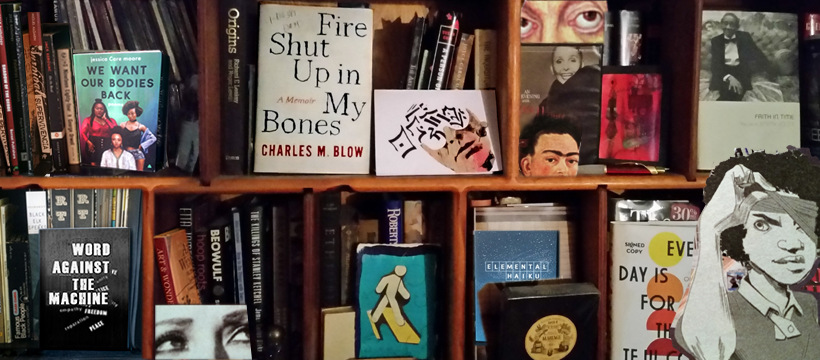
 April is International Poetry Month here at The BeZine. Poetry has been an inspiration that has moved me from a very young age and I cannot imagine life without it. I have not been very poetically productive lately, but this is one of my favorite poems that I have written.