 I passed the land of questions.
 There were no answers.
 There was no love.
 What would release me wasn’t there.

 I was alone again.
 I was alone still.
 You were there.
 The answer came.
The Evanescent
 I was born out of the infinite.
 I will disappear into the infinite,
 an evanescent drop of Your being.

 I thank you for this place,
 this drop, this spot,
 the evanescent self
 that is You.
P. C. Moorehead moved to rural Wisconsin from California’s Silicon Valley. She appreciates the beauty and peace of the woods and the inspirational environment that they provide for her writing and reflection. Nature images appear frequently in her writing. Her poetry and prose have been published in many journals, anthologies, and other publications.
PING WANG published 12 books of poetry, prose, and translation had many multi-media solo exhibits. She’s recipient of NEA, Bush, Lannan and McKnight Fellowships. She’s the founder/director of the Kinship of Rivers project. She teaches Creative Writing as a Professor of English, Macalester College, St. Paul, MN.
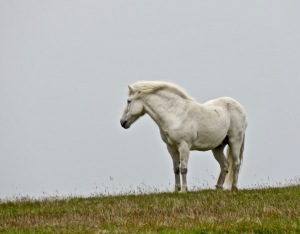
It was only last summer, but it seems a lifetime ago that we visited Iceland…
…a country very different from ours, but one of stark beauty.
A land of fire…
(Photo from Eldheimer Museum, Westman Islands.)
…and ice.
History…
Culture…
…and wit.
My mom used to say, “You can find something in common with everyone you meet, even if it’s only that your feet hurt.”
A global pandemic should qualify.
At the Adalstraeti Museum, we saw old photographs of the inhabitants of Reykjavik.
An interpretive sign read, “Women in traditional costumes, boys from the Reykjavik Football Club…a professor in a coat with an opulent fur collar, several generations of a family, parents with their firstborn, Little Miss Reykjavik, a girl with a lamb, a boy in a sailor suit. It’s tempting to speculate on where they might have gone after the photographs were taken. Home to Lindargarta, or for a coffee at Hotel Island? Down to the shore to watch the lumpfish catch being landed? Or back to work after returning borrowed clothes?
All the portraits in this exhibition were taken in the first nine months of 1918…Some of the people we see in these pictures may well have perished in the epidemic: all will have lost friends or relatives. The only thing we can know for sure about these past inhabitants of Reykjavik is that in the instant the shutter opened, they were there—facing the camera—alive in the moment.”
On October 19, 1918, the Spanish flu hit Iceland like a tsunami when three infected ships made port in Reykjavik. The first death followed twelve days later. Ten thousand people, two thirds of Iceland’s capital city, fell ill. The hospitals were overwhelmed. A field hospital was set up to accommodate the overflow, and a center was created to care for children orphaned by the pandemic. Shops closed, newspapers went dark, and when telephone operators took ill, Iceland lost contact with the outside world.
While the West and South of Iceland suffered, guards were posted to prevent travel from infected areas. They contained the spread, sparing the North and the East of the island. After a month, the infection peaked, and the dead were buried in mass graves.
The exhibit commemorated the centennial of the 1918 pandemic and celebrated the Icelanders’ laudable response. Many donated funds to feed the sick. Others brought meals to friends and strangers. Everyone in Reykjavik was assigned an official to check on them and procure help, if needed.
We were there in the summer of 2019, never suspecting that the exhibit foreshadowed the novel coronavirus that would strike the following winter, and rapidly intensify into a global pandemic. We still languish in the first wave of CoVid-19, recalling with apprehension that the Spanish flu came in four waves, infected 500 million people, and left 50 million dead.
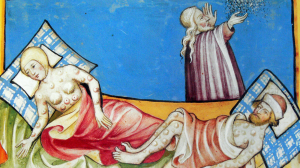
An older story harkens back to The Black Death, that raged across Asia and Europe in the 14th century, spread by sailors and rats along trade routes. Within five years, it too had killed 50 million people.
(public domain)
At that time, an Icelandic merchant ship was preparing to sail homeward from Bergen, Norway, hoping to outrun the plague. But before they could weigh anchor, several crew members developed symptoms. All their instincts must have cried out for home…
…but the crew elected to remain in Bergen, knowing they would never see their home or loved ones again.
Thanks to their sacrifice in 1347, Iceland was spared the ravages of that deadly plague.
As the Adalstraeti Museum stated, the only thing we can know for certain about these people from the past is that they were there, alive in the moment. But it’s tempting to speculate. Had you been on that ship, with buboes swelling in your groin, would you have resigned yourself to death in a foreign land to spare your countrymen a similar fate? What if you were one of the crew with, as yet, no symptoms? Would you still remain in Norway, surrendering any slim hope of survival, in order to contain the infection for the greater good?
I met my sister’s friend Rachel, a retired nurse, and her husband while visiting in Alaska. I was surprised last spring, when she left Juneau to fly to New York, which was suffering 600 deaths daily, as hospitals were slammed by CoVid-19 patients. Rachel joined thousands of healthcare volunteers working 12 and 16 hour shifts, collapsing into bed each night, and waking to start all over again.
A friend of mine volunteers at a shelter for homeless youth. Why risk it? I speculate that in each youth she sees a person plagued by fears and sorrows, yet clinging to hopes and dreams. Like the girl with the lamb, these kids are alive in the moment, but their world was rife with hardship, danger, and isolation even before the pandemic struck. A pandemic shines a harsh light on society’s economic and racial disparities, and those kids are a tiny fraction of the people who’ve slipped through holes in our social safety net.
We don’t know what the next five years, or even five months will bring, but it will get worse before it gets better. Like the people of Reykjavik, we must care for each other. Some people are in no position to donate funds or volunteer outside of their place of shelter. But almost everyone can wash their hands and wear a mask when going out, if not to protect themselves, then to protect the vulnerable among us. Like those who were here–facing the camera–very much alive in the moment…
Everyone is someone’s child, parent, sibling or grandparent.
Many have underlying conditions or circumstances you know nothing about.
Wearing a mask is inconvenient, but well worth it, if it can save even one life.
If you can’t do this one small thing for friends, family, neighbors, and community, it’s tempting to speculate…
Now everybody’s got a dog
so they can have an excuse
to get some air.
You can tell which ones were adopted
after Corona appeared
because they really don’t know
the neighborhood
and they sniff around the street
like startled strangers.
They don’t even know
where other dogs live.
They start at the sound
of a local hound
barking, poking its nose
through the gate
of some guarded villa.
We came to the rescue center
too late. All the cages
were empty, and we left
knowing that when this passes
there will be more choices
than ever before.
For now, an alley cat has adopted us,
walks our 30 yard limit
whatever path we follow
knowing there will be lunch
when we get home.
And when it is over,
and the old ladies come out
to feed them again
she’ll leave us.
And then we’ll get a dog.
How Much More Noble
How much more human
We have become
Now that we can no longer touch
How much more clear
The air we breathe
Now that we can no longer tour
How dear are those we love
When they are far away
And how much more sad to be alone
How much more
We have to learn
How much more we have to live
Karen Alkalay-Gut’s latest books are the dual language Surviving Her Story: Poems of the Holocaust (Courevour Press), translated to French by Sabine Huynh, and A Word in Edgewise (Simple Conundrums Press). She lives in Tel Aviv with her husband and an outdoor alley cat.
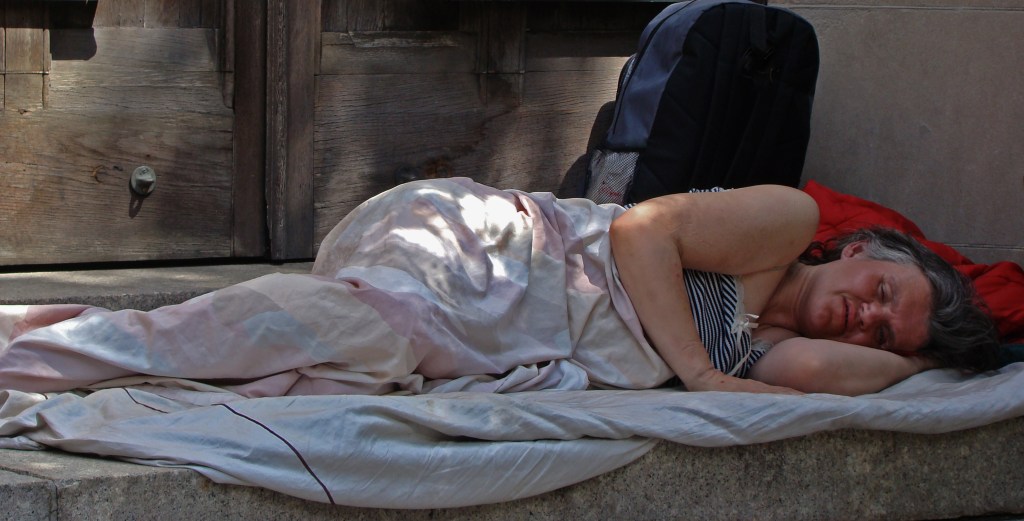
He believes that if he keeps smiling, something good will come to him. A decent meal. A roof, even for a night. He misses family most. Remembers better times. But there’s no time now to fret about the past. He must keep moving lest he is arrested or mugged. He keeps walking, imagines something wonderful waiting for him around the very next corner. It can happen. It could happen. Oh, how he wants it to happen. He keeps walking. He keeps smiling, until it hurts.
“Homeless, Boston” Christopher Woods
These nights, her dreams are her joy. Most of the time, though some nights the horrors of her past return. She tries to block them. She wants and needs better dreams. The best ones find her on a beach. Holding hands with someone she trusts. Her child sitting in her lap, like old times. When she has these dreams, she does not want to wake up. But then daylight stirs and the street calls to her. Hungry and dirty, she will wander those streets until nightfall, until the good life is within reach again.
Christopher Woods is a writer and photographer who lives in Chappell Hill, Texas. He has published a novel, THE DREAM PATCH, a prose collection, UNDER A RIVERBED SKY, and a book of stage monologues for actors, HEART SPEAK. His photographs can be seen in his gallery. His photography prompt book for writers, FROM VISION TO TEXT, is forthcoming from PROPERTIUS PRESS. His novella, HEARTS IN THE DARK, is forthcoming from RUNNING WILD PRESS.
This morning, I want to search
for lost children wrenched
from families at the border,
and sent in random directions
on random airplanes across states
to fit into random new lives.
Do these children step out of fear
in dreams and fly back to beds
next to siblings in Guadalajara
or escape cots covered with metallic
blankets, enclosed in cold storage
rooms on the US side of the Rio?
I hope tears are someday forgotten
and there is a faint blue in the hollow
of eyes in deep sleep. Their mothers,
will rescue and wrap them in longed-
for arms. In the news, I want to read
something incredible: Today, the lostchildren escaped and drifted in peaceon pastel clouds pulling themupwards along streams of soft air,soaring in the wake of colored birdsleading to safety. The wind whispers“You have been found”.
We must protect and release them,
repair rifts in this world so children
are kissed goodnight by parents
and moment to moment will trust
waiting strangers will not send them
flying away in nightmares of loss.
George Floyd’s Voice*
A night wind interrogates
pines on Pescadero’s tangled
coast. The roiled sea
unbuckles, flattens.

Other sounds — a plaintive voice
pressed hard against my house.
Someone
unbidden in my life.

Through the curtain-chink, I listen,
review dark thoughts of those
I might have hurt or actions left
                           undone.

I vow to examine my voice
of privilege, pledge whatever
of my life remains. Words yet
unspoken.
*On May 25, 2020, George Floyd, a 46-year-old black American man, was killed in Minneapolis, Minnesota, during an arrest for allegedly using a counterfeit bill.
Lost
for Sarah

You close your office door,
walk down Larkin, careful
to step over needles and feces.
Homeless with shopping carts
ripple down the street.
Moonlight reveals them,

packed like a trout-thick stream.
April night weak with clouds.
Smells of salt and death.
This air, this stench, this breath--
a grimness shallow and permanent.

All day, there were few words,
just pancakes for hungry lines.
Addicts to rehab. HIV tests for hookers.
Tents and food for newly arrived.
911 for newly dead. Victory cheers
for one who gets a degree or job.

You don’t love this work but ask to belong.
You’ve known what it is to disappear.
You too have been lost in despair.
Now, you are allowed to go home,
then allowed to return to this work,
and allowed not to love it again.
Nancy Huxtable Mohr has a B.S. from Cornell University and California Teacher’s Credential from San Francisco State. She is currently in independent study at Stanford University and is a member of the Community of Writers at Squaw Valley. She has recently published in Cider Press Review, Birdland Journal, Mangrove, ZZYZZA, Blueline, Concho RiverReview, Avocet and other publications. She taught for fifteen years as member of California Poets in the Schools in private and public schools and the San Mateo County Jail. In 2018, Butternut Press published her book of poetry, The Well. Her work can be seen on her website.
The excruciating pain that cuts through the heart cannot be felt by the opulent proud elites, for their eyes devour just land, and are blind to humans, who as nomads wandered close to rivers; made huts with broken branches, leaves, and mud; and felt satisfied. Not long later they had to abandon the threatened huts and found themselves homeless.
This was our home until 2014. We had to change the location, shifting to a two-bedroom flat in the suburbs of Islamabad, a township called Bani Gala, which is a hilly and cool area.
In a rented flat there was no feeling of being in a home. Most of the stuff was packed and had to remain so because of shortage of space. But one good thing was a broad window facing the main road and the bazaar. Sitting by it one could see humanity in its daily routines and life-styles.
Late night, delivery trucks made a lot of noise.
Shop owners woke up long after sunrise. They swept the front areas of their shops, opened the curtains, and then sat with a cup of tea, waiting for customers.
Many types of people came into view. Among them were poor beggars, surely homeless as they stopped by each parked car and peeked in with an extended hand… I would think, where did they spend the night? What was their bed like?
Where these poor ones’ parents? Did they have children to feed? Common questions rose in my mind. How did they become so poor?
These are times of a strange virus. Are they aware of it?
No answers to all such questions.
My mind flashed back to my early years of migration and reuniting with parents.
We too had given up our house but we had some support, fortunately, the result of public service for many years. After 40 years of service we still live in a rented two-bedroom flat, endless discussion about land plot-design and map study has not yielded any results.
World is always at war, wars never seem to end.
Wars make people homeless.
All was dark, all was blocked, wires cut, no news,
heads down, blasts sounded, bend, bend, the hut
crumbled, small houses turned into rubble, homeless
kids cried on broken bricks, some lay still, shocked
to death. War made people homeless. I, in my
scared mother’s arms, numb, innocent, carried for
miles, my two year-old sister pulled and dragged
along, 'til we reached a camp, some army trucks
parked on the side. This was no home and we were
homeless, hoping to reach safe havens away from
killing swords and daggers of the mad raging enemy
yet not knowing about reaching any home, just stops
for checks on the way. We were homeless. No news
of father, was he alive? Who could we ask? Who could
say? Silence was safety, sound was dangerous play. We
were migrants then, refugees running away from war—
saving lives on unknown roads, with unknown yet good
people. What moments were they? On what open land?
Momentary resting ground, no roof, no walls, no doors,
rough straw the bed, smell of cow dung, a wooden fence
was welcome then, but it was not home. Mosquitoes
buzzed and bit, later embedded malaria in the blood.
On the move on the truck again, jolted shaken, we
kept moving till a barrier came into view. That was
home land but without a home. What would home be
like?
No questions asked then.
We were happy with the homeland in homelessness.
We thought we had left the war behind. We thought we
were in peace.
1947—Time of the Great Partition of India. Escape to Pakistan Border. We left our home in Srinagar Kashmir.
A beggar boy on the streets of Tehran Mahnaz Badihian Oil on canvas 37” x 25”
Lunar Water
From now on I'll only drink
water from the moon
never again a sip of earthly waters,
not from bloody water of the Euphrates
with thousands of broken bodies
floating on it

Not from the Ganges River
with hundreds of hungry
worshipers around it

I'll fill my fists with
water from the moon,
to pour it drop by drop
into the mouth of the innocent
Zayandeh Roud river
 in the city of Isfahan

 Poplar trees are thirsty.

              * Zayandeh Roud — a famous river in Iran
They killed My Brother
For Lorca & Sultanpur
They killed my brother
The year of revolution
because he had different ideas

They killed him
the year of the war
because he was in love

They killed him again year after the revolution
because he was aware

They killed my brother
on the streets of poverty and homelessness
And they killed my sister youtaab
under the feet of demon men
because she was a Brave Beauty

They killed my brother
they broke his heart
they cut his tongue
and choked him

They fed him bag after bag of Heroin
so he forgets about home.

They killed my brother again
and spoke of the dignity of his homeland

Again they killed my brother
in freedom square
and they sprayed him with bullets in the public eye

But my brother is not dead yet
and they don't understand
the reason he will be
in love forever
he will be aware forever
and will protest forever


              * Youtaab — a female fighter and hero, in Persian history.
Lost In Ruins Of Baalbek
Milk dripping from their breast
tears dripping from their eyes
infants ripped from their arms
to be placed in immigration cages

Maybe that is why I felt lost
in the ruins of Baalbek
looking for lessons from history
between those glorious ancient
broken statues
talking to Bacchus, the god of wine

Or hiding in Pompeii a burnt city
searching for a new poem or art
to treat my sorrows
or wondering in the calm Bazaar of Isfahan
that welcomes everyone to the
ecstasy of culture, art, and simplicity

But I know I was lost imagining myself
in the camps between devastating pain
of the wailing immigrant kids
taken from their parents

I was lost imagining their scared eyes
in those cages, confused
not knowing what was their crime

The shock and anger of those children
seeping through my heart
I will be lost in the darkness of this crime
which adds up to the ugly face of slavery
Mahnaz Badihian‘s artistic expression started at a young age in elementary school by writing poetry and short stories and painting with whatever material was available to her. Life took her through many different experiences such as Nursing school, Dental school, art school, revolution, immigration, and motherhood, but she always remained a poet and artist. She has published many poems and translation books in the Persian language, and English. Badihian has been exhibiting her art internationally for decades, most recently with a solo exhibition in 2018 in San Francisco, California. For 15 years now, her life has solely been dedicated to art and literature. Badihian and Jack Hirschman worked on a translation book and a CD. Her latest collection of poems “Raven of Isfahan,” was published in 2019, to critical acclaim. Badihian finished her MFA in Poetry in 2007 from Pacific U in Oregon. Her poems appeared in more than ten international anthologists. In 2020 Badihian edited and published 300 pages of COVID poetry and art from around the world. Available worldwide.
Always in the way, in line of sight, a breed apart
littering the streets like inconvenient broken bagsof warn out clothes and rain-soaked cardboard.
It’s all right to ignore them; they brought it on
… themselves
Our way is best. Respect earned the hard way.Why can’t they see the virtue of a Protestant ethic?
These foreigners, incomers, low caste, outcast, black
brown, yellow, red, native, all comers and, yes
… white
entitled upstarts get fat and lazy; love bossing the blindlike the noble Shire who, blinkered, cannot see the whip
like slaves, to earn their keep, their salt, their corn or
cotton
know their place, like goldfish in an unfurnished bowl
… uneducated!
Wondering why they seem to know nothing; have
nothing?
A disadvantaged cerebral cortex, almost unconscious
of their need for help that rarely comes in time, savea coin, for a cup of makeshift anaesthesia, a sort of
… solution.
Aren’t we all strangers. Each of us an insular spec onthis precious Earth, a mote in the eye of the universe,
plagued by starvation, strife, poverty, climate and tearscorruption, indifference, immunity to hardship
… greed
Do you see eye to eye on every issue with your friends?
agree with your neighbours on the way to keep house?
Do they agree with you, will they ever, will you ever?
How then can broken, ragged human life be so
… different?
But they do! They do work hard to stay alive. Deprivedof something, maybe a failed family, diminishing visionof a life fulfilled, but lost somewhere along the way.
Therebut for a mutation of genes, environment and fortune
… forbidden.
The title was inspired by the lyrics of Paul Simon’s song ‘Homeless’, a collaboration with Ladysmith Black Mambazo on the Graceland album in 1986. The alternative refrain to “homeless, homeless …” half way through the song is “Strong wind destroy our home, many dead, tonight it could be you.”
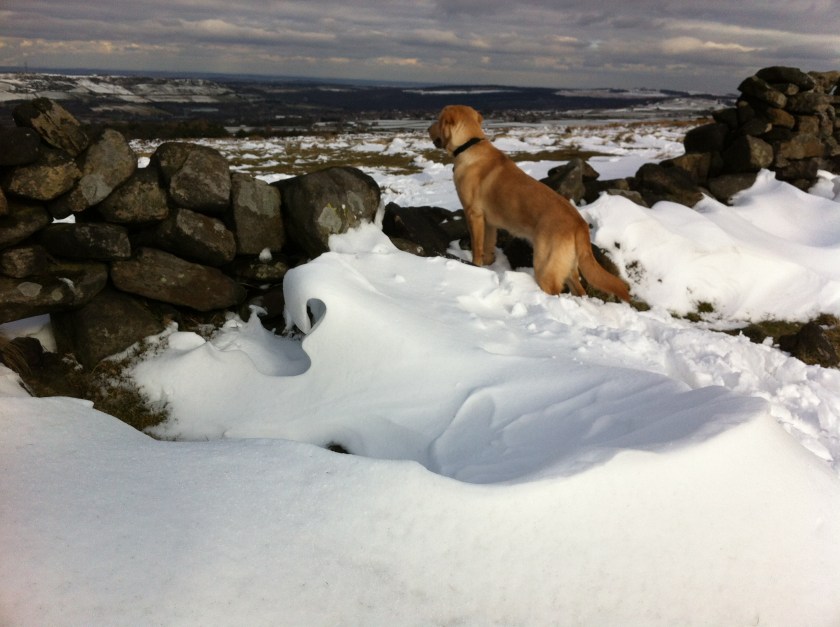
The depth of it exceptional, and all
at once she lies and sits and stands below.
She smiles, then in her mind she skips, her paws
tread deeply in the soft white powdered snow.

An icy East wind hails from far away,
intemperate continental clime it brings,
that covers food so blackbirds cannot find
sufficient energy to brace their wings.

Out there, beyond the hill, the homeless lie,
reciting tunelessly an unheard poem,
they fight an urge to yield to hopelessness,
and longing for a crackling log-fired home.

We look in warmth, contentment unalloyed,
at children with their snow dog, overjoyed.
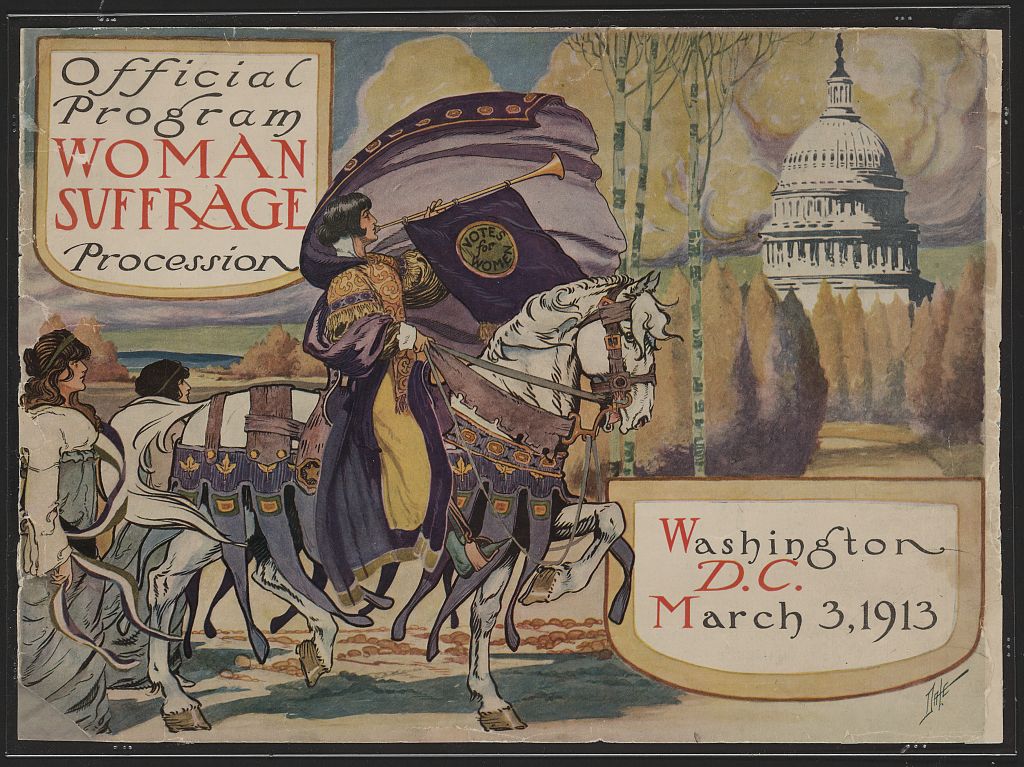
Official program – Woman suffrage procession, Washington, D.C. March 3, 1913 Halftone photomechanical print / Dale, Benjamin M., artist 1913 League of Women Voters (U.S.) Records Library of Congress
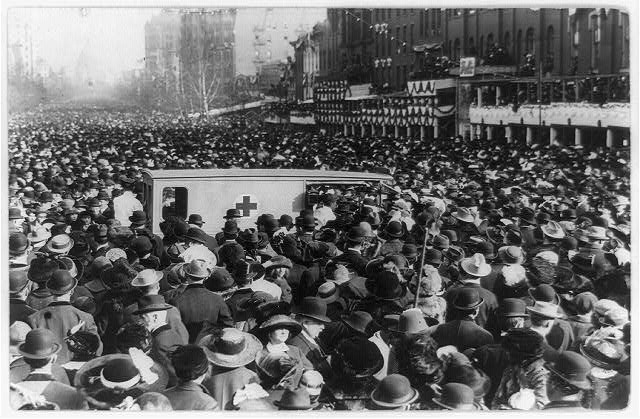
In 1913, on the eve of President Woodrow Wilson’s inauguration, women gathered in Washington, D.C., and marched in the first large, organized political march in D.C.
White women marched in the front; Black women followed them. The separation was keenly felt. But as the women surged down Pennsylvania Avenue, they all had only one goal in mind: to pressure the president into granting them the right to vote.
Bystanders heckled and jeered at them. They swarmed into the procession’s path, slowing their progress. The police officers present, some of whom disagreed with the protest, failed to protect the women marching.
But the women didn’t let this stop them. They soldiered on. When they fell, they picked themselves off the ground. They dusted themselves off, gritted their teeth. They held their heads high and they kept marching forward.
They poured all their effort into convincing lawmakers that they too deserved a voice in the legislative process. They staged rallies, gave speeches, organized protests. They did the hardest and most powerful thing any person can do – they changed minds. And in 1920, seven years after that first march in Washington, D.C., the 19th Amendment cleared Tennessee, the last state needed for ratification.
Women across the country rejoiced. But they knew it was not that simple. They knew their fight for equality was not yet over. They knew poll taxes, literacy tests, and more presented barriers to the ballot. They knew in the next century, they’d have to work to strike them down. They knew their fight for equality would follow them into the workplace, into the classroom. Into their homes. And they rose to meet the challenge.
These women knocked down barrier after barrier, built bridge after bridge. They clawed their way into the polls to vote. By the 1960s, women made up the largest electorate in the United Sates. They made sure I’d have the right to vote from birth, which was something they didn’t have.
These women are the reason I will be able to pick up a ballot when I’m eighteen and cast it. They are the reason I will one day be able to become a lawyer and then run for public office. They inspire me to be the reason more women become leaders, innovators, politicians, doctors, soldiers, CEOs, lawyers. They inspire me to break more barriers for people who struggle to overcome them.
But perhaps most importantly, these women taught me – and millions of other women – the value of our voices. They inspired us to rise up and raise them. And in 2017, they inspired women across the U.S. to march in what would go down as the largest single-day protest in U.S. history. Almost a century after that march in 1913, women marched again in Washington, D.C. This time, they had almost ten times the numbers. This time, women of all races walked hand-in-hand, side-by-side.
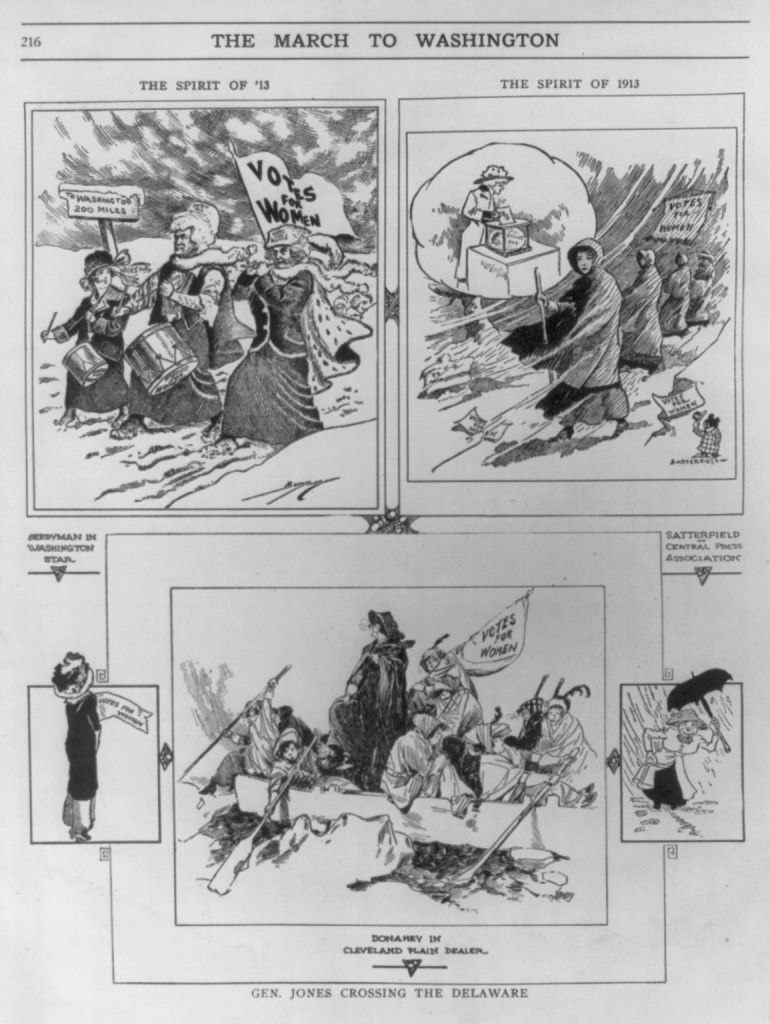
The March to Washington (1913 Cartoons) Berryman, Clifford Kennedy, artist; Satterfield, Robert W., artist; Donahey, J. H. (James Harrison), artist Library of Congress
We stand on the shoulders of giants. We can go farther, run faster, soar higher than ever before. The 19th Amendment is a testament to the progress we’ve made and a pillar for us to build upon. And we will continue to build on it. We will keep building on previous achievements, keep climbing towards a better future. Equality is within our reach. We just have to be persistent in our pursuit of it.
So we will do the only thing we can do: We will pick ourselves off the ground. Dust ourselves off, grit our teeth. Hold our heads high.
Surina Venkat is a 16-year-old writer and activist from West Melbourne, Florida. She has work published or forthcoming in Ayaskala Literary Magazine, Artists & Climate Change, Omelette Magazine, The Daily Drunk, and more. When she isn’t reading or writing, you’ll probably find her running with her dog or listening to a podcast.
Change.
We want change.
A hundred thousand poets for change want change.
We started wanting change nine years ago.
Nothing much has changed since then,
Certainly not by us poets
Certainly not by our poems.

What is change anyway?

First off, I’ll tell you what change is not:
It’s not the change you leave for the waitress,
It’s not even something we all agree about,
And it’s not anything specific.
We just want change.

Now, I’ll tell you what change is:
It’s something that starts off with one or two good people
And ends up with just about everyone in the world;
It’s something that lassoes your imagination and your heart;
And it’s so specific that you know exactly what to do.
There’s no right or good time for change.
The time for change is now.
No one will do it for us.
Only we can do it.
If we can’t do it,
Then it has to be me;
Otherwise, we’re just
A hundred thousand cicadas
Making noise in a forest.

                        June 20, 2020
Do the skies above your country stop at our borders?
Are the skies above our country afraid to enter yours?
Do the rivers flowing through your land dry up at our borders?
Do our borders refuse admittance to your rivers?
Is the wild grass at the edges of your fields reluctant
To spread over the edges of our fields?
Do the grasshoppers on your side decide against
Hopping over our imaginary lines into our
Breeze nudged grasses or having hopped
Decide not to hop back home?
It seems there’s something in our natures
That disdains our borders and boundaries
Despite our worst intentions.

                                    July 28, 2020
Pity the mildewed magician
Who knows there’s no magic
And all is just slight-of-hand
Which gets slightly slower
As he gets older
As does the blonde he saws in half
To dwindling applause,
And who knows the sound of a
One-person audience clapping.

Pity the flim-flam snake-oil salesman
Standing on his teetering soapbox
In front of a crowd of toothless bumpkins
And a pre-paid confederate in a wheelchair.
He knows his medicine’s no good
And his confederate isn’t crippled,
But he’d take a swig of kick-a-poo juice,
Stand up from his wheelchair,
And walk tall for all to see.
He knows he’d better get going
Before the suckers realize
They’ve been suckered again.

Pity the poor politician
Alone on the stage
Sweating under thick makeup
And squinting at a teleprompter.
He alone knows his promises are lies
His answers are as substantive
As cotton candy at a carnival,
He hasn’t a clue what to do,
His supporters will eventually
Turn on him when they finally wake up,
His opponents see through him,
And his friends will desert him
As soon as their whims change.

                        August 7, 2020
Mike Stone was born in Columbus Ohio, USA, in 1947. He lived in San Diego and Chicago. Mike played clarinet and saxophone in his high school marching band, dance band, and concert band. He also composed music. He started out with a Fine Arts major but then graduated from Ohio State University with a BA in Psychology. He served in both the US Army (stationed in Germany) and the Israeli Defense Forces. Mike has traveled throughout Europe and to several Arab countries.
Mike has been writing poetry since he was a student at OSU. He has published four books of poetry (The Uncollected Works, Yet another Book of Poetry, Bemused, and Call of the Whippoorwill), a book of essays, and four science fiction novels (The Tin Man, The Rats and the Saps, Whirlpool, and Out of Time). Mike is currently working on his fifth book of poetry (The Hoopoe’s Call) and a fifth science fiction novel (H4N5-2080). He supported his writing habit by working as a computer programmer, specializing in information security.
Mike speaks English and Hebrew, as well as a smattering of Spanish, German, Russian, and a bit of Arabic. He also speaks several computer languages fluently. Now he is retired. Mike moved to Israel in 1978 and lives in Raanana. He is married and has three sons and seven precious grandchildren.
Check out his blog. You can read his latest poetry, short stories, and essays, while they are works in progress. Mike also has an Amazon author’s page.
But my lungs are filled with air Those first words are of a man Whose life was taken without care.
They say this is the land of the free, you can be what you wanna be *asterisk Unless it affects America’s bottom line or politically. They don’t wanna see people lead and be chiefs, they just want people to be non believers and see chaos in the streets. Famous words to DIVIDE and CONQUER but we the people all have a voice, they’ll try and segregate your words like I have a Dream but your Dream can not be the same as mine. You want people to stand for the flag while the flag does not stand for the people, but all lives matter! That sounds like a response of a person who does not understand two simple words EQUALITY and CHANGE, this is America where free thought cost the same as a campaign. It’s some what crazy that we were created EQUAL but that doesn’t mean a damn thing. Again I say I can’t breath and your response? Welcome to America the land of opportunity *asterisk but only white privilege allowed. We allow the KKK to preach free thought, but get bent out of shape when Kapernick took a knee. Guess that goes to show the blind eye really can’t see. So again I say I CAN’T BREATHE! Those words were my last free thought.
I retract all requests: no need
to breathe it into my ear: look in your red coat pocket, checkthe car cup-holder. If I think of you
embodied (obviously you are not), your
beneficent murmur embraces so much world, your
godly gesture wide and full of comfort, your
outstretched hand wise and warm across
forest, desert, veld; Oh
God, my busy fingers are nimble enough
to search through pockets, parking slips and Costco bills, while
refugee children, at the Syrian border kick
a shabby ball, their fingers too blue for the handling
of it, some already traced with misery and huddled on cold
ground beneath the hapless arms of women there.
From habit, I may
thank you anyway, God, but don’t
on my account send
forth your spirit to the bodies of a team of mine while
somewhere north of Iroquois Falls, a recluse starves and
dies, shrouded in threadbare shawls, her woodpile gone, her cabin colder
than outdoors, her nearest neighbour ignorant of her name. No, they can
win it for themselves — that goes for every team, ignore
those other fans, will you, and look instead
where girls and women slip so easily away, craving
an embrace to hold them fast and safe
in villages which are their homes,
set there in blood-grudge long ago and yanked,
from time to time, away, to punish them
for not being just like us. Since we don’t
seem able, suppose you look their way.
Suppose you take a godly peek at children, OMG,
made soldiers, killers, families ripped away, humanity
macheted from their souls.
Forget the lottery tickets, the interview, the tournament, God.
I’ll find my own keys. Are you
listening? Thank you. Please.
Callista Markotich has had a lifelong career in Education as Teacher, Principal and Superintendent of Education. She lives and writes in Kingston, Ontario, Canada. Her recent poetry has appeared in Prairie Fire, The New Quarterly,Riddlefence, The Nashwaak Review, SaddlebagDispatches and Room, where it has received a 2019 poetry award.
On a Sunday morning the Rastro, Madrid’s largest open-air market, stretches its fingers around the narrow, cobbled streets of the city’s oldest Barrio. Shops, before barely noticed under thick drapes of shade, push back their awnings and spread their wares upon the pavement. Stalls arise where the traffic has been and float like an Armada of little ships above a sea of swarthy Spanish faces, their sails a colourful clutter of shirts and shorts and leather jackets.
Each street has its speciality: furniture; handicrafts; clothing or bric-a-brac. Saints and scenes and dew-eyed girls are propped ten-deep in dusty piles, these gaudy splashes done in oils to keep the dark away.
One street is an exception. Framed at its entrance stands a goat and its three gypsy attendants. The goat is small, slightly cowered and with a high-arched back. It balances on a roughly lathed circle of wood barely broad enough to accommodate its feet, which in turn is perched on a tall wooden stool.
The goat does nothing, save for an occasional shuffle to secure its position, whilst all around it is frantic motion. The three acolytes pivot and sway, orbiting the creature in a trance too deep to be induced by the sun-strained jangling of a tambourine.
The street is otherwise empty, or at least the twist of shining cobbles stretching up a hill and out of view, hiding the tumble of overcrowded tenements and laundry filled courtyards which lie beyond. Few will pay the entrance toll that the guardians demand, though they doff a cap at every passing stranger. No one will enter without paying.
For this is the gypsy quarter, a place apart and older, it is said, than the city itself. And the little goat is the devil incarnate, though its eyes speak only of passive subjugation. It leads the dance, but it is not the desperate, drug induced jig of the Egyptians. It is a flamenco, a dance of avoidance, as passers-by and a whole city spin in pretty market dresses to avoid their hollow core.
An old man hurries by, struggling with a battered old instrument case. He understands. He pays. This is the shorter way home. These are the Roma people, their culture more ancient than the country itself. The hollow quarters of Spain are the chambers of its heart. And the heartbeat resonates as it tells the real story through the guitar, as this old man sits on his balcony and plays.
advancing
toward a canvas of light

something is twisting
pure
worming its way
waking

breaching the crust still small
pale
pulling past the usual stops

growing a change
Judy DeCroce, is an American poet/flash fiction writer, educator, and avid reader who began writing flash fiction and poetry in 2006—many of which have been published by Plato’s Cave online, Front Porch Review, Amethyst Review, Tigershark Publishing, and The BeZine. Her works have been featured in US, UK, and India.












 The BeZine