©2012 Dina Greenberg
digital art
Waging Peace in Bosnia and in the Souls of Her Far-flung People
In 1992, a deadly spark of Serbian nationalism ignited a wildfire of war that raced across the former Socialist Federal Republics of Yugoslavia, destroying everything in its path. During these wars of aggression, in Bosnia and Herzegovina, more than one hundred thousand people were killed and two million others displaced. The campaign of ethnic cleansing, primarily against Bosnian Muslims (Bosniaks), is often described as the worst genocide since World War II. The carnage ended only after NATO’s intervention in 1995.[i]
And now, some thirty years later, Putin’s war on the people of Ukraine, with daily tidings of death and destruction, are eerily reminiscent of these other wars.
How, then, can I begin to explain why Bosnia’s war continues to hold me in its embrace? Equally important, why am I compelled to take part in Bosnia’s struggle to “wage peace?” Perhaps the answer lies in the fact that I am Jewish, my Ashkenazi ancestry tied to centuries of anti-Semitism, Europe’s shifting political and geographic boundaries. The same sort of bloodshed and “othering” Bosniaks were subjected to. Perhaps the answer also lies in echoes of Genocide denial, revisionist history that threatens Bosnia’s fragile peace—today now more than ever.[ii] For me, Putin’s war in Ukraine is equally horrific, but perhaps it is still too fresh, too painful to process.
So, today I channel my grief for the six million Jews who perished in the Holocaust and I channel my grief for the Bosnians who perished just fifty years later. I channel my grief and—if I am being completely honest—my anger and despair—by collecting and holding the stories of the Bosnian diaspora. These stories are provided by those who survived, those who remained throughout the war, and those who saw no other choice but to leave their homeland behind forever.[iii]
Siege of Sarajevo
This work began more than fifteen years ago with research for my novel, Nermina’s Chance. The narrative opens at the outset of the siege of Sarajevo.[iv] Over the course of 1,425 days—the longest siege in modern history—11,541 people, including 1,601 children, lost their lives.[v]
As an author, I got to know my protagonist intimately. Over the many years of writing Nermina’s story, I learned about her fears and motivations. I grew to love her. At the start of the war, Nermina was a second-year medical student. She lived in Sarajevo with her parents, both doctors, and her older brother, a financial analyst. Like many others in this Socialist society, the family identified as “secular” Muslims. And like many others, the war stripped Nermina of everything she’d ever known or loved. Ultimately, though, a well of resilience enabled her to re-create the family she had lost.
Other Stories
In the months before and after publication of Nermina’s Chance, I’ve also fallen deeply in love with the tandem project of collecting stories of women who have much in common with Nermina. Their losses are immeasurable and yet many of these women have transcended their collective tragedy to flourish. Others are still held captive to the pain of their past. Still others straddle both realms, carrying the trauma of their forbearers in their bones and in their blood. Vildana Kurtović is among these women.
Generations of Maternal Grief
In April, 1992, along with her mother, aunt, and one-year-old cousin, Vildana boarded the last commercial flight out of Sarajevo. They landed in Belgrade, then traveled by train to Germany. Vildana’s father, a physician, remained in Sarajevo throughout the siege, where he ministered to the city’s wounded and dying. One day, he was shot; a sniper’s bullet pierced the window of the family’s apartment and lodged just a couple of inches beneath his heart. Long periods elapsed between his communications, and it would be more than two years before Vildana’s father was reunited with their family in Germany. In the summer of 1995, the Kurtović family made their way to Royal Oak, Michigan, where Vildana’s uncles had arrived as refugees a couple of years before. Still, the family was divided by war. Like open wounds, gaping holes remained where loved ones should have been.
Today, Vildana lives and works in Vienna. She is, by all accounts, a successful and confident young woman. Still, when we first met by video call, Vildana described the “second-hand guilt” that stalks her. She recounted a story that winds through four generations of women in her family. It is unlikely this grief and guilt will end with her.

©2019 Tina Rimbaldo
photograph
When Vildana’s family fled Sarajevo in 1992, her maternal grandmother Šefika stayed behind in the city, certain—like so many others—the war would be over in a couple of weeks. But Vildana’s great-grandmother, Derviša, lived in Nevesinje, a small town close to Mostar, now part of Republika Srpska.[vi] With good reason, Šefika feared her mother, then in her late seventies, was in grave danger.
Reflecting on her American childhood in Michigan, Vildana describes occasional “candid moments” when her mother, Edina, would let down her guard, allowing some of her pain to slip out. “My mother spent much of her adulthood surviving, learning new languages, and attempting to find her way.” As a young adult, Vildana learned the source of her mother’s pervasive sadness. During the early stages of the war, the family tried to convince Derviša to leave Nevesinje but she’d insisted “an old woman” like herself posed no threat to the Serbs. “One day, my great-grandmother simply disappeared,” Vildana says.
Mass Graves
Mass graves were a hallmark of the Serbs’ war of aggression.[vii] According to the Bosnian Missing Persons Institute, the memorial ossuary in Nevesinje contains the remains of seventy-two unidentified victims; the morgue of Sutina Cemetery in Mostar contains the unidentified remains of 126 others. In 1998 after learning of these discoveries, Vildana’s mother returned to Nevesinje. Perhaps Derviša was among these brutalized victims of war? Her efforts failed.
A decade later, Edina began to share a bit more of her sorrow with her daughter; the tendrils of grief and guilt clung tighter still. Just after graduating Michigan State University, and working in Manhattan, Vildana decided to try again where her mother had failed. “I reached out to the Red Cross because I’d learned from family in Mostar that the organization was helping Bosniak families identify the remains of loved ones, many preserved in mass graves filled by Serbs.”
In her letter to the Red Cross, Vildana painfully repeated the story her mother had shared with her. She submitted her request, received a case number, and followed up with phone calls. “Years went by and the Red Cross could not track her down. Even after my family submitted DNA samples, she was never found or traced back to any remains from the numerous mass graves—at least not yet,” she says.
The only closure Vildana’s family ever found was delivered by a local man who had remained in Herzegovina throughout the war. “My family went back to Nevesinje after the war, except not as locals any longer, but as visitors to a city overtaken by the Serbs,” says Vildana. “Our homes were not destroyed, but eerily filled with new people—with their own traditions—going about as if this was completely normal.”
The story of Derviša’s last days and hours is painful to fathom. “A man in the town told my family that my great-grandmother, along with other Muslim residents, were rounded up and buried alive in a pit of human excrement. Others were corralled in select homes, then set on fire by the Serbs and burned alive.” This gruesome account was the last Vildana’s family would know of their matriarch.
Peace Comes in Many Forms
None of the people who perished in Nevesinje were buried with dignity. None of their family members will ever find solace. None of the images described here will fade. Here, though, is my offering and prayer for peace. For Derviša Husović and the three generations of Bosniak women that followed her; for all of the other victims yet to be recovered, and the families who mourn them, We remember. In this way, we wage peace among and within those who have suffered the worst atrocities of war.
©2023 Irina Tall
©2023 Dina Greenberg
All rights reserved
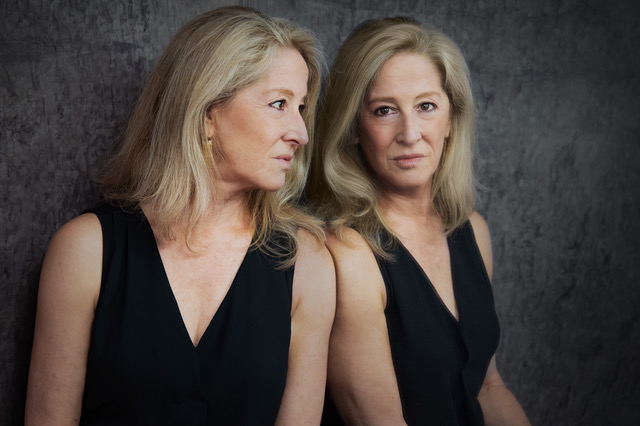
Dina Greenberg…
…has been nominated for The Pushcart Prize, Best Small Fictions, and The Millions. Her writing has appeared in Bellevue Literary Review, Pembroke Magazine, and Split Rock Review, among others. Dina earned an MFA from the University of North Carolina Wilmington, where she served as managing editor for the literary journal Chautauqua. Her trauma-informed writing and teaching gives voice to survivors of war, displacement, and sexual violence. Dina’s recent novel, Nermina’s Chance, opens in1992 Bosnia.

[i] Bosnian War, Facts, Summary, Combatants, and War Crimes, Britannica
[ii] Bosnia’s Genocide Denial Law; Why Prosecutors Haven’t Charged Anyone
[iii] Integration of Refugees/ Lessons from Bosnians in Five EU Countries – Intereconomics
[iv] Siege of Sarajevo, Guardian
[v] Sarajevo Marks 30th Anniversary of Siege with Memories Still Alive
[vi] The 1995 Dayton Accords [The General Framework Agreement for Peace in Bosnia and Herzegovina] designated two separate entities for the country: Federation of Bosnia and Herzegovina and Republika Srpska (RS) under a rotating tripartite presidency. OSCE
[vii] BIRN. 2023. Bitter Land Mass Graves Map

 The BeZine