Note: For some of us, our writing – whatever it may be: poetry, fiction, nonfiction, journaling – is our daily spritual practice. It is the place where we consciously connect with our core Self: the Ineffible, which some call God.
Here I am, suspended breathless
between language and myth.
Strands of undomesticated words
weave ladders to freedom, and
a dove in the stripy-barked birch
recites the works of Homer.
I found the rules of grammar
written on my tongue by the wind
and the alphabet strung like
seed-pearls around my willing neck.
Each day I take to the quarries,
hard mining for the sweetly lyrical,
blistered from digging in hot sands
and hard stone for parables.
The very walls that bound my heart
are fairly breached by the
gentle solace of poems spun
on a vision quest, on toiling
though the hill country of
my youthful and once indomitable
dreams: like dandelion fluff,
I blow them into history.
I write as though poetry is
the only real nourishment – . . . . . . .perhaps it is.
At the time in our history when we started to see nature as something apart from us, when we gave up our shamanic instincts and in our hubris separated them from our growing science, when we devolved from stewardship and one-with to ownership and power-over, we set ourselves up for a world of multifaceted pain and disruption. One result in modern times is environmentally induced disease caused by xenobiotic substances that result in cancers, autoimmune disorders and interstitial lung diseases (ILDs).
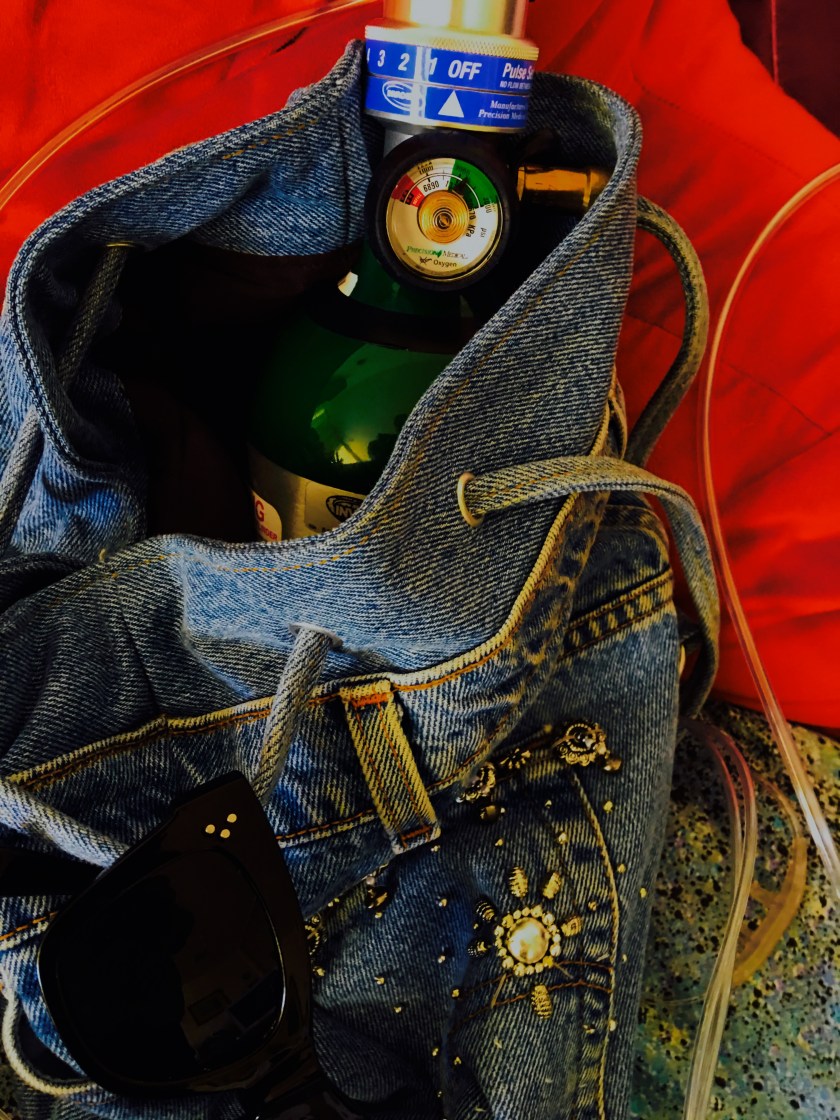
My concern here – as a powerful and noteworthy example of the impact of industrial pollutants and of wars and other violence to the earth and its inhabitants – is interstitial lung disease. I have hypersensitivity pneumonitis, an ILD that can be caused by smoking. I am a lifelong non-smoker. Everyone – EVERYONE – is at risk of ILD, smokers or not, and so are other animals. We know that in the United States and England, the numbers suffering from ILD are growing. No matter where in the world we live and what we do for work, we all need to recognize and acknowledge this as part of the complicated package of environmental injustices.
Our lungs are the only organs that are exposed and immediately vulnerable to industrial pollutants and inhaled chemicals, dust and other particulate matter in the air. One study tells us, “Lung cancer is the number one cause of cancer-related deaths in humans worldwide. Environmental factors play an important role in the epidemiology of these cancers.”
Consider the two hundred ILDs: These are diseases that affect the tissue and space around the air sacs (alveoli) of the lungs resulting in scaring (fibrosis). We – and other animals – can’t breath through scar tissue, which is not permeable. Hence the exchange of carbon dioxide and oxygen is inhibited. The result is a slow, horrifying and painful death by suffocation. This is mitigated for people like me who have access to healthcare, supplemental oxygen and medications like prednisone and mycophenolate mofetil. People living in poverty, in war-torn areas or working at risky occupations in third-world countries, get no such relief and no palliative care is available to them in the final stages. This is unimaginably cruel.
While the most common interstitial lung diseases are considered idiopathic, they can result from exposure to certain chemicals– including medications – and from secondhand smoke and occupational exposure to agents such as asbestos, silica and coal dust. They may also evolve from an autoimmune reaction (hypersensitivity pneumonitis) to agents in the environment, some of which might be naturally occurring and benign for many people.
Forbes Magazine cites lung disease as one of the continuing legacies of 9/11, the result of “toxic collections of airplane fuel, asbestos, fiberglass, metal, plastic, garbage, waste materials, fecal material, human remains and who knows what else.” In reading this description, one can’t help but think also of the people of Syria and other regions of war and conflict. It is not uncommon for soldiers returning from war to report newly developed respiratory disorders.
Industry, war and conflict, greed and denial, all combine to put the very ground we live on at risk, the air we breath, and the precious functioning of our lungs … We rightly worry about and advocate for issues of deforestation, pollution, hunger, dislocation, destruction of property and other issues of environmental injustice. Not the least of our motivations, concerns and advocacy must be for the sake of our lungs. It’s a fight for the very breath that enlivens us.
on the Atlantic Seaboard they’re paralyzed under
the weight of snow drifts, the detritus of blizzards;
their stark bare branches of oak, elm and maple
etch dark veins into an icy-gray cast-over sky
on the West Coast we’re breaking out magnolias
and blades of tender spring grass are unfurling;
the slight warmth tempts us to pull early spring
like a wool blanket around us or perhaps a blessing
along the stretch of Big Sur the sea strikes stone
and the air explodes, bright and wet with spume,
the green-patinated brine salts our mouths;
above us cloud turrets mimic white-capped waves
standing here, consumed by an unutterable infinity,
our hands and eyes and mind are in cahoots to
imitate nature in the most apt way they’re able,
with our sketch pad, pen and colored pencils
a quick wingless flight into that dancing sea and
we surface with visions grasped tight in our fists,
our eyes are blinded by palette colors, our pencils
bear witness to the gift of another morning,
another kind of beauty; undulating, animated
and so unlike the silent white majesty of snow
abundance lifted on the arc of time
then the folding in ~
the circular successions of creation and negation
forever changing, dark and luminous
nature and destiny, coming and passing
ever active, whole, eternally nameless
the wild river, the still mountain
the wordless mystery
i admit, it’s so tender, unspoiled
tongue forages for right words ~
they always carry the light of spirit,
always merge with the mind and
the heart, always temper and
heal, if you use the right ones,
if you use them the right way,
the way of what we call
“true” love, lasting love, love
that speaks in every moment,
every expression, “ true love,”
stale language, though; hollow,
banal, clichéd, tired, hackneyed,
used up . . . so let us say “authentic”
“constant” or “ardent” … all that and tireless, Yes! , tireless – your tireless
warmth redeems my old dreams
from their prison of lost hope
“Trust me, though, the words were on their way, and when they arrived, Liesel would hold them in her hands like the clouds, and she would wring them out like rain.” Markus Zusak, The Book Thief
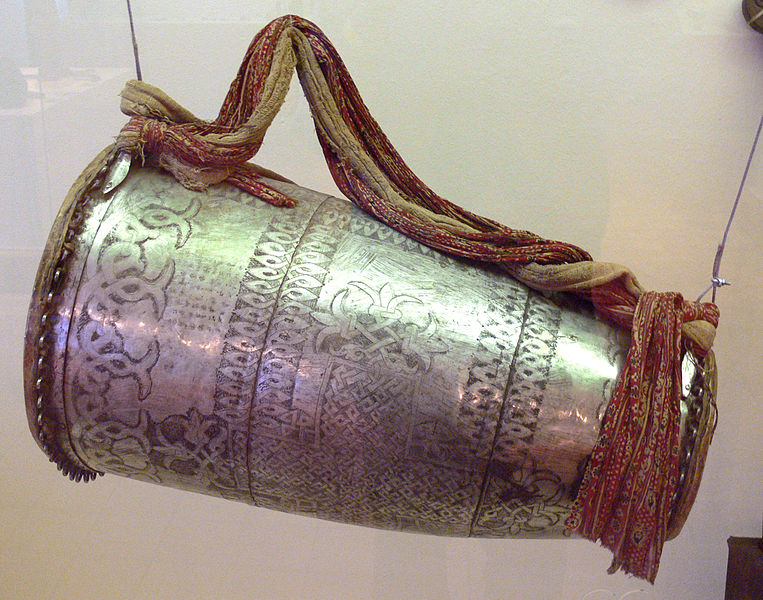
his hands flutter over and onto the kebero
a world constructed in the moments of sound
a world razed in the moments of silence
a rhythm of birth and rebirth
of heartbeat and life-blood
he’d gone to Africa, this young man
to chase down his roots
to buy exotic drums
to make rhythms with his brothers
to sing with his sisters
to learn, to grow, to come home and teach
he was full of grace, brimming with jazz
just rocking his universe, rolling with spirit
alight with green and gold,
the breath of wild savannas and
wilder cheetahs, monkey pranks
and elephantine tuskedness
what, i had to ask, was the take-away
after the safaris and the drumming
after the injera, the wat, the niter kibby
and berbere spices, the many fine meals
downed with ambo wuhteh
ah, he said, i met a sister
i was driving a forlorn road
she was walking alongside,
carrying a bundle of wood
i stopped and offered her a lift
no, she said, NO
if I ride today, i’ll want to ride tomorrow
it’s a recipe for unhappiness
she’s right, you know, he said
from wanting comes despair …
and so i drum, just drum, he said
his hands fluttering over and onto the kebero
a world constructed in the moments of sound
a world razed in the moments of silence
a rhythm of birth and rebirth and peace of heart
this is no city of ultimate bliss*,
though the traffic is backed up to kingdom come
and the streets are a scrimmage, full and rough,
teeming with feral bits of hope and hunger
the people here are virtuous though,
ripe with love for one another, for Christ and music
hear the music winding, insinuating
and tumbling from la iglesiay las casas
the rents are morbidly obese, don’t you know?
though the wages and hours are skeletal
too often along B Street and downtown,
a man begs a cigarette, a woman begs for lunch
Are you in the huts of the poor, consoling the
Broken-hearted with the sweetness of your soul, and
Filling their hands with your bounty? A Lover’s Call, Khalil Gibran
*****
esto no es una parte de la ciudad que está feliz
el tráfico es interminable y ruidoso y crudo
y las calles son una áspera, llena ~
lleno de esperanza salvaje y hambres profundas
la gente aquí es virtuoso, con buenos corazónes
madura con amor por el otro, para Cristo y la música
escuchar la música, que insinutes, una cascada ~
fluye de la iglesia y las casas
los alquileres son obesos mórbidos, ¿no lo sabes?
aunque los salarios y las horas son esquelético
a menudo a lo largo de la calle “B” y el centro de la ciudad
un hombre pide un cigarrillo, una mujer pide luncha
If I really screwed up on the translation and you’re burning to let me know, you can leave comment in Letters to the Editor. Thank you!
“Without art, we should have no notion of the sacred; without science, we should always worship false gods.” W.H. Auden
When we move on in the arc of our lives – to center – we cross the threshold into that place from which all things emanate – the sacred space of poetry and indeed all art and creativity, we leave behind the cacophony of assumptions and received wisdom to rest in Rumi’s field – a place he says is “beyond ideas of wrong doing and right doing.” We cross the threshold into a w-h-o-l-l-y, place – a place Rumi tells us the “world is too full to talk about.” The ideal of this field reminds me very much of Leonard Cohen’s Hallelujah, where all the hallelujah’s – broken or whole – are equal. And so it is with us and with our poetry, which as a spiritual practice brings balance and sacredness into our lives.
This business of taking up our pens involves more than learning the technical rudiments, the history of our craft and its key players. It requires of us a trust in ourselves and learning to let go of the expectation of understanding everything. We learn to embrace mystery and ambiguity. We learn to sit with process and to sit with the poems we are drawn to or the poetry we write. We allow the visions, the word-play, the cadence to work on us. Whether we share our poems with others or not, whether we are amateur or professional, is irrelevant. What matters is that we go on the hero’s journey and we come back with a gift.
When we write, we are like Rilke’s “Swan” …
“when he nervously lets himself down
into the water, which receives him gaily
and which flows joyfully under
and after him, wave after wave,
while the swan, unmoving and marvelously calm,
is pleased to be carried, each moment more fully grown,
more like a king, further and further on.”
Sacred space always reveals the unexpected. We are always changed, though the change may be subtle. What might come up are the daily concerns – how to make it through the day – or the current pain: the loss of a loved one, abandonment, ills of body and mind, concerns for children … Joy! and Gratitude! As we grow “more like a king, further and further on,” our sacred space may reveal something about the greater mysteries…
“does it matter after all, the curiosities
when fish and water are one
when light and dark are indistinguishable
when we are neither content nor discontent
when questions cease and ideologies melt
when there is no helping and no taking
. . . there is this” [Jamie Dedes]
And “this” is well represented by the Buddhist ensō illustrated above. It is meant to express that moment when the mind is still, allowing for creation. It symbolizes enlightenment. I’m sure all faiths have similar concepts. From a Christian perspective – perhaps the discussion would be about the “gaze of faith” and claritas (Thomas Aquinas) – “intellectual light,” illumination. In Buddhism, traditionally this ensō is done as a part of spiritual practice and it is a kind of meditation in the way that all creative efforts are meditation.
“Writing is a process in which we discover what lives in us. The writing itself reveals to us what is alive in us. The deepest satisfaction of writing is precisely that it opens up new spaces within us of which we were not aware before we started to write. To write is to embark on a journey whose final destination we do not know. Thus, writing requires a real act of trust. We have to say to ourselves: ‘I do not yet know what I carry in my heart, but I trust that it will emerge as I write.’ Writing is like giving away the few loaves and fishes one has, trusting that they will multiply in the giving. Once we dare to ‘give away’ on paper the few thoughts that come to us, we start discovering how much is hidden underneath these thoughts and gradually come in touch with our own riches.” Henri Nouwen REFLECTIONS ON THEOLOGICAL EDUCATION (unpublished) http://www.henrinouwen.org
So trust that through your poetry you will enter that field where there is no right doing or wrong doing and …
“The time will come
when, with elation
you will greet yourself arriving
at your own door, in your own mirror
and each will smile at the other’s welcome,
and say, sit here. Eat.
You will love again the stranger who was your self.
Give wine. Give bread. Give back your heart
to itself, to the stranger who has loved you
all your life, whom you ignored
for another, who knows you by heart.
Take down the love letters from the bookshelf,
I have been living with a chronic potentially life-threatening illness for many years now. It’s enlightening and not just because of what I’ve learned about myself.
It’s interesting to observe reactions to physical disability, in my case that means visible life-support (oxygen). Sometimes we actually become invisible – especially if our hair is graying – and sometimes we are treated with kindness (always appreciated) or with an inappropriate solicitude (a definite no-no). You don’t need to shout at me. You don’t need to read forms to me. My lung capacity and functions are issues, not my hearing, my mental acuity or my ability to take care of myself and negotiate the world. Honestly, chronic exhaustion and needing help lifting, carrying or shopping are inconveniences, irritating and often frustrating, but not earth shattering. We learn to live with and work around such challenges. We adapt.
On the other hand, since my move into disabled-senior housing, I’m distressed to see that people with emotional and psychological disabilities – disabilities that are only evident because of inappropriate behaviors – are often relentlessly treated with disrespect, even scorn. It’s as though inner demons are a moral indictment and yet the complications of psychological and emotional disability seem to me to be more intractable and far-ranging than physical constraints. Physical disabilities in and of themselves don’t keep us from loving, finding joy and hope in life or having dreams.
Part of the problem with the word ‘disabilities’ is that it immediately suggests an inability to see or hear or walk or do other things that many of us take for granted. But what of people who can’t feel? Or talk about their feelings? Or manage their feelings in constructive ways? What of people who aren’t able to form close and strong relationships? And people who cannot find fulfillment in their lives, or those who have lost hope, who live in disappointment and bitterness and find in life no joy, no love? These, it seems to me, are the real disabilities.” Fred Rogers, The World According to Mister Rogers: Important Things to Remember
the stoney bed of the creek so dry,
we walked on it, finding the tiny skeletons
of wild things – a deer mouse, a fish head
a heat deranged cat visited, brown and scraggy,
beaming her anger from yellow eyes,
her maw quirky and dry
her tongue gone mad
a drought-full day
it’s “drought-full” she says,
my japanese friend –
as though it were “dreadful”
which it is, dreadful
the five-year drought
i hunger for rain
drought-full, she says again
pensive, as we stroll B Street
in search of a café, a mojito
sugar, mint, caffeine, ice!
a black gentleman passes
with a nod at her he says . . . . .Nǐ Hǎo
shizuko keeps walking, . . . . .says nothing
the man looks puzzled, a bit hurt
he’d meant a courtesy,
greeting her in chinese,
i stop, rest my hand on his arm
“she’s japanese,” i say
by way of explanation,
he smiles then, and
on we walk, shizuko and me
on this hot drought-full day
seeking relief in a mojito
Foraging for Blackberries
Summer arrived a bit ahead of schedule
with dry air, stifling heat, persistent drought, languid children, too hot and too sleepy.
The weird winter weather put a damper on some crops,
but others arrived earlier than usual …
So here I am, foraging for blackberries in June.
At Tragg’s Market they arrived this morning,
their deep purple tamed, trapped in clear plastic boxes,
stacked by pears tossed on a wayward rumor of fall
“has been weaving words since I was but a wee lass running with crayons and scribblers …”
… and she continues with her poems online along with Running With Crayons, her whimsical art
Natasha’s debut poetry collection was Nothing Left to Loose (Winter Goose Publishing, 2012) It was a Pushcart Prize nominee. A year later – almost to the day – Pulse(Winter Goose Publishing, 2013) was launched,the second of her three collections. Natasha’s third collection is Birthing Inadequacy (Lulu, 2014).
NothingLeft to Loseis a collection of self-contained poems that tell the author’s personal story of everyday difficulties, disillusionment, and disappointment to which we can all relate. Ultimately it is about trial and transformation, which is the essential theme of both books.
Trapped between what was, what
is …no movement; fear
holds me motionless.
All directions equal no choice, as
fear gives way to chaos …
enslavement.
What needs to be done, I
don’t want to do, my thoughts
constant, my nightmares
real, feeling force, breaking
pressure, resisting to the point
of stagnation
Static, Natasha Head in Nothing Left to Lose
Pulse is a short epic, a narrative stream of poems that together form a modern-day odyssey of a family caught in a web of prostitution and abandonment, alcohol and drugs, delusion and deceit. When the worst happens to the young woman who is central to the story she is wrapped in silence … at first unchosen and then embraced … In this silence appears the potential for her to reinvent herself. She is being tested. Will she answer the call to transformation?
Pulse is a dramatic fiction, but I didn’t find it melodramatic or manipulative, which it could have been in hands less skilled than Natasha’s. The poems here are lucid and direct. The language is plain and mostly understated, interesting in its relative coolness juxtaposed against the girl’s grit as it unfolds.
There is nothing worse
than waiting in the dark,
no distraction,
alone.
Mother trying her best
and she
ducked low
in the furthest corner
of a forgotten closet
where she was safe to shine the flashlight
on ancient magazines
and little golden books
where she would realize
there was no such thing as fairy tales,
and princes never stayed.”
Clad in blue-gray woolly plaid, sensible shoes
and pressed, pristine white uniform-blouse
on the morning walk from the dorms to the convent
past the apple orchard, fruit dangling like red agate beads,
past big-eyed benign cows softly lowing,
walking briskly beyond the pen and then
into the brown wooded strip, rich in conifers,
the piney detritus crunching amiably under foot,
in the single-minded pursuit of
Sister Mary Francis, the kitchen, bread.
… we therefore beseech thee, O Lord, to be appeased, and to receive this offering of our bounden duty, as also of thy whole household …
The romance was not with bread to eat,
but with yeasts to proof, batters to mix,
and dough to knead, and rest, and grow –
that beautiful, mystical living thing you have
before the baking and dying into bread, and with
the clanking music of ovens firing up, pans crashing,
the rhythmic swish and sway of our quiet community
punctuated by the clicking of Sister’s rosary as she
monitors the students and novices at bakers’ tables.
This, the sacred work of those early hours before Mass and school
and the busy business of music lessons and art classes and
the methodical ticking of Liturgical Hours until finally Compline, sleep and
the contemplation of that final sleep and dust-to-dust.
And this being Tuesday, the day to commemorate St. John the Baptist,
and the day to bake our bread for the week to come.
…order our days in thy peace; grant that we be rescued from eternal damnation and counted within the fold of thine elect. Through Christ our Lord …
The next bake day, Thursday, dedicated to the Holy Apostles.
We work in the silence of Adoration.
In a quiet alcove
mixing flour, salt, and holy water,
then the fragile process of baking wafers on baking tongs,
silver antiques.
… which offering do thou, O God, vouchsafe in all things …
The wafers from my hand to priestly consecration, bread into body.
Enigma into doubt.
…to bless, consecrate, approve, make reasonable and acceptable that it may become for us the Body and Blood of thy most beloved Son, our Lord Jesus Christ…
Friday. The Cross and Theotokos, Mary,
mother of both God and man, Divine and human,
just a girl like me, a baker of bread.
…who the day before he suffered took bread into his holy and venerable hands, and with his eyes lifted up to heaven, unto thee, God, his almighty Father, giving thanks to thee …
Mysterious. Numinous. Inexplicable.
A lifetime ahead to figure it out.
Ecce Panis.
Take this Bread.
… he blessed, brake, and gave to his disciples saying: Take and eat ye all of this…
from the pastures and the woods, from the sky and the stream
from nature’s great cathedrals, everywhere present
... hoc est enim Corpus meum…
for this is my body
Amen.
“Where is God? Wherever you let him in.” Rabbi Menachem Mendel Morgensztern of Kotzk, Poland 1787
no mendacity in the natural world ~ just an
untamed grace in the meditative industry of ants,
in the peaceable company of small creatures
going about the business of food finding
and mating and homemaking in the loam of
this province, the republic of innocence
here is the soul-filling beauty of sun rising over
jacaranda as she paints her joy on a blue dawn;
robin with her russet-hued breast hunts for worms,
her instinctive motherhood proud of babies in
the spar and scrap of nest life . . . it is in this –
the uncivil cosmos – that the gentle breezes
dance with us on our mud-caked travels along
ripening pathways through meadow and brush;
as the flaxen sun shifts from rise to fall,
our hearts beat with their ribbons of ruby life,
pulsing with ebbs and flows of love and fear ~
soon – we know – clouds will gray and the
inevitable dark and shivered moon will show
her craggy depths, sooty with doubt and danger,
our earthiness projecting its own shadows;
still we trust nature’s homilies, content in this
province where we’re left to be ourselves, left to
write our own wildness on the mirror of time
“How near to good is what is wild.” Henry David Thoreau
Gretchen Del Rio is a California artist who finds her inspiration in nature and animals. Some of you will have noticed that thanks to Gretchen’s generosity, I sometimes use her work to illustrate my poems or to post in The BeZine or The BeZine blog.
“The paintings are from my heart and I always fall in love with the subject. I believe that we are all connected and, if an image touches you, it is because we all have the same heart even though our paths may be different.” Gretchen Del Rio
A couple of years ago when my grand-kitty, Gypsy Rose, was diagnosed with kidney disease and associated co-morbidities, I commissioned Gretchen to paint her in three of her many moods. It was none-to-soon. Gypsy died a little over a year ago and is still mourned by our family.
Gypsy was companionable and could be dictatorial. She had her standards to uphold. Like most cats she was at home with writers, which was a good thing. My daughter-in-law, Karen Fayeth, and I are both writers. Gypsy expressed her critical opinion by sleeping on good manuscripts and coughing up furballs on bad ones. She liked to play the muse posing variously as lap blanket, printer cozy, keyboard duster, desk trasher and in much the same spirit apparently as Ray Bradbury’s own once-upon-a-time cat – a paper weight. Despite her critical eye, she was always best friend.
I am the keeper of the dreams and the memories, the matrix where the generations converge, the record-book held between familial bookends. I am responsible for passing her life on to him that she may continue to live and that he may understand the consequences of history and culture as common people do.
He is the vindication of hope, his and ours. Her heart is the place were hope started. I can hardly think of my son without also thinking of my mother. They are the two people I love most in this world, though one of them – Mom – is no longer here. So for the record, I’m not sure why, but the pancake breakfasts I had with her at Oscar’s of the Waldorf are on my mind. We had rituals we honored until life had its way with her.
______
We spent time savoring the hotel before going into Oscar’s for breakfast. The Waldorf was decorated with so much gold color that despite the muted lighting we felt we were having our moment in the sun. The jewel-colored furnishings and plush carpeting invited us to find a place to sit. We indulged in wide-eyed rounds of people watching. The businessmen seemed busy with self-importance. The women fussed with their manifest charm. We always stopped in the ladies’ room with its uniformed attendants continually present. They provided each guest with a freshly laundered terry-cloth towel and double-wrapped soaps, lavender-scented. Mom would tip the attendant a quarter and give me a quarter to tip her too.
Waldorf Lobby & Clock
An important ritual was a visit to the Waldorf Astoria Clock in the main lobby. I’ve read that it’s there still, all two tons of it. It’s a place where people find one another. I’ll meet you at the clock. Everyone knows that means the clock inside the Waldorf-Astoria at Park Avenue. It’s a towering thing, the actual clock sitting below a replica of the Lady Liberty, hope of immigrants, and above some bronze carvings and an octagonal base of marble and mahogany. Standing near the clock gave us the sense of a history of which we were not a part. It offered the illusion of privilege, the true secret spice that made the blueberry pancakes at Oscar’s so delicious. The famed maître d’hôtel, Oscar Tschirky, Oscar of the Waldorf, was no longer there. He died in 1950, the year I was born.
_______
My mom loved the Waldorf and Oscar’s blueberry pancakes as she did everything she felt characteristic of culture and good breeding. Being well bred meant you recognized quality in a person or product: women who wore pearls, men who always tipped their hats in greeting, and dresses with deep hems. Well-bred meant you didn’t swear or use colloquialisms. It meant that if you were a boy you never cried. If you were a girl you didn’t display your intelligence. You didn’t run. You didn’t shout. You never went out without wearing hat, gloves, and girdle. You sacrificed sports and ballet at nine. You didn’t risk turning any tidbit of excess fat into unseemly muscle.
Given my illegitimate birth – which occurred when my mother was thirty-six – combined with our roots, peasant not patrician, and our working-class status in this country, it seemed Mom was forever posturing. Nonetheless, over time I convinced myself that my mother was indeed a most cultivated person. Hence my birth had to be a virgin birth. That would explain my father’s absence, though there was no kindly Joseph to lend an aura of respectability. Mom advised me never to kiss a boy. Kissing could cause pregnancy. Well, yes, if one thing leads to another, but how would my mom know?
’50s Style Theater seating
Mom’s interest in culture was insatiable. What she viewed as high culture other’s would label popular culture. We consumed it regularly and with religious fervor. We were fickle about our temples of worship. We opened our hearts at the Harbor Theater on Wednesday night, the RKO on Saturday afternoon, the Loew’s Alpine on Sunday, and for whatever reruns were on television at any given time. Because of movies we knew what to dream. They were our world; their luminaries our goddesses and gods. Audrey Hepburn, goddess of fashion. Cyd Charisse, goddess of posture. Katherine Hepburn, the great goddess of elocution. Grace Kelly inspired us to wear pearls, however faux our own five-and-dime pearls were. We did our best to meet the standard. Fred Astaire, Gene Kelly, and Jimmy Stewart were the gentlemen gods who shaped our expectations of men.
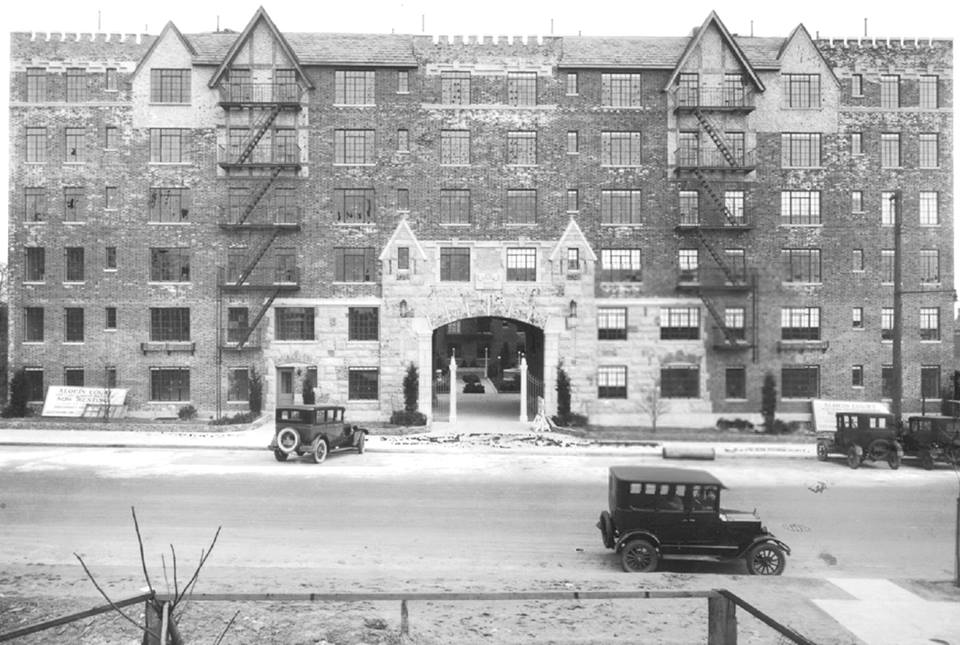
Our home back then was a one-bedroom Brooklyn apartment on the top floor of a six-story four-section complex that was built in the 1920s before the Wall Street Crash of 1929. Each of the four sections had an elevator, often in disrepair. Our apartment had French windows, which we found romantic and from which we could see the lights of the Verrazano-Narrows Bridge at night. The bridge didn’t open until 1964 and so it came to our landscape late. The requisite fire escape was outside the kitchen window, the only window without a radiator below its sill. It made a fine place to sit and read, write stories, and watch the cars below and the clouds above.
The building in the 1920s.
Our apartment, D61, was often blessed with rain in the form of leaks. Manna dropped from the ceiling in the guise of paint chips. If the people downstairs were too noisy, we tapped on the wood floor with the end of a broomstick. When there was no heat or hot water we consulted with the landlord’s wife, a common woman whose carelessly open closet displayed a frowzy collection of cotton house-dresses and limp lifeless sweaters. Mom always sniffed as we walked away, her sensibility offended. She said the woman’s hair was entirely too long and youthfully styled for someone of her station and maturity.
I remember my mother as so refined that when conflict arose between us she never fought or yelled or slammed a fist on the table. After a quiet well-barbed soliloquy, she went silent. If Mom’s anger was white-hot, she might not talk to me for years. The last episode of protracted silence extended from my fifteenth birthday until after my marriage. I no longer remember my original offense but a rebellious marriage to someone of a different ethnicity did nothing to serve the cause of reconciliation.
________
There’s my mother, the little girl on your left. She’s about seven in that sepia photograph – circa 1921 – where she stands alongside her siblings and her own mother. My mother’s mother is pregnant and in her mid-twenties. Eventually there would be eighteen children of which ten survived. Mom told me her parents were married young. They immigrated to this United States of America after the first two children were born, one boy (thank God!) and one girl.
I often look at that photograph of my mother and wonder what she was thinking. What did she long for? As she made her way around the old neighborhood and tried to grow beets in a wooden box on the tenement fire escape, certainly she dreamed of dressing in the latest rage. When, through the aegis of the New York Times Fresh Air Fund, she spent a month each summer at the Muzzi’s farm upstate, no doubt she fantasized about living where the air is clear and the spaces packed tight with solitude and well-occupied with growing green things. She often talked with longing of the fresh vegetables at the Muzzi’s and of a large accommodating farm kitchen.
Mom once landed a part in an elementary-school version of Aïda and got to wear a costume and make-up. Her father had her remove the red lipstick that was provided by a teacher. As an adult, Mom collected lipsticks. You wouldn’t believe how many different shades of red there are and how poetic the names: autumn rose, wild ruby, crimson dew …
Over time, the hope of being valued by a good man, of living in a much coveted garden apartment with something more than an efficiency kitchen, moved slowly out of reach. As Mom grew older, less nubile, and more invisible, she became more artful with her war paint and her dress. She no longer wore what jewelry she had as decoration, but as amulets.
Her decline must have started when she was pregnant with me. Coincident with that, she was diagnosed with cancer for the first time. Through the years and bit by excruciating bit, she lost organs: a breast now, then her thyroid, then her womb, a kidney and finally the second breast and lymph glands. I’m just a shell, she’d tell me before warming her soul by the cold fire of a movie screen. She would fight cancer on-and-off all her life. When the end came, she died in my arms of breast and colon cancer. She was seventy-six.
Mom was a good numbers person, almost always working as a full-charge bookkeeper or accouting clerk. When I was twelve, a particularly exciting opportunity came her way. A prospective employer flew her – a Kelly Girl ®, forty-eight years old – to D.C. for a trial assignment and a job interview. When she arrived, she found the possibility of permanent employment required a full medical exam. The exam, along with work history and evaluation, would be submitted to the board for review. All those men would see it. They might even discuss her lack of womanly organs at the board meeting, complete with board notes for documentation. Embarrassed, Mom declined the interview, packed her bag, and found her way to the airport. That afternoon, she arrived back in New York at Idlewild.
Our Subway Station
The next morning, without even a nod to the well-bred goddesses and gods of mortal fancy, Mom threw on some clothes and grabbed my hand. An hour or so later we were in Manhattan. We went straight into Oscar’s. We didn’t stop in the hotel lobby for people-watching or give quarters to the ladies’ room attendant. We didn’t pay our respects to the Waldorf Astoria Clock. We just ate. Rather, I should say I watched. Mom ate. She cut her pancakes at punitive angles and made doleful jabs at the pieces with her fork. When she finished her serving, she moved on to mine. By the time Mom gulped her third coffee, paid the bill, and left a grudging tip, even my child-mind understood that our visits to Oscar’s for blueberry pancakes would no longer be part of a wistful dream. Lacking sacred ritual, they would devolve into compulsion. This was the beginning of Mom eating much too much and of me not eating quite enough. While Mom endeavored to bury dreams, I sought to scrap their bones bare and set them free.
First publication: March 15, 2012, Connotation Press
3 p.m. and excited, I am heading home little realizing she is too,
packing my bag with that refined sense of glorious freedom that
comes on Fridays, knowing that there will be no classes, none –
for two days – no classes, freedom – packing my dark-blue cloth bag
pocketing a pink lipstick to put on once past the convent grounds,
happy in a shuttle bus to the Long Island Rail Road and Flatbush.
Tickets are two-something and the sites and smells of Brooklyn beckon.
I look forward to the Hudson and concrete sidewalks and city parks
and the mulberry trees that stand guard outside our apartment complex.
I think of her, Teresa Margaret, not realizing she too is heading home.
I think of her thick dark curls and wide purple lips, clear olive skin
and hands that flit like a hummingbirds from this to that to this again,
her sensible flat-heeled shoes, pastel shirtwaist dresses, and red lipstick,
the jodhpurs, brown boots, crop for riding, a thing she did and excelled at.
Who paid for that, I wondered, and for the stash of stone and plaster horses
that stand and wait mostly abandoned at our grandmother’s one block away.
I remember when I saw her laugh, eyes sparkling, curly pony tail bopping –
it seemed to jiggle with delight, the smiles that seemed foreign to her face
but were nice to see. So I put on my lipstick, thinking how skinny my lips are
not bold and generous like hers. My hair is fine and silky, not thick and frizzy
and coarse like hers. I am fine-boned. She is big-boned. My big sister is big.
She rides horses, did I say that? I’m headed home. The train sings as it passes
town after town along its way until we arrive at Jamaica, Queens – a hub –
where I change trains. I’m headed home where mom will serve up her anger in
bowls of pressure cooked chicken and potatoes, where plaster falls like mana,
water pipes rattle and shower water is icy, sometimes rusty. I’m headed home,
little realizing Teresa Margaret is headed home too, winging her way on a DC10
from Fort Lauderdale, Florida, cold in a wooden box, colder bullet in her head.
Youth (aged 10-24 years) Suicide Statistics:
For middle and high school age youth (ages 12-18), suicide is the 2nd leading cause of death.
For college age youth (ages 18-22), suicide is the 2nd leading cause of death.
Over-all, suicide is the 2nd leading cause of death for our youth ages 10-24.
(*2013 CDC WISQARS)
In ages 10-14, we have seen an alarming 128% increase in suicides since 1980, making it the third leading cause of death for that age group.
More teenagers and young adults die from suicide than from cancer, heart disease, AIDS, birth defects, stroke, pneumonia, influenza, and chronic lung disease, COMBINED.
Each day in [the United States alone], there are an average of over 5,400 attempts by young people grades 7-12.
Statistics Courtesy of The Jason Foundation established by Jason Flatt’s parents in his memory. Jason’s father write’s, “I will never hug my son again. But I can and will work alongside you…perhaps to save your friend, your neighbor’s child, a relative or even your own son or daughter. Thank you for your support of any kind . . . “
It is always interesting to me, this business of feeding – of inspiring – one another with our art and poetry . . .
Buddhist artist Paula Kuitenbrouwer (Mindful Drawing) tells a sweet tale of the near-death of a beetle at her home in the Netherlands.
The tranquil garden-drawing Paula completed to commemorate the day is lovely and the first line of her post is both an homage to her unutterable respect for life and absolute poetry filled with the promise of story.
“I found a Carabidae beetle in a bucket with water and regretted its death by drowning… “
“I had a farm in Africa, at the foot of the Ngong Hills . . . “
Something about those evocative sentences lets you know there’s a good story to come. And there is.
“It lay there for at least an hour and I hoped so much it would give a sign of life. Then I did the most crazy thing imaginable; I turned it on its back, squeezed it gently, and gave it heart massage (don’t ask). Three drops of water came out. I have no clue why I did such a weird thing. Would somebody tell me he or she had given cardiac massage to a beetle, I would have laughed out loud.” MORE [Paula Kuitenbrouwer]
And so the inspiration for my poem ~
the garden floating in violet and ruby hues,
by the side of the house, a beetle floats too,
so jewel-like, amethyst and brilliant against
the dull gray water, it does not move
it lies there still as the dead of noon across
a bone-colored desert, and her hand so white,
wing-like flutters against its rigor, laying it
on the table, by a pad to sketch with pencils
that minuscule life, no will to release it
into whatever beetle heaven there might be,
laying tender finger to knead a tube-like heart
holding her breath, willing air into spiracles
wishful thinking? a flicker from the antennae?
slight movement of a leg? perhaps, perhaps
some healing pressure, one gentle push,
three drops of water, success in late hours
to heal a beetle, to sketch in varied colors
with time to hug the child and sip hot tea …
a creature saved from death by drowning and
cherish the mindful drawing for a memory
 At the time in our history when we started to see nature as something apart from us, when we gave up our shamanic instincts and in our hubris separated them from our growing science, when we devolved from stewardship and one-with to ownership and power-over, we set ourselves up for a world of multifaceted pain and disruption. One result in modern times is environmentally induced disease caused by xenobiotic substances that result in cancers, autoimmune disorders and interstitial lung diseases (ILDs).
 on the Atlantic Seaboard they’re paralyzed under
 abundance lifted on the arc of time





 no mendacity in the natural world ~ just an




 The BeZine
