Rolling through the valley,
I passed the canal and mill towns,
the farms that string like
an antique necklace all the way
to Albany.
Near Dolgeville, I saw
a once-was farmhouse and barn,
empty of family and stock.
The barn’s roof rested
on the milking floor,
empty birds’ nests in
its beams and joists.
Yet the house still stood,
though canted toward the Mohawk.
It looked to be held up
by one window, which stood
almost plumb and middling strong
for the time being, staring
as it always did,
out at the path where
the cows once rumbled in
and lowed for their milking.
“Don’t blink” I said to myself
as I rushed by,
“because someday this
will all be gone.”
“Don’t blink,” I begged the house,
whose sad swirled-glass eye
looked out on one more hollow bead
in the necklace leading
all the way to Albany.
The standoff had not gone on for long, just after the sun began coming up over the meeting house, the far steeples of Boston and the ocean between us and who we wanted to be.
But the Regulars didn’t care if it was day or night. They could kill us with their eyes closed, if their commander, or we, let them.
A few hours before, most all of us were in the Buckman Publick House, drinking ale and rum, some smoking pipes. The rest of us, mostly lads like me, got our first real tastes of adult courage off the drink, the smoke and the rhetoric of our elders that night.
“Gentlemen, let there be no great fear of the regulars should they enter our town,” said Captain Parker, his own red coat hanging from the back of a chair. “We shall stand our ground and show them our resolve to hold onto what is rightly ours as lawful citizens of His Majesty,” he whispered and then coughed.
The Captain has the consumption, I’m told by Mother, his cousin, so all the smoke in the room from the hearth and the men’s pipes harmed his breathing quite sorely. That and his harsh coughs practically choked the great man, making him difficult to hear. So I edged up close to him. That seemed to make me feel braver. He’d fought for the Crown in the late war against the French and knew well the tactics and propensities of the Redcoat soldier. If he didn’t sound like he would die by next harvest, I would have had a run at Gage’s whole bloody army by myself.
At sunrise, Thaddeus Bowman, the last scout the Captain had sent out, come bursting into the tavern.
“They’re here, they’re here,” he said in a voice nearly as choked as Captain Parker’s, though not from the consumption. “They’re right behind me, Sir, and this time they are coming in force. Maybe three, four hundred of ‘em,” I heard him tell the Captain. I grabbed my Papa’s old fowler and headed for the door.
About half of us unknotted ourselves from the doorway and ran out into the front yard of the tavern. Everything had an eerie glow to it, ourselves included, from the combined moon’s and sun’s lights shining upon us. I took this as an omen of what lay ahead for us this day and said to my cousin Amos, “The Lord is with us, cuz. He most surely is. We have right on our side and will not be bullied from our own field by redcoated tavern scum.”
The fact that our whole company had spent the night in a tavern, many tasting its wares, and were blinking in the new day’s smoldering light, suddenly arose upon me and I’m sure my face took on a wholly different glow, the hue of a boiled lobster.
All eighty of us men and boys who had been in the tavern began to form ranks on the village common. It was a damned ragged line compared to the ones of the approaching Regulars. They looked like they had been formed buy some great carpenter’s square. We, while most resolute, took on the form of a snake-rail fence.
Over by the road, I could see my grandfather and sister out of the corner of my eye. I turned to look and wave a greeting, but our sergeant, William Munro, gave me a strike from his musket barrel and whispered hot blasphemy and spit in my red ear. But now Grandfather and Deliverance could see where I stood.
Captain Parker walked down our column and looked like Grandfather when he had to dispatch poor old Benedict, his sorrel, when the gelding’s time had come. This did knock all those mugs of my previous courage from my head past my heart and from there to my feet.
“Men, we shall stand our ground, but not provoke the Regulars. Most of our militias’ powder and supplies at Concord have already been safely hidden away,” Captain Parker said. “We’ve all seen the Regulars on such fishing expeditions before. Once they find nothing, they will march back to Boston and we can get back to our lives until the next time.”
Sergeant Munro stalked up and down our lines out there on the Common, truing us up into a more respectable looking force.
“We’re not here to block their advance to Concord, lads,” he said. “We’re just going to show them we shall not be cowed by their brutish arrogance. And to insure we do that to our best abilities, I want you, boy, to move to the rear of our lines. Or better yet, across the road to your family. You are at heart a coward. You have no character and don’t deserve to stand with these honorable men.”
Mister Munro never did have much truck with me. Not since he caught me talking to his daughter, Abigail, behind the Meeting House without an adult family member within arm’s length. He pushed me backwards with the butt of his musket, but I just lined up behind Prince, the Estabrooks’ towering Negro, where he stood in the back row.
Now that Sergeant Munro had squared us up, I could peer through the gaps between men and see the Redcoats approach, their leader riding a fine black.
The sun had climbed high enough for us to see the Regulars advancing on the road to Concord now. They marched as one, dully, with little life to their strides and less to those faces we could make out. They looked for all the world like they were marching in their sleep, their shoes and gaiters caked with drying mud. The only liveliness to this red mass on the road to Concord were their drumbeats, the clinking metal of their equipment and the glint of dawn light on their buttons and weapons.
I felt a chill beyond the normal cold of an April morning and shivered as I stood with Papa’s fowler in my hands. I’d loaded it yesterday with birdshot and a ball, reckoning, if need be, my aim was poor with the rifle ball, I’d at least get a piece of one of the Regulars like he was a pheasant. Instinctively, I pulled the hammer to half-cock. My knees shook and I knew not if it was a shiver from that chill or from something I didn’t wish to admit. Perhaps Munro was right after all. Maybe I was a coward.
But I held my ground. I would not let Munro or the Redcoats run me off. No more.
Just as the wind shifted into our faces, Captain Parker raised his short sword and his rasp wafted over us, saying something like, ”Stand your ground, men. Don’t fire unless fired upon, but if they mean to have a war, let it begin here.” Or so Amos told me later.
I heard another click.
A murmur went through the men ahead of me. Out on the road, the column’s advance guard, rather than taking the left fork to Concord, turned to right and then toward us. I could hear the shouted orders run down their column. I saw the big black horse of their commander turn from the road, leading even more Regulars to the left, close enough for me to throw a rock and hit one. They now formed a solid wall of red before our motley line of farmers and tradesmen.
The officer on the black then rode forward, waving his sword, and called out for us disperse. On the breeze I heard him shout, “Lay down your arms, you damned rebels!”
More orders were yelled down the lines of Regulars. Men within our company began to look at one another, talking all at once. The line looked like it was a row of rye waving in that breeze in our faces.
I could see our Captain Parker say something. I could barely hear his voice, it was now so faint. He lowered his sword and pointed it to the ground. Many in the front line began to back away from the regulars, others stood in alert position as if waiting for someone to say something like an order, show them what to do beside stand as statues.
At the shout of “Poise firelocks,” the Redcoats brought their muskets, bayonets shining in threat at their muzzles, to a position upright in front of them. Most of our men stood stock still.
Next across from us we heard, “Cock firelocks,” and saw the mounted officer shouting at his men and waving his sword, as angry at them as at us. Our line held as Captain Parker shouted in his consumptive whisper.
The breeze died and suddenly the whole world went quiet as the grave. Neither side appeared like it was going to move and no one wanted to stay. Sergeant Munro had left his position at the left end of our first rank. He walked back from the killing ground between the lines and came trotting toward the road with a fearful look as he stared right past me. I, the coward who couldn’t stand like a man to request permission to speak with his daughter. I, the boy who he wished was standing on the other side of the Boston Road.
I took a deep breath and let it out. This impasse between us all would end today.
I touched off my fowler over his head and watched Munro drop to the ground as if he was a baby cowering from a thunderstorm. Or he thought himself dead. Almost instantly there came a roar of a different kind. Red coated men advanced like lions, growling and howling like wild beasts, some firing their muskets. All of them thrusting forward their bayonets.
Some of our men fell like empty grain sacks where they stood, huge holes in their heads and bodies. Others spun like tops, choking on blood and prayers.
We ran for the trees, over rock walls and newly blossoming shrubs. More fell around me. Behind me all I could see was a cloud of sulfurous smoke with glimpses of shadow men, some in what appeared to be pink coats, and flashes of shiny metal within. But I could hear the screams of men so unluckily slow as to taste the steel of Sheffield, and not on their tongues.
Ahead lie the road to Concord, along which I last hunted turkey. That day, April 19, 1775, I hunted my fellow man. That night, I wept, my head upon Mother’s lap, and then gathered my things and marched toward Boston.
No one ever again thought me a coward, even though I don’t believe I took another full breath for the next six years. Not at Breed’s, Quebec, Valcour, Saratoga nor any other of the horrible places I never spoke of to Abigail Munro, who became my wife and the mother of our eight children.
They never met their grandfather, but know he was there with me the day the War for Independence began. That was the day his war ended and I began ours.
A short story based upon what’s considered the first bit of face-to-face armed resistance that ultimately lead to the independence of the thirteen colonies from the rule of the British Empire. In this case, it was a young man’s resistance to the strict and judgmental father of his sweetheart that led to The Shot Heard ‘Round the World.
Two more stouts down here, honey? Thanks, love. So this is how it works, youngster. The pols will argue over when life begins, at conception or at birth. What the hell, the subject of their alleged debate could just as easily be Creationism versus Evolution. It’s the same churned-up, wormy loam that’s sustained the political phonies for more than a century. It’s what they hoe when tangentially preaching to the party-affiliated converted. We scribes would sit back and take notes, mainly gauging relative volume, totals of Biblical citations versus Scientific references and numbers of finger points. Though many now use their thumbs as pointers since the birth of Darwinian political exemplar Bill Clinton’s index finger-stabbing, definition-of-IS-is, white-lie, bad-optics hair-splitting during his own multi-hyphened product-of-a-sexual-encounter Dance of the Seven Berets. Oh, and we collected, crunched and consumed salty quotes like pretzels in our after hours bars. We were paid to fill open column inches or air-minutes between advertisements, with the implicit promise our bosses made to the advertisers of bringing X-number eyeballs to their come-ons for pharmaceuticals, automobiles or insurance. Judging which side is right or wrong rose above our pay grade, best left to the former reporters who soared or crawled over the broken egos of their colleagues to editorial or columnist positions either by hard work or something just shy of befriending (maybe just the journalistic equivalent of caddying for) publishers. Though some made it by outliving them. We ink-stained wretches are a cyclical lot who learned to somewhat compartmentalize our feelings as best we could without losing our edge, becoming totally numb. See, it’s not so much who’s right and who’s wrong on a specific argument as it is who those aforementioned editors and publishers choose to make right. We’d rather leave it out there in some artful, judgement-free, make-your-own-sundae bit of prose, like Hemingway did in Hills Like White Elephants. Hell, not once did he ever mention the word “abortion.” No one’s ever going to actually “win” these debates, combining science, culture, politics and religion in a danse macabre where Defeat/Death inevitably collects the dramatis personae and Victory/Life is merely Intermission, one last chance to pick up some Sno-Caps, Raisinets and nuclear containment vessel-sized containers of Coke and popcorn before the house lights go down for the final act.
I was asked if I could contribute a piece for the this edition of The BeZINE related to Science in Culture, Religion and Politics. I can’t cop to any of those subjects truly being in my wheelhouse. Nevertheless, I sat down and imagined a one-sided conversation by someone who looks a lot like me and has seen and chronicled the bloody confluence of those subjects–a retired news reporter. My career on that side of the news business was not so long as the friends I made during my reporter years, but I readily admit it quickly grew a husk around me and opened a vein of acid-tinged cynicism and indifference that I fight to this day. I took no stand about these subjects (well, maybe politics) in this piece, but thought it might be interesting to dive back into the deep end of my primordial news ooze to see if it still makes me smell of sulphur. It does.
My stepfather thought he’d make a man of me by shipping me West one summer to work on his ranch in Southwest Colorado. He told me I needed to learn the way of the world, the natural order of things in which Man, or least my stepfather, sat at the top of the mountain.
And so I was sent to help Waini Muatagoci, who the other ranch hands called Luke Two Moon, which is what his Ute name translated to. Two Moon was from the Weeminuche Band of the Southern Ute tribe who once ruled this part of the Four Corners before the whites “subdued” them and, in turn showed them the way up that mountain my stepfather talked about. Just nowhere near the top.
“Yog’yuvitc, brother coyote, he’s been here since before my people arrived in the before times, young Ben. Coyotes would take deer and elk and the calves of kutc-um, the buffalo. But it wasn’t until the white ranchers came that coyote has been hunted like this, just to be rid of him on the ranches,” Two Moon said as we rode the trap line set out to take down the coyotes that had been killing calves of my stepfather’s prized Herefords during the calving season.
“I guess Hal’s barbed wire fence is only good at keeping the cattle in and not the coyotes out,” I said, half-joking. Hal was my stepfather, Harold King.
“No. Mr. King thought he could scare them off the ranch by making big noises. Coyote ran away, laughed at him and then came back for more calves. He sent us on hunts, but there are more of them than there are of us and this is a big spread. So now we set traps and kill coyote without even seeing him. It’s a dirty and cowardly thing,” Two Moon said.
Up ahead we saw a thin gray form lying on the ground. It was my first view of a coyote and later I wished it was my last.
The animal’s bloody leg was in a hole, its mouth open as if in a silent scream of protest and it’s eyes were open in defiance, fear…maybe even accusation. I couldn’t look at its face long enough to tell.
“So now you see Mr. King’s ‘enemy,’ this scrawny thing lying here in a pile of skin, fur and bones. Help me get him out of the hole so I can reset the trap, young Ben,” Two Moon said.
I put on my gloves, pulled down my hat and jumped off my buckskin and tried to put aside my disgust. I understood the problem of the coyotes coming through the wire and taking calves, but I wished there was better way to keep them under control besides killing them in such an inhumane manner.
“This is just wrong,” I said.
“As far as the ranch goes, you’re wrong, young Ben. But you’re also so very right.”
In the next hour we found four more dead coyotes, their legs caught in traps set in holes and hidden from them, save for the bait that drew them to their abrupt capture and slow, agonizing deaths.
“As long as there are so many cattle here, breeding and calving so often, there will be coyote hunting and taking the babies,” Two Moon said. “It is as it has always been. Mr King is just providing many more opportunities for coyote to prove his rightful place in our Mother Nature’s order.”
At the next trap in the line, which sat at the top of little rise near the southern boundary fence of Hal’s spread, we didn’t find a coyote carcass. No, what we found was even more grotesque than the twisted form of a now-dead animal once wild with pain and fear.
Two Moon asked me to check on the trap set and bait, so I jumped off my buckskin and carefully reached into the hole. Two Moon must have thought I got bitten or the trap snapped and my hand barely escaped its vicious jaws, but he’d be wrong on both counts.
I looked at my glove and showed the blood to Two Moon.
“You all right, boy? Trap catch you?”
“No. Come on down and take a look in here,” I said.
Two Moon’s feet hit the ground in a silent puff of dust and he walked to the hole, kneeled next to me, peered into it and withdrew the bloody trap. In its jaws was the severed leg of a coyote. Actually the lower leg that had been gnawed off by the trapped coyote. Two Moon’s face took on an expression both resigned and disgusted.
“You’ll see this happen from time to time, young Ben, when brother coyote will not wait to die on the Man’s terms. He would rather die free, no matter the cost in pain and suffering. My people were the same way., fighting the whites, even though we knew we were whipped, all the way ’til 1923, when Chief Posey took on the Mormons one more time up in Blanding. They killed him,” Two Moon said matter-of-factly as he opened the trap and let the grotesque talisman of a perverted sense of freedom fall to the ground.
“May I have that, Two Moon?” I asked.
The old Ute shrugged and said, “Why not? It’s not doing coyote any good now and the dead ones on the pack-horse don’t need it, either.”
He reset this trap just as he had the previous ones and the seven more in which we found coyotes of both genders and all ages until we came to the end of the trap line.
“If Hal wants me to check the line tomorrow, do you think I should check the sets on the way back to the house, Two Moon? Just so’s I can remember their location and order?” I said.
“Ya know, that’s probably not a bad idea, young Ben. I’ll leave you to it while I bring these back to the big house for burning,” Two Moon said. “I think your idea’s a right good one.”
As Two Moon road back to the big house he sang, in what I assumed was Ute, a tune that swayed in the wind behind him.
I tripped every trap on the way back. I knew the calving season was still months away and I’d be back East by then. No more coyotes would die like that while I played cowboy. They’d have to find another way to control the coyotes.
My real Dad had been a conscientious objector and Draft protester back in ’67-‘68. Yet he went on to win a Silver Star in Vietnam as a life-saving medic and came back to protest the war and racism and whatever other injustice he saw in American society right up until he died in ’86.
Hal wanted me to be a man by his definition, if not in his image. I’d already decided to be the man Dad would want me to be.
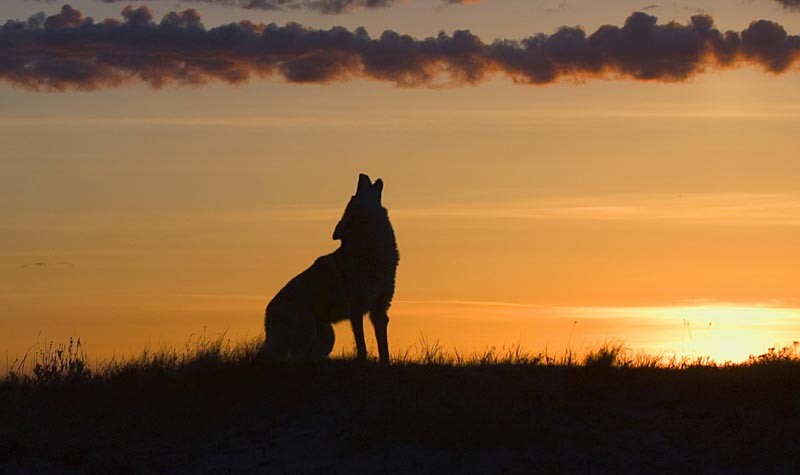
As I tripped the last trap, I heard a coyote howl in the distance, saw it in silhouette against the moon as both rose over the ridge south of the big house. I yip-yip-yeowed right back at it and it echoed my call. I’m sure it had no idea what I was doing, but liked to think it understood my eastern accented message we were in solidarity against the Man.
I hope…no, I know Dad would be proud of me.
First draft of a story I wrote based on the theme of “resistance.” I’m not one to write political protests or satire, and I’m pretty sure I’ve buried my take on the subject much too deeply beneath the allegory of keeping el coyote from ruining the ranch. But, I don’t have the answers when one beast wants in, while the other will do anything to keep him out.
Even the regal oak,
the mightiest tree
in this forest,
can be felled
by a man,
if he has enough friends or
he’s resolute or arrogant enough
to keep hacking away
until the erstwhile acorn
cries out in its wrenching
death song and,
like its
autumn
leaf,
drops.
But the simple weed
bent by wind,
starved for food and water,
cut off at its knees,
pulled from its home,
even poisoned, still
manages to come back
to stand up to
he who can best
the majestic oak,
vexing Man until
he might drop
like the
autumn
leaf.
Be the weed.
A bit of verse that reminds us to always question authority, always stand up for your rights, always, as the Quakers say, speak truth to power. As individuals or group, we have more dominion and strength than you might think.
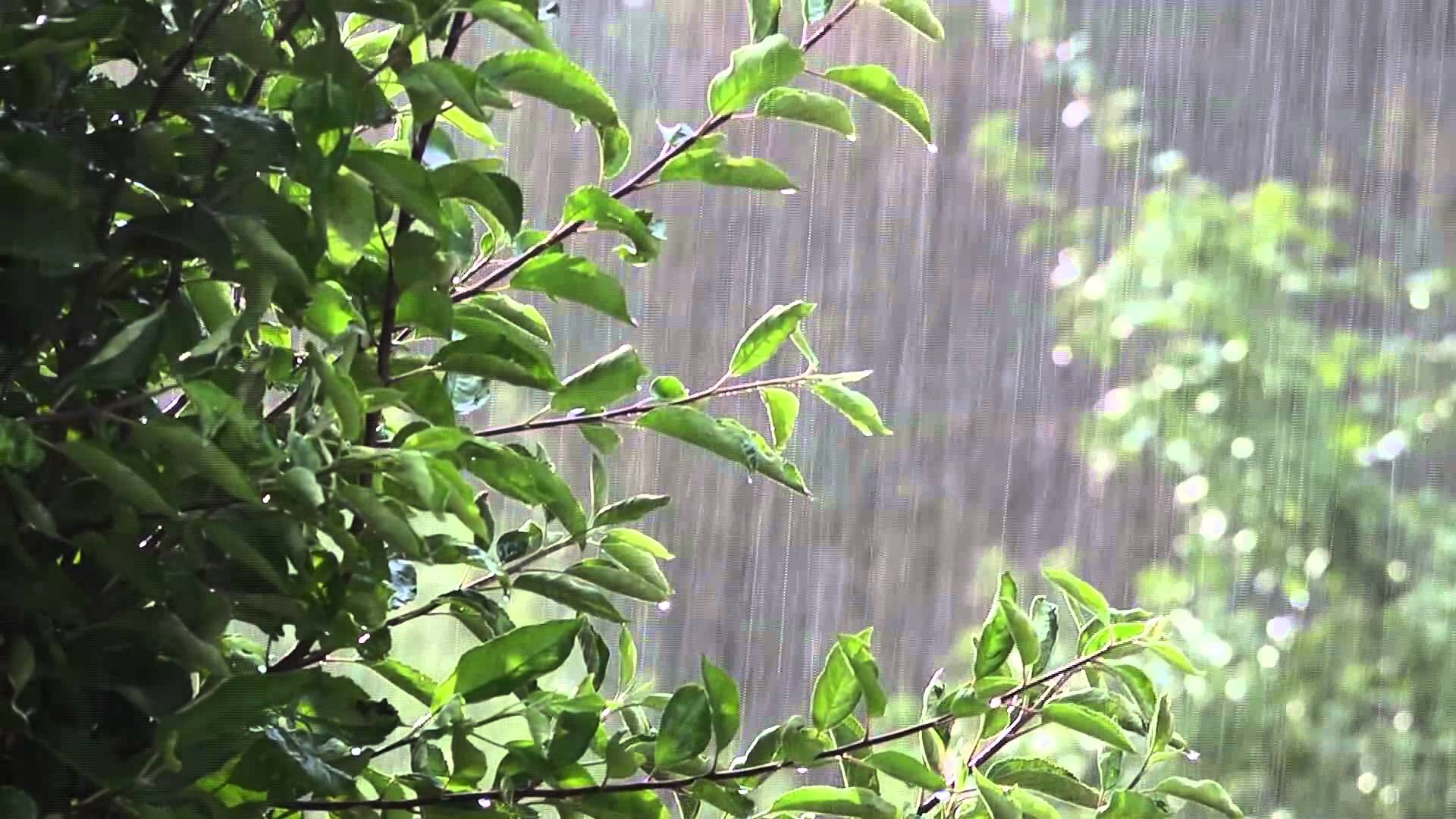
The storm slaps down the trees’ hands
that reach in prayerful supplication,
or maybe to protect themselves as I would.
Many inevitably fall, which I have
many times in this stormy existence,
to the steady beating and beat-down
brought upon us from above.
Some splash-land upon the soggy grass,
some divert the rainbow runoff
from the oil-slicked blacktop driveway,
others recline their spindly backs
upon the gravelly roof shingles.
They look up at the path upon which
the watery host forced-marched them here.
If I was to fall, I’d lie like those
on the angled roofline, eyes tracing
the individual drops’ paths,
feeling assured we’d one day rise and
find our vaporous way back to the clouds.
Your faith assures me that could be,
even if I’m never anointed like that driveway,
even if I fall to buffeting by my will and not
some unseen baptismal force in the clouds.
I can’t really expect to be resurrected
like you raindrops after becoming one
with the earth beneath its green shroud.
But I’m willing, willing to faithfully face
these storms again and again if it means
I have a chance to see the good in you all
when my tearful tempests end
and the Sun comes back once more.
Not so religious or blasphemous a piece as you might think. Just the freely dropped rainy Saturday thoughts of a fallen altar boy whose faith has been shaken by the floods and gales of doubt that have battered my spirit over years of seeing and knowing too much evil. Shaken, but not shattered, though. As I said, “I’m willing’.”
“I’m stuck in a precipitous place,”
you said, “and falling is a possibility
I no longer care to worry me.”
The fall doesn’t kill you, I replied,
ignoring the pain I’ve felt, too,
it’s that sudden stop at the end of it.
He grinned (Or was it grimaced?)
akin to a wolf who had a death grip
on his own ears, contemplating
letting go or holding on for dear life.
His life, yours, mine, it didn’t matter.
Fear and anger will do that for you.
“I don’t care as much anymore about
this place in the present,” you said.
“The past looks like scorched earth and
the future’s a desert of hopelessness.”
Then stay where you are, I replied.
Yesterday’s nothing but ink-stained
fabrications at the bottom of a birdcage.
Tomorrow’s just a hazy today in waiting.
Hold onto your spot here and now like
a bird, softly enough not to crush it,
but firmly enough that it can’t get loose.
Your grip on life can escape you
on swift’s wings, and sometimes those
guardian angels pounding their gloves
waiting to catch you if you drop in
the existential outfield have been known
to lose some in the sun.
Do I know what inspired this? Does it matter? Let’s just say if fell into my glove as I squinted into the sun.
Photo is not filtered by Google for license and the author is unknown. If it’s yours let us know and we will credit you or take it down according to your preference.
When I think back upon those days,
I remember only one textbook
the nuns parceled out to us, their
semi-sentient little lumps of clay.
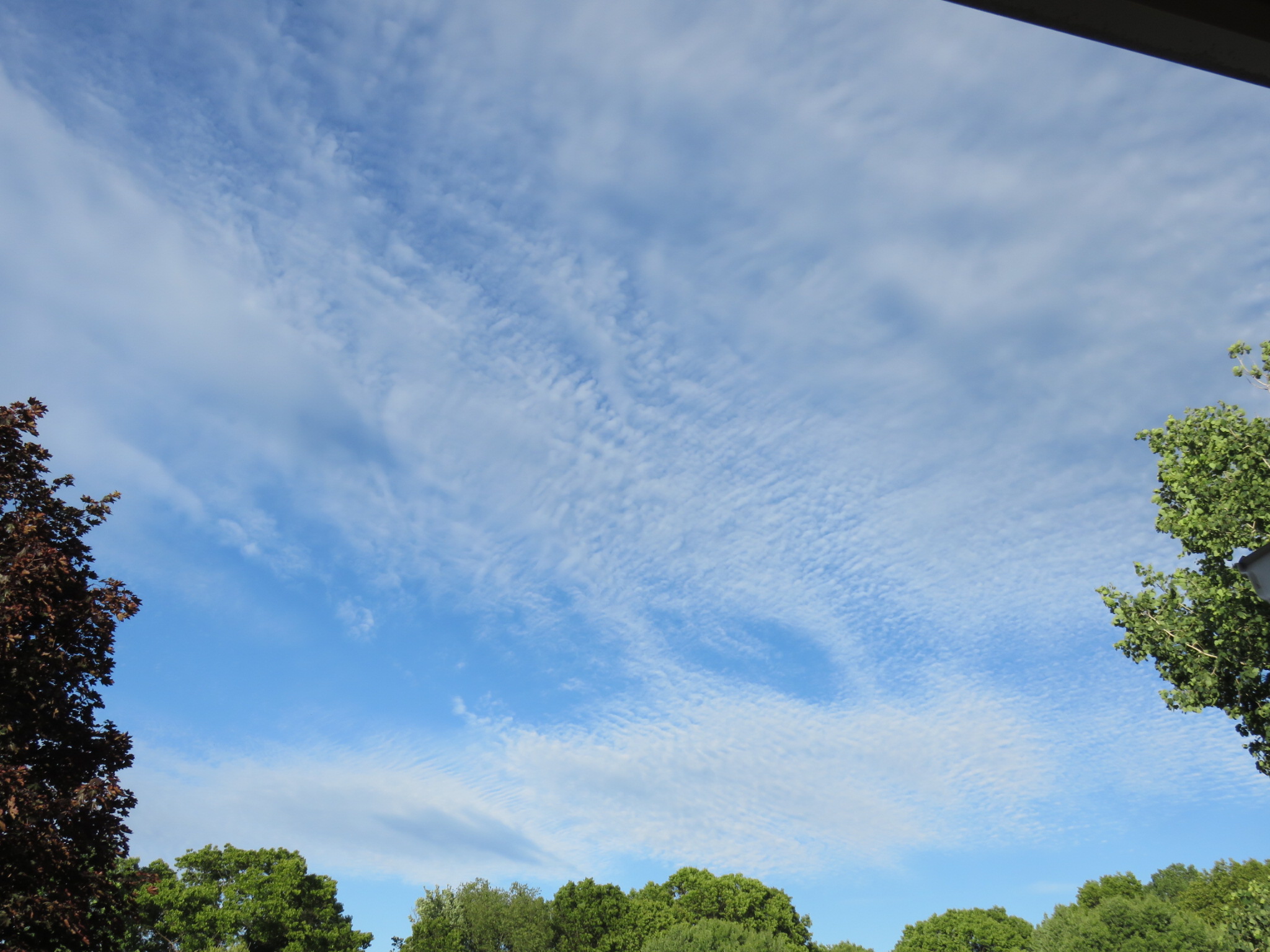
The catechism’s soft covers of sky blue
and white reminded me of a sky full
of wispy clouds half-hiding my view of heaven.
Mom already dug the foundation of her child’s
certainty that the Hereafter nestled
behind that star-strewn real estate
above that some called The Firmament.
But black-habited virgins swinging rulers,
sticky gold stars and glow-in-the-dark
rosaries required to teach me
the necessary tenets for gaining admittance
into that divine eternal housing project
only brought blink-inducing pain and
phosphorescent bling. The same as if
I devoured all the Sugar Smacks to get to
the prize at the bottom of the box.
So my faith stood built upon those
flurried clouds, apparitions of such
small substance that persistent breezes
whispering gossip about Fathers X and Y
and one of my fellow acolytes blew
enough doubt to topple it. They tore
from me my willing but rickety belief
in the unbelievable as easily as an
abused and angry boy could rip those soft
cerulean covers from their holy rule book.
When I was asked to write a poem on the subject of Faith, I don’t think this is what they had in mind. I’d like to believe in something bigger than I, in earning the fabulous prizes available for one who lives a good life, a life of treating others as he would want to be treated. But so many of the men who served as the arbiters of the rules of the road to that Better Place, men I knew personally, carried souls within as black as the outfits they wore without. I still lead that good life as best I can, because it’s the right thing and…well, just in case. But that’s Hope, the surviving little brother of a Faith I fear shaken to its foundations, apparently built upon sand.
According to most of your rules manuals,
I’m a poor excuse for a writer.
I’ve read six books in the past year
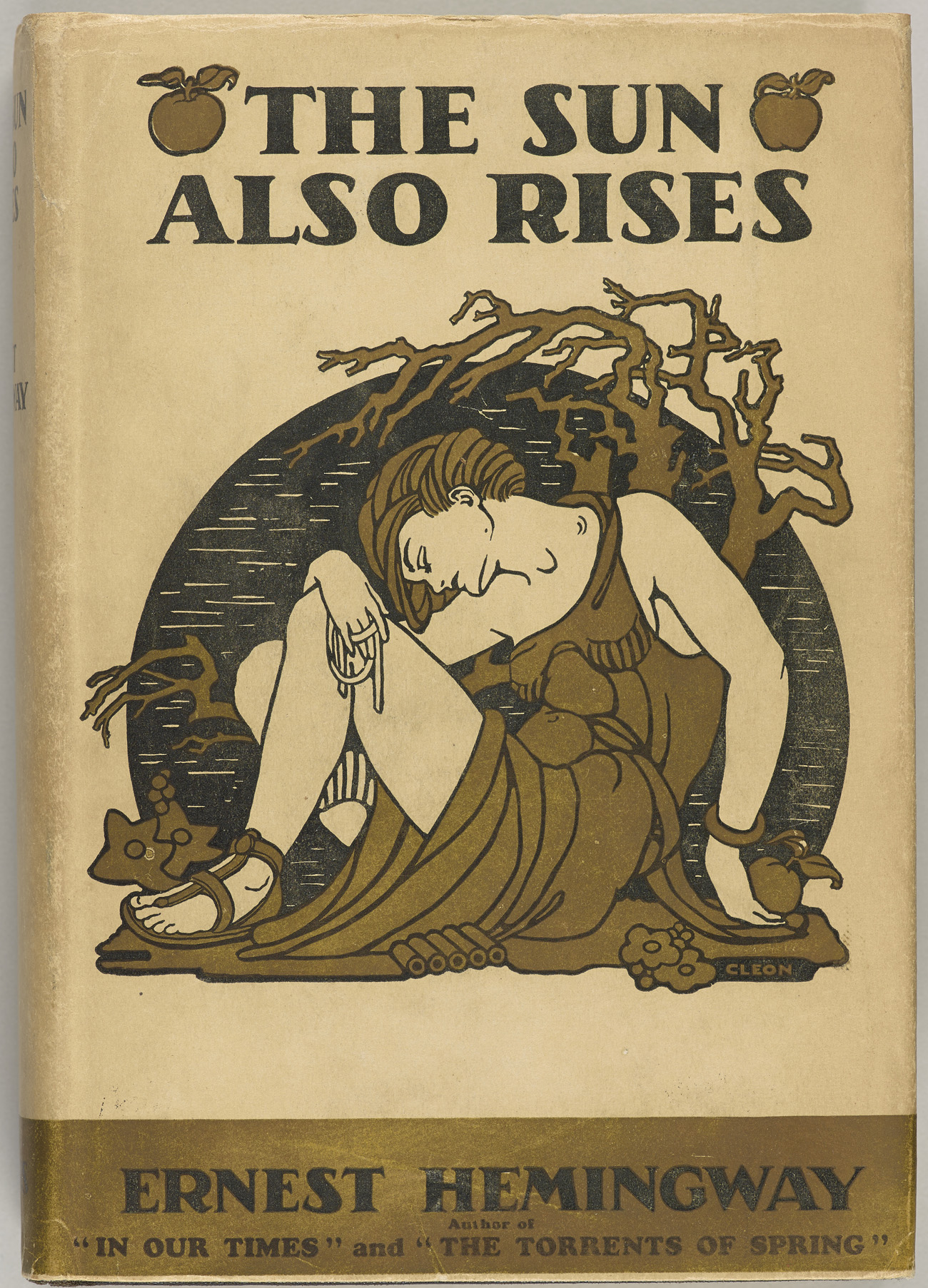
and two of them were The Sun Also Rises.
I can’t write every day and
I don’t want to hear how you do.
Some say I’m a poet, though I believe I’m
a reborn storyteller who spins tales on paper
in busted up lines. Papa Hemingway,
Robert Parker and Ron Carlson taught me
how to fib like this. See, it’s a guy thing…
and the only way I can get away with lying
in this world full of women
who read between my broken parts.
The poetry I learned from no one, except
maybe a big lesson from old Bill Stafford
who said I didn’t have to be perfect, just lower
my phony idea of your standards and write.
It’s kind of like drinking beer, I guess.
So as a poet, I’ve become a minor league beer snob
who dislikes major league beer snobs.
Oh, and while I’m at it,
I believe canned cheese product
is both fine dining and a swell serving device.
I sing fairly well, but never in front of people,
so maybe I don’t. My dog Mollie ain’t saying.
She doesn’t care if she lies perfectly, either.
Can read, won’t read.
Would read, don’t read.
That book sits face up on the table
next to me, it’s eyes staring at
my sheepish ones, like those
of a portrait that follow you
around the room, accusing, unblinking.
Or maybe they’re like
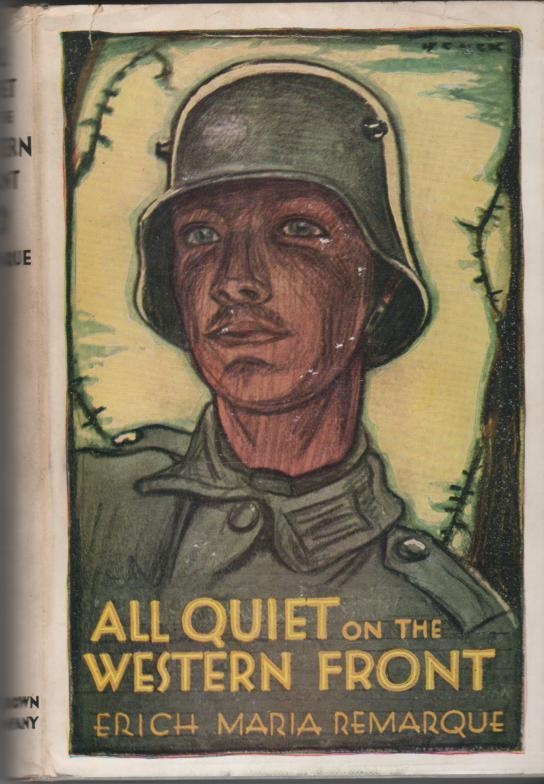
those of that dead French soldier
lying in the crater with Paul Bäumer
in All Quiet on the Western Front,
another book I never finished.
Like Paul, I feel remorse, loss,
over somehow killing my old hunger.
I was once voracious like you,
but lost the combat for my consciousness
and now I lie here, paralyzed,
with my toes framing that big screen,
notebook and tablet on my lap,
pinned down in my depression by this
bombardment of distractions.
I want to pick up that book and
conquer it, but, shell-shocked by media,
all I do is numbly flip a couple of pages
and place it face-down again.
I really wish I could be like you,
finishing every bit of reading you…
“Each day I squeeze the contents of my heart over whatever expression I’m wearing & imprint it onto a notebook page–my version of St. Veronica’s veil.”
Joseph Hesch (A Thing for Words) lives in a beautiful region, upstate New York, at the confluence of my own beloved Hudson River and the Mohawk River. It’s a nice setting for a poet.
Joe was a professional writer for forty years. Post-retirement finds him doing writing that is more creative – poetry and fiction – with publication in quite a number of magazines and literary journals. He has self-published two collections of poetry. Joe is also a member of The BeZinecore team of contributing writers and his poems and flash fiction are featured in the zine just about every month.
JAMIE: Joe, I know you worked as a journalist for a good part of your life. Did you also write poetry or did you come to it late? What’s it like now that you are not working for “the man?”
JOE: Journalist or hired typewriter and gum-flapper for Skidmore College, a three-state professional organization or the State of New York over my 40-plus years in the working world. And no, I definitely was not writing poetry until I reached the age of 55. Not in high school, college nor when I was a professional writer.
A pretty miraculous recovery from a heart condition let me know each day is a blessing not to be wasted. I decided I’d best hurry and let the writer’s heart I thought I had within me live again.
I started to write sassy essays that I shared with friends. Then I wrote a bit of memoir one afternoon about my childhood Christmases. I took a chance and it was accepted for publication in a Christmas anthology. I continued to write for the discoveries I was making in myself and my world. And then everything stopped. Absolutely dead in the water. I’d run out of those easily reached ideas and emotions. I didn’t know what to do.
A friend told me my prose always sounded quite poetic to her. “Why don’t you write a poem?” she said. So I started out with the 5-7-5 structured hug of haiku. Then I wrote a poem about not being able to write anymore, stringing together those five- and seven-syllable lines. She suggested I submit it to some journals. I did and it was accepted for publication. Poetry had recharged my life machine and put me back in the world as a writer.
I never wanted to be a poet. Never wrote a poem in my life before those haiku. I consider myself a storyteller. You could say my poems are stories with the sentences broken into bite-sized pieces, stacked like crackers. But I’ve discovered more about myself as an emotional being, as a feeling man since I began to write poetry than I could have imagined in fifty-some years on this Earth. So, about no longer writing for the man? They can’t pay you enough in any job to learn the discoveries I have as a poet.
JAMIE: Tell us about your two collections.Do you have plans for another? If so, what would be the theme.
JOE: Oh, thanks for asking. Yes, I have two collections available on amazon.com. The first, Penumbra: The Space Between, I put together in 2014. I guess you could say it’s my coming-out as a poet in middle age. I hope I expressed my impressions on life and nature from the view of a man emerging from years of darkness into a brighter personal and artistic existence, standing astride middle age. Neither young nor old, still peering at things from the edge of shadow and light, the penumbra. I’m kinda proud of it as a first effort.
In my second collection,One Hundred Beats A Minute, I hope to convey impressions and imaginings of life, love, art, nature and what I see outside or inside the swirly-glassed windows of my soul. All of its sixty poems, the number of seconds in a minute, are bound within the frame of one hundred words. No wiggle room, exactly one hundred, or my obsessive mind gets all edgy. When I succeeded at hitting 100 and putting that final period on the page, where my obsession met compulsion and life met art, I squirmed in my seat, my knees and heels tended to flutter up and down from the floor and my heart beat like I’d just run a sprint of a hundred meters. I hope readers can experience that feeling here and there in this collection, too.
My next collection? I haven’t thought very hard about anything yet. However, I have thought a for long time about putting together a collection of my short stories and flash fiction. Already have the title, the title of my first short story after I began writing for myself again—But Don’t Touch, as in “You can look, but…” So many of my stories are the opposite of my poetry. Many seem to have the theme of men who have problems reaching out to or accepting intimacy, whether it be carnal or merely the simple warm touch of another’s hand.
“Writer and poet who’s spent decades writing for The Man. Still do. Except now I’M the man.”
JAMIE: What sorts of poetic activities do you participate in and why?
JOE: Not many, and I feel badly about that. But when I go out to read to other writers, I just don’t feel a sense that I belong. Never have. Nevertheless, for the past four or five years, I’ve read at the Albany Word Fest Open Mic that the Albany Poets group holds during April for National Poetry Month. I’ve also run up the Adirondack Northway to read at the legendary Caffe Lena in Saratoga Springs. That’s an interesting feeling, reading your poetry where Bob Dylan made his bones as a poet in song. But I don’t get out enough to share my work with others. Maybe I’m shy that way. Or maybe just lazy, other than writing something for someone, only lately myself, every day for the past 40 years.
JAMIE: Why is poetry important to you and why should it be important to us?
JOE: Wow, that’s a big one. I guess it merits a big answer, then. Simply put, poetry, my finding poetry as an outlet for my long dormant creative self, helped save my life, most certainly the quality of it. I don’t know how long I could go on wandering in that vast desert of empty when I knew I was supposed to do something creative to fulfill myself.
Beyond that, though, I like to think poetry holds up a mirror, sometimes cracked and refracting, others with a soul-illuminating clarity, to who we are as individuals, families, communities, nations, a world. They can bring us the great Ahh moment, as well as the Ahh-Hah! And most of the time goes for the writer—at least this one—as well as the reader.
IN THE ROOM
Here in the room the breaths come
maybe every ten seconds apart,
snoring sounds from a mouth agape,
now voiceless, beneath eyes mostly closed,
but probably unseeing.
She doesn’t hear the talk in the room.
We think. We hope.
Above the bed, a little plastic bag
of morphine perches like blessed fruit
from a swirly silver branch atop
the six-wheeled tree they’ll roll
out of the room whenever her spirit does.
Here in the room we watch, we wait,
hearing only the sounds of the family,
of the bubbling O2 humidifier,
the beeps of monitors and machines,
the murmurs and shoe-squeaks from staff
in the hallway on the fifth floor
as the hospital awakens this morning.
And punctuating it all come
the snorting gasps of a life dwindling away
every ten–no, fifteen–seconds.
We think. God help her, we hope.
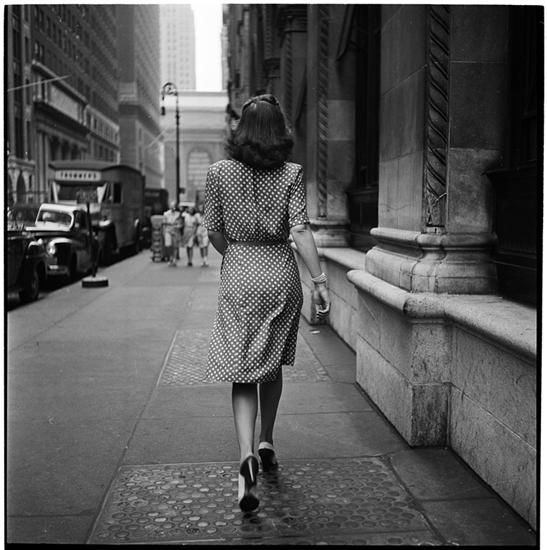
Street Conversations (Woman walking down the street.) 1946 Photo by Stanley Kubrick
Who is she, whose heels click by
and I just have to look up to see?
Who is she, who rustles by
in a fragrant cloud that stops
my tracks with a stroke of heat
not felt in years?
Who is she, whose curve of calf
and confident buh-bump bounce
stirs my heart and blushes my cheeks
with summer sunshine glow?
Who is she, who made me look without trying
and left me wondering who and why and…
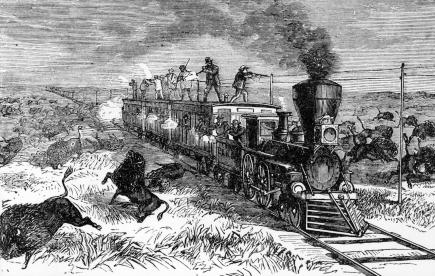
Killing buffalo – circa 1875. A group of men hunting buffalo from the top of a railroad train. (photo by MPI/Getty images)
The great bull the Cheyenne called Pó’otoéné, Gray Face, heard the hiss, the clang and roar, smelled the wood fire on the wind. He jerked his head up from the tough grass that grew at the entrance to the once-quiet cut where his herd had sheltered last year.
He was used to the incursion of young bulls, full of themselves and greedy for his ésevone. For ten years had sent each one off to try some other bull, some other herd, some other piece of his plains.
It was when he noticed the approaching beast, biggest and fastest hotóá’e he’d ever seen, that he himself roared and pushed his herd out of the cut into the open range. Behind him, the shrill steam whistle screamed as it would for any track-blocking herd of Herefords back in Illinois. But to Pó’otoéné, it meant as little as a man in a wool suit braving his way close to whisper, “Get off the tracks, please.” No, this roar sounded more war cry than warning.
His herd clear of the cut, Pó’otoéné turned toward the approaching Kansas Pacific locomotive. He pawed at the prairie grass and stood in defiant defense of his own.That is until the .50 caliber bullet entered his great heart and the legend that had endured a dozen winters, three arrows, one musket ball and countless challengers to his primacy, fell amid a yellow cloud of dust and a great gasp of blood.
From his position atop one of the first rail cars, Clyde Beene lowered his Sharps rifle and hooted in harmony with the still-screaming steam whistle.
“Hoo-wee, boys, you see that old sumbitch go down? Now this is what I call huntin’.”
After the War Between the States, a great migration of Euro-Americans crossed the Mississippi and spread west, pushing so much of what was native to the land aside, human and otherwise, often with little regard to any consequences. One example of this was the annihilation of the great bison herds of the northern and southern Great Plains. At some point, it became not only a profitable business to kill the buffs, but also sport for eastern hunters. This story is a meeting of all those dynamics.
Across the dead gray landscape of January
and February’s somber slate skies,
the grating complaint the blackest birds
lodge with steel-wrapped winter is the only
natural sound breaking the creak
and snap of wind bending these boughs
turned old by too many seasons’ snows.
Just when the cruelest month
nearly claims my spirit, the trees
begin to bleed drops of cardinal
from limb to limb and back again.
Urgent six-note melodies perch
on maple and pine staffs, breaking
the monotonous drear and crows’ atonal rasps,
as redbirds flit and spatter a transfusion
of warm hope into this frozen heart. Here,
place your hand on it and feel ice crack
and new life fight to trickle within.
“What the heck is this?”
I heard her shout behind me, shattering
the silent glow of my nascent creative self.
She caught me just as I closed
the right-ventricle point of the heart
I drew with a purple crayon
on the wall in the family room.
“But, Mommy,” four-year old me said,
“don’t you think it’s pretty?”
She didn’t see the need to make the beige wall
not such a bore
anymore.
I guess because her life had become
beige, too.
After Mom marched me to my room,
I wiped my nose and
was glad I never completed
this artistic tribute.
She’ll be sorry, I thought.
I never got the chance
to write inside my heart,
in red this time,
“MoMMy.”
Spiral cloud mountains build in the sky, towering to 20,000 feet, I’d guess. Below, is the town of Douai, where we know Richtofen’s Jasta 11 calls home this month.
The golden disk to the west is setting and the Albatros scout planes rise to meet us. This is going to be a ripping scrap, I can tell. And then we are in a whirlwind of brown machines and red machines, red-white-blue cockades and black Iron Crosses all flashing by so fast that sometimes you can hardly keep your bearings. Like so many of these recent fights, everyone gets scattered across the sky. But I can’t look out for everyone when I have to do my other job, kill Germans and come home to Flora, my Bobbsy.
A red aeroplane with a yellow nose and tail whips past Cecil Lewis, and I take chase. I will get to 50 victories. I will get to 50. I must get to 50. He twists and dives and heads into the clouds and I know he can’t shake me. My attention is solely on his tail. I recognize the flash of the setting sun on his goggles as he glances over his shoulder at me, as I’ve seen that look hundreds of times before. I know it as sure as I know the booming of my own heartbeat in times like this.
I fire burst after burst into him, a drum of bullets from the Lewis on the top wing and 60 or 70 rounds from the Vickers gun in front of me.
I see him drop below me and I know he’s done. I see it all so plainly. The craziness and blood lust that overtakes me at such times ebbs away. And I think of my Flora, my Bobs again.
Then I break through the clouds, seeing from my altimeter that we’ve dove to only 200 feet. But the clouds are in the wrong place.
“Flora,” I cough, “why are the clouds below me and the church steeple above me?”
“Rest, Albert, lay back and rest.”
I fight the urge to rest, I have to get back to the squadron, get back to England, get back to Bobbsy. The glowing disk in front of me fades away. It’s not the disk of the sun, or my identity badge, it’s my spinning propeller. It stops and then I only see its top, hanging vertically like that stalactite church steeple in front of me.
And then that great noise.
“What’s going on, Bobs? Can I come home to you now? General Trenchard promised me I could come home now.”
“Yes, Albert, you can come home. You don’t have to hurry, though. We’re waiting.”
I see her face above me again, so beautiful, so young. Even now when I see her I can barely catch my breath. Yet her eyes are so very sad as I lay my head back in her lap. I feel raindrops on my face.
“Don’t cry Bobs,” I say.
****
Fifteen year old Cecille Deloffre had lived amid the sounds of war for a quarter of her life. She’d learned to sleep to the thunder of the big guns as if they were a summer rainstorm. She ignored the buzzing drone of the aeroplanes as they flew west-to-east and east-to-west each day, often punctuating their passage with the very unmilitary drumbeat of their machine guns.
Cecille had seen some of these machines fall from the sky, glowing and tumbling like a cigarette tossed by one of those German soldiers hidden in the steeple of the nearby church in the village of Annoeulin.
This evening during dinner she had heard the fight above her home, sounding so much like someone had struck a hornet nest and the swarms spreading across the sky.
Then Cecille heard the sound of what could have been two aeroplanes directly above. Her mother crossed herself and tried dragging Cecille from the table to the root cellar beneath the kitchen floor.
She broke from her mother’s grasp and ran into the small fenced yard in front of their farmhouse just as one machine spit a tongue of fire back from its yellow shark-like nose, engine sputtering, gliding to a crunching landing on the other side of the village.
She heard another aeroplane’s engine sputter and stop, just as it whooshed, upside-down, from the low storm clouds not 300 metres up the road. Its pilot wore no helmet and she could see his eyes but not his face in the growing dark.
Then the aeroplane just fell, like a an old leather-bound book dropped from a table.
Cecille stood frozen for a second to see if this machine would catch fire. But it only lay crushed on its side like a coffee-colored bird knocked from the sky by a kestrel. The pilot’s head move and she ran toward the aeroplane, unsure why, with her mother screaming after her.
As she came up to the crash site, the young man within the broken machine released his harness buckle and fell from the cockpit with a thud, a moan, and a faint rasping wheeze.
Cecille reached for the boy and pulled him a few metres away from his machine. She rested his head in her lap and he slowly opened his eyes, looking up at her with such longing that she couldn’t keep from crying.
“Don’t cry Bobs, Bobs, Bosshh…” she heard him barely whisper. Then stillness.
From behind them came the pounding sound of the jackbooted German soldiers from the steeple. They jabbered with delight, so sure they shot down a British flyer. But they hadn’t. Cecille noticed the boy had no wounds on his body.
Her eyes running red with tears, Cecille looked down at the boy again and saw but a small bruise beneath his eye where his goggles had been. In her lap, the face of 20 year-old Captain Albert Ball, MC, DSO, VC rested in silent repose. The sooty gun smoke stain on it was variegated in white by the tracks of tears, like the half-smiling black marble bust of a saint. They were his tears and that of a beautiful young girl he briefly saw and was sure was the one he loved.
But Albert couldn’t hear her. He had just won his 50th victory and he was flying home. Though this was a solo journey, hard-won even by those who bask in the adulation of nations. When a “hero” dies in war, he dies just like any other anonymous soldier, and each of them makes that final flight alone.
Through the doorway, across the room,
look out the window, focussing behind
these glasses, I see so much of existence
bound within frames, a life waged
within four corners or, at best,
an odd oval of confinement. Of course,
that could just be Monday talking,
that second small frame from the left
in this third long cluster down
from where it says March,
hanging here on the green wall.
Maybe we all exist within some grand
cosmic gallery, each in our own painting,
our own Rembrandt, Gauguin, Van Gogh,
Caravaggio, Dali, or Bosch. We provide
some kind of aesthetic entertainment
for ethereal patrons of the art of being.
I’m not sure I wish to just be, though.
So today I’m rocking back and forth
on my wall to become unplumb, off-center,
just to piss off those posh Olympian suits.
If you grab hold, we can slip these hooks
altogether.









 The BeZine