Willing to Receive | Joseph Hesch

Such strange vessels, you and I, 
with more than enough inside 
to pour, if not overflow, but only 
the smallest of openings with which to fill.
I know this because we’ve each tried 
to fill others, even one another, 
yet hunch our shoulders when such blessings 
fall upon us, as if shrinking 
from some fearsome storm.
Perhaps it’s best that we’ve always 
gently shared these feelings with each other.
Not wasting what we hold so dear
in some great rush, but with the tenderness 
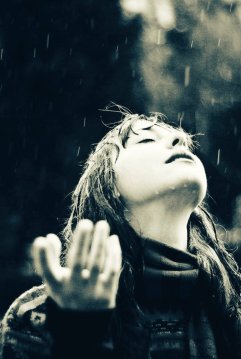
of a mist caressing our cheeks. 
And now free to feel the soft joys 
of receiving as well as giving each other's love.

©2023 Joseph Hesch
All rights reserved


Joseph Hesch…

…is a writer and poet from Albany, New York. His work appears or is forthcoming in over a dozen venues, including Cossack Review, Frontier Tales Magazine, Pine Hills Review, the 2017 Indies Unlimited Flash Fiction Anthology, as well as the anthologies Petrichor Rising and For the Love of Christmas. His poetry collections, “Penumbra: The Space Between” and “One Hundred Beats a Minute” are available on Amazon.com. He’s currently working on his first collection of stories, all based on his fascination with the American frontier, whether it’s upstate New York in the 17th and 18th Centuries or the Nebraska plains and Arizona deserts of the 19th.

Blog


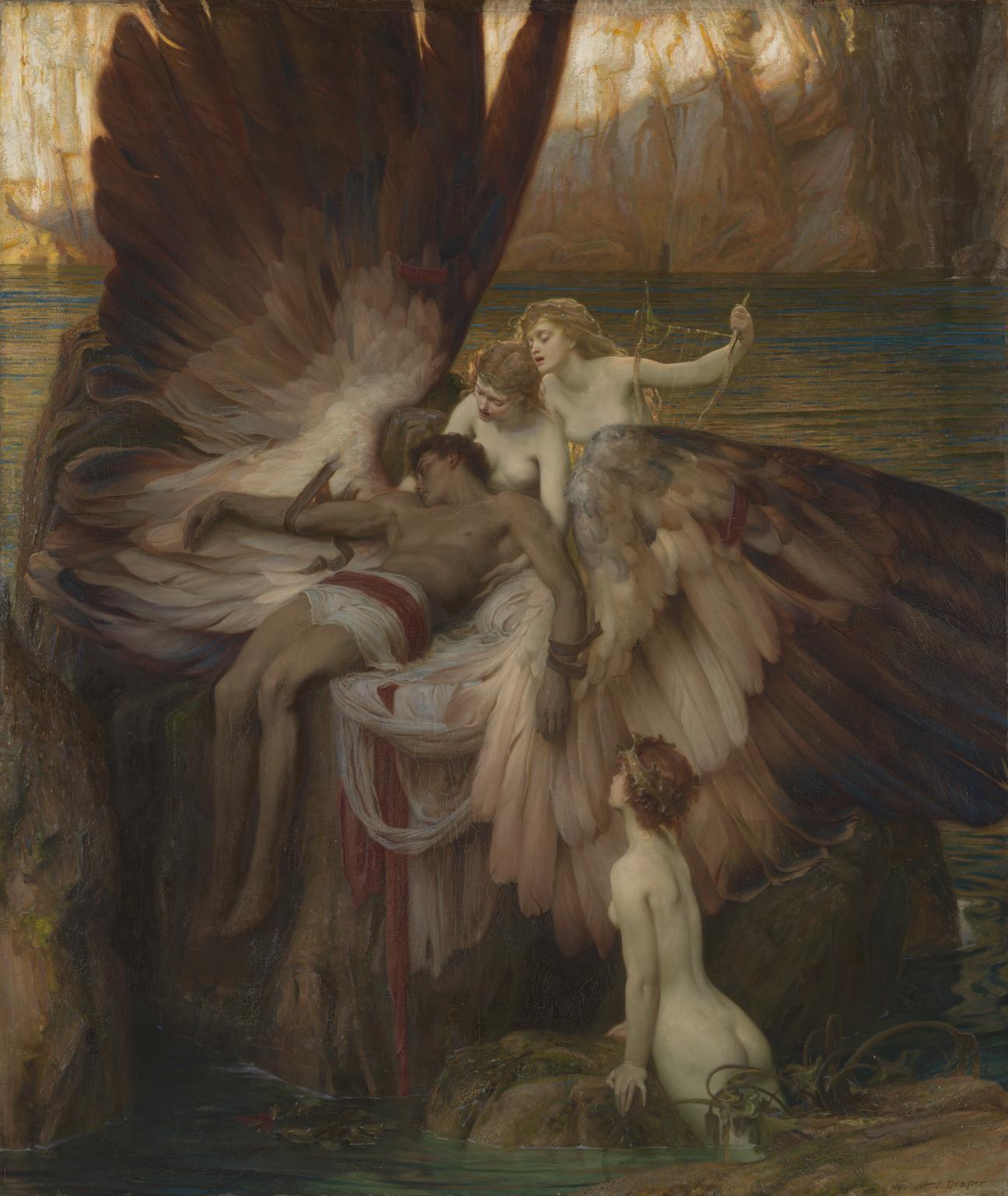
Who Cries for Icarus? | Joseph Hesch

Another ReCollection from the first issue of The BeZine. This one also addresses peace, from a fictional perspective and related to mythology. Joseph Hesch continues to contribute to The BeZine as a Core Team Member.

The Lament for Icarus
Tate Museum, exhibited 1898
Herbert Draper 1863-1920
Presented by the Trustees of the Chantrey Bequest 1898
Photo ©Tate CC-BY-NC-ND 3.0 (Unported)

Spiral cloud mountains build in the sky, towering to 20,000 feet, I’d guess. Below, is the town of Douai, where we know Bloody Richtofen’s Jasta 11 calls home this month.

The golden disk to the west is setting and the Albatros scout planes rise to meet us. This is going to be a ripping scrap, I can tell. And then we are in a whirlwind of brown machines and red machines, red-white-blue cockades and black Iron Crosses all flashing by so fast that sometimes you can hardly keep your bearings. Like so many of these recent fights, everyone gets scattered across the sky. But I can’t look out for everyone when I have to do my other job, kill Germans and come home to Flora.

A red aeroplane with a yellow nose and tail whips past Cecil Lewis, and I take chase. I will get to 50 victories. I will get to 50. I must get to 50. He twists and dives and heads into the clouds and I know he can’t shake me. My attention is solely on his tail. I recognize the flash of the setting sun on his goggles as he glances fearfully over his shoulder at me, as I’ve seen that look hundreds of times before. I know it as sure as I know the booming of my own heartbeat in times like this.

I fire burst after burst into him, a drum of bullets from the Lewis on the top wing and 60 or 70 rounds from the Vickers gun in front of me.

I see him drop below me and I know he’s done. I see it all so plainly. The craziness and blood lust that overtakes me at such times ebbs away. And I think of my Flora, my Bobs again.

Then I break through the clouds, seeing from my altimeter that we’ve dove to only 200 feet. But the clouds are in the wrong place.

“Flora,” I cough,“ why are the clouds below me and the church steeple above me?”

“Rest, Albert, lay back and rest.”

I fight the urge to rest, I have to get back to the squadron, get back to England, get back to Bobbsy. The glowing disk in front of me fades away. It’s not the disk of the sun, or my identity badge, it’s my spinning propeller. It stops and then I only see its top, hanging vertically like that stalactite church steeple in front of me.

And then that great noise.

“What’s going on, Bobs? Can I come home to you now? General Trenchard promised me I could come home now.”

“Yes, Albert, you can come home. You don’t have to hurry, though. We’re waiting.”

I see her face above me again, so beautiful, so young. Even now when I see her I can barely catch my breath. Yet her eyes are so very sad as I lay my head back in her lap. I feel raindrops on my face.

“Don’t cry Bobs,” I say.


Fifteen year-old Cecille Deloffre had lived amid the sounds of war for a quarter of her life. She’d learned to sleep to the thunder of the big guns as if they were a summer rainstorm. She ignored the buzzing drone of the aeroplanes as they flew west-to-east and east-to-west each day, often punctuating their passage with the very unmilitary staccato drumbeat of their machine guns.

Cecille had seen some of these machines fall from the sky, glowing and tumbling like a cigarette tossed by one of those German soldiers hidden in the steeple of the nearby church in the village of Annoeulin.

This evening during dinner she had heard the fight above her home, sounding so much like someone had struck a hornet nest and the swarms spreading across the sky.

Then Cecille heard the sound of what could have been two aeroplanes directly above. Her mother crossed herself and tried dragging Cecille from the table to the root cellar beneath the kitchen floor.

She broke from her mother’s grasp and ran into the small fenced yard in front of their farmhouse just as one machine spit a tongue of fire back from its yellow shark-like nose, engine sputtering, gliding to a crash landing on the other side of the village.

She heard another aeroplane’s engine sputter and stop, just as it whooshed, upside-down, from the low storm clouds not 300 metres up the road. Its pilot wore no helmet and she could see his eyes but not his face in the growing dark.

Then the aeroplane just fell, like a an old leather-bound book dropped from a table.

Cecille stood frozen for a second to see if this machine would catch fire. But it only lay crushed on its side like a coffee-colored bird knocked from the sky by a kestrel. The pilot’s head move and she ran toward the aeroplane, unsure why, with her mother screaming after her.

As she came up to the crash site, the young man within the broken machine released his buckle and fell from the cockpit with a thud, a moan, and a faint rasping wheeze.

Cecille reached for the boy and pulled him a few metres away from his machine. She rested his head in her lap and he slowly opened his eyes, looking up at her with such longing that she couldn’t keep from crying.

“Don’t cry Bobs, Bobs, Bosshh…” she heard him barely whisper. Then stillness.

From behind them came the pounding sound of the jackbooted German soldiers from the steeple. They jabbered with delight, so sure they shot down a British flyer. But they hadn’t. Cecille noticed the boy had no wounds on his body.

Her eyes red with tears, Cecille looked down at the boy again and saw but a small bruise beneath his eye where his goggles had been. In her lap, the face of 20 year-old Capt. Albert Ball, MC, DSO, VC lay in silent repose. The sooty stain on it was variegated in white by the tracks of tears, like the half-smiling black marble bust of a saint. They were his tears and that of a beautiful young girl he briefly saw and was sure was the one he loved.

Cecille looked up at the surrounding soldiers and spat out, “Il est mort, Boche. C’est fini.”

But Albert couldn’t hear her. He had just won his 50th victory and he was flying home.

I guess this story shows when even a “hero” dies in war, he dies alone just like any other soldier. And who cries for him?


©2014 Joseph Hesch
All rights reserved


Joseph Hesch…

…is a writer and poet from Albany, New York. His work appears or is forthcoming in over a dozen venues, including Cossack Review, Frontier Tales Magazine, Pine Hills Review, the 2017 Indies Unlimited Flash Fiction Anthology, as well as the anthologies Petrichor Rising and For the Love of Christmas. His poetry collections, “Penumbra: The Space Between” and “One Hundred Beats a Minute” are available on Amazon.com. He’s currently working on his first collection of stories, all based on his fascination with the American frontier, whether it’s upstate New York in the 17th and 18th Centuries or the Nebraska plains and Arizona deserts of the 19th.

Blog


Holding Onto My Last Breath — Joseph Hesch


I’m told there will come a time
when all will be revealed,
that moment just before you leave
where the Universe gives it up
to your virgin consciousness
and you go, ahhhhh….
And as great as that sounds,
you’ll note that your expression
of finally acquiring that enlightenment
comes in an exhalation,
more than likely your last.
I know that doesn’t sound fair,
but once you discover what
all this back-breaking, toil
and trouble life was for,
let alone about, what else is there
but to sound a short A?
Unless it’s a long ohhhhhh.
I suppose that’s why I intend
to hold my breath like a five-year-old
who won’t eat his Brussels sprouts
on that day when the Universe
comes a’knocking with my serving
of The Way, as the Buddhists might
intone. They call it nirvāṇa,
which is Sanskrit for “blowing out.”
That’s kind of what I’ve been saying,
only with an ahhhhh rather than an ohmmm.
Another translation is “liberation,”
which sounds so much better, because
I’d rather be freed from this
troubled coil, than blown out again
like a rotten basketball team,
or permanently, like a candle.
Ohm, shanti, shanti, shanti, y’all.
(Just in case.)

For those of us who don’t know Sanskrit, and I only know enough to get through a beginner’s yoga practice video, “Shanti” means “Peace.” So, I bid you all peace because we sure as hell need it. And so do I. So do I.


©2021 Joseph Hesch
All rights reserved


Return to ToC

I Know She’s Out There … Somewhere — Joseph Hesch


Sometimes I wonder if
I ever actually felt her warmth,
sensed her, breathed her in.
I look back and question
any place in my life where
I stood in her presence,
held her, or she held me.
I wonder if she was
nothing more than a dream I had,
when I still had dreams,
an ideal that kept me on
a path to be the nice polite boy
and good strong man, since
that was the way they said
one took to win her favor.
But I never did experience
her love and,
like most sore losers,
I have doubts now she
even exists. Perhaps, in this,
my last dream, if I stopped
searching so hard, one day
Peace will find me.



©2021 Joseph Hesch
All rights reserved


Return to ToC

Alien — Joseph Hesch

I speak their language fairly well 
and most of the time dress the role.
I’ve never felt like most of them,
but then, that never was my goal.

I wished to explore what we hid
‘neath our shining public surface.
The more I searched, the more I found
scenes like backstage at the circus.

Despite the noise and colored lights,
like the blinding blue pinspot’s glow,
inside we keep our mysteries,
as we struggle today to tomorrow.

I don’t want to find your secrets,
even if you’d still like to hear mine.
Told you some over the decades,
though I, too, coulda been lyin’.

Poetry’s my second language,
though this accent sets me apart.
Real poets won’t ever get me,
when even you never got my heart.

That’s why I keep trying each day
to reach out, your soul gently shaking.
I’m not looking for what you think,
souls are for giving, not taking.

©2021 Joseph Hesch
All rights reserved


Return to ToC

Well, Maybe Someday — Joseph Hesch

 I keep some shirts at the far end 
 of my closet, shirts I’ve owned 
 for decades (since back when they fit).
 I own some shoes with holes in the toe
 almost worn through; shoes I’ve kept
 in the dark corner of my closet floor.
 
 If you were to ask me why I’ve kept them,
 what with the shirt collars an inch
 too small and the shoes a few steps shy 
 of perforated, I’d say, “Well, maybe
 someday…” 
 But we know most somedays never come.
 
 I own a memory I keep safe at the far corner 
 of my mind; a memory of …something… I’ve kept 
 for a couple of decades (when I could remember).
 I hold this hope, one I’ve worried thin like a child 
 would his button-eyed, floppy friend, now worn
 to almost gossamer thinness,

 And if you ask why I’ve kept them, 
 what with the way most memory fades 
 in each new day’s light and how gossamer hope
 doesn’t spring eternal I’d say, “Well, maybe
 someday…”
 That's because, if most somedays never come, 
 that must mean some do. 
 

©2021 Joseph Hesch
All rights reserved


Return to ToC

The Dance — Joseph Hesch

In the conversation we never had, you didn’t say, “Life’s subjective. One person’s joy could trigger another’s despair. Like someone else’s woe could bring another cheer.”

“We’ve lived each,” I would’ve said. “You, often, the latter,” my eyes would blink in code.

But we weren’t really talking about Life (like I said, we weren’t really talking at all), unless you consider just getting out of bed Life. Really about living, opening those eyes, taking that big inhale, letting it go, sometimes with words strung thereto, just to get to the next gulp of existence.

“You know, there was a time I didn’t care if my last exhalation, whether preceded by a sob or a snore, was indeed my last. Go to sleep. Wake not. I wouldn’t have considered that failure. THAT might’ve brought someone solace.” I could’ve revealed.

“That’s what I’m saying,” you didn’t say.

“I wish you would’ve talked to me about it,” I wish I’d said.

“There was no point. I wanted to talk to very few people and you weren’t one of them.”

Ergo, the non-conversation we weren’t having.

“Would you like to come talk now?” I might say.

“No. I’m not going anywhere with you.”

“Yeah (or is it ‘No’), we’ve each made that clear,” I might whisper.

“What didn’t you say?” You’d probably ask.

There was so, so much.

“I’m not going anywhere with you, either,” I’d say.

It’d always been a one-step-toward-and-one-back thing with us, symbiotically going nowhere, needy dance partners with no sense of rhythm.


©2021 Joseph Hesch
All rights reserved


Return to ToC

A Climate of Change

Down the hill Winter bleeds unabated,
leaving behind the wounds we couldn’t see.
With all the trees gone I guess we’re fated
to find a pond where a pond shouldn’t be.

The ground’s still frozen ‘neath its epidermis,
so there’s nowhere but down the hill to go.
Up on top is where the earth’s the firmest,
but down here we’ve an inch of melted snow.

It’s nothing new, just how it goes come Spring
or whatever passes for that these days.
Lately you never know what March will bring,
another blizzard or mid-Summer haze.

It could end up the latter or former,
even both, since we’ve made Earth so much warmer.

If you want to argue or troll, find another poet. I’m too old, too sick, too tired and too sad to get in a pissing match about this. 

© 2019, poem and photo, Joseph Hesch

Blessed Sacrament

In the ever-Summer glare and heat
I found my life’s pain and regret
sanctified into something replete
with but little Hope baptized in sweat.
So the torment, no matter how holy,
still rips around my beaten heart
as if it was something mad and solely
bent and intent to rip it apart.

Perhaps I can hallow my vessel so hollow
with the heat from a different kind of light,
as good for my soul as the heart to follow,
soothing all my pain with its godly might.
And that’s why I’m here dipping pen in ink,
the black sprung from my soul to my heart.
Drawing pictures in words so we all might drink
of this sacrament that heals me called Art.


As I like to say, completing these pieces I share does not make me feel better. But all the time spent immersed in the process of writing them does. And that, my friend, is the miracle of Art, no matter how poorly rendered. 

—Joseph Hesch © 2018

The Flicker of Better Angels

Needless to say, they didn’t knock.

“Stay where you are. On your knees with your hands on your head,” the biggest one said.

“This is my home. What are you doing? What do you want?” I said as two more pushed me to the floor.

“You know exactly what we’re after, man. Where are they?” the big one said towering over me, his knee bumping my left eye.

“Where are who? Why are you doing this?” I said, wincing as his two partners wrenched my shoulders. I knew who they were and what they were after.

“The books, man. Where are the goddamn books? Our informant ID’d you as a subversive and told us you had a fucking library here. Hundreds, she said. Now where are they?”

It came to this as I’d predicted after He Who Shall Not Be Named was elected our leader and then turned everything over, spilling our constitutional rights onto the floor and, in essence, burning them. We no longer could peacefully gather to discuss, let alone debate, the state of affairs in which our land now found itself. Besides, you never knew who of the people you talked with might be one of their informants.

Within just a few months of taking power, HWSNBN ordered all news organizations to cease operations except for his sycophantic bootlicks at the renamed Supreme Network. He also shuttered all newspapers, except for The Truth and Our Democracy, now our two national newspapers. He had his cyber-cops monitoring all online interaction, again causing fear, anger and doubt among the half of the citizenry who voted for the other side. The First Amendment—-marketed by the government as The Worst Amendment, a true threat to national security—was stricken from the Constitution by well-armed executive order. And everyone just watched.

Next came book banning, kowtowing to the conservative religious zealots instrumental in getting the Supreme Commander elected. That part was easy, just emptying Libraries, bookstores and even schools of everything from Huckleberry Finn to To Kill a Mockingbird, Dr. Seuss to, of course, Fahrenheit 451.

With the precedent set, the government decided to remove other sources of education, entertainment and enlightenment from the public. Anything not given an imprimatur by HWSNBN was taken from the owner and destroyed.

I was a teacher, a writer of children’s books teaching youngsters to respect one another, always keep an open mind about someone and not base our opinions on the way they look, speak or pray. Yeah, I was one of their subversives.
“One more time, man. Where are you hiding the books?” the big one hissed in my ear, spritzing it with spit when he pronounced the evil word. The click of his pistol hammer cocking into place may have been the loudest sound I ever heard.

“They’re gone, all gone,” I said.

“You lyin’ son of a bitch. I’m counting to three and you better come clean or I’ll blow your faggot brains all over your nice baby blue carpet. Guys, who in their right mind would have a baby blue carpet in their place?” He laughed the laugh of someone who knew not of freedoms other than his now-inalienable rights to bully, beat and burn.

“I gave some away and destroyed the rest,” I said, half-expecting the next sound I heard, a blast, to be my last.

“Search this place, Lou. Who’d you give ‘em to, author?” He stretched that last word out like it was a vile taffy.

“The school libraries in Beekmantown and Green Island. They had so little to offer their kids and…”

He swung the barrel of his pistol against my cheek, I saw a flash and down I went. But I was till alive.

“You want any more of that, you’ll stop bullshitting us and tell us where they are. The next time I pull the trigger.”

“I’m telling you the truth. Then other books, my collection of histories and classics, I destroyed them with the dignity they deserved. Instead of the brutish methods you…”

The pistol swung again, but a roar accompanied the flash this time. But again I was still alive. I reeled in pain and disorientation from the discharge by my ear as the bullet destroyed the glass door in the empty bookcase across the room my wife gave me on our last anniversary.

“Last chance, asshole. Next time, right in your ear,” the big one said, and I was fairly sure he meant it. I could see that from the barely contained manic anger in his piglike eyes peering from above the black mask covering the lower half of his face.

“There’s nothing in the basement, attic or shed out back,” the one called Lou said as he reentered what was until a fortnight before my study.
“I’m not lying,” I said above the pounding ring in my right ear. They’re all gone.”

“Computer. Where’s your goddamn computer, faggot,” the big one shouted into my left ear.

“One of your colleagues visited me last week and confiscated it at the behest of your informant across the street. The one who used to spend her days listening to talk radio and watching me from behind her curtains,” I said, preparing for the next blow.

“Is that so… You got any other devices you can use to spread your subversive lies with, writer boy?” the one called Lou asked.

“No, your people are quite…thorough.” I had five manuscripts on that computer and another two on my old iPad, which now were chewed up bits of plastic, glass and magnetic inspiration in some government scrap pile.

The one holding me down released his grip and I once again fell to the floor.

“All right, Andrews, we’ll be leaving now. But recognize this is only a warning. We’re keeping you under surveillance on the regular. If you so much as shit we’ll know what color. You get me? I shoulda taken that shot when I had the chance. You elites sicken me,” the big one said, giving me one more punch in the head.

And then they were gone.

That night, after cleaning up the mess as best I could, the blood would always be a reminder of that day, I went to the basement and made sure the curtains were shut tightly. With my penlight, I found the drain in the floor and unscrewed its cover.

Reaching into the pipe, I snagged the hook in the wire from which I’d suspended the plastic bag and pulled it up into the tiny circle of light. My Kindle hadn’t been dislodged in the search. I removed it from the bag and carried up into my darkened study, where I had digitized my library and transferred all my books to this glorious instrument.

I thumbed through the virtual pages and found the volume I was searching. I tapped it open and selected the words from March, 1861 and read them as I had many nights since the election and division of our nation. They gave me hope, as they will so many of us, even those who merely watched while all this happened. Your words once again inspired me:

We are not enemies, but friends. We must not be enemies. Though passion may have strained it must not break our bonds of affection. The mystic chords of memory, stretching from every battlefield and patriot grave to every living heart and hearthstone all over this broad land, will yet swell the chorus of the Union, when again touched, as surely they will be, by the better angels of our nature.

The next morning the big guy broke in again, kicked open my bedroom door and saw my Kindle on the nightstand. You never really hear the shot, do you, Mr. Lincoln?

Some people don’t have better angels. Some maybe don’t have angels at all.

© 2018, Joseph Hesch

Killer Angels, Better Angels

Its leaves are near-ochre,
yellowed with age and changes
in weather and geography,
like the pages of memory
I un-shelf along with it each year.

I bring it out like a swimsuit
each summer since I found it
on that beach in that place from
that side which did not prevail.
Today, a page fell like a memory.

It tells a tale of the push and pull
of a time when men could be
paid for and sold, or lined up in ranks
to pay their last full measure
of devotion to a cause each held sacred.

As I run my finger down the page,
I am present in my place and time
as I am in theirs, though I smell
the aroma of a musty old book rather than
of Hell’s own sulfur and smoke.

And I am at peace reading of war and death,
vaguely secure that such a conflict
couldn’t again slash my nobly scarred nation.
Then all these men would have given
that last full measure for nothing.

It’d be our most-mortal sin to allow them
to have lived and died in vain, knowing their
new birth of freedom, and government
of the people, by the people, for the people—
all the people—did perish from the earth.


Rambling draft inspired by reading, breathing, feeling, listening to the pages of my old paperback copy of The Killer Angels, Michael Shaara’s fictional narrative of the actual men and events leading up to, within and following the days in July of 1863 we know as the Battle of Gettysburg. I find myself reading more of my Civil War books these days.I love them, but that I feel so viscerally compelled concerns me a little. 

—Joseph Hesch © 2018

Dreams of Wolf Creek, Kansas

The Wolf River, Kansas by Albert Bierstadt, c. 1859

I sometimes dream of eastern Kansas,
in those days before the wars,
when the white men fought each other
to be the right men behind the doors,
deciding the lives of men red and black,
to remain the preeminent beast,
over this land he said God was his alone,
from the left coast to the east.

I think of the man in the village,
sitting on the bluff above Wolf Creek,
and how once he ruled wherever he stood,
a wandering Pawnee being anything but meek.
And I know his time is passing,
his wandering no more his choice.
Soon the white man will fight everyone
over the black man who still had no voice.

In my dream the lodges moved westward,
if they ever moved at all.
Because illness, greed and the great lord God
seemingly turned on the Pawnee, Otoe and Kaw.
And that’s why I dream of eastern Kansas
in those days before the wars,
because a native man might still call his own
his land, his freedom and his lores.

Free-write rhyming thing, an exercise I tried to get the juices flowing. For whatever reason, the name William Stafford and the words “Lawrence, Kansas” kept clanging in my head. I searched for some art that might help stimulate some creative spark and found that picture by Albert Bierstadt of Wolf River in Kansas, circa 1859. Then I let loose the reins and my claybank muse cantered me here.

© 2018, Joseph Hesch

She Was So Pretty When We Were Young


I knew her when I was younger,
she’d smile at me every morning
when we’d stand up in class and
talk to the flag and the cross.
She was so pretty then, adventurous
and friendly, the Supermodel-in-training.
She helped all the kids, even new ones
transferred in from other neighborhoods.
But some big kids mistook her friendliness,
for weakness, twisting it into some
unspoken promise of a good ol’ time.
They used her in indulgent perversions
of power and possession.

When we got older, those big kids
corrupted her, trotted her around, showed her off,
gave her a new face, new boobs, new persona.
My friend became so addled by all
of their push, prod and promises that,
in the end, she’d do whatever the big guys said,
even nod hollow-eyed when they lied about her.
I barely recognized her in her obit t’other day.
You may have missed it, being so busy
doing what they let you think you want to do.
I’m told they laid her next to her mom,
who men used, debased and scarred until
she was unrecognizable, too.

I wrote most of this poem, originally titled “Liberty Has Fallen,” almost four years ago. I based it on my friend Kellie Elmore’s prompt of a picture called Fall of Liberty, which I think was something like the one illustrating this marginally updated version. In four years, not much has changed. Maybe just the volume’s turned up.

© 2014, Joseph Hesch

December Sky

The clouds slide across the sky
like crib sheets being flapped flat
and floating down upon the place
where a child will sleep.
Between them you see the room
colored a blue distinct to winter.
Not so deep as a spring Carolina sky,
nor the chill azure
the northern firmament glows in autumn.
Between the gossamer sheets
waiting to drop their crystalline
whiteness, blooms a blue so bright
you think you might believe
you can see right through it.
But to where? At whom?
Maybe for that child waiting
for his moment to rest upon
man’s simple crib called Faith.

© 2017, poem and photo, Joseph Hesch

Our Better Angels

What if our guardian angels,
our guides to the light,
aren’t as perfect as we hope?
What if they’re merely “good”,
maybe barely adequate,
as winged messengers go?
Perhaps they can get as socked in
by a Blue Norther of Spiritual Woe
as we can. Problem is,
they’re the only angels
we’ve got. It’s not like they can
go to the gym, or get retrained,
or even call out for a temp.

Maybe the angels and I can
pray together for a mighty wind
to blow away these clouds
that beset us.
Miracles do happen.
I’ve been blessed by a few.
And, besides, my angelic friends
went to school with the maître d’
at the Chateau Ciel’s
pearlescent entrance station.
Table for one, please.
Amen…

© 2017, poem, Joseph Hesch; © 2012, photo, Diana Matisz

Ramble Tramble


When you’re in the middle of it, living and learning, learning about living, living as a means of learning, you don’t notice how you might be different from (or the same as) some guys across the ocean or across the room. You don’t notice much about anything but what’s inside the three inches of air surrounding your body.

They are Them, There, Then. You are You, Here, Now. Context is but a ghost, barely a specter of a concept through which you  your place in a wider world. You accept ideas, tenets, the virtual castle walls within which you secure your position as the center of the Universe. You don’t question. God just IS, He is a He and you need to toe his line in order to win the lovely parting gifts they hand you for completing the Home version of this dicey Game of Life.

The other day, I asked myself not only who I am, but what, forcing myself to look beyond myself as this sack of meat, its spark of intellectual and essential energy and the possessor of opposing thumbs that answers to Joseph, Joe, Joey and any of a hundred or so discrete alphanumeric identifiers that differentiate me from you. And you and you, as well.

I saw such a small thing, a cluster of cells both good and ill, beneficial and malignant, functional and inert, held modestly upright by some universally accepted beliefs that inherently make me superior to so much of the rest of the inhabitants of this blue marble upon which we stand as it falls, rises, or circles in the vastness of the Universe.

And so much of what I see is just a matter of dumb luck, some bit of kismet that Valentine met Maria and Patrick loved Lizzy and they all somehow decided to leave their homes in Europe to come to this coast-to-coast set of geographic coordinates that may make this the most varied and valuable piece of real estate on the planet. They came to this place where people can be free to become the monarchs of their own existence. Here in this nation established upon the premise that all men are created equal.

Except, of course, if you were on the wrong end of our “peculiar institution,” where white men owned black men who did the physical labor that either built or buttressed the Whites’ socioeconomic standing. And that sin was committed even in my hometown, tucked up here in the upper right corner of your map, which is the oldest chartered municipality in the country.

And also except if you were a member of the class of original inhabitants of this breadth of the continent. Then you were crushed in the essentially forgotten, if considered at all, dirty little secret of American’s Manifest Destiny, which included eviction, subjugation, military intimidation, interdiction and an open-air type of incarceration. And, quite often, our Euro-America’s God-blessed version of the final solution to the “Indian problem,” eradication.

Which brings us rambling back to my original premise. When you are so busy trying to make it from First to Twelfth Grade, from freshly minted believer to elder keeper of whatever Word you follow, from allowance grabber to worker bee and then retirement check-cashing senior, you don’t think of these things. You pretty much have to live within your insulated little castle keep, those walls of ideas and ideals I spoke of before.

It’s human nature. Self-preservation, self-centeredness, selfishness, maybe even a selective selflessness, draw blinders around us from which we might occasionally sneak a peek outside ourselves. Then we pull our heads back within the silken bonds of our own spiritual and intellectual cells. There in the comforting darkness we see house-of-mirrors reflections of ourselves, warm and fuzzy, clean and bright, dark and angry, volatile and violent. And we accept them or reject them with but a blink, a wink or a meditative, prayerful closing of the eyes.

Please forgive me this tedious ramble. I’ve been reading again, something I haven’t done as much as when I was younger. Back then it was hardcore youthful inquisitiveness, feeding the insatiable intellectual beast as much trivia, possibly necessary minutiae and winning team history it could take. Now, it’s my own version of sticking this silver-pated gourd out of the dusty crust of virtual Hesch topography to see what I missed. In my old age I’ve become another type of Self-something. Self-aware. It’s embarrassing and painful, yet somehow freeing.

I see the mistakes, poor judgments and failures I’ve made. I see the victories, loves and lucky guesses, too. On electronic and physical pages I’ve cast them out there like stars across a desert sky. And now I see how they tell stories and give necessary direction, even if I have almost reached my ultimate destination.

I just thought I’d pass this on to you, since you’re traveling that way, Slán abhaile.  Auf wiedersehen.  Safe travels.  Ramble Tamble. Down the road I go.

This started its life as a poem, then grew like some good ol’ southern kudzu, spilling all around the page, seemingly taking over everything from my writing hand to better judgment. By the way, Ramble Tamble is the title of the first cut on Creedence Clearwater Revival’s  classic 1970 album, Cosmo’s Factory. It’s one of the rockingest songs I know, a great road song and might be as good a fit for our current times as it was for my youth.

© 2017, essay and photograph, Joseph Hesch


And Crown Thy Good


At the end of the bar, I saw old Mason Snyder sitting in his semi-usual ruminating funk, so I decided to slide my beer down there to here him out and see if we could repair the world a bit together.

After asking why the long face, Mase said, “Last week, I saw a study that broke down the average life expectancy in all the States and the spot with the longest living residents–at 85 years–was in some Colorado ski resort area, while the shortest are in Oglala Lakota County, South Dakota, where on average, people there can expect to live to age 67,” Mase said.

“Beyond the obvious disparity, is that what’s pissing you off so much?” I asked.

Mase had a long pull on his Bud, took a deep breath and said, “I saw some news bunny ask if the lives of Oglala Lakota County residents there were so short there because they died of boredom out there in the high plains.”

“Uh oh,” I said, knowing the righteous wrath coming in three, two,….

“Yeah, honey, the type of boredom that sets in where you have no prospects to change your life from the grinding poverty of being members of families who’ve essentially been prisoners of war for a century and a half. The type of boredom that drives people to drink and drug themselves into oblivion because they lost the home version of the Manifest Destiny game show. The type of boredom that causes kids on the Pine Ridge Reservation to kill themselves at a ridiculously high rate,” Mase said in his indignant and borderline angry tone when he talked about the treatment of America’s native people.

“That’s pretty tragic,” I said, feeling both sad and guilty watching Mase, who was of mixed Navaho and German heritage, take another gulp of his beer and the breath to go on.

“Oh, and by the way, Miss Talking Hairdo, that average life expectancy was for the whole of Oglala Lakota County, where the numbers just a few years ago for Pine Ridge Reservation residents only were 52 years for women and fuckin’ 48 for men– 48 years of age and done,” Mase said, spun on his stool and stalked out the bar entrance.

“What the hell was Big Chief Bottom-of-the-Bottle going on about?” Charlie the bartender asked me in the wake of Mase’s diatribe on the mistreatment of red folks by the sorry-ass  Great White (absentee) Father over the years.

“C’mon we’re as guilty as any White Americans in not doing enough–or anything–to help these fellow Americans live better, safer, healthier lives,” I said in my own Mase-stoked righteously indignant tone.

“Yeah, well you tell him for me if he–and you, for that matter–expects to get his firewater in my joint anymore, he’d better keep it down or, better yet, take his whiny shit to some liberal fern bar, ’cause us real Americans don’t want to hear it,” Charlie said, flipping the channel from the fifth inning in Cleveland of another one-sided Mets matinee loss over to Fox News Channel.

© 2017, Joseph Hesch

Peace in the Desert

English: Leaving traces on soft sand dunes in ...

Peace reigns in this treeless desert of quiet.
Here I don’t worry about the philosophical
or metaphysical question of a falling oak,
redwood, or even a palm if I don’t wish to.
Many will never understand my affinity
for the neatness of the seemingly
dust-cursed and barren wastes of alone.
I don’t mind. The desert protects its own.
Always shifting, always the winds of time
giving me new geography to chronicle
and erasing the needless old steps,
always the sound of my own voice
when I wish to listen to it.

And there are plenty of others here.
Just very, very far apart.

My wanderings have crossed paths
with some of these nomads
and I have fallen in with another.
Sometimes we go off, each of us alone,
to listen to the desert,
take comfort in its cleanliness
of thought and deed and spirit.
We always seem to come back
to share our discoveries
and keep one another warm on cold nights
of what once was just one voice,
one heartbeat wandering
in that wind and the blessed quiet.

© 2017, Joseph Hesch; photo credit – Luca Galuzzi under CC BY-SA 2.5 license