photographs

and if you look closer
at these photographs
you will see that,
though taken all at a time,
we were wearing
different clothes in each
which we kept changing
in a bliss of disguise
taking off blouses
laying breasts bare
touching en passant
without any sense of guilt
or sin
since we were sisters
and loved men
and in this privacy
there was no censorship
as there was nothing to censor
lying naked
under wet sheets
skin burnt
with too much sun
it was a nurse’s touch
the spreading of ointment
with soothing fingers
on the depth of the belly
nothing like
the claw grips
of the men to come

© Aprilia Zank

In Chorus We Breath

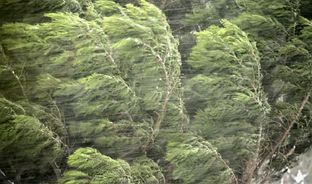
©600w-trees-wind

Today the wind has sung so well,
trees had no choice but to sway
to its tune and clap their green hands
in a seven-hour standing O.

Whenever I blow, the shrill
or melodious wind that whistles
from my lips doesn’t move the wood
and greenery. It moves me, though.

I can see songs’ unspoken images and,
if I’m lucky, trees responding to me
with feathered leaves launching
on those big gusts.

Winds once rustled my black hair,
before it took on the color of clouds,
now misting these old eyes as breeze,
birds and I in chorus breathe.

© Joseph Hesch, poem and photograph

TRANSIENCE

The Morning brews its own stories
On the jogging legs
Of age ripened by wisdom.
The youth walks on with
the agility of ambition,
The sunrise embraces both
with the glistening shade of transience.

– Sakshi Chanana
IMG_3884© 2016, poem, Sakshi Chanana, All rights reserved; illustration Transience (2016), Jamie Dedes, All rights reserved

too many loves

unnamedmy being
is a jigsaw puzzle
one of those
more than
a
thousand pieces
kind
so it’s
just
impossible
for me
to name
a single love
that
has influenced me
for all time
i mean
each piece
of the puzzle
has been colored
and
defined
by
a different
love
so
there can be
no
singularity
no
single
book
can claim
the fame
or
blame
for
what
this mind
conveys

– Charles W. Martin

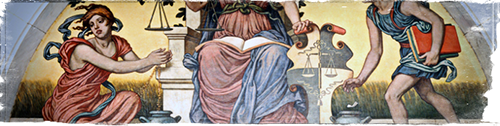
© 2016, poem, Charles W. Martin, All right reserved; Public Domain Photograph from Library of Congress Thomas Jefferson Building

THE POETIC BOOKS

Going looking for my first poetry
holding my doubters spear
looking for those foundational words
that purified and exhilarated,
and bound me in,
until I had to shout my way free.

– Joshua Medsker

© 2016, poem, Joshua Medsker, All rights reserved

BLOOD AND MONEY

Mankind’s savage streak,
is broad.
Weapons always close to hand.
Ready to rage, tear and flatten.
‘Collateral damage’ has slipped easily
into language, weaponry
into stock portfolios.
Big business profits, as death
is viewed in units and the bottom line
means more than life.
This is not humanity.
There is no brotherhood,
strong enough to overcome the need
for blood and money.
Some of us lack wealth and mourn the lost,
some of us take death at any cost.

– Miki Byrne

© 2016, poem, Miki Byrne, All rights reserved

DRUGS ON THE STREET

The gnarlers of the night
come seeking their prey,
with spikes and false-runed stones.
Alleys wash up the desperate fodder
who beg and grovel for more sweet poison,
that stains cities, drains life.
Only the merciful few stand against them.
Scoop up the fallen.
Apply pressure to the wound
that continuously seeps.

– Miki Byrne

© 2016, poem, Miki Byrne, All rights reserved

TYING COATS ON ELEPHANTS

The elephants are skilfully carved.
Sundered from dried logs
by gnarled hands in pinched villages.
Bargained for a pittance too paltry
for such dextrous dedication.
Straw-swaddled they are truck-trundled
to a cities dust, where the poor sleep
in dark shadows of public buildings,
use a fountain to wash.
In a warehouse swagged with shadows,
small boys sit, cross-legged,
coned in sky-lit light where dust motes
float in choking constellations,
speckle shifting air.
Tepid air holds taints of betel-nut breath,
gaseous farts from bellies full of hunger,
the fibrous bite of coir and cotton.
Some boys shape coats for the elephants.
Bright flutters of sequin-starred fabric,
that lure tourists eyes.
The last boy adds string.
Intricately knots about each elephant
an artistic representation of a Howdah.
His finger-skin is crusted with calluses,
an indentation where scissor handles dig,
mark his index finger with a deep notch.
He makes another reef,
follows the elephant in his daydreaming.
Crosses seas and continents,
sighs for things he will never have,
hopes for a little fish with his rice.

– Miki Byrne

© 2016, poem, Miki Byrne, All rights reserved

SILVER AND GOLD

In a bedside table drawer rest two gold bangles,
one, my grandmother’s, the other, my great aunt’s
both given by my mother to me.
Circles of affection, dented by longevity,
each is secured by a gold lace safety chain.

In a modern gold-gilt frame
the bangles rest on the girls’ wrists, just visible.
My grandmother looks out beyond her family
My great aunt wears the only pocket watch.
She stands very straight next to her father.

My family is marking a milestone, a shining perhaps,
twenty five years of their parents’ union,
plated with thrift and endeavour, and lustrous in the raising
of six offspring who survived, and the wee one in his grave.
Touch that space beside his mother where he is missed.

– Maggie Mackay

© 2016, poem, Maggie Mackay, All rights reserved

Looking South with Frodo Baggins

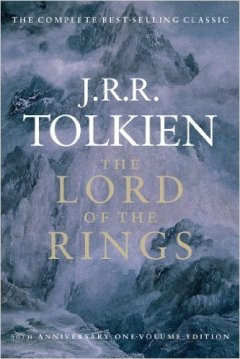
51d4G0sFMzL._SX331_BO1,204,203,200_The book that left a lasting mark on me, which I read at the age of 21, still in my formative years, was Tolkien’s ‘Lord of The Rings’. It seemed to represent two major things: the first is life in all its varied forms, good and bad; the second is that it was an epic journey through all that ‘good and bad’.

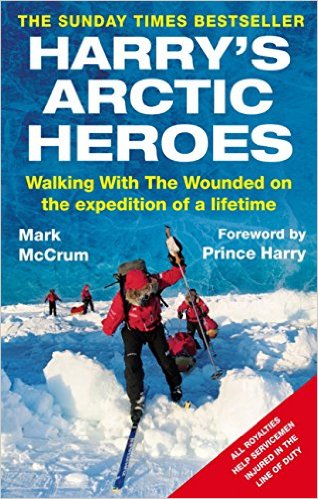
Five years ago I wrote a poem about another journey. It was four injured and disabled veteran soldiers, who made it, unaided, all the way to the North Pole. It was epic and, for these four remarkable men, a chance to revisit and resolve their brush with mortality.

The poem is about challenge; about the triumph of the human spirit over adversity. But most particularly, it is about not bearing life’s burden on your own, but rather learning how to ask for help, how to share concern or worry, which, despite his feelings of isolation in his quest, Frodo Baggins eventually found he had friends, who helped him through.

For some things in life, you cannot just ‘tough it out’. However strong you think you may be, there are some challenges in life that you cannot, nay should not tackle alone, because everyone has their limits; there is always a barrier, either physical or emotional or both, that will inhibit the progress of any man or woman; will put a stop to their journeys.

Perhaps this is because, once you show your vulnerability, far from becoming prey to vultures and demons, you will also attract the support of true human beings, those who are true team players, those who care. And anybody who endeavours to achieve things that not everyone would attempt, has that spirit. It is often a spirit born of near death experience, but may also be a response to physical and emotional pain.
511emrnGxhL._SX316_BO1,204,203,200_

It is both these things that four men from the British armed forces set out to overcome in a seemingly impossible challenge. These four servicemen, who were all injured in combat in Afghanistan, set out to enter the record books as the first disabled team to walk unassisted to the North Pole. It involved a great deal of preparation and training for all of them.

The men are: Capt Martin Hewitt, 30, whose right arm is paralysed after being shot; Capt Guy Disney, 29, whose right leg was amputated below the knee after he was hit by a rocket-propelled grenade (RPG); Sgt Stephen Young, 28, who suffered a broken back in a roadside bombing; Pte Jaco Van Gass, 24, who had his left arm amputated and suffered significant tissue loss to his left leg after being hit by an RPG.

For the first few days of their trek, they were also accompanied by Prince Harry, who supported their campaign both before and after it was completed. The documentary, shown on BBC1 in the summer of 2011, was called “Harry’s Arctic Heroes”.

In this expedition, these four men represented every soldier, airman and sailor who is ever injured in conflicts, but particularly those who lose their faculties in some way, be it the loss of a limb or sight or mind.

The poem also has a ‘dark’ side, as it shakes a metaphor at dealing with our mortality, not least by reference to ‘The Dream of Gerontius’. The journey ‘North’, in this sense, is figurative and is my way of demonstrating that metaphor to the ultimate journey that we and all animals make as an integral part of our lives. “Looking South” represents the looking back on ones life, which in the case of these four injured servicemen, was their life so far. And for a majority of those, who deal with life’s challenges, some significant moments also represent a looking back on our lives…

… so far.

~~~~~~~

If you stand in the wind
and allow it to bend you
so you flex and withstand it,
don’t let it uproot you,
then you’ll find it can’t hurt you
in spite of extraordinary pain.

If your instinct for flight
is taken away
your options for fighting
in an instant are gone,
like a parent removing
your permission to play…

…with the most bitter of tears.

If there’s anything surer
than the moment you hear
a deafening sound
of silence and the fear
rushes in like air
to a vacuum.

There’s nothing more certain,
never so clear,
as if a vision of your life
were etched in white light
closing your eyes
and blinding your sight…

…but opening them on the inside.

It seems you were born
for this moment;
that this is your time.
You appear to have arrived
at the moment when pain
can no longer touch you.

That stress and the anguish
of screaming self-doubt
have momentarily left you,
your inside looking out;
outside looking in;
thoughts perfectly scrambled…

…like the dream of Gerontius.

Circumventing your demons,
overcoming your fear
this vision of whiteness
tears at your heart and your soul;
bedazzling lightness
of mind; supernal disclosure;

a revelation that you’ll never
be left on your own.
You will never be able
to embark on this journey
without your friends;
your brothers in arms,

… but they’re not the Invisible Choir.

Your angels are next to you;
there by your side, if you look.
Maybe a Prince or a pauper,
but either will brook you;
all you need is to ask;
as long as you let them know.

Then, when you stand there,
sharing legs, shoulders, arms,
looking South when you know
that there’s no further North,
surveying a World,
that will sing your arrival…

…knowing now that you truly have life.

– John Anstie

© 2016, essay and poem, John Anstie, All rights reserved; illustration, book covers copyrights with publishers and used here under fair use.

A MERRY LITERARY CHRISTMAS

A Merry Literary Christmas

by Alice Lowe

When Christmas shopping time draws nigh…

And I am faced with gifts to buy…

I think about one relative

Who always had one gift to give.

And every year her present came.

And every year it was the same.

While other gifts were round and fat,

(Their secrets hidden) hers was flat.

Rectangular, the corners square,

I knew exactly what was there.

I’d pass it by without a look—

My aunt had sent another book!

I’d only open it to write

A “thank you” that was too polite,

But every year when Christmas went

I’d read the book my aunt had sent,


And looking back, I realize

Each gift was treasure in disguise.

So now it’s time to write her here

A thank-you note that is sincere.

So—thanks for Alice and Sara Crewe,

For Christopher Robin and Piglet and Pooh,

For Little Nell and William Tell…

And Peter and Wendy and Tinker Bell.

Thanks for Tom and Jim and Huck,

For Robinson Crusoe and Dab-Dab the duck,

For Meg and Jo and Johnny Crow

And Papa Geppeto’s Pinocchio

For Mary Poppins and Rat and Toad

King Arthur and Dorothy’s Yellow Brick Road,

For Kipling’s Kim and tales from Grimm,

And Ferdinand, Babar and Tiny Tim.

I loved them all, I’m glad I met them.

They’re with me still, I won’t forget them.

So I’ll give books on Christmas Day

Though I know what all my nieces say–

I know it from the way they write

A “thank-you” that is too polite.


A Merry Literary Christmas©Alice Lowe

Images ©2016Naomi Baltuck

Night Light

full moon just expired,
one more circle becoming history.

a huge moth
courts the lantern next to me,
in love with the unknown,
and the lantern pins the moth’s living shadow
against the pages of the book in my hand.

under the moth’s gray fluttering shade
words scream,
brought to life by the dance of night’s butterfly,
ghostly figments of some pitch serialism –
threads pulled out with an apparent accidentalism
from the page’s canvas with a blunt crochet hook.

meanings melt all-together
while the book becomes the moth,
fluttering its pages under the light of my “why” –
and greedy
my eyes finish devouring
about the same time that the moth’s wings
inert
close.

the lantern remains alive though –
there’s always room for another moth

© Liliana Negoi

Schwund und Reue

tumblr_m7cax6AT5t1rrnekqo1_1280

Can read, won’t read.
Would read, don’t read.
That book sits face up on the table
next to me, it’s eyes staring at
my sheepish ones, like those
of a portrait that follow you
around the room, accusing, unblinking.

Or maybe they’re like
those of that dead French soldier
lying in the crater with Paul Bäumer
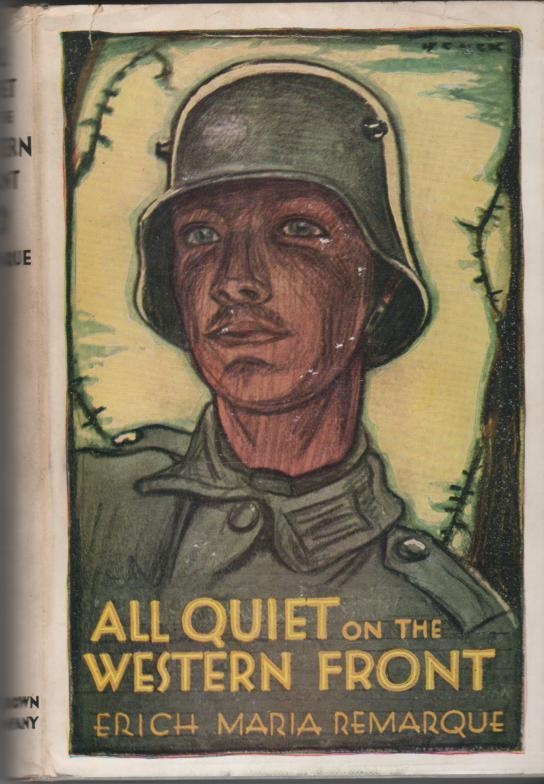
in All Quiet on the Western Front,
another book I never finished.
Like Paul, I feel remorse, loss,
over somehow killing my old hunger.

I was once voracious like you,
but lost the combat for my consciousness
and now I lie here, paralyzed,
with my toes framing that big screen,
notebook and tablet on my lap,
pinned down in my depression by this
bombardment of distractions.

I want to pick up that book and
conquer it, but, shell-shocked by media,
all I do is numbly flip a couple of pages
and place it face-down again.
I really wish I could be like you,
finishing every bit of reading you…

– Joseph Hesch

© 2016, poem, Joseph Hesch, All rights reserved; illustration under fair use, the cover of the first English language edition of Im Westen nichts Neues, a novel of the First World War.  The translation was entitled All Quiet on the Western Front, not a reference to peace but to stagnation.

A LIFE IMMERSED IN POETRY: Myra Schneider celebrating over 50 years as a poet and writer

Myra Schneider
Myra Schneider

When I learned that Myra would be celebrating her 80th birthday this June, I figured I’d better grab her for an interview before anyone else pounces. Having said that, I don’t think I was the first in line. Who wouldn’t want to gather and savor the voice of so much experience: eleven collections of poetry, children’s books, author of Writing My Way Through Cancer and, with John Killick, Writing Yourself: Transforming Personal Material. Myra has collaborated on more anthologies than I can count, is a poetry coach and champion of women poets, a consultant to Second Light Network of Women Poets and a poetry editor.  Myra’s professional life seems like it is and always has been quite full and busy. Yet along the way – even when coping with catastrophic illness – Myra is able to take a breath and pen …

Today there is time
to contemplate the way life
opens, claims, parts, savour
its remembered rosemaries,
spreading purples, tight
white edges of hope, to travel
the meanings of repair, tug
words that open parachutes.

excerpt from Today There Is Time in Writing My Way Through Cancer

JAMIE: I know your interest in poetry started quite early in life.  As you look back through the lens of long life, how have your preferences, interests and style of poetry changed and why?

MYRA: By the time I’d finished at university at the beginning of the 1960s I was steeped in poetry of the past. As well as Shakespeare and Chaucer I loved Anglo-Saxon poetry, John Donne, Wordsworth and the other Romantic poets, also Gerard Manley-Hopkins. I expected poetry to be intense, spiritual and often about the natural world. My knowledge of twentieth century poetry was limited mainly to T S Eliot, some poems by Ted Hughes, Sylvia Plath and the war poets, all of whom I was excited by. However, the poetry scene in London, where I lived and still do, was pretentious at that time and male-dominated. I was soon put off poetry and for several years I read and wrote very little. When I came back to it I gradually began to read much more widely: contemporary British poets such as Seamus Heaney, Gillian Clarke, Anne Cluysenaar, Mimi Khalvati and John Burnside, and poets from further afield such as Derek Walcott and Les Murray. I also read American poets as varied as Elizabeth Bishop, Mark Doty, Louise Gluck and Philip Levine. I particularly like the expansiveness I have found in American poetry. Intensity and spirituality and the natural world are still central to me but my view of what they include has greatly widened which has influenced my own writing. This, over time, has become much more honed and also more varied in style and subject matter.

door_to_colour

JAMIE: Has your way of organizing yourself changed overtime; for example, the times that you write, when you do revisions and so forth?

MYRA: When I started writing I did not think much about the writing process. I tended to write down whatever came into my head for poem and then draft it letting it take whatever shape it seemed to fall into. Very occasionally I wrote a rhyming poem in regular verses. Later, I thought much harder about form and also in the 1990s I started to keep a notebook in which I jotted down words, ideas and details for poems. Around this time I discovered the poem worked much better if I spent a longer time working on the material and trying out the form it might go into before I started drafting unless, which happened rarely, a poem suggested itself and its shape very clearly. I found out too that allowing raw material to incubate either for a day or two or much longer frequently helped me to see what to do with it. Now I often work on more than one poem at a time – one that’s in its late stage and needing revision and one at an early stage. My main writing time has always been in the morning but I sometimes work on poems later in the day or on a train journey. In addition a certain amount of ‘writing’ goes on in my head and this could be at any time of the day or night – I might see how to cope with a problematic line or an idea for a new poem might start germinating.

JAMIE: What – if anything – has changed in terms of inspiration for poetry?

MYRA: When I started to write I had a very strong need to explore personal material – my childhood and my difficult relationships with my parents. Beyond that my poems were mainly triggered by my immediate reactions to the natural world and my teaching experience of severely disabled adults. A much greater range of subjects inspires me to write now. These include the role of women which I have explored in a number of ways, also issues like the environment, violence and the refugee problem. I feel a need too to write longer narrative poems which explore relationships and usually an issue or a theme in depth. For several years now many of my short poems have been set off by something apparently small: making tea in my yellow teapot, a painting or a small occurrence such as watching an old man running in long grass. The poem then follows a line of shifting thought aroused by the object or occurrence and takes in more than one subject. I firmly believe the most everyday material can connect with serious subject matter. My poem In the Beginning, which follows a line of thought about the big bang theory, starts and ends with a cat bowl.

JAMIE: What suggestions would you make to someone just beginning to write poetry?

MYRA: The first thing I would mention is the importance of reading a wide range of contemporary poets and I would also advise the reading of some key poets from the past. Poetry is a craft as well as an art and it’s crucial to discover how poets use different techniques and to learn as much as possible from outstanding poets about how they write. Elizabeth Bishop is a very good person to study as she uses both strict and free forms brilliantly and also tackles her subject matter in a variety of ways. There is an invaluable book, How to Read a Poem by Edward Hirsch, which looks in depth at how to read a poem and it includes a useful glossary which explains poetic terms. Quite soon after starting to write I would advise learning about the full range of poetic forms. This can be done either in a class or from a book, preferably one that’s been recommended. If at all possible I also suggest joining a poetry class or workshop which offers rigorous but supportive feedback.

JAMIE: And finally, what is the job of the poet, what is the place of poetry in our lives and in the greater world?

MYRA: I believe the role of the poet is to reflect on human experience and the world we live in and to articulate it for oneself and others. Many people who suffer a loss or go through a trauma feel a need for poetry to give voice to their grief and to support them through a difficult time. When an atrocity is committed poems are a potent way of expressing shock and anger, also of bearing witness. I think that the poet can write forcefully, using a different approach from a journalist, about subjects such as climate change, violence, abuse and mental illness and that this is meaningful to others. I very much believe too that poetry is a way of celebrating life. I think it deserves a central place in our world.

IN THE BEGINNING

Wheatflakes in a chestnut-brown bowl, thinking
slowed down by sleep: the morning is the same
as any other. But no repeat is exact –
the cloud cover is thicker/thinner, skin
a day more creased, closer to dust.

And this morning is marked by tufts of sparrow
on the floor: the machine that laced a small body
with blood has been stopped. The postman’s late.
Headlines exclaim from the paper. When I put on
the right glasses I discover today is momentous.

Scientists have proved the big bang they believe
set off the universe. Trying to follow, I soon
flounder among technical terms, am rescued
by the tulips standing on the breadcrumbed counter.
Their parrot scarlet sings and sings in my head.

If I’m to get a grip on time and space
I must widen my field of vision. Outside,
car tyres hiss. As drivers slow
at the roundabout they’ll read: ‘Jesus is alive’,
chalked in pigeon-dropping white on a support

of the railway bridge. I question this slogan
as I swoop underneath in my crimson Mini estate…
If I’m to understand I must study sciences
for decades, and focus on a past before bridges
arched, before Jesus walked on water,

before ape men squatted in caves,
before dinosauars lumbered,
before leaves fleshed steaming forests,
before rocks hardened,
before the Earth was flung into orbit round the Sun,
before the birth of galaxies now burnt out,
before matter scattered.

Warm fingers black with newsprint, I tremble
at the dark and shapelessness before the beginning,
the mystery of something grown out of nothing,
the changes that led to the kickstart moment
when space ballooned and time began.

Today has shrunk too small to tackle but from habit
I pour Go Cat for the murderer. A petal
falls. The post flaps onto the mat. I pick up
your letter, and suddenly nothing in the universe
is more important than reading your words.

– Myra Schneider

Myra’s books may be purchased through her website, Second Light Live, and poetry p f; also her Amazon page U.S., Amazon page UK.

© portrait, interview responses, book cover art, poems, Myra Schneider; introduction, Jamie Dedes

these drought-full days, three poems by Jamie Dedes

FullSizeRender-3

stone creek

no rain that summer
no clouds for the sun to part

the stoney bed of the creek so dry,
we walked on it, finding the tiny skeletons
of wild things – a deer mouse, a fish head

a heat deranged cat visited, brown and scraggy,
beaming her anger from yellow eyes,
her maw quirky and dry
her tongue gone mad

a drought-full day

it’s “drought-full” she says,
my japanese friend –
as though it were “dreadful”
which it is, dreadful
the five-year drought
i hunger for rain

drought-full, she says again
pensive, as we stroll B Street
in search of a café, a mojito
sugar, mint, caffeine, ice!

a black gentleman passes
with a nod at her he says
. . . . .Nǐ Hǎo
shizuko keeps walking,
. . . . .says nothing
the man looks puzzled, a bit hurt
he’d meant a courtesy,
greeting her in chinese,
i stop, rest my hand on his arm
“she’s japanese,” i say
by way of explanation,
he smiles then, and
on we walk, shizuko and me
on this hot drought-full day
seeking relief in a mojito

Foraging for Blackberries

Summer arrived a bit ahead of schedule
with dry air, stifling heat, persistent drought,
languid children, too hot and too sleepy.
The weird winter weather put a damper on some crops,
but others arrived earlier than usual …
So here I am, foraging for blackberries in June.
At Tragg’s Market they arrived this morning,
their deep purple tamed, trapped in clear plastic boxes,
stacked by pears tossed on a wayward rumor of fall

– Jamie Dedes

©2015, Jamie Dedes, poems and photo

View Founding and Managing Editor, Jamie Dedes’ bio HERE

gary lundy

in the painting sex seeks a hidden meaning.

disparate images forced together through will of knife. you lounge in late afternoon sunlight. rip fabric in to for ideas. pasted similes and eyes that don’t belong. there is a laziness embroiled among us. we sit alone along opposite walls. retell singular stories that fight for meaning. clouds bear a stark likeness to our fondling hands. bangs outwit the law of opposites. you now course through my blood. again remind of slow motion monotony. while i place it outside its resident site. to better understand location. locomotion. later we sigh deep breaths of resignation. a stranger knocks loudly on the front door.


it can’t be all right. all the blood

letting. down by the sea of chairs. in a kitchen. or living room. how marvelous the color. red. in the night you send stark messages to a friend. seek release. in spite of mounting desires i swim currently safe. to feed the stabilizing bar of reenvisioning. stoop low. yearn deep in knee high fantasy. along the way you coin an over used phrase. stuff praise atop the refrigerator. stiff. plummet sirens down a street. meaning. recently i acquire a new set of rule breaking. seek after some sort of conversion. a language out played. street dive nose tag. a flurry of painting words. atop redundant images. a kind of love lust loss. for all i know you’re still alive. wandering. when i ought to be preparing. i write sequined skirts on dancing boys. scarlet clouds against an abandoned building. windows. surplus prepositions fight against flight. no where to be seen. circles of sleepless. it was the mistake you make. assuming i would want to read your thoughts. as behaviors. in a foreign untouched tongue.


my body calls today.

to stay. put up a fight. to stay less clean. feet with their smiling smell. calluses and deformed nails. to never again think to occur to remember. you. govern direction from dance and toes. it is a wrong voice that speaks. out of indifference. a consumes silence. a sound as little as an unexplained explosion. of light. sit completely still. listen as windows blare their song. of promise. a mirror barks orders. distills moments into gratuities. this book plays a dangerous game. of checks and minuses. we walk along the store fronts. pretend to afford luxurious. in the night repetitions. one promise broken shards of glass on the floor. among discarded words. and an other. and an other. birds still wire sing. chirp of chirped pleasure. i do what i don’t want to do. leave for a place empty vacant faces. to leave becomes only. what can be more quiet than sunday morning city. your smile. two cars drive by. i pretend smoke rings. sixty-six degrees of insurmountable.

© gary lundy

View guest contributor gary lundy’s bio HERE

early spring

I stumble
over signs of early spring
buds bound to burst
ahead of time
unaware
of frost yet to come

there is a hint of blue
shimmering through clouds
heavy with random encounters
empty shells of words
journeys
ahead of schedule

I have left them
one by one
to ponder
to germinate
to follow my shadow
among scraggy sunbeams
in early springs
tinged by mud
and the glory
of late inceptions

and you
who sit
on this subway bench
with your old bag
full of unfinished words
re-patterning syllables
for new vows
mind staring
at migrating birds
on their way home
eager
for the tremor of their wings
in the nest of your belly

we perceive
signs of early spring
unaware
of persistent
patches of ice

© Aprilia Zank, Ph.D.

View guest contributor Aprilia Zank’s bio HERE

symphony 15 in A major

children with toy guns
chase hours
into premature manhood

from cathedral ceilings
bricks roll down
at irregular intervals

a skeleton of towers
grins through gaps
in stained glass windows
raindrops fall
raindrops fall
raindrops fall
on tin soldiers

in the lead of dawn
mummed mothers
search for herbs
under cold ash

© Aprilia Zank, Ph.D.

View guest contributor Aprilia Zank’s bio HERE