Posted in Jamie Dedes, Poems/Poetry, Poets/Writers

January Is On the Wane

file000592821988with a nod to Juana Inés de la Cruz

January is on the wane
leaving behind early dark and champagne hopes
for the genus Rosa. Wild or tame, they’re lovely.

Garden roses need pruning, solicitous cultivation ~
Layer shorter under taller, drape on trellises
and over pergolas, the promise of color and fragrance,
climbers retelling their stories in ballet up stone walls,
an heirloom lace of tea roses, a voluptuous panorama
rhymed with shrubs and rock roses in poetic repetition.
Feminine pulchritude: their majesties in royal reds
or sometimes subdued in pink or purple gentility,
a cadmium-yellow civil sensibility, their haute couture.

Is it the thorned rose we love or the way it mirrors us
in our own beauty and flaw and our flow into decrepitude?
They remind of our mortality with blooms, ebbs, and bows
to fate, a noble death to rise again in season, after Lazarus.
Divinely fulsome, the genus Rosa, sun-lighted reflexed ~
And January? January is ever on the wane.

© 2013, poem, Jamie Dedes, All rights reserved
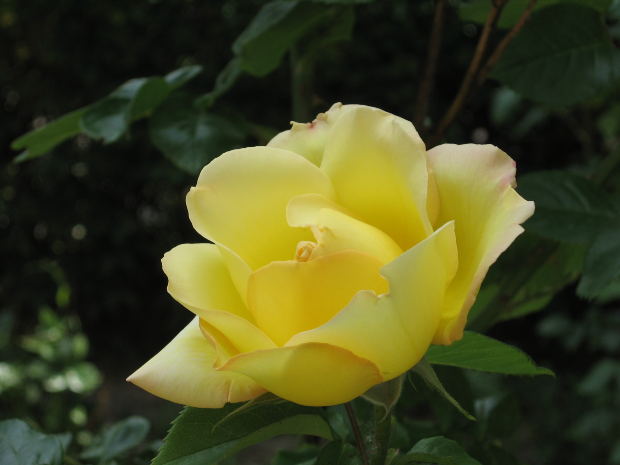
Photo courtesy of morgueFile

Portrait by Fray Miguel de Herrera (1700-1789)

The work that was the jumping off point for my poem is one by the Mexican nun, Sor Juana Inés de la Cruz (1551-1695), who lived during the time when Mexico was a part of the Spanish empire. Sor Juana was an ambitious writer, self-taught, and a Baroque poet. She belonged to the Order of St. Jerome. I am enamored of her work and find her life interesting. She was brilliant, independent and nonconforming.

Sor Juana was a writer, playwright and a Baroque poet. She was hungry for learning and was self-educated. From childhood, she set her own demanding educational goals. These three famous quotes of hers are telling:

“I don’t study to know more, but to ignore less.”

“One can perfectly well philosophize while cooking supper.”

“…for there seemed to be no cause for a head to be adorned with hair and naked of learning…”

For those who might be interested, here is her poem Rosa in Spanish and in English.

Rosa divina que en gentil cultura
eres, con tu fragrante sutileza,
magisterio purpureo en la belleza,
enseñanza nevada a la hermosura.
Amago de la humana arquitectura,
ejemplo de la vana gentileza,
en cuyo ser unió naturaleza
la cuna alegre y triste sepultura.
¡Cuán altiva en tu pompa, presumida,
soberbia, el riesgo de morir desdeñas,
y luego desmayada y encogida
de tu caduco ser das mustias señas,
con que con docta muerte y necia vida,
viviendo engañas y muriendo enseñas!

Rose, heaven’s flower versed in grace,
from your subtle censers you dispense
on beauty, scarlet homilies,
snowy lessons in loveliness.
Frail emblem of our human framing,
prophetess of cultivation’s ruin,
in whose chambers nature beds
the cradle’s joys in sepulchral gloom.
So haughty in your youth, presumptuous bloom,
so archly death’s approaches you disdained.
Yet even as blossoms soon fade and fray
to the tattered copes of our noon’s collapse –
so through life’s low masquerades and death’s high craft,
your living veils all your dying unmasks.

– Juana Inés de la Cruz

Illustration and poem in the public domain. Source of translation unknown.

photo-on-2012-09-19-at-19-541JAMIE DEDES (The Poet by Day)~ I am a mom and a medically retired (disabled) elder. The graces of poetry, art, music, writing and reading continue to evolve as a sources of wonder and solace, as a creative outlet, and as a part of my spiritual practice.

Posted in Naomi Baltuck, Photo Essay, Photography/Photographer

Flowers (are like people)

Each flower…

https://i0.wp.com/i1176.photobucket.com/albums/x334/nbaltuck/IMG_8922-1-1.jpg

…is a miracle of nature.https://i0.wp.com/i1176.photobucket.com/albums/x334/nbaltuck/IMG_9334-1.jpg

…a work of art.
https://i0.wp.com/i1176.photobucket.com/albums/x334/nbaltuck/IMG_8085-1.jpg

They are like people.  Each one shines on its own.

https://i0.wp.com/i1176.photobucket.com/albums/x334/nbaltuck/IMG_9014-1.jpg

But it is through contrast…


…or complement….

…and through interaction…

That we truly shine.

https://i0.wp.com/i1176.photobucket.com/albums/x334/nbaltuck/IMG_5158-1.jpg


All words and images copyright 2012 Naomi Baltuck

NaomiPHOTO1-300ppi51kAqFGEesL._SY300_NAOMI BALTUCK ~ is a Contributing Editor and Resident Storyteller here410xuqmD74L._SY300_ at Bardo. She is a world-traveler and an award-winning writer, photographer, and story-teller whose works of fiction and nonfiction are available through Amazon HERE. Naomi presents her wonderful photo-stories – always interesting and rich with meaning and humor – at Writing Between the Lines, Life from the Writer’s POV. She also conducts workshops such as Peace Porridge (multicultural stories to promote cooperation, goodwill, and peaceful coexistence), Whispers in the Graveyard (a spellbinding array of haunting and mysterious stories), Tandem Tales, Traveling Light Around the World, and others. For more on her programs visit Naomi Baltuck.com

Posted in Culture/History, Essay, Mental Health, Michael Watson, Nature, Shamanism, Spiritual Practice

Working With the Spirits

Shrine, Chennai, India

Eight years ago we purchased a dilapidated cottage, took it down to studs, and with the aid of a brilliant contractor, built a wonderful home. Since then we have developed much-loved gardens on our small plot of urban land.

As the late effects of Polio have become more challenging for me to manage, Jennie has become the tender of those beds. We both care deeply about the garden’s well-being, but much of my limited energy is needed for our healing and teaching work. I am grateful to Jennie for reminding me that healing and teaching are also forms of gardening, other ways of working with spirit.

In the seven years we have lived in our home we’ve been quietly working with the spirits of the land. This is a tad challenging as we live in a residential neighborhood and all ceremony is public. My teachers always said one should be polite, humble, and do ceremony anyway. This simple advice turns out to be remarkably complex in practice.

The spirits of the land are often profoundly responsive to gratitude and ceremony. One evening during our most recent Asia trip we were asked to do a simple traditional shamanic ceremony for a group of college students. This was to be a simple show-and-tell, yet, as sometimes happens, the ceremony took on a momentum of its own, becoming profoundly moving and healing for all present.

When we returned home to Vermont we told our friend and colleague, Julie Soquet, about the experience. Julie listened to our story, considered it for a moment, then said, “The spirits of the land must be really alive and receptive there.”  I was stunned by her naming of the missed obvious. Local gods and spirits are routinely honored in both India and Hong Kong, and Jennie and I had spoken after the ceremony about how we felt the presence, support, and appreciation of the spirits. (There was an active shrine directly across the street from where we were conducting the ceremony.)

The other night, in dream, I was reminded we are loaned our bodies for our stay here on Pachamama. Our bodies are sacred; they are Medicine bundles. At the end of our lives we give our bodies back to the Earth. Pachamama asks that we grow the spirit and power of these bundles, so that when we return them they benefit Her and all beings. In the dream I was asked simply to keep this in mind as I made my way through what remains of my walk here. There were no other instructions, no “shoulds”, no “musts”. Expressing gratitude to the myriad beings who make our lives possible is part of that way of walking and gardening. I wonder how these simple, profound truths will enter into our work.

Michael Watson, Ph.D.

© 2013, essay and photographs (includes portrait below), Michael Watson, All rights reserved

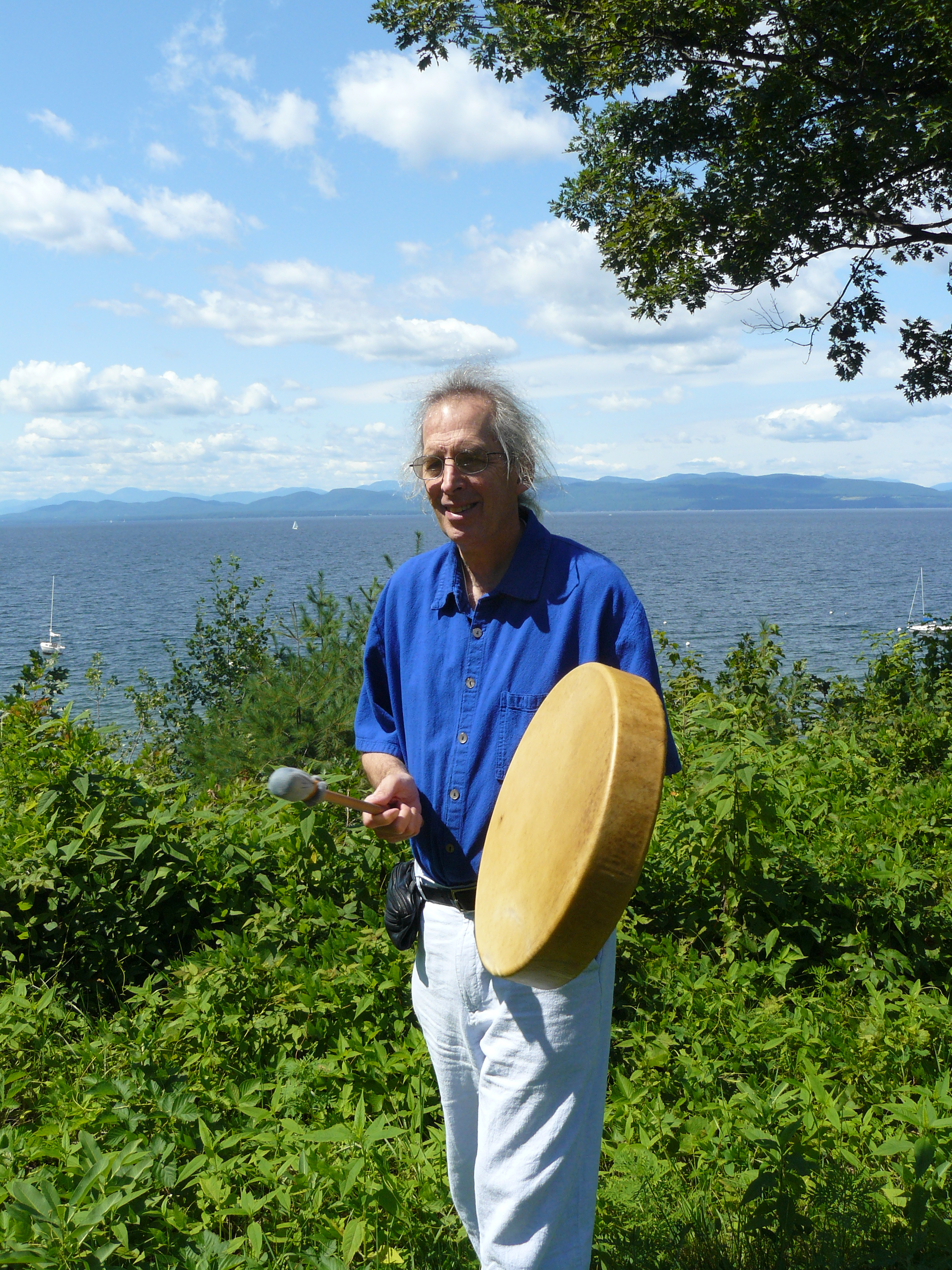
michael drumMICHAEL WATSON, M.A., Ph.D., LCMHC (Dreaming the World) ~ is a contributing editor to Into the Bardo, an essayist and a practitioner of the Shamanic arts, psychotherapist, educator and artist of Native American and European descent. He lives and works in Burlington, Vermont, where he teaches in undergraduate and graduate programs at Burlington College,. He was once Dean of Students there. Recently Michael has been teaching in India and Hong Kong. His experiences are documented on his blog. In childhood he had polio, an event that taught him much about challenge, struggle, isolation, and healing.