Before 2014, I knew very little about the concept of disability or disability activism. Believing myself to be able-bodied, I had been protected from the whole world of problems disabled people face as a result of a society that isn’t built for them.
My journey to identifying as a disabled person was anything but clear cut. Before the injury that flipped my life upside-down, I thought that my pre-existing health issues were within the range of normality. And once it was discovered my sudden uptick in pain was injury-based, I had no reason to believe that my injury wouldn’t heal in a timely matter. Most of our exposure to the world of disability tends to be what we see in TV and movies, and every fictional character I knew of that ever contracted a serious illness or sustained a severe injury always overcame their obstacles and recovered 100% (or they died). The idea that your body could be physically impacted in such a way that you may never fully recover or the recovery takes place over 5-10 years, never occurred to me. I assumed my issue was temporary.
And when I did eventually begin playing with the word “disabled” to describe myself, I received a lot of resistance from the abled people surrounding me. They would say things like, “Do you really see yourself that way?” or “But you’re so much MORE than that,” as if calling myself disabled was inherently a more self-limiting description than calling myself a brunette. I was discouraged from claiming a label that ultimately became a key aspect of my identity.
The truth is, I had absorbed many of the mainstream beliefs about disability that all of us learn, and I had to find out the hard way that they were untrue. These misconceptions inhibited my ability to accurately describe myself, to be proud of who and what I am, and they actually prevented me from accessing the help I needed.
Expanding Your
Understanding of Disability
One of the biggest misconceptions about disability that I was implicitly taught is that when you become Disabled, you are entered into the Official Disabled Club and it will be clear and obvious to everyone around you that you are a Disabled Person. (Spoiler alert: This does not happen.)
Our culture sees disability as something concrete and binary which is weird because bodies are incredibly complicated. Pretty much any function of a human body can manifest with a variation that’s extreme enough to be disabling, either due to the severity of the dysfunction or due to the symptoms’ incompatibility with society’s expectations around how people should move through the world.
Just one presentation of disability can actually represent a huge range of levels and types of ability. For example, there are literally hundreds of reasons you could require a wheelchair: pain, muscle weakness, lack of bone density, fatigue, unstable blood pressure, dizziness, paralysis, amputations, temporary injuries, recovery from surgery, the list goes on. Some people need a wheelchair for those issues 100% of the time, other people need one only when their symptoms are severe and can walk the rest of the time, and yet other people only need them when they’d otherwise be required to stand for more than an hour at a time. “Wheelchair-user,” which is just one disability in society’s eyes, is actually hundreds of different disabilities.
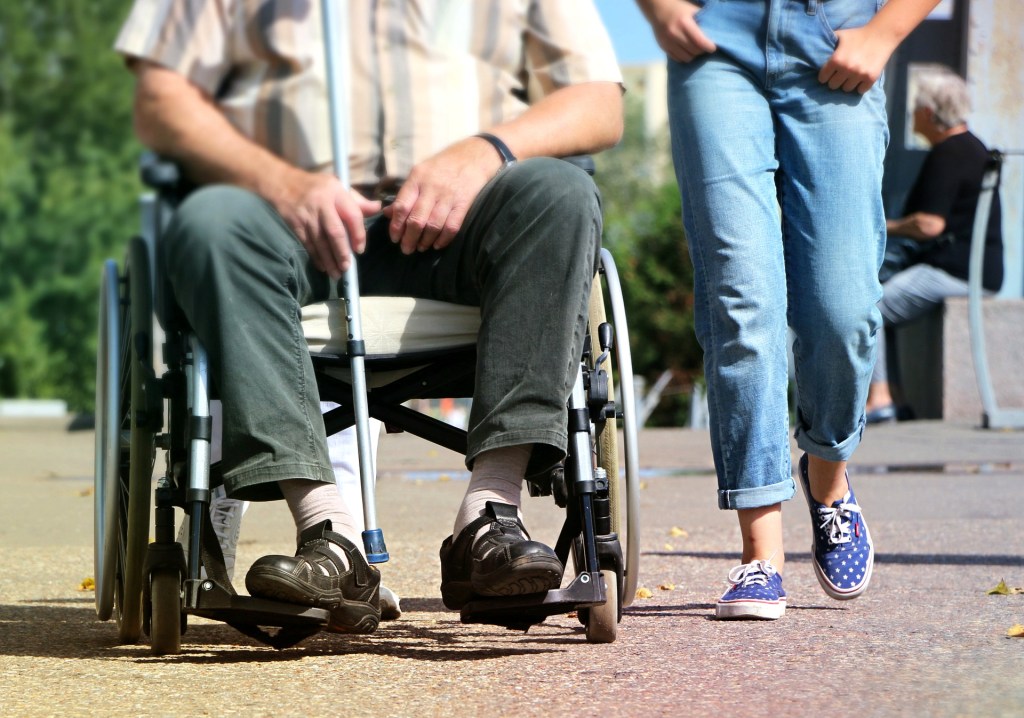
But our binary ideas about how disability presents itself means we struggle to identify disabilities accurately. Ambulatory wheelchair users– people who use wheelchairs but are able to walk some of the time– are regularly accused of faking because instead of recognizing the wide range of conditions that wheelchairs are used to accommodate, many people have the misconception that either you need a wheelchair 100% of the time or you never need it. Abled people expect disability to present in a very specific way and anything that varies from that 2-dimensional description is treated with dismissal.
Overall, our definition of what “counts” as a disability, is very limiting and we’re quick to categorize conditions we don’t understand as not “real” disabilities. Conditions like chronic anxiety or ADHD are rarely thought of in these terms, and even people with visible physical disabilities struggle with being recognized as disabled enough.
Because what we’re really categorizing is not disability at all, but whether it’s okay for someone to ask to be accommodated. “You’re not really disabled” almost always means, “You don’t actually need help with what you’re doing.” If culturally speaking the general consensus is that you should be able to cope with a physical/cognitive issue without help, then we’re discouraged from seeking it and shamed for “pretending” to be disabled in order to receive special treatment.
The result is that many versions of disability are hidden from mainstream awareness, and millions of people that would live easier and happier lives if they were given accommodations or life adjustments are forced to go through unnecessary hardship.
You Don’t Have to Do
Things the Hard Way
Prior to disability, I was already in the habit of downplaying my needs, and given this cultural backdrop with which we view disability, I was very slow to embrace the word “disabled” and the implied necessity for assistance that went with it.
At the time, the idea that if at all possible, you should do something without help, was such a normal part of the society around me that I didn’t recognize how illogical it was. While there are certain forms of access like accessible parking spots or restrooms where there is a limit to how many of those resources are available, there are so many forms of assistance that are not limited.
But we force this contrived scarcity mindset to all sorts of things: It took me weeks of suffering through the pain of walking on a recently-injured ankle before I realized there was no reason I shouldn’t ask for a ride or take the bus to work. No amount of saying “It’s only five blocks!” would change how resource costly it was for me to walk or how much pain I was spared by getting a ride.
Joining the disability community opened my eyes to a world of possibilities for adapting your life structure to fit your own needs. Even though I originally resisted joining the community, once I recognized that my set of physical conditions did count as a disability, accepting the identity actually validated that yes, I really did need help, I really did need adjustments to my daily life that were counter to the average American’s lifestyle in order to be the healthiest version of myself. Saying I was “disabled” became a way to make those needs more real to myself.
How Are We Defining Disability?
There is an underlying problem behind all these cultural misconceptions about disability, and it’s rooted in how we define what it means to be disabled.
The primary definition we have in our culture is called the medical model of disability. In the medical model, a disability is defined by a defect, a flaw, an abnormality, a lack of something, that interferes with your ability to function in everyday life. In the medical model, a disabled body has something wrong that sets it apart from the default body, which is a healthy abled body. (Note that “body” in this context also includes cognitive function and mental health.)
According to this model, if I call myself disabled, I am saying that there is something wrong with my body. I’m saying that my body is fundamentally lacking in something that normal bodies have. And it’s extraordinarily easy in our culture that moralizes health to conflate, “something is wrong with my body,” with “something is wrong with me.”
Introducing the Social Model
To combat this stigma, the disabled community created a new model: The social model of disability essentially says that disability is not caused by a problem with your body, but an incompatibility between the way your body works and the way society is structured. If disability is defined by the level of difficulty you have navigating the world around you, it stands to reason that the nature of that world is going to impact the severity of that difficulty.
The social model is all about identifying the external structures that are making something difficult for a given person and changing and adapting them so that the level of difficulty decreases or even disappears. For example, the popularity and ease of access to eye-glasses and contact lenses means that we can effectively remove a vision impairment that 200 years ago would have been debilitating.
(Note: There are varying opinions on whether it’s best to use a combination of the social and medical model, or to define the social model not as eliminating disability but as accommodating disability to the fullest extent that is possible for a given condition or environment.)
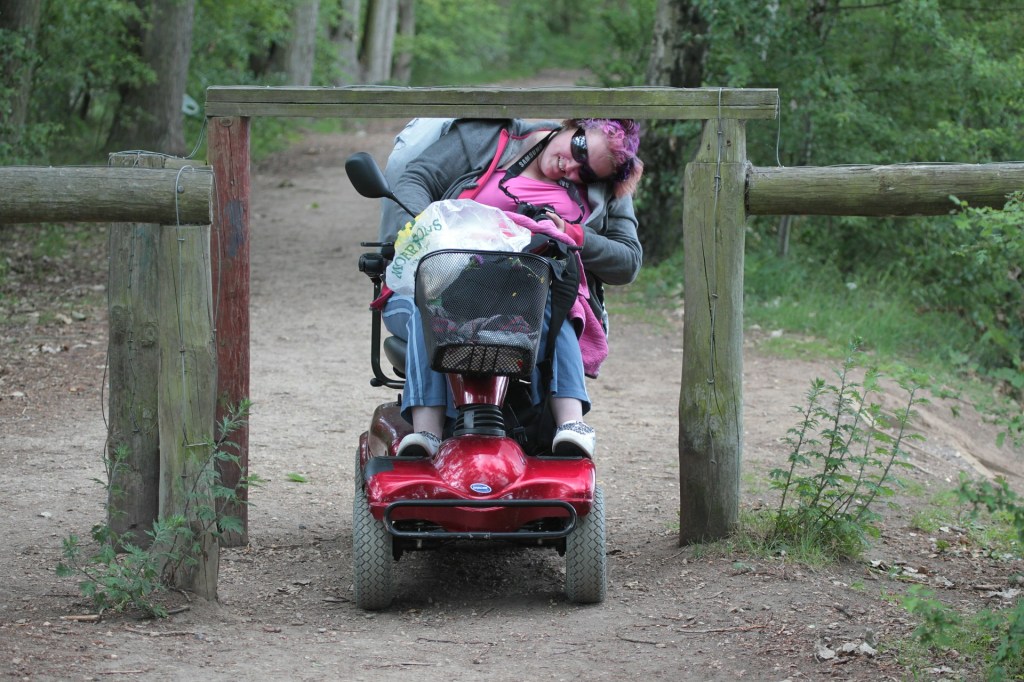
But many disabilities require a more in-depth look at our society’s structure to achieve accommodation: I live in a society where the default expectation is that I need to work for money so that I can pay my basic expenses, and on average, it will require 35-40 hours of work a week to make enough money to pay those expenses (This summary is extremely oversimplified and outright incorrect in many cases, but this is the general belief about what’s normal in our society.) The work I do is also expected to be at a location other than where I live and in most cases, includes doing a handful of the same tasks over and over again.
None of these constructs are inherent to human society, they’re just what’s normal for this time period and the part of the world I live in.
But the nature of my disability means that I can work a maximum of 20 hours per week, my expenses are higher than average thanks to additional healthcare costs, leaving the house is particularly resource-costly, and repetitive tasks fatigue my muscles very quickly. If I were to work a “normal” job and pay my bills like a “normal” person, my pain and likelihood of injury would be so high, I would need significantly more assistance, and my health issues would compound on one another. My disability would get worse.
However, if I’m allowed to work part-time, at my own pace, from home, doing a variety of tasks that use my body in different ways, my health and productivity both improve. My pain decreases, I have more energy, and I’m overall a happier person. I am significantly less disabled when my life structure is compatible with my physical needs.
The social model takes the focus away from trying to fix a disability and instead puts it on improving a disabled person’s quality of life. For me, it dramatically changed my understanding of what a disability is and how I define it: A disability is anything in your mind and/or body that inhibits or prevents you from engaging with basic aspects of society– work, relationships, hobbies, meeting survival-based needs– as a result of a society structured around the habits of the majority.
Using the social model also puts focus on one of the most important aspects of the identity of being a disabled person: the virtue of adaptation.
An Identity
of Adaptation and Creativity
If you join the disability community on twitter, you’ll notice the majority of folks there will include “disabled” or the blue “accessible” icon in their bio. But more than once I’ve seen abled people object to this: “You base your identity on your disability? What a depressing outlook on life!”
If you’ve only learned the medical model, letting your disability define you sounds like you’re saying, “There’s something inherently wrong with me,” or “My life is filled with things I can’t do.” From that perspective, disability as an identity is depressing.
But to be a disabled person means to navigate a world that was not built for you. You’re playing the game on hard: extra obstacles, fewer power-ups. You are constantly planning for contingencies, advocating for your basic needs to be met, assessing and adapting your choices in the moment when the available pre-set options are not options you can use.
Being disabled means looking at your environment and being able to pull back the veil of assumptions about what it means to live a “normal life” and challenge them. Being disabled means rejecting the default and saying, What if we did things a different way?
If I visit a fellow disabled friend’s house, I can count on them to anticipate my needs and ask the right questions to make sure that I am happy and comfortable, even though demands on their resources on average will be higher than the demands on an abled person. An abled friend, other the other hand, usually requires a crash-course on how I need to be accommodated and what I can and can’t do before they can effectively be my host (and they likely won’t initiate this crash-course, which means I have to do it pro-actively).
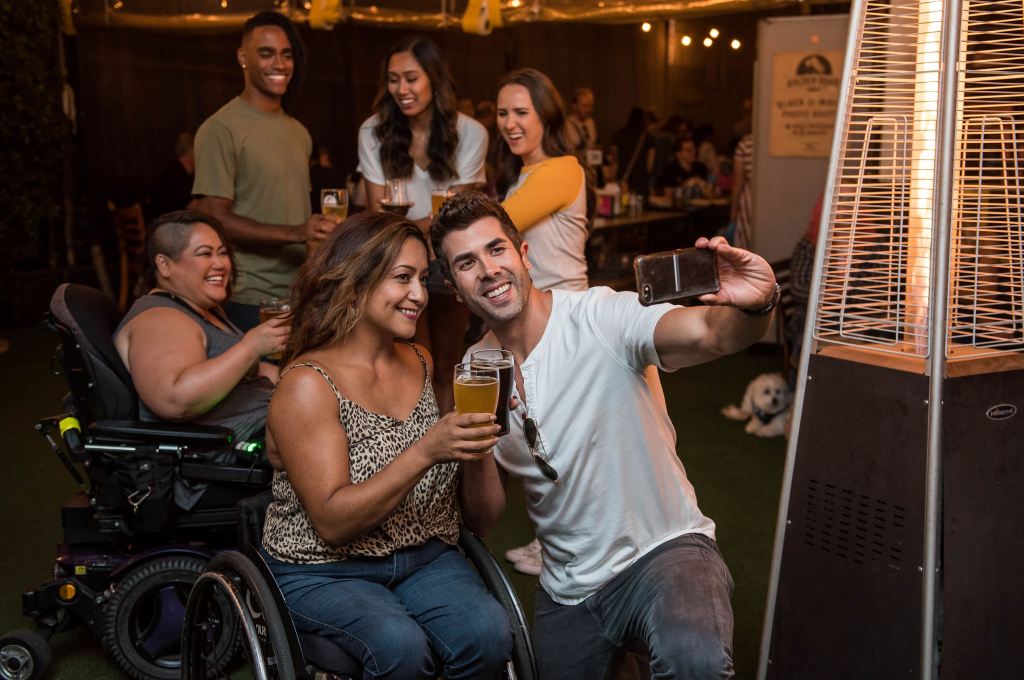
It was the disability community that taught me to adapt my life to optimize it for my needs, to prioritize my own well being over the social expectation of what a life should look like. My disability impacts my career choice, my relationships, my hobbies, my activism, my relationship with myself, my understanding of the world around me. My disability is an integral part of my identity and that is not a sad thing in any way.
Because being disabled involves an exceptional level of creativity, innovation, adaptation, decisiveness, solution-seeking, thinking one step ahead, and changing the status quo. When I say that disability is part of my identity, I’m saying that I’m part of a group that shares this unique set of skills and this specific outlook on life.
With such an incredible set of qualities, why wouldn’t I want to identify with the community responsible for teaching me that my needs will always be worthy of accommodation?
—Kella Hanna-Wayne ©2020
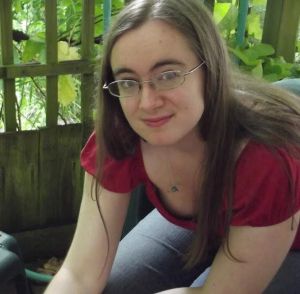
Kella Hanna-Wayne is the editor, publisher, and main writer for Yopp, a social justice blog dedicated to civil rights education, elevating voices of marginalized people and reducing oppression. Her work has been published in Ms. Magazine blog, Multiamory, Architrave Press and her work is forthcoming in a chapter of the book “Twice Exceptional (2e) Beyond Learning Disabilities: Gifted Persons with Physical Disabilities.” For fun, Kella organizes and DJ’s an argentine tango dancing event, bakes gluten-free masterpieces, sings loudly along with pop music, and makes cat noises. You can find her on Facebook, Twitter, Patreon, Medium, and Instagram.
This article was cross-posted on yoppvoice.com on February 8th, 2020.

 The BeZine