Posted in Creative Nonfiction, Essay, find yourself, memoir, Mortality, Priscilla Galasso

Claiming Rites of Passage

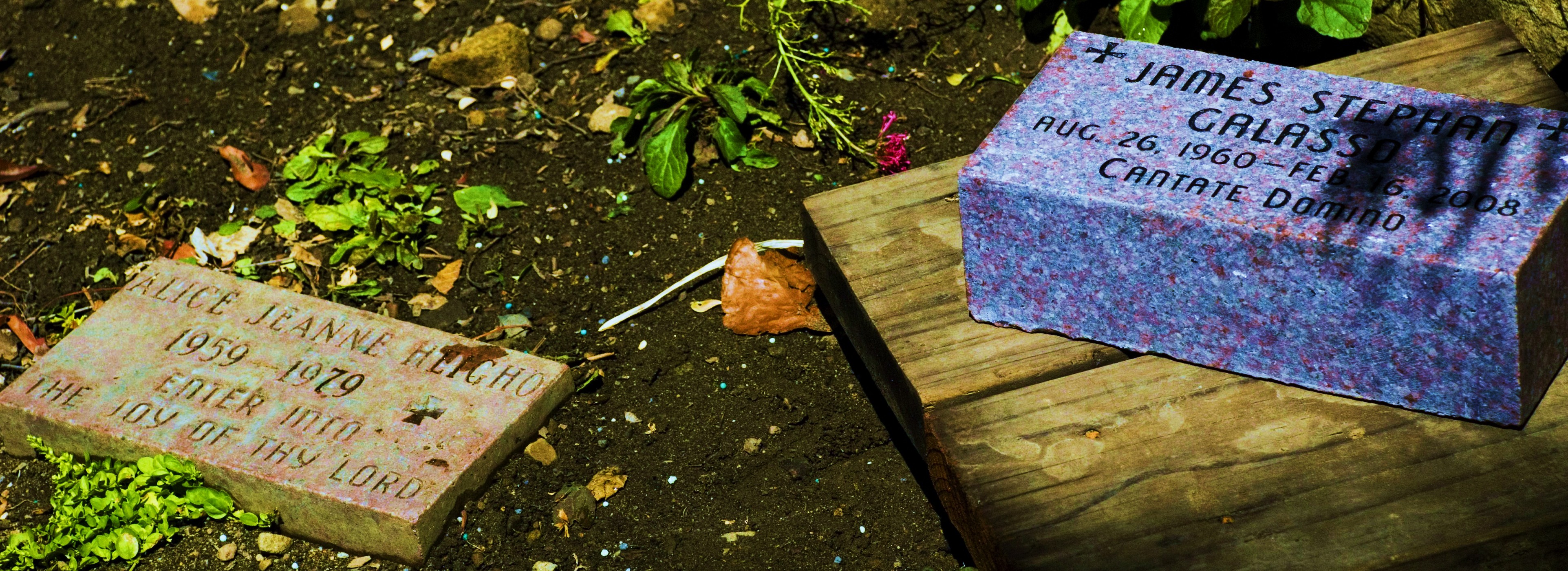
St. Luke's columbarium
St. Luke’s columbarium

A few years ago, I went to an exhibit on mummies at the Milwaukee Public Museum.  It was fascinating.  Listening to the whispered comments and questions of other patrons was fascinating as well.  We have a very scattered cultural approach to death, with so many various ways of marking the rite of passage, including not really marking it at all.

American culture, as a whole, has been dominated by technology to the point that important parts of our lives are relegated to “experts” and taken out of our hands completely.   My mother fought against this trend in the late 50s when she insisted on breastfeeding her babies instead of allowing the “experts” to convince her that artificial formula on an artificial schedule was better for them.

Birth experiences have become sterilized, institutionalized, and anesthetized as well in the mainstream. My 4 were all born in a hospital under the HMO system (but not under any pain killers!) because in my 20s, I wasn’t brave enough to seek more creative options.   However, my sister birthed one of her children at home, and I once assisted a friend who had a home birth.  It’s not impossible to choose to take full responsibility in this event.

Death is another part of life that more and more people deal with by proxy. The hospice movement is a wonderful example of the purposeful effort to maintain the grace and dignity of this stage of life by bringing it back into the home, away from institutions.  I recently watched an Ingmar Bergman movie set at the turn of the century, called Cries & Whispers (well, it’s actually called something in Swedish, but that’s the English title).  This intense family drama deals with the death of a spinster sister from cancer.  The action all takes place at home, in this case an elegant manor.  The doctor’s largest role is in an affair with one of the sisters, in flashback.  When I think of the family drama of my husband’s death, experts and technology played a huge part.  Unfortunately, that became a distraction from entering into the rite of passage, from experiencing the more intimate aspects of the dynamics that were changing my family.  What I mean to say is that it enabled denial.

The last photo taken of me & my husband
The last photo taken of my husband: 11 days before he died at home.

What does it mean to choose to take responsibility for my life?  Not to delegate the more painful or complicated bits to an “expert”, not to live by proxy or by representative?  In which situations do I most often abdicate my ability to decide a course of action?  Are they likely to be mostly financial, political, medical, social, spiritual, emotional or physical?  I am only beginning to wake up and ask myself these questions.  Steve often puts it to me this way: in every situation, you have at least 3 options:  1) Run away or hide  2) Try to change the situation  3) Change yourself.

This is a good time for me to think about aging, about how I want to live and address the changes that are happening now and will continue to happen.  What do I want?  I want to experience life in a more authentic way, not behind a duck blind or a proxy, not behind a curtain of denial or dogma, not by avoiding discomfort or hard work.  I want to make decisions about who I am and how to live proactively.  How do I embody this?  At this point, I am still figuring out who I am and want to be and recognizing places where that has been dictated and I have responded without looking deeper.   My father and my husband took great care of me.  I want to learn to do that myself.   I often dream about Jim returning as if he’d never died.

Last night, I had a powerful dream about him, set in the house I sold, with my young children around.  My consciousness struggled with it; I knew that the house was emptied and I’d moved.  I couldn’t understand why the furniture was back and the place looked so “lived in”.  I couldn’t understand why Jim was there.  He told me he was going out to work because he wanted to support me and the kids.  In a choked whisper, I closed the door behind him and said, “Don’t come back.”  I woke up crying.  Talking about this dream with Steve, I realized that I do want him to come back and float through my subconscious and consciousness without confusing me, without affirming me or correcting me, just visiting.  I suppose when I gain the confidence to affirm and care for myself, my dreams will change and Jim’s place in them as well.  Then we will both move beyond this Bardo and into a different sphere.

—- Priscilla Galasso

© 2013, essay and photograph, Priscilla Galasso, All rights reserved
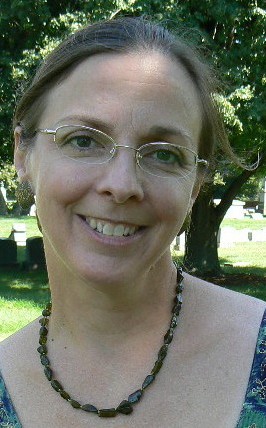
004PRISCILLA GALASSO ~  started her blog at scillagrace.com to mark the beginning of her fiftieth year. Born to summer and given a name that means ‘ancient’, her travel through seasons of time and landscape has inspired her to create visual and verbal souvenirs of her journey.

Currently living in Wisconsin, she considers herself a lifelong learner and educator. She gives private voice lessons, is employed by two different museums and runs a business (Scholar & Poet Books, via eBay and ABE Books) with her partner, Steve.

Posted in Essay, Jamie Dedes

Roger Ebert “…online, everybody speaks at the same speed.”

ROGER EBERT (1942-2013)

film critic, screenwriter, Pulitzer Prize for Criticism

Ebert at the Conference on World Affairs in September 2002,

shortly after his cancer diagnosis

THE WISDOM AND COURAGE OF ROGER EBERT

This following piece on Roger Ebert was originally written for our Perspectives on Cancer series in 2011. I don’t know how well known Roger Ebert is outside of the United States; and while he is best know and appreciated as a journalist and film critic, I feel his inspiring response to catastrophic illness makes him a true hero and role model for anyone anywhere. Earlier this week the Chicago Sun Times announced Roger Ebert’s death from cancer.

Roger Eberts cancer and treatments took away his jawbone, his ability to speak, and even his ability to eat and drink. He continued writing right to the end, said that when he wrote he was just like his old self, and he wrote his last tweet two days before his death. Of his life online, he said:

 Now we live in the age of the Internet, which seems to be creating a form of global consciousness. And because of it, I can communicate as well as I ever could. We are born into a box of time and space. We use words and communication to break out of it and to reach out to others.

For me, the Internet began as a useful tool and now has become something I rely on for my actual daily existence. I cannot speak; I can only type so fast. Computer voices are sometimes not very sophisticated, but with my computer, I can communicate more widely than ever before. I feel as if my blog, my email, Twitter and Facebook have given me a substitute for everyday conversation. They aren’t an improvement, but they’re the best I can do. They give me a way to speak. Not everybody has the patience of my wife, Chaz… But online, everybody speaks at the same speed.” Roger Ebert

Born in Urbana, Illinois to parents of modest means who wanted a better life for him then they had, Ebert’s affinity for writing and film were encouraged. He went to Urbana High School, University of Chicago, and University of Illinois at Urbana-Champaign. He is known for his film column in the Chicago Sun-Times (1967 – April 4, 2013), his film guide books, and for the television programs he did in collaboration with Gene Siskel and later Richard Roeper. Ebert struggled with alcoholism. He is married to a trial attorney, Charlie “Chaz” Hammel Smith, now Chaz Ebert and VP of Ebert Company. 

In 2002, Ebert was diagnosed with salivary cancer. He received radiation treatments and multiple surgeries that effected his speech. In 2006, more cancer was found in his jaw bone. He was rushed to the hospital when his carotid artery burst and he “came within a breath of death.”  The jaw bone was removed. Between one thing and another, he suffered through excessive bleeding, loss of muscle mass, deformity, a jaw prosthetic, and the loss of his voice. In the TED Award video below, he informs us of his – among other things – experiments with different voices.

I have always admired Roger Ebert as a writer, film critic, and the first film critic to win the Pulitzer Prize for Criticism. Since he has been living with cancer and then the fallout from cancer, I have come to admire Roger Ebert, the man. He has shown himself to be a world-class role model and a first class human being. As you will see, through it all, he has retained his sense of humor. Write on Roger

ROGER EBERT: Remaking My Voice

Photo credits ~ Ebert at the 2004 Savaanah Film Festival by Rebert under GNU Free Documentation License and Lillian Boutte and Roger Ebert by Jon Hurd under Creative Commons Attribution 2.0 Generic license. Both photos via Wikipedia.

Video upload to YouTube by 

Belated addition to this post 12:22 a.m.: I just found this lovely essay by Roger Ebert entitled, “I do not fear death …” on Salon’s site. Link to it HERE.

ge-officeJamie Dedes ~  My mother lived with cancer of one sort or another for forty years. She was diagnosed with cancer the first time at thirty-six.  She was pregnant with me, her second and last child. She had a radical mastectomy and radiation treatments while pregnant. Ultimately, she went three rounds with breast cancer, one with thyroid cancer, and died at seventy-six of breast and colon cancer. I pray everyday for cures. Advancements in medicine and technology give us hope. I’m also encouraged to see that we are doing more with lifestyle and nutrition (antiangiogenic foods), both prophylactically and for healing and remission, and with the soft technologies of prayer, guided visualization, energy medicine, meditation, music and art.

Posted in Jamie Dedes, Poems/Poetry

DESTINY

It has become exceedingly obvious that our technology has exceeded our humanity. Albert Einstein, German-American theoretical physicist

If you are viewing this poem from the homepage, you will have to click on the post title to see it lay out properly. Thank you!

DESTINY

by

Jamie Dedes

·

The unconscious wake of the city canyon lined

with monolithic buildings, a modern Stonehenge –

an outright lie, the feeling that a wee human can

do anything walking down this asphalt valley

·

though wise hawks flee to the countryside and those

thrusting window ledges are home to pigeons who

coo piteously at the traffic below, a parade of some

silly folk wearing fetching clothes and trusting

·

their sugared dreams to the midnight winds and

others arrogant who trip the ego fantastic and

hammer at their expectations with stone fists well

weighted by iron beliefs. It’s all mythology because

·

cultures die, worlds end, nothing should surprise,

but better to play and pretend our end didn’t begin

a century ago with the Wrights at Kitty Hawk and

that somehow, somehow we’ll outsmart our destiny.


Photo credit – Peter Griffin, Public Domain Pictures.net.