
This year marks the centenary of the beginning of a war that should have ended all wars. My thoughts for this piece were inspired, nay possibly provoked, by commentary from two recent sources.
The first was an item on the BBC’s Newsnight. This was a contention by some commentator that the perspective of the horrors of the Great War had swung “too far to the left”!
The second came from somewhere inside those compartments of my brain that store data from my professional life in commerce and trade. It relates to how successful companies aim to keep the balance sheet healthy (and the shareholders or directors happy).
It doesn’t matter which political regime is in government – left, centre or right – we keep going to war, somewhere in the world, for some reason, the truth of which is often illusory. So, whichever social, political or historic perspective we decide to adopt to absolve ourselves of the guilt, brought on by the inhuman horror of war, it alters neither the fatal results on the lives of so many, nor its lasting and damaging effects on the survivors and future generations.
Any company, developing a new product for market, will want it to succeed in the market. If the product fails to sell in sufficient quantities or survive against the competition, then would they carry on producing it and pushing it into the market, expending their valuable resources on a failing campaign? The answer is a resounding NO! They would either review and redevelop the product, remodel its placement in the market or withdraw it altogether!
An army, like a commercial company, has as its main resource what any organisation should value most, it’s people. Their operations in the field have to be managed in a way that ensures the highest probable success at the lowest possible cost. So the generals (and their political masters), who presided over operations at the front in the First World War, failed! It still hurts now, even after nearly one hundred years, that, by any measure, the obscene loss of young lives in that war was a failure on a catastrophic scale. However great was the threat that existed from Central Europe’s ‘Triple Alliance’ (Germany, Austria-Hungary and Italy), they could have managed that threat with far better strategy, better tactics.
Surely few could have foreseen the horrors that would follow but, years later, with countless tomes of historical reportage, documentary … and some of the most poignant poetry ever written … there comes a time for reconciliation; a time for present leaderships to face the truth, admit their predecessors were wrong and apologise to the descendants of all those lost and hurt by such bad management. I think it is important for any civilisation, if it is not to descend into a dark Orwellian future, if it’s peoples are not to be subjugated by fear of war, foreign invasion and death, that its leadership, regardless of political colour, must be able to stand up and face the truth, admit their failures and apologise for taking us to war, any war! We all need to seek truth and reconciliation.
It has been said that we should not ‘celebrate’ but rather ‘commemorate’ the First World War at its anniversary. I disagree. I believe we should celebrate it, which means that, once we acknowledge it was a complete failure because of its decimation of life, it should serve as an unforgettable beacon that we will always celebrate for reminding us of the value of life.
© 2014, John Anstie, All rights reserved
 JOHN ANSTIE (My Poetry Library and 42) ~ is a British poet and writer, a contributing editor here at Bardo, and multi-talented gentleman self-described as a “Family man, Grandfather, Occasional Musician, Amateur photographer and Film-maker, Apple-MAC user, Implementation Manager, and Engineer. John participates in d’Verse Poet’s Pub and is a player in New World Creative Union. He’s been blogging since the beginning of 2011. John is also an active member of The Poetry Society (UK).
* * * * *
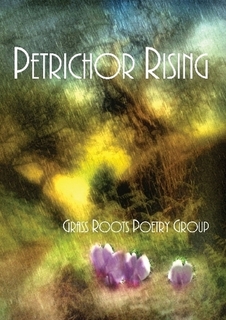
 John has been involved in the recent publication of two anthologies that are the result of online collaborations among two international groups of amateur and professional poets. One of these is The Grass Roots Poetry Group, for which he produced and edited their anthology, “Petrichor* Rising“. The other group is d’Verse Poet Pub, in which John’s poetry also appears The d’Verse Anthology: Voices of Contemporary World Poetry, produced and edited by Frank Watson.
* Petrichor – from the Greek pɛtrɨkər, the scent of rain on the dry earth.




 The BeZine