
“Will you still need me, will you still feed me …”
At the time of writing this, when the Beatles and the Stones were playing out yet another rock and roll battle at the Grammy‘s, I was reminded of this song, which, if not their greatest hit, is one of their most memorable because it passes the ‘Old Grey Whistle Test‘.
In the fifty years since their major ‘battles’ for supremacy in the charts, in which these two famous bands were engaged, our life expectancy has increased by almost ten years*. So, the perspective of a young man in the mid-1960’s of someone in the seventh decade of their life, would have been of an old grouch off the end of the scale of life. At sixty-four, however, I find myself with better prospects of success for carrying out my ambitions in retirement, than I would have had fifty years ago.
Life expectancy, the quantity of life, is, whichever way you look at it, merely a statistic and is of little value on its own; we need quality of life as well. I watch as my 95 year old step-mother soldiers on, despite the continual but manageable ailments, with which she has to cope. Her complaints are nothing if not a physical body that is slowly wearing out, but they remind me that old age is not for the faint-hearted. I am conscious of the aches and pains that I have to deal with already, but, in my more insightful moments, I am constantly grateful that they are occasional or, if regular, not chronic (and by ‘chronic’, I mean permanent, lifelong conditions).
Perhaps the most important point about this is the effect that living with illness or pain, be it arthritis or any one of several age related chronic conditions, can severely reduce the quality of our life. I know that I truly have little to complain about, but I am acutely aware that I still, sometimes, have a grumpy disposition, which leads me to appear rude and dissatisfied, even when I know I am not dissatisfied – setting aside a kind of world-weariness that comes from my daily observations of what the human race is up to – but sometimes I need some help not to allow myself to become a grouch, especially with my wife of nearly forty years, who doesn’t deserve it.
If there were a universal prayer that I’d like to say here, it would be: please grant me a greater equanimity and remind me that I should be grateful for the ability, I know I already have, to see and enjoy the beauty, both visible and invisible, which is in so many parts of our lives. Above all, let me not forget to afford the elderly my understanding for them.
“Give me your answer, fill in a form
Mine for evermore
Will you still need me, will you still feed me,
When I’m sixty-four?”
* Source: England and Wales, Total Population, Life Tables
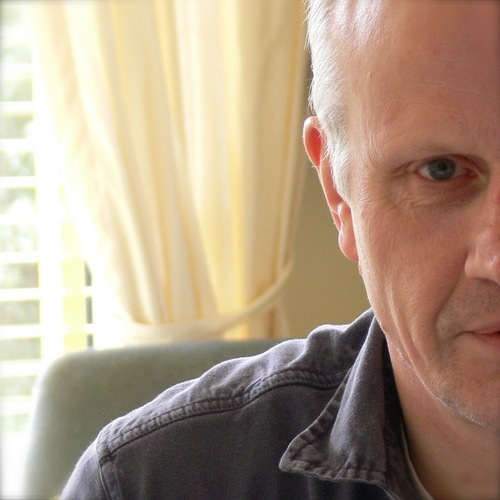 JOHN ANSTIE (My Poetry Library and 42) ~ is a British poet and writer, a contributing editor here at Bardo, and multi-talented gentleman self-described as a “Family man, Grandfather, Occasional Musician, Amateur photographer and Film-maker, Apple-MAC user, Implementation Manager, and Engineer. John participates in d’Verse Poet’s Pub and is a player in New World Creative Union. He’s been blogging since the beginning of 2011. John is also an active member of The Poetry Society (UK).
*****
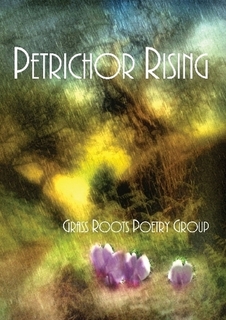
 John has been involved in the recent publication of two anthologies that are the result of online collaborations among two international groups of amateur and professional poets. One of these is The Grass Roots Poetry Group, for which he produced and edited their anthology, “Petrichor* Rising. The other group is d’Verse Poet Pub, in which John’s poetry also appears The d’Verse Anthology: Voices of Contemporary World Poetry, produced and edited by Frank Watson.
* Petrichor – from the Greek pɛtrɨkər, the scent of rain on the dry earth.
 The BeZine