The focus of "The BeZine," a publication of The Bardo Group Beguines, is on sacred space (common ground) as it is expressed through the arts. Our work covers a range of topics: spirituality, life, death, personal experience, culture, current events, history, art, and photography and film. We share work here that is representative of universal human values however differently they might be expressed in our varied religions and cultures. We feel that our art and our Internet-facilitated social connection offer a means to see one another in our simple humanity, as brothers and sisters, and not as “other.” This is a space where we hope you’ll delight in learning how much you have in common with “other” peoples. We hope that your visits here will help you to love (respect) not fear. For more see our Info/Mission Statement Page.
He is the guiding teacher of the Insight Meditation Center (IMC) of Redwood City, California. He is one of the best-known American Buddhists. He has a PhD in Buddhist Studies from Stanford University. His many dharma talks available online contain basic information on meditation and Buddhism, as well as subtle concepts of Buddhism explained at the level of the lay person. MORE [Wikipedia]
Here Gil talks about being aware of what takes us away from ease in order to be able to return to ease again.
Access complete dharma talks by Gil Fronsdal and other Buddhist teachers HERE at the website for Insight Meditation Center, Redwood City, CA, U.S.A.
Photo credits: Gil’s photo courtesy of Insight Meditation Center under under the Creative CommonsAttribution 3.0 License; orchid courtesy of Jamie Dedes.
Awoke with this thought brought to me via dreaming memory. The central image comes from a moment at a wedding I attended years ago, a wonderful celebration of the union of two people incredibly special to me then and even more special to me now. The man who married these two souls (called Erik and Karen, for those of you keeping score at home), used this metaphor to illustrate the idea of patience. That image remained with me, resurfacing again and again over the years, gaining depth of meaning for me. Here, with apologies to anyone involved on that day, I have made it my own. Hope you enjoy.
Much as you want to
you mustn’t.
Wrest the petals,
force them open,
and you’ll bruise
fragile silken pistils.
·
Much as you cannot
you must.
Wait very patiently,
allow water to
wander up the stem,
fatten the bud.
·
Much as you can
you shall
abide an agenda
set by the sun
whose warm whispers
coax her unfurling.
Danielle is an active participant in a poetry community to which I belong. When I read this poem, I was completely charmed and certainly its message is relevant to all of us “in the bardo” … and who among us is not? With Danielle’s permission her poem is posted here. For more of Danielle Mari’s fine poetry, visit her at her poetry blog, Mission Improvisational. J.D.
If you are viewing this poem on the home page, you will have to click with your mouse on the subject line of the post for the poem to lay-out properly.
No illusions, no illusions, no lies, no softening of the truth,
no tears, no bargains, though sun shines and birds sing,
Winter is here, I know.
Winter is too crisp and sharp to invite either love or lechery,
and those men, husbands and lovers, see through it to seasons
young and not so inclined to ponder as one man complained,
while I watched the grass die, the leaves dry, the earth harden,
cold winds blowing over the graves that house our bodies.
And I being me was always asking
“Why”
Once Spring danced like wild flowers in the wind,
held dew and promise and smiled like a well-fed babe.
It hadn’t heard the word defeat and didn’t know hate or anger.
Spring liked to play, to romp, to sing and
she hung her question on a tree to ripen –
“Why”
Summer took itself seriously, was wide-eyed with longing, sizzling in the sun.
It wore a red dress and the champagne happiness of a husband and baby
and bravado because Summer is young and youth is bold,
a silver bell that rings and rings and never stops.
Too much is not enough and yet – a tremulous
“Why”
Autumn gently smiled, like Da Vinci’s lady, and danced old dances,
reminisced Begin the Beguine, stepping lightly on brown leaves.
It was lined with gold and muted silks, remembered is manners,
nodded wisely, spoke sagaciously , and was a might too profound.
Haughty with itself, it just knew it knew
“Why”
Winter…Winter is content, sees itself in Time displaced and learned
laughter has meaning and fleshy bonds and boundaries dissolve.
A bit stiff, cold, and slow now, slowing to honor the sacred,
to say “i love you,” to say “it was good,” to say “thank you.”
Sun rise, sun set, and once dormant trees burst forth with green,
sanguine and serene, just a habit now that question
This resonates for me as I know it must for other creative beings. (Aren’t we all?) I do believe that art comes from sacred space, that doing art is a meditation, and that our art comes through us not from us.
The poem was written by Jan Phillips. Link HEREto her website.
If you are viewing this poem on the home page, you will need to click with your mouse on the subject line of the post to see the poem laid out properly.
And a man said, Speak to us of Self-Knowledge.
And he answered saying:
Your hearts know in silence the secrets of the days and the nights.
But your ears thirst for the sound of your heart’s knowledge.
You would know in words that which you have always known in thought.
You would touch with your fingers the naked body of your dreams.
And it is well you should.
The hidden well-spring of your soul must needs rise and run murmuring to the sea;
And the treasure of your infinite depths would be revealed to your eyes.
But let there be no scales to weigh your unknown treasure;
And seek not the depths of your knowledge with staff or sounding line.
For self is a sea boundless and measureless.
Say not, “I have found the truth,” but rather, “I have found a truth.”
Say not, “I have found the path of the soul.” Say rather, “I have met the soul walking upon my path.”
For the soul walks upon all paths.
The soul walks not upon a line, neither does it grow like a reed.
The soul unfolds itself, like a lotus of countless petals.
♥ ♥ ♥
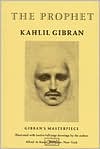
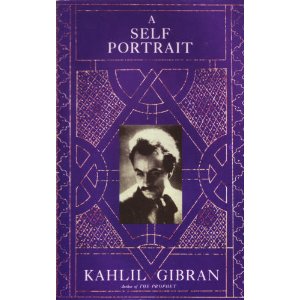
The Lebanese-American artist and poet-philospher, Gibran Khalil Gibran, died on this day in 1931. He was born in 1883. He wrote in the Arabic and in English and was from the northern Lebanon town of Bsharri (the ancient name meaning “the house of Ishtar,” after the goddess Ishtar worshiped by the ancient Phoenicians). Bsharri is in the Kadisha Valley below the famed cedar forests of Lebanon. In modern times Bsharri was enclave for Maronite Christians escaping from the Ottoman Turks. Until the late 19th Century/20th Century, Aramaic* was the language of Bsharri. Its influence is still evident in the verbal inflection of its people.
Initially, The Prophet (1923, U.S.), was not well-received by critics, though it met with some success with the public. By the sixties and the counter-culture** it – and all his work – gained greater acceptance and a wider audience. As with other like spirits, Gibran is considered a mystic by some and a charlatan by others. Gibran found wisdom in the transcendent elements of all spiritual traditions he encountered, but was born into a Maronite family.
The Maronites are Eastern Catholics in communion with the Apostolic See (the seat of authority for the Catholic Church based in Rome, Italy), and followers of St. Maron, a Syrian priest of the fifth century. Also from the Aramaic speaking peoples, St Marion was a friend and contemporary of St. John Chrysostom (Turkish) and Anthony the Great (Egyptian) and led a monastic life. Before the rise of the Ottoman Empire and the subsequent Lebanese diaspora, this was the majority population in the Lebanon. 3,500,000 people practice this religion world-wide. In the United States some 200,000 are Maronite.
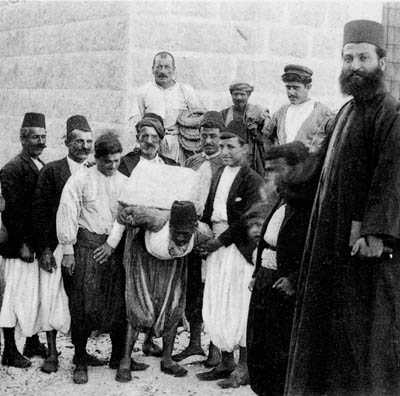
Maronites building a church on Mt. Lebanon, circa 1920s. Public domain photo via Wikipedia.
Video posted to YouTube by utterboxtv. This is a short documentary of about ten minutes.
Gibran Museum in Lebanon courtesy of Xtcrider via Wikipedia. Public domain photo.
Gibran Memorial at Copley Square in Boston, Massachusetts, U.S.A. via Wikipedia. Public domain photo.
1904 – 1930, written in Boston, New York and Paris, where Gibran studied art under Rodin.
* Aramaic, a Semitic language, was the language of Jesus and the Apostles, the literary language and the vernacular of ancient Asia Minor, Syria, Mesopotamia, and Palestine. The Peshitta texts (Old and New Testaments) were written in Aramaic and some claim they are the original New Testament documents.
**counter-culture – a cultural movement initiated mainly in the U.K. and the U.S. It spread though most of the western world between 1958 and 1974 with its peak after 1964. The counter-culture movement of the ’60s created a cultural divide mainly along age lines with youth forming a subculture questioning the social norms of the day and changing many regarding wars (especially Vietnam), sexuality, religion and spirituality, music, drugs, abortion, women’s rights, racial rights, gay/lesbian rights, free speech, environmentalism, dress codes, and so forth. It started in ’58 in London with an act of civil disobedience when students marched to ban the bomb (i.e. nuclear weapons).
I wrote the first version of this a year ago. I was sitting in a Buddhist center were the children had designed a large mandala in collage to celebrate the Buddha’s birthday, which is April 8. The mandala was filled with pictures and drawings of nature scenes, the Buddha, stupas, and children at play. I was totally engaged by it with its color, movement, and imagination. The children’s mandala came together for me with the Tibetan Buddhist custom of creating mandala of colored sands, which are then blown away to remind us of the impermanence of the material world. This poem is the result. Although it has elements that are consistent with the Buddhist system, I didn’t write it as a Buddhist statement, just an imaginative one.
Re-blogged with the permission of Bill Cook, Poetry Matters. Bill is an Ordained Elder in the United Methodist Church, serving a wonderfully diverse congregation.
His church: St. Paul UMC, Willingboro NJ.
BA. English Lit., Rutger’s, the State University, New Brunswick NJ.
M Div. New Brunswick Theological Seminary New Brunswick NJ.
D Min. Wesley Theological Seminary, Washington DC.
Although Bill’s had a life long love of reading poetry, he’s relatively new to writing and publishing it. In addition to his poetry blog, Poetry Matters, he has three other blogs that address spritual matters. Most recently his poem Lost was picked up for publication by a regional poetry magazine.
Look not for a refuge in anyone besides yourselves.
And those, Ananda, who either now or after I am dead,
Shall be a lamp unto themselves,
Shall betake themselves as no external refuge,
But holding fast to the turn as their lamp,
Holding fast to the truth as their refuge,
shall not look for refuge to anyone else besides themselves.
It is they who shall reach to the very topmost height;
But the must be anxious to learn.”
♥ ♥ ♥ ♥
TEACHER
Joseph Goldstein has been leading insight and loving-kindness meditation retreats worldwide since 1974. He is a cofounder of the Insight Meditation Society in Barre, Massachusetts, where he is one of the organization’s guiding teachers. In 1989, together with several other teachers and students of insight meditation, he helped establish the Barre Center for Buddhist Studies. MORE
While the Western contact and study of the Theravāda tradition goes back to the earliest Christian missionaries in Sri Lanka in the sixteenth century and to European scholars in the early nineteenth century, the beginning of popular Western interest in and inspiration from Southeast Asian Buddhism began around 1870. Since that time there has been two peaks in this interest: the first, from 1870 to 1912 and the second, a century later from 1970 to the present. The former was characterized primarily by an intellectual orientation as Europeans and Americans found in the early Buddhist texts preserved by the contemporary Theravāda tradition an attractive alternative to Western religious beliefs. In contrast, the current upsurge in interest centers predominantly around religious praxis, with specific practices attaining great popularity sometimes completely divorced from the doctrinal and religious context of the Southeast Asian Theravāda tradition(s). At the same time however, an influx of immigrants from Theravāda countries, especially to the United States, has resulted in the presence of numerous Thai, Burmese and Sri Lankan temples that replicate the cultural forms of Theravāda Buddhism of their respective home countries. Most of these ethnic temples created since 1970 have had little impact outside of their respective ethnic constituencies.
With the exception of the partially westernized Sri Lankan missionary Anagārika Dharmapāla (1864 – 1933; discussed below), Theravāda Buddhism has mostly been introduced to the West by westerners. As can be expected, the importation of Theravāda Buddhism to the West has involved a selection, translation and adaptation process as westerners defined the tradition for themselves. What has been most fascinating about this process is that the twentieth century Theravāda Buddhism that many westerners are encountering in Southeast Asia has been profoundly changed by the nineteenth century Asian contact with the West and with Western interpretations of Buddhism. MORE [Insight Meditation Center, Redwood City, California, USA]
♥ ♥ ♥ ♥
Teacher
Gil Fronsdal is the primary teacher for the Insight Meditation Center in Redwood City, California; he has been teaching since 1990. He has practiced Zen and Vipassana in the U.S. and Asia since 1975. He was a Theravada monk in Burma in 1985, and in 1989 began training with Jack Kornfield to be a Vipassana teacher. Gil teaches at Spirit Rock Meditation Center where he is part of its Teachers Council.
Gil was ordained as a Soto Zen priest at the San Francisco Zen Center in 1982, and in 1995 received Dharma Transmission from Mel Weitsman, the abbot of the Berkeley Zen Center. He is currently serving on the SF Zen Center Elders’ Council.
Gil has an undergraduate degree in agriculture from U.C. Davis where he was active in promoting the field of sustainable farming. In 1998 he received a PhD in Religious Studies from Stanford University studying the earliest developments of the bodhisattva ideal. He is the author of The Issue at Hand, essays on mindfulness practice, and the translator of The Dhammapada, published by Shambhala Publications.
The celebration of the Losar dates back to before Buddhism was brought to the Tibetan plateau, when most people practiced the Bon religion. At this time winter ceremonies were held to offer incense and religious poems or prayers to calm the local spirits and deities. These religious rites evolved into a Buddhist festival probably during the reign of Pude Gungyal, ninth King of Tibet.
According to folklore, the change began when a woman named Belma introduced the concept of measuring time according to the phases of the moon. It may have originally been more of a farmers’ festival as the earlier accounts of celebration focus on harvest, cultivation, and healthy crops.
It is also at this time when the Dalai Lama and the government make a point of consulting the Nechung Oracle to see what the future may hold in store for Tibet. MORE [Wikipedia]
Tibetan New Year began this year on March 5. Traditionally it was celebrated for fifteen days. In modern times, it is celebrated for just three days. We honor the holiday in solidarity with Tibetan Buddhists around the world. Despite the sad fact of Tibetan diaspora, the Dalai Lama continues to be an inspiration for his compassionate guidance and optimism. From whom could we better learn the lesson of Optimism in the Face of Adversity? Enjoy the video and happy new year to all.
Born and raised in New York City, Bhikkhu Bodhi lived as a monk in Sri Lanka for almost twenty-four years, eighteen of them as the editor for the Buddhist Publication Society in Kandy. He now lives at Chuang Yen Monasterynear Carmel, New York. Ven. Bodhi has many important publications to his credit, either as author, translator, or editor, including The Middle Length Discourses of the Buddha (Majjhima Nikaya, 1995) and The Connected Discourses of the Buddha (Samyutta Nikaya, 2000). A full translation of the Anguttara Nikaya is nearing completion. In 2008 he founded Buddhist Global Relief, which provides relief from poverty and hunger among impoverished communities worldwide. He was recently appointed to serve on a global task force charged with preparing a framework on interfaith collaboration on poverty alleviation, health, and development.
BUDDHIST GLOBAL RELIEF
by
Jamie Dedes
I was fortunate recently to attend a daylong program exploring traditional and contemporary approaches to Socially Applied Buddhism. The program was lead by Bhikkhu Bodhi, founder of Buddhist Global Relief (BGR), an inter-denominational organization of Buddhists and friends of Buddhism. I like what this organization is doing. My appreciation is not just for the social issues it addresses, which are dear to my heart, but for the way it is implementing its program.
BGR limits its administrative costs. Everyone who works for BGR does so as a volunteer. BGR efficiently partners with international, regional, and religious organizations. Funding and services are not dependent on Buddhist affiliation and BGR does not proselytize. (I have yet to see a Buddhist organization that does.) All religions are respected. Those efforts and organizations that receive funding from BGR are fully vetted to ensure that BGR funds directly serve the people for whom they are intended.
Almost daily I am awed by the enormity of the suffering that assails human beings on every continent, and even more by the hard truth that so much of this suffering springs not from the vicissitudes of impersonal nature but from the fires of greed, hatred, and delusion raging in the human heart. Challenge to Buddhists by Ven. Bhikkhu Bodhi
BGR has funded sustainable and emergency food programs and education programs in venues throughout the world including: Afganistan and Pakistan, South Africa, Cambodia, and Vietnam. It is also working here at home, a first world country with shamefully growing hunger issues. BGR’s first and current project here in the States is Garden Harvest‘s Adopt-a-Plot Program,which seeks to find the means to provided our over-stressed emergency food agencies with a way to ensure a reliable supply of quality food. Currently that pilot project is being implemented in Maryland and Pennsylvania. The hope is that it will prove effective and provide a model to be implemented around the country.
If you are looking for an organization to which you might make a donation that will really go to work, I recommend this one as worthy of consideration. Buddhist Global Relief is a 501 (c) (3) organizations and gifts are deductible to the extent allowable in the U.S. under IRS legislation.















 The BeZine