Posted in Uncategorized

Gil Fronsdale on Empathy

This Sunday we bring you a dharma talk by Gil Fronsdal. Sunday Chaplain, Terri Stewart (ClockedMonk) is on vacation.

Gil_FronsdalGil Fronsdale is a Buddhist who has practiced Soto Zen and Vipassana since 1975, and is currently a Buddhist teacher who lives in the San Francisco Bay Area. Gil was trained as a Vipassana teacher by Jack Kornfield and is part of the Vipassana teachers’ collective at Spirit Rock Meditation Center. He was ordained as a Soto Zen priest at the San Francisco Zen Center in 1982 and was a Theravada monk in Burma in 1985. In 1995 he received Dharma transmission from Mel Weitsman, the abbot of the Berkeley Zen Center.

He is the guiding teacher of the Insight Meditation Center (IMC) of Redwood City, California. He has a PhD inBuddhist Studies from Stanford University. His many dharma talks available online contain basic information on meditation and Buddhism, as well as subtle concepts of Buddhism explained at the level of the lay person.” Wikipedia

Video uploaded to YouTube by insightmed.
Photo credit ~ Insight Meditation Center, Creative Commons Attribution-NonCommercial-No Deriv 3.0 Unported

Posted in Meditation, Music, teacher

Mirrors on Quiet Waters

Thanks to Isadora (Mind of Isadora) for sharing this video with us.

He who would be serene and pure needs but one thing, detachment.” Meister Eckhart

Video uploaded to YouTube by MrBangthamai.

Posted in Book/Magazine Reviews, Jamie Dedes, Poems/Poetry

The Lives of Women


… For when I shut myself off the outer tick
I find myself listening to the quickening beat
of this dear planet as if it were my own heart’s clock.”
The Composition Hut, Myra Schneider in What Women Want
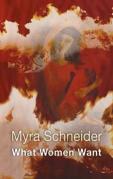
www-cover
In this short collection of nineteen poems  – including the ten-page narratively-driven long-poem, Caroline Norton – Myra Schneider manages to cut through our many-layered lives. Her poems often move from the intimacy of  personal experience to a broader frame of reference. The opening poems are nature-and-spirit driven and bespeak a love of and concern for environment. The second part of the collection fulfills the polemic promise of the title to present hard lives and harder times in a clear and righteous outcry.

Among the opening poems is Losing, written for her publisher. Myra starts with the unimportant lose of socks and moves on to finding what is valuable:

“a sparrowhawk perched on your gate, eyes alert
for prey, words that toadleap from imagination,
from heart – to make sure every day is a finding.”

In two poems she hints at the symmetrical beauty of mathematics, “… the square root of minus one you once grasped, dumbfounded.” A visit to the Garden is bursting with color and movement and triggers speculations …

“but what does it matter? You know too well
how the years have shrunk your future,
that the past is an ever expanding suitcase.”

… and further along in the poem she closes with …

“to your feet, to the bees still milking
flowering raspberries. You free a frog
watch it hop back to its life.”

I was riveted by the story of Paula Schneider in Crossing Point, as Paula (probably Myra’s mother-in-law) crosses with her children from Germany into Holland during World War II. This is included in the second half of Myra’s book, which comes to the business at hand: injustice as it affects women and children.

Interesting that this book came my way when I am standing by two friends whose physical and emotional frailty are much entwined with their relations with fathers and husbands or boyfriends. It’s not that things haven’t been improved since our parents’ days…at least for many of us it has. It’s not that there are no kind and enlightened men. Certainly there are. It’s not because women and society are without culpability, because they are not.

The complexity of the gender and social issues examined are clear in Myra’s long poem, Caroline Norton, about the nineteenth century writer and poet,  social reformer and unwitting feminist. Caroline came to the latter two occupations, not so much by choice as necessity. As the poem folds out, we see that the brutal husband who separated Caroline from her children (with tragic results for them), was abetted and aided by the women in his life, influenced as they were by a social context in which women and children are property with no legal rights of their own. No doubt those women were numb to the implications, threatened by the hint of change, and anxious to bolster the sense of surperiority they got out of putting this woman down.

Myra stands firm in her poetic commitment to continue the fight started with Caroline Norton, since half the world is still under siege and the other half still begs improvements. We read about the child-bride (Woman) and the woman who is stoned (Her Story). One wonders what happens to the children – boys and girls – of such women. The short story here is that: What women want is justice.

For two years, I have enjoyed Myra Schneider’s work and appreciated her commitment to encouraging others to honor their inner artist, through her books on writing, her classes, and her support of Second Light Network (England), an association of women poets over forty. I suspect that her work doesn’t have the audience it deserves. I hope the day comes when that is remedied.

The closing poem in What Women Want:

WOMEN RUNNING
by Myra Schneider, 2013, All rights reserved
posted here with Myra’s permission

after Picasso: Deux femmes courant sur la plage
Look how their large bodies leaping
from dresses fill the beach, how their breasts
swing happiness, how the mediterraneans
of sea and sky fondle their flesh. Nothing

could rein them in. The blown wildnesses
of their dark animal hair, their hands joined
and raised, shout triumph. All their senses
are roused as they hurtle towards tomorrow.

That arm laid across the horizon,
the racing legs, an unstoppable quartet, pull
me from my skin and I become one of them,
believe I’m agile enough to run a mile,

believe I’m young again, believe age
has been stamped out. No wonder, I worship
at the altar of energy, not the energy huge
with hate which revels in tearing apart,

in crushing to dust but the momentum
which carries blood to the brain, these women
across the plage, lovers as they couple,
and tugs at the future till it breaks into bloom.

What Women Want, publisher (Second Light Publications)

© 2013, essay, Jamie Dedes, All rights reserved
Cover art and poetry, Myra Schneider, All rights reserved

Photo on 2012-09-19 at 20.00JAMIE DEDES ~ My worldly tags are poet and writer.  I’m in my fifth year of blogging at The Poet by Day, the journey in poem, formerly titled Musing by Moonlight.  Through the gift of poetry (mine and that of others), I enter sacred space.

Posted in Essay, Jamie Dedes, Music, Poems/Poetry

I Never Saw Another Butterfly

Butterfly Boy Bronze Statue unveiled at Jane Bancroft Cook Library (Florida), January 28, 2010

Sculptor, Sidney Fagin.

.

I NEVER SAW ANOTHER BUTTERLY

The last, the very last,

So richly, brightly, dazzlingly yellow.

Perhaps if the sun’s tears would sing

against a white stone. . . .

Such, such a yellow

Is carried lightly ‘way up high.

It went away I’m sure because it wished to

kiss the world good-bye.

For seven weeks I’ve lived in here,

Penned up inside this ghetto.

But I have found what I love here.

The dandelions call to me

And the white chestnut branches in the court.

Only I never saw another butterfly.

That butterfly was the last one.

Butterflies don’t live in here,

in the ghetto.

– Pavel Friedmann

Pavel Friedmann was born in Prague on January 7, 1921. He was deported to Terezin on April 26, 1942 and later to Auschwitz, where he died on September 29, 1944. At least 960,000 Jews were killed in Auschwitz. Other victims included approximately 74,000 Poles, 21,000 Roma (Gypsies), and 15,000 Soviet prisoners of war; and 10,000-15,000 members of other nationalities (Soviet civilians, Czechs, Yugoslavs, French, Germans, and Austrians). Women, men, children.

722px-Timbre_Allemagne_1992_Martin_Niemoller_oblWhile it is common to say “never again” … meaning that event we refer to as THE Holocaust … it’s important to remember that there are Holocausts (genocides) in process now and  there have been many in our history  … think of Armenia, Rawanda, the Congo, Cambodia, Vietnam, Sudan, Iraq, Somalia, North Korea,  the Kurdish peoples, Syria, Palestine … Time and past time to put an end to it …

I like to remember the lesson taught by Pastor Martin Niemoller (1892-1984) – a victim of the Nazis – and passed on to us. There is some controversy over the many versions of his “First they came …” It is often presented as a poem.  The great jazz musician, Charles Mingus, recites a version before his musical composition, Don’t Let It Happen Here. In any event, the point is made: political apathy is dangerous.

First they came for the Jews
and I did not speak out-
because I was not a Jew.
Then they came for the Communists
and I did not speak out-
because I was not a Communist.
Then they came for the trade unionists
and I did not speak out-
because I was not a trade unionist.
Then they came for me-
and there was no one left
to speak out for me.

– Pastor Martin Niemoller

– Jamie Dedes

Photo credits: Sidney Fagin – New College of Florida; German postage stamp with sketch of Pastor Martin Niemoeller (licensing status unclear ) via Wikipedia

Posted in Spiritual Practice, Teachers

For the suffering …

IN SOLIDARITY WITH THE PEOPLE OF BOSTON

AND

PEOPLE EVERYWHERE WHO ARE SUFFERING THE EFFECTS OF VIOLENCE

There is a saying in Tibetan, ‘Tragedy should be used as source of strength.” No matter what sort of difficulties, how painful experience is, if we lose our hope, that is our real disaster.’ ” Dalai Lama XIV

2185-1275628803p3wR

Easier said than done, I know.

Photo credit ~ Bobby Makul, Public Domain Pictures.net

Posted in Art, Peace & Justice, teacher

From Weaponry to Livingry …

164265_234820096661258_1944501766_n

Note: The origin of this artwork is unkown. If it is yours, please let us know and we will credit or take it down, whichever you’d like.

Posted in Uncategorized

“Pulse” … Just in Time for National Poetry Month

Natasha Head, Poet & Writer, Nova Scotia

PULSE: A REVIEW OF NATASHA HEAD’S NEW BOOK

by

Jamie Dedes (The Poet by Day, a journey in poem)

If you have an interest in poetry, Natasha Head is probably on the periphery of your radar even if you don’t know her as well as many do through her blog, The Tashtoo Parlour, her participation in a leadership role on d’Verse ~ Poets Puband as the founder and coordinator of New World Creative Union

A highly visible part of our community of poets, writers, and bloggers, she’s an accomplished poet and writer, wife and mother, and real estate agent ~

Natasha says she …

has been weaving words since I was but a wee lass running with crayons and scribblers …”

… and she continues with her poems online along with Running With Crayons, her whimsical art

Her debut poetry collection (from Winter Goose Publishing) was Nothing 57916125Left to Lose. It was a Pushcart Prize nominee for 2012. A year later – almost to the day – we have her newest offering, Pulse.

Nothing Left to Lose is a collection of self-contained poems that tell the author’s personal story of everyday difficulties, disillusionment, and disappointment to which we can all relate. Ultimately it is about trial and transformation, which is the essential theme of both books.

Trapped between what was, what
is …no movement; fear
holds me motionless.

All directions equal no choice, as
fear gives way to chaos …
enslavement.

What needs to be done, I
don’t want to do, my thoughts
constant, my nightmares

real, feeling force, breaking
pressure, resisting to the point
of stagnation

Static, Natasha Head in Nothing Left to Lose

Pulse_Flat_ForeBooksPulse (also from Winter Goose Publishing) is a short epic, a narrative stream of poems that together form a modern-day odyssey of a family caught in a web of prostitution and abandonment, alcohol and drugs, delusion and deceit. When the worst happens to the young woman who is central to the story she is wrapped in silence … at first unchosen and then embraced … In this silence appears the potential for her to reinvent herself. She has been tested. Will she answer the call to transformation?

Pulse is a dramatic fiction, but I didn’t find it melodramatic or manipulative, which it could have been in hands less skilled. The poems here are lucid and direct. The language is plain and mostly understated, interesting in its relative coolness juxtaposed against the girl’s grit as it unfolds. The storyline gets heated but never overheated.

The pacing of the poems as we move from one to the next serves the narrative well, starting slowly and moving more quickly as we reach the crisis and the denouement, where it becomes almost relaxed. The characters are unsavory, but not one-dimensional.

There is nothing worse
than waiting in the dark,
no distraction,
alone.
Mother trying her best
and she
ducked low
in the furthest corner
of a forgotten closet
where she was safe to shine the flashlight
on ancient magazines
and little golden books
where she would realize
there was no such thing as fairy tales,
and princes never stayed.”

Sal, Natasha Head in Pulse

Altogether I’d say Pulse is a good read, worth your time. Both my thumbs up for this one…Brava, Natasha!

© 2013, review, Jamie Dedes, All rights reserved
©2013, portrait, cover art, and poems, Natasha Head and/or Winter Goose Publishing, all rights reserved ~ used here with permission

Photo on 2012-09-19 at 20.00JAMIE DEDES ~ My worldly tags are poet and writer. For the past five years on medical retirement due to a chronic, potentially life-threatening illness, I’ve blogged at The Poet by Day, formerly titled Musing by Moonlight. The gift of illness is more time for poetry. Through the gift of poetry (mine and that of others), I enter sacred space.