The BeZine Blog

Posted in Guest Writer

DO WE STAND TO BE COUNTED?

DO WE STAND TO BE COUNTED?

by

Marilynn Mair (Celebrating a Year)

Do we stand to bear witness, or stand to be counted? Is it just because we’re tired of sitting down, or do we feel a real need to step into history? When do we say– no, that’s enough? When does it get to the point where nothing is more important than being there, even our regular lives. I have been there in the past and sometimes I bear witness now, but never to the point of letting everything else go. I watch others stand up today, and wonder if this fight is mine, is ours, or if it’s just the grumbling of a few moderns who suddenly lost their easy-button. In my class the students worry out loud that future generations will forget how to remember since their smartphones always remind them. Or that their younger cousins know about things, but not how to actually do them. Will the Occupy movement have any large-scale effects? No answers here. But I’m thinking a few days in a park actually talking, a few nights in a tent lacking the isolating comforts of home, just might be a good thing for those who perhaps have never before been there.

© 2011 Marilynn Mair, All rights reserved

♥ ♥ ♥

I am pleased to introduce for the first time here: Marilynn Mair (Celebrating a Year), also known as the “angel of the tremolo” and “the first lady of mandolin”. Marilynn is Professor of Music at Roger Williams University, Bristol, Rhode Island, U.S.A. Her most recent CDs are Meu Bandolim and Enigmatica. Her most recent book is Brazilian Choro – A Method for Mandolin. This post and photograph entered here today are from Celebrating a Year. They were posted by Marilynn on October 18 and are re-blogged with her permission. For more of Marilynn’s story, link HERE.  Jamie Dedes
_____

“Best known for her performances and recordings of chamber music, Ms. Mair has also, in recent years, become increasingly involved in the field of Brazilian music, performing and recording “choro,” an early-20th-century style of Brazilian jazz that features mandolin. She has researched choro extensively, and her articles on its history and music, published in Mandolin Quarterly and elsewhere, are some of the most complete available in English.” Max McCullough (Mandozine)

Video uploaded to YouTube by .

Posted in Essay, Jamie Dedes

CHRISTOPHER HITCHINS: Life, Death, and Deathbed Conversions

CHRISTOPHER HITCHINS (b. 1949)

English-American journalist and author

In the course of a forty-year career, Christopher Hitchins, famous (or notorious, depending on your view) for his atheism has dismayed a lot of believers of one persuasion or another. Last year he was diagnosed with a terminal cancer. Many have wondered if on his deathbed he would become an eleventh-hour convert. Here in an interview with CNN’s Anderson Cooper, Hitchens discusses his thoughts and feelings about life and death. It’s an interesting addition to the on-again off-again discussions on this blog of illness, dying, and death. I found two things particularly striking: 1.) Hitchins willingness to accept culpability for his illness as a result of his chosen life-style, which included cigarettes and alcohol. 2.) Hitchins’ mother committed suicide and Cooper’s brother did. The two men agreed that there’s no closure. Having had a suicide in own family, I find I agree with them.  Jamie Dedes

If you click on the video, it will take you to YouTube where you can view it.

Photo credit ~ Christopher Hitchens by Omaraty009 via Wikipedia under the Creative Commons Attritution-Share Alike 3.0 Unported license.

Video uploaded to YouTube by 

Posted in Poems/Poetry

A FINAL POEM

CECIL DAY-LEWIS (1904-1972)

BRITISH POET LAUREATE (1968-1972)

·

This well-received post is re-blogged today:

C. DAY LEWIS AT LEMMONS

by

Jamie Dedes

I discovered the Anglo-Irish poet Cecil Day-Lewis (C Day-Lewis) quite by accident the one day some time ago when I was preparing my Sunday news feature for the main site of an online poetry community with which I am involved. On the basis that we all benefit from knowing our roots and connections – no matter our occupation – I always start off with a snippet about a poet who either was born or died on the day of the posting. Cecil  Day-Lewis died on May 22 in 1972 of pancreatic cancer. He was the British Poet Laureate from 1968 until his death. There’s lots about him and his work that nags for my attention, but one poem really struck home.

At Lemmons (1972), according to the C Day Lewis website (HERE), was written by Day-Lewis on his deathbed at the home of Sir Kingsley William Amis (1922-1995), the English poet, novelist, critic, and educator. Amis is quoted as saying that, “At no time did Cecil mention death. My own strong feeling is that he came to draw his own conclusions from his physical decline and increasingly severe – though happily intermittent – bouts of pain, but, out of kindness and abnegation of self, chose not to discuss the matter.” This last poem, which demonstrates a wonderful grace and acceptance, was published posthumously.

AT LEMMONS

by

C Day Lewis

Above my table three magnolia flowers

Utter their silent requiems.

Through the window I see your elms

In labour with the racking storm

Giving it shape in April’s shifty airs.

·

Up there sky boils from a brew of cloud

To blue gleam, sunblast, then darkens again.

No respite is allowed

The watching eye, the natural agony.

·

Below is the calm a loved house breeds

Where four have come together to dwell

–            Two write, one paints, the fourth invents –

Each pursuing a natural bent

But less through nature’s formative travail

Than each in his own humour finding the self he needs.

·

Round me all is amenity, a bloom of

Magnolia uttering its requiems,

A climate of acceptance.  Very well

I accept my weakness with my friends’

Good natures sweetening each day my sick room.

·

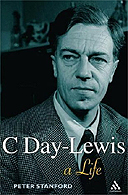
Photo credit ~ Copyrighted cover art (fair use) for Peter Stanford’s biography of Day-Lewis,C Day-Lewis, a Life. Definitely on my reading list.

Posted in Guest Writer, Poems/Poetry, Uncategorized

OF DYING

OF DYING

by

Victoria Ceretto-Slotto (liv2write2day)

That pain surrounds our birth, there’s no denying,
though worse, the fear that comes with thoughts of dying.

For life’s sojourn is pierced by sounds of crying,
as day-by-day we creep unto our dying.

Absorbed by fear of loss, we turn to buying
mere toys to mask remembrance of our dying.

And as our days grow long we know dark sighing
of friends and those we love. We watch their dying.

Perhaps, at length, we will eschew defying,
instead, embracing death: Victorious dying.

·

© poem, Victoria Ceretto-Slotto, 2011 All rights reserved

© photo, Dead Tree in Sepia from Grumpy-Puddin’s Photostream via Victoria, some rights reserved

♥ ♥ ♥ ♥

Victoria Ceretto-Slotto ~ A former nurse, Victoria is a novelist, poet, artist, and a docent at Nevada Museum of Art. Currently she is hard at work with final edits on her novel, Winter Is Past, recently accepted for publication. A second novel is in progress. Victoria finds inspiration in the mysteries of life, death, art and spirituality. She lives and writes in Reno, Nevada and Palm Desert, California with her photographer husband and two canine kids. Victoria shares some of her poetry on liv2write2day’s blog, where she also provides writing prompts and offers coaching with Monday Morning Writing Prompt and Wordsmith Wednesday.

Posted in Jamie Dedes, Poems/Poetry

SOUL’S WINTER

In my coat I sit

At the window sill

Wintering with the snow …

The Dead of Winter by Samuel Menashe in Samuel Menashe: New and Selected Poems

·

MY SOUL’S WINTER

by

Jamie Dedes

soul’s winter with days like secret lights

like eels slithering in the depths of the sea

with vague interests and a fathomless eye

stilled by a gray groping arctic freeze into

thinking of what-fors, whys, then howling

and waking up in spring with the hope of

answers in the hint of fresh green summer

·

© poem, Jamie Dedes, 2011 All rights reserved

Photo credit ~ morgueFile

Posted in Poems/Poetry

SUCH, SUCH IS DEATH

CHARLES HAMILTON SORLEY (1895 – 1915)

British Poet

Charles Hamilton Sorley was born in Aberdeen in 1894. The son of the profressor of moral philosphy at Aberdeen University, Sorley was extremely intelligent and won a scholarship to Marlborough College.

In 1913 Sorely spent a year in Germany before taking up the offer of a place at University college, Cambridge. When war (World War I) was declared in August 1914, Sorley returned to England and enlisted in the British Army. He joined the Suffolk Regiment and after several months training, Lieutenant Sorly was sent to the Western Front.

Sorley arrived in France in May 1915 and after three months was promoted to captain. Charles Hamilton Sorley was killed by a sniper at the Battle of Loos on October 13, 1915. He left only 37 complete poems, including the one he wrote just before he was killed, When You See Millions of the Mouthless Dead. Sorley’s posthumous book, Marlborough and Other Poems* was popular and achieved critical success when it was published in 1916.  [adapted from Spartacus Educational, a site developed by John Simpkin (MPhil.), British educator, historian, and member of the European History E-Learning Project] J.D.

·

SUCH, SUCH IS DEATH (1915)

by

Charles Hamilton Sorley 

·

Such, such is Death: no triumph: no defeat:

Only an empty pail, a slate rubbed clean,

A merciful putting away of what has been.

And this we know: Death is not Life, effete,

Life crushed, the broken pail. We who have seen

So marvellous things know well the end not yet.

Victor and vanquished are a-one in death:

Coward and brave: friend, foe. Ghosts do not say,

“Come, what was your record when you drew breath?”

But a big blot has hid each yesterday

So poor, so manifestly incomplete.

And your bright Promise, withered long and sped,

Is touched, stirs, rises, opens and grows sweet

And blossoms and is you, when you are dead.

·

TO GERMANY (1914)

by

Charles Hamilton Sorely 

You are blind like us. Your hurt no man designed,
And no man claimed the conquest of your land.
But gropers both through fields of thought confined
We stumble and we do not understand.
You only saw your future bigly planned,
And we, the tapering paths of our own mind,
And in each other’s dearest ways we stand,
And hiss and hate. And the blind fight the blind.

When it is peace, then we may view again
With new-won eyes each other’s truer form
And wonder. Grown more loving-kind and warm
We’ll grasp firm hands and laugh at the old pain,
When it is peace. But until peace, the storm
The darkness and the thunder and the rain.

Photo credit ~ a cropped and retouched version of a portrait of British soldier poet, Charles Hamitlton Sorely dated c. 1914/1915, since Mr. Sorely is in uniform here and was enlisted in 1914 and killed in 1915. The photo was first published in 1918. The collection of his poems came out in 1919. The photo is from For Remembrance: Soldier Poets Who Have Fallen in the War. The photograph is in the public domain.

*Poems ~ excepts from Marlborough and Other Poems by Charles Hamilton Sorely. It would appear that this book is currently in the public domain. You can read the entire book on or download it from Internet Archives HERE.

Posted in Jamie Dedes, Poems/Poetry

BEGGING BOWL

·

The begging bowl is a symbol of receptivity and of acceptance, a parable of the soul.

·

BEGGING BOWL

by

Jamie Dedes

a bell pealing from a tower

a bird singing in the evergreen

the monks at the forest edge

these we are, speaking to the wind

sighing to night’s great indigo sky

holding out our begging bowls

to be filled with bee and bud

the alms of our noon-hours

·

·

Photo credit ~ Vintage Old Monk (China) with begging bowl courtesy of The Buddha Gallery

Poem by Jamie Dedes, copyright 2011, all rights reserved

Posted in Poems/Poetry, Spiritual Practice

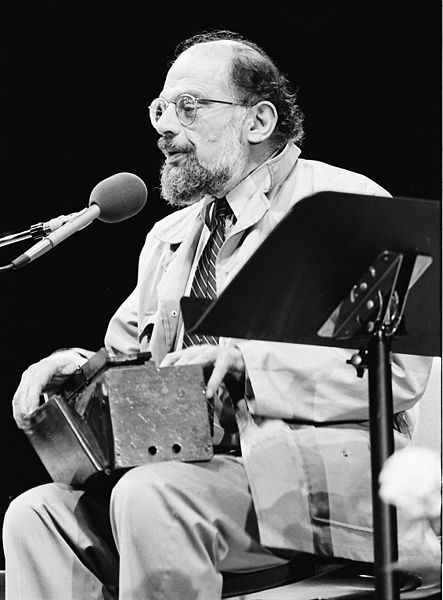
MEDITATION 101: Courtesy of Alan Ginsberg

DO THE MEDITATION ROCK

by

Allen Ginsberg 

is in this collection ~

Collected Works 1947 – 1997, Alan Ginsberg

recommended reading, three thumbs up!

Posted in Essay, Guest Writer

THE LOVELORN PEACOCK

THE LOVELORN PEACOCK

by

Gayle Walters Rose (BodhiRose)

Gayle’s cute story of the unrequited love of a bird of a different feather … (Editor’s Note)

In the summer of 1971, I moved from my hometown of Orlando (Florida, U.S.A.) down to Miami to help start an ashram there.  A friend and I were part of an organization that taught yoga, meditation, vegetarian diet and a lifestyle of disciplined, spiritual practice.  He had been dispatched from the main center in Orlando, some months prior to start yoga classes down south and had showed up at my door one day to ask if I would move there and help him.  I thought to myself, sure – why not – it would be an adventure.

He had rented a small house in Coconut Grove on shady, coconut tree-lined Kumquat Street and I took up residence in one of the tiny bedrooms when I arrived.  Right down the street was another communal compound of people making a home together in a large, two story house.

It was a cool time to live in Miami.  There were neat little head shops, and many hippie-type stores that sold candles, incense, clothing, books, etc. and some great health food stores and even restaurants that were completely vegetarian.  It was all new to me but I was in my element!

Before long we had gatherings of like-minded people coming nightly for our yoga classes and life was humming along.

Part of the charming quaintness of Coconut Grove was the community of peacocks that freely roamed the neighborhood streets.  You could hear their ear-piercing calls from blocks away but I never tired of spotting them walking down the road, perched in a tree, or up on someone’s roof.

One male peacock in particular started frequenting the small, enclosed courtyard in front of our house.  Soon he started showing an unhealthy interest in me.  Whenever I would arrive or depart the house, and if he happened to be outside, he would approach me with his feathers spectacularly displayed and “shake” them at me.  This bird was courting me!  With his feathers held straight up, he was just about as tall as I was.  Whatever direction I took, he would get face-to-face with me and “shimmy”.  I became a bit intimidated by this…yikes!  He was extremely insistent:I took to running past him to get in or out of the house but, after some time, I believe he finally realized that his love for me would remain unrequited and he moved on elsewhere to find a more suitable partner.

·

© story/essay ~ Gayle Walters Rose (Bodirose), 2011 All rights reserved

Photo credit ~ morgueFile

Posted in Jamie Dedes, Uncategorized

HAPPY DIWALI!

File:Oil lamp on rangoli.jpg

Burning oil lamp on a colourful rangoli designed on Diwali courtesy of Rangoli under the Creative Commons Attribution-Share Alike 2.0 Generic license.

October 26, 2011

Deepavali (also spelled Divali in few countries) or Diwali, popularly known as the festival of lights, is an important five-day festival inHinduismJainism, and Sikhism, occurring between mid-October and mid-November. For Hindus, Diwali is the most important festival of the year and is celebrated in families by performing traditional activities together in their homes. Deepavali is an official holiday in India,NepalSri LankaMyanmarMauritiusGuyanaTrinidad & TobagoSurinameMalaysiaSingapore, and Fiji.

The name Diwali is itself a contraction of the word “Deepavali” (Sanskrit: दीपावली Dīpāvalī), which translates into row of lamps. Diwali involves the lighting of small clay lamps (diyas, or dīpa in Sanskrit: दीप) filled with oil to signify the triumph of good over evil. During Diwali, all the celebrants wear new clothes and share sweets and snacks with family members and friends. Most Indian business communities begin the financial year on the first day of Diwali. MORE

HAPPY DIWALI TO THOSE DEAR FRIENDS WHO ARE CELEBRATING

THEIR FESTIVAL OF LIGHTS, THEIR VICTORIES OF GOOD OVER EVIL.

Posted in Essay, Jamie Dedes

THE MELLOW FRUITFULNESS OF FALL

THE MELLOW FRUITFULNESS OF FALL

by

Jamie Dedes

SEASON of mists and mellow fruitfulness, 
        Close bosom-friend of the maturing sun; 
    Conspiring with him how to load and bless 
        With fruit the vines that round the thatch-eves run…

To Autumn by John Keats (1795-1821), English poet, Romanic Movement

Autumn, transition between sultry summer and tempestuous winter, is a time to honor the dead, count and celebrate the harvest, and give thanks. The diverse peoples of the Northern Hemisphere indulge in family fun, feasting, crafts fairs, parades, and fine arts. Among the earliest celebrations are the Jewish Yom Kippur and Rosh Hashanah, closely followed by Succot, the Feast of the Tabernacles. Originally the feasts were literally in tabernacles (huts). Now venerated around the family table, there’s the typical holiday scramble to assemble and prepare traditional foods: challah bread, gifilte fish or a roasted chicken, and apple cake or oatmeal cookies for dessert.

Harvest Moon, the first full moon before the fall equinox, presents another excuse to party. At communities, like Callaway Gardens in Georgia (U.S.A.), folks watch college football, take horticulture tours, and go cycling.  Falling Leaf Moon is next, when the veil between the worlds of the living and dead is said to be thinnest. Celebrated by Pagans and Wiccans, it’s considered a ripe moment to gather for séance.

On the heals of Falling Leaf Moon is Halloween and all things spine-tingling. Special events at places like Carisbrooke Castle and Pendennis Castle in England – where the gothic and ghostly meet – offer visitors historic tours, spine-tingling walks, and spooky tales. It all harks back to the earlier times that birthed today’s foods, feasts, and falderal.

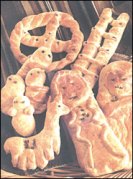
Dia de Todos los Santos (Day of All Saints) and Dia de los Muertos (Day of the Dead) are honored in Central and South America with customs that represent a melding of cultures, American and European. Feasting is the order of the day: suckling pig and tamales. There’s music and prayers, picnics held at graveyards, and tables decorated with candles, photographs of deceased relatives and friends, and T’ant’a Wawas (bread figurines for the Day of All Saints).

T’ant’a  Wawas

It would seem we humans – no matter the culture – like to celebrate our gratitude by feasting on the wealth of our harvest. In North America the big event of the season is Thanksgiving, a holiday that falls in early October in Canada and late November in the States. Major crops in North America include pumpkin, corn, potatoes, nuts, apples, and wheat, all ingredients for dinners of roasted and stuffed turkey, corn on the cob, mashed potatoes and gravy, and pumpkin or apple pie. Happy kitchen chatter and clatter and the scents of cinnamon, cardamom, and sage fill the air.

Cities everywhere have parades, but the Macy’s Thanksgiving Day Parade in New York has a long history. It started in 1824 when immigrant workers wanted a festival like the ones they enjoyed in Europe. Today the parade is an exciting oversized event with mega-stars from television, Broadway and Hollywood and mega-sized balloons and floats. Forty-four million view it on TV.

Like the trade gatherings of the original peoples (Native Americans), crafters fairs are held at large event centers where crafters sell their handcrafted foods, household items, jewelry, and toys. These visually sensual treats arrive just in time for holiday decorating and gift giving. Often the fairs include musical entertainments, story-telling, and crafts classes as well.

A wealth of entertainment is offered everywhere: but Paris is queen, honoring autumn with theatre, music, dance and the visual arts at the Festival d’Automne à Paris that runs the length of the season, September through December.

Wherever the eye travels this season the décor, natural or inspired by nature, is bright, rich, and rustic. Public and private places are decorated with gourds, spiny ears of wheat, scarecrows, and leaves turned orange, red, and gold. Though autumn’s common denominator is the celebration of abundant crops, that abundance is excelled by the diversity of the dishes, peoples, and landscape across the Northern Hemisphere.

The links on challah bread and T’ant’a Wawas are to recipes

·

© essay, Jamie Dedes, 2011 all rights reserved

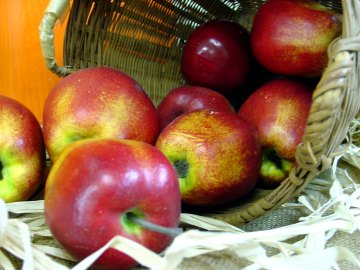
basket of apples/photo credit ~ morgueFile

T’ant’a  Wawas/photo credit  ~ The Global Gourmet

Posted in Book/Magazine Reviews, Jamie Dedes

NINE GATES: ENTERING THE MIND OF POETRY

NINE GATES: ENTERING THE MIND OF POETRY

by Jane Hirshfield (b. 1953, American) author and poet

Review by: Jamie Dedes (Musing by Moonlight)


An award-winning author and poet, Jane Hirshfield has published seven collections of poetry in addition to  Nine Gates: Entering the Mind of Poetry, a collection of essays. Her most recent book of poetry is Come, Thief (August 2011). In collaboration with Mariko Aratoni, Hirshfield edited and translated four volumes of poetry by women of ancient Japan.

Ms. Hirshfield is a Zen Buddhist and her practice informs her work with spiritual insight and delicate nuance.  She has said, “It is my hope that the experience of that practice underlies and informs [my poetry] as a whole. My feeling is that the paths of poetry and of meditation are closely linked – one is an attentiveness and awareness that exists in language, the other an attentiveness and awareness that exists in silence, but each is a way to attempt to penetrate experience thoroughly, to its core.” [The Poetry Foundation]

Nine Gates: Entering the Mind of Poetry (September 1998) is a series of nine essays that were written by Jane Hirshfield over a ten-year period and published or presented at poetry events.

*****

Gates are a means of exit and entrance, providing connection between the inner and the outer.  The premise of Hirshfield’s book is that the art of poetry is the gate by which we are offered  “mysterious informing.” Nine Gates is at once a primer for the reader and a manual for the writer. This is a book that is reverent of art, artist, and life. All is sacred ground.

The book begins at the beginning – the root of poetry – concentration.  “By concentration, I mean a particular state of awareness: penetrating, unified, and focused, yet also permeable and open.” As she says, this is Huxley’s “doors to perception” and James Joyce’s “epiphany.”  It is what I would call sacred space, and this focus, this concentration, “however laborious, becomes a labor of love.” In this chapter, I particularly appreciated the short discussion of voice: writers whose ear is turned to both the inner and outer have found their voice and thus are able to put their  ”unique and recognizable stamp” upon their work.

The book closes with “Writing and the Threshold Life” and a discussion of the space into which a writer withdraws, liminal space.  The writer, she tells us, becomes like the monk giving-up identity and assumptions. . “The person [in liminal state] leaves behind his or her identity and dwells in the threshold state of ambiguity, openness, and indeterminacy.” This is all rather like the person going through a ritual transitions. Only after transition to this liminal space, neither here nor there, is community wholeheartedly embraced. To see clearly and to embrace the whole without judgment, one has to be free of the standard cannon and the received wisdom.  The idea being that the creative life is one that gives up the ordinary conventions, which is the price of freedom.

Encased between the two portals of concentration and the threshold life are discussions of originality, translation (what we learn from the poetry and linguistic traditions of others), “word leaves” (images), indirection (the mind of the poet circles the poem), inward and outward looking, the shadow side of poetry (between the realms of heaven and hell), and poetry as a “vessel of remembrance.”

The book’s range is broad, using poets and their wisdom from ancient times to modern and from East to West. The essays are at once a delicate lace and a sturdy practical homespun. All is approached with respect, clarity, and intelligence. Each chapter is a gentle nudge toward more authenticity, greater truth, deeper spirituality. In her introduction, Jane Hirshfield says that because the essays were written at different times some themes and quotes are repeated and removing the repetitions proved impossible. I felt the repetitions served to reinforce. I was grateful for them. If I have any difficulty with this book, it was the conflict between not wanting to put it down and wanting to put it down to start writing in the spirit of entering the mind of poetry. A definite thumbs-up on this one.

·

Essay ~ © 2011, Jamie Dedes, all rights reserved

Cover art ~  © publisher, posted under fair use

·

Posted in Essay, Jamie Dedes

BUDDHIST POETRY IN THE WEST

BUDDHIST POETRY IN THE WEST

by

Jamie Dedes

We often think of the Beats when we think of Buddhist inspired poetry in the West. Actually, the influence of Buddhism in the West began 100 years ago, largely due to the midwifery of Ezra Pound, that American expatriate poet of the Lost Generation, an influential figure in the Modernist Movement in poetry. He played a role in Imagism, his generation’s rejection of flowery Victorian and Georgian poetry in favor of directness and economy. Pound took a year to write of this experience in the Paris Underground, distilling essence much as the Japanese did with their haiku, a poetic form.

The apparition of these faces in the crowd;

Petals on a wet, black bough. Ezra Pound

Where the Lost Generation adopted stylistic elements of Buddhism and struggled with meaninglessness under the pall of World War I, the Beat Generation was anything but lost and went beyond style. In ‘50s atmosphere of paranoia, the Beats found sanity in Buddhism.  In the light of non-duality, no difference between heaven and hell, man or woman, the hierarchies and them vs. us mentality becomes meaningless. The mendicant life recommended by Buddha becomes a haven. Life on the road and the poetry of rebellion become antidotes to 1950s conformity and consumerism in America.

Western interest in Zen and Zen poetry is perhaps a surprise to some but it is also absolutely serious. Alan Watts criticized the Beat Generation poets, calling them dillettantes. He couldn’t say that of today’s Buddhist and Buddhist-influenced poets, not with the likes Leonard Cohen, an ordained monk, and Jane Hirshfield, who received Soto-Zen lay ordination. Buddhist inspired poetry today is characterized by neither hopelessness nor rebellion, rather by the Buddhist spiritual values of non-duality, transience and impermanence, and the practice of present moment and mindfulness. In their hands, reading and writing poetry becomes spiritual practice.

© essay 2011, Jamie Dedes, all rights reserved

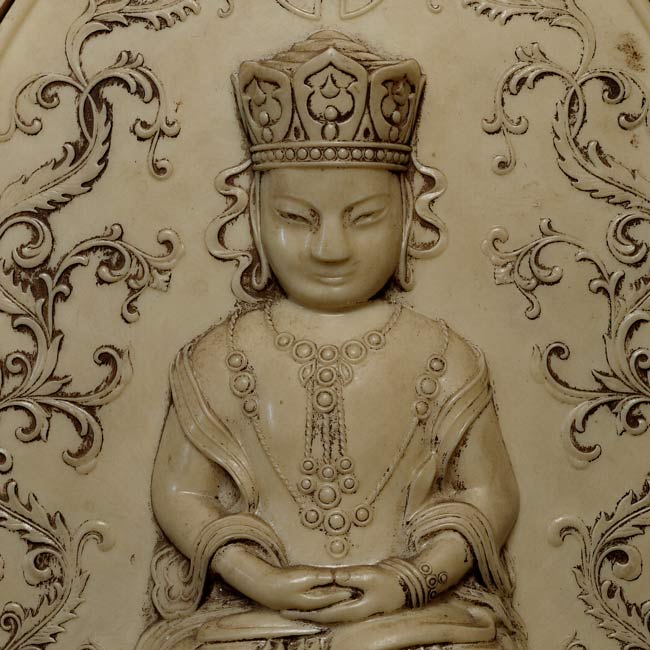
Photo credit ~ Beautiful and very uncommon Chinese Celloid Buddha Shrine. Probably late Ching, circa 1900. 8.5″ tall, 6.25″ wide, 4 5/8″ deep. Item 4216 courtesy of curator of The Buddha Gallery.

♥ ♥ ♥ ♥


Poet Jane Hirshfield in an interview about poetry at an event of the Aspen Writers Foundation.

Video uploaded to YouTube by 

Poet Leonard Cohen reading Days of Kindness

Video uploaded to YouTube by 

Posted in Uncategorized

BUDDHA KITTIES

Photos by Barbara Stone (List of Buddha Lists)

Buddha’s and kitties Rumi (above) and Uma (below) courtesy of the curator of The Buddha Galery.

© 2011, The Buddha Gallery, all rights reserved

“Zenning out …”

Posted in Jamie Dedes, Perspectives on Cancer, Uncategorized

PERSPECTIVES ON CANCER #33: Writing Your Self, Transforming Personal Material

WRITING YOUR SELF

Book Review

by

Jamie Dedes

We feel this book review puts a fine close on our series, Perspectives in Cancer. Writing as a healing art, whether as a purely personal exercise or for publication, is powerful. One of the authors of Writing Your Self, Myra Schneider, learned that with her much appreciated work,Writing My Way Though Cancer. That effort informs much of Writing Your Self.

This review was originally published at Musing by Moonlight.

Four of Myra’s poems were published earlier in this series.

We wrote the book because we believe that personal writing is very potent both for the writer and the reader, because some of the greatest literature is rooted in personal material. Myra Schneider in an interview HERE.

The subtitle of this book about writing is “transforming personal material.”  I think it is implicitly also about personal transformation. It always seems to me that writing and reading about life is a healing activity, a way to live hugely, and a way to empower ourselves and others. If we can do it well enough to engage others, whether our purpose is to leave a record behind for family, to set the record straight, or simply to share and entertain, the experience is rewarding. Writing is a powerful healing path.

Writing Your Self is the most comprehensive book of its type that I’ve yet to read, and I’ve read many. It is organized in two parts:

  • Part I: Here the focus is on life experiences, the exploration of those human experiences that are universal. These include childhood, self-conceptions, relationships, displacement, physical and mental illness and disability, and abuse.
  • Part II: Here the focus is on writing techniques, recognizing material that is unfinished, working on refinements, and developing work projects.

Writing Your Self is rich with examples from known and unknown writers including the authors. By example as well as explanation the authors reinforce what we all intuitively understand to be true: that telling stories preserves identity and clarifies the human condition. It helps us understand what it means to be human. The experience of working through the book was something like a rite of passage.

I very much can see the use of this book by individuals training themselves and by teachers of adult learners who wish to write memoir, poetry, fiction, or creative non-fiction. It would be useful in hospital therapeutic writing programs or in writing programs for active seniors.

Memories, both recent and distant, tell us who we are and so play a crucial role in our experience of life…

You may have memories which you want to plunge into or you may have material like a diary or letters which summon them up. There are other ways though of triggering memories. We offer a series of suggestions. Chapter 13, Accessing memories, secret letters, monologues and dialogues, visualizations.

I think Chapter 13 alone is worth the price of admission. I work a lot off of childhood memories and even the event that happened two minutes ago comes back to me with dreamlike qualities when I sit to write. I have not thought of the things I do naturally as triggers, but indeed they are. It was quite interesting to see these natural aids laid-out and organized on the page to read: objects and place as starting points, physical sensation as triggers, people in memory, and predominant feelings. The section on secret letters – that is, letters that you write someone and never send – was particularly interesting. I’ve only done this twice in my life, but I know some folks who do it all the time. I’m sure it is a common practice and would make a fine jumping-off point for some and a satisfactory exercise – complete in itself – for others. The authors go on to monologues and dialogues, which certainly everyone spins in their heads.  They discuss visualization. Hey, if you can see it, you can write it.

I’m an experienced writer and I enjoyed the book and the exercises and learned a few new things, got a few new ideas. If you are inexperienced or stuck midway in a transition from one form of writing to another, you’ll benefit from the exercises, ideas, and instruction in Writing Your Self: Transforming Personal Experience. This one’s a definite thumbs-up.

Myra Schneider  is a British poet, a poetry and writing tutor, and author of the acclaimed book: Writing My Way Through Cancer. Your can visit her HERE.

John Killick was a teacher for 30 years, in further, adult and prison education, but has written all his life. His work includes both prose works and poetry. You can visit him HERE.

© essay, Jamie Dedes, 2011 all rights reserved

Copyrighted cover art, fair use.

♥ ♥ ♥ ♥

Jamie Dedes ~ Jamie is a former freelance feature writer and columnist whose topic specialties were employment, vocational training, and business. She finds the blessing of medical retirement to be more time to indulge in her poetry, creative nonfiction, and fiction. She has two novels in progress, one in final edits, and is pulling together a poetry collection. Her primary playground is Musing by Moonlight. She is the founder and editor/administrator of Into the Bardo. Jamie’s mother was diagnosed with cancer the first time at thirty-six. She went three rounds with breast cancer, one with thyroid cancer, and died at seventy-six of breast and colon cancer.

Posted in Guest Writer, Perspectives on Cancer

PERSPECTIVES ON CANCER #31: Isolation

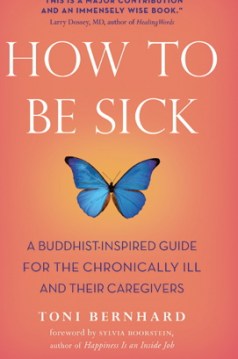
Although this book concerns living with chronic illness … which may not be life-threatening but is certainly quality of life-threatening … many of the issues Toni Bernhard discusses are relevent issues for cancer patients. Not the least of these issues is isolation. The book is available online through Barnes and Noble and Amazon or through the publisher HERE. Three thumbs up on this one. A recommended read. Jamie Dedes

HOW TO BE SICK:

A Buddhist-Inspired Guide for the Chronically Ill and Their Caregivers

by 

Toni Bernhard

“All human beings need the company and support of others. We create our world together. But community can be a tremendous challenge for someone who must spend a lot of time in bed or must suddenly take to bed in spite of plans to be with others. The Dharma places a very high value on community, which is called sangha. The word originally referred to the disciples of the Buddha. It then evolved to include Buddhist monks and nuns. Today sangha refers to the entire spiritual community that supports a practitioner . . . .

“Before I got sick, I was active in several Buddhist sanghas. I co-hosted a weekly meditation group with Tony [Toni’s husband]. We used a local meeting hall every Monday night. At least once a month, I would lead the sitting and then give a talk. We also hosted a monthly group at our house in which we discussed Dharma readings that Tony and I chose and distributed each month. The readings were the starting point for a spirited and often humorous two hours of reviewing our lives since we last met. This was sangha at its richest for me. Tony still hosts this group at our house.

“When I got sick, I could no longer participate in these activities, even though the meeting hall is three blocks away and the monthly group is a room away . . . . In addition to losing this precious source of spiritual support, I had to adjust to the social isolation that accompanied the illness like night follows day.

“‘It’s hard to distinguish between the effects of my illness and the effects of isolation,’ wrote a member of an online support group for people with an illness similar to mine. I, too, have days when the isolation feels like the illness itself. People who are house-bound are not just isolated from one-on-one personal contacts. We are often isolated from nature and even from the warm feel or a friendly crowd. Our best bet to see the changing seasons is on the drive to and from a doctor’s appointment, but this is often a stress-filled outing. Similarly, our best bet to be in a crowd is in the waiting room at the doctor’s office—not the most comfortable or uplifting of settings. I recently read a blog entry from a woman with chronic fatigue syndrome in which she said she went to get a blood test a week early just to be around people.”

© text and cover art, Toni Bernhard, 2011 all rights reserved. Blogged here with the permission of the author. No reblogging without Toni Bernhard’s permission.

Video uploaded to YouTube by . I’m the author of “How to Be Sick: A Buddhist-Inspired Guide for the Chronically Ill and Their Caregivers” (Wisdom Publications 2010). The theme of the book is that illness and wellness are not mutually exclusive. Our bodies may be sick or otherwise disabled, but our minds can be at peace. For reviews and other information, including where you can order the book, please go to How To Be Sick.

♥ ♥ ♥ ♥

Toni Bernhard fell ill on a trip to Paris in 2001 with what doctors initially diagnosed as an acute viral infection. She has not recovered. In 1982, she’d received a J.D. from the School of Law at the University of California, Davis, and immediately joined the faculty where she stayed until chronic illness forced her to retire. During her twenty-two years on the faculty, she served for six years as Dean of Students.

In 1992, she began to study and practice Buddhism. Before becoming ill, she attended many meditation retreats and led a meditation group in Davis with her husband.

She lives in Davis with her husband, Tony, and their hound dog, Rusty. Toni can be found online at How To Be Sick. [Bio courtesy of Wisdom Publications.]

Posted in Guest Writer, Perspectives on Cancer, Poems/Poetry

PERSPECTIVES ON CANCER #30: When Cancer Strikes

WHEN CANCER STRIKES

by

Dan Roberson

It was both
a blessing and a curse,

Her chestnut
hair was often tangled or worse,

There were
times Laura hated her hair,

Conditioners,
detanglers, moisturizers,

Sometimes made
her wish it wasn’t there,

 ·

It had been
that way as far back as memory could get,

Uncontrollable
when dry, hard to manage when wet,

Laura’s
curly hair was admired often, she’d confess,

But it was
often a distraction as a frizzy mess,

There weren’t
many options on how to fix her hair,

She worried when
the wind made it fly here and there,

Often Laura
looked out of control and people would rudely stare,

 ·

Looking
calm, peaceful, and beautiful was her goal,

Forgotten were
the comments about her beauty as a whole,

Intelligence
and her abilities made her special in all she did,

But under
hats, tied up in tight braids, her curly hair she hid,

 ·

Laura was a
businesswoman, ambitious in every way,

Determined to
be a success before she turned old and gray,

Laura was
also wife and mother with two children on her mind,

Time for
them or even for herself, was very hard to find,

 ·

Her husband
sent her flowers every month to let her know,

That he would be waiting for her if she decided to take life slow,

Her life was filled from dawn till night, with one job to the next,

Rarely did
she spend quality time with Joe, and both were too tired for sex,

Vacations
were quick and far away, with pictures to prove she was there,

But wherever
she went and whatever she did, she covered up her hair,

 ·

Questions
from a young M.D. on her routine annual exam,

Made her mad
when he said, “We need further tests for you, Ma’am,”

She went
through the tests mainly to prove him wrong,

Much to her
chagrin blood was drawn, it didn’t take them long,

Laura balked
at first when new appointments were made,

But soon she
was on her way and memories of the visit began to fade,

 ·

Later that week several phone calls at work interrupted
her day,

“We want you
to come in, not tomorrow, perhaps yesterday,”

“What’s so important?”
she wondered as she brushed tangles from her hair,

“I’ve always
been so healthy, so why should I care?”

That night
Laura brushed her hair ninety-nine times or more,

With each
tug she commented, “Curly hair is such a chore,”

 ·

But Laura
was restless, the upcoming visit was eating at her,

And at her
next appointment she decided she would concur,

“You have
cancer,” he said quietly, “we should treat it aggressively,”

“I don’t
have time for cancer!” she shouted, “or even time for me,”

“We need to
treat it with chemotherapy,” he stated, “as soon as we can,”

“If we want
to win this war, we have to make a plan,”

“Doctor, I’m
too busy for this, I’ll do chemo in the spring,”

“Then they’ll
bury you deep while you sleep, the chemo won’t mean a thing,”

 ·

The nurse
read a list of changes that Laura might expect,

Foods to
eat, nausea, loss of hair, there was little time to reflect,

She could
deal with changes in her diet, so why did she care,

Yet on her
way home one thought returned, she would lose her hair,

 ·

What would
she do about work, would everyone lose respect?

And what
about her children and her Joe, what would he expect?

“This is not
fair,” she thought, “I’ve fought hard to get where I am,

Now I have
cancer and that puts me in a jam,”

She’d talk
to the doctors and see how this could be fixed,

Laura knew
how business worked, maybe this could be deep sixed,

She was
afraid to hug her husband, likewise with the kids,

With this
draining more from her, their marriage would be on the skids,

Joe listened
to her intently and suggested a group for her to attend,

“I don’t
need a support group,” she countered, “I just want to mend,”

He left a
number of the group in case she wanted to call,

For two days
Laura wanted nothing to do with the group at all,

 ·

But the
third evening as she brushed and detangled her hair,

Laura
wondered what others did when strangers began to stare,

She called a
cell phone number knowing she had to make a choice,

She agreed
to go to a meeting when she heard a cheerful voice,

“Come on and
join us, we’ll have a special guest tonight,

You’ll find
we have lots of fun because no one gets uptight,”

Nervously she
brushed her hair as she waited for her ride,

In the car
it was explained she’d have to wait outside,

 ·

Waiting outside
a home made her feel this was not the place to be,

But she only
had time to see what they wanted her to see,

Conspicuously
placed was a sign stating the group’s name,

“Birds of a
Feather” and in smaller print, “We’re all the same,”

 ·

Laura was
led in at the appointed time but saw one empty chair,

“It’s saved
for you,” a woman called out, “and your beautiful hair,”

How could
she explain that soon her head would soon be bare,

She was
afraid they might laugh and show they didn’t care,

Laura’s fear
was growing as she glanced about the room,

She was the
only one with cancer and ready to meet her doom,

 ·

Businesswomen,
single women, mothers, daughters, wives,

These women
were all beautiful and had normal lives,

“We have a newcomer tonight, so welcome Laura
with applause,”

The leader
continued, “And in case she’s worried, it’s time for us to pause,

We’ve faced
our fears before, and sometimes hid our shame,

But together
we are strong and our freedom we proclaim,”

 ·

One by one
each removed a wig to reveal her hair was gone,

“We’re all
in this together, no one is all alone,”

Their smiles
were wide and welcoming as the leader took her hand,

“When you
can, let Laura know that you really understand,”

 ·

When the
meeting was over Laura returned home,

She kissed
her children and showed them her comb,

She
explained her disease and told them about her hair,

They answered,
“We love you, mommy, we don’t care,”

Her husband,
Laura learned, was compassionate and kind,

He loved her
for her heart, her ambition, and her mind,

They decided
to fight cancer together and strive for the best,

And they’d
spend more time living and loving with zest,

The cancer
went into remission and Laura grew back her hair,

And whether tangled,
frizzy, or wind-blown, now she combs with flair.

© poem and artwork, Dan Roberson, 2011 all rights reserved

♥ ♥ ♥ ♥

Dan Roberson ~ lives in Kansas City, Missouri.  He says, ” I celebrate life. I retired from teaching and now I’m looking for new parades to lead, or to follow. I’m alone, still hoping to be a published author, and trying to stay on my chosen path. I have no anchor to hold me down and I’m ready to rid myself of possessions that impede progress. I want my imagination to soar. I’m open to learning about new worlds, new countries and languages, and different ways to look at things I thought I knew. Every day is a bonus day and I look forward to the challenges it brings. I’m finding out that technology is fast and getting faster and there is much information that I need to learn.”  You’ll find Dan at My Blog.

Posted in Jamie Dedes, Perspectives on Cancer, Poems/Poetry

PERSPECTIVES ON CANCER #29: Nothing

NOTHING

by

Jamie Dedes

·

no buddha, no bodhi tree

no earth upon which to sit

in silent meditation

no suffering, no not suffering

nothing

rest assured

·

© poem, Jamie Dedes, 2011 all right reserved

Photo credit ~ Photo credit ~ A small temple beneath the Bodhi treeBodh Gaya, built in 7th century, after the original built by King Ashoka in 3rd century BCE, ca. 1810, British Library, public domain photograph via Wikipedia

♥ ♥ ♥ ♥

Jamie Dedes ~ is a former freelance feature writer and columnist whose topic specialties were employment, vocational training, and business. She finds the blessing of medical retirement to be more time to indulge in her poetry, creative nonfiction, and fiction. She has two novels in progress, one in final edits, and is pulling together a poetry collection. Her primary playground is Musing by Moonlight. She is the founder and editor/administrator of Into the Bardo. Jamie’s mother was diagnosed with cancer the first time at thirty-six. She went three rounds with breast cancer, one with thyroid cancer, and died at seventy-six of breast and colon cancer.