The BeZine Blog

Posted in Guest Writer, Perspectives on Cancer

PERSPECTIVES ON CANCER #28: Living With Dying

LIVING WITH DYING

by

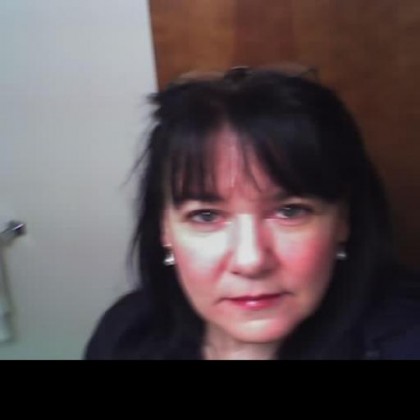
Gayle Walters Rose

 When my mother’s best friend, Katherine, became ill with stomach cancer, her daughter enlisted Katherine’s friends to be of support as she went through her chemotherapy treatment and subsequent recuperation.  Her daughter lived out-of-state and had a medical practice and could not be with her day-to-day.

I had known Katherine my entire life.   She was one of the most positive, bright lights I had ever known.  Her daughter and I had spent much time together as children, which included many hours swimming in the beautiful lake that they lived on.  Katherine’s husband had died many years prior.

Her daughter was very organized and efficient with setting up people in shifts to take turns staying with Katherine during her illness.  Sometimes this included remaining overnight with her.  But Katherine had a very independent nature, even at age 87, and at times would insist that she was OK and send us home.  Her daughter had tried her best to convince Katherine to move to North Carolina and stay with her family, but Katherine always refused.  She had been there for over 50 years.  During one afternoon, she confided in me that she would never leave her beloved home on the lake.   The house had an enclosed porch that overlooked the water and we would sit out there for hours as we talked and relaxed.  Her eyes would occasionally scan the lake and she would comment on a bird that had caught her eye or an activity by a neighbor around the water’s edge.

We were able to share ourselves like never before.  She regaled me with all kinds of stories from her past and shared intimate feelings.  She told me she was totally at peace and was not fearful of death.  I felt somehow as if I were a vessel for her to pour her heart into and was so grateful that I could be of service to her in this way.

I marveled at her serenity during this difficult time.  There was no “battle”, just gentle, quiet acceptance and the allowing of what was.  She illustrated to me what it meant to live in the moment.  Her ease and even emotions were a gift to me as well.

One day she tired as we had been sitting on the porch for quite some time and so we retired to her bedroom.  Climbing into her bed, I propped myself next to her as we watched television.  A short time later, as I noticed her eyes getting heavy, I told her I would leave and let her sleep.  Lowering myself down on the bed so I could look into her eyes, I held her hands in mine and told her how much I loved her.  She smiled at me with beaming love in her clear, sweet, blue eyes and told me how beautiful I was.  Tears pooled in my eyes as I realized, in that moment, what grace she possessed.

Katherine died quietly in her sleep with hospice in attendance several months after her diagnosis.  Her bedroom window was open to the lake.

© photograph and essay, Gayle Walters Rose, 2011. All rights reserved. No re-blogging or publishing without the permission of the author.

♥ ♥ ♥ ♥

Gayle Walters Rose ~ lives in Winter Park, Florida and has been blogging since August of 2010. She is an adventurous writer, experimenting with various forms of poetry and with fiction and creative nonfiction.Gayle comes from a large family, and she is the mother of grown daughters. Much of her writing is about nature or things of the spirit. Early in life, she lived in an ashram and often shares that experience and its lessons.

Gayle’s favorite quote is “Never think there is anything impossible for the soul. It is the greatest heresy to think so. If there is sin, this is the only sin; to say that you are weak, or others are weak.” (Swami Vivekananda)  You’ll find Gayle blogging at Bodhirose’s Blog, where she is much appreciated by the online poetry community for her fine work and because she is genuine.

Posted in Guest Writer, Perspectives on Cancer

PERSPECTIVES ON CANCER #27: Cookies for Kids Cancer, Do Whatever It Takes

[In the United States alone in 2007], approximately 10,400 children under age 15 were diagnosed with cancer and about 1,545 children will die from the disease.  MORE Childhood Cancers Fact Sheet, Cancer Topics, Cancer.gov

COOKIES FOR KIDS CANCER

by

© Cookiesforkidscancer.org

Beginnings

Cookies for Kids’ Cancer, a 501(c)3 non profit, was founded by parents inspired by their son Liam’s battle with cancer. They were shocked to learn that the main reason over 25% of kids diagnosed with cancer do not survive is because of a lack of effective therapies. And the reason for the lack of therapies was very simple: lack of funding. They pledged to support the development of new and better treatments by giving people a simple way to get involved.

It all started with 96,000 cookies…

Gretchen had a crazy idea for a larger-than-life bake sale with the goal of baking 96,000 cookies with friends and volunteers. Dozens of other families whose children were also battling Neuroblastoma got involved and began to take orders for cookies from friends, co-workers, and neighbors. All 96,000 cookies were sold in three weeks, thanks to the work of over 250 volunteers. The event raised over $400,000 for pediatric cancer research, but it was soon clear that something bigger than a bake sale had begun. Even weeks after the event was over, requests for cookies kept coming in. What started as a desperate act to raise money and awareness for her child’s own cancer blossomed into something much bigger than any had planned. The event caught the eye and the hearts of the media and people all over the country. Emails from across the United States started flooding in asking the same simple question “what can we do to help?”

Be a Good Cookie

Make a difference by joining the mission to find a cure for pediatric cancer. There are many ways to support Cookies for Kids’ Cancer. Hosting a bake sale is a sweet and simple way for people everywhere to get involved in the fight against pediatric cancer. Send our cookies for birthdays, anniversaries, or just because. Our cookies taste as good to eat as they feel to give.

And you don’t have to eat or bake cookies to be a Good Cookie. Other supporters have run marathons, held tag sales, organized golf tournaments, collected spare change, and hosted car washes to support Cookies for Kids’ Cancer. We’ve even made it simple to donate online once or once a month with online giving. The ideas are only limited by your imagination. No effort is too small and every penny counts.

Our mission:

Cookies for Kids’ Cancer is committed to raising funds to support research for new and improved therapies for pediatric cancer, the leading cause of death by disease for children under the age of 18. Through the concept of local bake sales, Cookies for Kids’ Cancer provides the inspiration and support for individuals, communities, and businesses to help fight pediatric cancer. 

Facts about Kids’ Cancers

Cookies for Kids’ Cancer is not about one child or one type of pediatric cancer. It is about changing the facts of pediatric cancer for the better, forever. Important statistics to know:

  • Cancer claims the lives of more children annually than any other disease ” more than asthma, muscular dystrophy, multiple sclerosis & AIDS combined.
  • 46 children per day are diagnosed with cancer totaling nearly 13,000 new cases per year.
  • Cure rates have improved dramatically and advances in childhood cancer research has provided seminal insights into the cancer problem in general. Today, 4 out 5 children diagnosed with cancer can be cured.
  • While long-term goals for the pediatric cancer community will focus on securing more federal funding for childhood cancer research (more than the 1-2% of the National Cancer Institute budget that is current expended), philanthropy plays a critical and essential role in the ongoing battle against childhood cancer.

About the Founders

Gretchen and Larry Witt founded Cookies for Kids’ Cancer in 2008, just a few short months after the success of their first cookie sale during the holidays 2007. Their efforts have always been inspired by their son Liam who was diagnosed with stage 4 cancer in 2007 at the age of 2. Tragically, Liam came to the end of his courageous 4-year fight with cancer on January 24, 2011 at the age of 6. Though devastated by his loss, the Witts remain more determined than ever to continue the fight against pediatric cancer.

Gretchen Witt has been recognized nationally for her leadership as a mom on a mission. In 2010, Witt was named one of Woman’s Day Magazine’s 50 Women Changing the World and Traditional Home Magazine’s Classic Woman of the Year. She was also featured in the December 2009 issue of O, the Oprah Magazine, for her work with Cookies for Kids’ Cancer. She accepts speaking engagements to tell the story of the beginnings of Cookies for Kids’ Cancer, the need for funding for pediatric cancer research, and to share her experiences as a mother fighting endlessly for her son and for all children. Her story resonates as one of determination and guts with a willingness to stop at nothing to do what’s right and what’s best for all kids fighting cancer. Audiences as varied as The Cornell Club NYC, Meredith College’s 2010 Commencement and the International Housewares Show in Chicago have all been inspired by her words and her passion.

Feature photograph and article courtesy of cookiesforkidscancer.org.

Video upload to YouTube by 


Posted in Guest Writer, Perspectives on Cancer

PERSPECTIVES ON CANCER #26: Her Days Are Numbered

HER DAYS ARE NUMBERED

by

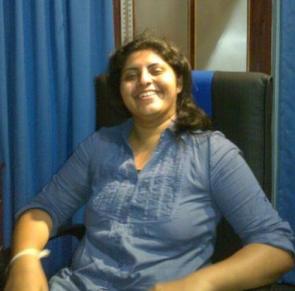
Dakshima Haputhanthri

·

Her days are numbered

She was the only one who knew

The world filled with warmth

Is gonna end like dew

She thought of those she loved

Her fears aren’t new

But now it’s time, and she should say adieu

This thing that eats her inside

She had no control, it stab her life like a knife

Nothing can be done, no cure

It seems to be stealing her life

It’s so deadly, but she has determined to live for the moment

She smiled through her tears, she had no choice…

·

© poem by and photograph, Dakshima Haputhanthri, 2011 all rights reserved

♥ ♥ ♥ ♥

Dakshima Haputhanthri ~ is from Sri Lanka. She is a writer and poet and a lawyer by profession. She says, “I am a simple mortal with an undying passion for writing … Writing gives me wings and I fly, thinking and wondering about life and how people refuse to reveal their true selves.” Dakshima blogs at Love Among Other Things. 

Posted in Guest Writer, Poems/Poetry

PERSPECTIVES ON CANCER #24: More Than Love At First Sight

MORE THAN LOVE AT FIRST SIGHT

by

Dan Roberson

I said, “I
fell in love with you at first sight,”

You said, “Oh,
it was a crazy night,”

I said, “The
moon was beautiful and bright,

But I couldn’t see anything but you,”

 ·

You said, “I
don’t think that was true,

You came in with
someone dressed in blue,”

I said, “I’ll
have to admit once more you’re right,

Let’s just
forget about love at first sight,”

 ·

It was not
as important as I thought it would be,

It was a
step in the right direction, don’t you agree?

We were
newlyweds ready to begin,

Confident we
could change the world, again and again,

 ·

But it was the
second step, or maybe it was three or four,

When we
connected deeply, right at heart’s door,

Steps five
or six, we really began to communicate,

Every day I
grew more in love, it was such a happy state,

 ·

Knowing your
love for me was also deep,

Made it so
easy to have a restful sleep,

Love at
first sight seemed unreal and so long ago,

As life
expanded our love continued to grow,

 ·

We were stepping
into our future, two of a kind,

I was so
crazy about you as if I’d lost my mind,

Years went
by so quickly with you at my side,

And I still
thought of you as my beautiful bride,

 ·

When you
were stricken with that terrible disease,

I had to
tell you “I love you” to put your mind at ease,

I still
loved you when your hair began to fall,

It didn’t
change the way I felt, no, not at all,

 ·

The moon outside
is breathtaking and luminous tonight,

But you’re
lying here cold in the middle of the night,

Your frail
body is still beautiful to my sight,

I’ll lie
beside you until morning’s early light,

 ·

Remembering
tears and laughter we shared,

The ways we showed
each other we cared,

How we
worked through our problems every day,

Learned to
forgive and to often pray,

 ·

We didn’t
let disagreements go on long,

As we trusted
each other we were twice as strong,

I didn’t
really understand love at first sight,

We took our
turns at being wrong and right,

 ·

Now you’ve
left this earth on your final flight,

And my heart
is filled with love at last sight.

·

@ poem and artist’s rendering of Dan, Dan Roberson, all rights reserved. No reblogging or pinting without the permission of the author.

♥ ♥ ♥ ♥

Dan Roberson ~ lives in Kansas City, Missouri.  He says, ” I celebrate life. I retired from teaching and now I’m looking for new parades to lead, or to follow. I’m alone, still hoping to be a published author, and trying to stay on my chosen path. I have no anchor to hold me down and I’m ready to rid myself of possessions that impede progress. I want my imagination to soar. I’m open to learning about new worlds, new countries and languages, and different ways to look at things I thought I knew. Every day is a bonus day and I look forward to the challenges it brings. I’m finding out that technology is fast and getting faster and there is much information that I need to learn.”  You’ll find Dan at My Blog.

Posted in Jamie Dedes, Perspectives on Cancer

PERSPECTIVES ON CANCER #23: Steve Jobs “Death is life’s change agent.”

STEVE JOBS (February 24, 1955 – October 5, 2011)

American entrepreneur, inventor, and founder, chairman and CEO of Apple, Inc.

Drawing from some of the most pivotal points in his life, Steve Jobs, chief executive officer and co-founder of Apple Computer and of Pixar Animation Studios, urged graduates to pursue their dreams and see the opportunities in life’s setbacks — including death itself — at the university’s 114th Commencement on June 12, 2005. Stanford University

I am late putting our post up for today and this is not what I had planned to put up for you. It certainly is not something I wished for Mr. Jobs, who died today – much too young at fifty-six – of  a rare pancreatic cancer.  At this Stanford College commencement in 2005, he tells three stories. They are about living fully, while factoring in the reality of death. “Stay foolish,” he says. “Stay hungry.” It is entirely appropriate to our series I think to post this video. It is presented here in gratitude. I am writing this on my AppleMac and have enjoyed using Apple computers for about twenty-years, thanks to the largess of my son. One man’s vision: Apple, Inc. has employed members of my family and provided jobs for countless people in the community in which I live and around the world. Jamie Dedes

The transcript for this speech is HERE for those in areas that cannot access YouTube.

Photo credit ~ Steve Jobs shows off the white iPhone 4 at the 2010 Worldwide Developers Conference courtesy of Matt Yohe, his original work licensed under the Creative Commons Atribution-Share Alike 3.0 Unported license.

Video upload to YouTube by Stanford University and copyrighted by it.

Posted in Essay, Jamie Dedes

THE GIRL EFFECT: An Amazing Multifaceted Global Effort to Fight Poverty

THE GIRL EFFECT:

An Amazing Multifaced Global Effort

by

Jamie Dedes

The Prospective on Cancer series will resume tomorrow. Today we break for the October 4 kick-off of The Girl Effect Blogging Campaign. 

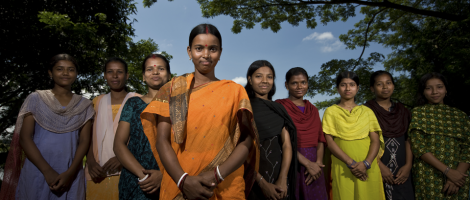
Last year when I participated in this blogging event, I focused on the plight of the girls. This year my focus is on the The Girl Effectproject. It is a stunning multifaceted effort that seeks to end poverty through understanding, documenting, and promoting the value, needs, and priorities of girls in developing countries. It forms a untied global collaboration of development partners for research and program design and delivery. It needs our support, not just as bloggers and writers, but also as workers, volunteers, and donors.

This project might sound to some like an effort with a bias, but it is really an effort to improve the social and economic fabric of families and communities by opening educational and economic opportunities to girls aged ten to twenty-four. Efforts are made toward removing barriers to family and economic stability, barriers like early pregnancy, school dropout, and HIV/AIDS. Girls are ultimately the backbone of their families and communities reinvesting ninety percent of what they earn in their families as opposed to boys’ reinvestment of sixty percent.

The studies that the development community have implemented and are sharing among partner agencies provide information we haven’t ever had before on girls in this age group in the developing nations. Their studies conclude with action items for governments and policy makers. Under the banner of The Girl Effect, the global community is united in assessing the cost to individuals, families, communities, and countries when girls live in poverty, are bared from education and proper health care, and suffer abuse.

The Girl Effect seeks support for efforts that address some things those of us in the developed nations take for granted: like being counted.  When a child has no birth certificate and is not counted in any census, she has no identity and there is no way of knowing if programs that are in place are reaching her and helping her.

The Girl Effect partners seek to:

  • acquire funding for programs and to track program outcomes;
  • support, encourage, and provide opportunities for complete primary education and for secondary education;
  • provide health care, wellness programs, and HIV/AIDS prevention programs;
  • organize health-care delivery systems that are effective in reaching this demographic;
  • provide economic empowerment for earning, saving, and building assets;
  • ensure legislation that supports women’s rights;
  • empower girls to advocate for themselves; and,
  • mobilize nations, communities, and families, men and boys, to support the efforts of girls to protect and educate themselves and improve their lives and those of their families.

The programs that are offered by partners include education, legal help, micro-loans, and health care. Donations may be made through Global Giving.

© 2011, Jamie Dedes, all rights reserved. Posting or printing permitted by request only.

Photo credit ~ Girl Effect photo courtesy of Brent Stirton/Getty Images.

Video uploaded to YouTube by .

Posted in Guest Writer, Perspectives on Cancer, Poems/Poetry

PERSPECTIVES ON CANCER #22: Bath

BATH

by

Myra Schnieder

·

Kindness, an Irish lilt in her voice,

spares me the effort of running the water

and supports my elbow when, stripped

of everything but wound dressings,

I take a giant step into the tub.

·

Warm water wells into my crotch,

unlocks spine, lullabies stomach.

Is it because I’ve passed through

extremity that this comfort is intense

as the yellow daffodils trumpet?

·

Yesterday – my raw body stranded

by the basin, chill sprouting on my skin

while a Chinese student nurse

conscientiously dabbed each

helpless area – is miles away.

·

Dimly, I remember a stark room

and the high-sided saltwater bath

I was dipped in a few days

after giving birth. As Kindness

babies my back with a pink flannel

·

I’m reborn though maimed, ageing.

And this pool of bliss can no more

be explained than the song that pours

from a lark as it disappears into

stitchless blue, the seed circles

·

that cram a sunflower’s calyx,

day splashing crimsons

and apricot golds across the sky

before it seeps into the silence

of night, the way love fountains.

 ·

© 2011, Myra Schneider, all rights reserved. This poem is posted on Into the Bardo  with the permission of  Ms. Schneider. Any further reposting requires her permission. 

Photo credit ~ amazon preparing for a battle (Queen Antiop or Armed Venus), byPierre-Eugène-Emile Hébert 1860 (National Gallery of ArtWashington, D.C.), public domain photograph via Wikipedia

·

Bath is an excerpt from:

Writing My Way Through Cancer  Jessica Kingsley Publishers (2003), and

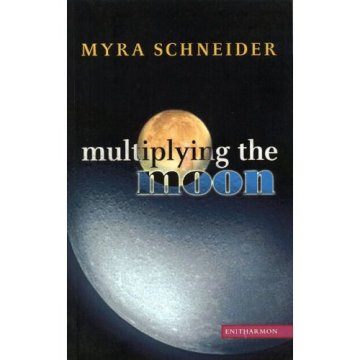
Multiplying The Moon  Enitharmon (2004)

Editor’s note: The opening poems of Multiplying the Moon are Myra Schneider’s response to her experience of terrible illness. In the aftermath of fighting breast cancer, she found herself writing poems that explore transience, death, and survival from many different angles. The main theme of `Voicebox,’ the long fictional narrative in the middle of the book, is communication; the poem follows the connections and disconnections between its main characters. In a short poem sequence, the poet draws on findings from the 1901 census to re-create her father’s early life, and the understanding she gains helps her to feel a new closeness with him. This is united by the theme of investigation of the self and its relationship with the outside world.

♥ ♥ ♥ ♥

Myra Schneider ~ was born in London in 1936 and grew up on the Firth of Clyde. She is the author of four poetry collections from Littlewood, three novels for children from Heinemann, and has three poetry collections published by Enitharmon: Exits, The Panic Bird and Insisting on Yellow. With John Killick she has written Writing for Self-Discovery  (Vega, Chrysalis Books) which was re-published in 2002. Her book Writing My Way Through Cancer, was published by Jessica Kingsley in 2003. The book is her fleshed-out journal from the year 2000 when she was diagnosed with breast cancer. It includes poem notes and poems and a section of therapeutic writing ideas.

Posted in Guest Writer, Perspectives on Cancer, Poems/Poetry

PERSPECTIVES ON CANCER #21: Amazon

AMAZON

by

Myra Schneider


 for Grevel

 ·

For four months

all those Matisse and Picasso women

draped against

plants, balconies, Mediterranean sea, skies

have taunted me

with the beautiful globes of their breasts as I’ve filled

 ·

my emptiness

with pages of scrawl, with fecund May, its floods

of green, its irrepressible

wedding-lace white, buttercup gold,

but failed to cover

the image of myself as a misshapen clown

 ·

until you reminded me

that in Greek myth the most revered women

were the single-breasted

Amazons who mastered javelins and bows, rode

horses into battle,

whose fierce queens were renowned for their femininity.

 ·

Then recognising the fields I’d fought my way across

I raised my shield

of glistening words, saw it echoed the sun.

·

© 2011, Myra Schneider, all rights reserved. This poem is posted on Into the Bardo  with the permission of  Ms. Schneider. Any further reposting requires her permission. 

Photo credit ~ amazon preparing for a battle (Queen Antiop or Armed Venus), byPierre-Eugène-Emile Hébert 1860 (National Gallery of ArtWashington, D.C.), public domain photograph via Wikipedia

·

Amazon is an excerpt from:

Writing My Way Through Cancer  Jessica Kingsley Publishers (2003), and

Multiplying The Moon  Enitharmon (2004)

Editor’s note: The opening poems of Multiplying the Moon are Myra Schneider’s response to her experience of terrible illness. In the aftermath of fighting breast cancer, she found herself writing poems that explore transience, death, and survival from many different angles. The main theme of `Voicebox,’ the long fictional narrative in the middle of the book, is communication; the poem follows the connections and disconnections between its main characters. In a short poem sequence, the poet draws on findings from the 1901 census to re-create her father’s early life, and the understanding she gains helps her to feel a new closeness with him. This is united by the theme of investigation of the self and its relationship with the outside world.

♥ ♥ ♥ ♥

Myra Schneider ~ was born in London in 1936 and grew up on the Firth of Clyde. She is the author of four poetry collections from Littlewood, three novels for children from Heinemann, and has three poetry collections published by Enitharmon: Exits, The Panic Bird and Insisting on Yellow. With John Killick she has written Writing for Self-Discovery  (Vega, Chrysalis Books) which was re-published in 2002. Her book Writing My Way Through Cancer, was published by Jessica Kingsley in 2003. The book is her fleshed-out journal from the year 2000 when she was diagnosed with breast cancer. It includes poem notes and poems and a section of therapeutic writing ideas.

Posted in Guest Writer, Perspectives on Cancer, Poems/Poetry

PERSPECTIVES ON CANCER #20: Today There Is Time

TODAY THERE IS TIME

by

Myra Schneider

to touch the silken stillness

of myself, map its landscape,

the missing left breast, to lay

my nervous palm softly

as a bird’s wing across

the new plain, allow

tears to fall yet rejoice

the surgeon has scraped

away the cancer cells.

·

Today there is time

to contemplate the way life

opens, clams, parts, savour

its remembered rosemaries,

spreading purples, tight

white edges of hope, to travel

the meanings of repair, tug

words that open parachutes.

© 2011, Myra Schneider, all rights reserved. This poem is posted on Into the Bardo  with the permission of  Ms. Schneider. Any further reposting requires her permission. 

© 2011, cover art courtesy of publisher. All rights reserved.

·

Today There Is Time is an excerpt from:

Writing My Way Through Cancer  Jessica Kingsley Publishers (2003), and

Multiplying The Moon  Enitharmon (2004)

Editor’s note: The opening poems of Multiplying the Moon are Schneider’s response to her experience of terrible illness. In the aftermath of fighting breast cancer, she found herself writing poems that explore transience, death, and survival from many different angles. The main theme of `Voicebox,’ the long fictional narrative in the middle of the book, is communication; the poem follows the connections and disconnections between its main characters. In a short poem sequence, the poet draws on findings from the 1901 census to re-create her father’s early life, and the understanding she gains helps her to feel a new closeness with him. This is united by the theme of investigation of the self and its relationship with the outside world.

♥ ♥ ♥ ♥

Myra Schneider ~ was born in London in 1936 and grew up on the Firth of Clyde. She is the author of four poetry collections from Littlewood, three novels for children from Heinemann, and has three poetry collections published by Enitharmon: Exits, The Panic Bird and Insisting on Yellow. With John Killick she has written Writing for Self-Discovery (Vega, Chrysalis Books) which was re-published in 2002. Her book ‘Writing My Way Through Cancer’, was published by Jessica Kingsley in 2003. The book is her fleshed-out journal from the year 2000 when she was diagnosed with breast cancer. It includes poem notes and poems and a section of therapeutic writing ideas.

Posted in Guest Writer, Perspectives on Cancer

PERSPECTIVES ON CANCER #19: Radical Mastectomy

RADICAL MASTECTOMY

by

Cindy Taylor

I brought her home

and

The flowers came

From far and wide

For her

Shorn, severed body

lying

In our marriage bed

Iwouldn’t couldn’t didn’t

When she said

“touch me”

… that devastated landscape …

What

About

Me?

♥ ♥ ♥ ♥

Cindy Taylor ~ Cindy is a freelance writer, a poet, editor and proofreader. She has an abiding passion for food and wine and an endearing zeal for life, which she shares with us on her award-winning food blog, The Only Cin. Cindy lives in Johannesburg, South Africa with her husband, daughter, and a fine cast of animal friends. Judging from photographs, she has a world-class kitchen and an abundance of red shoes.

Posted in Guest Writer, Perspectives on Cancer, Uncategorized

PERSPECTIVES ON CANCER #18: Mine Is Not To Ask Why

MINE IS NOT TO ASK WHY

by

Lisa Maxwell

This month, a little more than most, I think about what I have been through, what I have lost, and what I have gained. I never ask, “why me?” I am always grateful it was me. I had my mother’s strength and my father’s stubbornness to get me through it. Someone else may not have been a lucky as I was…am.

October is almost upon us and it is National Breast Cancer Awareness Month, but for some of us, those like me and our families, every month is breast cancer awareness month.   When you hear those words, “you have cancer,” you are never more aware.   That feeling, the awareness, it never leaves you.

Tonight I sat with my daughter and watched a speech by Kelly Corrigan, breast cancer survivor and author.  Emily and I held hands and cried together, grateful for what we have gained and all that we are lucky to still have…each other.

Sure, I have been through what some call “hell,” but I never saw it that way. For me, it was just a journey to get to the other side.  Just one more thing to get past and then move on.  People sometimes say to me, “so-and-so died of cancer.”  My only response can ever be, “I’m not doing that.”

For me, having treatment and getting on with my life was the only choice.  IS the only choice. Surviving is the ONLY choice.

Now, I use my experiences to make others aware of just how a diagnosis of cancer can change your life, even if it’s not you who is diagnosed.   My cancer affected everyone around me: my parents, my husband, my little boys, and my daughter.  Now I spread the word through my writing, my big mouth, and by walking the Avon Walk for Breast Cancer every year and raising money for research and other programs.

Mine is to do.

© 2011 Lisa Maxwell, all rights reserved, this includes text and family photos. Please be respectful. 

Video uploaded to YouTube by 

♥ ♥ ♥ ♥ 

Lisa Maxwell ~ periodically blogs about cancer on her mother’s site, PattiKen and the Muses. Lisa is a mother with three children and an educator who recently completed a master’s program. She is dedicated to promoting cancer awareness, early detection, and participation in events that encourage awareness and raise funds to support research, detection, and treatment. We are grateful that Lisa survived and is able to reach a helping hand out to others.

Posted in Uncategorized

PERSPECTIVES ON CANCER #17: Lessons

·

LESSONS

by

Lisa Hayes

This week someone told me that I can be a bit negative. I didn’t particularly like to hear that, but it did make me stop and think. And the more I thought, the more I realized that person was right.

It’s been nearly three years since I was in a hold up in a cartel town. I and the people I was with thought it was a cartel hit and that we would die that day. I fled back to the U.S. This week as I looked for military pictures for my work, I had a panic attack. The pictures of soldiers and guns did not bring good memories, and I realized I was still affected, still a bit scared.

It’s been one year, two months, three weeks and four days since I finished my last radiation treatment. This week as I sat waiting for my surgical oncologist to see me, I couldn’t breathe. I realized how angry I still was.

I think often of the fact that I was homeless and jobless, that I can’t find full-time employment now. And then I get angry.

People have told me to look at the bright side: I didn’t die in that hold up. I left Mexico safely even though I had to drive through some of the most dangerous areas. I got cancer, yes, but it was the easiest kind to cure. And when people have said this, I have gotten angrier, and asked them, Why did any of that have to happen to me in the first place? I quit believing that things would work out. I lost my faith in happy endings.

I have raged at the universe for a long time now, asking why. Sometimes, though, the answers aren’t clear. Sometimes you have to create your own so you can come to terms with what life throws at you.

Maybe I had to dance with death a bit to appreciate life.

Maybe I didn’t get that full-time job, so I could learn to slow down and get to know people around me.

Maybe those people were put in my path to teach me a bit more about myself, teach me that maybe I am likable, maybe even lovable. Maybe they will teach me how to trust.

Maybe that part-time job was put in my life so I could discover a career that I love and that I do well.

Maybe circumstances have conspired to teach me that things can work out. When I stop to think about it, things have worked out for me.

And maybe I have it all wrong about happy endings. Maybe it isn’t about endings at all. Life is a continuum. Sometimes it’s good; sometimes it’s bad, but mostly, it’s neutral. So maybe the key to contentment is to embrace the neutral.

♥ ♥ ♥ ♥

Lisa Hayes ~ Lisa is a writer, editor, and former educator. She taught writing and English in Mexico for six years. Now Lisa is north-of-the-border and one-year cancer-free. On her blog, Frayed Edges, she shares her observations on life, work, and cancer. She is much admired by readers for work that is honest and touching. She says, “I started my blog so I could release some of the rage, loneliness, and despair I felt after my cancer diagnosis. I originally planned Frayed Edges to be a living journal. After I was invited to join Thursday Poets Rally by its founder, Ji (a.k.a. Monday), I took up poetry again and much of the blog is now devoted to poetry. Since cancer, I have focused more on the human connection and on finding peace. I have recently begun practicing qigong for its meditative and healing qualities. My publications to date have been in academic papers, but one of my goals is other types of publication.” Lisa lives in Dayton, Ohio with two cats, a dog, and a guinea pig.

Posted in Jamie Dedes, Perspectives on Cancer

PERSPECTIVES IN CANCER #16: Parvathy

PARVATHY

by

Jamie Dedes

You are the one I most hoped would make it

You of the vibrant colors, the valiant heart

You young with laughter, wise in sadness

Winging your way past the river of forgetfulness

Several years ago a brave and kind man started a local group for those of us with life threatening illness and our caretakers. Through it, it has been an honor and a privilege to meet people who remain heroic and funny and compassionate in the face of life’s great mystery, death.  We want the same things: more life, less pain, less fear. We fear the same things:  the unknown, will it hurt, will I feel cold and lonely, is there something, is there nothing, will I loose my “I”. We suffer remorse for the loss of ourselves and the time we won’t get. We wonder if in the end anyone will remember us. We fear separation from the people we love and of not being able to finish our work. We fear for our children and grandchildren if we are not here. Quite a number in our group have gone into remission or otherwise improved and moved on. Others we have lost to ALS . . . old age . . .Now we have lost Parvathy, the youngest, I believe, to cancer.  I don’t think she made it to thirty-five.

This summer before Parvathy died, I spent a day with her at Filoli Gardens.  The flowers were stunning, but dull beside the glow of Parvathy’s inner grace and enjoyment of the day and its wonders, which are many at Filoli.  We talked of life and of hopes for the future.  She still hoped for a healthy resolution and a future that would include a child with her new, young husband. She had pursued a successful professional career, and there were things she wished to accomplish. We got tea in the cafe and then sat in the gardens to drink it.  We were good company, I think, despite differences in age, culture, and education. We did have a bond, after all.  It is a bond all humans share, but not all of us face up to or are confronted with in the context of terminal illness.

For many of us, death comes slowly.  First we give up a bit of our hearing, then a bit of our sight, then more than a little of our agility, height, and memory. Eventually, we heave a sigh and off we go, shedding the fleshy capsule.  We have time to do things, to say good-bye slowly, to savor, to say to ourselves and others, “Hey, it was a great ride. No regrets.”  Parvathy didn’t have time. It was all much too fast and much too painful.  Her life had its high moments, certainly. She told me about some of them. But she did grow up in a war torn country.  She lost a brother to war.  She suffered from a terrible illness.  She struggled with anger and remorse over these experiences.  She tried to understand them and to understand a God who would do this to her and her family.  In the end, she may have decided that her life had been good. I hope she did. I hope she could focus on the joys and find some peace. I wasn’t there.  I don’t know. I just wished for her nothing less than what she wished for herself: a long life and less painful one.

© Jamie Dedes 2008-2011, all rights reserved

May your soul find peace, our dear, beautiful Parvathy. You are not and will not be forgotten. The warmth of your spirit lives on in our hearts.

♥ ♥ ♥ ♥

Jamie Dedes ~ Jamie is a former freelance feature writer and columnist whose topic specialties were employment, vocational training, and business. She finds the blessing of medical retirement to be more time to indulge in her poetry, creative nonfiction, and fiction. She has two novels in progress, one in final edits, and is pulling together a poetry collection. Her primary playground is Musing by Moonlight. She is the founder and editor/administrator of Into the Bardo. Jamie’s mother was diagnosed with cancer the first time at thirty-six. She went three rounds with breast cancer, one with thyroid cancer, and died at seventy-six of breast and colon cancer.

Posted in Guest Writer, Perspectives on Cancer, Uncategorized

PERSPECTIVES ON CANCER #15: Rise and Fall

RISE AND FALL

by

Umamaheswari Anandane

·
A reptile delaminates
as I watch my rusted skin
sketched with patterns of time
under the leaves
that subsides in the woods
·
Rise and fall of all seasons
Into the Bardo I swim
·
I fathom that every soul has a day
to dismantle from
its temporary shield
which acknowledged them of its short stay
·
I learned that the time come
to bestow my last kiss
in this embodiment where I learned
the true meaning of Love
Having called upon
is a gift bestowed on
I accepted it with love
·
Now I surrender myself
to those open arms
I got more learning to do
away from this body
to experience the memoir of the unknown
·
© 2011 Umamahswari Anandane, all rights reserved
Photo credit ~ courtesy of cohdra, morgueFile

♥ ♥ ♥ ♥

Umamahswari Anandane lives in India and is a poet, writer, blogger, and a self-described “simple woman.”  She is an accomplished engineer with multi-lingual skills who discovered in herself a passion for writing poems and fiction.  Ennai kandu peedi paarkalaam, her first novel, is in Tamil (a Dravidian language spoken predominantly by the Tamil peoples of the Indian subcontinent and the official language of Sri Lanka and Sinagpore) is due out in a few months. Find more of her poetry at Inside My Poem Book, a blog. Uma also blogs at Perpetual Mind where, among other things, she explors Tamil arts and Vedic math. Hers is a mind that never stops.
Posted in Guest Writer, Perspectives on Cancer

PERSPECTIVES ON CANCER #14: With Heart Divided

DEATH BY CANCER

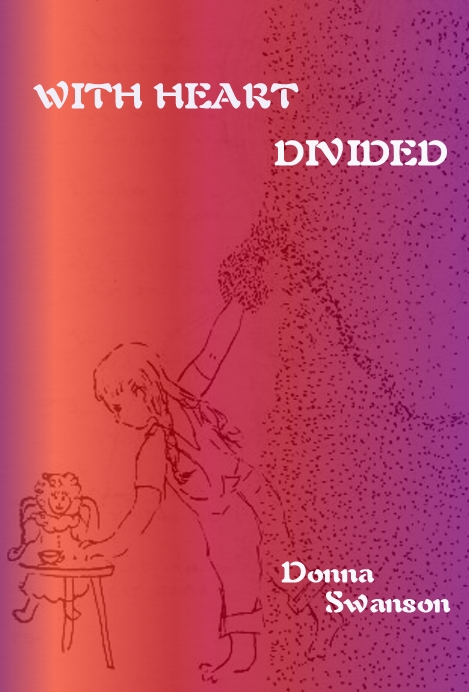
Excerpt from With Heart Divided

(Autobiography)

by

Donna Swanson

What do you say about dying?  Holding a hand that is already like a skeleton with skin stretched over it?  Standing in back of his lounge chair and putting your hands gently on his shoulders for fear of hurting him?  Kissing the top of his head where only a few strands of those once thick curls remain?  Saying, “I love you.” trying to make up for all those times you did not say it before?

On the night before our son, Mac, died, Jacob stopped by his daddy’s chair on his way to bed and said, “Goodnight, Dad” Mac answered “Goodnight, Jake.” John and I and Dennie had been there all day and about 10:00 I went home to get some sleep.  John stayed because Mac had begun to get really agitated in his hallucinations and he was afraid Mac, though weak, could throw himself out of his chair or hurt Shelby.

At 5:30 the next morning the phone rang and Dennie said I’d better come quickly.  By the time I arrived Mac had just won his war.  Satan had played his last card, death, and though he won a battle, he lost the war.  Mac died with his father’s arms around his shoulders and his wife’s arms holding him.  Shelby let the boys sleep until the undertaker had gone, then she sat in her chair with a child held close under each arm and told them their Daddy had gone to Heaven.

When we went with Shelby to make arrangements, the first thing she said was, “I never expected to be doing this at 33.”  Both the visitation and funeral service were held in our Church for there was not enough room in the funeral home.  The Director said he had never held a service with so many people in attendance.  Shelby and John decided to bury Mac in the little cemetery about a quarter-mile from our home.  Arrangements were made and now Mac’s grave is close by.

Of course Mac is not there.  He has changed the landscape of Heaven for us. No longer is it a place just to be talked about in sermons or read about in the Bible.  Now it is where Mac is.  And we wonder what he’s doing today.  We see Heaven through the eyes of sorrow and joy.  And death has truly lost its sting.

My family has lost many members to cancer; two sisters, a brother, my mother and several cousins.  When the battle is done and the tears have dried, the heart regains its equilibrium and life goes on.  But for the poet, part of the healing process is putting into words our thoughts and the thoughts we see reflected in the eyes of our loved ones.  These are written for my son, Mac, and my sister Jackie who died of ovarian cancer.

FROM THE SHADOWS

I step back into the shadow,

beyond the light of my family’s

celebration.

Storing memories

that must last through eternity.

I watch for the last time

each milestone celebration;

each small moment.

I take in the wonder

of the ordinary:

The smile of the morning,

The uncertain rest of the night

and the miracle of a day renewed.

As eternity beckons

I reach for the temporal,

for one last touch of mortality.

But I watch from the shadows.

© cover art, narrative, and poem 2011, Donna Swanson, all rights reserved

♥ ♥ ♥ ♥

Donna Swanson was born during the Great Depression in 1938 to an Indiana farm family.Youngest of eight children and a twin, she has lived her entire life in Warren County, Indiana.  A high school graduate, she chose to marry and raise a family rather than attend college; although she took classes in art, Koine’ Greek and psychology after marriage.  She has written nine books: Mind Song, published by The Upper Room in Nashville, TN; Rachel’s Daughters, The Windfallow Chronicles (a double trilogy), self-published; Splinters of Light, yet to be published, and the present autobiography.  A poem, Minnie Remembers, has become a standard tool in the study of gerontology, made into a documentary film by United Methodist Communications, and given the Golden Eagle Film Award.  It has been reprinted in most denominational publications and over twenty-five books. Mrs. Swanson is a Bible scholar and taught adult Bible classes for over forty years.  She began prayer and share groups for women in two area Churches and hosted a teenage “rap” group in her home for four years.  She counts among her mentors college professors, authors and ministers. Donna blogs at Mindsinger.

Posted in Guest Writer, Perspectives on Cancer

PERSPECTIVES ON CANCER #12: The Divining Trunk

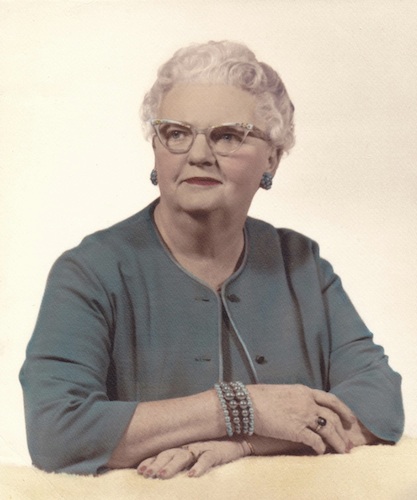
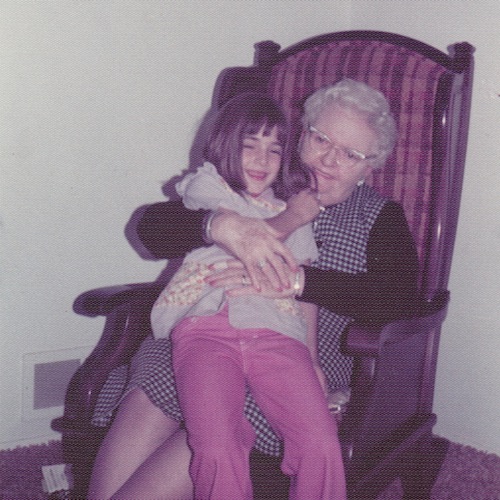
Karen Fayeth’s Grandmother

Author Karen Fayeth and her Grandmother

·

THE DIVINING TRUNK

by

Karen Fayeth

The battered metal steamer trunk in my living room, a family heirloom, is crammed full of memories. Sturdy sides hold every photo album and scrapbook that was bestowed upon me in the weeks following my father’s death*.

This pile of memories is like a divination tool. I open the lid and dig in then something useful bubbles to the surface. Something I’ve never seen before or something familiar, but always just the thing I need to see.

One stapled stack of papers catches my eye today. It contains a perfect wood pulp circle of life: my paternal grandparent’s birth certificates, their marriage license, and both death certificates.

Their entire lives are covered off in five pages.

On my grandmother’s death certificate, it lists, “oat cell cancer to left lung” under the cause of death.

Oat cell. Doesn’t that sound very grandma-ish? Like warm oatmeal and a hug, however, a short Google search advises that oat cell is among the most aggressive forms of lung cancer.

Besides, my grandmother wasn’t very oatmeal and hugs anyway. She was something much more urbane.

Which makes her bigger than life in my memory.

When I was about seven, my paternal grandparents made a visit to New Mexico to attend my first communion. My dad grew up in South Bend, Indiana, which to this desert kid may as well have been on the other side of the universe.

In the mid-seventies, Albuquerque wasn’t a very evolved place. Our airport was a small building the color of dry grass next to a hot concrete tarmac shared with the air force base.

The waiting area had memorable soft leather chairs on sturdy wood frames. I’d sink into the smell of leather and through large picture windows watch the planes fly in over the Sandia Mountains.

Passengers would disembark down sturdy metal stairs, eyes blinking in the bright desert sun.

That day I stood there, clutching at my mom, both scared and excited to meet my dad’s parents.

“There they are,” my mom said.

“Where?” I asked, perking up.

“Look, the woman in the coat.”

I looked. Making her elegant way off the plane was my white-haired grandmother. She wore a dress, pearls, stockings and heels. On top of it all she wore a fur-lined overcoat.

No one wore fur, much less an overcoat, in New Mexico.

She carried herself like a movie star, the regal matriarch of my father’s family. Her lipstick was flawless, her porcelain skin showing nary a wrinkle.

Behind her tottered my grandfather, a tall man with a lined face wearing a good suit and a hat. Always a hat.

These people were like something out of a novel. They were big city. Granted, South Bend is no great shakes, but they flew in from Chicago and looked it.

To me they seemed worldly, intelligent, and jaunty in that “Great Gatsby” kind of way.

My Grandmother smelled of perfume and powder and my Grandfather of cigarettes and hair oil. I was in awe. My mother was visibly intimidated by them both so I followed suit.

My 1970’s fashionable bell-bottom jeans and ratty t-shirt now felt tacky and under-dressed, as elegance had just hit our dry, desert wilderness.

Over the course of the visit, I tried desperately to reconcile myself to these people; my family. I clung to my mother, a shy doe-eyed girl from Oregon who in later years would confide to me just how much her in-laws scared the bejeezus out of her. I understood why.

At breakfast one morning, Grandmother sat chain-smoking, leaving perfect lipstick rings on the filter while Grandfather sat quietly, acquiescing to her, always. Something my dad had said made Grandmother mad, and she spoke harshly, her Irish temper flaring.

She shouted down my father, something no one I knew had ever done. I fled from the room, scared out of my gourd.

No one talked back to my father and got away with it. I think that terrified me more than the shouting.

I’d managed to bond with my gentle, comedic Grandfather and did my best to studiously behave in front of my Grandmother, lest she turn her overpowering temper on me.

Several days into the visit, while having an early evening happy hour, my mom cracked open a can of smoked oysters and Grandmother clapped her hands with glee, as this was a favorite treat. She prodded me to try one. It looked like a globby, gray pencil eraser doing an oily shimmy on a cracker.

Wanting desperately to somehow connect with this elegant woman, I took the offering like receiving communion, and chewed. It was tasty and I smiled. Grandmother was pleased, and handed me another, which I quickly ate. She wrapped an arm around me and pulled me close to her warm, fleshy side.

I’d done good.

We were worlds apart, and yet, our mutual love of good food held the power to close the gap.

In the years that followed, I wouldn’t be able to explore any more potential common ground. South Bend and Albuquerque were just too far apart, and it was five years later that my grandmother died. It was the only time I ever saw my father cry, and at age twelve, my first experience with cancer.

I wish I’d known my grandmother more. I wish I could find more ways to say, “oh, I’m just like her” but I can’t.

She was like a shooting star, in my mind a brief bit of glorious celebrity, stolen away far too quickly by the oat cells.

*My father succumbed to complications from pulmonary fibrosis

© Karen Fayeth, copyright 2011, all rights reserved. The family photos are covered under copyright. Please be respectful.

♥ ♥ ♥ ♥

Karen Fayeth ~ A corporate executive, writer, blogger, photographer, and visual artist, Karen was born and raised in New Mexico and moved to the San Francisco Bay area in 1997. Her work blends the influences of Hispanic, Native American, and the deep rural soul of the American West along with her newer city-sense learned in places like San Francisco, Brooklyn, and Boston. She is an award-winning short-story writer, and her baseball photo Bromance was featured on Intential Talk, hosted by Chris Rose and Kevin Millar. New Mexico magazine recently published three features by Karen. She has one published novel and lives with her husband, a cat (Gypsy), and two Siamese fighting fish, Benito and Margaret. Karen’s grandmother died of lung cancer. Karen blogs at Oh Fair New Mexico.

Posted in Guest Writer, Perspectives on Cancer

PERSPECTIVES ON CANCER #11: The Red Dress

Myra Schneider

THE RED DRESS

by

Myra Schneider

My first reaction is: I want it,
can’t wait to squeeze into
a scarlet sheath that promises
breasts round as russet apples,
a waist pinched to a pencil,
hips that know the whole dictionary
of swaying, can’t wait
to saunter down an August street
with every eye upon me.

But the moment I’m zipped in
I can’t breathe and the fabric
hugging my stomach without mercy
pronounces me a frump.
Besides, in the internet café,
where you can phone Tangiers
or Thailand for almost nothing
fourteen pairs of eyes
are absorbed by screens.
No one whistles when I smile
at boxes of tired mangoes
and seedy broccoli heads
outside the Greek superstore.

By now I’m in a fever to undo
the garment and pull it off.
And for all its flaws, for all
that it only boasts one breast,
I’m overjoyed to re-possess
my body. I remember I hate
holding in and shutting away.
What I want is a dress easy
as a plump plum oozing
juice, as a warm afternoon
in late October creeping
its ambers and cinnamons into
leaves, a dress that reassures
there’s no need to pretend,
a dress that’s as capacious
as generosity, a dress that willingly
unbuttons and whispers in the ear:
be alive every minute of your life.

© copyright, Myra Schneider, all rights reserved

The Red Dress from Circling the Core by Myra Schneider, 2008

 ♥ ♥ ♥ ♥

In 2000, Myra Schneider was diagnosed with breast cancer. Writing for her – as for many – was a part of the healing process, if not the cure. She journaled two weeks after diagnosis:

I have to hang onto the thought of friends and the relatives and friends of people I know who have survived for years and years after breast cancer. I owe it to myself to manage my panic and to make this a life experience not a death experience, to concentrate on possibilities, to grab every moment of life I can, to use what has happened for writing, to include the awfulnesses but also the plusses. I mustn’t forget the moments of joy: the sun lying in swathes on the grass, the sharp clean cut of the air, the disc of the sun on water. I must keep the words that came into my head about the snowdrops I saw in a garden when we walked to the shops a couple of hours ago. I think it’s the starting point of a poem. MORE

 ♥ ♥ ♥ ♥

Myra Schneider ~ Myra is a poet, a poetry and writing tutor, and the author of Writing My Way Through Cancer and, with John Killick, Writing Your Self. Her poetry collections, Circling the Core and Multiply the Moon, were published by Enitharmon Press. She has eight published collections. Her long poems have been featured in Long Poem Magazine and Domestic Cherry. She co-edited with Dilys Wood, Parents, an anthology of poems by 114 women about their own parents. She started out writing fiction for children and teens. Currently she lives in North London, but she grew up in Scotland and in other parts of England. She lives with her husband and they have one son. She tutors through Poetry School, London.

Posted in Perspectives on Cancer, Poems/Poetry

PERSPECTIVES ON CANCER #10: I Am No Longer Afraid

“I AM NO LONGER AFRAID…” Deena Metzger.

DEENA METZGER INSCRIBES A TREE

by

Jamie Dedes

Ms. Metzger is a poet and playwright, essayist and novelist, and a healing storyteller. I wish her work was around in time for my mom who died of breast and colon cancer. Trees: Essays and Pieces is Deena Metzger’s first healing book and it includes the play The Woman Who Slept With Men to Take the War Out of Them. She wrote the book to heal from her experience of cancer and mastectomy.

I love the brave picture above on a poster designed by Sheila Levrant de Bretteville, copyrighted and posted here under “fair use.” It’s also on the cover of Ms. Metzger’s book. You can order posters or postcards HERE if you care to. I don’t know if you can make it out, but Ms. Metzger had a tatoo done over her mastectomy scar. It’s a tree branch.

I am no longer afraid of mirrors where I see the sign of the amazon, the one who shoots arrows.
There was a fine red line across my chest where a knife entered,
but now a branch winds about the scar and travels from arm to heart.

Green leaves cover the branch, grapes hang there and a bird appears.
What grows in me now is vital and does not cause me harm. I think the bird is singing.
I have relinquished some of the scars.
I have designed my chest with the care given to an illuminated manuscript.
I am no longer ashamed to make love. Love is a battle I can win.
I have the body of a warrior who does not kill or wound.

On the book of my body, I have permanently inscribed a tree.

Excerpt from Tree: Essays and Pieces by Deena Metzger 

♥ ♥ ♥ ♥

Jamie Dedes ~ Jamie is a former freelance feature writer and columnist whose topic specialties were employment, vocational training, and business. She finds the blessing of medical retirement to be more time to indulge in her poetry, creative nonfiction, and fiction. She has two novels in progress, one in final edits, and is pulling together a poetry collection. Her primary playground is Musing by Moonlight. She is the founder and editor/administrator of Into the Bardo. Jamie’s mother was diagnosed with cancer the first time at thirty-six. She went three rounds with breast cancer, one with thyroid cancer, and died at seventy-six of breast and colon cancer.

♥ ♥ ♥ ♥

INTO THE BARDO·

is now on Facebook and Twitter.

Please join us there.