Posted in Essay, Jamie Dedes

THE MELLOW FRUITFULNESS OF FALL

THE MELLOW FRUITFULNESS OF FALL

by

Jamie Dedes

SEASON of mists and mellow fruitfulness, 
        Close bosom-friend of the maturing sun; 
    Conspiring with him how to load and bless 
        With fruit the vines that round the thatch-eves run…

To Autumn by John Keats (1795-1821), English poet, Romanic Movement

Autumn, transition between sultry summer and tempestuous winter, is a time to honor the dead, count and celebrate the harvest, and give thanks. The diverse peoples of the Northern Hemisphere indulge in family fun, feasting, crafts fairs, parades, and fine arts. Among the earliest celebrations are the Jewish Yom Kippur and Rosh Hashanah, closely followed by Succot, the Feast of the Tabernacles. Originally the feasts were literally in tabernacles (huts). Now venerated around the family table, there’s the typical holiday scramble to assemble and prepare traditional foods: challah bread, gifilte fish or a roasted chicken, and apple cake or oatmeal cookies for dessert.

Harvest Moon, the first full moon before the fall equinox, presents another excuse to party. At communities, like Callaway Gardens in Georgia (U.S.A.), folks watch college football, take horticulture tours, and go cycling.  Falling Leaf Moon is next, when the veil between the worlds of the living and dead is said to be thinnest. Celebrated by Pagans and Wiccans, it’s considered a ripe moment to gather for séance.

On the heals of Falling Leaf Moon is Halloween and all things spine-tingling. Special events at places like Carisbrooke Castle and Pendennis Castle in England – where the gothic and ghostly meet – offer visitors historic tours, spine-tingling walks, and spooky tales. It all harks back to the earlier times that birthed today’s foods, feasts, and falderal.

Dia de Todos los Santos (Day of All Saints) and Dia de los Muertos (Day of the Dead) are honored in Central and South America with customs that represent a melding of cultures, American and European. Feasting is the order of the day: suckling pig and tamales. There’s music and prayers, picnics held at graveyards, and tables decorated with candles, photographs of deceased relatives and friends, and T’ant’a Wawas (bread figurines for the Day of All Saints).
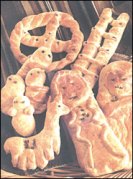
T’ant’a  Wawas

It would seem we humans – no matter the culture – like to celebrate our gratitude by feasting on the wealth of our harvest. In North America the big event of the season is Thanksgiving, a holiday that falls in early October in Canada and late November in the States. Major crops in North America include pumpkin, corn, potatoes, nuts, apples, and wheat, all ingredients for dinners of roasted and stuffed turkey, corn on the cob, mashed potatoes and gravy, and pumpkin or apple pie. Happy kitchen chatter and clatter and the scents of cinnamon, cardamom, and sage fill the air.

Cities everywhere have parades, but the Macy’s Thanksgiving Day Parade in New York has a long history. It started in 1824 when immigrant workers wanted a festival like the ones they enjoyed in Europe. Today the parade is an exciting oversized event with mega-stars from television, Broadway and Hollywood and mega-sized balloons and floats. Forty-four million view it on TV.

Like the trade gatherings of the original peoples (Native Americans), crafters fairs are held at large event centers where crafters sell their handcrafted foods, household items, jewelry, and toys. These visually sensual treats arrive just in time for holiday decorating and gift giving. Often the fairs include musical entertainments, story-telling, and crafts classes as well.

A wealth of entertainment is offered everywhere: but Paris is queen, honoring autumn with theatre, music, dance and the visual arts at the Festival d’Automne à Paris that runs the length of the season, September through December.

Wherever the eye travels this season the décor, natural or inspired by nature, is bright, rich, and rustic. Public and private places are decorated with gourds, spiny ears of wheat, scarecrows, and leaves turned orange, red, and gold. Though autumn’s common denominator is the celebration of abundant crops, that abundance is excelled by the diversity of the dishes, peoples, and landscape across the Northern Hemisphere.

The links on challah bread and T’ant’a Wawas are to recipes

·

© essay, Jamie Dedes, 2011 all rights reserved

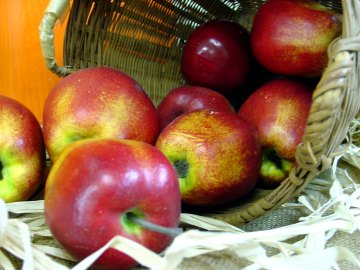
basket of apples/photo credit ~ morgueFile

T’ant’a  Wawas/photo credit  ~ The Global Gourmet
Posted in Essay, Jamie Dedes

BUDDHIST POETRY IN THE WEST

BUDDHIST POETRY IN THE WEST

by

Jamie Dedes

We often think of the Beats when we think of Buddhist inspired poetry in the West. Actually, the influence of Buddhism in the West began 100 years ago, largely due to the midwifery of Ezra Pound, that American expatriate poet of the Lost Generation, an influential figure in the Modernist Movement in poetry. He played a role in Imagism, his generation’s rejection of flowery Victorian and Georgian poetry in favor of directness and economy. Pound took a year to write of this experience in the Paris Underground, distilling essence much as the Japanese did with their haiku, a poetic form.

The apparition of these faces in the crowd;

Petals on a wet, black bough. Ezra Pound

Where the Lost Generation adopted stylistic elements of Buddhism and struggled with meaninglessness under the pall of World War I, the Beat Generation was anything but lost and went beyond style. In ‘50s atmosphere of paranoia, the Beats found sanity in Buddhism.  In the light of non-duality, no difference between heaven and hell, man or woman, the hierarchies and them vs. us mentality becomes meaningless. The mendicant life recommended by Buddha becomes a haven. Life on the road and the poetry of rebellion become antidotes to 1950s conformity and consumerism in America.

Western interest in Zen and Zen poetry is perhaps a surprise to some but it is also absolutely serious. Alan Watts criticized the Beat Generation poets, calling them dillettantes. He couldn’t say that of today’s Buddhist and Buddhist-influenced poets, not with the likes Leonard Cohen, an ordained monk, and Jane Hirshfield, who received Soto-Zen lay ordination. Buddhist inspired poetry today is characterized by neither hopelessness nor rebellion, rather by the Buddhist spiritual values of non-duality, transience and impermanence, and the practice of present moment and mindfulness. In their hands, reading and writing poetry becomes spiritual practice.

© essay 2011, Jamie Dedes, all rights reserved

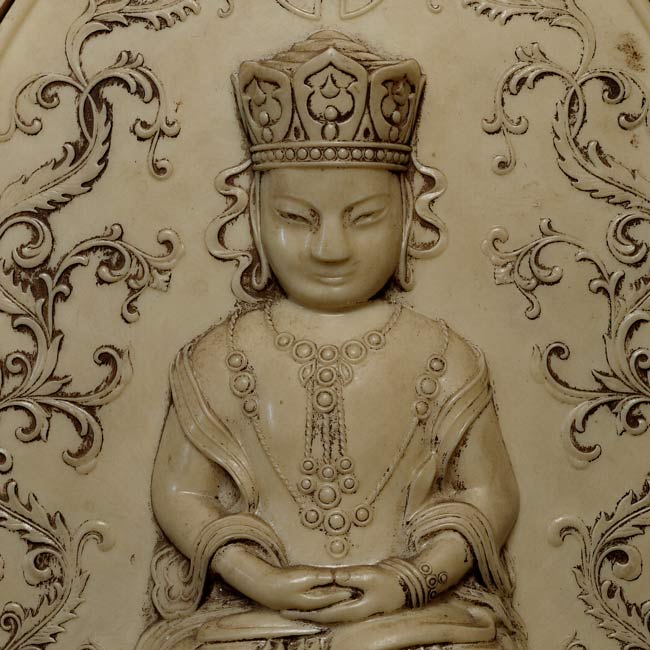
Photo credit ~ Beautiful and very uncommon Chinese Celloid Buddha Shrine. Probably late Ching, circa 1900. 8.5″ tall, 6.25″ wide, 4 5/8″ deep. Item 4216 courtesy of curator of The Buddha Gallery.

♥ ♥ ♥ ♥


Poet Jane Hirshfield in an interview about poetry at an event of the Aspen Writers Foundation.

Video uploaded to YouTube by 

Poet Leonard Cohen reading Days of Kindness

Video uploaded to YouTube by 

Posted in Essay, Jamie Dedes

THE GIRL EFFECT: An Amazing Multifaceted Global Effort to Fight Poverty

THE GIRL EFFECT:

An Amazing Multifaced Global Effort

by

Jamie Dedes

The Prospective on Cancer series will resume tomorrow. Today we break for the October 4 kick-off of The Girl Effect Blogging Campaign. 

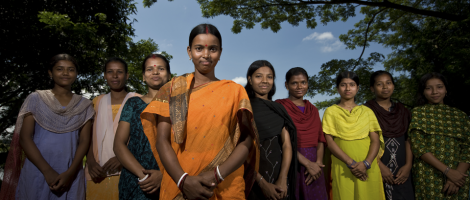
Last year when I participated in this blogging event, I focused on the plight of the girls. This year my focus is on the The Girl Effectproject. It is a stunning multifaceted effort that seeks to end poverty through understanding, documenting, and promoting the value, needs, and priorities of girls in developing countries. It forms a untied global collaboration of development partners for research and program design and delivery. It needs our support, not just as bloggers and writers, but also as workers, volunteers, and donors.

This project might sound to some like an effort with a bias, but it is really an effort to improve the social and economic fabric of families and communities by opening educational and economic opportunities to girls aged ten to twenty-four. Efforts are made toward removing barriers to family and economic stability, barriers like early pregnancy, school dropout, and HIV/AIDS. Girls are ultimately the backbone of their families and communities reinvesting ninety percent of what they earn in their families as opposed to boys’ reinvestment of sixty percent.

The studies that the development community have implemented and are sharing among partner agencies provide information we haven’t ever had before on girls in this age group in the developing nations. Their studies conclude with action items for governments and policy makers. Under the banner of The Girl Effect, the global community is united in assessing the cost to individuals, families, communities, and countries when girls live in poverty, are bared from education and proper health care, and suffer abuse.

The Girl Effect seeks support for efforts that address some things those of us in the developed nations take for granted: like being counted.  When a child has no birth certificate and is not counted in any census, she has no identity and there is no way of knowing if programs that are in place are reaching her and helping her.

The Girl Effect partners seek to:

  • acquire funding for programs and to track program outcomes;
  • support, encourage, and provide opportunities for complete primary education and for secondary education;
  • provide health care, wellness programs, and HIV/AIDS prevention programs;
  • organize health-care delivery systems that are effective in reaching this demographic;
  • provide economic empowerment for earning, saving, and building assets;
  • ensure legislation that supports women’s rights;
  • empower girls to advocate for themselves; and,
  • mobilize nations, communities, and families, men and boys, to support the efforts of girls to protect and educate themselves and improve their lives and those of their families.

The programs that are offered by partners include education, legal help, micro-loans, and health care. Donations may be made through Global Giving.

© 2011, Jamie Dedes, all rights reserved. Posting or printing permitted by request only.

Photo credit ~ Girl Effect photo courtesy of Brent Stirton/Getty Images.

Video uploaded to YouTube by .

Posted in Essay, Guest Writer

PERSPECTIVES ON CANCER #8: A Gift from Cancer

Dilys Wood

·

A GIFT FROM CANCER

by

Dilys Wood

Some friends of mine who suffered cancer and did not survive in the longer term were, as it happens, exceptional people with a special gift for sharing. That’s how I come to know that there can be shared happiness even when a friend is diagnosed with a serious illness. When time is short, inhibition may fly out of the window. You may feel ‘licensed’ to talk freely about every aspect of both your lives.There are no excuses for not doing the things you meant to do together. Boring daily chores just have to give way to what, at normal times, might seem a whim.

In fact, the more ‘whims’ your friend has the more delighted you feel to be able to help, even though, when someone is getting weak, there can be problems. If not used to being a caretaker, you sometimes feel stupid, inadequate and guilty. A few weeks before her death, I took a friend abroad and was in tears of despair at Heathrow airport because I hadn’t allowed for her slow walking and general debility. Why hadn’t I booked help? When we reached our hotel in Amsterdam, I was tired and she was ready for an enjoyable evening. I’d learnt the lesson that energy levels in a cancer patient can be unpredictable: a remarkable will-power may come into play, with a passionate desire to do new things, go places, indulge a little lavish spending, even when out of character.

Within a week or so of her own death, a friend learnt that an aunt was housebound and set off to see her. It should not have been possible for her to take that journey by car, train, tube and bus, but she did it on her own. When she told me the details it was obvious she had had one of the happiest days of her life. This friend was one who talked about everything under the sun, including questioning everyone, from priests to shop-assistants, about their idea of eternity.

Another friend greeted everyone on the street with, “I’ve got terminal cancer”. Far from resenting this – and despite the fact that she had just moved house – her neighbours were soon actively helping in every possible way, visits, shopping, lifts in their cars, re-plumbing her washing-machine. By contrast, I was unhappy when the close family of a dying friend banned visitors from the house in her last fortnight. Did she feel that “closing out” was harsh, as I did, or was it the right decision?

For another friend, dying in a Hospice, things were different. Lying in the bay-window of a large sunny room she was dying in a combined greenhouse and luxury hotel. Surrounded by a mass of cut-flowers and house-plants, her bedside table groaning with fruit and chocolate, she was eager for visitors, warm, loving even while hallucinating. I will never forget her friendly indignation as she pointed to the vision we couldn’t see, “Look a tiger, apricot stripes!”

♥ ♥ ♥ ♥

Dilys Wood ~ Dilys is poet, editor and founder of Second Light Network of Women Poets. She has edited four anthologies of women’s poetry, mainly with Myra Schneider and has published two collections of poetry, Women Come to a Death and Antarctica. She is a great advocate for women poets, especially those who come to the art and craft of it late in life. Dilys mother died of cancer.

♥ ♥ ♥ ♥

INTO THE BARDO·

is now on Facebook and Twitter.

Please join us there.

Posted in Essay, Jamie Dedes

PERSPECTIVES ON CANCER #7: The Wisdom and Courage of Roger Ebert

ROGER EBERT (b. 1942)

film critic, screenwriter, Pulitzer Prize for Criticism

Ebert at the Conference on World Affairs in September 2002,

shortly after his cancer diagnosis

We will go full-tilt New Media: Television, net streaming, cell phone apps, Facebook, Twitter, iPad, the whole enchilada,” he wrote. “The disintegration of the old model creates an opening for us. I’m more excited than I would be if we were trying to do the same old same old. I’ve grown up with the Internet. I came aboard back when MCI Mail was the e-mail of choice. I had a forum on CompuServe when it ruled the web. My website and blog at the Sun-Times site have changed the way I work, and even the way I think. When I lost my speech, I speeded up instead of slowing down.  Roger Ebert [via Biography.com]

THE WISDOM AND COURAGE OF ROGER EBERT

by

Jamie Dedes

Born in Urbana, Illinois, U.S. to parents of modest means who wanted a better life for him then they had, Ebert’s affinity for writing and film were encouraged. He went to Urbana High School, University of Chicago, and University of Illinois at Urbana-Champaign. He is known for his film column in the Chicago Sun-Times (1967 – Present), his film guide books, and for the television programs he did in collaboration with Gene Siskel and later Richard Roeper. Ebert battled long and hard with alcoholism. He is married to a trial attorney, Charlie “Chaz” Hammel Smith, now Chaz Ebert and VP of Ebert Company. 

In 2002, Ebert was diagnosed with salivary cancer. He has had radiation treatments and multiple surgeries that effected his speech. In 2006, more cancer was found in his jaw bone. He was rushed to the hospital when his carotid artery burst and he “came within a breath of death.”  The jaw bone was removed. Between one thing and another, he suffered through excessive bleeding, loss of muscle mass, deformity, a jaw prosthetic, and the loss of his voice.

The reason I used that quote above on his acceptance of and enthusiasm for technology is because he has been a fearless and spirited user of voice box technology to address communication problems resulting from the cancer and its treatment. In the TED Award video below, he informs us of his – among other things – experiments with different voices. My own experience of various new technologies is improved testing for health maintenance and monitoring, and appropriate treatment. The web with its many blessings – albeit sometimes mixed – provides me with an affordable, home-bound outlet that offers an immediate venue for my work at the same time that it keeps me from being isolated. (I have an interstitial lung disease.)

I have always admired Roger Ebert as a writer, film critic, and the first film critic to win the Pulitzer Prize for Criticism. Since he has been living with cancer and then the fallout from cancer, I have come to admire Roger Ebert, the man. He has shown himself to be a world-class role model and a first class human being. As you will see, through it all, he has retained his sense of humor. Write on Roger … 

Roger Ebert still reviews for the Sun Times. You can read the reviews HERE.

♥ ♥ ♥ ♥

ROGER EBERT: Remaking My Voice

·

Photo credits ~ Ebert at the 2004 Savaanah Film Festival by Rebert under GNU Free Documentation License and Lillian Boutte and Roger Ebert by Jon Hurd under Creative Commons Attribution 2.0 Generic license. Both photos via Wikipedia.

Video upload to YouTube by 

♥ ♥ ♥ ♥

Jamie Dedes ~ Jamie is a former freelance feature writer and columnist whose topic specialties were employment, vocational training, and business. She finds the blessing of medical retirement to be more time to indulge in her poetry, creative nonfiction, and fiction. She has two novels in progress, one in final edits, and is pulling together a poetry collection. Her primary playground is Musing by Moonlight. She is the founder and editor/administrator of Into the Bardo. Jamie’s mother was diagnosed with cancer the first time at thirty-six. She went three rounds with breast cancer, one with thyroid cancer, and died at seventy-six of breast and colon cancer.

♥ ♥ ♥ ♥

INTO THE BARDO·

is now on Facebook and Twitter.

Please join us there.

Posted in Essay, Guest Writer, Perspectives on Cancer

PERSPECTIVES ON CANCER #6: Superhero and Junior Superhero

·

SUPERHERO

·
by
·
Patti Maxwell
·
This is a true story about Lisa, Patti’s daughter, who is doing well now and will make her own contribution to Perspectives on Cancer. J.D.
·
Like everyone younger than logic, she was fearless. Flying high on wings of inexperience, she took risks most learn to avoid and tempted Fate at every turn. She lived in a Land far from reality. She was eternally optimistic: there was plenty of time to grow up, time to move on, time to get ready, and time to get ahead. She had, after all, all the time in the world. There were endless Tomorrows stretched out ahead of her. Playing fast and loose, she beat odds she didn’t even know were against her. She was invincible, indestructible, immortal.
·
And then one day, her Land was invaded by a Monster and his legions. They assaulted many of her givens, and caused the rest to take shelter in denial. The air became rank with fear, as the Monster’s bombs of destruction exploded first here, then there, threatening the very way of life throughout the Land. She had never thought something like that could happen to her, and she was terrified.
·
But the one thing she wasn’t was dumb. She quickly realized that the Monster could not be allowed to run rampant though the Land, and that he had to be stopped before everything was destroyed. Casting fear and denial aside, she dug out her best cape, always useful back in her flying days, and put it on. And she became the first Superhero the Land had known.
She fought with all her might, long and hard and desperately. There were times when she was down, wounded and tired, but she quickly got up again, took up her sword, and resumed the battle. The war raged for many months, and though she won some and lost some, she never lost her will to survive. She fought on, until one day she realized the Monster was gone. She had won.
·
After the war was over and the smoke had cleared, she looked around and surveyed the rubble left behind. Many parts of the Land had been ravaged. Where once there had been bounty, there was now barrenness. Structures had been flattened. Expectations had been unalterably altered.
·
But she knew the Land could be rebuilt, and it was. New structures were erected, looking as good as those taken down by the Monster. The seeds of new prosperity were planted, and new expectations developed.
·
But one unexpected outcome of the war was her realization that life in the Land was perhaps not as eternal as she had once thought. Perhaps there really wasn’t all the time in the world. Though one might suppose that this was a bad outcome, one would be wrong. After having fought and won against the evil Monster, the Land was moved closer to reality and life was made forever better. Foundations and armaments were reinforced, made stronger than before to protect against any future attacks. Social programs were put into place to prepare the Land to be more self-sufficient and successful in the future.
·
So while she occasionally missed the wild and free antics she’d enjoyed before the Monster came, she was happier than ever before. She had learned that, true, there were not endless Tomorrows laid out in front of her, but Today was a much better place.
·
She never really put away her cape after the war, though. Battered and torn though it was, she kept it nearby, just in case she might need it again. She was a Superhero, after all.
·

♥ ♥ ♥ ♥

·

Patti’s daughter, Lisa, and her granddaughter, Emily, at

this May’s Avon Walk for Breast Cancer in Boston, MA, USA

·

JUNIOR SUPERHERO

·

by

·

Patti Maxwell

·

She saw her mother hit by cancer at 33
Watched as she fought back and won
And learned what it takes to be a superhero.
Today they fight for the cure side by side.
·

♥ ♥ ♥ ♥

·

PattiKen is a writer/blogger and was a corporate trainer and technical writer for many years, keeping her creative (and sometimes whimsical) side under wraps. The business world sometimes frowns on creativity.  The opportunity to use her creative brain now is a lot like kicking off those heels at last and wiggling her toes.   Blogging has given her a platform to showcase her writing and has brought many new friends into her life in the process.  Patti is very grateful for both. Patti’s delights us with her short-stories, poems, and her slice of  real-life vignettes. She blogs at:

© PattiKen, Copyright 2010, 2011, All Rights Reserved. Family photo is included in the copyright. Please be respectful.
Posted in Essay, Guest Writer

THE TILTH OF THE EARTH

Tilth of the Skin

TILTH OF THE EARTH
·
by
·
Amy Nora Doyle  (SoulDipper)
·

Dirt.  Black, soft, moist, cool clumps of sensuous-feeling prairie dirt tumbled through my memory like tumbleweeds bouncing across an open field.

Jamie Dedes wrote about Dirt and conjured memories of pawing hands, wiggly fingers and big noses.  Visions of prairie farmers grabbing fistfuls of healthy humus, fingering it thoroughly, smelling it, working it through rubbed palms, and even tasting it, came back to me with the clarity of a close-up video.

Why did they do this routine?  As a child, I had watched them, riveted and serious, working handfuls of soil as if preparing for surgery.  The world stopped.  Their full attention was on the response of the soil to its handling.  What were those farmers doing?

Nagged by ignorance, I decided to visit an octagenarian who farmed most of her adult life in Manitoba.  Rose is the 88 year old mother of a departed friend.

Driving to Rose’s house, Jamie Dedes was on my mind.  She started this.  She published a post, “Ultimately Dirt”, on her blog titled Into the Bardo.  If you peek at the link, you’ll see there’s a book and a film about the soil of this planet.

Bill Logan wrote “Dirt: The Ecstatic Skin of the Earth”.  He wrote it while living in New York City.  Jamie just happens to come from Brooklyn.  What irony that two urban New Yorkers wake up this prairie person to the phenomenal aliveness of dirt.  It is precious.  We all know we need it to grow anything worth eating, but there’s more to it.  It’s teeming with life.  It’s a full, living organism.  It is home to microscopic life that creates the healthy properties we need in our soil.

I’ve been taking dirt for granted.  I hadn’t thought about how many layers and years of leaves, grasses, manure, and other flora it takes to create the soil that I kicked away and swept off my walkway with impunity.   I hadn’t fully considered the effect of the world’s greed on soil.

When I arrived at Rose’s home, she was sitting outside enjoying her small garden.

Tilth of the Soil

“Rose, this may seem like a dumb question, but I want to ask you about farmers.  When they grabbed a handful of dirt and started doing all those machinations, what were they doing?”

“You mean when they’d squeeze it in their hands?”  I nodded.  “And when they’d rub it between their fingers…sometimes smell it?”

“Yes! That’s what I remember.  Some even tasted it.  I saw some put their tongues on it.  Why?”

“Testing it.” Rose said.

“For what?”

Rose looked at me as though I was a bit simple. “To see if it was okay.”

“Rose, I know they were testing it.  Okay for what?”

“Well, to see if it was ready for planting.”  Her tone indicated that anyone would know this fact.  Obviously this was like asking her to describe looking through blue eyes.

“Okay.  What were they looking for in the soil to know it was ready for planting?”

“Let’s see…moisture.  It shouldn’t be too dry.  If it was, they prayed for a bit of rain.  If it was too wet, they prayed for hot, sunny days.”  She grinned as she paused.  “What else?  It shouldn’t be too sandy.”

“If it was, what would they do about it?”

“Add some good manure probably.”  More silence.  “The soil had to have a good balance of acid and alkaline.   Willows love alkaline.  Where willows grow, you know the soil is too alkaline.  Clay has a lot of alkaline.  Wheat likes a bit of acid.”  She began to rhyme off which crops preferred acid and which prefer alkaline.

“So that tiny gesture told them all they needed to know about planting.  When to plant, what to plant…it even told them if they had to roll out the manure wagons.”  Rose nodded as she listened.

Suddenly she threw up her arms, “Tilth!”

“What?”

“Tilth of the soil.  That’s the word!  They test the tilth of the soil*!”

“Spell that, Rose.  I’ve never heard the word.”

The well-being of our nation depends upon the tilth of the soil. 

No… the well-being of the world depends upon it.

The tilth of our skin has been too much of a big deal – 

Now it’s time to concentrate on the tilth of our planet’s skin.

Tilth of the Earth

* From Wikipedia:

Tilth can refer to two things:

Tillage and a measure of the health of soil.

Good tilth is a term referring to soil that has the proper structure and nutrients to grow healthy crops. Soil in good tilth is loamy, nutrient-rich soil that can also be said to be friable because optimal soil has a mixture of sand, clay and organic matter that prevents severe compaction.

Photo credits ~ Google.ca/search

Posted in Essay, Jamie Dedes

DISABLED, NOT UNABLE: No Arms, No Legs, No Worries

Video posted to YouTube by .

When the going gets tough, the tough get going. Joseph P. Kennedy Sr., former U.S. Ambassador to the U.K. and father of John F. and Robert F., and Edward.

Motivation gets you through the day, but inspiration last a lifetime. Nick Vuicic, inspirational speaker

I’m sure there are many, many people who are following our limbless-but-nimble Nick, especially in Australia (his homeland) and the United States, where he is now living in California. He’s a great inspiration. He helps put things in perspective. In the light of his challenges, the vast majority of us have nothing to complain about. He makes it darn difficult to make excuses. More than that, he demonstrates that disability is not inability. He follows a work schedule that would exhausted lesser folk.

Attitude Is altitude. Nick Vujicic

If I wanted anyone to get – really get –  one of the underlying messages here, it would be employers. At one time, about a hundred years ago now, I was responsible for hiring and/or hiring recommendations for a retail company. I often advocated – usually unsuccessfully – for people who were bright, talented, and “disabled.” The latter is a term we use lightly and take literally. It can be deceptive.

As you can see from Nick’s video and his life, people who are disabled are not necessarily unable. Often people have disabilities, but are generally healthy. . . . just as healthy as most other working folks. They can be depended upon to maintain a normal work schedule. A high rate of absenteeism may be implicit in those situations that involve illness, but not everyone who is disabled is ill. Those who are not, those who are blind or deaf or have lost limbs or are otherwise disfigured, are not ill. They are all there mentally, have skills, ability, training and education, and have learned to work around their challenges. They have lower risk for workers’ comp because they tend to be more aware and more careful in how they maneuver in the workplace. Often, they need only minimal – if any – real accommodation. There’s no reason not to hire them. In the current economy, they are having a tougher-than-usual time competing for jobs, not because of real barriers to entry but because of perceived barriers harbored by employers. This is an appeal: please give them the same fair chance you’d give anyone else.

For more on Nick – Brave Heart: No Arms, No Legs, No Worries.

Posted in Essay, Guest Writer

A FULL LIFE …

Charlie Badenhop

It is my pleasure to introduce the wisdom of my friend, Charlie Badenhop, on our pages. Charlie is the internationally recognized creator of the human potential discipline of Seishindo . He is also a highly respected life-coach, practitioner of self-relations psychotherapy, and neuro-linguistic programming. He first published the essay below in his Seishindo newsletter, Pure Heart, Simple Mind. I find it brings a very important message to our readers. R.R.

·

“A FULL LIFE IS NOT NECESSARILY

A LONG LIFE”

by

Charlie Badenhop

Posted here with permission. All rights reserved.

Are you living your life appreciating what you DO have, or are you lamenting what still seems to be missing?

Three years ago the eight year old daughter of a friend died in a freak accident at school. My friend was devastated and I could not think of any wise words that might console him.

As the weeks rolled by my friend slipped into an ever deeper sense of despair, and nothing anyone said seemed to lift his spirit.

After a few months time he went out-of-town on a business trip, and on the train ride back he engaged in conversation with the woman sitting next to him. The woman sat there and nodded her head often as my friend talked about the death of his daughter. He reported to me that he had the sense of talking and talking and talking, until he finally felt like he had nothing more to say.

As my friend came to a natural state of rest, the woman nodded her head one more time as she took a deep breath, and then said the following, “I can very much feel your pain, and I understand the loss of your child must be devastating.”

“At the same time,” she said, “I wonder if your pain would not be lessened if you celebrated the life your daughter did have.”

“You told me about your daughter’s sense of awe the first time you took her to the ocean, and how you carried her in your arms as you waded out into the water.”

“You also spoke about the many times she sat on your lap and told you about the magical adventures she had during the course of her day.”

“Perhaps the sweetest story you shared was how you told your daughter every night how much you loved her as you tucked her into bed.”

“I’m wondering,” the woman said, “What is it that leads you to believe you and your daughter did not live a full and glorious life together?”

“Is it because she died at eight years old and not at eighty? Certainly it would seem that the quality of one’s life is not tied to the length of one’s life.”

“I would like to gently suggest that you and your daughter did live a full and complete life together. She just didn’t live as long as you had hoped for and expected.”

As the train neared the station the woman continued speaking. “I am seventy-two years old, and in looking back on my life I don’t feel I have shared with anyone, the depth of experience and love you and your daughter had together.”

“On one hand this makes me deeply sad. On the other hand, it wakes me up to the fact that my life is not yet finished. I can begin today to live the life I truly desire.”

“This is the realization that your experience has helped me to understand, and for this wonderful gift I thank you deeply.”

The woman smiled as she stood up, preparing to exit the train. “None of us know how long we have to live. No one has control over the length of their life.”

“The quality of our life on the other hand, is something you can ensure on a daily basis. An emotionally fulfilling life is a complete life, regardless of how many years you live. A life without love seems to take forever to end.”

“We’ll do well to appreciate what we do have, rather than lamenting about what we don’t.”

To the readers of this [blog post], I gently suggest you consider how you want to live your life, in order to ensure that your time on earth is fulfilling and complete.

Posted in Essay, Guest Writer

THE HEART OF THE MATTER

My friend and Christian poet and writer, Donna Swanson, writes here about creativity, the  fleeting quality of success, and the things that really matter, like family and gratitude. No matter your definition of God (or not) or whatever your belief system is (or is not), the essence of the message here is core wisdom.  Enjoy! … and thanks to Donna for sharing. J.D.

·

THE HEART OF THE MATTER

by

DONNA SWANSON
·
There have always been creators. To us creating is a display of God’s image in the world. Creating is an ache in our spirit; a compulsive reaching out to those who share life with us. We can no more not create than we can not breathe. Though there is a longing for our creations to be affirmed and applauded – anyone who denies that is lying to you – there is a deeper hunger to do the act of creating. The feel of a brush on canvas; the weight of a pen in the hand; a particular word that completes a poetic phrase: these are to our souls as oxygen is to our lungs. Though no one responds, still we must offer. Perhaps the next painting will invoke a response; the next book, the next poem, the next song…
·
And success? Now, as I look back over my life, I have a much different perspective than I did in my youth. I see those things I created, and they are good. I know they have blessed the few people they have touched. And now I can put them to rest where they belong; in God’s hands. If there comes a time when He wants them widely known, they will be. If not, they were infinitely satisfying in their creation.
·
Again, as I look back over my life, I see the successes that mean so much more than any amount of fame could supply. I asked God to give me acclaim and the praise of my peers. He gave me good children who rise up and call me blessed. I asked God to make me financially successful. He gave me a beautiful home set amidst towering pines given by those I loved. I asked God to make my name known. He gave me a husband who knows me and loves me just as I am.
·
Our family has never been abundantly wealthy, but we have never gone without food or clothes or a warm fire. We did not have expensive indulgences or travel to exotic places, but we’ve had those small blessings that mean most because they were a surprise or a loving gift.
·
Success is relative. Success is fleeting. Success is a carrot leading a donkey down many a rocky road. Success is okay if it happens, okay if it doesn’t. It’s the road one takes to get to the destination that builds the soul. The road has been worth it.
·

·
·
·
Connect with the multi-talented Donna at the links below:
Posted in Essay, Jamie Dedes

THE EVOLUTION


When we marched,
Slithered
Through slimy mud past riot-shielded cops in Alexander
(This is the ghetto.)
While children peered wild-eyed from dark windows,
For some of us these were re-runs of earlier apartheid-burdened days.
But, then, it was defiant resolution that drove our hearts and braced our feet.
Now, sadness at betrayal sat sadly on our hearts.
Our shouted slogans hung heavy over us in grimy air.
We winced at familiar oft-repeated lies
Oft-repeated lies.

Dennis BrutusSouth African Poet/Activist (1924 – 2009), in Leafdrift

·

THE EVOLUTION SHALL BE BLOGGED

by

Jamie Dedes

There are people for whom poetry exists almost exclusively as an aid to social change, to political discourse– not as some sort of didacticism – but as a discussion, a wake up call, a way of approaching some truth, finding some meaning, encouraging resolution. I’m not one of them. I am as likely to write about the beautiful flowers that have just popped on my orchid – at last – or something my mom said fifty years ago as I am to write a poem on a social issue. But it does happen and quite often:  a horrific war photo, a news report of an injustice, a homeless person outside the grocery, a friend in pain that I can trace to some social issues, and the words start to flow. There’s the urge to respond, to do something – the urge to activism.

As I make my way around the blogosphere, I delight to see how many poets blog for causes – “worthy” causes as my mom would say – and I know that “worthy” is in the eye of the reader. War is big. For those poet-bloggers who are pacifists, this medium offers one means of passive resistance. Perhaps passivism is the strongest form of resistance and poetry the conscience of the collective soul.

In the 70s, the American author, poet, and musician, Gil Scott Heron, wrote The Revolution Shall Not Be Televised (video below). It comes to mind now. For those who remember, this might seem odd. It’s a Nixon-era piece, but we’re still struggling with the trivialities Heron is so beautifully strident about. And the revolution couldn’t be televised. It would be too big for one thing. Though Heron was addressing issues for blacks, I would submit that while we have different histories, we’re all struggling to stay afloat on the same broken-down raft.

In Dennis Brutus’ poem above, he points to the world we now live in. Having survived Robben Island with Nelson Mandella, he was freed only to find that while apartheid ended in South Africa it had become world-pervasive. The issue now he discovered was no longer race but economics: the few haves vs. the masses of  have-nots. And those who have just a bit – enough to feel safe and perhaps a bit smug – are just a hairbreadth away from have-not.

I can’t help but think that the revolution so many of us seek is rooted in transforming values. Hence, it is more evolutionary than revolutionary. As such, perhaps it is too gradual and pervasive to be televised. Perhaps it is evident in our blogosphere and the heart-born prose and poems of simple folk like you and me with nary a pundit or politician among us. Perhaps it’s a bottom-up thing, more likely to be blogged than broadcast, rising from homespun poetry – outsider literary art – sometimes rudimentary and awkward, but always quiet and true and slow like a secret whispered from one person to the next. It is perhaps something stewing even as we write, read, and encourage one another. Perhaps there is some bone and muscle in what we do. Individually we have miniscule “audiences.” Collectively we speak to enormous and geographically diverse populations.

I think I hear army boots a-marching, marching across networks everywhere. Or perhaps poetic fancy has caught my spirit today and all is dream …I hope not. Blog on …

So let some impact from my words echo resonance 
lend impulse to the bright looming dawn

Dennis Brutus

Video posted to YouTube by .

Illustration: Face the Monster  Frits Ahlefeldt, Public Domain Pictures.net.


Posted in Essay, Jamie Dedes

LESSONS IN GRATITUDE

Video posted to YouTube by  .

If the only prayer you said in your whole life was “thank you,” that would suffice. ~ Meister Eckhart (c. 1260 – c. 1327), German mystic, theologian, and philosopher

“Gratitude is a memory of the heart. If we can remember, why can’t you?”

Gypsy photo courtesy of KarenFayeth.

Gypsy (the grandkitty) and I blog together at The Cat’s Meow. She’s the creative/spiritual inspiration. I do the keyboarding. As you can see, Gypsy is rather outspoken.

Originally the blog was entitled The Peaceable Kingdom. We changed it when we realized that surprisingly – or perhaps not so surprisingly – that name didn’t invite traffic. It does, however, encompass the meaning and intent of the blog. While we hope to brighten the workday for readers with funny, cute, or inspiring videos and beautiful animal photos, the underlying message is about respect for our younger brothers and sisters in nature and for the connections among all sentient beings. Many of the posts are about interspecies friendships: animal and animal, animal and human. The implied question we posit is that “if they can do it, why can’t we?”

Animals give us so many gifts (lessons) including: companionship, unconditional love, and gratitude. This lion does indeed have “memory of the heart” as the Gypster says: Ten years before that video was taken, Anna Torres, who runs a nonprofit animal shelter on donations and the proceeds from her teaching job, rescued the lion, Jupiter. He was starving and dehydrated and ill. She cared for him and still does and he is grateful and shows it.

Posted in Essay, Guest Writer

EVERYTHING YOU THINK

After a life-changing adventure in South Africa, Amy Nora Doyle – writer and intuitive – begin an adventure: celebrating the ordinary life in an extraordinary way. She blogs at Soul Dipper, where she shares her experiences and channels her guides, the Soul Group Ra. I particularly liked this story, such an honest one. Here Amy finds herself spinning on and making judgements and assumptions about someone, only to learn that she is totally wrong. I think we all can see ourselves in this story as both the judge and the judged. Enjoy! J.D.
·
DON’T BELIEVE EVERYTHING YOU THINK
·
by
·
Amy Nora Doyle
·

A more evolved person would say:  “What’s the big deal?  It’s only a load of lumber.  He’ll probably bring it tomorrow.”

Except, it feels like a big deal.

I put my life on hold to accommodate his schedule.  “Thursday morning before 11:00″, he confirmed on the phone two days ago.  It is now after 6:30 p.m. and the appointed length of lumber has not been delivered as promised.

The spot for storage is cleared.  The prepared dumping site is barren.

Tomorrow is no good.  I have appointments and he has other commitments.  That’s why we agreed that he’d come today.

Good grief, here’s a mature man who is a member of a stalwart island family and he has not kept his word.  He is supposedly trustworthy.

Come to think of it, I have noticed subtle gestures from his wife when I saw them together.  She usually leaves a group setting when he joins the conversation.  He sort of takes over the conversation.

Once she said it was their anniversary.  “Congratulations.  How long have you two been married?” I asked.

“Oh, I’ve only been married to him for 15 years”, she said.  “I was married before.  My first husband died.  The children are from my first marriage.”

The absence of enthusiasm was as good as a confessional.

She continued, “He’s a good man, though.  Been a good father to my children.  But, you know…at times, I find myself wishing he’d talk about something other than his antique cars and farm machinery.  He’s always looking for more information or parts.  I know he wishes the kids would show a little more interest…”

A Gift From My Guides

Yes, I’ve noticed that little ‘something’ whenever we’ve talked.

Let’s face it.  He’s a great hulk of a man who talks too much.  He is not a man of his word.  He bores his wife to death and most people just want to avoid him.  He’s like all the rest of the people who never do what they say.  If anyone asks me about his service, I’m going to be honest.  People like him should not get away with this kind of nonsense.  Look at this!  It’s 7:30 p.m.  No truck, no phone call and no lumber.  And even worse, I did no writing today until now.  I couldn’t concentrate with one ear at the door.  He’s really screwed up my day.

The phone rings.  7:47 p.m.  Why does that time appear on clocks so frequently in my life?  What does it mean?

“Hi, I’ll swing by now and bring your lumber.  I promised I’d call first.”

“Thanks.  See you in a few minutes.”

The poor man.  He’s still working!  It’s going to be dark before he finishes unloading the lumber.  He’s had a hip replacement in his retirement and he’s still working so hard.  He must be starving.  I’ll offer him something to munch on.  I should have told him to not bother tonight.

Suddenly his white truck backs into my driveway.  He parks perfectly by the prepared spot.  He jumps out of the truck and cheerfully sets up the rigging for unloading the lumber all by himself.

“You’re working awfully late, aren’t you?”

“Well, I was doing a little fix-it job for the local Kids Klub and it took a little longer ’cause when I gave one of the young fellas a ride home, turned out his mother needed her washer fixed.  Then, when I got to the lumber yard, some guy had jimmied his loader so I gave him a hand, you know, just so he could get out of my way.  Then Old Rex Thornton drove in and wanted to know what he could do with his old ’49 Chevy.  He figures he’s ripe for the old folk’s home.  So after we had a little chat about it, I suggested we go and have a look at it.  It’s in great shape.  By gar, I think I’ll buy it.  Then he got to showin’ me some of the other stuff that he wants to get rid of.  I know lots of people who will be interested.  Turns out his wife was having trouble with an old clothes line that she still wants to use – you know how women like the bedding to smell fresh…”

Link HERE  and scroll down to read the guided commentary that follows this story on Amy’s site.

Posted in Essay, Jamie Dedes

HIS LAST POEM

CECIL DAY-LEWIS (1904-1972)

BRITISH POET LAUREATE (1968-1972)

·

C. DAY LEWIS AT LEMMONS

by

Jamie Dedes

I discovered the Anglo-Irish poet Cecil Day-Lewis (C Day-Lewis) quite by accident the other day when I was preparing my Sunday news feature for the main site of an online poetry community with which I am involved. On the basis that we all benefit from knowing our roots and connections – no matter our occupation – I always start off with a snippet about a poet who either was born or died on the day of the posting. Cecil  Day-Lewis died on May 22 in 1972. He was the British Poet Laureate from 1968 until his death. There’s lots about him and his work that nags for my attention, but one poem really struck home.

At Lemmons (1972), according to the C Day Lewis website (HERE), was written by Day-Lewis on his deathbed at the home of Sir Kingsley William Amis (1922-1995), the English poet, novelist, critic, and educator. Amis is quoted as saying that, “At no time did Cecil mention death. My own strong feeling is that he came to draw his own conclusions from his physical decline and increasingly severe – though happily intermittent – bouts of pain, but, out of kindness and abnegation of self, chose not to discuss the matter.” This last poem, which demonstrates a wonderful grace and acceptance, was published posthumously.

AT LEMMONS

by

C Day Lewis

Above my table three magnolia flowers

Utter their silent requiems.

Through the window I see your elms

In labour with the racking storm

Giving it shape in April’s shifty airs.

·

Up there sky boils from a brew of cloud

To blue gleam, sunblast, then darkens again.

No respite is allowed

The watching eye, the natural agony.

·

Below is the calm a loved house breeds

Where four have come together to dwell

–            Two write, one paints, the fourth invents –

Each pursuing a natural bent

But less through nature’s formative travail

Than each in his own humour finding the self he needs.

·

Round me all is amenity, a bloom of

Magnolia uttering its requiems,

A climate of acceptance.  Very well

I accept my weakness with my friends’

Good natures sweetening each day my sick room.

·

Photo credit ~ Copyrighted cover art (fair use) for Peter Stanford’s biography of Day-Lewis,C Day-Lewis, a Life. Definitely on my reading list.

Posted in Essay, Jamie Dedes

THE KEEP SMILING BAG

Be kind whenever possible. It is always possible. His Holiness, the 14th Dalai Lama of Tibet

THE KEEP SMILING BAG

by

Jamie Dedes

A lifetime ago I had a job in social work where I was privileged to work with folks who were everyday heroes in desperate circumstances. There were many things we could do to help our clients. Sometimes, though, I found that what people felt was most bracing and cherishable were small, personal, keepsake kinds of things: like THE KEEP SMILING BAG. A Buddhist might call it a Metta Bag, a Catholic, a Caritas Bag, a Jew, a Chesid Bag. A Native American might consider it a Medicine Bag. Since I learn from all and affiliate with none, I just call it THE KEEP SMILING BAG. It’s full of little reminders of how one might help oneself in difficult circumstances. These are certainly trying times.  You may have a few people in your life who could use a KEEP SMILING BAG. You might even prepare one for you. If you do this, do it with intension.

Here are the supplies you’ll need to gather:

  • Small, cheerful gift bags
  • Little decorative erasers
  • Glass marbles
  • Colored rubber bands
  • Assorted colored crayons
  • Birthday candles
  • Hershey’s Chocolate Hugs and Kisses
  • Silk ribbon
Collect the goodies in a bag and prepare an instruction card to go with it:
♥ ♥ ♥ ♥
KEEP SMILING BAG

Here are a few things to get you through the day:
  1. Eraser – to help make the heartache disappear
  2. Marbles – for when you think you’ve lost yours
  3. Rubber band – you can stretch yourself beyond previously known limits
  4. Crayons – events may color your life, but you choose the colors
  5. Silk ribbon – to tie everything together when it seems it’s all falling apart
  6. Stars – dream, expand your awareness of the possibilities
  7. Candle – your inner light that is the true you, bigger than the circumstances of your life
  8. Hugs & Kisses – Someone cares. Me! 🙂

Photo credits ~ Bag, Ann Cervova, Public Domain Pictures.net. Hershey’s Kisses ~ courtesy of IvoShandor under Creative Commons Attribution-Share Alike 3.0 Unported via Wikipedia. Flowers ~ Jamie Dedes.
Posted in Essay, Jamie Dedes

MYSTIC POET-PHILOSOPHER

Kahlil Gibran Memorial, Washington, D.C., U.S.A.

Excerpt from

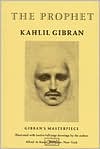
THE PROPHET

by

Khalil Gibran

If you are viewing this poem on the home page, you will need to click with your mouse on the subject line of the post to see the poem laid out properly.

And a man said, Speak to us of Self-Knowledge.
And he answered saying:
Your hearts know in silence the secrets of the days and the nights.
But your ears thirst for the sound of your heart’s knowledge.
You would know in words that which you have always known in thought.
You would touch with your fingers the naked body of your dreams.

And it is well you should.
The hidden well-spring of your soul must needs rise and run murmuring to the sea;
And the treasure of your infinite depths would be revealed to your eyes.
But let there be no scales to weigh your unknown treasure;
And seek not the depths of your knowledge with staff or sounding line.
For self is a sea boundless and measureless.

Say not, “I have found the truth,” but rather, “I have found a truth.”
Say not, “I have found the path of the soul.” Say rather, “I have met the soul walking upon my path.”
For the soul walks upon all paths.
The soul walks not upon a line, neither does it grow like a reed.
The soul unfolds itself, like a lotus of countless petals.

♥ ♥ ♥

The Lebanese-American artist and poet-philospher, Gibran Khalil Gibran, died on this day in 1931. He was born in 1883. He wrote in the Arabic and in English and was from the northern Lebanon town of Bsharri (the ancient name meaning “the house of Ishtar,” after the goddess Ishtar worshiped by the ancient Phoenicians). Bsharri is in the Kadisha Valley below the famed cedar forests of Lebanon. In modern times Bsharri was enclave for Maronite Christians escaping from the Ottoman Turks. Until the late 19th Century/20th Century, Aramaic* was the language of Bsharri. Its influence is still evident in the verbal inflection of its people.

Initially, The Prophet (1923, U.S.), was not well-received by critics, though it met with some success with the public. By the sixties and the counter-culture** it – and all his work – gained greater acceptance and a wider audience. As with other like spirits, Gibran is considered a mystic by some and a charlatan by others. Gibran found wisdom in the transcendent elements of all spiritual traditions he encountered, but was born into a Maronite family.

The Maronites are Eastern Catholics in communion with the Apostolic See (the seat of authority for the Catholic Church based in Rome, Italy), and followers of St. Maron, a Syrian priest of the fifth century. Also from the Aramaic speaking peoples, St Marion was a friend and contemporary of St. John Chrysostom (Turkish) and Anthony the Great (Egyptian) and led a monastic life. Before the rise of the Ottoman Empire and the subsequent Lebanese diaspora, this was the majority population in the Lebanon. 3,500,000 people practice this religion world-wide. In the United States some 200,000 are Maronite.

Maronites building a church on Mt. Lebanon, circa 1920s. Public domain photo via Wikipedia.

Video posted to YouTube by . This is a short documentary of about ten minutes.

Gibran Museum in Lebanon courtesy of Xtcrider via Wikipedia. Public domain photo.


Gibran Memorial at Copley Square in Boston, Massachusetts, U.S.A. via Wikipedia. Public domain photo.

1904 – 1930, written in Boston, New York and Paris, where Gibran studied art under Rodin.

* Aramaic, a Semitic language, was the language of Jesus and the Apostles, the literary language and the vernacular of ancient Asia Minor, Syria, Mesopotamia, and Palestine. The Peshitta texts (Old and New Testaments) were written in Aramaic and some claim they are the original New Testament documents.

**counter-culture – a cultural movement initiated mainly in the U.K. and the U.S. It spread though most of the western world between 1958  and 1974 with its peak after 1964. The counter-culture movement of the ’60s created a cultural divide mainly along age lines with youth forming a subculture questioning the social norms of the day and changing many regarding wars (especially Vietnam), sexuality, religion and spirituality, music, drugs, abortion, women’s rights, racial rights, gay/lesbian rights, free speech, environmentalism, dress codes, and so forth. It started in ’58 in London with an act of civil disobedience when students marched to ban the bomb (i.e. nuclear weapons).

Photo credit for Washington, D. C. Memorial – Gyrofrog licensed under Creative Commons ShareAlike 1.0 License.


Posted in Essay, Teachers

THERAVADA SPIRITUALITY

THERVADA SPIRITUALITY IN THE WEST

by

Gil Fonsil

While the Western contact and study of the Theravāda tradition goes back to the earliest Christian missionaries in Sri Lanka in the sixteenth century and to European scholars in the early nineteenth century, the beginning of popular Western interest in and inspiration from Southeast Asian Buddhism began around 1870. Since that time there has been two peaks in this interest: the first, from 1870 to 1912 and the second, a century later from 1970 to the present. The former was characterized primarily by an intellectual orientation as Europeans and Americans found in the early Buddhist texts preserved by the contemporary Theravāda tradition an attractive alternative to Western religious beliefs. In contrast, the current upsurge in interest centers predominantly around religious praxis, with specific practices attaining great popularity sometimes completely divorced from the doctrinal and religious context of the Southeast Asian Theravāda tradition(s). At the same time however, an influx of immigrants from Theravāda countries, especially to the United States, has resulted in the presence of numerous Thai, Burmese and Sri Lankan temples that replicate the cultural forms of Theravāda Buddhism of their respective home countries. Most of these ethnic temples created since 1970 have had little impact outside of their respective ethnic constituencies.

With the exception of the partially westernized Sri Lankan missionary Anagārika Dharmapāla (1864 – 1933; discussed below), Theravāda Buddhism has mostly been introduced to the West by westerners. As can be expected, the importation of Theravāda Buddhism to the West has involved a selection, translation and adaptation process as westerners defined the tradition for themselves. What has been most fascinating about this process is that the twentieth century Theravāda Buddhism that many westerners are encountering in Southeast Asia has been profoundly changed by the nineteenth century Asian contact with the West and with Western interpretations of Buddhism. MORE [Insight Meditation Center, Redwood City, California, USA]

♥ ♥ ♥ ♥

Teacher

Gil Fronsdal is the primary teacher for the Insight Meditation Center in Redwood City, California; he has been teaching since 1990. He has practiced Zen and Vipassana in the U.S. and Asia since 1975. He was a Theravada monk in Burma in 1985, and in 1989 began training with Jack Kornfield to be a Vipassana teacher. Gil teaches at Spirit Rock Meditation Center where he is part of its Teachers Council.

Gil was ordained as a Soto Zen priest at the San Francisco Zen Center in 1982, and in 1995 received Dharma Transmission from Mel Weitsman, the abbot of the Berkeley Zen Center. He is currently serving on the SF Zen Center Elders’ Council.

Gil has an undergraduate degree in agriculture from U.C. Davis where he was active in promoting the field of sustainable farming. In 1998 he received a PhD in Religious Studies from Stanford University studying the earliest developments of the bodhisattva ideal. He is the author of The Issue at Hand, essays on mindfulness practice, and the translator of The Dhammapada, published by Shambhala Publications.

You may listen to Gil’s talks on Audio Dharma.

The Buddha illustration is courtesy of The Buddha Gallery. If you click on the photograph, you will link to a detailed description.

Bells - Click image to download.