Posted in Jamie Dedes, Teachers

HONORING THE ULTIMATE MOTHER: Falling back in love with Mother …

THICH NHAT HANH (IN BROWN) AT HUE CITY AIRPORT, VIETNAM (2007)

“The situation the Earth is in today has been created by unmindful production and unmindful consumption. We consme to forget our worries and our anxieties. Tranquilizing ourselves with over-consumption is not the way.”  Thich Nhat Hanh, 2010, Tricycle Magazine

The Guardian UK posted an article in February that was written by Jo Confino and in which the dear Zen teacher, Thich Nhat Hahn, discusses his views on current environmental challenges and the need for a spiritual revolution to address them. I hope you will link through and read the article today or watch the interview video below in honor of our ultimate Mother, Earth. In Metta on Mothers Day, J.D.

“Zen master Thich Nhat Hanh has been practising meditation and mindfulness for 70 years and radiates an extraordinary sense of calm and peace. This is a man who on a fundamental level walks his talk, and whom Buddhists revere as a Bodhisattva; seeking the highest level of being in order to help others.

Ever since being caught up in the horrors of the Vietnam war, the 86-year-old monk has committed his life to reconciling conflict and in 1967 Martin Luther King nominated him for the Nobel Peace Prize, saying “his ideas for peace, if applied, would build a monument to ecumenism, to world brotherhood, to humanity.”

So it seems only natural that in recent years he has turned his attention towards not only addressing peoples’ disharmonious relationships with each other, but also with the planet on which all our lives depend.” MORE

And here is the video of the interview:

Photo credit ~ courtesy of Lu’u Ly via Wikipedia and generously released into the public domain.

Video ~ uploaded to YouTube by  .

Posted in General Interest, Jamie Dedes

WHILE I WAS GONE …

“And it occurred to me that there is no such thing as blogging. There is no such thing as a blogger. Blogging is just writing — writing using a particularly efficient type of publishing technology.” Simon Dumenco, writer/blogger with Advertising Age

BACK TO THE BLOG

by

Jamie Dedes

Well, I’m back and with me my partners, Ann and Rob, and all of the wonderful writers and poets who have contributed and will continue to contribute to the richness of this blog. (Thank you!) Short story: I’ve been “occupying” or at least boycotting my former Internet Service Provider for poor customer service and for billing for services not rendered. This isn’t done in the spirit of meanness or revenge, but in the search for honesty and ethic and justice, though I will go to war if need be to get the billing corrected.  Meanwhile, after much research, I found new provider that has – according to online reviews and polling of friends – a better ethic and more reliability. One can only hope …

Most immediately, I plan to catch-up with our readers. I look forward to finding out what I missed in your blogs – your lives, your wisdom and joy, your art – over the past month. There is always the richness of spiritual practice, family, friends, books, music, and shows. Still, a vacuum was created during the month I was off-line. For your concerned email notes and for your comments here: thank you!

I have many fine submissions to organize for publication. Some require work before they can be published. I’m not sure how fast they’ll go up, but you won’t be disappointed when they do. Stay tuned …

 See you in the Blogosphere!

and, from all of us to each of you, thank you for reading and commenting here.

Jamie

Posted in Jamie Dedes, Poems/Poetry

TRAFFICKING IN DREAMS.

Oh love and summer,  you are in the dreams and in me…Leaves of Grass by Walt Whitman

·

TRAFFICKING IN DREAMS

by

Jamie Dedes

·

Sitting on the worn stone steps of summer

on salty Brooklyn nights in Dyker Heights

with our senior year pending like a threat.

Jamming sessions.

Sharing hugs.

Sipping cokes.

I sang you, my first song. You played me,

honeyed melodies in B on a new guitar.

·

Stan on his Irish frame*. Jim on horn.

Your sassy sister chorine** sprinkling

silver star-dust. We trafficked in dreams.

But faith betrayed, a rusted rudder;

your future a rose-bright moon

falling sadly into a turquoise sea.

·

You’d drive me home at dawn

in your dad’s blue Nova, into a

violet sunrise, deep purple maples

standing guard by mom’s place.

Now gone, you and the old roost.

·

No more of your music. No old friends.

Just meandering the strangest streets

mumbling something off-key, strumming

the memory of you, a new guitar, and

the summer we trafficked in dreams.

·

© 2010-2012 poem, Jamie Dedes, all rights reserved

Photo credit ~ Petr Kratochvil, Public Domain Pictures.net

* a bodhrán drum.

** 1920s American term for a chorus girl.

Posted in Essay, Jamie Dedes, Writing

THE HAPPY HOBBYIST: Personal Blogging Explored

PERSONAL BLOGGING HAPPINESS

by

Jamie Dedes

THE GREAT JOY OF THE BLOGGING HOBBY: IT COMBINES CREATIVITY WITH SOCIAL NETWORKING AND SELF-EDUCATION. The operative word in that statement is “joy.” I should know. I enjoy blogging so much that I have five personal blogs and one collaborative blog (this one), and they are all for fun, not money. (Ads are WordPress ads, not mine or ours.)

As I write this, WordPress.com alone hosts 72,467,611 sites with over 351 million people viewing more than 2.5 billion pages each month. WordPress.com users produce about 500,000 new posts and 400,000 new comments on an average day. While not all of these are personal (hobbyist) blogs, it’s probably safe to guess that most are.  [Those stats found HERE.]

UNDER THE MICROSCOPE

professional view:

the study that inspired this post

Hobbyist Bloggers Are Us:  Personal blogging is a mostly American phenomenon, but it’s a recreational pastime that is gaining participation across the globe.

Cumulatively we are such a big chunk of humanity producing so much work and using computers for so many hours that we are the subject of disdain and admiration, debates and studies. One study by Computers in Human Behavior published in Science Direct is: Who Blogs? Personality Predictors of Bloggers*.

Using five measures of the NEO Personality Inventory, two sociological studies of American bloggers determined that individual differences based on the Big Five factors [neuroticism, extraversion, agreeableness, openness to experience, and conscientiousness] can predict who among us is likely to blog. It may not surprise you to learn that “openness to new experience” is a trait those of us who gravitate to blogging are likely to have. It might dismay you to learn that “high in neuroticism” is also one of our traits.

NONPROFESSIONAL OPINION

this would be me: I beg to differ

My best nonprofessional (I’m not a social scientist) and totally biased opinion about who blogs and why: My perception is that it is an outlet for the creative impulse, sharing information, and networking with people who have the same interests. This is an admittedly narrow view: My focus is writers and poets, amateur and professional. I don’t generally read mommy blogs or web journals or other such.

As an inveterate reader of blogs, bloggers seem to be as rich with family and friends and spiritual support as any other group with which I’m involved, but they are often solitary when it comes to an interest in poetry, reading, photography or art and so on. Even when they live in a densely populated area, there may be no access to poetry groups, writers’ groups, or book clubs. Blogs then become a meeting place for these shared interests. While we could share our poems, essays, or fiction with family and friends, this sharing may not be well-received and anyway – why?  The idea of constantly pulling out our poems or other creative efforts to show at every gathering doesn’t necessarily appeal. It feels rather like the creative version of multilevel marketing wherein you display whatever you’re selling, corner your best friends, and impose on them to buy.

It is also clear that some bloggers are using their blogs to practice their English skills, hone their writing skills, and get feedback on their work. For writers (amateur or professional) there is no better discipline than forcing oneself to produce consistently and on schedule.  Blogging provides a good structure for this. It is also an excellent place to test our more creative experiments.

VALUE ADDED

whole world living

Bloggers often engage in whole-world living. With a growing international base, what an education to visit the sites of people around the world who are just regular folks – like neighbors – and not personalities, politicians, or commercial interests. The perspective from the ground is refreshing, informative, and sometimes inspiring. There are heroes everywhere.

HONOR AMONG BLOGGERS

to paraphrase John Locke, access is not license

Just my opinion ~ Personal pride and honor as well as respect for the original creative works of others – often born of long hard hours – dictates courtesy when reblogging or otherwise introducing a work: acknowledgement, link backs, by lines, and copyrights protections are always in order regardless of circumstance.

I am proud of our blogging community where, except in very rare cases, you will find refined moral compass, personal dignity, and the rights and concerns of others are respected. Professionalism (used here in the sense of competence and conduct, not occupation) is always in order for personal bloggers like us as well as the pro-bloggers.

BALANCE

Close you computer and go for a stroll:

advice for writers from Garrison Keillor

BLOG ON – HAPPY BLOGGERS!

* Guadagno, R. E. et al., Who blogs? Personality predictors of blogging, Computers in Human Behavior (2007), doi:10.1016/j.chb.2007.09.001

·

Illustration courtesy of morgueFile.

Video uploaded to YouTube by .

Posted in Jamie Dedes, Poems/Poetry

A MEMORIAL FOR OUR FRIEND …

“We’re all just walking each other home.” Ram Dass

For Trekker …

Ann, Rob, and I attend his memorial today.

·

WALKING HOME

by

Jamie Dedes

·

his leathered skin a shroud, crinkled

furrowed from his wild mind and dry

explorations under our California sun

where he wondered with his students

·

and friends, the outdoorsmen stand

by him as he rests dying by an oak

table, a jelly glass, childhood fave

sits with his preferred gin, taking it

·

by the spoonful from the kind hand of

a hospice nurse until he rests, sleeps

then walks on, in the doleful blue of

of our tears: a soft fairwell dear friend

·

© 2012 poem, Jamie Dedes All rights reserved

Photo credit ~ Vera Kratochvil, Public Domain Pictures.net

Posted in Essay, Jamie Dedes, Spiritual Practice

COMPASSION AT THE CORE


1st Row: Christian CrossJewish Star of DavidHindu Aumkar

2nd Row: Islamic Star and crescentBuddhist Wheel of DharmaShinto Torii

3rd Row: Sikh KhandaBahá’í starJain Ahimsa Symbol

COMPASSION AT THE CORE

by

Jamie Dedes

“Compassion is the pillar of world peace.” H.H. 14th Dalai Lama, A Human Approach to World Peace

The peaceful path of compassion is at the core of all the wisdom traditions, the conduits by which grace flows into our lives. If our species is to overcome current conflicts and truly be at peace with ourselves, we must tread the compassionate path and we must do it with bone and muscle as well as heart and mind. It must be a path where service and meditation converge.

In the Summa Theologiae, the great work of St. Thomas Aquinas, he suggests just that. He defines mercy (a virtue) as “the compassion in our hearts for another person’s misery, a compassion which drives us to do what we can to help him.” He describes mercy as having two aspects “affective” – or emotional – and “effective,” which is positive action.

We all have something to teach. We all have something to learn ~

People from varied traditions come to Buddhism – not to convert – but to learn the meditative skills that Buddhism teaches. Buddhists also have lessons to learn from other religions:

“…many Buddhists are interested in learning social service from Christianity. Many Christian traditions emphasize that their monks and nuns be involved in teaching, in hospital work, caring for the elderly, for orphans, and so on . . .  Buddhists can learn social service from the Christians.” H.H. 14th Dalai Lama, The Buddhist View toward Other Religions

Meditative practice is central to Buddhism. Along with devotions (prayers and religious observance), action (good works) is central to Christianity and the other Abrahamic traditions, which is not to imply that there are no meditative practices or that inward practice is more important than outward action. Rather, each has its place and they are complementary. Our meditative practices enhance tranquility, ensuring that our good works are appropriate and done in the right spirit.

A compassionate heart is moved to embrace and not to judge. A compassionate hand is moved to work and to sacrifice for the greater good. Selflessness, well-seated in compassion, implies action that both materially and spiritually benefits others. The Dalai Lama and Thích Nhất Hạnh, social activists as well as spiritual leaders, are the very breath of compassion and they and the people in the organizations they lead endlessly provide selfless service and share spiritual solace with all.

Buddhism in the West is a relatively new practice. To my knowledge it is only recently that American Buddhists have organized for relief efforts with Buddhist Global Relief (BGR), which in its short life has implemented quite a number of effective projects. The main mission of BGR is hunger, not simply addressing it in its immediacy but also advocating for changes within our global food systems that will ensure social justice and ecological sustainability. BGR was started by American Buddhist monk and scholar, the Ven. Bhikkhu Bodhi, calling attention to the “narrowly inward focus of American Buddhism” and its neglect of social engagement. Moslems, Jews, and Christians have long-standing organizations for global relief and social activism.

It is healing grace when social services are delivered on a nonsectarian basis and without the expectation of conversion. The Koran admonishes (2:257): “Let there be no compulsion in religion.”

We’re each born into a path or choose (or forego) one. Our devotion to one religion shouldn’t prevent respect for the others. Abū al-Muġīṭ Husayn Manṣūr al-Ḥallāğ (Mansur Al-Hallaj, 858-922), the Persian Sufi teacher and poet wrote from his own perspective:

“My heart has opened into every form. It is a pasture for gazelles, a cloister for Christian monks, a temple for idols, the Ka’ba of the pilgrim, the tables of the Torah and the book for Koran. I practice the religion of Love. In whatever directions its caravans advance, the religion of Love shall be my religion and my faith.”

Maybe we humans will come as close to peace and perfection as we can when we combine the “specialties” of Buddhism and the Abrahamic traditions ~

Compassion without meditation can result in cruelty and confusion. Compassion without action is insufficient to address concerns of the human condition.

Orthodox Christianity offers us guidelines for corporal (material) works of mercy:

  • feed the hungry
  • give drink to the thirsty
  • clothe the naked
  • house the homeless
  • visit the sick
  • engage in conscientious activism
  • bury the dead

The guidelines for spiritual works of mercy are:

  • share insight with the spiritually curious
  • counsel the fearful
  • provide brotherly support for those who live unwisely
  • bear wrongs patiently
  • forgive offenses willingly
  • comfort those who are suffering
  • pray (unify with the Ineffable) for the welfare of the living and the dead

In the ideal, these guidelines are not simply implemented in the privacy of our own prayers and meditations or with detachment in supporting civic and religious charities, but one-to-one in our everyday lives and in a spirit of unity. Mystical Judaism teaches us that: “Kindness gives to another. Compassion knows no other.”

There are 114 chapters in the Islamic scriptures, the Koran. Each begins with the principled: Bismillah ir-Rahman ir-Rahim (In the name of God, most Gracious, most Compassionate). This reminds me of the classical Christian ideal expressed in the Koinḗ Greek agápē, the love of Christ or God for humankind. I suspect it is also – like agápē – a call to action: to live in harmony with the Divine and all creation, that is to live with grace and mercy.

Charity, self-control, and compassion are the central virtues of Hinduism. Ahimsa (do no harm) is part of the Hindu ideal of compassion. This implies action, not just abstinence.

Perhaps this wisdom from an unknown saint or bodhisattva provides us the best advice for our own peace of heart and our species’ survival ~

“The true happiness that man has searched for since the dawn of time, that inner gold that awaits any person who holds compassionately the key of generosity: Do something for your fellow-man … and you shall truly have the gold.”

Gratitude is compassion’s fulcrum ~

“The roots of all goodness lie in the soil of appreciation for goodness.” H.H. 14th Dalai Lama

Gratitude is also the emotion that compels us to give back by caring compassionately for our fellow humans and providing responsible and loving stewardship of the animals who are our companions in nature and this mother earth that sustains us. This does, of course, preclude war which is a danger to all living things.

Expressing gratitude in some way to those who are kind and caring is what nurtures their gift of compassion so that the giver can continue to give and also learn to receive. The natural law of balance is then honored.

May our compassionate paths be fully human and traveled quietly, without pronouncement, conceit, sectarianism, or self-righteousness. May our compassion be a thing of the heart and mind -yes! – but also bolstered with bone and muscle and seasoned with gratitude. May all sentient beings find peace.

© 2012, essay, Jamie Dedes All rights reserved

 Illustration ~ religious symbols by Rusus via Wikipedia and released into the public domain

Posted in Jamie Dedes, Poems/Poetry

BECAUSE

BECAUSE


by


Jamie Dedes

·

wind came through like an old bruja* one night

taking her broom to my cloud, scattering the seeds

of my hording to all the four corners and the center

below where I do my shopping for earthly things

down I went to try to gather them up only to

·

meet a philosopher peach who set me on my ear

with his questions on mind, matter, and meaning

wanting to know why he couldn’t taste himself

and how was it that I had a mouth that wouldn’t

·

in any trance, no matter the depth of it, be a

peach, pointing out to me how we needed one

another to get the job done and – Why?, he asked

and what could I say, having lived my life in the

·

clouds, drinking the vapors of trust and basic

instinct, and knowing tomorrow is today and

this day is perfect, and no matter the whys and

the wherefores, there’s a rightness to it all, so

·

on frail rimy breath, like the child I once was,

I… answered him simply: because

·

* bruja, Sp. – witch

© 2012, poem, Jamie Dedes, All rights reserved

Photo credit ~ mohan p, Public Domain Pictures.net

Posted in Jamie Dedes, Poems/Poetry

LOVE UNDER THE SHADOWS

“Ever has it been that love knows not its own depth until the hour of separation.” Kahlil Gibran

LOVE UNDER THE SHADOWS

by

Jamie Dedes

nothing moves, not even the reluctant beat

of your heart, which once danced with mine

and made rough sense of life, now so like

·

summer noon when all is still, even bees

and your gray eyes that happily feasted

on mine and shared my lamentations

·

death too grieves at the sorry circumstance

of such fools whose trivial discontents and

untoward presumptions fade into nothing

·

tears that we embraced the world and the

flesh and neglected the shadows that rode our

backs where angel wings more rightly rest

·

© 2012 poem, Jamie Dedes All rights reserved

Photo credit ~ Michael Drummond, Public Domain Pictures.net

Posted in Jamie Dedes, Poems/Poetry

CRACKING COSMIC EGGS

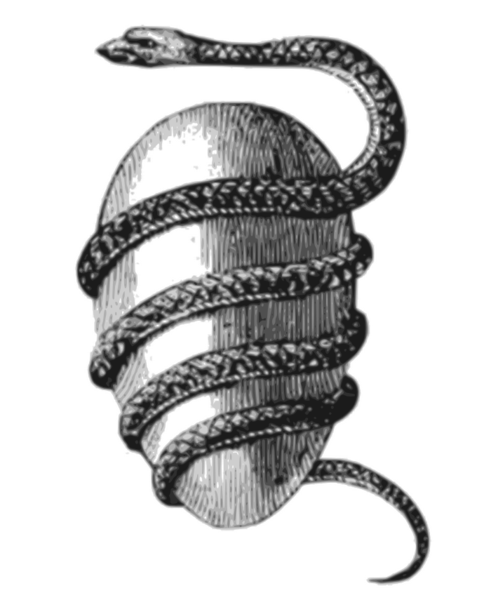
The Orphic Egg

The egg was an important symbol in early mythologies. It was believed that the Universe evolved from a great egg, each half corresponding to heaven and earth. I fancy that – reflecting the greater Universe from which we evolve – we each have a store of creativity and productivity, our personal “cosmic eggs.” 

·

CRACKING COSMIC EGGS

by

Jamie Dedes

careless spill of our treasured store,

our divine inheritance of cosmic eggs,

cracking them, betraying our truth,

or feeding them to the great poverty

of media trickery, more refuse than

mortal mind or heart can ever hope

to process in such rot ripe days of

political theatre and celebrity gossip

·

© 2011, 2012 poem, Jamie Dedes, All rights reserved

Posted in Jamie Dedes, Poems/Poetry

INTERNATIONAL WOMEN’S DAY: Connecting Girls, Inspiring Futures

In Pakistan the theme for International Women’s Day is “Connecting Girls, Inspiring Futures.”  In solidarity (I just picked a country at random), I am reblogging this poem, which I wrote last year.” I hope the day will come when all people  – regardless of country or gender – are able to express themselves creatively in whatever way and whatever field resonates for them.

·

I know that I haven’t powers enough to divide myself into one who earns and one who creates. Tillie Ollsen (1912-2007), American writer and feminist

·
I READ A POEM
by
Jamie Dedes

I read a poem today and decided

I must deed it to some lost, lonely

fatherless child to embrace her

·

along her stone path, invoke sanity

I want to tell her: don’t sell your

dreams for cash or buy the social OS*

·

Instead, let the poem play you like a

musician her viola, rewriting lonely

into sapphire solitude, silken sanctity

·

Let it wash you like the spray of whales

Let it drench your body in the music

of your soul, singing pure prana into

·

the marrow and margins of your life

Let the poet-shaman name your muse

and find you posing poetry as art and

·

discover the amethyst bliss of words

woven from strands of your own DNA.

Yes. I read a poem today and decided

I must deed it to a lost fatherless child

·

© poem, 2011, 2012, Jamie Dedes All rights reserved

* OS – Operating System

Photo credit – Jaime Junior, Public Domain Photographs.net

♥ ♥ ♥ ♥

Women’s Day Live 2012

Video uploaded to YouTube by .

Posted in Jamie Dedes, Meditation

THE DEPTHS OF YOUR HEART

Jalāl ad-Dīn Muḥammad Rūmī

Sufi Mystic and Poet (1207 A.D. – 1273 A.D.

Born in what is now Afghanistan, Died in Turkey

Your heart is the size of an ocean.

Go find yourself in its hidden depths.

Rumi

Wishing you peace of heart. Always. 

Jamie

·

Credit ~ The illustration of Rumi is in the U. S public domain.

Video ~ upload to YouTube by Mevlanaism.

Posted in Essay, General Interest, Jamie Dedes, Writing

INTERNATIONAL WOMEN’S DAY: Celebrating and Empowering Women

CELEBRATING WOMEN
·
by
·
Jamie Dedes 
·
INTERNATIONAL WOMEN’S DAY is on March 8. If you are searching for blogging themes this month (festivities are month-long and not restricted to the one day), you’ve got them here. This global event creates space to celebrate economic, political, and social contributions of women. Governments, organizations, charities, and women’s groups choose themes that reflect gender issues, which may have a global or a local focus. No reason why you can’t choose a theme for a post or poem that relates to issues most significant to you. Or, you can stick with a theme that is the focus in your community. You’ll find the themes listed in the blog roll HERE along with lists of events in your area. Some of the themes being explored this year are:
  • Empower Rural Women – End Hunger and Poverty (United Nations)
  • Connecting Girls, Inspiring Futures (International Women’s Day 2012 Website)
  • Equal pay for work of equal value (European Parliament)
  • Strong Leadership. Strong Women. Strong World: Equality (Canada)
  • Unite to End Violence Against Women (Australia, UNIFEM)
  • Our Women, Our State (Australia, Queensland Government Office for Women
  • Sharing the Caring for the Future (Australia, WA Department for Communities)
  • Success in Globally Integrated Enterprise (USA, Woment@ IBM)
  • Women’s Voices and Influence (UK, Doncaster Council)
  • Stretch Yourself: Achieving 50:50 in the boardroom by 2020 (UK, Accenture)
  • Bridging the Generational Gap (UK, Doncaster Council: Women’s Voices and Influence)
For more information on this event link to International Women’s Day 2012.
·
♥ ♥ ♥
·
AND SINCE WE ARE CELEBRATING WOMEN, WHY NOT TWO OF OUR OWN?: Two poets and writers in our blogging community recently had new books accepted for publication. They are Victoria C. Slotto (an Into the Bardo contributing writer) and Heather Grace Stewart. Congratulations ladies!
·
Meet and greet Victoria on March 21 if you are in Southern California:
  • Victoria will be at a book fair in Rancho Mirage on March 21st at the Rancho Mirage Library 10AM to 2PM.
·
If you live in Quebec, mark your calendar’s for Heather’s launch party in May.
  • Carry On Dancing Launch Party  May 8, 2012: 4873 St. Laurent Blvd. Doors open 8:30 p.m. Bar & coffee bar Music by Kimberly Beyea & Jim Bland. Can’t wait to celebrate with you! Details HERE.
·
♥ ♥ ♥
·

Related articles on International Women’s Day:

Posted in Film/Documentaries/Reviews, Jamie Dedes

THE ULTIMATE GRACE OF GRATITUDE

GRATITUDE

Introduction to a Short Film

by

Jamie Dedes

I am so charmed by this six-minute moving-image film – you will be too – that I had to post it on Into the Bardo. I first shared it some time ago on at my primary playground, (Musing by Moonlight), where it was well received. If you can’t access YouTube or this specific video from your country, this film and The Hidden Beauty of Pollination are both on the TED talks site.

THE WISE AND GRACE-FILLED NARRATIVE

THE HEART OF THE FILM

The heart of this little gem is the gift of the very dear Br. David Steindl-Rast. If you are familiar with Br. David’s philosophy, writing, and voice, you will have immediately recognized who wrote and delivered the narrative.

BROTHER DAVID STEINDL-RAST (b. 1926)

Viennese, Catholic Benedictine Monk

Br. David is notable for his work fostering dialogue among the faiths and for exploring the congruence between science and spirituality. Early in his career he was officially designated by his abbot to pursue Catholic-Buddhist dialogue. He studied with several well-known Zen masters. He is the author of feature articles, chapter contributions to collections, and books. Among the most notable are Belonging to the Universe (with Frijof Capra) and The Music of Silence: A Sacred Journey Through the Hours of the Day (with Sharon Lebell). Br. David is the co-founder of A Network for Grateful Living, dedicated to the life-transforming character of gratitude.

THE FILMMAKER

Louie Schwartzberg, the film-maker, is an American and well-known for his time-lapse photography. The short-film here is one of several – each with a different theme – which you can find on YouTube.

THE MUSIC

The mood music background is by composer Gary Malkin. “He is founder of Musaic and Wisdom of the World™, a media production company and web site. He is also the co-founder of Care for the Journey, a care-for-the-caregiver initiative for healthcare professionals.” MORE

© 2011, Jamie Dedes All rights reserved

Video uploaded to YouTube by 

Photo credit ~ Br. David Steindl-Rast, courtesy of Verena Kessler. She has released the photograph into the public domain.

Posted in Buddhism, Jamie Dedes, Poems/Poetry

THE TRANSFORMATION OF THINGS

Zhuangzi Dreaming of a Butterfly by Lu Zhi (1496–1576), Ming dynasty, mid-16th century Ink on silk, 29.4 x 51.4 cm

THE TRANSFORMATION OF THINGS

by

Jamie Dedes

A Man sleeping … yes!

A Butterfly flitting… yes!

Zhuangzi, dreamer of Butterfly,

ponders what joy there might be

in that tiny Butterfly brain, so small

too small to be perceived by I or eye

Is it dreaming me? he asks

Or, am I dreaming it?

Imagine the Universe engaged,

he thinks to himself, inside that flutter

– thunder, a Cosmic Belly Laugh –  Ho! Ho! –

Then Zhuangzi knows: He is silent

flitting from flower to flower in eternal spring

coming and going, going and coming

This is called the Transformation of Things

·

© poem, 2012 Jamie Dedes, All rights reserved

Photograph courtesy of Gemeinfrei, in the U.S. public domain.

Posted in Jamie Dedes

I DANCE FOR THEM

from a rain forest

Here the dancer stops

to regain her balance

and re-elaborate the distance

In the Empire of Light, Michael Palmer

·

I DANCE FOR THEM

by

Jamie Dedes

·

We danced in step we four, a pas de quatre on river rocks,

me dreaming wild of unicorns and rainbows.

In that faraway place of  raging river, ancient Cloister –

escaping to the city with my once-young mother,

embracing antique stories told in graceful moves and music

made for those with better breeding, more cultivated minds.

·

Home, our home, a place of first loves, unfounded hope

where simmering, Sidto* served soup to my sister,

a dark-olive girl-fugue in tar black  and char dust.

In that place whirling with church spires and myrtle trees,

hooting and shrieking, we strode tortured shores,

then buried our anger in silence, bitter as bile.

I broke my ballerina legs in a premature grand jeté.

I failed to heal those fissured old hearts.

·

We were lost then, somewhere out in crazy time, lazy mind –

passing green humid summers, silver crisp winters,

fielding the slings of earth-bound distress. Home  . .  .

At home, such a tangled skein of love and lies and ties,

where, by some bogey breeze, we danced lockstep on river rocks,

me dreaming wild of unicorns and rainbows . . .

Solitary now, alone now above rainforest layers of fertile mind –

my energy moves triumphant, a pas marché on gray status clouds,

which rain down hard-won poems in roses, willow greens, and light.

With twice found hope and tender love, I dance for them.

·

Sidto – grandmother, derived from the Arabic.

Dance terms:

  • pas de quatre – a dance for four.
  • grand jette – a broad, high leap with one leg stretched forward and one stretched behind. In effect, a “split” that is airborne.
  • pas marché – the regal marching-step of the premiere danseuse, the principal female dancer in a ballet company

© poem, 2011, 2012 Jamie Dedes, All rights reserved

Illustration courtesy of Fran Hogan, Public Domain Photograph.net.

Posted in Jamie Dedes, Poems/Poetry

HEART

·

HEART

by

Jamie Dedes

rhythm at the core

of lost and found

songs and celebrations

rattle of death and dirge

scent of garden

stench of compost

stored

waiting for the day

on a hero’s quest

you find memory

neatly boxed

in heart’s thrum

your weary eye

seeks reason

discovers meaning

as if

a silent artisan

preceeding you

formed your soul

gave downy wings

to your heart

fly free

© poem, Jamie Dedes, All rights reserved

Posted in Essay, Jamie Dedes

OUR ORIGINAL ASTRONAUTS

Miss Baker

In Huntsville, Ala., there is an unusual grave site where, instead of flowers, people sometimes leave bananas.

The gravestone reads: “Miss Bakersquirrel monkey, first U.S. animal to fly in space and return alive. May 28, 1959.”

Fifty years ago, when Baker made her famous flight, she had some company in the nose cone of the Jupiter ballistic missile: a rhesus monkey named Able.MORE [National Public Radio (NPR)May 28, 2009]

OUR ORIGINAL ASTRONAUTS

by

Jamie Dedes

One day when I was looking for a photograph of a squirrel monkey to post on The Cat’s MeowI found one on Wikipedia along with a photograph of Miss Baker, one of our earliest astronauts. I hadn’t thought about our monkey astronauts in years, but I do remember reading about them as a youngster and feeling angry that they were used without having a choice in the matter. Miss Baker (an eleven-ounce Peruvian-born squirrel monkey) and her companion, Able (a seven-pound American-born rhesus), were the first to come back alive. Miss Baker lived to be twenty-seven and died of kidney failure. Able died four days after the landing. She developed an infection after having an electrode removed.  Able is preserved and on display at the Smithsonian‘s National Air and Space Museum. I find this disturbing. Am I the only one?

The U.S. wasn’t the only country to shoot animals into space. Russia and France did. The Russians and the Americans sent up mice as well as monkeys.

Δ

A sweet little squirrel monkey

enjoying the relative freedom of the Fuji Safari Park in Japan.

Δ

© 2011, 2012 Jamie Dedes, All rights reserved

Video uploaded to YouTube by .

Photo credits ~ Grave stone by Ms. Miserable via Find a Grave. The photo of Able on her couch in display at the National Air and Space Museum is by RadioFan (talk) under the terms of the GNU Free Documentation License via Wikipedia. The monkey in Fuji Safari Park is in the public domain and via Wikipedia. Ms. Baker’s photo is in the public domain and via the U.S. Federal Governent.

Posted in Jamie Dedes, Meditation, Spiritual Practice, Teachers

THE BREATH WITHIN THE BREATH

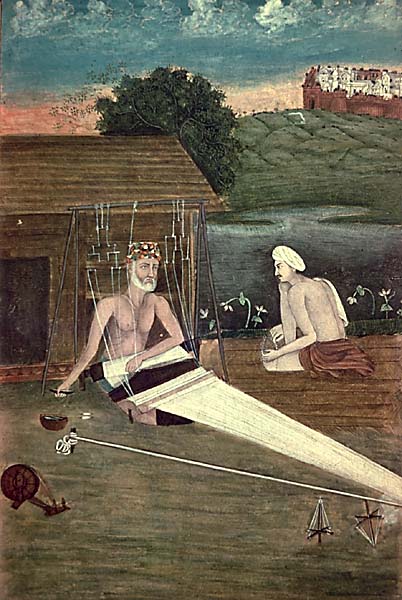
KABIR (1440-1580), MYSTIC POET OF INDIA

One of India’s great poets, Kabir’s gentle influence seems to have been broad and includes Sikhism, Bhakti, and the Sant Mat (path of the saints) sect, Kabir Panthis (Kabir’s Path). Sant Mat’s primary principle is a disciplined inward devotion to the Divine. One branch of that movement is Science of Spirituality under Sant Rajinder Singh Ji Maharaj, who has a substantial following in North and South America as well as India. Sant Mat spiritual practice involves Jyoti and Shabd meditation techniques. Jyoti is a basic practice in which the practitioner assumes a relaxed position and, with mind stilled, repeats any name of God with which s/he is comfortable. Shabd meditation is rather more complicated and involves an initiation process and a focus on the Inner Light and Sound.

In this reading of Kabir by Ram Dass, the core issues of life are explored. J.D.

http://www.youtube.com/watch?v=im3SdoVUnj8

·

© 2012 Jamie Dedes, All rights reserved

Illustration ~ public domain via Wikipedia

Video uploaded to YouTube by .