Posted in Poems/Poetry

THE PEACE OF WILD THINGS

THE PEACE OF WILD THINGS

by

Wendell Barry

When despair for the world grows in me
and I wake in the night at the least sound
in fear of what my life and my children’s lives may be,
I go and lie down where the wood drake
rests in his beauty on the water, and the great heron feeds.
I come into the peace of wild things
who do not tax their lives with forethought
of grief. I come into the presence of still water.
And I feel above me the day-blind stars
waiting with their light. For a time
I rest in the grace of the world, and am free.

·


Wendell Berry (born August 5, 1934) is an American man of letters, academic, cultural and economic critic, and farmer. He is a prolific author of novels, short stories, poems, and essays. He is also an elected member of the Fellowship of Southern Writers and a recipient of The National Humanities Medal. MORE

The poem is from Collected Poems of Wendell Berry, 1957-1982. Worth your time.

Photo credit ~ female wood duck at Crystal Springs Rhododendron Garden, Portand, Oregon, USA courtesy of kat+sam under Creative Commons Attribution 2.0 Generic License via Wikipedia

Photo credit ~ Wendell Berry courtesy of David Marshall under Creative Commons Attribution-Share Alike 2.0 Generic license via Wikipedia

Posted in Jamie Dedes, Poems/Poetry

DREAMING OF THE SHEIK

I’m the Sheik of Araby,

Your love belongs to me.

At night when you’re asleep

Into your tent I’ll creep.

The Sheik of Araby, lyrics by Harry B. Smith and Francis Wheeler, music by Ted Snyder, written in 1921 in response to the popularity of Rudolph Valentino and the movie The Sheik.

·

DREAMING OF THE SHEIK

by

Jamie Dedes

·

Oh yes, I’d say she’s about seven in that picture

Blue-black hair, curls bursting and tied with string

Hands folded neatly, one little foot turned in

·

With dark doe eyes staring at the waiting world

Long lashed and bright with hope and longing

What future did those clear sparkling eyes behold

·

What music played the strings of that young heart

She must have dreamt of men and marriage,

Well, she would assume love as young people do

·

Some standard dreams maybe, the house with

A white porch and rocker, a picket fence and

A back yard of rich dark earth, flowers and fruit

·

Sweet children would be a part of this fairy-dream

Roses for birthdays, lilies at Easter, and garland in May

Christmas trees and mistletoe and other such …

·

As she watered rubby beets and greens on the fire escape

And helped her mother with chores and siblings

No doubt she dreamed dreams gifted by movies, magazines

·

As she tied her worn boots, getting ready for school,

Smoothing her hand-me-down dress, then running

Down the steps and on through the slums …

·

She must have dreamed then of ocean mists and

Fresh air, streets with trees and well-groomed homes

And well-polished horseless-carriages for transit

·

When she grew old enough did she wait hopeful

On well-worn curbs under jaundiced street lights

A ghetto-bound Diana waiting for her handsome Sheik

·

And he, the Sheik looking for his Sheba, did he find her

Did he take her hand as she stood lovely, innocent

And did he soon leave her only to be followed by another

·

Did each Sheik stay long enough to steal her heart

And riding off take another piece of her, a souvenir

Of yearning and promise, love and gullibility …

·

Is that why she lies here now, eyes grown pale, heart empty

And a silent wail rising from the sacred depths of her being

“The movies and the magazines”, she says, “they lied …”

Then whispered softly: “When Valentino died, women

lined the streets for his funeral cortége and cried  … “

·

Rudolf Valentino as the Sheik and Agnes Ayers as Lady Diana.

“Women are not in love with me but with the picture of me on the screen. I am merely the canvas on which women paint their dreams. ”
Rudolph Valentino – 1923

Video posted to YouTube by tengirlsag

© 2009, 2010, 2011 Jamie Dedes, All rights reserved

Posted in Jamie Dedes, Poems/Poetry

HEARTS UNDER LOCK AND KEY

I wait until I hear a gate latch lift
the turn of key in lock.
I sit amongst toys and unwashed clothes,
I sit and she fingers the beads until you speak
in a voice that no longer seems familiar, only strange.
I turn as our child tugs at the string.
I hear a snap and a sound like falling rain.
The Albatross, Kate BassThe Pasta Maker
·
HEARTS UNDER LOCK AND KEY
·
by
·
Jamie Dedes
·
I really wanted
to speak to you of this:
the love I had wild
and so long ago
that now it’s dry
parched like a river
·
Once it was a love moist
as a green spring rain
delicate as snow
prolific as a poet
I gave you my love
a sweetly tender thing
·
a well-written poem
on twenty-pound linen
You handed love back
wrinkled and torn
and nicotine stained
smelling of whiskey
·
I handed you love
on our white wedding day
when you kept your heart
under lock and key
and your eyes wouldn’t
seek mine at the rail
·
I gave love to you
in the palms of our child
you brushed his sweet face
and flew away to
lose yourself in a
gold land with gold girls
·
Now I too keep my heart
safe under lock and key
and heavy the lock is
closed so tight with rust
and no hope in sight
no hope wanted
·
© 2010, 2011, Jamie Dedes, All rights reserved

Photo credit ~ © 2010, 2011, All rights reserved, Barb Stone, The List of Buddha Lists


Posted in Poems/Poetry

WHEN YOU SEE MILLIONS OF THE MOUTHLESS DEAD

CHARLES HAMILTON SORLEY (1895 – 1915)

British Poet

Charles Hamilton Sorley was born in Aberdeen in 1894. The son of the profressor of moral philosphy at Aberdeen University, Sorley was extremely intelligent and won a scholarship to Marlborough College.

In 1913 Sorely decided to spend a year in Germany before taking up the offer of a place at University college, Cambridge. When war was declared in August 1914, sorley immediately went back to England and enlisted in the British Army. Sorely joined the Suffolk Regiment and after several months training, Lieutenant Sorly was sent to the Western Front.

Sorley arrived in France in May 1915 and after three months was promoted to captain. Charles Hamilton Sorley was killed by a sniper at the Battle of Loos on October 13, 1915. He left only 37 complete poems, including the one he wrote just before he was killed, When you see Millions of the Mouthless Dead. Sorley’s posthumous book, Marlborough and Other Poems was popular and achieved critical success when it was published in 1916. [adapted from Spartacus Educational, a site developed by John Simpkin (MPhil.), British educator, historian, and member of the European History E-Learning Project] J.D.

·

WHEN YOU SEE MILLIONS OF THE MOUTHLESS DEAD

by

Charles Hamilton Sorley

When you see millions of the mouthless dead
Across your dreams in pale battalions go,
Say not soft things as other men have said,
That you’ll remember. For you need not so.
Give them not praise. For, deaf, how should they know
It is not curses heaped on each gashed head?
Nor tears. Their blind eyes see not your tears flow.
Nor honour. It is easy to be dead.
Say only this, “They are dead.” Then add thereto,
“yet many a better one has died before.”
Then, scanning all the overcrowded mass, should you
Perceive one face that you loved heretofore,
It is a spook. None wears the face you knew.
Great death has made all this for evermore.

·

Photo credit ~ a cropped and retouched version of a portrait of British soldier poet, Charles Hamitlton Sorely dated c. 1914/1915, since Mr. Sorely is in uniform here and was enlisted in 1914 and killed in 1915. The photo was first published in 1918. The collection of his poems came out in 1919. The photo is from For Remembrance: Soldier Poets Who Have Fallen in the War. The photograph is in the public domain.

*Poems ~ excepts from Marlborough and Other Poems by Charles Hamilton SorelyIt would appear that this book is currently in the public domain. You can read the entire book on or download it from Internet Archives HERE.

Posted in Poems/Poetry

A FINAL POEM

CECIL DAY-LEWIS (1904-1972)

BRITISH POET LAUREATE (1968-1972)

·

This well-received post is re-blogged today:

C. DAY LEWIS AT LEMMONS

by

Jamie Dedes

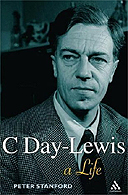
I discovered the Anglo-Irish poet Cecil Day-Lewis (C Day-Lewis) quite by accident the one day some time ago when I was preparing my Sunday news feature for the main site of an online poetry community with which I am involved. On the basis that we all benefit from knowing our roots and connections – no matter our occupation – I always start off with a snippet about a poet who either was born or died on the day of the posting. Cecil  Day-Lewis died on May 22 in 1972 of pancreatic cancer. He was the British Poet Laureate from 1968 until his death. There’s lots about him and his work that nags for my attention, but one poem really struck home.

At Lemmons (1972), according to the C Day Lewis website (HERE), was written by Day-Lewis on his deathbed at the home of Sir Kingsley William Amis (1922-1995), the English poet, novelist, critic, and educator. Amis is quoted as saying that, “At no time did Cecil mention death. My own strong feeling is that he came to draw his own conclusions from his physical decline and increasingly severe – though happily intermittent – bouts of pain, but, out of kindness and abnegation of self, chose not to discuss the matter.” This last poem, which demonstrates a wonderful grace and acceptance, was published posthumously.

AT LEMMONS

by

C Day Lewis

Above my table three magnolia flowers

Utter their silent requiems.

Through the window I see your elms

In labour with the racking storm

Giving it shape in April’s shifty airs.

·

Up there sky boils from a brew of cloud

To blue gleam, sunblast, then darkens again.

No respite is allowed

The watching eye, the natural agony.

·

Below is the calm a loved house breeds

Where four have come together to dwell

–            Two write, one paints, the fourth invents –

Each pursuing a natural bent

But less through nature’s formative travail

Than each in his own humour finding the self he needs.

·

Round me all is amenity, a bloom of

Magnolia uttering its requiems,

A climate of acceptance.  Very well

I accept my weakness with my friends’

Good natures sweetening each day my sick room.

·

Photo credit ~ Copyrighted cover art (fair use) for Peter Stanford’s biography of Day-Lewis,C Day-Lewis, a Life. Definitely on my reading list.

Posted in Guest Writer, Poems/Poetry, Uncategorized

OF DYING

OF DYING

by

Victoria Ceretto-Slotto (liv2write2day)

That pain surrounds our birth, there’s no denying,
though worse, the fear that comes with thoughts of dying.

For life’s sojourn is pierced by sounds of crying,
as day-by-day we creep unto our dying.

Absorbed by fear of loss, we turn to buying
mere toys to mask remembrance of our dying.

And as our days grow long we know dark sighing
of friends and those we love. We watch their dying.

Perhaps, at length, we will eschew defying,
instead, embracing death: Victorious dying.

·

© poem, Victoria Ceretto-Slotto, 2011 All rights reserved

© photo, Dead Tree in Sepia from Grumpy-Puddin’s Photostream via Victoria, some rights reserved

♥ ♥ ♥ ♥

Victoria Ceretto-Slotto ~ A former nurse, Victoria is a novelist, poet, artist, and a docent at Nevada Museum of Art. Currently she is hard at work with final edits on her novel, Winter Is Past, recently accepted for publication. A second novel is in progress. Victoria finds inspiration in the mysteries of life, death, art and spirituality. She lives and writes in Reno, Nevada and Palm Desert, California with her photographer husband and two canine kids. Victoria shares some of her poetry on liv2write2day’s blog, where she also provides writing prompts and offers coaching with Monday Morning Writing Prompt and Wordsmith Wednesday.

Posted in Jamie Dedes, Poems/Poetry

SOUL’S WINTER

In my coat I sit

At the window sill

Wintering with the snow …

The Dead of Winter by Samuel Menashe in Samuel Menashe: New and Selected Poems

·

MY SOUL’S WINTER

by

Jamie Dedes

soul’s winter with days like secret lights

like eels slithering in the depths of the sea

with vague interests and a fathomless eye

stilled by a gray groping arctic freeze into

thinking of what-fors, whys, then howling

and waking up in spring with the hope of

answers in the hint of fresh green summer

·

© poem, Jamie Dedes, 2011 All rights reserved

Photo credit ~ morgueFile

Posted in Poems/Poetry

SUCH, SUCH IS DEATH

CHARLES HAMILTON SORLEY (1895 – 1915)

British Poet

Charles Hamilton Sorley was born in Aberdeen in 1894. The son of the profressor of moral philosphy at Aberdeen University, Sorley was extremely intelligent and won a scholarship to Marlborough College.

In 1913 Sorely spent a year in Germany before taking up the offer of a place at University college, Cambridge. When war (World War I) was declared in August 1914, Sorley returned to England and enlisted in the British Army. He joined the Suffolk Regiment and after several months training, Lieutenant Sorly was sent to the Western Front.

Sorley arrived in France in May 1915 and after three months was promoted to captain. Charles Hamilton Sorley was killed by a sniper at the Battle of Loos on October 13, 1915. He left only 37 complete poems, including the one he wrote just before he was killed, When You See Millions of the Mouthless Dead. Sorley’s posthumous book, Marlborough and Other Poems* was popular and achieved critical success when it was published in 1916.  [adapted from Spartacus Educational, a site developed by John Simpkin (MPhil.), British educator, historian, and member of the European History E-Learning Project] J.D.

·

SUCH, SUCH IS DEATH (1915)

by

Charles Hamilton Sorley 

·

Such, such is Death: no triumph: no defeat:

Only an empty pail, a slate rubbed clean,

A merciful putting away of what has been.

And this we know: Death is not Life, effete,

Life crushed, the broken pail. We who have seen

So marvellous things know well the end not yet.

Victor and vanquished are a-one in death:

Coward and brave: friend, foe. Ghosts do not say,

“Come, what was your record when you drew breath?”

But a big blot has hid each yesterday

So poor, so manifestly incomplete.

And your bright Promise, withered long and sped,

Is touched, stirs, rises, opens and grows sweet

And blossoms and is you, when you are dead.

·

TO GERMANY (1914)

by

Charles Hamilton Sorely 

You are blind like us. Your hurt no man designed,
And no man claimed the conquest of your land.
But gropers both through fields of thought confined
We stumble and we do not understand.
You only saw your future bigly planned,
And we, the tapering paths of our own mind,
And in each other’s dearest ways we stand,
And hiss and hate. And the blind fight the blind.

When it is peace, then we may view again
With new-won eyes each other’s truer form
And wonder. Grown more loving-kind and warm
We’ll grasp firm hands and laugh at the old pain,
When it is peace. But until peace, the storm
The darkness and the thunder and the rain.

Photo credit ~ a cropped and retouched version of a portrait of British soldier poet, Charles Hamitlton Sorely dated c. 1914/1915, since Mr. Sorely is in uniform here and was enlisted in 1914 and killed in 1915. The photo was first published in 1918. The collection of his poems came out in 1919. The photo is from For Remembrance: Soldier Poets Who Have Fallen in the War. The photograph is in the public domain.

*Poems ~ excepts from Marlborough and Other Poems by Charles Hamilton Sorely. It would appear that this book is currently in the public domain. You can read the entire book on or download it from Internet Archives HERE.

Posted in Jamie Dedes, Poems/Poetry

BEGGING BOWL

·

The begging bowl is a symbol of receptivity and of acceptance, a parable of the soul.

·

BEGGING BOWL

by

Jamie Dedes

a bell pealing from a tower

a bird singing in the evergreen

the monks at the forest edge

these we are, speaking to the wind

sighing to night’s great indigo sky

holding out our begging bowls

to be filled with bee and bud

the alms of our noon-hours

·

·

Photo credit ~ Vintage Old Monk (China) with begging bowl courtesy of The Buddha Gallery

Poem by Jamie Dedes, copyright 2011, all rights reserved

Posted in Poems/Poetry, Spiritual Practice

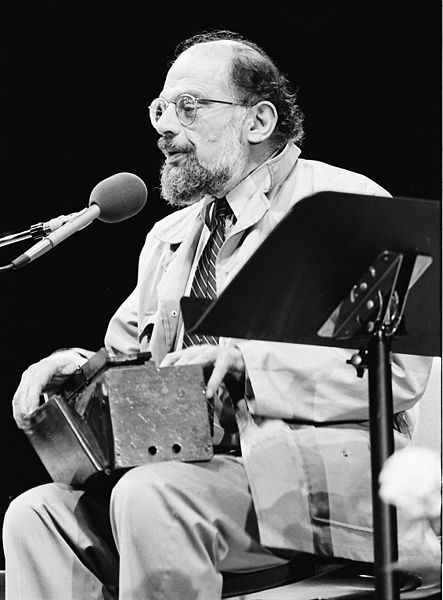
MEDITATION 101: Courtesy of Alan Ginsberg

DO THE MEDITATION ROCK

by

Allen Ginsberg 

is in this collection ~

Collected Works 1947 – 1997, Alan Ginsberg

recommended reading, three thumbs up!

Posted in Guest Writer, Perspectives on Cancer, Poems/Poetry

PERSPECTIVES ON CANCER #30: When Cancer Strikes

WHEN CANCER STRIKES

by

Dan Roberson

It was both
a blessing and a curse,

Her chestnut
hair was often tangled or worse,

There were
times Laura hated her hair,

Conditioners,
detanglers, moisturizers,

Sometimes made
her wish it wasn’t there,

 ·

It had been
that way as far back as memory could get,

Uncontrollable
when dry, hard to manage when wet,

Laura’s
curly hair was admired often, she’d confess,

But it was
often a distraction as a frizzy mess,

There weren’t
many options on how to fix her hair,

She worried when
the wind made it fly here and there,

Often Laura
looked out of control and people would rudely stare,

 ·

Looking
calm, peaceful, and beautiful was her goal,

Forgotten were
the comments about her beauty as a whole,

Intelligence
and her abilities made her special in all she did,

But under
hats, tied up in tight braids, her curly hair she hid,

 ·

Laura was a
businesswoman, ambitious in every way,

Determined to
be a success before she turned old and gray,

Laura was
also wife and mother with two children on her mind,

Time for
them or even for herself, was very hard to find,

 ·

Her husband
sent her flowers every month to let her know,

That he would be waiting for her if she decided to take life slow,

Her life was filled from dawn till night, with one job to the next,

Rarely did
she spend quality time with Joe, and both were too tired for sex,

Vacations
were quick and far away, with pictures to prove she was there,

But wherever
she went and whatever she did, she covered up her hair,

 ·

Questions
from a young M.D. on her routine annual exam,

Made her mad
when he said, “We need further tests for you, Ma’am,”

She went
through the tests mainly to prove him wrong,

Much to her
chagrin blood was drawn, it didn’t take them long,

Laura balked
at first when new appointments were made,

But soon she
was on her way and memories of the visit began to fade,

 ·

Later that week several phone calls at work interrupted
her day,

“We want you
to come in, not tomorrow, perhaps yesterday,”

“What’s so important?”
she wondered as she brushed tangles from her hair,

“I’ve always
been so healthy, so why should I care?”

That night
Laura brushed her hair ninety-nine times or more,

With each
tug she commented, “Curly hair is such a chore,”

 ·

But Laura
was restless, the upcoming visit was eating at her,

And at her
next appointment she decided she would concur,

“You have
cancer,” he said quietly, “we should treat it aggressively,”

“I don’t
have time for cancer!” she shouted, “or even time for me,”

“We need to
treat it with chemotherapy,” he stated, “as soon as we can,”

“If we want
to win this war, we have to make a plan,”

“Doctor, I’m
too busy for this, I’ll do chemo in the spring,”

“Then they’ll
bury you deep while you sleep, the chemo won’t mean a thing,”

 ·

The nurse
read a list of changes that Laura might expect,

Foods to
eat, nausea, loss of hair, there was little time to reflect,

She could
deal with changes in her diet, so why did she care,

Yet on her
way home one thought returned, she would lose her hair,

 ·

What would
she do about work, would everyone lose respect?

And what
about her children and her Joe, what would he expect?

“This is not
fair,” she thought, “I’ve fought hard to get where I am,

Now I have
cancer and that puts me in a jam,”

She’d talk
to the doctors and see how this could be fixed,

Laura knew
how business worked, maybe this could be deep sixed,

She was
afraid to hug her husband, likewise with the kids,

With this
draining more from her, their marriage would be on the skids,

Joe listened
to her intently and suggested a group for her to attend,

“I don’t
need a support group,” she countered, “I just want to mend,”

He left a
number of the group in case she wanted to call,

For two days
Laura wanted nothing to do with the group at all,

 ·

But the
third evening as she brushed and detangled her hair,

Laura
wondered what others did when strangers began to stare,

She called a
cell phone number knowing she had to make a choice,

She agreed
to go to a meeting when she heard a cheerful voice,

“Come on and
join us, we’ll have a special guest tonight,

You’ll find
we have lots of fun because no one gets uptight,”

Nervously she
brushed her hair as she waited for her ride,

In the car
it was explained she’d have to wait outside,

 ·

Waiting outside
a home made her feel this was not the place to be,

But she only
had time to see what they wanted her to see,

Conspicuously
placed was a sign stating the group’s name,

“Birds of a
Feather” and in smaller print, “We’re all the same,”

 ·

Laura was
led in at the appointed time but saw one empty chair,

“It’s saved
for you,” a woman called out, “and your beautiful hair,”

How could
she explain that soon her head would soon be bare,

She was
afraid they might laugh and show they didn’t care,

Laura’s fear
was growing as she glanced about the room,

She was the
only one with cancer and ready to meet her doom,

 ·

Businesswomen,
single women, mothers, daughters, wives,

These women
were all beautiful and had normal lives,

“We have a newcomer tonight, so welcome Laura
with applause,”

The leader
continued, “And in case she’s worried, it’s time for us to pause,

We’ve faced
our fears before, and sometimes hid our shame,

But together
we are strong and our freedom we proclaim,”

 ·

One by one
each removed a wig to reveal her hair was gone,

“We’re all
in this together, no one is all alone,”

Their smiles
were wide and welcoming as the leader took her hand,

“When you
can, let Laura know that you really understand,”

 ·

When the
meeting was over Laura returned home,

She kissed
her children and showed them her comb,

She
explained her disease and told them about her hair,

They answered,
“We love you, mommy, we don’t care,”

Her husband,
Laura learned, was compassionate and kind,

He loved her
for her heart, her ambition, and her mind,

They decided
to fight cancer together and strive for the best,

And they’d
spend more time living and loving with zest,

The cancer
went into remission and Laura grew back her hair,

And whether tangled,
frizzy, or wind-blown, now she combs with flair.

© poem and artwork, Dan Roberson, 2011 all rights reserved

♥ ♥ ♥ ♥

Dan Roberson ~ lives in Kansas City, Missouri.  He says, ” I celebrate life. I retired from teaching and now I’m looking for new parades to lead, or to follow. I’m alone, still hoping to be a published author, and trying to stay on my chosen path. I have no anchor to hold me down and I’m ready to rid myself of possessions that impede progress. I want my imagination to soar. I’m open to learning about new worlds, new countries and languages, and different ways to look at things I thought I knew. Every day is a bonus day and I look forward to the challenges it brings. I’m finding out that technology is fast and getting faster and there is much information that I need to learn.”  You’ll find Dan at My Blog.

Posted in Jamie Dedes, Perspectives on Cancer, Poems/Poetry

PERSPECTIVES ON CANCER #29: Nothing

NOTHING

by

Jamie Dedes

·

no buddha, no bodhi tree

no earth upon which to sit

in silent meditation

no suffering, no not suffering

nothing

rest assured

·

© poem, Jamie Dedes, 2011 all right reserved

Photo credit ~ Photo credit ~ A small temple beneath the Bodhi treeBodh Gaya, built in 7th century, after the original built by King Ashoka in 3rd century BCE, ca. 1810, British Library, public domain photograph via Wikipedia

♥ ♥ ♥ ♥

Jamie Dedes ~ is a former freelance feature writer and columnist whose topic specialties were employment, vocational training, and business. She finds the blessing of medical retirement to be more time to indulge in her poetry, creative nonfiction, and fiction. She has two novels in progress, one in final edits, and is pulling together a poetry collection. Her primary playground is Musing by Moonlight. She is the founder and editor/administrator of Into the Bardo. Jamie’s mother was diagnosed with cancer the first time at thirty-six. She went three rounds with breast cancer, one with thyroid cancer, and died at seventy-six of breast and colon cancer.

Posted in Guest Writer, Poems/Poetry

PERSPECTIVES ON CANCER #24: More Than Love At First Sight

MORE THAN LOVE AT FIRST SIGHT

by

Dan Roberson

I said, “I
fell in love with you at first sight,”

You said, “Oh,
it was a crazy night,”

I said, “The
moon was beautiful and bright,

But I couldn’t see anything but you,”

 ·

You said, “I
don’t think that was true,

You came in with
someone dressed in blue,”

I said, “I’ll
have to admit once more you’re right,

Let’s just
forget about love at first sight,”

 ·

It was not
as important as I thought it would be,

It was a
step in the right direction, don’t you agree?

We were
newlyweds ready to begin,

Confident we
could change the world, again and again,

 ·

But it was the
second step, or maybe it was three or four,

When we
connected deeply, right at heart’s door,

Steps five
or six, we really began to communicate,

Every day I
grew more in love, it was such a happy state,

 ·

Knowing your
love for me was also deep,

Made it so
easy to have a restful sleep,

Love at
first sight seemed unreal and so long ago,

As life
expanded our love continued to grow,

 ·

We were stepping
into our future, two of a kind,

I was so
crazy about you as if I’d lost my mind,

Years went
by so quickly with you at my side,

And I still
thought of you as my beautiful bride,

 ·

When you
were stricken with that terrible disease,

I had to
tell you “I love you” to put your mind at ease,

I still
loved you when your hair began to fall,

It didn’t
change the way I felt, no, not at all,

 ·

The moon outside
is breathtaking and luminous tonight,

But you’re
lying here cold in the middle of the night,

Your frail
body is still beautiful to my sight,

I’ll lie
beside you until morning’s early light,

 ·

Remembering
tears and laughter we shared,

The ways we showed
each other we cared,

How we
worked through our problems every day,

Learned to
forgive and to often pray,

 ·

We didn’t
let disagreements go on long,

As we trusted
each other we were twice as strong,

I didn’t
really understand love at first sight,

We took our
turns at being wrong and right,

 ·

Now you’ve
left this earth on your final flight,

And my heart
is filled with love at last sight.

·

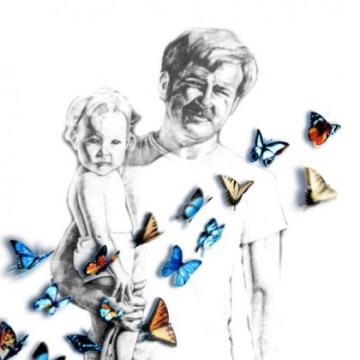
@ poem and artist’s rendering of Dan, Dan Roberson, all rights reserved. No reblogging or pinting without the permission of the author.

♥ ♥ ♥ ♥

Dan Roberson ~ lives in Kansas City, Missouri.  He says, ” I celebrate life. I retired from teaching and now I’m looking for new parades to lead, or to follow. I’m alone, still hoping to be a published author, and trying to stay on my chosen path. I have no anchor to hold me down and I’m ready to rid myself of possessions that impede progress. I want my imagination to soar. I’m open to learning about new worlds, new countries and languages, and different ways to look at things I thought I knew. Every day is a bonus day and I look forward to the challenges it brings. I’m finding out that technology is fast and getting faster and there is much information that I need to learn.”  You’ll find Dan at My Blog.

Posted in Guest Writer, Perspectives on Cancer, Poems/Poetry

PERSPECTIVES ON CANCER #22: Bath

BATH

by

Myra Schnieder

·

Kindness, an Irish lilt in her voice,

spares me the effort of running the water

and supports my elbow when, stripped

of everything but wound dressings,

I take a giant step into the tub.

·

Warm water wells into my crotch,

unlocks spine, lullabies stomach.

Is it because I’ve passed through

extremity that this comfort is intense

as the yellow daffodils trumpet?

·

Yesterday – my raw body stranded

by the basin, chill sprouting on my skin

while a Chinese student nurse

conscientiously dabbed each

helpless area – is miles away.

·

Dimly, I remember a stark room

and the high-sided saltwater bath

I was dipped in a few days

after giving birth. As Kindness

babies my back with a pink flannel

·

I’m reborn though maimed, ageing.

And this pool of bliss can no more

be explained than the song that pours

from a lark as it disappears into

stitchless blue, the seed circles

·

that cram a sunflower’s calyx,

day splashing crimsons

and apricot golds across the sky

before it seeps into the silence

of night, the way love fountains.

 ·

© 2011, Myra Schneider, all rights reserved. This poem is posted on Into the Bardo  with the permission of  Ms. Schneider. Any further reposting requires her permission. 

Photo credit ~ amazon preparing for a battle (Queen Antiop or Armed Venus), byPierre-Eugène-Emile Hébert 1860 (National Gallery of ArtWashington, D.C.), public domain photograph via Wikipedia

·

Bath is an excerpt from:

Writing My Way Through Cancer  Jessica Kingsley Publishers (2003), and

Multiplying The Moon  Enitharmon (2004)

Editor’s note: The opening poems of Multiplying the Moon are Myra Schneider’s response to her experience of terrible illness. In the aftermath of fighting breast cancer, she found herself writing poems that explore transience, death, and survival from many different angles. The main theme of `Voicebox,’ the long fictional narrative in the middle of the book, is communication; the poem follows the connections and disconnections between its main characters. In a short poem sequence, the poet draws on findings from the 1901 census to re-create her father’s early life, and the understanding she gains helps her to feel a new closeness with him. This is united by the theme of investigation of the self and its relationship with the outside world.

♥ ♥ ♥ ♥

Myra Schneider ~ was born in London in 1936 and grew up on the Firth of Clyde. She is the author of four poetry collections from Littlewood, three novels for children from Heinemann, and has three poetry collections published by Enitharmon: Exits, The Panic Bird and Insisting on Yellow. With John Killick she has written Writing for Self-Discovery  (Vega, Chrysalis Books) which was re-published in 2002. Her book Writing My Way Through Cancer, was published by Jessica Kingsley in 2003. The book is her fleshed-out journal from the year 2000 when she was diagnosed with breast cancer. It includes poem notes and poems and a section of therapeutic writing ideas.

Posted in Guest Writer, Perspectives on Cancer, Poems/Poetry

PERSPECTIVES ON CANCER #21: Amazon

AMAZON

by

Myra Schneider


 for Grevel

 ·

For four months

all those Matisse and Picasso women

draped against

plants, balconies, Mediterranean sea, skies

have taunted me

with the beautiful globes of their breasts as I’ve filled

 ·

my emptiness

with pages of scrawl, with fecund May, its floods

of green, its irrepressible

wedding-lace white, buttercup gold,

but failed to cover

the image of myself as a misshapen clown

 ·

until you reminded me

that in Greek myth the most revered women

were the single-breasted

Amazons who mastered javelins and bows, rode

horses into battle,

whose fierce queens were renowned for their femininity.

 ·

Then recognising the fields I’d fought my way across

I raised my shield

of glistening words, saw it echoed the sun.

·

© 2011, Myra Schneider, all rights reserved. This poem is posted on Into the Bardo  with the permission of  Ms. Schneider. Any further reposting requires her permission. 

Photo credit ~ amazon preparing for a battle (Queen Antiop or Armed Venus), byPierre-Eugène-Emile Hébert 1860 (National Gallery of ArtWashington, D.C.), public domain photograph via Wikipedia

·

Amazon is an excerpt from:

Writing My Way Through Cancer  Jessica Kingsley Publishers (2003), and

Multiplying The Moon  Enitharmon (2004)

Editor’s note: The opening poems of Multiplying the Moon are Myra Schneider’s response to her experience of terrible illness. In the aftermath of fighting breast cancer, she found herself writing poems that explore transience, death, and survival from many different angles. The main theme of `Voicebox,’ the long fictional narrative in the middle of the book, is communication; the poem follows the connections and disconnections between its main characters. In a short poem sequence, the poet draws on findings from the 1901 census to re-create her father’s early life, and the understanding she gains helps her to feel a new closeness with him. This is united by the theme of investigation of the self and its relationship with the outside world.

♥ ♥ ♥ ♥

Myra Schneider ~ was born in London in 1936 and grew up on the Firth of Clyde. She is the author of four poetry collections from Littlewood, three novels for children from Heinemann, and has three poetry collections published by Enitharmon: Exits, The Panic Bird and Insisting on Yellow. With John Killick she has written Writing for Self-Discovery  (Vega, Chrysalis Books) which was re-published in 2002. Her book Writing My Way Through Cancer, was published by Jessica Kingsley in 2003. The book is her fleshed-out journal from the year 2000 when she was diagnosed with breast cancer. It includes poem notes and poems and a section of therapeutic writing ideas.

Posted in Guest Writer, Perspectives on Cancer, Poems/Poetry

PERSPECTIVES ON CANCER #20: Today There Is Time

TODAY THERE IS TIME

by

Myra Schneider

to touch the silken stillness

of myself, map its landscape,

the missing left breast, to lay

my nervous palm softly

as a bird’s wing across

the new plain, allow

tears to fall yet rejoice

the surgeon has scraped

away the cancer cells.

·

Today there is time

to contemplate the way life

opens, clams, parts, savour

its remembered rosemaries,

spreading purples, tight

white edges of hope, to travel

the meanings of repair, tug

words that open parachutes.

© 2011, Myra Schneider, all rights reserved. This poem is posted on Into the Bardo  with the permission of  Ms. Schneider. Any further reposting requires her permission. 

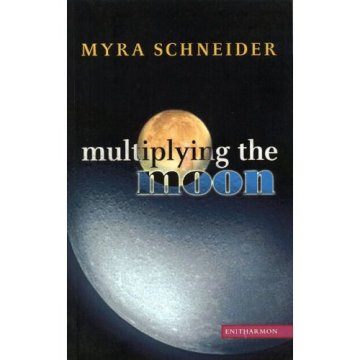
© 2011, cover art courtesy of publisher. All rights reserved.

·

Today There Is Time is an excerpt from:

Writing My Way Through Cancer  Jessica Kingsley Publishers (2003), and

Multiplying The Moon  Enitharmon (2004)

Editor’s note: The opening poems of Multiplying the Moon are Schneider’s response to her experience of terrible illness. In the aftermath of fighting breast cancer, she found herself writing poems that explore transience, death, and survival from many different angles. The main theme of `Voicebox,’ the long fictional narrative in the middle of the book, is communication; the poem follows the connections and disconnections between its main characters. In a short poem sequence, the poet draws on findings from the 1901 census to re-create her father’s early life, and the understanding she gains helps her to feel a new closeness with him. This is united by the theme of investigation of the self and its relationship with the outside world.

♥ ♥ ♥ ♥

Myra Schneider ~ was born in London in 1936 and grew up on the Firth of Clyde. She is the author of four poetry collections from Littlewood, three novels for children from Heinemann, and has three poetry collections published by Enitharmon: Exits, The Panic Bird and Insisting on Yellow. With John Killick she has written Writing for Self-Discovery (Vega, Chrysalis Books) which was re-published in 2002. Her book ‘Writing My Way Through Cancer’, was published by Jessica Kingsley in 2003. The book is her fleshed-out journal from the year 2000 when she was diagnosed with breast cancer. It includes poem notes and poems and a section of therapeutic writing ideas.

Posted in Perspectives on Cancer, Poems/Poetry

PERSPECTIVES ON CANCER #10: I Am No Longer Afraid

“I AM NO LONGER AFRAID…” Deena Metzger.

DEENA METZGER INSCRIBES A TREE

by

Jamie Dedes

Ms. Metzger is a poet and playwright, essayist and novelist, and a healing storyteller. I wish her work was around in time for my mom who died of breast and colon cancer. Trees: Essays and Pieces is Deena Metzger’s first healing book and it includes the play The Woman Who Slept With Men to Take the War Out of Them. She wrote the book to heal from her experience of cancer and mastectomy.

I love the brave picture above on a poster designed by Sheila Levrant de Bretteville, copyrighted and posted here under “fair use.” It’s also on the cover of Ms. Metzger’s book. You can order posters or postcards HERE if you care to. I don’t know if you can make it out, but Ms. Metzger had a tatoo done over her mastectomy scar. It’s a tree branch.

I am no longer afraid of mirrors where I see the sign of the amazon, the one who shoots arrows.
There was a fine red line across my chest where a knife entered,
but now a branch winds about the scar and travels from arm to heart.

Green leaves cover the branch, grapes hang there and a bird appears.
What grows in me now is vital and does not cause me harm. I think the bird is singing.
I have relinquished some of the scars.
I have designed my chest with the care given to an illuminated manuscript.
I am no longer ashamed to make love. Love is a battle I can win.
I have the body of a warrior who does not kill or wound.

On the book of my body, I have permanently inscribed a tree.

Excerpt from Tree: Essays and Pieces by Deena Metzger 

♥ ♥ ♥ ♥

Jamie Dedes ~ Jamie is a former freelance feature writer and columnist whose topic specialties were employment, vocational training, and business. She finds the blessing of medical retirement to be more time to indulge in her poetry, creative nonfiction, and fiction. She has two novels in progress, one in final edits, and is pulling together a poetry collection. Her primary playground is Musing by Moonlight. She is the founder and editor/administrator of Into the Bardo. Jamie’s mother was diagnosed with cancer the first time at thirty-six. She went three rounds with breast cancer, one with thyroid cancer, and died at seventy-six of breast and colon cancer.

♥ ♥ ♥ ♥

INTO THE BARDO·

is now on Facebook and Twitter.

Please join us there.

Posted in Guest Writer, Perspectives on Cancer, Poems/Poetry

PERSPECTIVES ON CANCER #9: Metastasize, An Awkward Word

·

METASTASIZE, AN AWKWARD WORD

by

Cindy Taylor

·

Metastasize;

an awkward word,

vowels lurking with malice

between those rock hard t’s

and stumbling past that sinister s,

into that endless z…

Even educated women know;

the seeds of broken dreams will gather

nearest to the heart

and grow

until the Gardener’s sharpened shears

snip away the wretched, rotted root.

That puckered rose, that brutal scar,

my brave and beautiful friend;

wear it as a medal:

triumphant, survivor, heroine!

©Cindy Taylor 2008

Photo credit ~ property of MBCCOP Network News

TAKEN TOO YOUNG

Minnie Julia Riperton (1947-1979), American singer-songwriter: In January 1976 Riperton was diagnosed with breast cancer and underwent a modified radical mastectomy. Though she was given just six months to live, she continued recording and touring, and in 1977 she became spokesperson for the American Cancer Society. Riperton was one of the first celebrities to go public with her breast cancer diagnosis, but did not disclose that she was terminally ill. In 1978, Riperton also received the prestigious Society’s Courage Award presented to her at the White House by then-President Jimmy Carter. She died at age 31 on July 12, 1979.

A VOICE SILENCED TOO SOON

Listen:

♥ ♥ ♥ ♥

Cindy Taylor ~ Cindy is a freelance writer, a poet, editor and proofreader. She has an abiding passion for food and wine and an endearing zeal for life, which she shares with us on her award-winning food blog, The Only Cin. Cindy lives in Johannesburg, South Africa with her husband, daughter, and a fine cast of animal friends. Judging from photographs, she has a world-class kitchen and an abundance of red shoes.