Posted in Essay, Meditation, meditative, Spiritual Practice, Terri Stewart, Uncategorized

Sacred Space

Sacred Space
Sacred Space

Have you had that day? Ever? When your last nerve has been strung and compassion, justice and mercy have fled your body? I have that day sometimes. Usually, on those kind of days I like to retreat to sacred space. Space that can be my family, my friends, my books, my camera…some place where I can be filled up with the qualities that have leeched out.

But sometimes that is not possible!

I could be at the detention center where I work. Conflict and craziness do sometimes abound among the incarcerated and sometimes among the staff and volunteers. One night I was working and a fight broke out right in front of me. Other nights, down the hall. As staff rush towards the chaos, I sit frozen (as I am instructed to do) and then proceed in the opposite direction. I often retreat to the library where the clanging is at least muted.

Or I could be at my home and expectations meet reality and voices rise in anger or disappointment threads the air. Then my retreat is not a retreat. Mostly, we are loving. But there are times when love seems miles away.

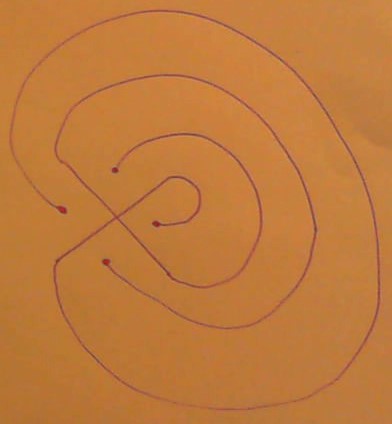
During those times, I need to create sacred space where it seems that there is no room for it. Hopefully, I am not alone in feeling this way! I would like to offer you one simple practice that can be done anywhere at any time. You can create your own sacred space with a piece of paper and a pen. No! This is not a writing assignment. It is a wholeness assignment.

Temenos (Greek) is sacred space. Or land that is set aside for royalty or the priesthood. In Ancient Greece, it would be the place reserved for worshiping the gods. Jung further expands on the concept of temenos as a place where you can encounter your unconsciousness, bringing the shadow into the light. A place of healing, acceptance, worship, encounter, and sacredness.

I am connecting these ideas to the ancient labyrinth where, at the very center, is the temenos.

I have a portable labyrinth that is used in my work with incarcerated youth. Teens can be so funny when they first encounter the labyrinth! They look at it as a maze, at first. But then as they slowly progress through the turns of the labyrinth, focusing on their chosen word or phrase, something happens. Softness overtakes them. They slow down. The rhythm of the room deepens. Their shields begin to drop. Sometimes, they arrive at the center and just sit for a long time. It is also a place of safety, even in the midst of incarceration, a place of danger.

However, we are not all blessed to have a labyrinth stored in our garage! Luckily, we do not need the full meal deal to create a labyrinth. Just pen and paper (or crayon and paper!).

As you set about creating your own labyrinth, set your intentions. When I am in the detention center and do this, I am often focused on peacefulness. Then, when you are done, walk the labyrinth with your finger. Focus on your intention. It is said that there are three stages to walking a labyrinth.

  1. Purgation:  purging yourself of your thoughts that are attached to the world.
  2. Illumination:  opening yourself to enlightenment, inspiration, reception of the other
  3. Union:  becoming one with ______________ . I will let you fill in the blank with your understanding of what we are in union with.  This could be anything from unity with self, others, the cosmos, the divine. This is where we sit and hold the space.

It only takes a minute to draw a labyrinth and to create an opportunity for your own sacred space no matter where you are or what your are doing. It could be as simple as a doodle on a napkin at lunch!

Shalom & Amen,

Terri

© 2013, post and photos, Terri Stewart, All rights reserved

terriREV. TERRI STEWART is Into the Bardo’s  Sunday chaplain, senior content editor, and site co-administrator. She comes from an eclectic background and considers herself to be grounded in contemplation and justice. She is the Director and Founder of the Youth Chaplaincy Coalition that serves youth affected by the justice system. As a graduate of Seattle University’s School of Theology and Ministry, she earned her Master’s of Divinity and a Post-Master’s Certificate in Spiritual Direction. She is a contributing author to the Abingdon Worship Annual. (The 2014 issue just released!)

Her online presence is “Cloaked Monk.” This speaks to her grounding in contemplative arts and the need to live it out in the world. The cloak is the disguise of normalcy as she advocates for justice and peace. You can find her at www.cloakedmonk.com, www.twitter.com/cloakedmonk, and www.facebook.com/cloakedmonk.  To reach her for conversation, send a note to cloakedmonk@outlook.com
Posted in Essay, Meditation, meditative, Spiritual Practice, Terri Stewart, Uncategorized

Enter the Story – An Ignatian Style Meditation

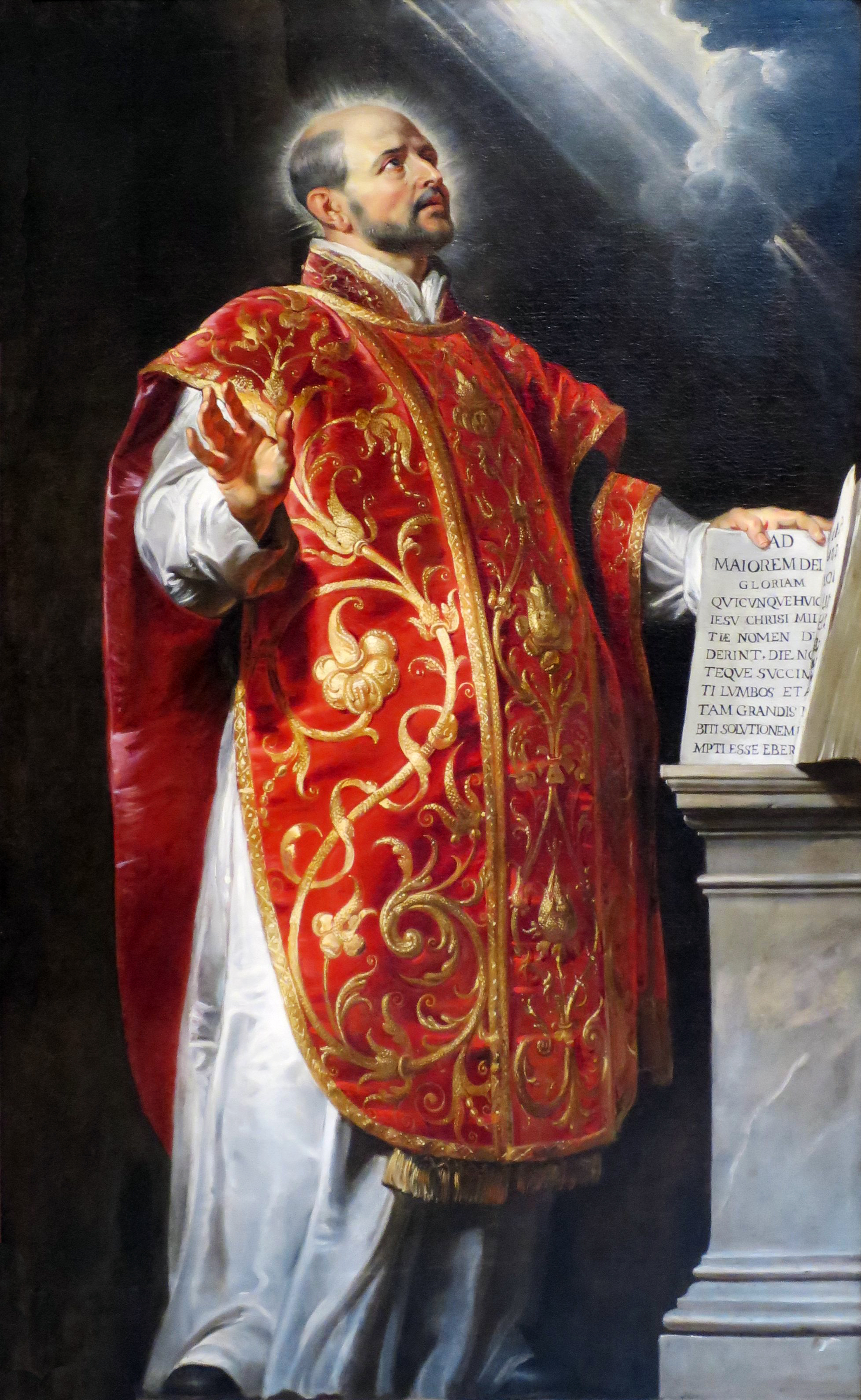
St. Ignatius of Loyola
From Wikipedia

St. Ignatius of Loyola, over time, became very concerned with spiritual practices. He developed one particular method that uses the imagination. It is sometimes called “Ignatian Contemplation.” Ignatian Contemplation uses the imagination as its center piece. In particular, using scripture and entering it using all the senses–feel the heat of the day, the dust in the road, or the smell of livestock. Enter the story in a complete way.

Today, I offer to you the story of the first king of Israel, Saul, and how he became the king. I ask you to use all your senses to enter the story. You may enter it as one of the characters or you may be a bystander. You may even be livestock! Whatever you choose, extend your reading of the story into your senses–taste, touch, smell, sight, sounds.

Take a moment and ground yourself. Sit comfortably, whatever that means for you. Take a breath in and release it.

Saul was at home, hanging out with his family and some of the donkeys escaped. Now Saul was a young, teenage boy–not viewed as a testosterone filled leader (although he is reported to be quite handsome!). Saul’s task, assigned by his family, was to go get the donkeys and return them  home!

So Saul goes on the road. He looked here and there, and the donkeys were not there. He looked over there and over here, and the donkeys were not there. Finally, the servant travelling with Saul says, “Let’s go ask the seer in town!” The seer was the prophet Samuel.

Saul travels to the seer, Samuel. Samuel tells Saul that he is destined to control the future of the Israelites. Saul says, “I’m a Benjamite, from the smallest clan! Surely not me!”

Samuel and Saul eat and then Samuel anoints Saul to become the king. Samuel then sends Saul on his way home.

Saul travels home with Samuel’s instructions. He travels home and even encounters other prophets on the road, goes into a prophetic frenzy with them, and continues towards home.

Upon his arrival home, his uncle asks, “Where have you been?!”

Saul said, “Well, we couldn’t find the donkeys, so we visited Samuel.” Saul says nothing of the anointing by Samuel, the prophetic frenzy on the side of the road, or of being made king! Nothing!

Then, Samuel comes to seek Saul out. Samuel gathers all the tribes together to “determine who will be king.” Samuel “casts lots.” (Throws dice!) Among the gathered tribes, he throws his dice, and Lo! The Tribe of Benjamin is chosen. Among the families in the tribe of Benjamin, he throws his dice, and Lo! The family of Matri was chosen. Among the people in the family of Matri, Samuel throws his dice, and Lo! Saul is chosen king.

But Saul is not there! They go to find him and he is hiding in the supply closet. Then Saul becomes the king.

What questions did that raise for you? Where were you in the story? Who were you? What will you become?

Shalom & Amen,

Terri

© 2013, post, Terri Stewart, All rights reserved

terriREV. TERRI STEWART is Into the Bardo’s  Sunday chaplain, senior content editor, and site co-administrator. She comes from an eclectic background and considers herself to be grounded in contemplation and justice. She is the Director and Founder of the Youth Chaplaincy Coalition that serves youth affected by the justice system. As a graduate of Seattle University’s School of Theology and Ministry, she earned her Master’s of Divinity and a Post-Master’s Certificate in Spiritual Direction. She is a contributing author to the Abingdon Worship Annual. (The 2014 issue just released!)

Her online presence is “Cloaked Monk.” This speaks to her grounding in contemplative arts and the need to live it out in the world. The cloak is the disguise of normalcy as she advocates for justice and peace. You can find her at www.cloakedmonk.com, www.twitter.com/cloakedmonk, and www.facebook.com/cloakedmonk.  To reach her for conversation, send a note to cloakedmonk@outlook.com

Posted in Charles W Martin, Peace & Justice, Photography/Photographer, Poems/Poetry, Uncategorized

while the blind-lady danced…

while the blindlady danced

i asked
the brown bag prophet
if he’d heard
about
the new round
of
demonstrations
for justice
he said
yes
and
why don’t
you-all
go sing
another verse of
we shall overcome
with
any luck at all
you’ can
harmonize
with the voices
i’ve heard before
and let
your
blood
be washed away
from these concrete streets
of freedom
washed away
into the ocean
of history
like
those
well-intentioned folks
now rotting
in their graves
with
copper pennies
as their only reward
and
please
don’t bother me
with your
these things
take
time
bull
i ain’t got time
i got
this corner
and you
got
nothing

Charles W. Martin

© 2013, poem and illustration, Charles W. Martin, All rights reserved

.
678ad505453d5a3ff2fcb744f13dedc7-1product_thumbnail.phpCHARLES W. MARTIN (Reading Between the Minds) — earned his Ph.D. in Speech and Language Pathology with an emphasis in statistics.  Throughout Charlie’s career, he maintained a devotion to the arts (literature/poetry, the theater, music and photography).  Since his retirement in 2010, he has turned his full attention to poetry and photography. He publishes a poem and a photographic art piece each day at Read Between the Minds, Poetry, Photograph and Random Thoughts of Life. He is noted as a poet of social conscience. Charlie has been blogging since January 31, 2010. He has self-published a book of poetry entitled The Hawk Chronicles  and will soon publish another book called A Bea in Your Bonnet: First Sting, featuring the renown Aunt Bea. In The Hawk Chronicles, Charlie provides a personification of his resident hawk with poems and photos taken over a two-year period.

Posted in Essay, Meditation, meditative, Music, Spiritual Practice, Terri Stewart, Uncategorized

Desire and Intention

Today, I want to try a very simple meditation / body prayer. It involves movement of the arms, breathing, intention, and if you choose, your particular word for the divine or that which transcends.

Take a moment for contemplation. Turn your eyes inward and find two desires.

“You are what your deepest desire is.
As your desire is, so is your intention.
As your intention is, so is your will.
As your will is, so is your deed.
As your deed is, so is your destiny.”
~ Upanishads

First-your desire for yourself. This wish could be for love, for kindness, for healing. What you feel you need at this moment.

Second-your wish for the world.  This wish could be peace, love, kindness. What you feel is your unique gift of intention for the world. All that is present in the cosmos.

“He has told you, O mortal, what is good;
and what does the Lord require of you
but to do justice, and to love kindness,
and to walk humbly with your God?”
~ Micah

These desires will be your intentions.

As always, do this as you are able.

Sit comfortably however you like. Be aware of the earth supporting you. Take a moment to feel the groundedness and the ground of all being.

The breathing / motion pattern is this:

Arms loosely at sides … Inhale … and move arms to overhead in a prayer position, (hands flattened together)

Hands Overhead, Prayer Position

On exhale … Hands descend to chest / heart level while holding intention for self. Intentionally cross your eyes, your lips as you end at your heart.

Descending Towards the Heart
"om"
“om”

Express, outloud or however you feel comfortable, the particular word that encompasses the divine for you. Divine being interconnectedness to all, that which transcends all, that which is lived within, or the languaging that you choose. This could be the Sanskrit “om” (pictured), the Aramaic “abwoon” which is father, or any of the myriad words that are symbols that stand in for the divine.

Hands at heart level … Inhale

On exhale … Hands push outward, forward and go slowly to the sides (right arm going right / left arm going left). Do this while holding your intention for the world.

Pushing Intention To the World

Express, outloud or however you feel comfortable, the particular word that encompasses the divine for you.

Bring your arms gently down to your sides.

Repeat this simple meditation for as long as it feels comfortable to do so. If you desire, close the meditation with an Amen (“so be it.”)

Shalom & Amen,

Terri

© 2013, post and photos, Terri Stewart, All rights reserved

terriREV. TERRI STEWART is Into the Bardo’s  Sunday chaplain, senior content editor, and site co-administrator. She comes from an eclectic background and considers herself to be grounded in contemplation and justice. She is the Director and Founder of the Youth Chaplaincy Coalition that serves youth affected by the justice system. As a graduate of Seattle University’s School of Theology and Ministry, she earned her Master’s of Divinity and a Post-Master’s Certificate in Spiritual Direction. She is a contributing author to the Abingdon Worship Annual. (The 2014 issue just released!)

Her online presence is “Cloaked Monk.” This speaks to her grounding in contemplative arts and the need to live it out in the world. The cloak is the disguise of normalcy as she advocates for justice and peace. You can find her at www.cloakedmonk.com, www.twitter.com/cloakedmonk, and www.facebook.com/cloakedmonk.  To reach her for conversation, send a note to cloakedmonk@outlook.com
Posted in Uncategorized

Nostalgia

the work of Priscilla Galasso in response to the weekly photo challenge from WordPress

Oh, boy.  It’s a dangerous thing to invite a widow and empty-nester to post a blog on the theme Nostalgic!  Contemplating the past can lead to maudlin stretches and lots of used Kleenex™, even if I don’t have a glass or two of wine first.  I don’t think that would be at all edifying to the blogging community, so I’m going to try hard to steer away from that.  I hope to write and show something that is true about a time that has come and gone.

Life is characterized by impermanence.  Our kids don’t stay little; our loved ones don’t stay alive forever.  What we live is present moments.  If we try to hang on to them and make them more permanent or attach our happiness to them, we are in for a world of frustration.  As we get farther away from present moments, it’s hard to remember what they were really like.  We lose perspective.  That wonderful family outing…did I yell at the kids that day?  I don’t remember.  I probably lost patience at least once.  Did my kids remember that?  How did they feel?  How did they heal?  Or is it all, as my mother often puts it, ‘a merciful blur’?

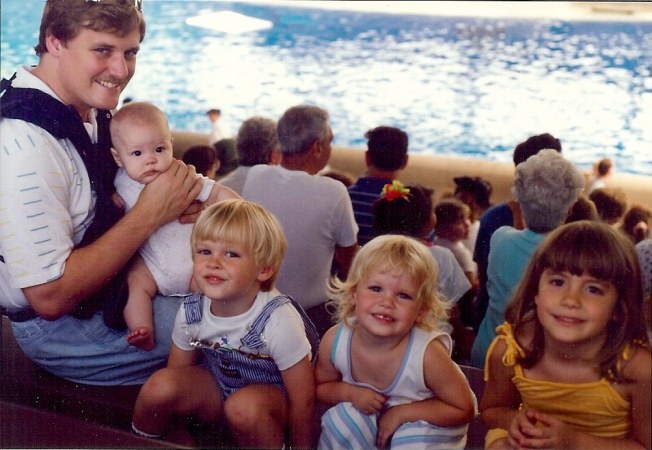
Brookfield Zool dolphin show, August 1991. Jim (RIP), Emily, Josh, Becca and Susan (who will be wed in less than three weeks).

In my current life, I see a lot of families on outings with their children, since I work at two different family museums.  Families interact in all sorts of ways.  I try to look at them with compassion and tolerance remembering what I can about how challenging it is to raise four kids at one time.  The important thing is to BE KIND in the present moment.  With your kids or someone else’s.  If the world is to be a good place to live, it’s important that all seven billion of us humans remember to BE KIND.  And this is not a glib solution.  If you think deeply about being kind, you’ll see that it is a profound power in the universe.   BE KIND to your fellow humans.  BE KIND to every living thing.  BE KIND to yourself first, and feel what that is like.  It is peace.  It is well-being and health.  It is life.  Don’t settle for feeling nostalgic about a time when you felt the world was a kinder place to live.  Make it a kinder place to live this very moment by acting kindly!

– Priscilla Galasso

© 2013, essay and photographs, Priscilla Galasso, All rights reserved

004PRISCILLA GALASSO ~ is a contributor to Into the Bardo. She started her blog at scillagrace.com to mark the beginning of her fiftieth year. Born to summer and given a name that means ‘ancient’, her travel through seasons of time and landscape has inspired her to create visual and verbal souvenirs of her journey.

“My courage is in the affirmation of my part in co-creation”, she wrote in her first published poem, composed on her thirtieth birthday and submitted alongside her seven-year-old daughter’s poem to Cricket magazine. Her spiritual evolution began in an Episcopal environment and changed in pivotal moments: as a teenager, her twenty-year-old sister died next to her in a car crash and, decades later, Priscilla’s husband and the father of her four children died of coronary artery disease and diabetes in his sleep at the age of forty-seven  Awakening to mindfulness and reconsidering established thought patterns continues to be an important part of her life work.

Currently living in Wisconsin, she considers herself a lifelong learner and educator. She gives private voice lessons, is employed by two different museums and runs a business (Scholar & Poet Books, via eBay and ABE Books) with her partner, Steve.

Posted in Essay, Music, Spiritual Practice, Terri Stewart, Uncategorized

Ubuntu

I began thinking of Ubuntu today because I love the music of Eric Whitacre! Eric Whitacre is a contemporary choral composer who excels at using social media to bring people together. I first encountered his music with my children’s choir – Seattle Children’s Choir. The mature choir – Camerata – performed his piece Lux Arumque and I just cried. (I often cry during choir music-especially when my children are/were performing!)

As I mentioned, Eric Whitacre excels at using social media. He has used social media and the internet to create four virtual choirs. His first virtual choir was in 2010. It was his piece, Lux Arumque. He had 243 videos from 12 countries.

His second piece was Sleep. It had over 2,000 videos from 58 countries and was published in 2011. 2012 brought Water Night with 3,746 videos from 73 countries. He is currently assembling Virtual Choir IV – Fly to Paradise – with 8,400 submitted videos from 101 countries.

What does this have to do with Ubuntu?

I first heard of Ubuntu at seminary. I learned it from my friend, Sr. Jane Frances of Uganda. It is encapsulated in the phrase, “I am because we are.”

Bishop Desmond Tutu speaks of Ubuntu in his 1999 book, No Future Without Forgiveness-

A person with Ubuntu is open and available to others, affirming of others, does not feel threatened that others are able and good, based from a proper self-assurance that comes from knowing that he or she belongs in a greater whole and is diminished when others are humiliated or diminished, when others are tortured or oppressed.

He further expands on Ubuntu-

One of the sayings in our country is Ubuntu – the essence of being human. Ubuntu speaks particularly about the fact that you can’t exist as a human being in isolation. It speaks about our interconnectedness. You can’t be human all by yourself, and when you have this quality – Ubuntu – you are known for your generosity. We think of ourselves far too frequently as just individuals, separated from one another, whereas you are connected and what you do affects the whole World. When you do well, it spreads out; it is for the whole of humanity.

We are connected; Eric Whitacre does it well and it spreads out for the whole of humanity.

…night brings its wetness to beaches in your soul (from Water Night)

Let your soul’s beach be made wet again with this offering from Eric Whitacre and Virtual Choir III- Water Night. Connect to Mr. Whitacre, the music, the thousands of artists from around the world, and ultimately, to something that is bigger than we are. This one piece of music is because we are. Ubuntu.

P.S. Half of the recording length is not the music – it is the list of the names of all of the participants.

You can find Eric Whitacre on Facebook. He is wickedly funny!

© 2013, post and poetry, Terri Stewart, All rights reserved

terriTERRI STEWART is Into the Bardo’s  Sunday chaplain, senior content editor, and site co-administrator. She comes from an eclectic background and considers herself to be grounded in contemplation and justice. She is the Director and Founder of the Youth Chaplaincy Coalition that serves youth affected by the justice system. As a graduate of Seattle University’s School of Theology and Ministry, she earned her Master’s of Divinity and a Post-Master’s Certificate in Spiritual Direction. She is a contributing author to the Abingdon Worship Annual. (The 2014 issue just released!)

Her online presence is “Cloaked Monk.” This speaks to her grounding in contemplative arts and the need to live it out in the world. The cloak is the disguise of normalcy as she advocates for justice and peace. You can find her at www.cloakedmonk.com, www.twitter.com/cloakedmonk, and www.facebook.com/cloakedmonk.  To reach her for conversation, send a note to cloakedmonk@outlook.com

Posted in Essay, Meditation, meditative, Spiritual Practice, Terri Stewart, Uncategorized

Meditations of Our Hearts

I am saddened and deeply troubled by the Trayvon Martin case verdict. Mark Sandlin, a new Facebook friend of mine, offered the below. I have decided to add it to what I previously planned to publish. What I originally offered is a meditation based on a Psalm using very simple body prayer-a video that I put together. I thought about simply letting the video go for another day, but I think I, at least, need the reminder that there is something greater than the imperfection that we find in our daily living.

Questions?

Will anyone’s soul rest well tonight?
Will justice feel it was served?
Will a weary nation rest easy?
Can it believe its truths still hold true?
That all are created equal?
That truth is our nation’s highest good?
How can we sleep?
How can we slumber
when justice seems to be a game
and innocence has become relative?
Will we not grow restless?
Will our tears not matter?
Shall we continue our malaise?
Is our discontent so flaccid
that is ends in a Facebook post?
Is our will so weak that it is eased
with nothing more than words on a page?
Is the cost of our inconvenience
truly more valuable than a life…
our rights…
our jobs…
the hungry…
the sick…
the poor…
minorities…
?
Will our souls rest well tonight?
Should they?
Will our discontent respond?
Or will it slumber?
Will we drown out our malcontent
with the drone of a television…
the buzz of a beer…
the mindless escape of Candy Crush…
the busyness of our lives…
?
Will we simply get over it…
When there are parents who cannot,
When children are starving,
When there are families being buried,
While men make laws about women’s bodies,
As rights which were received
at the cost of lives
are made a mockery
for the sake of the few…
will we rest well tonight?
Will we rest?

Mark writes for Huffington Post, Sojourners, and his own blog at The God Article. This is reprinted with permission.

My fair warning before the video–this is in my living room, not professionally done! Bear with me as I learn these new skills.  Shalom.

© 2013, post and video, Terri Stewart, All rights reserved

MARK SANDLIN is an ordained PC(USA) minister currently serving at Vandalia Presbyterian Church in Greensboro, NC. Mark is a co-founder of The Christian Leftand blogs at The God Article. He has been featured on NPR’s The Story with Dick Gordon, PBS’s Religion & Ethics NewsWeekly, and the upcoming documentary filmAmendment One.

terriTERRI STEWART is Into the Bardo’s  Sunday chaplain, senior content editor, and site co-administrator. She comes from an eclectic background and considers herself to be grounded in contemplation and justice. She is the Director and Founder of the Youth Chaplaincy Coalition that serves youth affected by the justice system. As a graduate of Seattle University’s School of Theology and Ministry, she earned her Master’s of Divinity and a Post-Master’s Certificate in Spiritual Direction. She is a contributing author to the Abingdon Worship Annual. (The 2014 issue just released!)

Posted in Essay, Michael Watson, Peace & Justice, Uncategorized

Life in the Bardo

Waterbury, VT, ParadeI just returned from purchasing a new computer monitor. Last night, my two-year-old monitor suddenly malfunctioned. When I went to the store this morning, the associate with whom I spoke said she thought the life expectancy of new monitors might be about a year. Expensive and time-consuming.

Last week a colleague attended a national conference in Seattle. This gathering of psychotherapists moves about the country from year to year. The Seattle conference was immense, forming a forum for many hundreds of therapists. It also took place in a part of the country with a large and obvious Native presence, yet seemingly made no attempt to include, or even acknowledge, Seattle’s diverse Native community.

During a workshop towards the end of the conference my colleague spoke to the absence of a Native presence at the conference. After the workshop, a woman came up and thanked her for speaking up, explaining she was Native and had been deeply disturbed by the notable absence of her community. (Tibetan monks had been invited to build a sand painting during the conference.) She was also aware of her light skin color,and fearful her whiteness might disqualify her from speaking, at least in the eyes of her fellow conference participants.

Also, last week the latest film version of The Lone Ranger came out. As you may know, Johnny Depp stars as a very wise Tonto, who just happens to wear a stuffed bird on his hat, an oblique reference to the imagined Native. A couple of day’s ago a panel gathered to chat about the film on NPR’s On Point. A young Native woman who blogs at Native Appropriations was also invited on briefly critique the film. Sadly, the non-Native reviewers, even with a bit of Native guidance, simply failed to understand why the film might be offensive. I invite you to read Adrienne K.’s comments at Native Appropriations for a detailed critique of the stereotyping and racism inherent in the film.

Finally, Thursday was the Fourth of July. For me there are three highly problematic holidays in the U.S. calendar: July Fourth, Columbus Day, and Thanksgiving. Each celebrates, in some way, the theft of our land and the genocide, physical and cultural, against our people. On the Fourth our family usually attends a small town parade, and always we look forward to the evening fireworks. Small town celebrations are all about the local, although even here in Progressive Vermont, there may be no mention of the several Native tribes that lived here prior to the arrival of Europeans, descendents of who still call Vermont home. I guess acknowledging Native people opens up to many uncomfortable questions concerning genocide, appropriation, and land claims.

As a light-skinned Native person I wrestle with questions of identity. I also, in my elderhood, am likely to speak my mind about issues anyway, although most of the time no one seems to be truly listening. One of my friends, an aged Cree medicine woman who stands just about five feet tall, sometimes wanders around carrying a large hunting rifle, “To get people’s attention.” Sometimes I despair.

Locally we have developed what amounts to a Buddhist/Native dialog. We’ve discovered we agree about most things. For instance, there is a lovely idea in Pure Land Buddhism and in some Native thought that we are already in Paradise and simply don’t recognize it or act accordingly. Rather, we seem to be caught up in the Bardo, spinning endless fantasies derived from fear, greed, and anger.

Life in the Bardo is challenging. We seem to be sinking in a sea of expensive, poorly made, often essential, material goods that break all too often. We go about trying to find distraction or release and fail to notice or acknowledge the suffering created and continued by our actions and those of the folks who came before. In the process, we cause more harm even though we might wish otherwise. No wonder the Prophets from many traditions tell us to wake up. I imagine paying heed to our lives might in the end be less painful than the road we are collectively on now; maybe we could even create the conditions for fine lives and rebirths. Now that is a good Dreaming.

– Michael Watson, Ph.D.

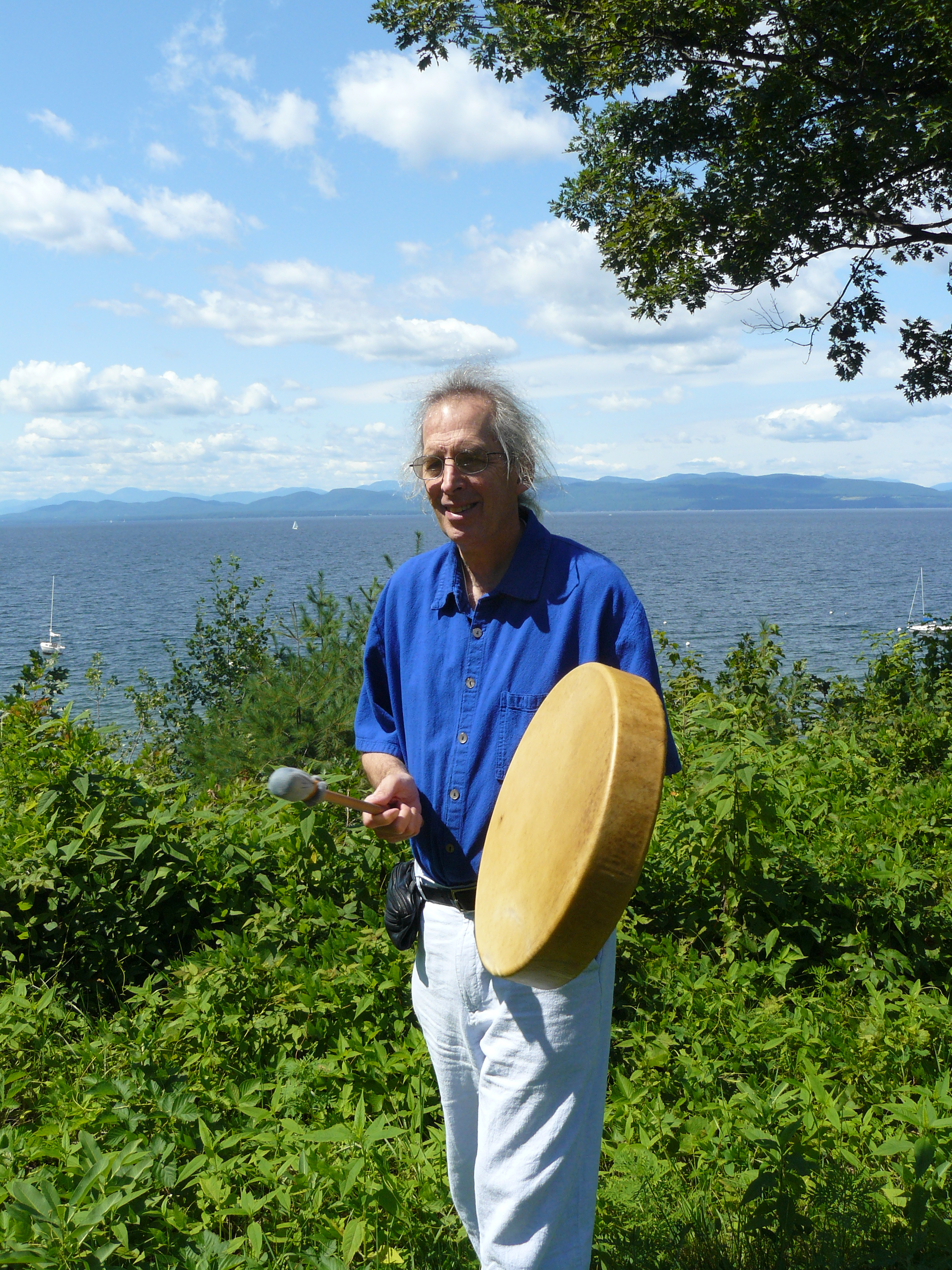
© 2013, essay and photographs (includes portrait below), Michael Watson, All rights reserved

michael drumMICHAEL WATSON, M.A., Ph.D., LCMHC (Dreaming the World) ~ is a contributing editor to Into the Bardo, an essayist and a practitioner of the Shamanic arts, psychotherapist, educator and artist of Native American and European descent. He lives and works in Burlington, Vermont, where he teaches in undergraduate and graduate programs at Burlington College,. He was once Dean of Students there. Recently Michael has been teaching in India and Hong Kong. His experiences are documented on his blog. In childhood he had polio, an event that taught him much about challenge, struggle, isolation, and healing.

Posted in Contributing Writer, Perspectives on Cancer, Uncategorized

The Divining Trunk

The battered metal steamer trunk in my living room, a family heirloom, is crammed full of memories. Sturdy sides hold every photo album and scrapbook that was bestowed upon me in the weeks following my father’s death*.

This pile of memories is like a divination tool. I open the lid and dig in then something useful bubbles to the surface. Something I’ve never seen before or something familiar, but always just the thing I need to see.

One stapled stack of papers catches my eye today. It contains a perfect wood pulp circle of life: my paternal grandparent’s birth certificates, their marriage license, and both death certificates.

Their entire lives are covered off in five pages.

On my grandmother’s death certificate, it lists, “oat cell cancer to left lung” under the cause of death.

Oat cell. Doesn’t that sound very grandma-ish? Like warm oatmeal and a hug, however, a short Google search advises that oat cell is among the most aggressive forms of lung cancer.

Besides, my grandmother wasn’t very oatmeal and hugs anyway. She was something much more urbane.

Which makes her bigger than life in my memory.

When I was about seven, my paternal grandparents made a visit to New Mexico to attend my first communion. My dad grew up in South Bend, Indiana, which to this desert kid may as well have been on the other side of the universe.

In the mid-seventies, Albuquerque wasn’t a very evolved place. Our airport was a small building the color of dry grass next to a hot concrete tarmac shared with the air force base.

The waiting area had memorable soft leather chairs on sturdy wood frames. I’d sink into the smell of leather and through large picture windows watch the planes fly in over the Sandia Mountains.

Passengers would disembark down sturdy metal stairs, eyes blinking in the bright desert sun.

That day I stood there, clutching at my mom, both scared and excited to meet my dad’s parents.

“There they are,” my mom said.

“Where?” I asked, perking up.

“Look, the woman in the coat.”

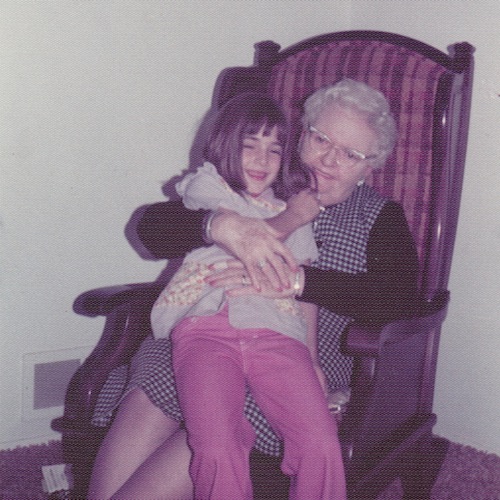
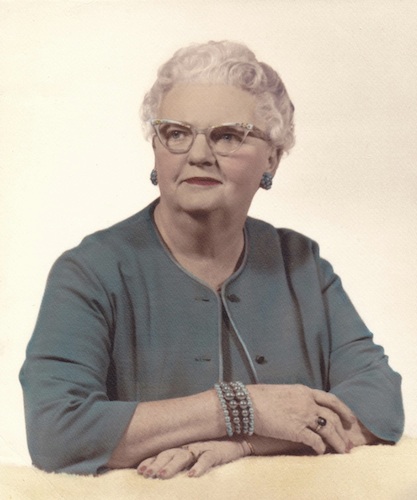
I looked. Making her elegant way off the plane was my white-haired grandmother. She wore a dress, pearls, stockings and heels. On top of it all she wore a fur-lined overcoat.

No one wore fur, much less an overcoat, in New Mexico.

She carried herself like a movie star, the regal matriarch of my father’s family. Her lipstick was flawless, her porcelain skin showing nary a wrinkle.

Behind her tottered my grandfather, a tall man with a lined face wearing a good suit and a hat. Always a hat.

These people were like something out of a novel. They were big city. Granted, South Bend is no great shakes, but they flew in from Chicago and looked it.

To me they seemed worldly, intelligent, and jaunty in that “Great Gatsby” kind of way.

My Grandmother smelled of perfume and powder and my Grandfather of cigarettes and hair oil. I was in awe. My mother was visibly intimidated by them both so I followed suit.

My 1970’s fashionable bell-bottom jeans and ratty t-shirt now felt tacky and under-dressed, as elegance had just hit our dry, desert wilderness.

Over the course of the visit, I tried desperately to reconcile myself to these people; my family. I clung to my mother, a shy doe-eyed girl from Oregon who in later years would confide to me just how much her in-laws scared the bejeezus out of her. I understood why.

At breakfast one morning, Grandmother sat chain-smoking, leaving perfect lipstick rings on the filter while Grandfather sat quietly, acquiescing to her, always. Something my dad had said made Grandmother mad, and she spoke harshly, her Irish temper flaring.

She shouted down my father, something no one I knew had ever done. I fled from the room, scared out of my gourd.

No one talked back to my father and got away with it. I think that terrified me more than the shouting.

I’d managed to bond with my gentle, comedic Grandfather and did my best to studiously behave in front of my Grandmother, lest she turn her overpowering temper on me.

Several days into the visit, while having an early evening happy hour, my mom cracked open a can of smoked oysters and Grandmother clapped her hands with glee, as this was a favorite treat. She prodded me to try one. It looked like a globby, gray pencil eraser doing an oily shimmy on a cracker.

Wanting desperately to somehow connect with this elegant woman, I took the offering like receiving communion, and chewed. It was tasty and I smiled. Grandmother was pleased, and handed me another, which I quickly ate. She wrapped an arm around me and pulled me close to her warm, fleshy side.

I’d done good.

We were worlds apart, and yet, our mutual love of good food held the power to close the gap.

In the years that followed, I wouldn’t be able to explore any more potential common ground. South Bend and Albuquerque were just too far apart, and it was five years later that my grandmother died. It was the only time I ever saw my father cry, and at age twelve, my first experience with cancer.

I wish I’d known my grandmother more. I wish I could find more ways to say, “oh, I’m just like her” but I can’t.

She was like a shooting star, in my mind a brief bit of glorious celebrity, stolen away far too quickly by the oat cells.

*My father succumbed to complications from pulmonary fibrosis

© Karen Fayeth, copyright 2011, all rights reserved. The family photos of the author and her grandmother are covered under copyright. Please be respectful.

webheadshotKAREN FAYETH ~ is one of our regular contributing writers. She is our new tech manager, site co-administrator along with Jamie and Terri, and fiction and creative nonfiction editor. She blogs at Oh Fair New Mexico. Born with the writer’s eye and the heart of a story-teller, Karen Fayeth’s work is colored by the Mexican, Native American, and Western influences of her roots in rural New Mexico complemented by a growing urban aesthetic. Karen now lives in the San Francisco Bay area. When she’s not spinning a tale, she works as a senior executive for science and technology research organization.

Karen has won awards for her writing, photography, and art. Recent publication credits include a series of three features in New Mexico magazine and an essay with the online magazine Wild Violet.  Her latest short story will be published in the May edition of Foliate Oak. Karen’s photography is garnering considerable attention, her photo titled “Bromance” (featuring Aubry Huff and Pat Burrell) was featured on MLB Network’s Intentional Talk hosted by Chris Rose and Kevin Millar.


Posted in Creative Nonfiction, Jamie Dedes, Uncategorized

Those Infamous New York Moms

Mom and Me 1950, Brooklyn
Mom and Me
1950, Brooklyn, NY

A woman in Brooklyn decided to prepare her will. She told her rabbi she had two final requests. First, she wanted to be cremated. Second, she wanted her ashes scattered over the local shopping mall.

‘Why the shopping mall?’ asked the rabbi.

‘Then I’ll be sure my daughters will visit me twice a week.’

I met my Jewish friend, Laurel, when she came to a meeting at our local meditation center in Northern California where we now live. Laurel and I  got on right away. We both like Broadway shows, music and opera, reading, writing, and good meals seasoned with great conversation. She’s from Great Neck, LI in Nassau County. I’m from

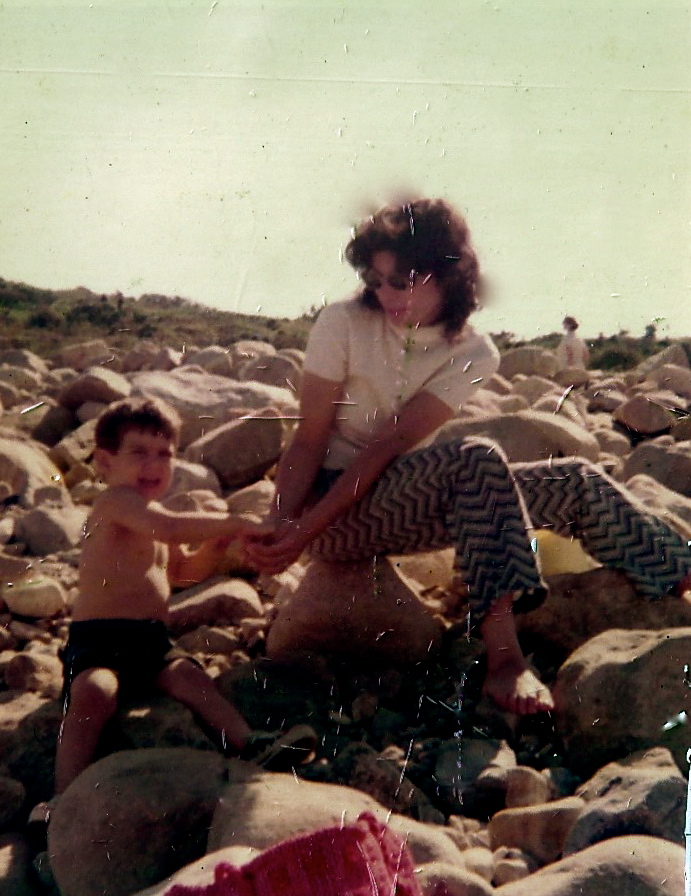
Me and Rich 1972, Montauk Point, LI, NY
Me and Rich
1972, Montauk Point, LI, NY

the Center of the Universe, Brooklyn. We’re about the same age. So we come from the same time and, essentially, the same place.

Now New York moms get a bad rap, especially Jewish moms – but none of us gets off free. Laurel reminded me of that yesterday with a stereotypical New York joke at the expense of mothers. These jokes usually illustrate moms making caustic remarks or their attempts to foster guilt in adult children. While we do use regional idioms and have a distinct style of delivery, I’m really not sure that mothers from our time and place have the corner on either caustic commentary or the laying on of guilt. New York moms can’t be the only ones who, when distressed by a child’s behavior, say or at least think – despite how treasured the child … and they are treasured – “For this I was in labor thirty-six hours.”

Like all of us, my mother was very much in process and very much a product of her place and time. Among other things, what that means is that modesty was a primary concern. For my Maronite (Eastern Catholic) mother this included modest dress, which in turn included girdles. Now I’ve got to tell you that until I hit forty I was mostly underweight. In fact at Christmas when I was nineteen, I stood 5′ 3 1/2″ and, though I was three months pregnant with my son, I weighed only ninety-three pounds. Nonetheless, from my thirteenth year until her death when I was forty, my mother was adamant that I should wear a girdle so that I wouldn’t “jiggle.” That would be immodest and unseemly. Only my mother, I would think, would put me through this torture for nothing. As my husband said, “What’s to jiggle? If she turned sideways and stuck out her tongue she’d look like a zipper.”

Those old, typically New York jokes at the expense of our mothers were funny because there’s an element of truth in them. Our mothers often did pave the pathways to their homes and hearts with guilt. They could be cruelly caustic. They were as tough as life. They tended to be rigid and narrow on some sensitive subjects. But they were also present. They were idealistic. They worked hard in their homes and at their jobs, where they were grossly underpaid. Many of them worked for hours each week to make the most unbelievably complex old world dinners for traditional Sundays that included religious services and large gatherings of extended family and orphaned friends and neighbors.

No matter how difficult things got, these sturdy immigrant and first-generation American women did not resort to drugs, alcohol, or beatings. They went to bat for us at school. They got us into the best schools they could afford and kept us in school for as long as they could afford to do so. They protected us from old lechers and young men who did not have “honorable” intentions. Kudos and compliments were about as common as Dodo birds in the twenty-first century; but secretly they were pleased and would proudly show photographs of us to their friends and boast of our accomplishments. It took me years to appreciate their insecurities and motivations.

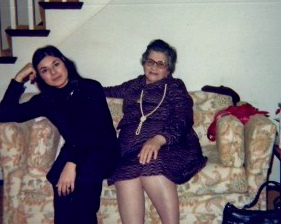
Mom and me 1980, San Francisco, CA
Mom and me
1980, San Francisco, CA

You can tell by the posture in the photo to your right, that moving into my thirties, I was still struggling with mixed feelings. The reason in this particular case: Before I went to work one morning, I left money on the kitchen table for a pizza. I called home at 5:00 p.m. as I was leaving the office and asked my mother if she’d order the pizza right away because I was “starving.” I got home and “binged”: I ate one slice of pizza and left the crust. “I thought you were hungry,” Mom said. “I was.”  The fact that I was thirty and still “eating like a bird” and underweight disturbed her. In turn, I was disturbed because she was still trying to tell me how to eat. I do the same sort of thing to my son now, not about food, but about other things.

I miss my mother and am thinking of her even more than usual with Mother’s Day soon to arrive. I wish she was here nagging me to clean my plate. I finally understand. As the saying goes, “We grow too soon old and too late smart.”

– Jamie Dedes

© 2013, feature and all photographs (from our family album, please be respectful), Jamie Dedes, All rights reserved

Photo on 2012-09-19 at 20.00JAMIE DEDES ~ My worldly tags are poet and writer. For the past five years on medical retirement due to a chronic, potentially life-threatening illness, I’ve blogged at The Poet by Day, formerly titled Musing by Moonlight. The gift of illness is more time for poetry. Through the gift of poetry (mine and that of others), I enter sacred space, the common ground that is our true home.

Posted in Spiritual Practice, Terri Stewart, Uncategorized

Locked Away

locked-away
Locked Away

I read a brief article about potential, gifts, talents, and how we can use those things to actually make a living! Embedded in the exercise that they walked the reader through is a wonderful contemplative exercise. So here we go!

Need:  Paper and writing utensil, timer

Often, as an ice-breaker, when I first meet youth in detention, I ask them to tell me the three best things about themselves. They always come up with one thing. Then most come up with a second thing. The third one is always a struggle. It is often a struggle to recognize the greatness in ourselves…in our own story. We so often lock our gifts away and don’t let other people see the precious gift that we are. We hide our greatness under a bushel, so to speak!

Recently, NBA player, Jason Collins, came out and told the world he was gay. Some would say that is a great act of heroism. I think it is especially interesting that he came out so recently after the Jackie Robinson movie, 42, released. Both are great efforts put forth by African-American men to combat hatred. I also find greatness in the gay youth that shows up to school every day to face bullying or ridicule. One is greatness on a national scale. The other is greatness measured in every day strides.

Now, get comfortable, create a space where your feet are grounded. Put your paper before you and hold your preferred writing utensil(s) in your hand. Hold in your mind a comfortable sense of yourself. Where is your greatness today? Where has it been in the past? What is your yardstick that measures greatness? How will you claim your greatness and let it shine?

Take 5 minutes and write down things that you think are great about yourself! Talents, gifts, actions. Even going back to childhood. Yes, 5 minutes.

Now, take that paper and fold it up. Tuck it away in an accessible location–a purse or a wallet would be great. From now until next Sunday, keep a greatness log! I wonder if we can recognize the greatness in the everyday acts of living. Like yesterday, maybe it was “great” that I gave a homeless man all my change so he could get food. Some days greatness, for me, can be measured by the ability to get out of bed! Perhaps the trick is not to compare your greatness to other people.

Have a great week!

Shalom,

Chaplain Terri
CloakedMonk

© 2013, post and photos, Terri Stewart, All rights reserved

Terri StewartTERRI STEWART is Into the Bardo’s  Sunday chaplain, Senior Content Editor and Site Co-Administrator.  She comes from an eclectic background and considers herself to be grounded in contemplation and justice. She is the Director and Founder of the Youth Chaplaincy Coalition that serves youth affected by the justice system. As a recent graduate of Seattle University’s School of Theology and Ministry, she earned her Master’s of Divinity and a Post-Master’s Certificate in Spiritual Direction with honors and is a rare United Methodist student in the Jesuit Honor Society, Alpha Sigma Nu. She is a contributing author to the Abingdon Worship Annual.


Her online presence is “Cloaked Monk.” This speaks to her grounding in contemplative arts (photography, mandala, poetry) and the need to live it out in the world. The cloak is the disguise of normalcy as she advocates for justice and peace. You can find her at www.cloakedmonk.com, www.twitter.com/cloakedmonk, and www.facebook.com/cloakedmonk.  To reach her for conversation, send a note to cloakedmonk@outlook.com.
Posted in folk tale, story, Uncategorized

Why We Shout in Anger

377px-VishnuvishvarupaA Hindu saint who was visiting river Ganges to take bath found a group of family members on the banks, shouting in anger at each other. He turned to his disciples smiled and asked.

‘Why do people shout in anger shout at each other?’

Disciples thought for a while, one of them said, ‘Because we lose our calm, we shout.’

‘But, why should you shout when the other person is just next to you? You can as well tell him what you have to say in a soft manner, ‘asked the saint.

Disciples gave some other answers but none satisfied the other disciples. Finally the saint explained, .

‘When two people are angry at each other, their hearts distance a lot. To cover that distance they must shout to be able to hear each other. The angrier they are, the stronger they will have to shout to hear each other to cover that great distance.

What happens when two people fall in love? They don’t shout at each other but talk softly, Because their hearts are very close. The distance between them is either nonexistent or very small…’

The saint continued, ‘When they love each other even more, what happens? They do not speak, only whisper and they get even closer to each other in their love. Finally they even need not whisper, they only look at each other and that’s all. That is how close two people are when they love each other.’

He looked at his disciples and said.

‘So when you argue do not let your hearts get distant, Do not say words that distance each other more, or else there will come a day when the distance is so great that you will not find the path to return.’
-Author Unknown.

Thank you to Kris Lee for bringing this story to my attention.
Photo Illustration ~ Krishna (Hindu avatar)via Wikipedia and in the public domain.

– Terri Stewart

mailTERRI STEWART is Into the Bardo’s Chaplain, Sr. Consulting Editor, and Site Co-administrator. She comes from an eclectic background and considers herself to be grounded in contemplation and justice. She is the Director and Founder of the Youth Chaplaincy Coalition that serves youth affected by the justice system. As a recent graduate of Seattle University’s School of Theology and Ministry, she earned her Master’s of Divinity and a Post-Master’s Certificate in Spiritual Direction with honors and is a rare United Methodist student in the Jesuit Honor Society, Alpha Sigma Nu. She is a contributing author to the Abingdon Worship Annual.
.
Her online presence is Cloaked Monk.This speaks to her grounding in contemplative arts (photography, mandala, poetry) and the need to live it out in the world. The cloak is the disguise of normalcy as she advocates for justice and peace. You can find her at www.cloakedmonk.com,www.twitter.com/cloakedmonk, and www.facebook.com/cloakedmonk.  To reach her for conversation, send a note to cloakedmonk@outlook.com.
Posted in Uncategorized

Gil Fronsdale on Empathy

This Sunday we bring you a dharma talk by Gil Fronsdal. Sunday Chaplain, Terri Stewart (ClockedMonk) is on vacation.

Gil_FronsdalGil Fronsdale is a Buddhist who has practiced Soto Zen and Vipassana since 1975, and is currently a Buddhist teacher who lives in the San Francisco Bay Area. Gil was trained as a Vipassana teacher by Jack Kornfield and is part of the Vipassana teachers’ collective at Spirit Rock Meditation Center. He was ordained as a Soto Zen priest at the San Francisco Zen Center in 1982 and was a Theravada monk in Burma in 1985. In 1995 he received Dharma transmission from Mel Weitsman, the abbot of the Berkeley Zen Center.

He is the guiding teacher of the Insight Meditation Center (IMC) of Redwood City, California. He has a PhD inBuddhist Studies from Stanford University. His many dharma talks available online contain basic information on meditation and Buddhism, as well as subtle concepts of Buddhism explained at the level of the lay person.” Wikipedia

Video uploaded to YouTube by insightmed.
Photo credit ~ Insight Meditation Center, Creative Commons Attribution-NonCommercial-No Deriv 3.0 Unported

Posted in Spiritual Practice, Terri Stewart, Uncategorized

I am the one who…

There is a spiritual practice called SoulCollage®. The main focus of this practice is to put together a collage that represents various things to you… your inner committee, your community, world archetypes, or totems and chakras. Below is an example of a card I created that represents various voices on my inner committee.

One of My Committee Cards

It isn’t simply the making of the card that is the point, but it is exploring the card. If I look at the card and the various images, I can settle into one (or more) of the images and complete the following sentence.  I am the one who….

  • I am the one who dreams
  • I am the one who prophesies
  • I am the one who walks towards a voice that calls
  • I am the one who is grounded
  • I am the one who flies

I could continue on. What became clear to me after I put these images together is that the holy and the worldly are held together in one place for me. That I need the child-like dreamer to be the one who confronts injustice and demands change. That the holy ferris wheel in my head holds together joy and the sacred. That being grounded allows me to fly. And I could still continue on!

Now it is your turn! I have taken a few photos of various situations, people, animals, things. I am presenting them here. I ask you to locate one photo (maybe more), and enter it and complete the statement:  “I am the one who ___________________ .”

What did you discover?

How was the process for you?

“The greatest hazard of all, losing one’s self, can occur very quietly in the world, as if it were nothing at all. No other loss can occur so quietly; any other loss – an arm, a leg, five dollars, a wife, etc. – is sure to be noticed.”
― Søren Kierkegaard, The Sickness Unto Death

“You are — your life, and nothing else.”
― Jean-Paul Sartre, No Exit

Posted in Uncategorized

Introducing Terri Stewart and the Youth Chaplaincy Coalition

Terri Stewart
Terri Stewart

Recently I quietly announced the addition of Terri Stewart to our team as Sunday Chaplain. Terri generously agreed to enrich our site by sharing something meditative and uplifting each week. She is helping with Bardo’s effort toward expansion and inclusion.

Terri brings a lot to the table and you can read more about her on the Contributing Writers page. Included in her resume is the founding of the Youth Chaplaincy Coalition, A Task Force of the Church Council of Greater Seattle.

If those of us who read and write here have one thing in common in addition to a rich life of mind and spirit, it’s a sense of social conscience. Hence, I think you’ll enjoy learning more about Terri’s Coalition. Jamie Dedes

The Youth Chaplaincy Coalition
is a group of like-minded individuals and churches that seek to provide services, in a faith-based context, to Youth Detention Centers.

Mission: The mission of the Youth Chaplaincy Coalition is to provide quality, innovative, comprehensive services for the whole person, to youth and families affected by the justice system within a quality volunteer and work environment staffed by knowledgeable, ecumenical, and caring faith-based volunteers.

Vision:  While the justice system can treat the psychological and physical symptoms a youth in crisis has, chaplains have a unique opportunity to bring in the third leg of the stool, spirituality.  By bringing a holistic vision of the child, the possibility of healing the body, mind, and spirit  becomes a reality.  Our work creates possibilities for transformation and integration.

Values: The mission is attained by adherence to the values of listening and loving.

For more information, please go to The Youth Chaplaincy Coalition site HERE.

Posted in Uncategorized

“Pulse” … Just in Time for National Poetry Month

Natasha Head, Poet & Writer, Nova Scotia

PULSE: A REVIEW OF NATASHA HEAD’S NEW BOOK

by

Jamie Dedes (The Poet by Day, a journey in poem)

If you have an interest in poetry, Natasha Head is probably on the periphery of your radar even if you don’t know her as well as many do through her blog, The Tashtoo Parlour, her participation in a leadership role on d’Verse ~ Poets Puband as the founder and coordinator of New World Creative Union

A highly visible part of our community of poets, writers, and bloggers, she’s an accomplished poet and writer, wife and mother, and real estate agent ~

Natasha says she …

has been weaving words since I was but a wee lass running with crayons and scribblers …”

… and she continues with her poems online along with Running With Crayons, her whimsical art

Her debut poetry collection (from Winter Goose Publishing) was Nothing 57916125Left to Lose. It was a Pushcart Prize nominee for 2012. A year later – almost to the day – we have her newest offering, Pulse.

Nothing Left to Lose is a collection of self-contained poems that tell the author’s personal story of everyday difficulties, disillusionment, and disappointment to which we can all relate. Ultimately it is about trial and transformation, which is the essential theme of both books.

Trapped between what was, what
is …no movement; fear
holds me motionless.

All directions equal no choice, as
fear gives way to chaos …
enslavement.

What needs to be done, I
don’t want to do, my thoughts
constant, my nightmares

real, feeling force, breaking
pressure, resisting to the point
of stagnation

Static, Natasha Head in Nothing Left to Lose

Pulse_Flat_ForeBooksPulse (also from Winter Goose Publishing) is a short epic, a narrative stream of poems that together form a modern-day odyssey of a family caught in a web of prostitution and abandonment, alcohol and drugs, delusion and deceit. When the worst happens to the young woman who is central to the story she is wrapped in silence … at first unchosen and then embraced … In this silence appears the potential for her to reinvent herself. She has been tested. Will she answer the call to transformation?

Pulse is a dramatic fiction, but I didn’t find it melodramatic or manipulative, which it could have been in hands less skilled. The poems here are lucid and direct. The language is plain and mostly understated, interesting in its relative coolness juxtaposed against the girl’s grit as it unfolds. The storyline gets heated but never overheated.

The pacing of the poems as we move from one to the next serves the narrative well, starting slowly and moving more quickly as we reach the crisis and the denouement, where it becomes almost relaxed. The characters are unsavory, but not one-dimensional.

There is nothing worse
than waiting in the dark,
no distraction,
alone.
Mother trying her best
and she
ducked low
in the furthest corner
of a forgotten closet
where she was safe to shine the flashlight
on ancient magazines
and little golden books
where she would realize
there was no such thing as fairy tales,
and princes never stayed.”

Sal, Natasha Head in Pulse

Altogether I’d say Pulse is a good read, worth your time. Both my thumbs up for this one…Brava, Natasha!

© 2013, review, Jamie Dedes, All rights reserved
©2013, portrait, cover art, and poems, Natasha Head and/or Winter Goose Publishing, all rights reserved ~ used here with permission

Photo on 2012-09-19 at 20.00JAMIE DEDES ~ My worldly tags are poet and writer. For the past five years on medical retirement due to a chronic, potentially life-threatening illness, I’ve blogged at The Poet by Day, formerly titled Musing by Moonlight. The gift of illness is more time for poetry. Through the gift of poetry (mine and that of others), I enter sacred space.

Posted in Uncategorized

The Herald’s Song

296px-Engel_Moroni_Bern_TempelTHE HERALD’S SONG

by

Monty Wheeler (Babbles)

Editor’s Note: Monty Wheeler is new to our blog. I appreciate his vivid images and adherence to his religious values and to traditional verse forms. I am quite taken with his skill and sincerity and look forward to reviewing his recently published collection. Jamie Dedes

She turned her trumpet to the moon;
T’was not to entertain.
The trumpet’s voice rang loud and clear
Across the night-swept plain.

Each note drew out till nigh breath’s end—
A woman’s wounded cry.
The herald’s trumpet sang the song
Of Death into black sky.

The runes were cast upon the ground
Long centuries before;
The weights of possibilities
Were scaled and one weighed more.

Yet, nobody heard the herald’s cry,
Her news of man’s demise.
On they slept oblivious to
A sun that would not rise.

A darkness hung about the earth–
Cold wasteland man slept in.
No more came dawn; great man was done—
Unheeded warning’s sin.

© 2012, poem, portrait, and cover art, Monty Wheeler, All rights reserved
Photo (angel) credit ~ Phillipp Spinnler under CC Attribution-Share Alike 3.0 unported license via Wikipeida

coffeethumb.phpMONTY WHEELER is the author of The Many Shades of Dark, his debut collection on the shelves this month via Winter Goose Publishing. Monty considers himself naught but a little old feller living out his days in the foothills of the Ozark Mountains.  With his work in meter and rhyme, he strives to keep the art of formal verse alive.  His days, when not at the job that pays the bills, are spent in writing, fishing, hunting, and his newly-acquired want of gardening.   You can find him on Twitter as bumfuzzled2004 and on Facebook as Monty Wheeler.

Posted in Uncategorized

So many of us have just the same sentiments as this wishful – ultimately practical – thinker. Thanks to Ray Barbier for this … Jamie Dedes

Ray Barbier's avatarOne Lifetime Blog

006 (2)Sometime I Just sit and think about random things and events in history, sometimes I am brought to tears over the cruelty humanity has committed against each other. Other times I cry tears of joy over the amazing and wondrous things humanity has done together and for the common good. How a species so capable of such grand things such as love, compassion and fellowship could also do such horrible things as well. Even as individuals we do both amazing and horrible things within our life.

We could be such a wondrous and amazing species if we learn to put aside and control our darker natures. If we focus more on humanity as a whole instead of our individual wants and needs. We can have both individuality and be a part of the global community. We can find balance between personal wants and needs and the needs and wants of the…

View original post 207 more words