Honestly, there are times
when the taste of baklava
finds my tongue and speaks to me
in the language of my grandmother’s hands,
when the honey and fresh mint in tea
vitalizes my very being ~
and I remember everything . . . . .everything
even the scent of you, your eyes
the way we lingered over dessert,
tapered candles flaming wisps of hope,
your red roses wilting in a crystal vase,
dropping velvet petals like dreams
on the white damask of our forever
When my daughter Bea was a little girl, she found a seed in a seedless Satsuma, and was inspired to plant it in a paper cup. Our little Satsuma tree has lived on our kitchen windowsill for years now, a reminder that unexpected marvels can come from a single seed. Creativity is a seed that grows ideas.
It helps us to see beauty in the ordinary.
Or, upon reflection, to take the ordinary and transform it.
Sometimes inspiration comes to us in a flood.
Sometimes in a flash.
Or even in hindsight.
More often, it comes in disguise.
Or as a creative response to something we feel passionate about.
Perhaps we are inspired by another artist…as in Bea’s sculpture, The Ice Scream.
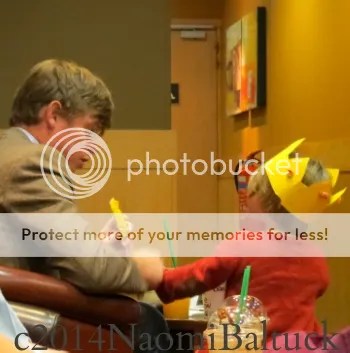
I love working with a creative team…
Sometimes it’s a process.
…but the end result is worth it.
However it comes to you, wherever you find your inspiration, you are never too young…
Or too old….
To fly with it!
May all your ideas and inspirations be fruitful!
Copyright 2012 words and photographs, Naomi Baltuck.
In Part 1 of this piece, I wrote about the symbolism in our religious traditions of light and used photography and light to show how we can point to something that transcends our understanding. Plato would say that the photo of sunset points towards the form of sunset—that perfected form of sunset-ness.
Plato’s Theory of Forms “described the common nature of all things in the world, not just of a table, for instance but of all the tables that ever were and ever will be. This Platonic form of the ideal table is eternal and changeless. It has an essential tableness, as it were, that exists whether the table is where you ate lunch in the school cafeteria or the one at a Paris café where you fell in love. In Plato’s famous allegory of the cave in “The Republic,” the things that we see on a daily basis, like the table in front of you, are merely shadows of the ideal form.” (https://www.archetypes.com/article/plato)
Any object can point towards the perfected idea of that object. And what we see in front of us is essentially a shadow of its ideal self (as no perfected form can be reached—saving this philosophical and theological discussion for another time!).
In photography, shadows are only achievable when there is light. Without light, no shadows. And sometimes, shadows can lead to beautiful pictures. When we handle shadows correctly.
Pointing Towards the Form of Tree-ness by Terri Stewart
And isn’t that true of life? We need to handle our own shadows correctly in order to have a more perfected life? Our shadows, like Plato’s cave, leave us living lives that are not quite ideal. Often, our shadow grows out of shame. Shame comes from unresolved trauma—something that we have not dealt with entirely. For me, shame is often connected to my body image. I remember, 30 years ago, sitting at the dinner table all of 5’3” and 120 pounds and being told, “No wonder I was fat.” And then crying into my plate. Logically, I know that 5’3” and 120 pounds was just fine. But that shame experienced at that moment is seared into my brain and I can recall the rush of tears that made me ashamed of my body. That feeds into self-sabotage of my embodied self in some ways and can lessen my general enjoyment of life unless I deal with it and learn to look at my shadow and bring it into the light!
I can use photography to examine both myself and my shadow. Selfies aren’t all selfish. You can use them to take photos of your shadow self, bringing yourself more and more into the light and into a fuller realization of our perfected selves.
Pointing Towards the Form of Terri-ness by Terri Stewart
Someone said that photography is painting with light. It is also learning how to cope with shadows and darkness. Do you have a shadow—in your photos? Can you peek into it and see how it points towards the fullness of life?
Shalom and Amen!
Feature by Terri Stewart, 2014
Photography, CC License (CC BY-NC)
A Man sleeping …
A Butterfly flitting…
Zhuangzi, dreamer of Butterfly,
ponders what joy there might be
in that tiny Butterfly brain, so subtle,
too subtle to be perceived by I or eye Is it dreaming me? he asks.
Imagine the Universe engaged,
he thinks to himself, inside that flutter.
– thunder, a Cosmic Belly Laugh – Ho! Ho!
Then Zhuangzi knows: He is silent,
flitting from flower to flower in eternal spring.
– coming and going, going and coming –
This is called the Transformation of Things.
I love this allegory from The Book of Zhuangzi, one of the two greatest books of the Chinese mystical Tao. (The other book is the I Ching.) The allegory is about chi (qi), the energy of creation, which some might call God.
“THE CRITIC AS ARTIST: WITH SOME REMARKS UPON THE IMPORTANCE OF DOING NOTHING” — Oscar Wilde wrote this essay in the form of a dialogue between two characters, Gilbert and Ernest, in the library of a house in Piccadilly. Here are some key quotes from that piece:
“The one duty we owe to history is to re-write it. That is not the least of the tasks in store for the critical spirit.”
“When man acts he is a puppet. When he describes he is a poet.”
I confess I have not read The Critic As Artist in its entirety and so have not discovered Wilde’s “remarks upon the importance of doing nothing”. However, I do have some understanding of our critical mind, the ways we apply it, and the results of being dominated by it.
First of all, what is ‘the critical spirit’? I think what the author is getting at is the individual thought process that creates meaning. What we ‘know’ of the world might be broken into three categories: Fact, Experience and Story. Fact is the measured detail of life — how old it is, how big it is, how it reacts chemically, that kind of thing. We learn some things from it, but it has no emotional arch, no meaning.
Experience is the raw sensation of the moment: emotions, smells, sounds, tastes, sights, awareness, feeling. It is how we know we are alive.
And then there’s Story, and this is how we are all poets: we take in data, we see events transpire, we feel emotion and sensation, and then, we put that together into a narrative that makes ‘sense’ to us. We have created a story, a meaning, and attached it to history. That work is largely supervised by our Ego as our thought processes select and omit and weigh the data according to our own preferences and values. We imagine and imitate what we like, we suppress what we don’t; we spin what comes out. These stories become part of the body of data that we use to create further meaning as well.
It is essential to realize that we are constantly making up stories. Civilization is a story. Religion is a story. Philosophy and Art and Psychology and Anthropology and so many other pursuits are simply ways that we have manufactured meaning by creating stories. There is wonderful wisdom in recognizing “the danger of a single story”, and so it is a fortunate thing to have so many different ones. (A Nigerian novelist, Chimamanda Ngozi Adichie, fleshes this out in her profound TED talk, HERE) Stories are ubiquitous. There is no ‘right’ story. Good stories point at Truth, but there are lots of ways to construct them.
This awareness of the creation of story by your own Ego is the key to “the importance of doing nothing” as well. The plethora of stories and the facility of story-telling in our culture tends to dominate our reactions and expectations, creating drama, manipulation and anxiety along with meaning. In some ways, we want that. We find it exciting. But it’s also exhausting and can be exploitative. To be able to leave the story-telling aside and simply BE is important for my well-being and my personal peace. Meditation is helpful in the practice of stilling the ego and refraining from making up meaning. When I concentrate on the present moment and return to the simple activity of breathing, I allow the world to be what it is instead of conscripting it into the service of my creative ego. Then I am free to relax my mind and let go of my anxieties about how the story will turn out. My energy is renewed, and I am at peace. (This is a practice that I am only just beginning to employ. Awareness is the first step!)
“The imagination imitates; it is the critical spirit that creates.” We are invited to engage with the world on many different levels, all of which can be useful and appropriate at certain times. Wisdom is the art of choosing how to engage in a way that is edifying for yourself and others. For everything, there is a season: a time to imitate, a time to create, and a time to refrain from creative ego activity. May each of us find joy in the exploration of this Wisdom and delight where we recognize this exploration in others!
When I began to write this text I had a small difficulty in accepting the idea supported by some people, that “the imagination imitates, it is the critical spirit that creates”, and I confessed my thoughts to Jamie, who, kindly enough, allowed me to disagree with that phrase and to conceive this article the way I deemed it fit.
The reason why I needed this “freedom” was because, from my own point of view, it is the imagination that creates, that unleashes from the spheres of the unknown new things, unseen things, unthought-of-before things.
According to its official definition from the Merriam-Webster dictionary, imagination is “the act or power of forming a mental image of something not present to the senses or never before wholly perceived in reality.” That would mean that by no means does imagination imitate. On the contrary, it’s the one that facilitates and often induces the creative process. However, imagination without an objective critical eye, that would correct possible faults and improve the final outcome, does only half of the creation’s job. While I thought of this, I suddenly began to understand all the things involved by this process.
Truth be told, nowhere is man closer to God (whatever the name of God may be) than in the act of creation. In the moment when, driven by necessity, he uses his imagination, his knowledge and skill and his critical spirit to create something, no matter the essence, man reproduces, at a smaller scale, the act of the primordial creator. It is then that man experiences, either he is aware or not, the beautiful complexity of this thing, and even if some say that it’s more important to have imagination, while others lean more towards skill or critical spirit or other sides of the process, they all matter. Each one plays its equally important part – the imagination sketches the project, the skills and knowledge help achieve it. The critical spirit corrects the mistakes and perfects the outcome. The act of creation requires all these aspects in order to satisfy the primary need that triggered it, and in the end all that truly matters is the final result, the work of art.
I am sure you will find the creative process dissected in many books and on many websites. As interesting as a technical debate would be, I’m also sure that you, dear reader and creator will understand that what everybody has to keep in mind is the fact that for each person this process is different, because we, as people, are different. Of course, we can establish general rules and lines, but let’s face it, some people have an easier way of imagining the new, while others find it simpler to analyze and correct. What we all must bear in mind is that the thing we must focus upon is neither of the “tools” we use (for all those, imagination, skills, knowledge, critical spirit etc. are merely tools) but the creation itself. And above all, upon the amount of passion we invest in it – that is what truly defines us as creators :).
The world has gone mad. Again.
And again voices incite—then hoarse leaders
pretend to have been polite. They did not shout
fear and hatred to explosive tension, to a thin-
wire stretched, first sounding a note then cracking,
snapping in two, each piece twisted. The world goes
mad. Again. The leaders call for calm, like arsonists
who work in the fire department. The fires burn
in the streets at night. The checkpoints flow
with blood and tears. And most of us just want
to go to work, have coffee with friends, teach
our children something other than this craziness
in a world gone mad. Again. And most of us want
to turn away and not see the burning, the smoke,
the arsonists lining up toy soldiers at borders
ready to pounce, to attack, to burn. Again.
Growing up, I was taught that healers must be engaged in the lives of the people. I often think of my beloved teacher, Ipu, who repeatedly risked his life to aid his people in the Amazon. He was a gentle, loving man, with a fierce commitment to social justice, and an acute understanding that social issues lie at the heart of much suffering. When I am asked why I devote so much of my blog to social change, I find myself feeling bewildered; after all, the fates of the Earth, individuals, and whole peoples, are tightly interwoven. There cannot be true healing without justice.
A focus of many Indigenous people these days is the history of the residential schools which were common in the U.S., Canada, and Australia, during the last century. These were institutions designed to “save the person by removing the Indian”. Untold thousands of children were forcibly removed from their homes and placed in residential schools, often many hundreds of miles distant. Once there, the children were subject to harsh treatment, horrific abuse, and, much too often, death.
Here, in Vermont, many children found themselves in St. Josephs Orphanage, in Burlington. Many of the practices documented for residential schools were utilized at the orphanage, with horrific long-term effects. I have heard scores of stories from close to a hundred survivors, narratives so painful I would have nightmares for weeks following our meetings. Now the city appears to be actively seeking to erase and forget this dishonorable chapter of local history.
In recent years both Canada and Australia created commissions to look into the histories and practices of these institutions. The ensuing reports make mind-numbing reading, yet they also open the door for healing. Still, neither government has followed through on the recommendations of their commissions, and many Indigenous people in those countries consider the results of the commission process to be profoundly flawed, if not disingenuous.
Hakea wrote the following note to me when we were discussing the situation in Australia: ” I do not want anyone thinking that Australia is a shining example in Aboriginal matters. Cultural and racial genocide is occurring right now, it’s just got a different terminology attached to it – ‘lifestyle choices’ and ‘economic growth’. All of the commissions and enquiries and apologies were for nought. Injustices are still being wrought upon our Aboriginal people. Institutionalisation is rife. Young Aboriginal people consider that going to gaol is a rite of passage. Australia cannot be held in high regard on Aboriginal matters. So much shame. (See the Documentary – Our Generation (2010)).”
In the U.S., Federal and State governments have refused to address these histories and the lingering suffering they created. It is difficult to imagine the multigenerational trauma will be addressed until governments and religious organizations take full responsibility for their actions. Laura Trace Hentz has been following the commission responsible for investigating residential schools in Canada. Below is her latest dispatch. I hope you will share Lara’s article with others.
Lara writes:
I do not know if readers of this blog have followed what is happening in Canada and their years-long investigation called the Truth and Reconciliation Commission (TRC). In 2014 I heard Justice Murray Sinclair speak about TRC at Yale. READ HERE. He spoke about their findings and what the Canadian government promised to rectify the abuses in the residential boarding schools. Many churches and provinces were mandated and forced to release their records to the commission.
The definitions of genocide fit the TRC findings. They call it cultural genocide. Children lost their family. Some children lost their lives. Children. This happened to children.
What happened in Canada also happened here in the US. We don’t have an investigation by our government. WHY? I don’t know and I don’t know if it will ever happen.
After the residential schools in Canada, the 60s Scoop took even more children and placed them with non-Indian parents. And it’s not over. It’s ongoing there and here.
pink hair, ponytails
outrageous make-up
silicone breasts popping
the buttons of a polyester shirt
rainbow scarf waving in the air
a neon-green mini-skirt
revealing muscled legs
in tattered fishnets
with size 11 feet
in 6 inch heels created
brown hair, styled
like Clark Gable
lightly speckled face
from a long-ago shave
baggy Fitch shirt over a
naturally expanding chest
faded jeans worn at the hips
and a rainbow belt
with size 7 feet
in brown loafers beloved
the bread of life
given for you
to live a life as you were
made and created
loving as you were made to love
the cup of a new covenant
given for you
to create a space
to meet the one
who loves you included
…
In honor of Pride*
Terri Stewart
…
* Just a note about June and Pride.
June 28, 1969, at the Stonewall Inn in New York, police invaded this inn that was known to be inclusive and supportive of those in the LGBTQIA community – especially the poorest and most marginalized. The raid quickly turned into a riot with people being hurt.
“In 1969 Police raids on gay bars occurred regularly. It was illegal to serve Gay people alcohol or for Gays to dance with one another. During a typical raid, the lights were turned on, the customers were lined up and their identification checked. Those without identification or dressed in full drag were arrested.” (here)
For the first time, the LGBTQIA community fought back. And one year later, Pride was born as a remembrance of Stonewall and as a way of looking forward and imagining and fully inclusive world.
A humanitarian ceasefire brought quiet
for a couple of hours, at least, although
a few rockets just flew out of Gaza.
These things happen—unfortunately.
In a few hours the short ceasefire
retires but what happens next depends
on people in separate rooms of a Cairo
hotel and mediators running between.
Like most days, my son went to preschool.
My daughter plays in her daycare. My wife
has gone to work. Papers wait for me
to read them and students wait to hear
their grades. Clouds watch indifferently.
Only my mind seems restless,
impatient, listening for the cracks,
the siren call, the singing voice
that will seduce me with rage, until
I crash against an ideological cliff.
A large half-moon shone in the morning’s
bright-cerulean sky. Yellow roses passed
their prime along the walk, but the crimson
bud—no, perhaps more a claret color—
tightly wraps its future, which is ready to burst
out and declare a moment’s respite
like a five-hour ceasefire, or like a truce
without resolution of all the injustices
on both sides, without grief for all the dead
on both sides, without a care in the world
except to bloom beautifully under a
clear sky and a setting moon.
Perhaps this is a good thing, I don’t know.
Who am I to judge a flower? Perhaps
I should go to the beach and watch waves
to learn about the futility of words and ideas.
Maybe it would be better to rest, take a nap,
dream. Instead, I write this poem, this fantasy
of connecting to you—my enemy, my lover—across
the border, and finding a common ground
where we might plant our gardens together.
Will you hear the boom of this poem
the next time a jet drops a bomb near you?
And your poetry, will I recognize it as it
flies toward me and explodes? Will you
write it gently, so that I might catch it?
“As technological civilization diminishes the biotic diversity of the earth, language itself is diminished. As there are fewer and fewer songbirds in the air, due to the destruction of their forests and wetlands, human speech loses more and more of its evocative power. For when we no longer hear the voices of warbler and wren, our own speaking can no longer be nourished by their cadences. As the splashing speech of the rivers is silenced by more and more dams, as we drive more and more of the land’s wild voices into the oblivion of extinction, our own languages become increasingly impoverished and weightless, progressively emptied of their earthly resonance.” ~ David Abram
I wanted to write a brilliant piece of poetry this for this month’s issue of The BeZine, but my efforts kept coming out with a negative bent, so I decided to instead make this a mish-mash of things. It can be really hard to try and stay positive and find hope in the face of so much apathy in the world, with so many corporations hell-bent on destroying the planet just to make a profit. It can be terribly disheartening when you look at the way the odds are stacked against us, and how very much work there is to do.
On the other hand, it means that there are plenty of opportunities for all of us to find something to DO. Find an environmental cause that speaks to you, personally, whether it’s saving the rainforests, trying to keep trash out of our oceans or making sure that more tar sands pipelines don’t get built. The thing about activism is that it requires action. If you can’t be part of a the local events, if you can’t get out and pick up litter in the parks, there are still lots of things you can do to help. The important thing is “action”. Whether your action is donating time, money, ideas, space, spreading the word via social media or blogging about it, taking pictures…however you choose to do it, just find a way to get involved. The more people we have taking action, the more our efforts can create a ripple effect that can move mountains (or save them from mountain-top strip mining, as the case may be).
Image borrowed from piecefit.com
Here’s a list of the Top 100 Environmental Websites to get you started. From animals rights, to deforestation, to environmentally friendly energy solutions, to recycling, to ocean protection to whatever else you can think of regarding the environment and wilderness, your cause is out there…you just have to find it. 😉 Speaking of which, here’s a handy, dandy test to help you figure out your Environmental Worldview , which is defined as “collective beliefs and values that give people a sense of how the world works, their role in the environment, and right and wrong behavior toward the environment. Environmental worldviews dictate how we interact with nature and our attitude toward how we use the natural resources it contains.” ~ Source
I recall how the tiny bits of gravel
on the shingles dug into my bare knees,
leaving them looking like a scraped
old orange with a sample of the
gray or brown grit dug in there
to remind me about the slipperiness
of gravity. About how the higher you climbed,
the greater the fall. About being an Icarus
with denim and flannel wings.
That’s what I most remember, even more
than seeing a larger world from above,
while so much below appeared smaller.
Lying there, the flat of my back to
the pitched drape of decision my climb
to a higher plane offered.
In the morning or evening you had
a choice of staring into that light
or skittering over to the solar leeward side
of the house, where a too-quick move
could leave you scraped and bloody
or sliding with a skipped heartbeat
and then the air-hammer nailing of
that very abridged account of
your existence to the inside of your chest.
Believe me, it is the only time in your life
where you’re happy to end up in the gutter.
It is not a new notion to say that great speeches are like great poetry [Look up Simon Armitage’s documentary on the subject “Speeches that Shook the World” shown on BBC TV on 6th November in 2013 *]. We know all too well how there are certain circumstances, certain events that cause negative emotions to be stirred in us, like the fear that we would ordinarily prefer to keep hidden; fear that has the capability to paralyse us, and deny us our inner strengths. But great speeches. like great poetry, can also stir in us those very positive emotions that bond us in our familial, local and national and even international communities and, in so doing, bind and galvanise us, as well as motivating cooperative action, repair and renewal. The like of this kind of behaviour may seem difficult to believe, these days, when our motives seem only to be characterised by an aspirational, but selfish pursuit of wealth and personal celebrity, often at the expence of those less fortunate; often at the expence of greater causes.
But one man encapsulated the essence of leadership for Great Britain, at a time when it was needed most. He was a man, who, despite his unpopularity amongst certain sections of society in peace time, galvanised a nation into girding its loins and taking action; who, above all else, was capable of stirring the most powerful of positive emotions in us, of breathing the oxygen of hope into a nation that was almost on its knees in the early years of World War II. He was a man, who was an articulate weaver of words, a speech-maker and, it could be argued, a poet. Above all else he was a true leader. That man was, of course, none other than the late Sir Winston Churchill. Yesterday was the 50th anniversary of his State funeral – an honour, apparently never before afforded to a ‘Commoner’.
His speech at the conclusion of the Battle of Britain was poetic:
“Never in the field of human conflict
was so much owed
by so many
to so few”
I have deliberately broken his prose into poem-like lines, to emphasise the pauses he made between them, to great dramatic effect; an effect that embeds a message deep into our psyche, it sears the soul such that you could feel it in your guts.
The way in which he delivered his rallying speech to Parliament on 4th June 1940 …
“We shall go on to the end.
We shall fight in France,
we shall fight on the seas and oceans,
we shall fight with growing confidence
and growing strength in the air,
we shall defend our island,
whatever the cost may be.
We shall fight on the beaches,
we shall fight on the landing grounds,
we shall fight in the fields and in the streets,
we shall fight in the hills; …
… without doubt, embraces many facets of the poetic. It had such rhythm, even half rhymes and cadences, to say nothing of the way he used the repeated punchy phrase “we shall fight” and how the subtle stress on certain words, lingering on the vowels of certain key words and leaving short silences between lines built drama as the speech progressed to its conclusion.
… we shall never surrender.”
Whatever your detractors may have said against you, Sir Winston, for the huge role you played, between 1940 and 1945, in helping a nation believe in itself again and that it could, nay, would prevail, I salute you.
~~~~~~~~~~~~~~~~~~~~~~~~~~~~~~~~
* Armitage revealed the key elements of a good speech (and also a good poem), which were defined by one of the many people he interviewed during his documentary, Vincent Franklin, who played the blue sky thinking guru, Stuart Pearson, in the BBC’s comic satire, “The Thick of It”. Franklin is a speech writer in his other life. The three elements he revealed were based on the ‘rhetoric strategies’ of the ancient Greek philosopher, Aristotle, which are also referred to as the ‘modes of persuasion’ that defined a great speech as one which had Logos (an appeal to logic and factual argument), Ethos (an appeal to the authority or trustworthiness of the speaker) and Pathos (having secured your audience’s attention, this is the quality of the language, which drives the message home more powerfully than any other technique). The final speech presented by Armitage in the documentary is Martin Luther King Jnr’s famous “I Have A Dream” speech, delivered to quarter of a million people from the steps of the Lincoln Memorial on August 28, 1963; a classic mood changing, history making speech if ever there was one.
January is on the wane
leaving behind early dark and champagne hopes
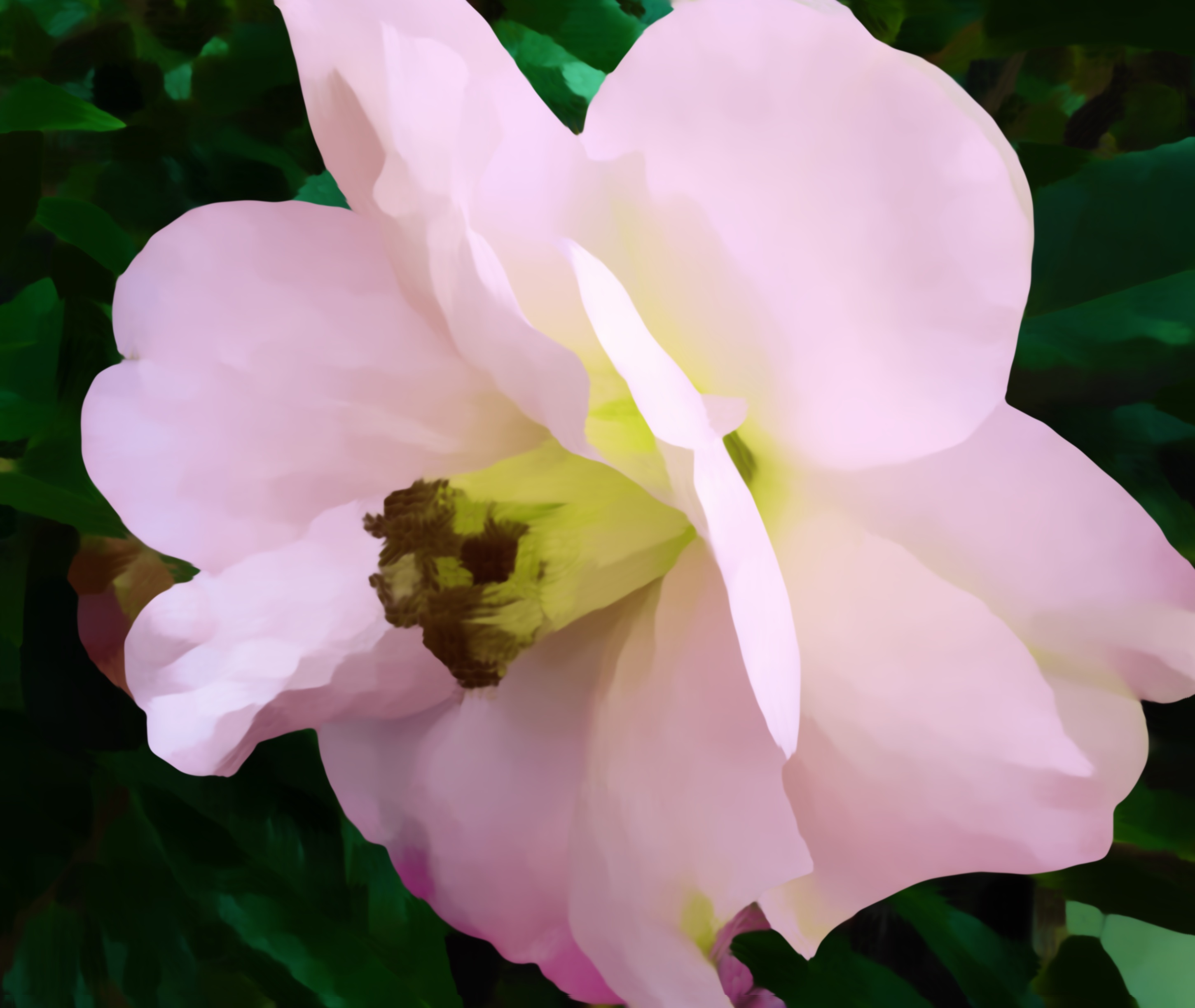
for the genus Rosa. Wild or tame, they’re lovely.
Garden roses need pruning, solicitous cultivation ~
Layer shorter under taller, drape on trellises
and over pergolas, the promise of color and fragrance,
climbers retelling their stories in ballet up stone walls,
an heirloom lace of tea roses, a voluptuous panorama
rhymed with shrubs and rock roses in poetic repetition.
Feminine pulchritude: their majesties in royal reds
or sometimes subdued in pink or purple gentility,
a cadmium-yellow civil sensibility, their haute couture.
Is it the thorned rose we love or the way it mirrors us
in our own beauty and flaw and our flow into decrepitude?
They remind of our mortality with blooms, ebbs, and bows
to fate, a noble death to rise again in season, after Lazarus.
Divinely fulsome, the genus Rosa, sun-lighted, reflexed ~
And January? January is ever on the wane.
The work that was the jumping off point for my poem is one by Sor Juana Inés de la Cruz (1551-1695), who lived during the time when what is now Mexico was a part of the Spanish empire. Sor Juana was an ambitious writer, self-taught, and a Baroque poet. She belonged to the Order of St. Jerome. I am enamored of her work and find her life interesting. She was brilliant, independent and nonconforming.
Sor Juana was hungry for learning and was self-educated. From childhood, she set her own demanding educational goals. Unfortunately, the parochial male powers could not put the power of her mind together with her femininity. She suffered for that.
These three famous quotes of hers are telling:
“I don’t study to know more, but to ignore less.”
“One can perfectly well philosophize while cooking supper.”
“…for there seemed to be no cause for a head to be adorned with hair and naked of learning…”
For those who might be interested, here is her poem Rosa in Spanish and in English.
Rosa divina que en gentil cultura
eres, con tu fragrante sutileza,
magisterio purpureo en la belleza,
enseñanza nevada a la hermosura.
Amago de la humana arquitectura,
ejemplo de la vana gentileza,
en cuyo ser unió naturaleza
la cuna alegre y triste sepultura.
¡Cuán altiva en tu pompa, presumida,
soberbia, el riesgo de morir desdeñas,
y luego desmayada y encogida
de tu caduco ser das mustias señas,
con que con docta muerte y necia vida,
viviendo engañas y muriendo enseñas!
Rose, heaven’s flower versed in grace,
from your subtle censers you dispense
on beauty, scarlet homilies,
snowy lessons in loveliness.
Frail emblem of our human framing,
prophetess of cultivation’s ruin,
in whose chambers nature beds
the cradle’s joys in sepulchral gloom.
So haughty in your youth, presumptuous bloom,
so archly death’s approaches you disdained.
Yet even as blossoms soon fade and fray
to the tattered copes of our noon’s collapse –
so through life’s low masquerades and death’s high craft,
your living veils all your dying unmasks.
– Juana Inés de la Cruz
Illustration and poem in the public domain. Source of translation unknown.
they were dying like the blinks of some eyelids
over the black holes of gazes
swallowing all the light around them.
or like some butterflies.
or like some waltz steps
suddenly too tired of music.
and in all this time on our soles grew paths,
with their roots deeply sunk in calculations and statistics,
lowering us into valleys and rising us upon mountains
and bending us from our waist all the way to the ground
making us search for the ant hills in which we were born.
magnolias were dying slowly along the road side
and god was picking their petals one by one
to later make from these
suns and rain and harrowed hearts and tomb stones
and ant hills
for us.
Moments of existence in ice covered wind that presses on our cheeks, making our lips rainbows
‘Cause how do we know that they aren’t rainbows?
We say red and pink and blue from cold – but why not orange and green and yellow?
Life is too colourful to define itself in single handed monochromatic injustices
Time is so indefinable
Broken into bits and pieces here and there, floating about in the micro fraction of the universe that are our golden brains, shining through a light that blinds
Darkness is beautiful
There was a Princess, marching back and forth along her balcony
Fingertips digging into the marble of the railing that is dim
It doesn’t glow the way darkness does
And she makes her way forth to announcements of the utter most importance
Because she is a Princess, and that is what Princesses do
They speak words for their command, explaining the tithes that we give daily
People fighting for their freedom
People working at their long daily jobs
People playing on climbing sky scrapers
People walking down beautiful beaches, rosy in the arms of a friend
And the Princess proclaims this good
This good is the broken nature of being
Fighting for the existence of existing
Breaking for the love of loving
Falling in the joy of playing
Hiding and seeking in some crazy game of cat and mouse that the Princess just has to watch
And she smiles and waves, dances and flows about her ballroom in clothes fit for a Knight and stumbles
So focused on what people see of her that she forgets to just be her
Because sadly things work like that
And I, she, we are sick of things working like that
Darkness surrounds everything, swamping it in valley’s and shadows doubts and beauty
Beauty because we are all so different, and can be observed as different in the purity of darkness in an entirely different way than we can in the light
Darkness enhances differences felt by fingers, heard by ears, experienced through scent
Darkness causes us to keep our balance within our validity being pulled by the magnetic north to wonders of reality
Reality that shapes itself around the reaction, the shadow
Darkness
A young child is playing off by themselves
Not alone, but with others
Throwing around balls of love and life and relationships
Friends dancing around a symmetry caused by everything being timed
Timeouts are punishment
The removal of those who misuse their balls of darkness, of sanctity
And it’s misused all of the time
Flowing from fingertips to screaming words to pain and fear before it translates back into the meditative peace
This child is forced into the spotlight when they’d prefer to be in the darkness because they understand
They understand that darkness is the compromise of fire for self love and worth
Darkness is where one goes to not judge, where one can dance and scream and feel without waiting to be told to
Darkness is loving and thoughtful and surrounding
It’s encompassing
And in a world full of so much light, it’s the bringer of sensation
And fighting against the void
The void and darkness are very different
The void is the loss of everything and the gain of nothing while darkness is the acceptance of everything and the love of nothingness
Nobody is afraid of the dark
They’re afraid of the void
A boy is in his bed, terrified that monsters are under it, going to attack him or take him
And his hands are shaking and he fears the dark, vilifying it to become something it is not
Shoving with his mind to say that all darkness is bad, when darkness is just trying to care
Darkness is the universes caretaker
Loving everything, even when it decides it doesn’t need that love
So remember that the darkness is your caretaker in form of friend, parent, teacher, lover, sibling
And that everything is always loved
No matter what you’ve done
…
By Colin Jon david Stewart
Colin Jon with Glow Stick by Terri Stewart CC (BY-NC-ND)















.JPG)