Being a More Compassionate Gardener

image borrowed from http://motivational-life-quotes.blogspot.com

Like many people, I love to garden. I enjoy the feeling of soil beneath my fingers, the satisfaction of caring for plants and watching them grow and bloom. I also tend to believe that all life is sacred. From the biggest whale in the ocean, down to the tiniest ant in the ground, all living things are usually just trying to survive, the best and only ways they know how. It can be frustrating when garden pests appear to wreck all of my hard work! But in the many years I have been doing it, I have come to understand and appreciate that there must be a balance and that there are ways to be a more compassionate gardener.

*********

Aphids. These sap-sucking insects can quickly overtake and kill an otherwise healthy plant. Most healthy plants can survive a small infestation of aphids, but if their numbers grow too large, it’s time to take action.

What you can do:

* Introduce some helpful insects – get some Ladybugs (also called Ladybirds in some parts of the country)! Ladybugs love aphids and can be relatively inexpensive to purchase. Lacewings are another alternative if you can’t find any Ladybugs.

* Use the water pressure spray from your garden hose to knock the aphids off the stems and leaves of plants. Many times, this alone will be enough to dislodge those unwelcome guests.

* Use a spray bottle filled with soapy water (1 quart of water, 1 teaspoon of liquid dish soap and a pinch of cayenne pepper) and make sure to mist the underside of the leaves, where aphids like to congregate.

* Plant some plants which attract Lacewings and Ladybugs and deter aphids, due to their strong scents. Some good examples to try are: Onions, Garlic, Chives, Cilantro, Rosemary, Sage, Oregano and Fennel. Most strong scented herbs and plants in the Allium family are great for this.

* Encourage nesting of birds which eat aphids, like wrens, titmice and chickadees. Natural predators are much safer and more compassionate than chemicals. (After all, the birds have to eat, too!)

Image borrowed from http://hqwallbase.com

Slugs/Snails. Slimy and slow, these invertebrates can leave a trail of destruction that will decimate any garden.

What you can do:

* Plant “barrier plants” around the plants you’re trying to protect. As with aphids, slugs don’t care for strong scented herbs like those listed above. Nasturtiums are also a natural plant that slugs don’t like. Try it. You might be surprised.

* Sprinkle finely-crushed eggshells or use a ring of sandpaper around the plants you want to protect. The slugs and snails will not attempt to crawl over these things because they will hurt themselves doing it. By the way, coffee grounds are great for soil amendment but they don’t do squat to keep the slugs and snails away. 😉

* Put a board or an upside-down flower pot propped up so the slugs can get under it by the plants you don’t want eaten and check the board or pot every morning. The slugs and snails will go party on the underside since it’s cool and possibly damp, and you can pick them off by hand to get rid of them.

* If you can find it, try mulching around your plants with seaweed about 3-4 inches deep. The salt content in seaweed is enough to keep those pesky gastropods away. Don’t ever put salt ON your plants, though. It will kill them.

Snakes/Spiders/Lizards. Any experienced gardener will tell you: these are NOT the enemies! Quite simply, leave them be. They will help your garden more than you realize, and even though they may give you the heebie-jeebies, don’t kill them. Most of the time, they are not dangerous to people and will help you in your quest to keep your garden pest free.

Image borrowed from http://westwoodgrove.org

Gardening can help a person “get back to earth” and reconnect with the planet. We can be compassionate in our efforts to protect the fruits of our labors and we don’t have to saturate the world with chemicals or kill those things which we label “pests”. There is always a balance which we should strive to keep.

“Simplicity, patience, compassion. These three are your greatest treasures. Simple in actions and thoughts, you return to the source of being. Patient with both friends and enemies, you accord with the way things are. Compassionate toward yourself, you reconcile all beings in the world.”

— Lao Tzu in Tao Te Ching

– Corina Ravenscraft

© 2015, essay, Corina Ravenscraft, All rights reserved; photographs as indicated in the body of this feature

Señora Ortega’s Frijoles

flores de la frijoles
las flores de frijoles

Her fate was set when she fell under the spell of his kind eyes and bigger than life personality. For his part, he loved her gentle ways, the fluid dance of her hands at work, the sensual swing of her hips as she walked to the market with basket in hand.

And so it happened that in 1948, with her father’s permission and her mother’s tears, they were wed in the old adobe iglesia where uncounted generations of her family had been married before her. Not many months after the wedding, she kissed her parents and siblings goodbye, took a long loving look at her village, and she followed her new husband north to los Estados Unidos de América. She was already pregnant with Clarita.

****

As the days and years passed, they settled into their routines. Sunday mornings were her husband’s quiet time. He stayed at home while Señora Ortega and Clarita were at Mass. In their absence he would occasionally put down his newspaper and stir his wife’s frijoles simmering fragrant with pork, a few bay leaves, onions and garlic. Last night: their Saturday ritual, she and Clarita had sorted and then washed the dried beans in cold water and left them to soak until morning. The child – fast becoming a young woman – took the time and care to do a good job of this. El trabajo es vertud. Work is virtue, Señora Ortega encouraged.

In the tradition of Señora Ortega’s own madre, la cocina was a place of teaching – about food, about life, about being a woman, about being human. “!Ten cuidado, hija!”  Be careful, she would say as she demonstrated her almost sacramental sorting of the dry beans. It was an opportunity to teach Clarita the dichos, the proverbs, of her mother and grandmother and all the grandmothers before.

“Los frijoles son nuestra fuerza.” We get our strength from los frijoles, she taught Clarita just as her own mother taught her. Certainly the beans give the strength to our bodies, but also the strength to our character.  There are lessons. “¡Aqui!”  Remove these. Remove the wrinkled, the broken, the discolored or malformed. Remove them as you should remove flaws from your character. One bad frijole will ruin the whole pot.  Taparse con la misma cobija.* … You will be judged by the company you keep. Be cautious in your choice of friends.  Even the norteamericanos have such a saying: one bad apple spoils the bunch.

“Mama,” said Clarita, rolling her eyes after her mother’s latest speech. We are North Americans.” Señora Ortega’s brow furrowed when she heard this. She was given to worry about such reactions from her daughter. What of the child’s values?  It is true after all. My daughter is American. What does this mean for her future, for our relations, and for us as la familia?

****

Soon Señora Ortega had to put her concerns aside. It was springtime. Easter was upon them and with it a visit from her husband’s sister with her two small children. Señora Ortega and Clarita were busy with preparations. The air in her house smelled of poblanos roasting and cookies baking. They put fresh linens on the beds in the guest rooms. They picked flowers from her garden and set them in vases around the house. She gave in and bought chocolate Easter bunnies too, the silly convention of this country, but the children loved them and looked forward to them each year.

Finally the honored guests arrived and the house was filled with the cheerful noises of los niños. The boy and girl were now old enough to learn to prepare beans and, on the eve of Easter Sunday, Señora Ortega gave Clarita the task of showing the children how to sort los frijoles for cooking.  She looked on as Clarita explained the process. “!Ten cuidado, mis primos. Aqui! Remove these. Remove the wrinkled, the broken, the discolored or malformed.  Remove them as you should remove flaws from your character. Remember one bad frijole will ruin the whole pot. Be cautious in your choice of friends. Taparse con la misma cobija. You will be judged by the company you keep. “Los frijoles son nuestra fuerza.” Los frijoles are our strength.

****

At some point, Señora Ortega’s husband had come to stand by her side. She realized he was watching her as intently as she watched their daughter. He put his arm around her and held her close. “You see, mi querida, she is a good girl and you are a good mother. It’s gonna be okay …”

“Am I that transparent,” thought Señora Ortega, but she sighed gratefully. All will be well. My mother was right. “Los frijoles son nuestra fuerza.” 

Taparse con la misma cobija – literally: to cover yourself with the same blanket, i.e. likely the same meaning as our expression “birds of a feather.”

– Jamie Dedes

© 2012, short story, Jamie Dedes, All rights reserved. This story is a fabrication and not meant to depict any specific person or persons living or dead.

Photo credit ~ Schnobby via Wikipedia under Creative Commons Share-Alike 3.0 unported license

Mourning Brooch

IMG_7052the memories have little substance
they flit and fly, pollen on the wind,
like the quick passing of a joyful birth,
the school years, the sweet trysts ~
a waving bridal veil . . .

. . . the way your love drained you
of your dreams just to fill yourself with him

. . . . . the epitaph of tears

only when yesterday becomes a story,
once upon a time, do memories
become memorial, a mourning brooch
forever warm upon your breast

©2013 poem, 2015 illustration, Jamie Dedes, All rights reserved

The Discovery of Grass

Grass
Grass. Photo by Nevit Dilmen

A fool sees not the same tree that a wise man sees. ~ William Blake

I saw grass for the first time today.
Oh, I’ve seen, sown and sawn Suburbia’s
mostly-green undergarment all my life.
But today it glowed upon my mind’s eyes like
a child’s first birthday present inside a shiny box.
I enjoy that infant-like discovery
of something I know I’ve held in my senses
since first I sensed. Maybe it’s
the light’s different angle reflected to this
ever-shrinking man, or this shallower air
I breathe that, say, a pumpkin pie baking
can infuse with the aroma of earthy heaven
upon heavenly earth.

Or perhaps it’s just me, searching for
something new in a life of so much now old.
Like today, the cords in the blinds
in front of me never had that figure-eight
infinity-upon-infinity existence before
my vision’s finite reach captured them here
in I’s, Y’s and F’s like this.
Such observations make me wish
for a few infinities so that I
might try discovering
the Whats and Whys of your world,
which I’ll never see, and those of mine,
which you’ll never understand.
Nor, apparently, will I.

– Joseph Hesch

© 2015, poem, Joseph Hesch, All rights reserved; photo credit as above

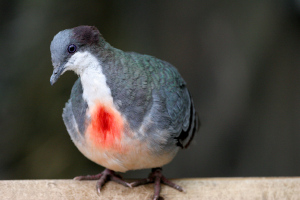
Doves of Beirut

Doves were arrogant in those days
feral, territorial of ledges
I hadn’t snapped their necks yet
through grind of metal
on bone, stone
through air sharpened on greed hones
no scream left in punctured lungs
fate duct -taped to fetal nights
barricaded behind shadowed ribs
that hardly rose for a fight
underneath rubble of lord’s prayer and adhan

they pecked at concrete
heads bobbing, waiting
waiting
they knew I’d come
they knew I’d tire of walking
your curved dead -end streets

I knew those ledges well
gravel and loose feathers
wet with rain
stuck with white droppings
to my young toes curled on grit

but I knew your streets below better
lick of diesel on asphalt
grief’s iron reek in gutters rising
damp alleys breathing
breathing
the way the old do
those who’d seen the blade
cut through flesh
a sigh every third inhale
a pause before funneling
jasmine and mold laced gasps
into patched veins
tied to the stone
tied to throbbing ground
with historical claims
to the sea breeze
that couldn’t cool their burns
still rummaging for life
as they used to remember it

I walked on sweat of fig trees
on your sidewalks bleeding at cracks
when you had the pigeon for dinner
and I starving, gnawed on bones
where I’d tied my message
pleading for your unclutched claws
on my debt

I hear you like your whores younger these days
and you rather have your sons as killers
blind and foaming revenge at mouth
darbouka between their knees dropped for guns

streets mapped in bite marks
on time I served now dyed ash blond
I look away
the way the old do
eyes on the distance to your bleeding ledge

– Silva Merjanian

© 2014, poem, Silva Zanoyan Merjanian, All right reserve; poem is excepted from “Rumor,” Silva’s second poetry collection.  Both Silva and publisher, Cold River Press, are donating all profits from the sale of this book to Syrian-Armenian Relief Fund

Beirut

Over there
all that happened
(and didn’t happen)
folded
packed in mental mothballs
stories fading with licked creases
some reduced and softer versions

wonder why I preserve breaths
forced through my lungs in those days
stringed around the eye of a hurricane
circling, demonic, nameless
shaking me shameless for a day

on nights when a collective sigh stings
and I can’t tell
which tale will toll for me
and which nocturnal howl
will lift the dust
through endless times
relive slivers
on a pink tip of my tongue
afraid to bite a dreamt memory
that it might hemorrhage
bleed the night

I want a dripping whiff of that afternoon coffee
instinctively bitter, solemnity and hot
ten minutes when lonely hearts
willed an arching cease fire
and time hovered among us
long enough for my mother
to build castles in my cup

over there
the man flying his doves
on the roof across two streets
remains a blur
but the doves stirring the air
in perfect shades of unison
(I had named them after heroes long forgot)
sometimes still raise dust in my room
of their feathers’ aches and plight

I believed then
I could break away
would break away

I did one day
the doves were left to die

over there
at dusk my father played the mandolin
and my mother’s voice filled all the gaps
between our breaths –
the dam that held surpluses of war
long enough for us to shed in dreams

why do I long for hell
on nights
when I can’t sieve my sigh from the wind’s eye
and I wonder if I ever broke away
from a circle named dead doves

perhaps
scent of jasmine
still smells like home
back home in the rain

– Silva Merjanian

© 2014, poem, Silva Zanoyan Merjanian, All right reserve; poem is excepted from “Rumor,” Silva’s second poetry collection.  Both Silva and publisher, Cold River Press, are donating all profits from the sale of this book to Syrian-Armenian Relief Fund

Collateral Damage

Morning arrives charred
served on a disassembled night
its curled edges, ashes on waking eyes
no smoke in sight, no trace
where old mistakes aspirate donated lungs
burked storms under soft pillows
plump with the geese not the feather

as if a night could not satiate viscera of dreams with its cant
as if doubt drains into power pipelines as tear ducts dry
and conscience blazes in defiance fueled bonfires

had you not heard panting in medicated doldrums of their minds
had their stuttered remorse turned the soft soil of tomorrow
had you not loved only to stay alive
morning would have arrived perky and bright
and you too would have heard the finch outside
instead of the crackling of the fire

– Silva Merjanian

© 2014, poem, Silva Zanoyan Merjanian, All right reserve; poem is excepted from “Rumor,” Silva’s second poetry collection.  Both Silva and publisher, Cold River Press, are donating all profits from the sale of this book to Syrian-Armenian Relief Fund

honey…i swear this is for the birds…

honey..i swear this is for the birds...

i have been
carefully
watching hummingbirds
as they
battle for air supremacy
seeking
the sweets encased
in a plastic feeder
with
the same ferocity
i must say
as humans
seeking the last drop
of deep-sea oil
human sweets
of course
being
profit margins
regardless
of species
the battles continue
i’ve
even found
dead hummingbirds
on the ground
who
in the heat of battle
flew into plexiglass walls
not
seeing the danger
like
humans
willing to destroy
not only
animal habitats
but
their own
cuz
they’re flying high
on
financial conquests
but
all the while
approaching
the earth’s
translucent walls

“Petrichor Rising” … or how the Twitterverse birthed friendships that in turn birthed a poetry collection …

product_thumbnail-3.php“I always had this notion that you earned your living and that poetry was a grace.” Seamus Heaney (1939-2013), Irish, poet, playwright, translator, educator and Nobel Prize winner

I’m sure my friend, John Anstie, poet and renaissance man, The Bardo Group core team member, and editor of and contributor to Petrichor Rising (eBook and paperback), a 2013 poetry collection of The Grass Roots Poetry Group (GRPG), would prefer that I focused on the poems and the collection. The former feature-writer in me still loves a good story though. (Forgive me, John!) The coming together of this group and the publication of their collection is as good a story as any and better than most … and hence, I break my usual self-imposed word limit on posts. Read on … You may recognize yourself in some of this …

“I do accounting. I am a writer.” an employee corrected me when I introduced him as an accountant.

I spent many years in the employment and training field, serving in sundry positions and writing columns, feature articles and journal pieces ad nauseam about recruiting and job search, chosing careers, assessing post-secondary vocational education programs, structuring community programs for at-risk populations (read the poor and marginalized), as well as writing about labor and job market trends including changes evolving out of advances in technology.

Wherever I worked whether it was counseling, placing executives in career positions or teaching career development and job search to ex-offenders or people transitioning off welfare, I found the same thing. Scratch the surface of almost anyone and you will find an artist.  Several of the poets to this anthology earn or have earned their living doing something other than writing. John Anstie talks about discovering his “inner poet.” At core, we are creators.  This is a great truth about human beings.

It used to be that most evidence of creativity ended in storage somewhere: dresser drawers, file cabinets, attics or garages … until the accessibility of social networking and self-publishing via blogs, videos, blog radio and other venues. Now  creatives have easy means to deliver their work independently and to find their own audiences, modest but genuine. No longer unknown, these poets and artists join the ranks of lesser-knows. They also have a wider opportunity to meet others with the same interests and values.  Put the mix together – a wonderous serendipity – and the birth of productive collaborations …

Freinds in the Forest (eCollage by Anu) (c) all rights reserved
Friends in the Forest (eCollage by Anu) (c) all rights reserved

“As far as I recall, it all started with freshly-baked lemon drizzle cake . . . ‘@peterwilkin1: Good Morning. Coffee & lemon drizzle cake, anyone?’ …. One may be forgiven for thinking the GRPG is an international social network-based association for the deep appreciation and virtual consumption of cyber cake and other comestibles. Indeed this is what they do, but they also do something else remarkable – they write poetry – delightful, delicious, scrumptious, tasty, and delectable at that, poetry.” Introduction, Craig Morris

And thus it began, with friendly – often quick-witted – Twitter chat and an affinity evolved. Two years later Petrichor Rising was born and featured artwork by one, the Introduction by another, and the poetry of the rest.  How did they pull it all together?

Interview with John Anstie

john_in_pose_half_face3

JAMIE: Expanding on your piece about editing Petrichor Rising (posted this evening on The Bardo Group): Learning to use language gracefully and words accurately is a lifelong challenge (and a pleasure); but editing English when the works are from such diverse regions of the world throws extra spice into the mix. There are many variations on the themes of grammar, spelling, and on syllable accent and speech inflection, how did you approach that particular challenge?

JOHN: Your first question is not a question, it is several questions, which, as you imply, could take me a lifetime (and possibly a few pages) to answer! But the simplest way I can answer this is to be entirely honest. By and large, I took each piece as it was presented and interpreted it as it was written. Grammar and spelling was not really a problem, since I left the words spelled as they were presented; my two North American friends, Jackie and Joe, if they used American English spelling, that’s how it stayed, of course. There were few issues in the grammar department. As for syllable stress and speech inflection, I had little issue with the effects of these on scansion, since almost all of the poems, except some of my own, were pretty much in the ‘free verse’ form. But you certainly have raised a valid issue for editors of international poetry collections.

.

JAMIE: How did you work out the collaboration? The book is admirably unified and surely there must have been some back-and-forth about which poems to use from each poet and how to organize the sequence.

.

JOHN: Over the two years of its gestation, there were a few changes of poems. Some of the original poems submitted were withdrawn, because of submissions elsewhere and a handful were edited and resubmitted for inclusion. The sequence was the greatest challenge for me. Initially, I asked each poet to attach key words or tags to each of their own poems, from which I intended to attempt dividing the whole body of work into sections. That didn’t work, simply because I inevitably ended up with too many key words. In the end, after we’d decided on the title, I felt it important that any themed sections should reflect the theme of the title in some way. So I worked through the whole collection of sixty-five or so poems and categorised them myself. The three sections were the end result of that part of my work on the book.

.

JAMIE: Have you had the opportunity to speak by phone or meet in person with any of the members of the Group? If so, what was that experience like.

.

JOHN: Five of us live in the UK. It was Louise, who bravely blazed a trail to Yorkshire to stay with Peter and his wife for a week. I guess she judged him to be trustworthy enough (and not the mad axe murderer he might have been!). I  journeyed up to meet them both on neutral ground. We spent a fruitful and enjoyable day in each other’s company. Shan and Abi were the next to visit Yorkshire. I’ve lost count of how many times we met after that, including a couple of poetry readings at Ally Wilkin’s shop “Crystal Space” (one of the locations in Peter’s and Marsha’s joint publication, “Brianca and The Crystal Dragons”). All of this was capped in a confluence in May 2012, when the five of us from the UK, along with Joe and Quirina, who flew in from Albany, New York and Germany, came together in London – photos of this are in my Facebook album of that day HERE.

.

It was a very happy day, but one that wasn’t long enough for us all. Finally, last June, Marsha came to the UK for a conference in Leeds. She lodged with Peter and Ally for the first part of her stay and with me for the last part. It was very special to meet her too. So, in answer to your question, I’ve met nearly all of them; only Jackie in New York and Craig in South Africa have yet to meet us. Quite incredible, considering we only met on Twitter two and a half years ago! One final twist to this tale, to cut a long story short, is that Abigail turns out to be the daughter of an old school friend of mine, whom I had very recently met up with again along with another friend! It’s a very small world!

.

JAMIE: What made you choose print-on-demand over ebook? Does the GRPG plan to offer the book in ebook format? It a lovely volume, and I think would make a fine addition to anyone’s poetry library. These days, though, many appreciate ebooks for their portability as well as the saving grace of saving shelf-space.

.

JOHN: Print on demand, in the end, seems like a very sensible choice. Self publishing would have been difficult, deciding how big a print run dramatically affects the cost-per-unit economies. However, it was the publisher, Aquillrelle, who determined the route to print and we chose them, because they had published Marsha’s collection, “Spinning”, and she was very impressed with their service and attention to detail. It proved to be a good choice for me, as their Chief Editor, did have a keen eye for detail. As for the ebook, Amazon should have produced one by now, but it’s not happened yet. I suspected it might be a demand thing; I’m not sure. Even though I own an iPad Mini, which is, of course, a perfect ebook reader, it has to be said that I prefer to have a real book in my hands.

.

Note: I see that Lulu has an eBook available since we did this interview. The link is above in the opening paragraph. Jamie

.

JAMIE: Would you do it all again and if so, why?

.

JOHN: I think the answer is yes, probably, but not in the same way. What would I do differently? I couldn’t answer that until I saw the material I was working with. However, there are two more projects on my horizon before another anthology comes along. The first is going to be some kind of account of the story of an historic house, gardens and estate, for which my wife and I are members of the volunteer teams. The second may be my own first full collection. Then, for the sake of my family history, maybe I ought to complete my own autobiography.

.

Book Review in Brief

 Petrichor – from the Greek pɛtrɨkər, the scent of rain on the dry earth.

.

I dislike using the word “accessible.” There have been times when I’ve wondered if that is code for a lack of intricacy or profundity. The work here is comprehensible but still complex. The poems move from nostalgia to appreciation, from the beauty of nature to the frailties of humanity, from sorrow to hope. From Craig Morris’ Introduction, which sets the mood, to Joe Hesch’s theme poem Petrichor, which closes the book, it’s a joy. Well organized with the weather metaphor as the through line, the sections are The Drought, Gathering Storm, and The Rain. Its hallmark is the show of humanity at its best.

.

This morning I will cast open the curtains, chasing the fear away
and hold this crystal up to the sunlight, releasing my soul to fly

– Prism, Abigal Baker

…. and at its worst

Haunted by
proper thoughts
of his wife at home
he wryly recollects
how he told her
before friends and family
on their silver anniversary
“I love every wrinkle,
every scar I celebrate,
such wonderous depths
are etched upon your body
a cartography of our marriage
I love the silver in the gold
of our hair”
then renewed
his marriage vows
his fingers crossed,
avoiding his own reflection
in the mirror

– Cracks of Angst: A Portrait of an Unhappy Man, Marsha Berry

Petrichor Rising is availabe from Lulu and Amazon and profits are donated to UNICEF.

© 2013, feature article, Jamie Dedes, All rights reserved
Artwork and poetry quotes are the property of their creators

dance to life’s music . . .

dance to life's music

there will come a time
when shadows stand above you
so dance in the light

– Charles W. Martin

© 2015, poem and illustration, Charles Martin, All rights reserved

In Audience with the Queen

Eubalaena_glacialis_with_calf

A female North Atlantic right whale with her calf in the ocean.

On the mid-afternoon boat out of Boston,
we headed southeast past lobster traps
and gliding slicks of motor fuel,
all there to run the engine that transported
tourists from flush to a good deal poorer
in the time it took to eat one meal
at Ostra or The Capital Grille.
We were still digesting Quincy Market pizza,
feeling the breeze on our bare legs
poking out from the deck above’s
meager shade, as the hot sun sprayed jewels
off our bow. Above us, a radio squawked
that another boat had spotted her due east and
we canted to port, a vee-shaped churn
of golden foam trailing behind us as we
became smaller and smaller on the
blinding mirror of sea. She soon appeared
off the starboard bow, birds circling her
as if she was a conscious island, the gray queen
sinuously weaving her barnacled weft over
and under the Atlantic’s green warp waves.
And then it was pretty much over.
The boat powered up and sped us back to the
dock in Boston, as we winced with sunburnt legs
and bleary eyes into a sun that was setting
over the city, which bloomed bigger with
each rumble and bump, each passing trawler’s
casting of wakes our way. I remember the image
of the dimming eastern distance, where I
left behind my feeling of human superiority
and all my other images of that day,
having dropped my camera over the side
when I bowed in my audience with the queen.

– Joseph Hesch

© 2015, poem and photograph, Joseph Hosch, All rights reserved

Bird

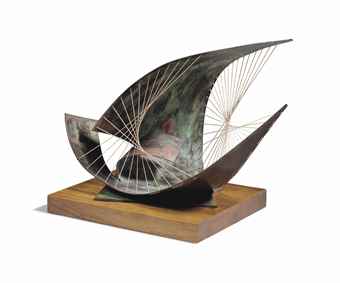
barbara_hepworth_stringed_figure_d5554106hafter Stringed Figure (Curlew) by Barbara Hepworth

I am wings
springing from breast, sweeping back, each curve echoing
the other. Meaning is space.
As I thrust forward my wingspan unnerves you. As I soar
do you yearn to encompass my power?

See how
I enfold head and heart in flight. Map out
my hungers and dangers, the complex of my parts. Feel my weight

and weightlessness,
bone mesh, skeins of blood, speckle and lie of feathers.
You will never explain the egg
where I began, dig out the deeply bedded knowledge
that guides me through dark and light.

Hold me down
and I will rise up above the crests on fierce waters,
above the sheer of rocks, above the heave and scramble of moors.

And I will be
here, there, within you, everywhere,
my flung wingtips longing to come together,
striving to complete a shape as I pierce and pierce the blue rush.

© 2008, poem excerpted with the poet’s permission from her book, “Circling the Core,” All rights reserved; photograph, Stringed Figure (Curlew) (Version I), Brass with strings, 1956 (BH 225 A, edition of 9), copyright Barbara Hepworth

no translation necessary . . .

no tranlastion necessary

aunt bea
asked me
to take her
to home depot
for a couple of rugs
in the parking lot
as we left
a woman approached her
asked if she need
a house to rent
aunt bea
said
no
the woman proceeded
to tell her
why she had
to rent her beautiful home
she spoken
with a heavy
spanish accent
very rapid
and
tearful
something about her son
bad marriage
unconcerned judge
and
jail time
seemed like
her entire life story
in forty-five minutes
as she spoke
now and then
she’d switch to spanish
and then
back to english
sometimes
patting on her heart
as she spoke
they parted as friends
as we drove home
i asked aunt bea
if she spoke spanish
and
how much she understood
of the conversation
aunt bea said
no
i don’t speak spanish
and
i didn’t understand
much at all
other than
she was in deep pain
but
like all of us
she
just needed
someone
to listen

– Charles W. Martin 

© 2015, poem and illustration, Charles Martin, All rights reserved

Survival Stories

While exploring Etruscan tombs in Tuscany, my sister Constance and I stumbled upon the ancient hilltop town of Pitigliano.


We saw many other lovely towns…

…and picturesque villages.

But I loved this place like nowhere else in Italy.  Its story was the key to my heart.  Pitigliano had provided a rare refuge for Jews driven from Spain during the Inquisition. After the Pope and the Medicis forced Pitigliano’s Jews into the ghetto in 1600, they still accounted for twenty percent of the population.  After the war and the Holocaust, a small handful returned to care for the synagogue and to tell the story.

How small?” I asked a local. She shrugged. “Maybe five.”

The Jewish bakery was closed for the Sabbath, and the synagogue was closed because there weren’t enough Jews for a minyan.

But a shop sold matzoh and a confection called Sfratto, the Italian word for eviction.  Sfratto has a filling of honey, walnuts, and oranges, baked into a smooth-crusted loaf shaped like a police baton.   It was invented by the Jews of Pitigliano to commemorate their eviction from their homes and into the ghetto by officers using sticks to beat on their doors.  Four hundred years later, they’re still telling the story, and we’re still eating it up.

In a narrow alley across from the synagogue, I shivered to hear the haunting strains of a lone Klezmer violin drifting down from a second story window.  At first I thought it was a recording, until the music trailed off.  It had to have been played by human, or perhaps ghostly hands.

Nearby was a doorstep decked with flowers as colorful as the town’s history.  Two cats curled up in a big flowerpot, one cat a black and white mix, the other all black, but I was an English major, and I saw them as symbols of the concrete world of black and white, living in harmony with the fluid world of shadow and story.  The scene was framed by dark medieval walls backlit by the sunny valley, while the valley was alive with vineyards and olive trees…

…yet riddled with ancient tombs.


The paradox seemed to capture the essence of Pitigliano, and of all Italy.  But before I could capture it on film, the cats bolted, and I lost the moment.  Or so I thought.  That night in our apartment in Orvieto, Constance painted…

…while I wrote about Pitigliano.  I loved it for its unique history, for providing refuge when so few others would, for its tiny but stalwart population of Jews determined to protect a precious legacy, for the stories and ghosts that linger in every back alley.

Then Constance showed me her painting.  Alive with color, it conjured the fragrance of honey and walnut, the haunting strains of a lone violin. And there were my cats, just as I remembered them, a perfect balance of black and white, and shadow.

It was reassuring.  In arts or in letters, by word of mouth, or in the guise of a Jewish confection, so long as there is someone left to tell it and someone willing to listen, the story will survive.

All words and images copyright Naomi Baltuck

The Doves Have Flown

file261336842312-1what must it be like for you in your part of the world?

there is only silence, i don’t know your name, i know only
that the fire of life makes us one in this, the human journey,
search and return, running through mud, reaching for the sun

like entering the ritual river without a blessing or a prayer

our eyes meet in secret, our hearts open on the fringe,
one breath and the wind blows, one tear and seas rise,
on the street where you live, your friends are all gone

the houses are crushed and the doves have flown

there is only silence, no children playing, no laughter
here and there a light remains to speak to you of loneliness,
my breath caught in my throat, i want to make it sane again

“Sometime they’ll give a war and nobody will come.”
Carl Sandburg (1878-1967), American poet, writer, and editor

– Jamie Dedes

© 2015, poem, Jamie Dedes, All rights reserved; photograph courtesy of morgueFile

Healing Stories

StoriesAs a a multicultural man (Shawnee, Lakota, and Scott), I am curious about how we of mixed cultures travel though life, and how we story to journey. As an Indian, I hold our traditional stories close to my heart. These stories offer me solace and guidance on my life’s walk.

Stories, for me, are good to know and good to think about. They tell me much about where I have come from and who I may be. They are a gift from the Ancestors, and from the Creator, and as such, are sacred. Indian stories are often funny, bawdy, and, yes, even heartbreaking. They are a lot like real life.

Stories, at their best, teach us how to be human. Of late, I’ve been noticing just how human I am. Even though I am in my late sixties, spring brings out the younger man in me. As the weather warms I become more playful, get out and about more, and begin to notice other people. As a result, I am reminded that I am a primate, biologically hard-wired to be social.

As traditional healers have known for eons, the quality and extent of one’s social networks is a very good predictor of future health and wellbeing. These markers are also useful in predicting our response to illness and misfortune. The best stories offer us pathways to rich social lives and a future sweetly saturated with meaning.

As a mental health clinician, and traditionally trained healer, I am asked to address trauma, illness, and suffering on a daily basis. One of the most insidious effects of trauma, and all too often, of illness,  is social isolation. When the trauma occurs early in life, and especially if it continues over an extended period, the survivor may easily find herself or himself profoundly alone as a child, and later, an adult. This isolation is driven by fear, and, too often, intense self loathing. When illness strikes, even those of us with rich social networks may find ourselves alone.

A richly storied childhood seems to inoculate us against trauma. In Native American cultures children were traditionally taught stories that modeled social engagement, connection, and resilience. The heroes and heroines of these stories utilized their connections to the spirit world, the Natural world, and the tribal community to remain resilient in the face of terrible suffering.  The stories were themselves embedded and anchored in small communities that tended to intervene on behalf of children who were in distress. Such stories surely aided children and adults when adversity entered their lives.

Sadly, the impacts of colonization, especially war, alcohol, and introduced diseases, fragmented both our Indian communities and their story sharing traditions. Forced assimilation and, crucially, the theft of children, and their subsequent forced attendance at boarding schools, further weakened the social and storied safety net. Although the boarding schools are, thankfully, in our past, their legacy, and may of the forces of colonialism, continue to influence the lives of Indian children, as evidenced by the tsunami of youth suicides in Indian country.

Traditionally, stories were owned by individuals, families, or tribes, and, to a considerable extent, this remains true. Ordinarily one asks the owner for permission to tell a story. That convention has largely been ignored by folklorists and others who have collected, and published, Indian stories. This has resulted in massive cultural theft, yet it has also given us a deep reservoir of traditional stories, many of which seek to remind the listener they posses rich inner resources and the capacity to be resilient. For those of us who have largely lost our Native heritage, these collections of stories are an enormously important resource.

There are similar resources in the European tradition, and I have, throughout my career, used stories from the Brothers Grimm in clinical settings. I have, in doing so, sought out the earliest available versions of these stories, versions rich and raw, and thoroughly human. Often, clients are surprised that narratives of such descriptive power could lie beneath stories made popular by Disney. Yet, these European folk stories almost always lack the sense of belonging and community so fundamental to their Indian relatives. I wonder whether the sheer destructive power of European history had already created cultures of relative isolation by the time the Grimms collected the stories.

I was taught early on that stories are powerful healers, and that sharing traditional stories offers to clients the possibility of a harbor, and safe anchorage, for their lives. I have come to believe that Narrative Therapy, while potent, is often insufficient, as it may fail, when used alone, to embed persons in the life affirming web of tradition and community. Repeatedly, I am reminded here is something profoundly healing about traditional stories, narratives that invite us to recognize our plight, no matter how harsh, as inherently human.

What stories have offered you solace and healing? Perhaps you will share one with us. I hope so!

– Michael Watson, M.A., Ph.D., LCMHC

© 2015, essay and photograph, Michael Watson, All rights reserved

An Apology from Your Grandfather

(for Nathaniel)

This poem was written last November shortly after the birth of my third grandchild, a second grandson, and the first child of my son and his wife. I put it away for a while to ‘rest’, because I felt it wasn’t quite there; that it still needed something to make it work. Three months later, following several edits and adjustments, whilst it is perhaps less like poetry and more a narrative, (and was it Leonardo da Vinci himself who said that a work of art is never complete, only abandoned?) I have decided that I should let it go. I hope my grandson, when he’s old enough, all my grandchildren and onward generations, may find some use or ornament for it, to give them perspective on their own situations, whatever they may be, and to help guide them in their journeys through life …

The countryside was flush with gold
to celebrate your arrival; the season
was in suspense, as if to make
your first tiny footprint on the earth,
amidst the clamour of a thousand nativities,
as if a gift of God for this, your birth,
a special and harmonious event.

At the cusp, where Autumn meets with Winter,
a splash of golden hair defined you;
the gilding of a perfect crown,
was like the golden fleece,
that vaunted prize of Ancient Greece
in Jason’s time, when boys grew into men
before the age of their true making.

Your first year, centenary of a date
when Europe burned with anticipation
of conflict, a bloody affair, for which
no true atonement was ever offered,
for which we feel a great collective guilt
but which, we hope, will remain
a part of history. Not your future.

Your future shall be focused,
neither on the clock that ticks,
that divides time into segments of life;
that numbs the mind with endless drudge;
that defines your living to the end;
nor shall it confine your path
to the relentless quest for gain.

It is not control that you shall seek,
but access to a pantheistic knowledge,
enabling a different class of power,
the faculty for influence over those,
who misused the privilege they have,
that we, your forebears, allowed them.
For this I repentantly apologise.

If nature no longer holds its strength to live,
to refresh itself, to recover its flush and thrive,
it will be human beings, who prevailed
on its demise, for which there’s no excuse.
Beyond mere human frailty, there seems no will
to cease remorseless greed and just survive.
But the Earth owes us a big fat nothing!

So, if my undoubted compassion
does not have wings; if I do not transform
my rising anger into constructive deeds,
in such a way to help move hearts and minds
in concert, so to invest in change;
if thus, and I’m too frail or weak,
remorse will overcome my heart.

But have I yielded to our defeat?
No. I’ll neither submit to this old foe
nor will my pen cease in my hand,
whilst ever I have breath and mind
to speak out from the crowd. I find
it sad to say that much is left to do,
which leaves an adverse legacy for you.

What do I expect of you, or you of you?
I know that I can ask, but cannot make;
I know you’re blessed with your own will,
but you will find that one thing will prevail:
the greatest force for life is family;
a force defying selfishness and greed,
which always gives us hope in time of need.

It shall be fuel that fills you, every day,
from your Stabat Mater, your Trojan Father,
whose care and energy will long endure,
imbuing you with superhuman strength,
for which there is no substitute;
that no amount of gold will ever buy.
Integrity and truth is born of this.

There is one thing I know will light your way,
’till time and tides are done and trees are gone.
This energy and fortitude, integrity
and strong desire, will all be borne
to you and, through you, to your children;
and so, through them, ancestral grace
will lead them to conquer the World!

It is the one enduring human quality
that is, more than mere emotion,
the omniscient and greatest power of all;
one word, one gift, which represents
life’s longing for itself, from me to you,
a kind of magic that will heal the World
… with pure, undying, unconditional Love.

© 2013 John Anstie

Rooftop

I die at dusk every day
on a rooftop in a city with no name
daughters unborn to me mourn
in bruised nights’ wombs
voices I do not recognize
utter prayers to deaf trees
shaking my limbs off their leaves

a city breathing heavy with its sins
buries me in its alleys
smell of jasmine and urine on its walls
where once I cut a vein and emptied
time’s venom under blinking neon lights

there’s no distance to my pain

I’m born at dawn every day
in a sac of daylight
with an appetite to eat moments in slow bites
roll them on a dry tongue
linger on the sweet and bitter
oozing from each tick tock shortening my life

I can’t remember where I loved you in between

it is dusk again,
I look for the rooftop
I hung my fresh laundry on

– Silva Zanoyan Merjanian

© 2014, poem, Silva Zanoyan Merjanian, All right reserve; poem is excepted from “Rumor,” Silva’s second poetry collection.  Both Silva and publisher, Cold River Press, are donating all profits from the sale of this book to Syrian-Armenian Relief Fund