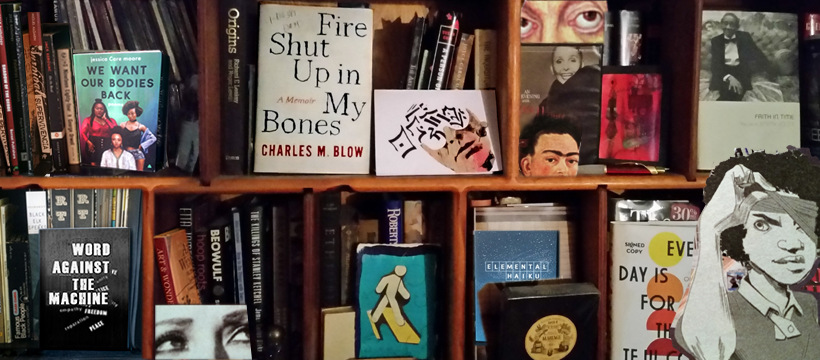
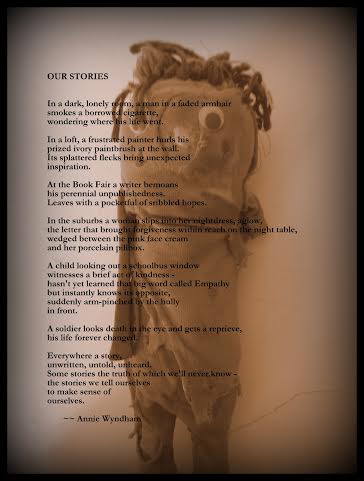
©2015, poem/photograph, Annie Wyndham, All rights reserved
©2015, poem/photograph, Annie Wyndham, All rights reserved
(A Clarean Sonnet)
If I had ever taken note at school,
those moments often shunned by this poor fool,
of literature, philosophy and tomes
that offered us the sustenance of poems.
Be gowned, our masters strenuously plead
that sonnets and soliloquy we read
to dress our minds and feed our souls with love
of words that speak a language from above
our mundane daily toil; speak of the day
when I am moved with eloquence to say
“I understand … Oh now I understand!”
And when I feel my heart in her soft hands
I move to paint her love with words I see
embedded in my mind’s sweet mystery.
© 2012, poem, John Anstie, All rights reserved; only known photograph (1862)of John Clare below by W.W. Law of Northhampton is in the public domain
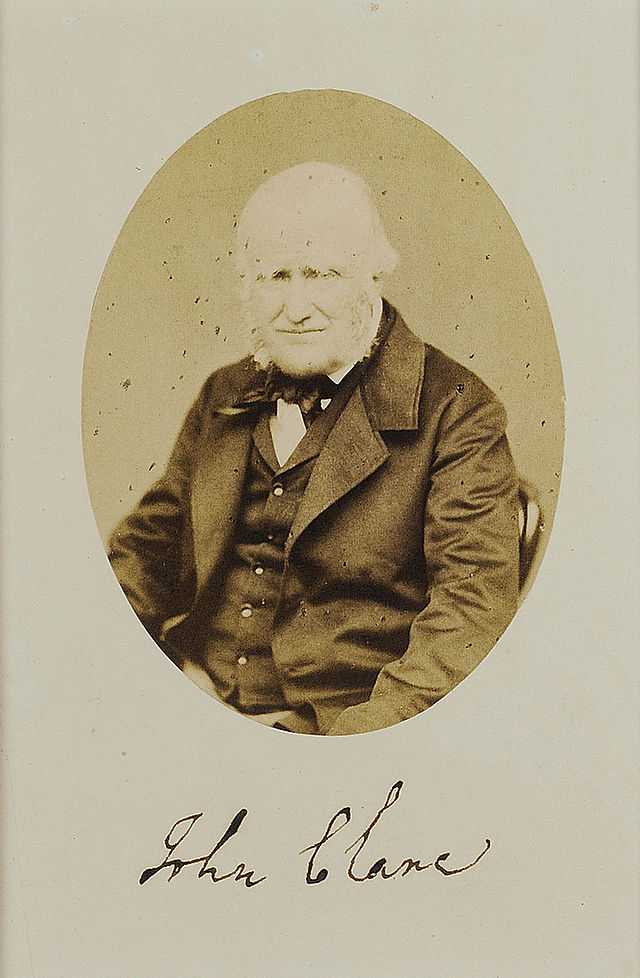 This poem was originally submitted for the ‘FormForAll:Clarian Sonnets’ over at the dVerse Poets Pub where Samuel Peralta (Twitter ID @semaphore) was teaching us about the sonnets of early 19th century poet, John Clare.
© 2015, poem and photographs, Priscilla Galasso, All rights reserved
High Fidelity. He was on it like a plague.
Four tracks just coming into pocket range.
Every visitor loosened up to it eventually.
It was all on the tapes – laughter, singing –
‘Dis aubudy kaen this wan?’ then a flurry
of snippets, of songs old and new,
Campbeltown Loch, Paper Doll,
and now and again a strident voice…
‘Huv ye got the knives and forks oot yet?’
from the kitchen ben to the living room,
the occasional fssss of taking off a bottle top,
then ‘Jessie! Jessie! Come oan, hen!’
knowing she’d sing one everybody knew
and the party was on for real…
Soon enough they’d be in the swing,
there’d be calls for the favourites – each singer
prized for their own particular songs –
and here, fifty years on, a wee bit of him
singing Heart of My Heart before he’s cut across
by a voice I can’t place, a feisty woman:
‘Aw, Joe! Gei us the wan ye got 6 months fur!’
But who was Joe? What had he done!?
And the old man who sang next – ‘There iisss
a tavern in the town…’ – was this him?
I’m filled with names and questions: That’s Grace!
Grace the big belly-laugher – if a corner of her lip went up,
you knew, any minute, the whole place would go up with it
– but is Al’n no there? Alan, who brought his drumsticks
and gave it laldie on the smokers’ stands? What was
the name of that woman who used to fling in all
the Heee-euchs! to the old Scots dancing songs?
And why, four hours, three tapes in, have I not heard
the famous cuckoo clock? Famous for having lost its ‘oo’,
that left us hanging on the quarter hour with just a rising ‘cuck’?
It’s mostly weekend radio shows, behind them
incoherent chatter, the odd faint conversation.
She: ‘They say it’ll be some weeks.’
and he: ‘It disn’t sound too good then.’
Another tape, in the reel to reel’s last days,
him and a man I don’t know, who says
‘Aw right then… C’mon… Oan ye go’
then a bairn, all of four, by the sounds of her,
singing Flouer o Scotland –
this isn’t what I’m hoping for. It’s not my mother’s
Banks and Braes, his web-footed friends… it’s not Grannie
kicking off a round of I am the music man annnd
I come from down your way, not Uncle Stan’s
Moon River, Margaret’s infamous Granada...
Did he save nothing of family? His children?
None of those New Years chock-full until
Four in the Morning and The Foggy Foggy Dew?
Dear Heart, there is something I must tell you.
They don’t say the words I wanna hear.
I want my mother singing Swing Low Sweet Chariot.
I want her in her white dress singing Summertime,
just as though the living had been easy,
just as though, Lord, he really did have
kisses sweeter than wine.
© 2014, Anne Stewart, all rights reserved; originally published in ARTEMISpoetry Issue 13, Nov 2014
It is lonely on cool tiles of my corruption
eye on domes of Rome, midday stretches
lethargic silence on ashes I burn
in the high sun on red rooftops basking in refuge
feathers from ashes, feathers short of a wing
to glide down like a raven to your chiral streets
there’s a congregation praying for my salvation
a choir singing the gospel, mirage on church steeples
I wring last drop of resolve in your mouth
and keep a river in my womb to wash my disillusionment
squatting to gut irony collected on your stairways
raw against my breastbone, fishing line stringed
putrescent promises familiar in flared nostrils
same as ancient prayers filtering through parched tourist lips
I will tell you again of pagan sins kneeling in confession
when you stop searching for the righteous woman
buried under four layers of leathered skin
you ask me if I want to pray with you for redemption
I ask you where do we go from here
where do we go not to converge in a dream
© 2015, poem, Silva Zanoyan Merjanian, All rights reserved; excerpted from Silva’s latest book, Rumor. All proceeds from the sale of this book go to Syrian Armenian Relief Fund.
 […] it’s your turn, stone.
your turn to carve lust in my breathing
and to bring out the shades of dust
from my anaglyphic soulprint.
i need to mirror myself in your random shape,
my scent in your silence, my moans
in the volume of air dislocated
by your falling
white and determined
through the unseen crevices of
wind’s cracked crying
right into the passionate embrace of
a bloody dawn, red as a holy wound –
you don’t fall, but i do,
letting the air brutally brush
the feathers from my wings,
scratching carelessly my face while earth closes
faster and faster –
i fall,
in one fluid movement,
fluid and perfectly articulated,
rushing towards the grounds expecting me,
expecting my burning skin and bones
to sew the sky with the waters beneath them
and to watch you being born –
i fall and you grow,
rooting your solidity in my sands,
turning from one grain to one mountain,
feeding on my imperfect nature,
you, the perfect catalyst towards origins […]
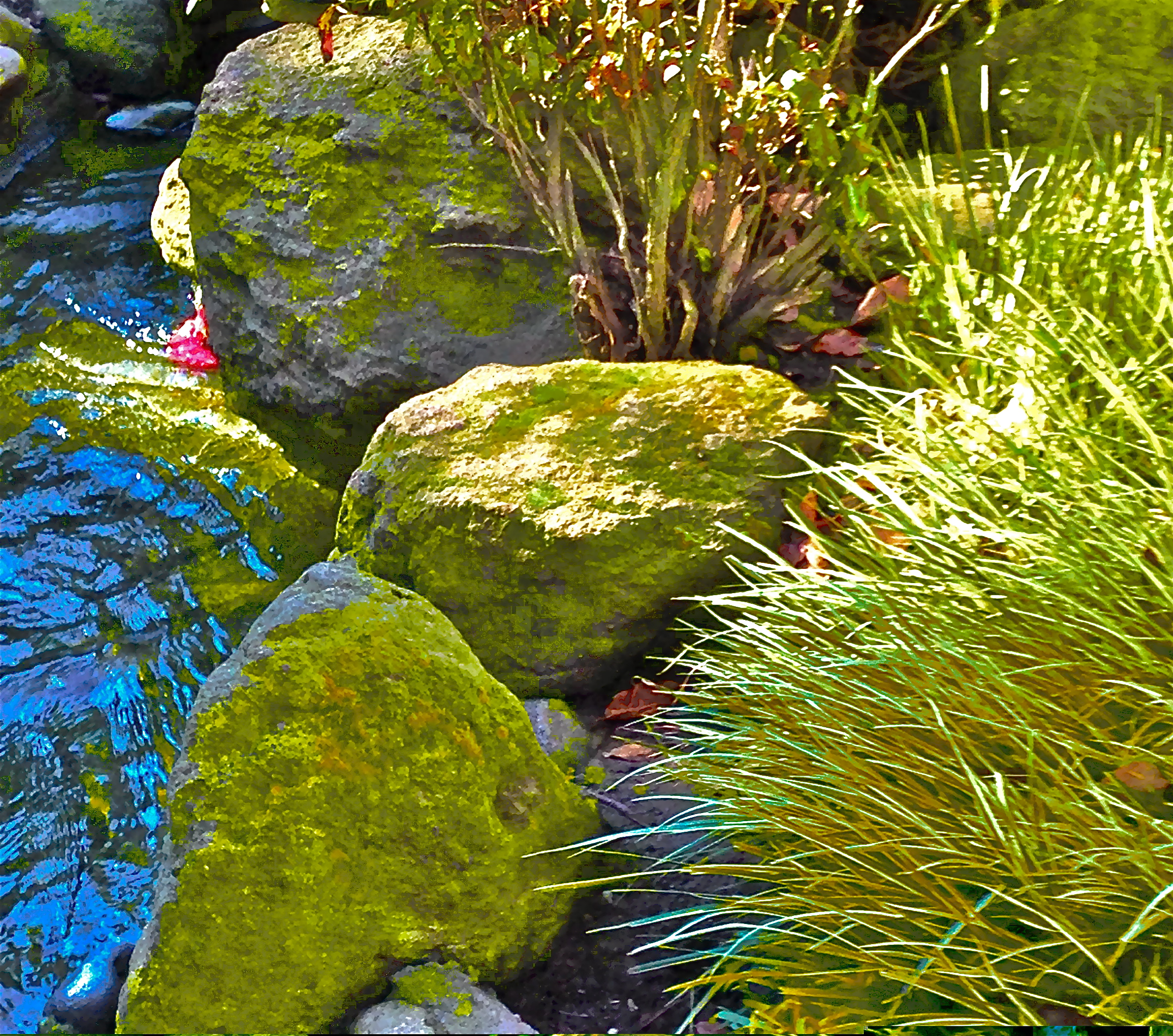
© 2015, poem, Liliana Negoi, All rights reserved; originally published in The Hidden Well, audio version can be heard in the author’s interpretation on Soundcloud; 2014, photograph, Jamie Dedes, All rights reserved

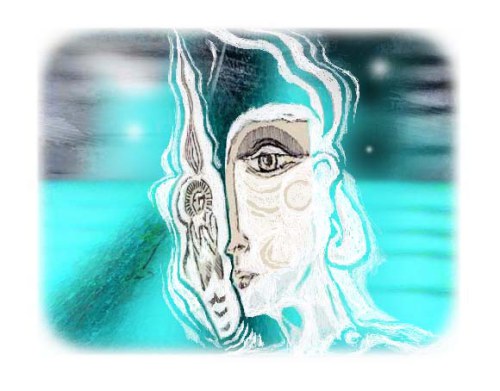
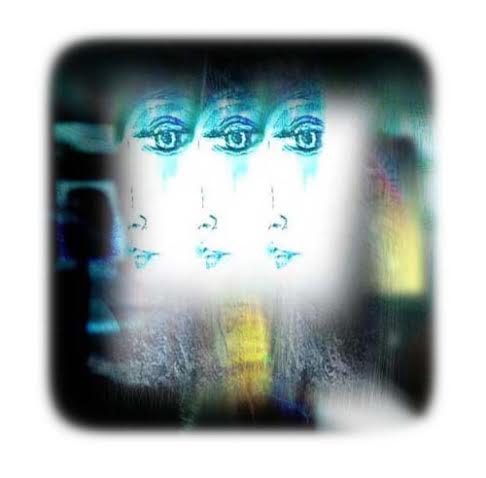
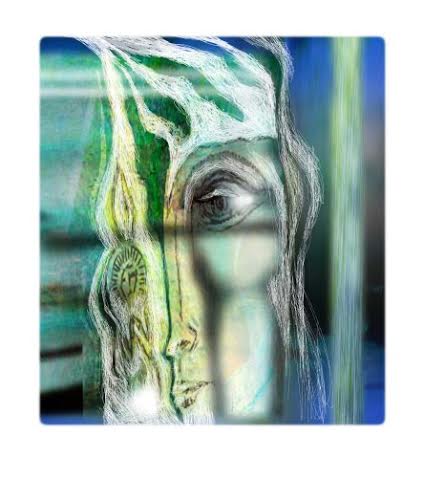
“A glass of absinthe is as poetical as anything in the world, what difference is there between a glass of absinthe and a sunset.” Oscar Wilde (1854-1900), Irish writer and poet
in the wilderness of those green hours
gliding with the faerie muse along café
walls virescent, sighing jonquil wings of
poetry, inventing tales in the sooty red
mystery of elusive beauty, beguiled by an
opalescent brew, tangible for the poet and
the pedestrian, the same shared illusions
breaching the rosy ramparts of heaven
© 2011, poem Jamie Dedes, all rights reserved
|
Albert Maignan’s painting of “Green Muse” (1895) shows a poet succumbing to the green fairy (absinthe). Musée de Picardie, Amiens.
|
I learned the rain in cursive slants
I learned
lying on doubts
spread on the sacred and not
spread on my bed, my pillow, my exhale
the crust of every lie I loved
tainted with silver sliver of your tongue
I turned that night on its back
after you went to bed
your streets indebted
to shadows of restless dreams
bruising on its replaced ribs
where trash collectors compress
disposed remnants
in the ruble
life’s severed limbs
an envy here
a longing there
a nothingness holier than my prayers
and I add
that face without the lips
under the face with muffled shame
under the face I used to have
on heaps of unfinished poems
where a lemon tree and jasmine blossoms
promised mornings
colored and scented at my fingertips
I learned the rain in every lie
in stammer of your pavements
where Saints gather in line at rock bottoms stacked
between my howl and a crow’s black squawk
wrists dripping prayers on St Rita’s solemn face
she sympathizes but says tonight she owns the ledge
there’s always mad laughter at the foot of beds
where Saints sleep on their sides facing the drapes
that catch the city’s quieting breath
misting under street lamps
that catch impelled compromise
in bourbon shots and blues on a clarinet
as lonely as you
that time when you asked my name
sometimes I tell you
long after you’ve gone to bed
© 2015, poem, Silva Zanoyan Merjanian, All rights reserved; excerpted from Silva’s latest book, Rumor. All proceeds from the sale of this book go to Syrian Armenian Relief Fund; illustration courtesy of Steve McCabe (Poet Image), All rights reserved
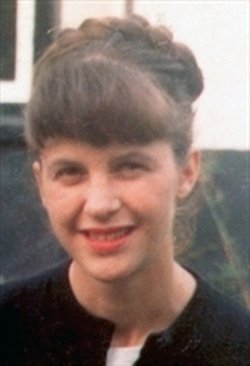
Sylvia Plath (1932-1963), American poet, novelist and short-story writer

by Kim Moore, Lavinia Singer and Sarah Westcott
Kim Moore: I think I carry with me … her use of the poem as a psychological journey
I think I’m slightly unusual in that I didn’t read Sylvia Plath as a teenager, which I think is when many poets encounter her. I can’t remember when I first read a Sylvia Plath poem because it feels like I’ve always known it. I also think influence is a tricky thing to pin down and measure and maybe Plath is the poet who manages to influence the largest amount of young poets – and I know this from working with young writers, that part of the battle is trying to get them to read something else apart from Sylvia Plath. I think the way her poetry still connects with young people is quite remarkable and would probably merit a whole study in itself.
If I had to pick out the one thing that I love about Plath’s poetry though, and which I think I carry with me, it is her use of the poem as a psychological journey. The whole movement of the poem propels itself towards its end, and each poem feels to me, like a search for something, some truth, or realisation. I also feel like Plath was writing blind, she wasn’t planning what she was finding out, she was writing to discover what she wanted to say. Of course the only person who could verify or deny that is Sylvia Plath, but I like to think she probably got the same sense of shock and a slight lurch as the world shifts into a different focus when she wrote something and surprised herself as we do when we read her poems now. The last line of Mirror when the old woman “Rises toward her day after day, like a terrible fish” still shocks me now.
Lavinia Singer: Her gift for imagery continually surprises, and inspires my own writing.
Last May the Southbank Centre presented a Sylvia Plath celebration: forty female poets and performers each reading a poem from her final manuscript Ariel in its restored order. The hall was filled; Plath’s popularity has never been doubted. Harold Bloom spoke of it rather patronisingly: “But surely what matters about Plath … is the audience. These are poems for people who don’t read poems.” This from the man who opens his introduction to her work with: “Sylvia Plath, who killed herself early in 1963…”
It’s all rather snooty. Such pronouncements, alongside labels of ‘Popular Poet’, ‘Confessional Writer’, ‘Feminist Martyr’, marginalise any artistic achievement. As a literature student, I found Plath positioned as a poet to enjoy but then move on from. Perhaps this is induced by her successful novel The Bell Jar – a ‘coming of age’ narrative. Wryly depicting a young girl with writing aspirations and mental illness, it continues to appeal, and not only to adolescents. I prefer her Journals, which are more scattered and mood-dependent, expressing an identity both being forged and actively shaping itself: “A Life Is Passing!” It also offers helpful ways to approach her poetry:
Why can’t I try on different lives, like dresses, to see which fits best and is most becoming?
Writing makes me a small god: I re-create the flux and smash of the world through the small ordered word patterns I make.
Performance, play, construction: Plath’s work is never simply ‘confessional’, as many critics would have us believe, charting some inexorable spiral to suicide. Her gift for imagery continually surprises, and inspires my own writing. A beehive is a “black mind” (Wintering), birds are “moon-plumaged strangers” (The Shrike), and what depths are expressed in: “My landscape is a hand with no lines” (Childless Woman)! Plath smashes her everyday world and re-creates it with hard-won tools of myth and symbol, picking language to its core: “So words have power to open sesame and reveal liberal piles of golden metallic suns in the dark pit.” (Journal)
In the darkness of the auditorium, the uttered poems shone, and it was clear why audiences of all kinds – including poets! – keep coming back to share in the treasure.
Sarah Westcott: The boldness, the truths, the place she drew from…
At school I was aware of Sylvia Plath but it wasn’t until I went to university (and I was ready for her) that I discovered her poetry on my own terms.
I remember idly flicking through her poems in a bookshop and feeling I had stuck my fingers into a hive of bees – I “sizzled” in her own “blue volts” by the roots of my hair.
As an 18-year-old science student I was ignorant of her poetic craft and control. What I responded to was her fierce truthfulness, her shocking imagery and the intensity and ferocity of emotion. She brought up inner, collective symbols, things I didn’t know I knew, seemingly straight from the subconscious and forged them into poetry.
I felt like I was indulging myself in a sort of emotional expression that I could not in ‘real life’ – her words took me there, drawing on a wellspring of deep, rich imagery.
Plath spoke to me then, and does now, with her directness of perception. She showed you didn’t have to be good, or compliant, or even sane, to write poetry.
Daddy scared me: she voiced the unsayable. But her poetry went beyond self-expression into larger archetypes. She wrote, as she says, of ‘the things of this world’ but also of darker emotions that ‘put on the masks of quite unworldly things’ such as ghosts and gods or monsters.
She was also unashamedly female – and I thought of poppies, and hell flames, and menstruation and blood and my own ‘Daddy’ and she was gothic and terrible and brilliant.
There was an aura of glamorous tragedy around her, but she seemed ‘old’ to me – at thirty. Only now I am older than her do I realise how young she was when she died, and how much more she could have left the world.
As a young mother, I returned to her poetry as it captured the joy and intensity of early motherhood better for me than anyone else. You’re combines the other, almost alien-qualities of a new born, with tenderness. And the sincerity of Child is desperately moving:
Your clear eye is the one absolutely beautiful thing.
I want to fill it with colour and ducks. The zoo of the new…
I admire and study the way Plath writes about nature without conquering or trapping it. In Mushrooms, for example, she not only describes and inhabits their odd whiteness but takes on their voice herself:
So many of us!
… nudgers and shovers
In spite of ourselves.
Our kind multiplies:
We shall by morning
Inherit the earth…
I love this daring, this derring-do, this sly inhabitation of different forms and voices and it has encouraged me in my own experiments.
I continue to go back to Plath’s poems through the prism of my older self. I savour her exquisite rhyme and musicality, and I read her in a new context: how brave her poems are, forged in the autumn before she died.
Plath beat a path by opening up territories and by being vulnerable. She did not hide behind her cleverness or societal expectations. The boldness, the truths, the place she drew from are exposed and exposing. She inspires me to try to venture to the deepest reaches of the self, and to write without (self) censure.
Originally published in ARTEMISpoetry, Issue 13, All rights reserved
Every beginning has a story and
in this one, you are the reason
why ‘phrontistery’ has no synonyms
or a specific meaning and transparency.
And I am only the moonlight girl
that likes the right side of the bed,
not because the left is yours,
but because the word ‘nihilarian’
suits better the tiny, strawberry-like
birth mark on my lower back
and the widdiful dragons in your dreams.
And all I desire is a reason, maybe a couple,
and a quire, azurelaid and antique, to pencil down
the seconds dancing at half- pace
when we mastered anatomy and agastopia,
when instead of scars and brontides
the stars left luscious trace in the night,
and the velvet causeuse is no longer lethological
but wild, kiss-consuming, violent with delight.
© 2015, poem, Blaga Todorova, All rights reserved
Second Light:
… affirming and creative, thoughtful and wide-ranging. It is unique in offering practical advice, support, activities geared to promoting visibility and publication outlets for women poets.
Katherine Gallagher
Discovering Second Light was for me like opening a door and letting in the fresh air: it’s unstuffy, wide-horizoned, inviting and inspirational.
Mary MacRae
ARTEMISpoetry:
…certain to become a must-have, must-read journal for all involved with contemporary poetry…
Penelope Shuttle
Hooray for ARTEMISpoetry! Why are women so good at poetry? Like Artemis the archer, they see so clearly, and they aim straight for the mark. Not distracted by ego or vanity, they just want to say it as it is – the most difficult thing in the world to do. Written, edited, financed wholly by women, full of excellent poems, reviews, articles and information, ARTEMISpoetry is just what we need.
U A Fanthorpe & R V Bailey
Her Wings of Glass:
Her Wings of Glass is an amazing anthology — and most beautifully printed and produced
Pauline Stainer
I must say I’m impressed! There are so many poets, so many unexpected poems. You’ve done us proud.
Anne Stevenson
The anthology … is fabulous. Congratulations!
Prof. Dr. Lidia Vianu (Bucharest)
I’m completely wowed by the anthology: an absolutely outstanding collection making a powerful impact … I think it is the most important anthology for decades.
John Killick
Many congratulations to the editors of Her Wings of Glass! I read it from cover to cover over Christmas and found it tremendously inspiring. It was such a pleasure to read work from poets new to me, or whose work was less familiar, as well as the well-chosen poems from those whose work I knew better. I thought the sections mapped a really helpful and convincing way through. The poems were so fine and urgent that the book was as hard to put down as any novel! I felt very honoured to have poems included.
Moniza Alvi
just to congratulate Second Light on this huge anthology. There’s so much virtuosity among the poets – it puts to an end my reservations about the notion of ‘women’s poetry’ and I think the triumph comes from your chosen themes that brought out the passion women feel about our current situation – your introduction too was brilliant in priming us for what was to come. There were so many poets I ‘don’t know/hadn’t heard of’ I was so pleased to discover.
Judy Gahagan
Remote Workshop Series: Her Wings of Glass:
highly beneficial, thoughtful workshops, well-paced
Ruth Hill (Canada)
they are wonderful, something of a life-saver
Patricia Huth Ellis (UK)
[I] recommend them, both for range and value – really stretching
Carolyn O’Connell (UK)
my copy [Her Wings of Glass] has arrived. Lots of wonderful poems. And the workshops are great.
Moya Pacey (Australia)
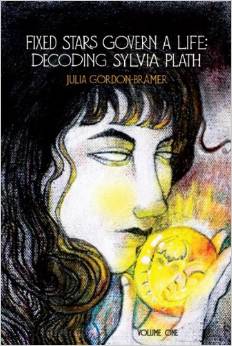 Excerpt from Fixed Stars Govern a Life: Decoding Sylvia Plath, vol one
Julia Gordon-Bramer
Uploaded by
Julia Gordon-Bramer
120 Info
Download PDF
Advance Praise for
Fixed Stars Govern a Life: Decoding Sylvia Plath,
Volume One:“With clarity and erudition, Ms. Gordon-Bramer illuminates how Plath’s masterpiece
Ariel
refects a clear and intentional alignment with the Tarot and the Qabalah’s Tree of Life. With each
poem, and the collection as a whole, Gordon-Bramer weaves the esoteric mysteries with historical interpretation in a fascinating scholarly analysis that is original, provocative, magical.
Fixed Stars Govern a Life is an incantation of great resonance and power, and its publication will be a sensation.”
—
Susan L. Woods, Ph.D., Emeritus Professor of Women’s Studies, Eastern Illinois University “Like her beloved Yeats, Sylvia Plath was drawn to numerous and often contradictory systems of belief and ways of knowing, including mystical and magical systems. Julia Gordon-Bramer, in her dazzling and meticulously researched book, shows us how Sylvia Plath may have drawn upon the images of the tarot to fuse and merge the many ways of knowing she was so profoundly inspired by—myth, science, current events, folklore, alchemy, literature, motherhood, art and other sources
to create the poems in Ariel, one of the great literary achievements of the 20th century. In doing so, Julia Gordon-Bramer illuminates, expands on, and asks profound questions about the very nature of making and creating poems.” – Catherine Bowman, winner of the Peregrine Smith Poetry Prize, the Kate Tufts Discovery Award for Poetry, the Dobie Paisano Fellowship, a New York Foundation for the Arts Fellowship in Poetry, and author of The Plath Cabinet
and other collections
“A wonderful exploration of Plath’s Ariel poems in relation to myth, symbol, and the creative process.” – Kathleen Connors, author of
Eye Rhymes: Sylvia Plath’s Art of the Visual
‘
“Lucid and intriguing… what is valuable about
Fixed Stars Govern a Life is that it is such a great source study with commentary on what Plath read, what was happening at the time of the poem, and more.” – Carl Rollyson, author of
American Isis: the Life and Art of Sylvia Plath
“An intriguing book that prompts the reader to look at Plath with fresh eyes.
Fixed Stars Govern a Life aims to explore the poet’s hidden side and as such it is a refreshingly welcome addition to Plath studies.”
– Andrew Wilson, author of Mad Girl’s Love Song
Fixed Stars Govern a Life: Decoding Sylvia Plath
Volume I: The Major Arcana and the First 22 Poems of Plath’s
Ariel Julia Gordon-Bramer
Stephen F. Austin State University Press Nacogdoches, Texas
An 2012 (year two) interview with founders Michael Rothberg and Terri Carrion.
Editorial note: The next event is September 25, 2015. This is something of a heads-up as well as information for poets and artists.
Last year we participated virtually in the annual poets for change event. While there are many events going on all over the world, not everyone has access to them and some folks are home bound. We offer an opportunity to participate online by sharing your own work. Afterward we put everything up in a Page. The poems also go up at 100,000 Poets for Change in PDF. We’ve not yet decided on a theme for 2015. Stay tuned
The backstory on 100,000 Poets for Change brought to you courtesy of Wikipedia:
100 Thousand Poets for Change, or 100TPC, is an international grassroots educational organization focusing on the arts, especially poetry, music, and the literary arts. It was founded in 2011 by Michael Rothenberg and Terri Carrion, and focuses on a world-wide event each September.
HISTORY: 100 Thousand Poets for Change was initially conceived by Michael Rothenberg and Terri Carrion in March, 2011, as a worldwide set of events to take place simultaneously on September 24, 2011. Literary event organizers volunteered to host associated events in their own cities or schools. On September 13, 2011, the city of Santa Rosa, California, declared September 24, 2011, to be “100 Thousand Poets for Change Day” and Stanford University offered to archive all documentation and audiovisual records of the event posted on the 100TPC web site.
Ultimately, 700 events in 550 cities in 95 countries took place on September 24 in conjunction with 100TPC, and the event was described as the largest poetry event in history. Considering the series of events to be a success, Rothenberg and co-founder Terri Carrion decided to pursue non-profit status for 100 Thousand Poets for Change and establish an annual event in September of each year.
STRUCTURE: 100TPC was founded in Guerneville, California, but most organizational tasks are done by individual organizers of local events. Event organizers in individual cities volunteer to create an event in association with 100TPC. The organization’s central office then publicizes the event through its web site, social media outlets, and conventional press releases. The relationship between most local organizers and the 100TPC headquarters remains informal, conducted primarily through e-mail. Organizers do not become officers or employees of 100TPC. Organizers can communicate with each other through the 100 TPC Organization & Communication Hub, a Facebook group available to 100TPC event organizers, where they are encouraged, but not required, to work together and to learn about each other’s events to help develop event ideas. Local organizers, then, have full control over the style and structure of their events—their only obligation is to register their event with the main 100TPC web site. Some events are free; others charge an entry fee and donate proceeds to charity.
Most 100TPC events take place in September. Each year, the central organizers pick a Saturday in September as “100 Thousand Poets for Change Day” and focus their publicity on that date. Some organizers choose to create 100TPC events at different points throughout the year.
The concept of “Change” in the name 100 Thousand Poets for Change refers to social change, but is otherwise broadly defined and dependent on the definitions of individual organizers or poets. 100TPC events do not necessarily share political or philosophical orientation. The 100TPC web site describes the “change” as having only to fall “within the guidelines of peace and sustainability.
– Wikipedia
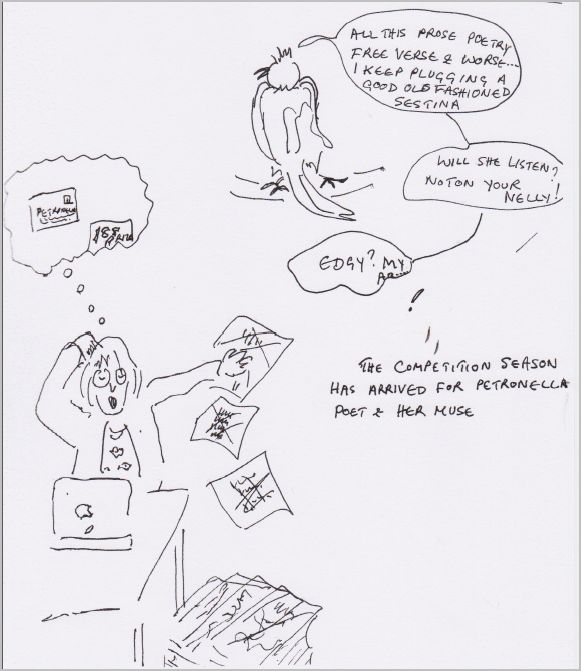
© 2014, Kate Foley, All rights reserved; Originally published in ARTEMISpoetry
 “I am not a nano-particle being fired through an interferometer; I’m a living person whose outer and inner selves are intimately connected…”
Where to begin? Well, to be as up-to-date as I can, I’ll start by citing an article that struck me weeks ago, when I was sorting through old copies of The New Scientist. On the front cover of the issue of 15  May, 2004, was a headline, ‘Make me Quantum: How to be in two places at once’. Right away it occurred to me that ‘quantum’ or a ‘quantum feeling’ would be a good way to express the weird sense I’ve had as far back as I can remember of being at the same time myself and not myself, both here and not here. When I turned to the article, I was struck by the first paragraph’s likeness to a poem I’d written in the early ’80s. Here is the opening paragraph of the quantum article, followed by the poem:
Anton Zeilinger raps his knuckles on the wooden table in front of him. He thinks the table is there, passively sitting on the floor of his office… But he can’t be sure. ‘Reality seems to be immediate: I can touch this table,’ he says. ‘However, if you think carefully about it, all I have is information getting into my brain.’
Small Philosophical Poem
Dr Animus, whose philosophy is a table,
sits down contentedly to a square meal.
The plates lie there, and there,
just where they should lie.
His feet stay just where they should stay,
between legs and the floor.
His eyes believe the clean waxed surfaces
are what they are.
But while he’s eating his un-
exceptional propositions, his wise
wife, Anima, sweeping a haze-gold decanter
from a metaphysical salver,
pours him a small glass of doubt.
Just what he needs.
He smacks his lips and cracks his knuckles.
The world is the pleasure of thought.
He’d like to stay awake all night,
(elbows on the table)
talking of how the table might not be there.
But Anima, whose philosophy is hunger,
perceives the plates are void in empty air.
The floor is void beneath his trusting feet.
Peeling her glass from its slender cone of fire,
she fills the room with love. And fear. And fear. ¹
It would be almost as mind-boggling as quantum theory itself if Anton Zeilinger in Vienna had read that poem, but the coincidence of the imagery may not be entirely accidental. Although Zeilinger was experimenting with de Broglie wavelengths and quantum ‘superpositions’ of electrons and photons, and the poem is a parable calling into question how little we know about what we think we know, it seems likely that two contemporary minds were running in similar channels. The scientist’s spirit of inquiry is not all that different from the poet’s. Keeping the biggest, most basic questions open and mysterious is what makes the disciplines of science and literature exciting in this spoiled, rich western world of the 21st century that can seem so cheap and media-heavy, filled with meaningless chatter. When, at the end of Small Philosophical Poem, Dr. Animus’s “wise wife, Anima” perceives the plates and floor are true only in so far as the human brain thinks they are, she fills the room with the fires of love and fear – unquantifiable emotions that give our lives meaning without promising us any kind of spurious public health and safety.
As for being in two places at once, here again I want to call on quantum physics for a metaphor. For although, in a classical sense, my life has proceeded normally from year to year, in a more mysterious way it has oscillated violently, circling around and back on itself between times of insight and creation and times of mental stagnation and misery. The life I have led as a woman, in short, often feels to me the same and yet different from my life as a poet. Like a quantum particle, I can exist in two places at once – though, let me hastily add, I don’t think being conscious of a double state is all that unusual. Nearly everybody dreams. And my ‘quantum’ life, which I think of as my ‘real’ life, certainly has a root in a dreamy state of mind, though I can’t imagine a dream causing me nearly as much hard, conscious labour as the writing of a poem.
What I am saying, of course, has to be understood as a kind of poetry, a figure of speech, as Anton Zeilinger puts it, made wholly ‘out of information getting into my brain.’ I am not a nano-particle being fired through an interferometer; I’m a living person whose outer and inner selves are so intimately connected that I can almost see them ‘superposed’, one in the exact same place and yet in a different place from the other. So, if I am to proceed with an account of my life in poetry I will have to negotiate with this mysterious conundrum to produce something like a coherent story.
Facts first. Born in January, 1933, I was the oldest of three American daughters born to Charles and Louise Stevenson, both Midwesterners from Ohio. They were highly intelligent and well educated. My mother, who surely would have become a writer or teacher had she lived a generation later, was passionately fond of literature, and the fiction she read aloud to us as children – mostly novels by Kipling, Dickens, Mark Twain, R L Stevenson, and, especially dear to me, Jane Austen – are books that I still can’t open without hearing her lively, wonderfully expressive voice. My father, though a university professor by profession, was at home an amateur pianist and chamber-music player who gave his daughters violins or cellos every Christmas (with a view to forming a family trio), and entertained us in the evening by reading us Shakespeare and Yeats and long narrative poems by the likes of Walter Scott and Mathew Arnold. He had surprised his Cincinnati business family by going to Yale to study English, but after marrying my mother and crossing the Atlantic to Cambridge, England, he switched his field to philosophy. He hardly noticed when I was born, my mother told me (though his letters at the time don’t bear this out) he was so absorbed in writing a paper on vagueness while preparing to submit a PhD thesis on Ethical Values to Harvard. At the age of six months, I was whisked out of the English Cambridge to start my life in the American one. The next move was to New Haven, where, throughout World War II, Steve (as everyone called him) taught at Yale. In 1946 he was invited to join the University of Michigan’s philosophy department in Ann Arbor. He was a professor there until he retired, and that is where I went to high school and university.
Now, it is no exaggeration to say that during those eight or nine years when I was growing up in Ann Arbor, I lived in an imaginary world of my own invention. And in this pretended world (which was pure fantasy and not at all the ‘quantum’ world referred to earlier) I was, according to what I was reading or seeing, Mozart the Wonder Child, Joan of Arc, Cleopatra played by Katherine Cornell, Elizabeth Bennet in Pride and Prejudice, Natasha Rostov in War and Peace, but most often a reincarnation of Emily Dickinson or Edna St. Vincent Millay – when I wasn’t being a female
reincarnation of William Shakespeare or John Keats. Later, as a university student and member of an organization called The Inter-Arts Union, I became an ardent modernist, writing Eliot-like poems and reviews for student publications, poetic plays in the manner of Yeats, even a rather Tom Stoppard-like libretto for a short opera. Then, in my final year, I won a Major Hopwood Prize for poetry, a very generous amount of money, and spent it immediately on a one-way air ticket to England. A year later, after passing myself off as a teacher in a boarding school in Kent, I threw away all my ambitions in the arts to marry a handsome Rugby-playing Englishman just down from Cambridge. My parents and fellow artists in Ann Arbor were puzzled and disappointed, particularly my mother, who, over the years, had transferred to me her own ambitions to become a writer. To me, though, England (the country of my birth, after all) had always been a kind of Mecca. Drab, cold and poor in 1955, still critically wounded by the war, it nonetheless seemed the perfect setting for the Henry James-like fiction I was writing continually in my imagination, in which I featured both as author and heroine.
It must have been four or five years after my marriage that I first became aware of soul-destroying frustrations. I was not living in a novel; I was living a box with a false bottom. On the surface I was happily partnered with a suitably adventurous hero. In 1957, I gave birth to a daughter in London, having already followed my husband to Norwich and to Belfast while he tried on different management consultancy jobs. By 1958–59, we were living in New York City, and from thence my husband’s business took us south to Mississippi. With every move, I was at first interested and stimulated, then later – completely unable to write – downcast, anorexic and helplessly tearful. My husband couldn’t understand what was wrong with me. Finally, in Atlanta, Georgia, we decided to part. Divorced and back at Michigan with my small daughter in the autumn of 1960, I began studying for an MA in English. Living again in my parents’ house of pianos and cellos and readings-aloud in the evening, I tried to take up the life I had lost in marriage, but that was, of course, impossible. My mother was dying of cancer, and she and my father knew it. Then, the academic discipline of English (and indeed of everything else) seemed to me sterile until I met the poet, Donald Hall, and through him was introduced to the work of modern poets I had never heard of: Wallace Stevens, Robert Lowell, Sylvia Plath and – miracle of miracles – Elizabeth Bishop.
There is little point in setting down many further details of my personal life after Donald Hall had helped to revive the poetry in me and arranged for me to write a short study of Elizabeth Bishop. This commission led to a correspondence with her that immensely affected the poems I wrote thereafter. But if my life as a poet began about then, my life as a woman still went on, and in oddly repetitive ways. After I left Michigan a second time, I taught at a progressive school in Massachusetts. In 1962, I married again – a young historian (famous today) who was studying Chinese and Japanese at Harvard. Shortly after New Year, 1963, my mother died, aged 54 – a blow from which I never recovered, except as I was later able to express my complicated dependence on her love and example in my book- length epistolary poem, Correspondences (1974). Throughout the 1960s and ’70s, living (on and off) with my husband in Cambridge, England (again!) and then in Glasgow, I continued to try on and rebel against contradictory roles that I thought appropriate to an academic’s independent wife: mother (my sons, were born in 1965 and ’66) amateur musician, literary critic, free-wheeling lover, bookseller, broadcaster, fellow in writing at several universities. None of these roles were absolutely false, but none were fulfilling, either. All I really wanted to do was write poems I could believe in, get them published, and have them fairly reviewed. What with moves back and forth from Scotland to Oxford, and from Oxford to Hay on Wye to found a Poetry Book Shop, it gradually became clear to me that the only life I was fit for, without lying or apologising even to myself for my blatant selfishness, would have to concede a lot of ‘niceness’ to some undeniable compulsion I had inherited – from where? From the extraordinary upbringing my parents had given me in the very best classical music and literature? Well, yes, but there was no way I could turn the clock back, even if I’d wanted to. Which, of course, I didn’t; I’d had quite enough of what at the time (not now) I condemned as ‘academic stuffiness’ and ‘middle-class morality’. The poets and artists I knew, worked and drank with in the 1970s and ’80s were exciting and fun to be with. And yet, some amalgam of language, music and rhythm that my ear had picked up in childhood remained with me all through this period. I couldn’t let it go. Call it, if you like, the English verse tradition, once strongly championed by radical modernists, Eliot, Pound and Stevens, but neglected in the 1980s, as today, by the apostles of post- modernism.
In the middle ’80s, when I had calmed down a good deal and finally found the right man to marry, just as I was beginning to have confidence in my own voice and ear, I became seriously deaf and could no longer hear music or performed poetry without a tone-distorting hearing aid. At first, I considered this a great disaster, but as it turned out, physical deafness helped me to see how the split simultaneity of my personal and ‘quantum’ lives could be an advantage.
I’ve lost a sense. Why should I care?
Searching myself, I find a spare.
I keep that sixth sense in repair
And set it deftly, like a snare.²
Since 1969, when Reversals appeared from Welseyan University Press in Connecticut, I have published many slim volumes, but to understand the shape of ‘my life in poetry’, a reader would do well to consult Poems 1955 –2005, the fat collection Bloodaxe Books brought out in 2006. When I put it together, instead of arranging the poems chronologically by date written, I tried to trace occurring and recurring themes that ran through them like variously coloured threads in a Turkish rug. Getting the tone, meaning and form of every one of those poems right cost me a good deal in time and nervous energy. It has cost even more to my husbands, partners and especially to my children, to whom my ‘quantum’ life, while they were growing up, was, of course, incomprehensible. I could say much about my personal life that would reflect negatively on my ambition, for ambition and professional jealousy naturally make up an ungenerous part of every poet’s drive to make a name and find readers in the present and future. Just the same, I consider that everything to do with my desire to succeed, strong as it has been, derives from my Mr. Animus self, not from the parallel Anima to whom I owe the poems I judge to matter. In the end, I will have to leave it to my poems to tell the story of my life, although I never know quite when that weird “Other House” of poetry is going to appear, or how in the world I ever find my way in and out of it.
The Other House
In the house of childhood
I looked up to my mother’s face.
The sturdy roofbeam of her smile
Buckled the rooms in place.
A shape of the unchangeable
taught me the word, ‘gone’.
In the house of growing up
I lined my prison wall
With lives I worshipped as I read.
If I chose one, I chose all,
Such paper clothes I coveted
and ached to try on.
The house of youth has a grand door,
A ruin the other side
Where Death Watch & Company
Compete with groom and bride.
Nothing was what seemed to be
in that charged dawn…
My angry house was a word house,
A city of the brain,
Where buried heads and salt gods
Struggled to breathe again.
Into those echoing, sealed arcades
I hurled a song…
I drove my mind to a strange house,
Infinitely huge and small,
The cone to which this dew drop earth
Leeches, invisible.
Infinite steps of death and birth
lead up and down.
Beneath me, infinitely deep,
Solidity dissolves.
Above me, infinitely wide,
Galactic winter sprawls.
That house of the utterly outside
became my home.
In it, the house of childhood
Safeguards my mother’s face.
A lifted eyebrow’s ‘Yes, and so?’
Latches the room in place.
I tell my children all I know
of the word ‘gone’. ³
– Anne Stevenson
Notes:
1 Anne Stevenson, “Small Philosophical Poem” in Poems 1955–2005, (Tarset, Northumberland: Bloodaxe Books, 2006), 28.
2 Anne Stevenson, “On Going Deaf”, ibid, 351.
3 Anne Stevenson, “The Other House”, ibid, 153.
© 2014, essay/poems/photograph/book cover art, Anne Stevenson, All rights reserved; Originally published in ARTEMISpoetry
What’s the purpose of this women-only network set up in 1994?
When set up, SLN focussed on women poets over 40 years of age who were ‘breaking into’ a world previously dominated by men. Without knowing it, we’d hit on the key moment when the art-form of poetry suddenly became a true domain for women, equal alongside male poets.
By the mid-90s the period, lasting into the mid-80s, when only a small minority of women poets were ‘recognised’ in the UK had gone. This revolution is still not always understood and celebrated – it’s one of our aims to promote opportunity, urging women’s ambition to match the new chances.
SLN membership quickly grew to around 300. The name ‘Second Light’, implying vision which comes later in life, was never quite right but it stuck and we’re stuck with it. The majority of members are published poets with a pamphlet or full collection, or aiming for this.
Many women felt that they needed the support and enthusiasm of other women to consolidate the progress already made in the ‘acceptance’ of women writers. Some women had written all their lives but had lost time and self-belief because of other priorities, children, caring roles, paid jobs.
Older women did not normally have the same ‘credibility’ as ‘new young poets’ of either sex and found that readings were not easy to come by. To experience this discrimination, which also applies to publication to some extent, you don’t actually need to be very much over 25! SLN is for young women poets, too, with a category of associate members under 40 who are warmly welcomed.
SLN works on four fronts: publication in our twice-yearly magazine, ARTEMISpoetry or in anthologies; workshops mainly in London with leading women poets as tutors; readings; a venture into low-cost workshops to be done at home, poems then shared with other participants, if desired.
What are our watch-words as an organisation? I would say ‘enthusiasm’ and ‘ambition’. There’s no better time to be a writing woman but some of us are isolated and even out of touch. We celebrate both tradition and experiment in poetry because it’s the poet’s right to choose and, to do so, we need to know what’s going on, get in there and do it. Information’s important and so is ‘sisterhood’.
 I woke up with a start some time ago;
A very familiar path;
from sleep infused, in semiconscious state,
with dreams of the unpleasant,
into a slow and rude awakening.
Was it a mystery magician or
con artist, the evil one,
who managed to deprive me of my freedom;
usurp my own free will;
transport me where I never want to go.
And then, somehow it dawned on me that I,
apropos my own illusion,
had written words that weren’t exactly true?
I’m not sure how this is…
But missive written. For poets. How to write!
Astonishing!
The anti-hero in my fated dream
insisted I capitulate
and turn my trade to more constructive ends
by which it sought the truth
of why I wish to make my dreams come true.
It asked me who I thought I was and then,
without so much as by
your leave, it pulled me back into oblivion.
It also didn’t hear me
when my stentorian protest made no sound.
It was a vision; a reverie that spoke
of fantasies; woolgathering.
It is, in truth, as truth is meant to be
none other than my conscience,
speaking of the will to write and dream.
If answer there is one, I do not know;
so often out of our control.
The only thing I have to say is this:
it’s always up to you.
Only you can judge what’s best … for you.
By your own best devices, you don’t need
to take advice from where
there is no guidance better than your own
… save rules, and even they
can be ignored once you have mastered them.
[This poem combines the subjects of a dream I had three years ago. The dream left me with a strong impression of a magician with magical, but not particularly benign powers and quite possibly a conspiracy that threatens the world of future times. I have written a synopsis of it in my notes on future project ideas, because I had strong feelings that it would make a fantastic storyline for a Sci-Fi novel, but, more than this I cannot tell; you’ll have to wait to see if this particular dream comes true. ]
© 2012, poem, John Anstie, All rights reserved; fractal image courtesy of Sharon Apted, Public Domain Pictures.net
playing with god
double dutch
jump rope
swinging round
and round
the confusion of
ropes going up
and down and
both ropes circling in
contrary directions
beckoning
us to leap into the
flow
©2015, poem, Terri Stewart, All rights reserved; photograph, John St. John, CC (BY-NC-ND)


