Brother Francis and Sister Moon

He’s wandering the lanes of Assisi
while other men sleep
or find pleasure
in their sweethearts’ arms.

Holy man Francesco.
Il poverello.
All skin and bone
beneath his patched-up robe.

He’s chosen
Lady Poverty’s embrace,
begs for his bread
and shares it with outcasts.

The merchant’s son
who shed his fine clothes
at his father’s feet
and took the narrow way.

He tamed a killer wolf,
some say; calls the earth
his Mother, talks to flowers
and herbs, birds and fish.

Holy fool, roaming barefoot
until a full moon
at the sky’s plumb centre
illuminates his path,

pulls fields and trees
into its orbit
of overflowing light
and he runs to the church,

climbs the tower,
rings the bell,
and summons townsfolk
from their beds.

They wait in the courtyard
for news of fire or pestilence.
Look, he cries, look up
and see the moon!

© 2019, Shiela Jacob

Head Over Heals

So soon, familiar sounds again,
the birds are on the wing.
A starling, dizzy, calling his mate
head over heals we sing.

The grass is growing faster
underneath our feet
and here we are, like Arab Spring,
where two extremists meet.

It’s difficult to fathom how
those two imposters hail
from just one body, so opposite,
yet apposite, they fail

to sustain this perfect, vibrant beauty,
when offspring promise fades,
but need such boundless hope and joy
recede into the shade?

And yet the awesome speed of light,
with unimagined pace,
still takes too long to speak to us
from farthest outer space.

Fewer shorter days remain
to save the obvious child,
with a simple kind of husbandry
to wrest it from the wild.

Why deny a time that bursts
with forms of life that bring
their seeds to Earth for us to reap,
head over heals in Spring.

© 2017 John Anstie
All rights reserved

my ears are deaf, my eyes hear a song

mountains rise round, Mother’s ever pregnant belly
and the aspens dance with paper-barked madrone,
screeching their yellows and reds, brindle and feral
like the snaked hairs of Medusa, they are warning

looming over me as i lay miles away on a mesa,
the bones of my ancestors, the heart of my child
the pelts of the brown minks my father sewed
the vultures circle, mesmerized by my demise

i feed on the pinion and ride mountain lions
down slopes, into valleys, a wanderer, lost and lost
looking eastward, seeking John Chapman
he has something to say, or maybe it’s westward

John Muir, my ears are deaf, my eyes hear a song
emerging from brown bear, a surfeit of salmon
burning sage, clearing America, the wild beasts
are defanged and declawed and i am hawk-eyed

© 2012, poem, Jamie Dedes, All rights reserved; photo credit ~ Axel Kuhlmann, Public Domain Pictures.net

The Crab

He picks his way along the rough volcanic shelf as waves wash over his water shoes, bubbling and stirring through tide pools of red sea-anemones feeding. Sharp rock cuts into the rubber soles, trying to cut flesh. Fish dart about in their stone bowls. Crabs back into black holes, hiding from his shade.

Sea Anemone in Tide Pool
Photograph
©2017 Michael Dickel

Crabs scuttle everywhere, in the shadow of rocks, through his mind.

He stoops down and grabs one with a fast hand, taking care that claws can’t catch flesh. Eyes on stalks watch him. Into what sort of soul do such onyx spheres window?

He considers crushing the crab as a metaphoric act of defiance.


The crabs invaded quickly, furious fascists aggressively pouring over boundaries, intolerantly attacking cells and greedily taking all their victims had. Neoplasia. Neoplasm. They established bases in lymph nodes, hip bone, vertebrae, a single rib. He shelters from the belligerent strain, not wanting to face snipping claws tearing him apart.

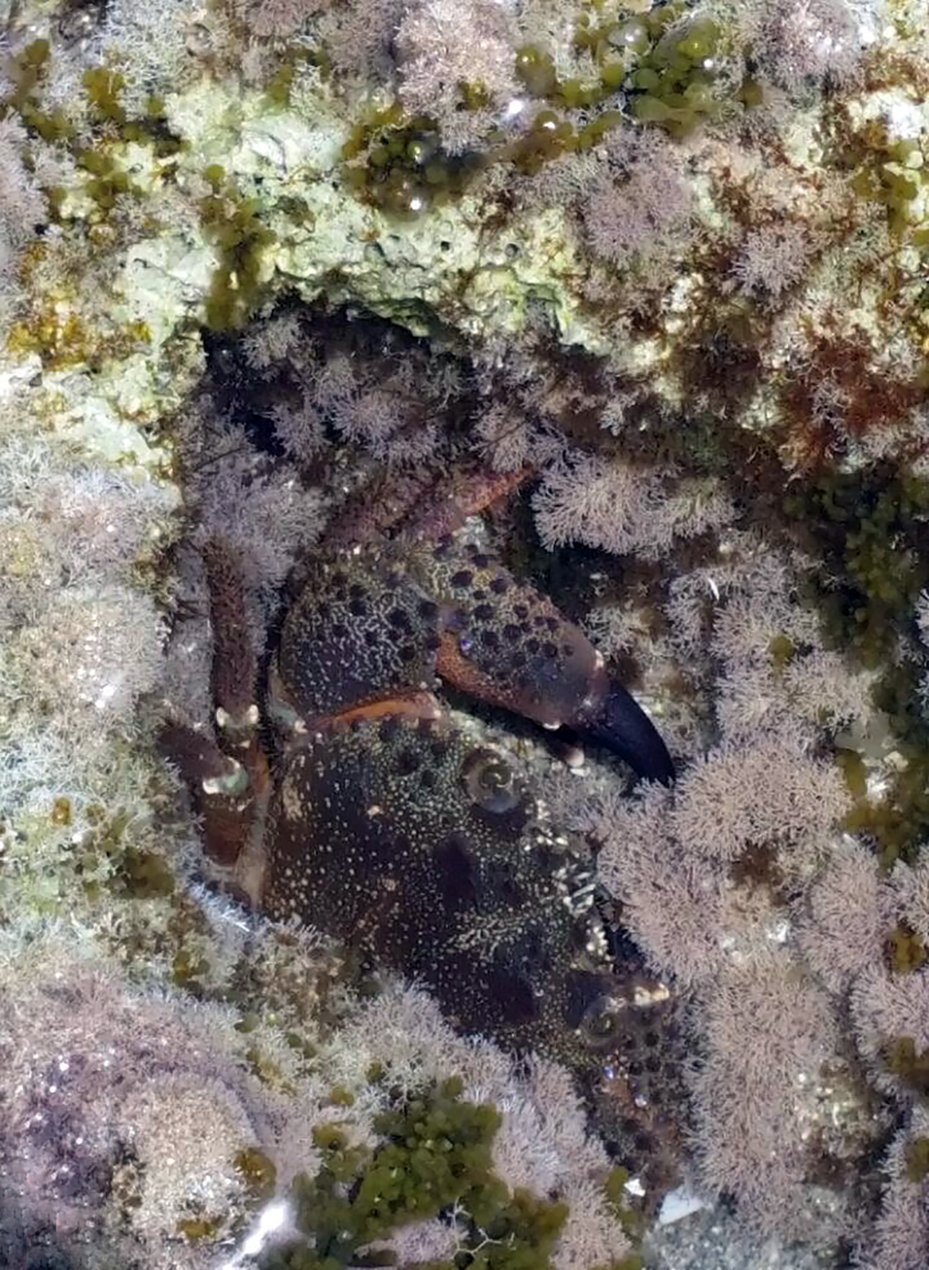
Crab in Tide Pool
Photograph
©2017 Michael Dickel

Who wants this crab?

Immunochemotherapy poisons his body like pollution in these choppy waves kill the sea. Only, his body supposedly will come back to health and strength. Watching the plastic-bottles bobbing off the shelf, out of reach behind the breaking waves, he doubts the oceans will return to health. He wonders if he will.

Does it matter whether he returns—

If the seas die? If the forests fall? If carbon dioxide blankets the globe? If our house is on fire and our children will burn?


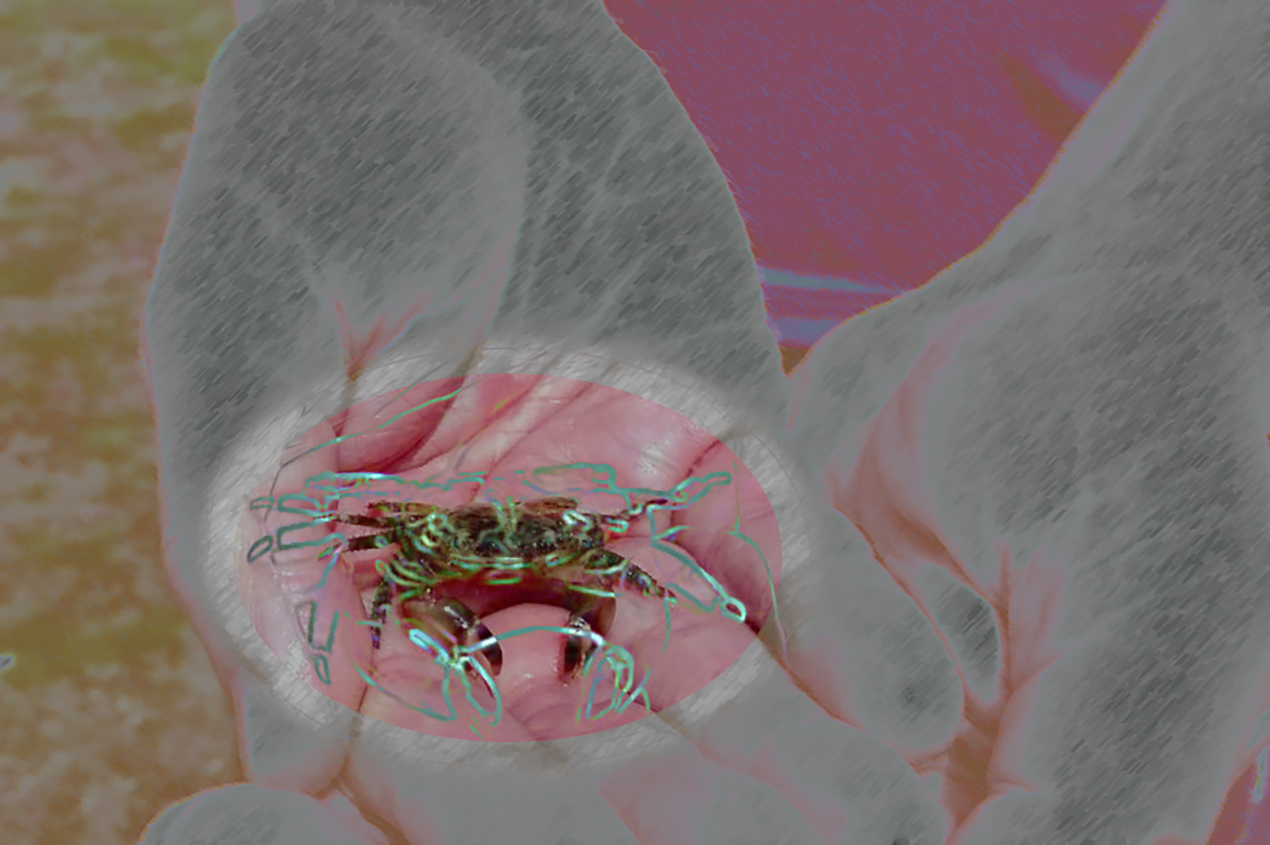
He looks at the crab in his hand as it raises its pincers defensively.

Holding the Crab
Digital art from photograph
©2019 Michael Dickel

Wind touches him, winnows emotional clouds from his skin. He releases the creature near a crevice, walks to the edge of the rock ledge. He looks out to where green meets blue at an indefinable distance, then down into unfathomable water where he sees green darkening to black—

no reflection, neither sky nor him.

Michael Dickel ©2019


Author’s note: If you check the links, many go to sources with more information about climate change (like the ones in the first paragraph, for example). Some define terms related to The Crab (cancer). The photographs of crabs and a sea anemone are from Habonim Nature Park, on the Mediterranean, south of Haifa, Israel. More info: Union of Concerned Scientists FAQ


A Climate of Change

Down the hill Winter bleeds unabated,
leaving behind the wounds we couldn’t see.
With all the trees gone I guess we’re fated
to find a pond where a pond shouldn’t be.

The ground’s still frozen ‘neath its epidermis,
so there’s nowhere but down the hill to go.
Up on top is where the earth’s the firmest,
but down here we’ve an inch of melted snow.

It’s nothing new, just how it goes come Spring
or whatever passes for that these days.
Lately you never know what March will bring,
another blizzard or mid-Summer haze.

It could end up the latter or former,
even both, since we’ve made Earth so much warmer.

If you want to argue or troll, find another poet. I’m too old, too sick, too tired and too sad to get in a pissing match about this. 

© 2019, poem and photo, Joseph Hesch

From the Butcher’s Blade

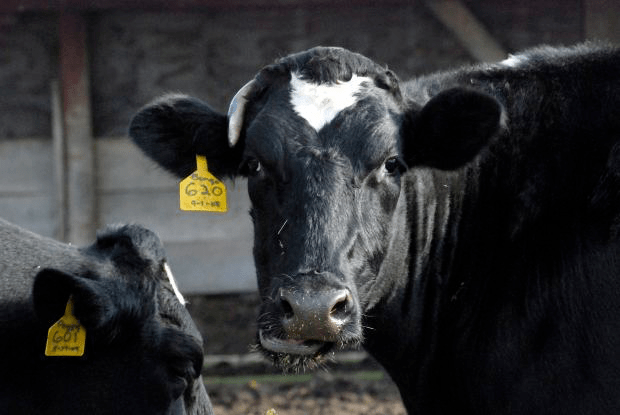
Arriving at our stop, it would spit us out … so much cattle, the regimented and the ragtagged, tired and numb. Once dumped, the rail-car doors would close behind us and we were whirled in the wake of the train rushing to the next station. Then, a sudden silence, and we were free to plod our way home, a final few blocks in Gravesend, a new ‘s-Gravenzande*, if you will, but an old irony. I’d stop at the bakery first and go on to Paul the butcher and his merchant’s rictus. His beef, he told me, “is like butter,” perfect for my carnivore husband. Paul’s face seemed bloodless to me, as if in some moment of devotion he chose to infuse the dead. Still more child than woman, I would study the varied cuts waiting to be bought, waiting to be devoured. I’d fancy their missing eyes, bones, and very souls crying out. These offerings of body and blood from Paul’s steel blade to my tattered tin chalice fed me for two years on the futility of hope.

© 2019, Jamie Dedes; photograph courtesy of morgueFile

* ‘s-Gravenzande – the place in Holland that some believe gave its name to Gravesend, a neighborhood in Brooklyn, New York that was “settled” by the Dutch.

The effect of animal consumption on the environment has been debated, but certainly current “standards” are physically and psychologically damaging to the humans who butcher them and detrimental to the air, land and water. No matter how things are modified for cleaner environment, they will always be impossibly cruel to nonhuman animals.

A Ballad for Stabat Mater

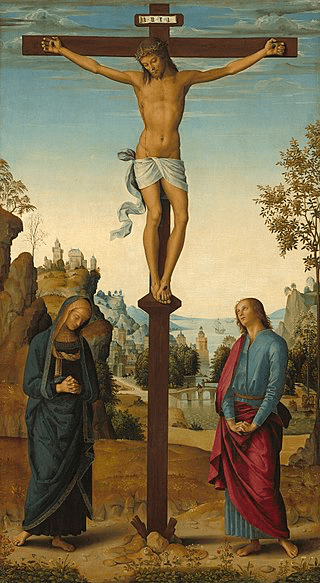
Stabat Mater: Pietro Perugino’s depiction of Mary at the Cross, 1482. (National Gallery, Washington) / public domain

A dedication to mothers

Do you remember radiance
of one who’s always there
the taste of swollen mamilla,
the scent of her sweet hair.

Whose kiss and gentle healing touch
was cooling with a balm
that soothed your painful childish graze
and injured pride becalmed.

Who taught you that a healing touch
and kiss could lead to more;
whilst she embraced competing love,
you found what love is for.

She stood as you went off to war,
to fight life’s bitter battles.
She taught you all you need to know
to rise above mere chattels.

As wisdoms, many, come to you,
from battles won or lost,
a mother’s love transcends it all
and never counts the cost.

In your old age you may well see
your children bear their own,
revealing then the seeds of love
that Stabat Mater’s sewn.

When dotage dims your consciousness,
confusion blurs your view,
expect a revelation that
her love has seen you through.

*****

The poem “A Ballad for Stabat Mater” struck me on several levels. I had already written a poem for my son’s thirtieth birthday (“The Fourth Age of Man“), basing it on William Shakespeare’s “Seven Ages of Man” (a monologue, which he wrote to open his play, “As You Like It”). Incidentally, I found it particularly poignant to note that my son had reached the same age as Jesus Christ was alleged to be, when his own mortal life ended. So, the latter never had the chance to taste the next three ages or, perhaps, he lived all seven in that short life span?

Anyway, I found my Mother’s Day poem, written in the form of a ballad, again influenced not only by Shakespeare’s “Seven Ages of Man” but also the Stabat Mater, the unforgettable and extraordinarily moving image of this religious icon, Mary, the mother of of all mothers, as she stood and watched her own son die, painfully. “Stabat mater dolorosa”, meaning the sorrowful mother stood, is a masterful understatement. How many mothers could submit themselves to such unbelievable pain! And yet all mothers do, albeit mostly to a lesser extreme, for as long as they live.

I salute all mothers, however good or bad a mother you may think you are, you have still had to suffer for your children.

© 2012,  John Anstie

First published on 18th March 2012


His Mother Bellows

“Jack, no.” as he bursts out their open

kitchen door past his garden toys


boy let’s a tiny plastic bag he clutches go

so it balloons with summer air


where it floats amongst lion’s teeth wends

bends a way above cut grass


fast up and over his red and yellow plastic slide,

glides Into his neighbours garden,


kitchen calls his feet back to fetch another

mother bellows again “Jack, no!”

© 2019, Paul Brookes

Magnum Opus

To me, there nothing so sacred an office as parenthood.

But with every superpower, comes the great weight of responsibility.
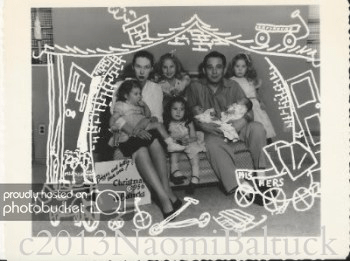
Helping someone get from here…

…to here.

It’s the most daunting…

…most joyful…
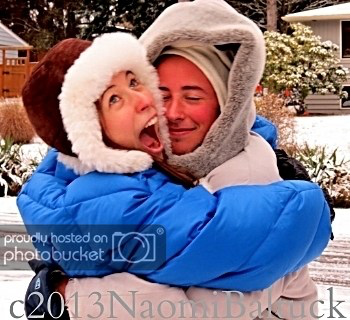
..most challenging position I’ve ever held.
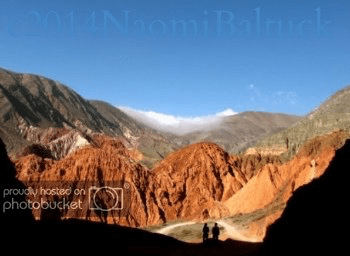
The job description is clear. When they are tiny, love them.

Nurture them.
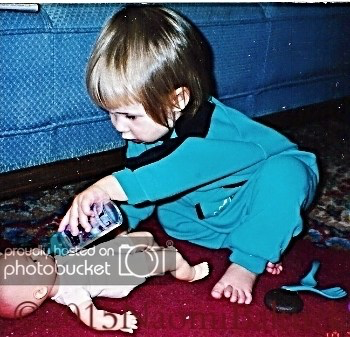
Love them some more.
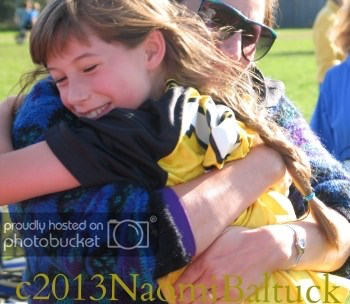
We have a few short years to raise and guide them, and allow them to find their own way to shine.

To help them acquire the skills they need to paddle their own canoe.

To allow them to test their wings.
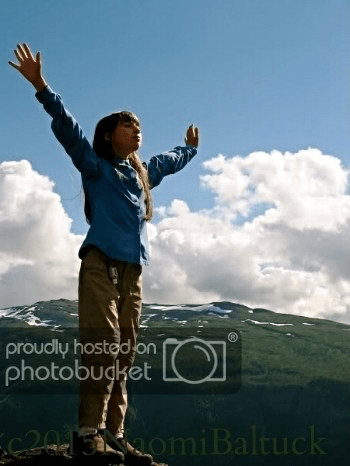
To give them every opportunity to make decisions and exercise their own power.
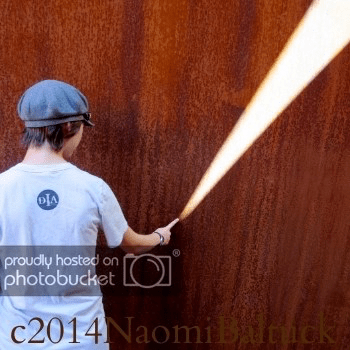
Even so, one of the greatest challenges we have as parents is to let them grow up.
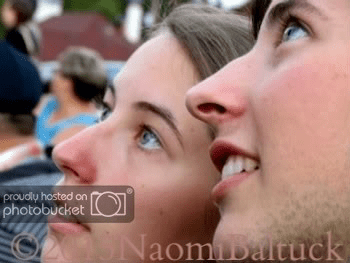
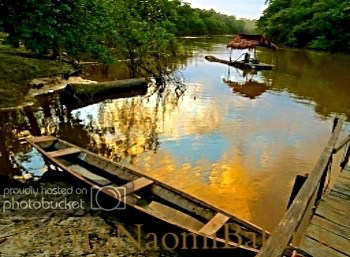
A few years ago, with the kids’ encouragement, we stepped out of our comfort zone into the Amazon jungle.
To ride a zip-line over the jungle canopy we had to reach a platform 125 feet above the jungle floor. Instead of letting our guide use pulleys and ropes to haul them up, they insisted on pulling themselves up, step by step.
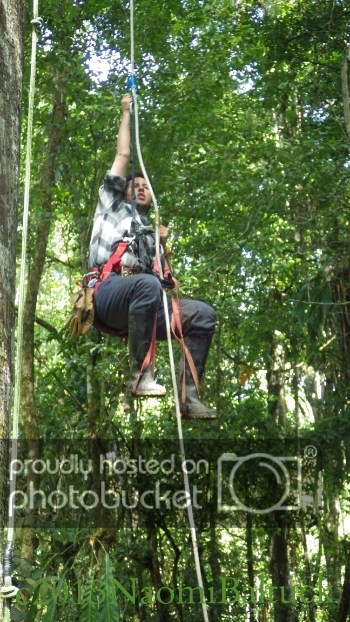
As they dangled from a single rope a hundred feet up, I thought of the book Charlotte’s Web. Charlotte considered her egg sac, from which her babies hatched, her ‘magnum opus.’ One by one, the baby spiders spun a fine web into a tiny balloon and rode the breeze, floating off into the world to land somewhere and build a web of its own.
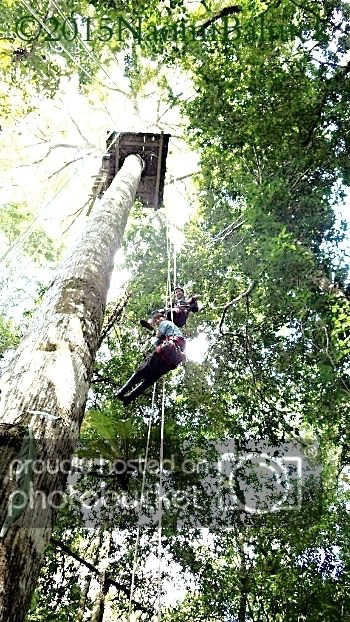
I couldn’t have been prouder–or more relieved–when they climbed to the top under their own power.

We have all traveled well together…

…but children must be free to choose their own direction, just as we did when we were young.

I quell my panic when one of my chicks…
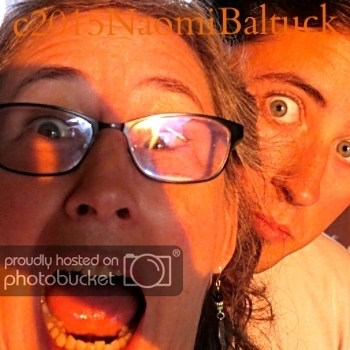
..leaves the safety of the home harbor.

I trust them to stay calm, exercise good judgement, weather the storms…

…and any other unforeseen dangers.

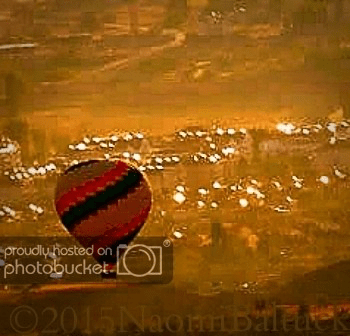
We cut them loose from the mother ship, then hope and pray they find a soft landing place…

…and a bright future.
 

And that, every now and then, they remember to phone home.

All words and images ©2015NaomiBaltuck

Disjunction (in English and Albanian)

“With one hand touch the sky
With other rate impulses of heart”

Mother…
don’t leave me alone
Mother…

I’m afraid of this wild world
Mother…
don’t leave me, mother!!!

Your tear fills the ground around me
Mother…?!

Shkëputje

“Me njërën dorë prek qiellin
me tjetrën matë impulsat e zemrës”

Nënë…
mos më lër vetëm!
Nënë…
kam frikë nga kjo botë e egër!
Nënë…
mos më braktis, nënë!!!

Loti yt rëndon dheun mbi mua
Nënë…?!

© 2019, Faruk Buzhala

Your Magic, Loving

our mother with her eyes looking, seeing feeling writ large,
touching what we couldn’t say, because we were scared,
lonely in the chaos of the 50s,
beautiful and scarred already,
your quiet eyes were as fingers, keeping us
as one in the light,
keeping us inside ourselves,
in that Bay Area bright.

© Linda Chown, Mother’s Day 2019

Out of the Womb of Time

Madonna of the Plains


out of the womb of Time they slide
peasants and kings, artisans and queens
murders, warriors, healers, peacemakers
the grandfathers and grandmothers
on whose shoulders we stand

they are with us, their spirits sensed
though unseen
their hearts are in our mouths
as they guard and guide

feet rooted in the mud of Earth
we drink the wine, eat the roots
and sing the songs we inherited
their sayings are our sayings
their voices are our voices
carried on breezes
like the music of cathedral bells
like the call of the muezzin
they chime and summon
they sum what came before

from their gnosis
whispered in the ear of silence
we learn: we are nameless but not lost
we too shall echo
shall be the shoulders
shall be the mothers and grandmothers
shall be the Hope and the Light
along the path . . .
. . . . beckoning

Originally published in Brooklyn Memories

© 2012, poem and photograph, Jamie Dedes

A Separate Peace

“I think this to myself even though I love my daughter. She and I have shared the same body. There is a part of her mind that is a part of mine. But when she was born she sprang from me like a slippery fish, and has been swimming away ever since. All her life, I have watched her as though from another shore.” Amy Tan, The Joy Luck Club


 sometimes …
near impossible to see past the manic crowds
or to lift our eyes to look at the wholesome
trees inscribing their calm upon the sky

sometimes …
we record our fears with writing utensils,
call them weapons, coloring the margins
of our books with the dry dust of martyrdom

sometimes …
the children use their pages to blot away their
mothers’ tears, turning backs on the old refrains,
hearing their own souls speak, deaf to their fathers

sometimes …
those children fell trees, transforming them
to paper and well-sharpened pencils, their lives
written in the manner of their own separate peace

“Everything has to evolve or else it perishes.” John Knowles, A Separate Peace

Originally published in Brooklyn Memories

© 2013, Jamie Dedes

Your Mother Is Always With You

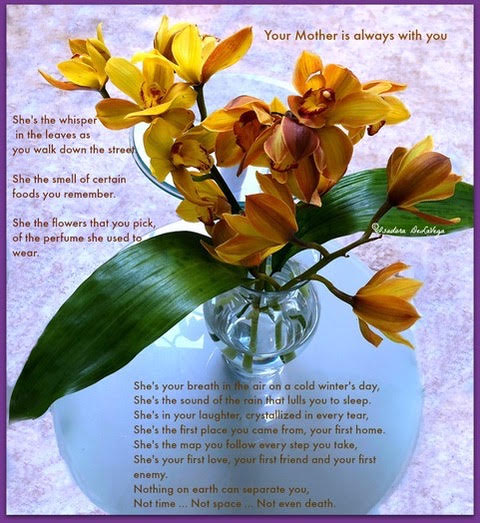
Your Mother is always with You
    She’s the whisper of the leaves as you walk down the street.
    She’s the smell of certain foods you remember.
     She’s the flowers that you pick, of the perfume that she wore. 
She’s your breath in the air on a cold winter’s day.
    She is the sound of the rain that lulls you to sleep,
She’s in your laughter, crystalized in every tear,
She’s the place you came from, your first home.
    She’s the map you follow with every step you take.
    She’s your first love, your first friend, even your first enemy,
    nothing on earth can separate you.
    Not time … Not space … Not even death!
2019 artwork ©Isadora DeLaVega
Poem Excerpt: “Your Mother is always with you!” © TXu2-148-410
By: Deborah R Culver (Deborah R Force-Shy-Gerlach-Culver) is a poet, writer and lyricist with many other poems. Her works in progress include an autobiography with the same name as the poem, “Your Mother Is Always With You”, and novels.. Connect with Deborah R Culver debbydolly111@gmail.com

Tribute

Where are the prayers of the mothers?

Only Heaven could know,

Tell me oh Lord

Where they are stored

In a spring, that in Eden flows?


Where are the prayers of the mothers?

Prayers that daily ascend,

During ring around rosie

Or making babe cozy,

Urgent prayers plead end to end.


Where are the hopes of the mothers?

Hopes that somewhere soar?

Hopes there in the heart

To quickly impart

To a child forevermore.


Where are the prayers of the mothers?

Prayers so silently pled?

They’re shining at midnight,

Glowing in moonlight,

Lighting our way ahead.

© 2019, Sharon Frye

Those Before Me

Those who have gone before me-

My mother and her mother too,

Have left their mark upon me

In all I think and do.


Times that I remember

From earliest youthful dreams,

Were molded by each moment

I spent with both my queens.


If I could leave an impact

Or a treasured legacy,

I pray it is no less-

Than this one left to me.


A legacy, so sterling,

And a testament of care,

Leads me and guides me

Just like a whispered prayer.

© 2019, Sharon Frye

Letter to My Mother: The Only Inhabitant of Heaven

Mother,
let me build your heaven!

You would be a butterfly
caressed by the sun
and the snake frozen by your sight
would lose his poison
The entire view would borrow its color
from the rainbow of your wings
The rest you should find it into my palm
there you would tuck in with my soul
I will be the guardian of your sleep
For nourishment I would serve you my eyes
my tears you’ll drink to calm the thirst …

Yes, mother, with your permission,
I will build you the heaven!

© 2019, Iulia Gherghei

My Mother’s

“Art creates the dream of life“

Is that the season?
The leaves are hitting the silent windows
and some roots of trees are creaking,
but I am a dream.
I do not recognize the colors,
when the sun of that town
without time shelters me like Mum.
Which flowers shall I gift to you?
I am not a saint – I cannot revive you.
I cannot even grief.

To gift to you – a last flower.

© 2019, bogpan (Bozhidar Pangelov)