
The Great Education Escape

Riding the Chariot

A fiend roared within him, fueled by germs rioting throughout his system. They wanted more whipped cream, blue sex, smoke-filled rooms; they wanted more income, better homes, self-determination; they wanted democracy to rule his body. If he had a hammer, justice would rule with silver scales. The fool would lead them.

But bang-bang, the gavel falls, overruling his objections. The fiend takes over, and his cells and the germs war, killing each other and putting the community that one might think of as his body into perpetual motion.

The teacher makes a scene for them to memorize, part of the first act of their lives. This is his job, to create neat scenes for his un-dilated pupils to use to construct a belief system and life to come. He has long since listened to the critics and realized the play will be a flop.

It all falls in on him when the fiend takes over his body.

“Class dismissed. Go home, read Rabelais, Larsen, Stein, Baldwin, Kerouac, Morrison, Atwood, Harjo, and DeLillo. Write an experimental novel. Go off the grid. Build a life from your own materials.”

The pupils stare at him intently, comprehensively unable to stand under this downpour, an outpouring of blinding insight.

“Seriously, once you have done that, come back to me and ask for an A. Until then, you have only failed, like me.”

He walked out of the class. The ‘flu had won. He went to the office, pulled a blank piece of paper from a copier, and wrote a note to the principal. Two words: I quit. Then he signed and dated it.

The school never heard from him again. Someone thought they saw his name on an
essay about Rabelais, Freire, and the need for revolution in the classroom. The principal read a review of an experimental novel that he might have written. A former student searched for him on Google, but his name disappeared from the screen.


20130710-220704.jpgWalking the ravine ahead of angels, those messengers of shadowed new light, he forgot his mother. The trees painted, making art that lasted a mere second as a breeze brushed their shadows. With affection, he thought of an Aztec descendant he met in Machu Pichu.

The land around him had a great thirst, not for rain, but for memory. A camera, hidden in a satellite, re-collected this moment of light bouncing from the rock party, a ball spinning on a pivot.

It made little difference to his views of the cosmopolitan metropolis instantiated in Berlin when the rodeo stopped in at the saloon. That poor raccoon, the gun, the Bible, the gin—you know the song. These thoughts swirled through the germinating revolution, the German revolution, the germ revolution, each a rival to his dreams.

They tried stealing his sanity, but they found the vault empty, as he had discarded all previous construction materials, leaving a lattice of emptiness while seekers discussed the seven paths of mysticism in a courtyard around seventy-seven corners of relationship to the hole filled with rain.

The wandering, colorful man no longer knew how to belong to the swimmers, so he stopped treading water, only to find that the water spit him out.

20130710-220850.jpg

He felt silly, and thought of fixing it all, perhaps by pulling the plug and disconnecting the hole from the screen. Still, a tired wink of his mind and his wonder returned, more quickly than the drink in the saloon arrived for the rodeo’s raccoon. His doctor thought he was depressed. His ex-girlfriend thought he was manic.

It could be bad, or better, if he only found what he needed to remember to forget. His skin would then refrain from thirsting for the rain, afraid that the world would fall from his shoulders, crash onto the pathless road; the wheels of the chariot would crush him with it. The soil would drink his memory. And the trees would brush over it all a surrealistic image, covering the sketch without any pentimento.


His dilated pupils did not like the new teacher. Their vessels expanded until they burst, exploding many myths at once. The principal was not their pal. They left school, but only after many years. They read theory. They taught in universities. They thought they were experimenting.

—Michael Dickel @2017

20130710-220330.jpg


An earlier version of this appeared here on Meta/ Phor(e) /Play, Michael Dickel’s blogZine. A closer version to this one appears in his collection of flash fiction, The Palm Reading after The Toad’s Garden. This version has some small edits and one name listed to the authors the pupils should study. What does this have to do with social justice? A critique of education, conformity, and exclusion might be found in its surrealistic-hybrid traces.

 

Off the Trail of Consumer Capitalism

Off the trail

Author’s note: Originally written in July, 2013, this piece seems even more relevant and urgent 5 years later. It originally appeared here, on Meta/ Phor(e) /Play. A revised version appears in my flash fiction collection, The Toad’s Garden after The Palm Reading. This version has been slightly edited, most significantly to add the word “consumer” to modify capitalism, as the term “consumer capitalism” has come to my attention as one bandied about in place of democracy as the essential system of the United States (and promoted by some on the so-called “Christian” Right, although from my perspective, that political group seems neither Christian nor right…). The line about the great purges goes back to 2013, but we now see something like them beginning to form…


By chance I learned that they planned to crucify the married couple for honeymooning off the grid and outside of the mainstream consumer economy. The couple backpacked along the Appalachian Trail, using second-hand equipment, carrying home-prepared dried goods for meals , which friends provided to them as gifts.

The followers of Christ, Consumer-Capitalist, found such sacrilege untenable, especially in light of the anger it would cause the Corporate Lords of the Boardrooms.

I overheard my editor on his cell, assigning someone to cover the Meeting of Judgment where the sentence would be pronounced. When I understood that the other reporter wouldn’t be back from her current assignment in time, I sauntered in and asked what Ed had for me, like I didn’t know anything.

“The Reverend called to request we send someone to this meeting, give it coverage to send the message out. Work, spend, play inside the economy.”

“Got it. Keep the money flowing to oil the consumer capitalism machinery of wealth.”

I knew the catechism, but didn’t believe it. I’d sent dried lemon peels, home-made penne (dried to preserve it), a chunk of parmigiana traded on the underground market, and a sealed container of pesto for them to make a backpacker’s lemon pasta.


The Meeting of Judgment followed the usual pattern of these religious courts. A minister of the Reverend’s flock read out the charges. Two other ministers sat on either side, listening gravely. They conferred briefly. It didn’t matter that the accused even now were somewhere hiking in the woods.

As per custom, the ushers served cups of tea to the witnesses of the Meeting. We remained silent. I sipped a sad orange-pekoe until the lead minister announced the decision.

Crucifixion. It had come back in style around 2020, shortly after the great purges that deported, jailed, or enslaved first the non-Christians, then the wrong-type of Christians.

I had not seen a crucifixion. Up to now, it had been an advantage of a rural assignment.

“What are you going to do?” The man I knew as Germaine asked me. He’d popped up out of the crowd as I pushed out the door.

I’d seen Germaine at several social gatherings of people like me. My circles went along with the Reverend to a point, that is, enough to survive, and no more. We kept to ourselves, and tried to avoid the scrutiny of the Reverend and his ministers.

“Do? I’ll write a story about the Judgment, the reasons for it, and watch to see how many hits it gets on the Screens.”

I didn’t know Germaine enough to be baited into saying something damaging. Besides, that was what I planned to do.

“No, about them. We can’t let them get caught.”

“You could get crucified yourself for getting involved. Even what you said is a crime against Christian Consumer Capitalism.”

“What is Christian Capitalism? Something made up by corporate overlords who overeat from our consumption. There never was such a religion.”

I walked away. I considered whether he might be an agent provocateur, meaning I should report him before he denounced me for doing nothing. I decided that I didn’t want to get involved, and would invoke my sometime role as investigative reporter should he accuse me.


The next morning I had coffee with Frank, someone I thought I knew enough to trust under most circumstances. He told me that Germaine had been arrested for sedition, blasphemy, and heresy as a result of spouting the Devil’s own socialism.

“I’ll be damned.”

“Probably,” Frank said. “To tell you the truth, I thought he was a spy.”

After Frank went off to work, I looked for a screen-story on Germaine, but didn’t find one. I wondered how Frank had heard.

I read my own story on my screen, instead. It played well, several hits, re-posts, and praiseful comments.

It bored me. No, more than that, it sickened me.

I didn’t believe any of it. I knew the young couple, knew they loved the woods, knew they couldn’t afford a resort honeymoon because they wanted to buy a house and the downpayment would take everything they had.

They actually wanted to fit in and had no revolutionary or irreligious intent. They wanted to get along, but to also live their lives and not be pulled under the tide of consumer debt.

Just then, I realized that the Reverend and the ministers didn’t care. And maybe Frank didn’t read about Germaine on a screen.


The Reverend wanted to make a statement, keep people scared, keep people trying harder than ever to feed the economy and concentrate power and wealth into the Corporate Lords, who ran the Reverend.

Or maybe the other way around, the Reverend ran them. It doesn’t matter now, I realize.

Frank wanted me to play along and keep away from people like Germaine. It was almost a friendly gesture. It could have been a warning, even.


And that’s why I find myself sitting in a deer stand along the Appalachian Trail. The newlyweds should pass under it sometime today, if they haven’t yet been waylaid.

When they do, I’ll wait to see if they find the package I left out.

It has printouts of the screen story I wrote. It has a copy of the Judgment Decree. It has a map of little-known trails that cross this path, and what cash I could withdraw without getting stopped by a minister.

I thought that I would watch them pick it up and wait until they were gone, then make my way home after a few stops to justify my travel, should I get checked.

Now, I’m thinking maybe I’ll ask if I can walk with them a while when they go off the trail. I’ll cut out after a few days, find my own way.

I don’t know why I’ve decided to do this. I just don’t feel like writing another story I don’t believe in, I guess.

—Michael Dickel ©2018, 2017, 2013

20130729-230444.jpg

Life

Like A symbol yet unknown

Looks like love sometimes hate

Looks like faith cheating on hope

Looks like fear breading on dreams

Looks like health depending on wealth

Looks like strength hoping on age

Looks like status owing to power

Looks like trust standing on friendship

Looks like hardwork depending on success

Looks like greed in comfort

Looks like laziness in contentment

Looks like envy in wishes

What Manner of life is this

What sorcery is this

Why lay claims to love life

When no one cares for but themselves

A life where breastfeeding mothers feed no more

A life where fathers flee from children

A life where the world fails humans

A life where nature cries for help

A life where death is celebrated more than life

A life where wealth is more valuable than life

A life where the earth is a sinking hole

Oh! What manner of life is this?

—Michael C. Odiah © 2017

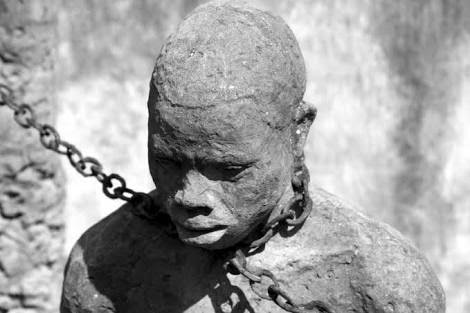
Black November


What manner of life is this
Who designed that word
Why call it modern
Why call it melanin

A life full of thorns
A life buried in hate
A life traded for money
A life drowning in blood

A word filled with tears and blood
A word filled with shadowed evil
A word filled with curse and cause
A word filled with pain and fear

They call it modern and new
Like a thing changed about it
Like it got better or worse
Like it now wears a mask.

Why give it a name in the 1st place
Why look a being in the eye
See same features and still
Go ahead to segregate

I wish the children’s children
Know no black or white
Know no hate or fear
But rather love endlessly.

—poem and photograph, Michael Odiah © 2017

America Still Sings of Freedom


In the midst of nuclear insanity
In the midst of natural calamities
In the midst of hatred and harm crisscrossing the land
In the midst of hostility riding in cars emasculating our civil liberties
In the midst of blood spattered into the streets…
In the midst of people crying…people dying
America Still Sings of Freedom

In the midst of Black Lives Matter
In the midst of limitations set on Muslims’ immigration
In the midst of white supremacy poisoning the tender tendrils of democracy
In the midst of Native Americans wanting to save the earth from greed and destruction
In the midst of dreamers’ dreams vanishing in the wind
In the midst of chaos and confusion
America Still Sings of Freedom

In the midst of immigrant children being wrenched from their parents’ grasp
In the midst of the vanishing affordable health care act
In the midst of the oppressed screaming for justice from the callous and the cold
In the midst of the stranglehold of the school-to-prison pipeline
In the midst of the vines of violence choking aspirations
In the midst of mass incarceration
America Still Sings of Freedom

In the midst of earth’s disintegrating atmosphere
In the midst of conflicting attitudes towards a solution to pollution
In the midst of profits leading to the desecration of our planet
In the midst of socio-economic terrorism
In the midst of religious fanaticism
In the midst of man’s obsession with power
America Still Sings of Freedom

In the midst of the sunrise greeting a new day in magnificence
In the midst of the stars twinkling eminence throughout time
In the midst of intergalactic connections singing in eternity
In the midst of the courageous voices of the many standing together in unity
In the midst of joy infusing hearts of stone
In the midst of peace in search of a home
America Still Sings of Freedom

—Tamam Tracy Moncur © 2018

Universal Credit

Learn this lesson: assume the supplicant’s
position, low before the arbiter.
Hang your petition on the ox’s horn and
pray as it turns and plods inside the keep.
Forty two days in the wilderness, longer
than Christ’s self-chosen stay. Time to go home
and count the copper pennies in your palm, time
to scour the bins for corn cobs overlooked,
scraps on bones, nubs of bread, hide candles
and kindling, beg remission on your rent.
Time to forage hedgerows, scrape bark for baking
bread, claw the furrows for potatoes, hush
the hungry child while you lie clamped and clemmed,
fashioning hope from feathers and dung.

You may be lucky: beneficence
parsimonious may be granted or
day on day on days delays will find you
in winter’s shadow outside the castle walls.

—Frank McMahan © 2018

The title of this poem relates to a new UK  Social Security single benefit ( to  replace several others).  Its rollout has been very expensive and is causing great hardship for the poorest people in this country. Many have to rely on food banks.


systemic social justice


you must hold
your place
in
the queue
if
you’re
going
to
move forward
stepping
outside
of
the queue
means
you’ll forfeit
your
rightful
opportunity
to
get to
the front
of
the line
lesser beings
have left
the line
and
thus
made room
for
others
and
of course
moving
you
ever closer
to
the front
of
the queue
the whole
process
is
enhanced
by
death
divorce
and
insanity
barring
such
an event
for
you
you’re guaranteed
a
position
at
the front
of
the line
of
some
duration


© 2018, Charles W. Martin

gambling on social justice…


got folks
outside
the candy store
staring
at
opaque glass
they
can’t
really see
the sweets
they’ve
heard about
and
will
most likely
never
taste
but
they’ve got
some pretty pictures
like
promises
painted
for
them
on the glass
outside
pictures
carefully crafted
by
those who
own
the store
who offer
free tenants
a lifetime
of
servitude
to
buy
a lottery ticket
for
the chance
to
come inside


—Charles W Martin © 2018

even the most civilized…


when it’s realized
the last ship is departing
leaving those behind
isolated forever
fear gives birth to anger’s mob


—Charles W. Martin © 2018

Unlearning

Unlearning

I learned in the back seats of cars
The alcoves of bars
How to please
And how to tease.

I learned at the department store
How to dress to settle the score.
And underneath, my angel side
Learned how to cause a great divide.

A push, a pinch, a tug, a spin
Put pain to the side; upfront, just grin.
I learned my worth, a ratio
Of tits and ass and let it go.

And when you think the game is done,
You spy your girls and know they’ve won.
Those weren’t lessons, they were deceit.
I was fooled, their greatest feat.
Should I just acquiesce to my defeat?
Oh hell no.
#metoo
#timesup

© Irma

Intertwined

The woman I am
Is the woman I was
The quiet one,
The smart one,
The bookworm,
The one who ran a high school mile in 20 minutes.

The woman I am
Is the woman I was
The hands in my back pocket,
I can conquer the world,
Let the party begin,
I can pull off an A paper in 4 hours Co-ed,
Who wasn’t self aware enough,
Who wasn’t practiced enough,
To know alcoholic lies.

The woman I am
Is the woman I was
The trusting in a good world,
How did this happen to me,
Despite my negative words,
Against my feminist will,
It must be my fault,
Forgive me, understand me lover.

The woman I am
Is the woman I was
The grieving mother,
The don’t get too close so it doesn’t hurt mother,
The oh it could be fun and easy mother,
The I didn’t realize boys were so different mother,
The stay my baby a little a lot longer mother.

The woman I am
Is the woman I was
Angry and hurt,
Confused yet hopeful,
Spurned into action,
Despite fears of rejection.

I am the intersection of
My gender
My ethnicity
My religion
My race
The intertwining of identity and history.
The woman I am
Is the woman I was
Is the woman I will become

—Irma © 2018

Gestures


Jaw set
Brows coming together
Looking straight ahead while around her
Kids are squirming, tearing, jeering
She rubs her forehead, right above her nose, and closes her eyes
The gesture of acceptance
Out-numbered defeat

Head tilted to the side
Eyes squinted
Staring into a face that doesn’t believe in her worth, her rights, her existence
She crosses her arms, juts her hip, and taps her foot
The gesture of defiance
Disbelief that in this day and age

Mouth agape
Neck outstretched
Listening to advice and false promises yelled by witnesses to her body’s treachery
She swings her arms and shuffles forward
The gesture of persistence
Knowing pain is temporary

Afterwards, she sits still
Listening to the quiet sounds
Of trees swaying and not breaking
Her breathing deepens
Her arms raise to the sky
The gesture of triumph
Self determined

—Irma ©2018

Clouds

Amorphous clouds engulf me –
My true hand unseen
My heart frozen, unloved
My breath stilled and unworthy
My solid form deemed weak
What was supposed to shade me
Protect me
From the bleaching hanging sun
Now hurts my skin with its
Wispy viper tendrils
I thought you were my friend
But I missed the forecast for
Cloudy with a chance of
selfish entitlement.

—Irma © 2018

Killer Angels, Better Angels

Its leaves are near-ochre,
yellowed with age and changes
in weather and geography,
like the pages of memory
I un-shelf along with it each year.

I bring it out like a swimsuit
each summer since I found it
on that beach in that place from
that side which did not prevail.
Today, a page fell like a memory.

It tells a tale of the push and pull
of a time when men could be
paid for and sold, or lined up in ranks
to pay their last full measure
of devotion to a cause each held sacred.

As I run my finger down the page,
I am present in my place and time
as I am in theirs, though I smell
the aroma of a musty old book rather than
of Hell’s own sulfur and smoke.

And I am at peace reading of war and death,
vaguely secure that such a conflict
couldn’t again slash my nobly scarred nation.
Then all these men would have given
that last full measure for nothing.

It’d be our most-mortal sin to allow them
to have lived and died in vain, knowing their
new birth of freedom, and government
of the people, by the people, for the people—
all the people—did perish from the earth.


Rambling draft inspired by reading, breathing, feeling, listening to the pages of my old paperback copy of The Killer Angels, Michael Shaara’s fictional narrative of the actual men and events leading up to, within and following the days in July of 1863 we know as the Battle of Gettysburg. I find myself reading more of my Civil War books these days.I love them, but that I feel so viscerally compelled concerns me a little. 

—Joseph Hesch © 2018

Elegy

Elegy

dying slowly incident by incident
how hard—for you and those
who knew you or have memory
of your existence
to witness such mean

abandonment

today there is no praise
we come to bury you
and your acts long ago
dismissed and now

despised

open doors, offers of aid—first
and continual—serving—
sharing—sacrificing
anything—wealth / time / thought

eliminated

replaced now with all manner
of self serving consideration
attitude replacing gratitude
with consequences on others

ignored

gluttony and self indulgence pull
the shades over generosity
and sympathy seen weak and
forbidden

today we declare you dead
Stomp the ground—your bed

Respect is not the fashion
be dead now—compassion.

–deb y felio © 2018

Lazy Bums Vanish from Lazy Town

“Once upon a time there was a town where all the people were exceedingly lazy.”

—The Lazy Townspeople

It’s true of course as we all know those
Lazy folks just down the road will do
Just about anything to not do just about
Anything, hoping some nincompoop

Will show up just in time to rake up
All the trash, bag it, maybe recycle it,
And send all that is not wanted on its
Merry way. When even that didn’t

Work out, the old folks were just beside
Themselves to get themselves going
So the place might look a bit more
Spiffy when the man in the white house

Who now owns everything and everyone
Will drive by for a view, and toss a few
Coins to those whose waving hands
Are the highest ever for free handouts.

That was at least the plan. The old town
Though just got older, stinkier, trashier,
And big bugs soon arrived by the millions
So no one could get a night’s rest without

Bites everywhere and anywhere but as
You know, no one knew quite what to do.
We could all make rakes, a ratty man said.
I’ve got a bunch of mowers, said the long

Beard. The smelly old one even kept empty
Bottles of Clorox and Windex just in case.
Everybody said let’s get started, but no
One really started, as no one had ever

Known how to bring spring to the old town.
A well-kept girl crawled under the hedge
That kept those in and those looking out
And she knew right away what might spiff

The place up, shiny and brassy as before.
Follow me, she said, and everybody did
Just that, and soon the town was not ever
There, no one could even remember it,

And then, what nature does best, a big
Wind came through and the wind coughed
It all around the world as it was most
Disgusting with all the dust, and mites,

And those terrible bugs that get into
Everything, and soon the man in the
Big white house drove down to see
His priceless town, and it was so shiny,

Smooth, and not a trace could be found
Of the terrible people who once called
What once was trash, what once was home,
A fine place to wave his tiny, clean hands.

—DeWitt Clinton © 2018

McCarthy’s Girl


On looking how she was. Staring
always, as though there were
depths and hollows to see through
somehow all into. Something to stay with her
little girl hands twisting and then the warts.
She would always try to pull
The world into her fingers.
To play the sounds closer.
She was just oblivious
To her difference.

But behind, they knew her
for the witch they thought they knew she was,
Jude, Commie, sick-to-stick-out little girl,
Pale-wincer-in-the-sun with that heavy coat.
Cassie and Lassie, those twins,
they knew fast just what to do.
lasso a tip of her hanging braid
and soak it slow and silent in the
ink-well behind. Well, she just kept her still.
Her long eyelids shuddering in her quiet.
Little girl on the edges, locked inside in.
No Howdy Doody times, no way to say it.
She just fought to gaze hard to look straight
beyond the puppet land of the 1950s.
She had to come home to hide
behind the tv and the cooking.

All the time life opened up for her
savage saddle markings.

—Linda E. Chown © 2018

Coming Back: Franco not here no more, 1988


I go blind from then I go
here now so into Franco-free light
where I don’t know
how to turn my eyes,
spent scars of second skin,
years of no and fury,
now the clean air breaking in
to be real in this to breathe it
all in and then to die in Madrid.
Tempt it not—I surely do not
Not too. No Franco and his cops
Nor his tiny stamps, unwritten laws
And truncheons at the ready.

I did not come here to die
but to be home here
where I can get lost again free
in a landscape of
words drifting oh words!
Hombre que te pasa
la Republica Zaragoza libertad.

Find the bridge, the path,
to cross over to some-
where the verdict words cannot.
Qué bonitas son
Son las flores
No, not just pretty. Knot not.

When I go blind,
“good I cannot see them”
(as the words once were cords
even to touch their fury)
The pain of sound.
Clackety clack.
Let the air out
of this flat tire.

I’m breaking in
to be real again—
the Guadarrama mountain range
splendid low about the horizon
white-scarred muses
women scarring Fascism.
Late afternoon glory with them in Madrid.
The air so pure it stings to settle.

—Linda E. Chown ©2018