Oscar Wilde in Prison (Pantum)


In prison, Wilde learned to live from Verlaine and Kropotkin

Once reaching the ultimate achievement of wisdom.

But understanding Christ, he was overwhelmed with chagrin.

Enduring humility, he saw the Holy Kingdom.

Once reaching the ultimate achievement of wisdom,

Oscar found that unknowable was the soul of the man.

Enduring humility, he saw the Holy Kingdom.

Writing to Bosie, inside him ”De Profundis” began.

Oscar found that unknowable was the soul of the man-

”Whatever happens to oneself happens to another.”

Writing to Bosie, inside him ”De Profundis” began.

The pillory replaced the pedestal of the lover.

”Whatever happens to oneself happens to another, ”

But understanding Christ, he was overwhelmed with chagrin.

The pillory replaced the pedestal of the lover.

In prison, Wilde learned to live from Verlaine and Kropotkin.

© 2017, Marieta Maglas; Wilde In the Doc, Illustrate Police Gazette, 4 May 1895, Public Domain

Restorative Justice for Sale . ..

empty prison farms
balance sheets with dark red ink
societal chains
restraint by profit and fear
bargain priced prisoners’ hope

© 2017, poem and illustration, Charles W. Martin

before it can begin . . .

an opened window
fresh air whirls around stale fears
prisoners breathe deep
hope’s sunrise cuts through darkness
revenge’s hand ends all

© 2017, poem and photograph, Charles W Martin

teach a man to fish . . .

a broken prisoner
back bent like an old willow
skin as rough as bark
believed restorative justice
society’s rejection

© 2017, poem and illustration, Charles W. Martin

#what more do you expect

i am pleased to say .

that it has been a good day. that i said something when she said we had no money. pointed out that we have food, shelter and heat .

#whatmoredoyouexpect?


that we have our comfort and honest work.                           #whatmoredoyouexpect?


i am not righteous, though my breakfasts are sad now, by design. the cream is off.


limits.


i am pleased to say i wrote the book, bought the book, told the story of my life today.


#whatmoredoyouexpect?


© 2017, poem and art, Sonja Benskin Mesher

.verdict.

. verdict.

seems the punishment is cancelled.

pat says some folk paid the price
already.

we hope he is right. what benefit is
suffering?

there are leaflets to explain. in the
cathedral

&

other power houses.

i visit regular without no ticket.

the formal compaint has not yet
been realised.

it was well over a week ago.
i read daily.

© 2017, Sonja Benskin Mesher

Confrontation

She sits opposite him gazing over the bare table
realizing he’s only the same age as her son
his eyes hold fear beneath the glass that covers
all his emotions, it’s the protective lid he’s
hidden  beneath for years to survive but now
is raised as he faces her and finds she’s like his Mom.

She has one question that he cannot answer
which holds the key to his heart and life
why did he go to that kitchen drawer
before he left for school that morning
why didn’t he take the lunch that he left behind.

James was sitting on the campus bench
quietly eating peanut butter sarnies, muffins
not bothering anyone, alone!  He sat beside
and suddenly stabbed, he took a bitten sarnie

and the cops came as James was dying
and now Sally sits opposite needing
his answer, he mumbles “sorry, I don’t know
he was just there and I was hungry”.

She knows there can never be reparation
for her son will never walk through the door,
she’ll never know his wife, or children
for he’ll never meet her, they’ll not be born

but she’s confronting this boy discovers
why he went to that kitchen drawer
needs to stop him and others like him
from following the fashion of the blade

she’ll know James will live in others
unknown boys who will grow in to men
with futures unscarred by the blade.

© 2017, 
Carolyn O’Connell

The Sacrificial Lambs?

Searchlights strafe the night blocking out the stars
while inside boys search sleep, perusing dreams
that conjure memories of innocent pasts, they’re
back in homes where mothers and sisters danced:

this is but a transient relief – too soon
the dawn slips through window bars bringing
steel’s clang to rouse the day, the stink of men –
no woman comes to bathe a fevered brow.

A judge who didn’t know them, a lawyer duty bound
presided over their futures, turned the page of fate
were they guilty or in the wrong place – no matter?
Now they’re behind walls subject to the system

turning innocence to depravement – no escape
for all around older, wiser know the game
survive by bringing new blood to the flock:
This flock thrives by bending all the rules
the rams impregnate all the new lambs
teach them, turn them into wolves and serve

the new shepherds guiding this interned flock.
All is contained by consent of shepherds whose
duty is to guard, but they are weary of the task
for they know there is no redemption; the stars

are set by race, creed, and class for money rules.
Those without the right profile are sacrificial lambs.

© 2017, Carolyn O’Connell

Hope and Faith in Restorative Justice

This video speaks volumes about why I have such faith and hope in restorative justice.


– Gail Stone, Law & Justice Policy Advisor, King County Executive Dow Constantine


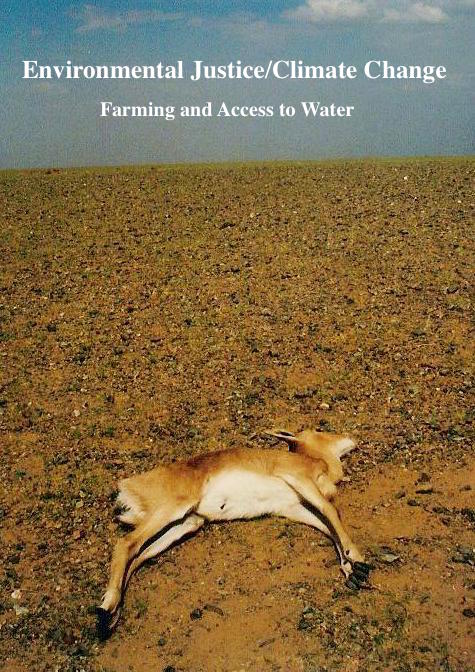
The BeZine, June 2017, Environmental Justice/Climate Change: Farming and Access to Water


June 15, 2017

The environmental  challenges are complex, an understatement I know.

  • Big Ag pollutes our waterways and groundwater, air and soil. Some wetlands, rivers and their tributaries can no longer sustain life. Much pastureland is befouled with pesticides, animal waste, phosphates and nitrates and other toxic residue from unsustainable farming practices.
  • Sudan Relief Fund, World Food Program, Oxfam, Catholic Relief Fund, Buddhist Global Relief, the World Food Program and many other organizations are working to mitigate widespread  hunger, which is a problem of economic injustice as well as environmental degradation and environmental injustice.
  • Drought and resulting famine are devastating the Sudan, the West Upper Nile and Yemen.
  • In many areas of the world, access to potable water is sorely lacking.
  • Lack of access to clean water is exacerbated by a want of toilets for some 4.2 billion people, which has a  huge impact on public health.  The result of poor hygiene and sanitation is Dysentery, Typhoid, Cholera, Hepatitis A and death-dealing Diarrhea. More people die of diarrhea in Third World counties than of AIDs.

Our problems are pressing and complex and are made the more difficult as we struggle under a cloud of skepticism and division and the discouraging weight of a Doomsday Clock that was moved forward in January to two-and-a-half minutes to midnight in response to Trump’s election.  That’s the closest we’ve been to midnight since 1953.

Access to potable water may be the most pressing of our challenges.

“The world runs on water. Clean, reliable water supplies are vital for industry, agriculture, and energy production. Every community and ecosystem on Earth depends on water for sanitation, hygiene, and daily survival.

“Yet the world’s water systems face formidable threats. More than a billion people currently live in water-scarce regions, and as many as 3.5 billion could experience water scarcity by 2025. Increasing pollution degrades freshwater and coastal aquatic ecosystems. And climate change is poised to shift precipitation patterns and speed glacial melt, altering water supplies and intensifying floods and drought.”  World Resources Institute

The good news is that there are many working conscientiously to raise awareness and funds. Some of our readers and contributors are among them. There are good people offering time and expertise, sometimes putting their own lives and livelihoods  in danger.

This month our core team and guest writers have chosen to focus largely on water, but they also address the need to respect science (Naomi Baltuck) and the need to acknowledge that war is a danger to the environment in general as well as a cause of human hunger. (Michael Dickel). If the Syrian Civil War were to stop right this second, one wonders how long – how many years, perhaps decades – it would take to make that country’s land farmable again.

Michael Watson, Carolyn O’Connell and Joe Hesch touch their experiences of farms before industrial farming.  Priscilla Galasso, John Anstie, Paul Brooks, Marieta Maglas and Rob Cullen speak to us of water.  Corina Ravenscraft and Sonja Benskin Mesher remind us of the element of greed – as does John – and Sonja points to gratitude.  Enough is truly enough.  Charlie Martin’s poems are poignant, making us think about how sad it would be if we lost it all.  Liliana Negoi brings a quiet and practical appreciation of nature.  Phillip Stevens paints the earth in all her delicacy and need for tender husbandry.

Thanks to our core team members for stellar, thoughtful work as always: John Anstie, Michael Watson and Michael Dickel, Priscilla Galasso and Corina Ravenscraft, Charles Martin, Liliana Negoi, Naomi Baltuck and Joe Hesch.

Welcome back to Paul Brooks, Phillip Stephens and Sonja Benskin Mesher and a warm welcome to Marieta Maglas and Rob Cullen, new to our pages.

We hope this issue will give you pleasure even as it provokes you. Leave your likes and comments behind. As readers you are as import to the The BeZine project, values and goals as are our contributors. Your commentary is welcome and encourages our writers. As always, we offer the work of emerging, mid-career and polished pros, all talented and all with ideas and ideals worth reading and thinking about.

In the spirit of peace, love (respect) and community
and on behalf of The Bardo Group Beguines,
Jamie Dedes, Founding and Managing Editor

Photo


TABLE OF CONTENTS

How to read this issue of THE BEZINE:

  • Click HERE to read the entire magazine by scrolling (now includes this Intro), or
  • You can read each piece individually by clicking the links below.
  • To learn more about our guests contributors, please link HERE.

SPECIAL

Children call on world leaders to save the ocean, World Oceans Day

BeATTITUDES

Walking With Water, Rob Cullen
Water Wishes, Priscilla Galasso
Our Albatross Is Greed, But We’re Not Sunk Yet, Corina Ravenscraft
Close to My Heart, Michael Watson

 POEMS

Let the Rains Fall, John Anstie

The Value of Water, Paul Brookes
WET KILL, Paul Brookes
What Use Poetry When It Floods, Paul Brookes

Hybrid: Warm Hunger, Michael Dickel

Water, Ralph Waldo Emerson

Don’t Blink, Joseph Hesch

The Desert, Marieta Maglas

Postponed Awareness, Charles W. Martin
off course evolution, Charles W. Martin
death by committee, Charles W. Martin

#what more do you expect, Sonja Benskin Mesher

prints, Liliana Negoi
growth, Liliana Negoi
what remains after the tree, Liliana Negoi

Remember the Farm, Carolyn O’Connell

Guerilla Gardening, Phillip Stephens
Resurrection Restoration, Phillip Stephens

PHOTO/ESSAY

That Was Then, This Is Now, Naomi Baltuck

MORE LIGHT

For My Children, Rob Cullen


Except where otherwise noted,
ALL works in The BeZine ©2017 by the author / creator


CONNECT WITH US

Daily Spiritual Practice: Beguine Again, a community of Like-Minded People

Facebook, The Bardo Group Beguines

Twitter, The Bardo Group Beguines

Children call on world leaders to save the ocean, launch #My Ocean Pledge campaign at World Oceans Day event

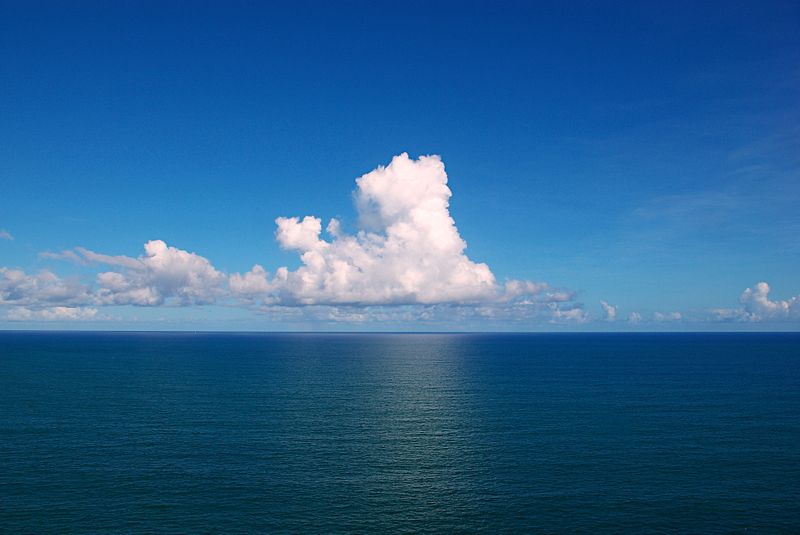
Clouds over the Atlantic courtesy of Tiago Fioreze under CC BY-SA 3.0 license.

On 8 June 2017 HSH Prince Albert of Monaco II was the first to sign The Ocean Pledge launched by youth from UNESCO World Heritage Marine sites at the United Nations. He was joined by, Ms Irina Bokova, Director-General of UNESCO as well as Adrian Grenier United Nations Goodwill Ambassador for the Environment.

The pledge, which reads ‘I pledge to protect the ocean for future generations’ was also signed by a representative from the government of Australia among other dignitaries.
Children from more than 10 UNESCO marine World Heritage sites including Papahānaumokuākea (USA), Lord Howe Island Group (Australia) and Aldabra Atoll (Seychelles), presented the pledge on stage inside the General Assembly Hall and called upon world leaders to sign their commitment. People from across the globe are invited to sign the pledge digitally on the website of UNESCO’s World Heritage Marine Programme,

The children travelled from some of the remotest places on Earth to highlight the global nature of the threats posed to the ocean, and the need for collective action. Decisions made today will have a ripple effect for generations to come. Each child lives in a UNESCO marine World Heritage site, an area recognized for its Outstanding Universal Value, and protected for humanity under the 1972 UNESCO World Heritage Convention. The international community has committed to care for our natural wonders. Like the rest of the world’s ocean, World Heritage marine sites are suffering from the impact of climate change, including warming waters, more powerful storms, rising sea levels, and ocean acidification.

Video pledges have been posted from across the planet including sites such as the Galápagos Islands in Ecuador, the Wadden Sea in Netherlands/Germany/Denmark, The Great Barrier Reef in Australia and the Phoenix Islands Protected Area in Kiribati to name a few.

“The world’s ocean is at a tipping point,” said Irina Bokova, Director-General of UNESCO.”

“Climate change is already affecting several World Heritage marine sites, and no place on earth is immune to this global threat. But there is hope and we still have a chance to save our ocean treasures, if we act now and work together. Future generations will inherit the consequences of our actions – or inaction.”

View of the Earth where all five oceans are visible. Public domain illustration

This initiative is made possible by the generous support of the Government of Flanders, the Explorers Club, Stefan & Irina Hearst and the Khaled bin Sultan Living Oceans Foundation.
For more information and to sign the pledge visit: UNESCO #myoceanpledge.

This feature is courtesy of UNESCO #myoceanpledge


Walking with Water

When I was a child I believed God lived in the skies.
It was the only way God could see everything
God was everywhere his proximity was frightening
I walked the mountains searching endlessly
I know I wasn’t alone in these beliefs
I’ve written fifty years and a day, written as they say
without knowing whether my words are listened to
so I walk these mountains listening to your words
I walk old pathways following mountain trails
I sing my words I sing my song to silence.

.

Jacques Benveniste

believed water retains
on a molecular level
a memory
that triggers antibodies.
His hypothesis remains unproven
but his conviction stayed firm
until his end came.

.

I reflect on our indifference
to the way we walk on water
we float on strata of sandstone
once beaches and layered memory
water filters and holds
breaching the surface
springs and dark pools.
And I walk endlessly
on the draining land
beneath my feet
examining the new
examining the past
walking with water
walking with love.

,

Erw Beddau
has been desicrated
a place of burial
long forgotten by men
it was still there
when I was a child
amongst the panorama
of the plateaus uplands.
From those heights today
I cast an eye to the valley slopes
and see in the distance
where Errw Beddau had once lain.
The spring, the well,
it’s clooty tree remain.
It was said of the well
which stood
in that funerary landscape
of twenty five burial mounds
its spring water cured
ailments of the eye.
In this age of blindness
I sense an irony here.


If I could only see it now
I tasted its spring water
many times long ago
when I was young
walking winding trails
in the steepness of the day
Erw Beddau
the acre of untouched graves
remained a story hidden.
And I crossed the silence
of the high slopes
following
parish roads and bridle paths
and when these ended
the intricate web of trails
of hefted sheep
mapping out
describing
the lands contour.
Do we mould the landscape?
Or has it formed us?
Walking with water.
Walking with love.

.

When I was a child I believed God lived in the skies
I walked the mountains searching endlessly
I wasn’t alone in those beliefs
I’ve written fifty years and a day, written as they say
without knowing whether my words have been listened to
so I walk these mountains still listening to your words
words and teachings no longer listened to
I walk mountain trails following old pathways
I sing my words I sing my song to silence
Walking with water.
Walking with love.


Dedicated to my daughter Beth Cullen who walks with water, walks with love – who achieved so much in Ethiopia with the Karrayyuu pastoralist community and our shared love of past essential knowledge!

© 2017, Rob Cullen

Water Wishes

Roughly, a liter of water is required to produce every calorie, so an adequate daily diet requires more than 2,000 liters of water to produce enough food for one person. Of this, 40 percent on global average can come from irrigated agriculture. New factors such as increasing world population and improved affluence will further strain water resources. In addition, the uncertain effects of climate change on drought, floods, and agricultural productivity will exacerbate the situation.
If we continue to apply current water management practices, by 2050 the global agricultural sector will need to double the amount of water used to feed the world.” Agriculture: Meeting the Water Challenge by Nadia S. Halim, John Hopkins water magazine

Water of the Earth
For the Earth
Siphoned and sucked into 
Nine billion thirsty mouths

Not to mention
The car wash
The swimming pool
And the golf course

In former ages,
Its power created
Canyon carvings and
Cave formations

What does Water want…for itself?


© 2017, Priscilla Galasso

Our Albatross Is Greed, But We’re Not Sunk Yet

http://smg.photobucket.com/user/DragonKatet

June’s theme at The BeZine is “Environmental Justice/Climate Change: Farming and Access to Water”. It’s a good time to think about water as we are easing into summer here in North America. I know there are many, like me, who wonder if this summer will continue the trend of breaking record heat indexes, or how bad the drought will be this year?

It’s easy to take fresh water for granted when you have unlimited access to it. It’s easy not to think about people thousands of miles away who walk as much as six hours or 5 miles a day, just for clean water. Out of sight, out of mind, perhaps? What we take for granted here in the West, millions of others struggle every day to reach.

I could write a book about all the things which contribute and are causing the shortages of fresh water in the world, or how these shortages are leading to more wars and will continue to get worse as the climate changes. But I decided to write a poem instead, and borrowed a technique from another writer whom I greatly admire, Michael Dickel. I’ve inserted links inside the poem with the hopes that you’ll follow them and learn more about the water crisis that imperils the planet. Maybe it will motivate you to look at fresh, clean water with a different perspective, and even inspire you to take action(s). As always, thanks for taking the time to read. 🙂

*********

Image borrowed from http://maharshivinod.blogspot.com/

Water, water, everywhere,
Nor any drop to drink…”
Prophetic words, which won’t be heard?
We’re already pushing at the brink.

We give our water to corporations,
So that we can buy it back again!
Poisoned taps, like third-world nations,
But here, in towns like Flint, Michigan.

Runoff pollution kills rivers and streams,
Water tables poisoned by mining and fracking,
Droughts and hurricanes, climate extremes,
Children die each day, from clean water’s lacking.

Sands slip through Humanity’s hourglasses,
But the future’s not fully carved in stone.
Technology may save Man’s collective, dumb asses,
Or buy us more time to correct what we’ve done.

Check out clean water that comes in a book!
Or an edible, bio-degradable sphere.
A billboard makes water from air — take a look!
A sieve that makes seawater drinkable! *Cheer!*

One man is walking 3,200 miles,
Another invented these portable stations.
Can you imagine the millions of smiles,
Saved, by clean water for all the world’s nations?

It starts and ends with each one of us,
Individual actions have ripple effects.
Water is life: without it, we’re dust.
Water is life. And all life connects.

~ © 2017 CLR

http://smg.photobucket.com/user/DragonKatet

© 2017, Corina Ravenscraft

Close to My Heart

It’s June and in our small part of the world, Vermont, the landscape is rich in blossom. Everywhere one looks there is color and shape, great burstings of early summer passion, a vast flood of liquiod desire. Beyond the blooms lies an infinity of green, grass growing by the hour, bushes shaking in their leafing, the forest almost impenetrable in a vastness of viridian.

The garden has risen from its winter brown, some beds literally covered in green; the cress in the lettuce bed fills every free cranny with sweetness. There will be more planting I am sure as some seeds have perished in the cool dampness of the prolonged spring.

Rain has fallen for weeks. Even now the sky seems to hold back a torrent, although there are thinnesses in the cloud, places where there is less threat of storm. Even as we good naturedly complain we know the rain enables the blossoms and the green; without it there would be nothing.

We, too, are blossoms, requiring water, although we may last for years rather than days. These eyes are water, and the brains behind them. When we kiss someone we exchange water, and the taste of the beloved comes through a mist of mouth. Even the minerals in our bones are carried into place by water; when our blooming has ended water will slowly erode the bone, turning it  into water borne mineral to nourish more blossoms.

In our passion hardness inevitably dissipates into soft wetness and intimacy. As we explore we learn that sometimes hardness allows closeness of the most profound kind, and that very hardness is filled with water.  When we make children our very cells swim toward one another through the damp and wet we cherish.

On the family farm, in summer, growing up, there was a creek running through the back pasture and a pond in the apple orchard. Both held fish and sometimes yielded dinner, or on a slow day, lunch. I often wonder how often my cousins and their beloveds made love by the pond, not far from the kitchen window, swimming together in summer sweat, ignoring the chiggers and mosquitoes.

We seldom needed to water the farm’s large kitchen garden. Living a few miles from the Ohio river summer meant frequent storms and live giving rain. Drought was the exception; we worried more that hail would shred the tobacco leaves that in autumn provided more income than all the rest of the farm together. Break a tobacco leaf and water oozed out; fracture a membrane and the fragility of structures made of water became clear even to those who had their doubts water might support the world.

Life depends on water here, on this tiny planet, circling an insignificant sun in a far corner of one galaxy among hundreds of millions of galaxies. Water is quite simply life, and is, therefore, inherently sacred, and what we do with water is inevitably spiritual and moral. I am confident that when we return to spirit the Grandmothers will ask us what we did with our precious lives, and with the water that makes them possible. May we say we stood with many courageous persons to honor and protect the sacred water.

Nearly forty years ago my girlfriend at the time, Janice, and I lived on, and ran, a small ranch in the mountains of northeastern New Mexico. The last year we were there, the summer I graduated from graduate school, was dry, even by New Mexico standards. When the monsoon came the almost daily torrential downpours struggled to make up the deficit.

Our ranch was at the top of the watershed, meaning even in the worst of the drought we had water to feed the two large ponds in which we raised trout, the one crop that made money. Unfortunately, in dry weather the ponds evaporated nearly as much water as the river brought in. The ranches below us also took their share of water, so by the time the river arrived in the village a few miles downstream the mountain torrent was reduced to a trickle that was insufficient for drinking, let alone irrigating the village gardens and fields. It was, as is so often the case in the arid southwest, a matter of water rights versus cultural survival.

The weather was so dry for most of that summer that the cattle could not find adequate pasture; they kept breaking through the barbed wire fences that usually held them in place, making much work for us as they did so. The man who owned the ranch did not want to bring in additional feed for the cattle, although he did supplement the horses’ feed. He also did not seem to care much that folks down river were hurting. His lack of empathy and concern resulted in my girlfriend and I catching parasites from our drinking water, and very nearly lead to an all out water war with live ammunition.

That summer, when I was in my mid-twenties and exploring the intersection between art and ecology, taught me that we humans, like all biological beings, are water. Every day I was viscerally reminded that how we farm, ranch, and share water really does matter. That summer I discovered that winter snow and summer rain are indeed the sacred, shared source of all life, something my friends at the Taos Pueblo reminded us the katchinas have known all along, and a lesson I now hold close to my heart.

© 2017, Michael Watson


Let the Rains Fall

“Water, water, every where
… Nor any drop to drink.”

If I should have enough to weep
some tears before we sink
into the deep … then

let the rains fall everywhere

where land is parched
where lips are cracked
where leaves are starched
and odds are stacked
agin those least able

to feel the rain fall on their face

and cleanse decaying life
of toxic overload
and feed the food that’s rife
and rich as any lode
but for strife … and greed

that let the acid rain fall foul

… and cost us dear.


© 2017 John Anstie
All rights reserved.

[The first two lines are taken from “The Rime of The Ancient Mariner”, the most epic of his lyric ballads, by Samuel Taylor Coleridge.]

This Value of Water

as I wet my Nanna’s mouth
with a tiny bud of wool

she lies half in this world
half in another unseen.

My hand fetches water from the well
of the cup, every time my eyes

notice cracks appear in softness,
dry earthquakes open soil

like her trowel levers earth open
for the receipt of a seed or flower.

© 2017, Paul Brookes

WET KILL

Keep all dry. Quality of life
is in dryness. Any drink is poison.

Swimming is murder. Rainfall
is death. Protect yourselves.

Shelter your children. Ensure
their suits are watertight.

Physical relations with others
must be kept dry. Swapping liquids

means death for you both. Love
is dry. It is cracked and dust.

© 2017, Paul Brookes, excerpt from A World Where chapbook