What Use Poetry When It Floods

As waters rise above your threshold,
dampen what work achieved,

washes away efforts of days.
All possessions beyond repair,

family photographs curl, float away,
only memories in your head,

only effort in sinew and bone,
beat of heart to help a neighbour

into a rescue boat. Hard to count blessings,
as if someone has died, anger at authority

who fail to see it, resignation at losses,
adamant determination shall not be beaten,

by sodding weather.

© 2017, Paul Brookes

Hybird: Warm Hunger

Author’s note: I recently read this poem at a poetry event billed as an Interfaith Eco Poetry Slam at Tmol Shilshom, a well-known literary cafe in Jerusalem. This is a hybrid between non-fiction, found poetry, and performance poetry. The unfortunately unseen connections between hunger, stress, climate change, and war lead to a desire for the equally unfortunately unseen hope for peace and harmony. Read it rhythmically, fast. Hear the sounds at play as well as the words at play.

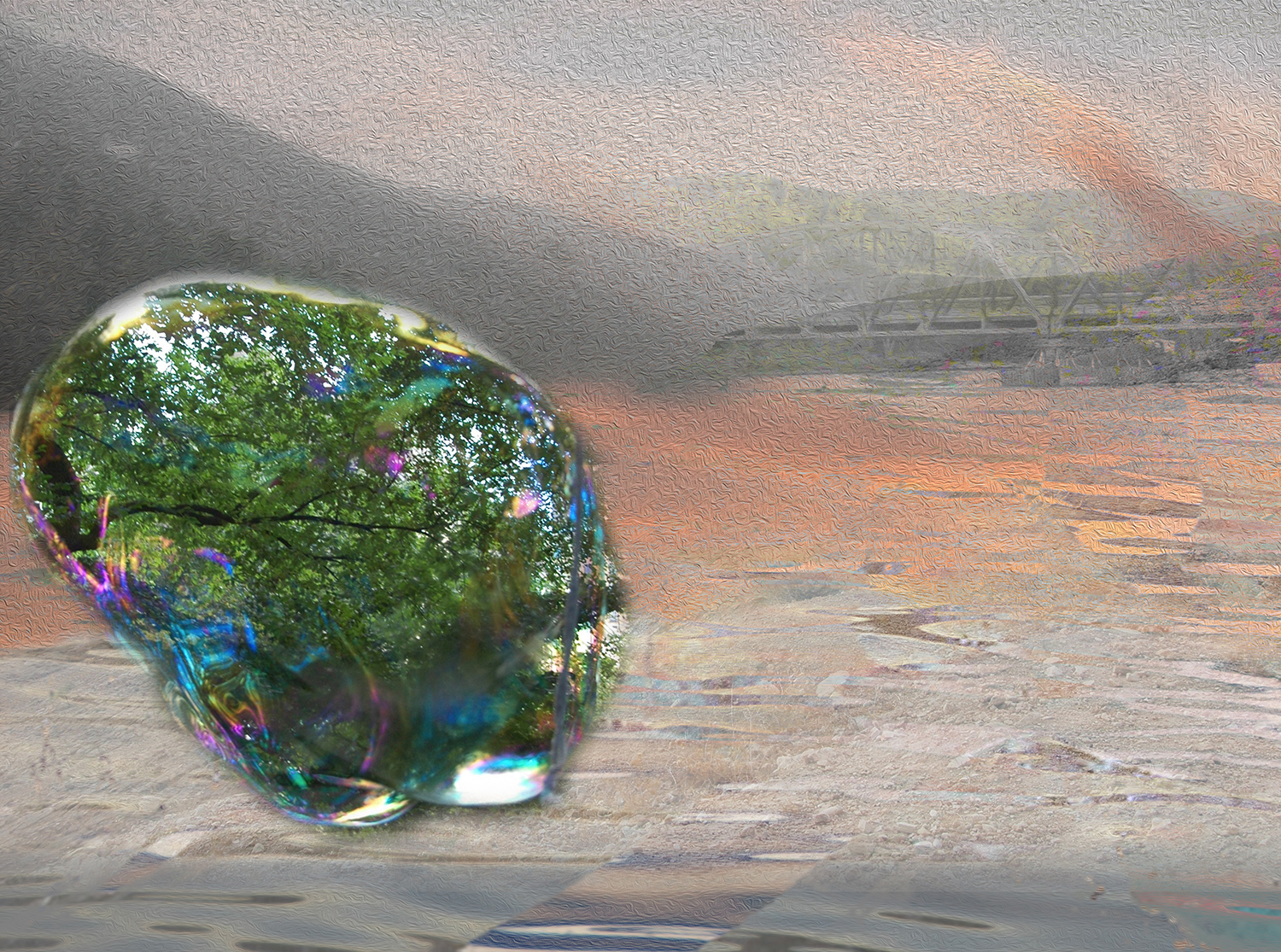
Landscape 10 Digital Art ©2015 Michael Dickel
Landscape 10
Digital Art
©2015 Michael Dickel

Warm Hunger

Food Fatigue Craving
Climate Change Hunger
War Peace Harmony

symptoms of (earth) malnutrition
medication (poison) reaction or
(industrial) side-effect low blood
sugar (hypoglycemia) too much
(junk food) eating disorder
mononucleosis anemia (chaos)
(drought) dehydration (children)

general (election) anxiety disorder
panic attack depression (adult)
heart (love) rhythm /dis/harmony
/dis/order acute stress reaction
bipolar (melting) /dis/order hepatitis
a b & c pulmonary hypertension (floods)

food hunger and climate change
(Carbon Brief 10 June 2011)

a feeling of (migrant) discomfort or
(human) weakness caused by lack
of food coupled with (commodified) desire
to (not) eat of or at a fairly or comfortably
high (low) temperature

Climate change
threatens to put the fight against
hunger back by decades
(Guardian 2 September 2014)

balmy heated hot lukewarm cold-blooded
mild pleasant sunny sweltering beached
(whale) temperate tepid broiling close
flushed glowing melting perspiring
roasting scorching sizzling sweating
clement snug summery sweaty
thermal toasty warmish having

a color in the red-orange-yellow
part of the visible electromagnetic
(organic) spectrum feel or suffer hunger
through lack of food (distribution) craving
desire famine greed longing /dis/satisfaction
lust starvation yearning ache war
appetence appetency emptiness famine

esurience famishment greed gluttony
mania ravenousness vacancy void
voracity want yen a stomach
for appetition big eyes
bottomless pit eyes for munchies
sweet tooth close often used
in the context of a game

in which “warm” and “cold”
indicate nearness to the goal
you can’t take it with you
but if you try sometime

In Wild Winter Warm North Pole
Storm Chills U.S. Forecast
as Flooding Threatens Levees
(NYT Weather 30 December 2015)

a lack of food that can cause war
illness or death especially war
among large numbers of people war
have a strong desire or craving for peace
for having showing or expressive peace
of enthusiasm affection or kindness peace

Climate Change Will Worsen
Hunger Study Says
(Worldwatch Institute 31 December 2015)

archaic being well off as to property (war)
or in good circumstances rich (peace)
make or become warm (harmony)

© Michael Dickel

Water

The water understands
Civilization well;
It wets my foot, but prettily,
It chills my life, but wittily,
It is not disconcerted,
It is not broken-hearted:
Well used, it decketh joy,
Adorneth, doubleth joy:
Ill used, it will destroy,
In perect time and measure
With a face of golden pleasure
Elegantly destroy.

– Ralph Waldo Emerson

Excerpt from Poets of the English Language (Viking Press, 1950/editors W.H. Auden and Norman Holmes Pearson)

Don’t Blink

Rolling through the valley,
I passed the canal and mill towns,
the farms that string like
an antique necklace all the way
to Albany.
Near Dolgeville, I saw
a once-was farmhouse and barn,
empty of family and stock.
The barn’s roof rested
on the milking floor,
empty birds’ nests in
its beams and joists.

Yet the house still stood,
though canted toward the Mohawk.
It looked to be held up
by one window, which stood
almost plumb and middling strong
for the time being, staring
as it always did,
out at the path where
the cows once rumbled in
and lowed for their milking.

“Don’t blink” I said to myself
as I rushed by,
“because someday this
will all be gone.”
“Don’t blink,” I begged the house,
whose sad swirled-glass eye
looked out on one more hollow bead
in the necklace leading
all the way to Albany.

© 2017, Joseph Hesch

The Desert

There’s something

to teach in the desert- holy words,

not simple words.

‘Tis about some thirst.

‘Tis about one huge desert,

which is always peopled by

a lot of walkers,

those moribund walkers with small, leaden eyes,

eyes like lost objects

and really not useful

at night.

At night,

many, tiny, miscellaneous stars start to shine

in that unique, leaden sky,

but even so,

it is hard to see around.

Those ancient stars become golden leaders

for those losers walking

and singing heavy songs,

but searching for new pools –

wherever they are elsewhere.

The teacher said, and he said once,

‘I’ll turn the desert into a pool of water.’

It is not only about the thirst.

Those dying people

still have a will, but maybe

they all will not lose

all their hope.

At least, they cannot die twice

and they think that they will lose everything

because

there is nothing left to save.

© 2017, Marieta Maglas

postponed awareness . . .

when the sun
forgets to rise
will men open
their closed eyes
just in time to see
their demise

© 2017, Charles W. Martin

off course evolution

carthage
uninhabited
angkor
uninhabited
tikal
uninhabited
petra
uninhabited
pompeii
uninhabited
the great zimbabwe
uninhabited
memphis
uninhabited
earth

© 2017, Charles W. Martin

death by committee

the end
prolonged climate change dialogues
with rehearsed government denials
as earth dies

© 2017, Charles W. Martin

prints

.

put your palm on the ground,
press it
until you feel the dirt filling
the space between your fingers,
your striations,
even your pores.
now take it away,
look at that print
and leave.
that print, filled with your gaze,
will have been,
in its (no matter how short) existence,
no less precious or important
than any random word
thrown to a random stranger
on a random day.

© 2017, Liliana Negoi

growth

it used to be simple.

filiform roots spread gingerly,
conquering soil with a tender patience
and smoothing away the dust
grain by grain
in search for water veins.

earth breathed around them,
the odor of the jungle flowing thickly
through the vegetal fragility raking it –
bold filaments
meant to sagely braid themselves
into future wooden snakes
crossing the undergrounds of the forest.

above them eyes blinked,
growing faces and legs,
growing mouths,
hungry mouths and teeth,
perfect fangs,
to which foliage was but a place to lurch,
a momentary den.

sometimes, roots tasted blood,
earth became spongy and red
and satiated beasts catnapped on the bed of stained herbs –
but roots didn’t mind.

lately though,
what water carries with it
is the acid mind of the clay,
burning its path through fangs and eyes and roots
and coagulating life in its very amnios.

it’s not simple anymore.

© 2017, Liliana Negoi

what remains after a tree

and yet, what remains after a tree?
sometimes a root
sometimes a snag
sometimes the sorrow of the grass deprived of shade
sometimes more sky but less blue
sometimes more flight and less rest
sometimes just emptiness

© 2017, Liliana Negoi

Remembering the Farm

I remember a farm where grasses grew
wild flowers scattered over their jewels
enriching the meadows where cattle grazed
and every August with horses we made hay.

The land was productive and the cattle thrived
and gentle the rain that watered the soil:
the summers were long and the children swam
in the waves lapping beaches of silvered sand,

for the cattle provided pure milk by the gallon
that was milked every morning and collected
in churns, it tasted so sweet fresh from the udder.

The grasses provided sweet hay for both horse cattle.
I remember the haymaking, pitching grass on the fork;
the haycocks rising their mounds on the fields
to dry in the long days of summer’s sure sun,

but that was before the farms turned to spreading
chemicals promising ever increasing production
the flowers vanished together with the bees and
the meadows no longer held cattle and horses,
for the cattle are housed in great lines of production

and their milk is pumped into vats for pasteurisation.
Its delivered in plastic that needs recycling or lands
in the sea we once swam in so freely but now is awash
with fish that are dying and fishermen’s catches grow

ever smaller as the boats that caught mackerel no longer
tie-up at the jetty we walked to on Sundays, to buy mackerel
for dinner – they’re gone with the summer and the pure spring
water we drank by the bucket from the clear mountain stream.

© 2017, Carolyn O’Connell

Guerilla Gardening

Consider the earth
a garden waiting for
sunlight and rain to
sustain it or
buried under debris
like a corpse
abandoned to decay.
Do we plow through debris?
Scatter seeds and
fertilize soil?
Or pour more asphalt,
suffocate the life
beneath until it
crumbles to dust?
Earth is a fragile flower,
frozen in winter,
parched in summer,
strangled by weeds,
uprooted by the dogs of
development, swept away
in waves of commerce that
pummel farm, field and
orchard into submission.
No remission.
Subvert subdivisions
with sweet alyssum.
uproot corporate towers
with cornflowers.
Plant prairie clover
to prune back pavement,
and salvia to salve
strip-mined hills
and landfills.
Earth is an oyster
nurturing a pearl inside.
While the pearl remains
it grows more precious.
Most of us pry out the pearl,
discard the oyster,
never realize our treasure
is a dead thing
unable to grow.
© 2017, Phillip T. Stephens

Resurrection Restoration

In Paradise we spend our mornings
straining toxins from the rivers,
our shirts in the currents to
catch a thousand years of plastic,
solvents, pesticides, debris.
Our bodies glisten with sweat as
we wring out the filth of industry to
incinerate with holy fire,
transmogrifying the corrupted past
into a radiance brighter than
our long dead sun.

We chose this work.
We clean these rivers singing
songs of praise and revelry.
We pitch camp around a fire,
share spiced wine and tales of
civilizations hidden under asphalt
we’ll break apart and melt down
to the oil men forged it from.
God joins us to break bread.
He shares wine and reminisces
the day he rose the Rockies,
painted purple hues of sunset to
inspire generations that followed.
He thanks us for the centuries
spent reclaiming strip-mine scars,
and planting grain for the
children of paradise.

He finishes his wine, wanders off
to visit other friends.
The flame dies and cicadas
climb the branches to sing.
We follow God into the forest to
plant rosewoods, oaks, conifers, corn,
bending our backs to
earth’s incline and bending
our wills to the wind.

© 2017, Phillip T. Stephens

That Was Then, This Is Now

When traveling in Italy, we took the kids to the Florence Museum of Science, now the Museo Galileo.  It housed a collection of early scientific instruments, old maps, and, of course, the history of Galileo Galilei.
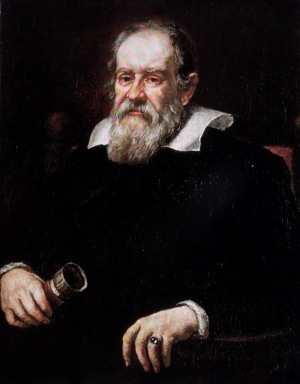
Galileo was the genius who invented, among other things, the forerunner of the thermometer and an improved military compass.  He discovered The Galilean Moons of Jupiter.  His theory, known as The Galilean Invariance, provided a jumping off point for two other scientific geniuses, Isaac Newton and Albert Einstein, to form their revolutionary theories regarding motion and relativity.  Galileo is regarded as the father of observational astronomy, the father of modern physics, the father of the scientific method, and he even made it onto the list of the top ten people in history who changed the world.  But he’s probably best known for proving the Copernican theory of heliocentricity, which states that the Earth revolves around the Sun, rather than the other way around.
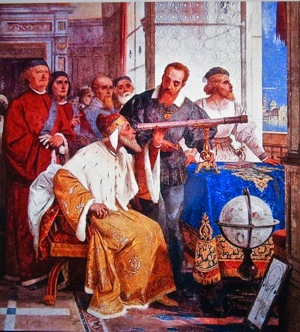
And that was his inconvenient truth.

The highlight of the Museo Galileo–at least for our kids–was the mummified finger of Galileo, resting in a fancy glass jar like a holy relic.  I suppose it’s appropriate for the revered patron saint of science.  Galileo was a pious Catholic and a martyr.  Ironically, it was the Church that made a martyr of him for Science.

In 1633, Galileo was summoned to Rome and brought to trial by the Roman Inquisition on the charge of heresy.  His crime was contradicting the Bible, which states that the Sun revolves around the Earth.
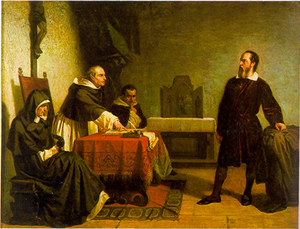
When the Inquisition threatened to extract a confession through torture, Galileo recanted, was found guilty, and sentenced to life imprisonment.  His sentence was commuted, and he spent the rest of his life under house arrest. He continued to write, although the Church slapped a gag order on him, banned his books and censored his writings for another 200 years, when even the Pope could no longer hold back the tide of scientific advancement.  When Galileo died in 1642, they weren’t even going to allow him a burial in consecrated ground.  It was thirty years before they inscribed his name on his burial place.  But in 1737, ninety-five years after his death, they brought his body out of the bad boy crypt and reburied him in a fancy marble tomb in St. Croce in Florence, across from Michelangelo’s tomb, because it was believed that Michelangelo’s spirit leapt into Galileo’s body between the former’s death and the latter’s birth.  Then, in 1992, Pope John Paul II did sort of apologize for wrongfully persecuting Galileo.

The wealthy have always had a place at the table, between religion and science, as patrons, enthusiasts, or opponents, but now Big Business sits at its head.  Big Business has bought and paid for a president that doesn’t believe in anything but the Almighty Dollar.  The Republicans sold their souls to secure their power, dropping any pretense of morality or family values, and they bought their majority by pandering to the far right, that thirty percent of America that interprets the bible as literally they might an instruction manual to the dashboard of a new car.  Science has suffered for it on both counts.

Texas is producing textbooks that not only disclaim evolution and pitch Creationism as its own brand of science, but it has cut out any reference to Climate Change.  Even the conservative Fordham Institute calls it a “politicized distortion of history.”  Texas is spoon-feeding its children claims that Moses was a Founding Father of America.  There’s a lot of money to be made in the textbook business, and the privatization of schools, not to mention the prisons.  If politics and religion, power and money are twisted into a huge tangled knot, Big Business still knows which strings to pull to get what it wants.

Civil Rights, equality, justice, education, and immigration are hot topics, but Climate Change is the new subject of denial by the Powers That Be.  A few years ago I’d have said the advancement of earth science was moving at a glacial pace, but that’s not so apt an analogy any more, because glaciers are melting at an alarming rate.  98 percent of the global scientific community now recognize climate change as real and caused by human activity, but the Republican party is in complete denial.  They stick their fingers in their ears and sing loudly to avoid hearing what they know is true.  Again, it’s all about money.  Environmental protection means restrictions, restrictions mean less profit for Big Business, and Big business gives politicians huge payoffs to deny Climate Change.  This has been an ongoing struggle for more than fifty years. The damage might already be irreversible.  A rapidly warming Arctic could loose a methane climate bomb resulting in widespread extinction in as little as nine years.

 You may be sure that history will judge them, just as it has judged the perpetrators of the Galileo affair.

But there is one huge difference in this particular power struggle.  It took 200 years for the popular tide to become too strong to resist, at which time the Church bowed to reality and accepted Galileo’s proof of a heliocentric Earth.  But in the case of Climate Change, we don’t have 200 years.  We don’t have ten years.  We can’t wait for the next Newton or Einstein to show up, and we don’t need them to.  Our climate scientists have already done the math, and it might already be too late.

And that is our inconvenient truth.

Copyright 2016 Naomi Baltuck.

Photos of Galileo courtesy of Wikipedia.


For my children.

For we are kings
and walk the land
with our long handled spades.
We are kings
and look at the day
with our eyes open.

For we are kings
and look to others
as they are the same.

We look at the day
with open eyes
and our heads held high.
we see all things
and walk the land
with our long handled spades.

And when people try
to demean us
and speak ill of us
we know the words of the psalm
we know the words of the king
who spoke to his God in despair.

“Blessed is he that considereth the poor
And he shall be blessed upon this earth.
And thou will not deliver him unto his enemies.
The Lord will preserve him alive,
And he shall be blessed upon the earth.
And thou will not deliver him unto the will of his enemies.”

Psalm 41.

© 2017, Rob Cullen

May 2017, Vol. 3, Issue 8, Honesty and Transparency, the Post-truth (Post-factual Politics) Era

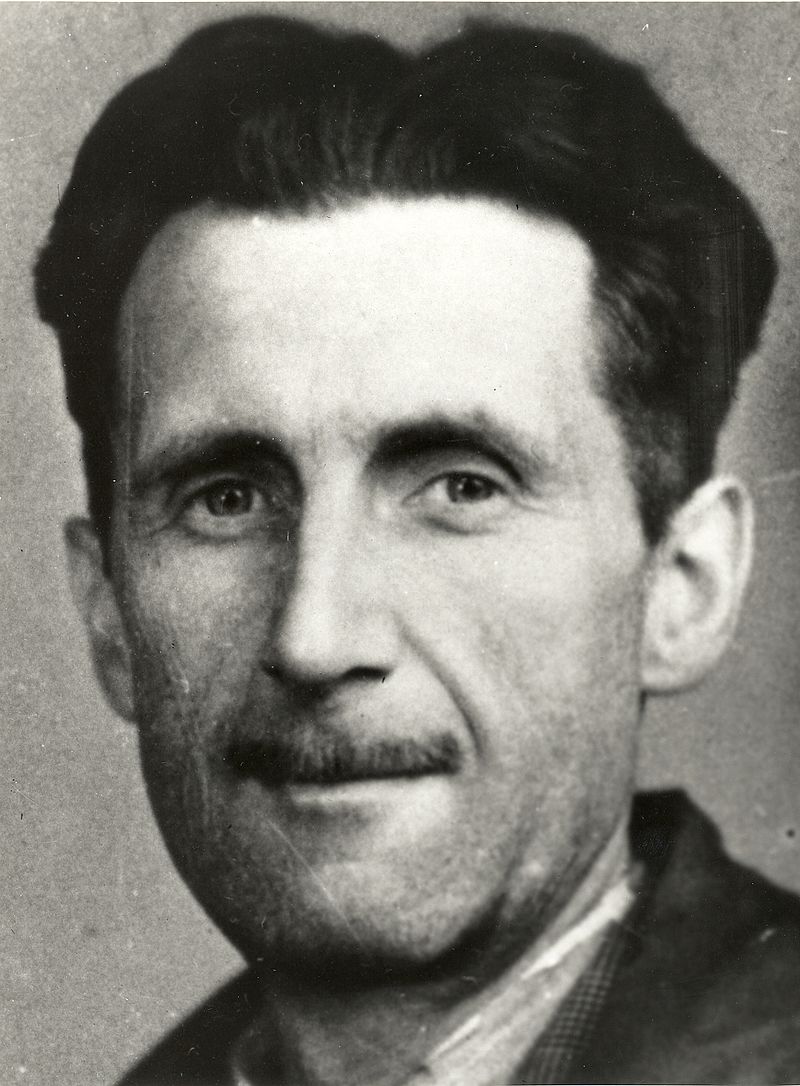
“In a time of deceit telling the truth is a revolutionary act.”
—George Orwell

This is an extraordinary time; a time when post-truth culture is thriving in Russia, China, America, Australia, Britian, India, Japan and Turkey. This political climate is founded and furthered by appeals to emotion and on conclusions based on ignorance of and resistance to hard science and well-documented history. A perhaps unprecedented level of bombast replaces common sense, honesty and sincere promise creating a climate that rests on disinformation, intimidation and divide-and-conquer as its primary weapons of control. This all combines to undermine rule of law, free speech and free media. We have administrations evolving in the spirit of Orwell’s 1984 where diplomacy and statesmanship have devolved into manipulative spins calculated to influence the gullible and solidify the power of would-be autharitarians.

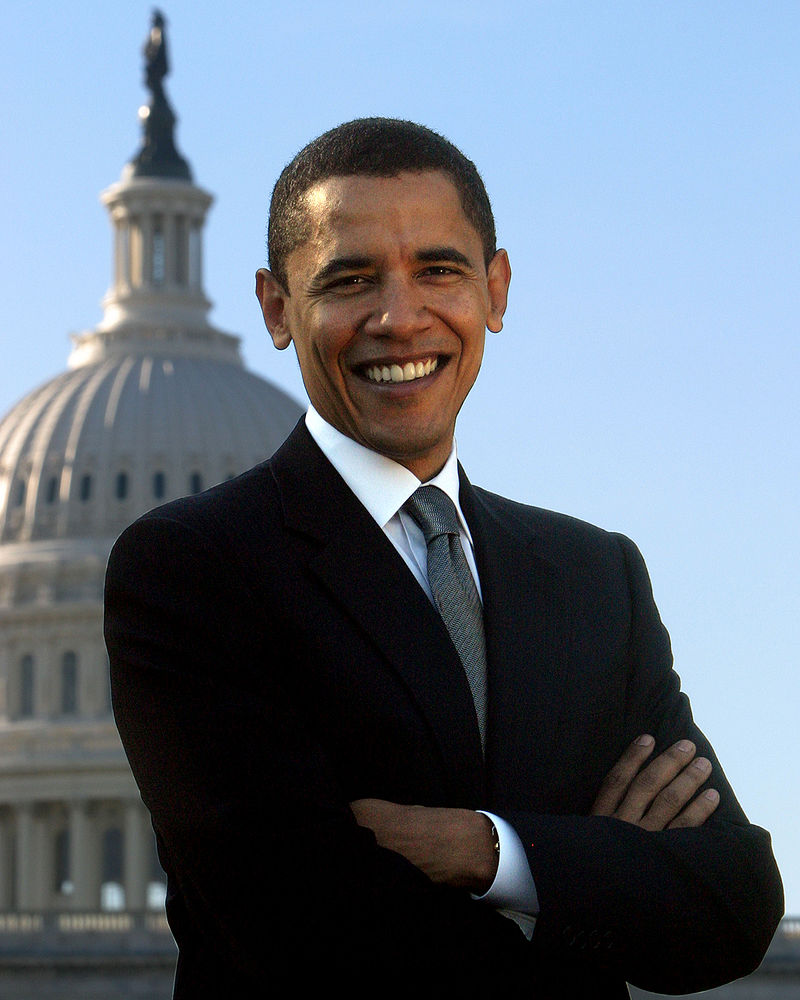
With the mixed blessing of social networking citizens seem unable – or perhaps unwilling – to distinguish lies from truth and fact from fallacy. President Obama is described as “obsessed” with this problem (hyperreality) and the mixed ecosystem of professional journalism and social network reportage in which “everything is true and nothing is true.”

“In an age where there’s so much active misinformation, and it’s packaged very well, and it looks the same when you see it on a Facebook page or you turn on your television, where some over-zealousness on the part of a US official is equated with constant and severe repression elsewhere, if everything seems to be the same and no distinctions are made, then we won’t know what to protect…If we can’t discriminate between serious arguments and propaganda, then we have problems.”

—Barak Obama

We’ve decided this month to address the challenges that face our countries and the world. We’ve addressed these in essay and poetry, sometimes head-on and sometimes by a thread. Though perspectives and solutions may differ to some degree, there is clear agreement that the concerns are real as is the need to “resist.”

A last note: Thanks to Michael Dickel for further technical refinements to make this zine more accessible and readily readable. Thanks also to the members of our core team, to our guest contributors and to our readers for continued support, encouragement and the pleasures of our shared values.

In the spirit of peace, love and community
and on behalf of The Bardo Group Bequines,
—Jamie Dedes, Founding and Managing Editor

“Political language is designed to make lies sound truthful and murder respectable, and to give an appearance of solidity to pure wind. ”
― George Orwell


Table of Contents

To Read this issue of The BeZine

  • Click HERE to read the entire magazine by scrolling, or
  • You can read each piece individually by clicking the links below.
  • To learn more about our guests contributors, please link HERE.

BeAttitudes

Your Portfolio Archive currently has no entries. You can start creating them on your dashboard.

Honesty and Transparency
the Post Truth Era


essay

Poetry

Racism

More light


Except where otherwise noted,
ALL works in The BeZine ©2017 by the author / creator


CONNECT WITH US


Daily Spiritual Practice: Beguine Again, a community of Like-Minded People

Facebook, The Bardo Group Beguines

Twitter, The Bardo Group Beguines

Intellectual Integrity in the Age of Trump | Jamie Dedes

On February 18th the Pulitzer Prize winning columnist, Bret Stephens, gave the Daniel Pearl Memorial Lecture at the University of California, Los Angeles. Time magazine reported on it and you can read the entire text HERE. I urge you to do so.

In his talk Intellectual Integrity in the Age of Trump Stephens, a conservative, warns us not to “dismiss President Trump’s attacks on the media as mere stupidity.” He writes that open-mined and diligent reporting is important and that “truth is not merely in the eye of the beholder.”

I admit to being beyond irritated with news-as-entertainment that caters to the sensational and salacious, that betrays us by serving up too much free on-air time to people with questionable intentions and morally deficient characters. This is unfortunate, but thankfully it is not descriptive of the whole of the American press.

Let’s give kudos were kudos are deserved: to those hard-working truth-seekers, our occupational cousins: professional journalists who put the truth first and work hard to bring it to us. They don’t deserve to be denigrated by a Republican administration that has lost its backbone participating in attempts to suppress what is crtical to the maintenance of a functioning democracy – an independent press working with impunity.

Our journalists – as with any other professional groups – don’t deserve to be painted with one broad brush by us – their readers (customers). Let’s not confuse earnest journalists with celebrity journalists who often deliver nothing more substantive than political gossip.

Among Bret Stephen’s points:

“Many people say” is what’s known as an argumentum ad populum. If we were a nation of logicians, we would dismiss the argument as dumb.

“We are not a nation of logicians.

“I think it’s important not to dismiss the president’s reply simply as dumb. We ought to assume that it’s darkly brilliant — if not in intention than certainly in effect. The president is responding to a claim of fact not by denying the fact, but by denying the claim that facts are supposed to have on an argument.” MORE

– Jamie Dedes (The Poet by Day and Coffee, Tea and Poetry); Barak Obama’s photograph is in public domain; Bret Stephen’s photo is by Вени Марковски | Veni Markovski under CC BY-SA 3.o license