At three in the morning
I hand wash my socks,
my bladder emptied,
the toilet flushed.
These pressure socks
help stop the pain
and swelling from
my varicose veins.
I realize the water
will never run clear,
black dye running
away from the
responsibility,
I assume. And
I think, this poem
is not very sexy.
For that, I should
lay next to my wife,
who sleeps in
the next room as
I wring the socks.
We should share
a cigarette. You
know, how the
movies used
to show sex.
Except we don’t
smoke. And we’ve
spent the day
caring for her
mother with cancer
and a broken arm.
I caught up on a bit
of work tonight,
wrote to a couple
of friends, edited
something, sent
a poem or two
to editors who
know or don’t
know me.
Well,
my socks will be
clean. And, I think,
that’s not so bad.
Swimming through Sundays’
meanders
the corners of my eyes are spinning with
the storms of butterflies
Refresh, Oh, Lady Spring
my will of life!
My core, my spirit,
let them be touched by
the holy wind of light and warmth
The law of colour green with broad brushes
splash it on my trees
Make no mistake when chirping birds
will call your blessing
Abandon us in your blue skies
Oh, Lady Spring
Cuddle my spades of grass with your smile and
Let me kneel at your broad altar
“For me, trees have always been the most penetrating preachers. I revere them when they live in tribes and families, in forests and groves. And even more I revere them when they stand alone. They are like lonely persons. Not like hermits who have stolen away out of some weakness, but like great, solitary men, like Beethoven and Nietzsche.” Hermann Hesse, Bäume. Betrachtungen und Gedichte
No hard benches for me, or pulpits, altars or holy books,
give me skies of blue with cirrus wisps that scribble truths.
Gatherings of trees are my sangha, age old wisdom expounded
from the roughened bark and steadfast trunks that abide in calmness.
Their messages aren’t harsh and do not tell of hell and brimstone death
but instead teach trust in their brethren and nature as teachers.
Leaves and boughs happily greet as the breeze gently lifts in a
tender, quiet song of connected joy that is shared with those below.
Peace and harmony reign here in this sacred space of believers.
“For me, trees have always been the most penetrating preachers.”
Their serenity is multiplied when gathered in great throngs.
There is no jostling for favoritism or pushing aside of others
so that they may be held in higher esteem; trees teach humility.
It is hallowed ground that supports trees. I whisper in their midst.
You, I venerate as I sit at your feet and feel your gifts permeate my soul.
Quiet, meditating in one place…be still, find earth’s hidden treasure troves.
Strong, yet yielding in the face of seasons’ harshness; I bow O Masters.
My heart is restored and a reverence is imparted to me that uplifts.
Mystical beings dance and play among your holy, secret alcoves.
“I revere them when they live in tribes and families, in forests and groves.”
Isolated or living apart from one another, trees lift their limbs in resilience.
Though alone, rooted to the ground, they are visited and inhabited by
birds, animals, myriad bugs and even air plants that join them.
Stoic and steadfast is the solitary sentinel.
When separate and alone they stand like quiet beacons in the fog.
Having no others to entangle their branches, they sometimes feel unknown.
They stretch and reach out and up, vainly feeling for a neighbor.
But do their hearts languish or brood when kept to themselves?
O lone willow whose drooping branches caress a pond, here you are sown.
“And even more I revere them when they stand alone.”
Patience and endurance rule in the heart of the ancient oak.
Wisdom reflects from her heart where the Great Horned Owl resides.
Distinguished, with ancient ties to Vikings and Tigers, she rests.
These Masters of Stillness have taught contemplation since millennia.
Like the Crane poised to strike a fish, they wait in silence.
They draw strength from the community of all species.
Their brilliance is oftentimes overshadowed by their infinite modesty and grace.
The hum of om strums through their leaves gaining strength on the wind that then plays out into the universe.
These stately, wizened beings spend their lives in harmony, no need for treaties.
“They are like lonely persons. Not like hermits who have stolen away out of some weakness, but like great, solitary men, like Beethoven and Nietzsche.”
*Standing Post is a martial arts form based in Chi Kung. This Glosa was inspired by a dear friend who has mastered this form.
Her (dis)like of poetry showed through
her pure contempt while reading it. She thought
high interpretation of the unintelligible half poets
elevated an autopsy to a false revery for birth, and
that all the academics criticize what they understand
would be detrimental to their careers. She wanted a genuine toad, not a prince, an imaginary secret
garden, no flowers, a raw poem eaten, savored,
complete with a belch after gulping beer.
My students hate the image of an autopsy,
don’t like to consider births except in the abstract,
think if someone says “poetry,” then, poetry.
What use definitions, declinations, nuance
or inflections? Metaphors just hide the truth,
what matters comes out straight and clear.
Who cares about red wheelbarrows, blackbirds, or pigeons, for that matter?
And certainly, they argue, we don’t dislike
all that we don’t understand.
From the outset,
my wrists were bound;
wrongfully arrested,
I’d plea bargain without cause,
seemingly without choice.
Craving sweet bitterness,
rocking you like a cocktail,
I would remove your top,
release my passion, and
devour you in instalments.
You, my daily medication,
the essential dose of rapture;
vital, addictive, immediate,
sped venom through my veins
that led to the heart of my despair.
Each hit delivering a mark;
I’d await side effects,
like your incredulity on waking,
interrogation from burning eyes
that scorched my cheek,
parched my tongue,
stung my eyes.
On a trip, through the ruins of your mind
where you’d once held mass,
I heard misquoted passages
echoing around the inclined victims
of those that preceded me.
The marks remain,
however concealed
as day by day
the soundless damage remains
leaving me deaf to reason,
yearning still.
North Carolina galoot sittin’ in a flophouse
sippin’ blue law Seagrams from a brown paper bag
with a side of 7-up. He had a face like a pine cone
for every smoke he ever toked in some forty odd years
earnin’ a little scratch doin’ this and that – mostly outdoors.
He told me then with conviction – a kind of piety really –
that he could smoke and drink as much as any man –
but bein’ a Baptist he don’t believe in it.
So he won’t vote for it neither.
Thirty years on and odd, I’m wanderin’ Santa Fe way
with that old codger’s logic still stuck in my craw.
I come across a busker trio outside a Smith’s Food and Drugs.
Feller with his gittar got a full-figured well-worn
case wide open for any to stop by, mebbe drop a dime.
Pretty little fiddle strokin’ the bow keeps her straps closed.
Got a banjo man too – but he don’t pay no never mind
to city folk just passin’ through .
Now me, I got no taste for Kintucky bluegrass.
Ain’t gonna catch me steppin’ no Tennessee waltz.
But I laid a dollar down just where the lady likes it.
A vote I suppose – ‘cuz I reckon I believe in it.
Live at the Troubadour
(After “Blackbird” and Fixing a Hole”
Paul McCartney)
Dumb blackbird ricochets ceiling to wall
after well-meaning plebes
plaster spackled the hole
where the song gets in
A few troubadours survived the seventies.
Their lucid albeit grimly sunken eyes
tell us the songbirds all up and died.
One late night TV cadaver claimed he
had been killed by clean living. Coroner
listed proximate cause- death by insulation.
Wandermind winging in the dead of night…
can’t find the hole where the rain gets in
shatters wing against shuttered pane instead.
Love Poem
A poem about writing a love poem.
It will be as painful as It can be.
A tablespoon of tears, a cup
Full of moon, naturally, which-
(Somewhere on a jukebox a singer sings a song about the lonely life of a singer on the road singing songs to a packed concert hall about the lonely life of a singer singing songs on the road somewhere…)
Elicits polite titters from the critics.
Later, one lover will say to the other,
“I HATED that!”
That is something like love, isn’t?
The wounds of time appear on the walls
Even though I have tried to repair you.
You are as beautiful as a monument of the past.
I have lived and grown inside of you.
My hundred-year old house—
When it rains why are you crying?
The roof and ceiling leak
And I…
Run with bowls in my hands
To pick up the tears.
Here is the original, in Albanian
Shtëpia ime
Shtëpia ime qindvjetëshe
Plagët e kohës t’figurojnë në mure
Edhe pse shumë here t’i kuroja
Je e bukur si monument i t’kaluarës
Për muaqë në ty jetoj.
Shtëpia ime qindvjetëshe
Kur bie shi përse qanë
Pullazi tavani pikojnë
E unë
Vrapoj me tasa në duar
Të t’i mbledh lotët.
The ending
“Two thousand years ago ended the voyage of the prophets.”
People are left
at the crossroads of life
without knowing the direction to go:
Past, Present, Future, or …?!
Old wisdoms
We took for the worst
and put them into a bag.
Then we upload into time
the burden of our sins.
We annihilated darkness
But we were left in the dark,
with tired eyes barren of myopia
seeking the grace of god’s fire
wasted somewhere in the universe.
Here is the original, in Albanian
M b a r i m i
“Qe dymijë vite u ndal rrugëtimi i profetëve”
Njerëzit kanë mbetur
në udhëkryqin e jetës
pa ditur kah të shkojnë:
Kah e kaluara,e tashmja, e ardhmja, apo…?!.
Mësimet e vjetra i morëm për ters
dhe i futëm në thes.
Pastaj ia ngarkuam kohës
barrën e mëkateve tona.
E asgjësuam terrin
por mbetëm në terr,
me sy të lodhur shterpe nga miopia
kërkojmë hirin e zjarrit të hyjnive
të tretur diku në univers.
The above poems are from Faruk Buzhala’s second book, House without Road. Translated by Faruk Buzhala with Michael Rothenberg. Faruk wrote the poem below in English.
”Love… lost somewhere in the deepest cut of my heart, waiting for someone to awake feelings.”
to be alone when your heart wants to have friends near,
to wish one wish when your body burns for some youthfulness,
to think of the past when your nostalgia brings back all of the pictures of life!
With a candle in the dark spirit, walk easily through the passing years.
from the hottest part of this land
we rode our horses
with the mouth broken
and the tongue dried like the sand
to the point that also a kiss would be painful
so we stopped in a caravanserai
for water to wet our foreheads and
horses to let sleep
and a bit of cool shadow
to drink with our eyes
so we slept
till the night was high
and the cold desert was
all in sound with the wind
and the sand danced
with twisting dreaming snakes
the morning rose
with the voices of merchants
and the prostitutes ones
and the adventurers ones
and the bakers ones
and all the other people
burned by the sun
frozen by the moon
so we started again
our long voyage in this desert
avoiding snakes
and searching for oasis
all here can erode our bodies
all here can drive us mad
all here can rive our ride
but not our broken sandals
filled with the same steps
filled with the same sand
if you kiss a frog, so I’ve been told,
there’s a chance he’ll turn into a prince,
a frog prince, which means you have you absolutely have to love him
and i’ve loved a few frogs, at least
i think i have, they never became princes
nor did their love morph me into a princess,
i’m still a cranky old crow, we are what we are
loving frogs and crows isn’t transformative ….why should it be?
one woman’s frog is another woman’s prince
this place is strange and I am strange in it
this air catches at my nape
I notice, it’s darker than I remember
September to be
the way freeze commits its self
to my frame earlier and earlier
helps me forget I ever had a face
a version of me bobbing away above my shoulders
a bold lower lip works out a gesture
tomorrow, everyone will go home
to their strangest dreams
we’ll take the lead and remake ourselves
into more than neon lakes
the night slicks our hair and I think this is like sex
our tender/ rolls redirection near this soft dark landscape
the last place to be when wanting this much
Told
Valérie Déus
Valérie Déus
I tell something
told
I remember blue
I let time pass
And I am now both
simple and much
It’s called blame
but blue is
so that it gets
hair and under the skin
and I suppose
I bring blame
back from my faithful beloved
I traveled
in all blush-of-the-world
not dangerous
but an unknown red
I tell and see sorry
from a position of hope
and not of blame
but to plead and to let one
be visible and twists
I become bared and contuse
stuck in children’s fables
about a prince who has no doctrine here
the time is long but
whatever happens
the call will be soon
right after
I find home
Body
Valérie Déus
are you my lonely poem?
dance near the line breaks
in a fit of rage
arrange the pictures
according to sly and sex
in low light they almost slip away
an unfamiliar memory
hidden below your 24 hour edge
but you name the work a body
a curious life emerges
from blade of moon
a net of risk and promise
this empty space is not empty when one isn’t afraid
it is a placeholder filled with premonitions
and it’s all tied up in the definition of being.
Teachers, parents, siblings, mentors of every kind leave their mark upon us. I was in the fifth grade at Isaac Newton Elementary school in Detroit when my teacher, Mrs. Chapman, had us memorize Ozymandias, a poem composed in 1818 by Percy Bysshe Shelley. Then we had to recite it to our classmates.
I walked to the front of the room and paused, a dramatic device storytellers employ to command the attention of their audience. Actually, I was just trying not to throw up: it was my first public solo performance. I was terrified, but it was also electrifying to be able to convey such a compelling story, such unforgettable imagery. Not only did I not throw up, but I got an A. And I never forgot that poem.
My mother used to recite poetry to us, like “Daffodils” by Wordsworth and “The Highwayman” by Alfred Noyes. Over the years I’ve shared Ozymandias and other gems (okay, sometimes I sing jingles from the TV commercials I watched as a kid), to a certain captive audience–my children. Occasionally I recognize my own words reflected back to me from the mouths of my babes. Sometimes to my chagrin, but most often to my surprise and delight.
My son Eli is home between teaching assignments…
…and tonight Bea returns from Stanford on spring break. It will be so good for us all to be back together again. My ritual, when the kids depart for school, is to tidy their rooms, change the sheets, and drop a tear or two as I make their rooms ready for them to come home to the next time…and they are always grateful.
The last time Eli left I was tempted to hire a bulldozer…
…but it’s like spending a little quiet time with that absent child.
Last night, in a burst of inspired procrastination (he was tired of reorganizing his own room), Eli decided to surprise Bea by cleaning her room, and not just the sort of tidying I do, but a thorough reorganization, including the mountain of books stacked haphazardly in the corner, that pile of her things parked just inside the door, not to mention the surprise found in a teacup discovered under a pile of stuff on her desk. It’s either a science experiment or a strange new life form. It took Eli over five hours. He found so many new ways and places to shelve books that they almost fit on her shelves now!
But nothing comes without a price tag. In fact, after Eli was finished, everything had a tag on it. Oh, yes. He had made his mark.
I love this one…
But my absolute favorite touch was the greeting on the door.
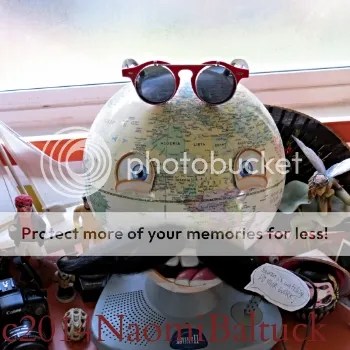
I howled with laughter. “Oh, good,” said Eli. “I didn’t know if you’d get the reference.” “Do I get the reference?” I asked, launching into a recitation of Ozymandias. “How did you think of it?” He said he remembered it from all the times I’d recited it. Of course I ran to find my book of Shelley…
When I opened it up in search of the poem, I saw that someone else had made her mark. Upon the book…
…and maybe even upon me.
The poetry and the stories we pass from generation to generation enrich and prepare us for the struggles we will face, within ourselves and in the outside world. I believe they will outlast the Mighty and their monuments to themselves, and, I hope, their wars.
The standoff had not gone on for long, just after the sun began coming up over the meeting house, the far steeples of Boston and the ocean between us and who we wanted to be.
But the Regulars didn’t care if it was day or night. They could kill us with their eyes closed, if their commander, or we, let them.
A few hours before, most all of us were in the Buckman Publick House, drinking ale and rum, some smoking pipes. The rest of us, mostly lads like me, got our first real tastes of adult courage off the drink, the smoke and the rhetoric of our elders that night.
“Gentlemen, let there be no great fear of the regulars should they enter our town,” said Captain Parker, his own red coat hanging from the back of a chair. “We shall stand our ground and show them our resolve to hold onto what is rightly ours as lawful citizens of His Majesty,” he whispered and then coughed.
The Captain has the consumption, I’m told by Mother, his cousin, so all the smoke in the room from the hearth and the men’s pipes harmed his breathing quite sorely. That and his harsh coughs practically choked the great man, making him difficult to hear. So I edged up close to him. That seemed to make me feel braver. He’d fought for the Crown in the late war against the French and knew well the tactics and propensities of the Redcoat soldier. If he didn’t sound like he would die by next harvest, I would have had a run at Gage’s whole bloody army by myself.
At sunrise, Thaddeus Bowman, the last scout the Captain had sent out, come bursting into the tavern.
“They’re here, they’re here,” he said in a voice nearly as choked as Captain Parker’s, though not from the consumption. “They’re right behind me, Sir, and this time they are coming in force. Maybe three, four hundred of ‘em,” I heard him tell the Captain. I grabbed my Papa’s old fowler and headed for the door.
About half of us unknotted ourselves from the doorway and ran out into the front yard of the tavern. Everything had an eerie glow to it, ourselves included, from the combined moon’s and sun’s lights shining upon us. I took this as an omen of what lay ahead for us this day and said to my cousin Amos, “The Lord is with us, cuz. He most surely is. We have right on our side and will not be bullied from our own field by redcoated tavern scum.”
The fact that our whole company had spent the night in a tavern, many tasting its wares, and were blinking in the new day’s smoldering light, suddenly arose upon me and I’m sure my face took on a wholly different glow, the hue of a boiled lobster.
All eighty of us men and boys who had been in the tavern began to form ranks on the village common. It was a damned ragged line compared to the ones of the approaching Regulars. They looked like they had been formed buy some great carpenter’s square. We, while most resolute, took on the form of a snake-rail fence.
Over by the road, I could see my grandfather and sister out of the corner of my eye. I turned to look and wave a greeting, but our sergeant, William Munro, gave me a strike from his musket barrel and whispered hot blasphemy and spit in my red ear. But now Grandfather and Deliverance could see where I stood.
Captain Parker walked down our column and looked like Grandfather when he had to dispatch poor old Benedict, his sorrel, when the gelding’s time had come. This did knock all those mugs of my previous courage from my head past my heart and from there to my feet.
“Men, we shall stand our ground, but not provoke the Regulars. Most of our militias’ powder and supplies at Concord have already been safely hidden away,” Captain Parker said. “We’ve all seen the Regulars on such fishing expeditions before. Once they find nothing, they will march back to Boston and we can get back to our lives until the next time.”
Sergeant Munro stalked up and down our lines out there on the Common, truing us up into a more respectable looking force.
“We’re not here to block their advance to Concord, lads,” he said. “We’re just going to show them we shall not be cowed by their brutish arrogance. And to insure we do that to our best abilities, I want you, boy, to move to the rear of our lines. Or better yet, across the road to your family. You are at heart a coward. You have no character and don’t deserve to stand with these honorable men.”
Mister Munro never did have much truck with me. Not since he caught me talking to his daughter, Abigail, behind the Meeting House without an adult family member within arm’s length. He pushed me backwards with the butt of his musket, but I just lined up behind Prince, the Estabrooks’ towering Negro, where he stood in the back row.
Now that Sergeant Munro had squared us up, I could peer through the gaps between men and see the Redcoats approach, their leader riding a fine black.
The sun had climbed high enough for us to see the Regulars advancing on the road to Concord now. They marched as one, dully, with little life to their strides and less to those faces we could make out. They looked for all the world like they were marching in their sleep, their shoes and gaiters caked with drying mud. The only liveliness to this red mass on the road to Concord were their drumbeats, the clinking metal of their equipment and the glint of dawn light on their buttons and weapons.
I felt a chill beyond the normal cold of an April morning and shivered as I stood with Papa’s fowler in my hands. I’d loaded it yesterday with birdshot and a ball, reckoning, if need be, my aim was poor with the rifle ball, I’d at least get a piece of one of the Regulars like he was a pheasant. Instinctively, I pulled the hammer to half-cock. My knees shook and I knew not if it was a shiver from that chill or from something I didn’t wish to admit. Perhaps Munro was right after all. Maybe I was a coward.
But I held my ground. I would not let Munro or the Redcoats run me off. No more.
Just as the wind shifted into our faces, Captain Parker raised his short sword and his rasp wafted over us, saying something like, ”Stand your ground, men. Don’t fire unless fired upon, but if they mean to have a war, let it begin here.” Or so Amos told me later.
I heard another click.
A murmur went through the men ahead of me. Out on the road, the column’s advance guard, rather than taking the left fork to Concord, turned to right and then toward us. I could hear the shouted orders run down their column. I saw the big black horse of their commander turn from the road, leading even more Regulars to the left, close enough for me to throw a rock and hit one. They now formed a solid wall of red before our motley line of farmers and tradesmen.
The officer on the black then rode forward, waving his sword, and called out for us disperse. On the breeze I heard him shout, “Lay down your arms, you damned rebels!”
More orders were yelled down the lines of Regulars. Men within our company began to look at one another, talking all at once. The line looked like it was a row of rye waving in that breeze in our faces.
I could see our Captain Parker say something. I could barely hear his voice, it was now so faint. He lowered his sword and pointed it to the ground. Many in the front line began to back away from the regulars, others stood in alert position as if waiting for someone to say something like an order, show them what to do beside stand as statues.
At the shout of “Poise firelocks,” the Redcoats brought their muskets, bayonets shining in threat at their muzzles, to a position upright in front of them. Most of our men stood stock still.
Next across from us we heard, “Cock firelocks,” and saw the mounted officer shouting at his men and waving his sword, as angry at them as at us. Our line held as Captain Parker shouted in his consumptive whisper.
The breeze died and suddenly the whole world went quiet as the grave. Neither side appeared like it was going to move and no one wanted to stay. Sergeant Munro had left his position at the left end of our first rank. He walked back from the killing ground between the lines and came trotting toward the road with a fearful look as he stared right past me. I, the coward who couldn’t stand like a man to request permission to speak with his daughter. I, the boy who he wished was standing on the other side of the Boston Road.
I took a deep breath and let it out. This impasse between us all would end today.
I touched off my fowler over his head and watched Munro drop to the ground as if he was a baby cowering from a thunderstorm. Or he thought himself dead. Almost instantly there came a roar of a different kind. Red coated men advanced like lions, growling and howling like wild beasts, some firing their muskets. All of them thrusting forward their bayonets.
Some of our men fell like empty grain sacks where they stood, huge holes in their heads and bodies. Others spun like tops, choking on blood and prayers.
We ran for the trees, over rock walls and newly blossoming shrubs. More fell around me. Behind me all I could see was a cloud of sulfurous smoke with glimpses of shadow men, some in what appeared to be pink coats, and flashes of shiny metal within. But I could hear the screams of men so unluckily slow as to taste the steel of Sheffield, and not on their tongues.
Ahead lie the road to Concord, along which I last hunted turkey. That day, April 19, 1775, I hunted my fellow man. That night, I wept, my head upon Mother’s lap, and then gathered my things and marched toward Boston.
No one ever again thought me a coward, even though I don’t believe I took another full breath for the next six years. Not at Breed’s, Quebec, Valcour, Saratoga nor any other of the horrible places I never spoke of to Abigail Munro, who became my wife and the mother of our eight children.
They never met their grandfather, but know he was there with me the day the War for Independence began. That was the day his war ended and I began ours.
A short story based upon what’s considered the first bit of face-to-face armed resistance that ultimately lead to the independence of the thirteen colonies from the rule of the British Empire. In this case, it was a young man’s resistance to the strict and judgmental father of his sweetheart that led to The Shot Heard ‘Round the World.
Airways crackle with dissent
as voices strive for listening ears
tweets, postings spread dissent
propelled by shares and likes
as insomniac fingers tap out
fears truth is lost while hate
rises and people draw the curtains
blocking out the world, curling
into the duvet of the past.
They do not see the children
lost in water they have never sailed,;
nor the beggar standing at the gate or
the boy who missed the love of life
because his skin did not match white.
Yet look at your neighbour over the fence
he’s just like you there’s no difference,
no matter what way he prays or ties his belt
he craves peace, family, friendship, food
a place of peace to thrive and be your friend.
No golden tower or boundary line
matters to the ordinary mind.
Those cackling voices clamouring for attention
only breed fear hand hate as stern faces seek
power at any price but when the guns fall silent
peace will come again when we realize
that gold holds nothing power wanes
and beneath the skins of race and faith
we all want family, friendship, a hand
She asked me to her office, said
It’s an emergency.
The heels or the sneakers,
she asked. Nothing
in this wide world could make me wear
heels anywhere, certainly
not in a car for five
hours, stuffed like a pimento in an olive
between two administrators spearing me
for details to stir into their martinis.
The sneakers.
Of course, I said, confused
by her footwear anxiety. She paused,
But, which is more…
professional?
I stopped. Stared at
friend, colleague, mentor, go-to-person
who is leader, innovator, math coach
and only woman of color
in our building and knew this wasn’t
about the shoes.
What could this skin
of mine say back? What
shoes could offset her bold
blackness in this whitewashed world?
I can’t offer what shoes to wear
any more than I can moralize
about what clothing
Black mothers should let
their young sons wear out of houses
to keep them alive, can’t tell my black
professor neighbor not to fear dropping
his daughter’s class pet off in the backyard
of a friend’s house while they are not home,
can’t tell him it’s silly to worry about
some neighbor calling the police,
can’t tell the black anesthesiologist to just
be calm when stopped for the broken
headlight. Can’t say, It’s just
a routine stop. Can’t tell the public
relations director with natural hair
to simply ignore being followed
at the drug store while shopping
for cough medicine for her son.
Can’t advise the Latino cable guy
how to handle each door slammed
in his face as he comes to repair their connection
to Game of Thrones or Walking Dead.
Can’t correct him when he says he doesn’t need
a TV show to feel as though he is walking
dead, every single day.
I can’t tell my friend what shoes to wear.
I can’t tell her she won’t be deemed unprofessional
no matter what’s on her feet, despite
being towering strength and brilliance.
I can’t tell any one of these black lives who matter
much of anything.
I can only tell my whiteness
listen.
Carved wood mask Nacius Joseph (b. 1939) Haitian Sculptor
of the Jewish Calendar rests
in the arms of Mardi Gras, an upside down play of masked and unmasked images dancing
at the party while Purimpshpiel stages a drama: unfolding parody, satire, commentary— the whole Megillah. And who puts on an Esther mask
on the way to the Beverly Hills Purim Ball, but Hadassah herself, on her annual pilgrimage to the festivities of inversions. Nu, who do you think inspired the Rabbis to write in the Gemara that Jews should get so wasted that they cannot distinguish
…
between “Blessed” Haman and
“Cursed” Mordechai, if not Vashti?
Vashti, who released herself from the lustful gaze
of her husband’s court, now wears the mask of that same Ahashuerus who banished
his Queen to her freedom. The Tel Aviv Opera Purim Ball rejoices in the refractions of self and story—politics of the beauty contest
Wood mask Artist unknown
for the virgin, check or mate. Revelers cheer an Uncle arrogantly dressed in mourner’s cloth who entered her in competition, then stripped her of her mask to save their people, while letting his people massacre others—another masquerade.
…
And in Tel Aviv and Beverly Hills,
the masked dancers
drink up the casts and no longer recall
the difference between good and good, mask and masque—
so many layers of truths, peeled one after another, as the frenzied forgetting tears off masks over masks,
layered like ancient rubble under old cities and their tels, like history and politics, like geology and religion, until what lies beneath and beneath again barely glimmers in the eyes
…
of the masquerade.
And Hadassah laughs,
dancing freely with Vashti, two lovers at last
hidden and unhidden at Tel Aviv and Beverly Hills Balls—globes of pleasure
circling the world in three complete lines forming seventy-two masks, each one a part of the whole.
The poet dons the mask of commentator, but the poem always wears at least one mask in the presence of the poet, so beware. And, if the poem reveals (a) different mask(s) to you, dear reader, please explore. The poet does not trust that any poem reveals all of its masks at any one time, especially to the poet.
The Jewish holiday of Purim celebrates the tale told in the Book of Esther, a story that, remarkably, does not once mention G-d. Set in Persia, which rules over the Jews at the time, The Scroll of Esther (or Megillah) layers many levels of deceit and masquerade, and the tale turns on itself in many ways.
Book of Esther
The King of Persia, Ahashuerus, banishes his Queen, Vashti, when she refuses to dance in front of his guests. Mordechai urges his niece to enter the beauty contest held to replace the queen, but to hide that she is Jewish (and probably not eligible to be queen of Persia). So she uses her non-Jewish name, Esther, instead of her Jewish name, Hadassah, wins, and becomes Queen Esther.
Meanwhile, Haman, the viceroy to the King, hates Jews and especially Mordechai, who refused to bow before Haman, and who is in the story honored for revealing (through now Queen Esther) a plot against the king. Haman has to lead him through the streets on a horse, Mordechai dressed as a king, Haman’s own idea of how to be honored—which he is asked to tell the king at a party, perhaps a masque (Haman thinks it’s for himself that the King wants to know how to honor a person).
Haman, whose orders are like the King’s own (another mask), plots the hanging of Mordechai and the genocide of the Jews. While the rest of the city celebrates an occasion of state (the defeat of Jerusalem), Mordechai dresses in mourning because of Haman’s plot against his people. However, this is an act of treason during the celebration. He thus shames Esther into unmasking herself to Ahashuerus, who reverses Haman’s murderous order when he learns his wife is a Jew.
Purim mask
Jews celebrate Purim as a day of deliverance from death (and genocide). However, the rescinding of the order came too late to the walled cities, which had to fight to defend themselves (under dispensation of the king). So, the celebration of Purim as a holiday is one day later for the cities that were walled cities at the time of the story (including Jerusalem and Tiberias—this is called Shoshan Purim). The scroll ends with the recounting of Haman’s hanging and the killing of his kin, the death tolls from the battles at the walled cities, an unmasking, perhaps, of another form of genocide—in the name of defense.
The Poem
The date of the holiday itself loosely coincides with Carnival (Mardi Gras) and the Persian New Year. Jews celebrate with Purimshpiel (Yiddish for Purim stories, usually in the form of plays—traditionally, parodies and satires on current events using the story of Esther) and by donning costumes and masks, holding parties (balls), and getting drunk. Yes, the Gemara says that Jews should get drunk enough that they no longer know the difference between Haman and Mordechai, respectively, the male villain and hero of the story of Esther. Perhaps it is to make up for Eden and the whole Tree of the Knowledge of Good and Evil thing. This poem could be read as a sort of Purimshpiel variation.
The donning of masks allows us to hide who we are, but masks also reveal who we are, or an aspect of who we are that is usually hidden. Carnivalesque masquerade allows us to try on aspects of ourselves or display those energies that we normally repress or hide (perhaps in a closet somewhere, with the costume). Drunkenness allows forgetting, but also disinhibition and release. Perhaps we learn of the capacity of good and evil within ourselves, as well as about those other parts of ourselves that would otherwise be “masked” by everyday existence.
So, the poem has Hadassah, the Jewish girl, wearing the mask of her alter ego from the story, Queen Esther. Yet perhaps this is an aspect of her all along? Perhaps we all have hidden “royal” qualities? Esther replaced Vashti, who was banished by King Ahashuerus for refusing to dance (naked) before him and the court. And Queen Vashti, in the poem, wears the mask of the king. He banished her from the court, but to where? Did she stand up for her own self-respect by refusing to succumb to what, centuries later, a feminist film critic would identify as scopophilia, or the male gaze? Was her banishment a freedom? How does gender play through this story, that seems to focus on men, but relies on a woman at its center, perhaps two women, if we look more closely at Vashti?
The poem suggests in its own center that masks unveil as we peel them, but also there is the hint that they reveal at each layer (like the layers of rubble beneath old cities that mound into tels, which hint at the history of the eras of the city; and like the layers of both geology and religion, which are ancient with something hot and molten at the core, like our own psychological being). This move to the psychological enters the mystical, with the masked women, who appear to be King Ahashuerus and Queen Esther now that they wear their masks, dancing together (yet at separate balls, one in Beverly Hills, its own masquerade and center of Hollywood glitz and glamor, and the other in Tel Aviv, the “new city” of EretzIsrael). This is like the Malkhut and Shekhina, or Shabbat (King, or male aspect of G-d) and Bride ( Queen, or feminine aspect of G-d).
Arithmetic
And then comes the poem’s mysterious end, which references Exodus 14:19-21 the three lines of Torah that, with 72 letters each, Kabbalists believe can be permuted into the 72 Names of G-d. The poem suggests that these Names are both masked and masks (that hide or reveal?)—their hiddenness echoes the hiddenness of G-d in the text of Esther, and the ineffability of divinity in all of its guises.
Purim mask
The stanzas follow a sequence of line numbers each, counting the first line (which wears the mask of the title). The pattern goes (before the title, think of 0): 0 lines (an extra line break marked with … before the sections that follow after the first one), 1 line, 1 line, 2 lines, 3 lines, 5 lines, 8 lines. This pattern repeats three times (for a total of 60 lines), then goes 0, 1, 1, 2, 3, 5, for a total of 72 lines, like that number of Hidden Names.
The sequence of numbers used (0, 1, 1, 2, 3, 5, 8) is the first part of an infinite series, known as the Fibonacci sequence, that has many interesting relationships in math and nature, including the pattern of sunflower seeds in their flower, unfurling fern heads, and, significant to Jewish mystical allusions, the branching of trees.
The Hebrew word for life, chai, has the numerical value of 18. Twice chai, or double life, is 36. Double that, and…72. That the number of lines in the poem equals 72 probably doesn’t mean much more than that our lives are not singular, but layered.
Purim and the Masks We Wear by Ari Kahn — a commentary that, while coming from a very different perspective, has some interesting background from traditional Midrash.
This is a lightly edited version of :
Dickel, M. (2013). Drash Meets Mosh: Purim: A Fibonacci Sequence? (Column). Drash Pit . February. Online. Original url: drashpit.com/Main/Drash_Meet_Mosh.htm (no longer active). Archived.

 “For me, trees have always been the most penetrating preachers.





 All images and words (except for Mr. Shelley’s, of course) copyright Naomi Baltuck