For and Against

Terri Muuss
Terri Muuss

I’ve often compared social media to a knife. A knife is a tool and, in the right person’s hand, is extremely important. How could you cut your food, whittle wood, carve an ice sculpture or make a meal as effectively without it? However, every tool has a darker side. When in the wrong hands, a knife is a weapon, a weapon used to cause harm and injury. Social media is exactly like this. The wonders of social media are that it can bridge gaps in information, bring people to events, let us know about political uprisings in countries we would never hear about on mainstream news, and help us see the need for social action in acts of police brutality and miscarriages of justice. But social media has a darker side, too. It urges people to choose sides and limits information to soundbites, squeezing people into unfortunate allegiances. It can make our world smaller (and not in the good way), our opinions less nuanced, talking points more self-assured, self congratulatory and unwilling to listen, and can break the world up into “us”and “them.”

As a white, able-bodied, educated, cisgendered middle-class American, I am highly aware of my privilege in this world. I’m also aware of what it feels like to live in a world as both a woman and as a trauma survivor who identifies as bisexual and is deeply interested in intersectionality and how we can find our way through privilege and the whitewashing of history to find commonalities between us and those we do not understand because their experiences are so different from our own. The world needs less of the breaking down of facts and thoughts into absolutes and more of individuals listening to those who have walked walks we can never understand.

Recently, with these thoughts in mind, I constructed the following status for my Facebook wall:

What I am:

Against sexism and violence against women. Not against men.

Against police brutality/abuse of power. Not against police.

Against child abuse. Not against parents.

Against racism. Not against white people.

Against homophobia. Not against straight people.

Against extremism. Not against religion.

Against black and white thinking. Not against passion and integrity.

Against occupation/apartheid. Not against Israel.

Against blind patriotism. Not against the US.

Against capitalism. Not against people with money.

I believe deeply in the importance and possibility of seeing the nuances of issues and situations and speaking out against injustice without resorting to monolithic anthems. Critical thinking is paramount to finding truth, existing productively and civilly in a complex world and letting go of cognitive dissonance.

– Terri Muuss

© 2016, photograph and essay, Terri Muuss, All rights reserved

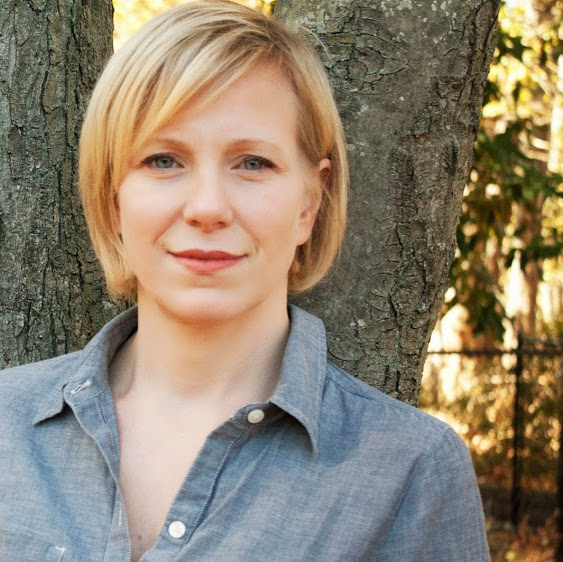
Terri is a poet with two published collections, a social worker, actress and a mom and wife. Here bio is included HERE. An interview of Terri is HERE.

Eucalyptus Trees

The wind blows a reminder
of Eucalyptus trees growing tall
in Berkeley on drought
scorched hills

Thirsty for sageness I walked
the grounds of dorms
a chapel on the hill
silent guardian

Observation of seekers only
spending time within
solid stucco walls
soul scrutinized

Revealing only a conundrum
harnessed to me a mother
accused as a daughter
fettered sister

Yearning for only peace
children serendipitous
a mother without pain
brother a panacea

© 2016 Renee Espriu

You can read Renee’s bio HERE.

Dream What You Will and Will What You Dream

I took a quiz recently to test my Bible knowledge. I used to be a bona fide college campus ministry staff worker. I studied my Bible…religiously. So, I wondered how much I’d retained after having dropped the Christian label six years ago. I got one question wrong: “In a list of the nine fruits of the Holy Spirit, which one is NOT in the basket? Kindness, Peace, Forbearance, or Hope?” Turns out it’s Hope.

“Hope is a mannequin. Love is a battlefield,” sings Bobby McFerrin’s voice in my head.

Hope is a deceitful kind of thing. It sounds like a marvelous, Puritanical virtue. I think it’s a slippery slope. Hope is passive. “I hope it won’t rain.” There’s nothing you can really do about it, one way or the other. You’re stating a wish, a sort of desire or thought without any teeth. “I hope my insurance will cover this.” You’re placing the burden of responsibility or action on something, someone other than yourself. “I hope in the future.” You’re making present moment decisions while not being present in the moment.

On the other hand, I think Will has gotten a bum rap, as in “the willful child”, “not my Will but Yours be done”, “keep your servant from willful sins”, etc. I much prefer Ralph Waldo Emerson preaching Self-Reliance to that doctrinal negation of determination. I think it’s important to know what you want, what you like and why. At the same time, I think it’s very important not to get attached to those things. Some people will defend their desires because they feel that their identities are shaped by them, and they want them to be. In a Universe of impermanence, that can be problematic. What if the thing you desire is altogether unattainable? Or even unapproachable? Your identity becomes “the person who is not going to get what they want – ever”. Sounds like a life of frustration and suffering to me.

To be able to say that I think this thing is good, that I want to use my energy and resources to practice and promote this thing, while I acknowledge that much of the success of this thing remains out of my control, is Self-Reliance. Furthermore, I no longer believe that the success of this thing is in the control of a supernatural power. And I’m OK with that. I don’t need to have a guarantee that this thing will succeed eventually in order for me to feel my efforts are worthwhile. I can have a moral conviction of the value of this thing without supernatural endorsement.

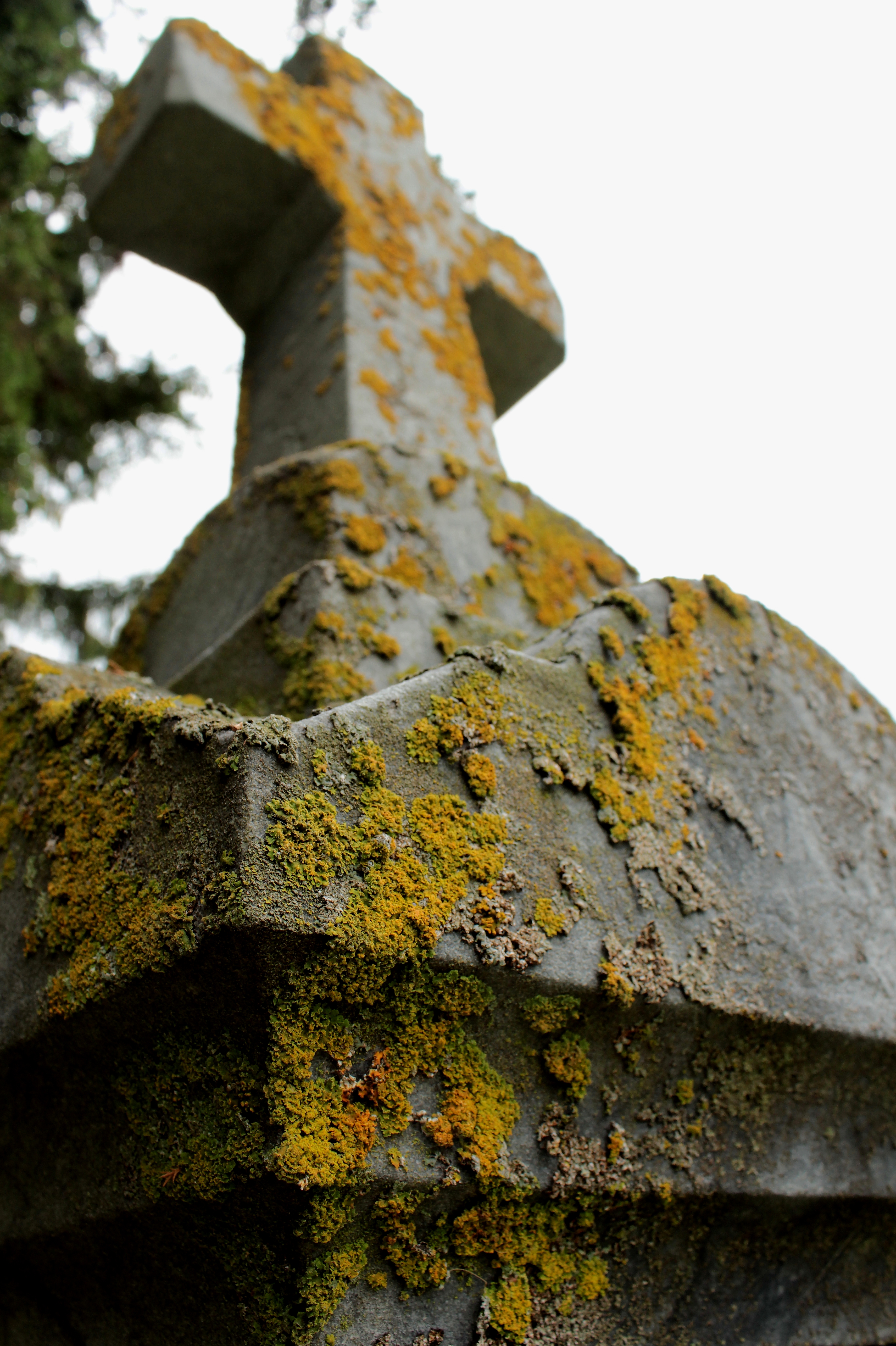
cross

I suppose I should mention that my philosophical transformation began after my husband died. My identity was shaken. I lost Faith; I lost Hope. “How very sad!” I hear you cry. Let me add that I was then asked repeatedly by a dear friend, “What do you want?” “Who do you want to be?” and I eventually found myself. I became aware of delusions and habits of thought that I’d never examined before. I discovered my will, my values, my feelings and my ability to accept change, adapt, and practice living gracefully and gratefully. I know good things intuitively, and I have learned that I am trustworthy.

And I believe that everyone else could say the same. See, I do believe in something.

Text and photograph © Priscilla Galasso, 2016. All rights reserved; you can read Piscilla’s bio HERE.

Sacred Moments

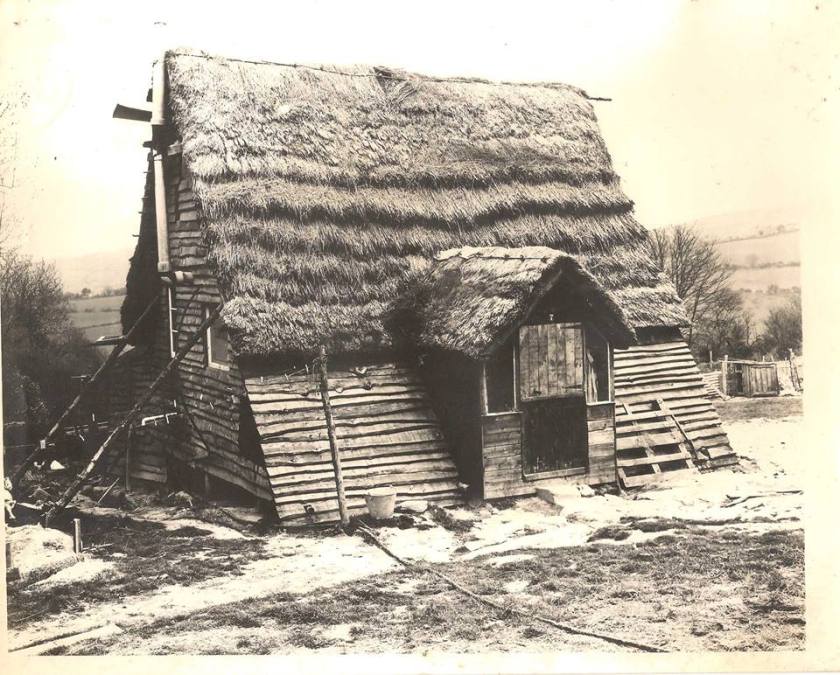
The House that Dad Built (circa1979) c Luke Prater
The House that Dad Built (circa 1979) c Luke Prater

When every home had a roof Dad hoisted –
tarpaulin on hazel limbs, canvas on Scots pine,
timber thatch, slate tile laid on stone gable-ends.

When coming home at fourteen, then nineteen,
from opposite ends of the Earth, made me hunger
for experiences only this England could offer.

When the sense of spiritual déjà vu took root:
Judea, the Plains, South Pacific, Horn of Africa.

When, thinking I’d live and die a musician –
writing prose fiction and journalese on the side –
poetry broke my windows, abducted the band,
and demanded a bloody ransom.

When a girl wooed me out of my unsteady head,
gifting me intimacy after six years
without touching another human being.

When I slid into that euphoric, garish
circus, chemical blood and electronica
pulsing through the core of me. The hypnotic,
jigging whirlygig didn’t stop till sun-up.

When my lady lay her legs on mine,
thigh-to-thigh, hip-to-hip, every
inch of skin an ineffable body embrace,
her tears on my face like soft, warm rain.

When the days were so desolate, and
nights thicker than damp black sand,
I discovered the drugs do work.

When humming and chanting cast light
into shadows folding in from the corners,
prayer-beads protective of the
elevated places I began to reach.

When I was awestruck by the size –
and warmth – of my father’s hands.

When those hands lay still and cold,
collected in a shroud of rough silk, and I folded
my simple elegy, giving it to the ground.

When I knew mine was the life needed saving,
however seemingly insurmountable: this
is not an easy fade-to-black halfway home.

© Luke Prater 2015

You can read Luke’s bio is HERE.

You Just Never Know

Once upon a time, there was a swamp that was home to many creatures, including…

…frogs. 

Two frogs decided to see the world.  They went hop-hop, hop-hop-, hop-hop down the road in search of adventure.

They came to a big farm, and croaked out a cheery greeting to the dairy cows.

Then they went inside the big barn to explore.

There were so many new and exciting things to see in there!

But as they jumped about, they accidentally landed in a big pitcher of cream.

They tried to climb out, but the sides were too steep and slippery, and they slid back into the cream. Even frogs don’t like to die: they tried everything they could think of to escape.  When that didn’t work, they tried everything they couldn’t think of.

“It’s no use!” said the first frog. “We’re doomed!” And he sank down into the cream and disappeared.

But that second little frog…she kept swimming about with all her tiny frog might, just to keep from drowning.  The cream began to block her eyes and nose. Just when she thought she couldn’t swim another stroke, she felt something strange beneath her feet.  She was standing on a big lump…of butter!  With the brave paddling of her own tiny frog legs, she had churned that cream into butter.  She leapt out of the bowl and went hop-hop, hop-hop, hop-hop down the road, in search of another adventure.


All words and images Copyright Naomi Baltuck

The Month of Light

Wishing peace and happiness to our Muslim friends and contributors during this holy month of Ramadan. This feature article is by guest contributor Imen Benyoub (Algeria). It is from the February issue (theme: abundance/lack of abundance) of The BeZine. The first illustration is courtesy of American multimedia journalist and novelist (Bagdad Fixer), Ilene Presher. She found it online and shared it on her Facebook page. Ilene hosts a weekly radio show, TLV1Radio, Weekend Edition. The second illustration is courtesy of Russian photographer, Petr Kratochvil, Public Domain Pictures.net. J.D.

IMG_0479

Ramadan is the month of light, the month of reflection, blessings, generosity, devotion, change and sacrifice and a pillar of Islam as Prophet Mohammad (PBUH) said: “Islam is built upon five pillars: testifying that there is no God except Allah and that Mohammad is the messenger of Allah, performing prayer, paying the Zakah (charity), making the pilgrimage to the sacred house and fasting the month of Ramadan.

Ramadan is the ninth month of the Islamic calendar.  It is called the sacred month because it is observed worldwide by all Muslims as the month of fasting.  It’s twenty-nine or thirty days based on the visual sightings of the crescent moon.

Fasting in Islam means “to abstain.”  When you fast, you completely abstain from food, drinks, smoking and sexual intercourse from the break of dawn until sunset with an intention. This is not, however, all of it.  Real accomplished fasting is when you abstain from every behavior that is considered bad behavior in general.  It is something we share with Christianity and Judaism but with a lot of difference in details.

Who must fast? In general it is obligatory upon every Muslim, male or female, who is adult, sane, not sick or in a journey (traveling more than eighty kilometers). The exceptions to this are women who are in period or post-natal bleeding days, pregnant women and mothers who are beast-feeding.  These women are expected to make up the fast when they are in a condition to do so.  Those who are terribly sick, need constant medications, and those whose illness may be exacerbated by fasting.

When you fast, you will have two essential meals, sahur ( a pre-dawn meal). The Prophet Mohammad talked a lot about the reward and blessing of this meal, preferably left ’till the last half hour before dawn.  This meal will help you resist during the long hours of fasting during the day.  The second meal is iftar or break-fast, you take it immediately after sunset.

Along with exceptions mentioned above, there are a lot of permissible things a person can do that will not invalidate his or her fasting, like swimming in the sea when it’s too hot, with caution of not swallowing water, taking injections, doing blood tests, using toothpaste and eating or drinking unintentionally when someone forgets.

Fasting is a school of wisdom.  It has great spiritual and moral meaning too long to be listed in a few lines.  Beside its health benefits, it teaches patience and utility. It makes us closer to Allah because we are doing it out of love and seeking spiritual reward. It cleanses the soul from grudge and hatred. It teaches self-control and maturity.  Through fasting we learn to be selfless because we feel the pain of the poor and the hungry.

There is a beautiful sense of solidarity and community in Ramadan when everyone is helping, when mosques are filled, when relatives visit each other, when people forgive and start a new page, when a person vows to be good to others and when people stand in one line to pray.

Fasting can truly change a person’s heart when done with utter sincerity. It fills the heart with satisfaction, happiness and light because you’ll be rewarded double fo revery deed of goodness, every charity, every nice word you say, every verse of the Quran you read. When you realize that Allah gave hose who fast a special door in Heaven because of its holiness and significance.

ramadan-theme-11281531147LXCr-1

Every country celebrates Ramadan differently.  Traditions and customs change. The only thing that connects us all together is that magic that everyone feels during the month. The one I truly love is when the family celebrates the fasting of a child, encouraging him and helping him to understand what fasting truly is.  It is like a recharge for the year, a self-nourishing experience and one of the most exquisite a person can have.

Some sayings about Ramadan: on Prophet Mohammad (PBUH):

“When Ramadan enters, the gates of paradise are opened, the gates of hellfire are closed and all the devils are chained.”

“Every action a son of Adam does shall be multiplied; good action is by ten times its value up to 700 times.  Allah says: with the exception of Fasting, which belongs to me, and I reward it accordingly for, one abandons his desire and food or my sake.”

“Whoever observes fasts during the month of Ramadan out of sincere faith, and hoping to attain Allah’s rewards, then all his past sins will be forgiven.”

– Imen Benyoub

© 2015, feature article, Imen Benyoub, All rights reserved; 2015

A Perfect World

Four years ago my daughter Bea and I flew down to California to scout out Stanford. Last week the whole family flew in for her graduation.

She showed us the hotspots around town.

For sentimental reasons we brunched at an Anatolian restaurant. My Turkish ravioli with garlic yogurt sauce was a hit.


Amidst the chaos we found a shady spot for a game of Pandemic.

And saved the World.

We dined with the parents of Bea’s friend, Ben Bravo, who was gifted with the perfect name for a superhero or the hero of a romance novel!  After four years of hearing such good things about them, it was great to meet all the Bravos.

IMG_1925

Then we partook of a time-honored graduation ritual…in which the graduate’s family arrives with empty suitcases and packs up her stuff while she flits in and out, saying hello to her friends’ visiting parents, and farewell to her friends.

IMG_1982

Saturday morning was the Baccalaureate.

We heard a Buddhist Singing Bowl, a prayer of the Ojibway Nation, a reflection by Bea’s friend Zainub, Taiko drumming, and other benedictions, a celebration of spiritual diversity and mutual respect.

Bea graduated with honors, with distinction, and awards, including The Amy Levy and a Fulbright.  She had her village. Bea was…blessed is the only word that will do…to have been mentored by such remarkable professors as Dr. Gabriella Safran…

IMG_2177

…and Dr. Allyson Hobbs, whose hearts are as large as their intellects, and who kindly took my chick under their wing. Their encouragement made all the difference.

Bea and her brother are very close, besties, village peeps.  Eli traveled from Mexico to help her pack up, to celebrate and support her, even though he had to fly out at dawn on Sunday, missing the Commencement.

But Bea’s besties Denise and Marcus remained to cheer her on.

An airplane circling overhead trailed a message. Like many universities, Stanford is accused of sweeping those stories–and victims–under the rug, or throwing them under a bus, especially when the perpetrators are college athletes.

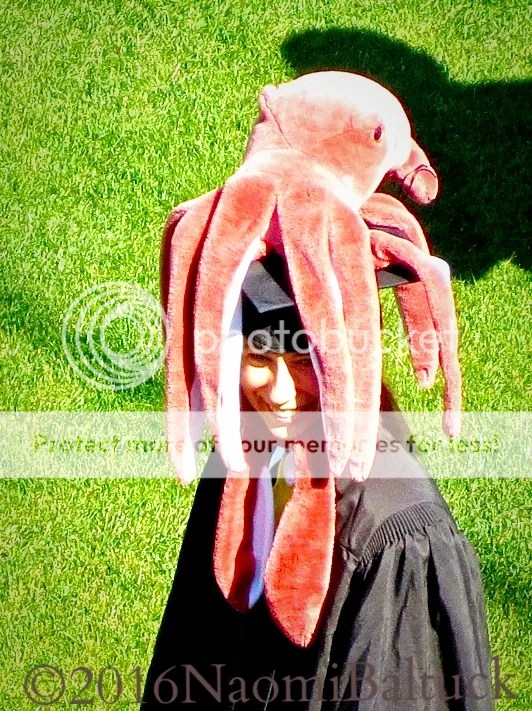
At Stanford commencement opens with a procession known as The Wacky Walk.

As individuals…

…or in groups…

…students parade around the stadium free to express themselves as they choose.

IMG_2030

I liked the funeral procession for the fallen GPA, with a trumpet playing Taps.

IMG_2074

Some protested after a Stanford swimmer was slapped on the wrist for sexually assaulting an unconscious woman. Had two students not witnessed the crime, intervened, and apprehended him, I doubt there would’ve been any consequences for the rapist. The victim will be traumatized the rest of her life, but the actions of two heroes and the resulting prosecution sends a message to sex offenders. This time the message is “Don’t get caught,” but one day people might grow up learning to “Treat everyone, even women, with respect.”

IMG_2039.JPG

Grads welcomed commencement speaker Ken Burns, a legendary filmmaker who has spent his life shedding light on The Civil War, The War, The West, The National Parks and more.

A stark contrast, from Wacky Walk to observing a moment of silence in solidarity with survivors of sexual violence, and victims of the massacre at a gay club in Orlando that morning. I blinked back tears when the audience spontaneously began counting aloud for each victim of that vicious hate crime…47, 48, 49. Pure pride and joy for my child turned to trepidation at sending her out into our broken world.

Ken Burns proved there’s still intelligent life on the planet, and even in America. His speech was wise and courageous. He ventured off the safe path to politics. Referring to the LGBTQ massacre in Orlando,”We must ‘disenthrall ourselves’…from the culture of violence and guns.”

He implored grads to defeat Trump, “…a person who easily lies…who has never demonstrated interest in anyone or anything but himself and his own enrichment; who insults veterans, threatens free press, mocks the handicapped, denigrates women, immigrants and all Muslims…an infantile, bullying man…willing to discard old and established alliances and treaties…Asking this man to assume the highest office in the land would be like asking a newly minted car driver to fly a 747…”

A few people booed, but the majority burst into cheers. Ken concluded…  “We must remain committed to the kindness and community that are the hallmarks of civilization…”  Click here and scroll down for Mr. Burn’s excellent closing advice to grads. 

The Class of 2016, at Stanford and throughout the US, has scattered, gone home, to a new job, grad school, even to Mongolia on a Fulbright.

It’s an exciting time, and a little scary as these young adults test their wings and search out their flight path in the Real World.

IMG_2066

Bless them all!  We should have gift-wrapped a bright shiny world and tied it in a bow for them. Instead we’ve left them a mess and must ask them to help us save our precious broken world.  It isn’t a game, neatly laid out on a board, with the rules spelled out, and a clear path to winning clearly stated in the instructions.

Perfection is possible only in a perfect world.  Do you think we could ever commit ourselves to kindness and community, and treat each other and our planet with respect?  Because that would be close enough to perfect for me.

Except for quotes by Ken Burns, all words and images©2016NaomiBaltuck


Flash Fiction, Moshe’s House In Space

Author’s note: Sometimes, our children tell us things that they see or know, and we don’t have faith in our children’s senses. This is speculative fiction about climate change that suggests the children might yet show us a way, even if it is too late for us.
Ark-2 Digital Art from photos and sidewalk chalk Ark-2
Digital Art from photos and sidewalk chalk (photographed)
©2014 Michael Dickel

Moshe’s House in Space

Before, no sand swept through, no water splashed—a beach at driving distance, yes, but a long, long walk away. Before the three-year old’s stories, which I only half listened to: he was born in clouds before dinosaurs were alive; he died; “But now,” he said, “I’m becoming alive again.”

I thought a story he told me one morning came from his dreams.

He knew a dinosaur, he told me, with bright blue feathers in the day. At night it turned wooly and gray, to keep warm. The dinosaur had a name, Pollaydowen.

I thought, what an amazing imagination my three-year old son has, what colorful dreams.

He had other stories, about his house in space and all of the animals that lived there with him, a farm he had at this house. He went on and on with details—listing every animal we saw at the zoo, on farm visits, in books, on videos, on the internet; listing all of the plants and flowers he had heard of; listing creatures great and small in his lakes and seas.

How did he know all of them?

He insisted we should visit his house in space.

Then changes came suddenly, not slowly, as even the most pessimistic predictions had held. One day, news report said the sea covered beaches even at the lowest tides. The next week, waves washed across roads. Houses washed away. Whole neighborhoods of people could barely evacuate before the surf swallowed the land and their belongings.

The water washed sand over everything. The ozone layer shredded. Paint bubbled and peeled on cars, houses, government buildings. Everything and everyone aged.

Soon, sand dunes blew across the road in front of our house. The house looked like fifty years of neglect had settled in on it over the past few weeks.

That last day, my wife and I heard my son speaking in his room. And we heard another voice.

We went in. A bright blue flash turned toward us.

“We have to go,” my three-year old calmly explained, “now.”

“These sands end time here, the last to flow through the hour-glass,” the blue lizard-creature, Pollaydowen, added.

As we left the house, we trekked through hills of sand.

We returned once, to see what had happened.

I left this note for you who might find it, scratched in the walls, just in case anyone remains. We have an ark.

Photo ©2014 Michael Dickel

A somewhat different version of this story originally appeared on Fragments of Michael Dickel.

Three Poems

Ground Fog

Where the heat of the day rises to meet the cool of the evening,
sometimes a layer of fog forms above hay stubble.
An oak that survived the great Hinckley fire
over a hundred years ago waits
while white mist diffuses behind it,
stretches up and over the corn, curls down to grasses
on the other side of the field, slides out to meet the beaver pond.
Fog erases so much as it echoes the remainder of day:
the red-tail that hunted rodents this afternoon,
a garter snake that sunned in the short stubble,
rolls of hay that dot the field,
my daughter
who walked out to sit and read
—all disappear in its cool insistence.
Hints of sunset still remain in the west—
where mist has not yet covered water,
bits of color reflect back from the clogged creek.
The dog and I stand still, listen to fog.
We scent the air. In the brush, a crashing sound.


“Ground fog” published in The Cape Rock in 2002. ©1999 Michael Dickel.


Tacit

A man walking along a field where new corn
dots the soil grasps a bit
of stone, skimming it to the furrows
as though to skip across water—
but it punches up a small dust cloud

and sinks. A father and son walk a fence,
ready to repair rents in the barbed-wire.
Soon the corn will outreach the man;
then the combines come and tear it down.

The repairs will rust; then a poplar
drops across the fence one windy day.
Still, the men walk; the corn waits—
this is what they do.

Up by Lake Superior one day
a man tosses a smooth stone;
and it flits across the water
out to where blazing waves blind him
as he stands there gazing. Then, he speaks.


“Tacit” originally appeared in Blue Earth Review, @2004 Michael Dickel.


Called to faith

A man stands over the culvert on the gravel road onto the farm.
The stone he hefts in his hand—igneous remnants from before time,
bits of crystal cooled across history mingled with impurities beyond memory.
He lofts this shard of the past in a slow arc ending in the dark pool of standing water.

Sometimes he wishes he could follow it down through the water as surface tension
erases its faint traces; he wishes sometimes that he could fall through the cold numbness
to sink into the soft, welcoming mud—to sleep among layers of last year’s rotting leaves
and the year’s before and the year’s before and years’ before—layers of organic memory that,

still,

do not reach the stone’s most recent memory. The stone takes no notice.
And the man does not sink with the stone into murkiness. The morning calls
him to his desire, so he chooses to return to the work at hand. There is a garden
to plow and disk. There is corn to plant and tend. There are nettles to uproot and remove.

Despite the threat of frost or hail or rabbit or deer, he trusts
that in August there will be sweet corn and tomatoes and beans.
He will gather some in and eat. He will gather some in to store. And
he will gather and save the best for next year’s seeds. These are the act of love.


Hybrid: Warm Hunger

Author’s note: I recently read this poem at a poetry event billed as an Interfaith Eco Poetry Slam at Tmol Shilshom, a well-known literary cafe in Jerusalem. This is a hybrid between non-fiction, found poetry, and performance poetry. The unfortunately unseen connections between hunger, stress, climate change, and war lead to a desire for the equally unfortunately unseen hope for peace and harmony. Read it rhythmically, fast. Hear the sounds at play as well as the words at play.

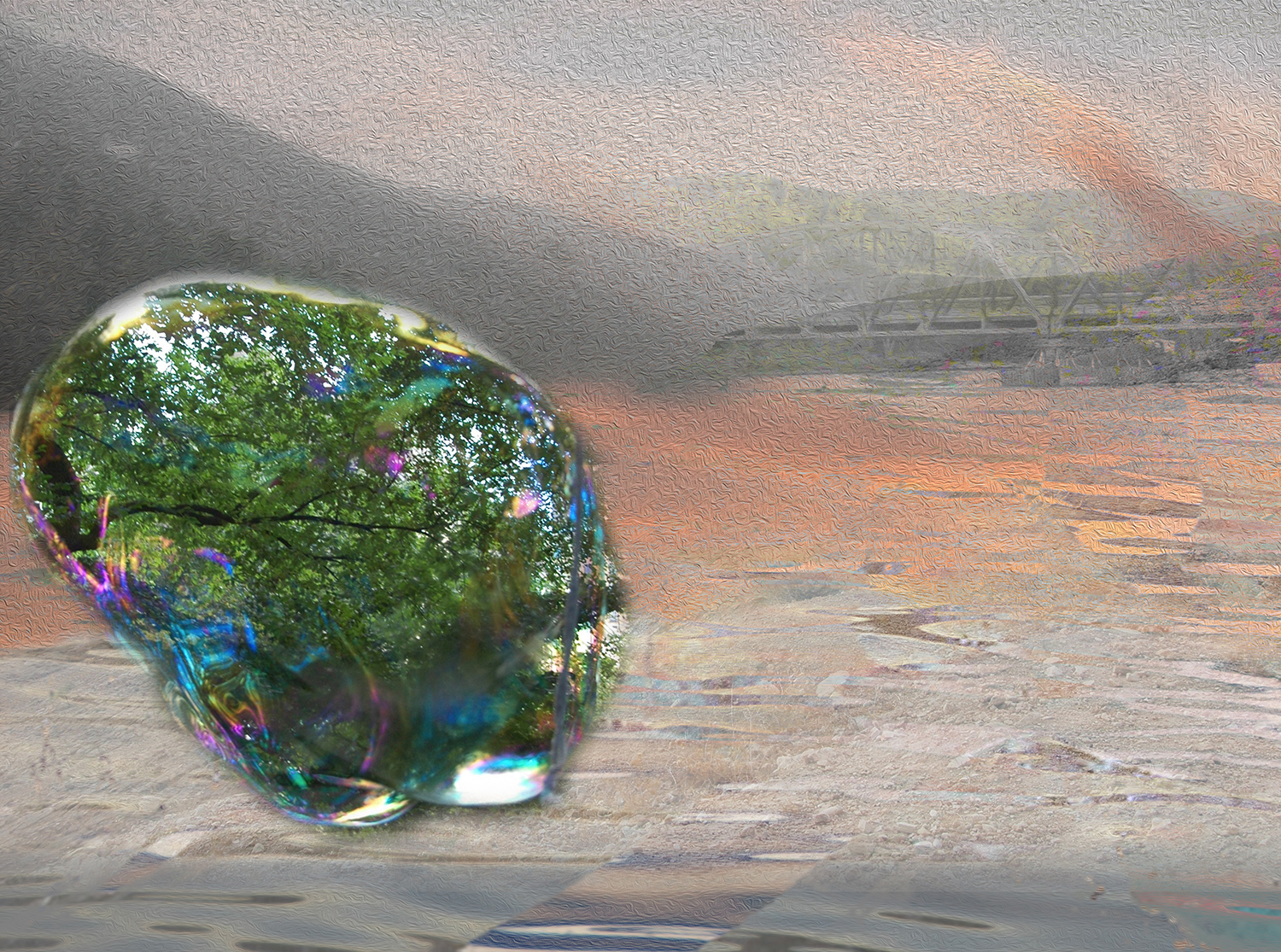
Landscape 10 Digital Art ©2015 Michael Dickel
Landscape 10
Digital Art
©2015 Michael Dickel

Warm Hunger

Food Fatigue Craving
Climate Change Hunger
War Peace Harmony

symptoms of (earth) malnutrition
medication (poison) reaction or
(industrial) side-effect low blood
sugar (hypoglycemia) too much
(junk food) eating disorder
mononucleosis anemia (chaos)
(drought) dehydration (children)

general (election) anxiety disorder
panic attack depression (adult)
heart (love) rhythm /dis/harmony
/dis/order acute stress reaction
bipolar (melting) /dis/order hepatitis
a b & c pulmonary hypertension (floods)

food hunger and climate change
(Carbon Brief 10 June 2011)

a feeling of (migrant) discomfort or
(human) weakness caused by lack
of food coupled with (commodified) desire
to (not) eat of or at a fairly or comfortably
high (low) temperature

Climate change
threatens to put the fight against
hunger back by decades
(Guardian 2 September 2014)

balmy heated hot lukewarm cold-blooded
mild pleasant sunny sweltering beached
(whale) temperate tepid broiling close
flushed glowing melting perspiring
roasting scorching sizzling sweating
clement snug summery sweaty
thermal toasty warmish having

a color in the red-orange-yellow
part of the visible electromagnetic
(organic) spectrum feel or suffer hunger
through lack of food (distribution) craving
desire famine greed longing /dis/satisfaction
lust starvation yearning ache war
appetence appetency emptiness famine

esurience famishment greed gluttony
mania ravenousness vacancy void
voracity want yen a stomach
for appetition big eyes
bottomless pit eyes for munchies
sweet tooth close often used
in the context of a game

in which “warm” and “cold”
indicate nearness to the goal
you can’t take it with you
but if you try sometime

In Wild Winter Warm North Pole
Storm Chills U.S. Forecast
as Flooding Threatens Levees
(NYT Weather 30 December 2015)

a lack of food that can cause war
illness or death especially war
among large numbers of people war
have a strong desire or craving for peace
for having showing or expressive peace
of enthusiasm affection or kindness peace

Climate Change Will Worsen
Hunger Study Says
(Worldwatch Institute 31 December 2015)

archaic being well off as to property (war)
or in good circumstances rich (peace)
make or become warm (harmony)

© Michael Dickel

Poem: En Gedi


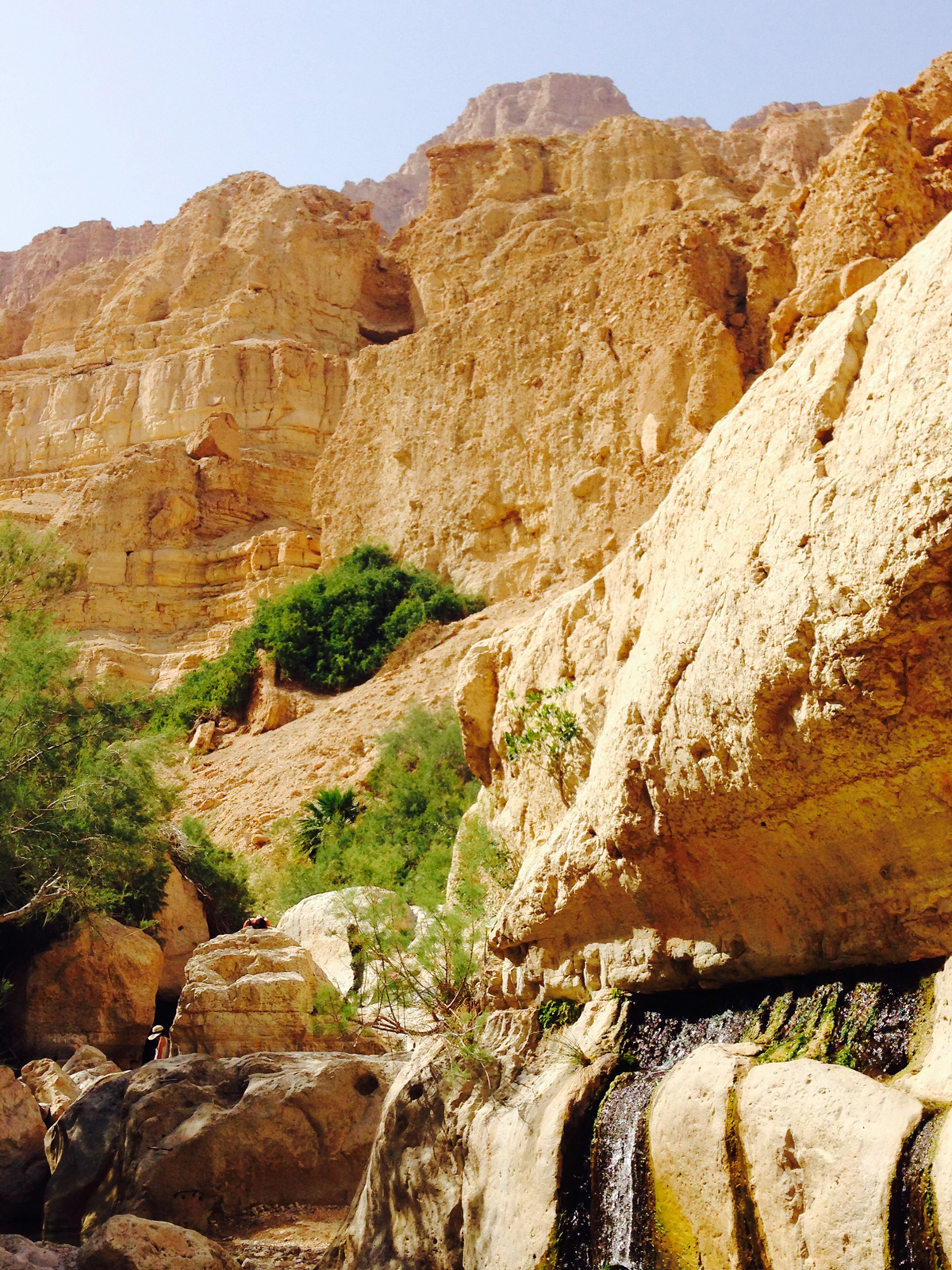
En Gedi — Wadi David Photograph ©2015
En Gedi — Wadi David
Photograph ©2015
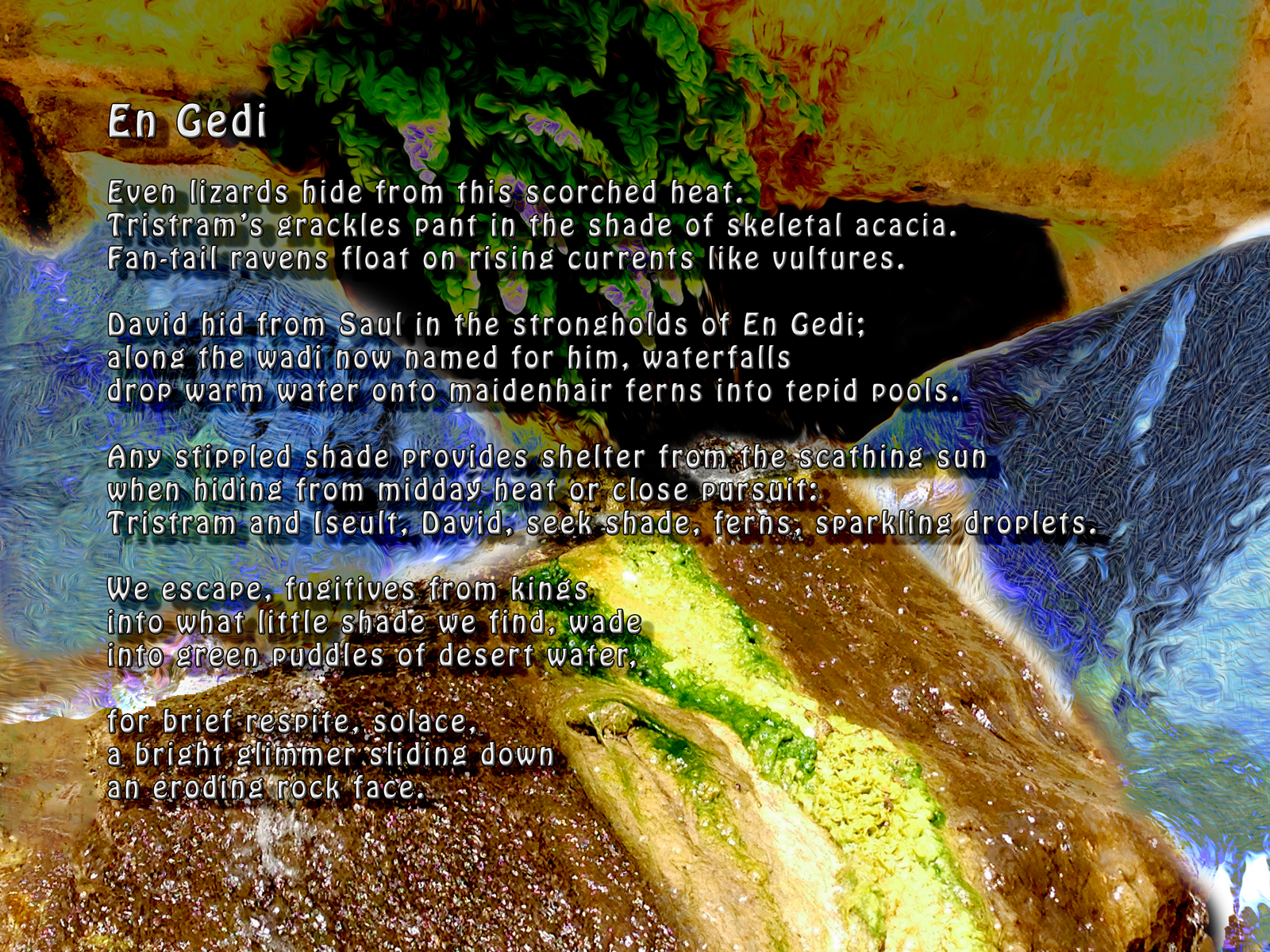
En Gedi

Even lizards hide from this scorched heat.
Tristram’s grackles pant in the shade of skeletal acacia.
Fan-tail ravens float on rising currents like vultures.

David hid from Saul in the strongholds of En Gedi;
along the wadi now named for him, waterfalls
drop warm water onto maidenhair ferns into tepid pools.

Any stippled shade provides shelter from the scathing sun
when hiding from midday heat or close pursuit:
Tristram and Iseult, David, seek shade, ferns, sparkling droplets.

We escape, fugitives from kings
into what little shade we find, wade
into green puddles of desert water,

for brief respite, solace,
a bright glimmer sliding down
an eroding rock face.


Michael Dickel read En Gedi at the Interfaith Eco Poetry Slam in Jerusalem on 30 June, 2016, sponsored by the Interfaith Center for Sustainable Development. Here is a video of him reading it.


En Gedi Digital Art / Poem ©2014-2016 Michael Dickel
En Gedi
Digital Art / Poem
©2012-2016 Michael Dickel

This poem originally appeared in Michael Dickel’s book, Midwest / Mid-East and is published here with the poet’s permission.


Regarding Faith

Kahlil Gibran Faith


I have seen both angels and demons

in people.

I have blessed and cursed the gilt cross,

(and borne the guilt of that loss),

of that symbol at the top

of the steeple.


I have witnessed the whispers of a faith so broken

that I could have sworn

the candle had gone out…

blasphemies unspoken, extinguished, forlorn,

doused by doubt.

Then flickering, then flaring to life

once more.

Hesitant to blindly leap

through Hope’s open door,

(it is a tale of patient observation).


To define the schism of a soul;

that of wanting to believe,

but in fear

of giving up

control.

Faith begins

pure white,

the color of the hottest flame

within.

Cast aside your fear

and embrace

the life you’re in!

(And your unique place in it).


Black, white, the infinite shades of grey,

all linger and swirl in the inner world,

with faith as an empty, clean, blank slate,

despite differences in how we pray,

or meditate,

there is only One

and we are all connected.

As for Faith…

it can continually die and be

resurrected.


What I know

is that

The Universe will continue,

whether we believe in it or not.

~ © 2016 Corina Ravenscraft

Fallen But Willing

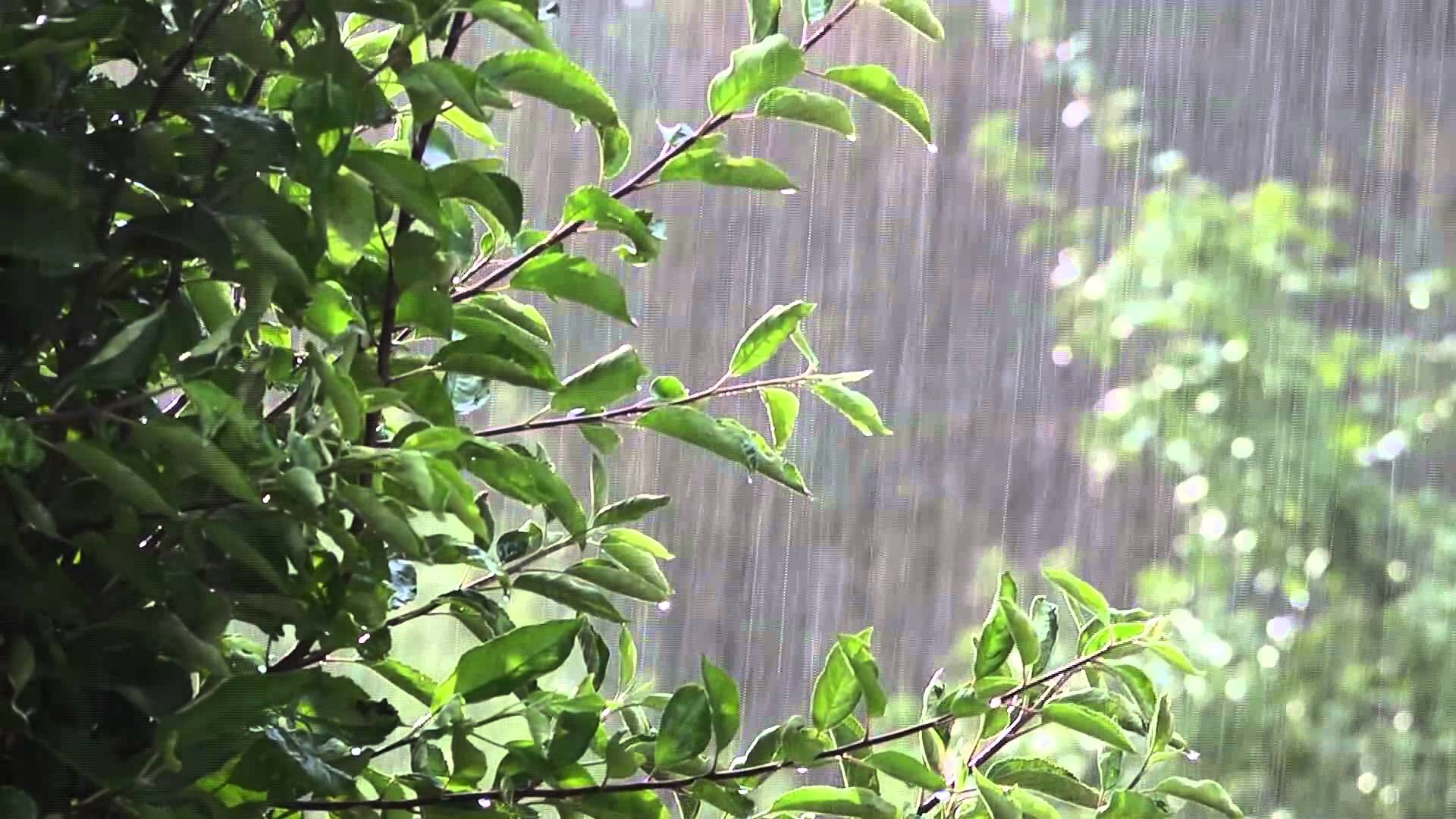
maxresdefault

The storm slaps down the trees’ hands
that reach in prayerful supplication,
or maybe to protect themselves as I would.
Many inevitably fall, which I have
many times in this stormy existence,
to the steady beating and beat-down
brought upon us from above.

Some splash-land upon the soggy grass,
some divert the rainbow runoff
from the oil-slicked blacktop driveway,
others recline their spindly backs
upon the gravelly roof shingles.
They look up at the path upon which
the watery host forced-marched them here.

If I was to fall, I’d lie like those
on the angled roofline, eyes tracing
the individual drops’ paths,
feeling assured we’d one day rise and
find our vaporous way back to the clouds.
Your faith assures me that could be,
even if I’m never anointed like that driveway,
even if I fall to buffeting by my will and not
some unseen baptismal force in the clouds.

I can’t really expect to be resurrected
like you raindrops after becoming one
with the earth beneath its green shroud.
But I’m willing, willing to faithfully face
these storms again and again if it means
I have a chance to see the good in you all
when my tearful tempests end
and the Sun comes back once more.

Not so religious or blasphemous a piece as you might think. Just the freely dropped rainy Saturday thoughts of a fallen altar boy whose faith has been shaken by the floods and gales of doubt that have battered my spirit over years of seeing and knowing too much evil. Shaken, but not shattered, though. As I said, “I’m willing’.”

– Joseph Hesch

Hang in There

cliff

“I’m stuck in a precipitous place,”
you said, “and falling is a possibility
I no longer care to worry me.”
The fall doesn’t kill you, I replied,
ignoring the pain I’ve felt, too,
it’s that sudden stop at the end of it.
He grinned (Or was it grimaced?)
akin to a wolf who had a death grip
on his own ears, contemplating
letting go or holding on for dear life.
His life, yours, mine, it didn’t matter.
Fear and anger will do that for you.

“I don’t care as much anymore about
this place in the present,” you said.
“The past looks like scorched earth and
the future’s a desert of hopelessness.”

Then stay where you are, I replied.
Yesterday’s nothing but ink-stained
fabrications at the bottom of a birdcage.
Tomorrow’s just a hazy today in waiting.
Hold onto your spot here and now like
a bird, softly enough not to crush it,
but firmly enough that it can’t get loose.
Your grip on life can escape you
on swift’s wings, and sometimes those
guardian angels pounding their gloves
waiting to catch you if you drop in
the existential outfield have been known
to lose some in the sun.

Do I know what inspired this? Does it matter? Let’s just say if fell into my glove as I squinted into the sun.

© Joseph Hesch

Photo is not filtered by Google for license and the author is unknown.  If it’s yours let us know and we will credit you or take it down according to your preference.

Knowing

Lake_Champlain_duskThe past few days were breezy and hot, the humidity creating a sea of moisture in which we swam. The wind danced through the trees, turning leaves on their sides, bending branches slightly, and singing a sweet song. Sitting on the front porch, we felt the coolness of air moving across our hot skin.

We in the West live in an odd culture, one that privileges the knowing of the eyes over that of the body and spirit, rejecting lived, felt experience in favor of abstraction and distance. Perhaps as a result, we are given to imagining ourselves as separate, isolated beings, ignoring the immediacy of our own innate experience of interconnection.

Still, I am continually surprised when people tell me that Indigenous people are superstitious, that we mistakenly perceive that everything is conscious and notices our actions. They seem to believe that accepting the consciousness inherent in all phenomena is , as in Jung’s view, childish, and act as though gratitude, humility, and respect shown to beings and forces, seen and unseen, lacks dignity.

This is an odd position to take, given consciousness appears to be an inherent characteristic of our quantum universe, and thus of everything in it, from pebbles on the beach to ecosystems, to planets and the stars they orbit. Is it not just a very small step from an acceptance of the ubiquitousness of awareness, to the notion that we live in a totally interconnected world in which everything we do impacts others?

A number of years ago I stood on the banks of a river in Amazonian Brazil, as one of my beloved teachers, hopping from one rock to another, worked her way away from shore and into the river. She then faced upstream to where the water cascaded over a fifteen foot high waterfall. Raising and extending her arm and hand, she closed her eyes and sank into deep reverie.

When she returned to shore, she spoke to me about her experience of merging with the waterfall. She explained that she thought the waterfall might be available to aid her in healing patients, and that she had asked whether she might call on its spirit for assistance when needed. The waterfall had graciously agreed.

Up til that day I had struggled to learn the art of merging, my sense of inadequacy and insistence on things being logical creating barriers to simply connecting. My immediate thought, upon hearing my teacher’s words, was to look at the waterfall and think something along the lines of, “This is a puny waterfall on an insignificant river. Why bother?” Then I looked at my teacher’s face, radiant and joyful, and thought, “Why not?!”

I took some space to myself, assumed the posture she had taught me, and setting most of my doubts aside, reached out to the waterfall. Almost immediately I felt a deep sense of joy and pleasure, almost glee, as I became, for a few moments, the land that gave form to the river, the water falling over the embankment, and the two together. I felt the great, yet subtle, power of the place, the essence of the waterfall. I became aware of the water dividing some fifty meters above the falls, some continuing on over the falls and some surging into the treacherous subterranean cavern carved into the river bottom. Then my focus shifted to the quieter pools below the torrent.

For a few minutes I was aware of myself both as an animal who could move easily across the landscape and as the falls that traveled  centimeters per year upstream. One of us would live for decades, while the other lived for untold millennia. (Our companion’s teachers had been coming to this spot for twenty thousand years, an almost incomprehensible length of time for me, but an instant in the life of the river!)

For a brief time, the waterfall and I were unique, yet connected as one. I thought, “How is this, that we can be our discrete selves, while merged as one?” Then I remembered moments of lovemaking when the boundaries between self and other had collapsed and I inhabited a shared body-mind. I also understood, in an insight filled with compassion, that the act of dropping my defenses, of allowing deep intimacy, was difficult for me as a survivor of childhood sexual abuse.  Even now I wonder whose compassion I felt, and whether it matters.

As I began the return to a separate self, I asked the waterfall whether i might call on it to aid in the healing of self and others. The answer was a firm, playful yes, to which I expressed gratitude before saying,” goodbye”.

Over the years, I have revisited the waterfall in memory and spirit many times, sometimes for aid in healing, other times for the simple comfort of our connection. I have learned the waterfall is capable of being gentle, almost childlike in the dry season, and of great, fierce power, when carrying the immense volume of rainfall from the Amazon’s wet season. Each time I have asked, the waterfall has been there, actively engaging with me in connection and healing.

As I write, we are between much needed showers. The breeze, which has hardly stirred all day, has picked up, and the sun is trying to burn through cloud and haze. On this rainy day I am reminded that water is truly a great mystery, circulating through all living beings and systems on our blue-green planet, and that we are truly beings of water, and thus are all kin of the waterfall!

Sometimes, I think, we look for difference rather than honor the interrelatedness our bodies know and crave. I wonder about our culture’s insistence upon loneliness, even as I find myself connected in spirit to many beings and places, and feel blessed and honored to be allied with them in the project of living and healing. Clearly, seeing is not necessary for believing; my body and spirit know what they know, and I am grateful.

© Michael Watson

The Pine Cone Project

In the midst of turmoil,
Mother Earth besieged
by bloody conflict.
In a world beleaguered
by well healed negligence,
humanity is laced
with latent evil …
that is its one great flaw.

Children are dying
by neglect,
by assumption
that, somehow,
they were born
to inherit their fate;
it is their birthright,
born to starve,
without refinement
required by those
whose comforts rule,
whose want of fuel
drives their mule,
justifies this cruel
and mindless exploitation.

Children are dying
by weapons
of mass destruction
forged by human minds
without conscience,
self interested sociopaths,
thieving thugs,
overwhelming auguries
of desire for dominance,
for procreative power and
political partisanship.

We are dying with you.
I am crying for you.
Perhaps the reason is
that it is always
someone else’s fault!
We are messing up
your future in the world
we are too blind to see.

Yet, whilst this goes on,
you walk the woods,
harvesting your pine cones,
your unconscious prayer
for a better world,
your wishing well,
for life, for love,
that sows the seeds
of perfect purity
in heart and mind,
that must not fade with time;
the magnificent magic
of your spirit, untouched
by this tainted world.

Then, in one gesture,
one single act of generosity,
of utterly moving faith,
you beckoned me
to come close to you;
you looked me in the eyes;
you hypnotised me.
Then, you gave it to me,
one single piece of magic,
a piece of nature’s bounty,
and bade me keep its secret
as secret as anything could be.

Each time I hold your gift,
when we are far apart,
I’ll think of you;
I’ll remember this moment,
by which you have restored
my faith in all our futures.

You could melt the heart,
like chocolate
on a Summer’s day.
You could soften the steel
in all but the hardest of minds.

You and your magic
are our future.

© 2013 John Anstie

Faith Means Making Choices

Faith.

“Firm belief in something for which there is no proof.” Merriam-Webster

weight

We all act on faith. Each of us, every day. We make decisions based on ideas and concepts for which we have no proof. We take action based on insufficient evidence about the cause and the effect. This is unavoidable. When are we ever going to have all the information about anything? The more we learn, the more we realize how little we know. The more we experience and the more we learn of others’ experiences, the more we realize that possible experiences and conclusions are infinite. None of us is ever in possession of “all the facts”. We are all guessing.

Similarly, we all have delusions. We all look through various lenses, have particular blind spots, and wear custom-made blinders for one reason or another. Sometimes these serve as coping mechanisms to protect us from overwhelming stimuli. Sometimes these simply magnify our ignorance.

Let’s try on an example.

I have to make a decision about how to commute to work in the morning. I have been told that taking the freeway is the fastest route. After all, the speed limit on that road is 55 mph. However, it’s always under construction in the summer. But is speed the best value to consider? Maybe I should not burn fossil fuels and ride my bicycle instead. I will then arrive at work sweaty and tired. There is a bus, but buses are full of germs. But my friend takes the bus, and I could ride with him and chat…And so on.

street scene

The point is, there are a number of ways to get to work and a number of reasons to justify each one. Those reasons may be weighted by experience, by social influence, by practice, by value and by preference. We each make our choices, our decisions, based on incomplete data and bias, but the point is WE MAKE CHOICES. And that is our great freedom, a right of autonomy.

We have the opportunity to make new choices at any time, although they will also be based on incomplete data and bias even when they are made in an attempt to incorporate new information. The dynamic of deciding and re-deciding is perhaps the greatest activity of life for our species. It’s what our big brains are for. But it is a process that does not have a product. We will never get it all figured out. Dogma is unsupportable in the long run, even if it seems beneficial in the short term. We will never, ever arrive at what is absolutely “right”. Perhaps a better pursuit is simply what is “better”.

Where faith turns into action or behavior, we make moral judgments. Based on your beliefs in the moment, you chose what to do. Was that action beneficial? Did it cause harm? If you decide the action was harmful or that acting in that way did not help you to be the person you want to be, you can choose a different action…AND you can choose to change the beliefs that justified your action. A flexible framework allows a lot more options.

Back to our commute example. What if…

Believing that getting to work quickly was the most professional, responsible thing to do, I set off on the freeway. Soon afterward, I ran into road construction. Flag operators stopped my car. The minutes ticked by. I got frustrated, angry, eventually enraged, and I expressed this state of mind by shouting a curse at the flag man and punching the accelerator as I was allowed to move forward. In the process, I rear-ended a car in front of me. Now I have caused insult to the construction worker on the scene, injury to the car and possibly the person ahead of me, and acted like a person I do not wish to become. I can decide to be more careful not to act in anger in the future, and I can decide that getting to work quickly is not an important value so that I’m less likely to feel frustrated when I can’t fulfill that value. I can examine my beliefs and thoughts as well as my actions and make changes in both in order to practice non-harmful behavior more effectively.

P1040236

This is a simple example. My real life is much more complex. At one point, it involved decisions I made about raising teens to adulthood while my husband was dying of a chronic illness. I realized that acting on my faith sometimes caused me to harm them and to become someone I didn’t want to be. So, not only did I stop the behaviors, I stopped believing the underlying principles that motivated them. I kept wondering if I was “losing my faith”, a phrase that sounded so negative and irresponsible. What I was actually doing was evolving my faith and my self. That, I think, is a very positive and responsible practice. I intend to practice striving for “better” and doing less harm. That’s my new choice, my new faith. 

victory

Text and photographs © Priscilla Galasso, 2016. All rights reserved.

Varieties of Faith – Rational and Religious

skepticIt is often remarked by defenders of religious faith that science, especially within an atheist / materialist context, requires just as much faith as belief in God. One often encounters this argument when the subject under discussion is, not science in general, but particular scientific theories, especially evolution through natural selection and the Big Bang. This is often asserted without specifying either how one measures degrees of faith and without considering issues of actual truth. The fact that one assertion requires “just as much faith” as another proves the truth of neither one. Both may be wrong. But aside from that, perhaps the most serious omission is the failure to consider that the same word – in this case, “faith” – can connote very different meanings in different contexts. What “faith” means within the context of rationality is very different from what “faith” means within a religious context. This is actually a subject better suited for a whole book, more likely, many books, than for a brief blog column. But for the sake of brevity, I will restrict my attention to two more tractable parameters that mean radically different things in their respective contexts: rationality (specifically, though not exclusively, science) and religion.
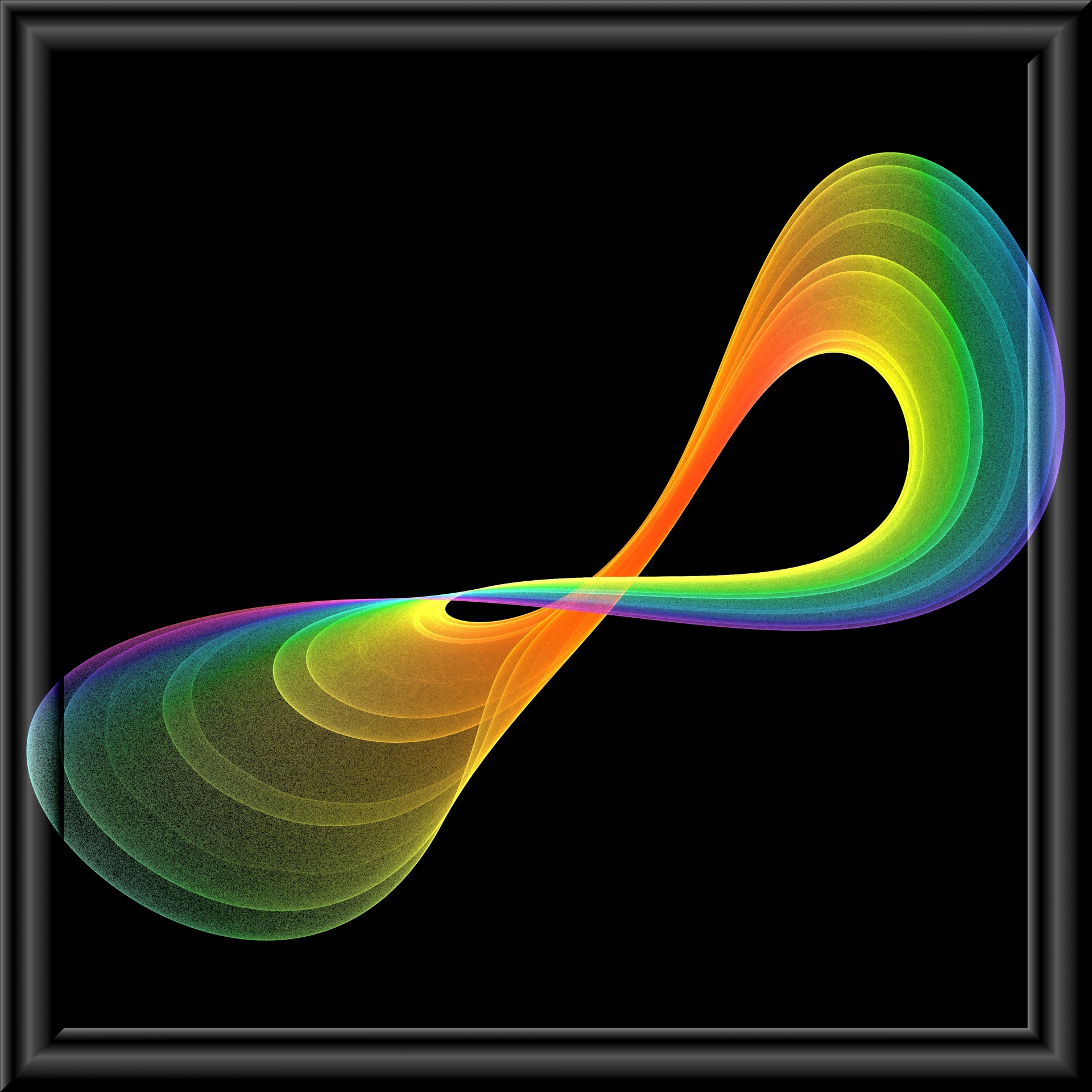
Rainbow_Infinity

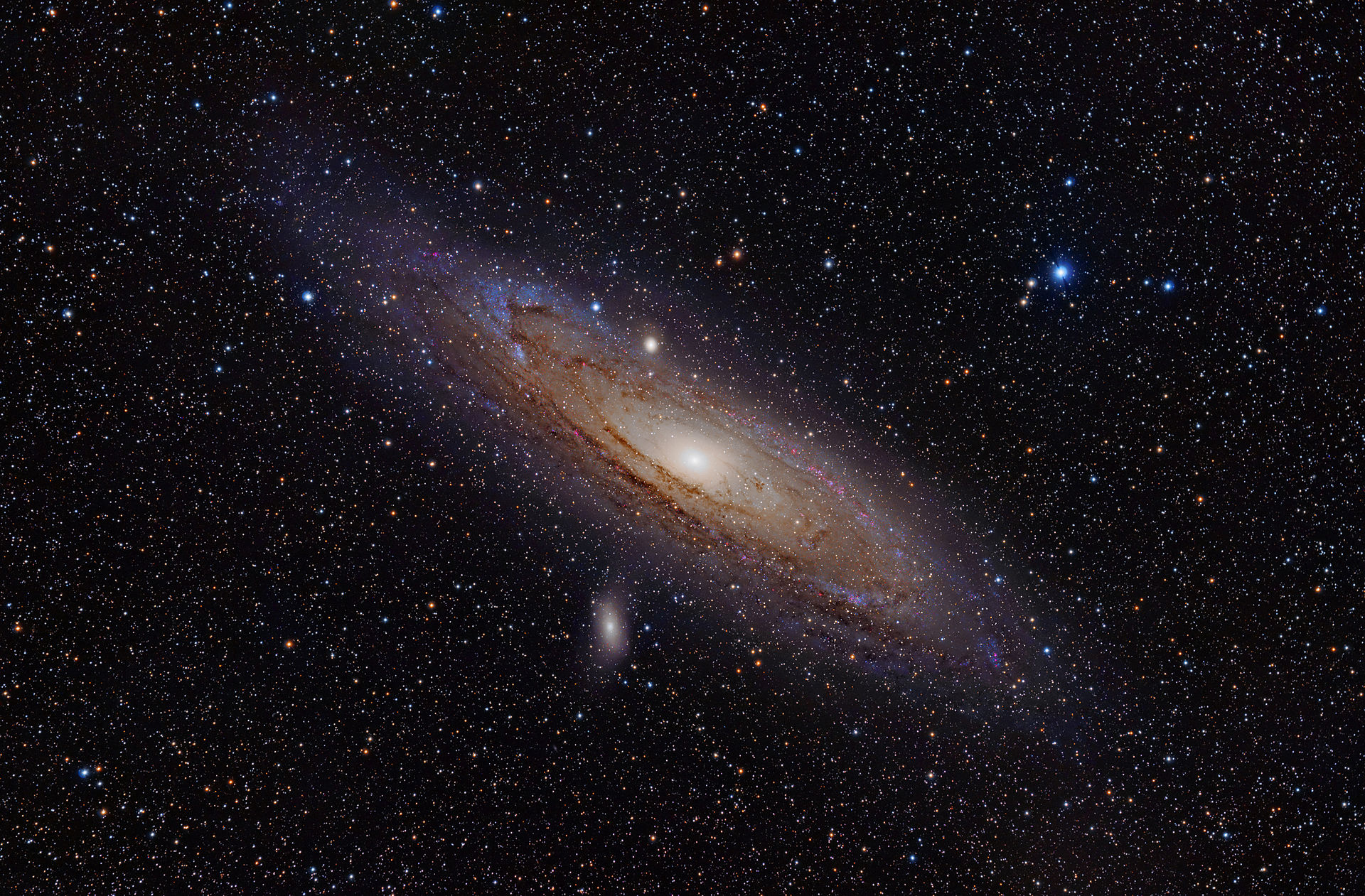
Let’s begin by acknowledging up front that, yes, there is a certain sense in which science – even believing in the credibility of science, and even more so practicing science – does indeed require a type of faith. For one thing and speaking very strictly, scientists do indeed accept on faith, first, the uniformity of physical law. How do we know, for example, that, say, the speed of light – 300,000 kilometers per second – is the same in, say, the Andromeda Galaxy as it is on the earth? That Newton’s gravitational constant (approximately 6.674 x 10⁻⁸ cm3/ gm / sec2) is the same? That water at sea level, i.e., the earth’s sea level and given the parameters of earth’s atmosphere, boils at 100 degrees C.? Speaking in the strictest possible sense, we don’t. No one has ever been to the Andromeda Galaxy and measured the speed of light or Newton’s constant or the boiling point of water empirically. Secondly, and in a far deeper sense – even in a sense far transcending the merely empirical – what assurance do we have that the language of mathematics is entirely adequate to describe and to predict natural phenomena? In fact, people who work in the field of the foundations of mathematics (1) cannot prove the unqualified consistency of mathematics itself and (2) can even prove that they cannot prove that consistency. (In fact, if you take a graduate-level course in the foundations of mathematics, and if you get your tuition-money’s worth, one of the milestones of the course will be the demonstration of the impossibility of proving the “global” consistency of mathematics. I well remember what a revelation this was for me:  I left the classroom that day shell-shocked and walking on auto-pilot in a kind of daze!) But scientists and mathematicians proceed on the basis of the assumption that physical law is uniform throughout the cosmos and that mathematics is likewise categorically consistent. In both cases, the uniformity of physical law and the consistency of mathematics, the following maxim is followed with, so to speak, religious rigor: “So Far, So Good”.
Andromeda_Galaxy_(with_h-alpha)

Furthermore, there is another reason, arguably as deep and as unverifiable as the consistency of mathematics, why, in a certain sense, the scientific enterprise proceeds on the basis of faith: the effectiveness of the scientific method itself. Even in principle, and least of all in practice, the effectiveness of the scientific method cannot itself be empirically demonstrated. How would you go about doing that? How would you go about formulating an experiment that would prove, even on the basis of “preponderance of evidence” and never mind “beyond reasonable doubt”, that the application of the scientific method results in “true truth” about the way the world works? What method would you use? If you answer “the scientific method”, then you have entered a vicious logical circle: you are using the very method whose validity you are seeking to assess. And even if you formulate an alternative methodology to the scientific method, the same question recurs: how would you go about assessing the effectiveness of that alternative? So accepting the effectiveness of the scientific method, like accepting the uniformity of physical law and the consistency of mathematics, is, at bottom, an act of faith on the part of the scientific community.
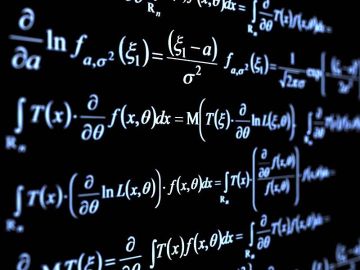
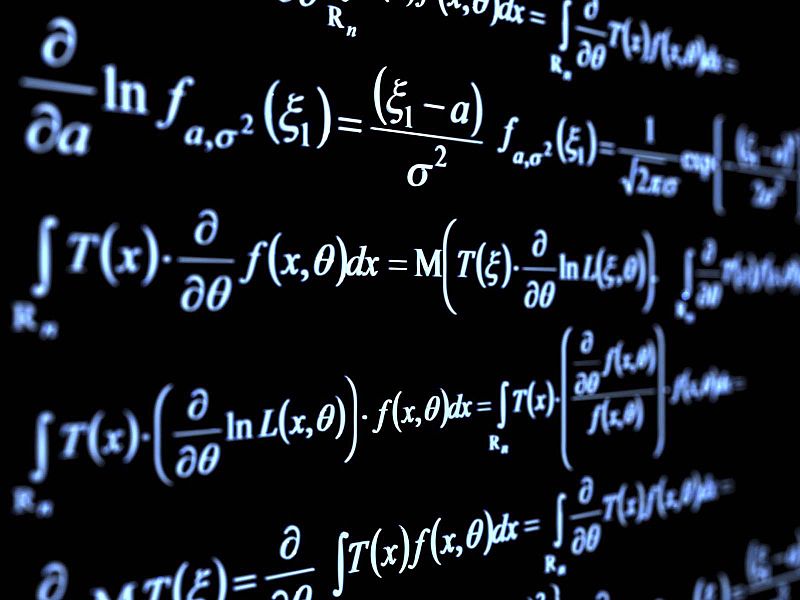
800px-Pure-mathematics-formulæ-blackboard

So what is it that distinguishes “scientific / rational faith” from religious faith? Do religious apologists perhaps have a valid point when they assert that belief in science and in rationality requires “just as much faith” as belief in God? My answer is “No”, and for a couple of interrelated – arguably synonymous – reasons.

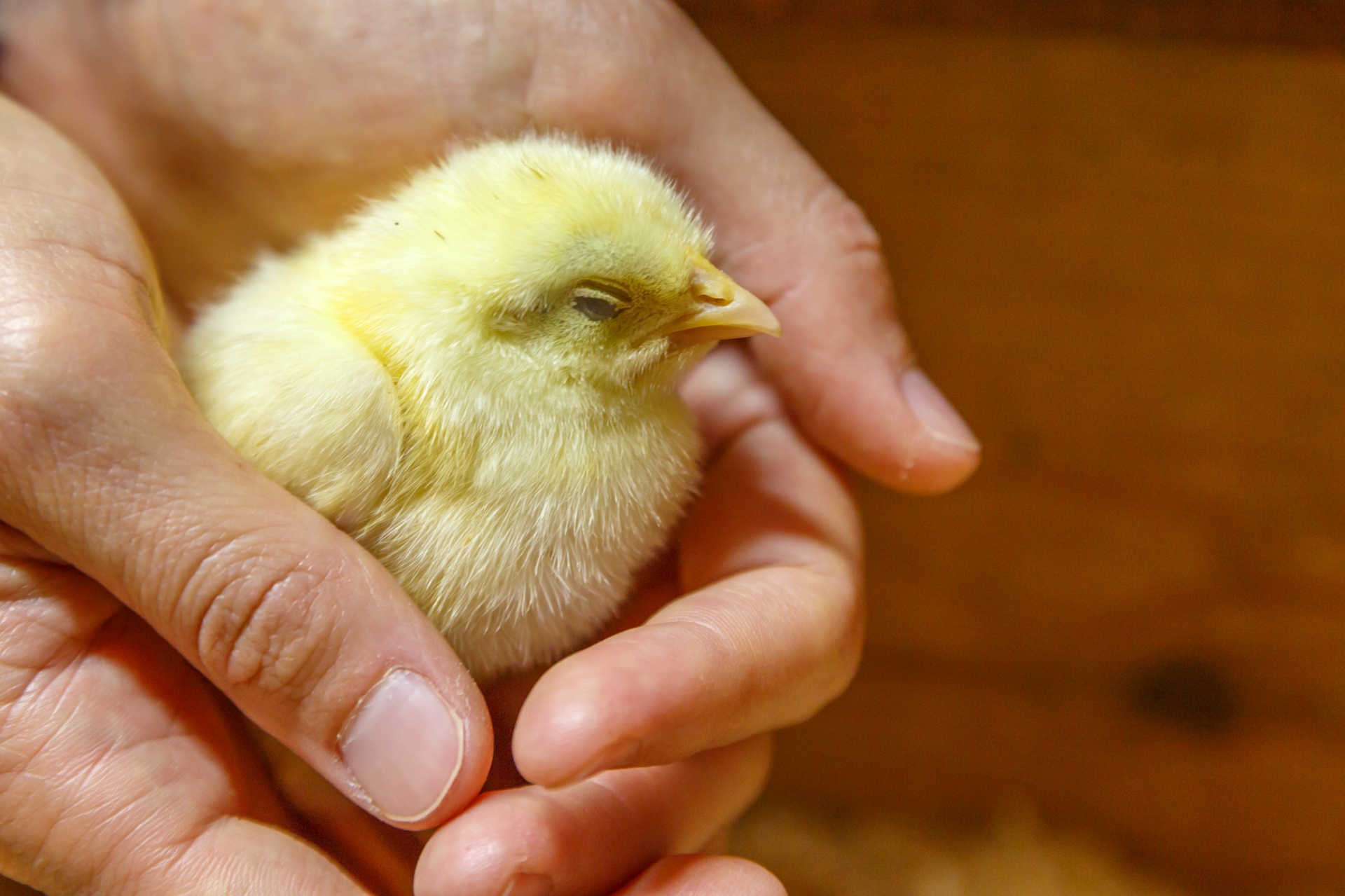
First of all, like scientific data and scientific theories, even the deepest principles of science, in fact, of all fields of rational inquiry, are always held tentatively, as it were, lightly resting in the hollow of one’s hand like a newborn baby chick. At any given time, literally everything – data, theories, verification / falsification protocols and methodologies, etc. … everything – is always in principle up for grabs. I say “in principle” because, the more entrenched a theory is, of course, the greater the volume of data that substantiates it, the greater must be the volume of data required for disconfirmation. As the late Carl Sagan remarked in the same context, “Extraordinary claims require extraordinary evidence”.

An excellent recent example of this tentativeness of even the most venerable and exhaustively substantiated of scientific theories is what was at one point believed to be the possible observation of faster-than-light neutrinos at the European Center for Nuclear Research (CERN … the acronym is French) in Geneva, Switzerland. If confirmed by other investigators, faster-than-light neutrinos would have resulted in the collapse of one of the main supporting pillars of 20th– and 21st-century physics: Einstein’s special theory of relativity. In a few weeks, it became evident that the neutrinos appeared to exceed the speed of light because of improperly configured equipment, both at the emitting and detecting ends. Once the equipment was correctly configured, the appearance of superluminal velocities for neutrinos vanished. For my purposes, the most important take-away is this: scientists at CERN were willing to consider this possibility and investigate the data obtained from the CERN instruments, even if it meant that Albert Einstein and his cornerstone theory – along with most of contemporary physics founded thereon – were seriously wrong.
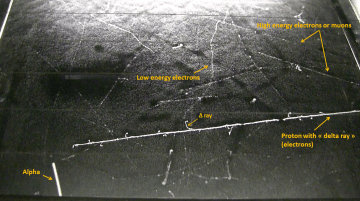
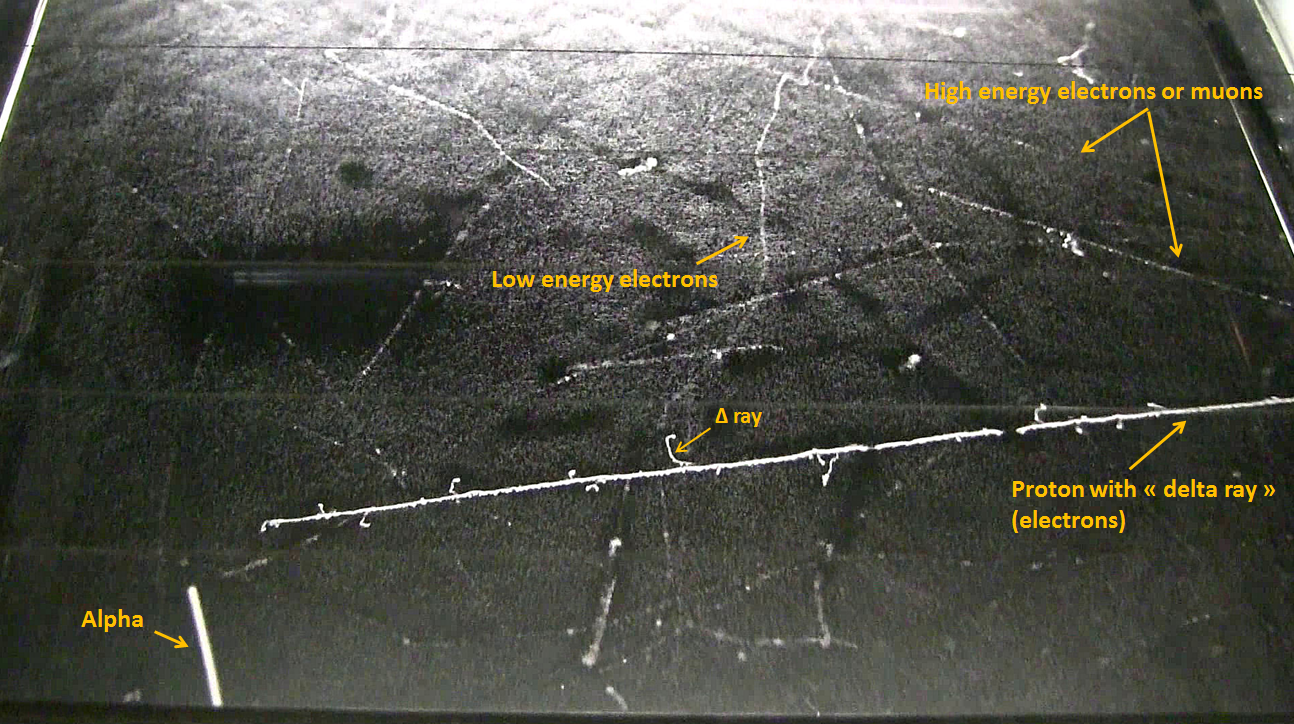
Nuclear_particle_in_a_diffusion_cloud_chamber

With religion, by contrast, there are certain teachings that are taken to be “irreformable”, therefore unchangeable. We usually think of the “irreformability” of religious teachings as characteristics of very conservative religious groups, most obviously fundamentalist sects. But all religions, even the most liberal, have such. Even with, say, liberal Anglicanism / Episcopalianism not literally everything is “up for grabs”. With regard to these teachings and principles, which vary from religious group to religious group, the maxim to be followed is most decidedly not “So Far, So Good”. The Bible, for example, is – in some sense, no matter how highly nuanced and qualified – seen as authoritative – in some sense, no matter how highly nuanced and qualified. Furthermore, if one relaxes the constraints on religious doctrine, and dials down “not up for grabs-ness”, to the point that literally everything is “up for grabs”, then one arrives at a religion that is in principle indistinguishable from science – or at least, from some rational area of inquiry. One ends up doing physics or chemistry or math or history, just wearing a mitre and carrying a crozier. The nature of all religious faith – properly so called – is that some things, however few, are seen as non-negotiable — not merely because they have worked so far, as in science, but intrinsically and in principle non-negotiable, i.e. more like the value of the number pi than a recipe for making a pie. (Yeah … OK … I know … sorry … )
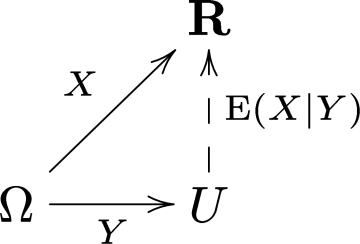
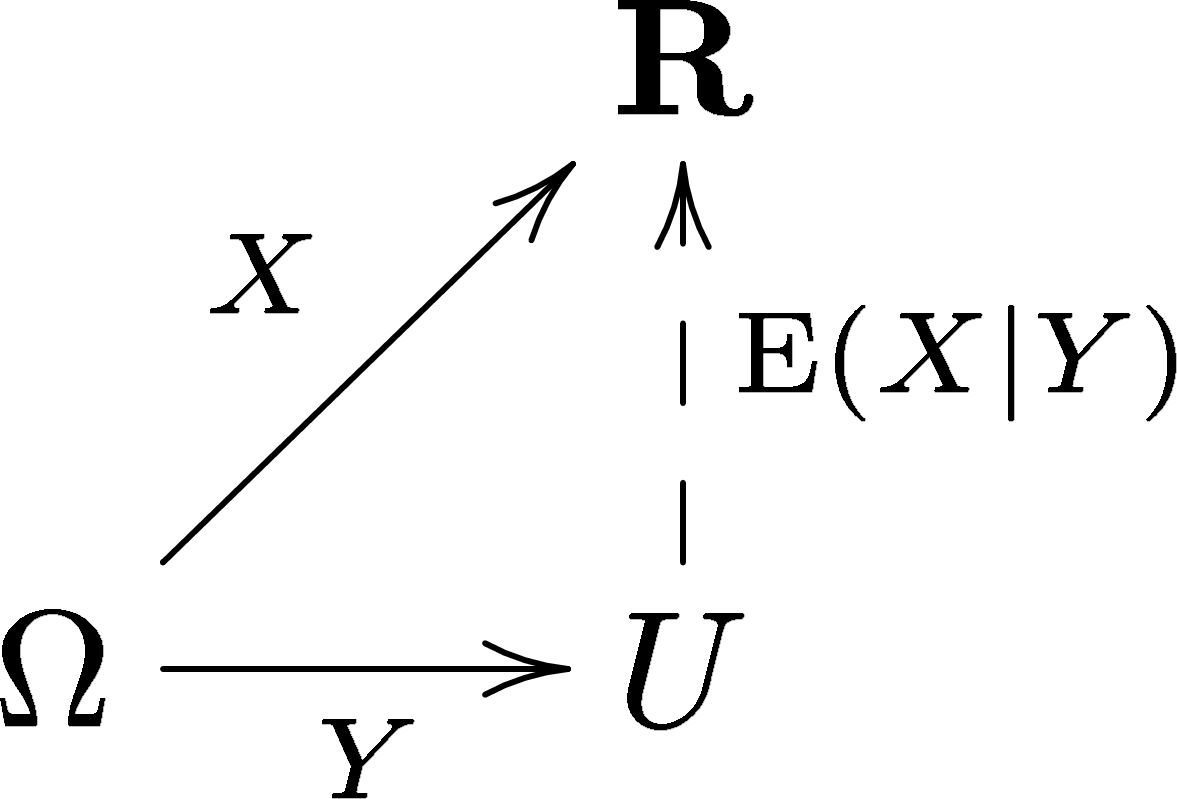
Conditional_expectation_commutative_diagram

This is true because another difference between scientific / rational faith, on the one hand, and religious faith, on the other, is that, in the former, there is fundamental agreement on two critical points: (1) the relevance of evidence, and (2) what counts as evidence. In science and in other forms of rational inquiry, hypotheses live and die according to the evidence, be it evidence for or against. In fact, in at least one important way, evidence against is even more critical and determinative than evidence for. This is why it is often said that scientific theories must be falsifiable. Suppose we hypothesize “All crows are black”. We may find thousands, millions, billions … of instances of black crows. But the hypothesis is proven false by finding a single white — actually, any non-black — crow. So important is falsifiability that hypotheses that are not falsifiable do not even count as science. Poetry, maybe. Narrative fiction, maybe. But not science. In a very real sense, scientific theories cannot be proven, only falsified. Similar remarks apply to other fields of rational inquiry. Roughly a century ago, it was widely believed that the British romantic poet William Wordsworth was always celibate … until it was discovered that, on his visit to France shortly after the Revolution, he became romantically involved with a woman, Annette Vallon. The hypothesis of the celibate Wordsworth was falsified with a single counterexample. Annette Vallon was William Wordsworth’s white crow. This also tells us what counts as evidence in rational inquiry: data, empirical and verifiable facts. Consequently, rational faith consists in the willingness to assume a given hypothesis holds true until — but only until — the hypothesis is disconfirmed by a single counterexample. This is why I said earlier that scientific theories are held on the back of the hand like a baby chick in the hollow of one’s hand.
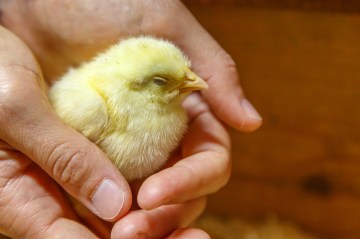
chick-in-hands-1446893155zjO

The place of evidence is one of the most critical ways in which rational faith (science, but not only science) differs from religious faith, both in terms of (1) and (2), above (the relevance of evidence and what counts as evidence, respectively). In fact, and tragically, wars have been fought and blood has been shed over both these issues, and the matter is still not settled. Does the Pope’s pronouncement count as evidence in favor of the Perpetual Virginity of Mary? Does the Shroud of Turin count as evidence for the actual, space-time-historical Resurrection of Jesus Christ? You interpret the Bible one way; I, another. Furthermore, the two interpretations are logically and diametrically opposed. Both cannot be right. Both may be wrong. What would count as evidence either way?

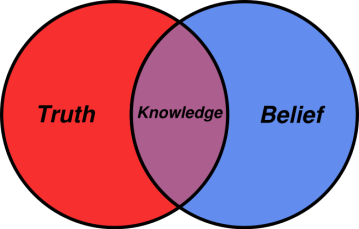
One may well object that expecting scientific evidence — or, anyway, evidence that would satisfy the demands of a rational intellect — for religious / faith assertions is to commit a “category mistake”, like asking for evidence that the square root of two is green. Rational assertions and “faith assertions”, this argument continues, are two fundamentally different species of sentences, and, accordingly, require different types of evidence and different methodologies to substantiate them. This was, in fact, the late Prof. Stephen Jay Gould’s position: science / rationality and religious faith represent what Gould called “non-overlapping magisteria” (NOMA — the acronym was coined by Prof. Daniel Dennett of Tufts University and popularized by Prof. Richard Dawkins of Oxford). This is, I believe, the most compelling account of the difference between rational faith and religious faith, and the categories of one cannot be used to critique the other. Again, whole libraries could be written on this issue, more space and time than I obviously have in a blog post.
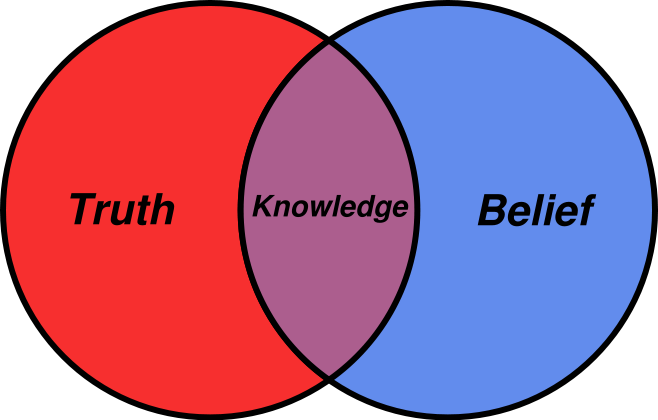
658px-Belief_Venn_diagram.svg

But the NOMA response does imply, as a corollary, the danger of founding law and public policy purely and exclusively on religious-faith assertions, e.g., homosexuality, abortion, the relationship between Church and State, etc. The nature of rational faith is such that it is founded upon, and open to revision by, evidence that is objectively real and evident to all inquirers. The speed of light is 300,000 km / sec for all observers, irrespective of location. Accordingly, laws and public policies that are binding on everyone in a free, constitutionally governed society should be based on considerations that cross all lines of race, socio-economic class, ethnicity,etc. (Considerations of common law and custom also enter in, not just “hard data”. For example, one argument commonly advanced in favor of capital punishment is its universality within the Western legal tradition. But even here, the custom must be virtually universal, almost like the speed of light. Common-law responses to issues like capital punishment must also take into account the fact that cultures change, e.g., there was a time when debtors’ prisons were acceptable as punishment for financial insolvency.) This is not an infringement on freedom, unless one wants to argue that one should be “free” to “choose” to go faster than the speed of light. However, religious faith, by the nature of NOMA, impinges on areas that are largely personal and historically conditioned, circumstances that, in such a society, one is free, from the standpoint of civil law, to abide by or not. In undertaking rational discourse, one is speaking and investigating in terms that are, in the highest sense, universally binding — not in terms of “ought”, but in terms of “is”. In undertaking religious discourse, one is speaking and investigating in terms that are, by their very nature, binding only in terms of “ought”, and even then only with respect to oneself and one’s experience as part of a religious community.

© James R. Cowles

(Postscript: In the interest of fairness, I should note for the record that Prof. Dawkins disagrees with Gould on the matter of NOMA. Dawkins believes that the existence of God is a scientific hypothesis that can be addressed scientifically, because there are not, as Gould argues, two “magisteria”, only one. For Gould’s position, see his 1997 essay in the magazine Natural History, “Non-Overlapping Magisteria” and his subsequent [1999] book Rock of Ages. For Dawkins’ position, see his book The God Delusion. I have problems with both. Gould’s approach perhaps works for non-historical religions. But the three great monotheisms — Christianity, Islam, and Judaism — are emphatically not non-historical: for all three, God leaves Her / His fingerprints all over the universe and human history, and the moment you begin to talk about God being present in and acting in history, the wall between the two “magisteria” has been breached. Dawkins needs to specify a prior criterion by which we can determine whether or not a supposed artifact is of intelligent or natural origin. This is especially difficult because, as far as we know, the universe we inhabit only came into being one time. See Hume’s critique of Paley’s “Divine Watchmaker” argument.)

Image credits
Rainbow Infinity … publicdomainpictures.com … public domain
Andromeda galaxy … Adam Evans … Creative Commons 2.0
Math formulas … WikiMedia Commons … public domain
Cloud chamber tracks … Creative Commons by SA 3.0
Conditional reasoning diagram … David Benbennick … Creative Commons by SA 3.0
Baby chick … Petr Kratochvil … public domain
Truth-Belief diagram … public domain