The hoopoes are back,
even though
the walls and holes they liked to nest in
were destroyed by human nest builders
four years ago,
when there was a housing boom
and money to be made.
The hoopoes are back,
even though
the new holes and rubble they liked to nest in
were destroyed by human nest builders
three years ago,
even though,
there was no market for nests
and no money to be made.
The hoopoes are back,
even though
the new holes and rubble they liked to nest in
were washed away two years ago,
as the walls that stopped the storm flow
were destroyed by human nest builders,
to prepare the ground for money to be made.
The hoopoes are back,
even though
their nesting places are hidden, buried
under growing mountains of rubble brought
by the human nest builders a year ago
as there is no demand for human nests
and no money to be made, except from rubble.
Hey, the hoopoes are back! I’ve seen them!
The hoopoes are back!
– Lynn White
First published by Furry Writers Guild in Civilised Beasts Anthology, 2015, Weasel Press
I have fallen in love with Nature and intend to grow with it until death – and beyond. This is an Environmental Justice that is not at all fair or dispassionate. It is rather the opposite. It is a righteous sensibility, a championing of something I highly and intimately respect.
(photo credit: Steve Wiencek)
It started with admiration and wonder, as if worshiping my adolescent crush from afar. I saw my first Rocky Mountain while on vacation when I was ten years old and living in Illinois. I felt emotions bigger than all outdoors welling up in my small breast and had no idea how to respond except by singing John Denver songs lustily by heart at the top of my lungs. It was a hormonal, corporeal, visceral attraction. I felt my own biology resonating with Earth but had no idea how to develop a relationship with it. So, I did what any lovestruck Midwestern pre-teen would do: I started inventing ways to rendezvous with it in a haphazard way. I played in the woods across the street every day. I started an Ecology Club in 6th grade, which meant that I stayed after school to pick up trash in the schoolyard. (No one joined me.) I kept up with Girl Scouts so that I could go camping and hiking. Gradually, I felt more connected and responsible in the relationship. When we moved to California, I had the opportunity to take it to the next level. I explored coastline, redwood forests, Sierra mountaintops and Joshua tree deserts. And I experienced betrayal and heartbreak for the first time. I visited my college of choice in Southern California in March. Palm trees lined the streets of town, and the view of snow-capped Mt. Baldy from campus was clear and inviting. But when I moved into the dorm in late August, there was a brown haze in the air and Mt. Baldy was a shadow. Looking straight up into the sky, the blue color I expected looked more like the rinse water from a dirty paint brush. I was deeply sickened – homesick, heartsick, and ashamed. The betrayal was against Nature, but Nature never betrayed me. When my husband was dying and my four teenagers were exhibiting traumatized responses in almost every manifestation of self-abuse, I would walk to the prairie near my house for sanctuary. From the moment I stepped off the sidewalk and onto the path, I could feel healing in process. Touching Earth with my feet, breathing the scent of flowers and rain and decaying leaves, listening deeply to the song of birds and wind, I knew that every manner of thing was in a state of change and that it was ultimately okay. How I knew that, I was not able to articulate. I just kept coming back, arriving in tears and leaving in peace, righted.
(photo credit: Steve Wiencek)
This sense called Justice lies in the valley between Love and Suffering. Its orientation is in the shadow of those monumental feelings. I love Nature. I feel her suffering. I want to protect my Beloved’s health. I want to preserve her dignity, to fight for her autonomy and to respect her individuality. At the same time, human interference is the biggest factor in Nature’s distress. How can I care for my Beloved and do no harm? This is the question lovers ask when they’ve been together for a while.
“Do no harm.” It is a koan, an impossible concept that plunges me into a metaphysical dilemma. How can I treat Nature justly? I delicately explore our relationship; I imagine the poetry of our situation; I try to love and defend her. Eventually, I will simply allow her to do as she will and absorb me. This, I suppose, will usher in our eternal peace together.
(photo credit: Steve Wiencek)
The love affair metaphor engages my emotions and focuses on my experience. But Nature is a cosmic Beloved beyond my comprehension. It is mystery and reality and demands my humility. My perspective is challenged in every moment, and this is good for me. More important, this is Good. It is the Truth.
no church bells or calls to prayer have been heard doves now rest near sacred texts doves safer now now that man is no more for his wars have finally brought about nature’s reign and the long sought after peace peace came quickly such weapons assured no prolonged battles death rained down upon humankind with well designed destruction targeted to war’s given species to protect the environment for survivors of which there were none how bright the sun without concrete structures how quiet the night without human fights how well the earth has become without its caretakers
It can be exhausting being a champion for the environment. At times, it can seem like there are just too many people who don’t care, or that the staggering amount of money involved in keeping the harmful status quo of wrecking the earth is insurmountable. It can be depressing and overwhelming, and it’s something that any serious activist will have to come to terms with on a daily basis.
That’s why celebrating the victories, both big and small, is so important. They keep us going, show us that we’re on the right path, despite the odds. They show us that we DO matter – to the people, the wildlife and the land that we save. Here are just a few of the big environmental “wins” within the last year. The next time you get discouraged, remember this list and hold your head high…you DO make a difference!
Yes, I know, I know, it’s a boring list of links. This may look uninspiring until you actually follow them and see exactly how many people really DO care about this planet and all the wonderful work these and other organizations are doing. I hope you’ll at least check them out. (Links will open up a new window.) 🙂
********************************************************** Bonus: Here are a few quizzes (who doesn’t like quizzes?) to test some of your environmental and climate change savvy:
There is a pleasure in the pathless woods,
There is a rapture on the lonely shore,
There is society, where none intrudes,
By the deep sea, and music in its roar:
I love not man the less, but Nature more,
From these our interviews, in which I steal
From all I may be, or have been before,
To mingle with the Universe, and feel
What I can ne’er express, yet cannot all conceal
Gordon George Byron, Lord Byron
from Childe Harold, Canto iv, Verse 178
abundance lifted on the arc of time
then the folding in ~
the circular successions of creation and negation
forever changing, dark and luminous
nature and destiny, coming and passing
ever active, whole, eternally nameless
the wild river, the still mountain
the wordless mystery
“For whatever we lose (like a you or a me)
It’s always our self we find in the sea”
E.E. Cummings
The angel who smells of my childhood
My mother, piano and oboe
Whose face the icon reflects
Auburn hair like a Modigliani
Eyes the color of rain
Light caught by surprise
Whose presence the absence reveals
Whose laughter burns snow
Whose warm breath I breathed
This morning as I woke
The scent of gardenias whispering
I never left you
Hollie Poetry a.k.a. Hollie McNish, poet, author and spoken word artist
“Born in Reading to Glaswegian parents, Hollie studied French and German at King’s College, Cambridge, before earning a master’s degree in Development Economics.Hollie won the UK Slam Poetry Competition in 2009 and went on to finish 3rd in the global Slam Du Monde contest. A collection of her poems, Papers was published by Greenwich Exchange in 2012.
“A number of Hollie’s YouTube videos have gone viral and her account currently has over 3.9 million views.McNish’s first album, Versus, was released in September 2014 under the pseudonym Hollie Poetry, she was the first poet to record an album at Abbey Road Studios.Hollie has collaborated with Kate Tempest and George the Poet and they have appeared on stage with her during her 2015 tour. McNish received major national airplay on the BBC, first in January 2015 on Huw Stephens BBC Radio 1 show and then in May 2015 on BBC Radio 1Xtra in as part of a spoken word event.” Wikipedia
Embarrassed
I thought it was okay, I could understand the reasons
They said, “There might
be a man or a nervous child
seeing this small piece of flesh that they
weren’t quite expecting.”
So I whispered and tip-toed with nervous discretion
But after six months of her life sat sitting on lids,
sipping on milk, nostrils sniffing on piss
Trying not to bang her head on toilet roll dispensers
I wonder whether these public loo feeds offend her
‘Cause I’m getting tired of discretion and being polite
As my baby’s first sips are drowned drenched in shite
I spent the first feeding months of her beautiful life
Feeling nervous and awkward and wanting everything right
Surrounded by family ‘til I stepped out the house
It took me eight weeks to get the confidence to go into town
Now, the comments around me cut like a knife
As I rush into toilet cubicles
feeling nothing like nice
Because I’m giving her milk that’s not in a bottle
Which in the cocaine generation white powder would topple
I see pyramids, sales pitches, across our green globe
And female breasts–banned–unless they’re out just for show
And the more I go out, the more I can’t stand it
I walk into town, feel I’m surrounded by bandits
‘Cause in this country of billboards, covered in tits
And family newsagent magazines full of it
WH Smith top shelf’s out for men
Why don’t you complain about them then?
In this country of billboards, covered in tits
And family newsagent magazines full of it
W.H. Smith top shelves out for men
I’m getting embarrassed in case
a small flash of flesh might offend
And I’m not trying to parade it
I don’t want to make a show
But when I’m told I’d be better just staying at home
And when another friend
I know is thrown off a bus
And another mother told to get out of a pub
Even my grandma said that maybe I was sexing it up
And I’m sure the milk-makers love all this fuss
All the cussing, and worry, and looks of disgust
As another mother turns from nipples to powder
Ashamed or embarrassed by the comments around her
And as I hold her head up and pull my cartie across
And she sips on that liquor made from everyone’s God
I think, For God’s sake, Jesus drank it
So did Siddhartha, Muhammad, and Moses
And both of their fathers
Ganesh, and Shiva and Brigit and Buddha
And I’m sure they weren’t doing it sniffing on piss
As their mothers sat embarrassed sitting on cold toilet lids
In a country of billboards covered in tits
In a country of low-cut tops cleavage and skin
In a country of clothed bags and recycling bins
And as I desperately try to take all of this in
I hold her head up, I can’t get my head round the anger
Towards us and not to the sound of lorries
Off-loading formula milk
Into countries dripping in filth
In towns where breasts are oases of life
Now dried up in two-for-one offers enticed by labels, and gold standard rights
Claiming that breast milk is healthier, powdered and white
Packaged marketed and branded and sold at a price
That nothing is free in this money-fueled life
Which is fine if you need it or prefer to use bottles
Where water is clean and bacteria boiled
But in towns where they drown in pollution and sewage
Bottled kids die and they know that they do it
In towns where pennies are savored like sweets
We’re now paying for one thing that’s always been free
In towns empty of hospital beds, babies die,
Diarrhea-fueled, that breastmilk would end
So no more will I sit on these cold toilet lids
No matter how embarrassed I feel as she sips
Because in this country of billboards, covered in tits
I think we should try to get used to this
پاس په كمر ولاړه ګله! نصيب دچايي اوبه زه درخيژومه O Flower that you grow on the mountain side; The duty to water you belongs to me, but to whom would you belong?
ستا به د ګلو دوران تير شۍ به پاته شۍ دزړه سوۍ داغونه The blooming season of your beauty will pass; But the scorched patches on my heart will always remain fresh.
Zarmina’s parents at her grave. She was a poet who died after setting herself on fire. Photo by Seamus Murphy, 2012, Courtesy of the Pulitzer Center on Crisis Reporting
In June 2013 The Poetry Foundation, publisher of Poetry magazine, devoted the month’s issue to Landays, the traditional poetic form of Afghan women. . .
After learning the story of a teenage girl, Zarmina, who was forbidden to write poems and burned herself in protest, poet and journalist Eliza Griswold and photographer and filmmaker Seamus Murphy journeyed to Afghanistan to investigate the impact of the girl’s death, as well as the role that poetry plays in the lives of contemporary Pashtuns. A year later, Griswold and Murphy returned to Afghanistan to study the effects of more than a decade of U.S. military involvement on the culture and lives of Afghan women. In the course of this work, Griswold collected a selection of landays, or two-line poems. These poems are accompanied by Murphy’s photographs from the same period and are presented in the June 2013 issue of Poetry. You can read it HERE and see all the photos as well.
My pains grow as my life dwindles, I will die with a heart full of hope.
A report on death and love by Eliza Grizwold and Seamus Murphy, a project of the Pulitzer Center on Crisis Reporting. .
.Griswold describes the characteristics of a landay in her introduction: “Twenty-two syllables: nine in the first line, thirteen in the second. The poem ends with the sound “ma” or “na.” Sometimes they rhyme, but more often not. . “In Pashto, they lilt internally from word to word in a kind of two-line lullaby that belies the sharpness of their content, which is distinctive not only for its beauty, bawdiness, and wit, but also for the piercing ability to articulate a common truth about war, separation, homeland, grief, or love. Landays are centuries-old custom among Afghans, traditionally passed along in the oral tradition, and passed down through generations. The topics of the landays included in the June 2013 issue run the gamut—love, marriage, war, the status of women, drones, politics, courage, nature, and the Internet. Sometimes humorous, sometimes heartbreaking, these captivating two-line poems offer unique insight into the contemporary life of the more than twenty million Pashtun women who span the border between Afghanistan and Pakistan.” .
*****
About Poetry Founded in Chicago by Harriet Monroe in 1912, Poetry is the oldest monthly devoted to verse in the English-speaking world. Monroe’s “Open Door” policy, set forth in Volume 1 of the magazine, remains the most succinct statement of Poetry’s mission: to print the best poetry written today, in whatever style, genre, or approach. The magazine established its reputation early by publishing the first important poems of T.S. Eliot, Ezra Pound, Marianne Moore, Wallace Stevens, H.D., William Carlos Williams, Carl Sandburg, and other now-classic authors. In succeeding decades it has presented—often for the first time—works by virtually every major contemporary poet. The entire June 2013 issue is available online as of June 3 HERE. Digital copies of the June issue of Poetry magazine, as well as a digital subscription, are also available.
.
About the Poetry Foundation The Poetry Foundation, publisher of Poetry magazine, is an independent literary organization committed to a vigorous presence for poetry in our culture. It exists to discover and celebrate the best poetry and to place it before the largest possible audience. The Poetry Foundation seeks to be a leader in shaping a receptive climate for poetry by developing new audiences, creating new avenues for delivery, and encouraging new kinds of poetry through innovative literary prizes and programs. For more information, please visit http://www.poetryfoundation.org.
.
About Everything Afghanistan “Afghanistan’s recent history is a story of war and civil unrest. A country once prosperous now suffers from enormous poverty, a lack of skilled and educated workers, a crumbling infrastructure, and widespread land mines. It’s being heard about in the news every day but the media approaches this country from its dark side only. Here at Everything Afghanistan we try to show the world the other side of this war torn country. Despite years of bloodshed and destruction, there is still so much beauty that remains unseen. Here we post about Afghan related things, from politics and events to its culture and traditions. This blog is against the US invasion of Afghanistan.” Aminajalalzei, a.k.a. Vicoden.
.
About Mirman Baheer, the Ladies Literary Society “Over 300 members of Mirman Baheer, the Ladies Literary Society, stretch across the provinces of Afghanistan. Women write and recite landai, two-line folk poems that can be funny, sexy, raging or tragic and have traditionally dealt with love and grief. For many women, these poems allow them to express themselves free of social constraints and obligations. 5 out of 100 women in Afghanistan graduate from high school, and most are married by the age of 16. This kind of expression is looked down upon in society, forcing the women writing to keep their craft a secret.” The Pulitzer Center on Crisis Reporting Meetings of the poetry society are held in Kabul, but with 8 out of 10 Afghanistan women residing in rural areas, many women call in to the meetings. Zarmina Shehadi was one of those callers. She lit herself on fire two years ago. Her family denies her suicide, claiming that she lit herself on fire to get warm after a bath. “She was a good girl, an uneducated girl. Our girls don’t want to go to school,” her mother said. Zarmina is the most recent of Afghanistan’s poet-martyrs.
.
About the Pulitzer Center on Crisis Reporting The Pulitzer Center on Crisis Reporting is an innovative award-winning non-profit journalism organization dedicated to supporting the independent international journalism that U.S. media organizations are increasingly less able to undertake. The Center focuses on under-reported topics, promoting high-quality international reporting and creating platforms that reach broad and diverse audiences. .MOREPhoto credit ~ Seamus Murphy for The Pulitzer Center on Crisis Reporting Video by Seamus Murphy for the Pulitzer Center on Crisis Reporting
i admit, it’s so tender, unspoiled
tongue forages for right words ~
they always carry the light of spirit,
always merge with the mind and
the heart, always temper and
heal, if you use the right ones,
if you use them the right way,
the way of what we call
“true” love, lasting love, love
that speaks in every moment,
every expression, “ true love,”
stale language, though; hollow,
banal, clichéd, tired, hackneyed,
used up . . . so let us say “authentic”
“constant” or “ardent” … all that and tireless, Yes! , tireless – your tireless
warmth redeems my old dreams
from their prison of lost hope
“Trust me, though, the words were on their way, and when they arrived, Liesel would hold them in her hands like the clouds, and she would wring them out like rain.” Markus Zusak, The Book Thief
He husbanded her ash for years; when the wind blew, he’d place some,
as if it were pollen and he a reverse bee,
upon a plant or low-hanging tree, and wait, downwind,
for its caress.
He would feel himself then weeping
into her hands, though it would seem to others
(if anyone had seen) just wind in his eyes.
But he worried as he aged
that he was using the ash too fast, that it wouldn’t last him, or worse–
and this was worse–
that he’d been self-indulgent with his machinations, and that in his wish to hold on to her, he’d never let her rest, that he had wrested her from
the singular life of ash, one eddying release, the possibility
of well-spring–
So he took the ash to a lake she’d loved
and sat there with the box–he’d never been able to transfer her
to an urn, she hated the taste
of metal–
which held inside the tied plastic, and inside that, the ash,
just sat there for some time,
with no leaves that could blow, just lake, and ripples of lake,
until he opened the box, the plastic, dipping palms into the soft remains,
until, not even looking–late for a lakeside–he pulled off shirt and shorts, and rubbed the ash like some tribal warrior over his thighs and calves, his knees and the backs of his knees, arms and belly, chest and shoulders, neck and nape of neck, and
his face.
He did cry–for her, for himself, and for the ridiculousness of himself, standing there not a warrior, on even a beach that was embarrassed, and the tears made rivulets
in the tightness of drying ash;
and he looked down at his legs, his torso, at the hair that was flattened by the ash, and at the hair that sprouted through the ashen mats, trying to feel something other than
the crusted rim of his own skin
until, slowly, he walked into the water, which took him aback with its warmth–
It was water that still held the day, water that held him too now with the day,
water where grey unwound.
“Life is what happens to you while you’re busy making other plans.” ~ John Lennon
I had plans for this post to be something extra special and was hoping to impart some hard-learned wisdom about the nature of expectations and desires. But…I’ve started and stopped, edited and deleted so many times now that I’m just going to try and keep it short and to the point. I’m not succinct by nature, and I don’t know if I ever will be. I can practice and aspire to it, but perhaps wordiness is just a part of who I am. 🙂
Image from Buzzle.com
In Zen practices, we learn that Attachment is the root of all suffering, and expectations and desires come from what’s called the “wanting mind”. The “wanting mind” is part of our Ego, so it’s extra clever at making us attached to things of this world (including people). Expectations and desires are ways of being ‘attached’ to a certain outcome. You are better off trying to let them go, since no one can control the future…Life is what happens, remember?
I don’t think that most people are even aware of their own expectations until they become disappointed by them, and even then, many won’t realize that the reason they are disappointed is because of expectations – they will instead seek someone or something else to blame. So, awareness of your own expectations (whether they are self-expectations or expectations of other people) is the first, crucial step in letting them go.
Both expectations and desires are natural, human qualities. They’re normal, they happen, even when you try hard to get rid of them. The main bad thing about expectations is that you set yourself up to be disappointed, because you don’t appreciate the present moment – you are partially in the future, trying to predict or control an outcome of something (or someone). Being present in the moment allows you to accept life as it is, as it unfolds…”Life on Life’s terms”, so to speak; no stress or worry, no anxiety about what you want or wish it to be, but simple acceptance of what it is.
Image from Pinterest.com
If I could choose one thing for you to take away from this post, it would be to work on becoming more aware of and recognizing your own expectations and desires, and then let them go. You might write them all down on slips of paper and then burn them, releasing them in the process, or practice breathing in acceptance of things as they are, right now, and breathing out attachment to what you want it to be, letting it exit your body so that your mind may be clearer. It takes practice, but you will be happier and calmer for doing it.
I’ll leave you with a thought-provoking and common sense video regarding happiness and expectations. I’ll go so far as to say that I expect you might even enjoy it. 😉
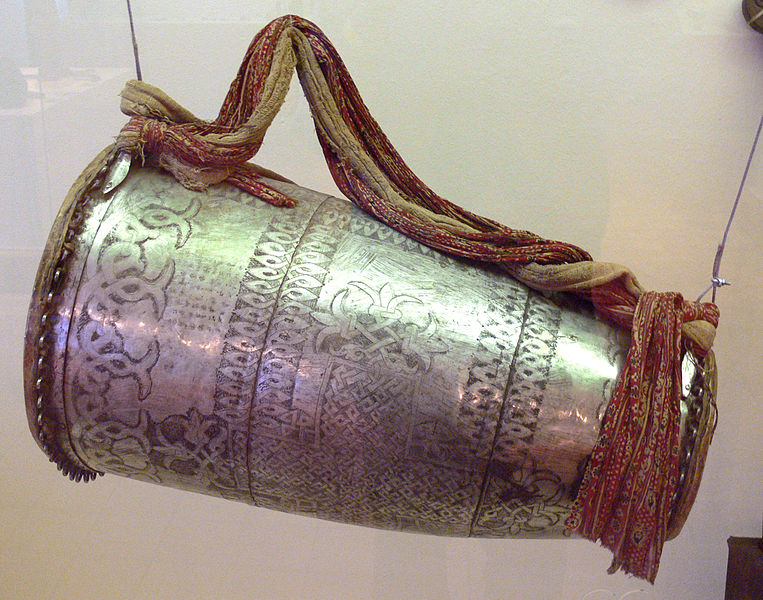
his hands flutter over and onto the kebero
a world constructed in the moments of sound
a world razed in the moments of silence
a rhythm of birth and rebirth
of heartbeat and life-blood
he’d gone to Africa, this young man
to chase down his roots
to buy exotic drums
to make rhythms with his brothers
to sing with his sisters
to learn, to grow, to come home and teach
he was full of grace, brimming with jazz
just rocking his universe, rolling with spirit
alight with green and gold,
the breath of wild savannas and
wilder cheetahs, monkey pranks
and elephantine tuskedness
what, i had to ask, was the take-away
after the safaris and the drumming
after the injera, the wat, the niter kibby
and berbere spices, the many fine meals
downed with ambo wuhteh
ah, he said, i met a sister
i was driving a forlorn road
she was walking alongside,
carrying a bundle of wood
i stopped and offered her a lift
no, she said, NO
if I ride today, i’ll want to ride tomorrow
it’s a recipe for unhappiness
she’s right, you know, he said
from wanting comes despair …
and so i drum, just drum, he said
his hands fluttering over and onto the kebero
a world constructed in the moments of sound
a world razed in the moments of silence
a rhythm of birth and rebirth and peace of heart
Let me introduce myself.
I’m the Memory Collector, your companion and spirit guide.
Let’s unwind the clock, peel the past.
The reflections you give me, conjure, surrender from within,
I throw into the fire, the cauldron of resolutions.
They burn into embers and flickers that evolve into butterflies.
They flutter away, free and heal of all strongholds
so they can revisit and reinvent who you are.
Let the dance begin.
I’m in my mother’s womb in Paris.
She’s scared. I want to get out.
I’m three years old in Terracina, Italy, sharing a room with four girls.
My grandfather visits from Greece.
He holds my brother on his lap
and says, a boy at last, I’m not impressed with girls.
I’m four years old, in Monte Carlo.
My mother takes me to school.
A pigeon poops on my scarf.
She reassures, it brings good luck.
I’m five years old, in Karben, Germany
It’s Saint Nicholas day, my birthday.
Marieluise feeds me Lebkuchen, Stollen and Pfeffernüssen.
They taste like heaven.
I’m six years old in ballet class in Geneva, breaking my point shoes.
The Russian master ingrains in me the correlation
between pleasure and pain.
I now know the two centers sit next to each other in the brain.
I’m seven years old, in the Swiss Alps, making
snowmen, skiing, hunting for Easter eggs.
My mother laughs then says, your father can’t be left alone.
I’m eight years old, in the Jura mountain, in love
with my dog, playing chess with my dad.
I’m ecstatic.
I’m nine years old.
My grandmother takes me to the market in Tarragona
to buy the bitter and pungent quince she craves.
I’m ten years old.
My cousin drowns me in the beautiful blue waters
of the Spanish Mediterranean because I threw sand at him.
My head hits the hard bottom, all the air’s gone from my lungs.
My last thought is, no one knows I’m here.
I’m eleven years old.
My mother makes jam with apricots, strawberries, peaches and plums.
She’s filled the house with the intoxicating scent of gardenias.
My brother throws another temper tantrum.
I’m twelve years old in math class, mad with laughter.
I’m thirteen years old.
The Music Conservatory in Geneva is sheer magic,
an enchanted world I inhabit alone, the key to my soul.
My piano teacher has such faith in me.
I’m fourteen years old, between worlds.
My aunt married a fascist. He grabs my dad by the throat.
It’s the middle of the night. It’s loud. I can’t sleep.
I’m fifteen years old, in Northern Wales,
riding a fabulous horse along stunning steep cliffs,
racing him to full gallop in bewitching Celtic wind,
relinquishing cravings in the dust.
I’m sixteen years old, off to San Diego.
My mother cries at the Paris airport.
She breaks my heart but the pull is stronger.
I’m learning to let go, trust the ripeness of the moment.
That everything happens at the right time.
To appreciate what I have.
I’m connected to my bones,
filled with the richness and texture of space, uplifted,
vibrating, reverberating. I become the sound
of Tibetan bells, echoing and hovering in the cosmos.
I perceive the whole world below, life in suspension.
“A love song cast upon the vastness of the deep … ” Carl Sagan
She came to me once in a dream
luminescent, clad in white, elated
so much younger than I ever knew her
thankful for my return to Chalkidiki.
Luminescent, clad in white, elated
for the first time since her abrupt departure
thankful for my return to Chalkidiki
where holy mountains stretch into sea.
For the first time since her abrupt departure
monasteries sculpted high on rocks lance skies and suns
where holy mountains stretch into sea
trident beckoning the Aegean.
Monasteries sculpted high on rocks lance skies and suns
direct line to God
trident beckoning the Aegean.
She embraced me with such love,
direct line to God
we were one.
She embraced me with such love,
pain or suffering never existed
we were one.
No resources wasted like bread in empty houses
where pain or suffering no longer exist.
Only bliss and she the flower Mage
no resources wasted like bread in empty houses
she makes me gardener of memories.
Only bliss and she the flower Mage
roses climbing back into my life
she makes me gardener of memories.
I wake with sheer joy
roses climbing back into my life
I too sea, sand, wind, and pine honey.
I wake with sheer joy
beams of love and innocence
I too sea, sand, wind, and pine honey
altered like a glimpse into now.
Beams of love and innocence
so much younger than I ever knew her
altered like a glimpse into now
she came to me once in a dream.
 the open sky


 abundance lifted on the arc of time