All That Matters

Once upon a time, there were a bunch of Big Brains who decided that living things (which they rarely called ‘living beings’) needed to be neatly organized. Grouping things together based on similarity was important to them for some reason. So they made up categories and named them Kingdom, Phylum, Class, Order, Family, Genus, Species, in succession from broad to specific. Then they had to remember these categories, so they memorized “Kindly Professors Cannot Often Fail Good Students” – apropos of nothing much. (Personally, I think “Kindly People Courageously Offer Fauna/Flora General Sympathy” might make better sense.)

Meanwhile, some other Big Brains decided that everything in the Universe was made by one Creator and that He gave humans dominion over all the other animal species on Earth and gave every plant for human use. That made them feel they were Most Important among the creatures on the planet. They felt very comfortable with that and valued themselves, and those that looked and acted most like them, very highly. 

As for those creatures who were terribly different from them, well, they were kind of “icky”.

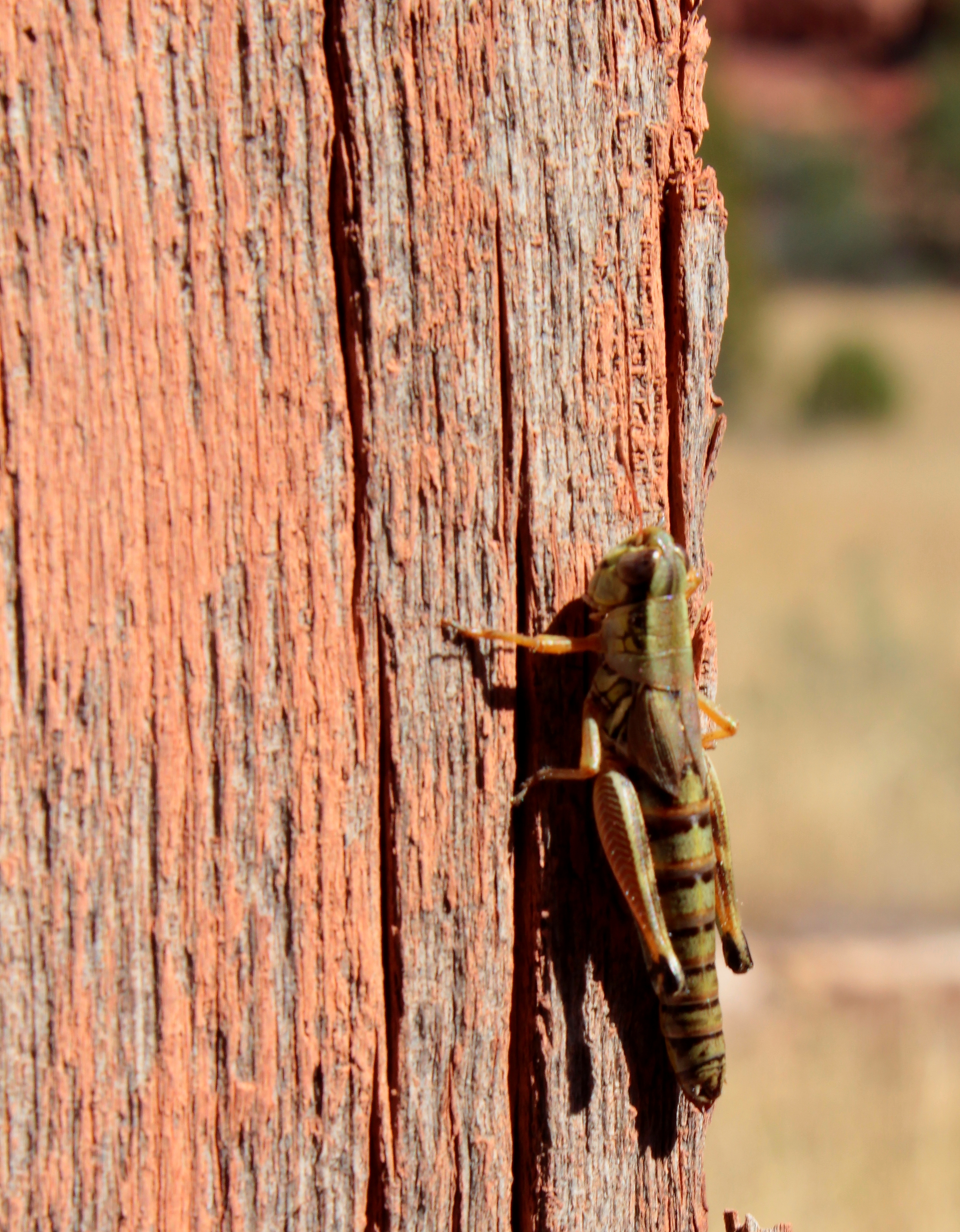
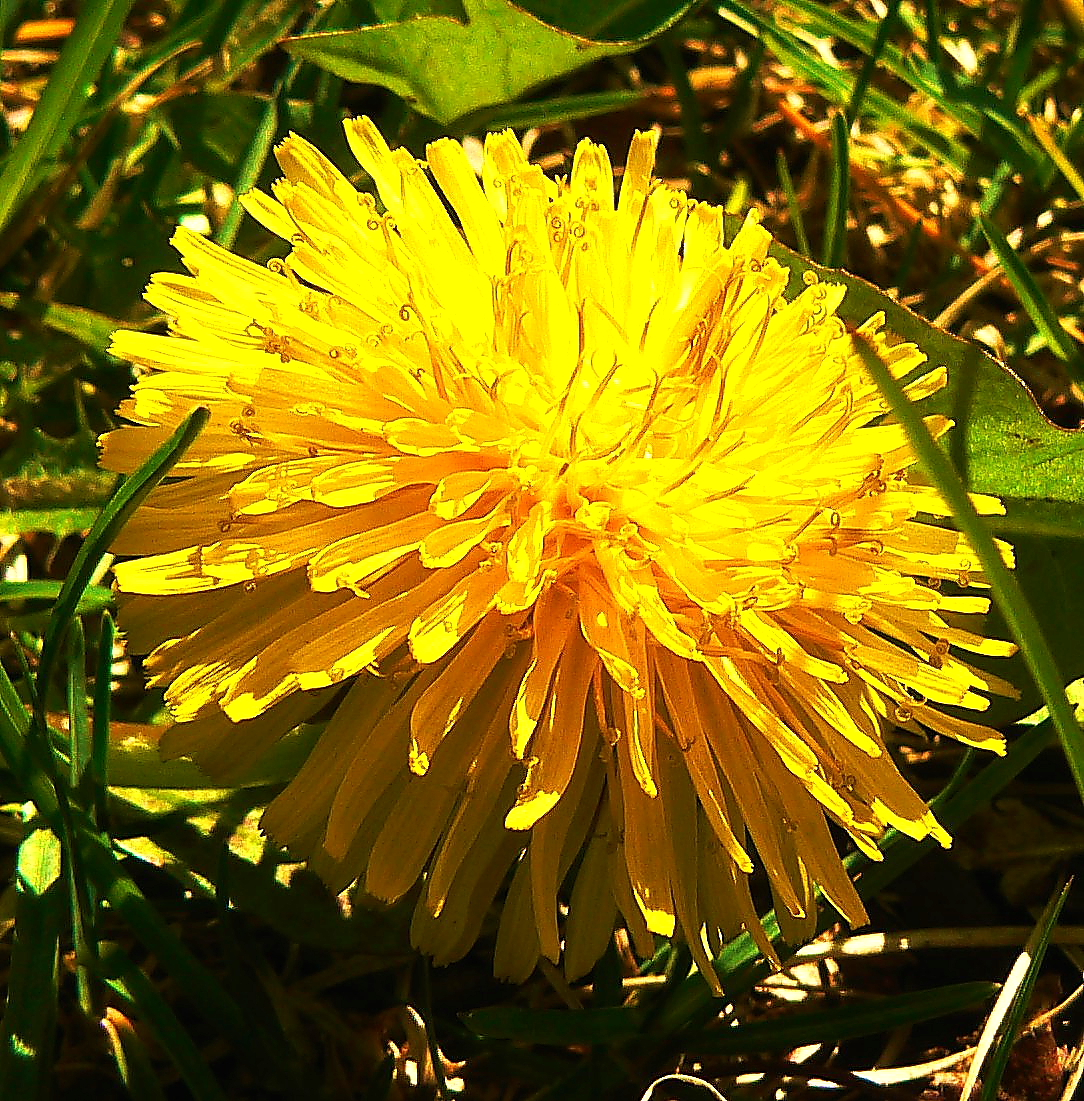
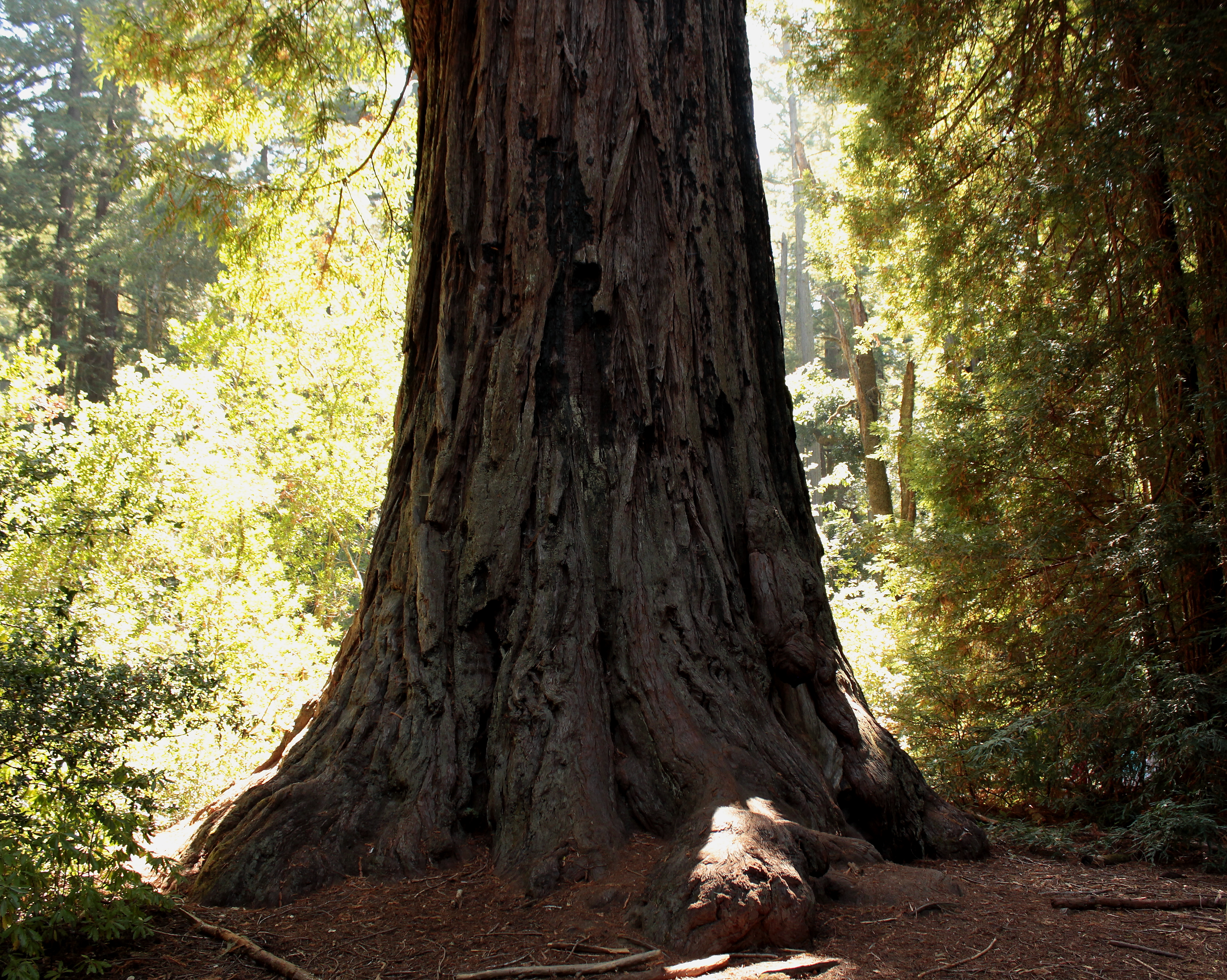
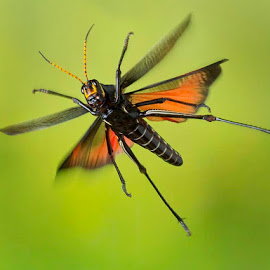
Well, these Big Brains were very clever. They prospered and multiplied (and divided and conjugated and came up with quantum physics). They learned how to make a Big Impact on the Earth, making things they liked out of the raw materials Earth had. And every year, there were more of them. They liked to be comfortable, so they tried to eliminate things that bothered them. Like locusts. grasshopper And dandelions. Dandelion They liked to be powerful, so they claimed victories over other living things that had power. Like lions. lioness And giant sequoias. sequoia
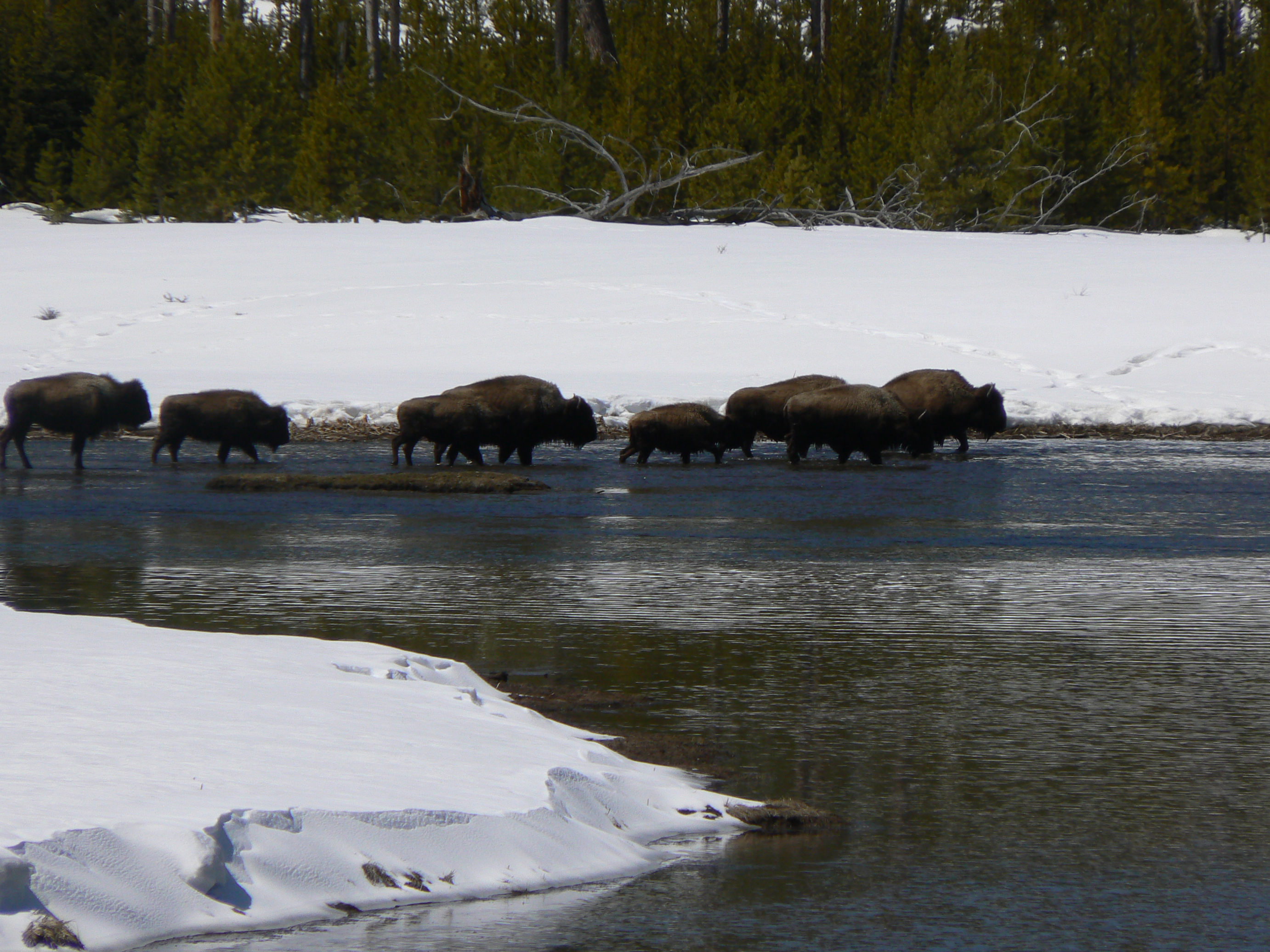
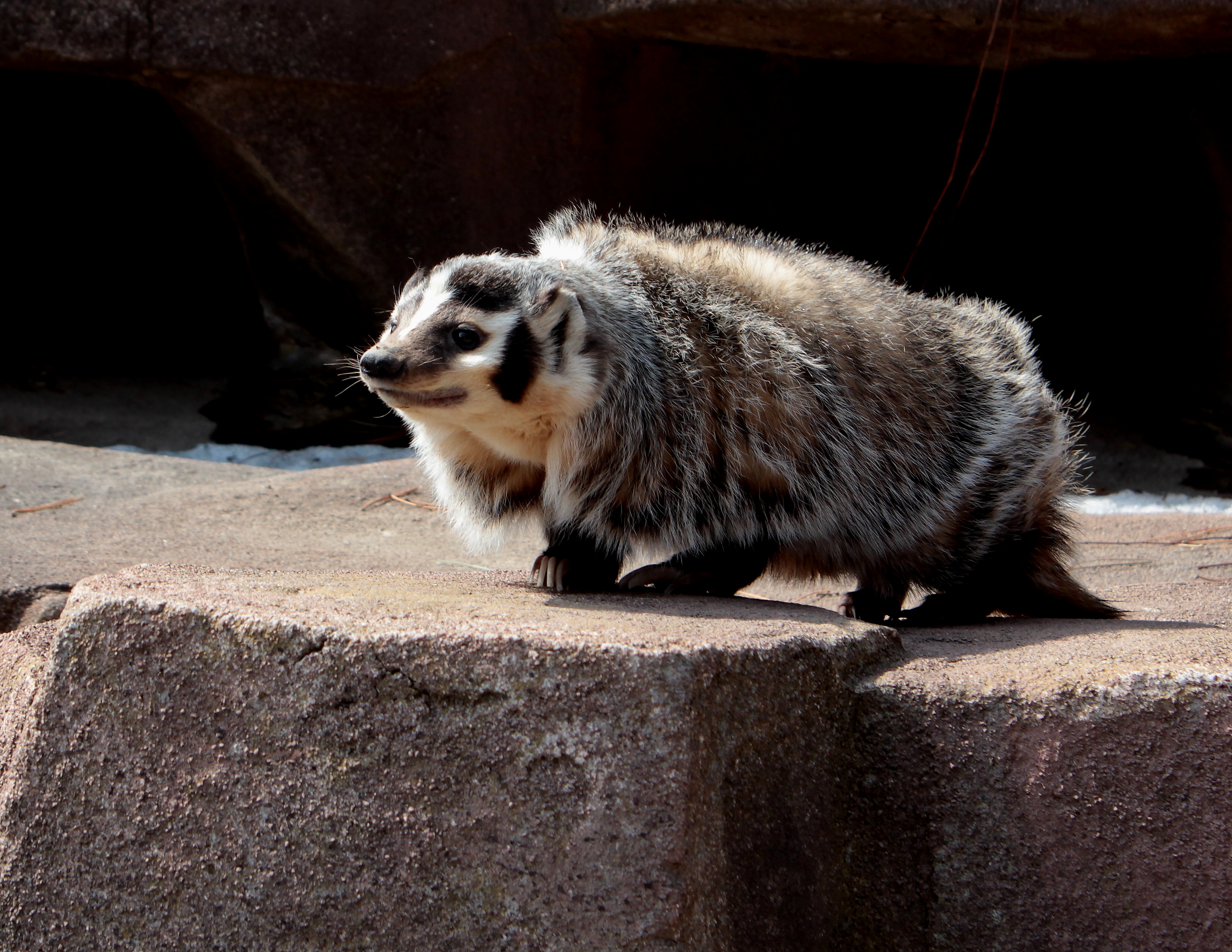
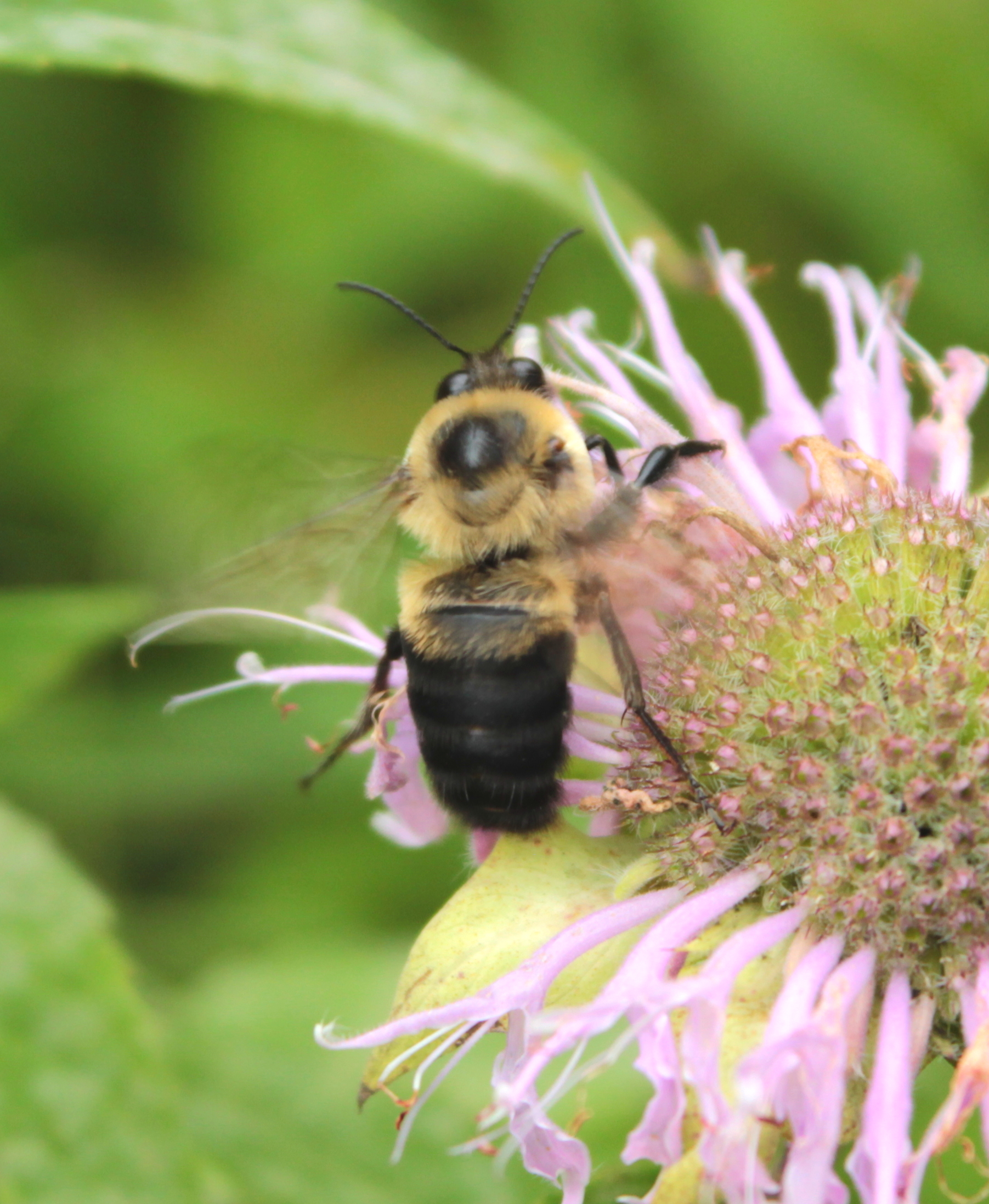
Gradually, they noticed that some of the other living things (or Living Beings) were disappearing completely. buffalo Some people thought that was a shame, especially if the thing was useful or furry or had a face. badger Others noticed that when one type of thing was gone, things began to change for the rest as well. bee A few Big Brains began to ask some really Tough Questions about why things on the Earth were changing so quickly and whether the Big Impact of humans had anything to do with it.
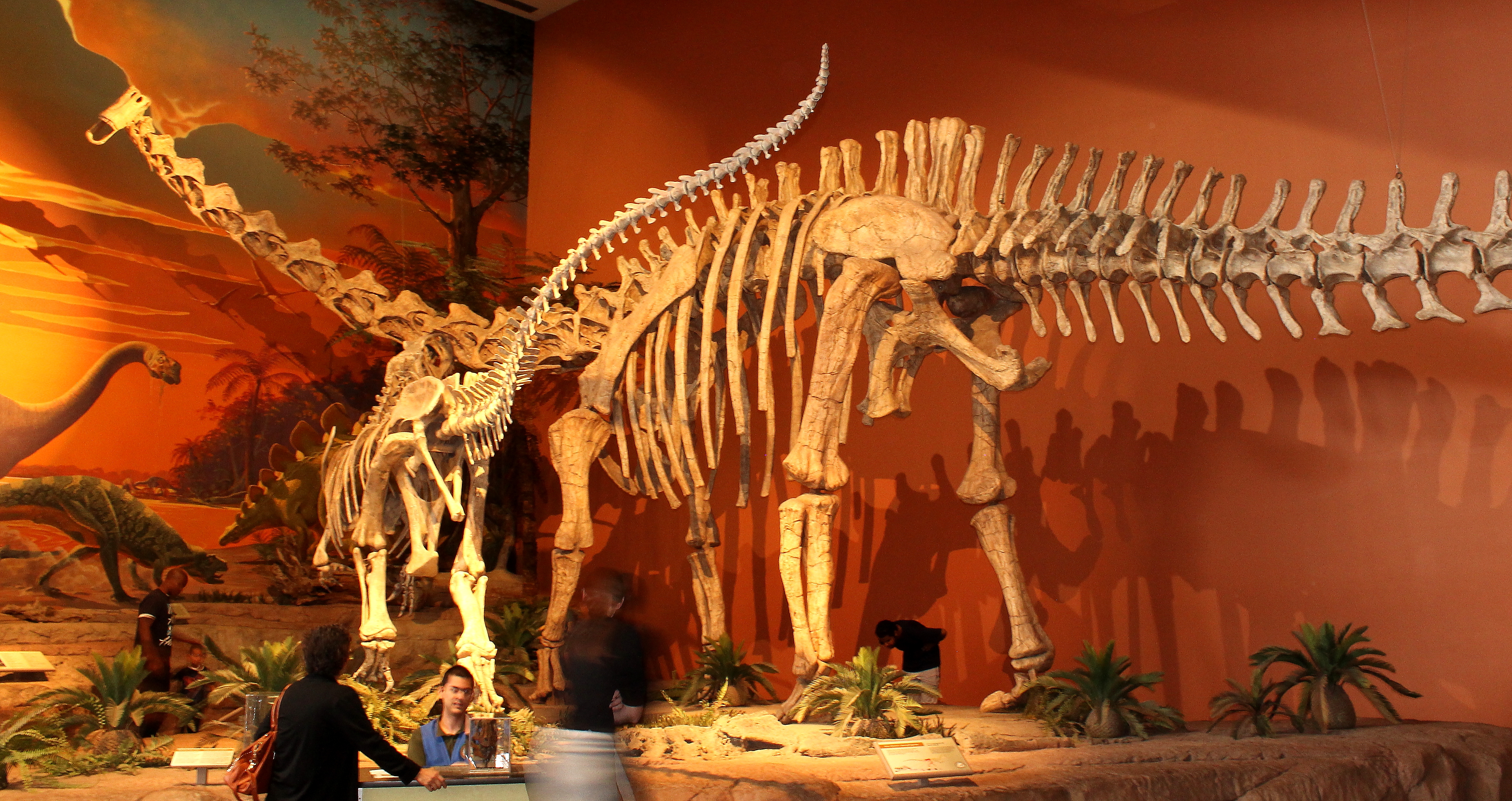
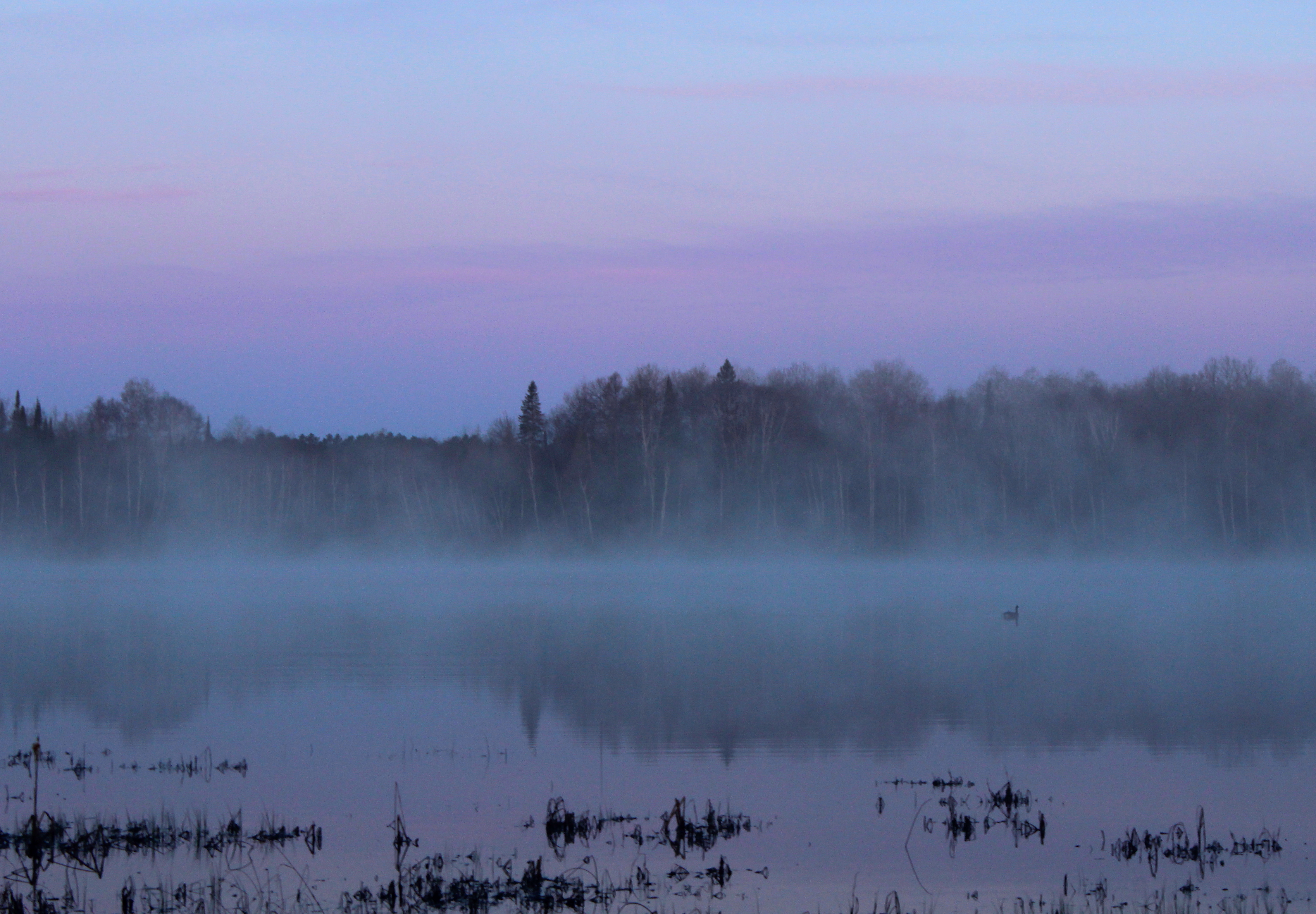
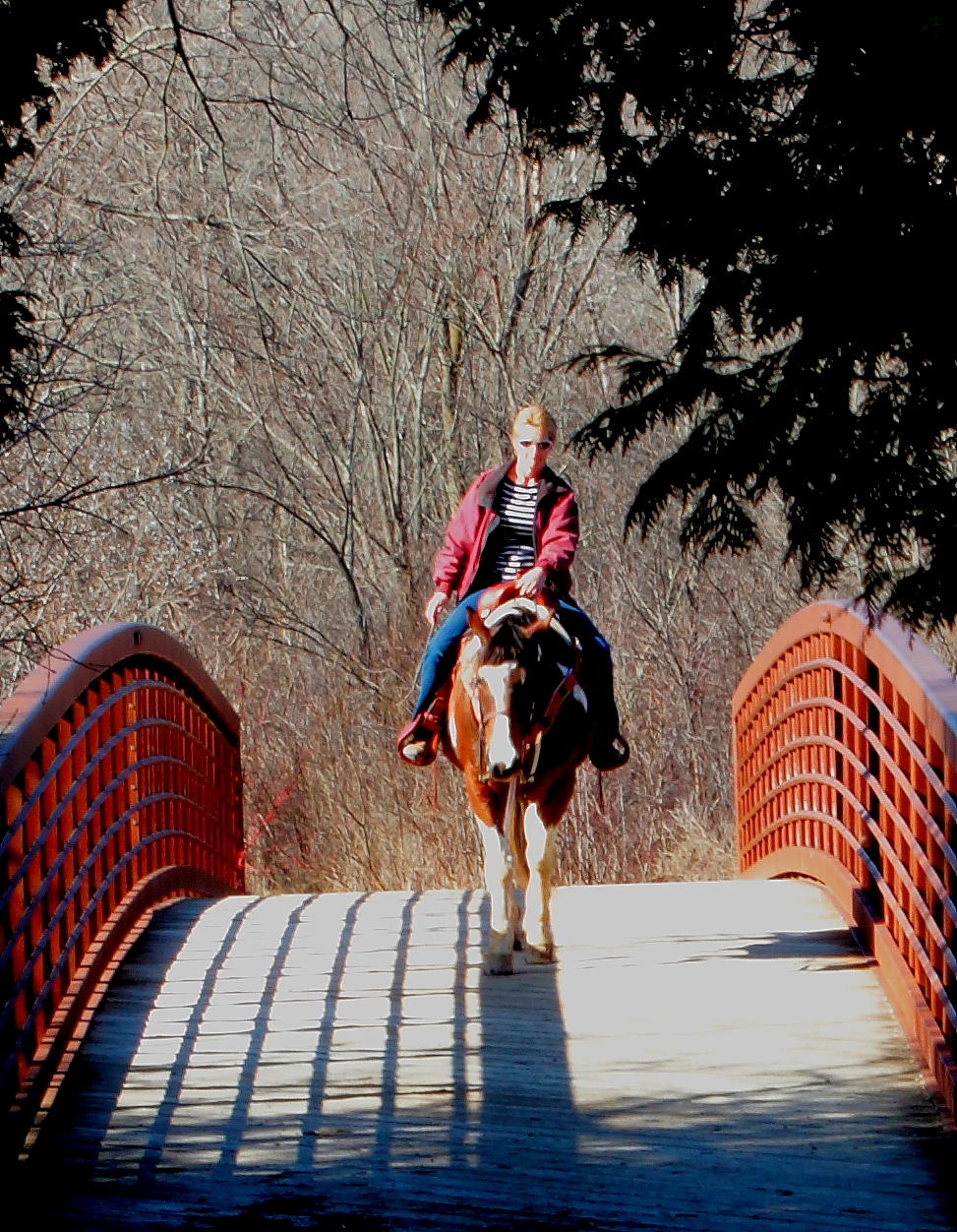
I can’t tell you the ending of this story. Perhaps the Big Brains will disappear like so many other Living Beings did,dinosaurand Earth will go on without them. wildernessPerhaps the Big Brains will become less numerous, less dominant, and Earth will go on with them. horse and riderPerhaps something altogether different will happen. It doesn’t really matter how I tell the story.
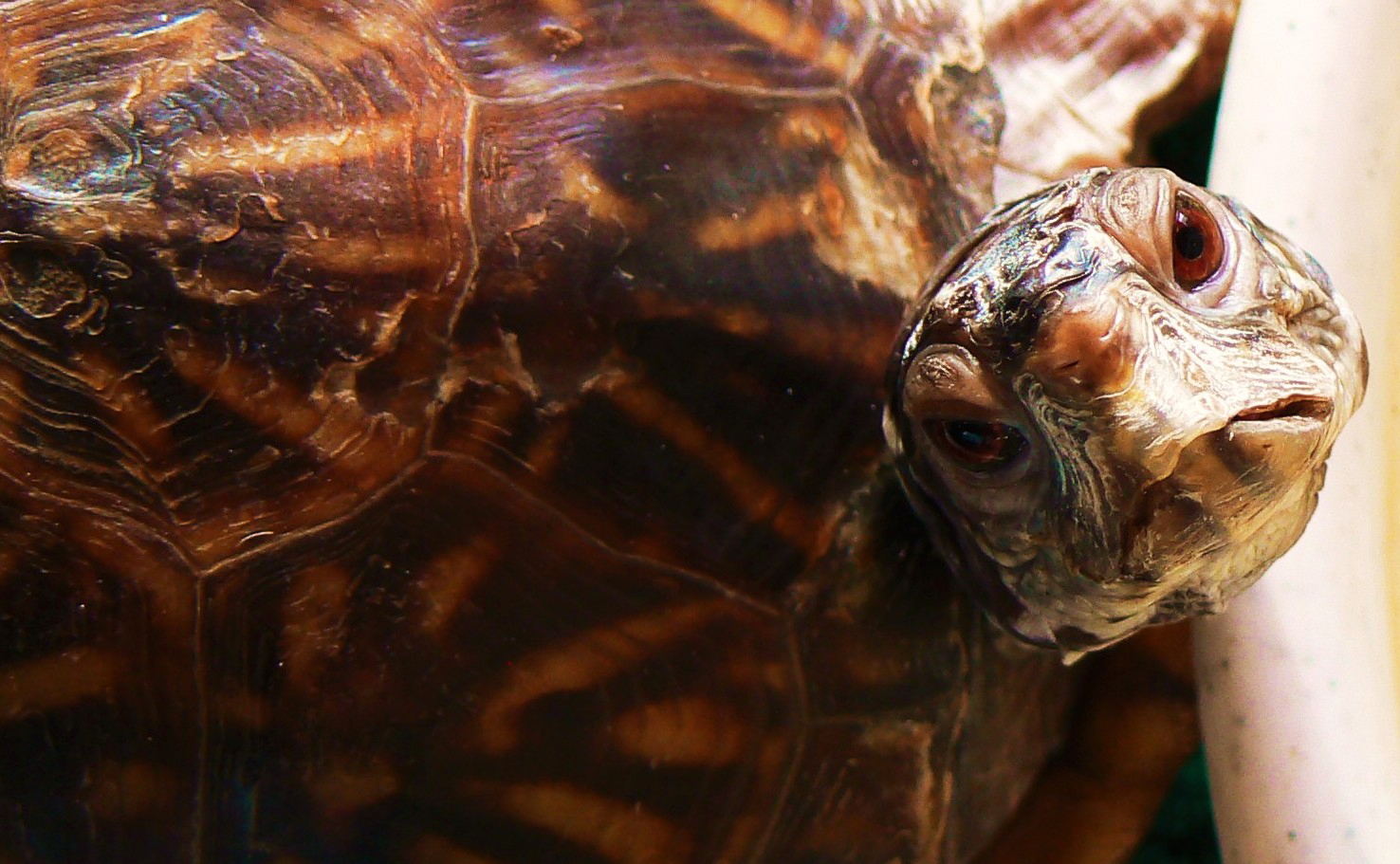
What does matter?

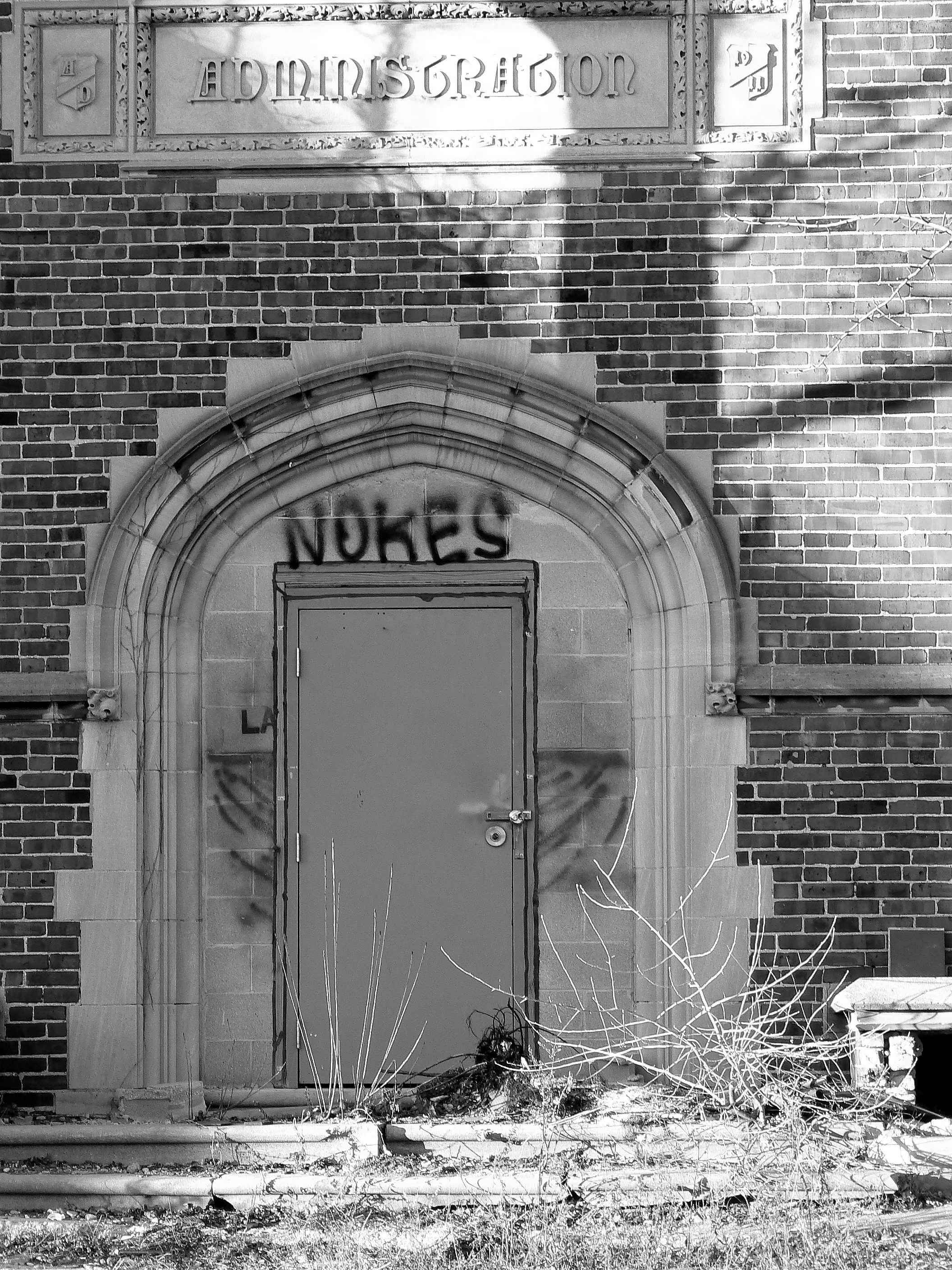
Well, here on Earth, ‘matter’ can also mean every Living Being boxy frown and every non-Living Thing. non living matter

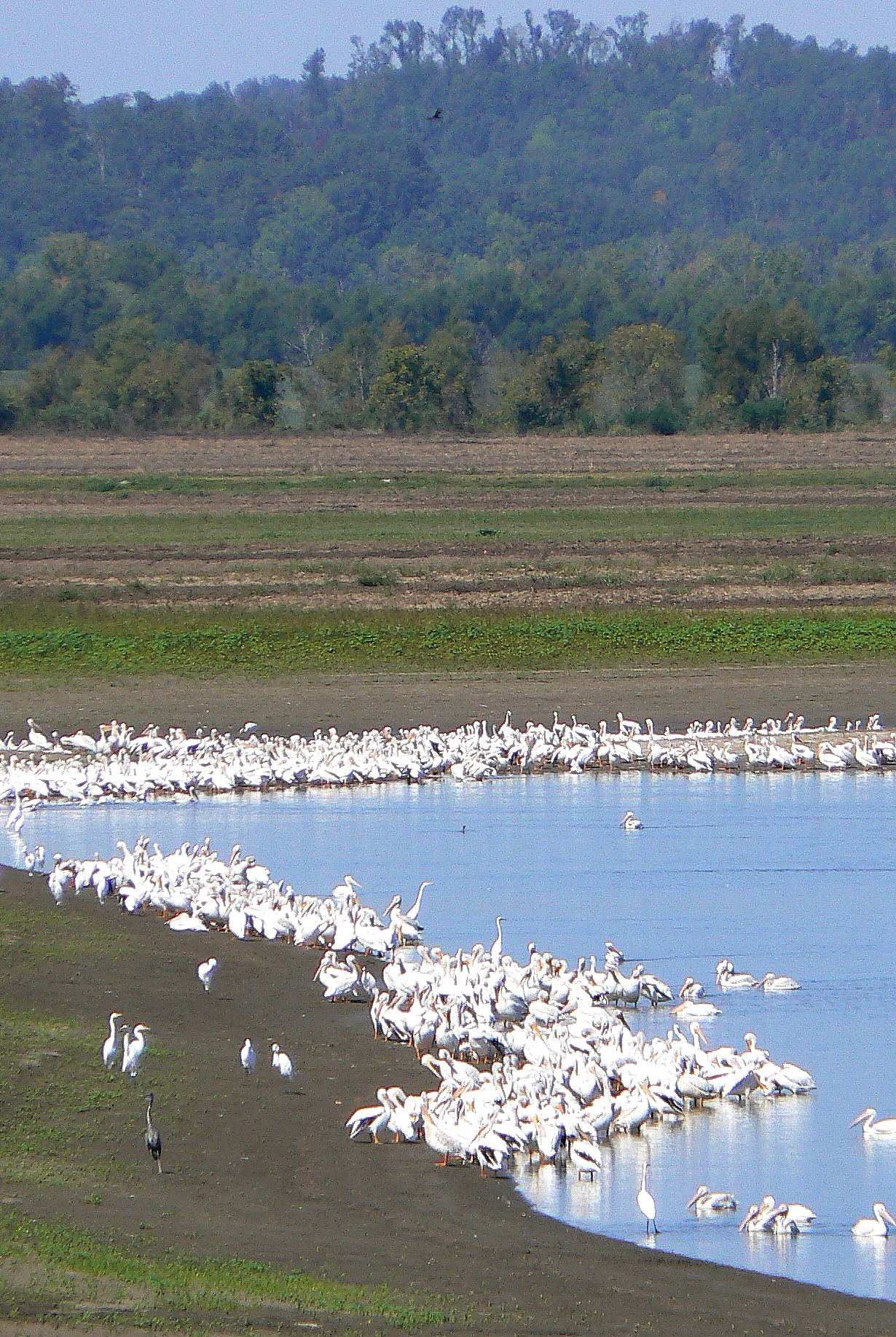
What we Big Brains decide to do with all matter will matter and will help tell the end of the story. migration stop

– Priscilla Galasso

© 2016, essay and photographs, Priscilla Galasso, All rights reserved

Reflections on a Snowy Owl and a Raven …

A description offered at vimeo:

The first thing to notice is that the owl is TOTALLY unimpressed. It’s not scared in the least, and the raven has no aggrssive intentions, but starts out being just curious- like: “what the hell is This!” So it tests – tries to get a reaction. But the owl still stays totally nonchalent. At some point the raven then tries a different tactic- it puts on its “I’m a big guy” display of erect “ear” feathers- usually used to show status in the presence of potential superiors, but here used also with a bowing and wing-flaring,which is used in supplication if there is NOT going to be a challenge- so, yes, i think the raven was having fun, and then also starting to have some respect, because this big white thing was NOT going to cooperate and be its toy. –Bernd Heinrich

I thought two things when I saw this video. First, how much the snowy owl is like my cat when he deals with the girl cats in the house. Second, how much this interaction seemed like the boys in juvenile detention.

I offer a haiku.

a sturdy perch
two rivals meet
detente

Shalom,

Terri Stewart

You Called

You called; it was from somewhere far away.
You called to say hello in your sweet way.
Not so much with news but how you’re feeling;
our talk was so much more than just appealing.

You called to say your Dad was making tea;
that, whilst you wait, you’d make a call to me.
An inner smile grew as I listened on
to the silences between the song

that comes from somewhere in your life, so full
of energy and zest, that you just pull
…me with you and, yet, wherever you go
metaphysically, little you know

how much it is you say to me, not talking
of all of your imaginings, while walking,
or perhaps you’re standing, hearing me,
whilst you contemplate what is for tea.

Whatever it may be that you are thinking
I know you’d love to talk and, in a blinking,
you will, and I’ll be thinking: are we blessed
or will we ask, politely, for you to rest?

© 2011 John Anstie

[Telephone calls from my granddaughter became quite regular when she was a toddler and, it has to be said, were very welcome and enchanting events. One such call, when she was just two years old, prompted this poem.

It addresses that stage in a toddler’s life when they are, very consciously, striving to communicate with their adult family, but cannot find the words. So I, on picking up the call, found myself (like a typical stupid adult) doing too much talking, trying to encourage her to say more. What comes back the other way, probably not surprisingly, having been patronised by grandpa, is mostly silence accompanied by (and this is the truly enchanting bit) mutterings, sing-song tones and breathing, which only fuel my imaginings of what it is she is trying to say.

Our desire to help them talk can, of course, be dimmed once their new-found ability to talk leads to incessant nattering, which drives us in search of refuge! 

But they will always remain an enchantment on our lives and a potential for renewal of our own childhood hopes and dreams].

– John Anstie

© 2016, poem, John Anstie, All rights reserved

Snow Dog

Snow Dog Nelly

Photo:  Barbara Anstie

~~~~~~~~~~~~~~~~~~~

The depth of it exceptional, and all
at once she lies and sits and stands below.
She smiles, then in her mind she skips, her paws
tread deeply in the soft white powdered snow.

An icy East wind hails from far away,
intemperate continental clime it brings,
that covers food so blackbirds cannot find
sufficient energy to brace their wings.

Out there, beyond the hill, the homeless lie,
reciting tunelessly an unheard poem,
they fight an urge to yield to hopelessness,
and longing for a crackling log-fired home.

We look in warmth, contentment unalloyed,
at children with their snow dog, overjoyed.

© 2013 John Anstie

~~~~~~~~~~~~~~~~~~

[Poetic notes: This poem looks like a sonnet, in that it has fourteen lines, arranged into four quatrains and a concluding couplet, and it is written in iambic pentameter. But that is where the similarity ends. The rhyming scheme is confined to alternate (second and fourth) rhyming lines and a rhyming couplet at its end. So it is different from either Petrarchan or Shakespearean forms. Crucially, though, the classic structure, in which the first eight lines present an issue or problem, and the last six lines, particularly the finishing couplet, present a resolution or a ‘turn’, is absent. Instead, the opening quatrain portrays a pleasant scene, the second and third stanzas move to present the problems created by cold winter weather for wildlife and the homeless, but then the final couplet seems to try and put blinkers on the reader; blotting out, as it were, the harsh reality of life’s injustice. It depends on your mindset, as to which sentiment the poem leaves you with…]

– John Anstie

© 2016 poem and explaination, John Anstie; photograph, Barbara Anstie, All rights reserved

A Dog’s Life

(for Jazz)

Your soft and furry skin was like a prize
that felt as if it were a therapy,
reward for when we were too short of time
to pander to your young demands, and yet
you never once gave any less, and more
besides, you did not waver in your loyalty.

That wrinkled face, so soft, with deep dark eyes,
appealed, like downcast seal, to pliant hearts.
We’d have to have a bypass of compassion
to resist enchantment of the first degree,
and look away to stop the heart from melting
with just one sight of sideways tilting head.

You’d run with gay abandon, flapping lips
lifting wings on wind of gambolling speed
back legs attempt to pass your front, that looks
as if it’s doomed to fail. You still succeed.
So, to the welcome after-walk effects;
that cosy warmth against our resting feet.

As innocence turned into character
the stubbornness, the guile, the subtle smile
to greet us at the door, when we got home,
that knowing wag of tail, well versed in art
of language you know well; we only guess,
rewarding you with scratch behind your ear.

But most of all, that special body wag,
the faintest sound of tinkling collar tags,
the clearly unrestrained brief glottal yip,
excitement uncontrolled…

…but then, of late

it must be said, it wasn’t quite the same.
You sniff a tree, as if to pay your due.

The gay abandon lost somewhere in memory,
the softness of your coat turned coarse,
your eyes are slightly foggy, as they search
for some of that shear pleasure; the sound of food
no longer holds its sway on your desires;
hanging on to life and love at home.

I kissed your wrinkled face just one last time,
but knew that you’d not want for more delay.
If you could speak, I feel you’d say: ‘enough’.
To each, their time and so to yours this day.
The hardest part was having all your trust
in us, to make that last … that final call.

© 2013 John Anstie

Compaigning for Compassion

Photo 2016 © Animalpages.com

The focus of this month’s BeZine is “All God’s Creatures”. Try closing your eyes for a moment and imagining a world without animals. No gentle bird song to wake you in the morning, no coyotes or owls to sing you to sleep at night, no furry face or wagging tail to greet you after a hard day at work. Your diet would be affected, too, whether you eat meat or not – about 35% of the world’s food crops depend on animal pollinators. As it is, animal species extinction is happening 1000 times faster because of humans. I think it would be a very different world without our animal friends; a darker, much emptier one.

Fortunately, speaking up for animals is one of those things that just about anyone can do. Whether it’s a preference for domestic cats and dogs or wild and exotic animals, no matter what kind of animal you love, there is a campaign out there just waiting for your help. I’d like to present some of the causes of specific animals which are important to me, and encourage you to join me and find animals you’d like to help.

  • Meet Tony, the Truck Stop Tiger.
    Photo: ©FreeTonyTheTiger2014 | ©The Animal Legal Defense Fund
    Photo: ©FreeTonyTheTiger2014 | ©The Animal Legal Defense Fund

    Tony is a sixteen-year-old Siberian-Bengal tiger who has lived his entire life in a cramped, concrete cage in a truck stop parking lot in Louisiana. Poor Tony is an exploited, illegally kept roadside attraction/gimmick and activists have been fighting to free him since 2010 (6 years!) to get him released to a reputable big cat sanctuary (there are several who have offered to take him in, since he would not survive in the wild).

    “Tony, a Siberian-Bengal tiger, has endured more than a decade of misery at the Tiger Truck Stop in Grosse Tete, Louisiana. Living at an isolated gas station parking lot, with the stench of fuel and the drone of diesel engines, is harmful to an animal with such sensitive hearing and an acute sense of smell, says veterinarian Jennifer Conrad, who has cared for captive large cats for decades. Tony is “in poor condition and needs intervention on his behalf,” she says. He has been taunted by truck stop visitors and his enclosure lacks adequate enrichment. As a result of this stressful confinement, Tony constantly paces, putting him at risk for dangerous and painful injuries.” ~ ALDF.org

    Tony’s Story
    Facebook Page
    WordPress Page
    Petition for Freedom
    Twitter: @FreeTonyTiger and @TonyTiger2000
    Instagram
    Pinterest
    Youtube


  • Meet Lolita, the Orca.

    Lolita - Image © PeTA
    Lolita – Image © PeTA 2016

    Lolita is a 20-foot-long, 4-ton orca who has lived at the Miami Seaquarium since 1970. She was 4 years old when she was forcefully taken from her mother and pod in Puget Sound and placed into a 35-foot wide, 20-foot deep tank with no shade. Activists have been trying to free her to have her relocated and reintroduced to her home in Puget Sound since 2003. Not only are killer whales highly intelligent, they can roam as much as 100 MILES a DAY in search of food and play. From a range of hundreds of miles to a small, concrete tank that’s 35-feet wide, forced for 45 years to do tricks for human entertainment

    “When not performing in her show, Lolita floats listlessly in her tank, all by herself. In the wild, killer whales swim hundreds of miles a day, diving as deep as 500 feet. In her tank, she swims in circles inside the 35 foot wide area and can only go as deep as 20 feet, in a small area in the center of the tank.” ~ Save Lolita.org

    Lolita’s Story (YouTube)
    Facebook
    SaveLolita.org
    OrcaNetwork.org
    Us.Whales.Org

  • Meet Lucy, the Lonely Elephant.

    Photo: © 2016 Sam Whincup and Lucy's Edmonton Advocate's Project (LEAP)
    Photo: © 2016 Sam Whincup and Lucy’s Edmonton Advocate’s Project (LEAP)

Lucy is a 40-year old Asian elephant who was sold to the Edmonton Valley Zoo in Canada as a young calf. Not only is the near-freezing climate horrible for ANY elephant (who live in tropical or desert regions in the wild), but Lucy has been alone for a very long time, suffering serious foot problems, obesity and arthritis (due to standing on concrete floors her whole life), and exhibiting all the classic signs of stress and depression that are known to plague elephants in captivity.

There are numerous celebrities (like Bob Barker, Leonardo DiCaprio, William Shatner and others) who have gotten involved, two well-known elephant sanctuaries (The Elephant Sanctuary in Tennessee and PAWS (Performing Animal Welfare Society)) have offered her a permanent home in climates MUCH more suitable with experienced elephant vets on staff, and enough money has been raised and donated to pay for her transfer fifty times over. Activists have been fighting to free her for over 10 years, but the city and zoo both refuse to allow any independent veterinarians (meaning not associated with the zoo) to examine Lucy, so she continues to suffer. And we continue to fight for her freedom.

From Elephant Advocacy: “They are born to roam often traveling as far as 30 miles per day browsing and foraging for food and water. When an elephant is deprived of the ability to roam long distances and to socially interact within a stable herd, they lose their sense of belonging and slip into neurosis, depression, dissociation and chronic illness. The complexity and depth of the elephant psyche is terrorized and traumatized by captivity. Social deprivation, solitary confinement, chains, taming techniques and circus training is cruel and unusual abuse for any elephant and enslavement to entertainment venues is inhumane.

Lucy’s Story
Friends of Lucy on Facebook
Save Lucy the Elephant on Facebook
Lucy’s Edmonton Advocates Project (LEAP)
Friends of Lucy (YouTube)

I’m not saying that all zoos or aquariums are bad. Zoos often play an important role in conservation/rehabilitation and may end up being the only reason that future generations are even able to see living examples of certain species. But we share this planet with animals. That doesn’t mean that we can endlessly kill, trap, destroy their habitat, exploit, dominate and drive to extinction the rest of the animals that are left! I hope you’ll give it some thought and agree to be another voice for those creatures who have no choice, no say in how humans affect them. The Earth needs them. WE need them.

– Corina Ravenscraft

© 2016, words, Corina Ravenscraft; illustrations as indicaated above

Fancy Flight

Fancy Flight

a
Grasshopper
gray
brown
grasshopper

Jumps!

shows
red-orange
wings

glides

glides

glides

becoming
butterfly

—Michael Dickel
©1987

Life, Death and the “Establishment Clause”

skepticNot only on abortion, but on virtually all “life” issues – abortion, euthanasia, assisted suicide, et al. – the “pro-life” argument is always at least implicitly founded on the principle that what is at stake is human life. And if the “pro-life” position is persistently examined, one finds that what this position means by the phrase “human life” always involves, explicitly or implicitly, the religious belief that human life means “ensouled” life: the form of life that uniquely merits protection is life which is human in the sense of being uniquely endowed with a (usually eternal) soul. This definition of “human life” has three immediate effects: (1) it begs the question of at what point life becomes human by being endowed with a soul, (2) at what point human life ceases to be human by being deprived of a soul, and (3) the problem of writing into the civil law a “pro-life” ideology on all the life issues – again, not just abortion – that, on its own terms, would be in facial conflict with the “establishment” clause of the First Amendment. Because of point (3) alone, any strict “pro-life” position, translated into civil law, would almost certainly be unconstitutional. So for the “pro-life” movement, appealing to “personhood” – defined as “possessing a soul” — is a constitutional dead-end. For purposes of the “public square”, “personhood” must be defined in non-religious or religiously neutral terms.

o Abortion

Historically, rather than grasp the Tar Baby of souls, “ensoulment”, etc., courts have wisely chosen to deal with the issue in much more prosaic and much less esoteric terms by combining a deference to precedent and a generous reading of the constitutional, especially Fourteenth Amendment, text, especially the “due process” clause, so as to balance off the woman’s liberty interest of a right to privacy, her doctor’s right to practice his profession freely (deriving from earlier cases like Griswold v. Connecticut and Eisenstadt v. Baird), and the state’s no-less-compelling interest in protecting potential human life. (The “potential” adjective is obviously important!) This was certainly true with the “big three” abortion cases: Roe v. Wade, Doe v. Bolton, and Planned Parenthood v. Casey.

f2a7620b8abd47c2da9ac91e081f32a6-d3b3qm0

Conspicuous only by its absence is any reference in these and like opinions to souls, “ensoulment”, personhood, etc. In all fairness, it should be explicitly said that this omission does not amount to a denial that such entities exist. Rather the issue is non-justiciability: souls, “ensoulment”, and the “metaphysics” of personhood are not addressable by the rules of constitutional reasoning and evidence. Discourse on such topics properly belongs only on the “Church” side of Mr. Jefferson’s “wall of separation”. So the “pro-life” movement is only shooting itself in the foot by continuing to argue that Roe, Casey, etc. should be overturned because the fetus is “human from the moment of conception,” for that is a judgment that, regardless of its merits as religious doctrine, simply cannot be made on the “State” side of Mr. Jefferson’s “wall”.

o Euthanasia / Assisted suicide

The personhood and “ensoulment” issues are equally questionable as a basis for opposing euthanasia and physician-assisted death (PAD). But in this case, there is the additional possibility of perpetuating useless suffering – which runs counter to virtually all versions of the religious teachings underwriting such opposition, all of which emphasize the value of compassion. This puts an even sharper edge on the “personhood” question. There are three possibilities:

(1)    The dying / terminally ill person is mentally competent (by prevailing legal and psychiatric standards) and is therefore morally autonomous. (Moral autonomy – the capacity to decide issues of right and wrong for oneself, within broad parameters.) If the person is morally autonomous, then she has the right to decide for herself whether or not to terminate her life, and the criteria for making that decision. In states with “death with dignity” laws on the books, this requires that the actual act of euthanasia be carried out by the person herself, not by the direct intervention of a doctor. Even if the dominant religious tradition views suicide as a sin, there is no constitutional justification for imposing this belief on the dying person if that person’s belief is different. In this case, the same personhood argument that is often used against abortion tends to backfire and support the case for euthanasia by physician-assisted death. The concept of personhood is a two-edged sword.

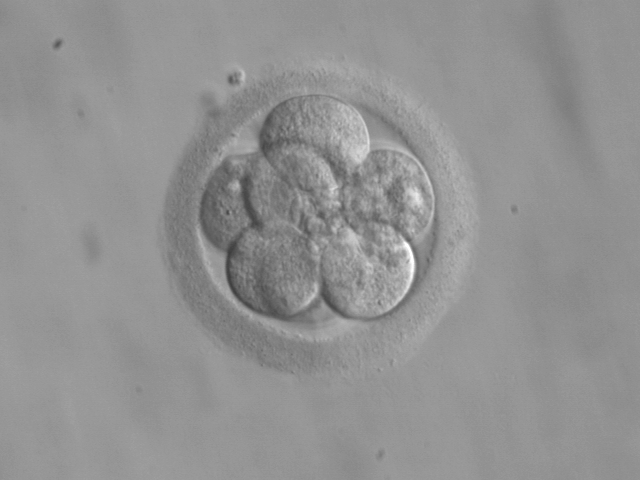
Embryo,_8_cells

(2)    The dying / terminally ill person is not mentally competent and therefore the decision to terminate (or not) devolves upon someone else. The above argument still applies but, in this case, to the person who must decide whether or not to euthanize, hopefully in accordance with the dying person’s last wishes.

(3)    The dying / terminally ill person is not mentally competent by virtue of “brain death”. This is the most difficult case, especially in the absence of a “living will”, because it is ethically almost identical with the case of an unborn child. In particular, approaching the question from the standpoint of “personhood” is equally futile. The lack of a religiously neutral definition of “personhood” at the end of life poses the same problems as the lack of a religiously neutral definition of “personhood” at its beginning.

But, to be strictly fair, I should admit that the lack of a religiously neutral definition of “personhood” entails some consequences that I – no less than even the most ardent “pro-life” people – find distasteful. Say what you will about the ethical work of Prof. Peter Singer, DeCamp Professor of Bioethics at Princeton, he follows his secular, non-theistic premises about human personhood to their utmost conclusions in books like Practical Ethics and Rethinking Life and Death. But especially in the latter, even Singer tacitly flinches from the inevitable conclusion that, given the lack of a “bright line” standard for personhood, anyone’s life can be terminated at any stage of one’s life.

dna-163466_960_720

Hence the following concession, perhaps surprising in that it comes from me: the “life” issues and their requirement for a strict definition of the meaning human personhood constitute the most formidable case yet, “establishment” clause notwithstanding, for (some type of) religious definition of human life.

Skepticism is the chastity of the intellect, and it is shameful to surrender it too soon or to the first comer: there is nobility in preserving it coolly and proudly through long youth, until at last, in the ripeness of instinct and discretion, it can be safely exchanged for fidelity and happiness. — George Santayana

James R. Cowles

Image credits:

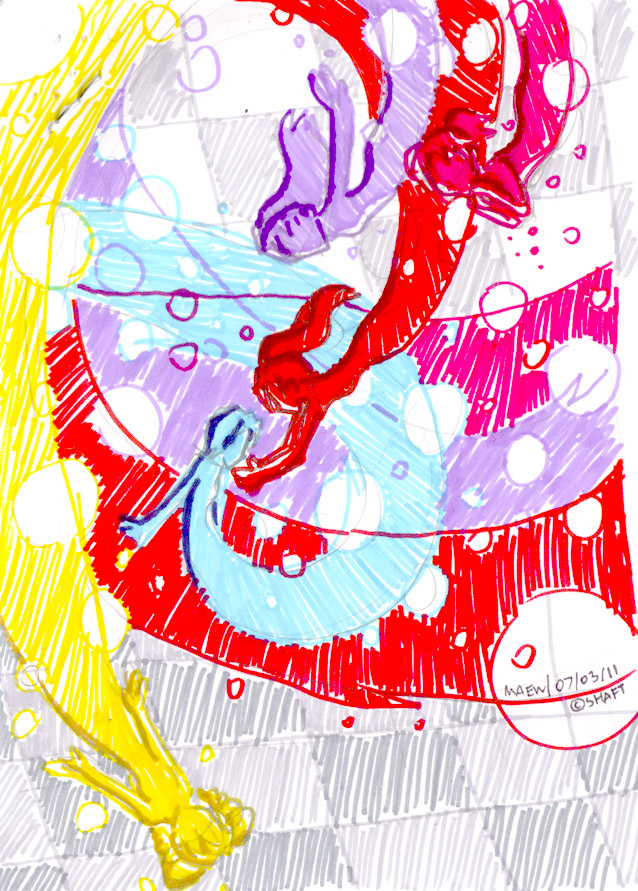
5SoulS by MaewRS

DNA molecule and zygote: public domain

How One City’s Artists (Hamilton, Ontario) Turned a “Rough” Neighborhood into an Arts Enclave

The Hearts of Hamilton’s Art Crawl

The James Street North area in Hamilton (Ontariao, Canada) has been the landing point of generation after generation of newcomers to the city. Even now, it is the heart of Hamilton that welcomes an influx of artists and young creative people who come from around the world for a place where they might flourish. It wasn’t always so welcoming, and the whispered-about history of mafia in Hamilton was born of taking advantage of newcomers to our fair city. I strongly encourage anyone curious about the history of such to read the work of Adrian Humphreys. From the Iroquois slaughter of the Chonnonton, the coming of the British, to Irish gangs, the Italian Mafia, and now the biker culture…Hamilton, like so many places, has been beleaguered by those who would take advantage and suck the life from those already near desperation.

Sadly, James North also took the brunt of the decline of Hamilton in the 80’s and 90’s and became an economic culture of street drug dealers, drug addicted prostitutes, gangs and gangsters, and con artists of all ages and backgrounds. Violence in this community was a common occurrence and often flooded out of the buildings that housed it and into the public street. James North became the place you didn’t go. It became the place parents warned their children about. Those with the ability to do so became denizens of The Mountain…a suburban sprawl overlooking the core of Hamilton. As you rose in wealth, you rose in altitude and once busy shops became abandoned storefronts with slumlords snatching them up and the poor left behind. Street after street of beautiful brick century homes were divided into smaller and smaller apartments as incomes declined and families struggled.

What was left behind was a core community of dedicated and hard-working folks who struggled and struggled. They raised their children here. They were the ‘great bones’ more than the excellent brickwork and tin ceilings of the shops of downtown. Despite this corrupt infrastructure a beautiful community of citizens and shop owners existed in this area and its surrounding neighborhoods. Many never gave up, and thankfully still remain there as the core of Hamilton rises again.

How does a city recover and find its heart again? How does a local government solve the vast problems created by the decline of the massive steel industry? How can fear and poverty become beautiful?

It might feel that saying ‘art is the answer to all of the hurts of the human soul’ is naïve, and many would think it naïve to imagine that art could change the perceptions of a city about itself and shift the view of outsiders so that they can imagine coming to this place. But, these things begin and end with pride and the ability to see beauty. James North was a beautiful neighborhood, even at its worst. It has the bones of a classic downtown that we imagine when thinking of the best a city can be and it has grown more beautiful as it has shaken off it’s dark times because of vision, not because of developers, corporations, by-laws, or the too often corrupt and misguided machinations of the Corporation of the City of Hamilton.

The artists in Hamilton had a toehold in this area throughout its existence. Many efforts had been initiated over the years by the artist’s community to keep some semblance of sanity. Our documentary ‘Hearts: A Film about Hamilton’s Art Crawl’ is a discovery of how one of these efforts gained momentum and helped transform the entire city.

I initiated the ‘art crawl.’ However, I only had a small part to play in this story and I could not have predicted the impact and power of a monthly celebration of beauty and culture at the time. To assist in helping others to understand the workings of this phenomena that transformed an entire city I will tell you a little of the story that got me there and what type of circumstance and state of mind I use when I make a choice to act. Seldom are there such demonstrable manifestations from this sort of activity for me, though I do endeavour to work in such things often.

In 2004 after many years of being an active Gallery owner, multi-media and culturally diverse events curator in Hamilton’s arts and music community I was taking some time to concentrate on my musical career. I had been asked to get back into the arts community many times with the James Street North area as its focus but I had actually decided that I would “never” do it again. Though the truth be told even when I am not directly involved I am always doing something and my not being involved at the time included being on the board of directors of the Hamilton Arts Council, offering up weekly volunteer time to local galleries and performance spaces, and advising many friends and artists.

A series of unusual events made it impossible for me to stay living where I was. I had been looking for a new place without telling anyone. Yet out of the blue, I received a phone call from a dear friend who renovates buildings. He had been discussing with the owner of a building he was renovating my background in the arts community. He directly asked me if I would like to open a gallery in this location and it included a living space as well. I automatically said no. Yet I knew deep down that I must, and a good deal was struck because the owner would not take no for an answer.

This is where I began to discover that the maxim ‘never say never’ is a truism.

When I began working in the arts directly in Hamilton in the late 1980s I had a vision that this city would be a center for the arts that would impact the world. This, I had written in the form of a business proposal that I passed around the city and inspired many people within the business and arts community who had the same vision. I knew this idea seemed crazy but crazy never stops me. 😉

Soon after opening a gallery in my new space I went on a trip to New York, New York with the record label Kick Records to attend the CMJ music conference and shop around my first album of music. In addition, I had made appointments for myself at galleries in Manhattan to shop a selection of Hamilton’s visual artists.

On my first day, during a break from these appointments, I was wandering the streets of SoHo and stopped into a deli for a bagel and coffee. As soon as I got up to the counter the owner of the shop came over and told me God had asked him to talk with me. He asked if he could purchase my lunch and pass on what he had been implored to tell me. I happily agreed to sit and listen, and did so with great curiosity.

He said that he needed to first inform me that the experience of three generations of the arts business in his family was showing that the arts were on the decline in New York. He was told clearly that where I was from was where the next world movement would happen. He told me that I was playing and would play an important role in this happening and that it was best if I placed myself in that city and not to focus my efforts elsewhere. Please keep in mind I had not said a word to him.

As the Art Crawl began, I heard over and over from those who were taking part in making it into what it has become that we are going to take over the world. Perhaps more importantly, we’ve taken back our city. We did so by banding together as artists, gallery owners, the businesses of the community, and folks who had a stake in the neighbourhood to open our doors to the world once a month. It was truly that simple, and thankfully just kept working.

It would be trite to say that the ‘universe provides’, because everything comes through work and being in the right place at the right time…but, if you can find yourself at peace and ask within yourself and listen, you can find the right time, the right place, and the drive to do the hard work. And, even when a bagel salesman tells you that god told him you are the one, the truth of it is that ‘the ones’ are the people you support. I put forth an idea, and people around me took it and made it into something beautiful. I supported them, and helped where I could. Community and supporting each other is in the midst of all of the great accomplishments of humanity. Whether we are looking at the tens of thousands of NASA employees who took Apollo to the moon, or the handful of shop owners and artists who came together to create a reason to take pride in the downtown of Hamilton, community is the core of us.

A critical mass of acts of kindness, openness, and compassion within this city is ultimately what’s responsible for the change we’ve seen. I’ve been a small part of it, but it is a collection and convergence of the beauty of the hearts of the people of Hamilton. People saw others opening themselves, did so themselves, and it’s made all the difference. I’ve included the documentary we made about Hamilton’s Art Crawl, so that you may see the beautiful people whose amazing Hearts made it happen, and hear about how they did it.

– Zena Hagerty

Hearts: A Film About Hamilton’s Art Crawl from HamiltonSeen on Vimeo.

Animal Stories

In keeping with this month’s theme at the BeZine, I thought I’d recommend some of the best books about animals that I have read.

© 1972 James Herriot

The theme “All God’s Creatures” immediately reminded me of one of my favorite series of animal books by author James Herriot. He was a British rural veterinarian who wrote books using many of his own cases as material. The series starts with All Creatures Great and Small, and continues in All Things Bright and Beautiful, All Things Wise and Wonderful, Dog Stories, The Lord God Made Them All, and finally, Every Living Thing. Herriot’s tone is gentle but wise, and his compassionate nature and witty humor make these books a must-read for anyone who loves animals (including the human animal).


Image from deweyreadmorebooks.com

Next on my list would have to be Dewey, The Small-Town Library Cat Who Touched the World, by Vicki Myron and Bret Witter. Cat lovers everywhere will adore this true story of a tiny, orange kitten who was abandoned inside a small-town library book drop! How the library staff dealt with this windfall and how it changed not just the library, but the entire town is a story that both inspires and touches the heart. Don’t miss it!


Image from Johngroganbooks.com

And then there’s Marley and Me, by John Grogan. This one is more for dog lovers, and fair warning: it’s a tear-jerker. It’s the story of a lovable, yellow Labrador retriever named Marley and how he managed to wiggle his way into the hearts of his family, their friends and everyone who was lucky enough to get to know him. From an adorable puppy to a ninety-seven pound giant with a heart of gold, Marley will take you on an adventure you’ll never forget.


Image from amazon.com © 1993 Jim Brandenburg

Wolves have always been one of my favorite animals, so I had to include Brother Wolf, A Forgotten Promise by Jim Brandenburg. Jim is a wildlife photographer, who has spent years capturing and creating images that stir and move the viewer’s soul. Brother Wolf is often told from the eyes of the wolf, beginning with a heart-felt, haunting letter to mankind. In addition to the breath-taking photography, Brandenburg’s text is philosophical, poetical and will leave a lasting impression on the reader.

Image from Wikipedia © Tad Williams and cover art by Braldt Bralds
Image from Wikipedia © Tad Williams and Cover Art by Braldt Bralds

Next on my recommendation list is Tailchaser’s Song, by Tad Williams. This wonderful story explores the myths and legends of cats from the feline point of view. The cat characters in this mystical, magical tale are all highly relatable and memorable. It was originally marketed for young adults back in 1985, but it’s such a good story that people of any age can enjoy it.


© Richard Adams 1972

Last, but certainly not least on this list, is Watership Down by Richard Adams. This is a well-written story about a colony of rabbits and their heroic adventures to find a new home where they can be free and safe. While it was written for children and young adults, it has some deep, adult themes that should be considered before reading it to kids.

There are so many more incredible animal stories out there, but this post would be pages long trying to list all of them. Hopefully, you will enjoy one or more that I’ve suggested, or maybe you have your own recommendations to add in the comments below.  🙂
– Corina Ravenscraft

© 2015, words, Corina Ravenscraft, All rights reserved; illustrations as indicated above

At the Bird Feeder

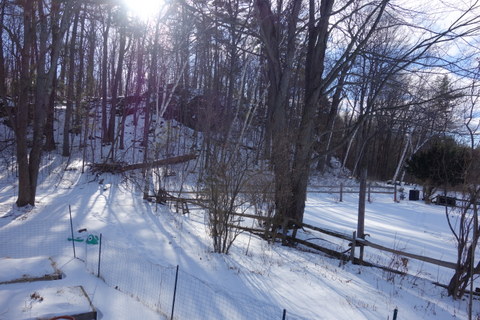
DSC01861Earlier today I went out back to refill the bird feeder. I walked through a couple of inches of new snow, each step providing a pleasant crunch; otherwise the day was silent. I reached up and removed the feeder from its limb, filled it, replaced it, and began the return walk to the house. I had gone maybe ten feet when the air was filled with chick-a-dee sound. Turning, I saw the tree had filled with birds and said birds were greeting, and thanking me!

Our resident birds have come to know us well over the years. When we forget to fill the feeder they will flock to the front porch and reproach us when we come to the door, or hang out on the back stoop, literally looking in the door and windows as we attempt to eat dinner. Once one literally stopped our car, hovering in front of our windshield as we attempted to enter the garage.

I remember a summer evening many years ago. At dusk, a family of raccoon sat on the fence in what was then our back yard, and sang to us. My wife ran inside, grabbed the kids and her guitar, and returned to sing back. What followed was miraculous: a bursting forth of song, solos, duets, and full choruses.

It seems to me we have more in common with the other animals than our culture likes to believe. Maybe the only real difference between us and other species is that we can imagine the future and, therefore, know we will die. Of course, we do not know that other creatures do not foresee death, we only imagine this based on our apparently unique neurophysiology. In the end this very notion might just be hubris.

I read recently that Shakespeare was a signer for the Acts of Enclosure, essentially barring commoners from access to his land. The Acts of Enclosure were a series of Parliamentary maneuvers designed to force peasants off traditionally common lands, thereby allowing landowners to use their lands to increase personal wealth. The effect, however, was desperate poverty for many of those denied access to fields and woodlands.

When my Sioux ancestors were forced onto reservations, they faced a sort of inverse enclosure. (My eastern woodlands Native ancestors faced a different form of displacement.) Plains Native cultures were largely nomadic, moving to take advantage of available resources, and to avoid placing undue stress on local ecosystems. The people moved with the seasons; they were an active part of the great world of Nature. Enclosure stripped them of access to resources, and attacked their sense of self and culture.

Of course, this intentional separation of people from the land was a technique used throughout the U.S. as colonists surged forward to empty the land of Natives so that they could literally enclose the land for their own uses. Now things have gotten so bad that food, medicine, and water are enclosed, access to them is limited not just for Natives, but for the great-grandchildren of the colonists.

Still, enclosure continues. Our brothers, sisters, and cousins the birds and animals are confined to ever shrinking spaces. Often the resources they need for life are in critically short supply or absent. Yet, knowing this, we continue to fragment and enclose the landscape. Climate change amps this process up; we are left with the Sixth Extinction.

I’ve heard eminent scientists suggest that if we humans can survive another thousand years we can colonize the stars, leaving Earth behind. As a Native person I find this a difficult idea to grasp. Apparently we are to accept the extinction of untold species as simply collateral damage, a necessary evil of interplanetary expansion. I imagine this idea arises from the Western psychological paradigms of adjustment and individuation, a sort of soulless vision for life, devoid of empathy and relationship.

When I hear such pronouncements I am reminded of the still very much in vogue idea of Manifest Destiny, and the genocide it was used to justify. Only now, the living world, the Mother who gives our lives and souls, relationship and meaning, is being sacrificed, along with our wild kin.

This seems a sort of illness, and a heavy price to pay for someone’s colonial dreams. As for me, I’ll prefer to remember that I am just another animal, and share what I can with those who lived here long before people arrived. It seems good to have their company on this journey, and I refuse to accept the concept that life would be just fine without them.

– Michael Watson

© 2016, essay and photograph, Michael Watson, All rights reserved

Giving Amnesty to Daddy Longlegs

A Daddy-longlegs spider lives in my bathroom. It might be a Mommy-longlegs as she’s quite petite. My eyesight isn’t good enough to tell her gender. Even if I could I’m not sure what to look for . . .

I let her live there peacefully since we have a lot in common. She’s discrete, I’ve never seen her entertain overnight visitors and quite tidy as I’ve never found any droppings of left-overs from digested meals. She leads a very monastic existence as do I (on occasion).

Daddy Short-Legs
Daddy Short-Legs Spider

I’m not afraid of spiders (except those bigger than my thumb). I try to steer clear of them because when I get bitten by one I have a painful, very painful, allergic response. There is a legend that Daddy-longlegs are deadly venomous spiders which, after careful research, I found not to be true:

“Daddy-longlegs spiders (Pholcidae) – There is no reference to any pholcid spider biting a human and causing any detrimental reaction. If these spiders were indeed deadly poisonous but couldn’t bite humans, then the only way we would know that they are poisonous is by milking them and injecting the venom into humans. For a variety of reasons including Amnesty International and a humanitarian code of ethics, this research has never been done. . . . Therefore, no information is available on the likely toxic effects of their venom in humans, so the part of the myth about their being especially poisonous is just that: a myth.” http://spiders.ucr.edu/daddylonglegs.htm

I hesitate to get too chummy or name her because one day, should she decide to venture down from her post on the window near the ceiling and try to share my counter space, I might have to kill her.

(And with that, I sound like much of the world fighting for and protecting territory. Perhaps it’s not so mysterious why we don’t have world peace?)

– Judith Westerfield

© 2015, words and illustration, Judith Westerfield

Ghost Dance

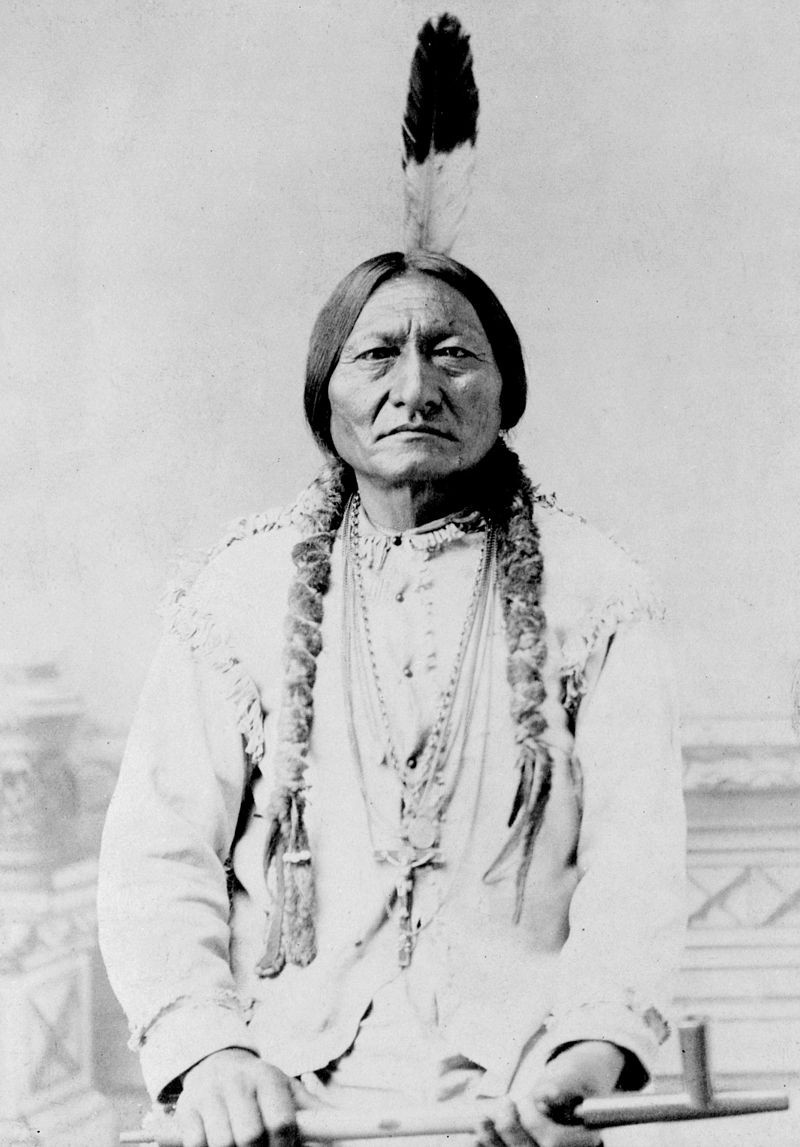
Sitting Bull Tȟatȟáŋka Íyotȟake
Tȟatȟáŋka Íyotȟake (Sitting Bull)


Fog appears on the road.
A silence encompasses the land.
No past, no future, only present,
Only now, is at hand.

On the path are many travelers.
All traveling through time and space.
Floating along their pathless paths,
As pale shadows fill this place.

Walking, but not walking.
Clothed, but not clothed.
Smiling, but not smiling.
Dreams within a dream.

Talking, but not talking.
Weeping, but not weeping.
Dancing, but not dancing.
Dreams within a Dream.

On the path are many travelers.
Coming to restore this sacred place.
Wielding staffs of silvern light,
To live again in grace.

Fog rises from the road.
A silence encompasses the land.
No past, no future, only present,
Only now, is at hand.

– Roger Allen Baut

© 2012, poem, Roger Allen Baut, All rights reserved; the Sitting Bull’s photograph is in the public domain and archived at the U.S. Library of Congress

An Interview with Sharon Gariepy Frye, a.k.a. Sharon Frye

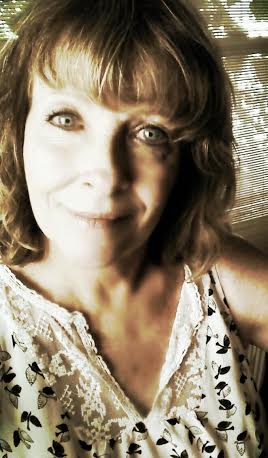
SharonSharon Gariepy Frye is a friend of The BeZine and often a guest contributor.  She is a photographer as well as a poet with one chapbook published, Last Chance for Rain (White Knights Press, 2014) and a new collection, Red Dashboard (Elizabeth Dillon, 2016) to be published later this year, the exact date to be announced.
When I first encountered Sharon’s poetry, I was impressed with the detail, the sense of a spiritual journey, and with her compassionate imagination. No surprise that Sharon was nominated for the Pushcart Prize for Poetry and most recently made the shortlist for the 2016 Blackwater International Poetry Festival.

JAMIE: Congratulations on making the Blackwater shortlist. It was so pleasant to see the announcement go up. I think it’s not the only award you’ve received. Bravo!

It seems to me your interests are as eclectic as most of us who read and/or are featured here: art and photography, music and dance, literature and poetry. I think I’m not alone in enjoying your nature photography. With the wealth of your interests, how and why did you come to focus on poetry?

SHARON: Thanks for the warm regards on making the Blackwater shortlist. I was a little surprised myself.

From an early age poetry dazzled me. I remember my first anthology of poetry was called Reflections on a Gift of Watemelon Pickle. I was mesmerized by the play and dance of words across the pages. I have been hooked ever since.

I began writing more as my children moved into adulthood, one by one. Now that I have an empty nest, I have more time to follow the muse. I have to say I am pleasantly surprised where it has taken me, from reading to FDNY firefighters, to Ireland and Sacramento…to various stops along Route 66.

JAMIE: This is a question people think is reserved for women, but I ask it of everyone I interview: How do you do it? How do produce a fair amount of poetry, well-crafted and well-considered, and juggle all your interests, your job with the U.S. Postal Service and your family responsibilities?

SHARON: It’s not easy, all this juggling… and I get frustrated. I try to be a good daughter to my aging parents, a good parent and an active grandmother. I also work full time as a rural mail carrier and am an active member of a local writing club. I think the experience and interaction with what has become my focus is also what inspires and serves as a catalyst to expres – or record – some of my feelings and observations that result from these experiences.

I once wrote about the Asian man who was giving me a pedicure. I felt my heart expand as I considered what his life and history might have been. It’s a good practice, trying to perceive the worldview of those you come into contact with throughout the day. It gives the gift of empathy, which then always circles back to gratitude, always.

JAMIE: Do you find inspiration in the landscapes of Wyoming, where you come from, and Oklahoma, where you live now?

Jamie, you are a keen observer. I do love the landscape of my birthplace Wyoming and now those in my home of Oklahoma. There is just as much beauty in an Oklahoma sunset as there is on a snow-capped range nestled in the pines. I have learned to love Oklahoma’s red-dirt roads and often meander on a Sunday afternoon, taking pictures of abandoned farms and rusted Studebakers, forgotten in fields.

JAMIE: If I’m not mistaken, you have a strong affinity with what is probably your ancestral country, Ireland. You come honestly then by your love of and gift for poetry. Who is your favorite Irish poet and why?

SHARON: You are right, my maternal grandmother’s family hailed from Kilkenny. Of the Irish poets, I love Seamus Heaney, the earthiness of his words. You spoke of landscape: Heaney seemed to meld the inner landscape with the outer world in a mystical way. I also like some of Yeat’s work…The Stolen Child and A Prayer for my Daughter.

JAMIE: Tell us about Writing Knights and Equador Das Coisas.

SHARON: Writing Knights Press is an independent publishing company in Ohio. They publish many aspiring poets’s chapbooks, as they did my book, Last Chance for Rain. I was pleased that the publisher, Azriel Johnson, nominated one of my poems, Dollar Store Princess for a Pushcart Prize in 2015.

O Equador Das Coisas (the equator of things!) is a lovely journal of art and literature from Brazil. Editors Carol Piva and Germano Xavier have invited me to be a regular contributing poet, with my own page in the journal. Carol translates my poems from English to Portuguese for this endeavor… Oh, sometimes the world is so wonderfully small, you know? 😊

Here is a slideshow of Sharon’s photography ~

This slideshow requires JavaScript.

© 2016, words and photographs, Sharon Frye, All rights reserved

Frog

Frog

The frog loves
Frog
“Frog”
digital art
@2016 Michael Dickel
to work itself
into an ardent
frenzy.
	Dancing
until dawn
on lily-pad
punctuated edges
of a cool dark pool,
it sings endless
passionate phrases.
—Michael Dickel
©2013

The Several Faces of Gypsy Rose

Gypsy Rose Grandkitty
Gypsy Rose Grand-kitty

Gretchen Del Rio is a California artist who finds her inspiration in nature and animals. Some of you will have noticed that thanks to Gretchen’s generosity, I sometimes use her work to illustrate my poems or to post in The BeZine or The BeZine blog.

“The paintings are from my heart and I always fall in love with the subject. I believe that we are all connected and, if an image touches you, it is because we all have the same heart even though our paths may be different.” Gretchen Del Rio

A couple of years ago when my grand-kitty, Gypsy Rose, was diagnosed with kidney disease and associated co-morbidities, I commissioned Gretchen to paint her in three of her many moods. It was none-to-soon. Gypsy died a little over a year ago and is still mourned by our family.

Gypsy was companionable and could be dictatorial. She had her standards to uphold. Like most cats she was at home with writers, which was a good thing. My daughter-in-law, Karen Fayeth, and I are both writers. Gypsy expressed her critical opinion by sleeping on good manuscripts and coughing up furballs on bad ones. She liked to play the muse posing variously as lap blanket, printer cozy, keyboard duster, desk trasher and in much the same spirit apparently as Ray Bradbury’s own once-upon-a-time cat  – a paper weight. Despite her critical eye, she was always best friend.

Here is Gypsy through Gretchen Del Rio’s eyes:

'GYPSY' 3 300 E

'GYPSY' 2 300 E'GYPSY' 1 300 E

© 2016, words, Jamie Dedes; original watercolor paintings, Gretchen Del Rio, Gretchen Del Rio.comGypsy photograph, Karen Fayeth, Oh Fair New Mexico – all rights reserved

Mafia Cats

Roger McGough is from Liverpool. Of a certain age, he takes his inspiration from the Beats. It seems he belongs to several poetry societies and has a bit of alphabet after his name indicative of honors of the British Empire: CBE – Commander of the Most Excellent Order of the British Empire and FRSL – Fellow of the Royal Society of Literature. We’re always happy to see poets honored in ths way.