It is good
to feel the wince
of April dogwoods
pink and rousing
before June
or to bask in your son”s
unmitigated smile
knowing
mitigations will come.
But it is not good
to seek what simply
will break you,
like a compelling lover
who cannot give you
what you need
or a baseball team
that will never win.
It is good, though
to embrace 18-year-olds
setting out for their Ithakas
knowing you, their teacher
will be left back again,
or to let your lips linger
on the mouth of a woman
with whom conversation carves
an atlas of roads
across your face
before you leave her
again.
But it is certainly not good
to forget God, and by that I mean
all the wisdom you have learned:
the ocean wind that blows cold
yet holds you
the changed butterfly beating
into thick canopies of light
the sacrament of song and dance
that gives voice
to grief.
The trick
is to like heartache
just enough
to convert it to wonder
and let it move you
the way all the embers
of galaxies
spin away
from that single source
in silent
parallel
flight.
Flight 1935, turbulence
near Tampa, my son, six, asks
Are we almost there?, his little
brother floating between
sleep and nausea. 56 minutes,
I say, battening down
catastrophic thoughts.
His impatience ebbs, eyes
blinking blue and gold,
the search engine of his
mind a whirring casino slot—
jackpot—connection:
56 minutes, he says,
is how long it takes to walk around
the whole country of Monaco, did
you know that? Now—
I have somewhere to go
as this jet rocks side
to side, my astral feet
pacing the imagined
square of a real country,
guided by facts of finitude
and the sweat of
children’s hands.
I am the keeper of the dreams and the memories, the matrix where the generations converge, the record-book held between familial bookends. I am responsible for passing her life on to him that she may continue to live and that he may understand the consequences of history and culture as common people do.
He is the vindication of hope, his and ours. Her heart is the place were hope started. I can hardly think of my son without also thinking of my mother. They are the two people I love most in this world, though one of them – Mom – is no longer here. So for the record, I’m not sure why, but the pancake breakfasts I had with her at Oscar’s of the Waldorf are on my mind. We had rituals we honored until life had its way with her.
______
We spent time savoring the hotel before going into Oscar’s for breakfast. The Waldorf was decorated with so much gold color that despite the muted lighting we felt we were having our moment in the sun. The jewel-colored furnishings and plush carpeting invited us to find a place to sit. We indulged in wide-eyed rounds of people watching. The businessmen seemed busy with self-importance. The women fussed with their manifest charm. We always stopped in the ladies’ room with its uniformed attendants continually present. They provided each guest with a freshly laundered terry-cloth towel and double-wrapped soaps, lavender-scented. Mom would tip the attendant a quarter and give me a quarter to tip her too.
Waldorf Lobby & Clock
An important ritual was a visit to the Waldorf Astoria Clock in the main lobby. I’ve read that it’s there still, all two tons of it. It’s a place where people find one another. I’ll meet you at the clock. Everyone knows that means the clock inside the Waldorf-Astoria at Park Avenue. It’s a towering thing, the actual clock sitting below a replica of the Lady Liberty, hope of immigrants, and above some bronze carvings and an octagonal base of marble and mahogany. Standing near the clock gave us the sense of a history of which we were not a part. It offered the illusion of privilege, the true secret spice that made the blueberry pancakes at Oscar’s so delicious. The famed maître d’hôtel, Oscar Tschirky, Oscar of the Waldorf, was no longer there. He died in 1950, the year I was born.
_______
My mom loved the Waldorf and Oscar’s blueberry pancakes as she did everything she felt characteristic of culture and good breeding. Being well bred meant you recognized quality in a person or product: women who wore pearls, men who always tipped their hats in greeting, and dresses with deep hems. Well-bred meant you didn’t swear or use colloquialisms. It meant that if you were a boy you never cried. If you were a girl you didn’t display your intelligence. You didn’t run. You didn’t shout. You never went out without wearing hat, gloves, and girdle. You sacrificed sports and ballet at nine. You didn’t risk turning any tidbit of excess fat into unseemly muscle.
Given my illegitimate birth – which occurred when my mother was thirty-six – combined with our roots, peasant not patrician, and our working-class status in this country, it seemed Mom was forever posturing. Nonetheless, over time I convinced myself that my mother was indeed a most cultivated person. Hence my birth had to be a virgin birth. That would explain my father’s absence, though there was no kindly Joseph to lend an aura of respectability. Mom advised me never to kiss a boy. Kissing could cause pregnancy. Well, yes, if one thing leads to another, but how would my mom know?
’50s Style Theater seating
Mom’s interest in culture was insatiable. What she viewed as high culture other’s would label popular culture. We consumed it regularly and with religious fervor. We were fickle about our temples of worship. We opened our hearts at the Harbor Theater on Wednesday night, the RKO on Saturday afternoon, the Loew’s Alpine on Sunday, and for whatever reruns were on television at any given time. Because of movies we knew what to dream. They were our world; their luminaries our goddesses and gods. Audrey Hepburn, goddess of fashion. Cyd Charisse, goddess of posture. Katherine Hepburn, the great goddess of elocution. Grace Kelly inspired us to wear pearls, however faux our own five-and-dime pearls were. We did our best to meet the standard. Fred Astaire, Gene Kelly, and Jimmy Stewart were the gentlemen gods who shaped our expectations of men.
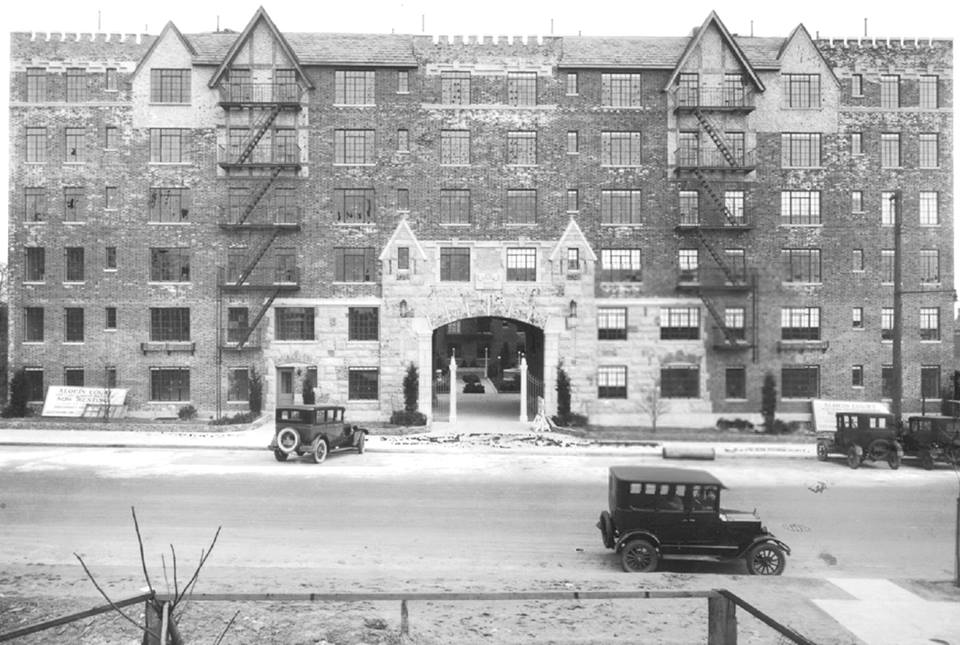
Our home back then was a one-bedroom Brooklyn apartment on the top floor of a six-story four-section complex that was built in the 1920s before the Wall Street Crash of 1929. Each of the four sections had an elevator, often in disrepair. Our apartment had French windows, which we found romantic and from which we could see the lights of the Verrazano-Narrows Bridge at night. The bridge didn’t open until 1964 and so it came to our landscape late. The requisite fire escape was outside the kitchen window, the only window without a radiator below its sill. It made a fine place to sit and read, write stories, and watch the cars below and the clouds above.
The building in the 1920s.
Our apartment, D61, was often blessed with rain in the form of leaks. Manna dropped from the ceiling in the guise of paint chips. If the people downstairs were too noisy, we tapped on the wood floor with the end of a broomstick. When there was no heat or hot water we consulted with the landlord’s wife, a common woman whose carelessly open closet displayed a frowzy collection of cotton house-dresses and limp lifeless sweaters. Mom always sniffed as we walked away, her sensibility offended. She said the woman’s hair was entirely too long and youthfully styled for someone of her station and maturity.
I remember my mother as so refined that when conflict arose between us she never fought or yelled or slammed a fist on the table. After a quiet well-barbed soliloquy, she went silent. If Mom’s anger was white-hot, she might not talk to me for years. The last episode of protracted silence extended from my fifteenth birthday until after my marriage. I no longer remember my original offense but a rebellious marriage to someone of a different ethnicity did nothing to serve the cause of reconciliation.
________
There’s my mother, the little girl on your left. She’s about seven in that sepia photograph – circa 1921 – where she stands alongside her siblings and her own mother. My mother’s mother is pregnant and in her mid-twenties. Eventually there would be eighteen children of which ten survived. Mom told me her parents were married young. They immigrated to this United States of America after the first two children were born, one boy (thank God!) and one girl.
I often look at that photograph of my mother and wonder what she was thinking. What did she long for? As she made her way around the old neighborhood and tried to grow beets in a wooden box on the tenement fire escape, certainly she dreamed of dressing in the latest rage. When, through the aegis of the New York Times Fresh Air Fund, she spent a month each summer at the Muzzi’s farm upstate, no doubt she fantasized about living where the air is clear and the spaces packed tight with solitude and well-occupied with growing green things. She often talked with longing of the fresh vegetables at the Muzzi’s and of a large accommodating farm kitchen.
Mom once landed a part in an elementary-school version of Aïda and got to wear a costume and make-up. Her father had her remove the red lipstick that was provided by a teacher. As an adult, Mom collected lipsticks. You wouldn’t believe how many different shades of red there are and how poetic the names: autumn rose, wild ruby, crimson dew …
Over time, the hope of being valued by a good man, of living in a much coveted garden apartment with something more than an efficiency kitchen, moved slowly out of reach. As Mom grew older, less nubile, and more invisible, she became more artful with her war paint and her dress. She no longer wore what jewelry she had as decoration, but as amulets.
Her decline must have started when she was pregnant with me. Coincident with that, she was diagnosed with cancer for the first time. Through the years and bit by excruciating bit, she lost organs: a breast now, then her thyroid, then her womb, a kidney and finally the second breast and lymph glands. I’m just a shell, she’d tell me before warming her soul by the cold fire of a movie screen. She would fight cancer on-and-off all her life. When the end came, she died in my arms of breast and colon cancer. She was seventy-six.
Mom was a good numbers person, almost always working as a full-charge bookkeeper or accouting clerk. When I was twelve, a particularly exciting opportunity came her way. A prospective employer flew her – a Kelly Girl ®, forty-eight years old – to D.C. for a trial assignment and a job interview. When she arrived, she found the possibility of permanent employment required a full medical exam. The exam, along with work history and evaluation, would be submitted to the board for review. All those men would see it. They might even discuss her lack of womanly organs at the board meeting, complete with board notes for documentation. Embarrassed, Mom declined the interview, packed her bag, and found her way to the airport. That afternoon, she arrived back in New York at Idlewild.
Our Subway Station
The next morning, without even a nod to the well-bred goddesses and gods of mortal fancy, Mom threw on some clothes and grabbed my hand. An hour or so later we were in Manhattan. We went straight into Oscar’s. We didn’t stop in the hotel lobby for people-watching or give quarters to the ladies’ room attendant. We didn’t pay our respects to the Waldorf Astoria Clock. We just ate. Rather, I should say I watched. Mom ate. She cut her pancakes at punitive angles and made doleful jabs at the pieces with her fork. When she finished her serving, she moved on to mine. By the time Mom gulped her third coffee, paid the bill, and left a grudging tip, even my child-mind understood that our visits to Oscar’s for blueberry pancakes would no longer be part of a wistful dream. Lacking sacred ritual, they would devolve into compulsion. This was the beginning of Mom eating much too much and of me not eating quite enough. While Mom endeavored to bury dreams, I sought to scrap their bones bare and set them free.
First publication: March 15, 2012, Connotation Press
Running away—a spoon
dishes carbon clouds,
the moon turns red
with embarrassment,
mad cows’ disease
spinning the earth.
Heat waves a non-political hand
parading toward melting ice
while crowds ignore climate
changing its clothes on the float.
Ring around the rosy—
burnt skin of us all,
atmosphere spun-
cotton strings
evaporating into
space, the final
funerary fear.
—Michael Dickel
A full-disk multiwavelength extreme ultraviolet image of the sun taken by SDO on March 30, 2010. False colors trace different gas temperatures. Source: NASA
I’ve never been to the fjords, the tall cliffs looming.
Nor have I seen the glacial cliffs spawning icebergs
into the sea. Except in film. Yet I know these places.
How do we get from the water to the forests?
We all know the deep meaning of icebergs and
the difficulty of scaling cliffs without proper equipment.
A life dodging icebergs and crashing into cliffs is not
how we want to dream our children into being.
A person who grew up between the gavel and the sound block
seeks to soften the blows of life for her child. But it is just as possible
to drown in heart’s blood as to smother under the crushing blow,
to chase a daughter into steep rock as to siren-sing a son to hidden ice.
When we try to counter judgment, too much love may swallow us.
Love and judgment birth compassion from their wild affair.
Compassion pours joy into the world at the source of creation.
How do we cut our children out of our own skin and survive?
My daughter asked me to walk across campus with her
to her voice lessons. Such a gift of time together, how do I
let go and watch her walk away? When do I say goodbye?
How do you birth a child from your most sacred body
and set that being free? You wrote to me asking if I wanted
you and your son to join me because “we speak Hebrew.”
Such a gift of language, you and he grammatically joined.
Let our children scale cliffs and dodge icebergs.
Let us teach them to navigate between pounding of hammer
and heart. Let them find the forests of compassion in the night,
joy in the day. Let us learn to set our sons and daughters free.
—Michael Dickel
Compassion @2015 Michael Dickel Digital art from photograph
The theme for January at the BeZine is Parents and Parenting. It took me reaching adulthood to realize how lucky I am to have an artistic, creative mother. I imagine that all parents strive to teach their children important life lessons, but mine often came in the form of constructive examples through watching my mom create or by listening to her wise advice and encouragement. Here are just some of the things I have learned by being blessed as the daughter of an artist*.
Patience. A good life (and good art) don’t happen overnight. You will make a lot of mistakes in both, and you know what? That’s okay. You have to be patient and allow yourself (and your art) time to evolve, time to develop into what you (and your art) are going to be. Da Vinci didn’t become a master by trying a few times and then calling it “good”. It took many years, so be patient and keep learning, keep striving.
Waste not, want not – Reuse and share when you can. This applies to a lot more than just art supplies. We live in a world with finite resources and there are so many people out there who have nothing. Appreciate what you have and do as much as you can with what you have been given. Even better, if you come across someone else struggling because they don’t have enough, share and make their lives better, too.
My mom taught art and ran two galleries for over twenty years at the local university. At the end of each semester, there were always extra art materials that students had left behind. Each semester, she would put together an “art box” of supplies and inevitably, there would always be a student who couldn’t afford supplies for class. That student ended up with the “box”, and the caveat to “pay it forward” if they were able.
Never give up! Mistakes will happen, you will face challenges that can knock you so far down that you think you’ll never be able to get back up again. But don’t let that stop you and don’t give up! Use adversity as a catalyst to make yourself (and your art) better than ever…learn where you went wrong and make the next time better.
Nature as inspiration. My mom will be the first to tell you (if you ask) that the absolute greatest artist that ever was, is God. The Divine Creator has made perfection in everything around us. We can find the Golden Mean everywhere in nature and if you’re looking for artistic inspiration, go out into the woods or find a quiet spot out in the natural world – you’re bound to discover something to awe and/or motivate you.
Confidence. In art, as in life, “everyone’s a critic”. The only person you have to compare yourself to and be better than, is the person you were yesterday. By the same token, the only person you have to make happy is yourself. So be kind to yourself and have faith that you can become whoever you dream about being.
Learn to accept constructive criticism. Along with confidence, you also need a healthy dose of humility for balance. Those who truly care about you will sometimes give you constructive criticism…because they care. Learn to recognize when someone who cares about you has your best interests at heart and understand that an outside perspective can have merit. Being defensive may be an automatic response, but none of us are perfect; we can all improve in some way(s).
Follow your heart. Passion is the lifeblood of art…and the spice of life. Never allow your life to become so stagnant or jaded that you lose your passion. It’s equally important that you don’t kill your passion by turning it into a drudgery that you feel obligated to perform – i.e. many artistic, creative people find that when they turn their art into a “job”, it loses the passion that made it so special and unique.
Stay focused, but don’t forget to stop and smell the flowers. In this age of distraction, staying focused on the task at hand can be difficult. In order to be successful (in art as well as life), you need to be able to stay focused on your goal(s) and keep working on them until they’re done. Conversely, don’t become so consumed with reaching your goal(s) that you don’t make time to stop and savor the things which make life so sweet. It’s often the little things that enrich our lives to the point of being worthwhile.
My mom taught me all these things and so much more. It was all filtered through a lens of gentle, artistic understanding and insistence that I, her daughter, was undoubtedly her ‘greatest creation’. 🙂 Thanks, Mom. I love you. *(All images are used with the artist’s permission).
The great fur bulk lies supine, inert, warm, creating a sheltered harbor in the deep snow in contrast to the flat, icy landscape. Two milky cubs clamber dough-footed all around, exploring clumsily, arousing no concern. They orbit close by, drawing into contact periodically to suckle and nuzzle. The wind blows a moderately threatening question of survival through the morning. Mother closes her eyes to the sting, looking sleepy and stupid, lifting her blinking face to the sun. She is the solid thing in a shifting drift, placid and mountainous, serenely established on the face of the horizon.
This image of motherhood was suggested to me by a wise psychiatrist as I sat in her Pasadena home with my husband while our daughter crawled at our feet. I was 22 years old and suffering from postpartum depression and anxiety. I wanted to be the perfect parent, to do everything right in order to raise up a child who would take her place as a blessed jewel in the crown of my god. My models spoke in scriptural tones, living or in print. My aspirations were clear, I thought, my inspiration abundant.
And I was exhausted.
The good doctor looked at my 98-pound frame and announced her diagnosis with authority. She looked at my daughter exploring a paperback with her fingers and mouth and recognized great intelligence. It seemed to her that we were not badly broken or dysfunctional, but we needed to relax. Parenting is a living thing, a responsive dance with biology, and although we humans are biologically social creatures, heavy-handed social structure can strangle our relationships and bind us into damaging patterns. My reliance on the authority of these constructs seemed helpful at first, but that lock-step really tripped me up when my children were in their teenage years.
The tendency to defer to “experts” in my Western affluent culture is a dangerous trend for parenting, I think. It can lead to a mistrust of instinct and compassion. That can also translate to lower self-confidence and heightened anxiety in both parent and child. I see that demonstrated in stories of helicopter parent vigilantes, DCSF over-reactions, and soaring statistics on depression and suicide in young people. I also see that in my own 4 children 30 years after my initial visit to an “expert”. They are still working out their concerns about “doing it right” and their responsibility to “make good decisions”. A good decision is perhaps a lot easier to make than we suppose.
My only son was born hastily into the world when the doctor noticed fecal matter in his amniotic fluid. The umbilical cord was wrapped around his neck as well. At six pounds and six ounces, he had a slight case of jaundice. I brought my fragile bundle home, and the hospital equipped us with a bili light to give him extra skin exposure to the blue light that would help convert bilirubin. I was instructed to give him plenty of fluids and to let him lie under that lamp in just a diaper and protective eye shades for a good 8 hours a day. I kept a detailed record of the time he spent nursing and how much glucose water he would drink from a bottle, and I charted his time in the bili-box. Newborns have an instinctive response to feeling a “sudden loss of support” called the “Moro reflex”. They flail their arms out and cry. This is what my son did when he was in that chamber. It broke my heart. I decided, in my 24 year old wisdom, that what he needed more was to be swaddled and held. So I wrapped him up tight and carried him into the living room. My mother was visiting and helping me with my older child. I poured out to her my worry about whether I should follow the doctor’s instructions to the letter or whether I should comfort my son. She and I commiserated about the difficulties of parenting, and I realized that she wasn’t going to help me decide. She was going to help me by letting me decide and supporting my decision.
And that’s the other sustaining image of motherhood I gained early in my parenting.
When they’re young, lie down with them. When they’re older, support their decisions. Your presence is the greatest gift you can give your children. Don’t try to give them too much of anything else. They need to get those other things themselves.
This is an edited version of Part 2 of an essay, which I posted four years ago in my blog, ‘Forty Two’. Part 1 was titled: “London’s Burning… What Can We Do”. It was also spurred by a conversation about who is responsible for the mess we seemed to be in following the London riots and the state of the UK’s economy – has it improved since then, one may ask. A rather political conversation had started in a post on the riots on Facebook. This essay was already germinating in my mind as I was completing Part 1, so I thought that I might as well put this out now to clarify my thoughts and convictions on the subject of the responsibility of individuals for their own actions and open a discussion on parental responsibilities in this vein.
I would preface this by saying, that, wherever and under whatever circumstances we are brought into this world, when we are old enough, reach the age of majority or at whatever point in our lives we are capable of thinking for ourselves, we must take the first steps that enable us to become responsible for our own lives and become accountable for our actions. This is so that we can not only fit into our community, but also contribute to it.
In the same way, this means that we are responsible for our own economies, that is our personal finances; making provision for hard times is part of that, rather like a farmer stows hay in the barn to see his cattle through a bleak winter. Whatever the conditions out there, whatever the state of the country’s finances, we have the power to resist the temptations of consumerism and to cut our coat according to the cloth we have. Most politicians, whatever their political colour, with a few exceptions have always and will always be guided in varying proportions by three things: their personal ambitions, the party line and corporate sponsorship; listening to the electorate is the last thing on their agenda.
It is within the power of most individuals in the affluent, developed and ‘free’ world, to live well and securely – far, far better than a majority of the world’s population in the third world. The exceptions to this are those who are genuinely incapable of coping, of taking control of their lives, because of the way they are wired, through physical or mental disability or some other predisposition, which does require the support of a caring welfare system; and I have for most of my adult life held a conviction that, however much of our infrastructure is in private hands, we must always be able to provide school education and health systems, that are free to all, funded by National Insurance.
The trouble is, for the capable majority, that we don’t exercise our free will to manage our lives; we act like sheep, greedy sheep. We run up a burden of personal debt, in pursuit of materialistic self-improvement, chasing a kind of mock celebrity status or some misguided notion that ‘success’ is expressed by the size of your house, by the size and specification of the four-wheel drive you park in front of it, by the designer clothes you wear and by how exotic the location of your holiday destination.
But what happens for too many of us is that we end up financially far worse off than we should be. This is all well and good whilst the going’s good, whilst the economy is ‘flourishing’, but when the bubble bursts, as it always will in these conditions, and times get hard like they are right now, all we tend to do is complain that it’s the fault of whoever’s in power, or somebody else; anybody is to blame but ourselves. This is the crux of it: individual responsibility, taking control of our own lives, by harnessing the power of our own will, given the solidarity of family and community. Perish the thought that one day we are no longer able or permitted to exercise this freedom. And let’s not kid ourselves that we have a divine or enduring right to this freedom; we have to earn it by taking responsibility, making ourselves, first and foremost, accountable for our actions. Then and only then will we be qualified to comment and contribute to an improvement in the lot of others.
For those that want to judge me, or anybody for that fact, to categorise me in some neat political pigeonhole, I would say simply this. Never judge, keep an open mind and nurture common sense. Don’t be hidebound by a party line; don’t be a sheep and be a member of a ‘gang’, just for the sake of ‘belonging’; be a thinker. But, above all ensure that you show respect for your fellow man or woman; do not be anti-social by word or deed; and honour the principle espoused by John Stuart Mill almost two hundred years ago. I have been mindful of his philosophy for all of my adult life… and I’m still trying to hold to it.
Could this be part of a blueprint for parental responsibility..?
“What the heck is this?”
I heard her shout behind me, shattering
the silent glow of my nascent creative self.
She caught me just as I closed
the right-ventricle point of the heart
I drew with a purple crayon
on the wall in the family room.
“But, Mommy,” four-year old me said,
“don’t you think it’s pretty?”
She didn’t see the need to make the beige wall
not such a bore
anymore.
I guess because her life had become
beige, too.
After Mom marched me to my room,
I wiped my nose and
was glad I never completed
this artistic tribute.
She’ll be sorry, I thought.
I never got the chance
to write inside my heart,
in red this time,
“MoMMy.”
i was quite certain there were more than a thousand pieces scattered before me none of the pieces had clear markings to indicate where and when to assemble let along whether or not all the pieces where there yet i began my task and parenthood began
In the middle of December of last year, The BeZine reprinted a “Skeptic’s Collection” column of mine, “Sailing with Ulysses”, in which I discussed the life-changing influence my first exposure to college had on me, and its parallel to my first reading of Alfred, Lord Tennyson’s great poem “Ulysses”. Shortly before I read “Ulysses,” and as a junior-high-school student, I had adopted the habit of simply reading voraciously – independently, outside of school, and on my own time – on any topic that piqued my curiosity. In fact, the summer after junior-high school, for reasons I cannot now recall, I set a goal of seeing just how much math and physics I could teach myself before I started my first (sophomore) year of high school. To cut to the chase, I learned so much so fast that, after completing some standard school-district assessment tests, I was allowed to quiz out of high school entirely after a couple of weeks, and enter college as a freshman … where I repeated the pattern of learning on my own. As I said in “Sailing with Ulysses,” I learned how exhilarating it can be to set sail from one’s own personal Ithaca and launch out into “the dark, broad seas” where “the deep moans round with many voices”. What I did not say in “Sailing with Ulysses” is that this can be a rather lonely enterprise. This is part of the price to be paid by people who maintain their curiosity intact despite the ambient culture’s insistence that, after formal education is over and after one has retired from professional life, one’s intellect may likewise be safely mothballed: one’s brain is expected to quietly die before one’s body gets the Twitter feed.
Such is the downside for someone who insists on being – to employ today’s vaguely patronizing term – a “life-long learner”. (Why is there never any reference to being a “life-long breather” or a “life-long heart-beater” or a “life-long food-digester” or a “life-long excreter”? Is continuing to learn in life’s post-professional early twilight really so very much more exceptional? And why do we think so, anyway? Well … quite possibly because it is true. Which begs another question: why? OK … I digress … apologiesfor the mini-rant.) There are many times when being such more closely resembles sailing with the Ancient Mariner, post-albatross, than sailing with Ulysses. Of course, the latter metaphor is much more apt when one is “officially” a student. When he sailed for Troy and throughout his peregrinations back to hearth and home and Ithaca and Penelope, Ulysses enjoyed the company of the men he calls, in Tennyson’s great poem,
… my mariners, souls that have toiled and wrought and thought with me, that ever
with a frolic welcome took the thunder and the sunshine …
That was my experience, also, as a student. Even in these days of “monetized” higher education, that is what is expected.
But when I stopped being a student, and even more so after I retired, I found I was much more like Samuel Taylor Coleridge’s Ancient Mariner after he killed the albatross. I suppose you could say I killed my own personal albatross when I, without really thinking about it or planning to do so, neglected to pack my curiosity and passion for learning away with my bell-bottom jeans, peace medallions, and Nehru shirts:
And a good south wind sprung up behind;
The Albatross did follow,
And every day, for food or play,
Came to the mariner’s hollo!
In mist or cloud, on mast or shroud,
It perched for vespers nine;
Whiles all the night, through fog-smoke white,
Glimmered the white Moon-shine.’
‘God save thee, ancient Mariner!
From the fiends, that plague thee thus!—
Why look’st thou so?’—With my cross-bow
I shot the ALBATROSS.
Eventually, of course, the Ancient Mariner’s fellow shipmates leave him alone on the vessel, because his killing of the albatross renders him persona non grata to his erstwhile friends. With me, the solitude resulted, not from any animus on others’ part, but from the fact that I was still curious, intensely curious … and curious about matters utterly foreign to most people. There was almost no common ground. Unlike Coleridge’s Mariner, I was not a menace. But I was a curiosity.
What made – and still often makes – me a curiosity is that I refuse to make a choice that the culture insists I make between being a retired ex-professional (mathematician and web developer) and a student. To shift the literary metaphor, I am in much the same position as Matthew Arnold when he visited the monastery of the Grand Chartreuse: “wandering between two worlds, one dead, the other powerless to be born”. This was impressed on me vividly when, in pursuit of my seven-years-and-counting-long interest in constitutional law, I audited three classes in “con law” at the University of Washington’s Law School, taught by (now retired) Prof. Stewart Jay, a gifted attorney, First Amendment scholar, and teacher. For reasons too convoluted to enter into now, the experience was life-changing.
The reaction of the other students in each class was fascinating. Because I was old enough to be their father, they all assumed I was a retired attorney, law-school faculty, maybe even a judge. Several of them asked me – in a very courteous, non-intrusive, tactful way – what firm I had partnered with, where I had taught con law, etc., etc. I always enjoyed their astonishment when I told them … no … I was not a lawyer, in fact, had never even been a law-school student – and was auditing con law (and later Prof. Jay’s First Amendment course) literally just for the fun of it. They were equally astonished, after Prof. Jay occasionally bent the no-participation rule for auditors by allowing me to briefly take part in a few class discussions, when I asked questions and made remarks like “What is the relationship between the ‘privileges and immunities’ clause of Article IV, section 2 and the doctrine of reserved powers?” and “In 1803, Marbury v. Madison concerned the constitutionality of Section 13 of the Judiciary Act of 1789”. Those few brief times, when I was actually a part of the class, were like gasps of oxygen to a drowning man. (No criticism whatsoever of Prof. Jay or the University should be inferred: I actually agree with and support the auditor non-participation rule. Auditors are not for-credit, paying “customers”.) Which raises the central question: how do you go about breathing the oxygen of community if you are a “life-long learner” (a term I have come to heartily loathe)?
My answer: you don’t.
Instead, you do the next-best thing: you go to strenuous lengths to develop an anaerobic intellectual metabolism. You bust various guts to become self-sufficient so that you do not need the company of fellow mariners. Yes, there are on-line / e-courses in various disciplines. These work fine if the subject matter is something that can be learned as well in solitude as in a classroom – with perhaps the option of submitting e-mail or Facebook-text questions to the instructor. But with subjects that are inherently communitarian – philosophy, literature, theology, art, etc., etc. – well … not so much. All disciplines benefit from physical, face-to-face community, but still others positively require it. Yes, there are non-credit classes for “life-long learners” … gag! choke! … that allow participation. But, having participated in such classes, I have found that the subject matter is always covered at a very superficial level in order for everyone to be able to participate. (Wide class participation is a worthy goal. Again, no criticism should be inferred.) A happy alternative would be classes where the subject matter is covered in graduate- or postgraduate-level depth, yet where participation is solicited from all and interaction is encouraged among class members. The good news is that there are are such venues. The bad news is that the technical term for them is “university classes,” and they usually cost well into four digits. You see the dilemma … right? …
So, in a strictly ad hoc manner and only in the case of people with whom I am on a very intimate basis – my wife and a few others — I shamelessly buttonhole people. To be brutally candid, I force them to listen and, to the extent I can, to respond to me. I call this tactic the “Ancient Mariner gambit”. Coleridge’s Mariner accosted the Wedding Guest:
He holds him with his skinny hand,
‘There was a ship,’ quoth he.
‘Hold off! unhand me, grey-beard loon!’
Eftsoons his hand dropt he.
He holds him with his glittering eye—
The Wedding-Guest stood still,
And listens like a three years’ child:
The Mariner hath his will.
The Wedding-Guest sat on a stone:
He cannot choose but hear;
And thus spake on that ancient man,
The bright-eyed Mariner.
Such is my advice: if you are cursed … or blessed … I will not presume to say which … with a persistent capacity for fascination and curiosity – if, purely for its own sake and quite apart from any pragmatic or professional advantage, you find life and the world seductively, irresistibly fascinating — make damn sure you have plenty of tolerant and patient friends, your spouse most of all. Either that, or don’t shoot the albatross in the first place.
Most contemporary Buddhists know that Prince Siddhartha, the Buddha-to-be, left his family in search of liberation on the day his son, Rahula, was born. Many have been perplexed, sometimes outraged, at such a seemingly irresponsible act. What is less well-known, though, is that after his awakening, the Buddha became his son’s primary parent for most of the boy’s childhood. From the time Rāhula was seven, he was under the care of his father, who proved to be a remarkably effective parent: Rāhula had reached full awakening by the time he reached adulthood. So we can ask, what kind of parent was the Buddha? What kind of parenting techniques did he use? How did an enlightened teacher convey his spiritual message to his own child?
The scriptures do not offer much detail about the relationship between the Buddha and Rāhula, but various hints provide a very interesting picture of how the teacher guided his son’s maturation. An earlier story describes how Rāhula came to practice under his father, and most of these hints are contained in three discourses, which, when read together, follow the pattern of the three successive trainings forming the path to awakening: when Rāhulawas seven, the Buddha taught him about virtue; when he was a teen, the Buddha instructed him in meditation; and when he was twenty, the Buddha taught him liberating wisdom. Rāhula’s gradual maturation to adulthood thus paralleled his progress along his father’s path to awakening.
When my older son turned seven, I began to wonder what kind of spiritual guidance I could offer him and his younger brother. At a minimum, I wanted them to learn enough about the practices and teachings of Buddhism so that as adults they could turn to these resources if they desired or needed to. I also thought it would be wonderful if they could feel at home in Buddhism so that no matter where they went in life, this home would always be available as a refuge. And finally, because the greatest wealth I know is the well-being, peace and compassion I have found through my Buddhist practice, I’ve often wondered how I can pass along these riches more broadly to the next generation as a kind of spiritual inheritance. Remembering that Rāhula had entered his father’s care when he was seven, I searched through the Pali discourses to learn what I could about how the Buddha taught his son.
Young Prince Rāhula prompted by his mother to ask for his inheritance, left behind by the Buddha after His renunciation. Instead, the Buddha told Venerable Sariputta (Sariputra) to ordain Prince Rāhula, giving him a spiritual inheritance better than the one he asked for.
I found the question of how to leave a “spiritual legacy” beautifully addressed in the story about the way Rāhula came to practice under his father. Six years after he left his family, and one year after his awakening, the Buddha returned to his hometown. Seven-year-old Rāhula, on the urging of his mother, went to meet his father to ask for his inheritance. If Siddhartha had remained at home, Rāhula would have been in line to inherit the throne. But as a renunciate living a life of poverty, what could the Buddha pass on? In response to Rāhula’s request, the Buddha said to Sariputta, his right-hand monk, “Ordain him.” Rather than receiving the throne, Rāhula inherited his father’s way of life, a life dedicated to liberation.
While it is unlikely that my son will shave his head and take robes anytime soon, I would still like to expose him to the basic Buddhist principles that have so deeply informed my own life. When I came across the three discourses where the Buddha teaches Rāhula, I was surprised that the teachings seemed not only still fresh but also relevant to raising a child in modern America. In fact, these discourses have now become a guide for me as a parent.
Virtue
The first story illustrates how Rāhula was taught to live a life of integrity. When he was eight, Rahula told a deliberate lie. The sutta called The Discourse of Advice Given to Rāhula at Mango Stone (Middle Length Discourse 61) tells how the Buddha dealt with this. Having first meditated, the Buddha went to his son. Rāhula prepared a seat for him and, as was the custom, put out a bowl of water so the Buddha could rinse his feet. After his father cleaned his feet, a little water was left in the bowl. The Buddha asked, “Rāhula, do you see the small quantity of water left in the bowl?”
“Yes,” replied Rāhula.
“As little as this,” the Buddha said, “is the spiritual life of someone who is not ashamed at telling a deliberate lie.”
I imagine Rāhula taking a deep gulp upon hearing this.
The Buddha then threw out the remaining water and said, “Thrown away like this is the spiritual life of someone who is not ashamed at telling a deliberate lie.”
The Buddha then turned the bowl upside down and said, “Turned upside down like this is the spiritual life of someone who is not ashamed at telling a deliberate lie.”
And to drive the point home, the Buddha then turned the bowl back upright and said, “As empty as this bowl is the spiritual life of someone who is not ashamed at telling a deliberate lie.”
He then taught his son, “When someone is not ashamed to tell a deliberate lie, there is no evil that he or she would not do. Therefore, Rāhula, train yourself to not utter a falsehood even as a joke.”
This part of the story reminds me that there is force but no inner strength behind angry castigation of children. Calmly, when he thought the time was right, the Buddha made his point without punishment or anger.
After this brief but sharp admonishment for lying, I imagine the Buddha had his son’s attention. He then instructed his son to become more reflective about all his behavior. The Buddha asked, “What is a mirror for?”
“For reflection,” replied young Rāhula.
The following paraphrase conveys what the Buddha said next:
Whenever engaging in a physical, verbal or mental activity, you should reflect, will this activity bring harm to myself or to others? If, on reflecting, you realize it will bring harm, then such activity is unfit for you to do. If you realize that it will bring benefit to you or to others, then it is something fit for you to do.
It strikes me as key that instead of teaching his son to recognize absolute notions of right and wrong, the Buddha was teaching him to reflect on harm and benefit; this requires both self-awareness and empathy. Grounding moral decisions in what is harmful or beneficial helps protect our ethical life from being guided by abstract and external ideals unrelated to the effects of our behavior. Harm and benefit are also related to a person’s sense of purpose. Things we do can either detract from or support the direction in which we want to go.
This teaching reinforces my belief in the importance of cultivating a child’s capacity for empathy and an understanding of how his or her actions impact others. The powers of reflection and compassion do not come only from being told to be reflective or compassionate. They come from seeing these qualities modeled in others, particularly one’s parents.
The Buddha also told Rāhula to notice after doing something whether or not it caused harm. If harm resulted from something Rāhula did, he was to find a wise person to confess this to as part of a strategy to do better in the future. From this I have learned the importance of helping a child develop the integrity to admit mistakes. And such integrity depends a lot on how a child’s mistakes are received by his or her parents. Again, the parents’ ways of being and acting in the world are crucial to how a child’s virtue grows: if the parent is someone who can be trusted and who is more interested in helping the child grow than in punishing the child, then the young person is more likely to be honest.
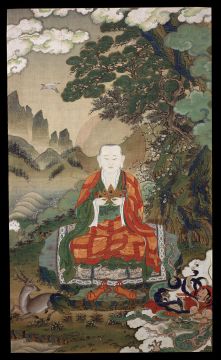
Rāhula,Tibetan art, 16th century
Meditation
The second story shows how the Buddha began teaching meditation to Rāhula as a way to develop a foundation of inner well-being (Middle Length Discourse 62). This story takes place when Rāhula is a young teen. It starts as he sets out with his father on their morning almsrounds. Rahula was having conceited thoughts about his good looks, which he shared with his father.
Noticing his son’s preoccupation, the Buddha said, “When seen with wisdom, the physical body should not be viewed as me, myself or mine.” In fact, the Buddha continued, one shouldn’t see any feeling, perception, mental activity or consciousness through concepts of me, myself or mine. Hearing this, Rāhula felt admonished and returned to the monastery without collecting food for the day.
I take this to be a radical teaching for a young teenager. I can’t imagine that as a teen I could have understood what the Buddha was talking about. However, I remember all too well how, at that age, I was preoccupied with my personal appearance. I have often heard this justified in teens as part of the important developmental process of individuating, of finding themselves. Is it appropriate to admonish a fourteen-year-old for feelings of vanity? Was the Buddha interfering with normal developmental issues that teens should negotiate alone? Without developing a strong sense of self, how can a young person grow into a psychologically healthy adult? What kind of self-concern does a teen need in order to mature?
The Buddha’s answer to these questions is seen in what he next did for his son.
The evening after he was admonished, Rāhula went to his father and asked for instruction in breath meditation. The Buddha first used analogies to illustrate how to have equanimity during meditation. He said,
Develop meditation that is like the earth: as the earth is not troubled by agreeable or disagreeable things it comes into contact with, so if you meditate like the earth, agreeable and disagreeable experiences will not trouble you. Develop meditation like water, like fire, like air and like space: as all of these are not troubled by agreeable or disagreeable things they come into contact with, so if you meditate like water, fire, air or space, agreeable and disagreeable experiences will not trouble you.
Then, before actually teaching him breath meditation, the Buddha told his son to meditate on lovingkindness as an antidote to ill-will, on compassion to overcome cruelty, on sympathetic joy to master discontent, and on equanimity to subdue aversion.
Only then did the Buddha teach breath meditation in its classic formulation of sixteen stages. These stages go through phases of calming the body and mind, cultivating strong states of well-being and insight, and letting go. And then, as a powerful punctuation to his teaching to Rahula, the Buddha concluded by stating that if mindfulness of breathing is developed, a person will have the ability to be calmly mindful of his last breath.
As I read about the Buddha’s teaching his son breath meditation to cultivate strong states of inner well-being, I saw how this is an alternative to building a rigid conception of “self.” I wonder how much of modern teenage attempts at self-building and differentiation are fueled by their being ill at ease with themselves and with others. I assume that the process would be very different if based on a sense of being both at ease within oneself and imperturbable in the presence of others.
When teaching meditation to kids I have noticed that at about thirteen or fourteen, a jump occurs in their ability to meditate. I have been quite impressed by the ease with which some young teens can drop into deep states of meditation (though it tends not to last long). I have known young people for whom meditation became an important tool for finding stability and peace in the midst of their adolescent challenges.
But it is not just for the usual teenage trials that breath meditation is useful. Breath meditation can be drawn upon at every step in one’s journey in life. In this story, the Buddha concluded his instruction of his son by pointing to the value of breath meditation practice in preparation for the moment of one’s death.
Wisdom
In the third and final sutta the Buddha guides Rāhula through a series of questions that lead him to liberating wisdom (Middle Length Discourse 147). By this time Rahula had devoted the greater part of his teen years to the path of awakening. In one passage he is described as exemplary in his love for training. By the time Rahula was twenty, his father understood that he was close to liberation. The Buddha then did something that I find quite touching: he went for a walk with his son deep into the woods in a grove of majestic sal trees. Sitting at the base of one of these large trees, he led Rahula through a thorough questioning of every basis used for clinging to the idea of a self. The process the Buddha used was one of progressively loosening the enchantment with finding a self in anything. For someone as well trained as Rahula, the deeply rooted tendency to cling to some idea of an essential self can be the last barrier to liberation. As he listened to his father’s teachings, this clear seeing of the impersonal nature of phenomena was the final step Rahula needed for his full liberation.
The Buddha’s teaching on not-self can be perplexing. It is easy to see it as abstract philosophy and so miss that this teaching is a form of practical instruction on how to find happiness through letting go. To me it seems important that the Buddha taught Rāhula about not-self while they sat deep in the woods. I have often found that I have a very different perspective when in nature than when in the middle of urban life. I find that the sense of peace and well-being that nature can provide facilitates letting go of self-concern. To contemplate letting go while reading a book on Buddhist philosophy in one’s own home is a lot different from doing so surrounded by a quiet grove of trees. In reading this third discourse, I reflected on how useful it is to know oneself in the context of the natural world.
When the seven-year-old Rāhula asked for his inheritance, he couldn’t have imagined that thirteen years later he would have received the greatest gifts that any parent could pass on to a child. In Buddhism, awakening is known as the greatest happiness. As I consider my wishes for my own sons, I wish them the peace, happiness and safety that the path of awakening provides. Perhaps in the different phases of their growth they too can be established in the three trainings of virtue, meditation and wisdom.
To give them every opportunity to make decisions and exercise their own power.
Even so, one of the greatest challenges we have as parents is to let them grow up.
A few years ago, with the kids’ encouragement, we stepped out of our comfort zone into the Amazon jungle.
To ride a zip-line over the jungle canopy we had to reach a platform 125 feet above the jungle floor. Instead of letting our guide use pulleys and ropes to haul them up, they insisted on pulling themselves up, step by step.
As they dangled from a single rope a hundred feet up, I thought of the book Charlotte’s Web. Charlotte considered her egg sac, from which her babies hatched, her ‘magnum opus.’ One by one, the baby spiders spun a fine web into a tiny balloon and rode the breeze, floating off into the world to land somewhere and build a web of its own.
I couldn’t have been prouder–or more relieved–when they climbed to the top under their own power.
I need an actual, real life hero; otherwise I’m going to continue having pieces of my life torn out of it.
And I don’t know how to make that happen.
Where do I get the sugar, spice, and everything nice, mixed with an adequate amount of charisma, intelligence, physical and mental capabilities and the natural talent and will to get the hero I need?
Where’s my magical non-harmful radiation that turns us into Captain America or any other amount of hero’s I read about and watch on screens?
My chosen family is made of incredible people – everyday heroes that I love.
These people fight every day to survive against the odds: against ableism and mental illness and racism and transphobia and homophobia and more.
And as a person who is also fighting for my survival it is the survival of my family, of my community, that reminds me that there’s a chance. A possibility. A hope.
But sometimes, you need a hero.
Because my friends and community keep getting hurt, keep getting rejected, keep dying.
Dying. My friends are dying. Another yesterday. Who knows when the next is.
I need a hero.
Somebody that can tell me that everything will be alright and then can go out and make it so.
Make it happen.
Before more things happen that can never be taken back.
There’s this thing that happens when you’re a minority or marginalized or oppressed – you keep track of statistics.
And the worst part is, is I know that some of the people I will never meet, never hear about, will only ever be remembered as that. A statistic.
I want to tell you a story.
A story about a friend who stood on a street corner with a sign that said “Remember to Smile!” and danced.
He danced because he spent so much of his life dancing on the edge of never having a reason to smile and he wanted people to have a reason.
And believe me – he was noticed.
From the stories he told of people interacting with him, and his asking for other inspiring quotes to hold up, and the picture you can find of him dancing with that sign, he was noticed.
I hope that’s how he’ll be remembered.
I need a hero so that he can have justice.
So that we can start to fix the system that is supposed to help people and yet turns people away.
I need a hero so that I don’t have to look at the spiral of intersectional statistics of trans folk and queer folk and people of colour and mentally ill folk and disabled folk and look at some of my friends and wonder if they’re next.
If I’m next.
I need a hero who can help me and my family and my communities shove this world along.
I need a hero because I can’t shelter every trans person, I can’t love every queer person, I can’t help every mentally ill person, I can’t.
I can’t and I can’t be expected to.
And these are my movements, my people, my family, my life; but we need a hero because just look at this world.
We need a hero because I don’t know how much longer we can wait for one.
Love, Colin
(P.S. To my friend; I will miss you for a long, long, time, and will remember you fondly. I wish this world could’ve done you the good and justice you deserved and given you the care you needed.)
Spiral cloud mountains build in the sky, towering to 20,000 feet, I’d guess. Below, is the town of Douai, where we know Richtofen’s Jasta 11 calls home this month.
The golden disk to the west is setting and the Albatros scout planes rise to meet us. This is going to be a ripping scrap, I can tell. And then we are in a whirlwind of brown machines and red machines, red-white-blue cockades and black Iron Crosses all flashing by so fast that sometimes you can hardly keep your bearings. Like so many of these recent fights, everyone gets scattered across the sky. But I can’t look out for everyone when I have to do my other job, kill Germans and come home to Flora, my Bobbsy.
A red aeroplane with a yellow nose and tail whips past Cecil Lewis, and I take chase. I will get to 50 victories. I will get to 50. I must get to 50. He twists and dives and heads into the clouds and I know he can’t shake me. My attention is solely on his tail. I recognize the flash of the setting sun on his goggles as he glances over his shoulder at me, as I’ve seen that look hundreds of times before. I know it as sure as I know the booming of my own heartbeat in times like this.
I fire burst after burst into him, a drum of bullets from the Lewis on the top wing and 60 or 70 rounds from the Vickers gun in front of me.
I see him drop below me and I know he’s done. I see it all so plainly. The craziness and blood lust that overtakes me at such times ebbs away. And I think of my Flora, my Bobs again.
Then I break through the clouds, seeing from my altimeter that we’ve dove to only 200 feet. But the clouds are in the wrong place.
“Flora,” I cough, “why are the clouds below me and the church steeple above me?”
“Rest, Albert, lay back and rest.”
I fight the urge to rest, I have to get back to the squadron, get back to England, get back to Bobbsy. The glowing disk in front of me fades away. It’s not the disk of the sun, or my identity badge, it’s my spinning propeller. It stops and then I only see its top, hanging vertically like that stalactite church steeple in front of me.
And then that great noise.
“What’s going on, Bobs? Can I come home to you now? General Trenchard promised me I could come home now.”
“Yes, Albert, you can come home. You don’t have to hurry, though. We’re waiting.”
I see her face above me again, so beautiful, so young. Even now when I see her I can barely catch my breath. Yet her eyes are so very sad as I lay my head back in her lap. I feel raindrops on my face.
“Don’t cry Bobs,” I say.
****
Fifteen year old Cecille Deloffre had lived amid the sounds of war for a quarter of her life. She’d learned to sleep to the thunder of the big guns as if they were a summer rainstorm. She ignored the buzzing drone of the aeroplanes as they flew west-to-east and east-to-west each day, often punctuating their passage with the very unmilitary drumbeat of their machine guns.
Cecille had seen some of these machines fall from the sky, glowing and tumbling like a cigarette tossed by one of those German soldiers hidden in the steeple of the nearby church in the village of Annoeulin.
This evening during dinner she had heard the fight above her home, sounding so much like someone had struck a hornet nest and the swarms spreading across the sky.
Then Cecille heard the sound of what could have been two aeroplanes directly above. Her mother crossed herself and tried dragging Cecille from the table to the root cellar beneath the kitchen floor.
She broke from her mother’s grasp and ran into the small fenced yard in front of their farmhouse just as one machine spit a tongue of fire back from its yellow shark-like nose, engine sputtering, gliding to a crunching landing on the other side of the village.
She heard another aeroplane’s engine sputter and stop, just as it whooshed, upside-down, from the low storm clouds not 300 metres up the road. Its pilot wore no helmet and she could see his eyes but not his face in the growing dark.
Then the aeroplane just fell, like a an old leather-bound book dropped from a table.
Cecille stood frozen for a second to see if this machine would catch fire. But it only lay crushed on its side like a coffee-colored bird knocked from the sky by a kestrel. The pilot’s head move and she ran toward the aeroplane, unsure why, with her mother screaming after her.
As she came up to the crash site, the young man within the broken machine released his harness buckle and fell from the cockpit with a thud, a moan, and a faint rasping wheeze.
Cecille reached for the boy and pulled him a few metres away from his machine. She rested his head in her lap and he slowly opened his eyes, looking up at her with such longing that she couldn’t keep from crying.
“Don’t cry Bobs, Bobs, Bosshh…” she heard him barely whisper. Then stillness.
From behind them came the pounding sound of the jackbooted German soldiers from the steeple. They jabbered with delight, so sure they shot down a British flyer. But they hadn’t. Cecille noticed the boy had no wounds on his body.
Her eyes running red with tears, Cecille looked down at the boy again and saw but a small bruise beneath his eye where his goggles had been. In her lap, the face of 20 year-old Captain Albert Ball, MC, DSO, VC rested in silent repose. The sooty gun smoke stain on it was variegated in white by the tracks of tears, like the half-smiling black marble bust of a saint. They were his tears and that of a beautiful young girl he briefly saw and was sure was the one he loved.
But Albert couldn’t hear her. He had just won his 50th victory and he was flying home. Though this was a solo journey, hard-won even by those who bask in the adulation of nations. When a “hero” dies in war, he dies just like any other anonymous soldier, and each of them makes that final flight alone.
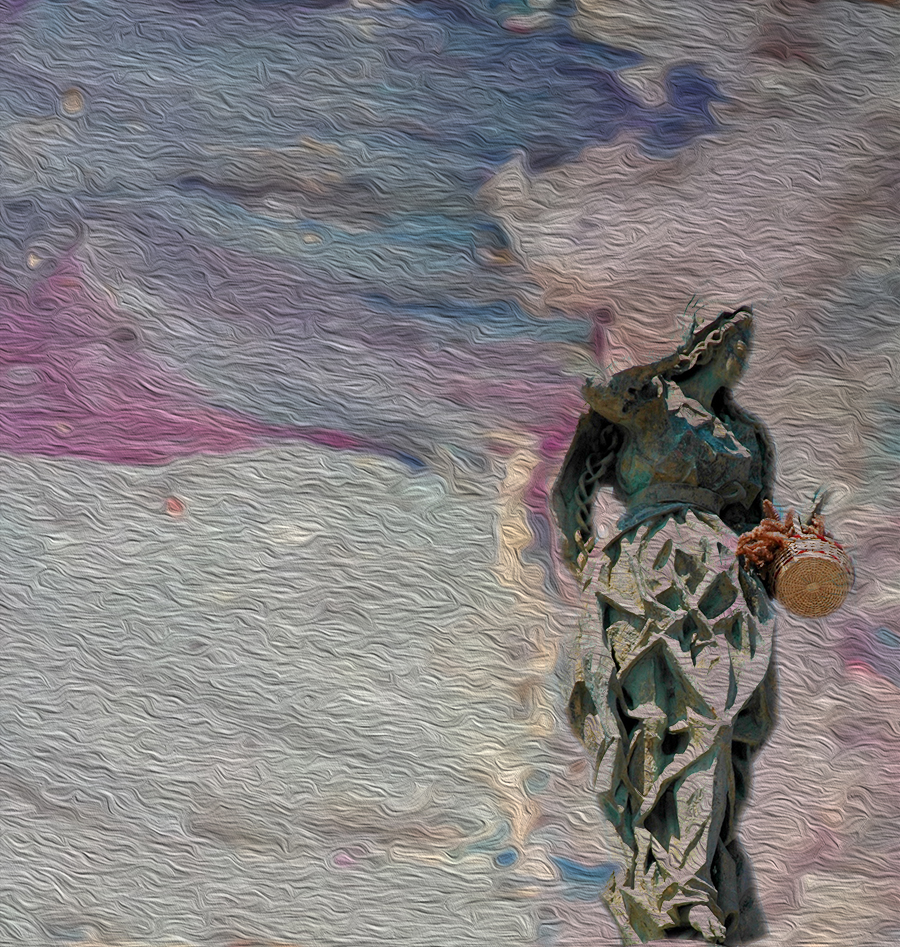
The dream walker comes through a storm of nebulae
a basket of dreams emanating stars into the night
a fate’s bare feet dance into being a genesis of memory.
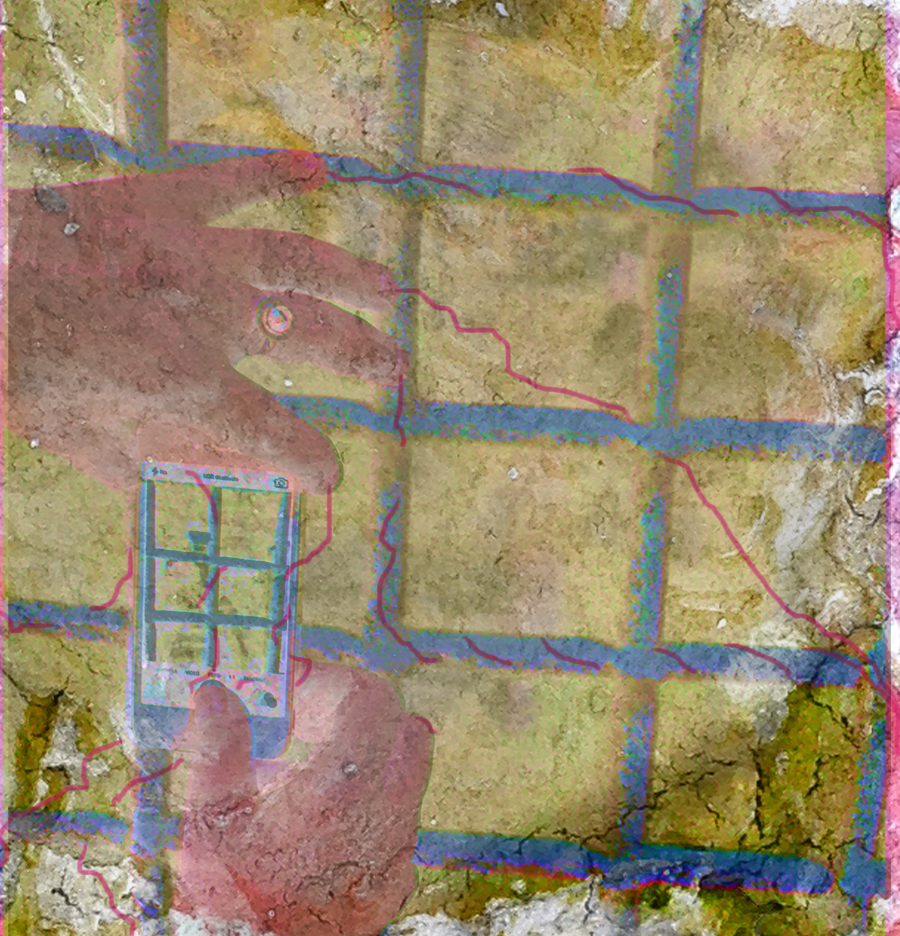
Fates as cell phones spin out our faith, tying possibilities into bars of probability
while we await a sleight-of-hand trick called free will to enter a philosophical debate
into the woven poem’s contest space, a misspelled word wishing it knew how to speak.
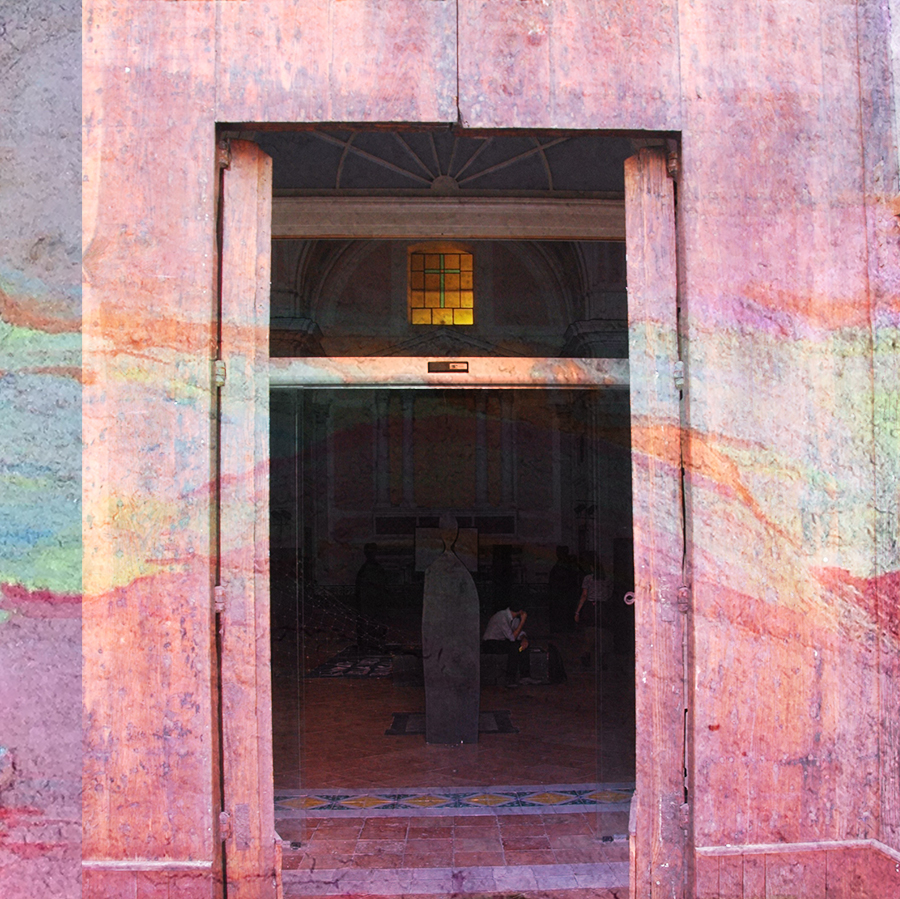
Would you weave through that door into an unknown space spilled with colors,
a sunset dream layered like tiled imagery with metaphor long forgotten? And then
what dreams would the walking fates hand down to you, three lovers long forgotten
who never forget you as they curse and bless your memories.








 He holds him with his skinny hand,





 I think I need a hero.