National Public Radio (NPR) and World Vision recently collaborated on a story about the difficulties of refugee families by focusing on one Syrian refugee family in Lebanon. The programs focused on a 15-year-old girl, a stellar student, who is now is forced to work in the fields to help her family survive.
For a profound and detailed look at the price of the war in Syria and its effect on youth, you can listen to the program HERE.
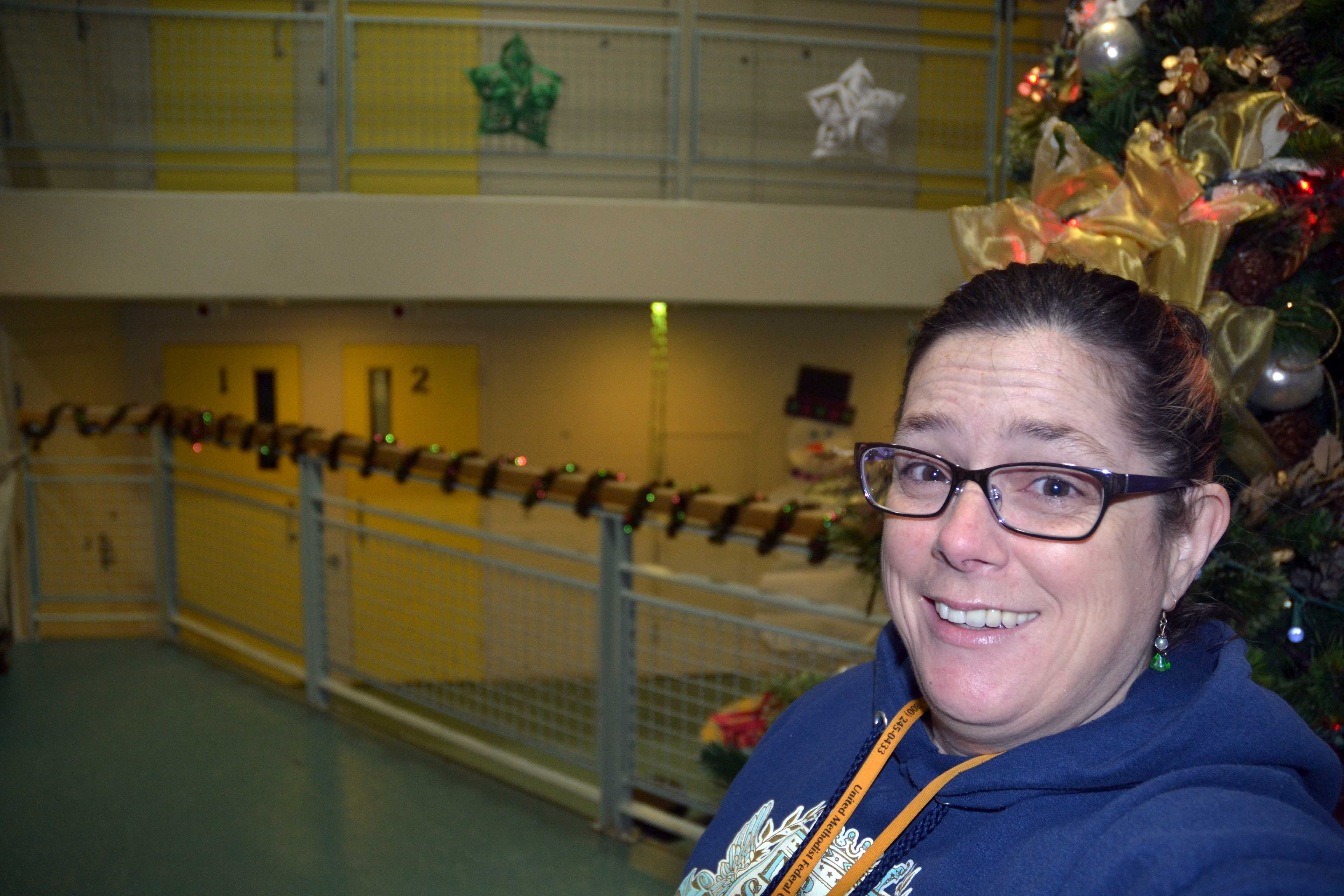
That’s me in detention on Christmas morning. I was teaching some folks how to make a selfie and lo! The resulting picture just captures what it means to work with youth in detention. The simultaneous holding of hope and the desperation that can only happen by arriving at detention in the wee hours of Christmas morning after running three church services the night before.
I started working in detention as a chaplain in 2008. That fall, I met with a young man named “James.” He had come into detention high on drugs. After detoxing and fulfilling his commitment, it was time for him to go home. The night before he went home, he and I sat together along with a couple other young men and played a game of Spades together.
As I dealt out the cards, I asked James, “What is the first thing that you are going to do when you get out?”
The answer I expected was, “I want to go to my grandma’s and get some food!” That’s the answer I get about 90% of the time when I ask that question. Or some variation of a food related answer.
But not this time. This time, the answer was, “I just want to go home to a normal family.”
I kept quiet. Kept dealing the cards. He continued talking.
“You see, if I go home to my mother, she will ask that I do drugs with her. And I just came clean! And I really don’t think I’m strong enough to say no to my mother.”
“What about your father?” I asked.
“My dad runs guns. If I go home to my dad, I don’t think I’ll live until the age of 21.”
My heart broke that day. And I made a decision to be part of the solution, not part of the problem.
That evening, when I heard that young man’s story and the other stories of young people at the table, I faced an epic challenge. How do you maintain hope in a hopeless system. You see, my undergraduate degree is in Criminal Justice. I know the national and local statistics around incarceration and its intersection with poverty, race, education, and mental illness. And at every turn, all I could see for this young man was further incarceration. That is, if he is just a number.
The numbers say that if you are poor, you will be incarcerated.
That if you are a youth of color, you will be incarcerated.
That if you are under educated, you will be incarcerated.
And that if you have a mental illness, you will be incarcerated.
By the numbers, black youth are suspended and expelled at higher rates than white students
By the numbers, 16% of black students are suspended annually compared to 5% of white students
By the numbers, students who are suspended are three times more likely to drop out by the 10th grade
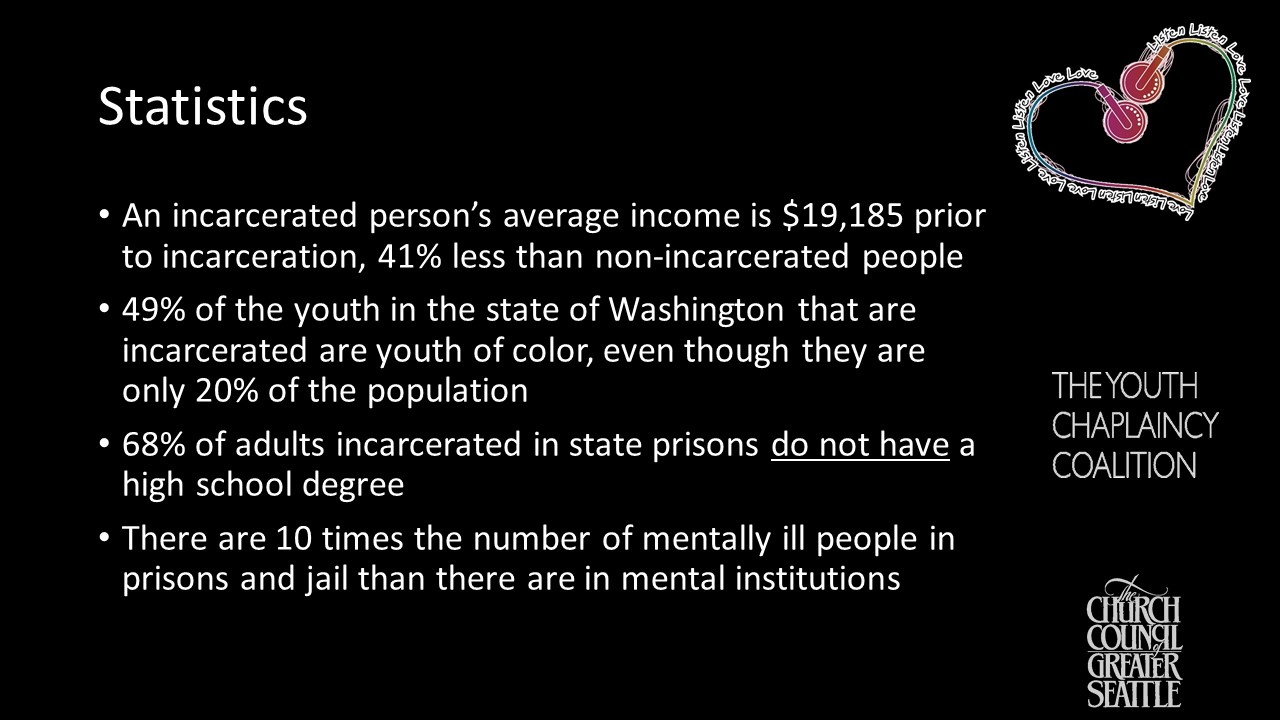
By the numbers, dropping out of school triples the likelihood that a person will be incarcerated later in life. 68% of inmates were school dropouts.
By the numbers, black youth are 4 times more likely to be in juvenile detention
By the numbers, 77% of juveniles sent to adult prison are African American
By the numbers, about 20% of the population of Washington is people of color and yet 49% of incarcerated youth are youth of color.
By the numbers, over 350,000 prisoners are diagnosed with “serious” mental illness.
But I do not believe in living life by the numbers. We are called to transcend numbers and to be hope for the hopeless. So it is a problem when we incarcerate those who are hungry. When we lock up the thirsty. And when we throw away the key for those we should be healing.
What do you do when statistics say there is no road to healing for this poor, hurting person but there is only prison? When the only safety net we have built is one that locks up and locks out the lost, the least, and the lonely?
And, what do you do when your soul confronts the difficult task of transforming just one life in the face of so many challenges?
That night, the night I heard the stories of lost youth and systemic failures, I wondered. Where is hope? My soul cried out, “Eli, Eli, lama sabachthani?” My God, my God, why have you forsaken them?
I sat down and worked it out with God. We wrestled and I walked away with a renewed sense of purpose. A sense of purpose grounded in the theology of resurrection! New creation! God can make anything new. And walking in that renewed hope with me that day were anger and courage as partners. Partners that enabled me to transform my ministry from one person to a state-wide para church organization. And partners that enabled me to advocate for young people and eventually be seated with the decision makers in the state.
I was angry that any young person has to face the incredible choices these young people face and that gave me courage to stand in the gap with them.
Now, for me, standing in the gap means more than just holding their hand and patting it and telling them that if they “just say no” they will be able to make a new way.
The vision I had of standing in the gap has led to creating a program that has a state-wide reach to youth affected by incarceration.
These youth are our most vulnerable people. As much as we look at them as tough kids, they are hurting inside. There is this test, the ACE test. It measures Adverse Childhood Experiences or childhood trauma. The score is zero to 100. Zero is no trauma and 100 would be so much trauma they are probably like a bowl of jelly. They administered the ACE test to incarcerated youth. Can you imagine what their score was?
It was 92.
These youth are not just tough kids, but they are seriously traumatized and they need people to stand in the gap with them. That is where I come in. I developed MAP which is a mentoring program that stands in the gap with incarcerated youth in the state of Washington. And together, we, the mentors, can interrupt the cycle of trauma that is so ingrained in their lives.
Standing in the gap has given me the courage to engage with advocacy work that has led to my placement on the state’s Sentencing Guideline Commission where I am sure that I will be a lonely voice crying out in the wilderness, “Prepare the way! Make the road straight, raise every valley, and make low the mountains. Make it easier for our kids. Because then we will see the glory of each youth reflected as resurrected lives and our world will be transformed.”
We are called to transform the world through creating disciples of Christ. That starts with the lifelines thrown when mentors stand in the gap with youth.
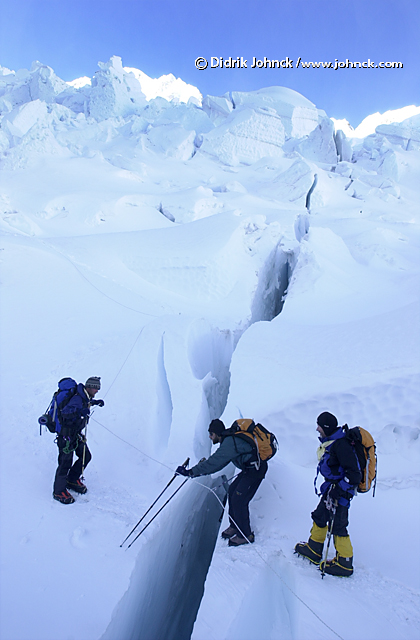
by Didrik Johnck, flickr.com CC (BY-NC-SA)
This picture illustrates what I mean by standing in the gap.
The gentleman crossing the crevasse is blind and he is climbing Mt. Everest. Talk about overcoming the odds! He has a guide before him and a guide behind him. You might say that he was being mentored up that mountain! And note that it took more than one fabulous person in his life to get this accomplished.
Mentors stand in the gap with youth and help them traverse the most difficult terrain of their lives.
Mentors help youth move from leading a conventional life to a committed life
Mentors help youth trust themselves and build a conscious community
Mentors see youth as the best person they can be while realistically holding onto who they currently are. They see the new creation before it is even formed.
Mentors have a view of the world and a view of the potential within each youth that will allow the youth to transcend the events that place them in detention.
Instead of a life of busyness, they can live a life of meaning.
Instead of a life of consumerism, they can live a life of worthy purpose.
Instead of a life of cynicism, they can live a life of complexity.
Instead of a life of addiction, they can live a life of reality.
Mentors do that. For every child released from detention to a place without a mentor, my soul knows that their life is going to be harder, simply because there is nobody there. They need trained, competent mentors in their home towns to help them continue the hard work they began while they were incarcerated.
This is a very special challenge but one that we are steeping into. Kids need mentors. Whether it is interrupting their lives so they can avoid the school to prison pipeline or whether it is holding hope with them after they are incarcerated, young people need us to show up.
And let’s face it, mentoring can be fun. Here are some things I have done with incarcerated youth.
We went and saw Dr. Cornell West, we have gone bowling, go-carting, built gardens for food-at-risk families, and climbed mountains together. So maybe, in some very real way, we have been in the gap together.
The time is now. The time for your participation is now. We have too many kids that are counting on each of us to be holders of hope and transformation. It is time to multiply our mentoring power. Time to multiply happiness in our most vulnerable youth. Love. Full Stop.
Together, we can make sure that every child feels loved, every child feels valued, and every child knows that they are, indeed, very, very, good.
If you would like to make a donation to this worthy endeavor, please send a donation to:
Worked at a drop-in center
in the basement of a church,
oh, years ago.
Street kids
played pool and foosball
two nights a week—
mostly Anishinabe, some Dakota,
a couple of Blacks, and
very few whites.
Tried to go into the church
the first night:
a little Anishinabe boy pulled a knife,
waved it at my stomach,
sort of “how you doing
get the fuck out of here.”
Scandinavian, sandy-haired Breck
slid up from behind all calm,
slight southern drawl,
“Give me that, Jimmy Dean.
You know you’re too young to be here.
Pull another stunt like that and you won’t
ever, I mean ever, be coming here again.”
The seven year-old sauntered off.
Among the names from then:
PJ, a Dakota boy.
Came in one night,
hand polishing
his just bandaged
stomach. “It ain’t no big deal.
Some ‘nigger’ shoved in front of me in line.
You shoulda seen what I did to him
after he cut me.”
Another name: Joe—
part Dakota, part Anishinabe,
tall, skinny, distinct Dakota features—
Talked about going to school in a horse wagon
on the reservation,
told about his grandfather
a Dakota Medicine Man.
“That Indian heritage crap’s
off the wall,” Breck snickered once.
“More excuses.”
Actually saw Joe about ten years later.
Heard he was in the hospital,
cut up in a fight. Went in to see him.
He hadn’t grown much taller since then,
almost short now. Almost old. Medicine
dripping into his arm from a plastic tube.
Children fight for their lives every
day. But this one child, she fought extra
hard to escape her home that was filled
with a drunken father and an absent
mother. So traumatic that at the age of
twelve she left. Living with
a man who traded sex for safety and
sex for drugs. She was twelve. She
blocked it out of her mind as much
as she could and took the path of
drug addiction. Using and abusing
until she was locked up. Living with
the man who caged her trading her
freedom for safety and freedom for
an education that she never received–
not even a GED was completed by
the time she left. Living with
whoever would put her on a couch
at the age of seventeen. Safety
abandoned and trading her body
for love that she has never been
able to feel for herself. Until she
was eighteen and pregnant. Surfing
trailers and friends until birth.
Children fight for their lives every
day and children of children fight
to find just one place of safety but it is
too hard when children are living with
children. No service came to bring
a car seat or food or education or
a future. The safety net has holes
so large that children fall through,
drowning. The hospital judged them
a drain on resources and sent them
home to surf one last night. Children
are no longer living with
3 p.m. and excited, I am heading home little realizing she is too,
packing my bag with that refined sense of glorious freedom that
comes on Fridays, knowing that there will be no classes, none –
for two days – no classes, freedom – packing my dark-blue cloth bag
pocketing a pink lipstick to put on once past the convent grounds,
happy in a shuttle bus to the Long Island Rail Road and Flatbush.
Tickets are two-something and the sites and smells of Brooklyn beckon.
I look forward to the Hudson and concrete sidewalks and city parks
and the mulberry trees that stand guard outside our apartment complex.
I think of her, Teresa Margaret, not realizing she too is heading home.
I think of her thick dark curls and wide purple lips, clear olive skin
and hands that flit like a hummingbirds from this to that to this again,
her sensible flat-heeled shoes, pastel shirtwaist dresses, and red lipstick,
the jodhpurs, brown boots, crop for riding, a thing she did and excelled at.
Who paid for that, I wondered, and for the stash of stone and plaster horses
that stand and wait mostly abandoned at our grandmother’s one block away.
I remember when I saw her laugh, eyes sparkling, curly pony tail bopping –
it seemed to jiggle with delight, the smiles that seemed foreign to her face
but were nice to see. So I put on my lipstick, thinking how skinny my lips are
not bold and generous like hers. My hair is fine and silky, not thick and frizzy
and coarse like hers. I am fine-boned. She is big-boned. My big sister is big.
She rides horses, did I say that? I’m headed home. The train sings as it passes
town after town along its way until we arrive at Jamaica, Queens – a hub –
where I change trains. I’m headed home where mom will serve up her anger in
bowls of pressure cooked chicken and potatoes, where plaster falls like mana,
water pipes rattle and shower water is icy, sometimes rusty. I’m headed home,
little realizing Teresa Margaret is headed home too, winging her way on a DC10
from Fort Lauderdale, Florida, cold in a wooden box, colder bullet in her head.
Youth (aged 10-24 years) Suicide Statistics:
For middle and high school age youth (ages 12-18), suicide is the 2nd leading cause of death.
For college age youth (ages 18-22), suicide is the 2nd leading cause of death.
Over-all, suicide is the 2nd leading cause of death for our youth ages 10-24.
(*2013 CDC WISQARS)
In ages 10-14, we have seen an alarming 128% increase in suicides since 1980, making it the third leading cause of death for that age group.
More teenagers and young adults die from suicide than from cancer, heart disease, AIDS, birth defects, stroke, pneumonia, influenza, and chronic lung disease, COMBINED.
Each day in [the United States alone], there are an average of over 5,400 attempts by young people grades 7-12.
Statistics Courtesy of The Jason Foundation established by Jason Flatt’s parents in his memory. Jason’s father write’s, “I will never hug my son again. But I can and will work alongside you…perhaps to save your friend, your neighbor’s child, a relative or even your own son or daughter. Thank you for your support of any kind . . . “
A new study, released by The Department of Housing and Urban Development (HUD) earlier this year reconfirms that, despite their scarcity, long-term housing subsidies are the ideal when it comes to ending homelessness. In their absence, however, community-based rapid re-housing programs are unmatched as the most cost-effective, short-term intervention option.
“We already know that subsidies are best, but they aren’t available for most households in need. We need other crisis solutions and of those that currently exist, rapid re-housing is proven to be the quickest, most cost effective way to get families back into housing,” said Nan Roman, President of the National Alliance to End Homelessness.
The findings are published in The Family Options Study: a large-scale examination around the effectiveness of housing and homeless assistance programs for families. According to HUD and its Office of Policy Development and Research, the study focused specifically on the impact of long-term housing subsidies and three common crisis intervention methods: community-based rapid re-housing, transitional housing and the usual care emergency shelter system.
For a thorough analysis of the study and its findings, see the Alliance online resource: Findings and Implications of the Family Options Study.
The Alliance draws the following conclusions from the study:
Rapid Re-Housing Is The Most Promising Of The Crisis Intervention Methods: According to the study, rapid re-housing stands out as the program capable of helping the greatest number of families exit homelessness in the shortest time possible. It’s also the least expensive.
Dollars Tied to Transitional Housing Need to Be Reconsidered: According to the study, crisis intervention methods like rapid re-housing perform as well as transitional housing, but at a significantly lower cost.
Affordable Housing Is Key To Ending Homelessness: The study lends further evidence to the critical need for programs that make housing affordable by citing evidence that housing subsidies are the most effective long-term solution to ending homelessness. Therefore, communities, states and the federal government should urgently prioritize the investment in affordable housing programs.
The National Alliance to End Homelessness is a nonprofit, non-partisan, organization committed to preventing and ending homelessness in the United States. As a leading voice on the issue of homelessness, the Alliance analyzes policy and develops pragmatic, cost-effective policy solutions; works collaboratively with the public, private, and nonprofit sectors to build state and local capacity; and provides data and research to policymakers and elected officials in order to inform policy debates and educate the public and opinion leaders nationwide.
A Nez Perce boy, Colville Indian Reservation, Washington, ca. 1903. Photographer Latham, Edward H. Collection Edward H. Latham Collection #. 409 Repository University of Washington Libraries. Special Collections Division
Editor’s Note: It was historically custom in the United States to displace native children, putting them into boarding schools to accelerate cultural assimilation. They were given new names, denied family connection and forced to drop their native languages and traditions. Then, during the ’50s and ’60s hundreds of Native American children were given in adoption to white families, another attempt to transracially and transculturally break ties with kin and tribe. This was The Indian Adoption Project, launched by the Bureau of Indian Affairs and the Child Welfare League of America.
That program is sometimes paired in references to The Orphan Train -1853-1929 – a mass adoption program which transported orphaned and homeless children from densely populated Eastern cities of the United States to rural areas to be put into the care of mostly farm families. The results were mixed, some children finding loving families and adoption but many ending up as free labor and otherwise abused. This was the beginning of the American foster care system. The difference is that however imperfect The Orphan Train, it was actually an attempt by its founder to do something good and kind. The boarding schools and The Indian Adoption Projects were about cultural genocide.
In 1978 Congress passed the Indian Child Welfare Act (ICWA) that errected significant barriers to the adoption of native children outside their tribal affiliations. In the case referred to in Lara’s article below, Veronica’s birth mother gave her up for adoption to a white family, denying Veronica’s willing and able birth father, Dustin Brown, custody. Brown is of Cherokee descent and the Cherokee Nation backed Brown in his fight for custody. There were many complexities, a contentious battle ensued and the case made headlines. Brown was arrested for custodial interference and Veronica was placed in the care of her paternal grandparents and Brown’s wife. [Anearlier version of Lara’s feature was published in Dissident Voice in 2011.] Jamie Dedes
I am 59 years on the long road as an adoptee warrior.
In the past few years, my adoption wariness rose to a new level with the Baby Veronica [Ronnie] and Dusten Brown story. When asked how this tragedy affected me, I’d say, “I am Ronnie Brown 50+ years later. My dad would have raised me too.” I hurt to think about Ronnie. The adoption industry won again.
Ronnie’s story brought up memories of my own loss, isolation, grief, disappointment, what I call “anger turned inside,” and how it tore me to shreds. With the very real long-term effects of assimilation by closed adoption, I’d spent more of my life as a stranger to my own relatives. I hope Ronnie Brown won’t have this problem to endure. Her early life and her adoption are plastered on the Internet, literally.
My own recovery started when I read my adoption file in 1979 and saw my name Laura Jean Thrall. I was 22 and didn’t quite know what to do with this information. I’d hoped someone was looking for me. Sadly no one was. I didn’t get depressed or feel suicidal, but apparently many adoptees do hurt themselves, kill themselves, and suffer more than the world realizes. I pretty much faced everything head-on, like a car crash.
After reunion with my birth father in 1994, my story and journey became more about finding history. What is known today about the Indian Adoption Projects and the aftermath of Adoption Resource Exchange of North America (ARENA), few people even know it happened…but right here in America, Native children were taken and given to white people and missionaries and boarding schools for a reason. Every single Indian reservation has this story: Thousands and thousands of Indian children disappeared. The reason: kill the Indian (to save the Man) (to make him white), to eradicate our sovereignty to take more land.
Adoption was used as a weapon against American Indians and First Nations. Tribal children were sold into adoption, molded into American proto-types, our tribal membership erased. In some states, it’s still happening in 2015.
For the Lost Children of Indian Adoption Projects, blood is never erased by adoption. But with sealed adoption records, it’s made nearly impossible to reunite.
In the words of a Cree elder, “You must know where you came from yesterday, know where you are today, if you’re to know where you’re going tomorrow.” True. I’ve lived it.
Our children are undoubtedly the future and, unless we start right now to cut through self-interest, shallow politics, greed and thirst for wealth and power, then the future is not as bright as Star Trek’s Captain James T Kirk and his team would like us to believe.
I take as a lead to this post, part of a guest post I contributed to the delightful Kona Macphee‘s ‘discussion’ blog nearly five years ago now. Her inspired site, “that elusive clarity“, is no longer active, but selected pages from it are still accessible. One of the interesting ideas Kona had was to conduct “micro-interview with creative and interesting people”. This series interviews was entitled “six things”, i.e. six questions about the person. I was reminded of this recently, almost by accident and felt it both timely and relevant to air at this time, whilst we are this month thinking about vulnerable ‘at risk’ youngsters.
I confess, at the time, I was wondering why Kona had asked me, since I was unaware that I was in the slightest bit ‘interesting’ or particularly ‘creative’; not least of all, I was not in the same league as a majority of published authors and poets she was interviewing at the same time! I realise now, of course. that everyone of us, who ever walked this earth, is a unique individual and is uniquely interesting as well as innately capable of being creative, in whatever form. The questions from my “six things” interview, that I felt were of most relevance to this month’s theme are: “One thing I’d love to change” and “One thing I hope for“. So, here are my responses … verbose as ever!
One thing I’d love to change…
“If there is one thing I would like to change in the world, it is this: that we alter the processes by which we educate our children. This would essentially be to temper the ever increasing emphasis on result statistics for the under-sixteens, that distorted educations original intent, and which has excluded so much of the type of learning that is essential for human survival, like collaboration, cooperation and team work, which can be so enhanced by ‘field’ exercises and certain forms of sport, which have been marginalised in the mainstream because of the fear of litigation and the excessive focus on exam results and (school) league tables. Given that I am neither a teacher nor do I have any direct experience in education, except for seven years serving as an industry representative on the Board of Governors of one of our local schools, my brief would be roughly as follows.
From the age of thirteen or fourteen (or maybe earlier), I’d propose that we should start to avail students with regular and significant doses of knowledge and skills across a whole range of areas of real life designed to equip them for a world they will soon enter. This ‘Life Skills’ part of the curriculum should be considered ‘core’ and include a whole array of subjects on Home, Work, Social, Family, Community and the rule of law, as well as basic finance and the Micawber Principle. There will always be an educational elite and a need to ensure they can fulfil their potential as future leaders, although we should also ensure that they too receive ‘Life Skills’ education. The educational mission for everyone else (the vast majority of us, in other words) has to be realistic. As much as I truly believe in the importance of learning the essential principles of language, mathematics and science, knowledge of these is neither use nor ornament if a child cannot first be armed with knowledge of the most basic of life skills and a confidence that comes from this. Until they know how to deal with the challenges of an uncertain world, they will not be able to absorb the principles of the academic world.”
and One thing I hope for…
“A world that places far greater importance on caring for and giving a better chance in life to our children – they are guardians of the future of humanity. I hope for a world whose religious structure is more rational and inclusive, less divisive, exclusive and polarized, and that has the courage to denounce and cast out extremism and provide a clear example for children on how best to lead their lives.
I hope for a world where family values and moral integrity are promoted as of the highest importance; a world whose political hierarchy and structure is such that politicians are somehow freed from the unwritten imperatives of career centred, self-serving ambition. This would be so as to help the young, instead of becoming premature cynics, to want to understand the issues and feel better able to vote with integrity and feel that their vote means something and thereby be motivated to get involved. Last but not least, I hope for a world in which the media are forced to have enough integrity to communicate this accurately, which of course will facing, head on, the issue of monopoly media ownership and all that this entails … and no, I don’t think I am dreaming of utopia!”
Having contemplated this aspect of our education system in this country, in pursuit of relevant ideas for this ‘common sense’ approach, I was prompted through Twitter by @StoryingShef to visit the Zoe Weil web site and her Institute for Humane Education. This, to say the least, adds a more revolutionary dimension to my proposal above. It seems to have much to offer, at least in terms of how we should start to think about the world’s conservation issues, to say nothing of it’s unhappy instability. Whilst I can see her ideas and her whole process being shot down in flames by the the rich and powerful of the world, by those with vested interests; by exploiting the current established mores of the First World’s economic model; and feeding our fears of not aspiring to ambitions of wealth; inducing fear of material inadequacy, unemployment, poverty and destitution, rather than encouraging a people, who are free-thinkers. Railing against a dependence on consumerism and continuous economic ‘growth’ would seem to be folly.
It may be difficult to resist the Star Trepan dream, but let us start to encourage more free-thinking, more discovery of the true self.
[I was amused to read in the Wikipedia description of Star Trek that it is known, not as a story, or even as a TV series, but as a “Media Franchise”. Oh dear, some people spend too much time looking at their own anatomy … and their balance sheet!]
To conclude with some sage advice from one who knows from experience, this article is well worth reading: “Five Things I Have Learned” by Anthony Seldon, Master of Wellington College. It is both inspiring and possible.
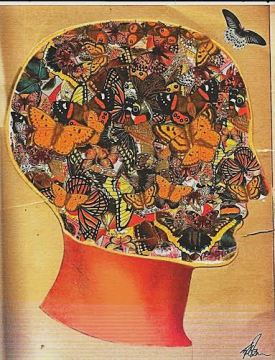
The world represented to me is a mirror of the space
I care to see, a reflection of the fallibility I am.
My tendency is to close the window from oppressive noise
And beat a drum to drown out the excessive silence that I hear.
All of it would slip beneath my door
In the smoke of the building burning around me
As I go about my toast and jam
Disregarding what papers say
Of a man’s uncompromising attitude in fighting with himself.
I say, “I do not have the time.”
When in truth all my life is time I have
But do not take it to use with the where withal
Of any talents steeped in an honest assessment
Of my humanity and how I might define it if asked.
At some point we are all put on trial for our lives
Being defendant, plaintiff, prosecutor and judge.
What we lack is the jury of our peers we will accept as being adept
To live their ways as I might live mine
And arbitrate the differences that do and must take place
In order the earth does not tip more than it does.
At every station we congregate our faces are more
Than merely petals on a wet black bough;
With ears that hear and eyes that see and lips to voice
What may be hidden in our hearts longing to come out
Though we may not even know such things exist.
We are a funny, perhaps even a silly species
We put so much thinking into what to wear
And so little at times what to care about
That may have some meaning and connect us to a stranger
Though that person live ten thousand miles away
And does not see things as we do and still give credence to the thought
“How can I justify my life if I cannot justify his own?”
They thought death was worth it, but I
Have a self to recover, a queen
Is she dead, is she sleeping?
Where has she been,
With her lion-red body, her wings of glass?
excerpt from “Stings” by Sylvia Plath
*** ANTHOLOGY “HER WINGS OF GLASS” *** “I’m completely wowed … the most important anthology for decades,” John Killick “tremendously inspiring,” Moniza Alvi
“an amazing anthology,” Pauline Stainer “It’s a magnificent anthology (and I’m not just saying this because my mother’s face peers at me from the cover!),” Adam Horovitz “I’m impressed,” Anne Stevenson
Second Light Network of Women Poets (SLN) does many wonderful things for women poets of a certain age, but among the loveliest is the production of poetry anthologies. SLN’s latest anthology is Her Wings of Glass, the title taken from Sylvia Plath’s poem Stings in which she uses the life in the hive as metaphor for her own life and feelings.
When we consider all the elements of an apiary with its oddly flipped sexual structure, the momentary life of the parthenogenic queen juxtaposed against the leisurely life of drifting drones, we appreciate the brilliance of Plath’s using the apiary as an allegory for her relationship with her husband and her conflicted feelings about domesticity and motherhood. The bee community makes for an apt illustration of Plath’s poetic self (queen), her domestic self (drudge), her distaste for other women willing to be drudges, to sacrifice themselves. The poem is intensely personal, has elements of tenderness but ends fiercely. (FYI: You can view photographs of Plath’s worksheets HERE.)
It’s easy to appreciate just why the women of the ’60s were so enamored of Sylvia Plath, why she is still appreciated for both her observations and her craft. It’s also easy to understand why a reference to Plath’s work would make such a good title for a collection of poetry by contemporary women poets. The anthology, like the poets, poetry and the work in ARTEMISpoetry (biannual magazine) represent a cross-section of A-list poets and a range of themes, subjects and styles.
Issue 14
There’s a good piece by Anne Stewart on HerWings of Glass in the May 2015 issue of ARTEMISpoetry, which focuses on anthologies. Due to the very nature of SLN, many are the poets and poems that might be overlooked by other press as not in line with mainstream literary standard. I deem this an advantage indeed and wish more publishers would take note.
In addition to celebrating poetry anthologies, the current issue also featured Alison Brackenbury, the award-winning author of eight collections, and Jemma Borg in an interesting piece by Kay Syrad: The Illuminated World, A Dialogue Between Science and Poetry. Jemma studied evolutionary genetics and worked as a tech editor among other jobs. She stands at the intersection of science and poetry.
“I tend now to think of science and poetry in some kind opposition because they are such different systems of thought in terms of the philosophical roots and development, but essentially it is this love of what is unknown that is common to both and which forms my motivation as an individual: how can we, and indeed is it possible to, understand this world we are embedded in.”
Susan Wicks selected the poetry shared in this issue, which included these two:
Gift from my Daughter
A pink bag with lime-green flowers
in silk floated
like a lotus as she carried it
down the ward.
We fizzed with giggles over
the contents,
cream laced with sandalwood
and lavender,
lip-salve with lemon,
little bottles steeped in mint
and nutmeg,
a Morpheus spray
to enchant the pillow with sleep.
Outside, the weather slashed its tail
of water-scales
and hail,
and we unpacked the orient,
distilled these gardens from the east.
The homage to Anne Cluysenaar in this issue was warm and appreciative and the thoughts of several poets who knew her were included. I find this sort of acknowledgement and loyalty touching and asked for permission to include Alison Mace’s poem in this blog post. Alison said that we need to read Anne’s Diary Poems to fully appreciate her poem, but I took it at face value and warmed to it, though I haven’t readTouching Distances: Diary Poems. I like Alison’s poem for the gentle way it shows how one poet and her work and life were valued.
from LIVES OF THE POETS ANNE CLUYSENAAR 1936-2014
Alison Mace writes: Since Anne Cluysenaar’s appalling and untimely death, I have meant to write about her, a poem if possible. Anne came, when she could, to our monthly NaCOT poetry-writing group at William and Juliet Ayot’s house near Chepstow. We were so lucky to have her. Her contributions were memorable and heart-warming, both of her own work – several of the Diary Poems that became Touching Distances – and in the help she gave the rest of us with our own poems.
. Anne
‘Wise’ comes first to mind,
then ‘kind’,
and then so many more.
Heartsore,
we count the ways she was:
capable, nurturing,
loving her cob, her cat,
at home with hens and hay,
Mozart and Henry Vaughan;
happy to teach, to learn –
learned indeed – at ease
combining earth with wit,
abstruse with everyday –
and ours: muse, mentor, friend,
bringing her poetry
for us, wanting our own:
probing, encouraging –
all with her gentle smile.
And so it shatters sense
that such a life should end
with terror, suddenness
and wanton violence –
a bleak atrocity.
The distance we would touch
that our intensest thoughts
might wing to her
has widened beyond reach,
leaving us at a loss,
empty, and blank, and still
heartsore.
– Alison Mace
So, another altogether enjoyable read. Another issue to return to with pleasure.
All things SLN may be found HERE including gatherings and classes, remote – or as we in the U.S. would say “distance” – classes, coaching, contests, books, magazine, samplings of poetry and introductions to poets. Much appreciation to SLN Founder Dilys Wood and to Myra Schneider and Anne Stewart and all the other women for their work, their poetry, and their commitment to women and poetry. Second Light Network of Women Poets is based in London and most of the members are in the UK, but membership is not geographically restricted. Of note: Anne Stewart has a site – poetry p f – which makes it easy to pay membership fees and to order books, ARTEMISpoetry, poem cards and other goodies.
♥
Congratulations to Myra Schneider: Goulash from her collection Circling the Core (Enitharmon Press, 2008) was recently featured on Anthony Wilson‘s Famous Lifesaving Poems. We’ve featured it in The BeZine and are all fans. Bravo, Myra! Here it is on the Lifesaving Poems site. Contact Myra for Circling the Core and other books.
Poems, cartoon, cover art are published here with permission of the publishers and authors.
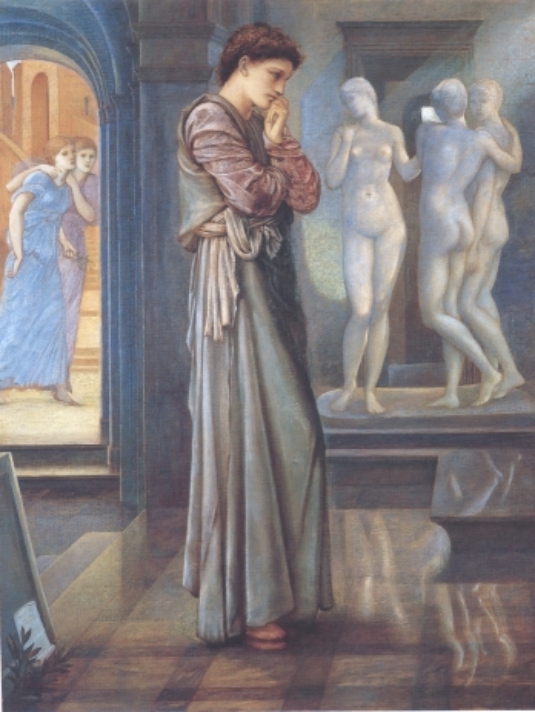
“The Heart Desires” The second in the Pygmalion Series by Edward Burne-Jones, British (1833-1898) Pre-Raphaelite
in that tiny room silence was glazing the sunrise and a soft mist seemed to filter each particle of light making it look like molten honey. it didn’t matter whether outside it was summer or winter, or something in-between of those two – in that room time always appeared to be frozen, in a sweet stillness smelling like lavender and tender ignorance that could almost make you smile.
there were seven hues of green in her eyes. he had counted them all, as they sparkled hypnotically emeraldine, peeking shamelessly through the large windows as if wanting to take their flight. “angels would kill for such sheens” he thought, not without a shade of pride in his mind – after all, she belonged to him.
there was love, and passion, and endless gazing interrupted only by the need for sleep forcing eyes to close, followed by sudden wake-ups from nightmares in which she was no longer there, and each time his hand touched the smooth contours of her body his blood stream seemed to be flooded with the most marvelous narcotic. he knew he loved her. he knew he adored her.
she stood there, right next to his bed, naked, showered by the waves of thoughts cascading from his dilated, awed pupils, always replying to that with the same stillness of her emerald-cut irises and with the same glacial innocence of all masterpieces, while all his thoughts kept imploring for the same thing, over and over again:
We were visiting cousin Toni and her family in a hilltop, walled village near Torino. Looking out across the landscape we saw castles, and their villages, atop each of the many surrounding hills. Between each village lay fertile fields and the occasional woodland. Vineyards and orchards appeared here and there across the countryside. The Alps rose craggy in the distance.
I asked about the presence of so many castles, and was told that for many centuries there was conflict between villages. These conflicts were not simply local, but reflected larger forces at play in northern Italy. The fertile landscape spreading out before us was a much coveted resource, fiercely contested among local and international powers. Thus, life was difficult for the people of these beautiful hilltops and valleys.
In the village wall, just steps below our relative’s home, were the impact craters of bullets. During World War II, thirteen village men had been executed against that wall, killed by the Nazis in revenge for the death of one soldier. The men, including the village priest, had been taken as they left Sunday morning mass at the local church, lined up against the wall, and shot. The village still mourns.
Today, Italy is at peace. Her people, still face, of course, many challenges. There are few jobs for young people, so the young leave for other companies, an exodus reminiscent of other generations. People grumble that the government seems incapable of addressing the real problems faced by Italians; that, too, is familiar to Italians across generations. Yet, much works: education is essentially free, as is healthcare. The country’s infrastructure is excellent: the trains are inexpensive and run on time, the roads are well-kept, and the electrical grid generally dependable. Internet speeds are slow, an inconvenience that has no immediate solution.
Still, the history of conflict and warfare lives, often just below the surface of everyday life. That history, perhaps carried in the genes of each generation, permeates the landscape, culture, and local history. Stories arise in many contexts, even at Sunday afternoon brunches, or neighborly gatherings around the table beneath the fruit trees in the garden. Even in the immediacy of peace and relative prosperity, trauma sits nearby, never far away.
As we enjoyed a classic, home-made Northern Italian lunch, complete with great local wine and desert, I thought about the way North Americans ignore the needs of the land, and the history it speaks to. I pondered our willingness to consume expensive, tasteless food, rather than nourish the land and those who farm it, and wondered what might lie beneath our collective obsession with covering the land with concrete, as if history would not, like Nature herself, force its way to the surface through every crack.
Listening to the flow of stories, I mused that I often hear that America has not experienced war on our soil, yet know our land has witnessed much warfare and bloodshed. I imagined that the soil of North America, like that of Northern Italy, remembers, even as we try desperately to forget.
Looking at the people gathered around the table, it occurred to me we North Americans could, as has much of Europe, choose to embrace the land and the history it holds, and build a society that honors the histories of the places we inhabit. Perhaps we would all be happier then.
if you ask
she will
not
answer
nor
will
staring into
her eyes
help you
find
the answer
for she
already knows
the answer
it was
placed
within her
when time began
and
hidden
from all men
what it means
to be
feminine
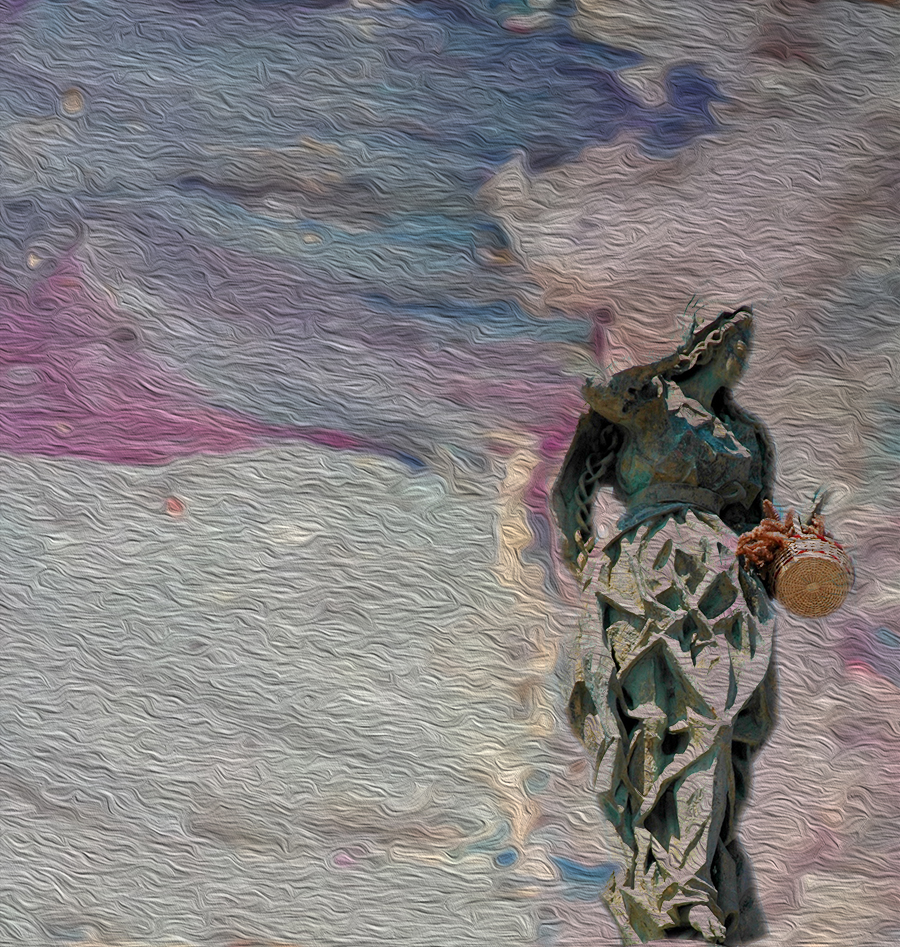
The dream walker comes through a storm of nebulae
a basket of dreams emanating stars into the night
a fate’s bare feet dance into being a genesis of memory.
Fates as cell phones spin out our faith, tying possibilities into bars of probability
while we await a sleight-of-hand trick called free will to enter a philosophical debate
into the woven poem’s contest space, a misspelled word wishing it knew how to speak.
Would you weave through that door into an unknown space spilled with colors,
a sunset dream layered like tiled imagery with metaphor long forgotten? And then
what dreams would the walking fates hand down to you, three lovers long forgotten
who never forget you as they curse and bless your memories.
she’s present
returned to bite through the umbilical of tradition,
to flick her tongue
and cut loose the animus-god of our parents,
like a panther she roams the earth, she is eve wild in the night,
freeing minds from hard shells
and hearts from the confines of their cages,
she’s entwined in the woodlands of our psyches
and offers her silken locks to the sacred forests of our souls ~
naked but for her righteousness,
she stands in primal light,
in the untrammeled river of dreams
the yin to balance yang
the cup of peace to uncross the swords of war ~
through the eons she’s been waiting for her time
her quiet numinosity hiding in the phenomenal world,
in the cyclical renewal of mother earth,
whispering to us in the silver intuition of grandmother moon
watching us as the loving vigilance of grandfather sun ~
she, omen of peace birthed out of the dark,
even as tradition tries to block her return,
her power leaps from the cleavage of time
Illustration ~ this lovely watercolor painting by Gretchen Del Rio with its girl-tree, panther and other spirit animals was the perfect inspiration for a poem on the spiritual return of the feminine. The real back-story on the painting is just as interesting. Gretchen says, “I painted this for a 14 year old Navaho girl. It is for her protection and her power. She sees auras and is very disturbed by this. She is just amazing. Beauty beyond any words. You can see into the soul of the universe when you look at her eyes. She has no idea. I loved her the moment I saw her. My blessings for her well being are woven into the art.” Such a delightful piece. I purposely posted it full-size so that everyone can enjoy the detail. Bravo, Gretchen, and thank you.
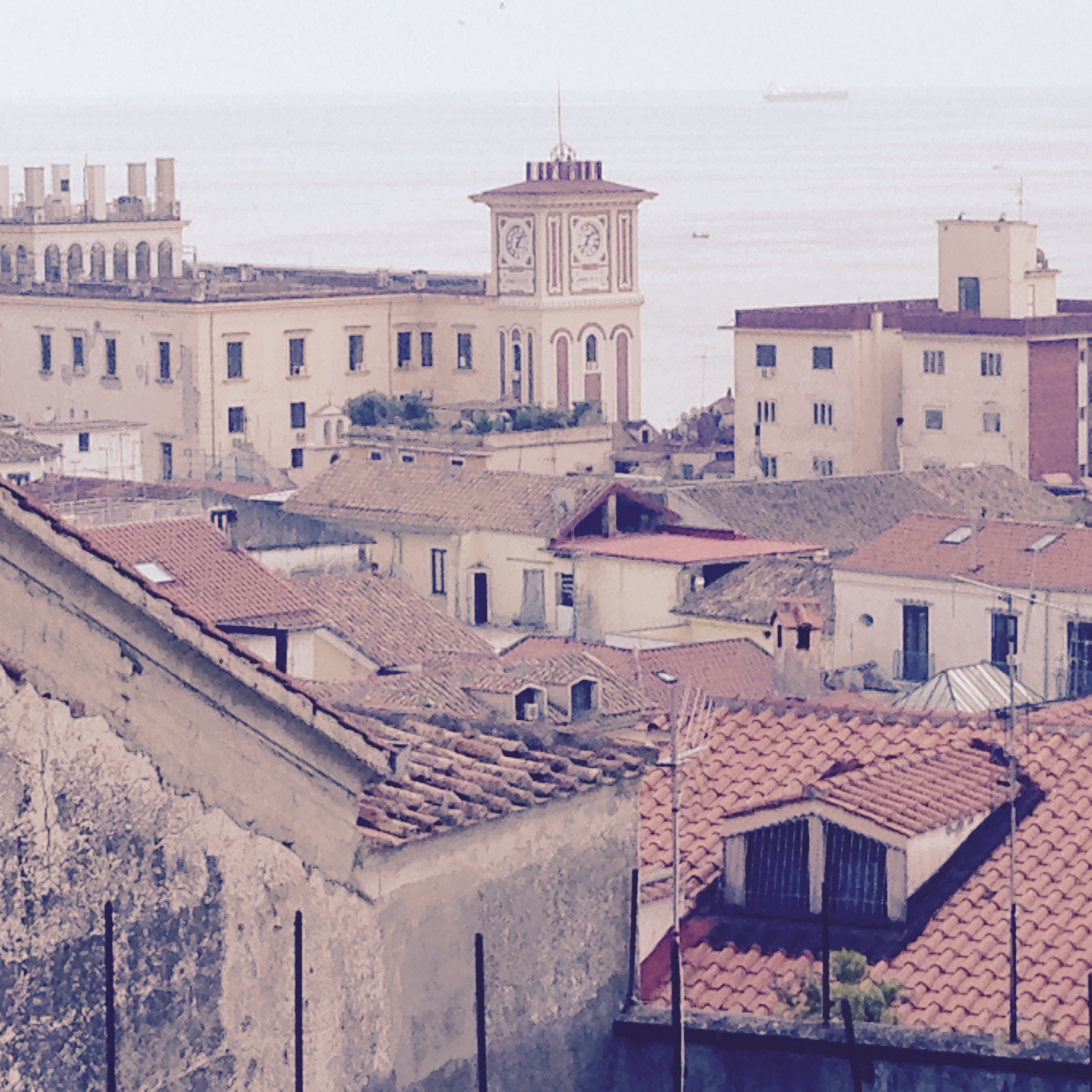
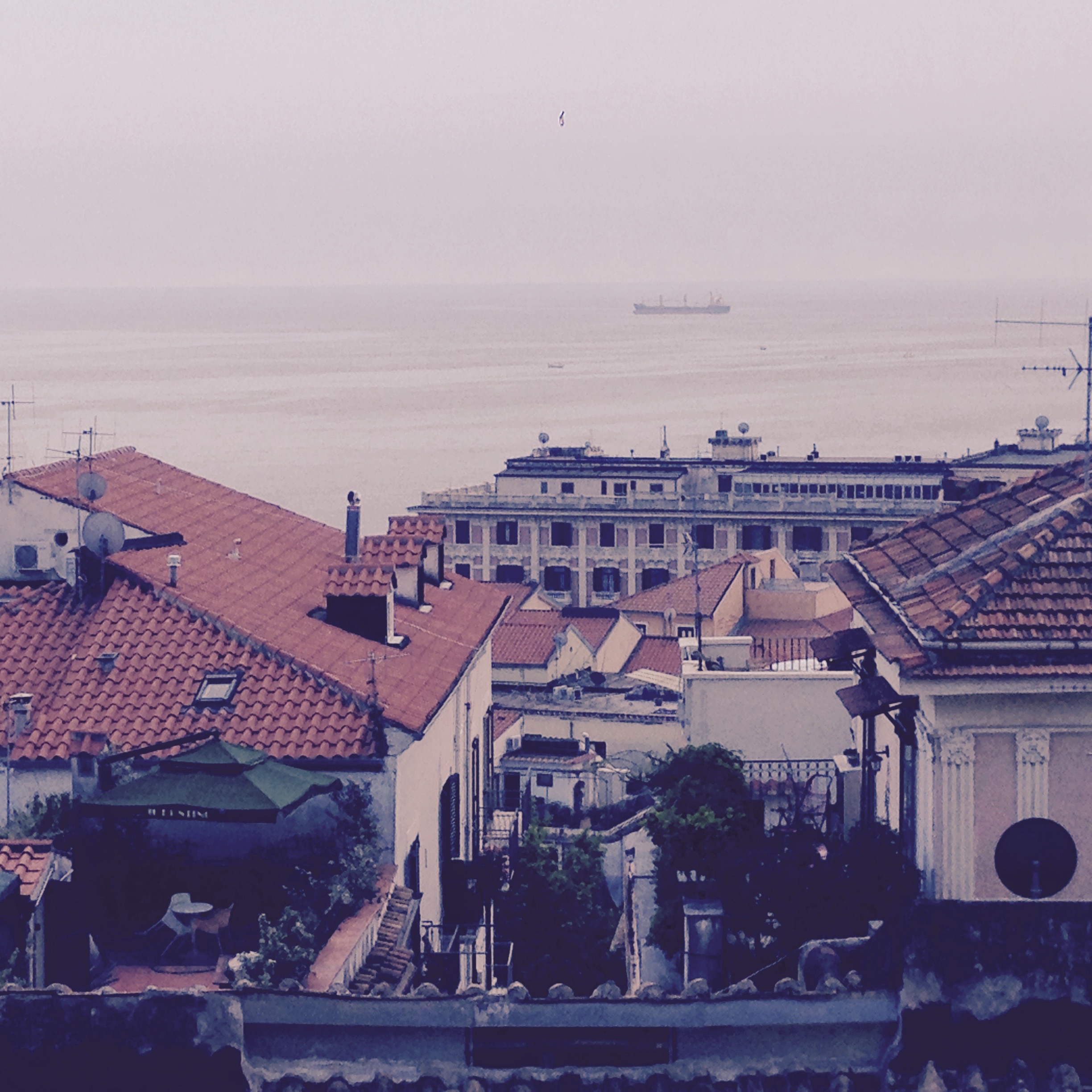
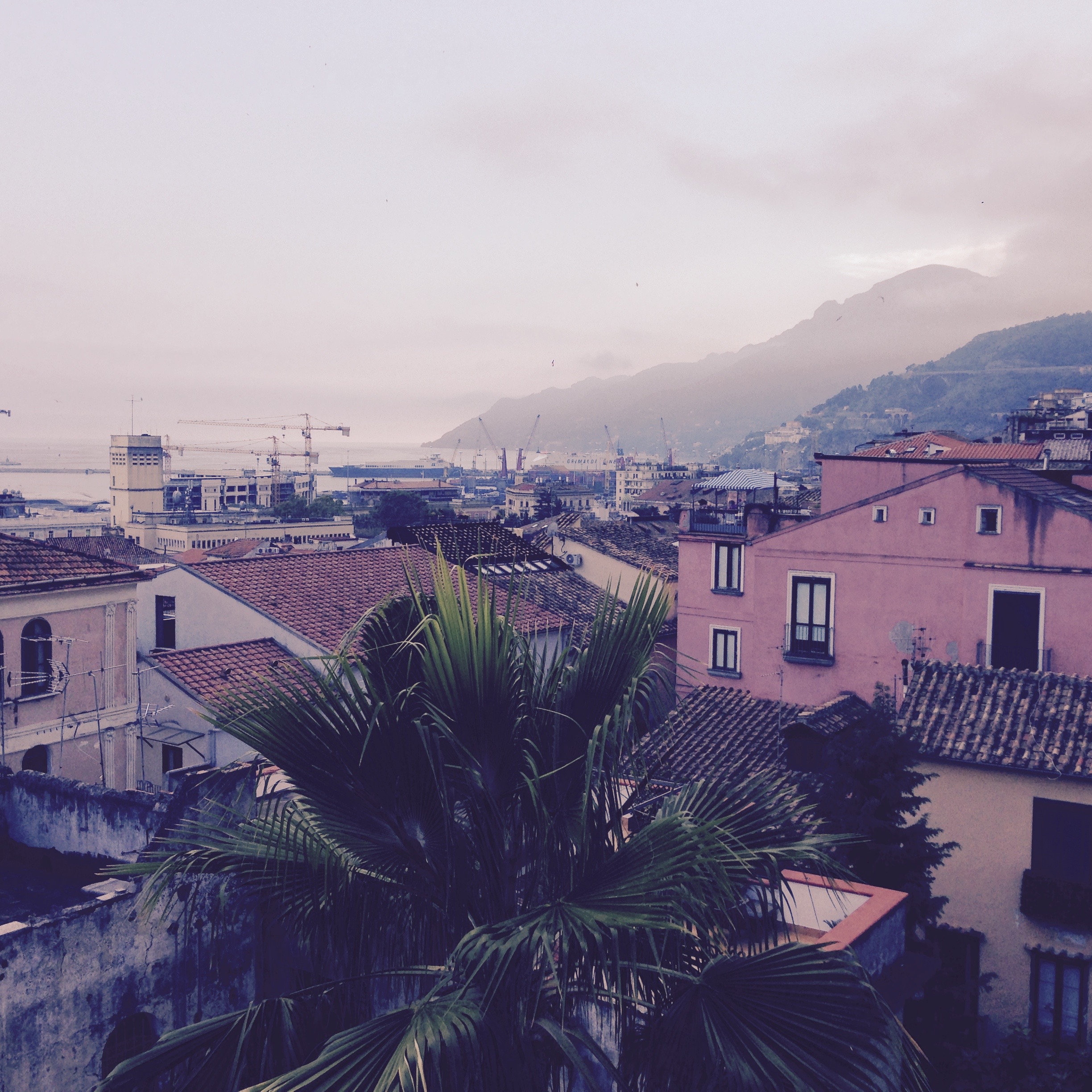
Last June I spent time in Salerno, Italy, at the 100,000 Poets for Change World Conference. However, it wasn’t all poetry and change. I did some sight-seeing. I made new friends. And, as I had a kitchen in my hotel-apartment, I visited the little street market a little down the street to buy fruit and vegetables…and every day, I took photos. I have hundreds of photos from Italy, June 2015.
Here are some of the patterns and colors of the street market produce.
The market also included shellfish, fresh fish, and a bit of a flea market section.
Salerno Like a Painting
The views of Salerno sometimes seemed more like a Renaissance painting than an actual place. The light flowed down to reveal the pastels of the stucco and painted trim, to shine off the sea, and to fall through clouds that brought their afternoon rain.
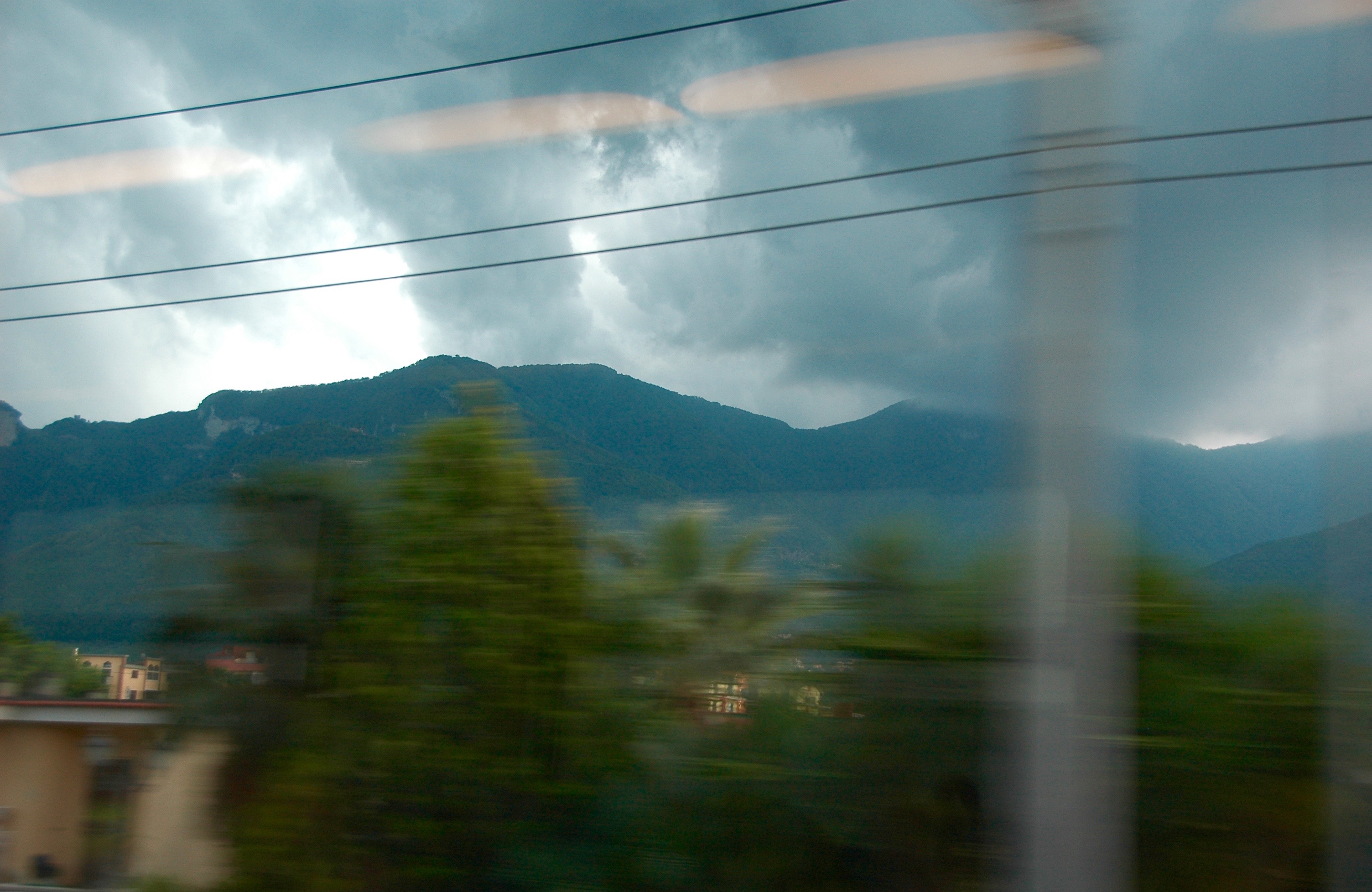
I flew into Rome and took the train to Salerno, taking pictures out of the windows while the light lasted. This photo is of a high-speed train passing the train I was riding in.
The day after the conference, several of us took a local train to nearby Pompeii to visit the archaeological park. I have enough photos from the site to fill a book. For this quick excursion into photography, I offer a second photo from a train, this of Vesuvius. As we left, the afternoon rains came in. The clouds over Vesuvius suggest an eruption…



 The world represented to me is a mirror of the space