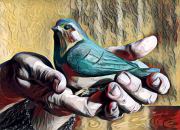
Photograph: Waterbird, Michael Dickel ©2017
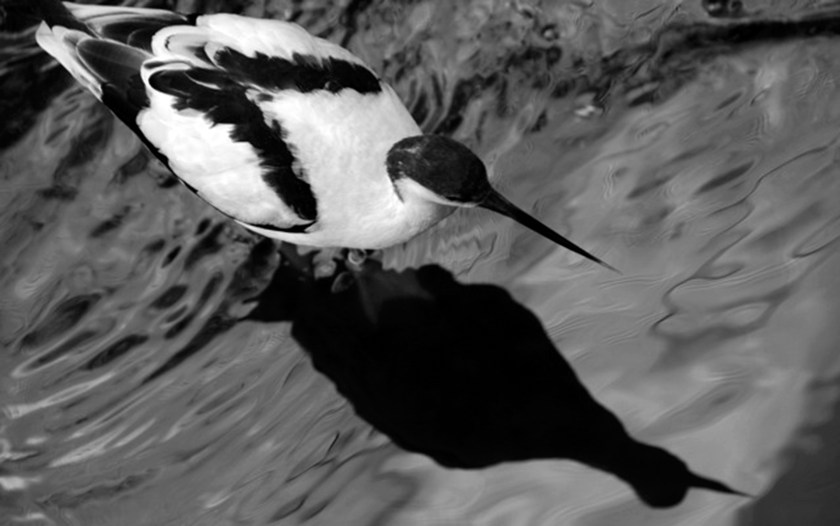
Photograph: Waterbird, Michael Dickel ©2017
Photograph: Waterbird, Michael Dickel ©2017
Photograph: Waterbird, Michael Dickel ©2017

I’m sorry, she said. Fuck you, zey said. I made a mistake, she said. You make a lot of mistakes, zey snapped. She hid away under a widow’s veil of tears. Zey hiked the Bahamas and found forgiveness.
	She tried to contact zem a month later: hope you’re doing well.
	Apparently, zeir forgiveness only extended so far.
	It had been two years, three months, eight days. Like planets orbiting the same sun, they once again aligned: they walked into the same coffee shop. They froze, stared. You dyed your hair, zey said. You gained weight, she said. Zey smiled; coffee--on me?
©2022 Artemis
All rights reserved
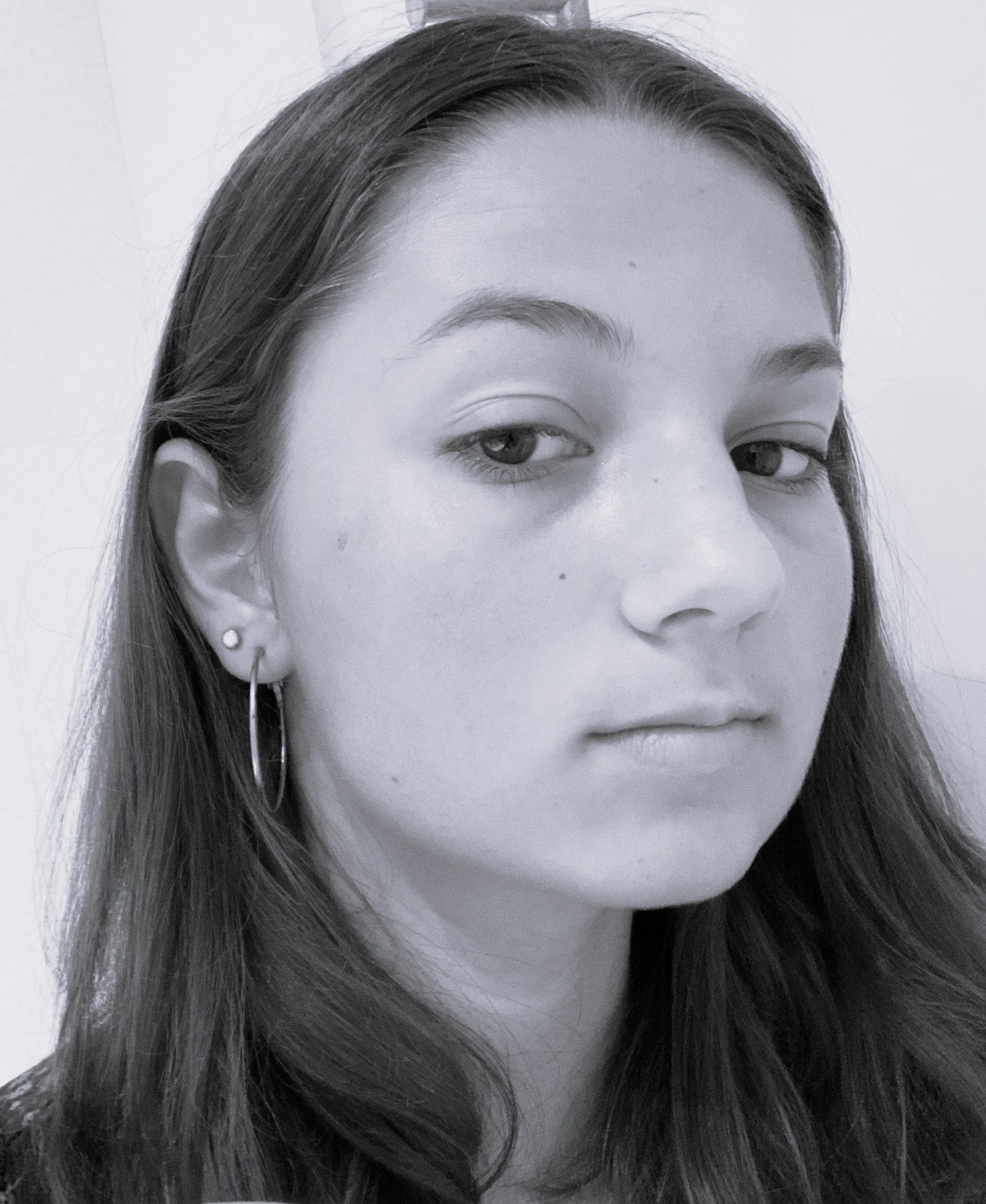
…is a high school student pursuing writing. Their favorite elements of writing are clever word plays and irony. They have been published in the anthology The Sky’s the Limit as a result of winning a writing competition, and the The Thread, their school’s art and writing anthology, for three years in a row. When they’re not writing, they spend their days creating resin dolls and sewing clothes.
Darkness covers me like a blanket
Shadows surround my thoughts
My arms wrap tightly around me
Deserted, no one home

You keep me isolated
My only friend, just you
Smiles ne’er intrude our space
With you, I’m safe and whole

The thorns of my emotions
Keep rising from deep inside
Always in your shadows
Always in your arms

I cannot see the rose
Only thorns of pain
Madness all around me
It keeps me huddled tight

Tomorrow won’t be different
It will always be the same
Fear keeps me shaking
My spirit is tattered, worn

Darkness gives me comfort
Forever, all alone
My prayer is you’ll
Remember me and return home
©2022 Isadora De La Vega
All rights reserved

…biography goes here, with ellipses in front. Link to known social media accounts, website, and / or blog. Delete the words if no links. Edit the Find the The BeZine button link to include the names where it says FirstName and LastName. If there are more than two names, add a plus-sign (+) and additional names, in order. Add Social Media links if we have (do not need to, but can delete the social media block if none). Replace art to the left with a photo. (Use the NO photo block if there isn’t one, not this block).
Photograph: Waterbird, Michael Dickel ©2017
In my body rattle the dead
like beads shook-up with longing
in Rachel’s ovaries.

Oleander, calendula or olive,
Only the living sow memory,
open their eyes each dawn

to scan the fields.
I buried a tooth for every
kindness I recall.

In the days between Yizkor
and Yom haZikaron, some being
of smoke fills my throat.

Is an organ implanted in a
body, a tree’s grafted limb?
What is your heart’s fruition?

Ima from Kafr Qassem,
where exactly are you now,
Neshama sheli?

I think I should ask your
home-town Sheikh, who wrote,
organ donation will be halal.

I ask my heart: do you hold
two souls? We’ve cradled one
another, not months, but years;

should time condense to tissue,
This, then?  —a culture unfolding,
beating its wings, in another.

—and we all hold our parents.
Do I contain four souls—
No, her parents—six?

My heart is splitting
And living.

This heart—what does it mean to you?
Shireen’s question
like rain pelting earth

When that had done rattling
in my head, I asked my heart
how do you feel?

She burst into streaks of water,
throat of smoke: my kids—
How old are you now?

What have the years been for you?
Who has cared for you?

We used to tell
the younger ones, stay together
and take care of each other

But our children begin
by scanning the fields
for a few stalks of kindness.
Poem ©2022 Ester Karen Aida
All rights reserved
…is a writer, poet, and peace activist residing in Jerusalem, Israel. Her writing and art frequently appear in The BeZine.
explaining how peaceful & loving ways of life are possible
that to kill in the name of God is mistaken
& that a little dialogue could do wonders

I sent poems describing a future world without war
& inspiring quotes from political & religious leaders

then
          one day
                    I received a reply:
“to the dreamer who mistakes a nightmare for paradise”
          it began
“it is beyond us to know if by God you mean Allah
          yet let us assure you
a thirsty man lost in the desert may find a pool of pure water
          revive himself
& then run off to share his hydrating discovery
          until the pool is depleted
such is your state
          you call out to God
to control the rain
          & to replenish the empty form
which memories & stories claim was filled
          with purity
we
          by the power of Allah
will move from pool to pool

decimating fraudulent temples erected not to worship
          but to control the rain
until the whole world submits to Allah
          & our expansion ceases
leaving only a pure motion

dams will not be erected
          as people flow across the land
no different than water
          across the earth

you speak of love & peace
          but
you only want us to pay taxes
          to erect more static artifices

& please
          from now on
use extra postage
as we grow
          our operations carry more overhead”
          in distinct intervals
marked by a sloppy unison
          of soldiers at the firing range
the odd out-of-sync shots
          blossom into a single roaring echo
as I lay in a bush-filled field
          surrounded by weeds of varying heights
          of white flowers
a white spider
          waits

black flies & red beetles
          scrummage through the bed of sweets
climbing beside & even over
          the still white spider

its body mounted
          by little legs
while two longer white legs
          extend half bent in the air

till certain sized flies pass
          its face
triggering those long thin legs
          to swoop down
striking prey dragged
          into a hungry face

sometimes when released
          those bodies fall motionless
& sometimes they begin
          mid-air to fly
          of two soldiers in a watchtower
                    talking through the night
will history judge us poorly?
          one asked
                    & his friend said
yes & no
          since history forgives the perpetrators
                    with a flare
for watching those who suffer most
          as those
                    who inherit evil
an M-16 in someone's hand asserts: kill or be killed
it only argues with adults—whereas children
they deafen all arguments into chatter

a stray dog doesn't know that it roams about as if it's not a target
a tree couldn't care less that it can sustain many bullet wounds
a wall must separate sides—no matter its thickness

it's fine if we're mistakenly standing on some graveyard
it's ok if you can't stop all people from fighting
it's nice to take care of a cat that you dislike

let all the varied kinds of privileged people tell you what's right
let thoughts of distant violence grow more distant
let yourself breathe—simple & stupid—grinning like a gorilla

it's alright if the news improves its powers of seduction
it's alright if one day the sun just burns out
it's alright if you desire—deviously—to litter a little

even if ambiguous firework-explosions startle you
if you move & speak according to what you believe is right
it's good if life & death dissolve into some unspeakable truth
—for Mr. Visher
both before our lives and before our eyes
           upon every death before us we live
thoughtlessly leaping from this height to that
           we continue & learn also to love
to continue living as if stable
           upon whatever ground beneath our feet:
our subtle world produces fertile soil
           like this lush field where children play—knowing not
how they grow upon the dead body parts
           of some passing war & of all thought as war:

with ever-shifting translucent pillars
death supports all mortal experience
bullets whiz
           past people’s ears
every day
           on city streets
I have shot
           the same gun
others have used
           for suicide

the stop signs have
           no gun holes here
the sun is blocked
           from flirting strands
of light—flickering
           with the rising
& the setting
           of lust-filled days:
maybe tomorrow
           I’ll find her
perhaps I will pull
           hard on her hair

every day
           I wake up
a blinded bird
           that craves to fly:
who can resist
           the savage pleasure
of pushing hard
against the air?
©2022 Lonnie Monka
All rights reserved
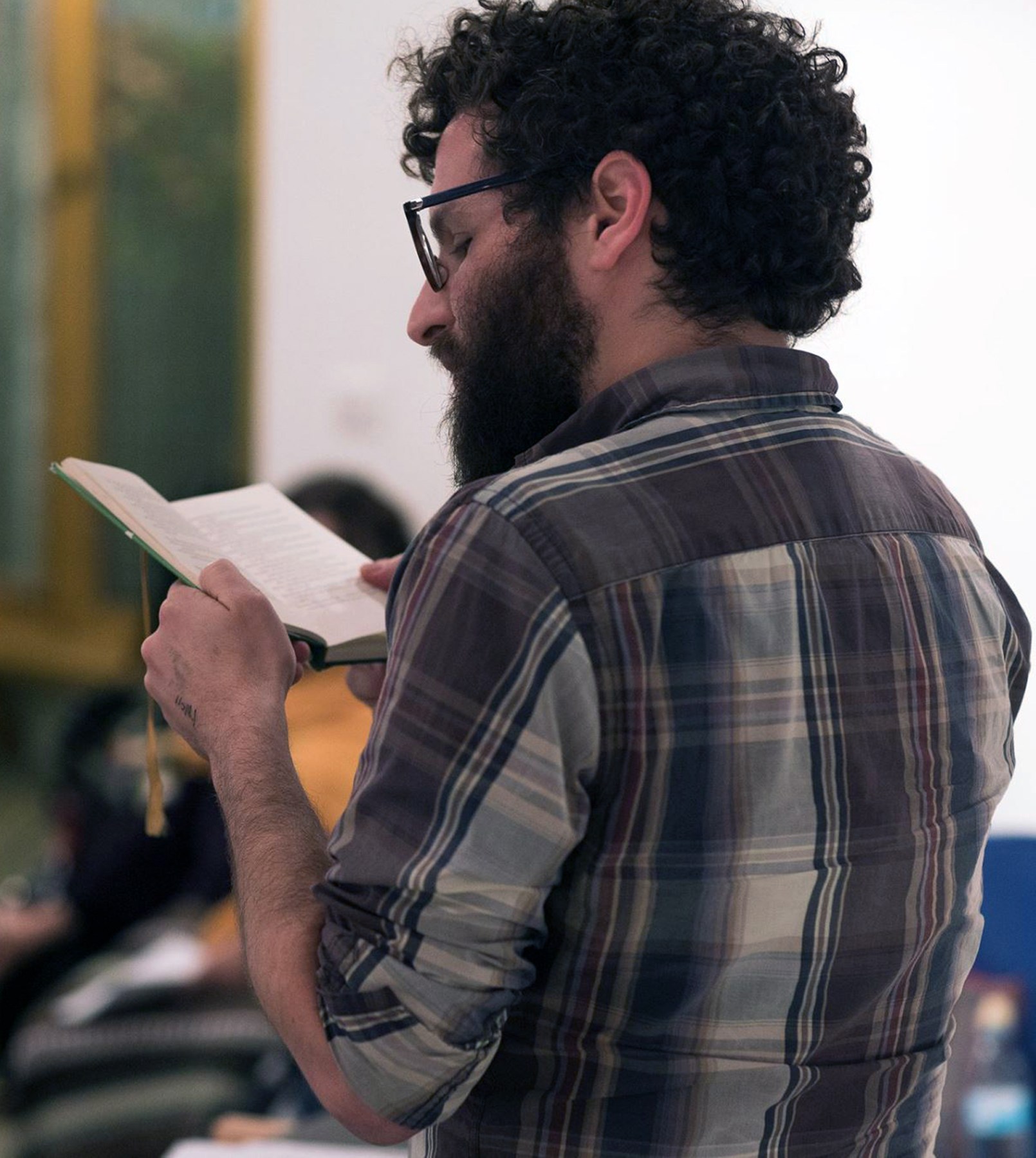
…founded Jerusalism, a non-profit organization to promote Israeli literature in English. He is a PhD student at Hebrew University, researching the intersection of modernist art and orality through a study of David Antin’s talk-poems, and he is currently an OWL Lab Fellow.

With a sword raised
towards the sun,
they used to rule the land
for centuries.

The sword
which
looks so much
like an elongated cross ...

But nowadays
the cross
is embodied
by a dove
with outstretched wings.

Cross,
  that flies
towards the sun
and to God.
05/06/22
Today
from the sky
it's raining
rubies...

Red drops
of
grief...

They pour
hard,
cry
for the innocent
as a belief...

They sprout
young
stalks...

One at a time
flower,
for each
soul...
Loving fireflies
sharing all the joy...
Summer nights,
splendid tenderness of Eden...
Careless sunsets
of caressing sky glory,
soul enlightened by the heaven...
Chanted warming blessings.
Crickets symphonies of peace.
Travel back in time, enhancing...
Feeling of a childhood breeze...
©2022 Dessy Tsvetkova
All rights reserved
…is Bulgarian who writes poems in Bulgarian and in English. She lived in Luxembourg and currently she lives and works in Belgium. Dessy has publications in many Bulgarian magazines and newspapers, also in Romania, Belgium, USA, India, Peru, Philippines. She has 4 books in Bulgarian, 1 in English, and she has also compiled a book as translator from Bulgarian into English, an anthology of Bulgarian top authors. She writes about nature, love and God, and her accent is the positive message at the final. Member of Flemish Party for Poetry. Editor in Homagi international Web literature magazine.
1
while we’re busy romanticizing the softer side of things
well-disguised vibes disregard

the countless beings made into (numb)ers
favoring an unawakened righteous feeling

through a façade that denies inner reality
nurturing the phallic identity of war

2
she is little bits of earth
scattered bits of belonging

an appropriation for those who take
feeling nothing is taken because it is paid for

to feed a selfish desire that places her to burn
underneath a halo of fire

creating the compartmentalized
as we stigmatize in the quiet and unitedly reject her

unconscious—while busy chasing false ideals
searching for pretty in politics

as connoisseurs of fixation with introspection
gingered by the allure, continue to devour her shell

with blades of combative motivation
that takes no accountability, as we all inadvertently fuck her

3
she reads Hello Universe in old bunny slippers
lives in an agricultural area

sits on the porch reading
hears a diminutive echo

it is the year of another great pandemic
and other distractions

from the millions starving
for one reason or another

however, much less critical
than the societal incubator

or the soccer game
as the shadow

in a white van
uses a burner phone

three days, three rooms
a ringing in the ear that means more

as you look away
from the empty swing swaying

4
a temperamental questioning of the self
remembering it grew past two months

a choice sucked into the symbolic
a static feeling remains

refusing to breed
as it parallels a vision

even if it means killing the unborn seed
to not throw away hope for a child

that is already someone
a twelve-year-old

locked inside a small dark apartment
getting used by an endless stream

____,______,________,__________,
as it pours from your daughter in the arms of your son

5
the majority continue connected to the mask
killing a turkey and then sending a card

with a contented one on it
eating a pig and calling it pork

their teeth pulled out
as the mother watches them squeal

buying a stuffed bear for the child
while purchasing its bile; they are bred and tortured

we treat our animals as we treat each other
but this isn’t what we want to hear

most will deny it has meaning—desensitized
it has feelings

nearby, a widowed Arab mother with eight sons
must reveal herself to strange men

in a place where she is no longer a wife
there are no brothers, no uncles

no man to claim her
so she removes her hijab to feed her children

inadvertently teaching her sons about their “brothers”
with this allegory, for most is not as it appears

but it’s not our country, not our home
not our irony, so we willfully swallow it

like “meat” ignoring the rape
of another number—an accepted behavior

as we slumber
instead of reaching beyond the pale

6
diagonal, horizontal, vertical

the lines we hide in
the lines we love between

the lines we point from
these lines play us

clogging internal processes
clinging to us as belief
that keeps us hunting

and hostile regard safe
inside our cumulative womb

trafficking the guns gunning us down
while bound in an addiction town

7
a vignette rotting
a fostered feeling

a male-centric mainstream
a movie she wishes could be unseen

a floret falling apart
petal lips cascading

as we skate through the details
infested with dark limbic thoughts

the egregore overidentifies with form
trapping her in a sea of sharks

disconnecting from impending matters
coded for the untrained eye

lulling inborn wisdom back to sleep
that serves the omniscient streams

bribing the scribe with the felicitous mind
before the eye traverses the den

to make Laureate’s paper words mean nothing
because she doesn’t know she is, too, prey

as another stately white man
uses rubbers on a mattress with one thin, dirty sheet

8
we all want to be in an uplifted state
with a God that makes us feel safe and entertained

while we shoot semi-automatics
to kill the seed, we do not call our own

it is part of cancer’s permeative conditioning
the Dubble Bubble happening around the globe

as we say, “It’s not me, it’s them. It’s there, not here.”
as the lights blink on and off in the small dark apartment in our mind

9
deliberate (u)niverse
we are it pretending to be a _____________

an absent black moon
a carnivore awakening

fromdarknessspringsthelight
          (interpretations of the comforts of [personal] space)

the church / the temple / the sanctuary / the synagogue
the mosque / the pagoda / the gate / the abattoir

(words for the same thing): within

psychological death
          a surrendered state
                              creates space
                                        deeper than thought
                                                  a sleeping infant in my arms
          the win
                    win
                              even in trauma and sticky situations
                                        gathering the momentum of the tormented and tormentor
                                                  in the house built by metaphor
                                                  aligning consequences with reflections of truth
                    in dimension deeper than possession
                                        entwined in the silence
                                                   of secrets that have an audience
Poem ©2022 Adrian Voss
All rights reserved
…lives with her family in Colorado. She is an artist, teacher, and emerging writer with a few published pieces online and a children’s book. The poem submitted is from a full-length collection entitled, The Small Dark Apartment. The work explores uncomfortable aspects within the silence of the collective mainstream. Adrian strives to bring life elements to the surface to push past deceptive illusions and create more light.

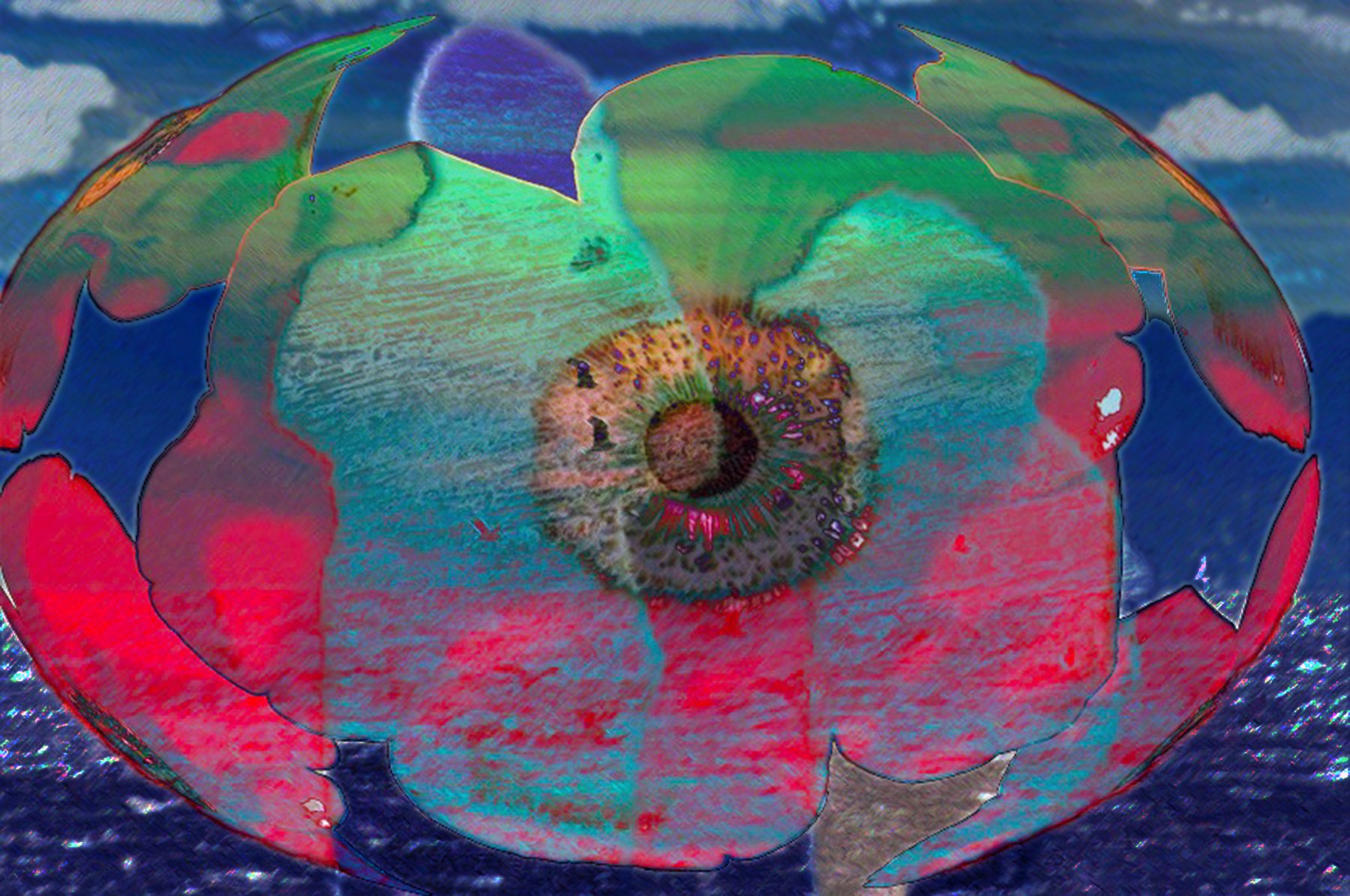
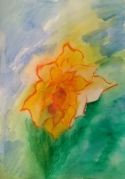
Photograph: Kolonit (anemone) in Poriyya, Galilee, Michael Dickel ©2017

The world has gone mad. Again.
And again voices incite—then hoarse leaders
pretend to have been polite. They did not shout
fear and hatred to explosive tension, to a thin-
wire stretched, first sounding a note then cracking,
snapping in two, each piece twisted. The world goes
mad. Again. The leaders call for calm, like arsonists
who work in the fire department. The fires burn
in the streets at night. The checkpoints flow
with blood and tears. And most of us just want
to go to work, have coffee with friends, teach
our children something other than this craziness
in a world gone mad. Again. And most of us want
to turn away and not see the burning, the smoke,
the arsonists lining up toy soldiers at borders
ready to pounce, to attack, to burn. Again.
—Michael Dickel ©2014
Analysis of “Again” written in 2015 by Vivian Eden in Haaretz:
Poem of the Week Recycled Violence: The World Has Gone Mad Again.

I don’t think that I need to explain about Ukraine, and why I titled this Special Section “Ukraine Peace.” There are some who may raise legitimate questions about the focus on Europe, with so many countries at war in Africa, Asia, the Middle East. There are some who raise legitimate questions about supporting the US in battling Russia, given the undeniable history of and current aggressions world wide (and supporting other countries as they invade neighbors). So I will repeat below a version of the blog post that announced this special section and called for submissions.

Even with all of the tensions and warnings leading up to it, Russia’s all-out invasion of Ukraine on February 24, 2022, shocked the world. This violation of international law and Ukraine’s sovereignty could easily expand to a broader war. This puts progressives, as I think myself to be, in a position of wondering how do we wage peace? Is there a path to peace?
I don’t know. As I write this, the war continues in its third week. The images of the invasion invade our consciousness and my conscience. How do we wage peace?
Whatever the path to peace may be, the path for social justice would not allow for accepting Russia’s war on Ukraine. However, I also am aware that Western Imperialism has acted just as viciously in its own interests, and that the US and the West continue to promote wars in their interests.
Could a world-wide strike be the path, opposed to all war and demanding peace? Is such a thing possible even? How do we follow Gandhi’s path of non-violence and quickly grow it to a global scale? I can’t imagine that it could be done in time to help the people in Ukraine.
History provides warnings about where this invasion could lead. In fact, Putin followed a playbook used in 1939. One of the demands Hitler presented for negotiation just before the invasion of Poland was “safeguarding the German minority in Poland.” Putin said in his speech announcing the invasion that its “goal is to protect people who have been abused by the genocide of the Kyiv regime for eight years.” By dawn of 24 February 2022, the Russian army attacked Ukraine with a blitzkrieg, aiming for military targets. The blitzkrieg strategy was first used pre-dawn of September 1, 1939, starting the invasion of Poland. The USSR joined Germany in attacking Poland on 17 September of that year.
How do we protect peace and simultaneously prevent further expansion through military force?
And who to stand behind for justice? It is not as though the U.S. does not use military force, directly and indirectly. The shadows of Vietnam, Irag, Libya, and Afghanistan loom over this battle. Can we trust the US and NATO to do the right thing?
CUNY Professor Peter Beinart offers an apt quote from 1943 to frame his argument that this time, we need to support the US, even progressives who rightly attack the US for its hypocrisy and war-mongering:
In 1943, the Hungarian-born journalist Arthur Koestler wrote: “In this war we are fighting against a total lie in the name of a half-truth.” That’s a good motto for American progressives to adopt in the wake of Russia’s full-scale invasion of Ukraine.
CUNY Professor Peter Beinart, “Russia speaks total lies. That doesn’t diminish America’s half-truths” in The Guardian
Beinart acknowledges the lies of the U.S.: Saying the US stands with Ukraine because America is committed to democracy and the “rules-based international order” is at best a half-truth. The US helps dictatorships like Saudi Arabia and the United Arab Emirates commit war crimes in Yemen, employs economic sanctions that deny people from Iran to Venezuela to Syria life-saving medicines, rips up international agreements like the Iran nuclear deal and Paris climate accords, and threatens the international criminal court if it investigates the US or Israel.
And then he goes on to explain the connection to the 1943 quote:
But this hypocrisy wouldn’t have fazed Koestler, because it’s nothing new. In 1943, the alliance that fought Hitler was led by a British prime minister who championed imperialism, an American president who presided over racial apartheid, and Joseph Stalin. Koestler’s point wasn’t that the US or Britain, let alone the USSR, were virtuous in general. It was that they were virtuous relative to Nazi Germany in the specific circumstances of the second world war, and that these sinful governments were the only ones with the geopolitical heft to stop a totalitarian takeover of Europe.
These extended quotes give the overall argument. Beinart continues to develop it with a focus on the invasion of Ukraine. He points out that there are times when Russia had been on the relatively virtuous side and the US not, with examples. And times when the US has been relatively virtuous, and Russia not. In the end, for this case, we have to think clearly and make a choice.
As Beinart writes: “But Koestler’s point was that progressives can puncture America’s pretensions to universal virtue while still recognizing that it is sometimes one of the few instruments available to combat evil.”
Peter Beinart’s essay is worth reading in full here.
While I do not support much of what the U.S. does, in this situation, I agree with Beinart that it is, relative to Putin’s invasion, the more virtuous side to support.
However, I still really want to find a non-violent path to peace for all. I recognize that, today, this seems an impossibly distant goal. The non-violent path to peace probably won’t be reached in my lifetime. Sadly, it has been made more distant, seemingly less possible, with this invasion.
And ever more urgent with the use of cluster bombs, vacuum bombs, and threats of chemical weapons or even nuclear weapons.
The creative works in the follow pages of the Special Section, Ukraine Peace, support peace, humanity, and Ukraine in this historical moment. The response to the call that an earlier version of these words made for work came with intensity, sorrow, love, and hope. We have art, poems, prose submissions. We have videos of two powerful readings done on Zoom with poets from the US and from Ukraine reading. We have videos of traditional Ukrainian music.
All of this work supports Ukraine and strives for peace. I encourage you to read and share this outflowing of creativity pouring out to support people and put out into the world declarations for peace.
My heart, thoughts, and good will goes out to the peoples of both Russia and Ukraine who are caught between the anvil and the hammer. May peace return,
May Peace Prevail on Earth.
Readings updated: 21 March 2022
©2022 Michael Dickel, except for quotes
All rights reserved
                    These fragments I have shored against my ruins
                    Why then Ile fit you. Hieronymo's mad againe.
                    Datta. Dayadhvam. Damyata.

				                    Shantih    shantih    shantih
                                                                              —The Wasteland, T. S. Eliot

Rubble of war hangs from wilted rebar,
a child’s trainer swinging from broken branches,
shredded bits of clothing flagged by the wind,
broken rock, handfuls of dust—alarming Tarot
cards overturned in Gaza, Yemen, Afghanistan,

Iraq, Libya, Nigeria, Rwanda, Sudan, Myanmar,
Serbia, Croatia, Slovenia, Syria, Chechnya, Crimea,
now all of Ukraine invaded. War, empty and desolate
as the sea, wave upon wave of never-ending beachheads—
a martial canon of cannons, missiles, bombs, machine-

-gun repetition rat-a-tat-tats punctuating a thumping bass
rhythm from dawn to dusk and all night long. In a quiet
moment ghostly shadows slide out from shelters,
from behind brick and debris of smoking burial mounds.
They shuffle through the desolation, remains of their proud

homeland, survivors moving to the defensive periphery
for a final stand—neither living nor dead, they had sought
spring hyacinths, not hellish fires. A patient enemy, death
always triumphs, the king of entropy—slimy-bellied rats,
bloody bodies, and bleached bones its reaped subjects.

The young, once living, now dead. The still living, dying.
At the edge of the wasteland three shacks crumble to dust
under the weight of hope and repeated failures of peace:
A shanty of quiet resignation, a shanty of determination,
a shanty of fear released, once lined up against ruin,

			                    dark lightning, and silent thunder.
This poem points to T. S. Eliot’s The Wasteland and to Eliot’s further sources. Follow the links from Eliot quotes and allusions above to the original lines and to annotations: The Waste Land :: T. S. Eliot Original content from that site is licensed under a Creative Commons Attribution-ShareAlike 4.0 International License (CC BY-SA 4.0).
Poem ©2022 Michael Dickel
All rights reserved
Art: Waterbird, Michael Dickel ©2017
Art: Kolonit (anemone) in Poriyya, Galilee, Michael Dickel ©2017
I need to write to outrun hungry demons,
to build a new me to replace the old.
I need to tear down stone walls of resistance, escape
anchor blocks dragging in sand of man-entropy,
gravity molding me in the murky bottom.

Subliminal fractures reshape my structures
into a me I schemed to avoid—ruptures
of who I came to be ripping through calloused skin.
The demons chase this fast-talking slow-walking
man, eat the cheesiness of his nightstand.
My minds slip out of sight like aces sliding from a sleeve.

I need to piece together a paradox, a slipperiness,
masked confusion—one person out of many impossibilities.
One person with so many masks. One mask for so many personae.
I need to write me, to replace as soon as I can demons
outrunning my old-man’s soul. Building, building, building,
until I understand that humanity lies in the earth below
the bull’s bellow—so only my own tongue speaks, no other.
©2021 Michael Dickel
All rights reserved

Volume 8 Social Justice Issue 3
I don’t much like reading any more
as I’ve read more than enough
explanations accusations rationalizations
incarnations of old disputations
empty words for empty stomachs
nothing to sink teeth into for many
while exorbitant feasts for a few
yes, I’m even tired of these words
writing reading listening while
wild fires forage famines feast
diseases prevail over
results of my every action
reactions to human infestation

		    rushing toward entropy

	crisis the turning
	teshuva the return to

		healing requires movement

			(re)direction turning inertia
				toward tikkun olam
teshuva — to return, usually used in the sense of returning to (the Jewish) faith, from Hosea 14:2–3: “Return, O Israel, to the Lord your God, for you have stumbled in your iniquity. Take words with yourselves and return to the Lord. Say, "You shall forgive all iniquity and teach us good, and let us render bulls our lips.”
———
tikkun olam — the healing (or repair) of the world (or creation), according to Kabbalah, this is our purpose as humans.




©2021 Michael Dickel
All rights reserved
Art: Winona Railroad Siding, Michael Dickel ©2021


 The BeZine